 Скачать презентацию 10 Mc Graw-Hill Irwin Sales Training Objectives Techniques and
75b4e0a5894f295c70cb47bec4a45f59.ppt
- Количество слайдов: 31



10 Mc. Graw-Hill/Irwin Sales Training: Objectives, Techniques, and Evaluation Copyright © 2009 by The Mc. Graw-Hill Companies, Inc. All rights reserved.
Military Training and Sales Careers ã What skills Can be trained? ã Must be trained? ã Are a pre-hire requirement? ã ã ã What previous training has transferability and value? Managers must focus on critical success competencies Source: HR Chally Group (2007). 10 -2
ã ã ã ã Identify key issues in sales training Understand objectives of sales training Discuss development of sales training programs Understand training of new sales recruits and experienced salespeople Define topics covered in a sales training program Understand various methods for conducting sales training Discuss how to measure costs and benefits of sales training 10 -3
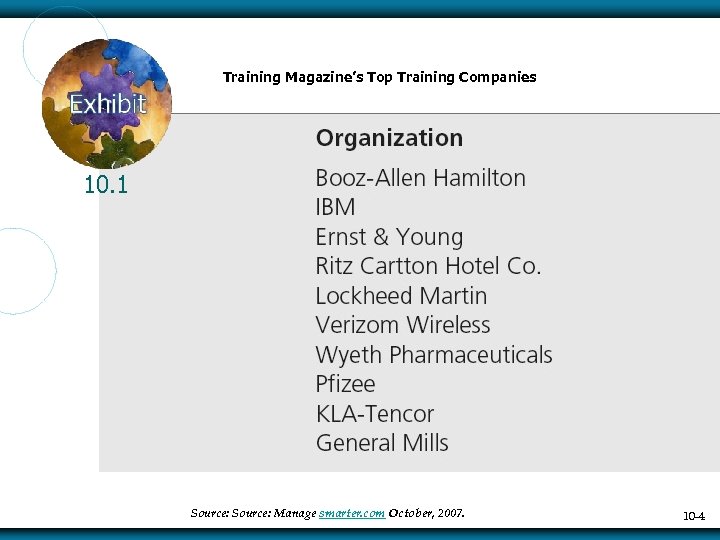
Training Magazine’s Top Training Companies 10. 1 Source: Manage smarter. com October, 2007. 10 -4
Sales Training Issues ã ã ã Who should be trained? What should be the training primary emphasis? How should the training process be structured? ã ã On-the-job training and experience? Formal and more consistent centralized program? Web-based? Instructor-based? 10 -5
Sales Training Objectives ã ã ã Increase productivity Improve morale Lower turnover Improve customer relations Improve selling skills 10 -6
10. 1 Challenge of Effective Training: Follow-Up ã ã ã Salespeople are a tough audience Salespeople retain about 50% after five weeks Management issues Poor training implementation ã Lack of measureable results ã Lack of refresher courses/materials ã Source: “Half Life of Sales Training, ” American Salesman 49, no. 1 (2004), p. 23. 10 -7
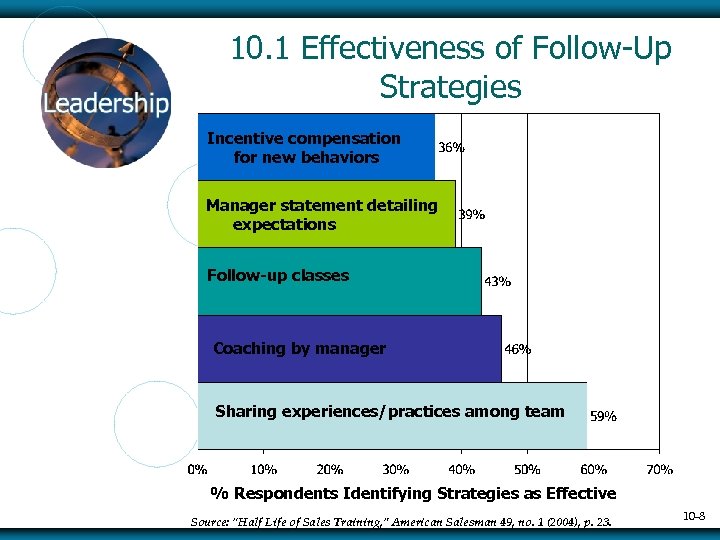
10. 1 Effectiveness of Follow-Up Strategies Incentive compensation for new behaviors Manager statement detailing expectations Follow-up classes Coaching by manager Sharing experiences/practices among team % Respondents Identifying Strategies as Effective Source: “Half Life of Sales Training, ” American Salesman 49, no. 1 (2004), p. 23. 10 -8
Obstacles to Introducing Training ã ã Top management not dedicated to sales training Lack of buy-in from frontline sales managers and salespeople Salespeople’s lack of understanding of what training is supposed to accomplish Salespeople’s lack of understanding regarding application of training to everyday tasks 10 -9
10. 2 Failure – Causes and Cures ã ã Delivering “fad” vs. “function” Off the shelf delivery Unreasonable time constraints Little reinforcement Source: Heather Baldwin, “Rethinking Sales Training, ” Selling. Power. com, August 2006 online issue. 10 -10
Shifts in Training New Sales Recruits ã ã ã Companies with less than $5 million in annual sales are spending more on sales training per new hire - $5, 500 worth of training per salesperson. Training in smaller companies has increased from 3. 3 months to 4. 4 months. Smaller companies are placing more emphasis on training than several years ago. Companies are spending time and money on training experienced salespeople Companies with more than $5 million in annual sales, are spending less money on training Source: Christen P. Heide, Dartnell’s 30 th Sales Force Compensation Survey: (Chicago: Dartnell Corp. , 1999) 10 -11
Shifts in Training Experienced Sales Recruits ã ã ã Experienced sales reps are given, on average, 32. 5 hours of ongoing training per year at a cost of $4, 032 per rep Continuing increasing amounts of training reflects a commitment to provide ongoing learning opportunities for senior salespeople Companies are spending an increasing amount of time on product training and less on training in selling skills Source: Christen P. Heide, Dartnell’s 30 th Sales Force Compensation Survey: (Chicago: Dartnell Corp. , 1999) 10 -12
Sales Training Topics ã ã ã ã Product or service knowledge Market/Industry orientation Company orientation Selling skills Time and territory management Legal and ethical issues Technology Specialized topics 10 -13
Product Knowledge Topics ã Critical information for rational decisionmaking ã ã ã Competitive products comparison on ã ã ã Company’s product specifications Common product uses/misuses Price Construction Performance Compatibility Technical products require more time on product knowledge training 10 -14
Market/Industry Orientation Topics ã ã ã Industry fit into overall economy Knowledge of industry and economy Economic fluctuations that affect buying behavior and require adaptive selling techniques Customers' buying policies, patterns and preferences in light of competition Customers' customers needs Wholesaler and retailer needs 10 -15
Company Orientation Topics ã Company polices that affect their selling activities ã ã ã Personnel Structure Benefits Handling customer requests for price adjustments, product modifications, faster delivery, different credit terms Sales manuals ã ã ã Hard copy, online Product information Company policy information 10 -16
Time and Territory Management ã ã ã Sales trainees need to learn to manage time and territories Time spent training out of the field is costly 80/20 rule applies: ã ã ã 20% of the customers account for 80% of the business and Require the same proportion of time and attention 10 -17
Legal/Ethical Issues ã ã Federal law dictates corporate action or avoidance of action in areas of marketing, sales and pricing Sales personnel need to understand the federal, state and local laws that constrain their selling activities Statements made by salespeople carry both legal and ethical implications Lapses in ethical conduct often lead to legal problems 10 -18
Technology ã Notebook computers ã ã ã Home offices eliminate the need to go to another office Salesperson can be almost totally self-sufficient with ã ã ã Presentations Connecting to company intranet or extranet Delivering documentation quickly and accurately High-speed network connection Computer Printer Cell phone Effective computer use affords sales personnel more face-to-face customer contact time Effective use requires training 10 -19
10. 4 Internet Training ã ã Increased control over content Less costly Comprises 15 -20% of all training today Expected to be 50% within 5 years 10 -20
Specialized Training Topics ã ã Specialized, job-tailored training most effective Sample topics Price negotiations ã Trade show effectiveness ã Reading body language ã Addressing SCA ã 10 -21
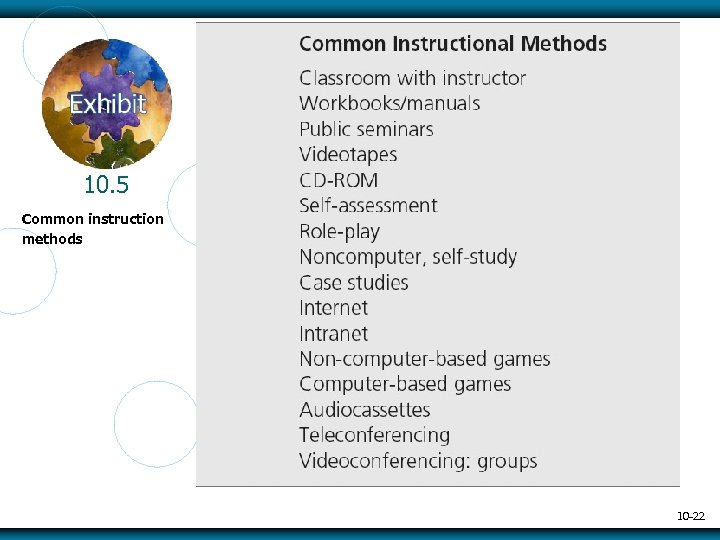
10. 5 Common instruction methods 10 -22
10. 5 Creative Sales Training ã ã Effective training can take place beyond the classroom or computer Requirements ã ã ã Focus on knowledge, selling skills for success Understand deliverables Examples ã ã ã Boot camps Product “immersion” Cooking classes 10 -23
Keys for Effective OJT ã ã ã Teaming - bring together people with different skills Meetings - set aside times when employees can get together Customer interaction - include customer feedback as part of learning process Mentoring - provide informal mechanism for new salespeople to learn from more experienced ones Peer-to-peer communication - create opportunities for mutual learning among salespeople Source: The Education Development Center (www. edc. org) 10 -24
Classroom Training ã Advantages ã Standard briefings in ã ã ã ã Formal training sessions save executive time Interaction among salespeople builds camaraderie Disadvantages ã ã Product knowledge Company polices Customer and market characteristics Selling skills Expensive Time-consuming Too much material = less retention Role playing a popular technique 10 -25
Electronic Training Methods ã ã ã ã Online training $18 billion industry (2006) Makes J-I-T information possible IBM plans 35% sales training to be over Internet CD-ROM currently #1 delivery method 30% of server-based training over intranets Effectiveness not well-documented Not likely to eliminate one-on-one training 10 -26
Measuring the Costs and Benefits ã ã ã Sales training consumes substantial time, budget and support resources Relationship between sales training and revenue is difficult to measure Relationship between sales training and other broad objectives difficult to measure 10 -27
10. 6 Training Road Blocks ã ã ã ã Training can’t solve the problem Busy, jaded salespeople are not open to learning new skills Conflicting methods and philosophies are taught at each session The training isn’t relevant to the company’s pressing needs The training format doesn’t fit the need E-learning is overused, or used in wrong situations There’s no follow-up after training The trainer can’t relate to the sales team 10 -28
Sales Training Costs ã ã ã Training funds are often allocated with little regard for results Results and benefits are difficult to measure Difficult to isolate training impact from ã ã ã Economic conditions Environmental changes Seasonal trends Competitive activity Etc. 10 -29
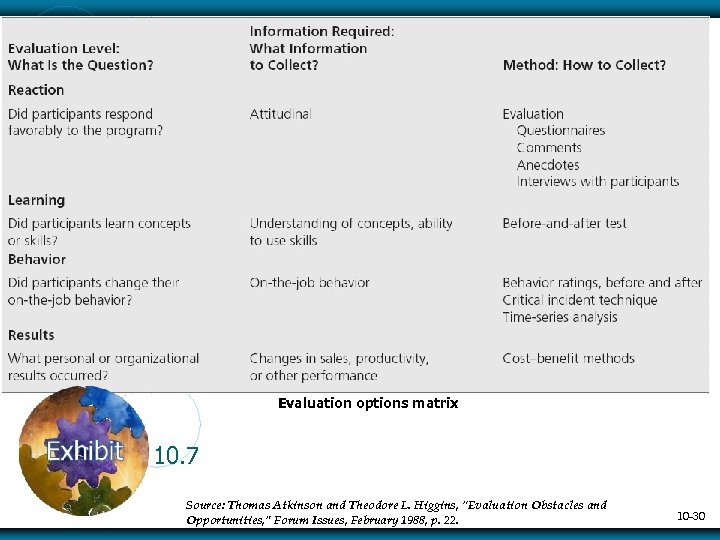
Evaluation options matrix 10. 7 Source: Thomas Atkinson and Theodore L. Higgins, “Evaluation Obstacles and Opportunities, ” Forum Issues, February 1988, p. 22. 10 -30
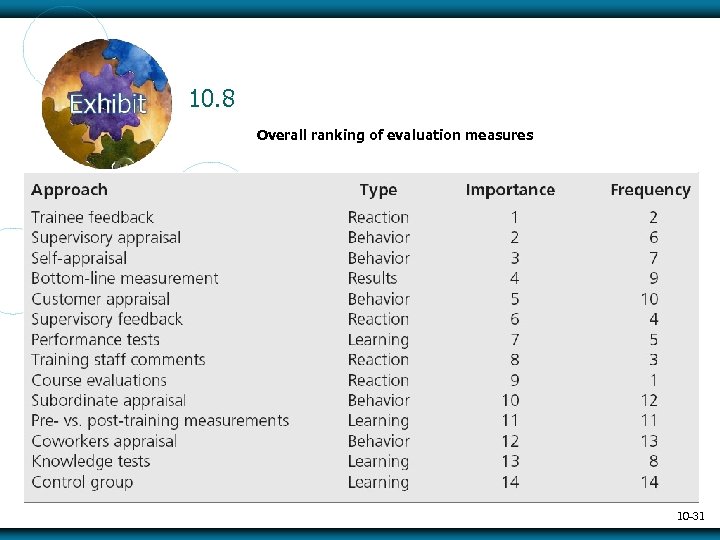
10. 8 Overall ranking of evaluation measures 10 -31
Скачать презентацию 10 Mc Graw-Hill Irwin Sales Training Objectives Techniques and
75b4e0a5894f295c70cb47bec4a45f59.ppt