


 Скачать презентацию 10 2008 New Lazar Developments A Maunz 1 C
e8d583de31d43fe8f54f21b547ab6127.ppt
- Количество слайдов: 31
 10/2008 New Lazar Developments A. Maunz 1) C. Helma 1), 2) 1)FDM 2)in Freiburg Univ. silico toxicology
 What is Lazar? INTRODUCTION
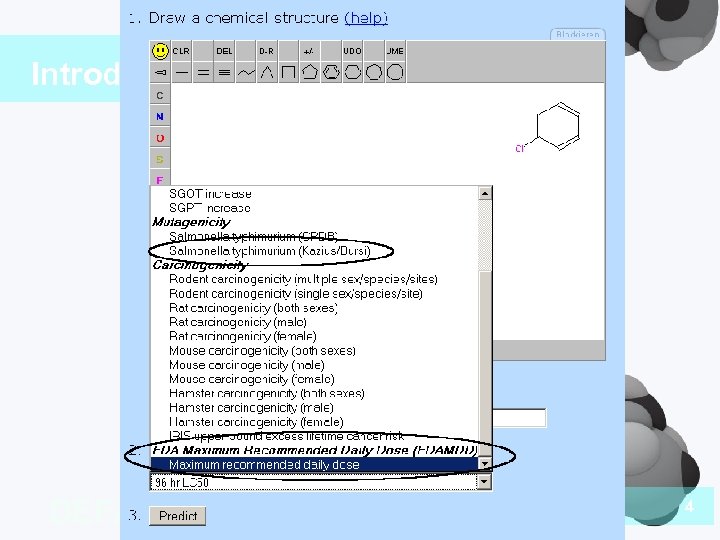
 Introduction Lazar is a fully automated SAR system. • 2 D fragment-based (linear, tree-shaped under development) • Nearest-neighbor predictions (local models) • Confidence-weighting for single predictions Applications include highlighting, screening, and ranking of pharmaceuticals. • In use by industrial corporations. Regulatory acceptance request as alternative test method has been submitted. • Part of EU research project Open. Tox • Public web-based prototype and source code available at: http: //lazar. in-silico. de DEFAULT STYLES 3
 Introduction DEFAULT STYLES 4
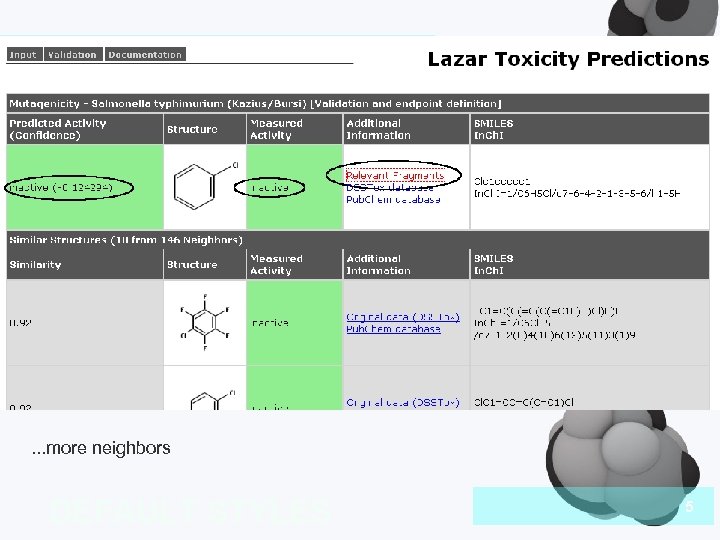 Introduction . . . more neighbors DEFAULT STYLES 5
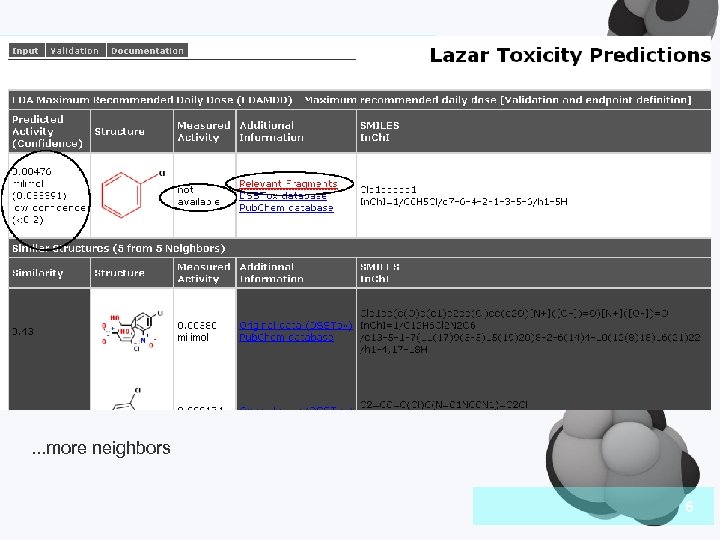 Introduction . . . more neighbors 6
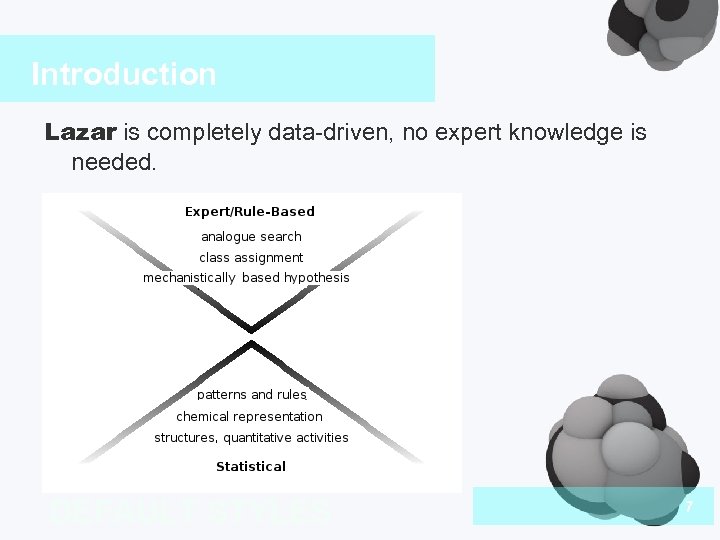 Introduction Lazar is completely data-driven, no expert knowledge is needed. DEFAULT STYLES 7
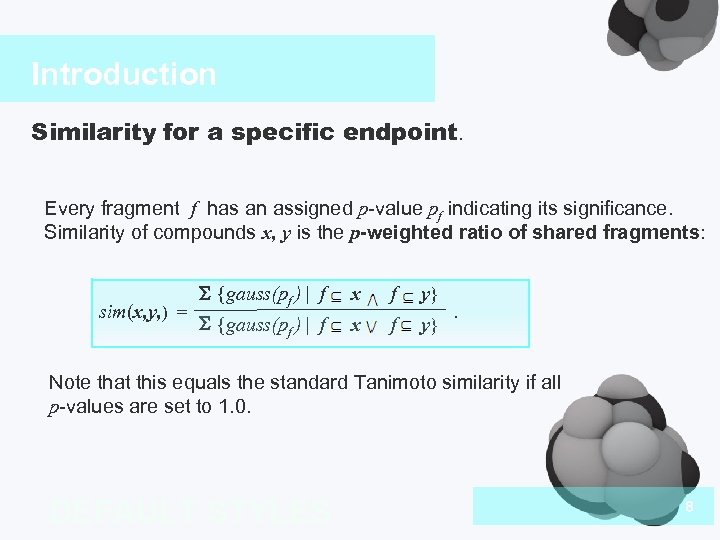 Introduction Similarity for a specific endpoint. Every fragment f has an assigned p-value pf indicating its significance. Similarity of compounds x, y is the p-weighted ratio of shared fragments: sim(x, y, ) = S {gauss(pf ) | f x f y} . Note that this equals the standard Tanimoto similarity if all p-values are set to 1. 0. DEFAULT STYLES 8
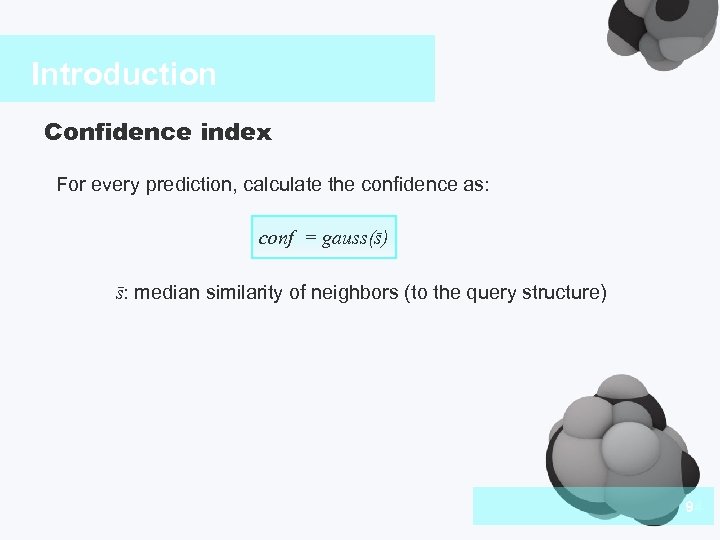 Introduction Confidence index For every prediction, calculate the confidence as: conf = gauss(s) s: median similarity of neighbors (to the query structure) 9 04
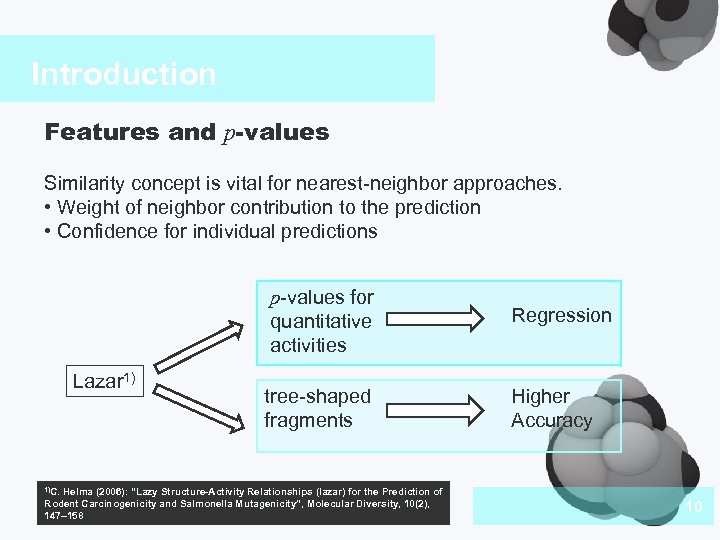 Introduction Features and p-values Similarity concept is vital for nearest-neighbor approaches. • Weight of neighbor contribution to the prediction • Confidence for individual predictions p-values for quantitative activities Lazar 1) Regression tree-shaped fragments Higher Accuracy 1)C. Helma (2006): “Lazy Structure-Activity Relationships (lazar) for the Prediction of Rodent Carcinogenicity and Salmonella Mutagenicity”, Molecular Diversity, 10(2), 147– 158 DEFAULT STYLES 10
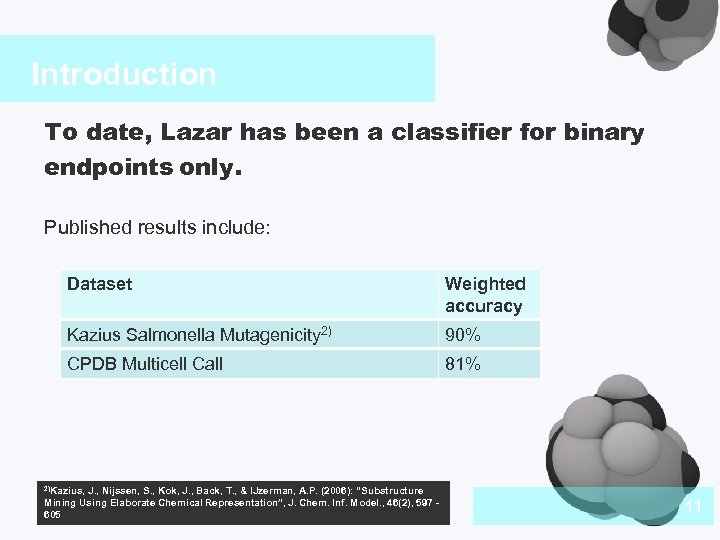 Introduction To date, Lazar has been a classifier for binary endpoints only. Published results include: Dataset Weighted accuracy Kazius Salmonella Mutagenicity 2) 90% CPDB Multicell Call 81% 2)Kazius, J. , Nijssen, S. , Kok, J. , Back, T. , & IJzerman, A. P. (2006): “Substructure Mining Using Elaborate Chemical Representation”, J. Chem. Inf. Model. , 46(2), 597 605 11
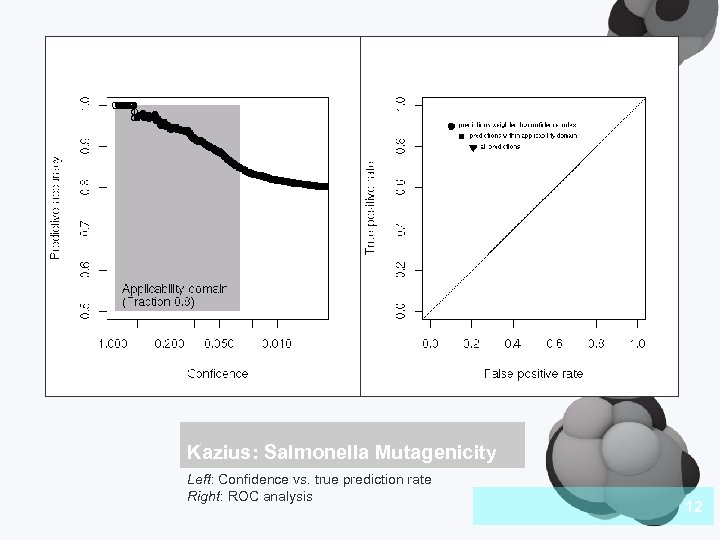 Kazius: Salmonella Mutagenicity Left: Confidence vs. true prediction rate Right: ROC analysis 12
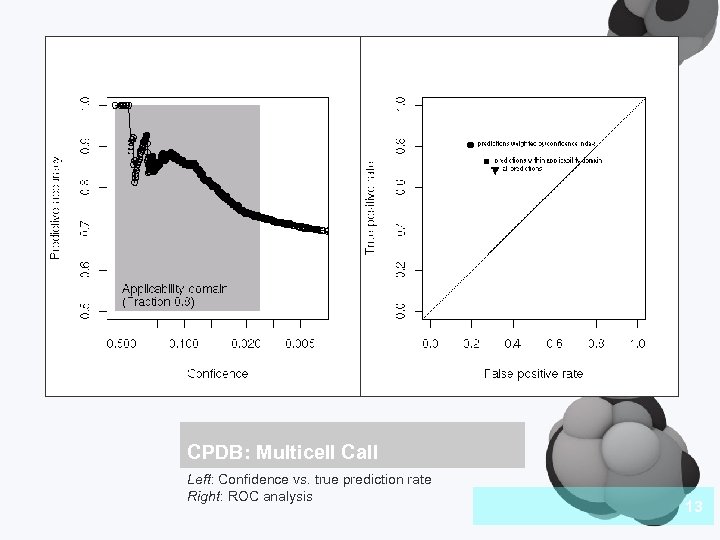 CPDB: Multicell Call Left: Confidence vs. true prediction rate Right: ROC analysis 13
 Extension by QUANTITATIVE PREDICTIONS
 Quantitative Predictions 2) • Enable prediction of quantitative values (regression) – p-values as determined by KS test: • Support vector regression on neighbors – Activity-specific similarity as a kernel function: – Superior to Tanimoto index • Standard deviation of neighbor activities influence confidence – Applicability Domain estimation: based on new confidence values considering dependent and independent variables – Gaussian smoothed Maunz, A. & Helma, C. (2008): “Prediction of chemical toxicity with local support vector regression and activity-specific kernels”, SAR and QSAR in Environmental Research, 19 (5), 413 -431. 2) 15 04
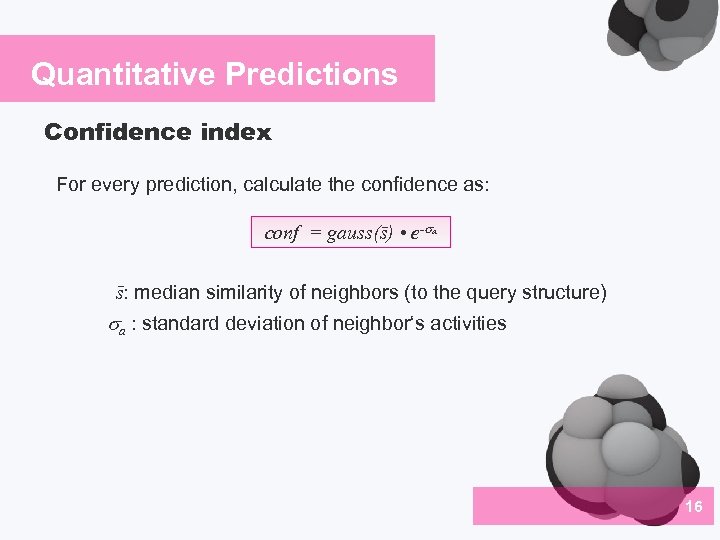 Quantitative Predictions Confidence index For every prediction, calculate the confidence as: conf = gauss(s) • e- a s: median similarity of neighbors (to the query structure) a : standard deviation of neighbor‘s activities 16 04
 Quantitative Predictions Validation results on DSSTox project data include: • EPAFHM Fathead Minnow Acute Toxicity (lc 50 mmol, 573 compounds) • FDAMDD Maximum Recommended Therapeutic Dose based on clinical trial data (dose mrdd mmol, 1215 pharmaceutical compounds) • IRIS Upper-bound excess lifetime cancer risk from continuous exposure to 1 μg/L in drinking water (drinking water unit risk micromol per L, 68 compounds) Previously, FDAMDD and IRIS were not included in (Q)SAR studies. 17 04
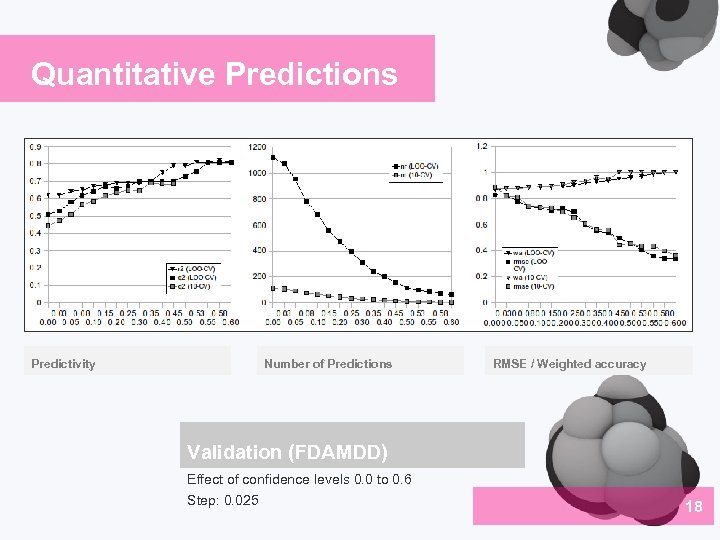 Quantitative Predictions Predictivity Number of Predictions RMSE / Weighted accuracy Validation (FDAMDD) Effect of confidence levels 0. 0 to 0. 6 Step: 0. 025 18
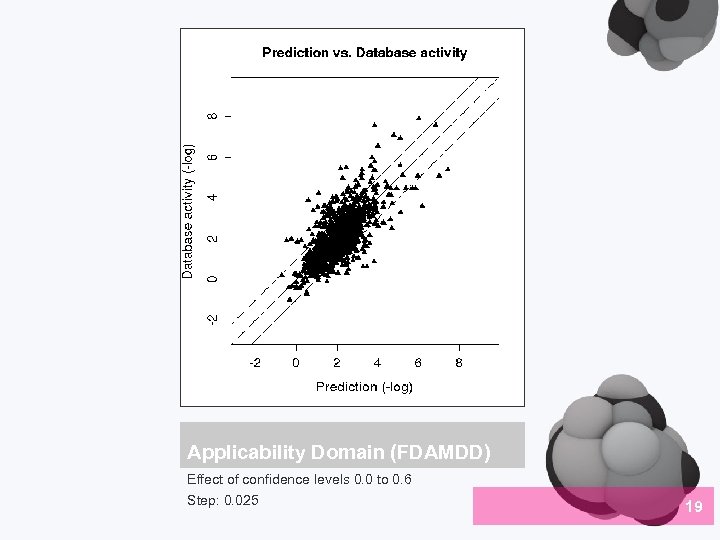 Applicability Domain (FDAMDD) Effect of confidence levels 0. 0 to 0. 6 Step: 0. 025 19
 Mechanistic descriptors BACKBONE MINING
 Better descriptors Ideal: Few highly descriptive patterns that are easy to mine and allow for mechanistical reasoning in toxicity predictions. We have been using linear fragments as descriptors. Better descriptors would • consider stereochemistry and include branched substructures • be less intercorrelated and fewer in numbers • be better correlated to target classes Tree-shaped fragments Problem: ~80% of subgraphs in typical databases are trees! A method to cut down on correlated fragments is needed. 21 04
 Backbones and classes The backbone of a tree is defined as its longest path with the lexicographically lowest sequence. Each backbone identifies a (disjunct) set of tree-shaped fragments that grow from this backbone. Definition: A Backbone Refinement Class (BBRC) consists of tree refinements with identical backbones. Example on next slide 22 04
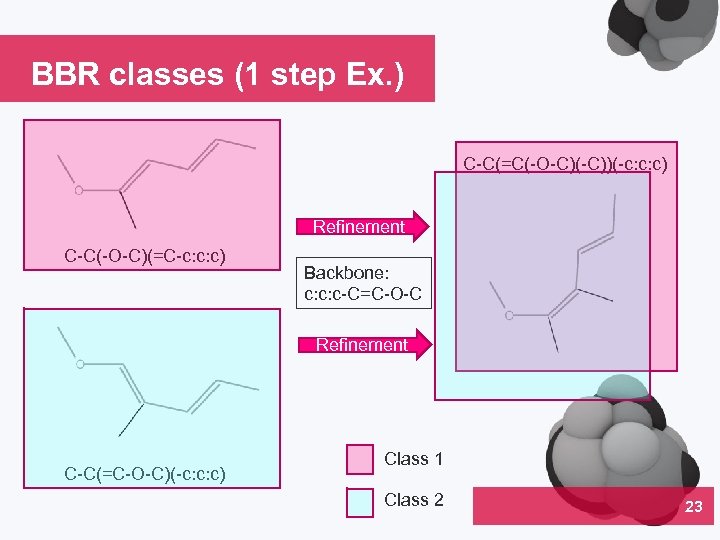 BBR classes (1 step Ex. ) C-C(=C(-O-C)(-C))(-c: c: c) Refinement C-C(-O-C)(=C-c: c: c) Backbone: c: c: c-C=C-O-C Refinement C-C(=C-O-C)(-c: c: c) Class 1 Class 2 23 04
 BBR classes Idea: Represent each BBRC by a single feature • We use a modified version of the graph miner Gaston 3). • Double-free enumeration through embedding lists and canonical depth sequences • Our extension: • Efficient mining of most significant BBRC representatives • Supervised refinement based on 2 values by statistical metrical pruning 4) and dynamic upper bound adjustment 3)Nijssen S. & Kok J. N. : “A quickstart in frequent structure mining can make a difference”, KDD ’ 04: Proceedings of the tenth ACM SIGKDD international conference on Knowledge discovery and data mining, New York, NY, USA: ACM 2004: 647– 652. 4)Bringmann B. , Zimmermann A. , de Raedt L. , Nijssen S. : “Dont be afraid of simpler patterns”, Proceedings 10 th PKDD, Springer-Verlag 2006: 55– 66. 24 04
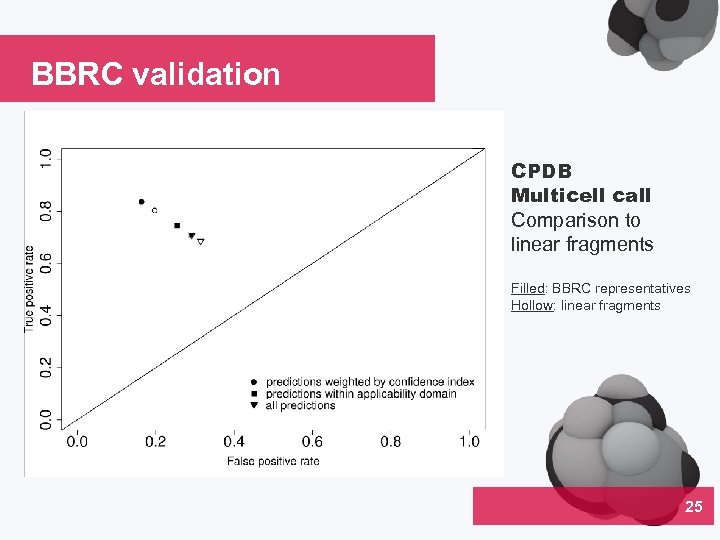 BBRC validation CPDB Multicell call Comparison to linear fragments Filled: BBRC representatives Hollow: linear fragments 25 04
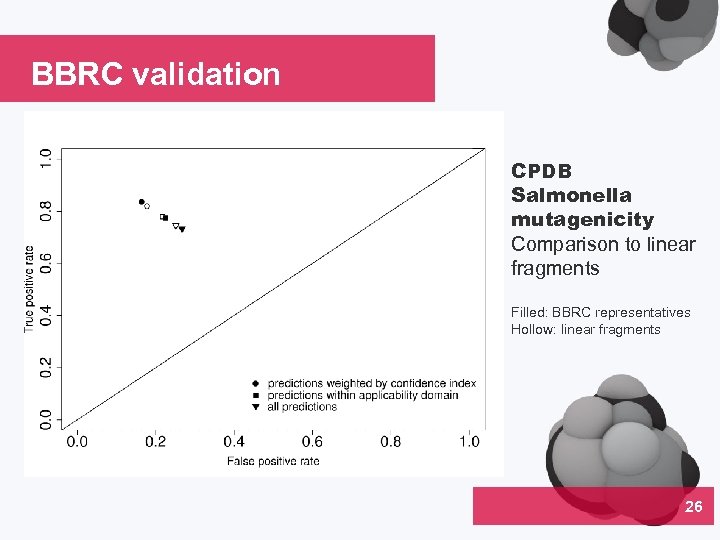 BBRC validation CPDB Salmonella mutagenicity Comparison to linear fragments Filled: BBRC representatives Hollow: linear fragments 26 04
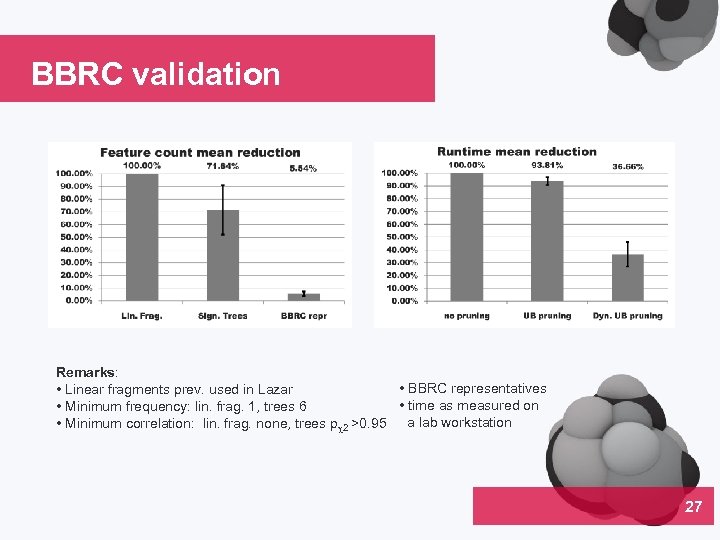 BBRC validation Remarks: • BBRC representatives • Linear fragments prev. used in Lazar • time as measured on • Minimum frequency: lin. frag. 1, trees 6 • Minimum correlation: lin. frag. none, trees p 2 >0. 95 a lab workstation 27 04
 SUMMARY
 Summary Lazar for quantitative predictions • Reliable, automatic Applicability Domain estimation for individual predictions • Includes both dependent and independent variables • Significance-weighted kernel function 29 04
 Summary Backbone refinement classes (Salmonella mutagenicity) • Highly heterogeneous • Suitable for identification of structural alerts • 94. 5 % less fragments compared to linear fragments • Mining time reduced by 84. 3 % • Descriptive power equal or superior to that of linear fragments 30 04
 Acknowledgements Ann M. Richards (EPA) Jeroen Kazius (Leiden Univ. ) Thank you! 31 04