 Скачать презентацию 1 What is the NEC A B C
d3ae393323e4641f0eed46a5a5fca578.ppt
- Количество слайдов: 30



1) What is the NEC? A. B. C. D. National Electrical Code National Electrical Corporation A kind of cookie National Energy Code
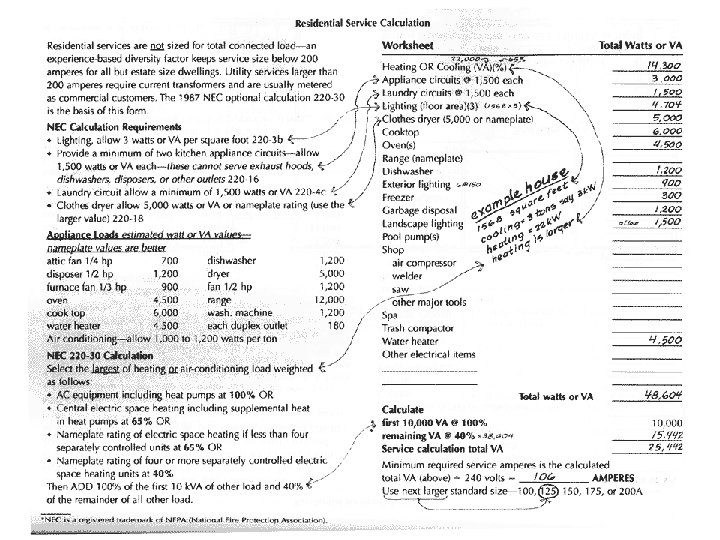
Objectives • • • Use CPS website - Copernicus Submit ASHRAE form and get textbook Understand grade on homework 0 and quiz 1 Complete homework 1 Size residential electrical system (NEC 22030) • List differences between residential and commercial systems
Copernicus • http: //utwired. engr. utexas. edu/cps/ • Questions and answers • Absences and lates
ASHRAE • Can still bring it to me if you want a copy • You are responsible for sending it in and following up with ASHRAE • Chapter is Austin • Don’t worry about UT address (zip = 78712) • 3 options for handbook (IP, SI, CD) • Money that you send ASHRAE needs to include $16 dues
Quiz 1 and HW 0 • Both graded • Solutions to Quiz 1 on class website • Grader very generous and I upped grade in a few cases (avg. ? , st. dev. ? ) • Will give back at end of class • Can drop lowest grade • HW 0 (avg. ? , st. dev. ? ) • Come see me to see your score (I will not hand back until end of semester) • Extremely generously graded
Residential Systems • Very little variation • Many similarities to commercial buildings • Particularly as you get close to end uses • Need to be watchful for unusual circumstances
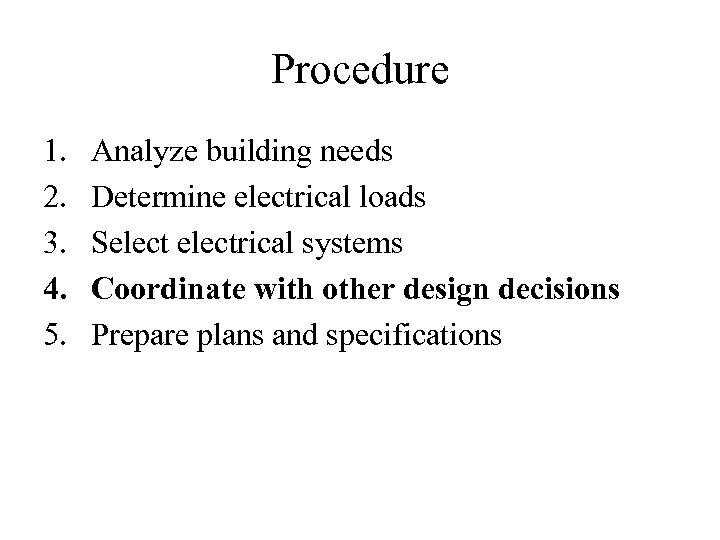
Procedure 1. 2. 3. 4. 5. Analyze building needs Determine electrical loads Selectrical systems Coordinate with other design decisions Prepare plans and specifications
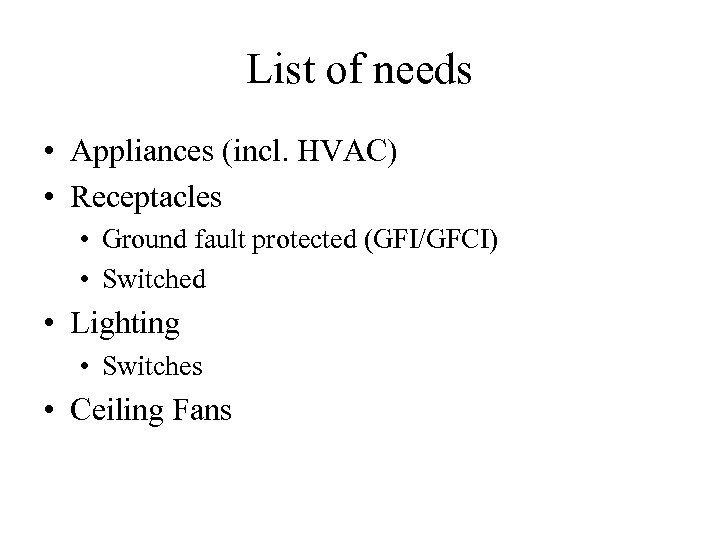
List of needs • Appliances (incl. HVAC) • Receptacles • Ground fault protected (GFI/GFCI) • Switched • Lighting • Switches • Ceiling Fans
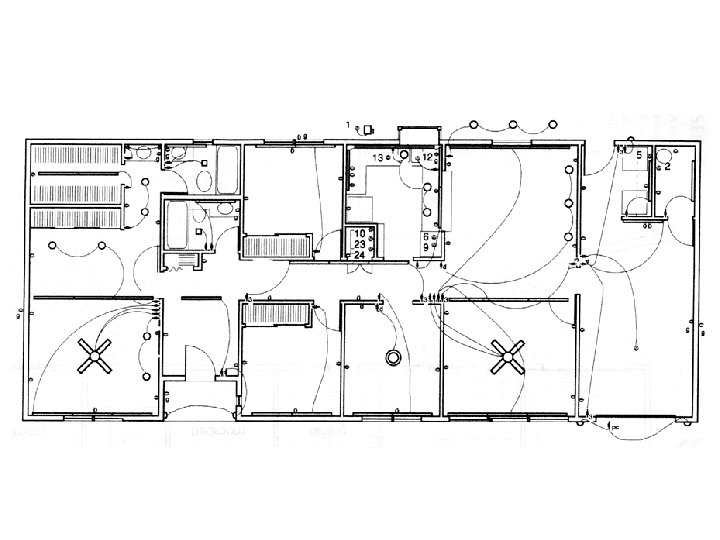
Example House • • Master Bedroom Bathrooms Entry and Outdoor (AC compressor) Bedrooms Dining and Mechanical Closet (resistance heat) Kitchen (appliance circuits, range, oven) Family Garage/Laundry/Closet (resistance water heater, dryer)
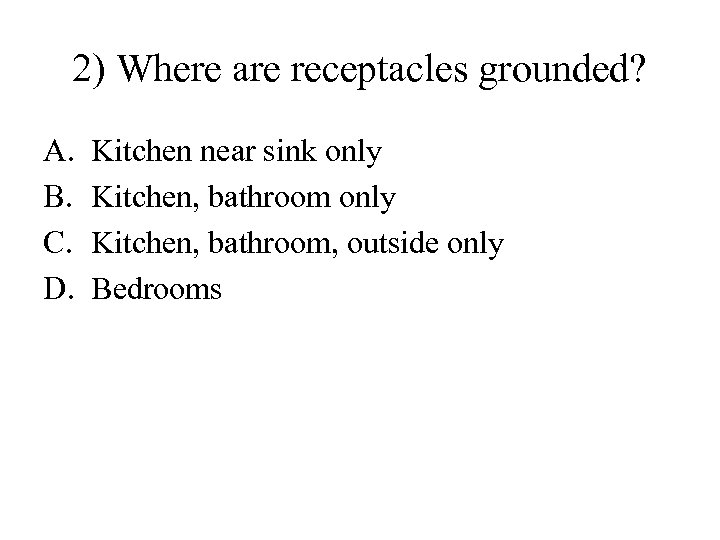
2) Where are receptacles grounded? A. B. C. D. Kitchen near sink only Kitchen, bathroom, outside only Bedrooms
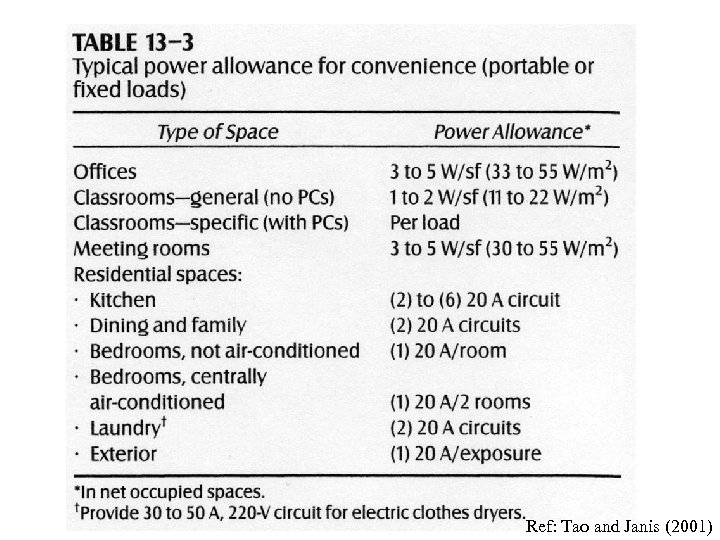
Ref: Tao and Janis (2001)

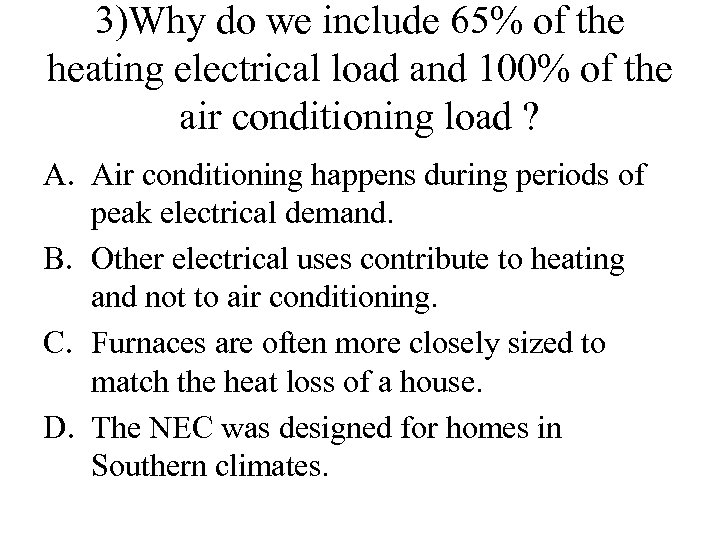
3)Why do we include 65% of the heating electrical load and 100% of the air conditioning load ? A. Air conditioning happens during periods of peak electrical demand. B. Other electrical uses contribute to heating and not to air conditioning. C. Furnaces are often more closely sized to match the heat loss of a house. D. The NEC was designed for homes in Southern climates.
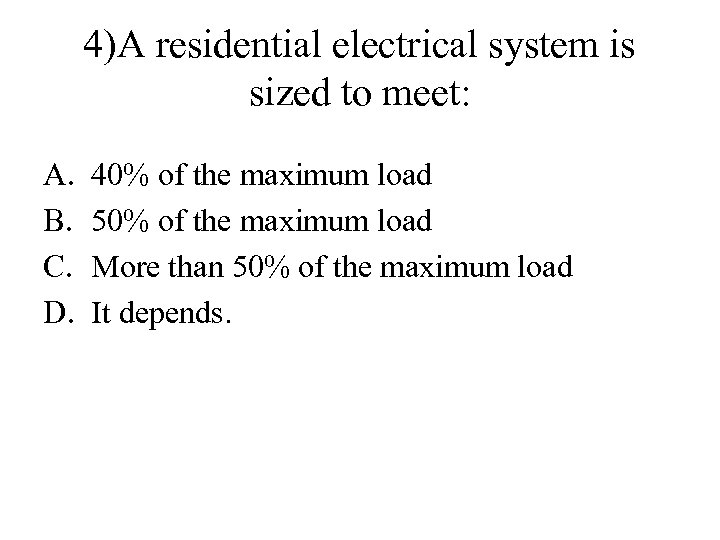
4)A residential electrical system is sized to meet: A. B. C. D. 40% of the maximum load 50% of the maximum load More than 50% of the maximum load It depends.
Summary • Include enough capacity for heating and cooling • Work through kitchen and then other rooms • Include any items that are unusual • Take first 10 k. VA and then 40% of remaining load
Commercial buildings-Differences • A. B. C. D. 5)Why do you specify conduit for all conductor in commercial buildings Three phase power requires conduit Higher voltage requires conduit Conduit looks pretty No NMC wiring allowed
Other differences? • • Three phase Multiple panels More attention to expansion possibilities More voltage levels available
![Typical Building Electrical Services Voltage/Phase Current [V] [A] 120/240 1 <200 120/208 1 120/240](https://present5.com/presentation/d3ae393323e4641f0eed46a5a5fca578/image-20.jpg "Typical Building Electrical Services Voltage/Phase Current [V] [A] 120/240 1 <200 120/208 1 120/240")
Typical Building Electrical Services Voltage/Phase Current [V] [A] 120/240 1 <200 120/208 1 120/240 3 200 -800 120/208 3 240/480 3 400 -2000 277/480 3 347/600 3 5 -15 k. V Very low Building Type Residential Small Commercial Large Commercial Very Large Commercial
Building Needs: Lighting and Duplexes • Lighting • Typically use lighting power densities for building type • Sometimes actual lighting load • Requires neutral • Duplexes • NEC/local electrical code specifies number that are required for different applications • Requires a transformer • Requires neutral wire
Building Needs: HVAC/Other/Auxiliary • HVAC from system sizing • Don’t forget fans, reheat coils, etc. • Building equipment • • Transportation (elevators etc. ) Food service Specialty uses No neutral conductor on power panel typically • Auxiliary • Energy management, security and safety, data transfer, telecommunications
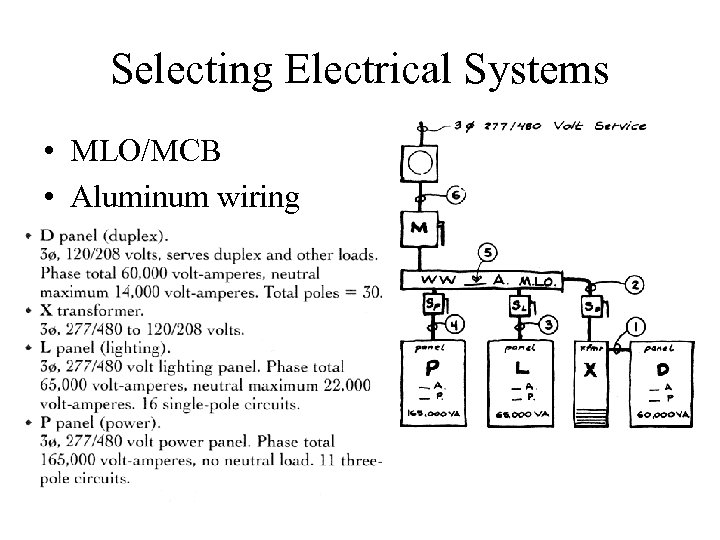
Selecting Electrical Systems • MLO/MCB • Aluminum wiring
Panel D • • Duplexes (receptacles) Main Lugs Only (remote protection) Phase total 60 k. VA, 14 k. VA (neutral) 30 poles
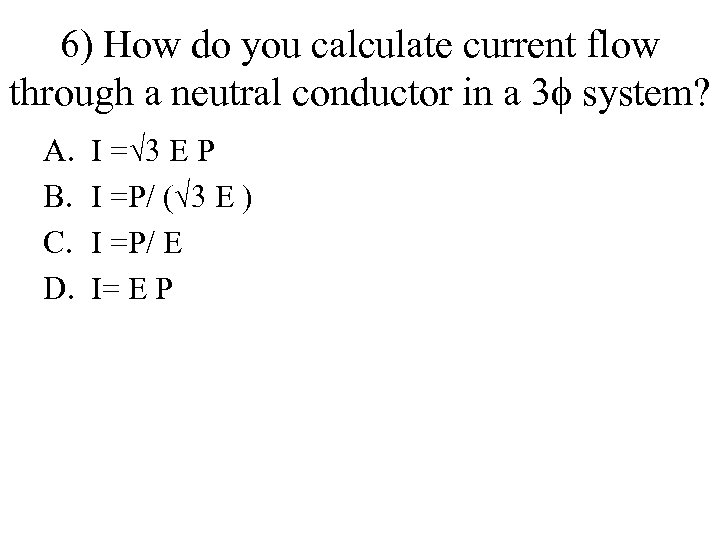
6) How do you calculate current flow through a neutral conductor in a 3 system? A. B. C. D. I =√ 3 E P I =P/ (√ 3 E ) I =P/ E I= E P
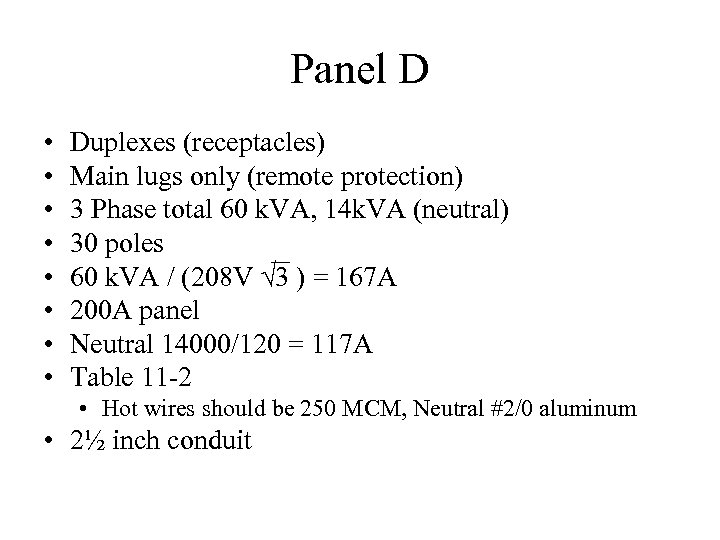
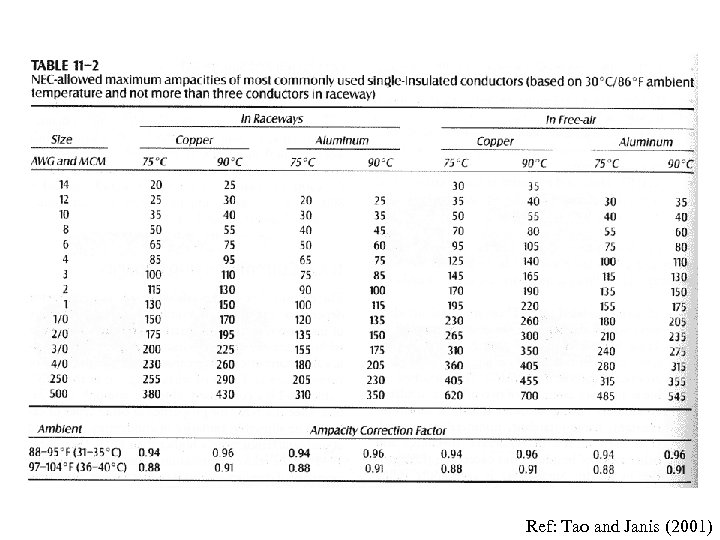
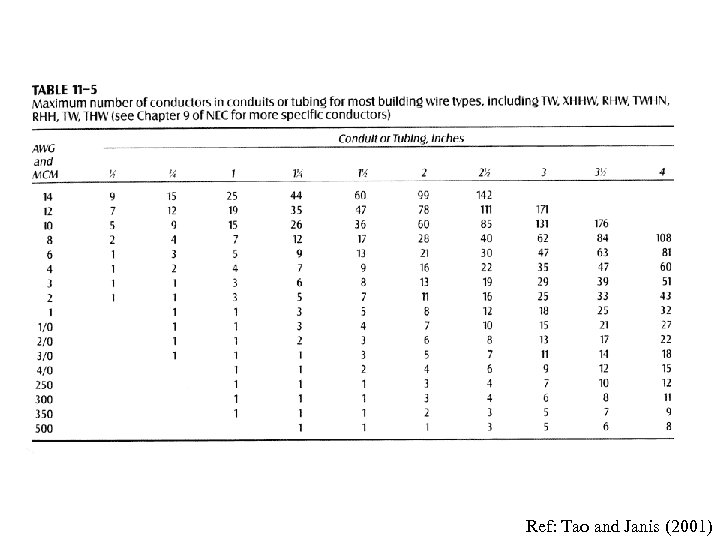
Panel D • • Duplexes (receptacles) Main lugs only (remote protection) 3 Phase total 60 k. VA, 14 k. VA (neutral) 30 poles 60 k. VA / (208 V √ 3 ) = 167 A 200 A panel Neutral 14000/120 = 117 A Table 11 -2 • Hot wires should be 250 MCM, Neutral #2/0 aluminum • 2½ inch conduit
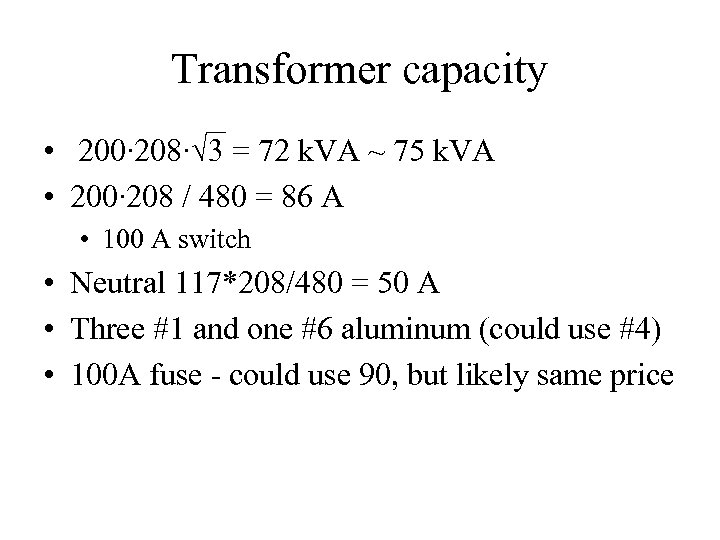
Transformer capacity • 200∙ 208∙√ 3 = 72 k. VA ~ 75 k. VA • 200∙ 208 / 480 = 86 A • 100 A switch • Neutral 117*208/480 = 50 A • Three #1 and one #6 aluminum (could use #4) • 100 A fuse - could use 90, but likely same price
Ref: Tao and Janis (2001)
Ref: Tao and Janis (2001)
Summary • Size residential systems • List differences between commercial and residential systems • Differentiate and size commercial panels
Скачать презентацию 1 What is the NEC A B C
d3ae393323e4641f0eed46a5a5fca578.ppt