


 Скачать презентацию 1 Weather state of the atmosphere
8abc9eaaec12e748ca0de1b20eae6673.ppt
- Количество слайдов: 19
 • 1. Weather: state of the atmosphere at a given time and place. It is constantly changing. • 2. Climate: “average” weather conditions, but the average doesn’t stay steady. I. e. Ice ages, El Niño, etc. Climate is what you expect, but weather is what you actually get. 3. Four “Spheres” in the climate system: Geosphere, Atmosphere, Hydrosphere, Biosphere
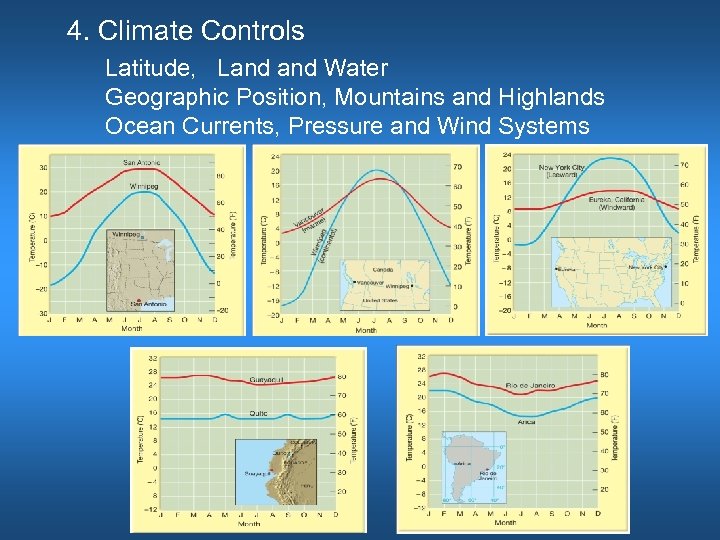 4. Climate Controls Latitude, Land Water Geographic Position, Mountains and Highlands Ocean Currents, Pressure and Wind Systems
 5. Composition of atmosphere Nitrogen (N 2), Oxygen (O 2), Argon (Ar), Carbon dioxide (CO 2), Minute trace gases: water vapor (H 2 O), Methane (CH 4), Ozone (O 3), Nitrous Oxide (N 2 O) 6. Vertical structure of atmosphere Troposphere: the lowest layer of the atmosphere • Averaged Surface temperature is 288. 16 K, or 15 C. • Decreases 6. 5 C per km up to ~11 km • Nearly all weather happens in this layer Tropopause: the top of the troposphere Stratosphere: the layer between ~11 km and ~50 km Stratopause: the top of the stratosphere • Temperature increases in this layer. • O 3 is distributed in this layer
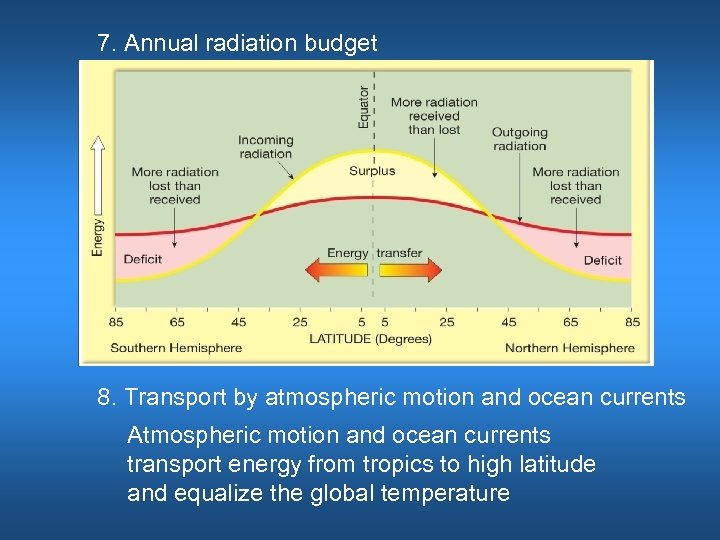 7. Annual radiation budget 8. Transport by atmospheric motion and ocean currents Atmospheric motion and ocean currents transport energy from tropics to high latitude and equalize the global temperature
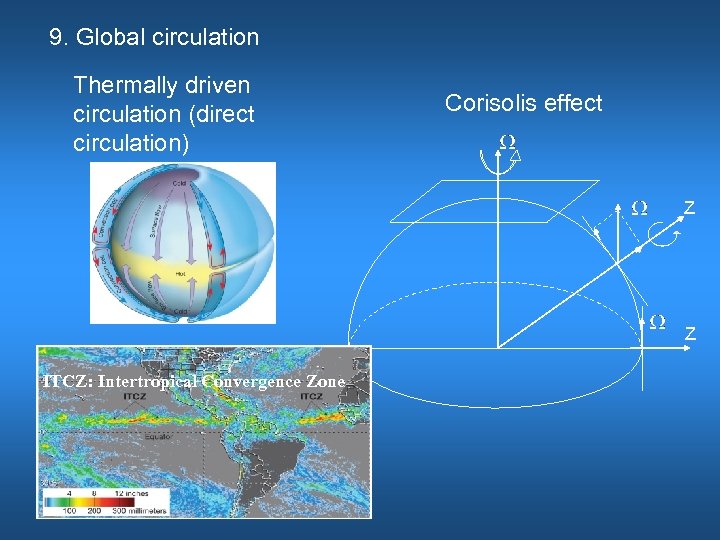 9. Global circulation Thermally driven circulation (direct circulation) Corisolis effect Z Z ITCZ: Intertropical Convergence Zone
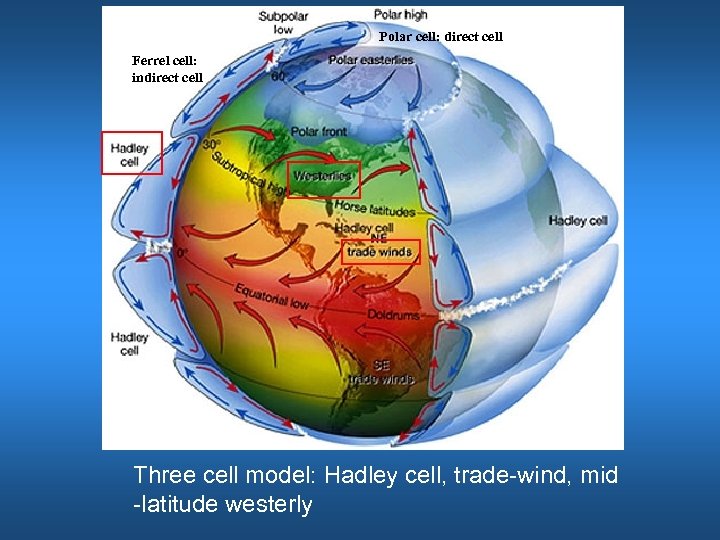 Polar cell: direct cell Ferrel cell: indirect cell Three cell model: Hadley cell, trade-wind, mid -latitude westerly
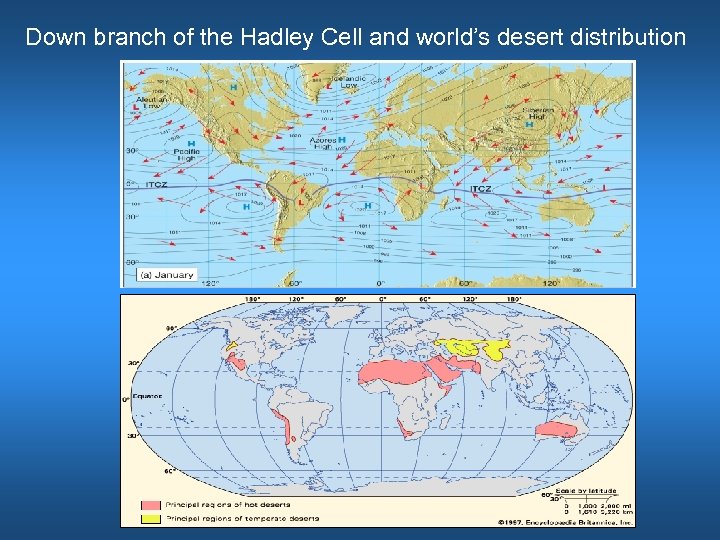 Down branch of the Hadley Cell and world’s desert distribution
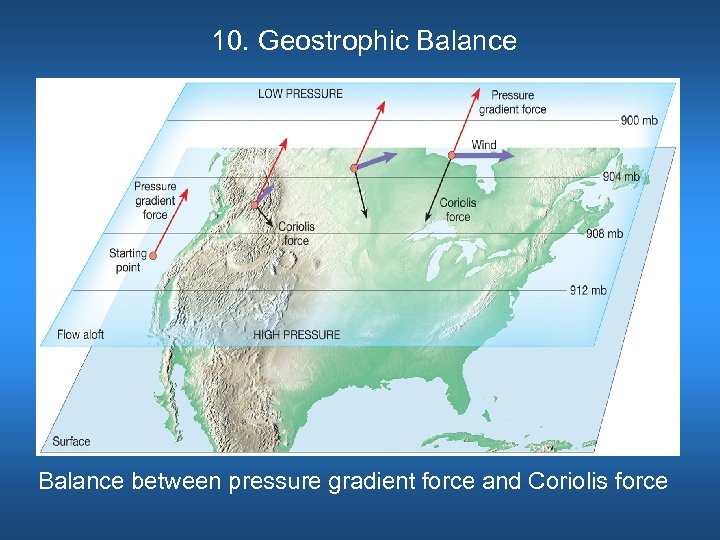 10. Geostrophic Balance between pressure gradient force and Coriolis force
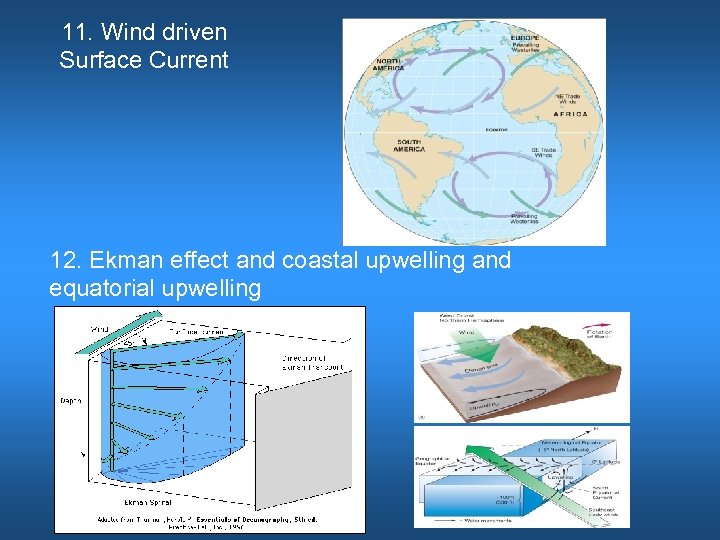 11. Wind driven Surface Current 12. Ekman effect and coastal upwelling and equatorial upwelling
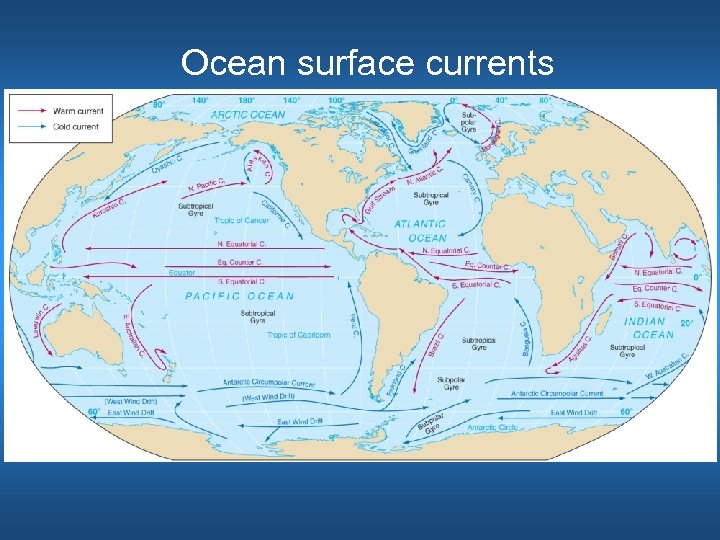 Ocean surface currents
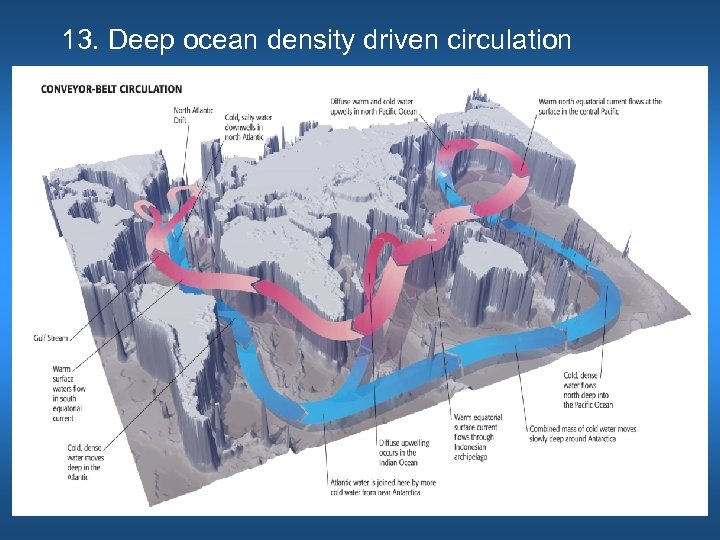 13. Deep ocean density driven circulation
 14. Proxy data – indirect evidence using natural recorders of climate variability – – – – Sea floor sediments Oxygen isotope analysis Coral deposits Glacial ice rings Tree rings Fossil Pollen Historical documents 15. Natural Causes of Climate Change - Change in Solar energy and activities - Variations in Earth’s Orbit - Continental drift - Volcanic Eruptions
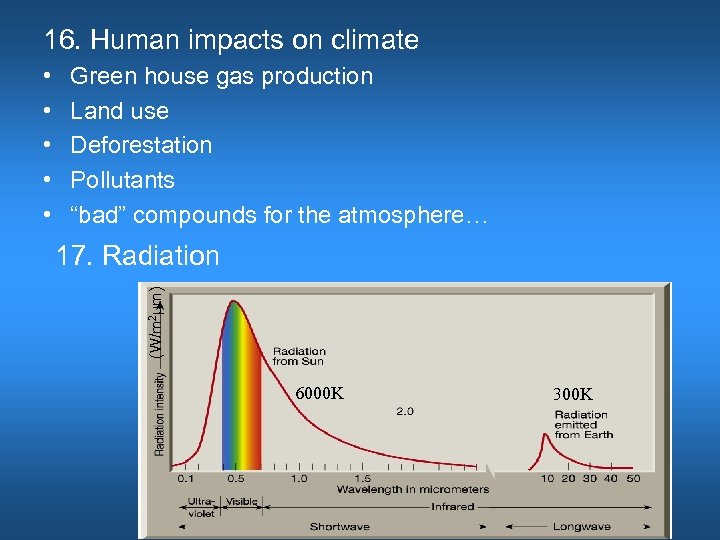 16. Human impacts on climate Green house gas production Land use Deforestation Pollutants “bad” compounds for the atmosphere… 17. Radiation (W/m 2µm) • • • 6000 K 300 K
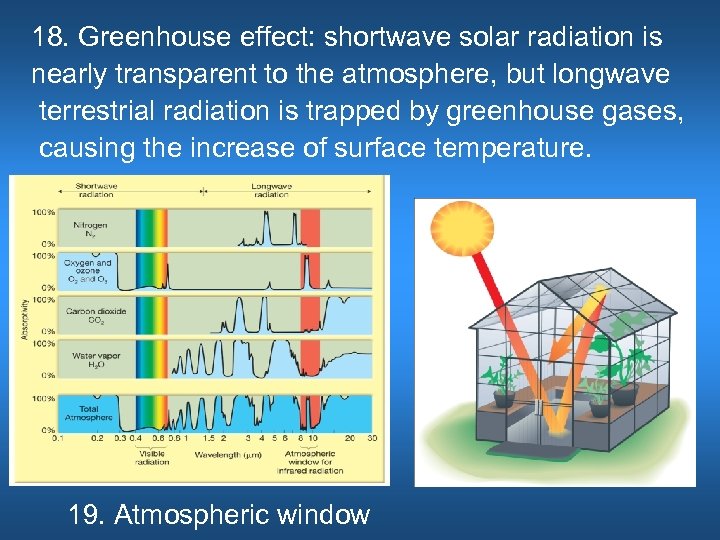 18. Greenhouse effect: shortwave solar radiation is nearly transparent to the atmosphere, but longwave terrestrial radiation is trapped by greenhouse gases, causing the increase of surface temperature. 19. Atmospheric window
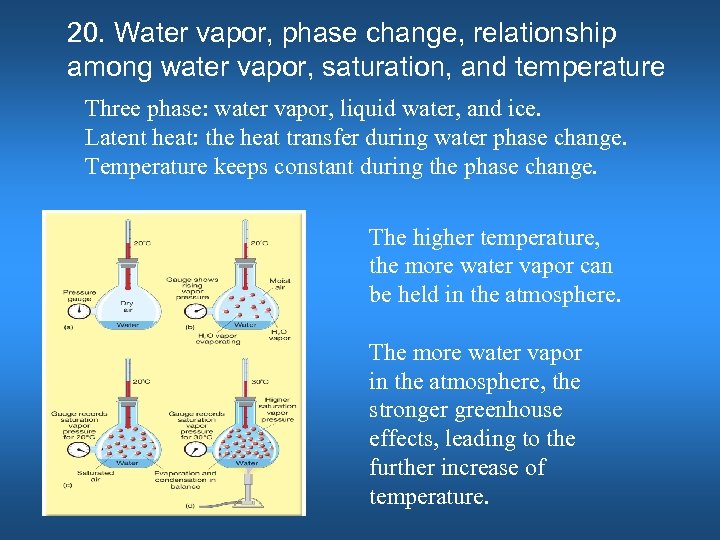 20. Water vapor, phase change, relationship among water vapor, saturation, and temperature Three phase: water vapor, liquid water, and ice. Latent heat: the heat transfer during water phase change. Temperature keeps constant during the phase change. The higher temperature, the more water vapor can be held in the atmosphere. The more water vapor in the atmosphere, the stronger greenhouse effects, leading to the further increase of temperature.
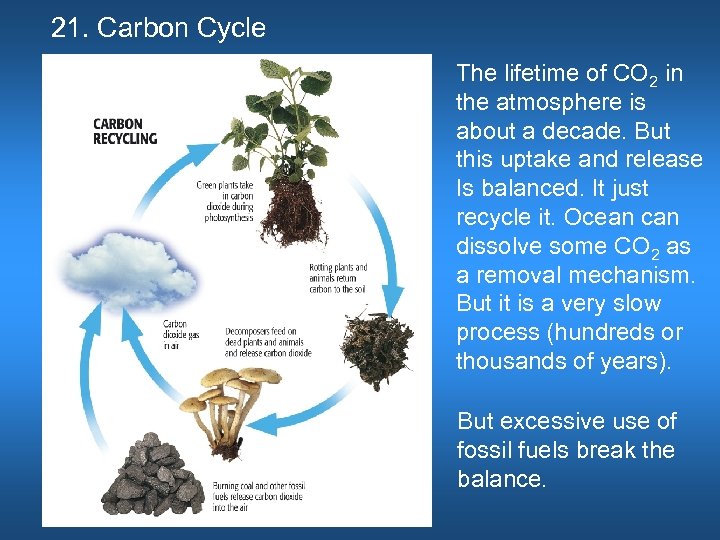 21. Carbon Cycle The lifetime of CO 2 in the atmosphere is about a decade. But this uptake and release Is balanced. It just recycle it. Ocean can dissolve some CO 2 as a removal mechanism. But it is a very slow process (hundreds or thousands of years). But excessive use of fossil fuels break the balance.
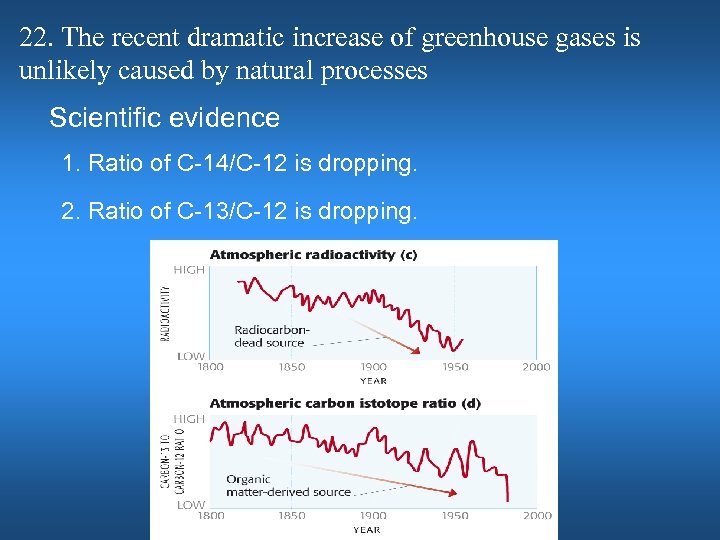 22. The recent dramatic increase of greenhouse gases is unlikely caused by natural processes Scientific evidence 1. Ratio of C-14/C-12 is dropping. 2. Ratio of C-13/C-12 is dropping.
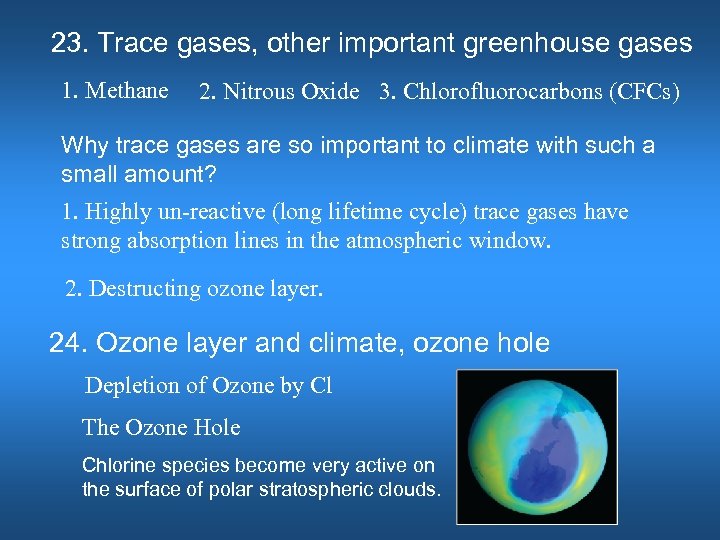 23. Trace gases, other important greenhouse gases 1. Methane 2. Nitrous Oxide 3. Chlorofluorocarbons (CFCs) Why trace gases are so important to climate with such a small amount? 1. Highly un-reactive (long lifetime cycle) trace gases have strong absorption lines in the atmospheric window. 2. Destructing ozone layer. 24. Ozone layer and climate, ozone hole Depletion of Ozone by Cl The Ozone Hole Chlorine species become very active on the surface of polar stratospheric clouds.
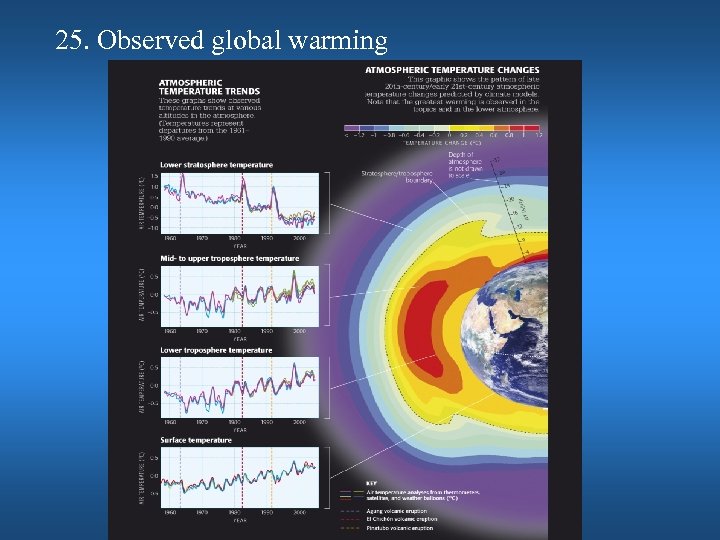 25. Observed global warming