


 Скачать презентацию 1 Total Eclipse of the Sun 2008 August
dcd6deaa2ddb0d8809a3f53304173569.ppt
- Количество слайдов: 23
 1 Total Eclipse of the Sun 2008 August 01 Fred Espenak NASA’s Goddard Space Flight Center
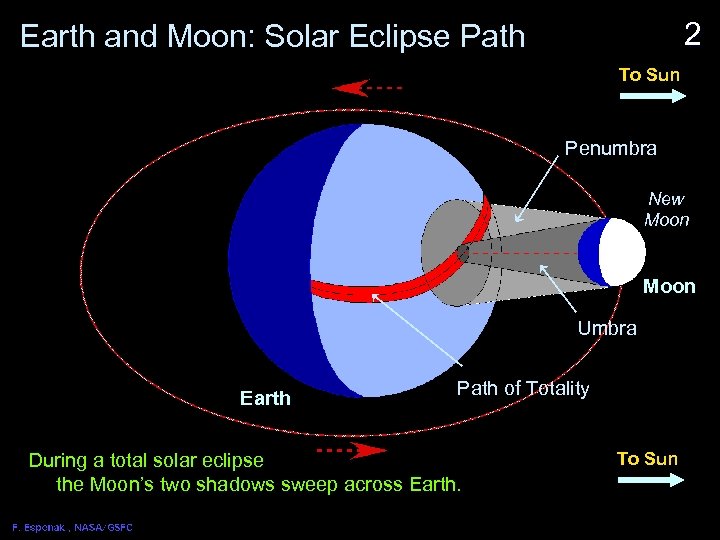 2 Earth and Moon: Solar Eclipse Path Solar Eclipse Geometry 4 To Sun Penumbra New Moon Umbra Earth Path of Totality During a total solar eclipse the Moon’s two shadows sweep across Earth. To Sun
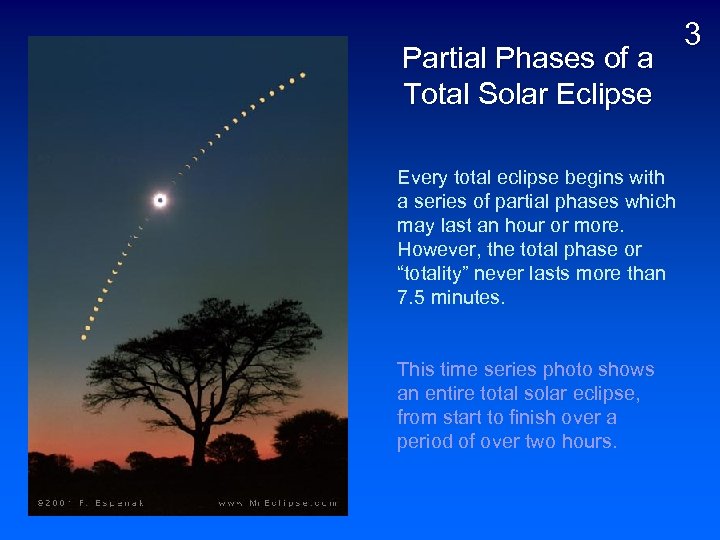 Partial Phases of a Total Solar Eclipse Every total eclipse begins with a series of partial phases which may last an hour or more. However, the total phase or “totality” never lasts more than 7. 5 minutes. This time series photo shows an entire total solar eclipse, from start to finish over a period of over two hours. 3
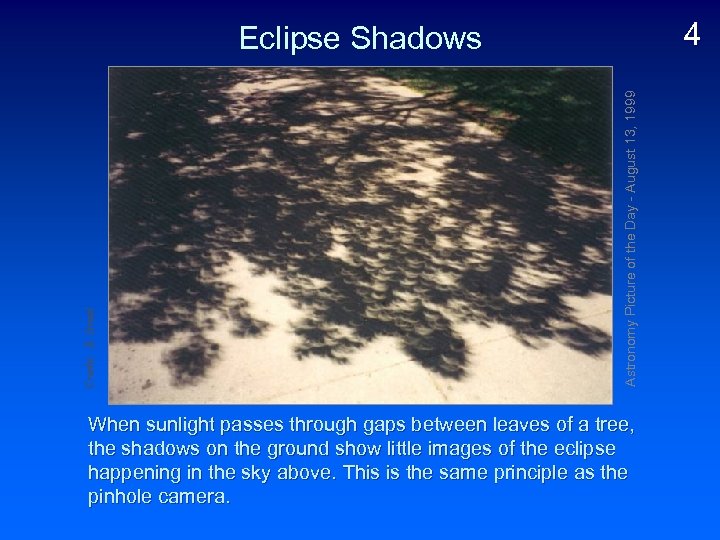 4 Astronomy Picture of the Day - August 13, 1999 Credit: E. Israel Eclipse Shadows When sunlight passes through gaps between leaves of a tree, the shadows on the ground show little images of the eclipse happening in the sky above. This is the same principle as the pinhole camera.
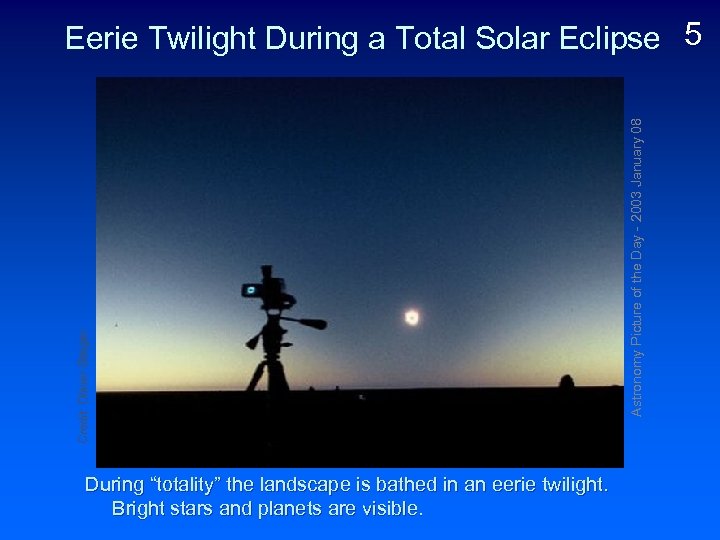 During “totality” the landscape is bathed in an eerie twilight. Bright stars and planets are visible. Astronomy Picture of the Day - 2003 January 08 Credit: Olivier Staiger Eerie Twilight During a Total Solar Eclipse 5
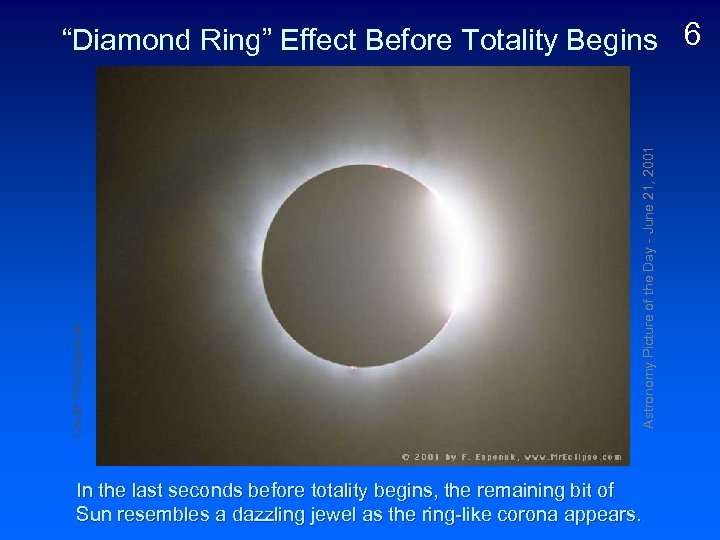 Astronomy Picture of the Day - June 21, 2001 Credit: Fred Espenak “Diamond Ring” Effect Before Totality Begins 6 In the last seconds before totality begins, the remaining bit of Sun resembles a dazzling jewel as the ring-like corona appears.
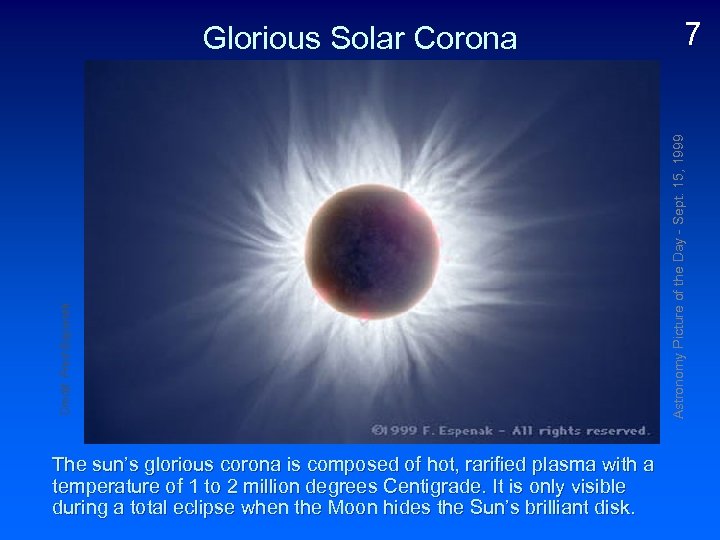 The sun’s glorious corona is composed of hot, rarified plasma with a temperature of 1 to 2 million degrees Centigrade. It is only visible during a total eclipse when the Moon hides the Sun’s brilliant disk. 7 Astronomy Picture of the Day - Sept. 15, 1999 Credit: Fred Espenak Glorious Solar Corona
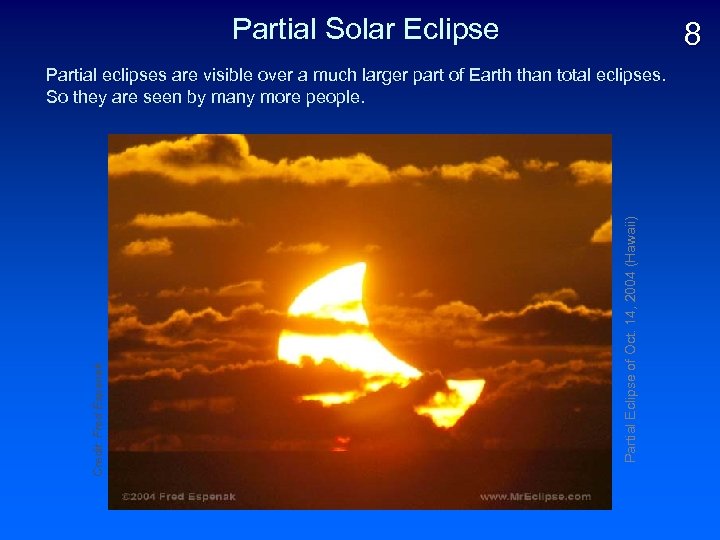 Partial Solar Eclipse 8 Partial Eclipse of Oct. 14, 2004 (Hawaii) Credit: Fred Espenak Partial eclipses are visible over a much larger part of Earth than total eclipses. So they are seen by many more people.
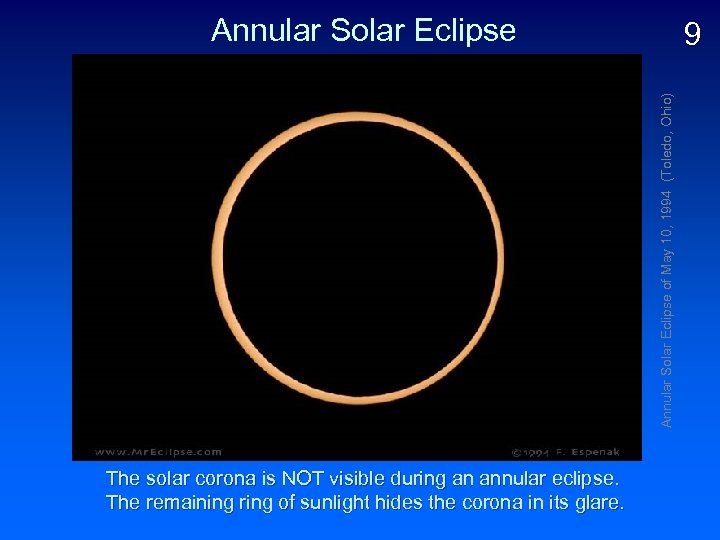 Annular Solar Eclipse of May 10, 1994 (Toledo, Ohio) 9 The solar corona is NOT visible during an annular eclipse. The remaining ring of sunlight hides the corona in its glare.
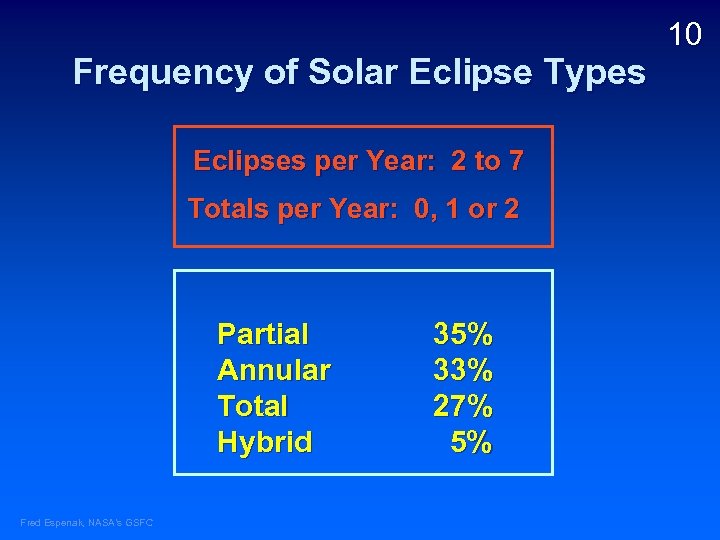 Frequency of Solar Eclipse Types Eclipses per Year: 2 to 7 Totals per Year: 0, 1 or 2 Partial Annular Total Hybrid Fred Espenak, NASA’s GSFC 35% 33% 27% 5% 10
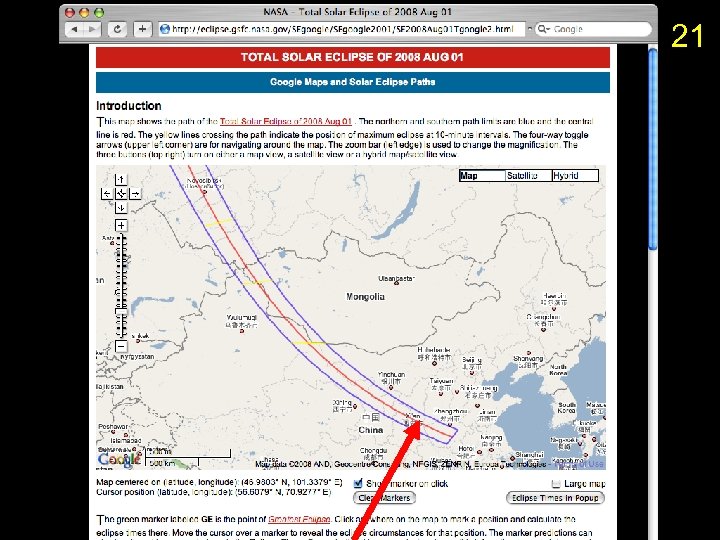
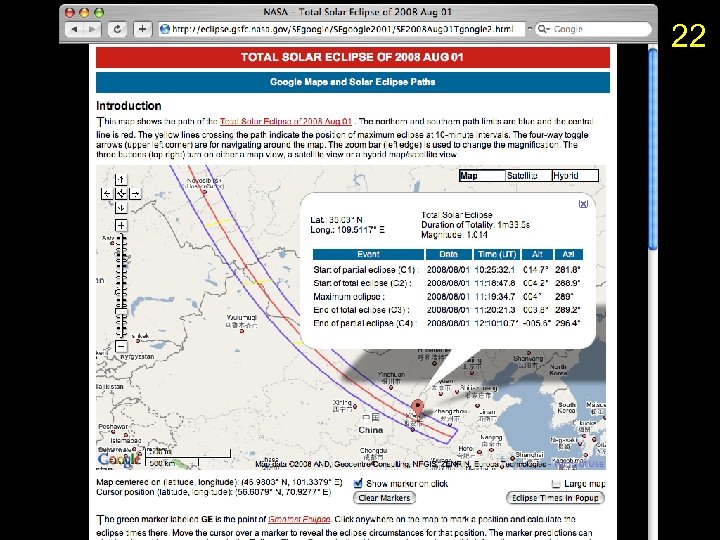
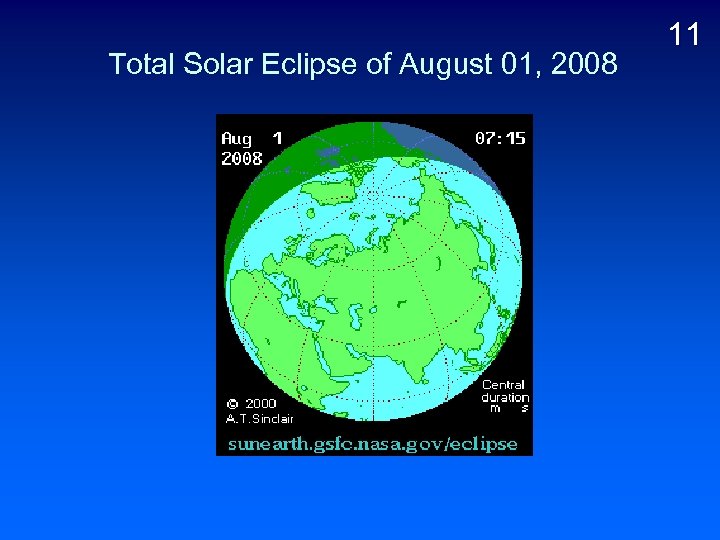 Total Solar Eclipse of August 01, 2008 11
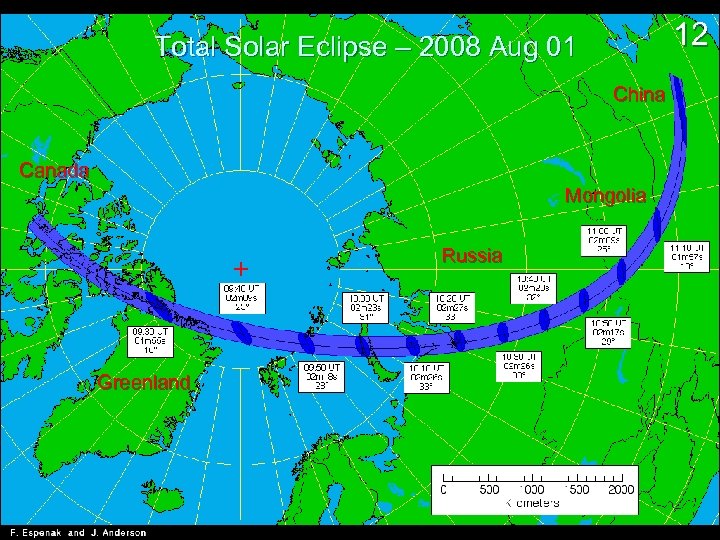 12 Total Solar Eclipse – 2008 Aug 01 China Canada Mongolia Russia Greenland
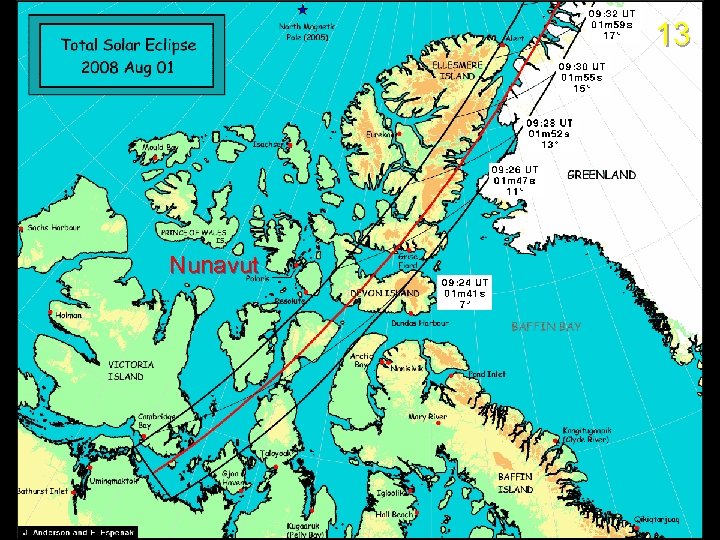 Total Solar Eclipse – 2008 Aug 01 Nunavut 13
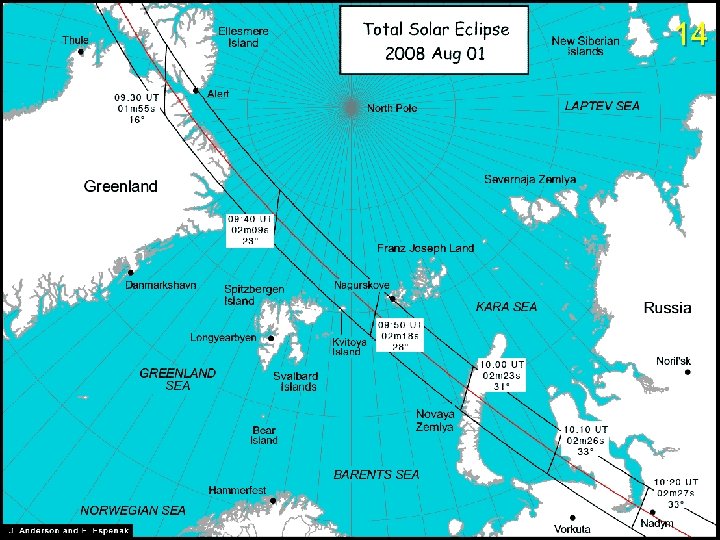 Total Solar Eclipse – 2008 Aug 01 14
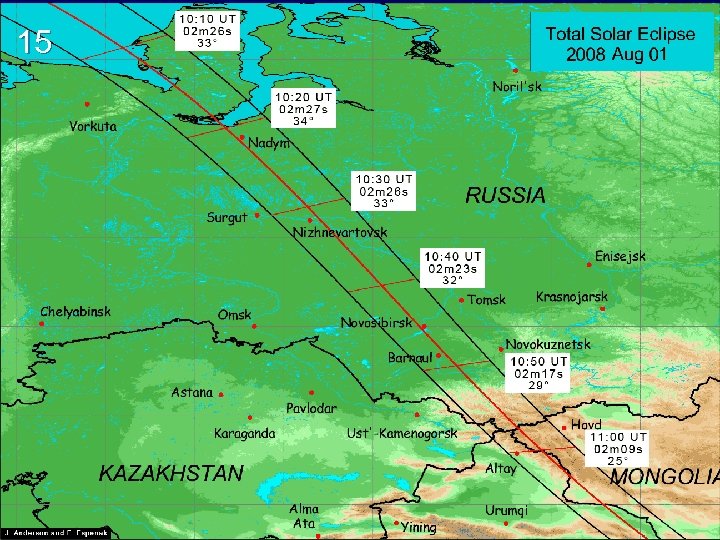 15 Total Solar Eclipse – 2008 Aug 01
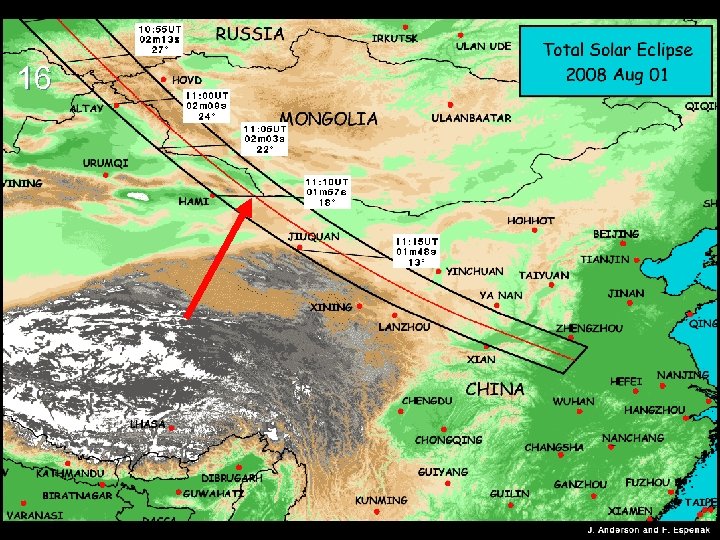 16 Total Solar Eclipse – 2008 Aug 01
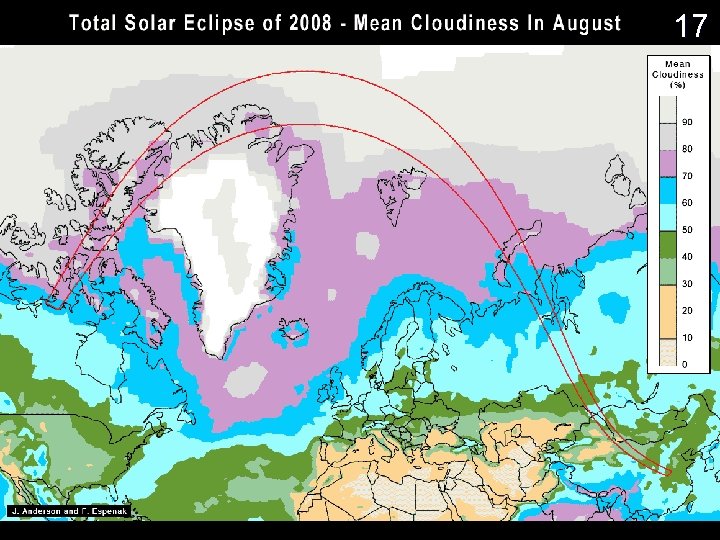 Total Solar Eclipse – 2008 Aug 01 17
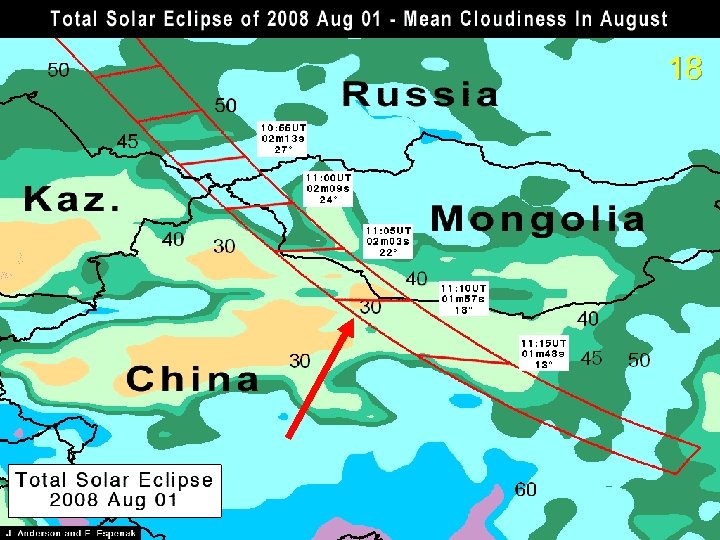 Total Solar Eclipse – 2008 Aug 01 18
 Title 19
 Title 20
 Title 21
 Title 22
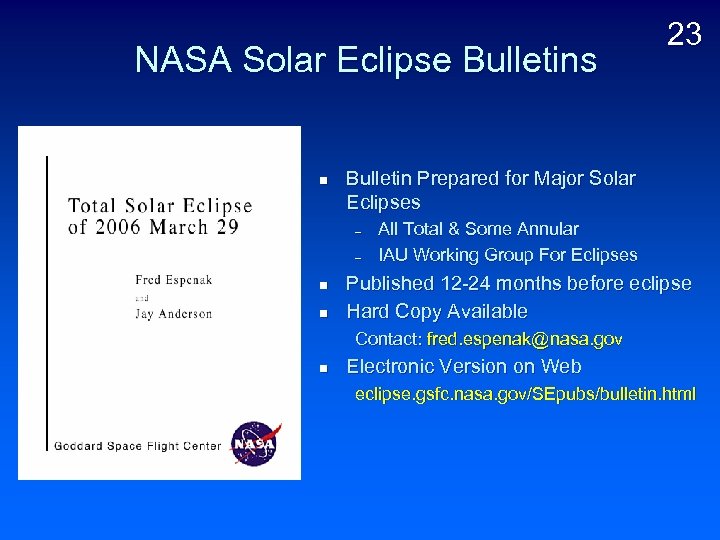 NASA Solar Eclipse Bulletins n Bulletin Prepared for Major Solar Eclipses – – n n 23 All Total & Some Annular IAU Working Group For Eclipses Published 12 -24 months before eclipse Hard Copy Available Contact: fred. espenak@nasa. gov n Electronic Version on Web eclipse. gsfc. nasa. gov/SEpubs/bulletin. html