 Скачать презентацию 1 -to-Many Distribution Vehicle Routing Part 2 John
0f2749854e2488c86a2ede31b9ea2fb4.ppt
- Количество слайдов: 25



1 -to-Many Distribution Vehicle Routing Part 2 John H. Vande Vate Spring, 2005 1 1
Our Approach • Minimize Transportation Cost (Distance) – Traveling Salesman Problem • Respect the capacity of the Vehicle – Multiple Traveling Salesmen • Consider Inventory Costs – Estimate the Transportation Cost – Estimate the Inventory Cost – Trade off these two costs. 2 2
Idea High level approach – Estimate Transportation Cost as function of frequency of delivery – Estimate Inventory cost as function of frequency of delivery – Trade off the two 3 3
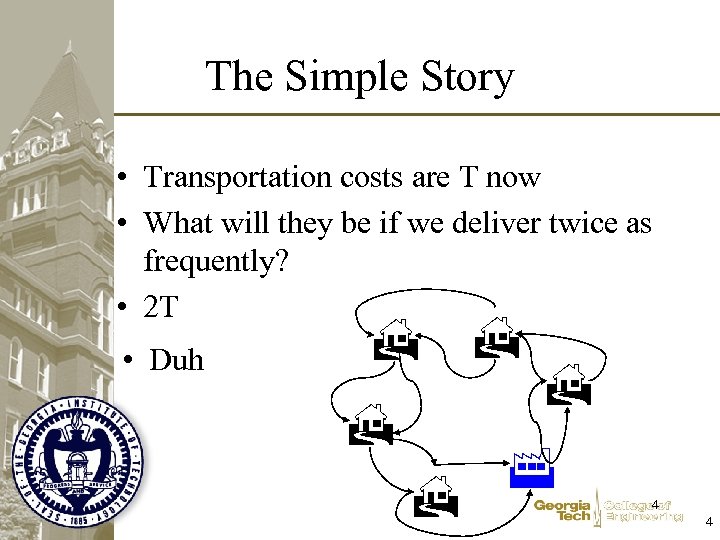
The Simple Story • Transportation costs are T now • What will they be if we deliver twice as frequently? • 2 T • Duh 4 4
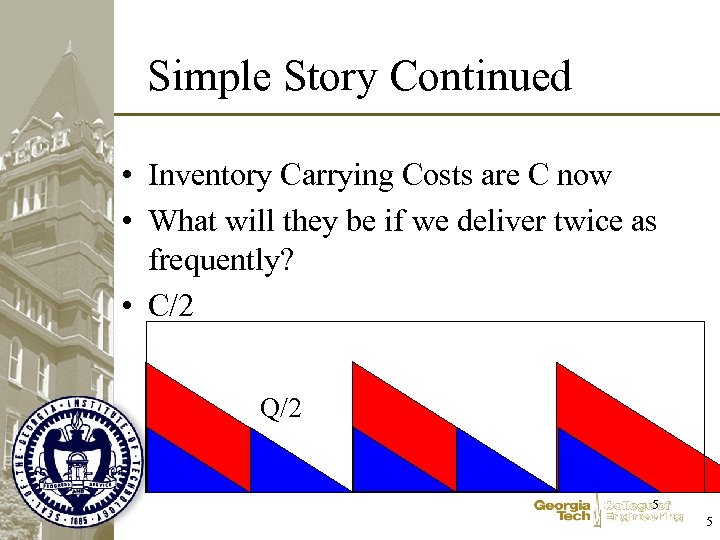
Simple Story Continued • Inventory Carrying Costs are C now • What will they be if we deliver twice as frequently? • C/2 Q/2 5 5
Look Familiar? • • n = Number of times to dispatch per year Total Cost = n. T+C/n How often to dispatch? n = C/T 6 6
System Design • We don’t know the transportation cost • How to estimate it? • Assume we have estimates of – cm = $/mile (may include $/hr figures) – cs = $/stop (may include $/hr figures) – ci = $/item …. 7 7
The Easy Stuff • Stops – Number of customers – Number of deliveries • Items – Customer demand • Miles? • What might we be important to know? 8 8
Customer Distribution • Is this rural North Dakota or Downtown Manhattan? • Might estimate it from – Census information – Marketing information – GIS • Customer Density – customers per sq. mile 9 9
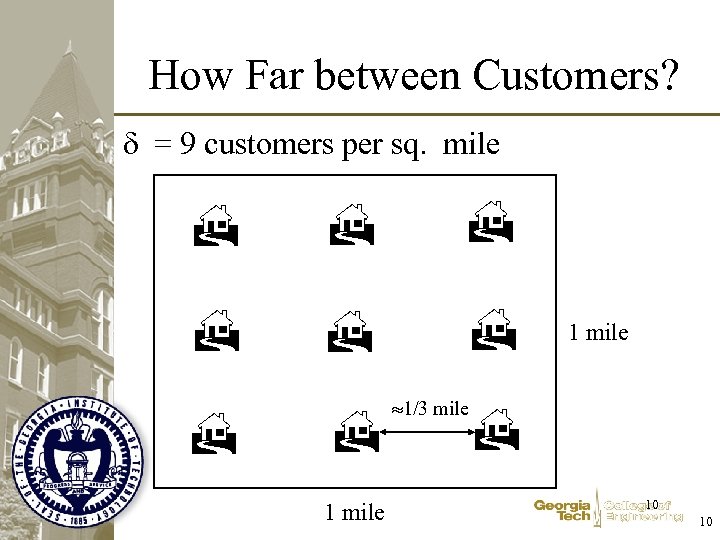
How Far between Customers? = 9 customers per sq. mile 1/3 mile 10 10
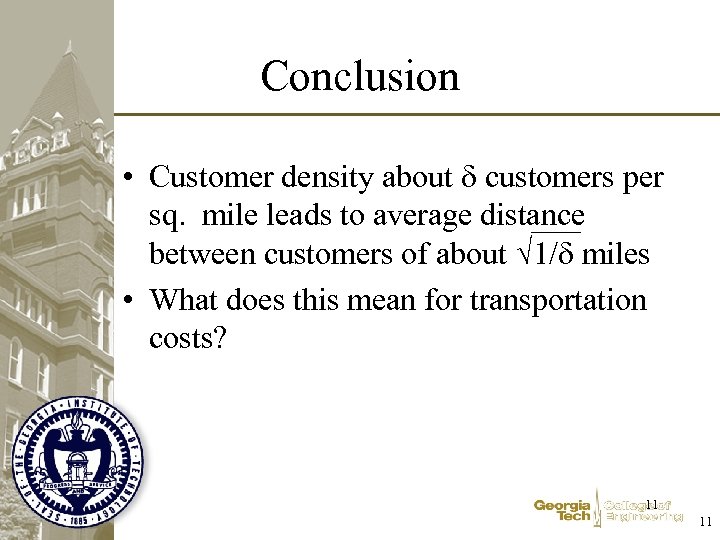
Conclusion • Customer density about customers per sq. mile leads to average distance between customers of about 1/ miles • What does this mean for transportation costs? 11 11
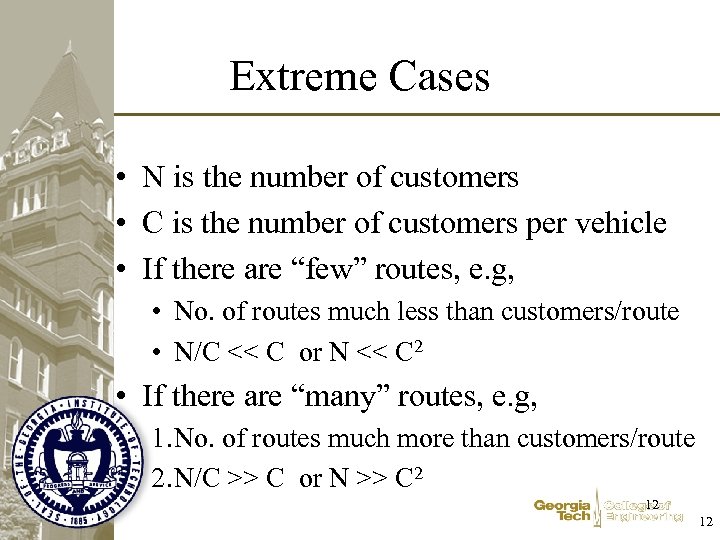
Extreme Cases • N is the number of customers • C is the number of customers per vehicle • If there are “few” routes, e. g, • No. of routes much less than customers/route • N/C << C or N << C 2 • If there are “many” routes, e. g, 1. No. of routes much more than customers/route 2. N/C >> C or N >> C 2 12 12
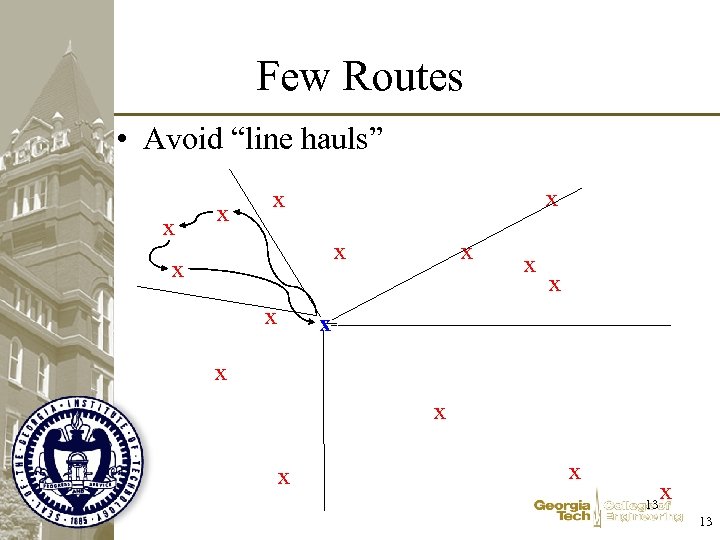
Few Routes • Avoid “line hauls” x x x x 13
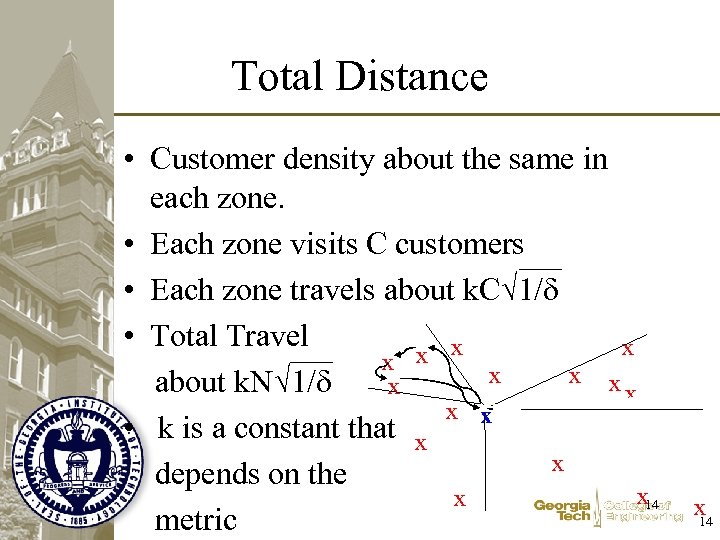
Total Distance • Customer density about the same in each zone. • Each zone visits C customers • Each zone travels about k. C 1/ • Total Travel x x x x about k. N 1/ x x • k is a constant that x x depends on the x 14 x metric x 14
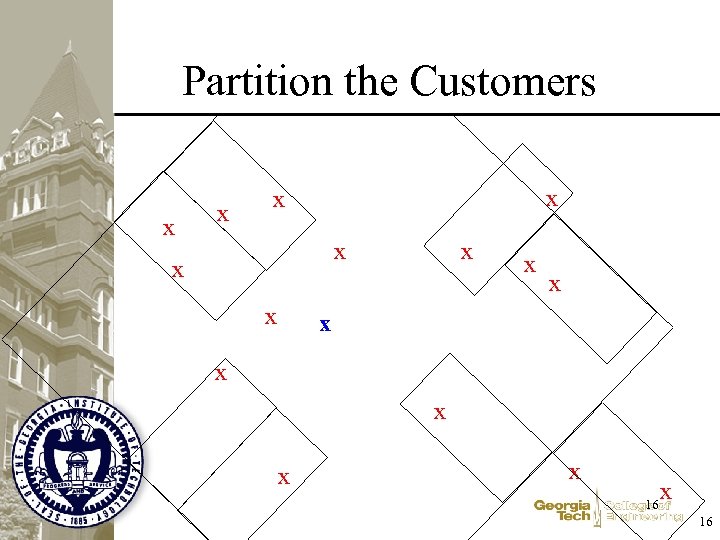
Many Routes • If there are “many” routes, e. g, • No. of routes much more than customers/route • N/C >> C or N >> C 2 • Can’t fit them all around the DC • Approach more like the strip heuristic 15 15
Partition the Customers x x x x 16
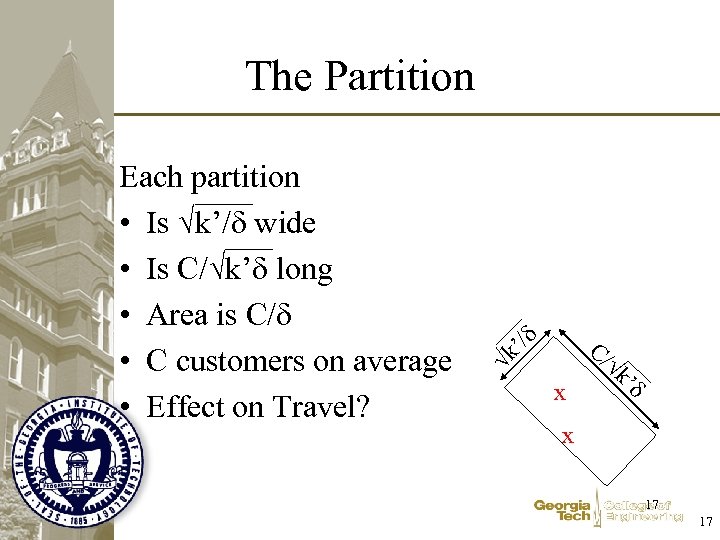
The Partition ’/ C/ k Each partition • Is k’/ wide • Is C/ k’ long • Area is C/ • C customers on average • Effect on Travel? x k ’ x 17 17
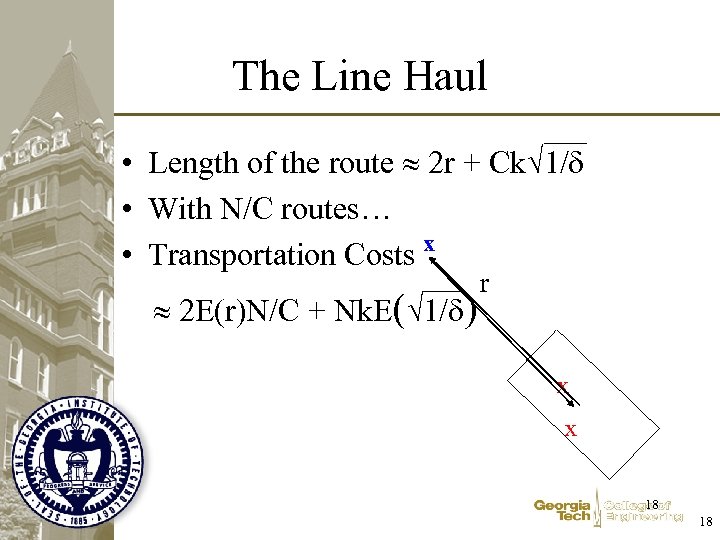
The Line Haul • Length of the route 2 r + Ck 1/ • With N/C routes… x • Transportation Costs 2 E(r)N/C + Nk. E( 1/ ) r x x 18 18
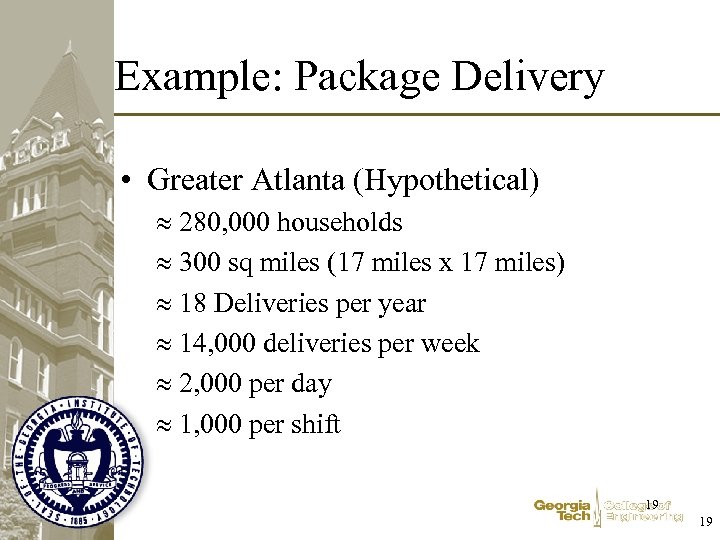
Example: Package Delivery • Greater Atlanta (Hypothetical) 280, 000 households 300 sq miles (17 miles x 17 miles) 18 Deliveries per year 14, 000 deliveries per week 2, 000 per day 1, 000 per shift 19 19
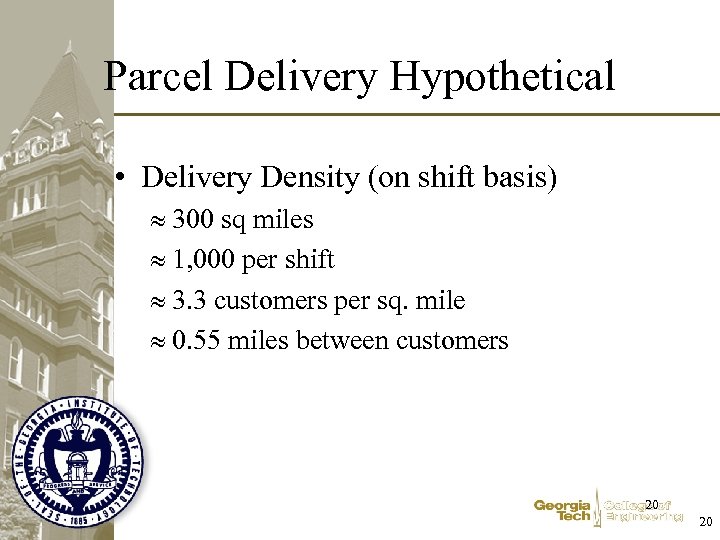
Parcel Delivery Hypothetical • Delivery Density (on shift basis) 300 sq miles 1, 000 per shift 3. 3 customers per sq. mile 0. 55 miles between customers 20 20
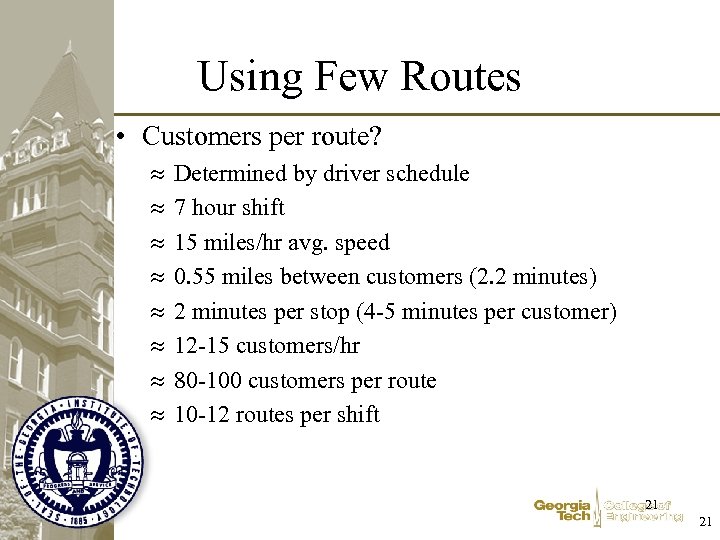
Using Few Routes • Customers per route? Determined by driver schedule 7 hour shift 15 miles/hr avg. speed 0. 55 miles between customers (2. 2 minutes) 2 minutes per stop (4 -5 minutes per customer) 12 -15 customers/hr 80 -100 customers per route 10 -12 routes per shift 21 21
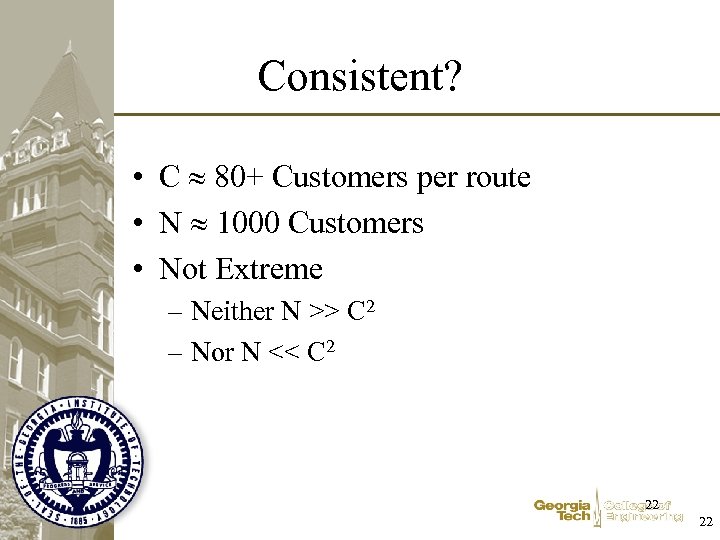
Consistent? • C 80+ Customers per route • N 1000 Customers • Not Extreme – Neither N >> C 2 – Nor N << C 2 22 22
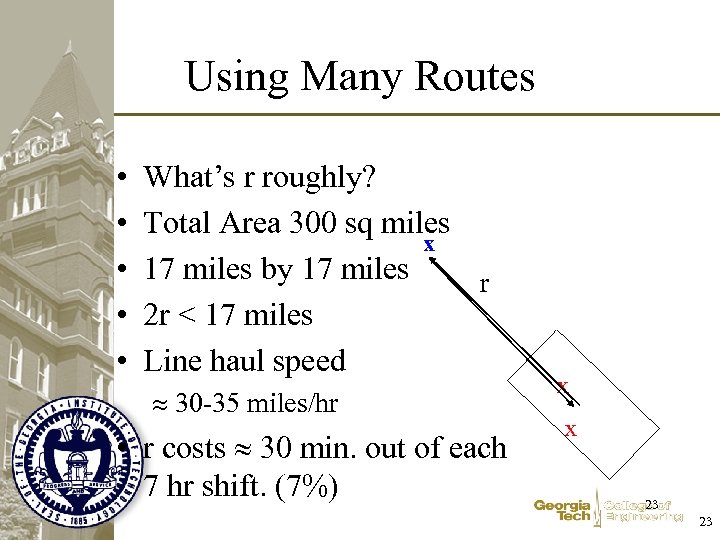
Using Many Routes • • • What’s r roughly? Total Area 300 sq miles x 17 miles by 17 miles r 2 r < 17 miles Line haul speed 30 -35 miles/hr • r costs 30 min. out of each 7 hr shift. (7%) x x 23 23
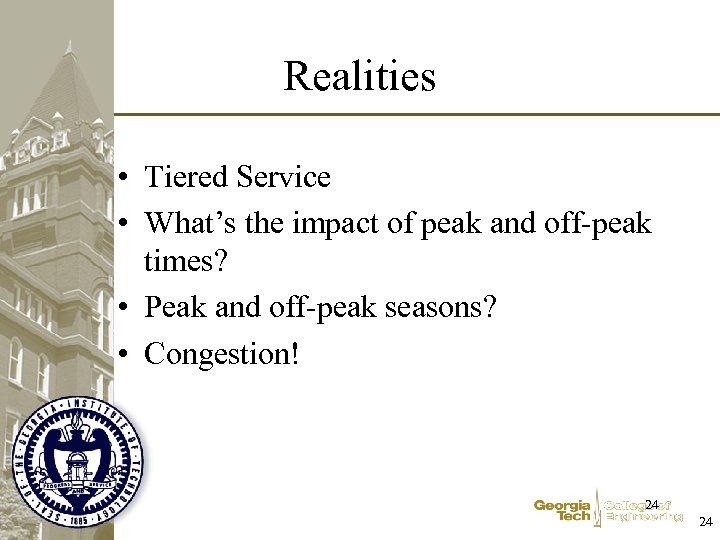
Realities • Tiered Service • What’s the impact of peak and off-peak times? • Peak and off-peak seasons? • Congestion! 24 24
Ford Service Parts • Suppose Ford operated the delivery fleet • What to do? – Deliver to all the Dealerships at once? – Stagger deliveries? • What’s the trade-off? • Proposals? 25 25
Скачать презентацию 1 -to-Many Distribution Vehicle Routing Part 2 John
0f2749854e2488c86a2ede31b9ea2fb4.ppt