


 Скачать презентацию 1 The Universe 1 2 3 4
The Universe notes FCAT edition.ppt
- Количество слайдов: 35
 1
1
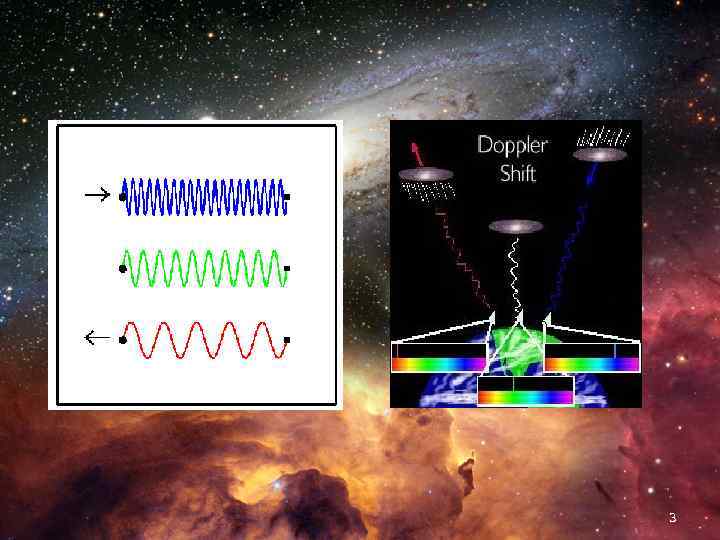
 The Universe 1. 2. 3. 4. Only one exists. Composed of space and 100 billion galaxies. A galaxy is a grouping of millions or billions of stars kept together by gravity. Edwin Hubble (in 1929) proposed that the Universe is expanding. a. This is supported by a phenomenon called the Doppler shift. 1) Stars are moving away from Earth and their light becomes dimmer. This is called the red shift. This gives support of the expanding universe. 2) If stars move toward Earth, we see a blue shift – light becomes brighter. 2
 3
3
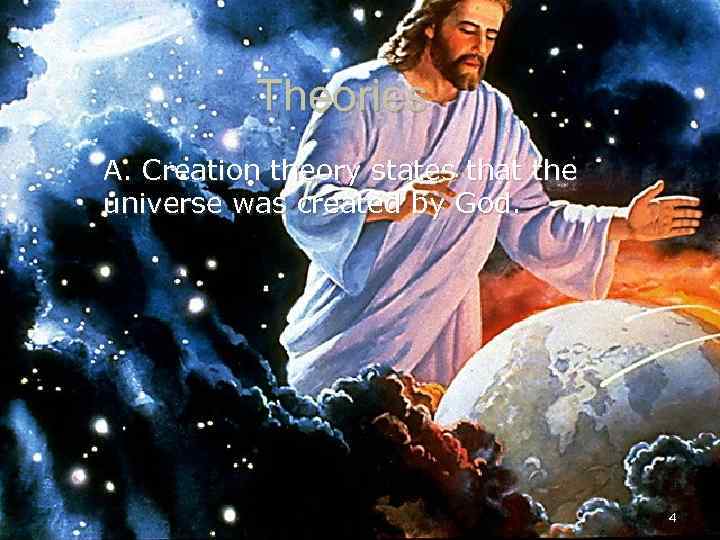 Theories A. Creation theory states that the universe was created by God. 4
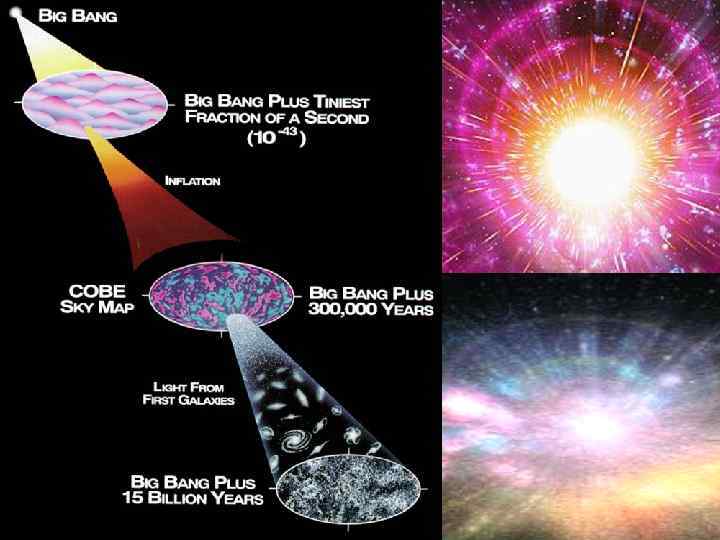
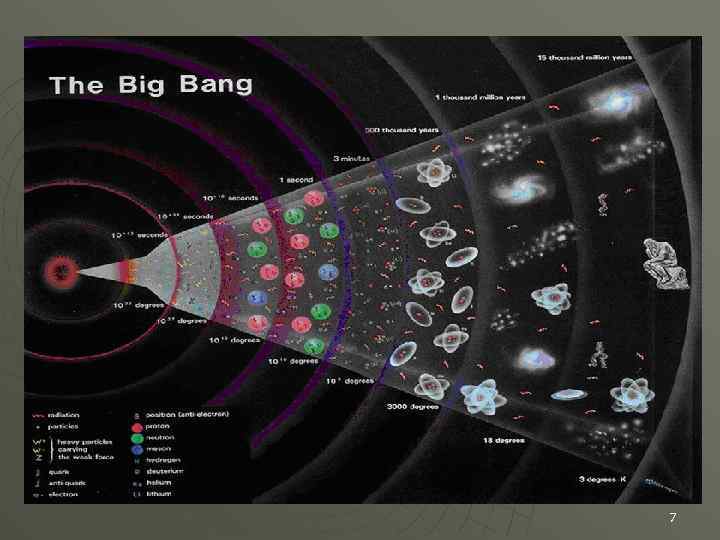
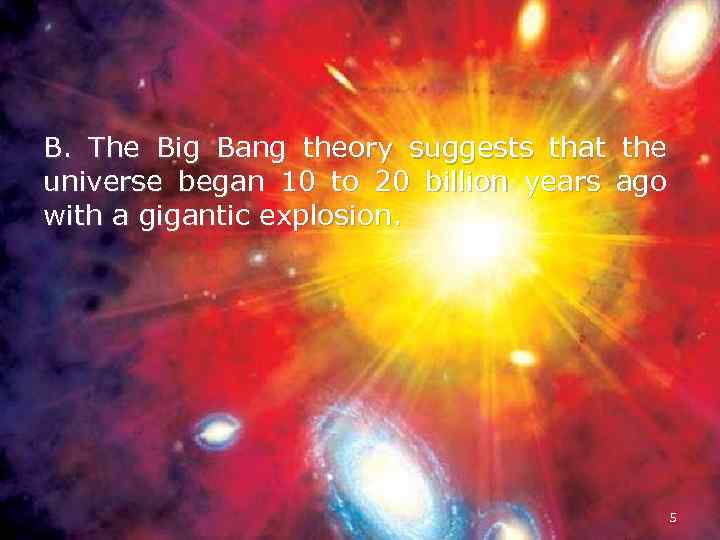 B. The Big Bang theory suggests that the universe began 10 to 20 billion years ago with a gigantic explosion. 5
 6
6
 7
7
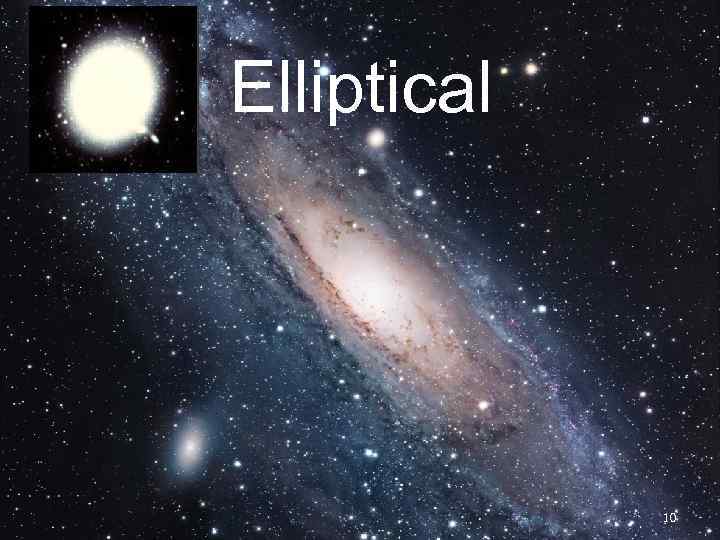
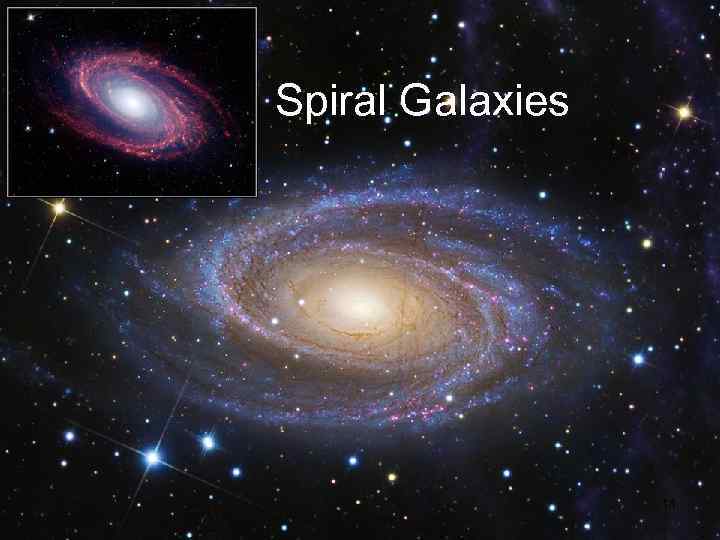
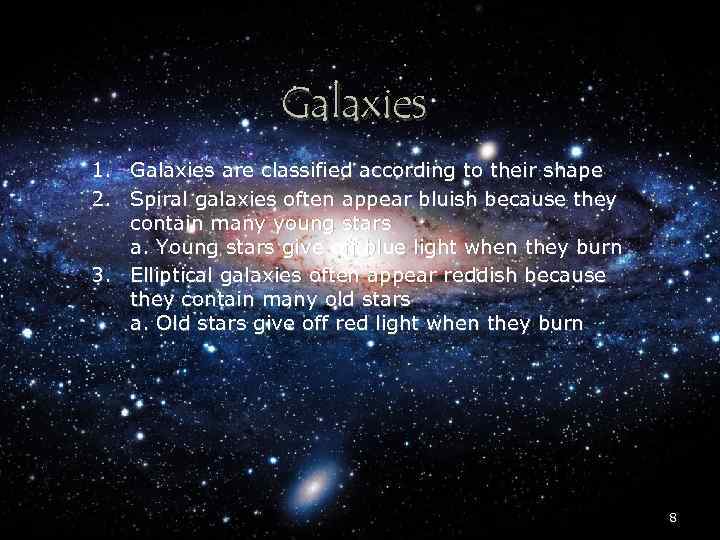 Galaxies 1. Galaxies are classified according to their shape 2. Spiral galaxies often appear bluish because they contain many young stars a. Young stars give off blue light when they burn 3. Elliptical galaxies often appear reddish because they contain many old stars a. Old stars give off red light when they burn 8
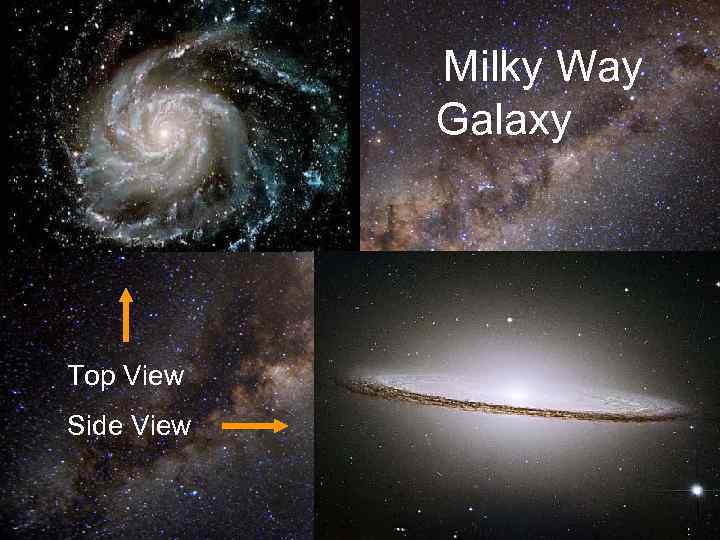
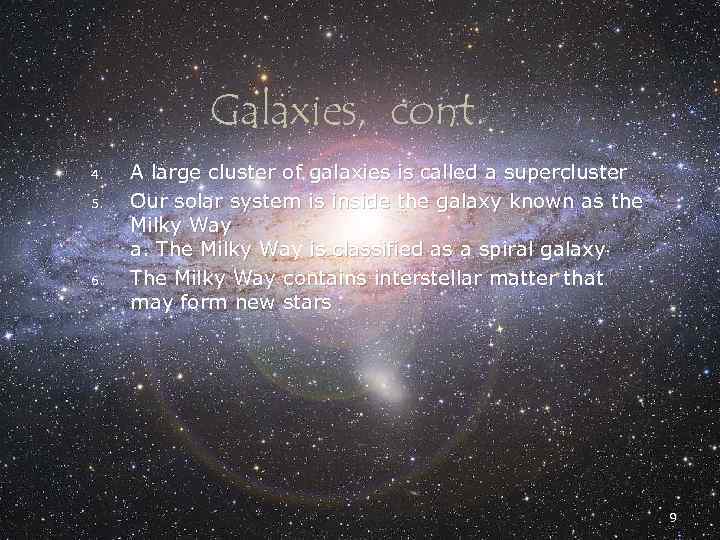 Galaxies, cont. 4. 5. 6. A large cluster of galaxies is called a supercluster Our solar system is inside the galaxy known as the Milky Way a. The Milky Way is classified as a spiral galaxy The Milky Way contains interstellar matter that may form new stars 9
 Elliptical 10
 Spiral Galaxies 11
 Milky Way Galaxy Top View Side View 12
 Stars 1. Distances between stars are measured in lightyears - the distance that light travels in one earth year. 2. The closest stars to Earth are 4. 3 light-years away. 3. Properties of stars: a. They produce their own light. b. They radiate (give off) these types of energy: heat, electromagnetic and light. 13
 c. Their surface temperatures are estimated based on their color. I. Hotter stars glow with light that is more intense at shorter wavelengths giving them a blue appearance. d. Their apparent brightness is dependent on their temperature, distance from earth, and size. 14
 3. Properties of stars a. They produce their own light b. They radiate (give off) these types of energy: heat, electromagnetic and light CJVYTYBZ 15
 16
16
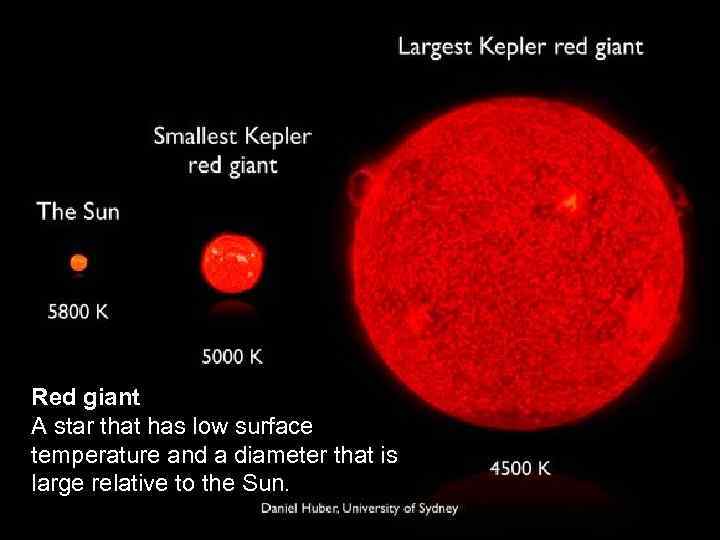 Red giant A star that has low surface temperature and a diameter that is large relative to the Sun. 17
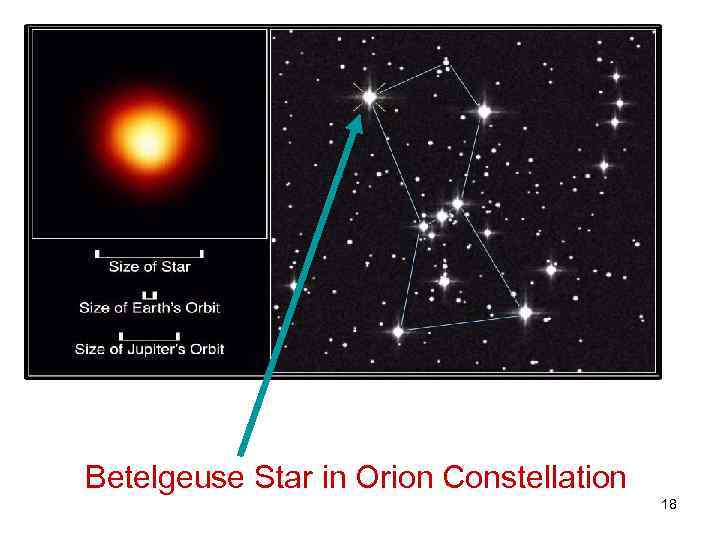 Betelgeuse Star in Orion Constellation 18
 Stars, cont. e. Held together by gravitational forces f. Hydrogen combines to form helium on stars. This is called a fusion reaction and produces energy g. Our sun is a typical star. 19
 4. The life of a star: a. About 90 percent of all stars are in the middle of their life cycles. b. A star is born when gas and dust collapse inward. c. Supergiant stars form supernovas d. Most of the stars in the Milky Way, which are relatively small, will end their lives as white dwarfs. 20
 The Solar System 1. Copernicus (1473 -1543) first proposed that Earth and the other planets orbit the sun 2. The orbits of the planet were first said to be elliptical by Kepler (1571 -1630) 3. The brightest object in our sky (besides the sun and the moon) is Venus 21
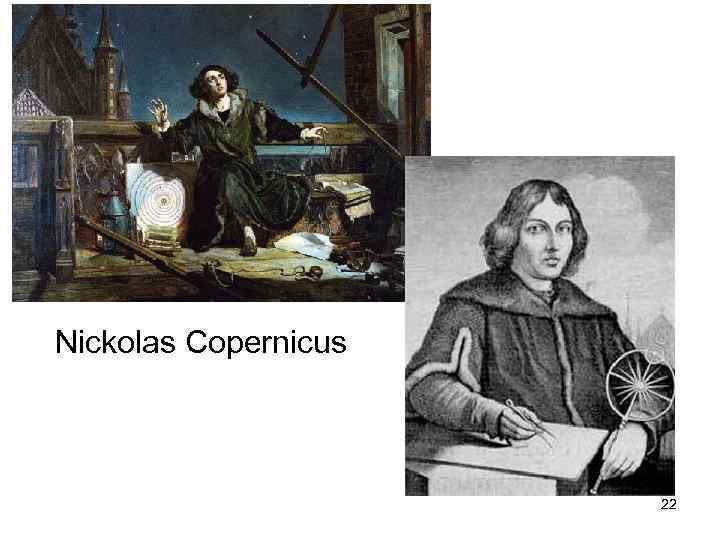 Nickolas Copernicus 22
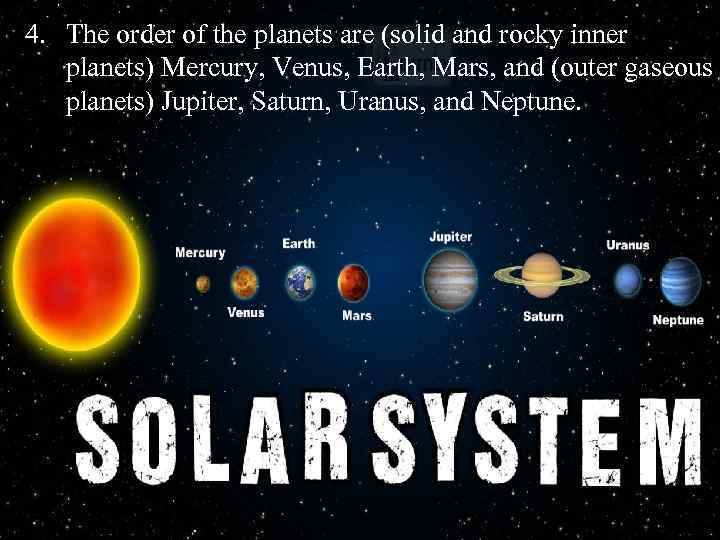 4. The order of the planets are (solid and rocky inner planets) Mercury, Venus, Earth, Mars, and (outer gaseous planets) Jupiter, Saturn, Uranus, and Neptune. 23
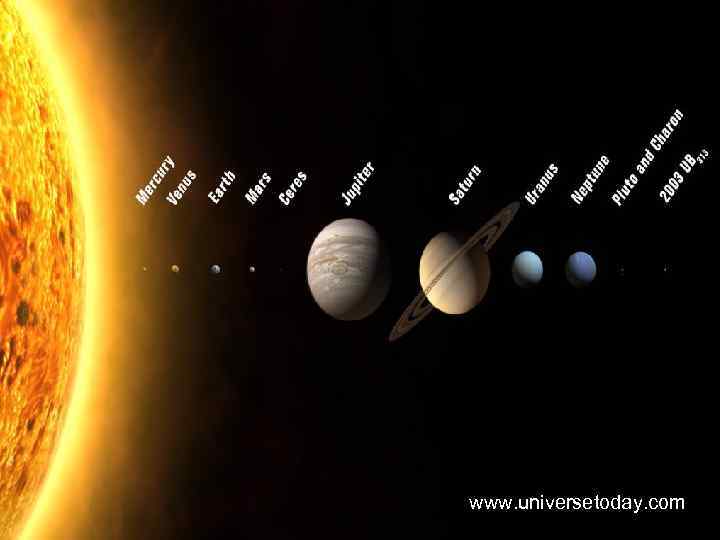 24 www. universetoday. com
 I. Mercury is closest to the sun and has very hot temperatures. II. The inner planets and outer planets are separated by an asteroid belt. III. The great red spot on Jupiter is believed to be a giant storm. IV. All of the gaseous outer planets have rings. 25
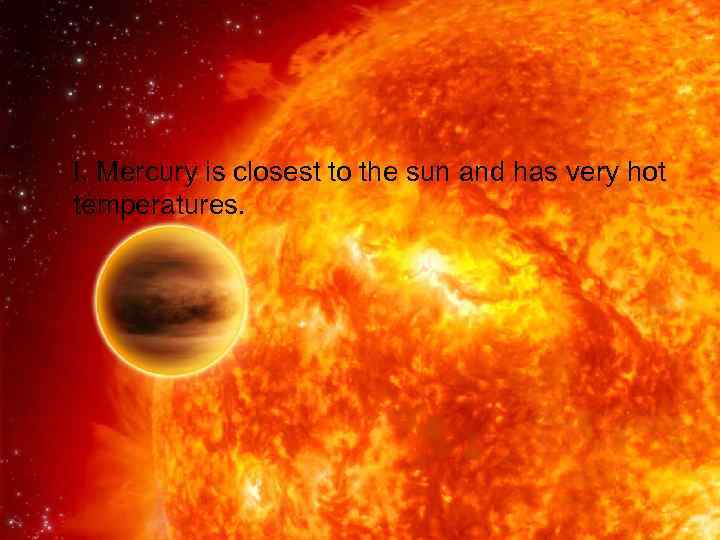 I. Mercury is closest to the sun and has very hot temperatures. 26
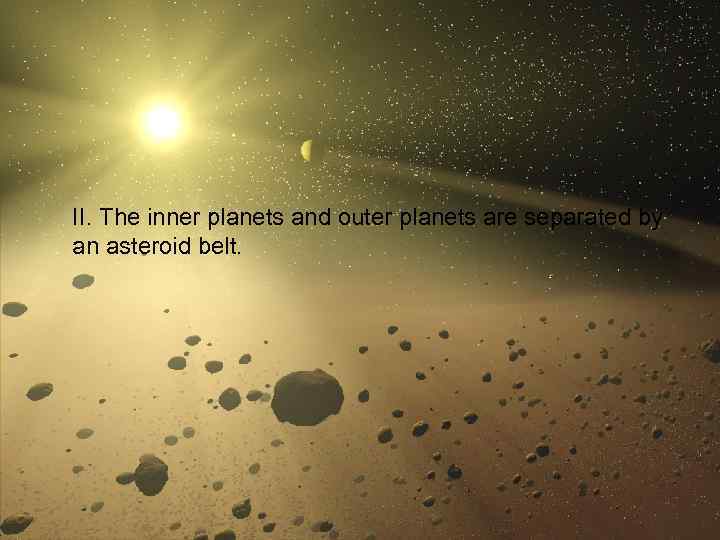 II. The inner planets and outer planets are separated by an asteroid belt. 27
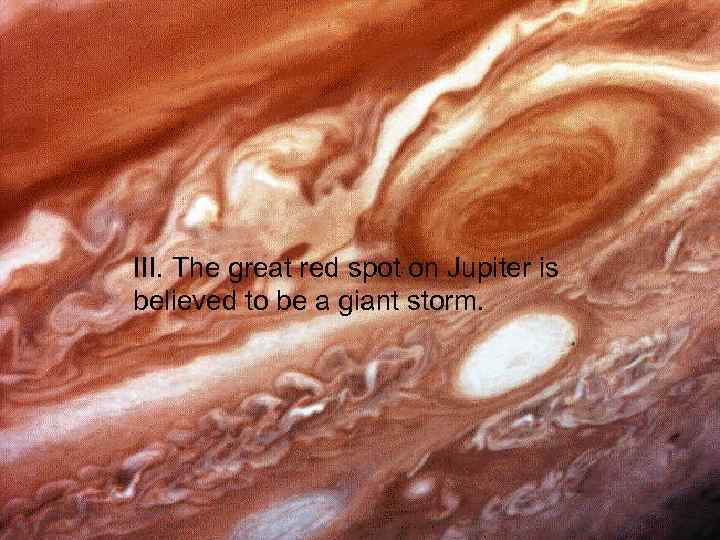 III. The great red spot on Jupiter is believed to be a giant storm. 28
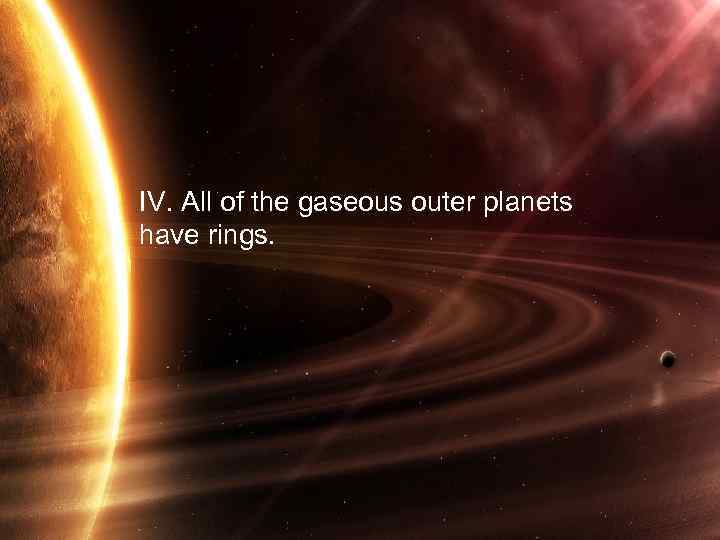 IV. All of the gaseous outer planets have rings. 29
 V. The most widely accepted model of the formation of the solar system is the nebular model where the solar system condensed out of a nebula – a huge cloud of interstellar gas and dust - Planets may have formed out of material orbiting the early sun through the process of accretion where small particles collide and stick together to form larger masses. 30
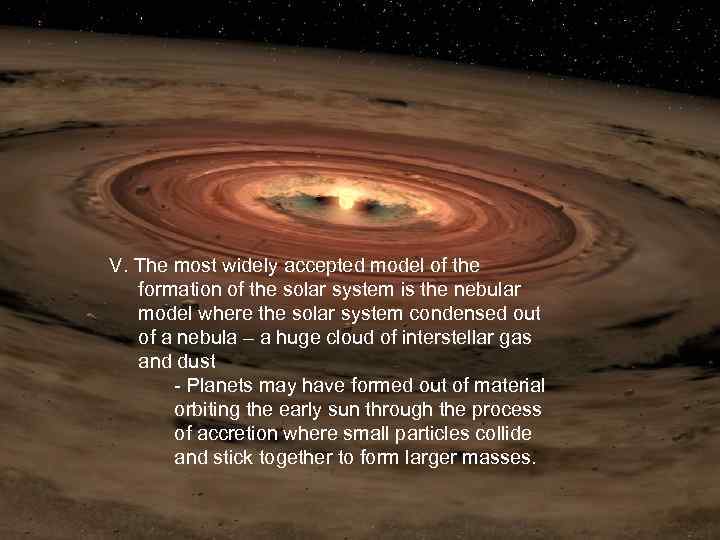 V. The most widely accepted model of the formation of the solar system is the nebular model where the solar system condensed out of a nebula – a huge cloud of interstellar gas and dust - Planets may have formed out of material orbiting the early sun through the process of accretion where small particles collide and stick together to form larger masses. 31
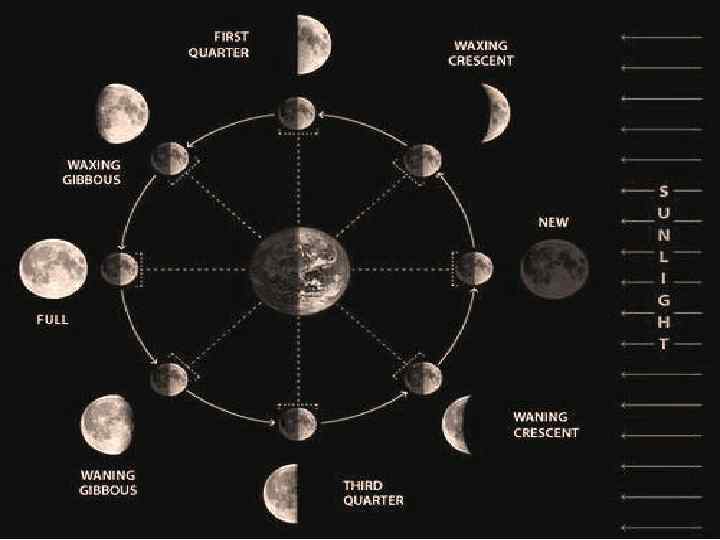
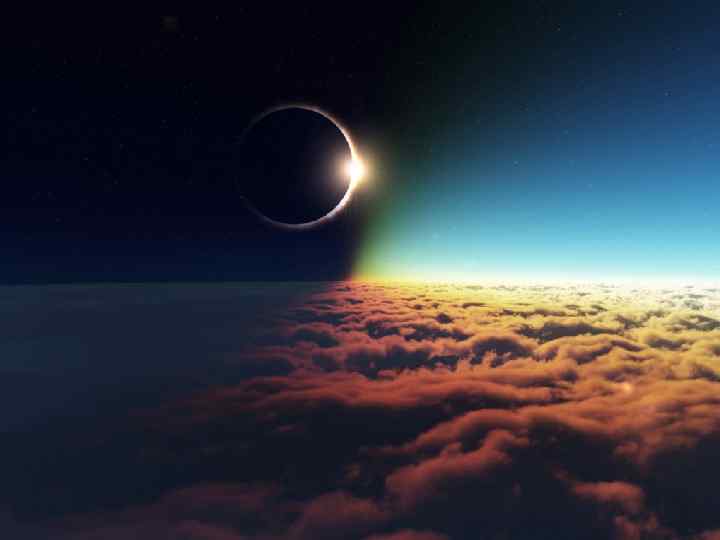
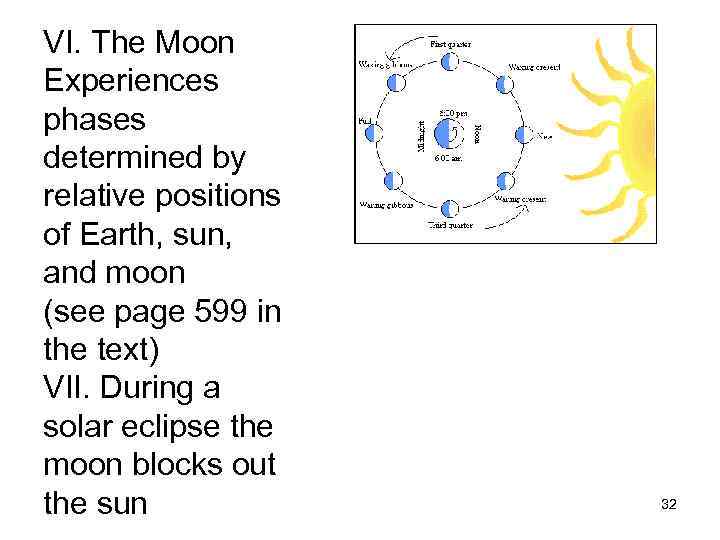 VI. The Moon Experiences phases determined by relative positions of Earth, sun, and moon (see page 599 in the text) VII. During a solar eclipse the moon blocks out the sun 32
 33
33
 34
34
 The end Thank you for your attention 35