 Скачать презентацию 1 The REACH Registry An International Prospective Observational
ecc6006bc29276acd0c58a8d6e8f598a.ppt
- Количество слайдов: 69



1 The REACH Registry An International, Prospective Observational Study in Subjects at Risk of Atherothrombotic Events in an Outpatient Setting Updated slide kit, February 2006
2 Outline Background • Burden of Disease • Risk of Atherothrombosis REACH Registry Background • Rationale and Objectives • Design REACH Registry Baseline Results • High Prevalence of Polyvascular Disease • Undertreatment of Patients with Atherothrombosis Worldwide REACH Registry Today and Beyond • Publications to Date • Upcoming Analyses and Data Availability • Participating Organizations and Scientific Committees Updated slide kit, February 2006

3 Background Updated slide kit, February 2006
4 Burden of Disease Updated slide kit, February 2006
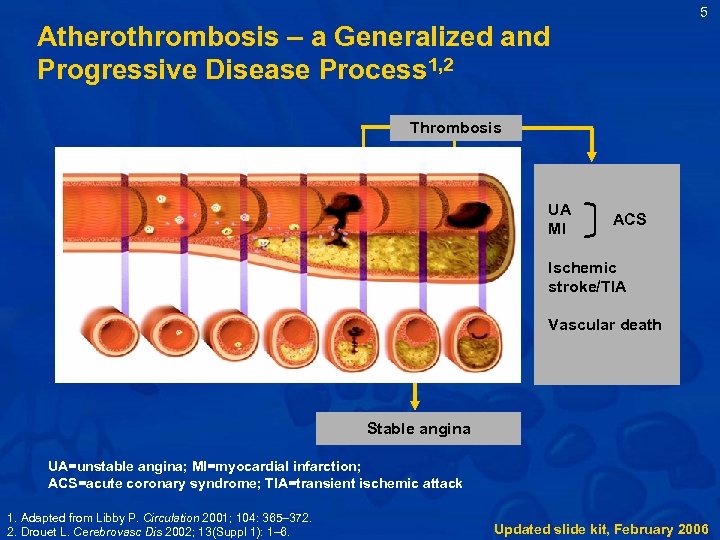
5 Atherothrombosis – a Generalized and Progressive Disease Process 1, 2 Thrombosis UA MI ACS Ischemic stroke/TIA Vascular death Stable angina UA=unstable angina; MI=myocardial infarction; ACS=acute coronary syndrome; TIA=transient ischemic attack 1. Adapted from Libby P. Circulation 2001; 104: 365– 372. 2. Drouet L. Cerebrovasc Dis 2002; 13(Suppl 1): 1– 6. Updated slide kit, February 2006
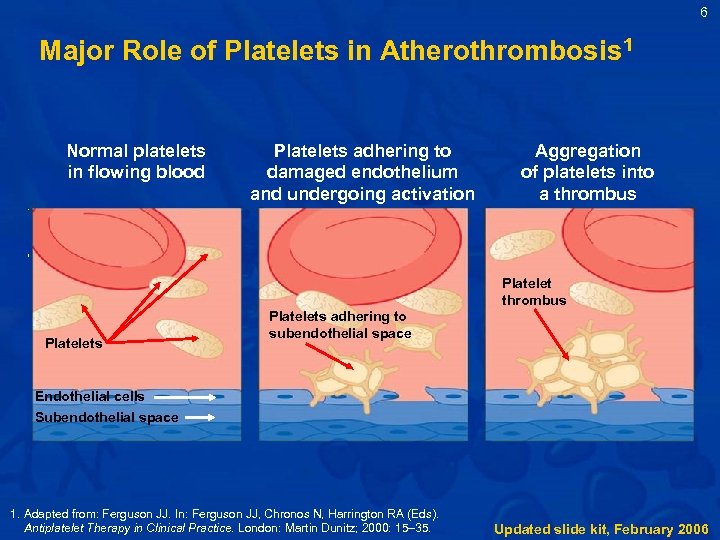
6 Major Role of Platelets in Atherothrombosis 1 Normal platelets in flowing blood Platelets adhering to damaged endothelium and undergoing activation Aggregation of platelets into a thrombus Platelets adhering to subendothelial space Endothelial cells Subendothelial space 1. Adapted from: Ferguson JJ. In: Ferguson JJ, Chronos N, Harrington RA (Eds). Antiplatelet Therapy in Clinical Practice. London: Martin Dunitz; 2000: 15– 35. Updated slide kit, February 2006
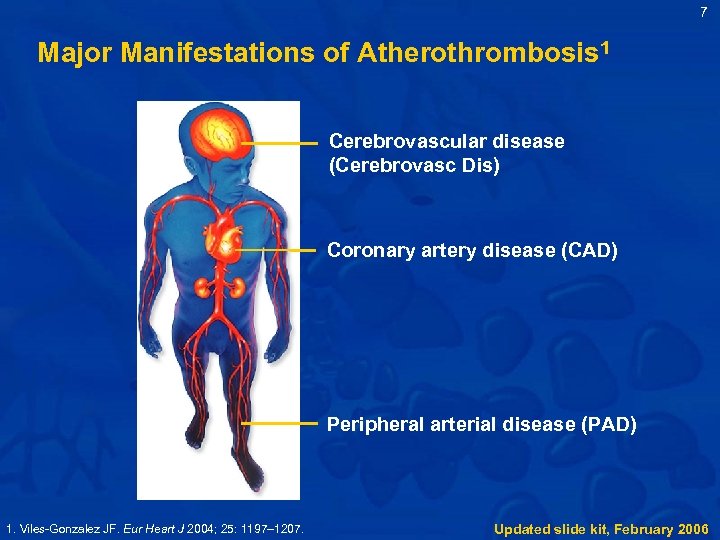
7 Major Manifestations of Atherothrombosis 1 Cerebrovascular disease (Cerebrovasc Dis) Coronary artery disease (CAD) Peripheral arterial disease (PAD) 1. Viles-Gonzalez JF. Eur Heart J 2004; 25: 1197– 1207. Updated slide kit, February 2006
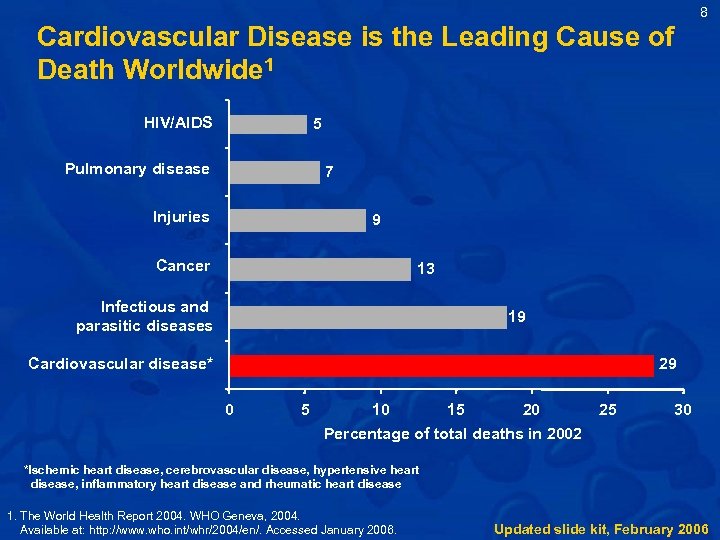
8 Cardiovascular Disease is the Leading Cause of Death Worldwide 1 HIV/AIDS 5 Pulmonary disease 7 Injuries 9 Cancer 13 Infectious and parasitic diseases 19 Cardiovascular disease* 29 0 5 10 15 20 Percentage of total deaths in 2002 25 30 *Ischemic heart disease, cerebrovascular disease, hypertensive heart disease, inflammatory heart disease and rheumatic heart disease 1. The World Health Report 2004. WHO Geneva, 2004. Available at: http: //www. who. int/whr/2004/en/. Accessed January 2006. Updated slide kit, February 2006
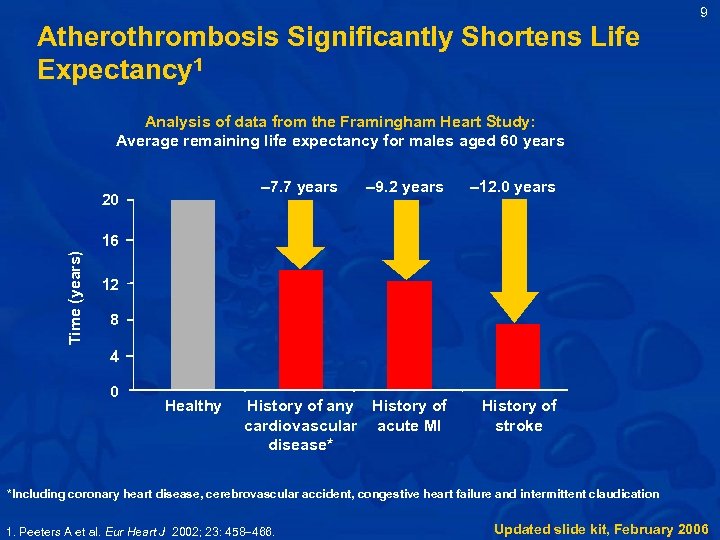
9 Atherothrombosis Significantly Shortens Life Expectancy 1 Analysis of data from the Framingham Heart Study: Average remaining life expectancy for males aged 60 years 7. 7 years 20 9. 2 years 12. 0 years History of any History of cardiovascular acute MI disease* History of stroke Time (years) 16 12 8 4 0 Healthy *Including coronary heart disease, cerebrovascular accident, congestive heart failure and intermittent claudication 1. Peeters A et al. Eur Heart J 2002; 23: 458 466. Updated slide kit, February 2006
10 Risk of Atherothrombosis Updated slide kit, February 2006
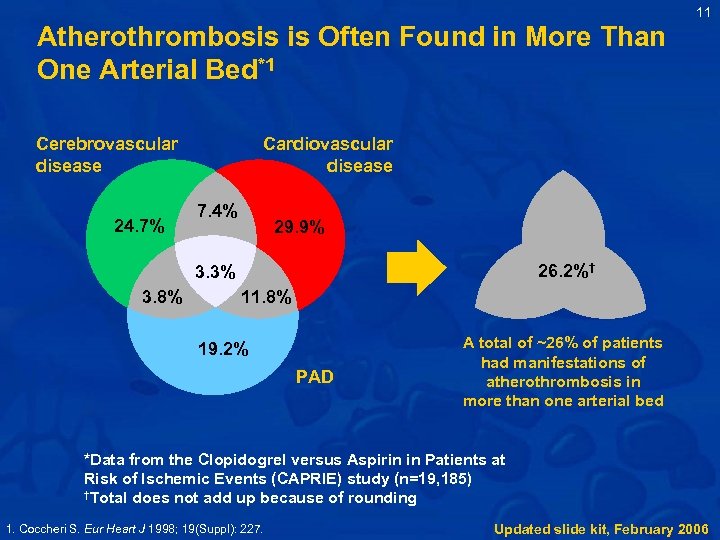
11 Atherothrombosis is Often Found in More Than One Arterial Bed*1 Cardiovascular disease Cerebrovascular disease 24. 7% 7. 4% 29. 9% 26. 2%† 3. 3% 3. 8% 11. 8% 19. 2% PAD A total of ~26% of patients had manifestations of atherothrombosis in more than one arterial bed *Data from the Clopidogrel versus Aspirin in Patients at Risk of Ischemic Events (CAPRIE) study (n=19, 185) †Total does not add up because of rounding 1. Coccheri S. Eur Heart J 1998; 19(Suppl): 227. Updated slide kit, February 2006
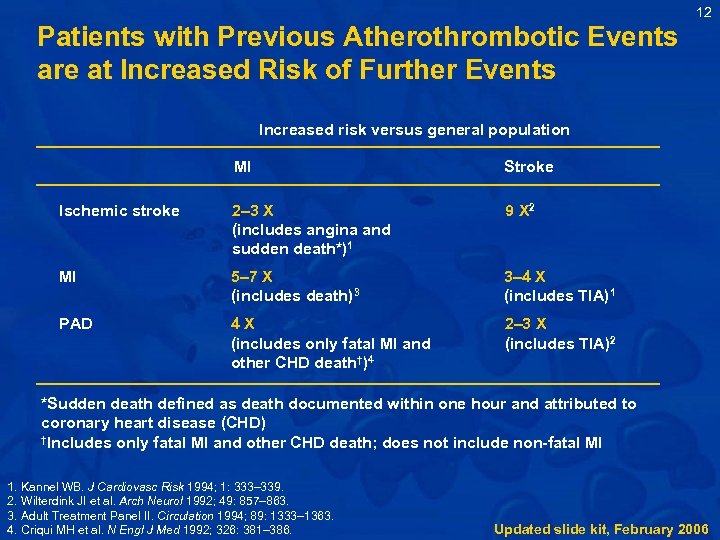
12 Patients with Previous Atherothrombotic Events are at Increased Risk of Further Events Increased risk versus general population MI Stroke Ischemic stroke 2– 3 X (includes angina and sudden death*)1 9 X 2 MI 5– 7 X (includes death)3 3– 4 X (includes TIA)1 PAD 4 X (includes only fatal MI and other CHD death†)4 2– 3 X (includes TIA)2 *Sudden death defined as death documented within one hour and attributed to coronary heart disease (CHD) †Includes only fatal MI and other CHD death; does not include non-fatal MI 1. 2. 3. 4. Kannel WB. J Cardiovasc Risk 1994; 1: 333– 339. Wilterdink JI et al. Arch Neurol 1992; 49: 857– 863. Adult Treatment Panel II. Circulation 1994; 89: 1333– 1363. Criqui MH et al. N Engl J Med 1992; 326: 381– 386. Updated slide kit, February 2006
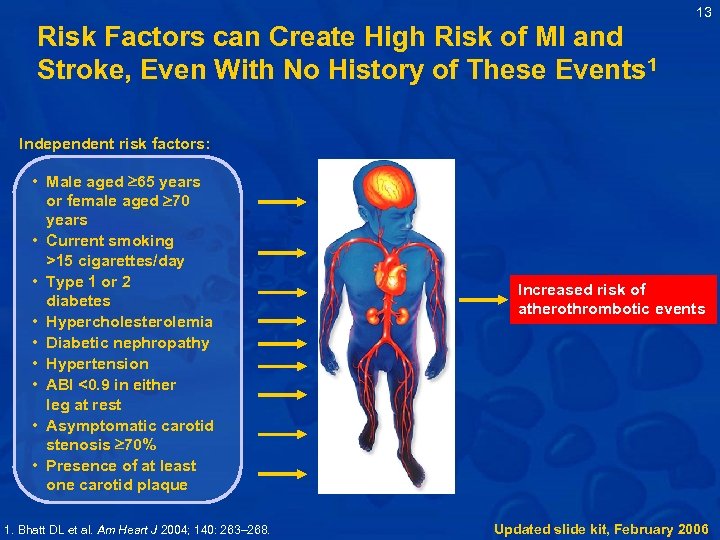
13 Risk Factors can Create High Risk of MI and Stroke, Even With No History of These Events 1 Independent risk factors: • Male aged 65 years or female aged 70 years • Current smoking >15 cigarettes/day • Type 1 or 2 diabetes • Hypercholesterolemia • Diabetic nephropathy • Hypertension • ABI <0. 9 in either leg at rest • Asymptomatic carotid stenosis 70% • Presence of at least one carotid plaque 1. Bhatt DL et al. Am Heart J 2004; 140: 263– 268. Increased risk of atherothrombotic events Updated slide kit, February 2006
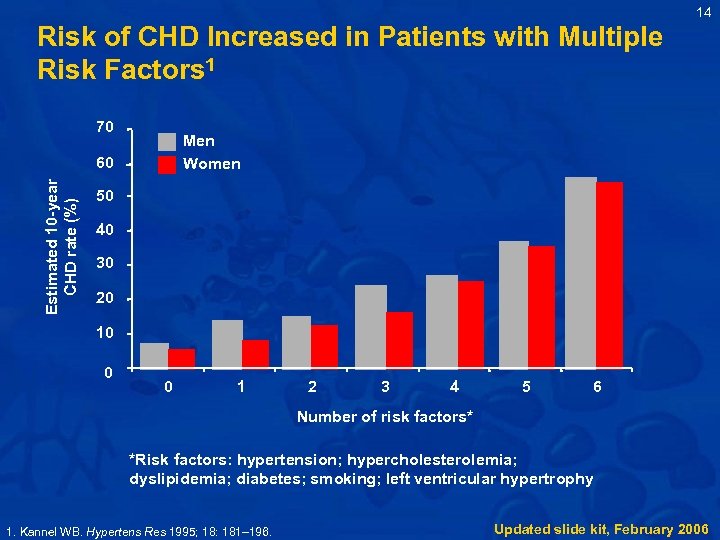
14 Risk of CHD Increased in Patients with Multiple Risk Factors 1 70 Men Women Estimated 10 -year CHD rate (%) 60 50 40 30 20 10 0 0 1 2 3 4 5 6 Number of risk factors* *Risk factors: hypertension; hypercholesterolemia; dyslipidemia; diabetes; smoking; left ventricular hypertrophy 1. Kannel WB. Hypertens Res 1995; 18: 181– 196. Updated slide kit, February 2006
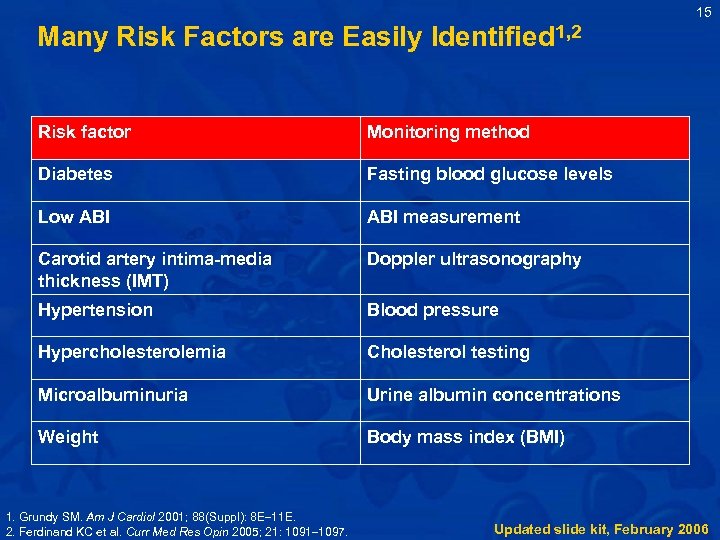
15 Many Risk Factors are Easily Identified 1, 2 Risk factor Monitoring method Diabetes Fasting blood glucose levels Low ABI measurement Carotid artery intima-media thickness (IMT) Doppler ultrasonography Hypertension Blood pressure Hypercholesterolemia Cholesterol testing Microalbuminuria Urine albumin concentrations Weight Body mass index (BMI) 1. Grundy SM. Am J Cardiol 2001; 88(Suppl): 8 E 11 E. 2. Ferdinand KC et al. Curr Med Res Opin 2005; 21: 1091 1097. Updated slide kit, February 2006
16 REACH Registry: Background Updated slide kit, February 2006

17 REACH Registry: Rationale and Objectives Updated slide kit, February 2006
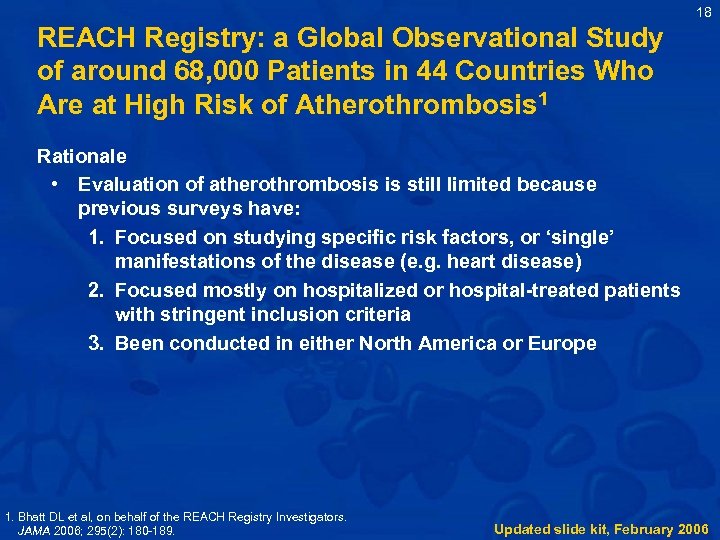
18 REACH Registry: a Global Observational Study of around 68, 000 Patients in 44 Countries Who Are at High Risk of Atherothrombosis 1 Rationale • Evaluation of atherothrombosis is still limited because previous surveys have: 1. Focused on studying specific risk factors, or ‘single’ manifestations of the disease (e. g. heart disease) 2. Focused mostly on hospitalized or hospital-treated patients with stringent inclusion criteria 3. Been conducted in either North America or Europe 1. Bhatt DL et al, on behalf of the REACH Registry Investigators. JAMA 2006; 295(2): 180 -189. Updated slide kit, February 2006
19 REACH Registry: a Global Observational Study of around 68, 000 Patients in 44 Countries Who Are at High Risk of Atherothrombosis 1 The REACH Registry should have these added advantages: • The most globally inclusive and geographically extensive registry of patients at high risk of heart attack and stroke • Includes a broad spectrum of patient types – with or without a previous history of disease • Provides data from a ‘real world’ setting, reflecting daily practice 1. Bhatt DL et al, on behalf of the REACH Registry Investigators. JAMA 2006; 295(2): 180 -189. Updated slide kit, February 2006
20 REACH Registry: Objectives 1 Primary objectives are: Compile international data set to extend knowledge of atherothrombotic risk factors and ischemic events in the outpatient setting Provide a better understanding of the prevalence and clinical consequences of atherothrombosis in a wide range of patients from different parts of the world 1. Ohman EM et al, on behalf of the REACH Registry Investigators. Am Heart J 2006; in press. Important intermediate investigations have included: Assess use of risk management strategies and 18 - to 24 -month outcomes in a broad outpatient population encompassing various geographic regions and physician specialties Updated slide kit, February 2006
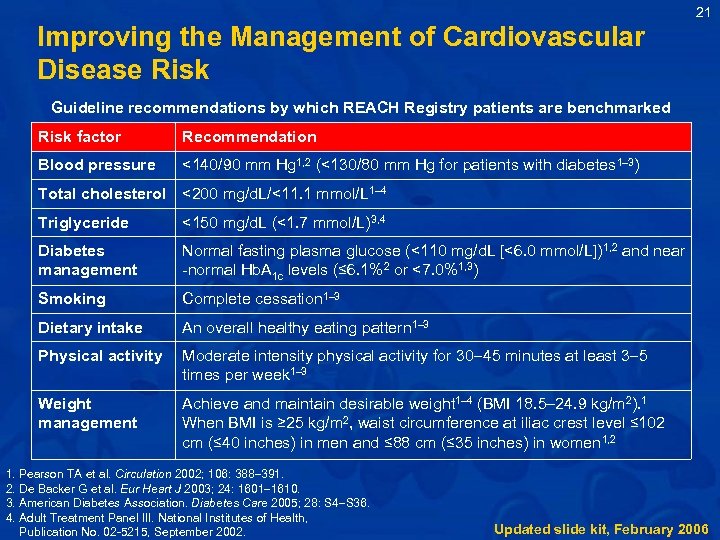
21 Improving the Management of Cardiovascular Disease Risk Guideline recommendations by which REACH Registry patients are benchmarked Risk factor Recommendation Blood pressure <140/90 mm Hg 1, 2 (<130/80 mm Hg for patients with diabetes 1 3) Total cholesterol <200 mg/d. L/<11. 1 mmol/L 1– 4 Triglyceride <150 mg/d. L (<1. 7 mmol/L)3, 4 Diabetes management Normal fasting plasma glucose (<110 mg/d. L [<6. 0 mmol/L])1, 2 and near -normal Hb. A 1 c levels (≤ 6. 1%2 or <7. 0%1, 3) Smoking Complete cessation 1 3 Dietary intake An overall healthy eating pattern 1 3 Physical activity Moderate intensity physical activity for 30 45 minutes at least 3 5 times per week 1 3 Weight management Achieve and maintain desirable weight 1 4 (BMI 18. 5– 24. 9 kg/m 2). 1 When BMI is ≥ 25 kg/m 2, waist circumference at iliac crest level ≤ 102 cm (≤ 40 inches) in men and ≤ 88 cm (≤ 35 inches) in women 1, 2 1. Pearson TA et al. Circulation 2002; 106: 388 391. 2. De Backer G et al. Eur Heart J 2003; 24: 1601 1610. 3. American Diabetes Association. Diabetes Care 2005; 28: S 4 S 36. 4. Adult Treatment Panel III. National Institutes of Health, Publication No. 02 -5215, September 2002. Updated slide kit, February 2006
22 What do we hope the REACH Registry will achieve? REACH is the most geographically and ethnically diverse atherothrombotic population yet surveyed, providing the most accurate view to date of burden of disease and long-term prognosis for patients at high risk for atherothrombotic events With up to four years of clinical follow-up, the REACH Registry will provide long-term insights into real-world event rates, treatment patterns and outcomes help to improve assessment and management of stroke, heart attack and associated risk factors Updated slide kit, February 2006
23 REACH Registry: Design Updated slide kit, February 2006
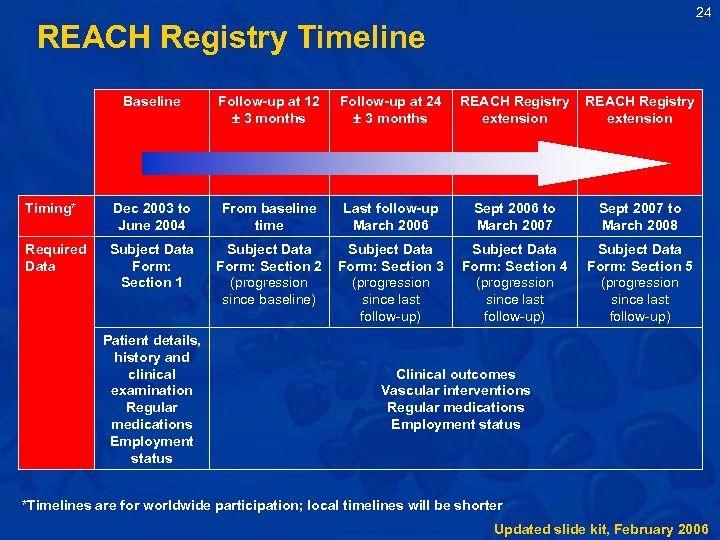
24 REACH Registry Timeline Baseline Follow-up at 12 3 months Follow-up at 24 3 months REACH Registry extension Timing* Dec 2003 to June 2004 From baseline time Last follow-up March 2006 Sept 2006 to March 2007 Sept 2007 to March 2008 Required Data Subject Data Form: Section 1 Subject Data Form: Section 2 (progression since baseline) Subject Data Form: Section 3 (progression since last follow-up) Subject Data Form: Section 4 (progression since last follow-up) Subject Data Form: Section 5 (progression since last follow-up) Patient details, history and clinical examination Regular medications Employment status Clinical outcomes Vascular interventions Regular medications Employment status *Timelines are for worldwide participation; local timelines will be shorter Updated slide kit, February 2006
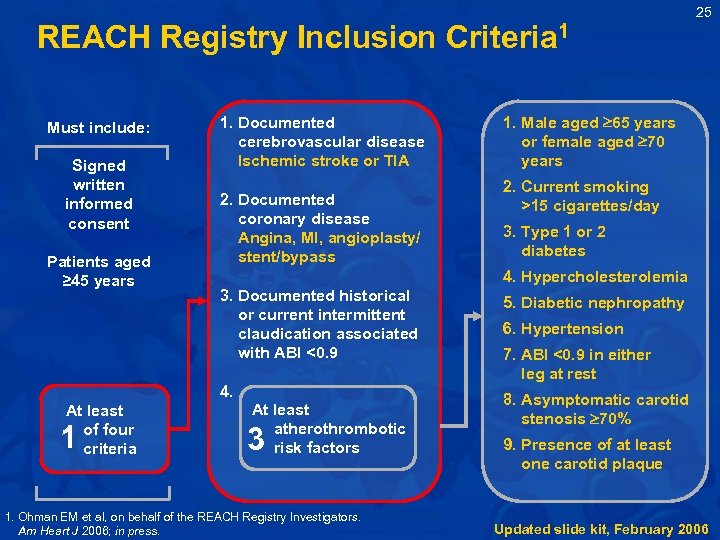
REACH Registry Inclusion Criteria 1 Must include: Signed written informed consent Patients aged ≥ 45 years 1. Documented cerebrovascular disease Ischemic stroke or TIA 2. Documented coronary disease Angina, MI, angioplasty/ stent/bypass 1 1. Male aged 65 years or female aged 70 years 2. Current smoking >15 cigarettes/day 3. Type 1 or 2 diabetes 4. Hypercholesterolemia 3. Documented historical or current intermittent claudication associated with ABI <0. 9 4. At least of four criteria 25 At least atherothrombotic risk factors 3 1. Ohman EM et al, on behalf of the REACH Registry Investigators. Am Heart J 2006; in press. 5. Diabetic nephropathy 6. Hypertension 7. ABI <0. 9 in either leg at rest 8. Asymptomatic carotid stenosis 70% 9. Presence of at least one carotid plaque Updated slide kit, February 2006
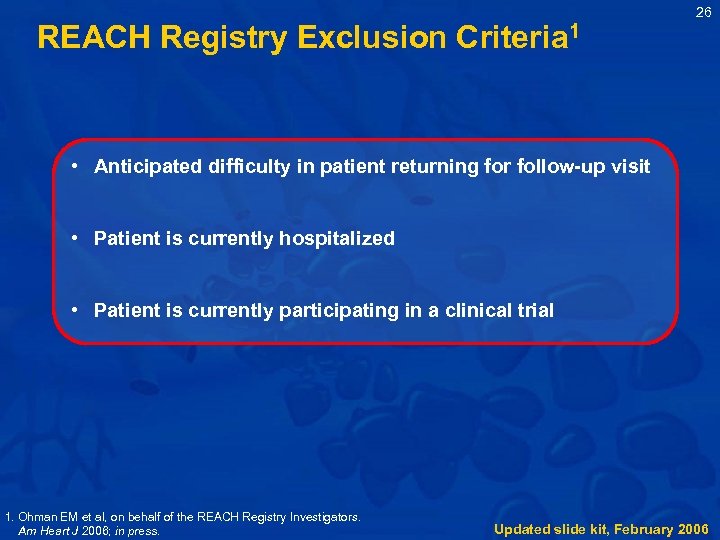
REACH Registry Exclusion Criteria 1 26 • Anticipated difficulty in patient returning for follow-up visit • Patient is currently hospitalized • Patient is currently participating in a clinical trial 1. Ohman EM et al, on behalf of the REACH Registry Investigators. Am Heart J 2006; in press. Updated slide kit, February 2006
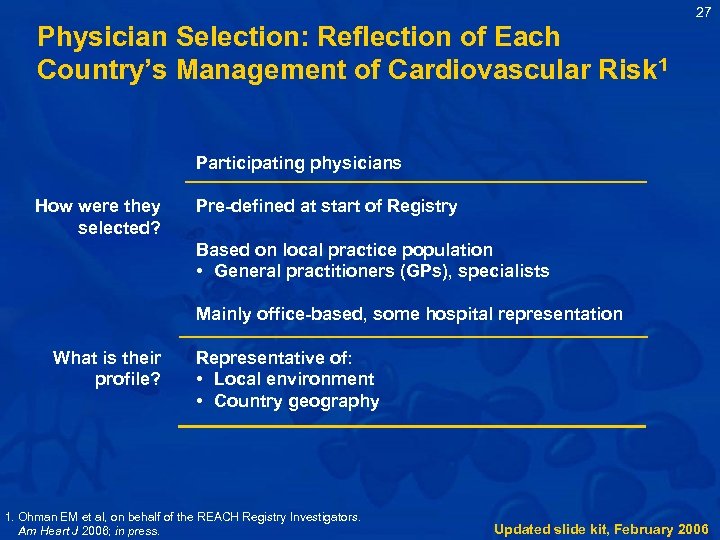
27 Physician Selection: Reflection of Each Country’s Management of Cardiovascular Risk 1 Participating physicians How were they selected? Pre-defined at start of Registry Based on local practice population • General practitioners (GPs), specialists Mainly office-based, some hospital representation What is their profile? Representative of: • Local environment • Country geography 1. Ohman EM et al, on behalf of the REACH Registry Investigators. Am Heart J 2006; in press. Updated slide kit, February 2006
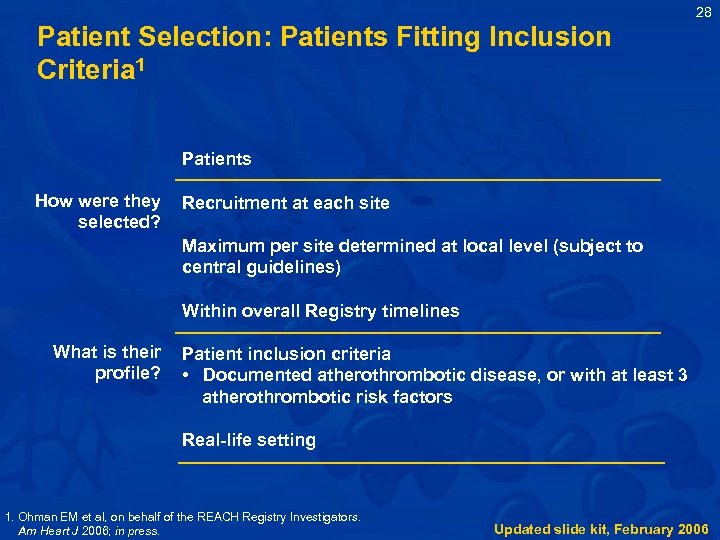
28 Patient Selection: Patients Fitting Inclusion Criteria 1 Patients How were they selected? Recruitment at each site Maximum per site determined at local level (subject to central guidelines) Within overall Registry timelines What is their profile? Patient inclusion criteria • Documented atherothrombotic disease, or with at least 3 atherothrombotic risk factors Real-life setting 1. Ohman EM et al, on behalf of the REACH Registry Investigators. Am Heart J 2006; in press. Updated slide kit, February 2006
29 REACH Registry: Baseline Results Data shown may differ slightly from published abstracts owing to a subsequent database lock Updated slide kit, February 2006
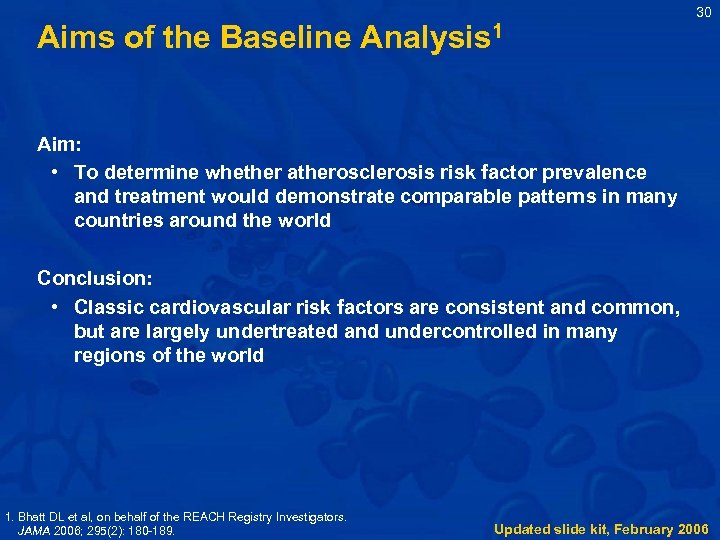
Aims of the Baseline Analysis 1 30 Aim: • To determine whether atherosclerosis risk factor prevalence and treatment would demonstrate comparable patterns in many countries around the world Conclusion: • Classic cardiovascular risk factors are consistent and common, but are largely undertreated and undercontrolled in many regions of the world 1. Bhatt DL et al, on behalf of the REACH Registry Investigators. JAMA 2006; 295(2): 180 -189. Updated slide kit, February 2006
31 REACH Registry: Conclusions From Baseline Cardiovascular risk profiles are common and consistent across different geographic locations and patient types: 1 • Treatment goals are consistently not achieved in all patient types worldwide • Established therapies are consistently underused in high-risk populations • Women are undertreated despite commonly having more severe disease 2 The REACH Registry patients with PAD have: 3 • A high prevalence of concomitant disease in other vascular beds • Multiple risk factors for atherothrombosis, including pre-diabetes and undiagnosed diabetes • Underutilization of appropriate medications to treat cardiovascular risk The REACH Registry patients with cerebrovascular disease have: 4 • A high prevalence of multiple risk factors for atherothrombosis and disease in other vascular beds • Underutilization of appropriate medications 1. Bhatt DL et al, on behalf of the REACH Registry Investigators. JAMA 2006; 295(2): 180 -189. 2. Steg PG et al. Eur Heart J 2005; 26(Suppl): Abstract 1642. 3. Bhatt DL et al. J Am Coll Cardiol 2005; 45(3 Suppl): Abstract 1127– 1196. Updated slide kit, February 2006 4. Röther J et al. International Stroke Conference 2005; late breaking abstract.
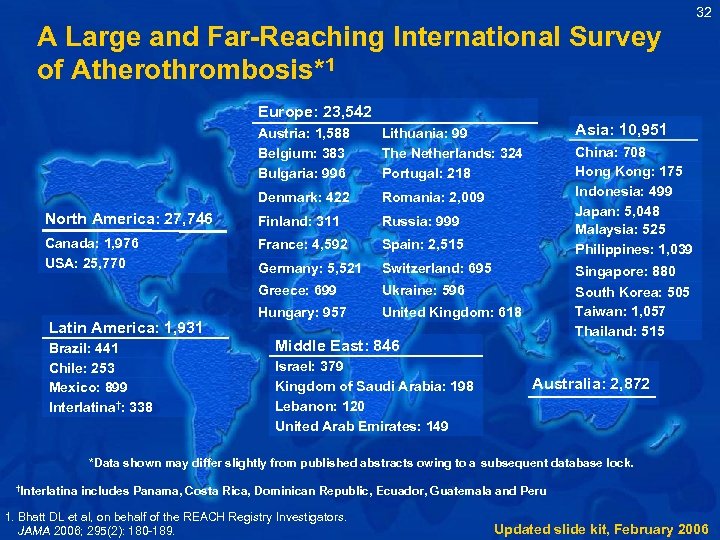
32 A Large and Far-Reaching International Survey of Atherothrombosis*1 Europe: 23, 542 Austria: 1, 588 Belgium: 383 Bulgaria: 996 Denmark: 422 Romania: 2, 009 North America: 27, 746 Finland: 311 Russia: 999 Canada: 1, 976 USA: 25, 770 France: 4, 592 Spain: 2, 515 Germany: 5, 521 Switzerland: 695 Greece: 699 Ukraine: 596 Hungary: 957 Asia: 10, 951 Lithuania: 99 The Netherlands: 324 Portugal: 218 United Kingdom: 618 Latin America: 1, 931 Brazil: 441 Chile: 253 Mexico: 899 Interlatina†: 338 China: 708 Hong Kong: 175 Indonesia: 499 Japan: 5, 048 Malaysia: 525 Philippines: 1, 039 Singapore: 880 South Korea: 505 Taiwan: 1, 057 Thailand: 515 Middle East: 846 Israel: 379 Kingdom of Saudi Arabia: 198 Lebanon: 120 United Arab Emirates: 149 Australia: 2, 872 *Data shown may differ slightly from published abstracts owing to a subsequent database lock. †Interlatina includes Panama, Costa Rica, Dominican Republic, Ecuador, Guatemala and Peru 1. Bhatt DL et al, on behalf of the REACH Registry Investigators. JAMA 2006; 295(2): 180 -189. Updated slide kit, February 2006
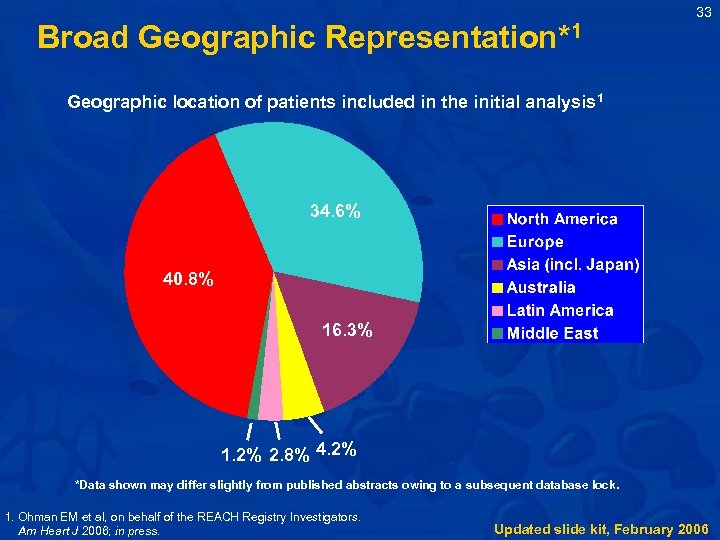
Broad Geographic Representation*1 33 Geographic location of patients included in the initial analysis 1 34. 6% 40. 8% 16. 3% 1. 2% 2. 8% 4. 2% *Data shown may differ slightly from published abstracts owing to a subsequent database lock. 1. Ohman EM et al, on behalf of the REACH Registry Investigators. Am Heart J 2006; in press. Updated slide kit, February 2006
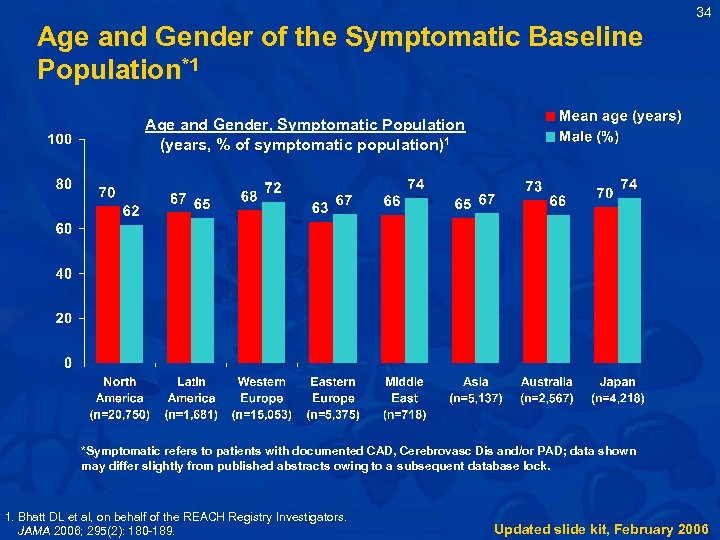
34 Age and Gender of the Symptomatic Baseline Population*1 Age and Gender, Symptomatic Population (years, % of symptomatic population)1 *Symptomatic refers to patients with documented CAD, Cerebrovasc Dis and/or PAD; data shown may differ slightly from published abstracts owing to a subsequent database lock. 1. Bhatt DL et al, on behalf of the REACH Registry Investigators. JAMA 2006; 295(2): 180 -189. Updated slide kit, February 2006
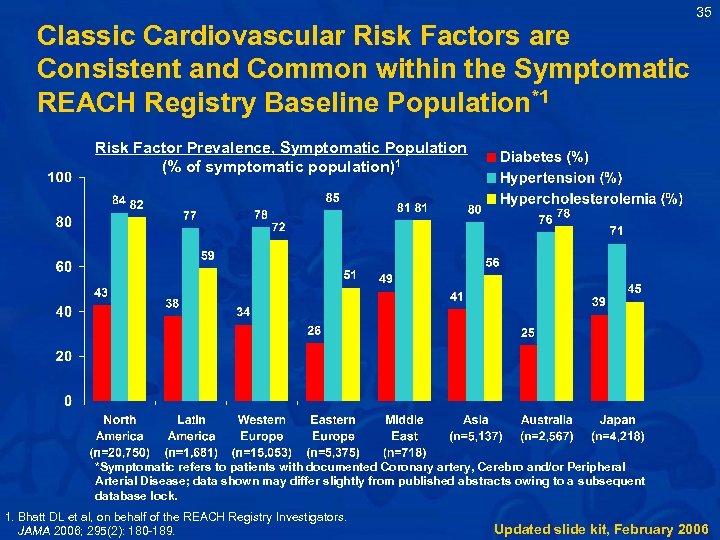
Classic Cardiovascular Risk Factors are Consistent and Common within the Symptomatic REACH Registry Baseline Population*1 35 Risk Factor Prevalence, Symptomatic Population (% of symptomatic population)1 *Symptomatic refers to patients with documented Coronary artery, Cerebro and/or Peripheral Arterial Disease; data shown may differ slightly from published abstracts owing to a subsequent database lock. 1. Bhatt DL et al, on behalf of the REACH Registry Investigators. JAMA 2006; 295(2): 180 -189. Updated slide kit, February 2006
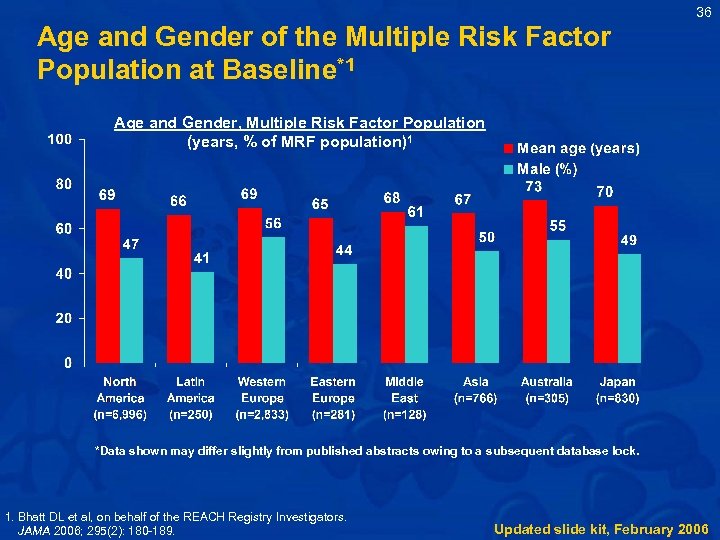
36 Age and Gender of the Multiple Risk Factor Population at Baseline*1 Age and Gender, Multiple Risk Factor Population (years, % of MRF population)1 *Data shown may differ slightly from published abstracts owing to a subsequent database lock. 1. Bhatt DL et al, on behalf of the REACH Registry Investigators. JAMA 2006; 295(2): 180 -189. Updated slide kit, February 2006
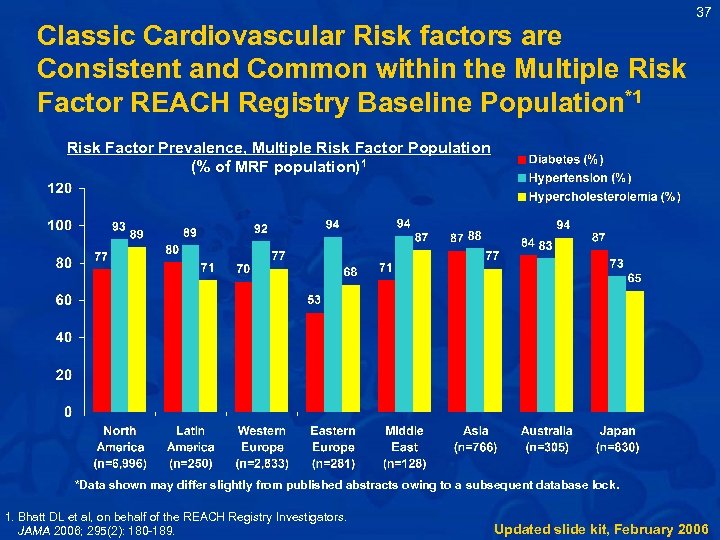
Classic Cardiovascular Risk factors are Consistent and Common within the Multiple Risk Factor REACH Registry Baseline Population*1 37 Risk Factor Prevalence, Multiple Risk Factor Population (% of MRF population)1 *Data shown may differ slightly from published abstracts owing to a subsequent database lock. 1. Bhatt DL et al, on behalf of the REACH Registry Investigators. JAMA 2006; 295(2): 180 -189. Updated slide kit, February 2006
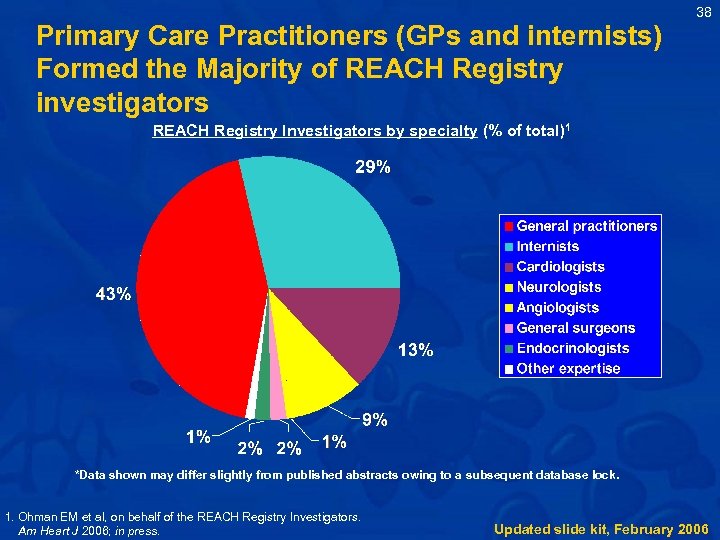
Primary Care Practitioners (GPs and internists) Formed the Majority of REACH Registry investigators 38 REACH Registry Investigators by specialty (% of total)1 *Data shown may differ slightly from published abstracts owing to a subsequent database lock. 1. Ohman EM et al, on behalf of the REACH Registry Investigators. Am Heart J 2006; in press. Updated slide kit, February 2006
39 High Prevalence of Polyvascular Disease (Disease in More Than One Arterial Bed) Updated slide kit, February 2006
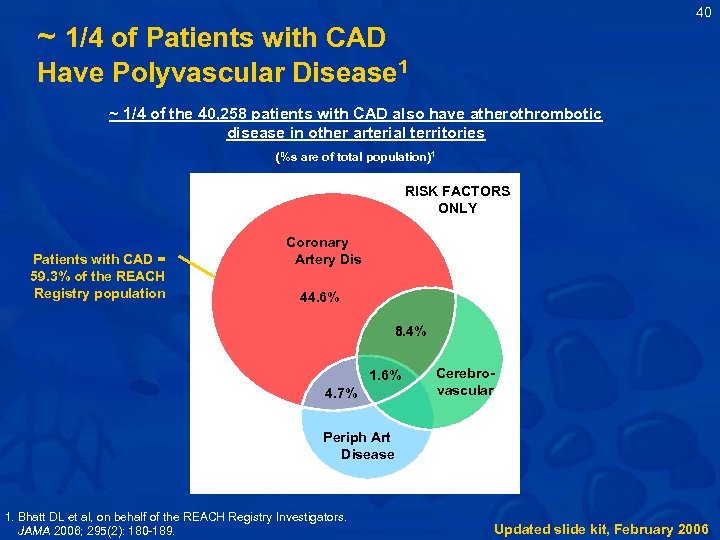
40 ~ 1/4 of Patients with CAD Have Polyvascular Disease 1 ~ 1/4 of the 40, 258 patients with CAD also have atherothrombotic disease in other arterial territories (%s are of total population) 1 RISK FACTORS ONLY Patients with CAD = 59. 3% of the REACH Registry population Coronary Artery Dis 44. 6% 8. 4% 1. 6% 4. 7% Cerebrovascular Periph Art Disease 1. Bhatt DL et al, on behalf of the REACH Registry Investigators. JAMA 2006; 295(2): 180 -189. Updated slide kit, February 2006
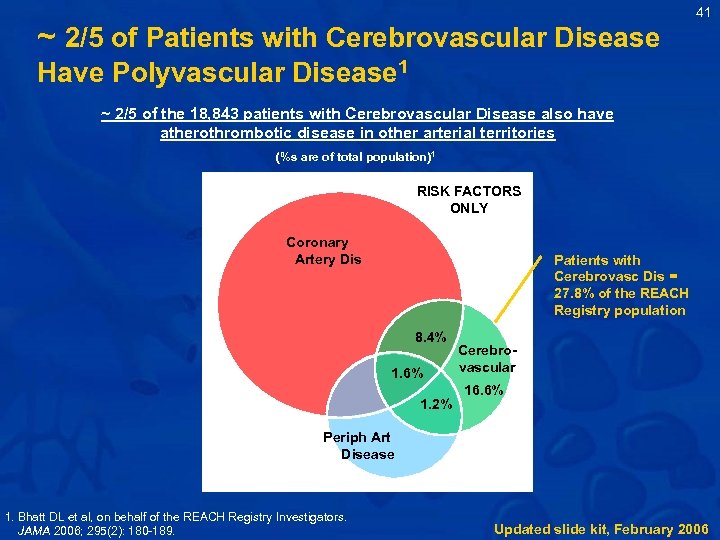
~ 2/5 of Patients with Cerebrovascular Disease 41 Have Polyvascular Disease 1 ~ 2/5 of the 18, 843 patients with Cerebrovascular Disease also have atherothrombotic disease in other arterial territories (%s are of total population) 1 RISK FACTORS ONLY Coronary Artery Dis Patients with Cerebrovasc Dis = 27. 8% of the REACH Registry population 8. 4% 1. 6% 1. 2% Cerebrovascular 16. 6% Periph Art Disease 1. Bhatt DL et al, on behalf of the REACH Registry Investigators. JAMA 2006; 295(2): 180 -189. Updated slide kit, February 2006
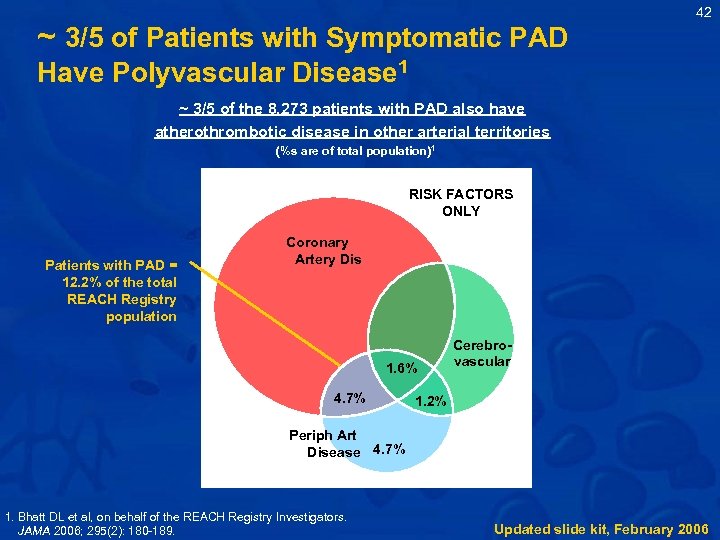
~ 3/5 of Patients with Symptomatic PAD 42 Have Polyvascular Disease 1 ~ 3/5 of the 8, 273 patients with PAD also have atherothrombotic disease in other arterial territories (%s are of total population) 1 RISK FACTORS ONLY Patients with PAD = 12. 2% of the total REACH Registry population Coronary Artery Dis 1. 6% 4. 7% Cerebrovascular 1. 2% Periph Art Disease 4. 7% 1. Bhatt DL et al, on behalf of the REACH Registry Investigators. JAMA 2006; 295(2): 180 -189. Updated slide kit, February 2006
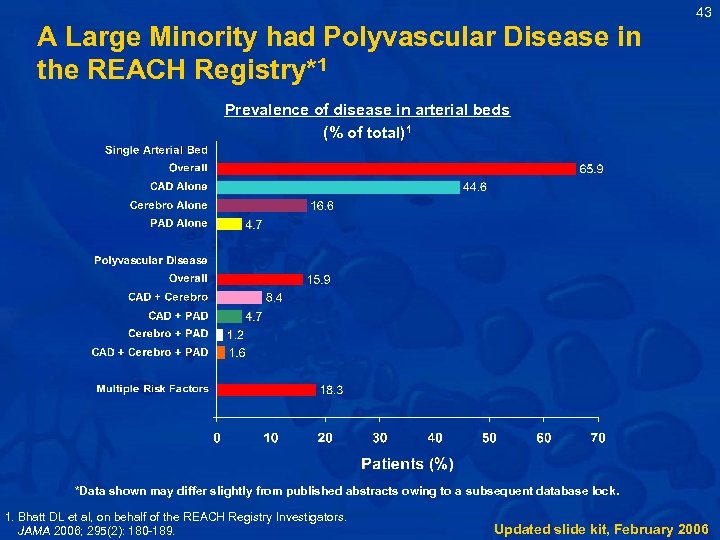
43 A Large Minority had Polyvascular Disease in the REACH Registry*1 Prevalence of disease in arterial beds (% of total)1 *Data shown may differ slightly from published abstracts owing to a subsequent database lock. 1. Bhatt DL et al, on behalf of the REACH Registry Investigators. JAMA 2006; 295(2): 180 -189. Updated slide kit, February 2006
44 Undertreatment of Patients with Atherothrombosis Worldwide Updated slide kit, February 2006
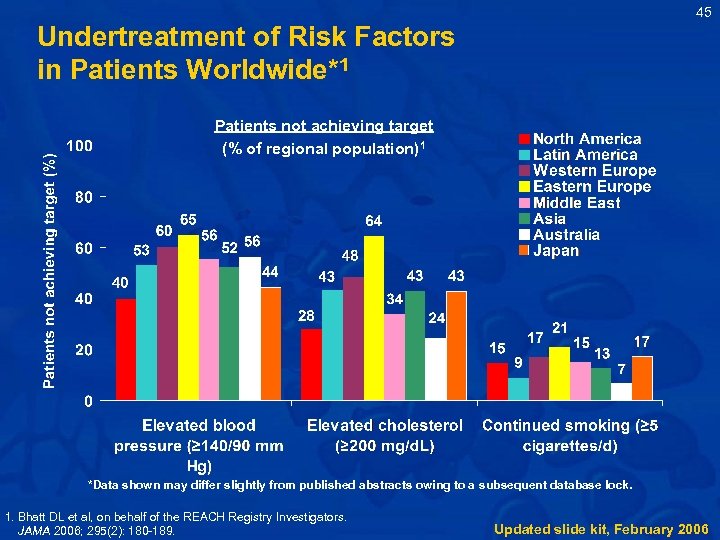
45 Undertreatment of Risk Factors in Patients Worldwide*1 Patients not achieving target (% of regional population)1 *Data shown may differ slightly from published abstracts owing to a subsequent database lock. 1. Bhatt DL et al, on behalf of the REACH Registry Investigators. JAMA 2006; 295(2): 180 -189. Updated slide kit, February 2006
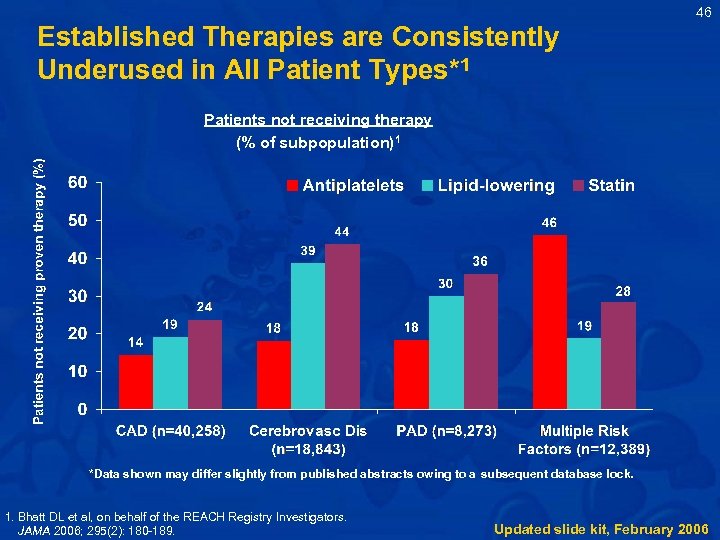
46 Established Therapies are Consistently Underused in All Patient Types*1 Patients not receiving therapy (% of subpopulation)1 *Data shown may differ slightly from published abstracts owing to a subsequent database lock. 1. Bhatt DL et al, on behalf of the REACH Registry Investigators. JAMA 2006; 295(2): 180 -189. Updated slide kit, February 2006
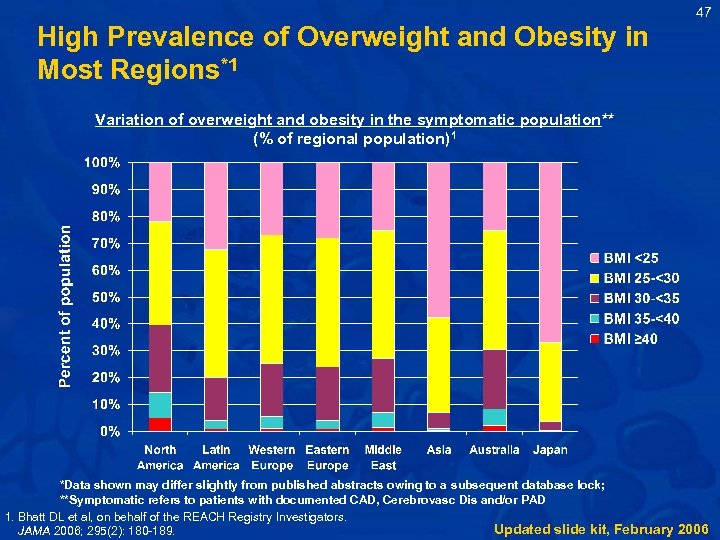
47 High Prevalence of Overweight and Obesity in Most Regions*1 Variation of overweight and obesity in the symptomatic population** (% of regional population)1 *Data shown may differ slightly from published abstracts owing to a subsequent database lock; **Symptomatic refers to patients with documented CAD, Cerebrovasc Dis and/or PAD 1. Bhatt DL et al, on behalf of the REACH Registry Investigators. Updated slide kit, February 2006 JAMA 2006; 295(2): 180 -189.
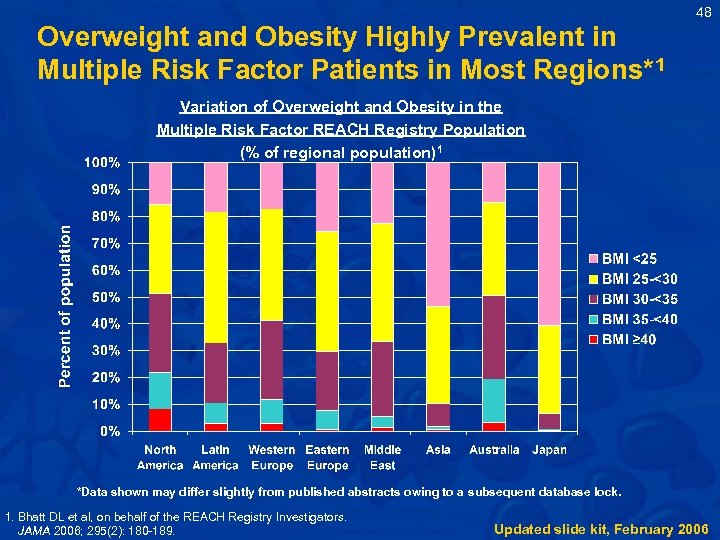
48 Overweight and Obesity Highly Prevalent in Multiple Risk Factor Patients in Most Regions*1 Variation of Overweight and Obesity in the Multiple Risk Factor REACH Registry Population (% of regional population)1 *Data shown may differ slightly from published abstracts owing to a subsequent database lock. 1. Bhatt DL et al, on behalf of the REACH Registry Investigators. JAMA 2006; 295(2): 180 -189. Updated slide kit, February 2006
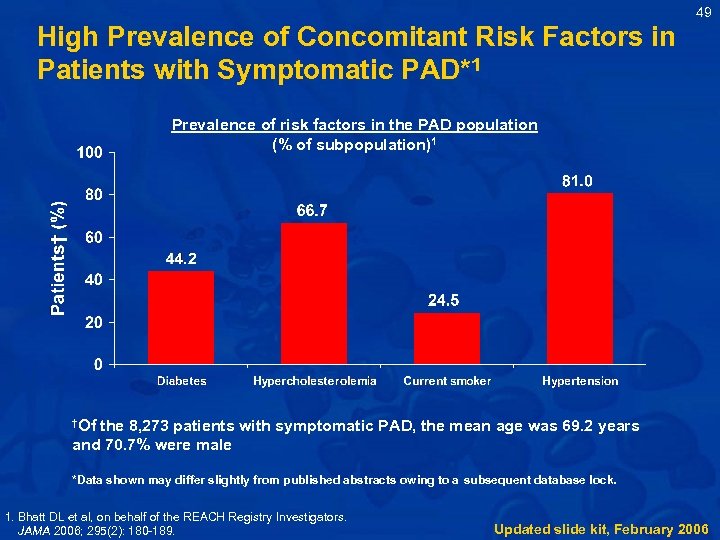
49 High Prevalence of Concomitant Risk Factors in Patients with Symptomatic PAD*1 Prevalence of risk factors in the PAD population (% of subpopulation)1 †Of the 8, 273 patients with symptomatic PAD, the mean age was 69. 2 years and 70. 7% were male *Data shown may differ slightly from published abstracts owing to a subsequent database lock. 1. Bhatt DL et al, on behalf of the REACH Registry Investigators. JAMA 2006; 295(2): 180 -189. Updated slide kit, February 2006
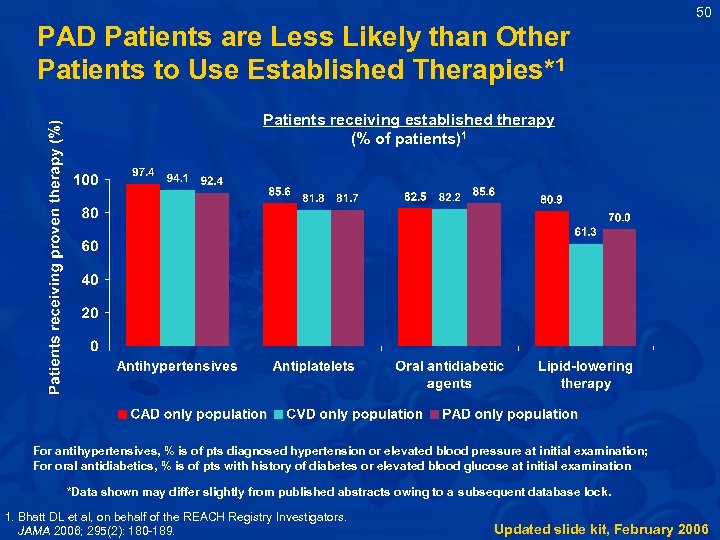
50 PAD Patients are Less Likely than Other Patients to Use Established Therapies*1 Patients receiving established therapy (% of patients)1 For antihypertensives, % is of pts diagnosed hypertension or elevated blood pressure at initial examination; For oral antidiabetics, % is of pts with history of diabetes or elevated blood glucose at initial examination *Data shown may differ slightly from published abstracts owing to a subsequent database lock. 1. Bhatt DL et al, on behalf of the REACH Registry Investigators. JAMA 2006; 295(2): 180 -189. Updated slide kit, February 2006
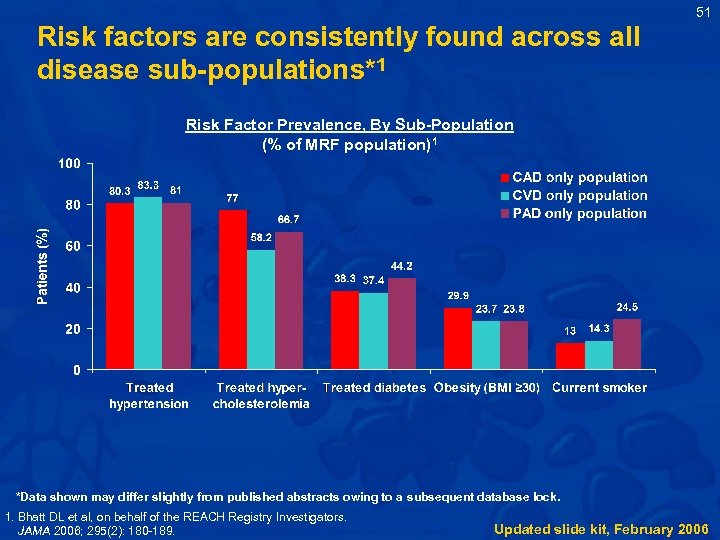
51 Risk factors are consistently found across all disease sub-populations*1 Risk Factor Prevalence, By Sub-Population (% of MRF population)1 *Data shown may differ slightly from published abstracts owing to a subsequent database lock. 1. Bhatt DL et al, on behalf of the REACH Registry Investigators. JAMA 2006; 295(2): 180 -189. Updated slide kit, February 2006
52 REACH Registry: Today and Beyond Updated slide kit, February 2006
53 Publications to Date Updated slide kit, February 2006
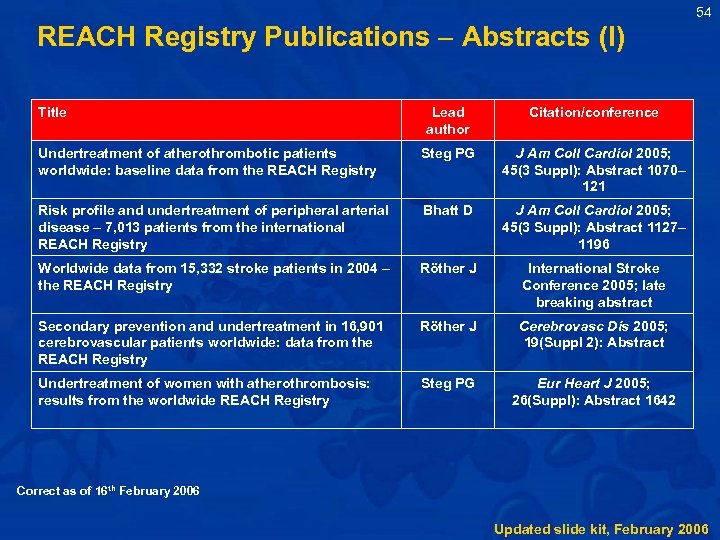
REACH Registry Publications Abstracts (I) Title Lead author Citation/conference Undertreatment of atherothrombotic patients worldwide: baseline data from the REACH Registry Steg PG J Am Coll Cardiol 2005; 45(3 Suppl): Abstract 1070– 121 Risk profile and undertreatment of peripheral arterial disease 7, 013 patients from the international REACH Registry Bhatt D J Am Coll Cardiol 2005; 45(3 Suppl): Abstract 1127– 1196 Worldwide data from 15, 332 stroke patients in 2004 the REACH Registry Röther J International Stroke Conference 2005; late breaking abstract Secondary prevention and undertreatment in 16, 901 cerebrovascular patients worldwide: data from the REACH Registry Röther J Cerebrovasc Dis 2005; 19(Suppl 2): Abstract Undertreatment of women with atherothrombosis: results from the worldwide REACH Registry Steg PG 54 Eur Heart J 2005; 26(Suppl): Abstract 1642 Correct as of 16 th February 2006 Updated slide kit, February 2006
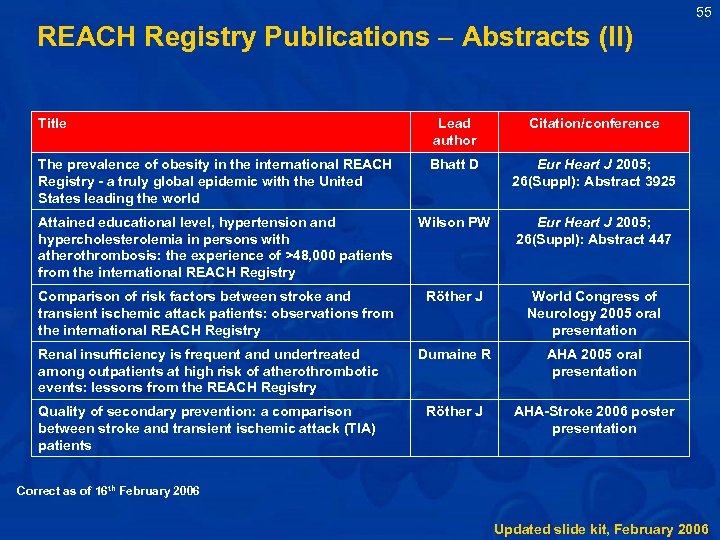
REACH Registry Publications Abstracts (II) Title Lead author Citation/conference The prevalence of obesity in the international REACH Registry - a truly global epidemic with the United States leading the world Bhatt D Eur Heart J 2005; 26(Suppl): Abstract 3925 Attained educational level, hypertension and hypercholesterolemia in persons with atherothrombosis: the experience of >48, 000 patients from the international REACH Registry Wilson PW Eur Heart J 2005; 26(Suppl): Abstract 447 Comparison of risk factors between stroke and transient ischemic attack patients: observations from the international REACH Registry Röther J World Congress of Neurology 2005 oral presentation Renal insufficiency is frequent and undertreated among outpatients at high risk of atherothrombotic events: lessons from the REACH Registry Dumaine R AHA 2005 oral presentation Quality of secondary prevention: a comparison between stroke and transient ischemic attack (TIA) patients Röther J 55 AHA-Stroke 2006 poster presentation Correct as of 16 th February 2006 Updated slide kit, February 2006
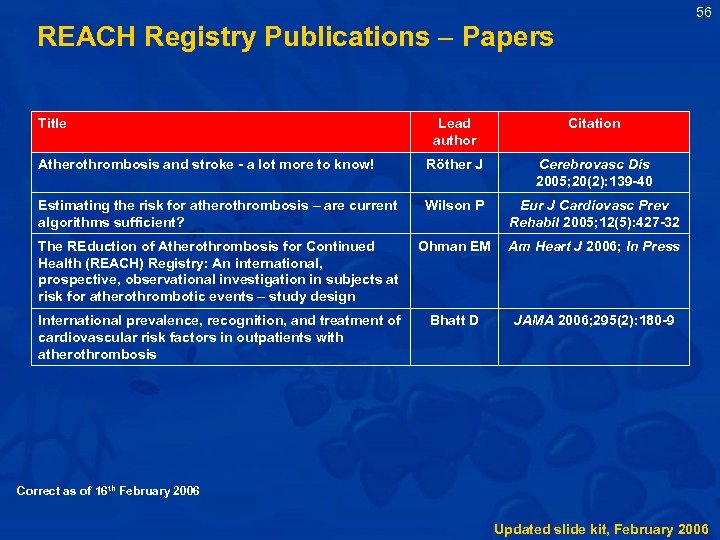
56 REACH Registry Publications Papers Title Lead author Citation Atherothrombosis and stroke - a lot more to know! Röther J Cerebrovasc Dis 2005; 20(2): 139 -40 Estimating the risk for atherothrombosis – are current algorithms sufficient? Wilson P Eur J Cardiovasc Prev Rehabil 2005; 12(5): 427 -32 The REduction of Atherothrombosis for Continued Health (REACH) Registry: An international, prospective, observational investigation in subjects at risk for atherothrombotic events – study design Ohman EM Am Heart J 2006; In Press International prevalence, recognition, and treatment of cardiovascular risk factors in outpatients with atherothrombosis Bhatt D JAMA 2006; 295(2): 180 -9 Correct as of 16 th February 2006 Updated slide kit, February 2006
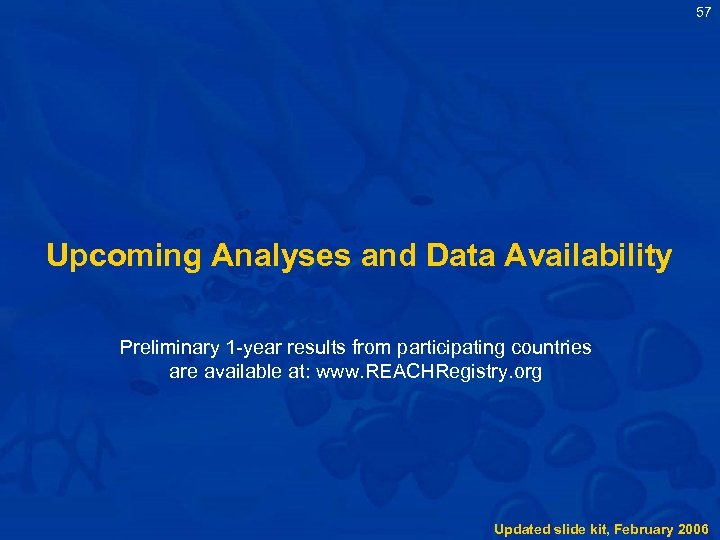
57 Upcoming Analyses and Data Availability Preliminary 1 -year results from participating countries are available at: www. REACHRegistry. org Updated slide kit, February 2006
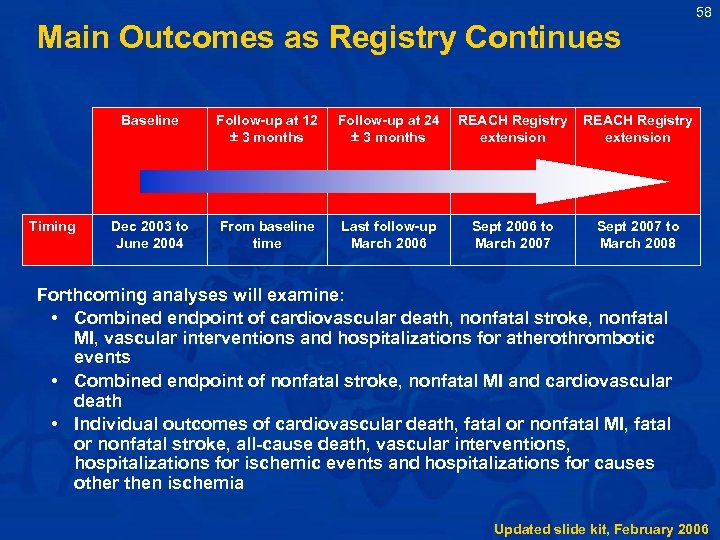
Main Outcomes as Registry Continues Baseline Timing Follow-up at 12 3 months Follow-up at 24 3 months REACH Registry extension Dec 2003 to June 2004 From baseline time Last follow-up March 2006 Sept 2006 to March 2007 58 Sept 2007 to March 2008 Forthcoming analyses will examine: • Combined endpoint of cardiovascular death, nonfatal stroke, nonfatal MI, vascular interventions and hospitalizations for atherothrombotic events • Combined endpoint of nonfatal stroke, nonfatal MI and cardiovascular death • Individual outcomes of cardiovascular death, fatal or nonfatal MI, fatal or nonfatal stroke, all-cause death, vascular interventions, hospitalizations for ischemic events and hospitalizations for causes other then ischemia Updated slide kit, February 2006
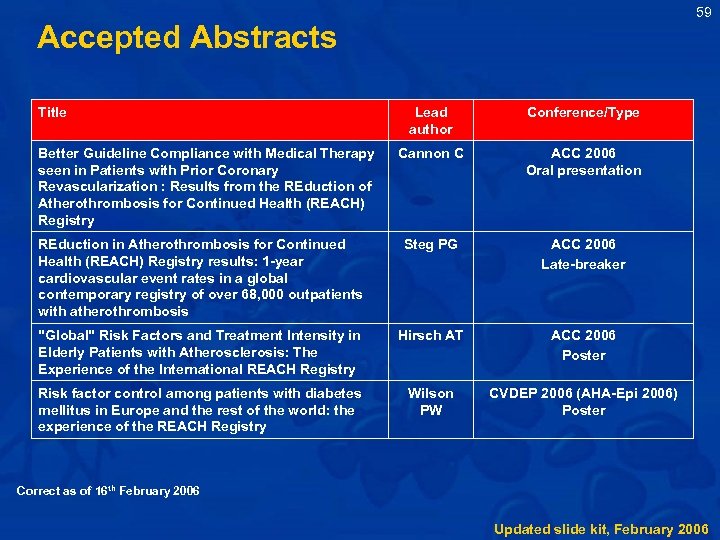
59 Accepted Abstracts Title Lead author Conference/Type Cannon C ACC 2006 Oral presentation REduction in Atherothrombosis for Continued Health (REACH) Registry results: 1 -year cardiovascular event rates in a global contemporary registry of over 68, 000 outpatients with atherothrombosis Steg PG ACC 2006 Late-breaker "Global" Risk Factors and Treatment Intensity in Elderly Patients with Atherosclerosis: The Experience of the International REACH Registry Hirsch AT ACC 2006 Poster Risk factor control among patients with diabetes mellitus in Europe and the rest of the world: the experience of the REACH Registry Wilson PW CVDEP 2006 (AHA-Epi 2006) Poster Better Guideline Compliance with Medical Therapy seen in Patients with Prior Coronary Revascularization : Results from the REduction of Atherothrombosis for Continued Health (REACH) Registry Correct as of 16 th February 2006 Updated slide kit, February 2006
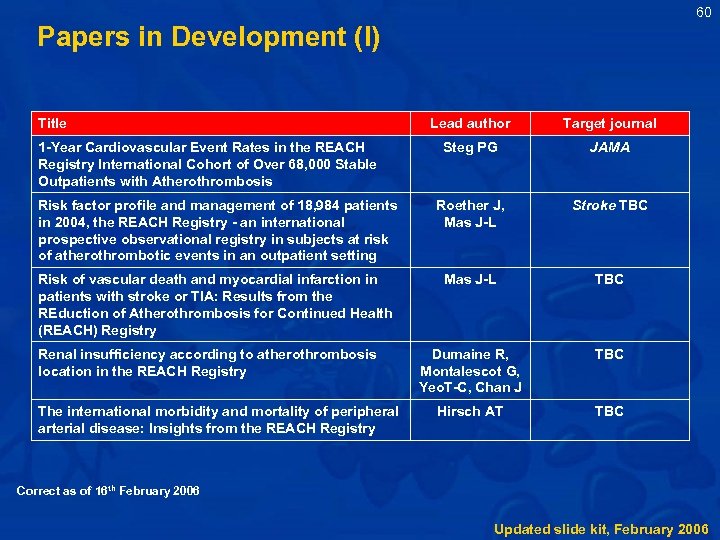
60 Papers in Development (I) Title Lead author Target journal Steg PG JAMA Risk factor profile and management of 18, 984 patients in 2004, the REACH Registry - an international prospective observational registry in subjects at risk of atherothrombotic events in an outpatient setting Roether J, Mas J-L Stroke TBC Risk of vascular death and myocardial infarction in patients with stroke or TIA: Results from the REduction of Atherothrombosis for Continued Health (REACH) Registry Mas J-L TBC Dumaine R, Montalescot G, Yeo. T-C, Chan J TBC Hirsch AT TBC 1 -Year Cardiovascular Event Rates in the REACH Registry International Cohort of Over 68, 000 Stable Outpatients with Atherothrombosis Renal insufficiency according to atherothrombosis location in the REACH Registry The international morbidity and mortality of peripheral arterial disease: Insights from the REACH Registry Correct as of 16 th February 2006 Updated slide kit, February 2006
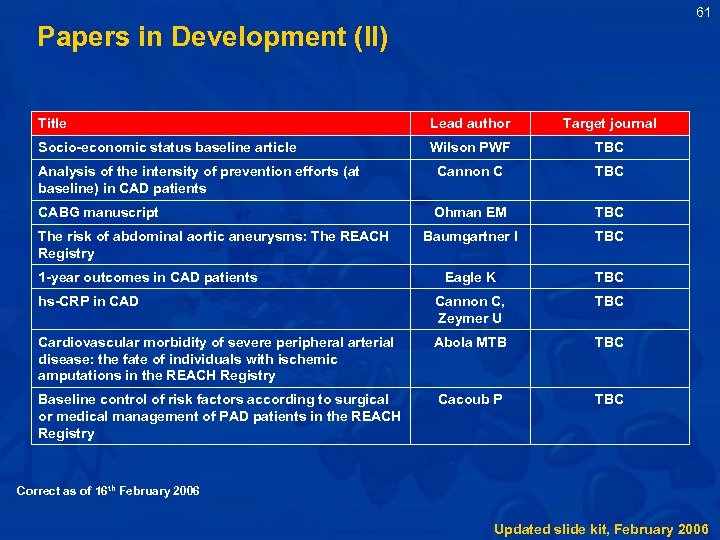
61 Papers in Development (II) Title Lead author Target journal Socio-economic status baseline article Wilson PWF TBC Analysis of the intensity of prevention efforts (at baseline) in CAD patients Cannon C TBC CABG manuscript Ohman EM TBC Baumgartner I TBC Eagle K TBC hs-CRP in CAD Cannon C, Zeymer U TBC Cardiovascular morbidity of severe peripheral arterial disease: the fate of individuals with ischemic amputations in the REACH Registry Abola MTB TBC Baseline control of risk factors according to surgical or medical management of PAD patients in the REACH Registry Cacoub P TBC The risk of abdominal aortic aneurysms: The REACH Registry 1 -year outcomes in CAD patients Correct as of 16 th February 2006 Updated slide kit, February 2006

62 Participating Organizations and Scientific Committees Updated slide kit, February 2006
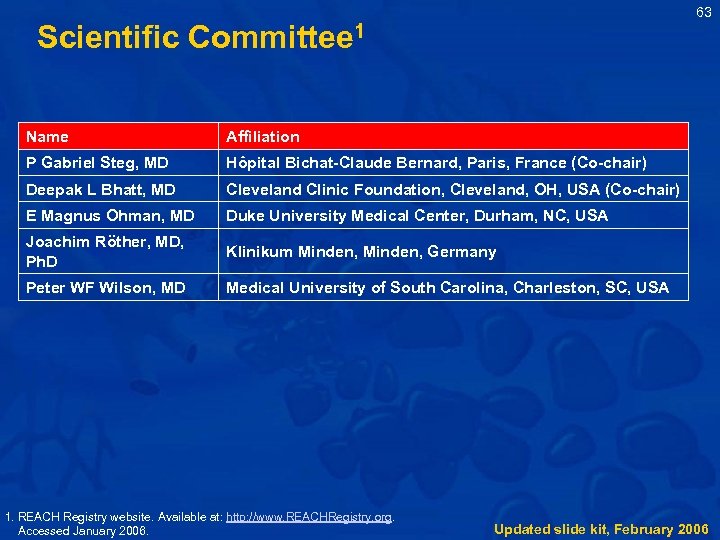
63 Scientific Committee 1 Name Affiliation P Gabriel Steg, MD Hôpital Bichat-Claude Bernard, Paris, France (Co-chair) Deepak L Bhatt, MD Cleveland Clinic Foundation, Cleveland, OH, USA (Co-chair) E Magnus Ohman, MD Duke University Medical Center, Durham, NC, USA Joachim Röther, MD, Ph. D Klinikum Minden, Germany Peter WF Wilson, MD Medical University of South Carolina, Charleston, SC, USA 1. REACH Registry website. Available at: http: //www. REACHRegistry. org. Accessed January 2006. Updated slide kit, February 2006
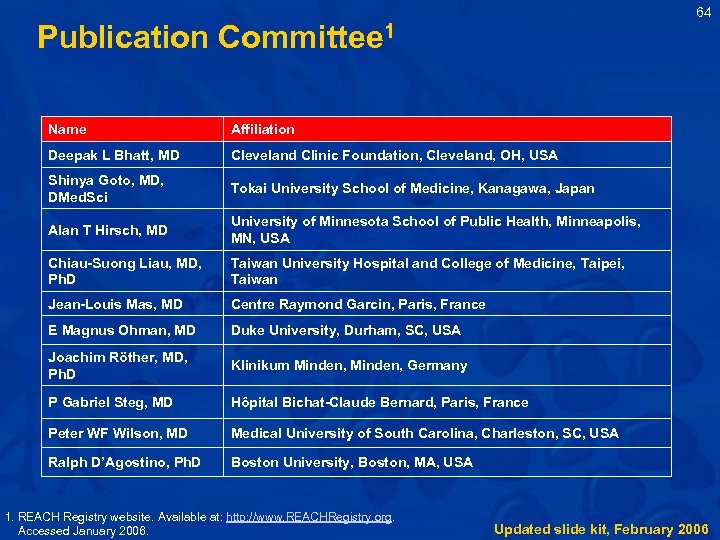
64 Publication Committee 1 Name Affiliation Deepak L Bhatt, MD Cleveland Clinic Foundation, Cleveland, OH, USA Shinya Goto, MD, DMed. Sci Tokai University School of Medicine, Kanagawa, Japan Alan T Hirsch, MD University of Minnesota School of Public Health, Minneapolis, MN, USA Chiau-Suong Liau, MD, Ph. D Taiwan University Hospital and College of Medicine, Taipei, Taiwan Jean-Louis Mas, MD Centre Raymond Garcin, Paris, France E Magnus Ohman, MD Duke University, Durham, SC, USA Joachim Röther, MD, Ph. D Klinikum Minden, Germany P Gabriel Steg, MD Hôpital Bichat-Claude Bernard, Paris, France Peter WF Wilson, MD Medical University of South Carolina, Charleston, SC, USA Ralph D’Agostino, Ph. D Boston University, Boston, MA, USA 1. REACH Registry website. Available at: http: //www. REACHRegistry. org. Accessed January 2006. Updated slide kit, February 2006
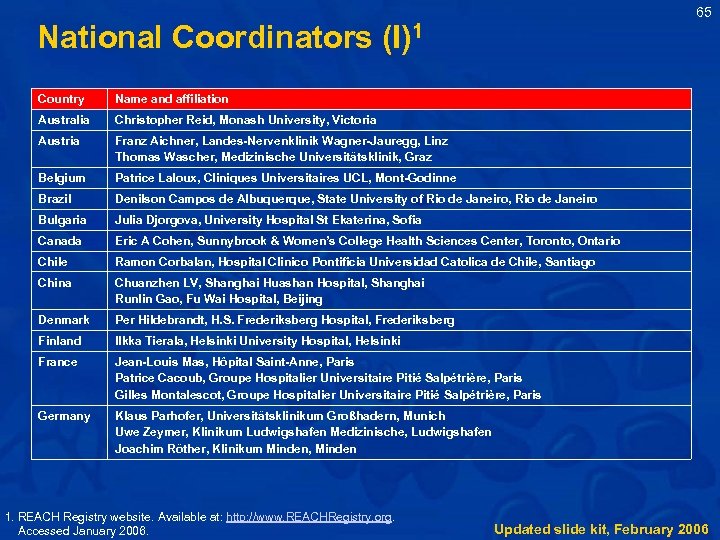
65 National Coordinators (I)1 Country Name and affiliation Australia Christopher Reid, Monash University, Victoria Austria Franz Aichner, Landes-Nervenklinik Wagner-Jauregg, Linz Thomas Wascher, Medizinische Universitätsklinik, Graz Belgium Patrice Laloux, Cliniques Universitaires UCL, Mont-Godinne Brazil Denilson Campos de Albuquerque, State University of Rio de Janeiro, Rio de Janeiro Bulgaria Julia Djorgova, University Hospital St Ekaterina, Sofia Canada Eric A Cohen, Sunnybrook & Women’s College Health Sciences Center, Toronto, Ontario Chile Ramon Corbalan, Hospital Clinico Pontificia Universidad Catolica de Chile, Santiago China Chuanzhen LV, Shanghai Huashan Hospital, Shanghai Runlin Gao, Fu Wai Hospital, Beijing Denmark Per Hildebrandt, H. S. Frederiksberg Hospital, Frederiksberg Finland Ilkka Tierala, Helsinki University Hospital, Helsinki France Jean-Louis Mas, Hôpital Saint-Anne, Paris Patrice Cacoub, Groupe Hospitalier Universitaire Pitié Salpétrière, Paris Gilles Montalescot, Groupe Hospitalier Universitaire Pitié Salpétrière, Paris Germany Klaus Parhofer, Universitätsklinikum Großhadern, Munich Uwe Zeymer, Klinikum Ludwigshafen Medizinische, Ludwigshafen Joachim Röther, Klinikum Minden, Minden 1. REACH Registry website. Available at: http: //www. REACHRegistry. org. Accessed January 2006. Updated slide kit, February 2006
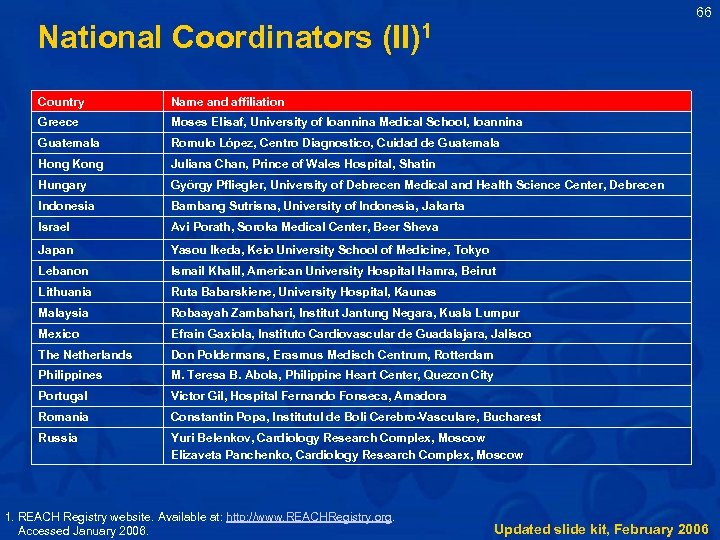
66 National Coordinators (II)1 Country Name and affiliation Greece Moses Elisaf, University of Ioannina Medical School, Ioannina Guatemala Romulo López, Centro Diagnostico, Cuidad de Guatemala Hong Kong Juliana Chan, Prince of Wales Hospital, Shatin Hungary György Pfliegler, University of Debrecen Medical and Health Science Center, Debrecen Indonesia Bambang Sutrisna, University of Indonesia, Jakarta Israel Avi Porath, Soroka Medical Center, Beer Sheva Japan Yasou Ikeda, Keio University School of Medicine, Tokyo Lebanon Ismail Khalil, American University Hospital Hamra, Beirut Lithuania Ruta Babarskiene, University Hospital, Kaunas Malaysia Robaayah Zambahari, Institut Jantung Negara, Kuala Lumpur Mexico Efrain Gaxiola, Instituto Cardiovascular de Guadalajara, Jalisco The Netherlands Don Poldermans, Erasmus Medisch Centrum, Rotterdam Philippines M. Teresa B. Abola, Philippine Heart Center, Quezon City Portugal Victor Gil, Hospital Fernando Fonseca, Amadora Romania Constantin Popa, Institutul de Boli Cerebro-Vasculare, Bucharest Russia Yuri Belenkov, Cardiology Research Complex, Moscow Elizaveta Panchenko, Cardiology Research Complex, Moscow 1. REACH Registry website. Available at: http: //www. REACHRegistry. org. Accessed January 2006. Updated slide kit, February 2006
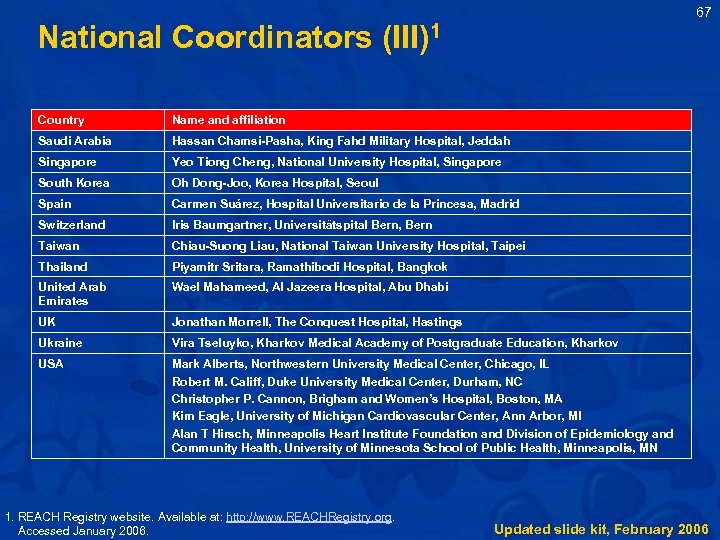
67 National Coordinators (III)1 Country Name and affiliation Saudi Arabia Hassan Chamsi-Pasha, King Fahd Military Hospital, Jeddah Singapore Yeo Tiong Cheng, National University Hospital, Singapore South Korea Oh Dong-Joo, Korea Hospital, Seoul Spain Carmen Suárez, Hospital Universitario de la Princesa, Madrid Switzerland Iris Baumgartner, Universitätspital Bern, Bern Taiwan Chiau-Suong Liau, National Taiwan University Hospital, Taipei Thailand Piyamitr Sritara, Ramathibodi Hospital, Bangkok United Arab Emirates Wael Mahameed, Al Jazeera Hospital, Abu Dhabi UK Jonathan Morrell, The Conquest Hospital, Hastings Ukraine Vira Tseluyko, Kharkov Medical Academy of Postgraduate Education, Kharkov USA Mark Alberts, Northwestern University Medical Center, Chicago, IL Robert M. Califf, Duke University Medical Center, Durham, NC Christopher P. Cannon, Brigham and Women’s Hospital, Boston, MA Kim Eagle, University of Michigan Cardiovascular Center, Ann Arbor, MI Alan T Hirsch, Minneapolis Heart Institute Foundation and Division of Epidemiology and Community Health, University of Minnesota School of Public Health, Minneapolis, MN 1. REACH Registry website. Available at: http: //www. REACHRegistry. org. Accessed January 2006. Updated slide kit, February 2006
68 Participating Organizations The REACH Registry is sponsored jointly by Updated slide kit, February 2006
REACH Registry: Further Information 69 For further information on the REACH Registry go to: http: //www. REACHRegistry. org Updated slide kit, February 2006
Скачать презентацию 1 The REACH Registry An International Prospective Observational
ecc6006bc29276acd0c58a8d6e8f598a.ppt