

1 The Ottoman Empire 1280-1918 The Ottomans were:


 Скачать презентацию 1 The Ottoman Empire 1280-1918 The Ottomans were:
38560-ottomanempire-castle.ppt
- Количество слайдов: 43
1 The Ottoman Empire 1280-1918
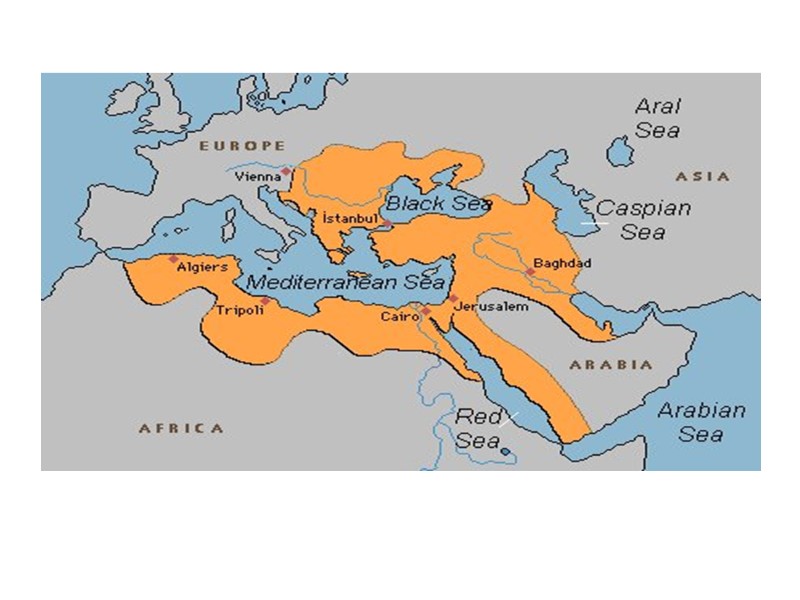
The Ottomans were: ·Turkish (capital Istanbul) ·Muslim ·The largest empire in the world
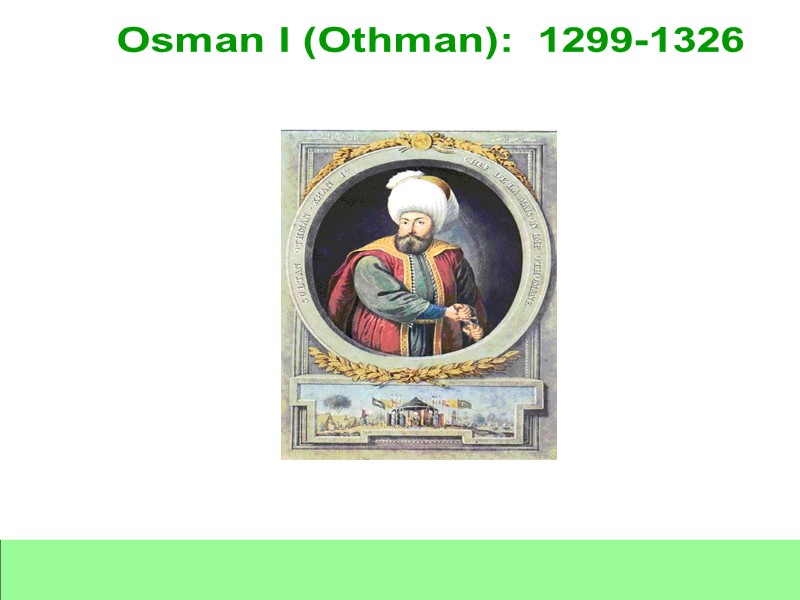
Osman I (Othman): 1299-1326
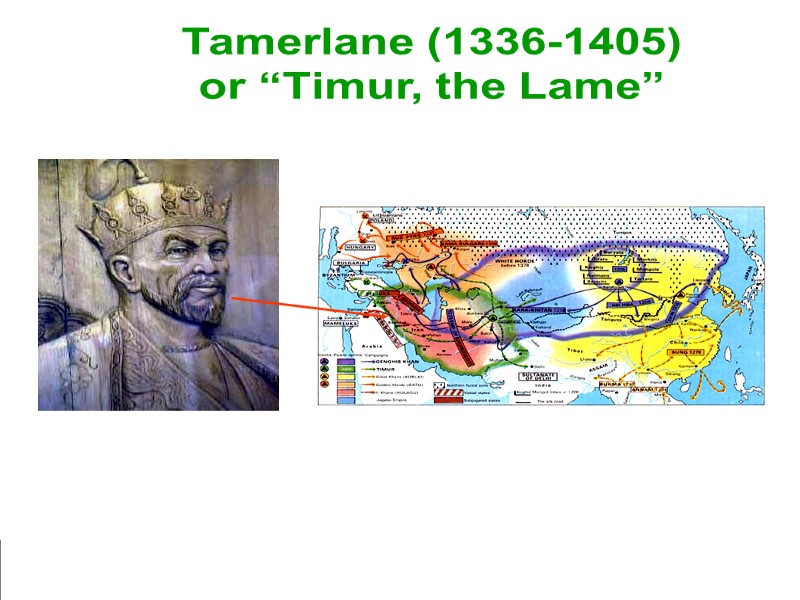
Tamerlane (1336-1405) or “Timur, the Lame”
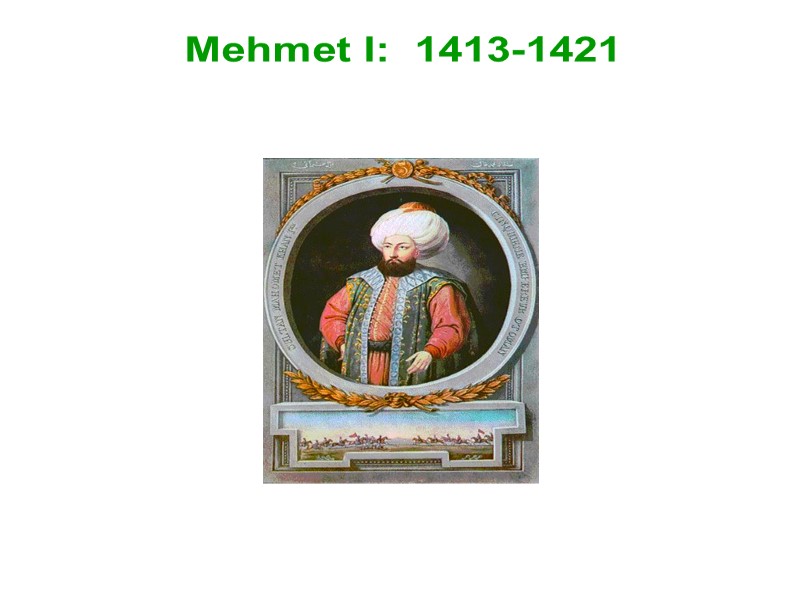
Mehmet I: 1413-1421
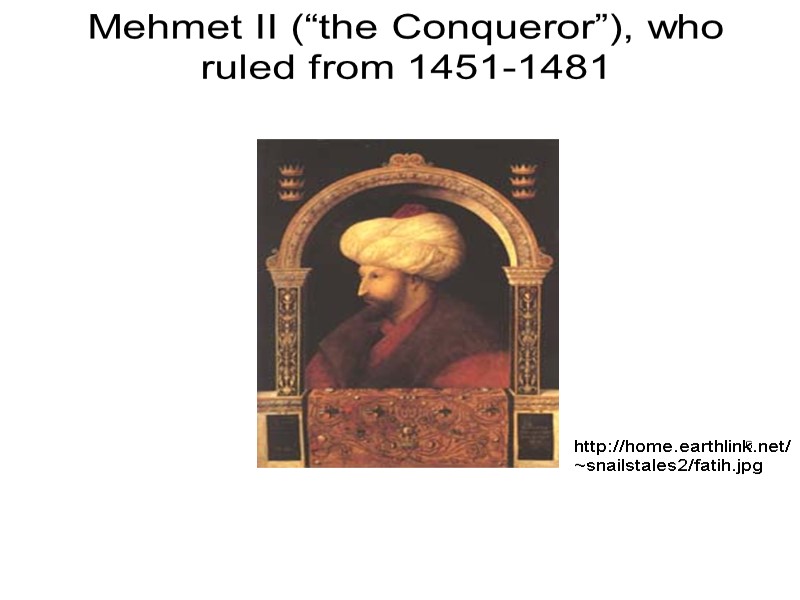
6 Mehmet II (“the Conqueror”), who ruled from 1451-1481 http://home.earthlink.net/ ~snailstales2/fatih.jpg
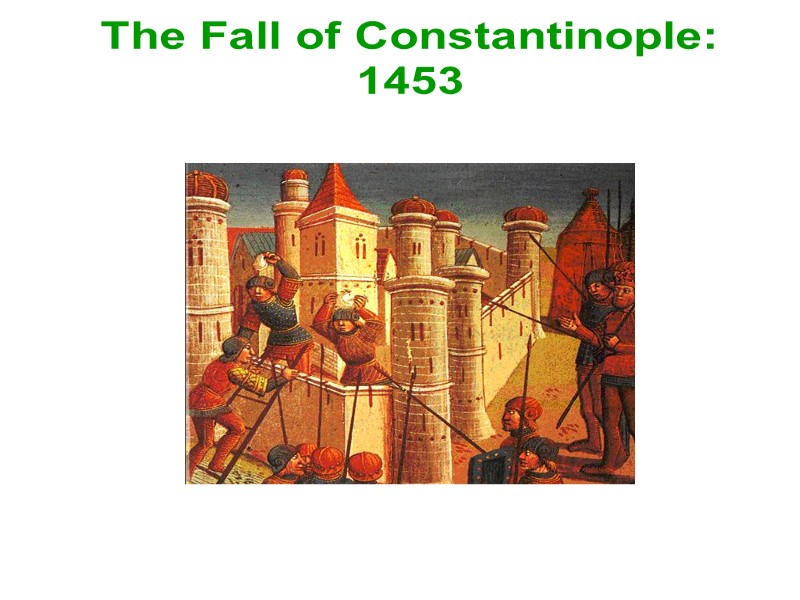
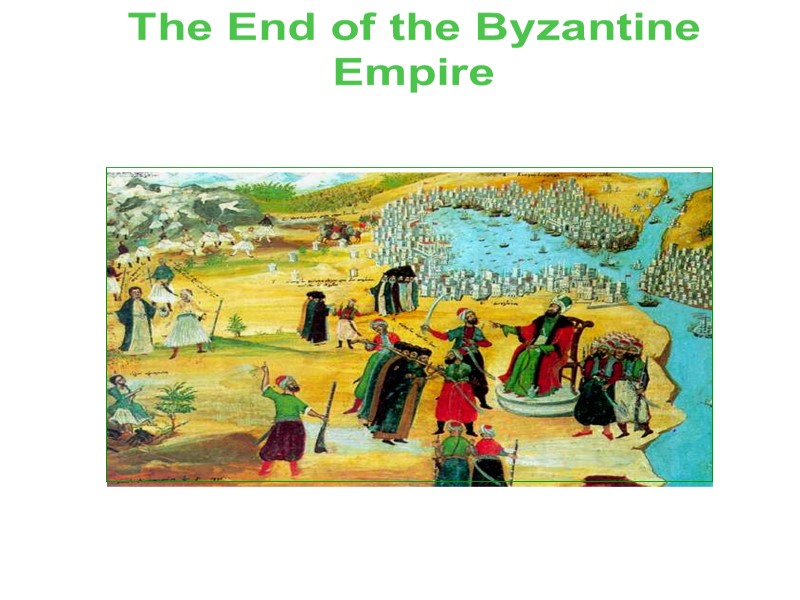
The Fall of Constantinople: 1453
The End of the Byzantine Empire
10 Islam and the Ottoman Empire ·Sultan = caliph (head of Islam) ·Divided the empire into Millets (religious groups) ·Divided the world into “the House of Islam” and the “House of War”
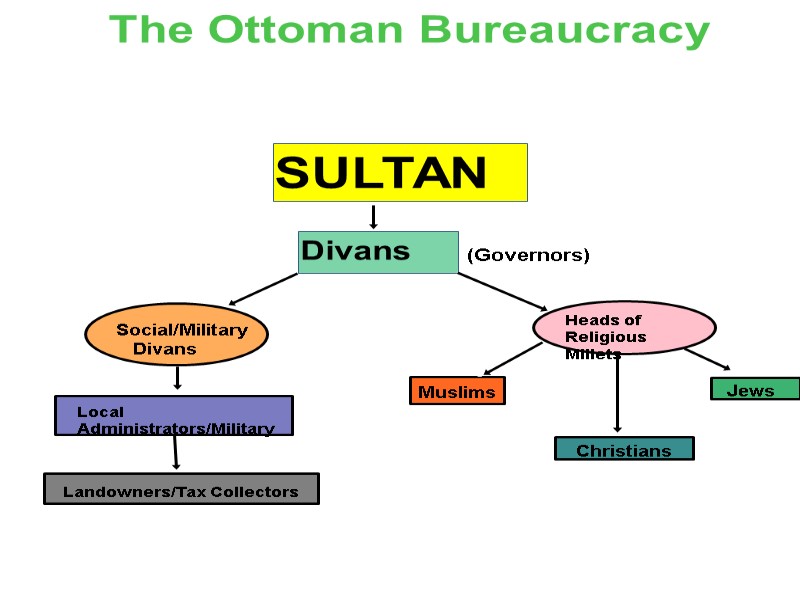
The Ottoman Bureaucracy Heads of Religious Millets Muslims Christians Jews Social/Military Divans Local Administrators/Military Landowners/Tax Collectors (Governors)
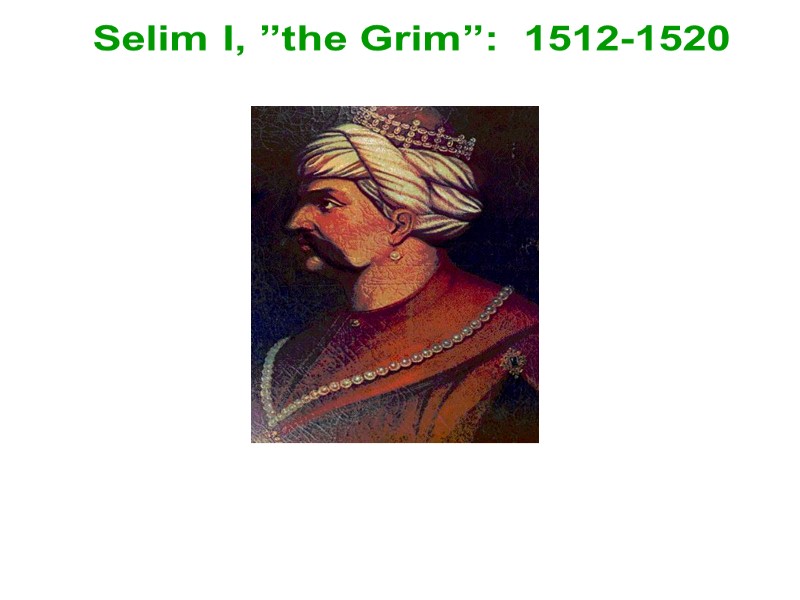
Selim I, ”the Grim”: 1512-1520
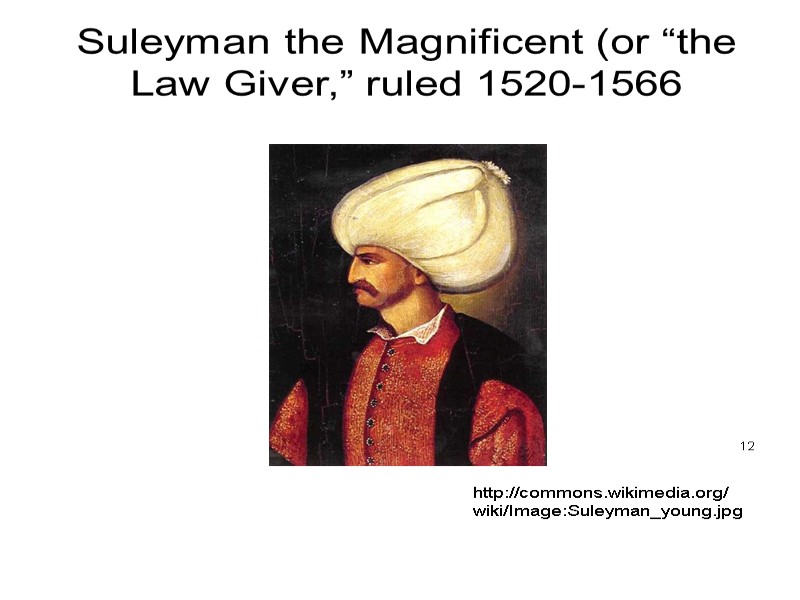
12 Suleyman the Magnificent (or “the Law Giver,” ruled 1520-1566 http://commons.wikimedia.org/ wiki/Image:Suleyman_young.jpg
16 Summary of the devshirme system: ·Slaves were taken from any non-Muslim areas. Race and language didn’t matter. ·Slaves were given jobs according to their interests and abilities. (Slaves did NOT do agricultural work – as American slaves did.)
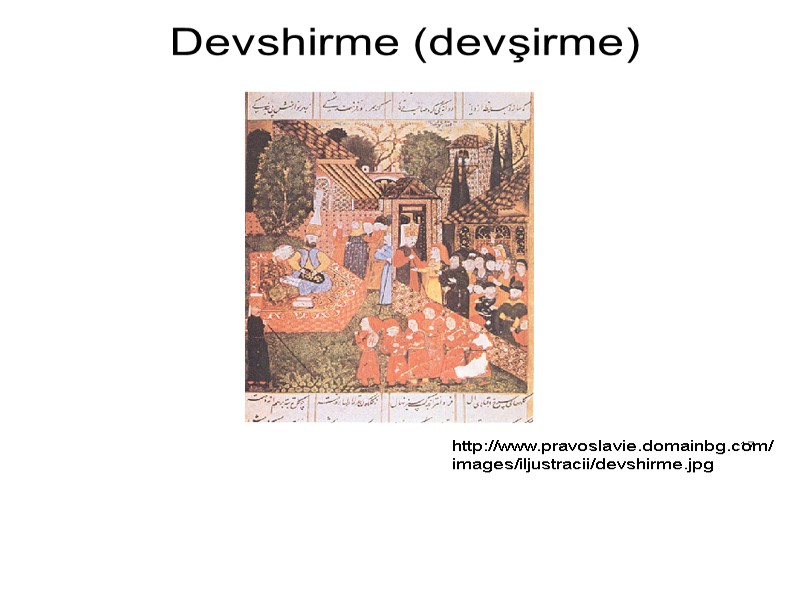
17 Devshirme (devşirme) http://www.pravoslavie.domainbg.com/ images/iljustracii/devshirme.jpg
18 Importance of the System: ·Government positions were based on merit, not on birth. ·Slaves were loyal to the sultan. – They owed their rank to him, and they had no powerful families to support them if they rebelled. ·When the system ended in the mid-1600s, the government and military declined.
Three Ottoman Strengths:
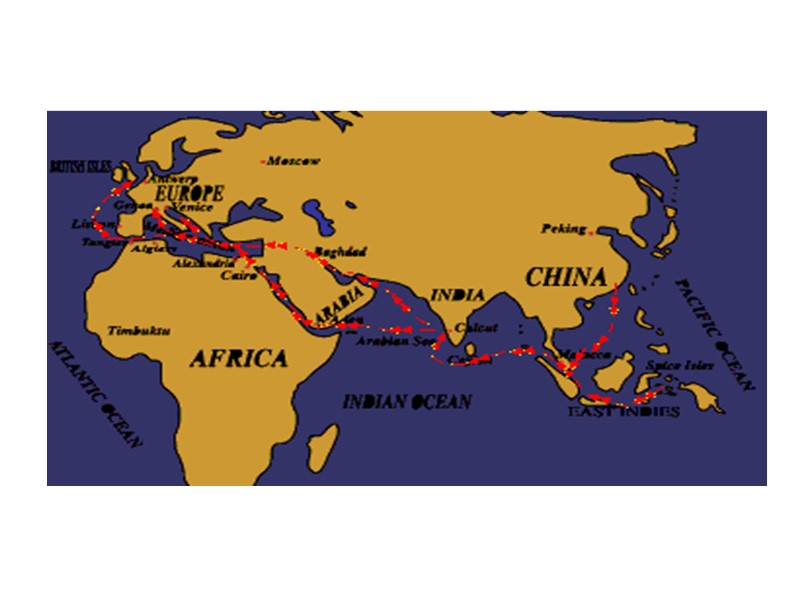
1. Control of Trade ·Location on the east/west trade route ·Control of the Waterways
2. Wealth from trade
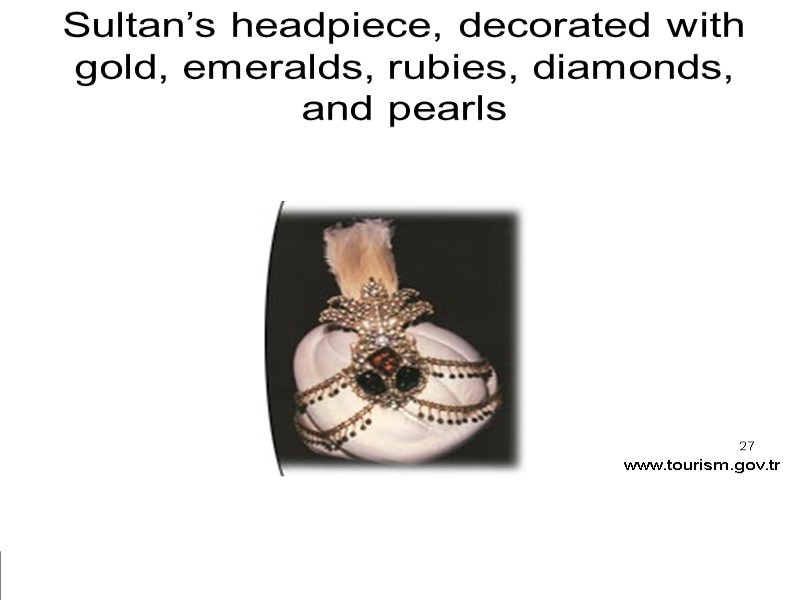
27 Sultan’s headpiece, decorated with gold, emeralds, rubies, diamonds, and pearls www.tourism.gov.tr
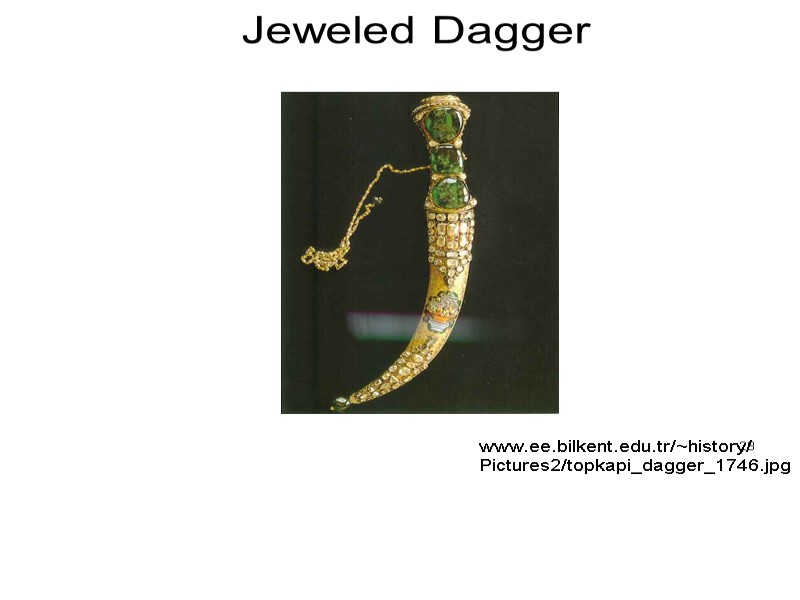
28 Jeweled Dagger www.ee.bilkent.edu.tr/~history/ Pictures2/topkapi_dagger_1746.jpg
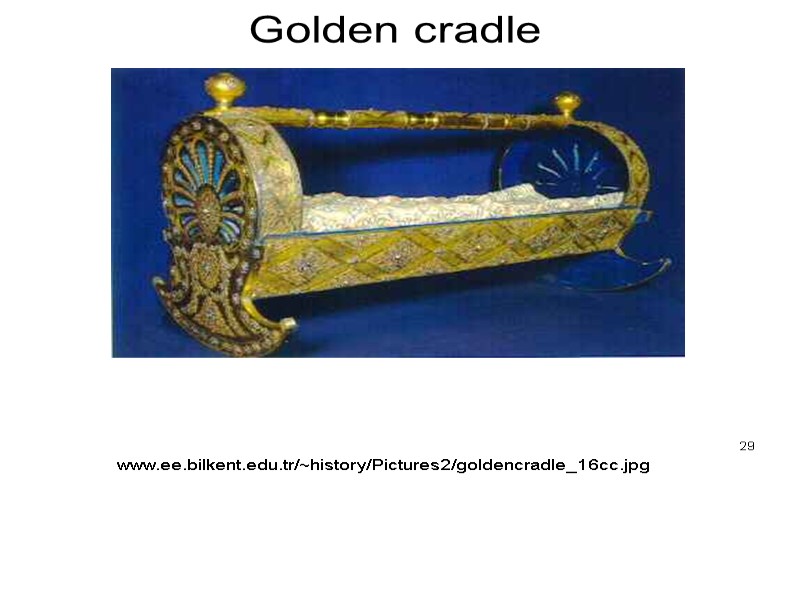
29 Golden cradle www.ee.bilkent.edu.tr/~history/Pictures2/goldencradle_16cc.jpg
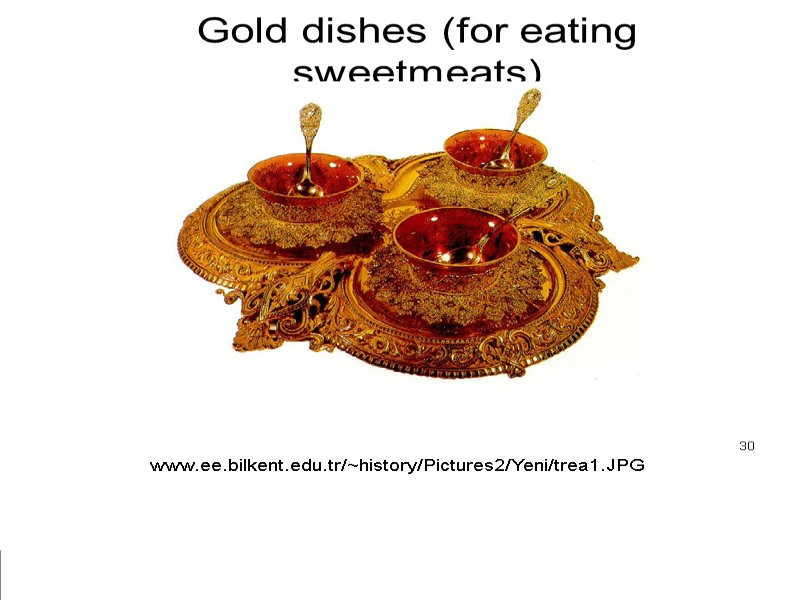
30 Gold dishes (for eating sweetmeats) www.ee.bilkent.edu.tr/~history/Pictures2/Yeni/trea1.JPG
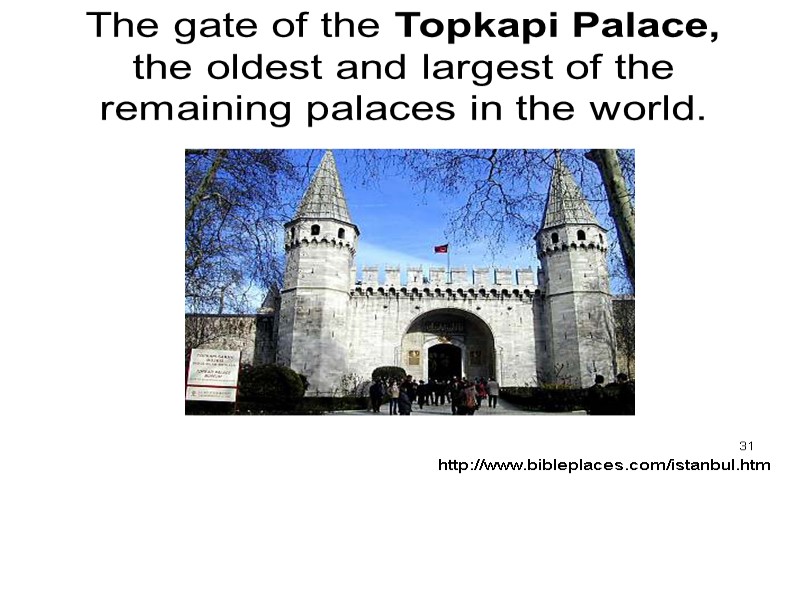
31 The gate of the Topkapi Palace, the oldest and largest of the remaining palaces in the world. http://www.bibleplaces.com/istanbul.htm
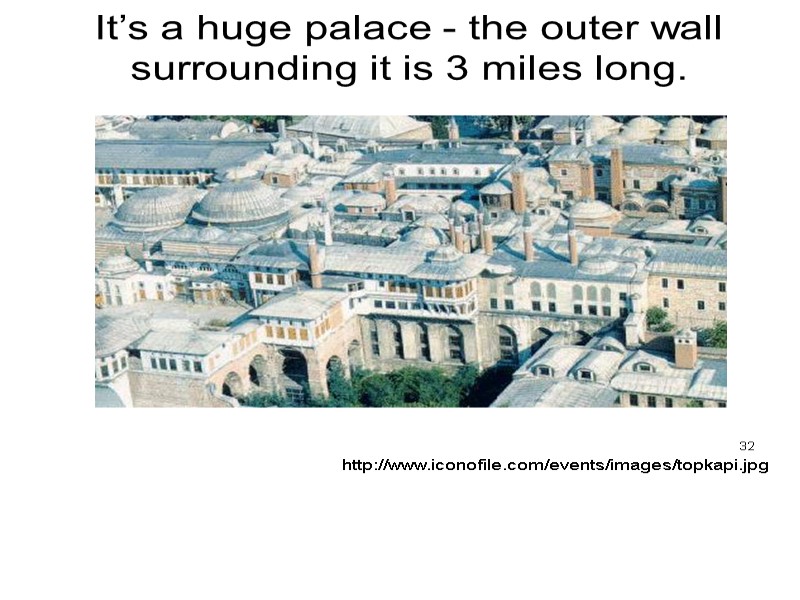
32 It’s a huge palace - the outer wall surrounding it is 3 miles long. http://www.iconofile.com/events/images/topkapi.jpg
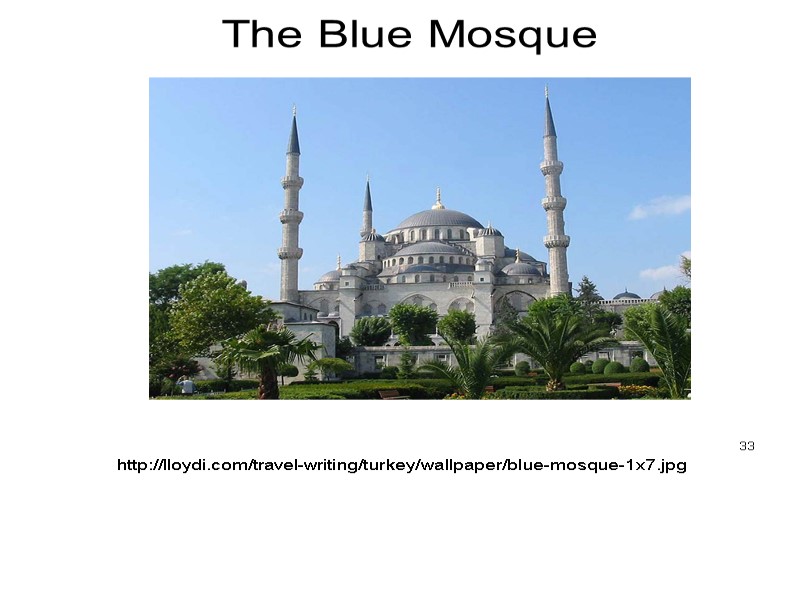
33 The Blue Mosque http://lloydi.com/travel-writing/turkey/wallpaper/blue-mosque-1x7.jpg
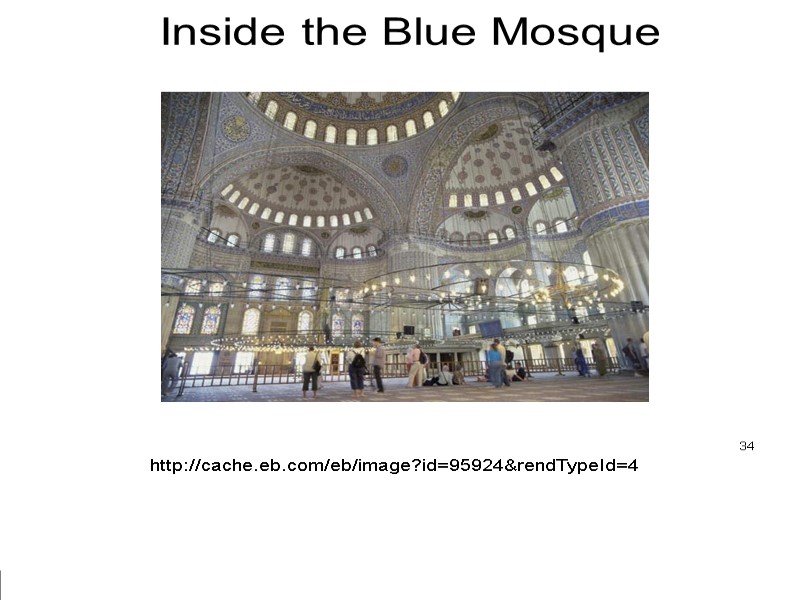
34 Inside the Blue Mosque http://cache.eb.com/eb/image?id=95924&rendTypeId=4
3. Superior technology (the benefit of diffusion)
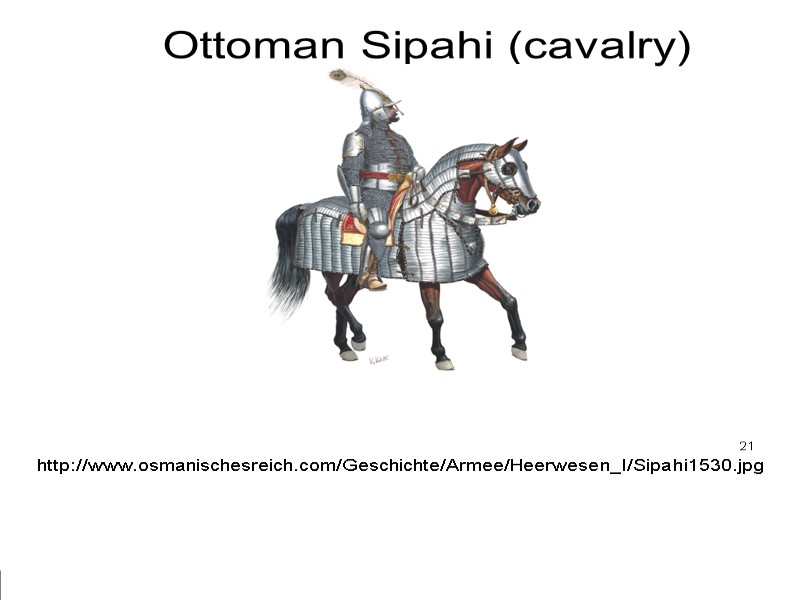
21 Ottoman Sipahi (cavalry) http://www.osmanischesreich.com/Geschichte/Armee/Heerwesen_I/Sipahi1530.jpg
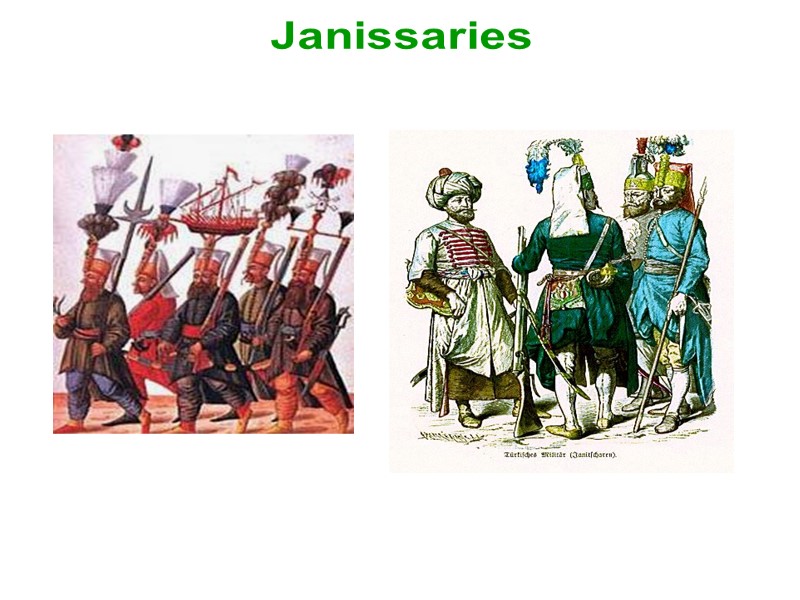
Janissaries
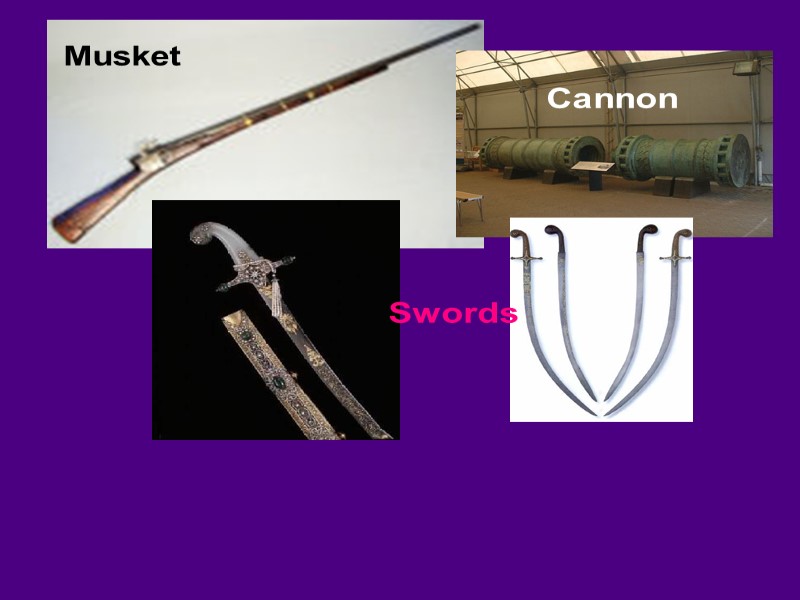
Musket Cannon Swords
How did the empire end? The Europeans destroyed their strengths.
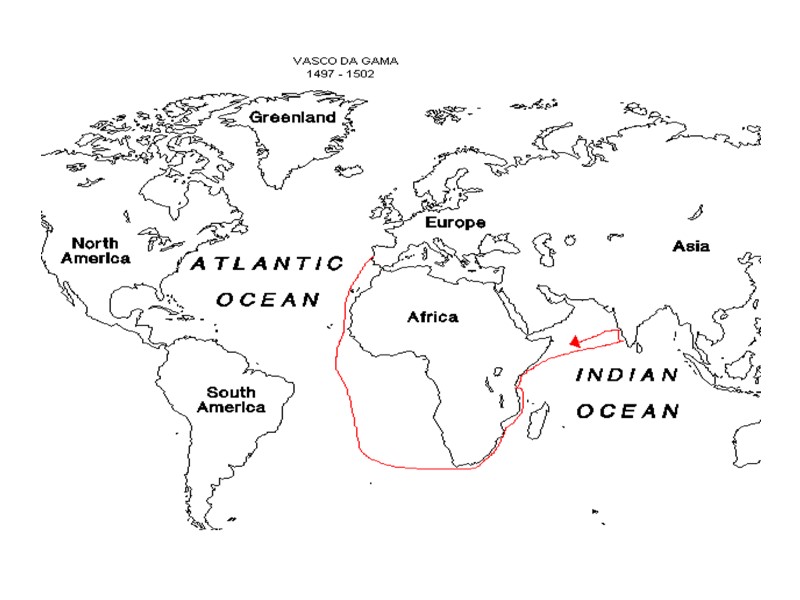
Ottoman Strength #1: Control of trade. ·Europeans broke this strength by going around Africa and gaining control of trade.
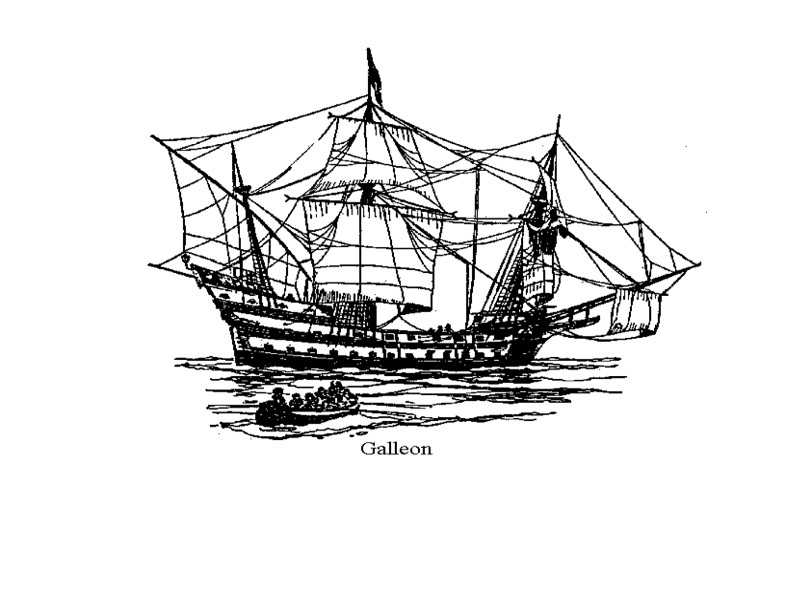
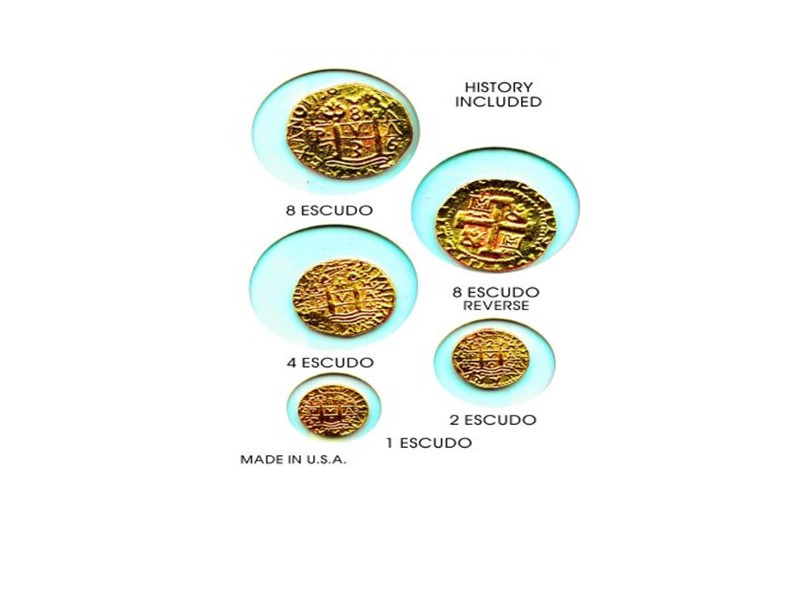
Ottoman Strength #2: Wealth ·Discovery of the New World leads to great wealth for Europe from the gold and silver found there.
Ottoman Strength #3: Technology ·The technology of Europeans surpassed the Ottoman superiority especially in production of guns and munitions and other products necessary for war.
43 Until the 18th century, the Ottoman Empire was one of the greatest empires in the world.
Attachments Conquerors__Suleyman_the_Magnificent.asf