 Скачать презентацию 1 st Introductory Weather Radar Course David Ball
026b205268e8dcb5bce089c60295e6ce.ppt
- Количество слайдов: 21



1 st Introductory Weather Radar Course David Ball Prairie and Arctic Storm Prediction Centre - Winnipeg January 13, 2010
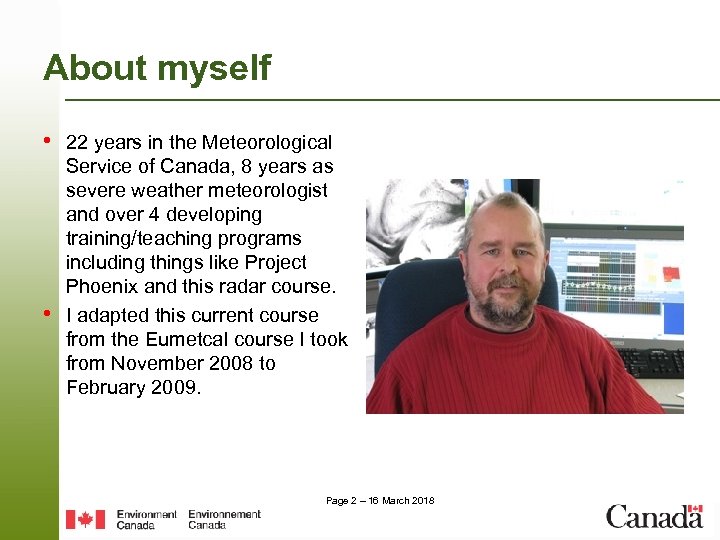
About myself • 22 years in the Meteorological • Service of Canada, 8 years as severe weather meteorologist and over 4 developing training/teaching programs including things like Project Phoenix and this radar course. I adapted this current course from the Eumetcal course I took from November 2008 to February 2009. Page 2 – 16 March 2018
Outline • • About myself Layout of Go To Webinar Course overview Website layout Pre-study modules Online lectures Residence course Other reading Page 3 – 16 March 2018
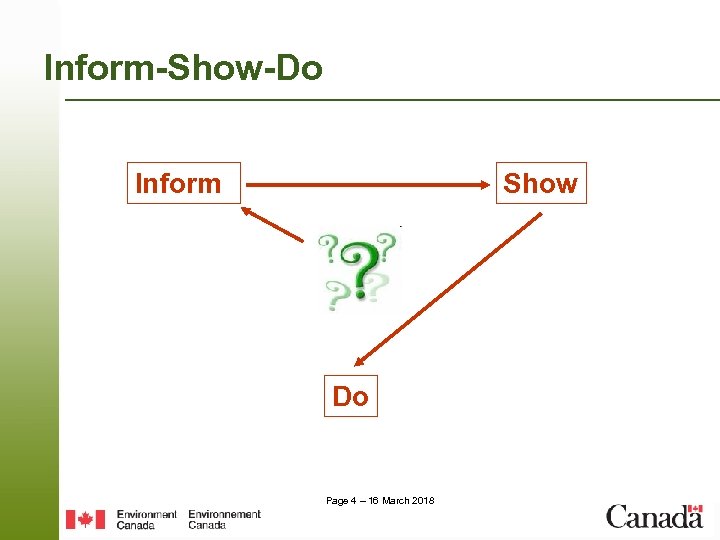
Inform-Show-Do Inform Show Do Page 4 – 16 March 2018
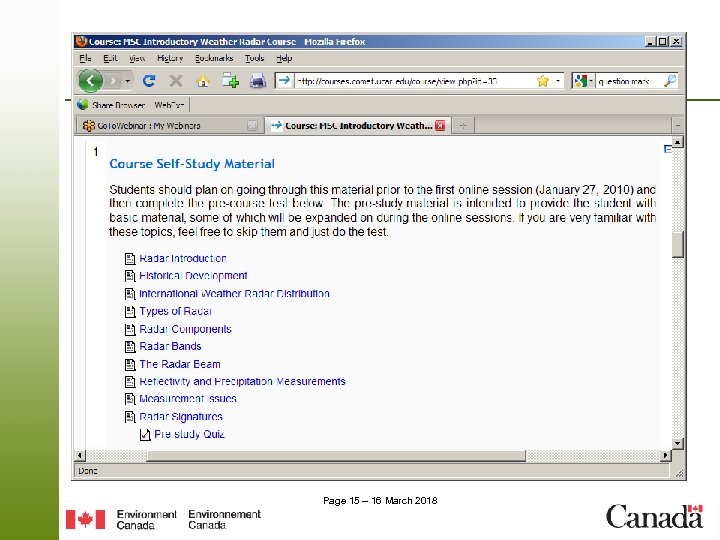
Course Overview • Inform – give the students the basic information they are going to need to complete the course. – I've tried to use multiple streams to get the material across to the students. ▪ If a student does better with video, I've got video that they can use. ▪ If the student does better with text or pictures, they can find that in the pre-study material. – It depends entirely on what you need in order to understand the material. Page 5 – 16 March 2018
Course Overview • Show – These are the on-line lectures. – The goal is to show you how to integrate the radar information into your daily routines, to show you the potential inherent in using the radar. – There is some overlap of the material, between the pre-study material and on-line lectures Page 6 – 16 March 2018
Course Overview • Do – the residence course is where we'll give you the time to actually work with what you’ve learned in the first two sections. – You will be doing severe weather workups, integrating every data source, including the radar, to write forecasts. – This will be done by looking at live cases, where possible, and failing that, canned ones. Page 7 – 16 March 2018
The Goal at the End of the Course? To make you a more complete forecaster! Page 8 – 16 March 2018
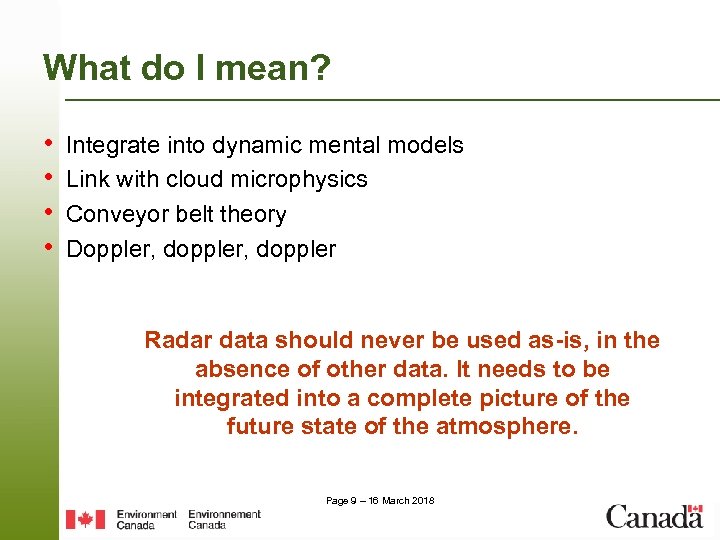
What do I mean? • • Integrate into dynamic mental models Link with cloud microphysics Conveyor belt theory Doppler, doppler Radar data should never be used as-is, in the absence of other data. It needs to be integrated into a complete picture of the future state of the atmosphere. Page 9 – 16 March 2018
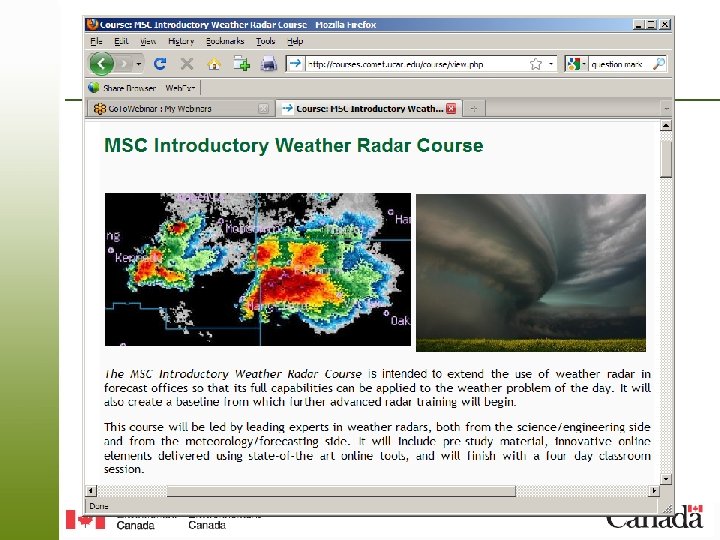
Page 10 – 16 March 2018
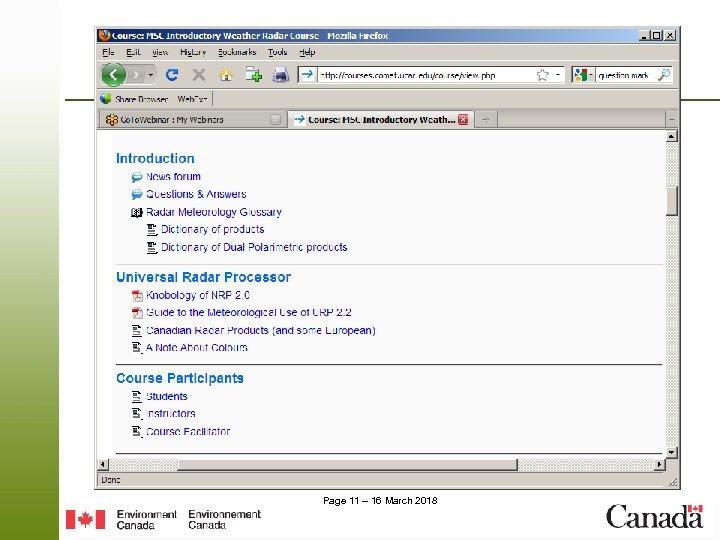
Page 11 – 16 March 2018
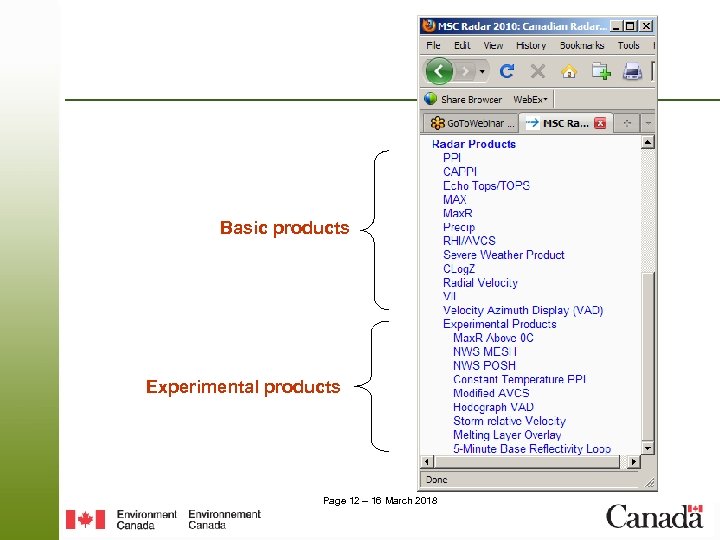
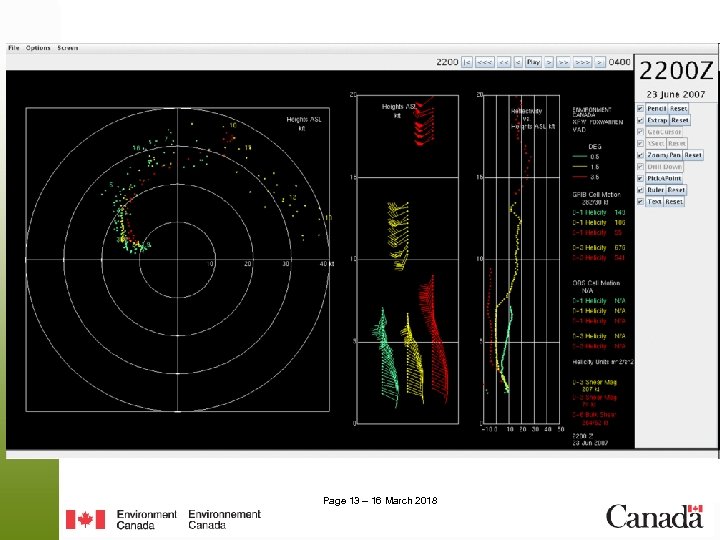
Basic products Experimental products Page 12 – 16 March 2018
Page 13 – 16 March 2018
Course Outline • Radar Fundamentals • Radar Interpretation • Radar Applications Page 14 – 16 March 2018
Page 15 – 16 March 2018
Page 16 – 16 March 2018
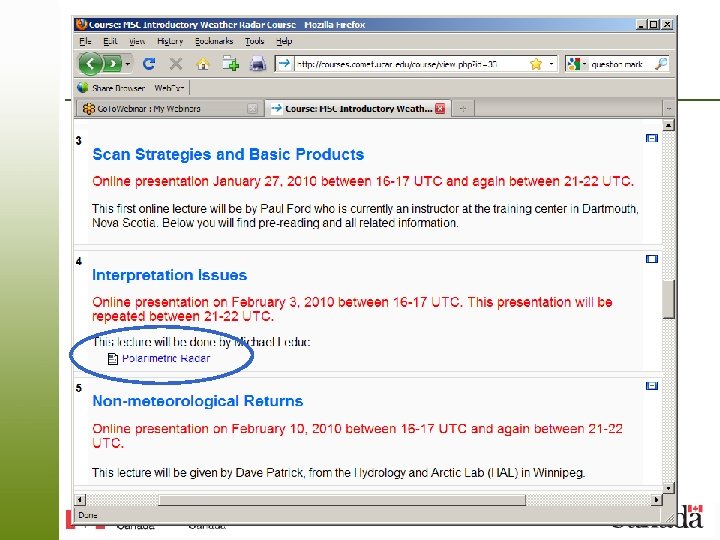
Additional Modules • • • Polarimetric radar Doppler basics Radar algorithms Warm fronts Cold fronts • There are three COMET modules on convection. These should be completed prior to the convective lectures by Pierre Vaillancourt and James Cummine Page 17 – 16 March 2018
On-line lectures • • • Scan strategies and basic products – Paul Ford Interpretation issues – Mike Leduc Non-meteorological returns – Dave Patrick Doppler basics – Phil Chadwick Radar algorithms – Dave Patrick Warm fronts (pure snow) – Dr. Elena Saltikoff (FMI) Warm fronts (mixed phase) – Mike Leduc Cold fronts – Phil Chadwick Convection 1 – James Cummine Convection 2 – Pierre Vaillancourt Shallow precipitation and orography – Dr. Paul Joe Page 18 – 16 March 2018
Residence Course • What I'm going to do is book a block of rooms under the MSC at the Delta South Hotel in Edmonton. This has several advantages: – It's a straight shot in from the airport either by a shuttle bus or a taxi. – There are plenty of restaurants in the local area. – The office in Edmonton is on the east side of the city, but there are few hotels in the area. It is easy to get to the office from the hotel. – I'm hoping to arrange for 3 vans, with drivers who are familiar with the area, to make it easier for people to get around. Expecting everyone to drive themselves is a bit much to ask. Page 19 – 16 March 2018
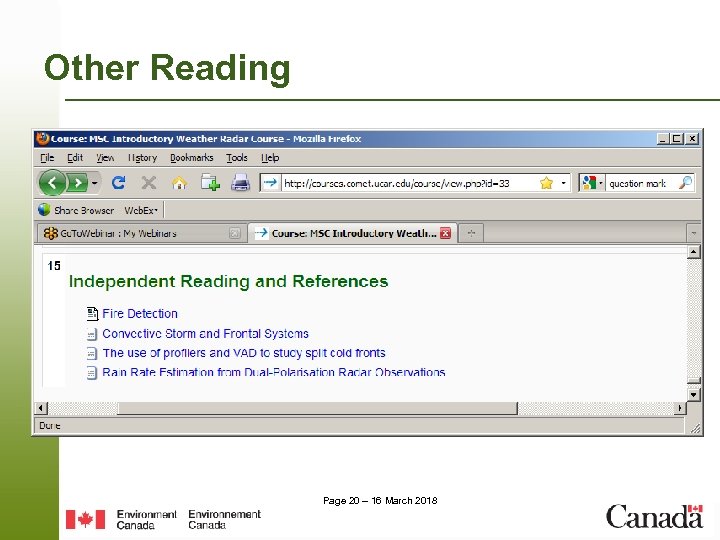
Other Reading Page 20 – 16 March 2018
Questions? Page 21 – 16 March 2018
Скачать презентацию 1 st Introductory Weather Radar Course David Ball
026b205268e8dcb5bce089c60295e6ce.ppt