


 Скачать презентацию 1 Ship-to-Shore 2 Transfer 3 Storage 4 Delivery
aa3630fed239ab36f5f30cba42c43a23.ppt
- Количество слайдов: 20

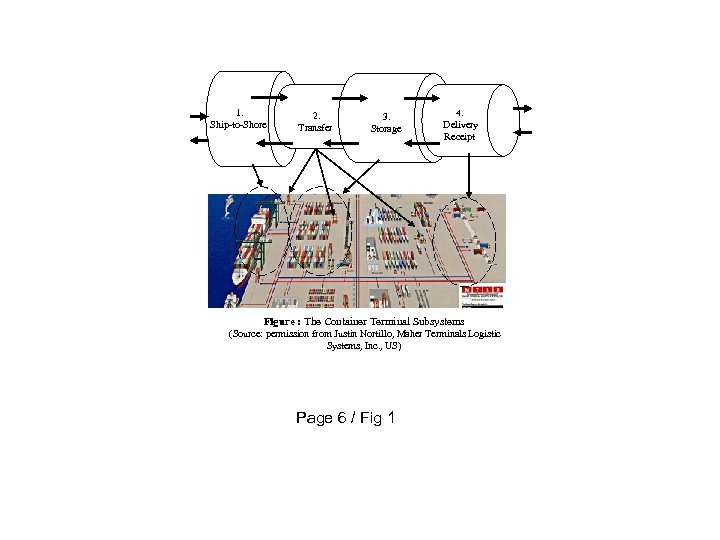 1. Ship-to-Shore 2. Transfer 3. Storage 4. Delivery Receipt Figure : The Container Terminal Subsystems (Source: permission from Justin Nortillo, Maher Terminals Logistic Systems, Inc. , US) Page 6 / Fig 1
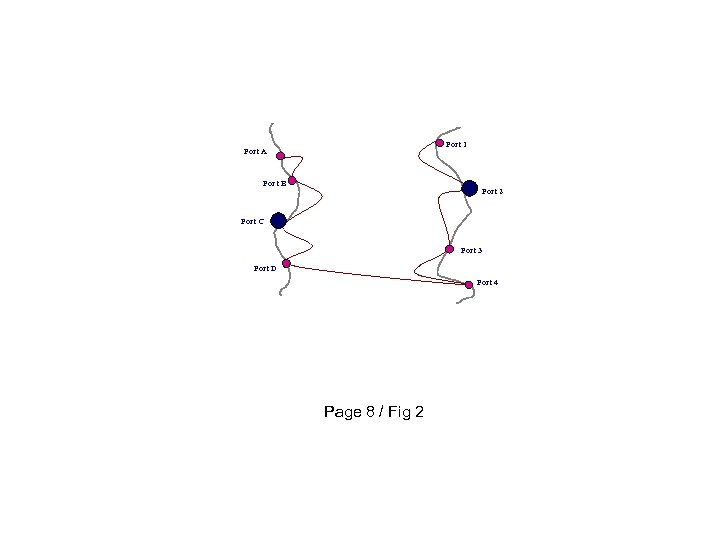 Port 1 Port A Port B Port 2 Port C Port 3 Port D Port 4 Page 8 / Fig 2
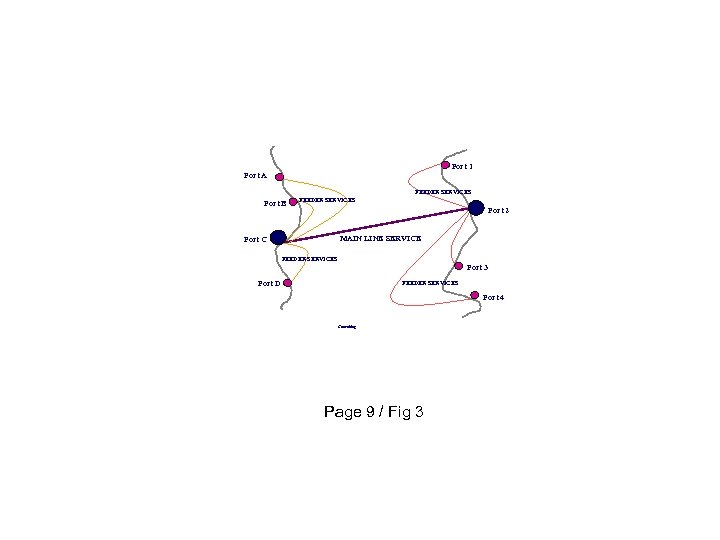 Port 1 Port A FEEDER SERVICES Port B FEEDER SERVICES Port 2 MAIN LINE SERVICE Port C FEEDER SERVICES Port 3 Port D FEEDER SERVICES Port 4 De Monie International Port Consulting Page 9 / Fig 3
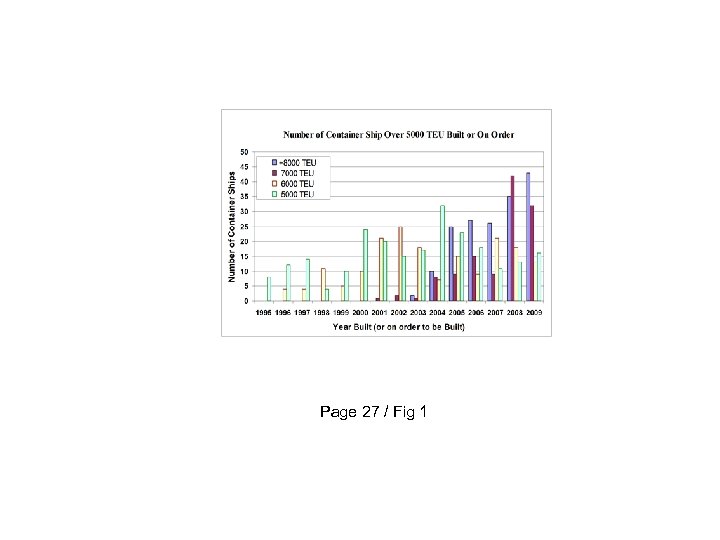 Page 27 / Fig 1
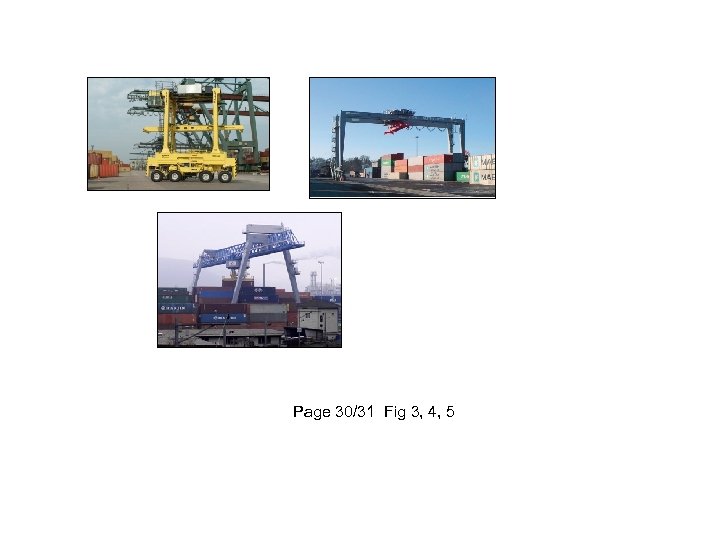 Page 30/31 Fig 3, 4, 5
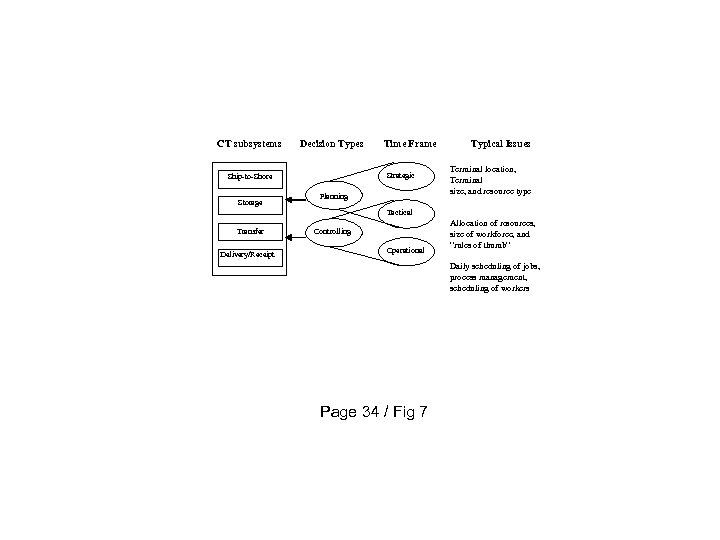 CT subsystems Decision Types Strategic Ship-to-Shore Storage Time Frame Planning Typical Issues Terminal location, Terminal size, and resource type Tactical Transfer Delivery/Receipt Controlling Operational Allocation of resources, size of workforce, and “rules of thumb” Daily scheduling of jobs, process management, scheduling of workers Page 34 / Fig 7
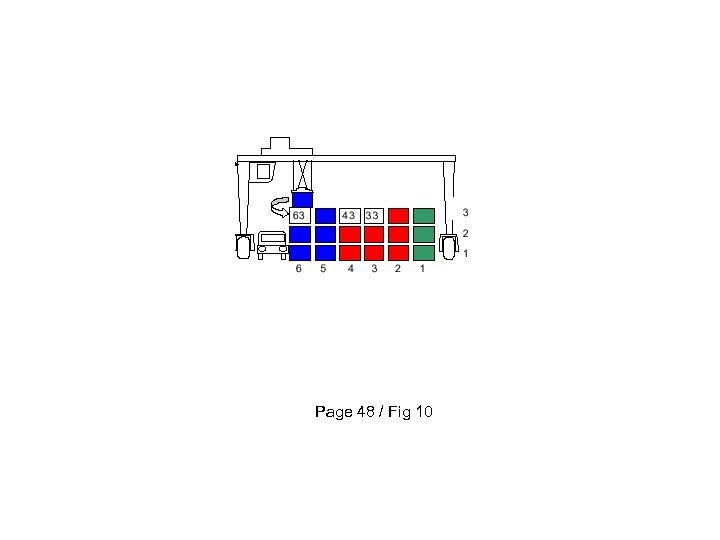 Page 48 / Fig 10
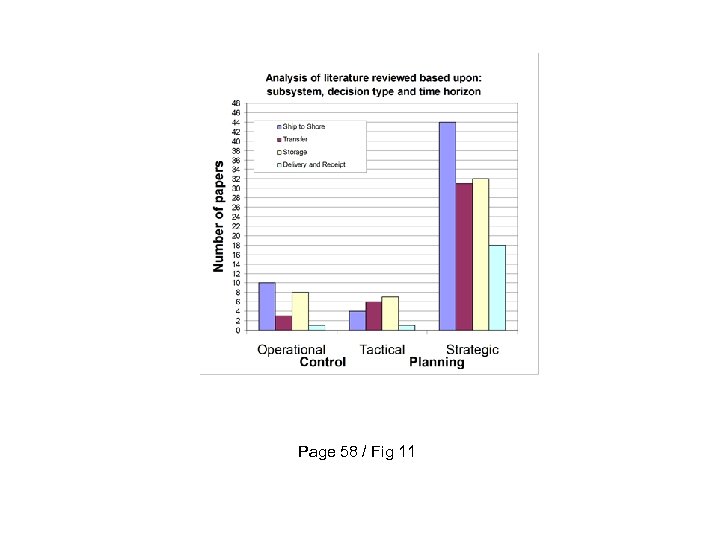 Page 58 / Fig 11
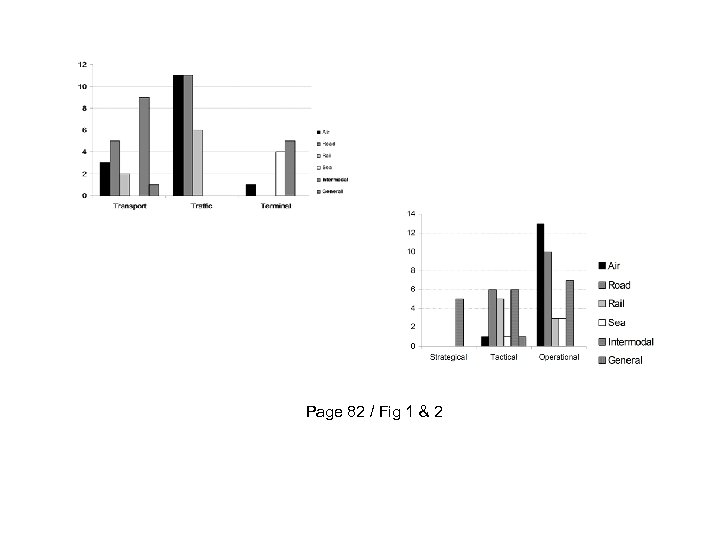 Page 82 / Fig 1 & 2
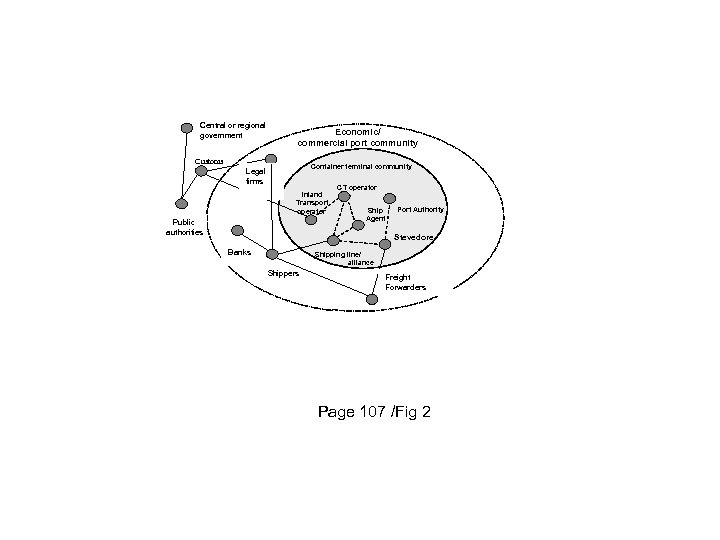 Central or regional government Economic/ commercial port community Customs Container terminal community Legal firms Inland Transport operator Public authorities CT operator Ship Agent Port Authority Stevedore Banks Shipping line/ alliance Shippers Freight Forwarders Page 107 /Fig 2
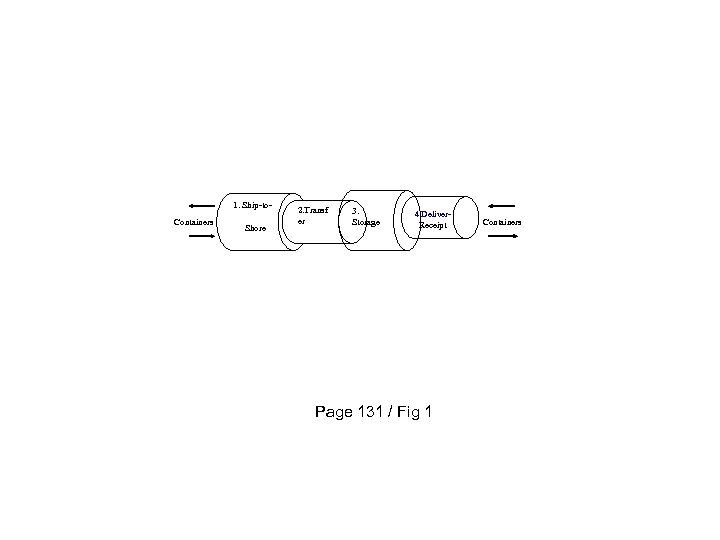 1. Ship-to. Containers Shore 2. Transf er 3. Storage 4. Deliver. Receipt Page 131 / Fig 1 Containers
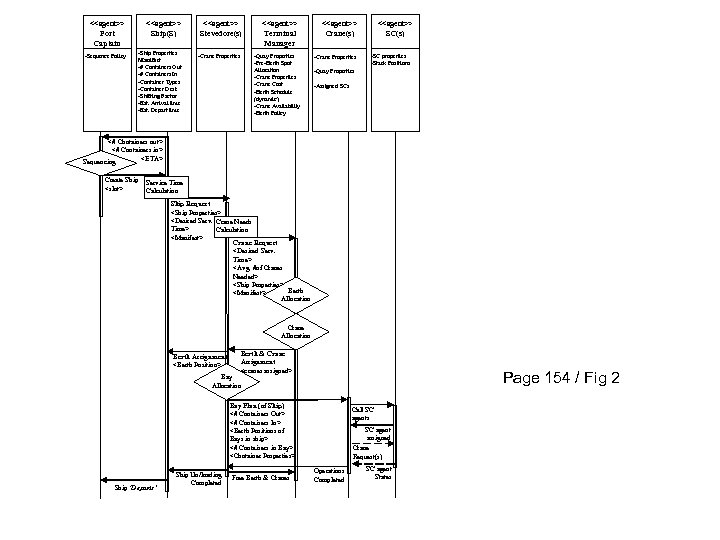
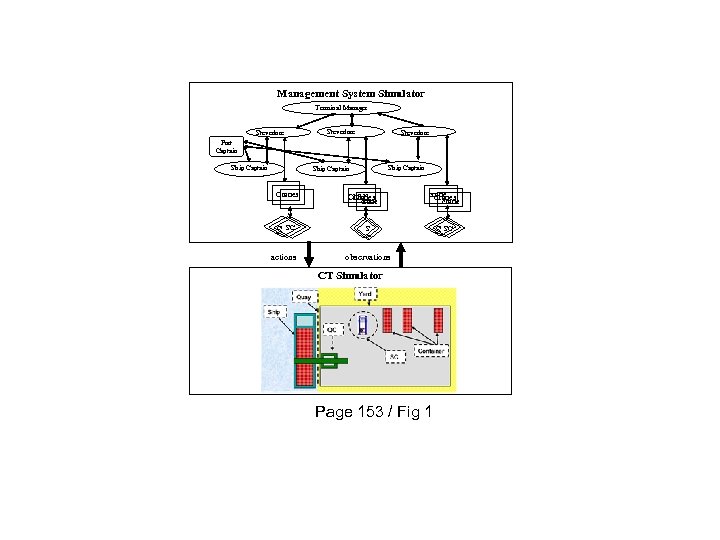 Management System Simulator Terminal Manager Stevedore Port Captain Ship Captain Cranes crane S SC S C actions crane Cranes crane observations CT Simulator Page 153 / Fig 1 S SC
 <
<
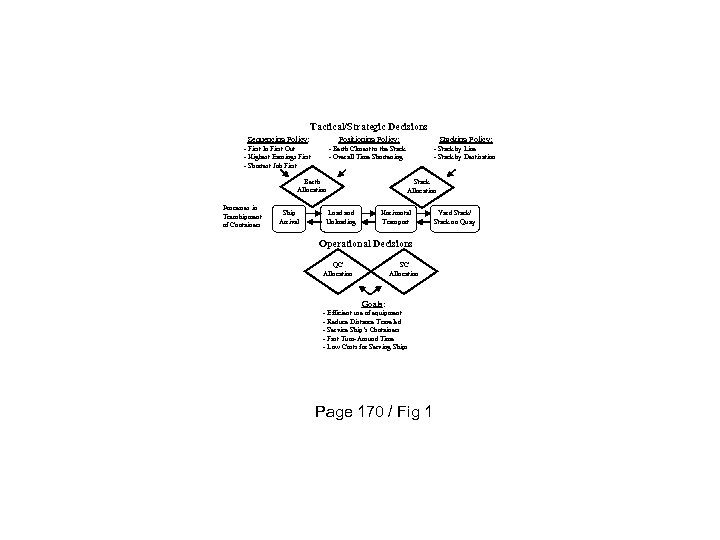 Tactical/Strategic Decisions Sequencing Policy: Positioning Policy: Stacking Policy: - First In First Out - Highest Earnings First - Shortest Job First - Berth Closest to the Stack - Overall Time Shortening - Stack by Line - Stack by Destination Berth Allocation Processes in Transhipment of Containers Ship Arrival Load and Unloading Stack Allocation Horizontal Transport Operational Decisions QC Allocation SC Allocation Goals: - Efficient use of equipment - Reduce Distance Traveled - Service Ship’s Containers - Fast Turn-Around Time - Low Costs for Serving Ships Page 170 / Fig 1 Yard Stack/ Stack on Quay
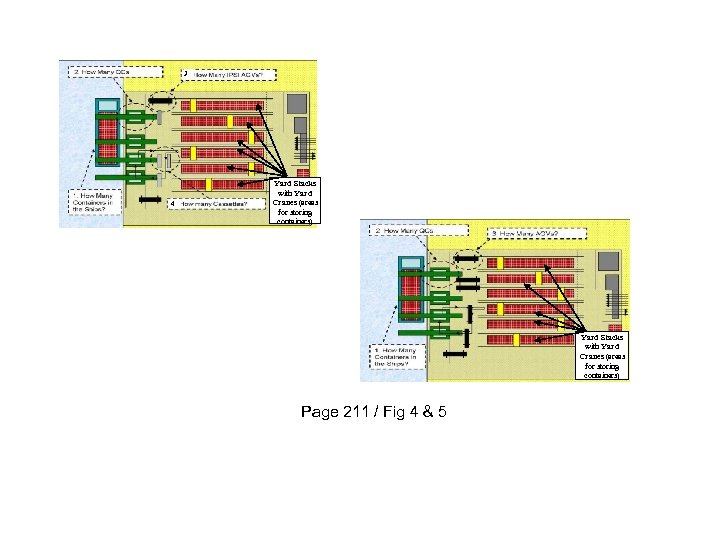 3 4 Yard Stacks with Yard Cranes (areas for storing containers) Page 211 / Fig 4 & 5
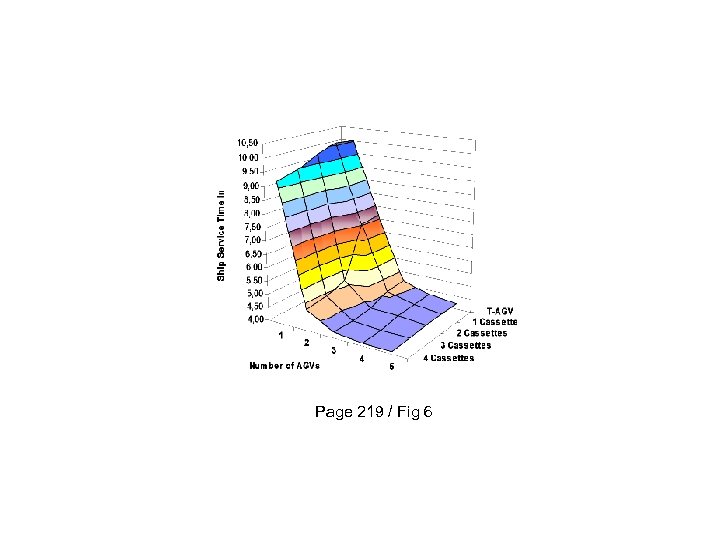 Page 219 / Fig 6
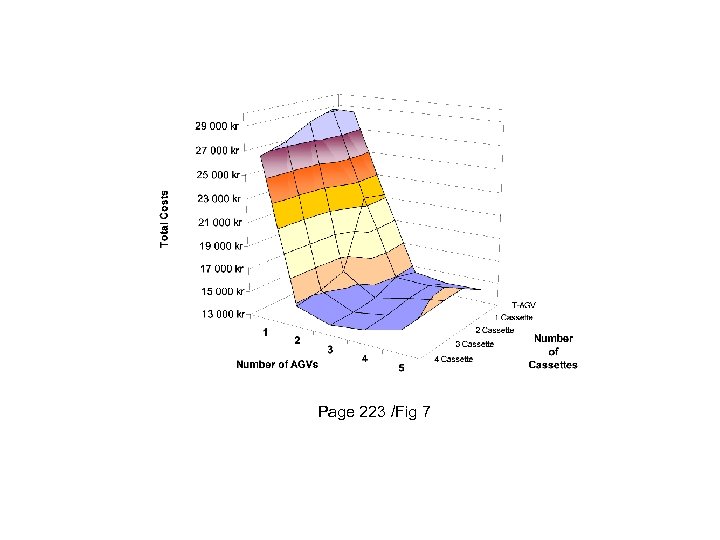 Page 223 /Fig 7
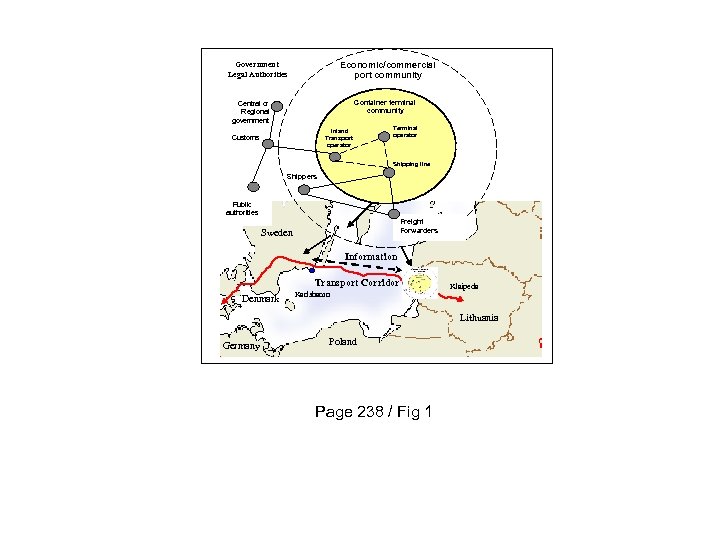 Economic/commercial port community Government Legal Authorities Container terminal community Central or Regional government Inland Transport operator Customs Terminal operator Shipping line Shippers Public authorities Freight Forwarders Sweden Information Transport Corridor Denmark Karlshamn Klaipeda Lithuania Germany Poland Page 238 / Fig 1
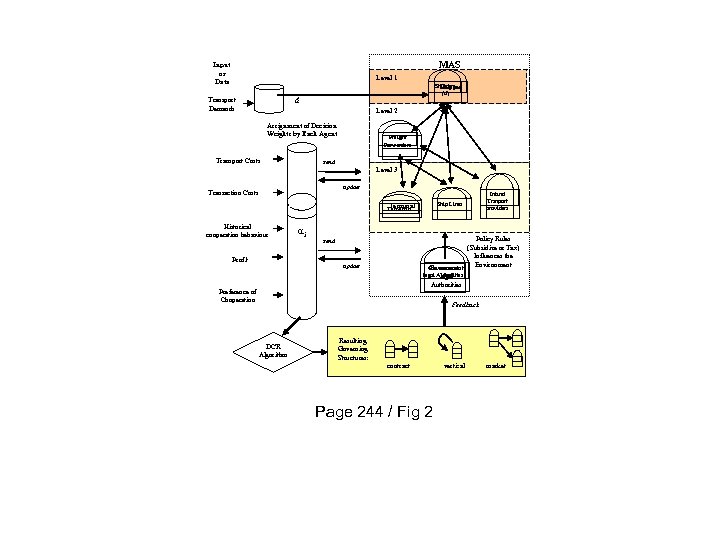 MAS Input or Data Level 1 Shippers Shipper (d) d Transport Demands Level 2 Assignment of Decision Weights by Each Agent Transport Costs Freight Forwarders send Level 3 update Transaction Costs Ship Lines Terminals Historical cooperation behaviour Profit αi Inland Tranport providers Policy Rules (Subsidize or Tax) Influences the Environment Government legal Authorities send update Preference of Cooperation Feedback DCR Algorithm Resulting Governing Structures: contract Page 244 / Fig 2 vertical market