


 Скачать презентацию 1 Part 1 Marketing Dynamics Chapter 4
8340f8ace7be80d925e1811347995c16.ppt
- Количество слайдов: 36
 1
1
 Part 1 Marketing Dynamics Chapter 4 Markets 2
 Chapter Objectives ¾ List the four characteristics of a market. ¾ Explain the difference between the consumer market and the business market. ¾ List the four categories of customers in the business market. (Continued) 3
 Chapter Objectives ¾ Distinguish between a consumer and a customer. ¾ Describe the difference between a mass market and a market segment. ¾ Explain why marketers segment a mass market. 4
 Marketing Terms ¾ market ¾ consumer market ¾ business market ¾ B 2 C ¾ consumer ¾ B 2 B ¾ producer ¾ reseller ¾ institution ¾ government ¾ mass market ¾ market segment ¾ marketing strategy 5
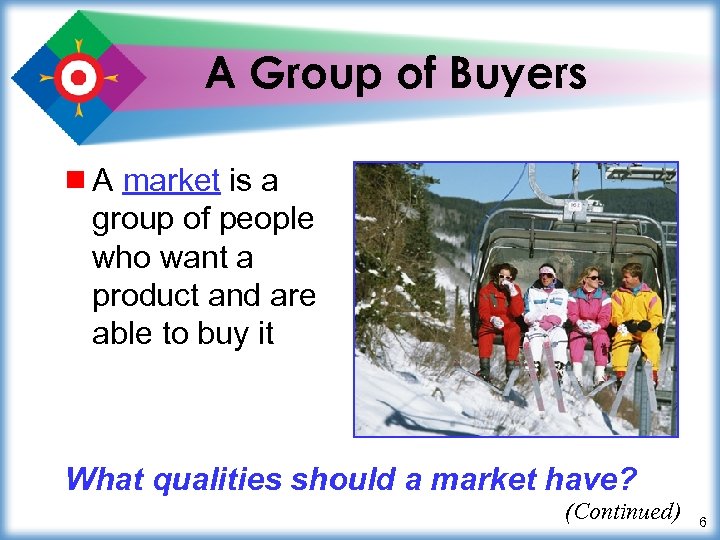 A Group of Buyers ¾ A market is a group of people who want a product and are able to buy it What qualities should a market have? (Continued) 6
 A Group of Buyers ¾ Characteristics of a market ¤ need or want the product ¤ able to buy the product ¤ willing to buy the product ¤ have the authority to buy the product Give an example of a group who might want a product, but not be able or have the authority to buy it. 7
 Consumer Market vs. Business Market ¾ Two types of markets ¤ consumer market – people who buy products for their own use ¤ business market – people who buy products for use in a business (Continued) 8
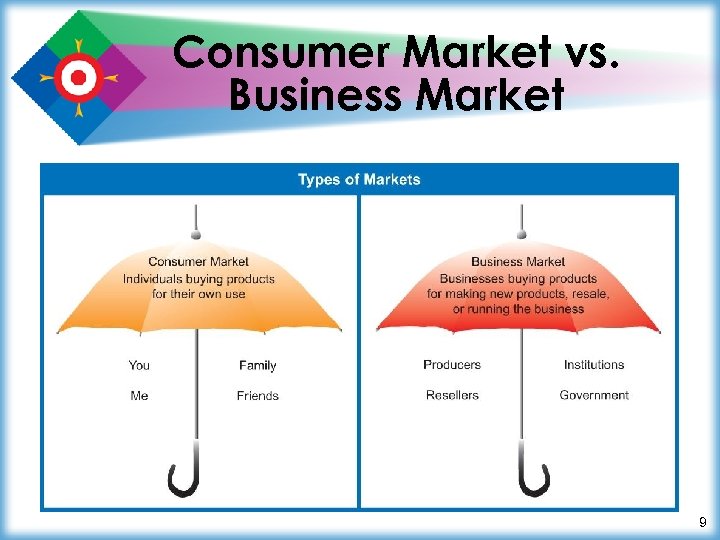 Consumer Market vs. Business Market 9
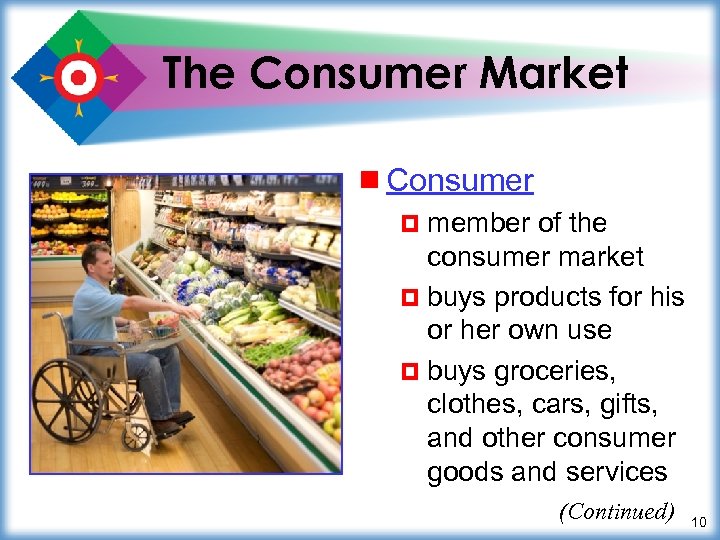 The Consumer Market ¾ Consumer ¤ member of the consumer market ¤ buys products for his or her own use ¤ buys groceries, clothes, cars, gifts, and other consumer goods and services (Continued) 10
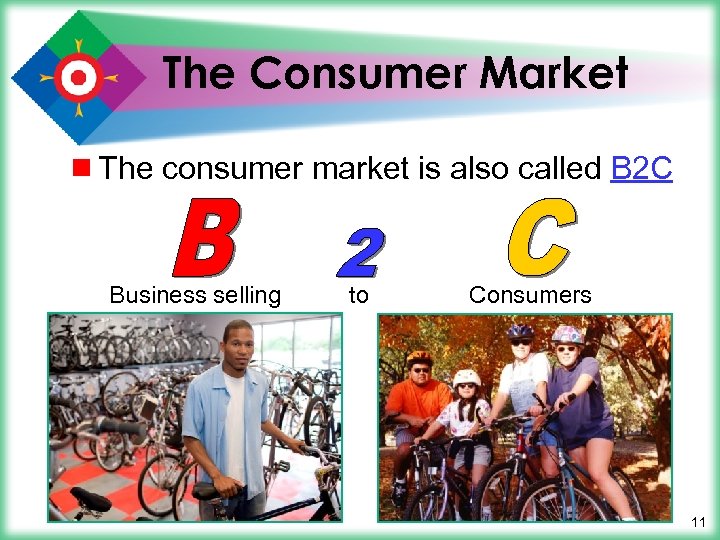 The Consumer Market ¾ The consumer market is also called B 2 C Business selling to Consumers 11
 The Business Market ¾ The business market consists of businesses who buy products from other businesses ¾ A customer in the business market is another business (Continued) 12
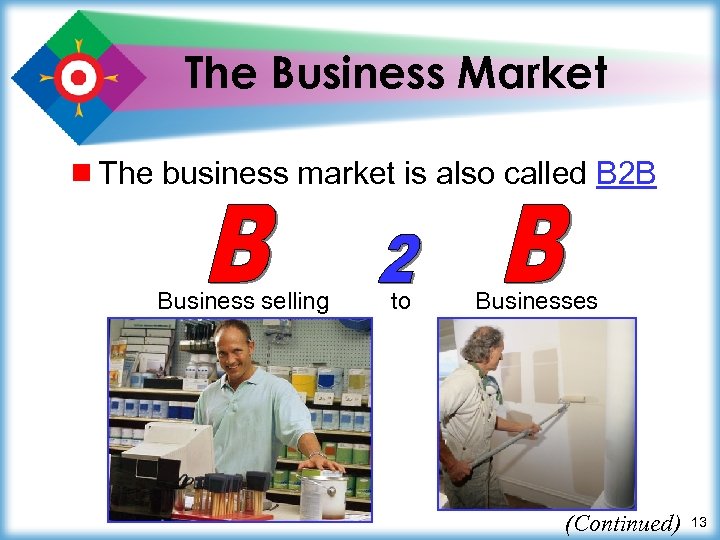 The Business Market ¾ The business market is also called B 2 B Business selling to Businesses (Continued) 13
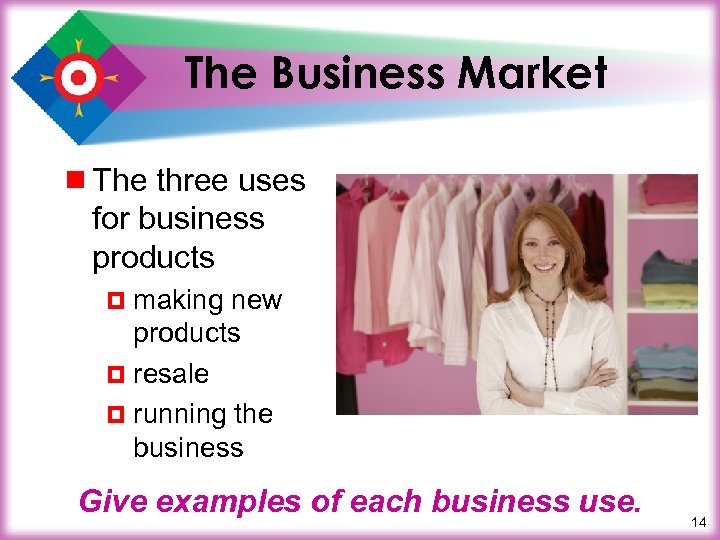 The Business Market ¾ The three uses for business products ¤ making new products ¤ resale ¤ running the business Give examples of each business use. 14
 Types of Business Customers ¾ Four types of customers in the business market ¤ producer ¤ reseller ¤ institution ¤ government (Continued) 15
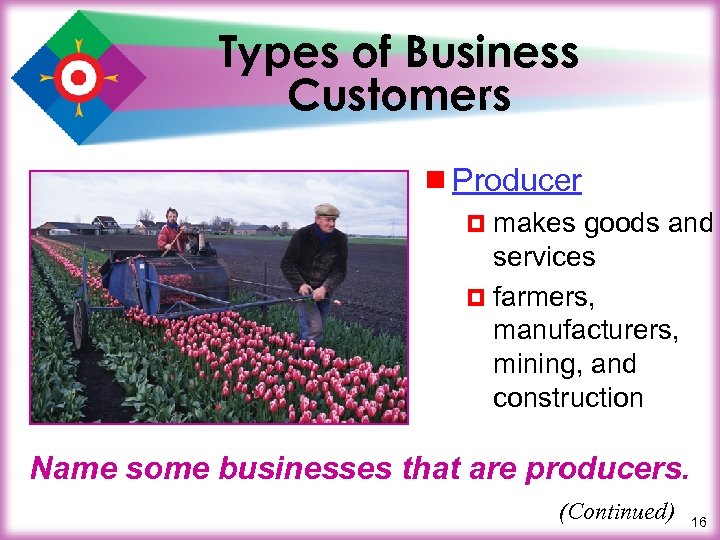 Types of Business Customers ¾ Producer ¤ makes goods and services ¤ farmers, manufacturers, mining, and construction Name some businesses that are producers. (Continued) 16
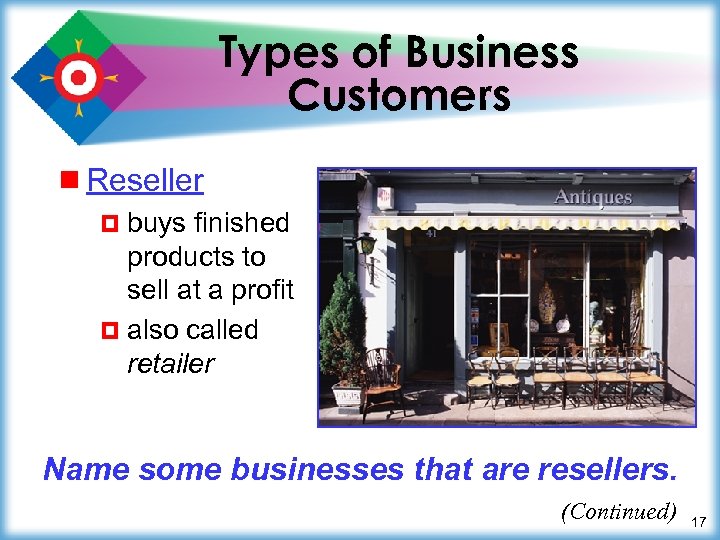 Types of Business Customers ¾ Reseller ¤ buys finished products to sell at a profit ¤ also called retailer Name some businesses that are resellers. (Continued) 17
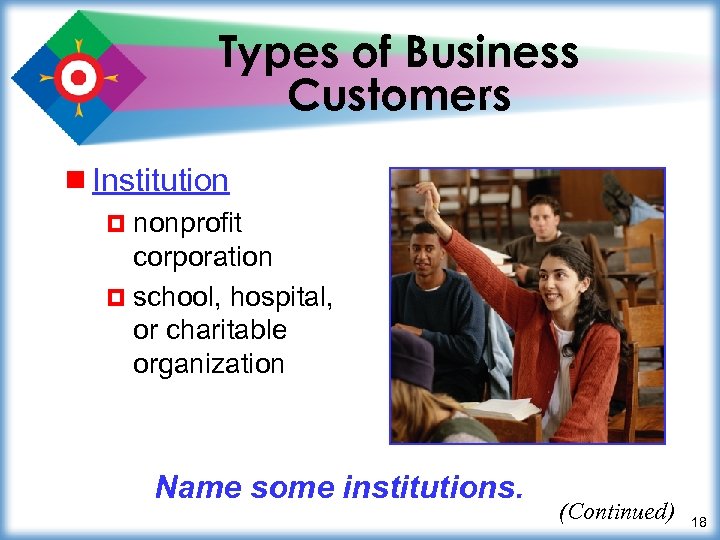 Types of Business Customers ¾ Institution ¤ nonprofit corporation ¤ school, hospital, or charitable organization Name some institutions. (Continued) 18
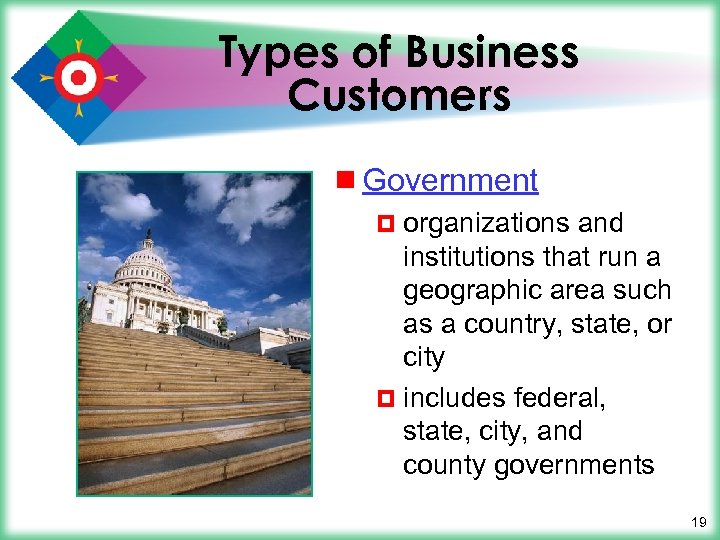 Types of Business Customers ¾ Government ¤ organizations and institutions that run a geographic area such as a country, state, or city ¤ includes federal, state, city, and county governments 19
 Customer vs. Consumer ¾ The term consumer has more than one meaning 1. member of the consumer market 2. person who actually uses (consumes) the product ¾ The customer (the person who buys the product) is distinguished from the consumer (the person who uses the product) (Continued) 20
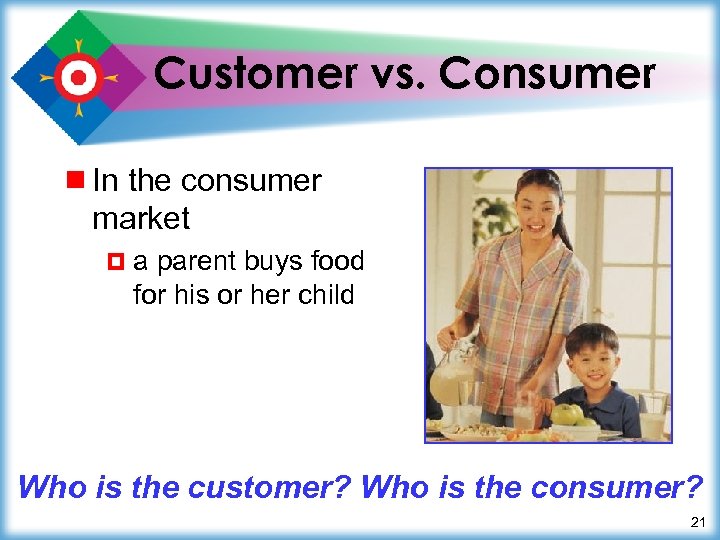 Customer vs. Consumer ¾ In the consumer market ¤a parent buys food for his or her child Who is the customer? Who is the consumer? 21
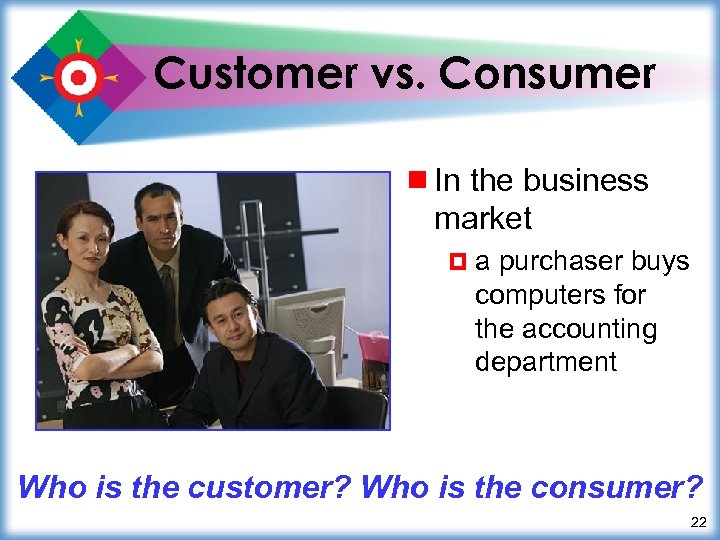 Customer vs. Consumer ¾ In the business market ¤a purchaser buys computers for the accounting department Who is the customer? Who is the consumer? 22
 Market Segments ¾ Think of everyone who drinks cola beverages ¾ All the cola customers are a mass market ¾ All the customers for a type of product are called a mass market (Continued) 23
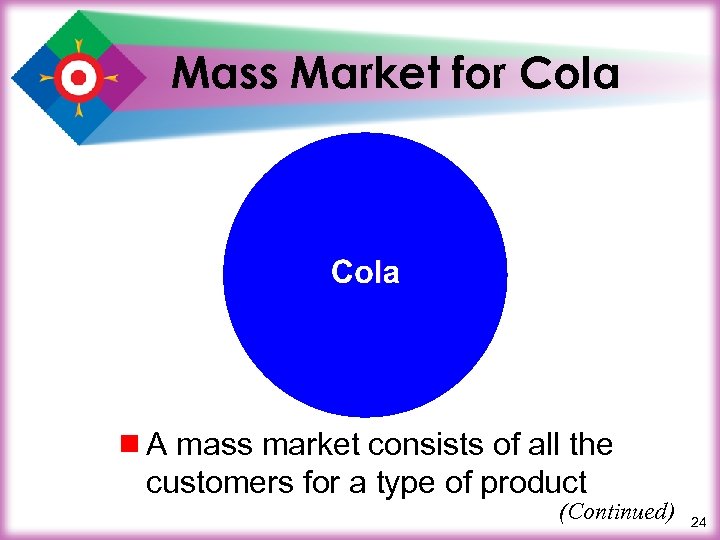 Mass Market for Cola ¾ A mass market consists of all the customers for a type of product (Continued) 24
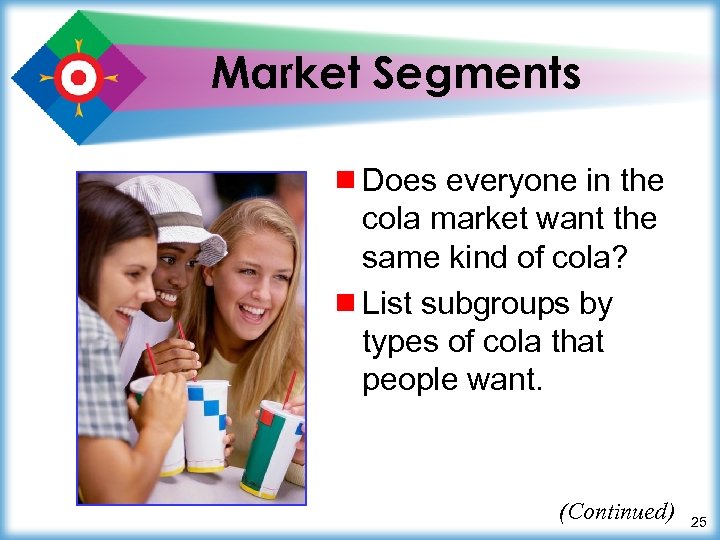 Market Segments ¾ Does everyone in the cola market want the same kind of cola? ¾ List subgroups by types of cola that people want. (Continued) 25
 Market Segments ¾ A market segment is a subgroup of a larger market ¤ everyone in a market segment has similar needs and wants for a particular product ¤ the needs of one market segment are different from the needs of another market segment ¾ Market segmentation is the process of dividing a large mass market into smaller (Continued) market segments. 26
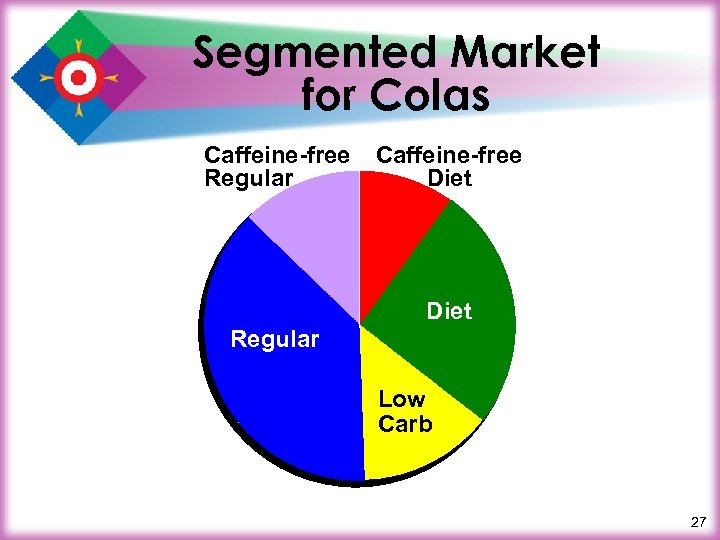 Segmented Market for Colas Caffeine-free Regular Caffeine-free Diet Regular Low Carb 27
 Choosing Your Target Market ¾ It is very difficult to meet the needs of all the customers in a mass market ¾ Market segmentation can help a business find a target market ¤ it is usually easier to select a target market and meet the needs of that smaller market Choose a market and give at least two market segments for that market. 28
 Segmentation and the Marketing Concept ¾ The marketing concept says that the best way to make a profit is by satisfying customers’ needs and wants ¾ Targeting a market segment helps businesses follow the marketing concept ¾ It is easier to satisfy customers if marketers target a market segment in which all customers have the same wants and needs 29
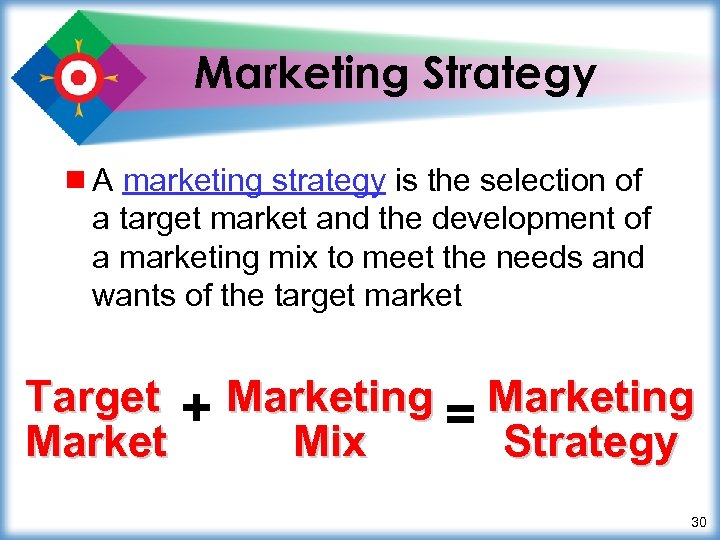 Marketing Strategy ¾ A marketing strategy is the selection of a target market and the development of a marketing mix to meet the needs and wants of the target market Target + Marketing = Strategy Market Mix 30
 Review ¾ What is the difference between the consumer market and the business market? ¾ Describe three types of uses for business products. ¾ List the four types of customers in the business market. ¾ What is a market segment? 31
 Glossary Back ¾ B 2 B. Business selling to business. ¾ B 2 C. Business selling to consumers. ¾ business market. Customers who buy products for use in a business; also called industrial market, organizational market, or commercial market. (Continued) 32
 Glossary Back ¾ consumer. Member of the consumer market; customer who buys products for his or her own use. ¾ consumer market. Customers who buy products for their own use. ¾ government. Consists of the organizations and institutions that run a geographic area, such as a country, and includes federal, state, county, and local governments. (Continued) 33
 Glossary Back ¾ institution. Nonprofit corporation, such as a school, hospital, or charitable organization. ¾ market. Group of people who want a product and are able to buy it. ¾ marketing strategy. The selection of a target market and the development of a marketing mix to meet the needs and wants of the target market. (Continued) 34
 Glossary Back ¾ market segment. Subgroup of a larger market; this subgroup has similar wants and needs for a particular product. ¾ mass market. All the customers for a type of product considered together. (Continued) 35
 Glossary Back ¾ producer. Business that makes goods and services. ¾ reseller. Business that buys finished products to resell at a profit. 36