 Скачать презентацию 1 Openly licensed textbooks as engines of transformative
ca589d2acbe14f9bcebaa48c91ae3050.ppt
- Количество слайдов: 25



1 Openly licensed textbooks as engines of transformative learning – a new business model for universities
2 Transformative learning = Open learning Transformative learning is learning that transforms problematic frames of reference and expectations (perspectives and mindsets) to render them more inclusive, open, reflective and willing to embrace change (Mezirow, 2003).
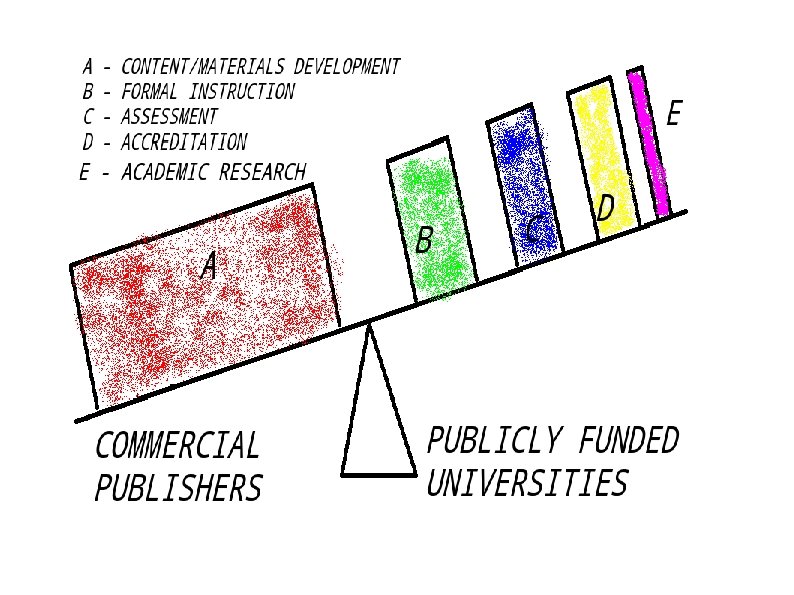
3 How are universities adapting to open content? We are not. We: Still think our main job is to sell knowledge in 50 minute chunks (lectures) mined from commercial textbooks. Require students to purchase proprietary textbooks which are not exactly tailored to our courses. Are often not aware of the cost of textbooks we prescribe. Often significant portions of the prescribed textbooks are not used (wastage). Are unaware/unconcerned about how many students purchase the textbook, are unaware of the extent of copyright violations.
5 Publishers' recognition of widely and freely available knowledge/content “In a world where content is becoming freely available and ubiquitous, the power of the academy is being reduced. For this reason, institutions of higher learning need to increase their proficiency in teaching and learning. The development and investment in curated course content, alongside the provision of appropriate lecturer support and technology-enabled learning, offer an important partnership role for publishers to take alongside South African higher education” (Publisher's Association of South Africa, 2014)
6 The world of OPEN CONTENT (tectonic plate 1) Open Books – Wikipedia, Wikibooks, Open. Stax, Google Books, Boundless Open Textbooks, Open College Textbooks, Siyavula etc. Open Videos – Khan Academy, You. Tube Open Images/Photographs – Flickr/Creative Commons Free Online Newspapers, Magazines and Open Access Journals People can increasingly educate themselves for free (minus accreditation)
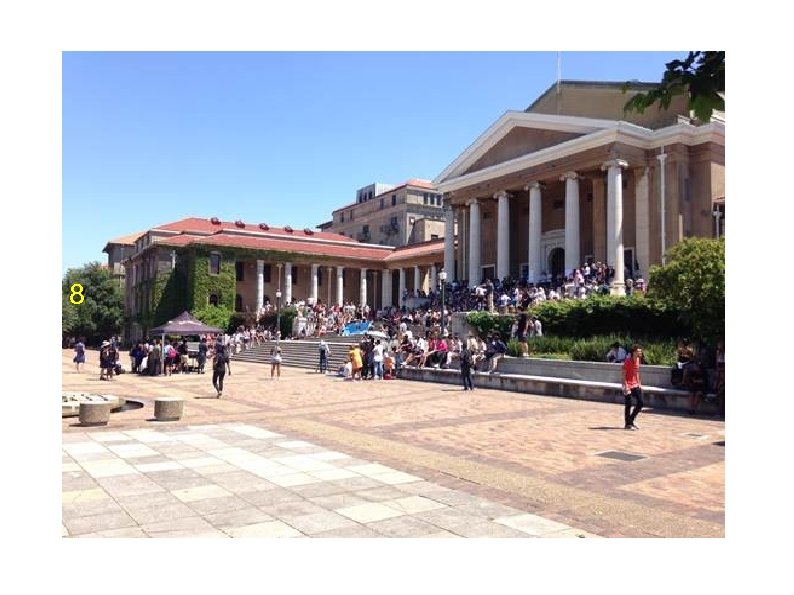
7 Unstable Higher Education Landscape (plate 2) Alarming drop-out rates – 35 -41% attrition rate per cohort in-take. Of this 50 -60% drop out in the first year of study (nationally). Throughput is problematic – Only 17% of students graduate in the minimum time. Growing graduate unemployment and mounting student debt. Limited higher education funding.
8
9 The economic realities (tectonic plate 3) Financially stressed students – family income = R 400 R 1600/month. Cost of textbooks = 10 -16% of tuition annually (R 350 -R 450/text) 60 - 80% do not buy the textbook. Copyright violation is rife. No textbook, reduced chance of academic success, academic exclusion. Costly textbooks comprise one facet of a larger crisis in tertiary funding. 100 000 unemployed graduates at any given time, R 5 billion total student debt as at 2015 (partly textbook fuelled)
10
11
12 The role of textbooks in education World Bank research in the 1970 s indicated that: 1. Textbook availability is the single most consistent correlate of academic achievement in developing countries. 2. The quality, efficiency and price of textbooks is a function of private, as opposed to public investment. 3. Textbook investments could significantly change (improve) academic performance.
13 The Open Textbook Movement Pedagogy Open collaboration produces networks (communities of practice) for the production, peer review and sharing of educational resources based on a strong emphasis of reusability – superior products. (. . . inclusive, discriminating, open, embracing change = transformative learning) Openness enriches the pool of resources for redesigning curricula and improving teaching and learning practices and materials without the need to worry about copyright issues (no copyright restraint on creativity).
14 The economics of open textbooks 1 Knowledge/content improves the more widely it is shared. Collaboratively produced, peer-reviewed open textbooks can only be superior to “closed” productions (Newton). Knowledge, as a public good, has positive spillover effects. The more free it is, the more we all benefit (the ethical aspect of free, open knowledge).
15
15 The economics of open textbooks 2 Reusing resources leads to higher returns on public funds invested in education. No need to reinvent the wheel. The marginal cost of distributing knowledge and information in digital format is zero. Because it is free/open does not mean that it is costless or that its quality is questionable – Development costs of one Openstax textbook = $400 000 - $500 000 (excluding annual updating costs).
16 What is the uptake of open textbooks? Asia - Hong Kong, China; India; Malaysia; Pakistan; and Thailand all involved in OER/Open Text initiatives. Europe - Poland is the first country in the world to support a national open textbook program (2016). USA - The rise of “Z-degrees”. SA - Government's White Paper for Post School Education and Training (2013) requires universities to “ensure collaborative development and use of a common set of self-contained, high-quality learning resources published as open education resources to service their programmes”.
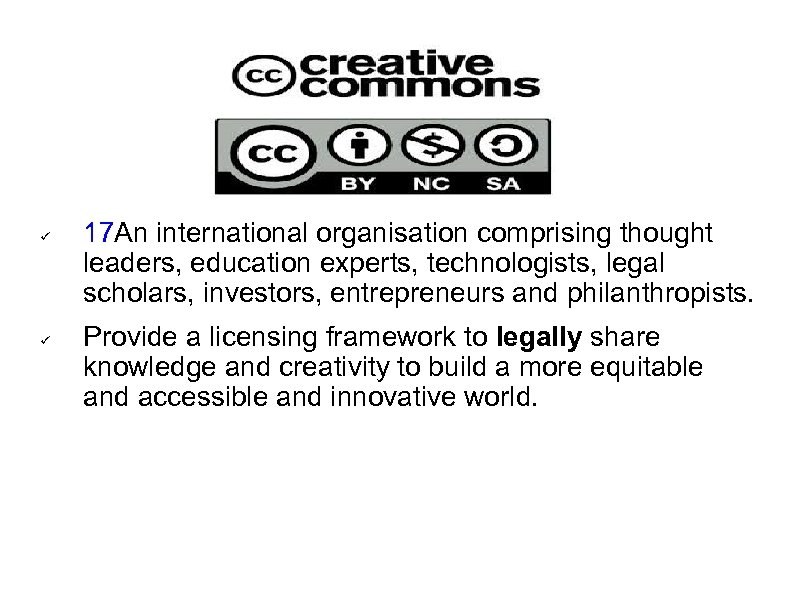
17 An international organisation comprising thought leaders, education experts, technologists, legal scholars, investors, entrepreneurs and philanthropists. Provide a licensing framework to legally share knowledge and creativity to build a more equitable and accessible and innovative world.
18 Can the Open Content model work? The Principles of Economics DUT openly licensed textbook was produced in 8 months (2 -3 years, R 5 million), thanks to the team. Originally sourced from Open. Stax CNX (Rice University), edited/remixed to suit DUT programmes and students. In 2017 the pilot open text will save 1400 students R 560, 000 in one year (@R 400/text est. ). Over 5 years R 2. 8 million, over 10 years R 5. 6 million. Stronger academic performance, reduced copyright liability/risk. Improved throughput. Increased government subsidy income, IN TIME. A STRONGER, more SOCIALLY AWARE, more SUSTAINABLE university.
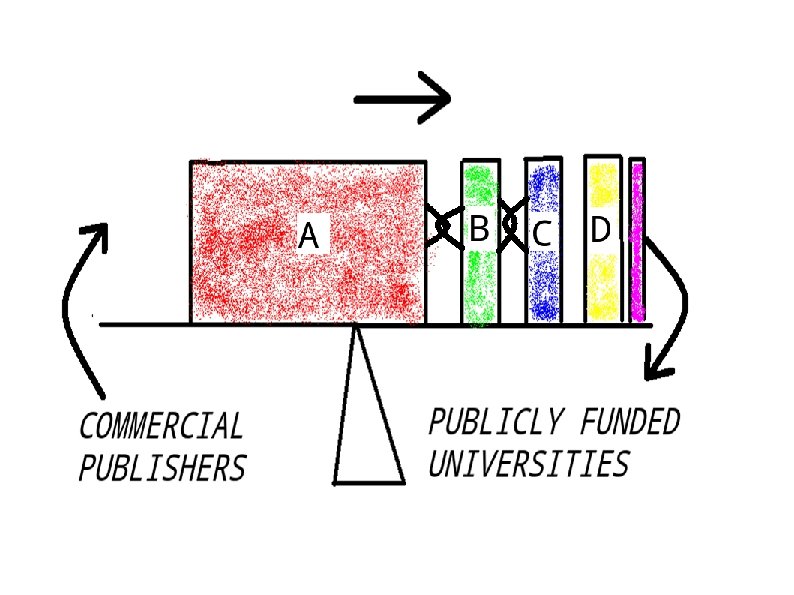
19 BUT… A Open textbook uptake will lag until… • Universities recognize the benefits offered by the superior pedagogy and indisputable economics of OPENNESS. • Universities and funders of higher education redesign their business/funding models around greater openness. • Universities, faculties and departments make space for open initiatives as part of the normal business of higher education (not something extra or unusual).
20 Some MESfffeatures of the Economics open textbook: • Free remixed/adapted/edited E-book or print (PDF). • Modular layout – suited to “breaking up” the content logically to suit different syllabuses. • Entire book, chapters, sections, pages can be accessed online/ printed without restriction. • Traditional textbook layout: content, glossary , assessment items and references section. • E-book includes links. • South African and local flavour, image-rich and relaxed tone, second-language sensitive. • Function over form, stripped-down, no marketing frills, ready-to-go.
21 Creative Commons Attribution 4 International license You are free to: Share — copy and redistribute the material in any medium or format Adapt — remix, transform, and build upon the material for any purpose, even commercially. Attribution — You must give appropriate credit, provide a link to the license, and indicate if changes were made. You may do so in any reasonable manner, but not in any way that suggests the licensor endorses you or your use.
22 Concluding thoughts… • The convergence of openness, an unstable higher education landscape and socio-economic pressures render “commercial textbook – heavy” tuition untenable. • University business models and higher education funding must place openness at the heart of the business of higher education. • Learning cannot be genuinely transformative if it is not based on open (peer reviewed) and freely accessible knowledge.
Скачать презентацию 1 Openly licensed textbooks as engines of transformative
ca589d2acbe14f9bcebaa48c91ae3050.ppt