 Скачать презентацию 1 Nutrients 2 Diet Theories Objectives -Distinguish
L-8.pptx
- Количество слайдов: 24



1. Nutrients 2. Diet Theories Objectives : -Distinguish among the six classes of nutrients. Identify the importance of each type of nutrient. - Explain the value of nutrients. - Introduction to healthy eating. -
The main nutrients are proteins, carbohydrates, fats, vitamins, minerals and water. Each nutrient has a different purpose. But they all provide energy and materials for cell development, growth and repair and also to maintain a steady internal temperature.
While there is a dominating substance in all foods, yet they usually contain many compounds which render them, from a chemical standpoint, very difficult to classify accurately. For example, the principal nutrients in wheat are carbohydrates (starch and sugar), yet wheat contains mineral salts, fat, and protein, the latter being a compound consisting of carbon, hydrogen, oxygen, nitrogen, and sulfur. Wheat would, therefore, be placed in the carbohydrate class, but it would overlap into several other classes. What is true of wheat, is true of nearly all other articles of food. Furthermore, foods do not chemically reproduce themselves when taken into the body, but in the process of metabolism they are converted either into other elements or into other compounds. From this it will be understood that the articles listed under the following headings are classified according to the nutritive substance which predominates in them, and are given for the purpose of guiding in the selection of such foods as will supply the various chemical constituents of the body.
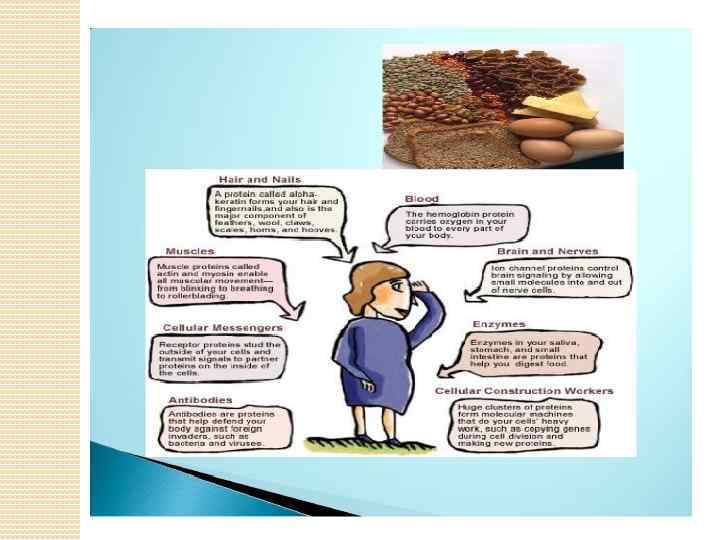
Proteins a. Used for replacement and repair of body cells and for growth b. Made up of amino acids (essential amino acids must be supplied by food) c. Found in eggs, milk, cheese, fish and meat d. 1 gram of protein equals 4 calories
Carbohydrates a. The main source of energy for your body b. Made up of carbon, hydrogen, and oxygen atoms; energy holds these atoms together c. Sugars are simple carbohydrates; starch and fiber are complex carbohydrates d. Sugars are found in fruits, honey, and milk e. Starches are found in potatoes and pasta f. Fiber is found in whole-grain breads, beans, and peas 1 gram of carbohydrates equals 4 calories
Blood glucose level (glycaemia) Glucose is the body's principal "fuel". It is stored in the form of glycogen in the muscles and liver. The blood glucose level (or blood sugar level, or glycaemia) is simply the level of glucose in the bloodstream. On an empty stomach, this is normally one gram per litre of blood. When carbohydrates (bread, honey, starchy foods, cereals, sweets, etc. ) are ingested on an empty stomach, the effect on the blood sugar level is found to be as follows : The first stage is that blood glucose rises (to a greater or lesser extent, according to the nature of the carbohydrate). The second stage is that, after insulin has been secreted by the pancreas, the blood glucose level falls and the glucose is released into the body's tissues. So, thirdly, the blood sugar level reverts to normal (see graph on the following page).
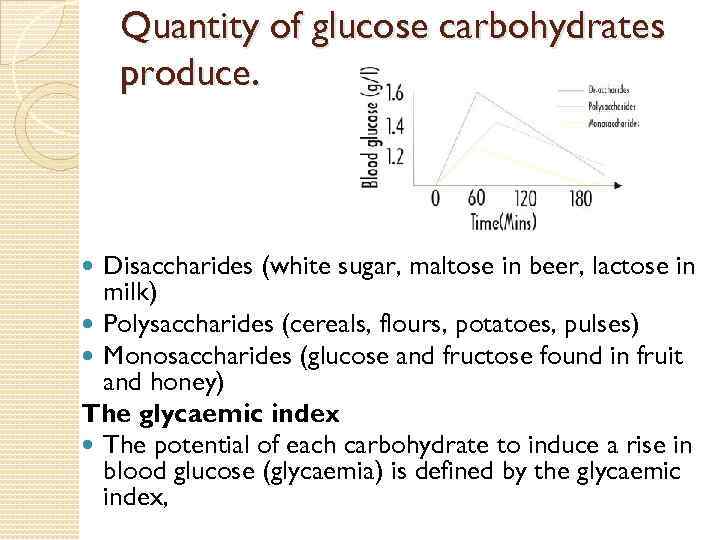
Quantity of glucose carbohydrates produce. Disaccharides (white sugar, maltose in beer, lactose in milk) Polysaccharides (cereals, flours, potatoes, pulses) Monosaccharides (glucose and fructose found in fruit and honey) The glycaemic index The potential of each carbohydrate to induce a rise in blood glucose (glycaemia) is defined by the glycaemic index,
Fats (Also called lipids) a. Provide energy and help your body absorb vitamins b. Because fat is a good storage unit for energy, any excess energy is converted to fat c. Classified as unsaturated or saturated based on their chemical structure d. Saturated fats are associated with high cholesterol (saturated fats are usually obtained from animal sources, for example butter and lard. The exceptions are coconut and palm oils). e. Unsaturated fats come from vegetable sources, such as sunflower oil. f. 1 gram of fat equals 9 calories
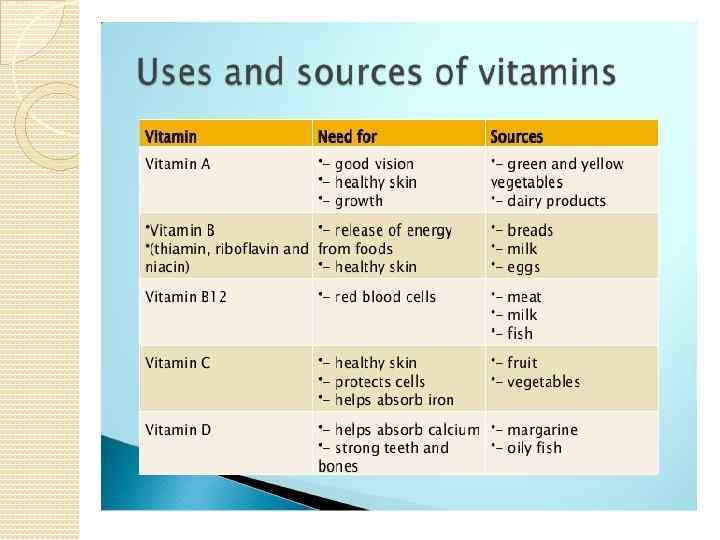
Vitamins are needed in very small amounts for growth, regulating body functions, and preventing disease. A well-balanced diet usually gives your body all the vitamins it needs. The main vitamins are vitamin A, the B complex of vitamins, vitamin C and vitamin D Because most vitamins cannot be made in the body, we must obtain them through the diet. Many people say that they feel more energetic after consuming vitamins, but vitamins are not a source of energy (calories). Vitamins are best consumed through a varied diet rather than as a supplement because there is little chance of taking too high a dose.
Minerals are components of foods that are involved in many body functions. For example, calcium and magnesium are important for bone structure, and iron is needed for our red blood cells to transport oxygen. Like vitamins, minerals are not a source of energy and are best obtained through a varied diet rather than supplements
Water is a vital nutrient for good health. Most of our body weight (60 -70%) is made up of water. Water helps to control our body temperature, carries nutrients and waste products from our cells, and is needed for our cells to function. It is recommended that adults drink 8 glasses of fluid daily (or more in hot weather or during physical activity). This fluid does not have to be water alone. It can also be obtained from juice, milk, soup, and foods high in water such as fruits and vegetables. Caffeine-containing beverages (coffee, tea, cola) don't count because caffeine is a diuretic, making us lose water. A great plus for water in comparison to the other fluids is that it hydrates our body without extra calories.
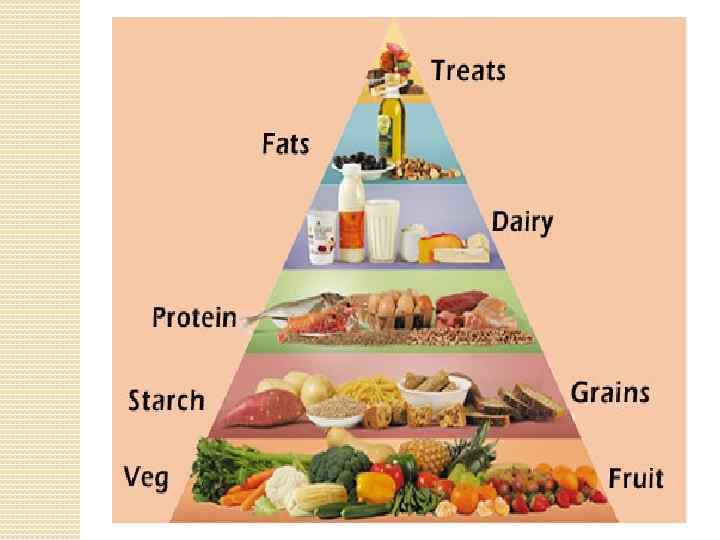
Because no food has every nutrient, people should eat a variety of foods. The food pyramid helps people select foods that supply all the nutrients they need. Foods that contain the same nutrients belong to a food group. There are five food groups: - Bread and cereal - Vegetable - Fruit - Milk - Meat
There are 3 Diet Theories everyone should know about: 1. Low-Glycemic Index/Low-Glycemic Load The Glycemic Index (GI) is a numerical scale used to indicate how fast and how high a particular food can raise our blood glucose (blood sugar) level. A food with a low GI will typically prompt a moderate rise in blood glucose, while a food with a high GI may cause our blood glucose level to increase above the optimal level. Foods high in sugar obviously raise blood sugar levels very quickly, but high starch foods such as breads and white potatoes will also. Foods with a higher sugar content, but lots of fiber (such as apples) aren’t actually as high GI as one would think, because fiber helps to slow down the absorption of the sugar. Keeping one’s blood sugar at an even level is desirable. Too low and you can feel exhausted, too high and you can feel wired. Spiking blood sugar levels and forcing the body to produce insulin in this way is the cause of diabetes and also a major cause of obesity. Many diets use this theory. You may not need to do the diets, but DO research and understand how the Glycemic Index and Glycemic Load work. Diets that teach you how to cook with real foods are always preferable.
2. The Acid/Alkaline Diet Theory This theory is based on the fact that our bodies need to have a balanced ph (acid-alkaline) level to avoid disease such as heart disease, diabetes, and even cancer. It has been found that keeping the body slightly alkaline can also result in having clear skin, energy, mental clarity, a slim figure, and more. This can be a bit difficult to do at first, but once you understand how foods work, then they are much easier to work with. Each food we put in our mouth is either acidic or alkalizing for the body. We know lemons have a lot of acid in them, but when they are eaten the body turns them into an alkalizing food (so lemons are actually alkalizing, not acidic). When one is very unbalanced or sick; to keep the body at a balanced ph, 80 percent of the diet must be alkalizing foods such as green vegetables, and the other 20 percent can be acidic, such as meat. Once the body is healing, the percentage of alkalizing foods can be decreased a bit. The idea is that when a body is too acidic, inflammation and eventually disease can manifest. Alkalizing foods boost the ph back up to heal the body. Exercising and managing stress can also keep the body more alkaline. Common alkalizing foods are veggies, low sugar fruits, some beans and seeds. Common acidic foods are meats, dairy, grains, sugar, alcohol and junk food.
3. Ayurveda This diet theory is one of the oldest that we know of, over 5, 000 years old in fact. It is commonly referred to as the Science of Life or “life-knowledge”. This theory works alongside nature, keeping in mind the body’s natural response to the changing seasons, feeding it what it craves and can best utilize at all times. For example, if somebody lives in Colorado and it is the dead of winter, it would be recommended to give the body what it needs at that time: namely hearty soups, nuts, warm grains and high-fat and protein-rich foods like fish and meat. No pineapples! The idea is that our bodies need the fat and energy to store for winter and fight the cold weather and diminished supply of food. In the summertime, our bodies need cooling and water-filled foods to fight the heat and stay hydrated (melons, anyone? ). Ayurveda demonstrates how every climate will give us the exact foods we need at just the right time to stay healthy. This can be difficult to follow at times because we have every food available to us at every time, but with practice it is very possible. Ayurveda also believes in keeping a healthy immune system to stay away from sickness. Ayurvedic people are some of the healthiest people and also some of the most down to earth.
Summarize and make conclusions on: A balanced diet: challenges for tour organizers. 2. A concept of healthy food: national peculiarities. 3. Special nourishment and diets for tourists of different types and power inputs (active and passive rest / going in for active sports/ sanatorium food / catering in camps ): 1. Children Students Young people Middle-aged people Older people Special categories of people
 Скачать презентацию 1 Nutrients 2 Diet Theories Objectives -Distinguish
L-8.pptx