 Скачать презентацию 1 Microwaves are not just for Cooking by
088edf39b3e55388d1b0f092c68779f2.ppt
- Количество слайдов: 24



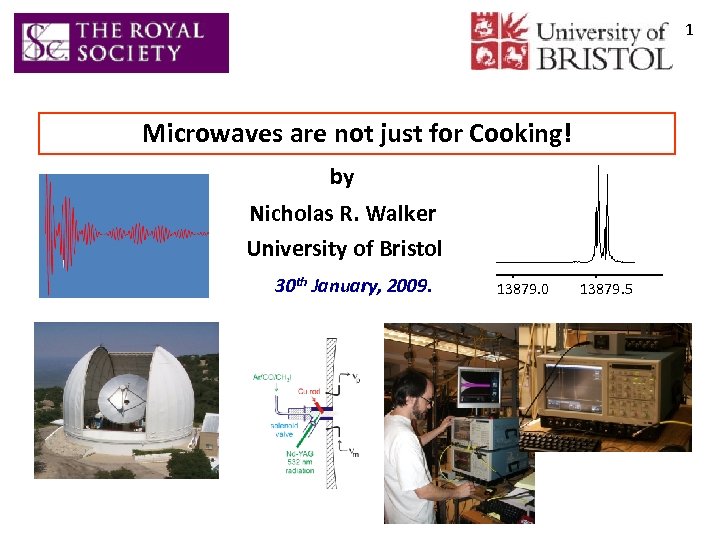
1 Microwaves are not just for Cooking! by Nicholas R. Walker University of Bristol 30 th January, 2009. 13879. 0 13879. 5
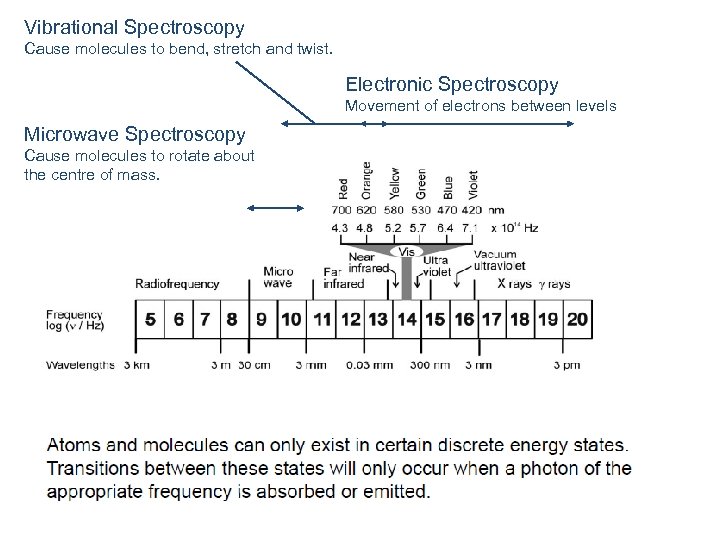
Vibrational Spectroscopy Cause molecules to bend, stretch and twist. Electronic Spectroscopy Movement of electrons between levels Microwave Spectroscopy Cause molecules to rotate about the centre of mass.
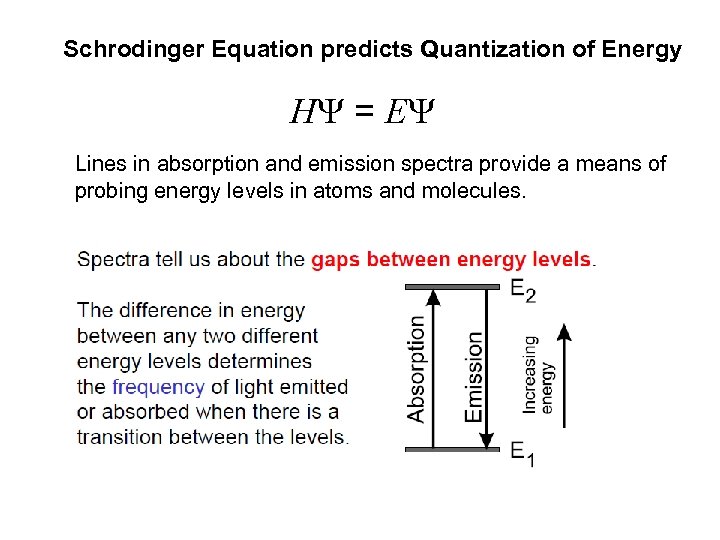
Schrodinger Equation predicts Quantization of Energy H = E Lines in absorption and emission spectra provide a means of probing energy levels in atoms and molecules.
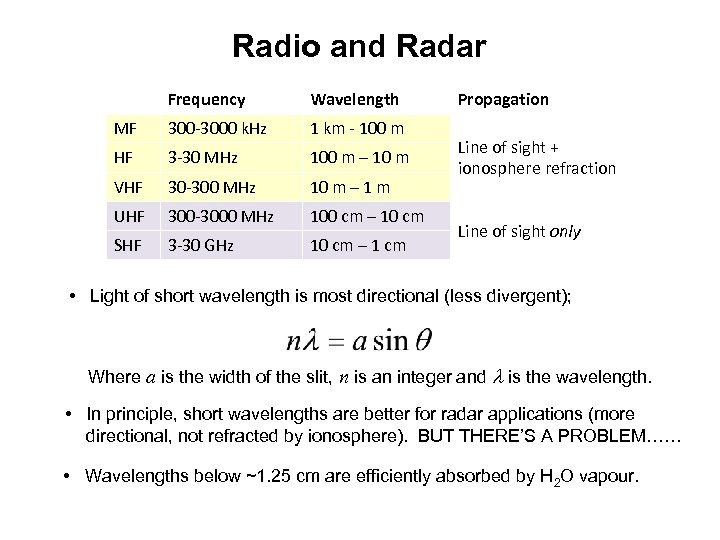
Radio and Radar Frequency Wavelength MF 300 -3000 k. Hz 1 km - 100 m HF 3 -30 MHz 100 m – 10 m VHF 30 -300 MHz 10 m – 1 m UHF 300 -3000 MHz 100 cm – 10 cm SHF 3 -30 GHz 10 cm – 1 cm Propagation Line of sight + ionosphere refraction Line of sight only • Light of short wavelength is most directional (less divergent); Where a is the width of the slit, n is an integer and is the wavelength. • In principle, short wavelengths are better for radar applications (more directional, not refracted by ionosphere). BUT THERE’S A PROBLEM…… • Wavelengths below ~1. 25 cm are efficiently absorbed by H 2 O vapour.
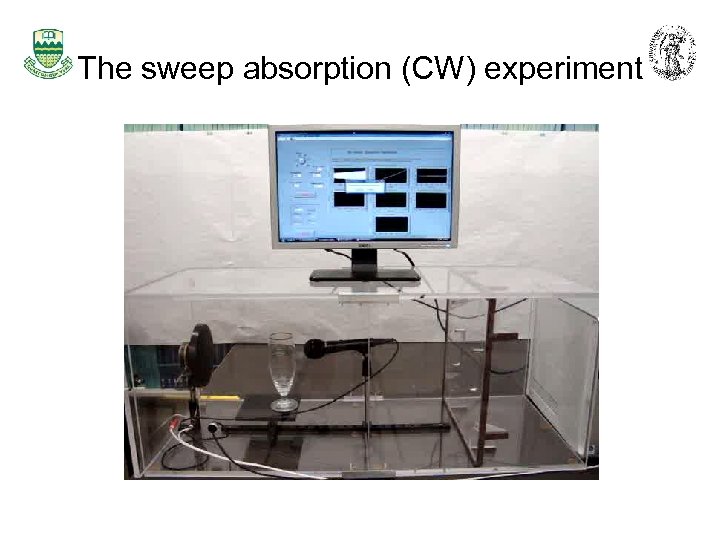
The sweep absorption (CW) experiment
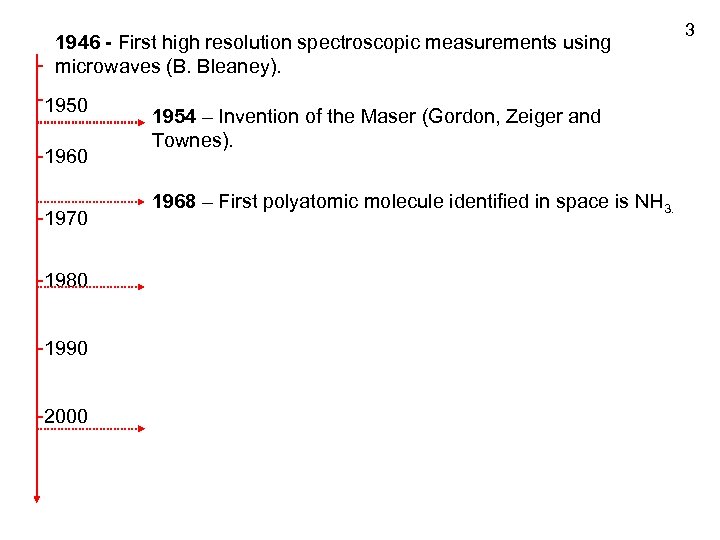
1946 - First high resolution spectroscopic measurements using microwaves (B. Bleaney). 1950 1960 1970 1980 1990 2000 1954 – Invention of the Maser (Gordon, Zeiger and Townes). 1968 – First polyatomic molecule identified in space is NH 3. 3
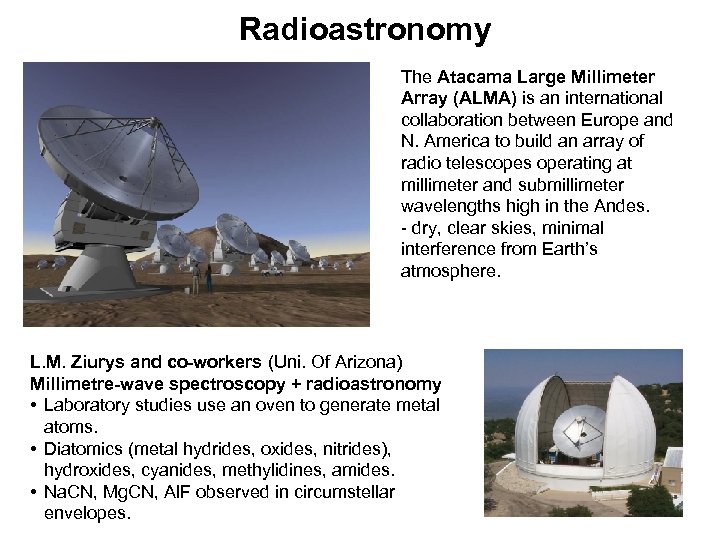
Radioastronomy The Atacama Large Millimeter Array (ALMA) is an international collaboration between Europe and N. America to build an array of radio telescopes operating at millimeter and submillimeter wavelengths high in the Andes. - dry, clear skies, minimal interference from Earth’s atmosphere. L. M. Ziurys and co-workers (Uni. Of Arizona) Millimetre-wave spectroscopy + radioastronomy • Laboratory studies use an oven to generate metal atoms. • Diatomics (metal hydrides, oxides, nitrides), hydroxides, cyanides, methylidines, amides. • Na. CN, Mg. CN, Al. F observed in circumstellar envelopes.
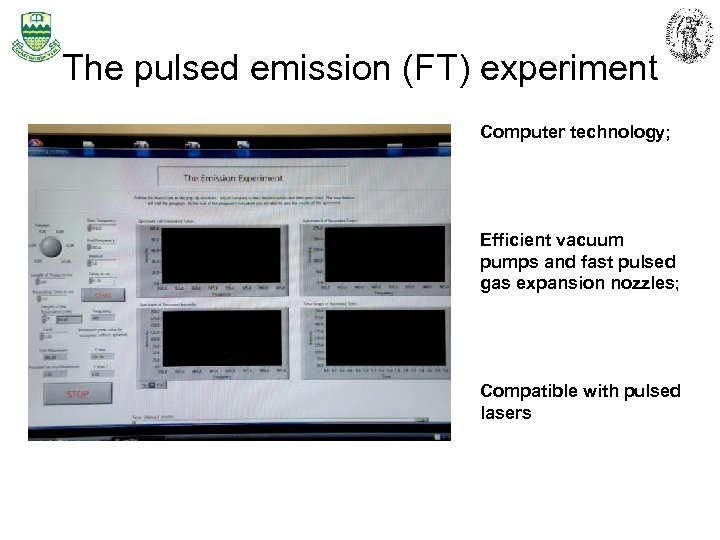
The pulsed emission (FT) experiment Computer technology; Efficient vacuum pumps and fast pulsed gas expansion nozzles; Compatible with pulsed lasers
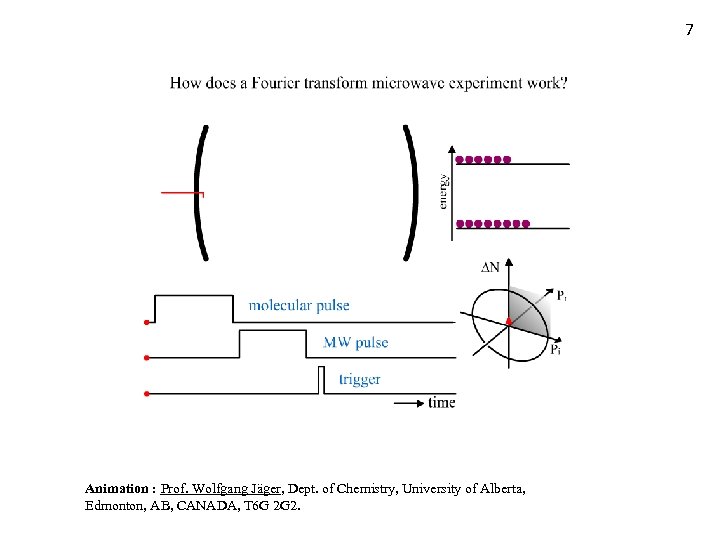
7 Animation : Prof. Wolfgang Jäger, Dept. of Chemistry, University of Alberta, Edmonton, AB, CANADA, T 6 G 2 G 2.
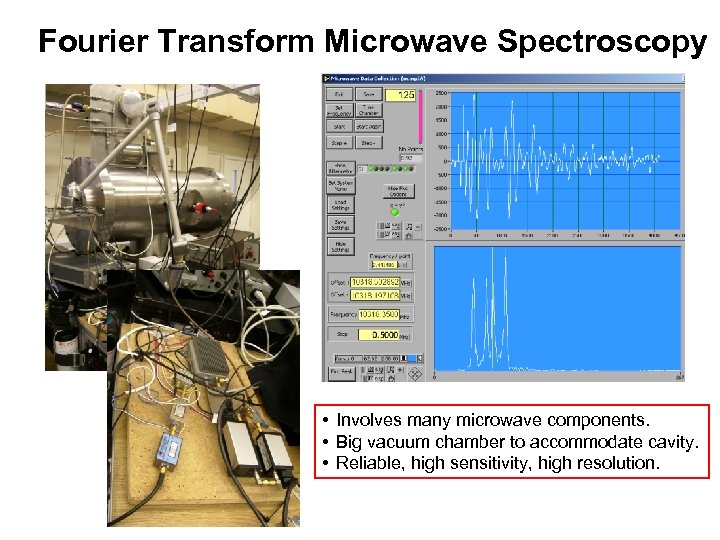
Fourier Transform Microwave Spectroscopy • Involves many microwave components. • Big vacuum chamber to accommodate cavity. • Reliable, high sensitivity, high resolution.
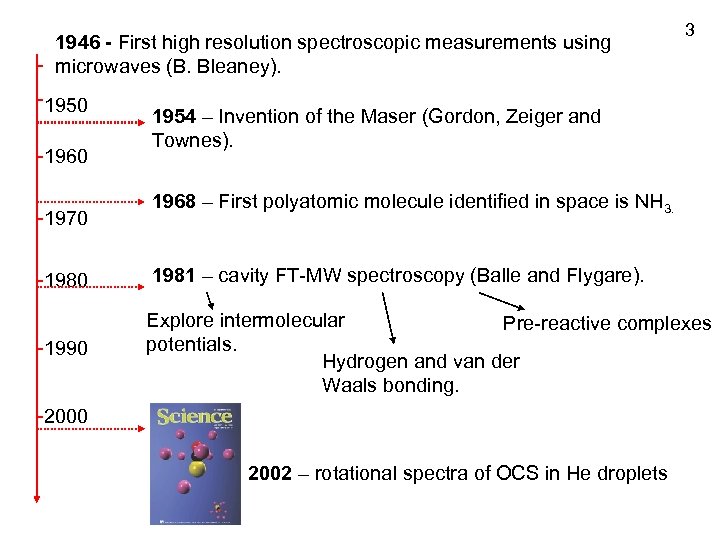
1946 - First high resolution spectroscopic measurements using microwaves (B. Bleaney). 1950 1960 1970 3 1954 – Invention of the Maser (Gordon, Zeiger and Townes). 1968 – First polyatomic molecule identified in space is NH 3. 1980 1981 – cavity FT-MW spectroscopy (Balle and Flygare). 1990 Explore intermolecular Pre-reactive complexes potentials. Hydrogen and van der Waals bonding. 2000 2002 – rotational spectra of OCS in He droplets
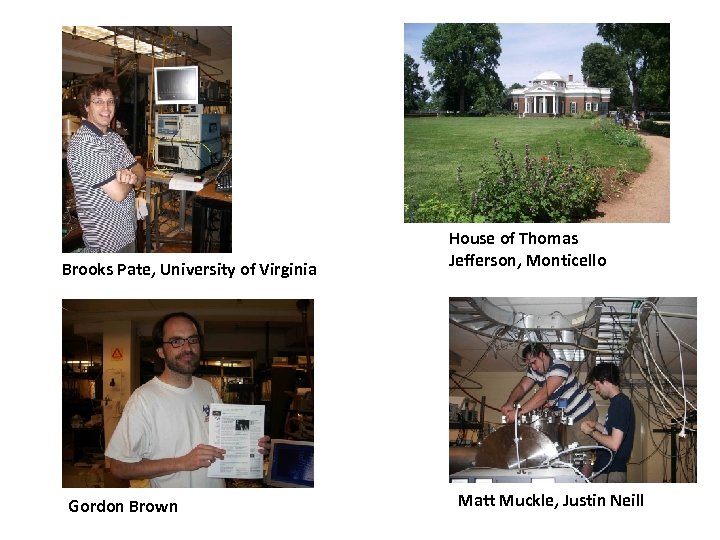
Brooks Pate, University of Virginia Gordon Brown House of Thomas Jefferson, Monticello Matt Muckle, Justin Neill
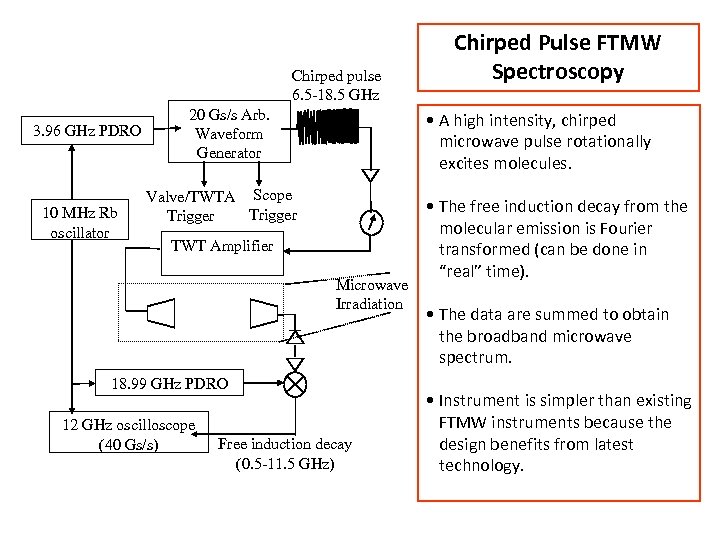
Chirped pulse 6. 5 -18. 5 GHz 3. 96 GHz PDRO 10 MHz Rb oscillator 20 Gs/s Arb. Waveform Generator • A high intensity, chirped microwave pulse rotationally excites molecules. Valve/TWTA Scope Trigger TWT Amplifier Microwave Irradiation 18. 99 GHz PDRO 12 GHz oscilloscope (40 Gs/s) Chirped Pulse FTMW Spectroscopy Free induction decay (0. 5 -11. 5 GHz) • The free induction decay from the molecular emission is Fourier transformed (can be done in “real” time). • The data are summed to obtain the broadband microwave spectrum. • Instrument is simpler than existing FTMW instruments because the design benefits from latest technology.
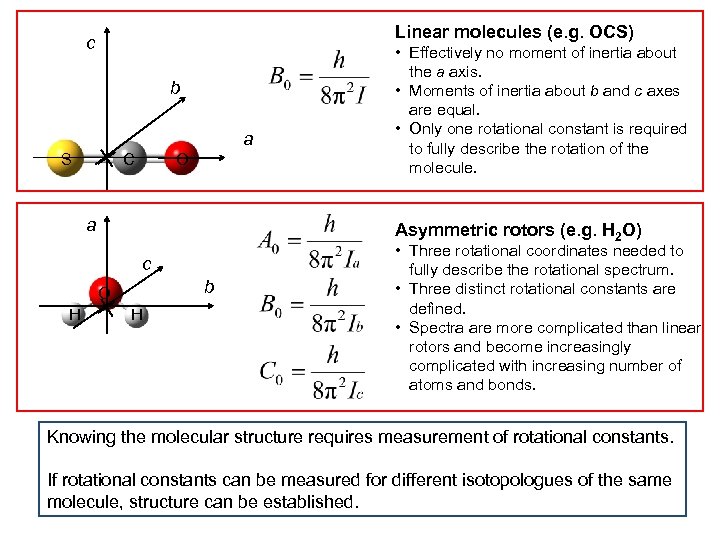
Linear molecules (e. g. OCS) c b a S C O a Asymmetric rotors (e. g. H 2 O) c b O H • Effectively no moment of inertia about the a axis. • Moments of inertia about b and c axes are equal. • Only one rotational constant is required to fully describe the rotation of the molecule. H • Three rotational coordinates needed to fully describe the rotational spectrum. • Three distinct rotational constants are defined. • Spectra are more complicated than linear rotors and become increasingly complicated with increasing number of atoms and bonds. Knowing the molecular structure requires measurement of rotational constants. If rotational constants can be measured for different isotopologues of the same molecule, structure can be established.
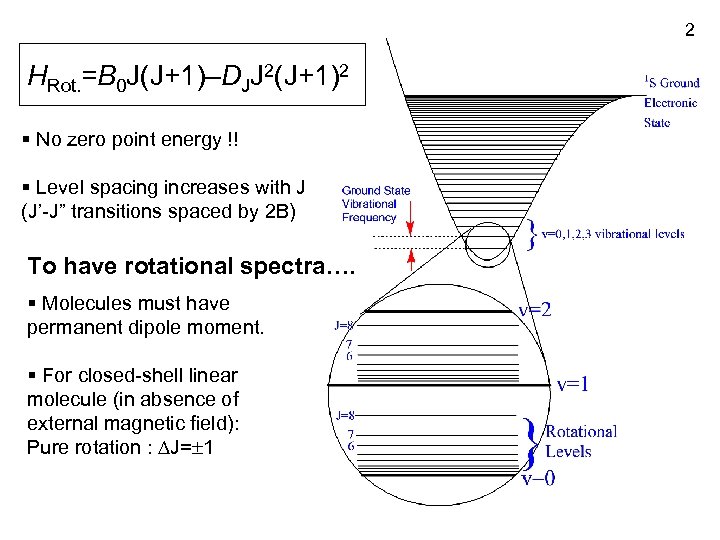
2 HRot. =B 0 J(J+1)–DJJ 2(J+1)2 § No zero point energy !! § Level spacing increases with J (J’-J” transitions spaced by 2 B) To have rotational spectra…. § Molecules must have permanent dipole moment. § For closed-shell linear molecule (in absence of external magnetic field): Pure rotation : J= 1
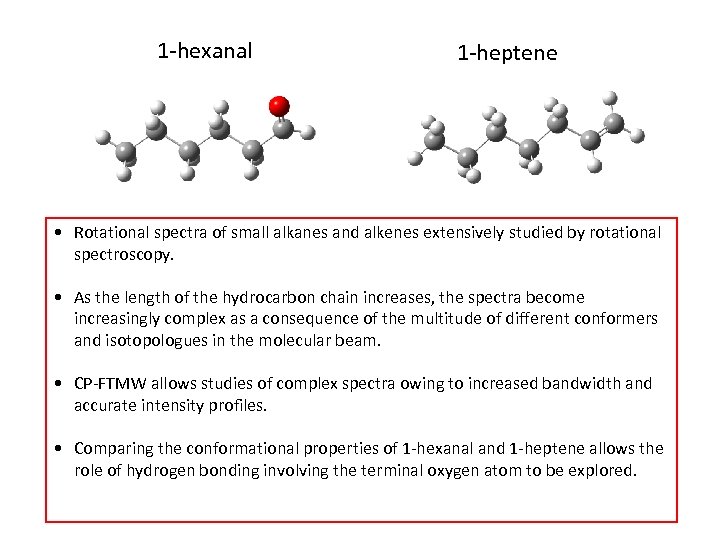
1 -hexanal 1 -heptene • Rotational spectra of small alkanes and alkenes extensively studied by rotational spectroscopy. • As the length of the hydrocarbon chain increases, the spectra become increasingly complex as a consequence of the multitude of different conformers and isotopologues in the molecular beam. • CP-FTMW allows studies of complex spectra owing to increased bandwidth and accurate intensity profiles. • Comparing the conformational properties of 1 -hexanal and 1 -heptene allows the role of hydrogen bonding involving the terminal oxygen atom to be explored.
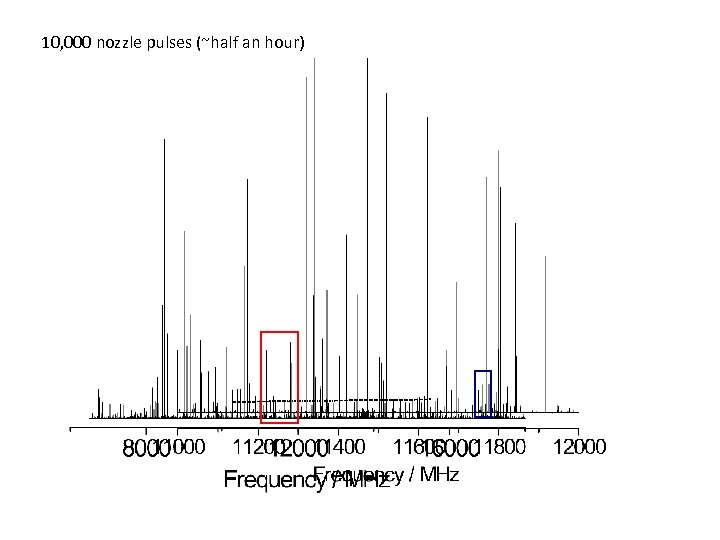
10, 000 nozzle pulses (~half an hour)
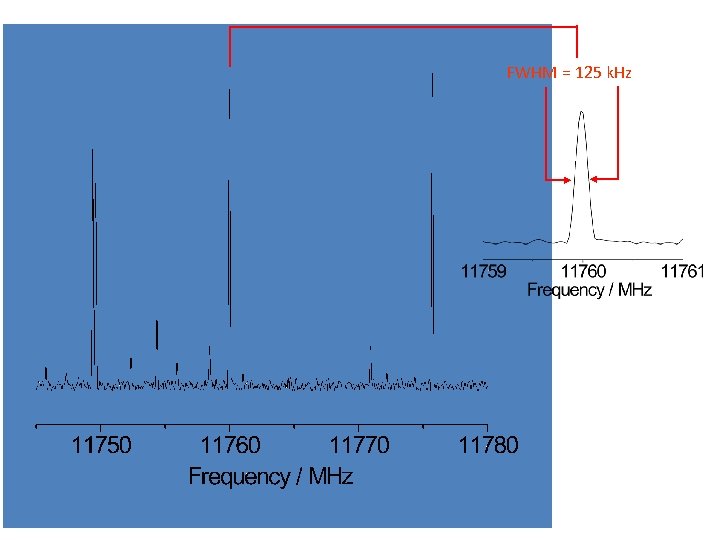
FWHM = 125 k. Hz
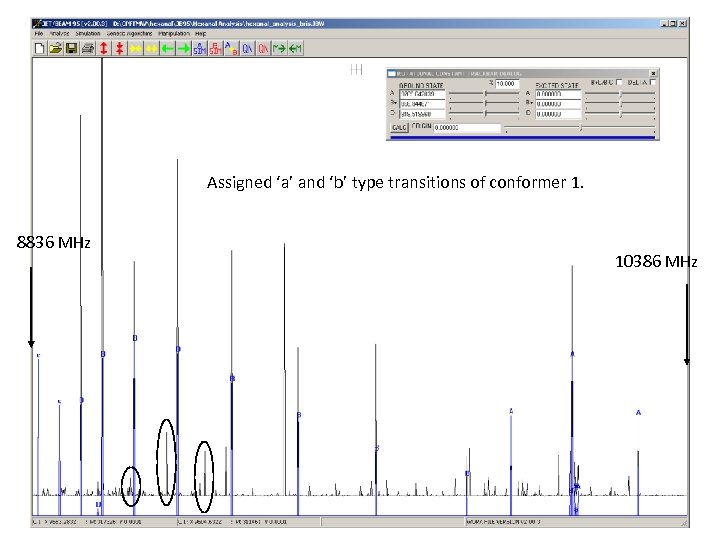
Assigned ‘a’ and ‘b’ type transitions of conformer 1. 8836 MHz 10386 MHz
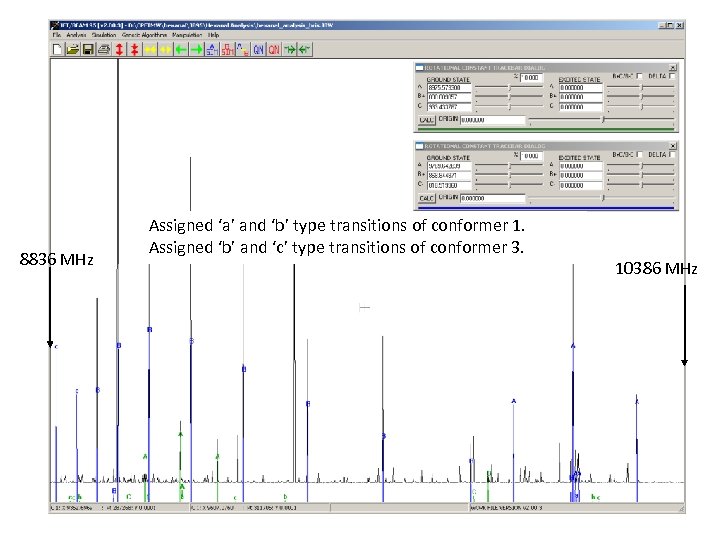
8836 MHz Assigned ‘a’ and ‘b’ type transitions of conformer 1. Assigned ‘b’ and ‘c’ type transitions of conformer 3. 10386 MHz
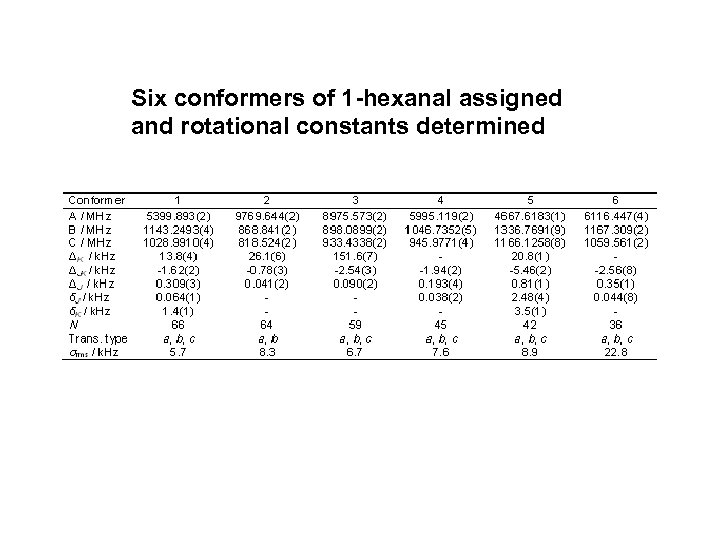
Six conformers of 1 -hexanal assigned and rotational constants determined
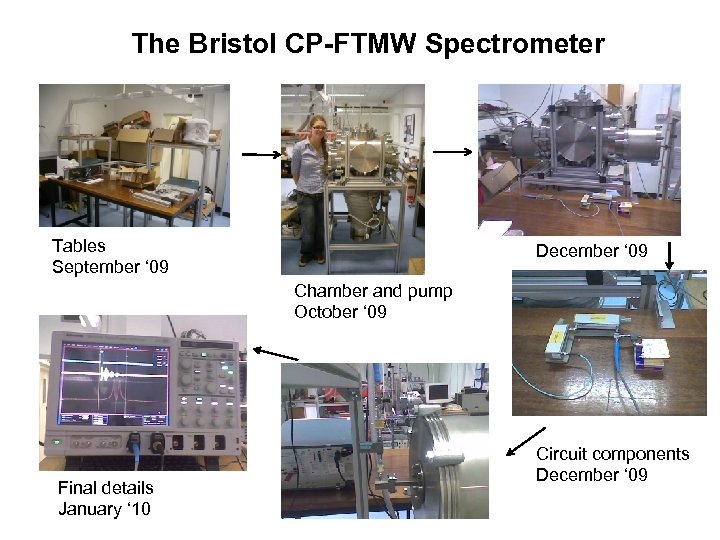
The Bristol CP-FTMW Spectrometer Tables September ‘ 09 December ‘ 09 Chamber and pump October ‘ 09 Final details January ‘ 10 Circuit components December ‘ 09
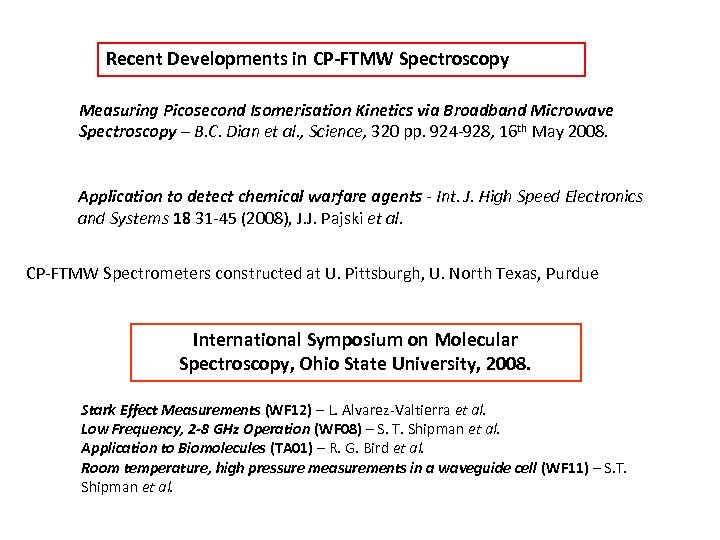
Recent Developments in CP-FTMW Spectroscopy Measuring Picosecond Isomerisation Kinetics via Broadband Microwave Spectroscopy – B. C. Dian et al. , Science, 320 pp. 924 -928, 16 th May 2008. Application to detect chemical warfare agents - Int. J. High Speed Electronics and Systems 18 31 -45 (2008), J. J. Pajski et al. CP-FTMW Spectrometers constructed at U. Pittsburgh, U. North Texas, Purdue International Symposium on Molecular Spectroscopy, Ohio State University, 2008. Stark Effect Measurements (WF 12) – L. Alvarez-Valtierra et al. Low Frequency, 2 -8 GHz Operation (WF 08) – S. T. Shipman et al. Application to Biomolecules (TA 01) – R. G. Bird et al. Room temperature, high pressure measurements in a waveguide cell (WF 11) – S. T. Shipman et al.
People Bristol Microwavers Anthony Legon Susanna Stephens Victor Mikhailov Felicity Roberts Sophia To University of Virginia Brooks Pate Gordon Brown Justin Neill Stephen Shipman Financial Support
Скачать презентацию 1 Microwaves are not just for Cooking by
088edf39b3e55388d1b0f092c68779f2.ppt