


 Скачать презентацию 1 Introduction to the ZNE Studies Road to
b3c897dd393e14f5364315bacf6e1419.ppt
- Количество слайдов: 112
 1 Introduction to the ZNE Studies Road to ZNE and Technical Potential Derek Jones Evaluation Measurement & Verification PG&E April 20, 2012
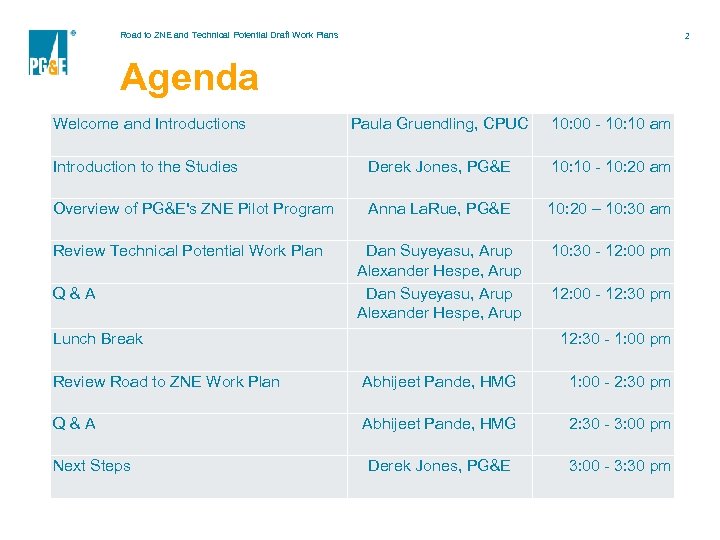 Road to ZNE and Technical Potential Draft Work Plans 2 Agenda Welcome and Introductions Paula Gruendling, CPUC Introduction to the Studies Derek Jones, PG&E Overview of PG&E's ZNE Pilot Program Anna La. Rue, PG&E Review Technical Potential Work Plan Dan Suyeyasu, Arup Alexander Hespe, Arup Q & A Dan Suyeyasu, Arup Alexander Hespe, Arup Lunch Break Review Road to ZNE Work Plan Q & A Next Steps 10: 00 - 10: 10 am 10: 10 - 10: 20 am 10: 20 – 10: 30 am 10: 30 - 12: 00 pm 12: 00 - 12: 30 pm 12: 30 - 1: 00 pm Abhijeet Pande, HMG 1: 00 - 2: 30 pm Abhijeet Pande, HMG 2: 30 - 3: 00 pm Derek Jones, PG&E 3: 00 - 3: 30 pm
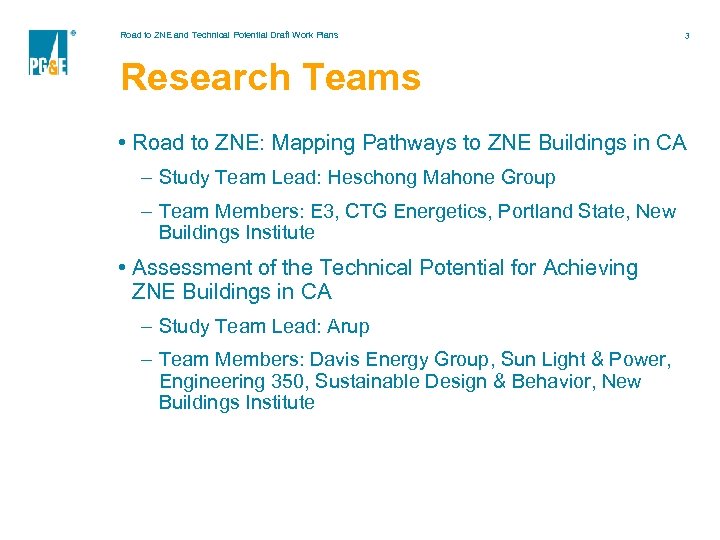 Road to ZNE and Technical Potential Draft Work Plans 3 Research Teams • Road to ZNE: Mapping Pathways to ZNE Buildings in CA – Study Team Lead: Heschong Mahone Group – Team Members: E 3, CTG Energetics, Portland State, New Buildings Institute • Assessment of the Technical Potential for Achieving ZNE Buildings in CA – Study Team Lead: Arup – Team Members: Davis Energy Group, Sun Light & Power, Engineering 350, Sustainable Design & Behavior, New Buildings Institute
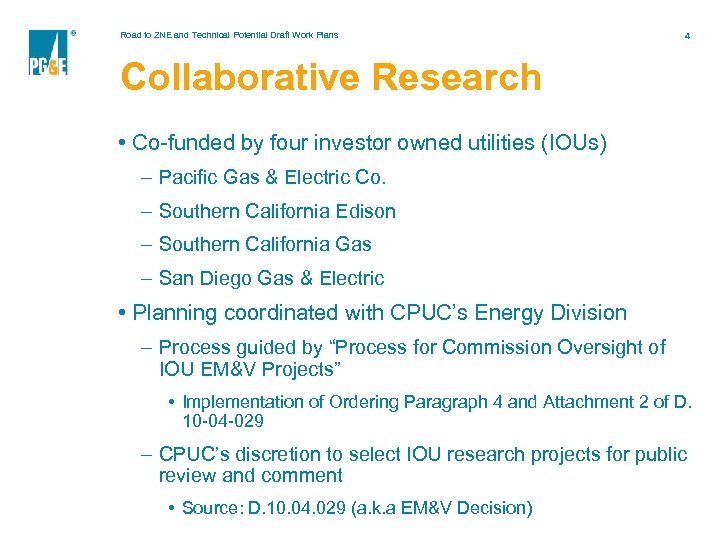 Road to ZNE and Technical Potential Draft Work Plans 4 Collaborative Research • Co-funded by four investor owned utilities (IOUs) – Pacific Gas & Electric Co. – Southern California Edison – Southern California Gas – San Diego Gas & Electric • Planning coordinated with CPUC’s Energy Division – Process guided by “Process for Commission Oversight of IOU EM&V Projects” • Implementation of Ordering Paragraph 4 and Attachment 2 of D. 10 -04 -029 – CPUC’s discretion to select IOU research projects for public review and comment • Source: D. 10. 04. 029 (a. k. a EM&V Decision)
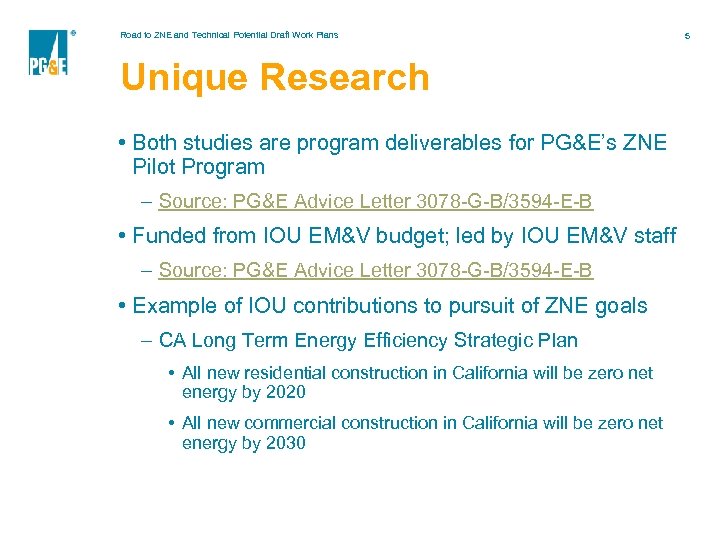 Road to ZNE and Technical Potential Draft Work Plans Unique Research • Both studies are program deliverables for PG&E’s ZNE Pilot Program – Source: PG&E Advice Letter 3078 -G-B/3594 -E-B • Funded from IOU EM&V budget; led by IOU EM&V staff – Source: PG&E Advice Letter 3078 -G-B/3594 -E-B • Example of IOU contributions to pursuit of ZNE goals – CA Long Term Energy Efficiency Strategic Plan • All new residential construction in California will be zero net energy by 2020 • All new commercial construction in California will be zero net energy by 2030 5
 6 Timely Research ZNE-related projects identified in ALJ Farrar's Proposed Decision on 2013 -14 Guidance that could utilize findings from these studies: • CPUC/CEC • Residential Roadmap to ZNE • IOU Programs • Emerging Technologies Program roadmaps • Codes & Standards Planning and Coordination Subprogram
 Road to ZNE and Technical Potential Draft Work Plans Q & A Guidelines • Please hold questions until the Q & A periods • Questions should focus on: – Contents of the work plans – Materials presented today – Process for submitting comments • Comments and feedback should be submitted in writing to the CPUC’s Public Documents Area (PDA) – www. energydataweb. com/cpuc – See meeting notice for details 7
 Road to ZNE and Technical Potential Draft Work Plans Written Comments Guidelines • Written comments are due April 27 th to PDA • The study teams will consider all comments and post replies on May 11 th to PDA • The study teams cannot promise to incorporate all comments into the final work plans • Comments should be limited to refinements to the study scopes that will aid the study teams in achieving the study objectives outlined in each work plan – Major scope changes are not possible at this point as the contractor teams and contracts are in place to address the studies’ objectives 8
 9 Zero Net Energy Pilot Program Overview Anna La. Rue April 20, 2012
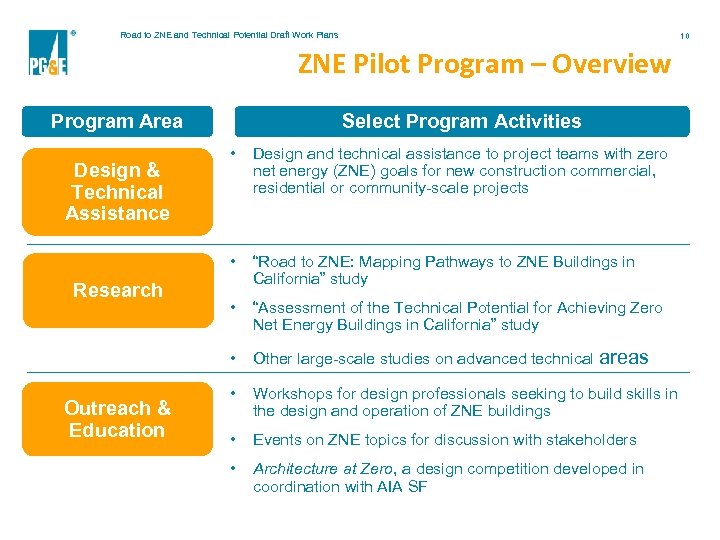 Road to ZNE and Technical Potential Draft Work Plans 10 ZNE Pilot Program – Overview Program Area Select Program Activities Outreach & Education “Road to ZNE: Mapping Pathways to ZNE Buildings in California” study • “Assessment of the Technical Potential for Achieving Zero Net Energy Buildings in California” study • Research Design and technical assistance to project teams with zero net energy (ZNE) goals for new construction commercial, residential or community-scale projects • Design & Technical Assistance • Other large-scale studies on advanced technical areas • Workshops for design professionals seeking to build skills in the design and operation of ZNE buildings • Events on ZNE topics for discussion with stakeholders • Architecture at Zero, a design competition developed in coordination with AIA SF
 11 Review Technical Potential Work Plan
 Assessment of the Technical Potential for Achieving Zero Net Energy Buildings in California CPUC Public Meeting – April 20, 2012
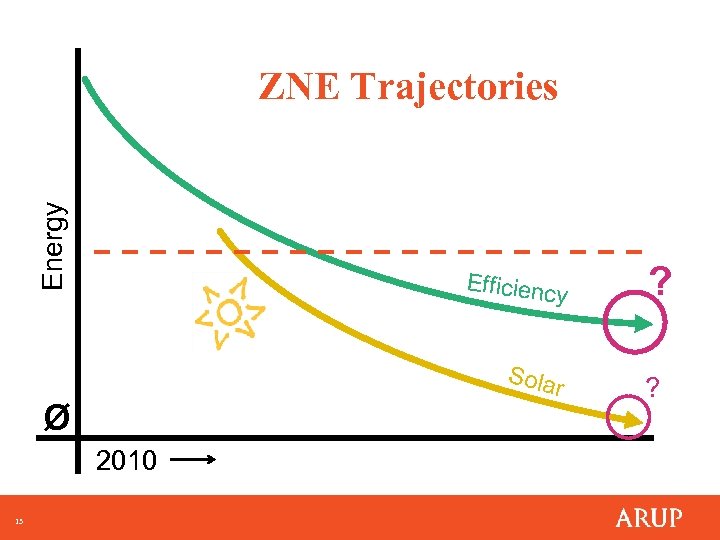 Energy ZNE Trajectories y ? r ? Efficienc Sola Ø 2010 13
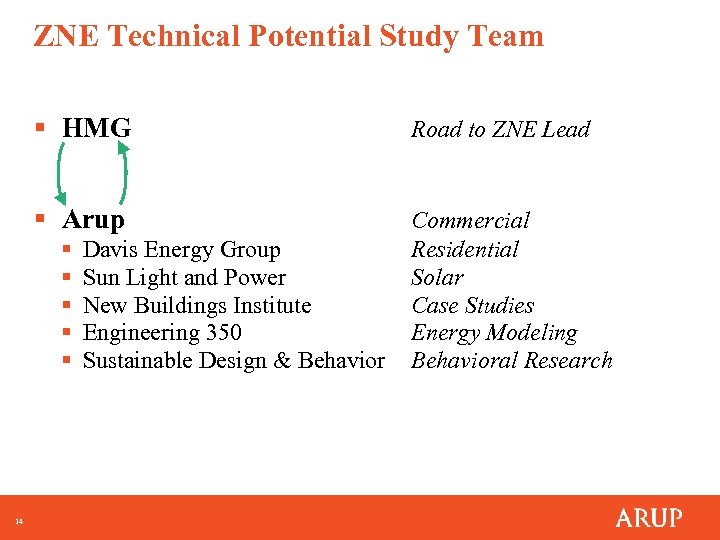 ZNE Technical Potential Study Team § HMG Road to ZNE Lead § Arup Commercial Residential Solar Case Studies Energy Modeling Behavioral Research § § § 14 Davis Energy Group Sun Light and Power New Buildings Institute Engineering 350 Sustainable Design & Behavior
 Technical Potential Presentation Outline § Objectives of the Technical Potential Study § Data Collection § Energy Modeling Methodology § Research Outputs § Timeline 15
 Objectives
 Computational Objectives § Define prototype buildings with the lowest energy use that can reasonably be achieved in the next decade § One design per building type and climate zone (Objective I) - Energy usage - Onsite renewable energy - Costs (Objective IV) § Develop database that permits the IOUs to explore the energy and cost implications of design alternatives - (Objective V) 17
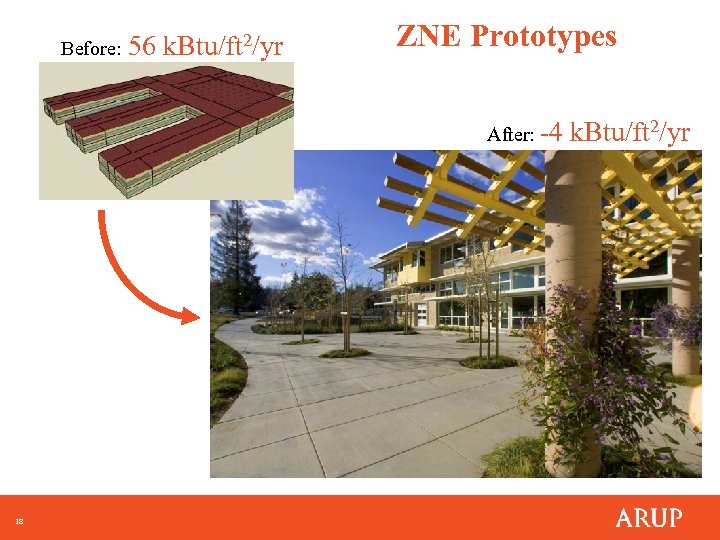 Before: 56 k. Btu/ft 2/yr ZNE Prototypes After: -4 18 k. Btu/ft 2/yr
 Strategic Objectives § Identify impediments to achieving the ZNE goals - (Objective II) § Guidance on future research and development to help broaden ZNE attainment - (Objective III) 19
 Data Collection
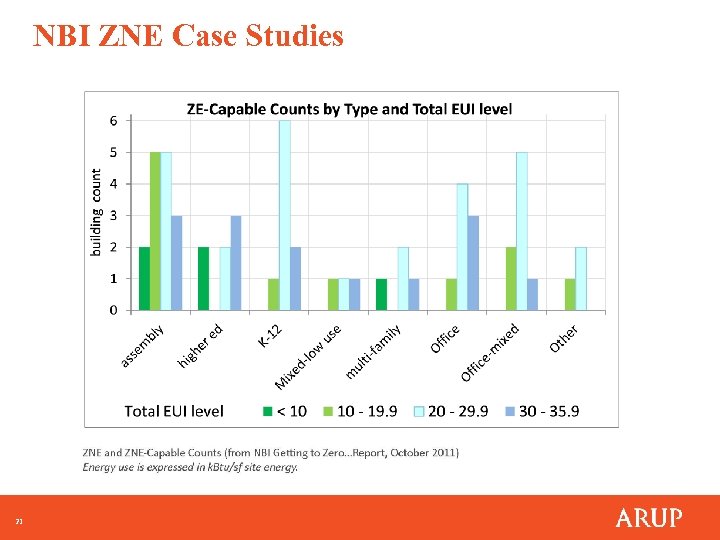 NBI ZNE Case Studies 21
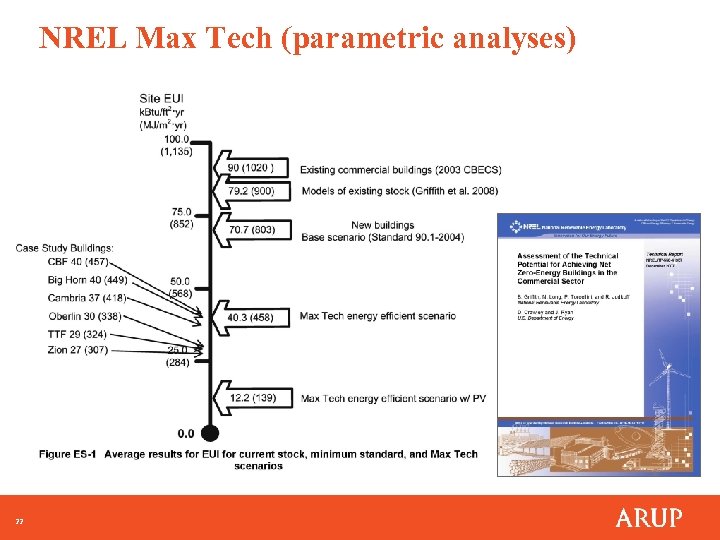 NREL Max Tech (parametric analyses) 22
 Research Team Design Experience 23
 Energy Modeling Methodology
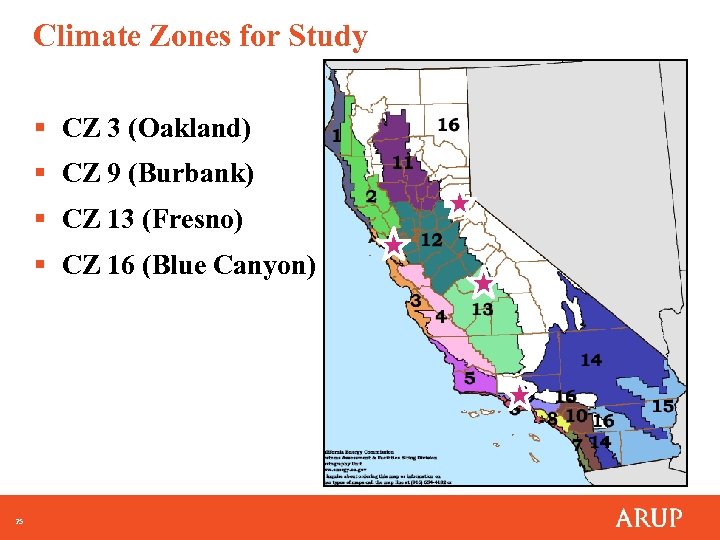 Climate Zones for Study § CZ 3 (Oakland) § CZ 9 (Burbank) § CZ 13 (Fresno) § CZ 16 (Blue Canyon) 25
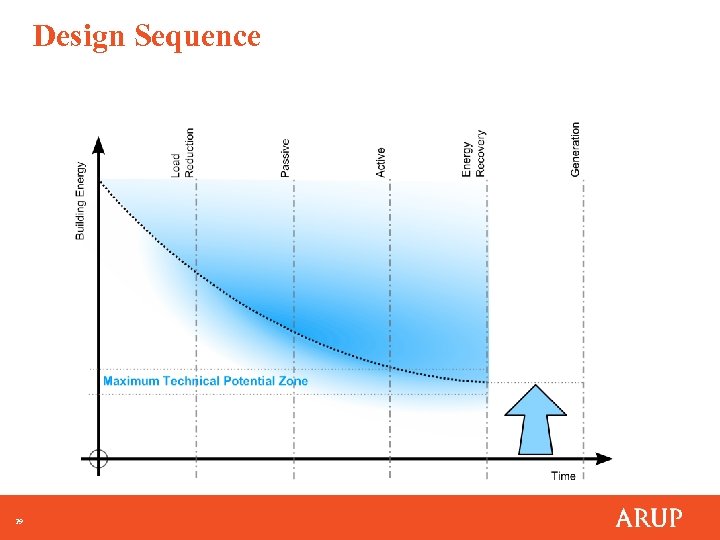
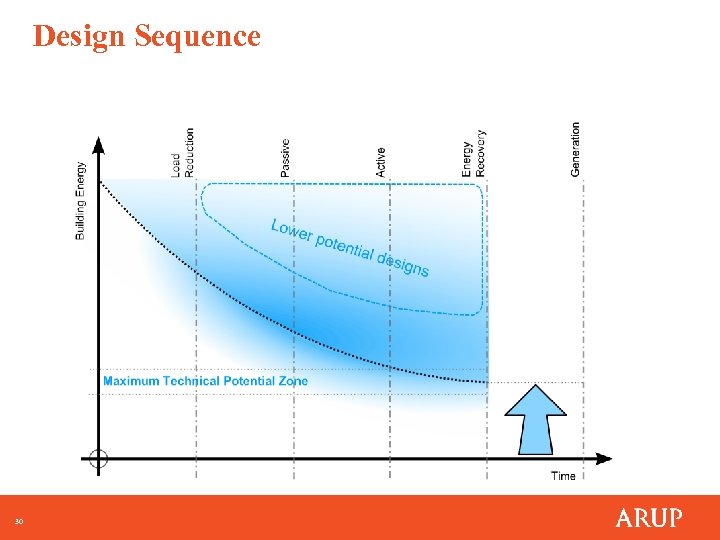
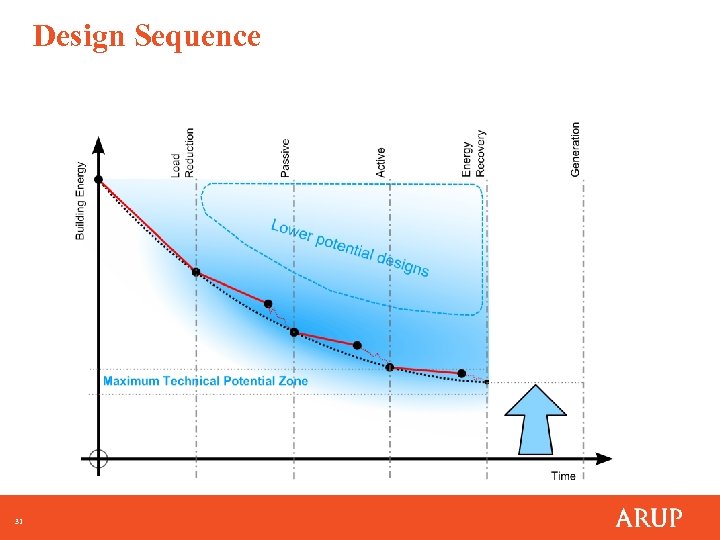
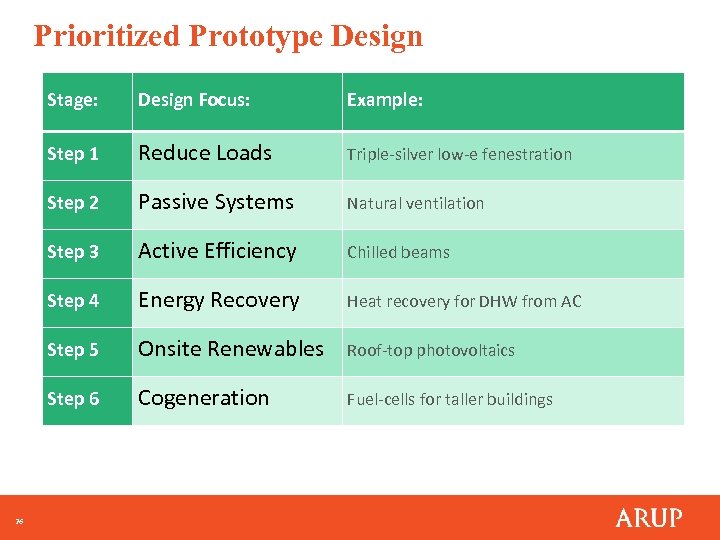 Prioritized Prototype Design Stage: Example: Step 1 Reduce Loads Triple-silver low-e fenestration Step 2 Passive Systems Natural ventilation Step 3 Active Efficiency Chilled beams Step 4 Energy Recovery Heat recovery for DHW from AC Step 5 Onsite Renewables Roof-top photovoltaics Step 6 26 Design Focus: Cogeneration Fuel-cells for taller buildings
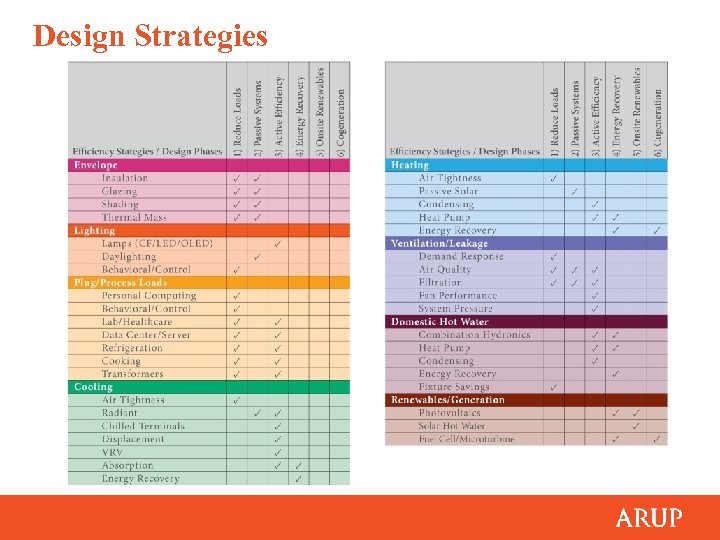 Design Strategies
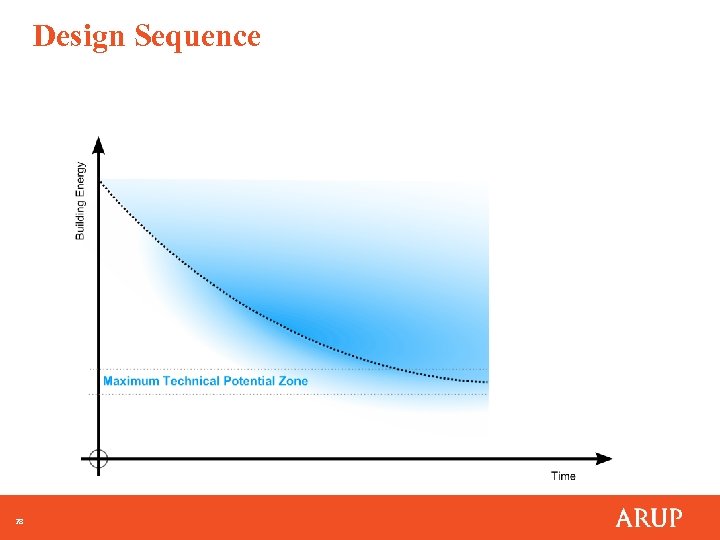 Design Sequence 28
 Design Sequence 29
 Design Sequence 30
 Design Sequence 31
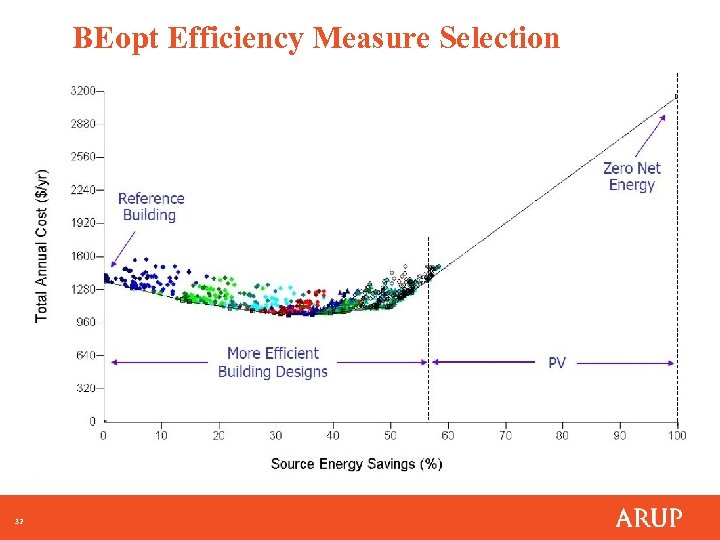 BEopt Efficiency Measure Selection 32
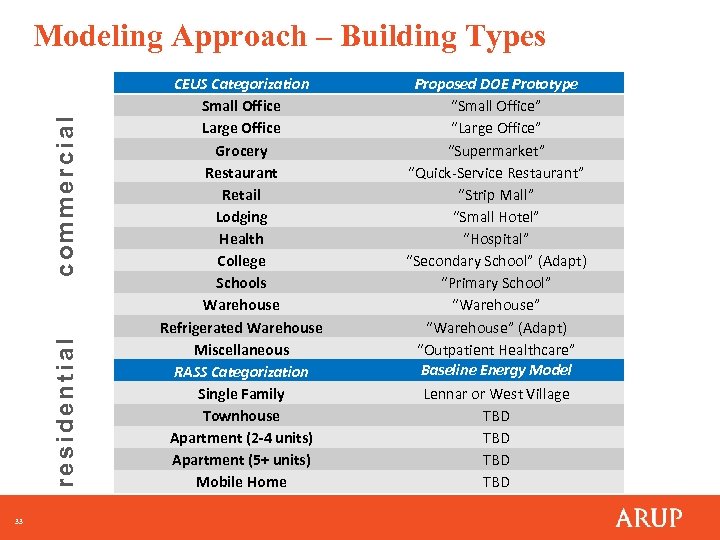 residential commercial Modeling Approach – Building Types 33 CEUS Categorization Small Office Large Office Grocery Restaurant Retail Lodging Health College Schools Warehouse Refrigerated Warehouse Miscellaneous RASS Categorization Single Family Townhouse Apartment (2 -4 units) Apartment (5+ units) Mobile Home Proposed DOE Prototype “Small Office” “Large Office” “Supermarket” “Quick-Service Restaurant” “Strip Mall” “Small Hotel” “Hospital” “Secondary School” (Adapt) “Primary School” “Warehouse” (Adapt) “Outpatient Healthcare” Baseline Energy Model Lennar or West Village TBD TBD
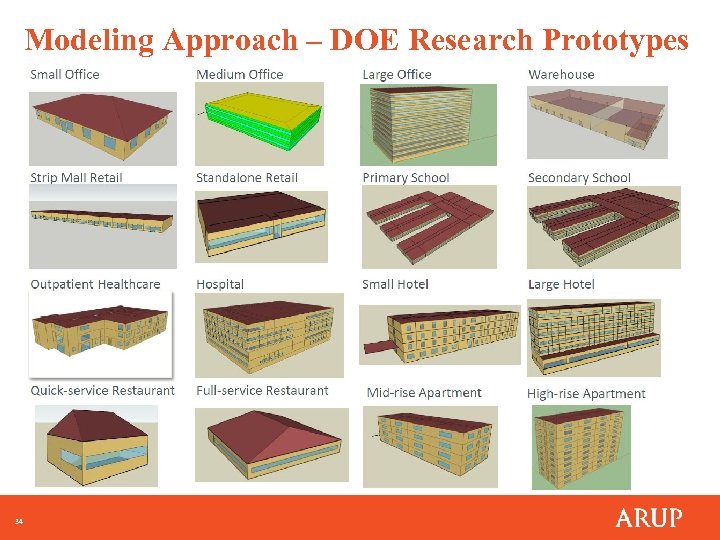 Modeling Approach – DOE Research Prototypes 34
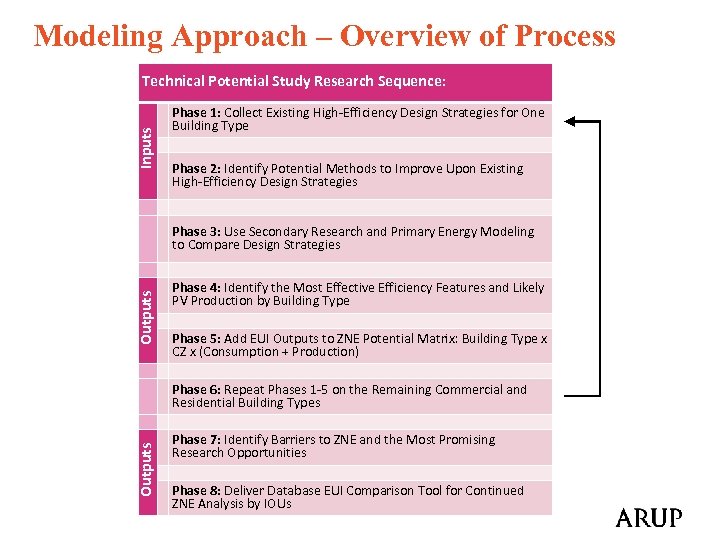 Modeling Approach – Overview of Process Inputs Technical Potential Study Research Sequence: Phase 1: Collect Existing High-Efficiency Design Strategies for One Building Type Phase 2: Identify Potential Methods to Improve Upon Existing High-Efficiency Design Strategies Phase 3: Use Secondary Research and Primary Energy Modeling to Compare Design Strategies Phase 4: Identify the Most Effective Efficiency Features and Likely PV Production by Building Type Phase 5: Add EUI Outputs to ZNE Potential Matrix: Building Type x CZ x (Consumption + Production) Phase 6: Repeat Phases 1 -5 on the Remaining Commercial and Residential Building Types Phase 7: Identify Barriers to ZNE and the Most Promising Research Opportunities Phase 8: Deliver Database EUI Comparison Tool for Continued ZNE Analysis by IOUs Outputs 35
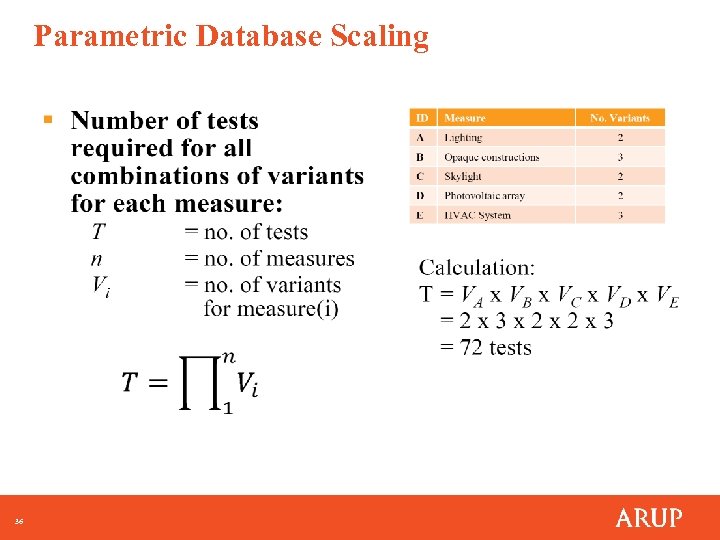 Parametric Database Scaling 36
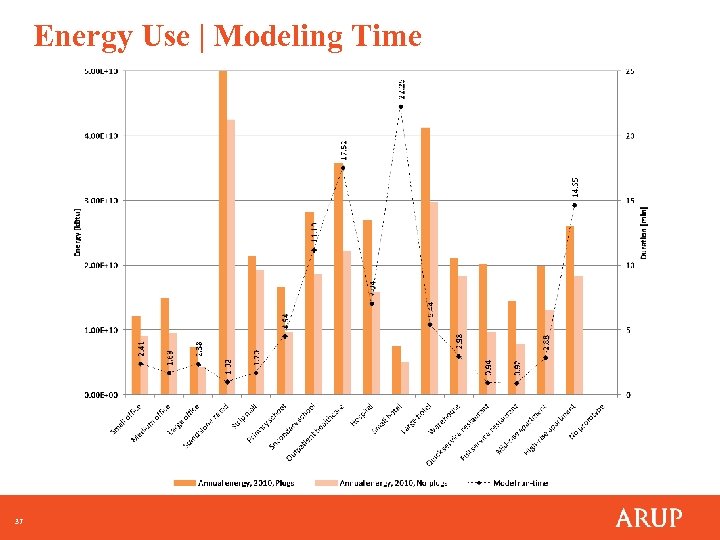 Energy Use | Modeling Time 37
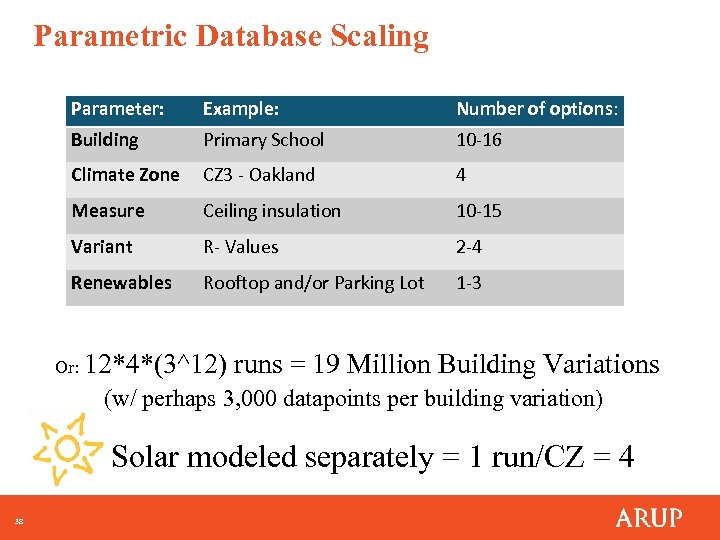 Parametric Database Scaling Parameter: Example: Number of options: Building Primary School 10 -16 Climate Zone CZ 3 - Oakland 4 Measure Ceiling insulation 10 -15 Variant R- Values 2 -4 Renewables Rooftop and/or Parking Lot 1 -3 Or: 12*4*(3^12) runs = 19 Million Building Variations (w/ perhaps 3, 000 datapoints per building variation) Solar modeled separately = 1 run/CZ = 4 38
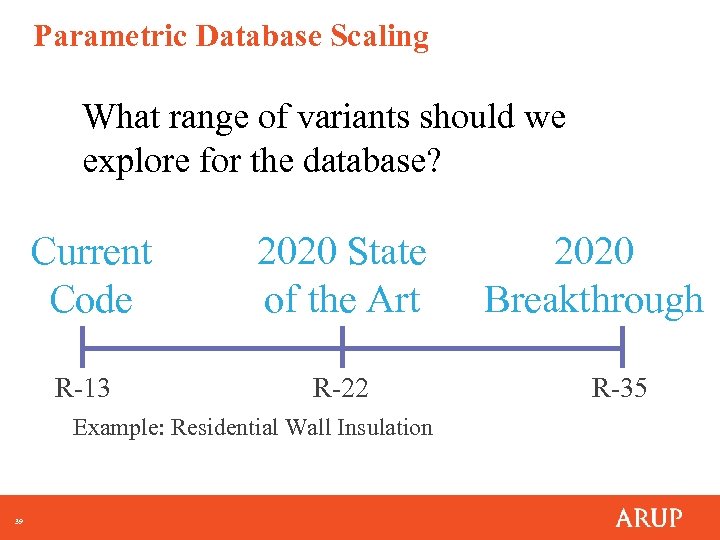 Parametric Database Scaling What range of variants should we explore for the database? Current Code 2020 State of the Art R-13 R-22 Example: Residential Wall Insulation 39 2020 Breakthrough R-35
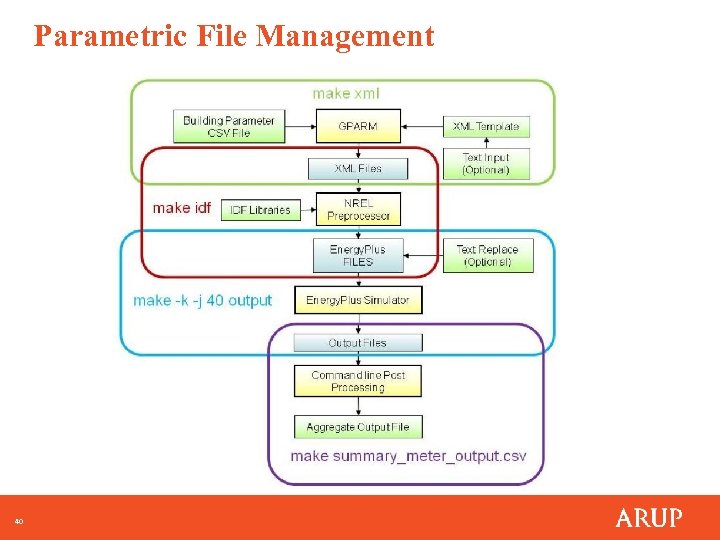 Parametric File Management 40
 Renewables 41
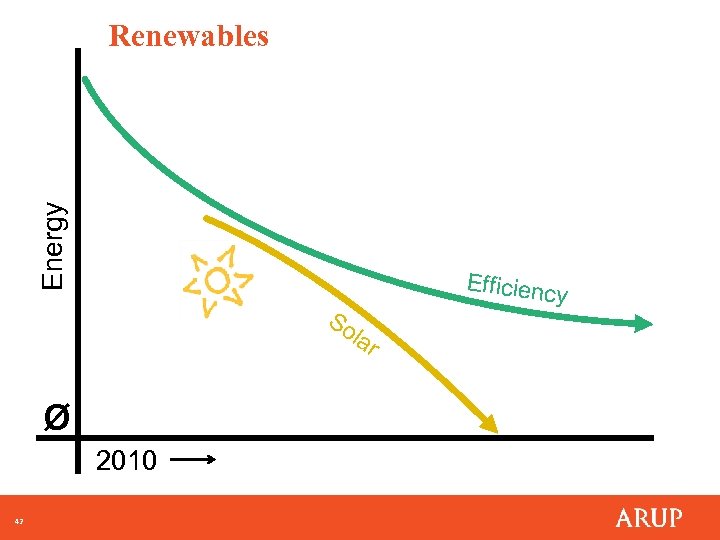 Energy Renewables So Ø 2010 42 Efficienc y lar
 Research Outputs
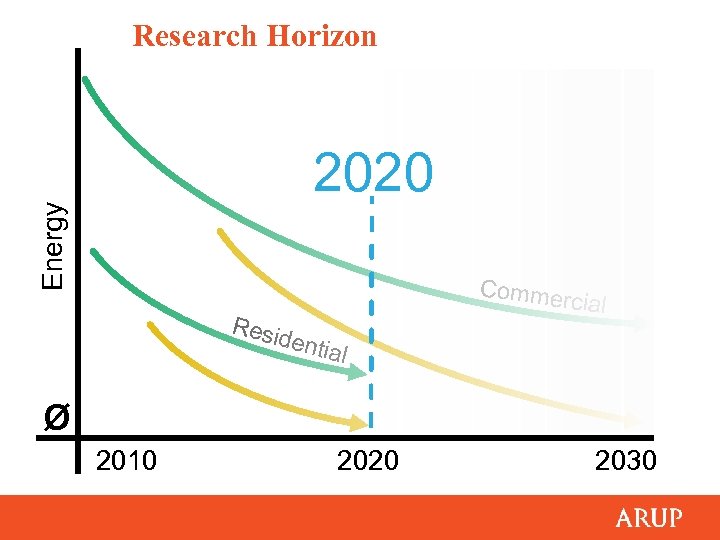 Research Horizon Energy 2020 Commer Resi de cial ntial Ø 2010 2020 2030
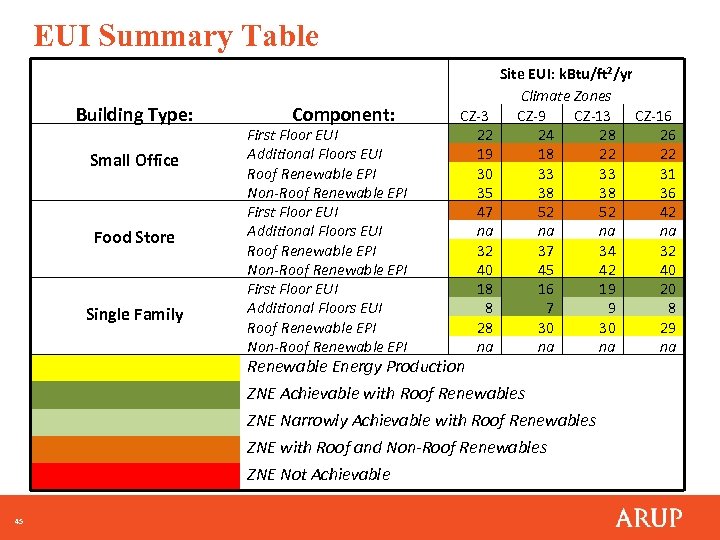 EUI Summary Table Building Type: Small Office Food Store Single Family 45 Component: CZ-3 22 19 30 35 47 na 32 40 18 8 28 na First Floor EUI Additional Floors EUI Roof Renewable EPI Non-Roof Renewable EPI Renewable Energy Production Site EUI: k. Btu/ft 2/yr Climate Zones CZ-9 CZ-13 CZ-16 24 28 26 18 22 22 33 33 31 38 38 36 52 52 42 na na na 37 34 32 45 42 40 16 19 20 7 9 8 30 30 29 na na na ZNE Achievable with Roof Renewables ZNE Narrowly Achievable with Roof Renewables ZNE with Roof and Non-Roof Renewables ZNE Not Achievable
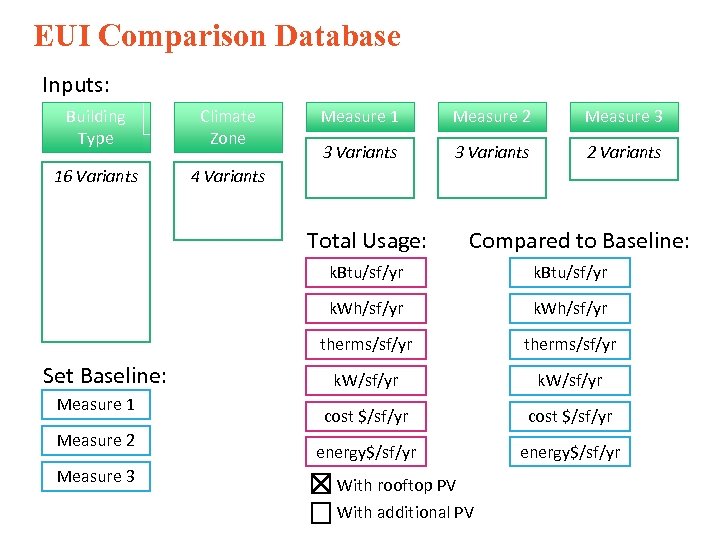 EUI Comparison Database Inputs: Building Type Climate Zone 16 Variants Measure 1 Measure 2 Measure 3 3 Variants 2 Variants 4 Variants Total Usage: Compared to Baseline: k. Btu/sf/yr k. Wh/sf/yr Measure 1 Measure 2 Measure 3 k. Wh/sf/yr therms/sf/yr Set Baseline: k. Btu/sf/yr therms/sf/yr k. W/sf/yr cost $/sf/yr energy$/sf/yr With rooftop PV With additional PV
 Timeline
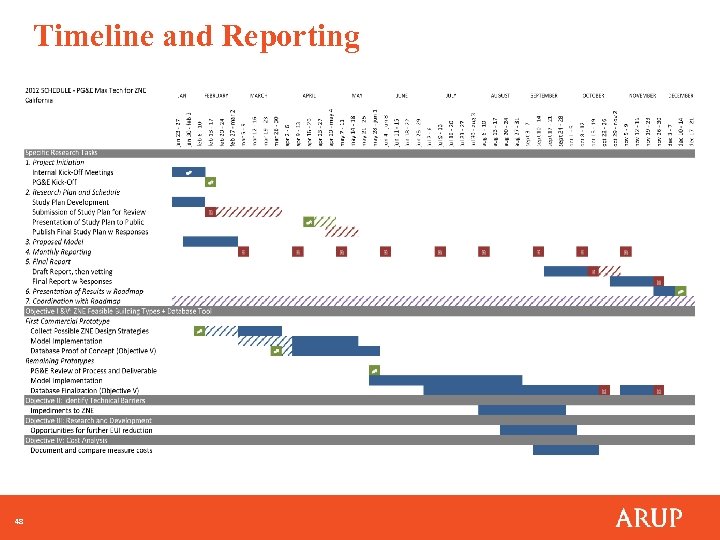 Timeline and Reporting 48
 Questions? Thank you Dan Suyeyasu, Arup dan. suyeyasu@arup. com 49
 50 Review Road to ZNE Work Plan
 51 Road to ZNE Mapping Pathways to ZNE Buildings in California Public Presentation of Draft Work Plan Heschong Mahone Group, Inc. Energy and Environmental Economics, Inc. (E 3) CTG Energetics Portland State University New Buildings Institute April 20, 2012
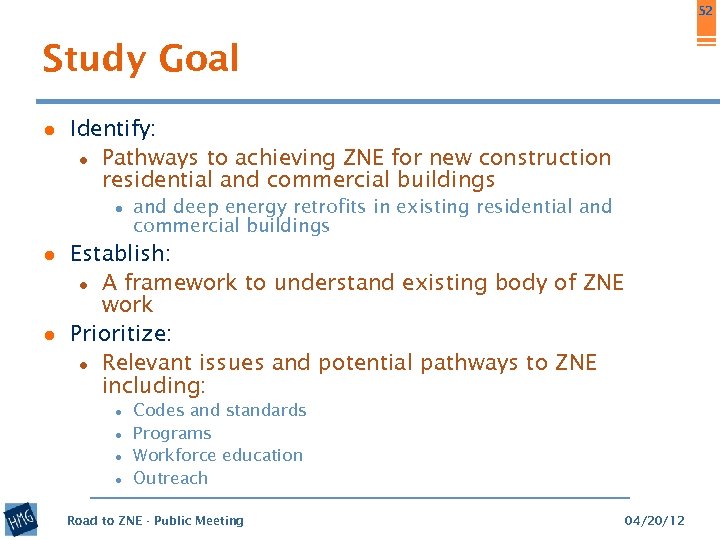 52 Study Goal ● Identify: ● Pathways to achieving ZNE for new construction residential and commercial buildings ● and deep energy retrofits in existing residential and commercial buildings ● Establish: A framework to understand existing body of ZNE work ● Prioritize: ● Relevant issues and potential pathways to ZNE including: ● ● ● Codes and standards Programs Workforce education Outreach Road to ZNE - Public Meeting 04/20/12
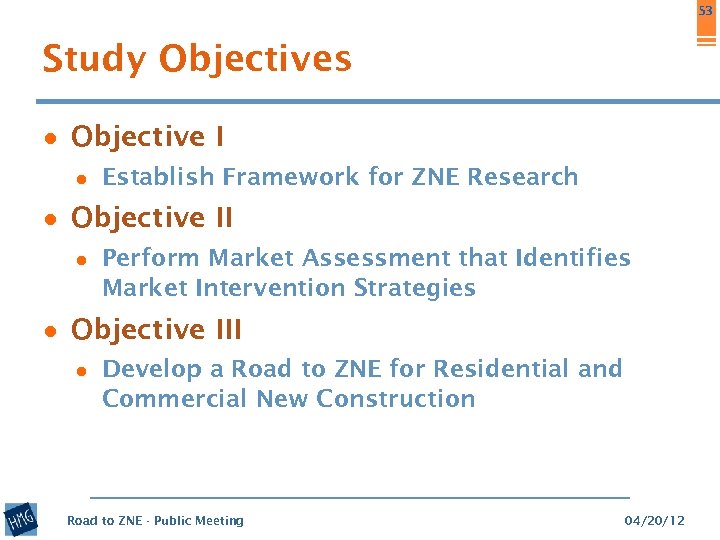 53 Study Objectives ● Objective I ● Establish Framework for ZNE Research ● Objective II ● Perform Market Assessment that Identifies Market Intervention Strategies ● Objective III ● Develop a Road to ZNE for Residential and Commercial New Construction Road to ZNE - Public Meeting 04/20/12
 54 Objective I: ZNE Research Framework ● Basis for setting ZNE research agenda ● Based on literature review and interviews ● ● Building-level energy use intensity (EUI) performance goals Actions that owners and designers can apply – During the design process and – During building operations and maintenance ● ● ● User interaction and feedback impacts Barriers and opportunities from the policy, market and user perspectives Coordinate with other statewide efforts Road to ZNE - Public Meeting 04/20/12
 55 Objective II: Market Intervention Strategies ● Assessment of market intervention strategies ● To identify opportunities and address barriers to the ZNE goals ● New construction and major whole building renovations ● Commercial and residential buildings ● Focus Areas: ● Characterize Market Structure ● State-level Conflicts in Policies, Regulations and Practices ● ● Climate Zone Constraints Grid Challenges Road to ZNE - Public Meeting 04/20/12
 56 Objective III: Develop a Road to ZNE ● Summarize findings from objectives I and II ● Identify pathways for addressing barriers to ZNE goals ● Policies, research, market intervention strategies ● Prioritized ZNE research agenda ● Project Report Road to ZNE - Public Meeting 04/20/12
 57 Limitation of Project Scope ● The study will identify potential pathways to ZNE ● It will not make specific regulatory recommendations ● This study will perform a market assessment of early adopters to identify market intervention strategies ● But this is not a market characterization study ● Study will identify research questions that need further efforts ● This study will not answer all questions that may arise Road to ZNE - Public Meeting 04/20/12
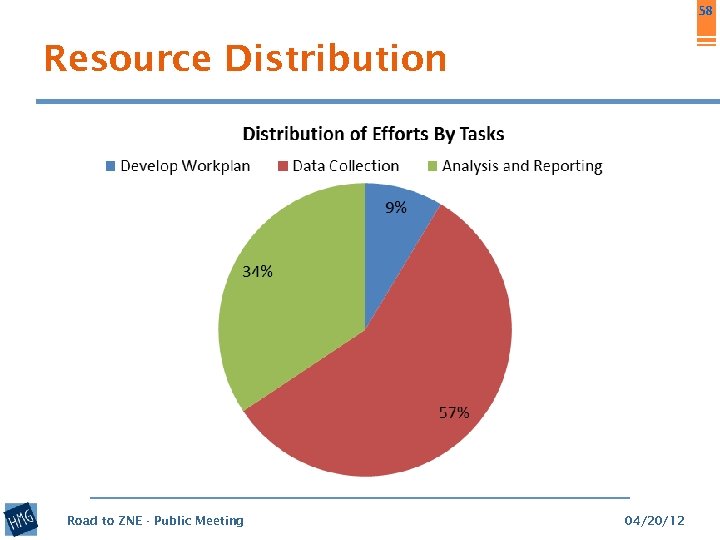 58 Resource Distribution Road to ZNE - Public Meeting 04/20/12
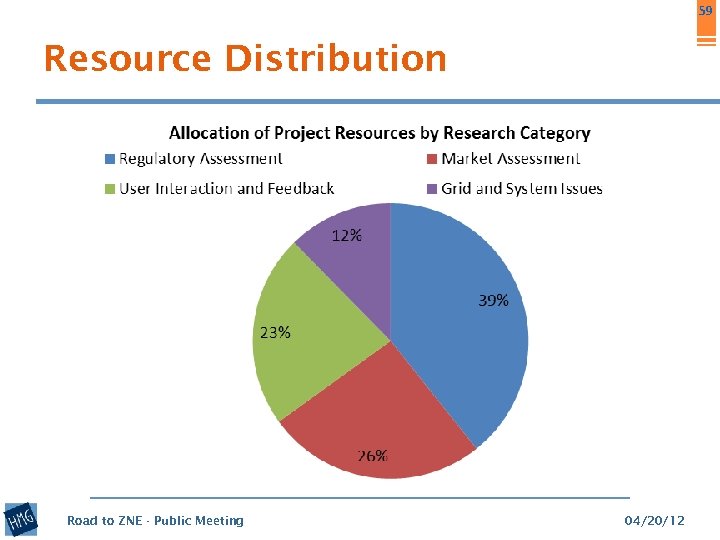 59 Resource Distribution Road to ZNE - Public Meeting 04/20/12
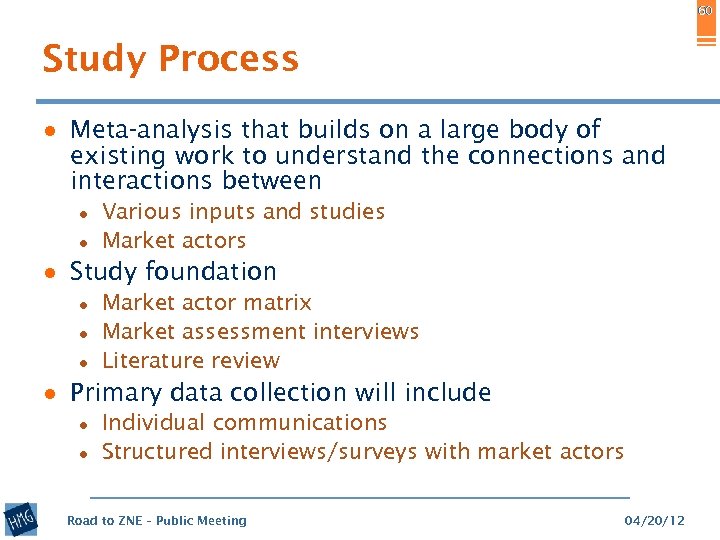 60 Study Process ● Meta-analysis that builds on a large body of existing work to understand the connections and interactions between ● ● Various inputs and studies Market actors ● Study foundation ● Market actor matrix ● Market assessment interviews ● Literature review ● Primary data collection will include ● Individual communications ● Structured interviews/surveys with market actors Road to ZNE – Public Meeting 04/20/12
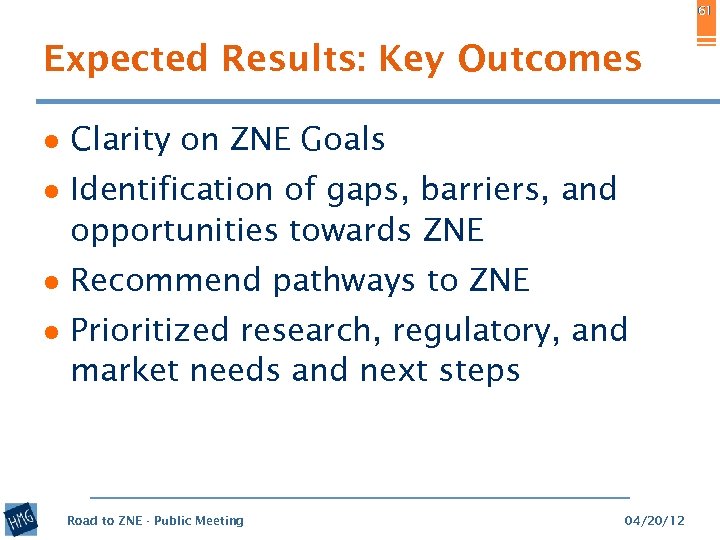 61 Expected Results: Key Outcomes ● Clarity on ZNE Goals ● Identification of gaps, barriers, and opportunities towards ZNE ● Recommend pathways to ZNE ● Prioritized research, regulatory, and market needs and next steps Road to ZNE - Public Meeting 04/20/12
 62 Expected Results: Key Outcomes Clarity on ZNE Goals ● Clear statement of the practical implications of the ZNE goals on market actors ● Impact of definition of ZNE on the market actors ● Differences and commonalities in the perspectives of the market Road to ZNE - Public Meeting 04/20/12
 63 Expected Results: Key Outcomes Identification of Gaps, Barriers, and Opportunities Towards ZNE ● Barriers to many may actually be opportunities for others ● Span various categories: ● Regulations ● Market structure and perspectives ● Technological and technical ● User interaction and feedback Road to ZNE - Public Meeting 04/20/12
 64 Expected Results: Key Outcomes Recommend Pathways to ZNE ● Pathways refer to ● Strategies, policies and other activities ● Necessary to move the market towards adoption of ZNE ● Multiple, mutually supportive pathways needed to realize ZNE goal ● Regulatory and market intervention pathways include, but are not limited to: ● ● Codes and Standards Incentives and Rebates Outreach and Training Further Research Needs Road to ZNE - Public Meeting 04/20/12
 65 Expected Results: Key Outcomes Prioritized Research, Regulatory, and Market Needs and Next Steps ● Code Adoption Candidates ● Promising Research Areas ● Major Market Barriers and Opportunities ● Other strategies Road to ZNE - Public Meeting 04/20/12
 66 RESEARCH METHODOLOGY Road to ZNE - Public Meeting 04/20/12
 67 Overview ● This project will involve: ● Project Advisory Group (PAG) ● Market Actor Matrix ● Literature Review ● Interviews and Surveys ● Data Analysis ● Coordination with the ZNE Technical Potential Study Road to ZNE – Public Meeting 04/20/12
 68 Project Advisory Group (PAG) ● Energy Division will create and lead a Project Advisory Group ● To help guide the data collection and analysis efforts ● The goal of PAG meetings is to: ● Regularly brief Energy Division on the status of the ZNE studies ● Collect input from key decision-makers and market actors for consideration on major project milestones Road to ZNE – Public Meeting 04/20/12
 69 Market Actor Matrix Goals ● Informing data collection and analysis ● Basis for interviews and surveys ● Context and basis for research, policy, market and program recommendations ● Provide context for future ZNE efforts ● Market actors for C&S, programs, outreach, training and other strategies to promote ZNE Road to ZNE - Public Meeting 04/20/12
 70 Literature Review ● This is the foundational element of this project ● Identify current and previous efforts that can inform the study ● List of resources driven by objectives and research questions embedded in each objective ● Draft work plan has the initial list of resources ● We are being strategic about choosing resources to review Road to ZNE - Public Meeting 04/20/12
 71 Literature Review ● We don’t have unlimited resources and time ● ● and budget… Our initial list of literature sources are ● Relevant – either raise important issues or provide data to support development of solutions ● Based on past and current project experience of the team and funding sources ● Additional suggestions are welcome Road to ZNE - Public Meeting 04/20/12
 72 Market Assessment ● Supplements literature review ● Conduct interviews with key market actors to understand ● ● Perspectives regarding ZNE goals Barriers, challenges and opportunities ● Conduct structured surveys of market actors ● Based on specific topics and research questions as needed Road to ZNE - Public Meeting 04/20/12
 73 Coordination with Tech Potential Study ● Bi-weekly calls between team leads and IOUs ● Staged analysis plan for both projects ● ● e. g. EUI targets based on site energy from roadmap project to inform tech potential study Review potential study initial results to identify survey/interview questions for market assessments ● Work plans have identified specific areas of coordination Road to ZNE - Public Meeting 04/20/12
 74 Key Research Items ● Regulatory ● ZNE Definition ● EUI Targets ● State-level Conflicts in Policies, Regulations and Practices Related to ZNE ● Fuel Mix Metrics ● Grid Challenges Road to ZNE - Public Meeting 04/20/12
 75 Key Research Items ● Market and User Interaction and Feedback ● Market Actor Matrix ● Market Assessment ● User Interaction and Feedback ● Building or Project Design and Construction ● Building Operations and Maintenance Road to ZNE - Public Meeting 04/20/12
 76 DATA COLLECTION AND ANALYSIS Road to ZNE – Public Meeting 04/20/12
 77 Market Actor Matrix ● List of market actors that either will affect or be affected by the ZNE goals ● ● Role of each of the market actors in the ZNE process Their likely incentives and barriers to achieving ZNE designs. ● Include ● Policy setting agencies ● IOUs ● Designers ● Architects ● Mechanical engineers ● Building owners ● Building operators ● Commissioning agents ● Ratings agencies ● Building occupants Road to ZNE - Public Meeting 04/20/12
 78 Literature Review ● Goal ● ● ● Identify relevant conclusions, data and theories in support of the Road to ZNE Map information currently available to each of the project goals Identify gaps in existing research and knowledge ● Sources ● ● ● Publications Policy documents Public statements Road to ZNE – Public Meeting 04/20/12
 79 Literature Review ● Examples: ● California Long Term Energy Efficiency Strategic Plan (Strategic Plan) ● Zero Net Energy Action Plan: Commercial Building Sector 2010 -12 ● 2007 National Renewable Energy Laboratory’s (NREL) “Assessment of the Technical Potential for Achieving Net Zero. Energy Buildings in the Commercial Sector” ● California Commercial End-Use Survey (CEUS) for commercial building types ● Residential Appliance Saturation Study (RASS) for residential building types ● The Passive House Planning Package (PHPP) ● 2011 Integrated Energy Policy Report ● “Energy Efficiency Financing in California Needs and Gaps: Preliminary Assessment and Recommendations” Road to ZNE – Public Meeting 04/20/12
 80 Literature Review ● Prior work from team members ● Title 24 Codes and Standards Enhancement (CASE) Research ● Time Dependent Valuation Studies ● California Solar Initiative, Stage 1, 2, and 3 Cost Effectiveness Evaluation ● Distributed Generation ● Green House Gas Emissions Inventory Road to ZNE – Public Meeting 04/20/12
 81 Interviews and Surveys ● Goal: ● Collect information needed to prepare the market assessment ● ● Assess the potential adoption of ZNE measures and design practices within the sector Develop appropriate market intervention strategies to encourage them ● Includes community members from: ● Building design ● Construction ● Management ● Emphasis will be on early adopters, then larger industry Road to ZNE – Public Meeting 04/20/12
 82 Key Research Items: Regulatory ZNE Definition ● “Traditional’ ZNE definition categories: On an annual basis, the building uses renewable energy to achieve zero net: ● ● Site Energy Source Energy Cost Emissions ● Ignores issues related to Time of Use and Peak Demand ● As well as grid impacts Road to ZNE – Public Meeting 04/20/12
 83 Key Research Items: Regulatory ZNE Definition ● Revised definition proposed by the CEC ● ● ● Similar to recommendation of the CPUC workgroup Still get to a zero net energy on an annual basis Utilize Time Dependent Valuation (TDV) ● For residential, based on the HERS II Index ● Based on the concept of ‘societal value’ ● ● ● Critical impact of avoiding peak demand Value of avoided carbon emissions Other energy system costs Road to ZNE - Public Meeting 04/20/12
 84 Key Research Items: Regulatory ZNE Definition ● Through this study, we would like to engage market actors to understand their perspectives ● ● ● Policy makers – Address statewide policy concerns such as societal value Building owner/operator – What does a societal metric mean for a building owner/operator? Builders – What are we promising the building owner/operator? Road to ZNE - Public Meeting 04/20/12
 85 Key Research Items: Regulatory Energy Use Targets (EUI) ● Set appropriate EUI targets for ZNE ● Intrinsically tied to the ZNE definition ● Review of existing high-performance, LEED and ZNE buildings ● Review baseline consumption for CA buildings ● EUI targets must address ● ● Net energy reduction needed from current standard practice/code Cost-effectiveness of incorporating renewable generation onsite Road to ZNE - Public Meeting 04/20/12
 86 Key Research Items: Regulatory EUI Targets ● Propose a two-step process ● Initial EUI targets based on site energy ● ● ● Feeds into the technical potential study analysis By building type, climate zone, and market sector Update EUI targets based on societal value metric ● Impact of ZNE definition on EUI target Road to ZNE - Public Meeting 04/20/12
 87 Key Research Items: Regulatory State-level Conflicts in Policies, Regulations and Practices Related to ZNE ● Objective: ● Understand if existing policy structure supports ZNE goals ● Map barriers created by conflicts in ● Regulations ● Policies ● Practices related to building or project design and construction, building operations, and user interaction and feedback. ● Develop suggestions for addressing barriers and conflicts ● Facilitate development of new policies and regulations toward ZNE buildings Road to ZNE - Public Meeting 04/20/12
 88 Key Research Items: Regulatory State-level Conflicts in Policies, Regulations and Practices Related to ZNE ● Build on existing studies conducted by: ● CPUC ● CEC ● IOUs ● Sources ● Primary: Interviews with key actors ● Secondary: Literature Road to ZNE - Public Meeting 04/20/12
 89 Key Research Items: Regulatory Fuel Mix Metrics and Grid Challenges ● Not a primary focus, but the goal is to: ● Evaluate impacts of different fuel mixes based on ZNE goals ● ● ● Generation sources of the electricity powering a ZNE building Impact on greenhouse gas emissions Identify physical and operational challenges at the grid level ● Sensors, smart grid meters, and communications technology Road to ZNE - Public Meeting 04/20/12
 90 Key Research Items: Regulatory Fuel Mix Metrics and Grid Challenges ● Based on prior work on behalf of CPUC, IOUs on grid related issues ● ● Renewable Portfolio Standards CPUC 2010 Long-term Procurement Planning AB 32 compliance analysis for CPUC CEC Greenhouse Gas Tool for CA Bldgs ● Draw from experience and extensive literature ● Integrating renewable and high penetration PV generation ● Selectively review and describe those issues most applicable for ZNE. Road to ZNE – Public Meeting 04/20/12
 91 Key Research Items: Regulatory Grid Impacts of Increased PV ● Key issues include: ● Safety risks associated with “islanding” ● Reliability challenges associated with “backflows” ● Reliability challenges associated with maintaining voltage limits and limits on reactive power ● Safety and reliability issues associated with grid protection schemes ● Policy & regulatory issues around interconnection standards, retail rates, etc. ● Road to ZNE study will draw from current and on- going engineering studies on these topics Road to ZNE - Public Meeting 04/20/12
 92 Key Research Items: Market and User Interaction and Feedback Market Assessment ● Understand market structure for current ZNE projects, including: ● ● Supply chains Application decision trees Energy efficient product and design practice awareness Experience and concerns with energy efficient measures and programs ● Develop our understanding of ● Adoption barriers ● Opportunities (“value”) of ZNE ● Intervention strategies Road to ZNE - Public Meeting 04/20/12
 93 Key Research Items: Market and User Interaction and Feedback Market Assessment ● Interviews with key market actors/market actors ● ● ● Barriers to ZNE Business case for ZNE Opportunities and Strategies ● Surveys of market actors (as needed) ● Financial criteria ● Cost drivers ● Business case for ZNE ● Analyze relationships ● Identify strategies to overcome barriers Road to ZNE - Public Meeting 04/20/12
 94 Key Research Items: Market and User Interaction and Feedback Occupant User Interaction and Feedback ● Understand occupant interactions with low- energy designs ● Two core components: ● ● Detailed literature review covering published literature and data bases, and the Collection and interpretation of less-formalized energy and building research and practitioner community experience, knowledge, and opinions ● Qualitative and Quantitative analysis of ● What occupants do in buildings ● The effects of building design and operations on occupants Road to ZNE - Public Meeting 04/20/12
 95 Key Research Items: Market and User Interaction and Feedback Building Design and Construction ● Review the influence of utility programs on ● Decision-making ● Cost versus performance ● Financing and insurance ● Risk and liability ● Safety codes ● Design team incentives ● Literature review ● Interviews ● Real estate decision-makers ● Savings by Design Program participating designers Road to ZNE - Public Meeting 04/20/12
 96 Key Research Items: Market and User Interaction and Feedback Building O&M ● Identify issues and opportunities including ● ● ● Assembly Bill 1103 energy benchmarking and disclosure Split incentives issues of those who pay but do not operate the building No feedback for most occupants “Payback period” for upgrades Not understanding how a building is supposed to work Not having any context for evaluating building performance ● Based on ● Literature review ● PAG interactions ● Interviews with relevant market actors Road to ZNE - Public Meeting 04/20/12
 97 Data Analysis ● Multi-step, iterative process ● Quantitative analysis includes: ● Building energy end use (EUI) targets – Including user interaction and feedback ● ● ● Fuel mix metrics and grid impacts Climate analysis Qualitative analysis includes: ● Market barriers ● Market actor perspectives Road to ZNE – Public Meeting 04/20/12
 98 Data Analysis ● Final market assessment results ● Summarize interview responses and literature research data ● ● ● Potential adoption rates of intervention strategies Observations of market trends for high efficiency buildings and systems. Possible market barriers such as: – – – ● Design and product costs and awareness Perceptions of risk Application issues Services and parts availability Safety, reliability and maintenance concerns. Potential strategies to overcome those barriers. Road to ZNE – Public Meeting 04/20/12
 99 Data Analysis ● Written documentation of the market structure including: ● Relevant market actors ● Motivations and barriers towards ZNE ● Structural issues with the market in the adoption of ZNE strategies Road to ZNE – Public Meeting 04/20/12
 100 REPORTING AND TIMELINE Road to ZNE - Public Meeting 04/20/12
 101 Project Reporting ● Interim reporting (internal to IOU/ED) ● PAG meeting agendas and reports ● Monthly status reports ● Accomplishments ● Problems encountered ● Problem resolutions ● Schedule for next steps Road to ZNE – Public Meeting 04/20/12
 102 Project Reporting ● Draft and final reports ● Allow the CPUC and IOUs to: ● ● ● Set and evaluate their ZNE goals Design future ZNE market intervention strategies Present an overall assessment of a Road to ZNE ● Public comment and feedback ● Draft Report will be posted for public vetting on the CPUC’s energydataweb. com website ● Comments received on the Draft Report will be considered for incorporation into the Final Report submitted to PG&E Road to ZNE – Public Meeting 04/20/12
 103 Project Reporting ● Reports will include, but are not limited to: ● Executive Summary ● ● ● Background or Introduction chapter ● ● ● Describing and justifying the chosen approaches, data sources and data collection methods used in the Study. This chapter will be based on the Final Research Plan. Analysis and Recommendations ● ● Including the research objectives and description of this Study. Methodology chapter ● ● Emphasizing the major findings and the most significant recommendations. The Executive Summary will be sufficient to serve as a mini-report for wider distribution to a less technical audience than that for the full report. For each of the three Study objectives. Appendices including, but not limited to: ● ● Bibliography Reference list Road to ZNE – Public Meeting 04/20/12
 104 Public Presentation ● Upon completion of the project ● Team leader will make a public presentation of the final Road to ZNE Study recommendations ● Time, location, and format of this presentation will be determined by the PG&E Project Manager Road to ZNE – Public Meeting 04/20/12
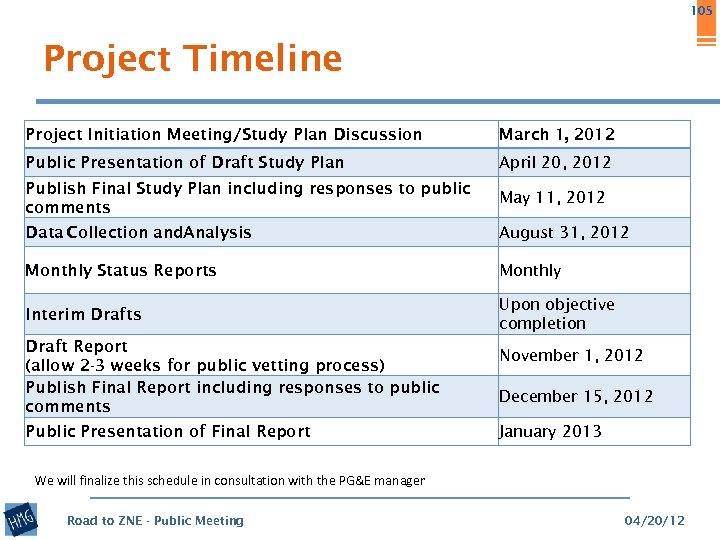 105 Project Timeline Project Initiation Meeting/Study Plan Discussion March 1, 2012 Public Presentation of Draft Study Plan April 20, 2012 Publish Final Study Plan including responses to public comments May 11, 2012 Data Collection and. Analysis August 31, 2012 Monthly Status Reports Monthly Interim Drafts Upon objective completion Draft Report (allow 2 -3 weeks for public vetting process) Publish Final Report including responses to public comments Public Presentation of Final Report November 1, 2012 December 15, 2012 January 2013 We will finalize this schedule in consultation with the PG&E manager Road to ZNE - Public Meeting 04/20/12
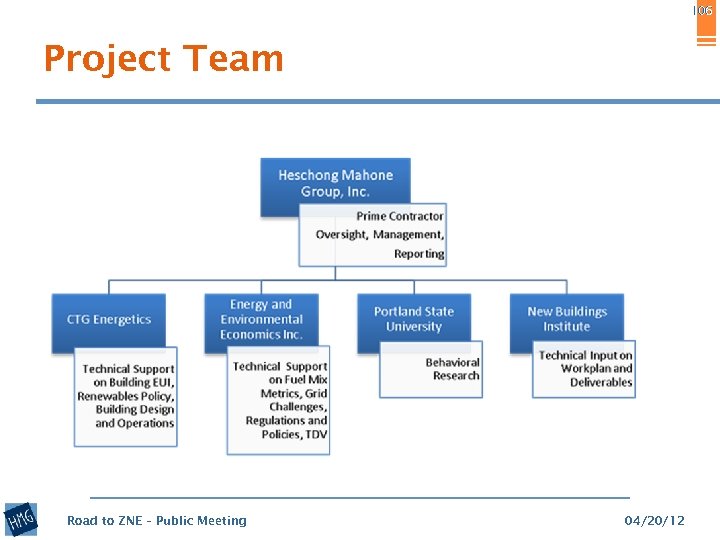 106 Project Team Road to ZNE – Public Meeting 04/20/12
 107 Contact Information ● For additional information, comments, questions ● Abhijeet Pande – pande@h-m-g. com; (916)-962 -7001 ● Carrie Brown – brown@h-m-g. com; (916)-962 -7001 ● Derek Jones – DRJf@pge. com Road to ZNE - Public Meeting 04/20/12
 108 0 The power of Thank You for Attending Questions? Road to ZNE - Public Meeting 04/20/12
 109 Next Steps
 Road to ZNE and Technical Potential Draft Work Plans Next Steps • Draft research plans posted to CPUC’s Public Documents Area (PDA) – www. energydataweb. com/cpuc • Written Public Comments due April 27, 2012 – Post comments to PDA • Final Study Plan including responses to public comments posted on May 11, 2012 110
 Road to ZNE and Technical Potential Draft Work Plans 111 Written Comments Guidelines • Written comments are due April 27 th to PDA • The study teams will consider all comments and post replies on May 11 th to PDA • The study teams cannot promise to incorporate all comments into the final work plans • Comments should be limited to refinements to the study scopes that will aid the study teams in achieving the study objectives outlined in each work plan – Major scope changes are not possible at this point as the contractor teams and contracts are in place to address the studies’ objectives
 112 Thank You Derek Jones – PG&E derek. jones@pge. com Abhijeet Pande - HMG pande@h-m-g. com Dan Suyeyasu - Arup dan. suyeyasu@arup. com