


 Скачать презентацию 1 Giant Panda Population There approximately 2 000
Project Lisa Suk ''Endangered animals''.pptx
- Количество слайдов: 15
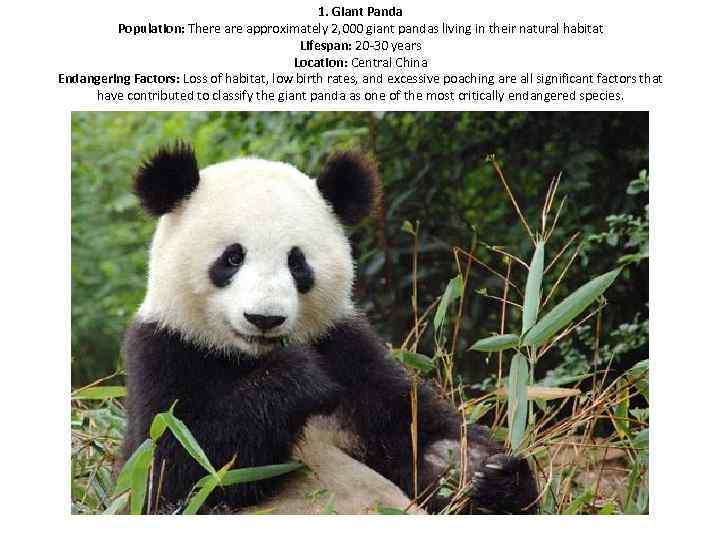 1. Giant Panda Population: There approximately 2, 000 giant pandas living in their natural habitat Lifespan: 20 -30 years Location: Central China Endangering Factors: Loss of habitat, low birth rates, and excessive poaching are all significant factors that have contributed to classify the giant panda as one of the most critically endangered species.
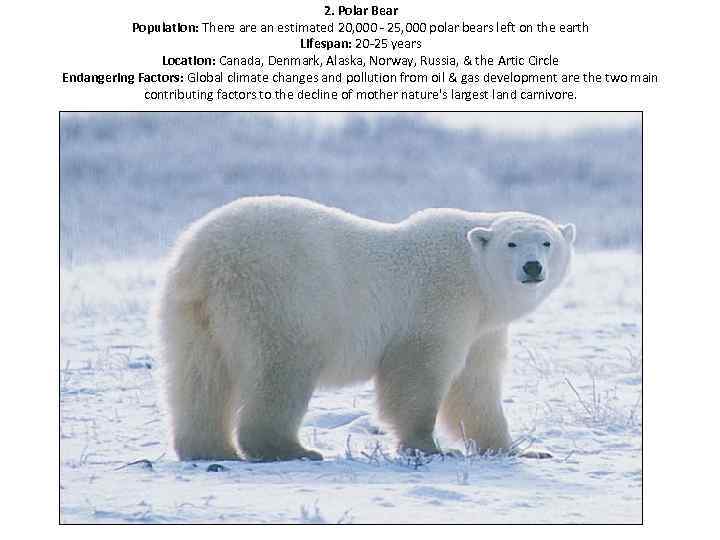 2. Polar Bear Population: There an estimated 20, 000 - 25, 000 polar bears left on the earth Lifespan: 20 -25 years Location: Canada, Denmark, Alaska, Norway, Russia, & the Artic Circle Endangering Factors: Global climate changes and pollution from oil & gas development are the two main contributing factors to the decline of mother nature's largest land carnivore.
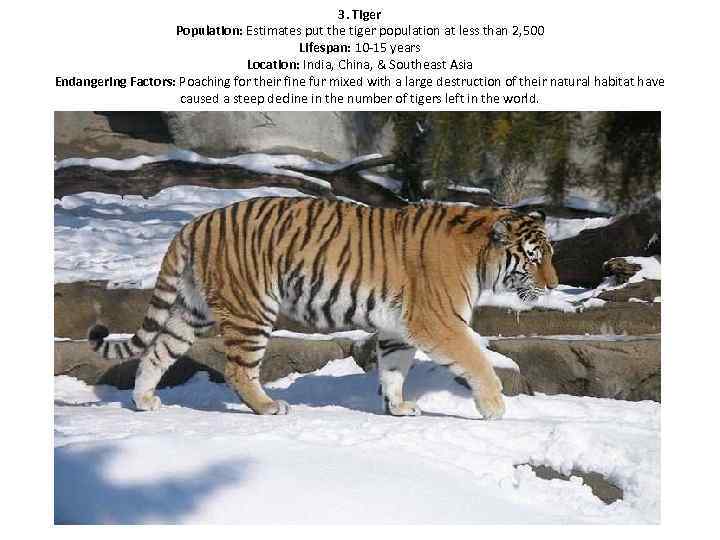 3. Tiger Population: Estimates put the tiger population at less than 2, 500 Lifespan: 10 -15 years Location: India, China, & Southeast Asia Endangering Factors: Poaching for their fine fur mixed with a large destruction of their natural habitat have caused a steep decline in the number of tigers left in the world.
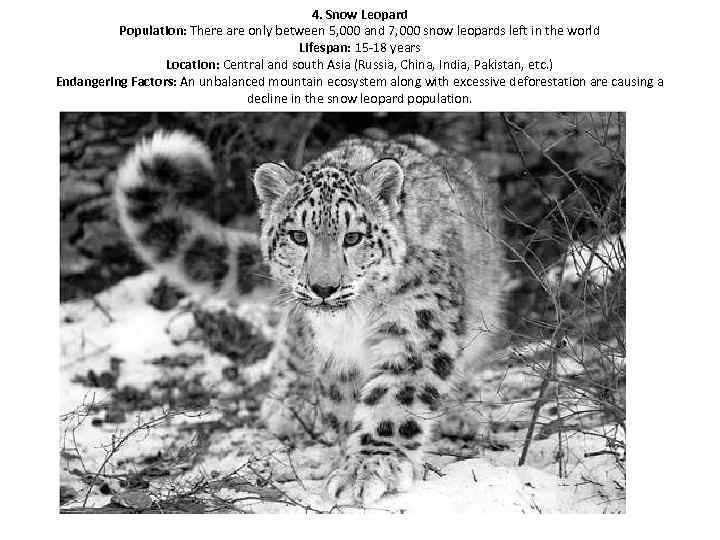 4. Snow Leopard Population: There are only between 5, 000 and 7, 000 snow leopards left in the world Lifespan: 15 -18 years Location: Central and south Asia (Russia, China, India, Pakistan, etc. ) Endangering Factors: An unbalanced mountain ecosystem along with excessive deforestation are causing a decline in the snow leopard population.
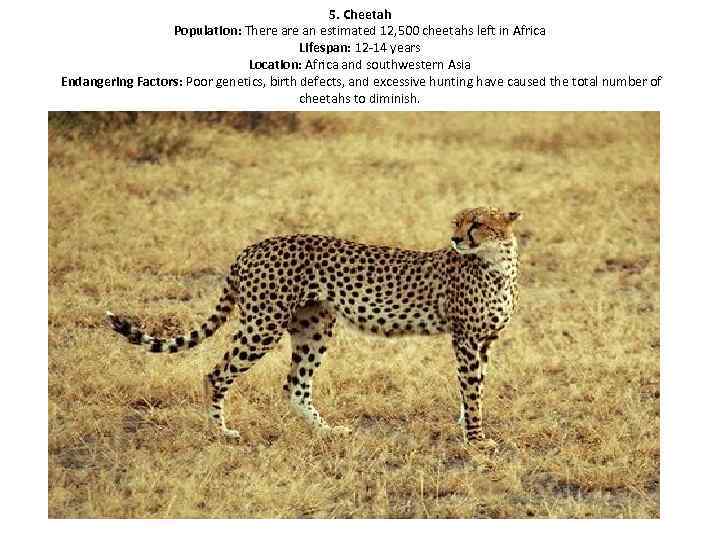 5. Cheetah Population: There an estimated 12, 500 cheetahs left in Africa Lifespan: 12 -14 years Location: Africa and southwestern Asia Endangering Factors: Poor genetics, birth defects, and excessive hunting have caused the total number of cheetahs to diminish.
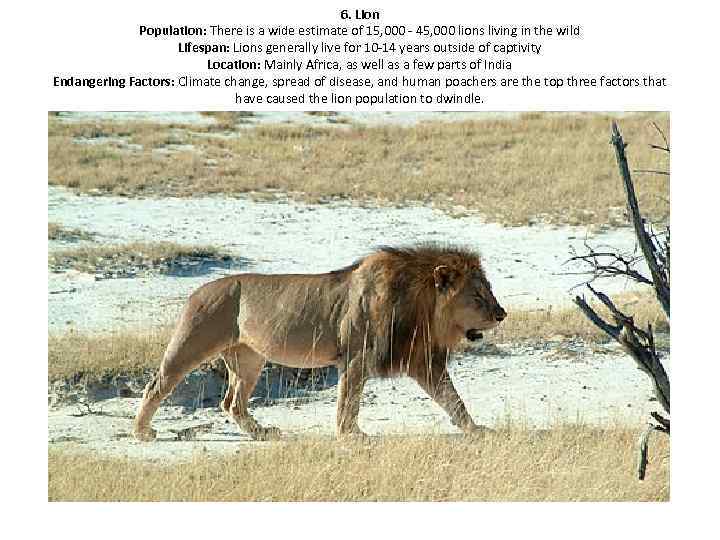 6. Lion Population: There is a wide estimate of 15, 000 - 45, 000 lions living in the wild Lifespan: Lions generally live for 10 -14 years outside of captivity Location: Mainly Africa, as well as a few parts of India Endangering Factors: Climate change, spread of disease, and human poachers are the top three factors that have caused the lion population to dwindle.
 7. Dhole Population: There are less than 2, 500 dholes left and their numbers continue to decrease Lifespan: 10 -12 years Location: India, North Korea, & Tibet Endangering Factors: There a number of reasons the Dhole is inching closer to extinction, including constant habitat loss, reduction of prey, rampant disease, and fierce competition from similar predators.
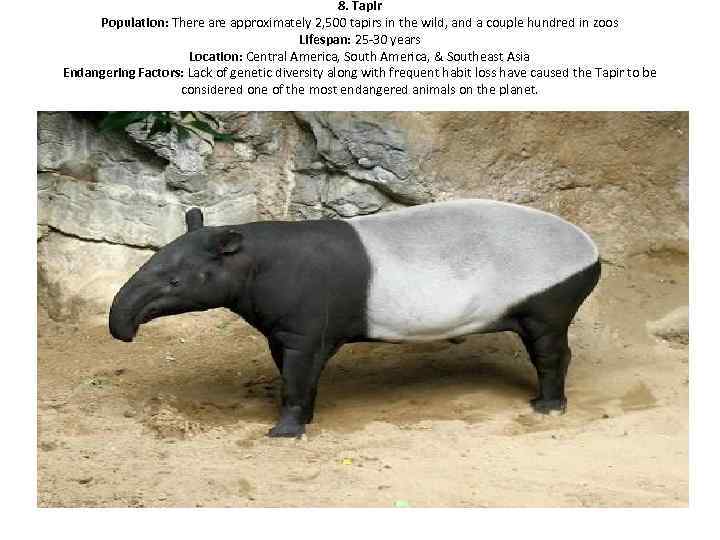 8. Tapir Population: There approximately 2, 500 tapirs in the wild, and a couple hundred in zoos Lifespan: 25 -30 years Location: Central America, South America, & Southeast Asia Endangering Factors: Lack of genetic diversity along with frequent habit loss have caused the Tapir to be considered one of the most endangered animals on the planet.
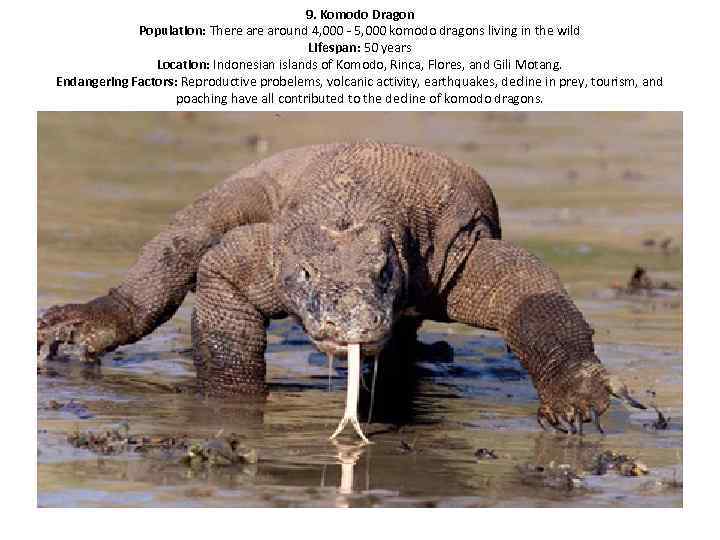 9. Komodo Dragon Population: There around 4, 000 - 5, 000 komodo dragons living in the wild Lifespan: 50 years Location: Indonesian islands of Komodo, Rinca, Flores, and Gili Motang. Endangering Factors: Reproductive probelems, volcanic activity, earthquakes, decline in prey, tourism, and poaching have all contributed to the decline of komodo dragons.
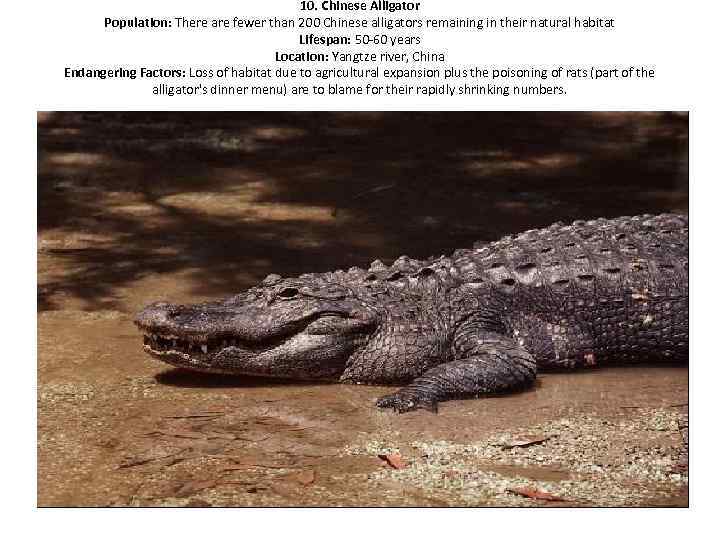 10. Chinese Alligator Population: There are fewer than 200 Chinese alligators remaining in their natural habitat Lifespan: 50 -60 years Location: Yangtze river, China Endangering Factors: Loss of habitat due to agricultural expansion plus the poisoning of rats (part of the alligator's dinner menu) are to blame for their rapidly shrinking numbers.
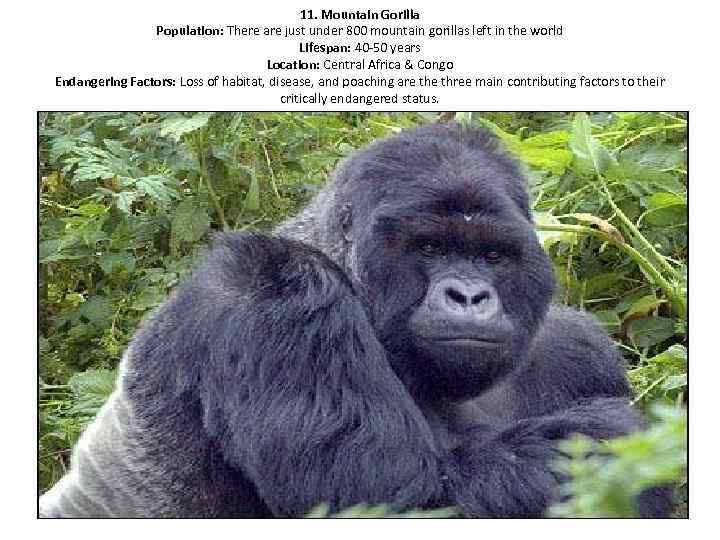 11. Mountain Gorilla Population: There are just under 800 mountain gorillas left in the world Lifespan: 40 -50 years Location: Central Africa & Congo Endangering Factors: Loss of habitat, disease, and poaching are three main contributing factors to their critically endangered status.
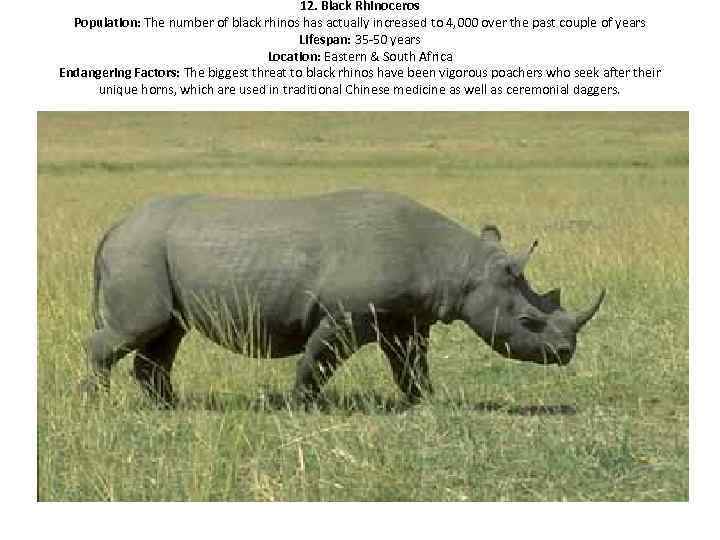 12. Black Rhinoceros Population: The number of black rhinos has actually increased to 4, 000 over the past couple of years Lifespan: 35 -50 years Location: Eastern & South Africa Endangering Factors: The biggest threat to black rhinos have been vigorous poachers who seek after their unique horns, which are used in traditional Chinese medicine as well as ceremonial daggers.
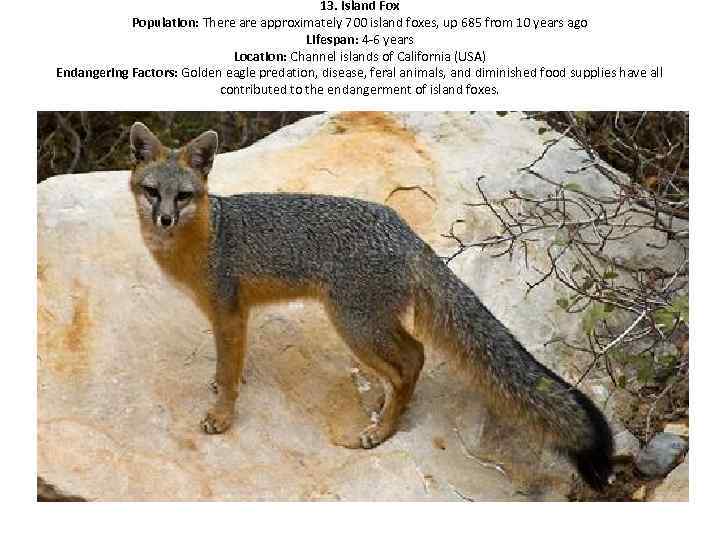 13. Island Fox Population: There approximately 700 island foxes, up 685 from 10 years ago Lifespan: 4 -6 years Location: Channel islands of California (USA) Endangering Factors: Golden eagle predation, disease, feral animals, and diminished food supplies have all contributed to the endangerment of island foxes.
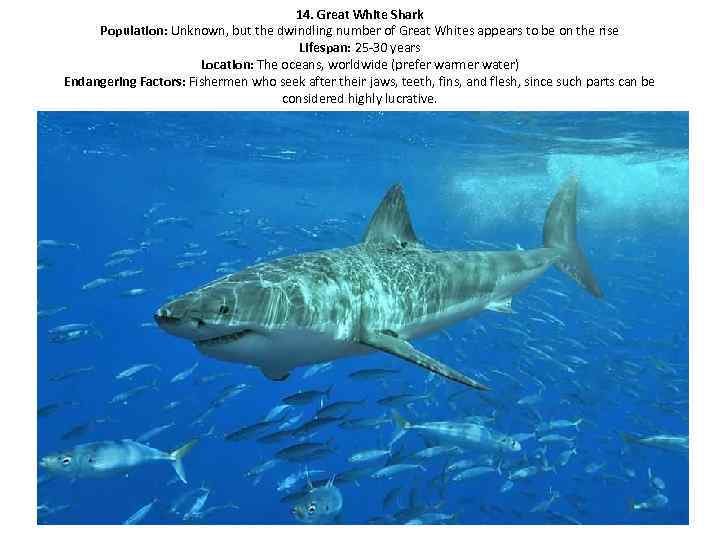 14. Great White Shark Population: Unknown, but the dwindling number of Great Whites appears to be on the rise Lifespan: 25 -30 years Location: The oceans, worldwide (prefer warmer water) Endangering Factors: Fishermen who seek after their jaws, teeth, fins, and flesh, since such parts can be considered highly lucrative.
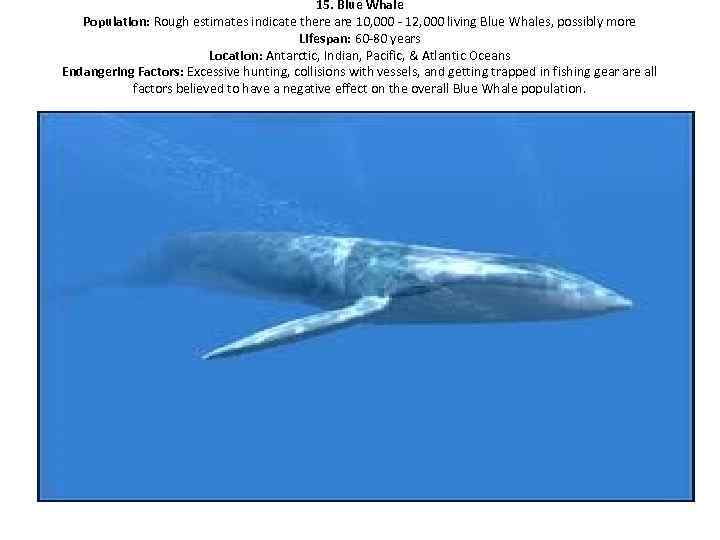 15. Blue Whale Population: Rough estimates indicate there are 10, 000 - 12, 000 living Blue Whales, possibly more Lifespan: 60 -80 years Location: Antarctic, Indian, Pacific, & Atlantic Oceans Endangering Factors: Excessive hunting, collisions with vessels, and getting trapped in fishing gear are all factors believed to have a negative effect on the overall Blue Whale population.