


 Скачать презентацию 1 Explain how the issue of slavery in
74aebb2452146efe320c826d87bd41a0.ppt
- Количество слайдов: 118
 1. Explain how the issue of slavery in the territories acquired from Mexico disrupted American politics from 1848 to 1850.
 2. Point out the major terms of the Compromise of 1850 and indicate how this agreement attempted to defuse the sectional crisis over slavery.
 3. Explain why the Fugitive Slave Law included in the Compromise of 1850 stirred moral outrage and fueled antislavery agitation in the North.
 4. Indicate how the Whig party’s disintegration over slavery signaled the end of nonsectional political parties.
 5. Describe how the Pierce administration, as well as private American adventurers, pursued numerous overseas and expansionist ventures primarily designed to expand slavery.
 6. Describe Americans’ first ventures into China and Japan in the 1850 s and their diplomatic, economic, cultural, and religious consequences.
 7. Describe the nature and purpose of Douglas’s Kansas-Nebraska Act, and explain why it fiercely rekindled the slavery controversy that the Compromise of 1850 had been designed to settle.
 Chapter 18 Notes
 VII. The Compromise of 1850 A. 1846 - Wilmot Proviso B. changing views on the right of Congress to regulate slavery C. compromise views offered D. the election of 1848 E. gold and California F. Taylor’s stand G. old guard sought a compromise H. the death of Taylor I. effects of the Compromise of 1850 J. there is popular support for the compromise K. the effect of the compromise on parties L. the death of three great statesmen M. the blunder of the fugitive slave Law
 VII. The Compromise of 1850 A. 1846 - Wilmot Proviso B. changing views on the right of Congress to regulate slavery C. compromise views offered D. the election of 1848 E. gold and California F. Taylor’s stand G. old guard sought a compromise H. the death of Taylor I. effects of the Compromise of 1850 J. there is popular support for the compromise K. the effect of the compromise on parties L. the death of three great statesmen M. the blunder of the fugitive slave Law
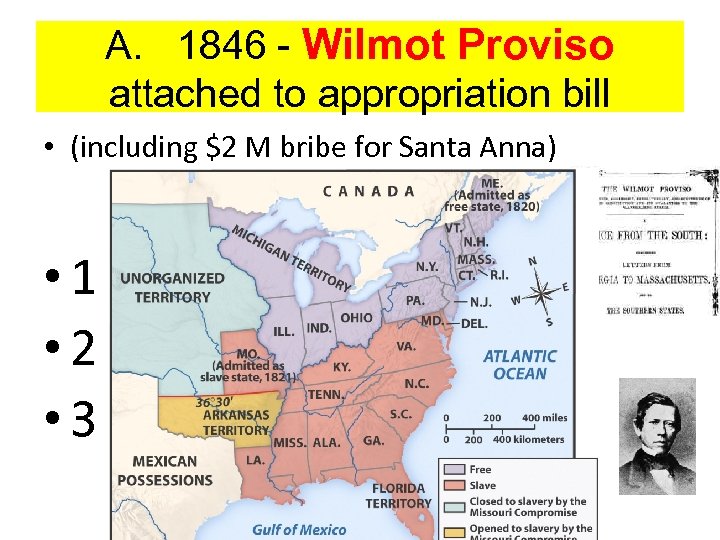 A. 1846 - Wilmot Proviso attached to appropriation bill • (including $2 M bribe for Santa Anna) • 1 • 2 • 3
 VII. The Compromise of 1850 A. 1846 - Wilmot Proviso B. changing views on the right of Congress to regulate slavery C. compromise views offered D. the election of 1848 E. gold and California F. Taylor’s stand G. old guard sought a compromise H. the death of Taylor I. effects of the Compromise of 1850 J. there is popular support for the compromise K. the effect of the compromise on parties L. the death of three great statesmen M. the blunder of the fugitive slave Law
 B. changing views on the right of Congress to regulate slavery • 1 • 2 • 3
 1. previously, no one doubted the right of Congress to regulate slavery in the territories a. Northwest Ordinance b. Missouri Compromise
 2. new Southern view - Congress had no constitutional power to prohibit slavery in the territories, but a constitutional duty to protect it there • • a. territories belonged b. compact theory c. property rights d. Missouri Compromise as unconstitutional
 3. Northern view • a. Highest Law • b. is too constitutional
 VII. The Compromise of 1850 A. 1846 - Wilmot Proviso B. changing views on the right of Congress to regulate slavery C. compromise views offered D. the election of 1848 E. gold and California F. Taylor’s stand G. old guard sought a compromise H. the death of Taylor I. effects of the Compromise of 1850 J. there is popular support for the compromise K. the effect of the compromise on parties L. the death of three great statesmen M. the blunder of the fugitive slave Law
 C. compromise views offered • 1. Polk • 2. Cass • 3. why were these unacceptable?
 VII. The Compromise of 1850 A. 1846 - Wilmot Proviso B. changing views on the right of Congress to regulate slavery C. compromise views offered D. the election of 1848 E. gold and California F. Taylor’s stand G. old guard sought a compromise H. the death of Taylor I. effects of the Compromise of 1850 J. there is popular support for the compromise K. the effect of the compromise on parties L. the death of three great statesmen M. the blunder of the fugitive slave Law
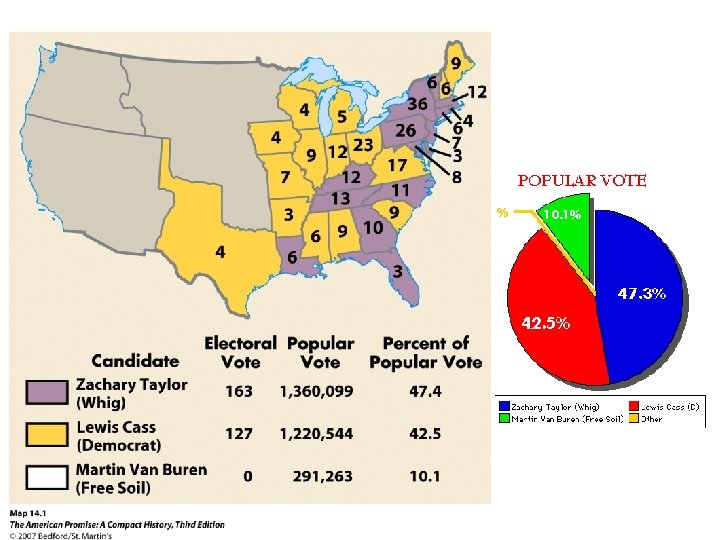
 D. the election of 1848 - irony of the candidates • 1. • 2. • 3. • 4. Democrats Whigs Free Soilers Whigs win
 VII. The Compromise of 1850 A. 1846 - Wilmot Proviso B. changing views on the right of Congress to regulate slavery C. compromise views offered D. the election of 1848 E. gold and California F. Taylor’s stand G. old guard sought a compromise H. the death of Taylor I. effects of the Compromise of 1850 J. there is popular support for the compromise K. the effect of the compromise on parties L. the death of three great statesmen M. the blunder of the fugitive slave Law
 E. gold and California – January 1848 • 1 • 2 • 3 • 4
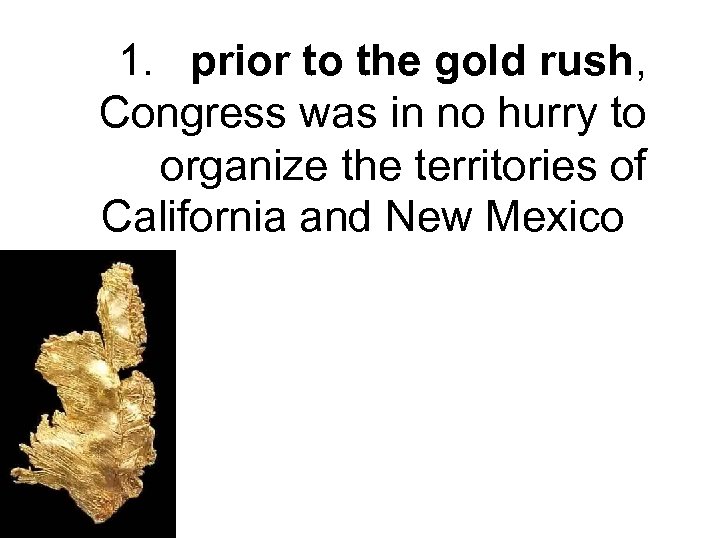 1. prior to the gold rush, Congress was in no hurry to organize the territories of California and New Mexico
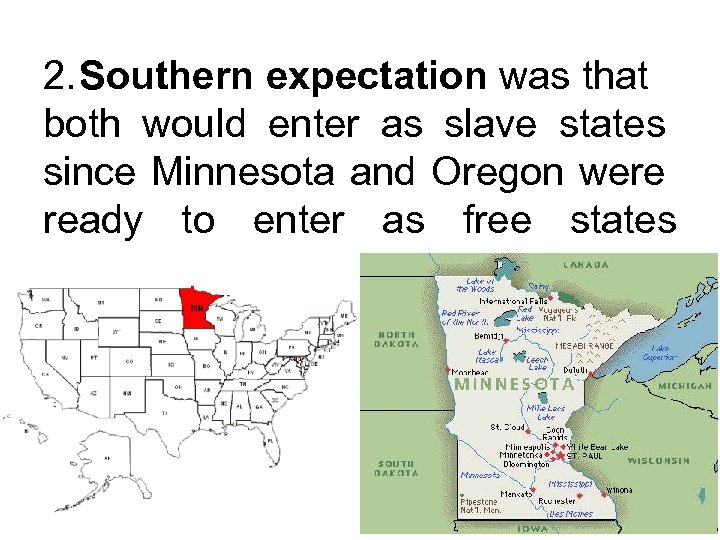 2. Southern expectation was that both would enter as slave states since Minnesota and Oregon were ready to enter as free states
 3. gold rush confuses things by causing a population explosion • a. 100, 000 • b. eggs • c. lawlessness
 4. since Congress could not or would not organize the territories, Taylor urged California to write a constitution and apply for admission • • a b c d e f g
 VII. The Compromise of 1850 A. 1846 - Wilmot Proviso B. changing views on the right of Congress to regulate slavery C. compromise views offered D. the election of 1848 E. gold and California F. Taylor’s stand G. old guard sought a compromise H. the death of Taylor I. effects of the Compromise of 1850 J. there is popular support for the compromise K. the effect of the compromise on parties L. the death of three great statesmen M. the blunder of the fugitive slave Law
 F. Taylor’s stand (first President with NO political experience) • • 1. 2. 3. 4. immediate admission of California vowed to “Jacksonize” made compromise impossible the House was so divided
 G. old guard sought a compromise to preserve the Union (Clay, Calhoun, Webster) - serves as the basis for the Compromise of 1850
 VII. The Compromise of 1850 A. 1846 - Wilmot Proviso B. changing views on the right of Congress to regulate slavery C. compromise views offered D. the election of 1848 E. gold and California F. Taylor’s stand G. old guard sought a compromise H. the death of Taylor I. effects of the Compromise of 1850 J. there is popular support for the compromise K. the effect of the compromise on parties L. the death of three great statesmen M. the blunder of the fugitive slave Law
 G. old guard sought a compromise • 1. California • 2. New Mexico • 3. fugitive slave law • 4. disputed territory • 5. Texas debt • 6. Washington DC
 VII. The Compromise of 1850 A. 1846 - Wilmot Proviso B. changing views on the right of Congress to regulate slavery C. compromise views offered D. the election of 1848 E. gold and California F. Taylor’s stand G. old guard sought a compromise H. the death of Taylor I. effects of the Compromise of 1850 J. there is popular support for the compromise K. the effect of the compromise on parties L. the death of three great statesmen M. the blunder of the fugitive slave Law
 H. the death of Taylor • 1 • 2 • 3
 VII. The Compromise of 1850 A. 1846 - Wilmot Proviso B. changing views on the right of Congress to regulate slavery C. compromise views offered D. the election of 1848 E. gold and California F. Taylor’s stand G. old guard sought a compromise H. the death of Taylor I. effects of the Compromise of 1850 J. there is popular support for the compromise K. the effect of the compromise on parties L. the death of three great statesmen M. the blunder of the fugitive slave Law
 I. effects of the Compromise of 1850 • WHO WON? • 1 • 2 • 3
 1. Northern gains • a. California • b. disputed territory • c. D. C.
 2. Southern gains - why they are illusionary • a • b • c

 3. the North is the clear winner • a • b • c • d • the compromise of 1850 wins the Civil War for the North
 VII. The Compromise of 1850 A. 1846 - Wilmot Proviso B. changing views on the right of Congress to regulate slavery C. compromise views offered D. the election of 1848 E. gold and California F. Taylor’s stand G. old guard sought a compromise H. the death of Taylor I. effects of the Compromise of 1850 J. there is popular support for the compromise K. the effect of the compromise on parties L. the death of three great statesmen M. the blunder of the fugitive slave Law
 J. • 1 • 2 • 3 there is popular support for the compromise
 VII. The Compromise of 1850 A. 1846 - Wilmot Proviso B. changing views on the right of Congress to regulate slavery C. compromise views offered D. the election of 1848 E. gold and California F. Taylor’s stand G. old guard sought a compromise H. the death of Taylor I. effects of the Compromise of 1850 J. there is popular support for the compromise K. the effect of the compromise on parties L. the death of three great statesmen M. the blunder of the fugitive slave Law
 K. the effect of the compromise on parties • - one contention is that whenever one major party becomes wholly sectional, Civil War is inevitable • 1 • 2 • 3 • 4
 4. realignment in the South a. Union Party b. Southern rights Party c. Union Party prevails in all states except S. Carolina
 VII. The Compromise of 1850 A. 1846 - Wilmot Proviso B. changing views on the right of Congress to regulate slavery C. compromise views offered D. the election of 1848 E. gold and California F. Taylor’s stand G. old guard sought a compromise H. the death of Taylor I. effects of the Compromise of 1850 J. there is popular support for the compromise K. the effect of the compromise on parties L. the death of three great statesmen M. the blunder of the fugitive slave Law
 L. the death of three great statesmen 1. Calhoun dies in 1850 - Webster and Clay in 1853 2. emergence of new leadership Cass, Douglas, Seward 3. does this make a difference?
 VII. The Compromise of 1850 A. 1846 - Wilmot Proviso B. changing views on the right of Congress to regulate slavery C. compromise views offered D. the election of 1848 E. gold and California F. Taylor’s stand G. old guard sought a compromise H. the death of Taylor I. effects of the Compromise of 1850 J. there is popular support for the compromise K. the effect of the compromise on parties L. the death of three great statesmen M. the blunder of the fugitive slave Law
 M. the blunder of the fugitive slave Law • 1 • 2 • 3 • 4 • 5 • 6
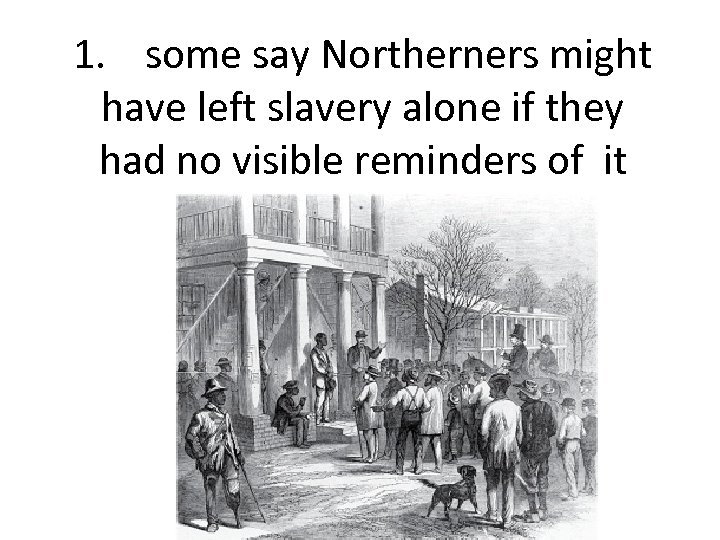 1. some say Northerners might have left slavery alone if they had no visible reminders of it
 2. the law provided a rallying point for abolitionists 3. loss in slaves was not worth the cost of driving marginally attached Northerners to the abolitionist cause
 4. popular opinion and personal liberty laws made it unenforceable
 5. Garrison - “We excrecate it, we spit upon it, we trample it under our feet. ”
 6. Emerson – “this filthy enactment was made in the nineteenth century by people who could read and write. I will not obey it by God. ”
 “Thus the compromise headed off immediate confrontation but in the long run fanned the flames of emotionalism and further polarized sectional thought, perhaps to a degree from which it might not be reasonably expected to recover. ”
 VII. “Young America” - America in the 1850’s A. election of 1852 B. the demise of the Whig party C. expansionism after the Mexican War D. all attempts at expansion tend to be viewed E. further emotionalization F. transcontinental railroad G. Kansas-Nebraska Bill H. provisions of the K-N Act I. what goes wrong with the K-N Act? J. formation of the Republican party K. 1854 - third party emerges
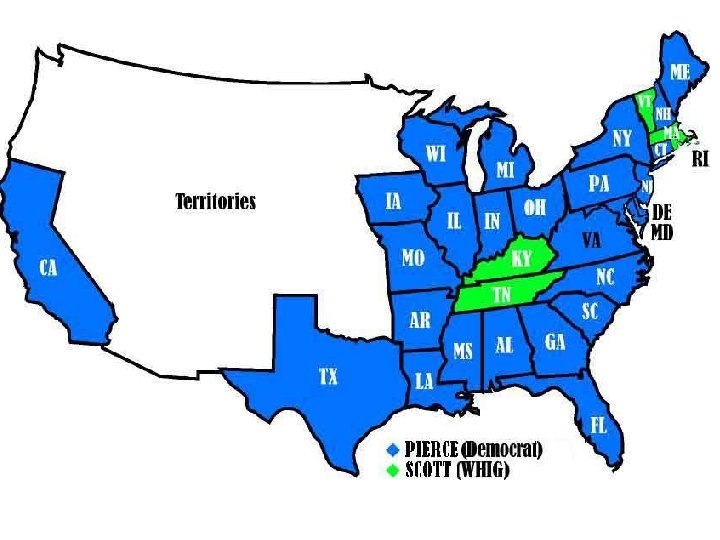
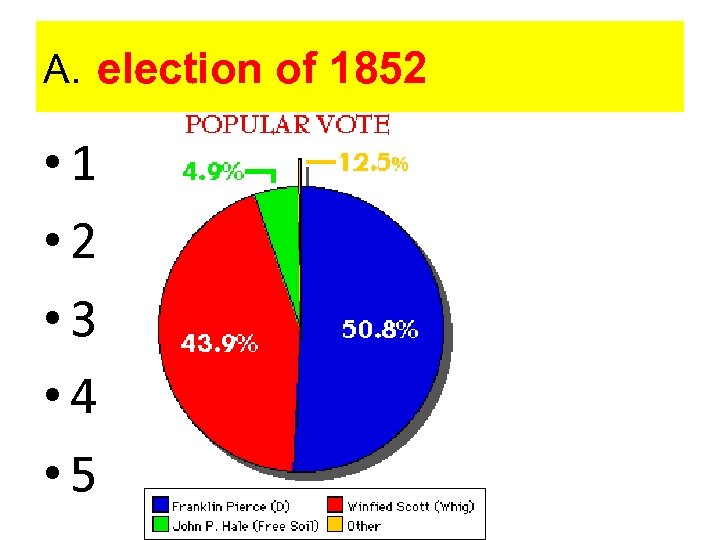 A. election of 1852 • 1 • 2 • 3 • 4 • 5
 VII. “Young America” - America in the 1850’s A. election of 1852 B. the demise of the Whig party C. expansionism after the Mexican War D. all attempts at expansion tend to be viewed E. further emotionalization F. transcontinental railroad G. Kansas-Nebraska Bill H. provisions of the K-N Act I. what goes wrong with the K-N Act? J. formation of the Republican party K. 1854 - third party emerges
 B. the demise of the Whig party • 1. Northern Whigs • 2 Southern Whigs • 3. National Base • 4. Speculate…. .
 VII. “Young America” - America in the 1850’s A. election of 1852 B. the demise of the Whig party C. expansionism after the Mexican War D. all attempts at expansion tend to be viewed E. further emotionalization F. transcontinental railroad G. Kansas-Nebraska Bill H. provisions of the K-N Act I. what goes wrong with the K-N Act? J. formation of the Republican party K. 1854 - third party emerges
 C. “Young America” - expansionism after the Mexican War • - The Mexican War left U. S. territorial ambitions continentally complete
 - the emergence of the issue of slavery’s extension into the territories made the acquisition of new territory extremely difficult during the 1850 s. It should have been an excellent opportunity for U. S. expansion because of the involvement of France and Britain in the Crimean War. Instead, each territorial debate test the virility of each section.
 C. “Young America” - expansionism after the Mexican War • • • 1 2 3 4 5
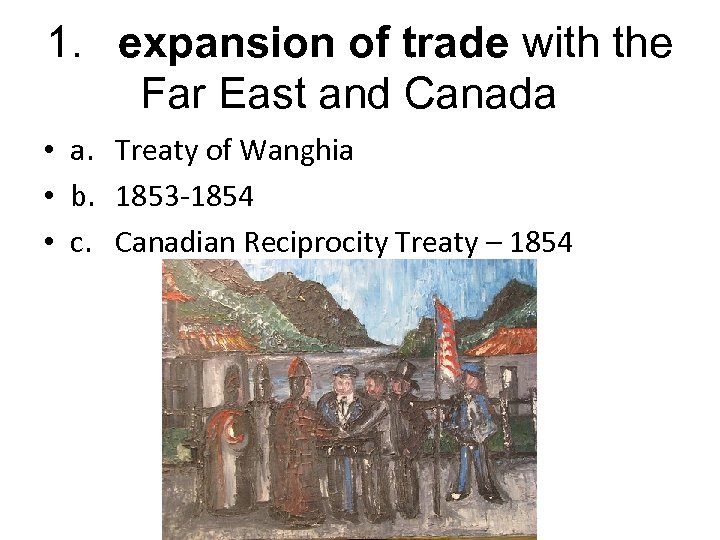 1. expansion of trade with the Far East and Canada • a. Treaty of Wanghia • b. 1853 -1854 • c. Canadian Reciprocity Treaty – 1854
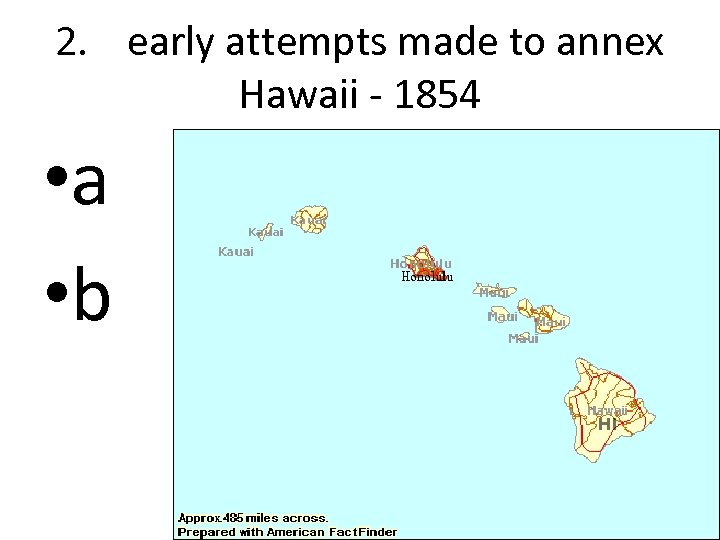 2. early attempts made to annex Hawaii - 1854 • a • b
 3. foreign policy in Central America • a Columbia • b. Nicaragua • c. Clayton-Bulwer Treaty
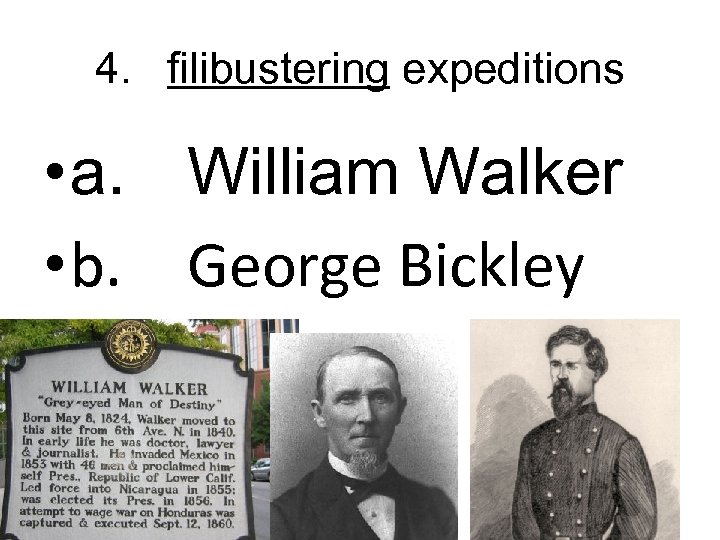 4. filibustering expeditions • a. William Walker • b. George Bickley
 5. most important filibustering attempts involved Cuba • • a b c d 1854 - The Ostend Manifesto – 1 – 2 – 3
 VII. “Young America” - America in the 1850’s A. election of 1852 B. the demise of the Whig party C. expansionism after the Mexican War D. all attempts at expansion tend to be viewed E. further emotionalization F. transcontinental railroad G. Kansas-Nebraska Bill H. provisions of the K-N Act I. what goes wrong with the K-N Act? J. formation of the Republican party K. 1854 - third party emerges
 D. all attempts at expansion tend to be viewed by the North as Southern attempts to extend slavery and upset the political balance (control by the North). • Probably most were personal filibustering expeditions, though probably not all were.
 VII. “Young America” - America in the 1850’s A. election of 1852 B. the demise of the Whig party C. expansionism after the Mexican War D. all attempts at expansion tend to be viewed E. further emotionalization F. transcontinental railroad G. Kansas-Nebraska Bill H. provisions of the K-N Act I. what goes wrong with the K-N Act? J. formation of the Republican party K. 1854 - third party emerges
 E. further emotionalization of the issues with the publishing of Uncle Tom’s Cabin 1852 • 1. Harriet Beecher Stowe • 2. sells more than 300, 000 copies
 VII. “Young America” - America in the 1850’s A. election of 1852 B. the demise of the Whig party C. expansionism after the Mexican War D. all attempts at expansion tend to be viewed E. further emotionalization F. transcontinental railroad G. Kansas-Nebraska Bill H. provisions of the K-N Act I. what goes wrong with the K-N Act? J. formation of the Republican party K. 1854 - third party emerges
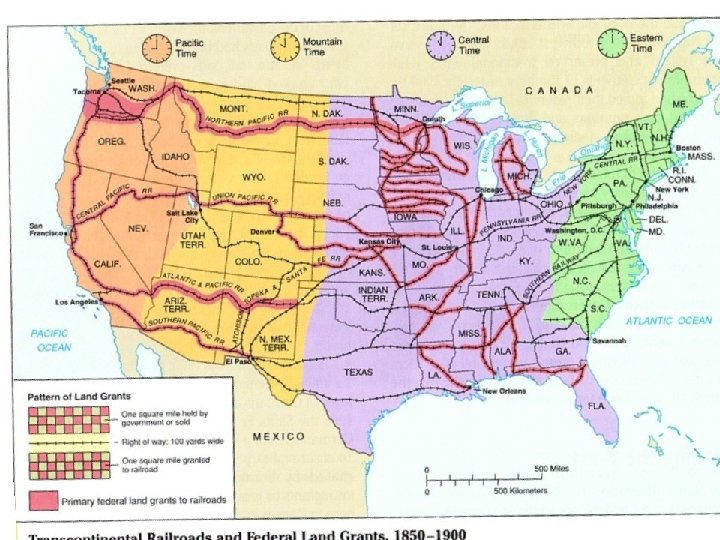
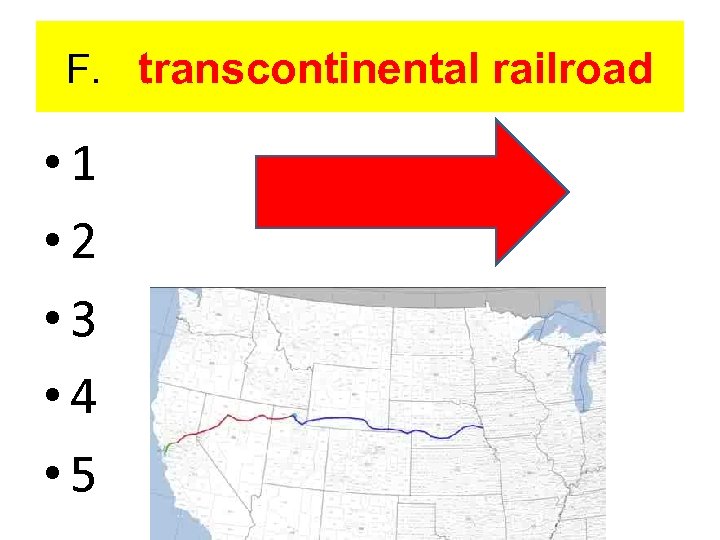 F. transcontinental railroad • 1 • 2 • 3 • 4 • 5
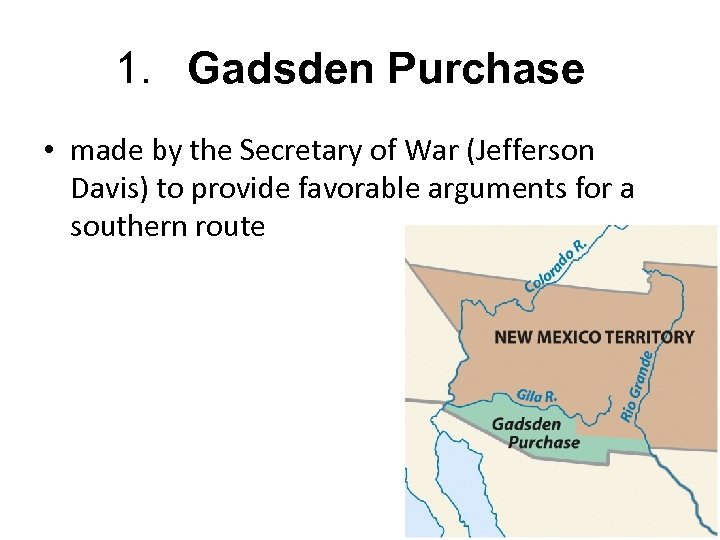 1. Gadsden Purchase • made by the Secretary of War (Jefferson Davis) to provide favorable arguments for a southern route
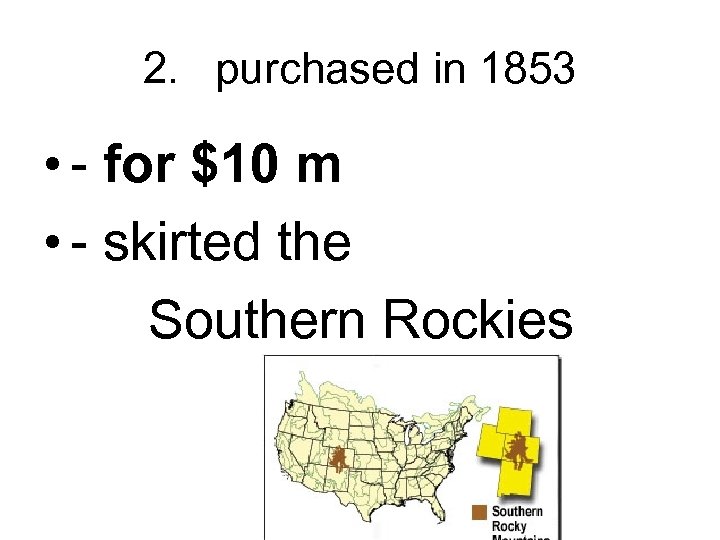 2. purchased in 1853 • - for $10 m • - skirted the Southern Rockies
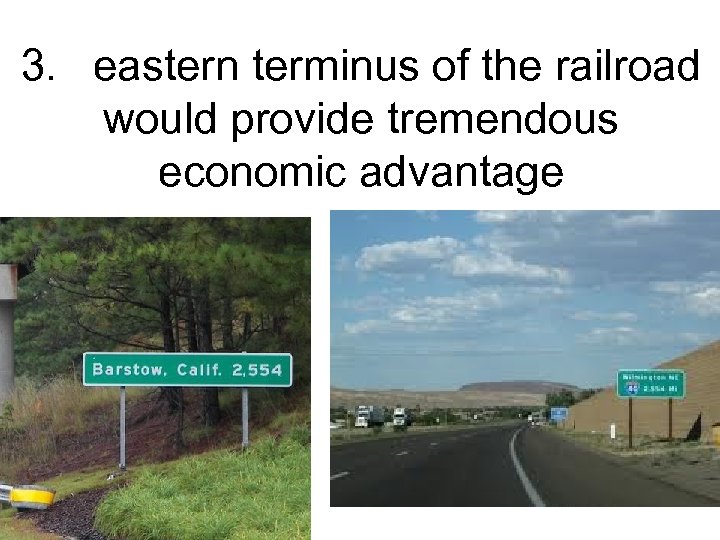 3. eastern terminus of the railroad would provide tremendous economic advantage
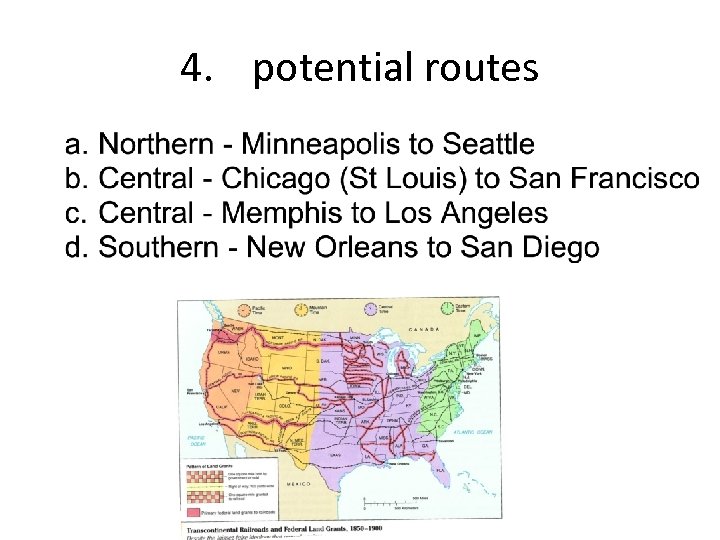 4. potential routes
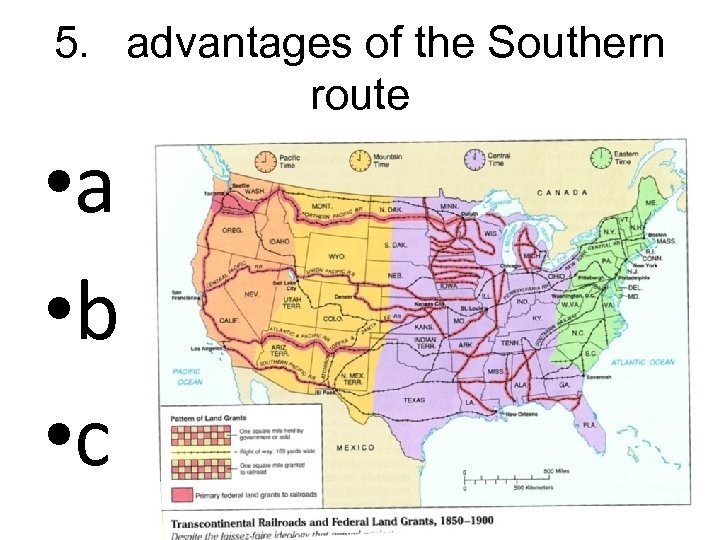 5. advantages of the Southern route • a • b • c
 VII. “Young America” - America in the 1850’s A. election of 1852 B. the demise of the Whig party C. expansionism after the Mexican War D. all attempts at expansion tend to be viewed E. further emotionalization F. transcontinental railroad G. Kansas-Nebraska Bill H. provisions of the K-N Act I. what goes wrong with the K-N Act? J. formation of the Republican party K. 1854 - third party emerges
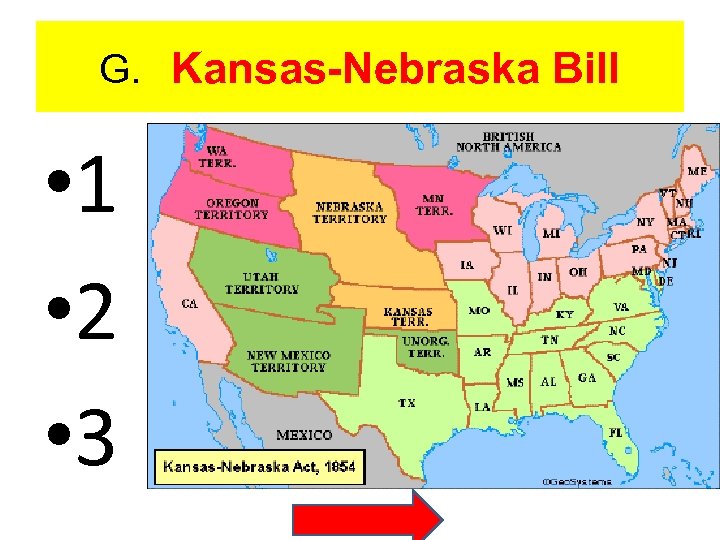 G. Kansas-Nebraska Bill • 1 • 2 • 3
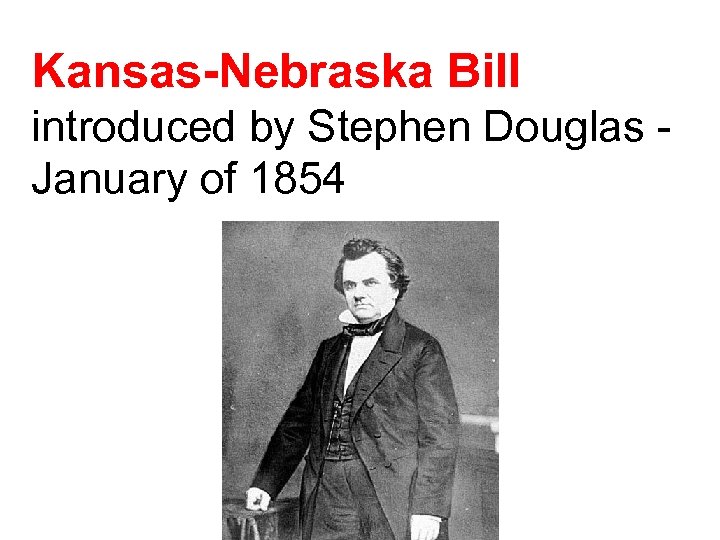 Kansas-Nebraska Bill introduced by Stephen Douglas - January of 1854
 1. personal motivation (Senator from Illinois) • a • b • c. national political stake - eying the 1856 Presidential nomination – 1. could gain Southern support by introducing popular sovereignty in K-N – 2. could gain Northern support through eastern terminus at St. Louis and Chicago
 2. organization had been attempted earlier but had been voted down by the South WHY?
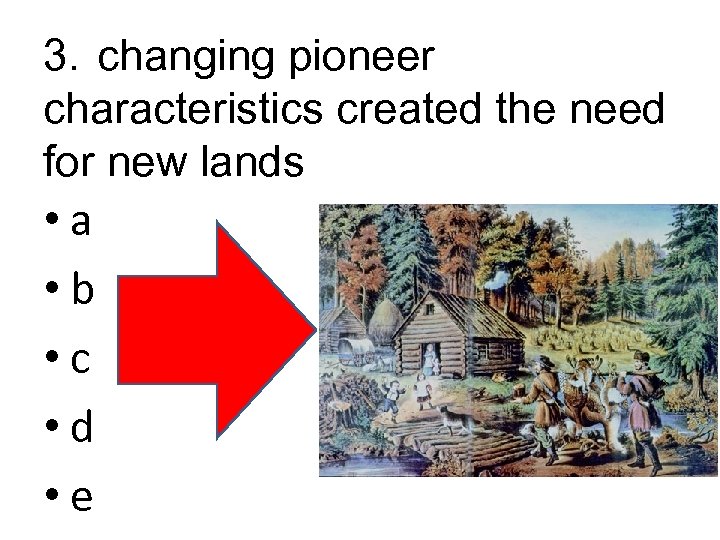 3. changing pioneer characteristics created the need for new lands • a • b • c • d • e
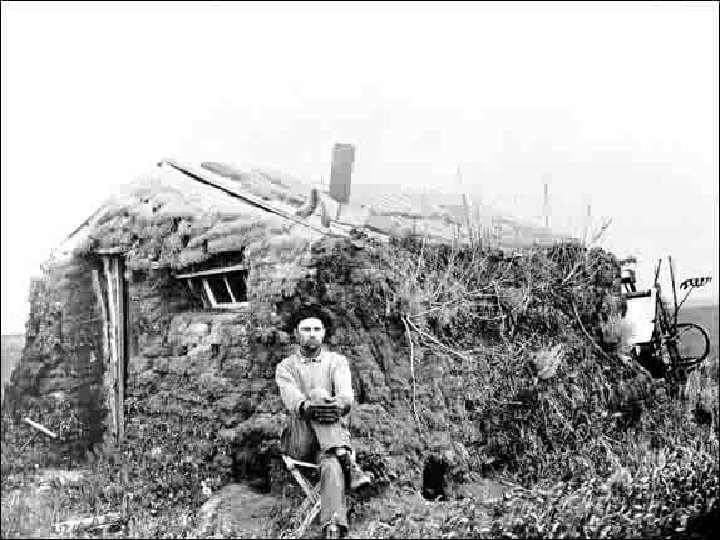
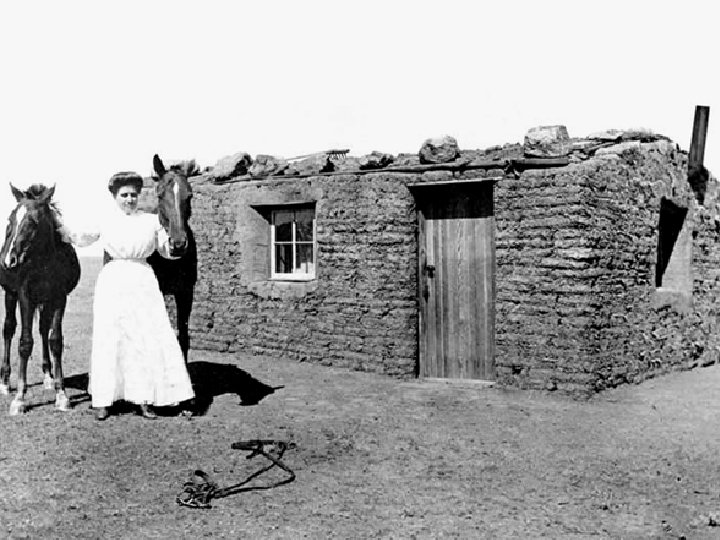
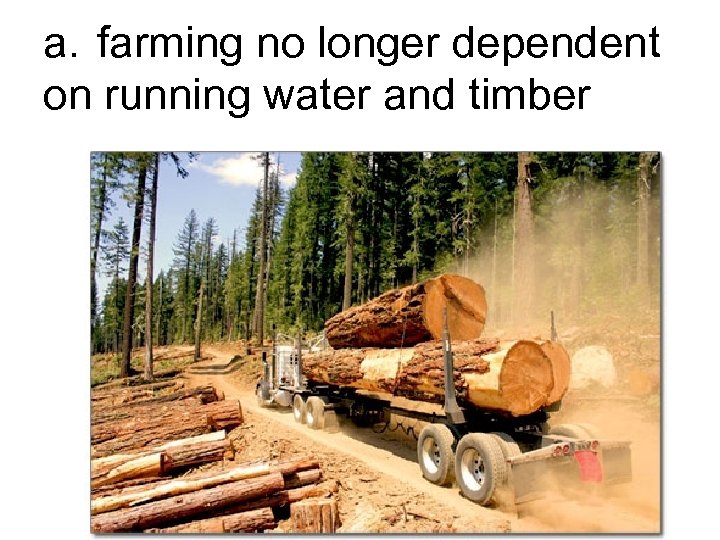 a. farming no longer dependent on running water and timber
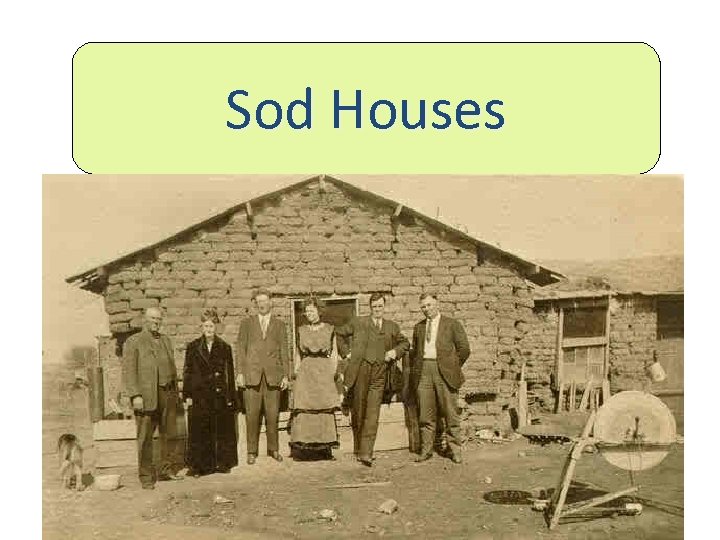 Sod Houses
 b. relative scarcity of eastern lands
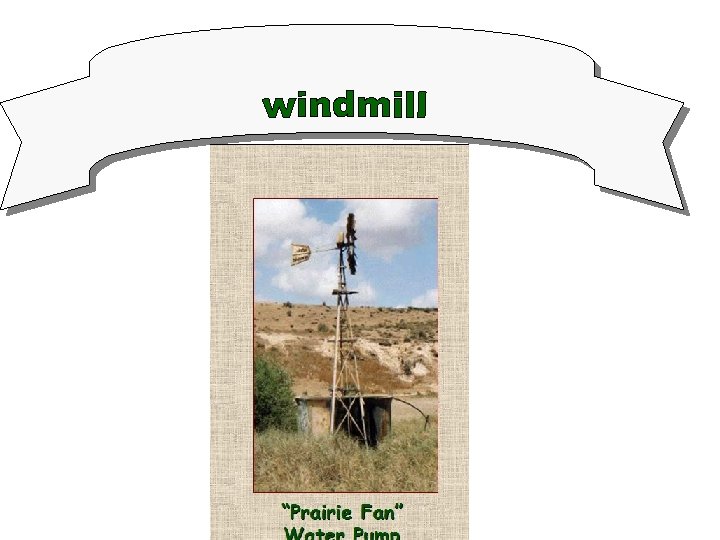
 c. technological improvements made farming the Great Plains profitable • reaper • steel plow • steel barbed wire • prairie fan
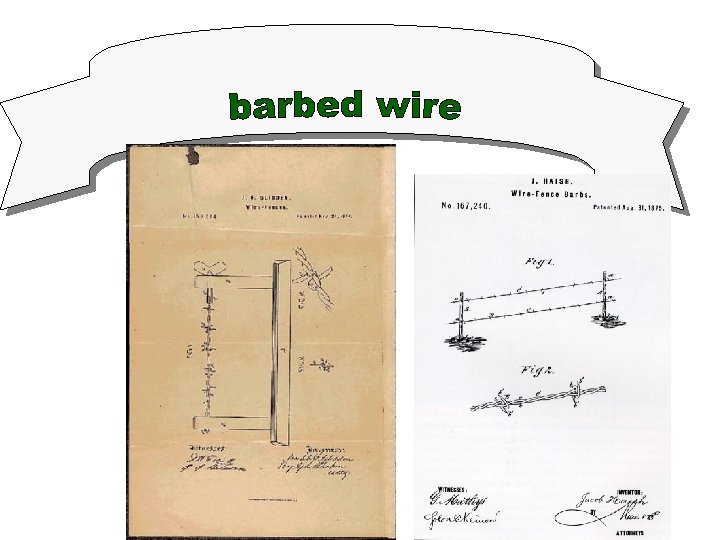
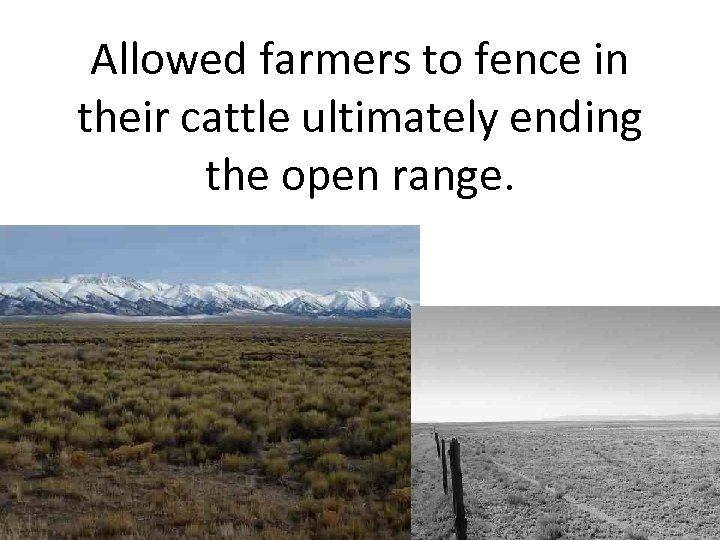 Allowed farmers to fence in their cattle ultimately ending the open range.
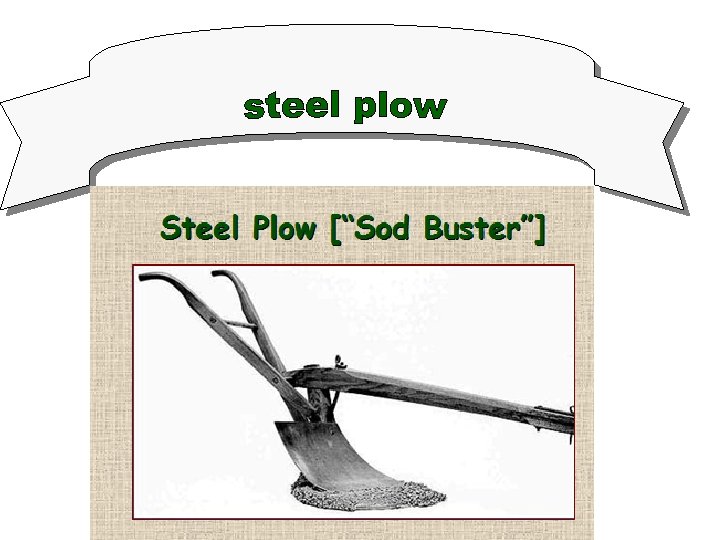
 Invented by John Deere
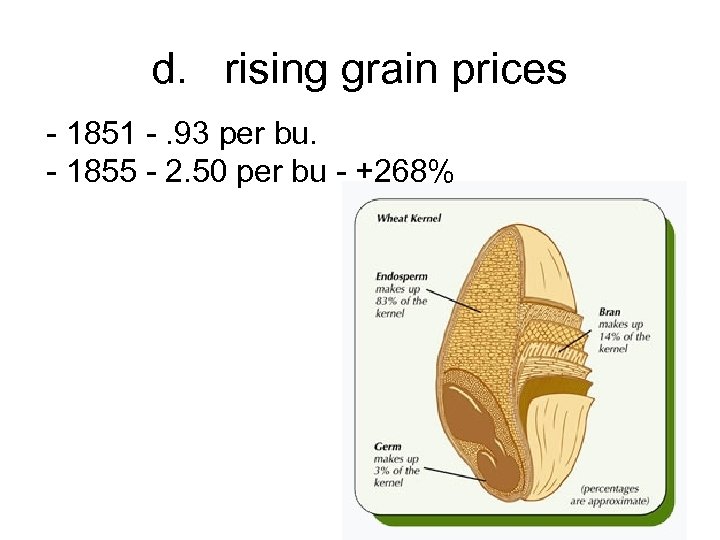 d. rising grain prices - 1851 -. 93 per bu. - 1855 - 2. 50 per bu - +268%
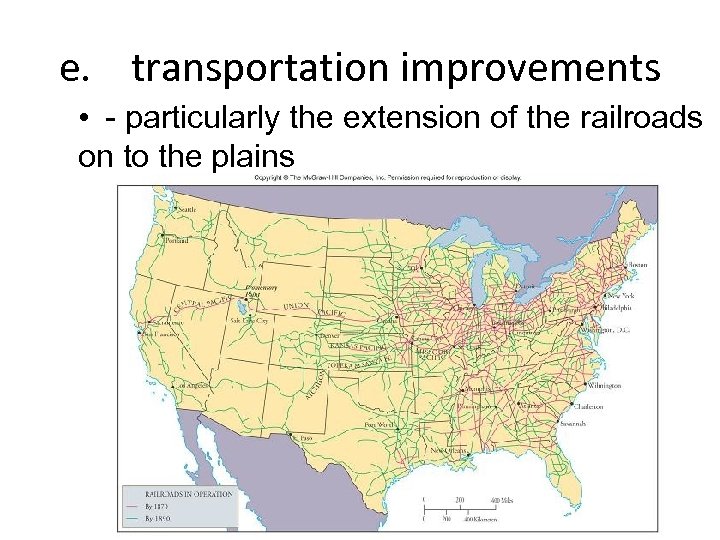 e. transportation improvements • - particularly the extension of the railroads on to the plains
 VII. “Young America” - America in the 1850’s A. election of 1852 B. the demise of the Whig party C. expansionism after the Mexican War D. all attempts at expansion tend to be viewed E. further emotionalization F. transcontinental railroad G. Kansas-Nebraska Bill H. provisions of the K-N Act I. what goes wrong with the K-N Act? J. formation of the Republican party K. 1854 - third party emerges
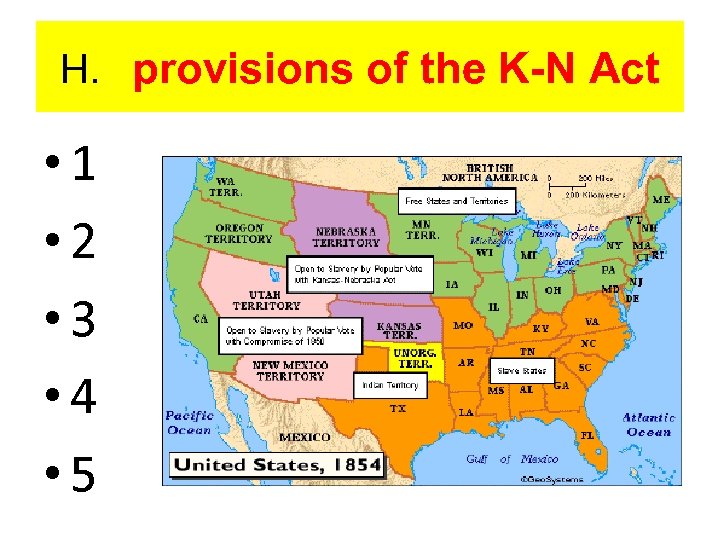 H. provisions of the K-N Act • 1 • 2 • 3 • 4 • 5
 VII. “Young America” - America in the 1850’s A. election of 1852 B. the demise of the Whig party C. expansionism after the Mexican War D. all attempts at expansion tend to be viewed E. further emotionalization F. transcontinental railroad G. Kansas-Nebraska Bill H. provisions of the K-N Act I. what goes wrong with the K-N Act? J. formation of the Republican party K. 1854 - third party emerges
 I. what goes wrong with the K-N Act? • 1 • 2 • 3 • 4
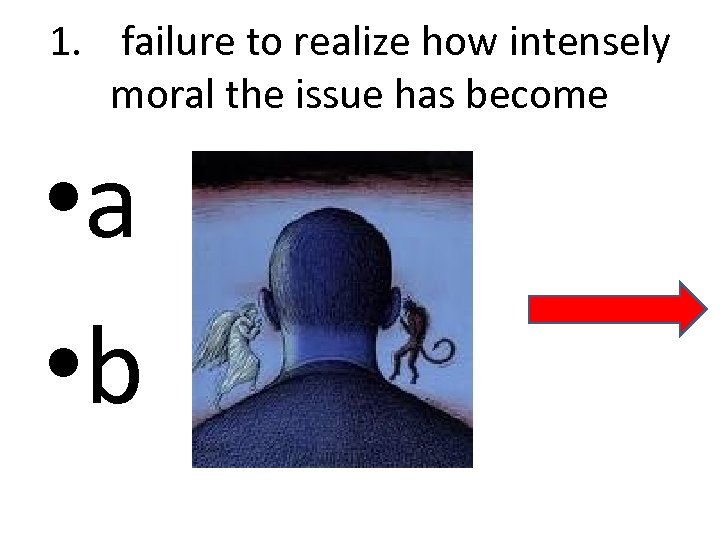 1. failure to realize how intensely moral the issue has become • a • b
 a. “The South had not asked for Kansas, did not want Kansas, but Southern honor dictated that once slavery became a possibility there, that it be successfully extended “ • - thus honor and prestige meant more than practical application
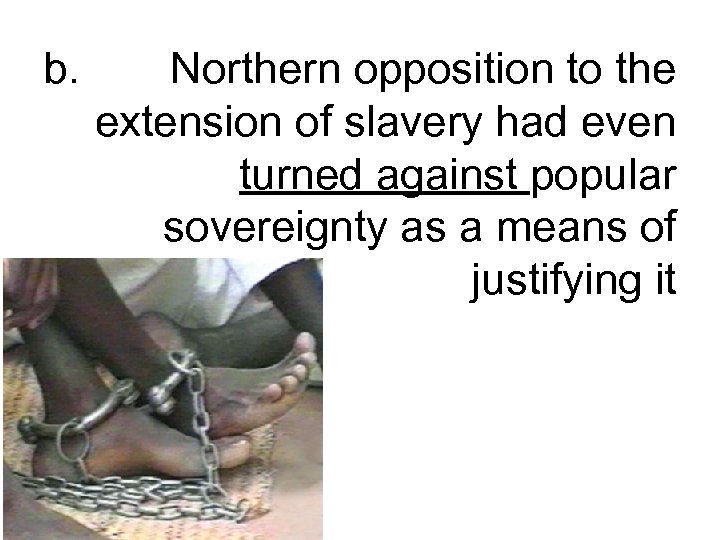 b. Northern opposition to the extension of slavery had even turned against popular sovereignty as a means of justifying it
 2. the Missouri Compromise carried the force of law in the North • - its revocation was a signal of ill will on the part of the South
 3. this led to a significant change in Northern attitudes • a • b • c
 a. - President of Brown University on the issue of slavery in 1844 • - “To terminate slavery by violence without previous moral and social preparation would be a calamity. ” - 1854 after the K-N Act - “This is just cause for the dissolution o
 a. Southerner in Boston • “If the Nebraska Bill should be passed, the Fugitive Slave Law is a dead letter throughout New England. As easily could a law prohibiting the eating of codfish and pumpkin pie be enforced. ”
 c. two days after the passage of the K-N Act a Boston mob attempted to rescue a fugitive slave being returned • - a battalion of artillery, four platoons of marines and twenty-two companies of state militia had to be called out • - cost of returning the slave $40, 000 - $100, 000
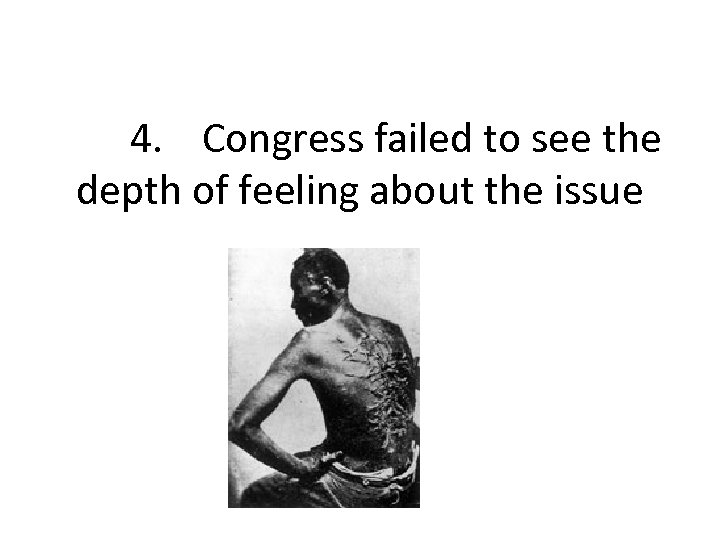 4. Congress failed to see the depth of feeling about the issue
 VII. “Young America” - America in the 1850’s A. election of 1852 B. the demise of the Whig party C. expansionism after the Mexican War D. all attempts at expansion tend to be viewed E. further emotionalization F. transcontinental railroad G. Kansas-Nebraska Bill H. provisions of the K-N Act I. what goes wrong with the K-N Act? J. formation of the Republican party K. 1854 - third party emerges
 J. formation of the 1. formed in 2 -54 Republican party 2. they immediately emerge as a second major party rather than a third party 3. from the outset, they are openly opposed to the extension of slavery 4. it is banned in many Southern states 5. has characteristics of the dreaded sectional party
 VII. “Young America” - America in the 1850’s A. election of 1852 B. the demise of the Whig party C. expansionism after the Mexican War D. all attempts at expansion tend to be viewed E. further emotionalization F. transcontinental railroad G. Kansas-Nebraska Bill H. provisions of the K-N Act I. what goes wrong with the K-N Act? J. formation of the Republican party K. 1854 - third party emerges
 K. 1854 - third party emerges - • 1 • 2 • 3 • 4 • 5 American or Know. Nothing party
 The end of Ch 18