


 Скачать презентацию 1 Even when using MAY in the request
Grammar-III Modals I.pptx
- Количество слайдов: 7
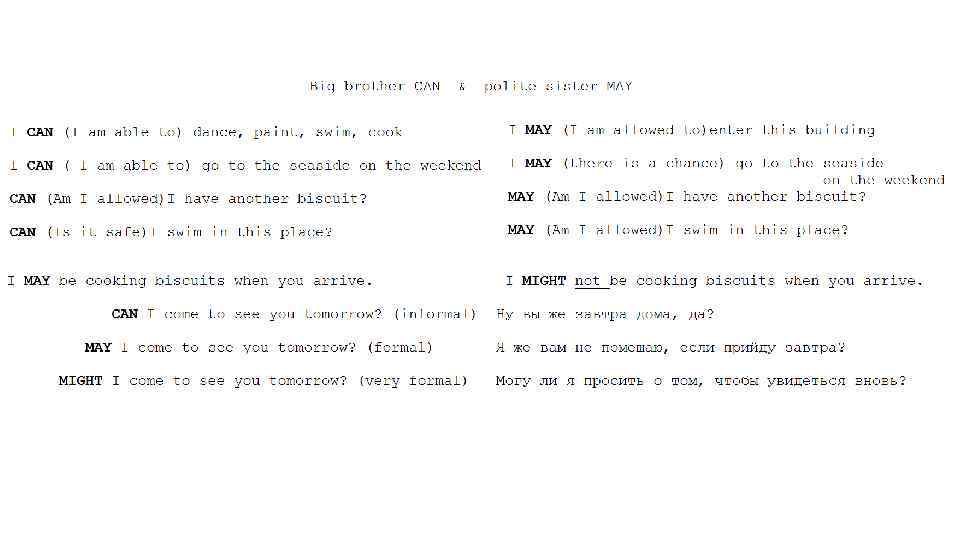
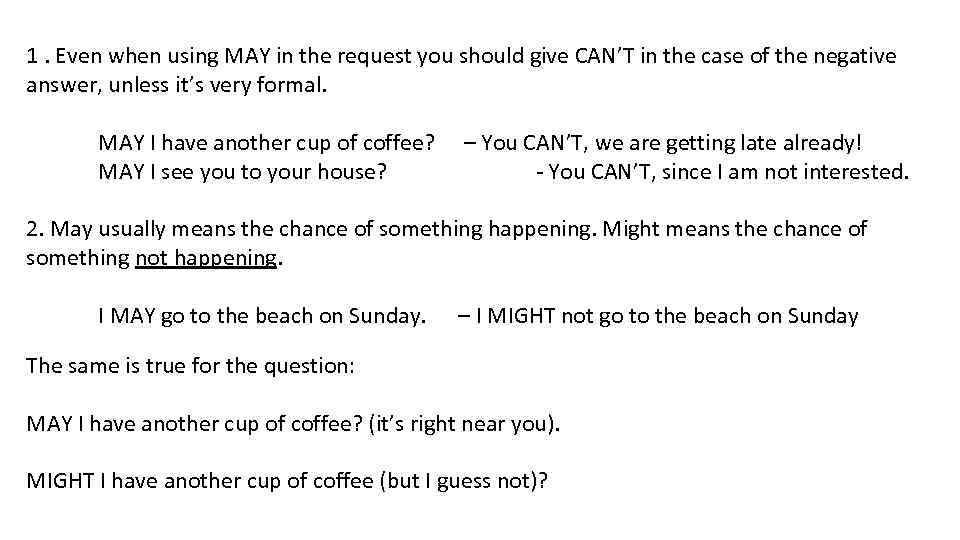 1. Even when using MAY in the request you should give CAN’T in the case of the negative answer, unless it’s very formal. MAY I have another cup of coffee? MAY I see you to your house? – You CAN’T, we are getting late already! - You CAN’T, since I am not interested. 2. May usually means the chance of something happening. Might means the chance of something not happening. I MAY go to the beach on Sunday. – I MIGHT not go to the beach on Sunday The same is true for the question: MAY I have another cup of coffee? (it’s right near you). MIGHT I have another cup of coffee (but I guess not)?
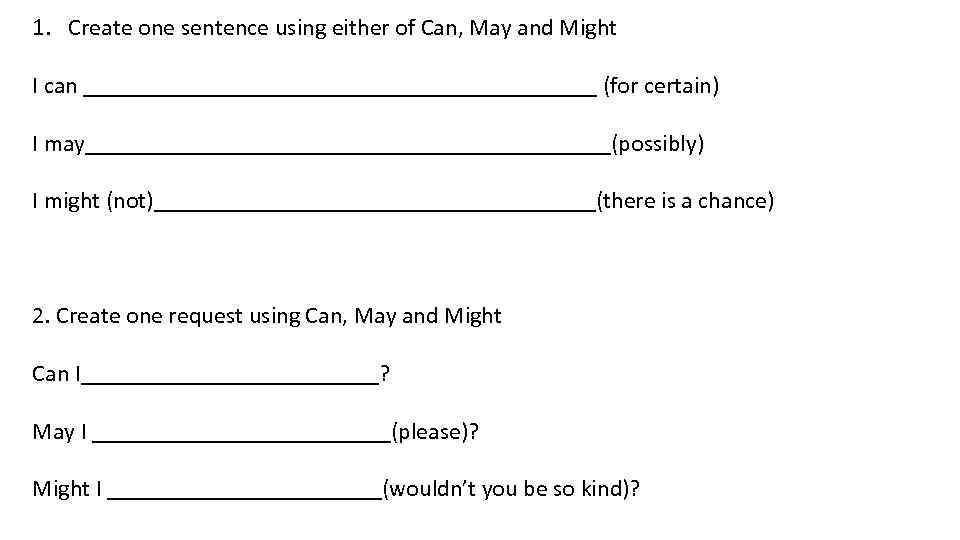 1. Create one sentence using either of Can, May and Might I can ______________________ (for certain) I may______________________(possibly) I might (not)___________________(there is a chance) 2. Create one request using Can, May and Might Can I_____________? May I _____________(please)? Might I ____________(wouldn’t you be so kind)?
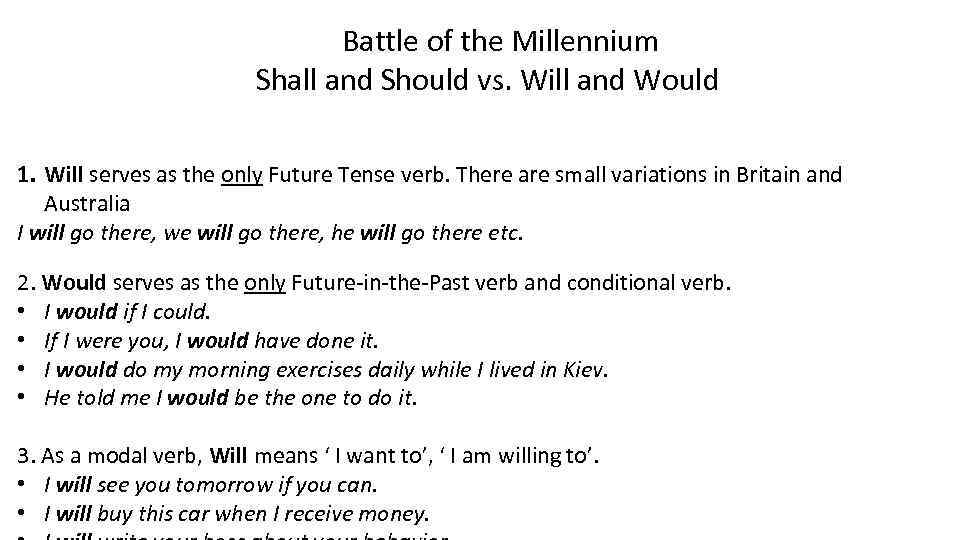 Battle of the Millennium Shall and Should vs. Will and Would 1. Will serves as the only Future Tense verb. There are small variations in Britain and Australia I will go there, we will go there, he will go there etc. 2. Would serves as the only Future-in-the-Past verb and conditional verb. • I would if I could. • If I were you, I would have done it. • I would do my morning exercises daily while I lived in Kiev. • He told me I would be the one to do it. 3. As a modal verb, Will means ‘ I want to’, ‘ I am willing to’. • I will see you tomorrow if you can. • I will buy this car when I receive money.
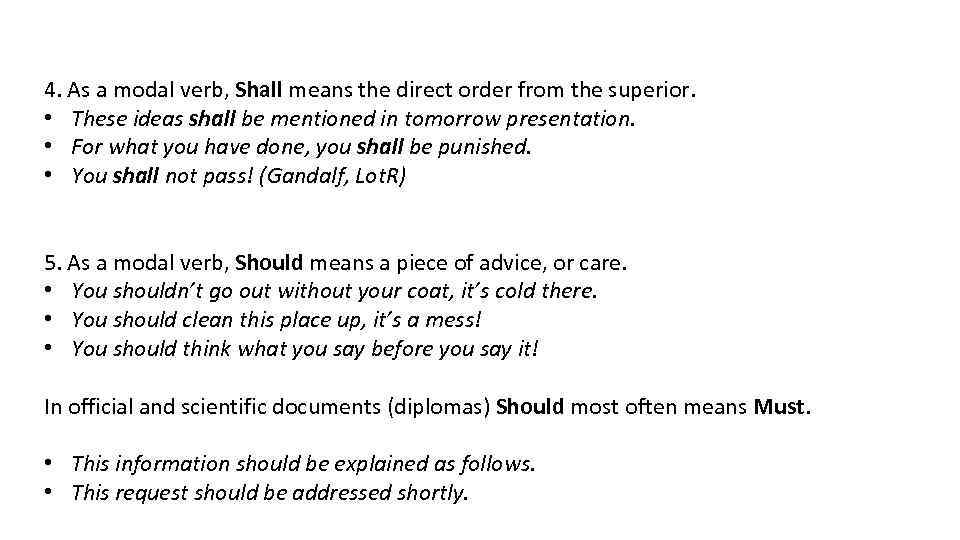 4. As a modal verb, Shall means the direct order from the superior. • These ideas shall be mentioned in tomorrow presentation. • For what you have done, you shall be punished. • You shall not pass! (Gandalf, Lot. R) 5. As a modal verb, Should means a piece of advice, or care. • You shouldn’t go out without your coat, it’s cold there. • You should clean this place up, it’s a mess! • You should think what you say before you say it! In official and scientific documents (diplomas) Should most often means Must. • This information should be explained as follows. • This request should be addressed shortly.
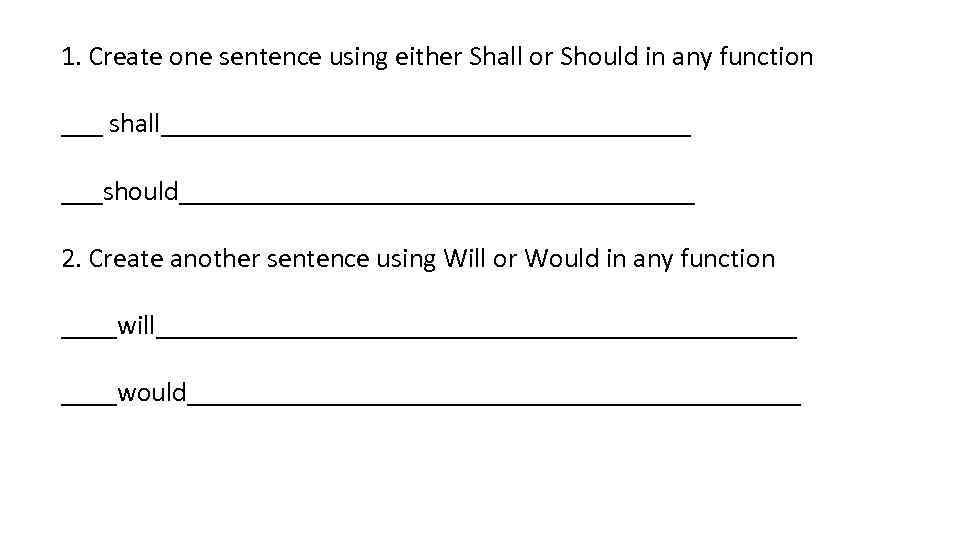 1. Create one sentence using either Shall or Should in any function ___ shall___________________ ___should___________________ 2. Create another sentence using Will or Would in any function ____will_______________________would______________________