 Скачать презентацию 1 Europe as a linguistic area Sprachbund
214471a08f9bb4802d21c0822f21f06f.ppt
- Количество слайдов: 64



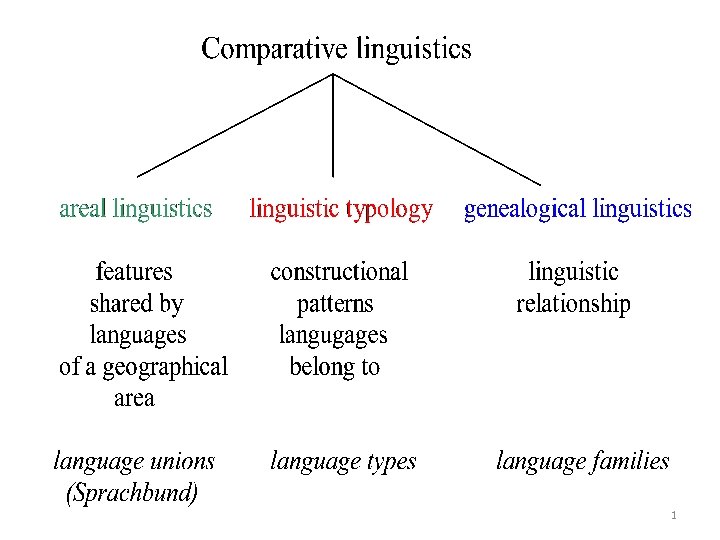
1
Europe as a linguistic area (Sprachbund): the Standard Average European (SAE) 2
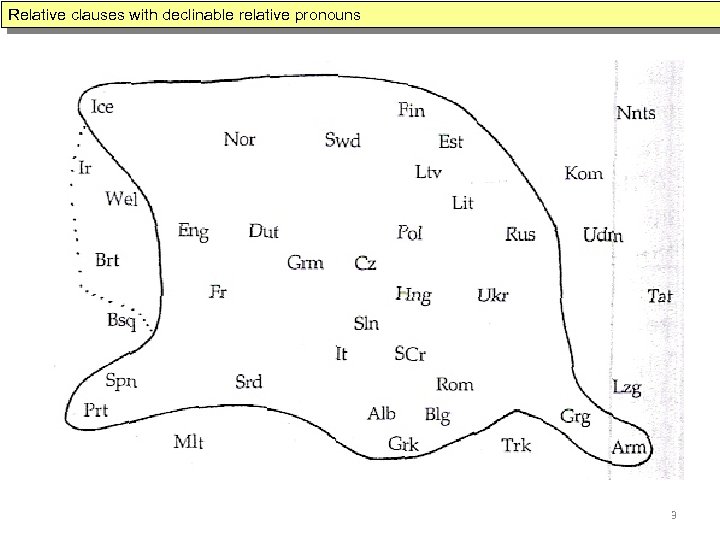
Relative clauses with declinable relative pronouns 3
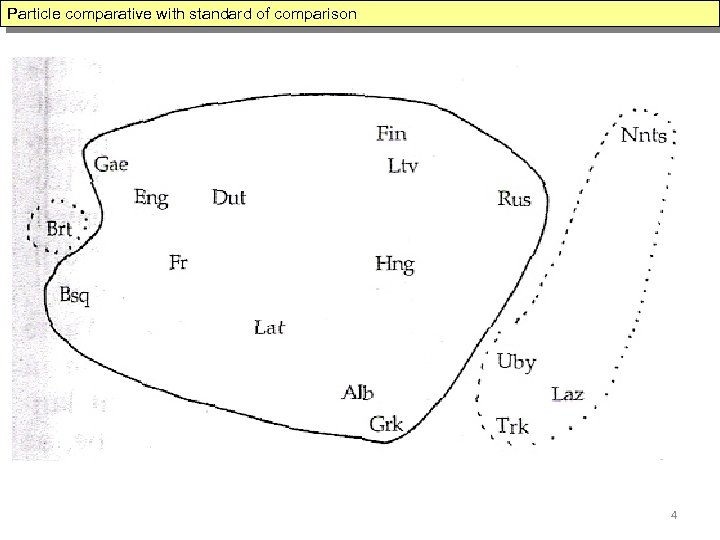
Particle comparative with standard of comparison 4
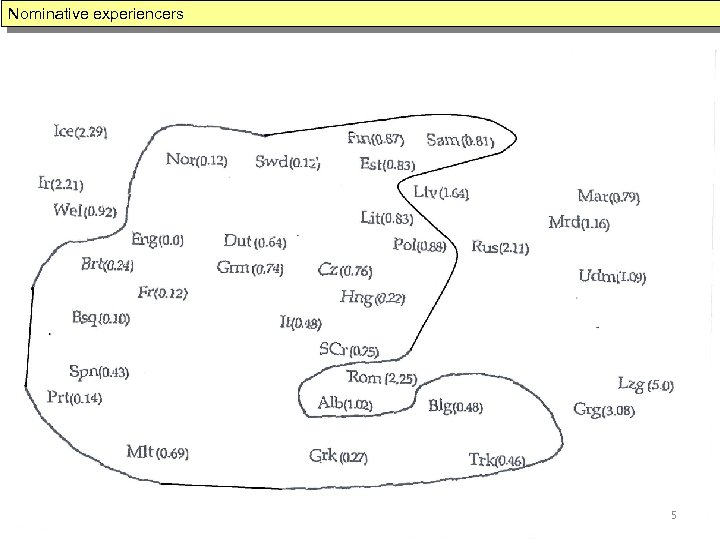
Nominative experiencers 5
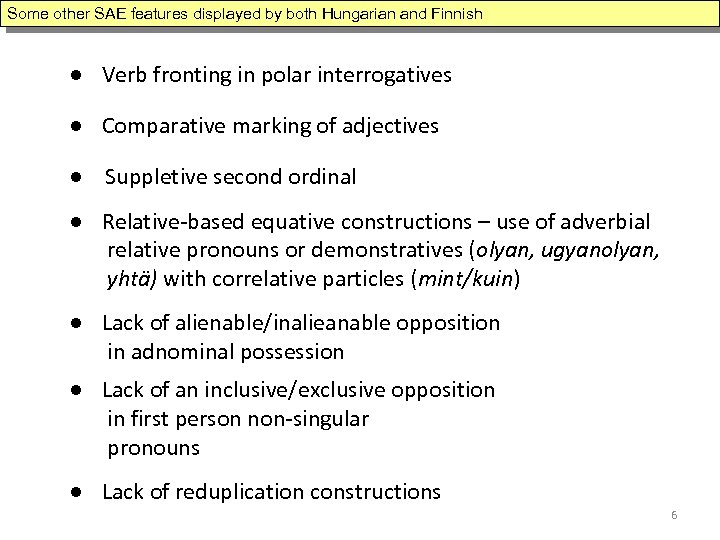
Some other SAE features displayed by both Hungarian and Finnish ● Verb fronting in polar interrogatives ● Comparative marking of adjectives ● Suppletive second ordinal ● Relative based equative constructions – use of adverbial relative pronouns or demonstratives (olyan, ugyanolyan, yhtä) with correlative particles (mint/kuin) ● Lack of alienable/inalieanable opposition in adnominal possession ● Lack of an inclusive/exclusive opposition in first person non singular pronouns ● Lack of reduplication constructions 6
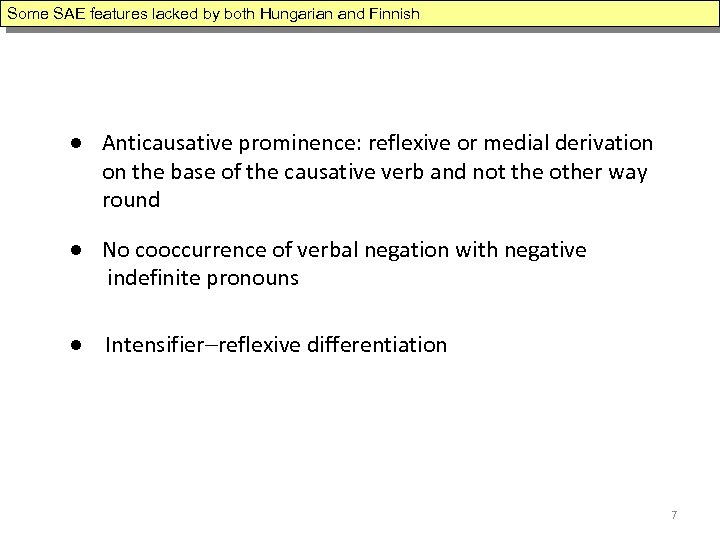
Some SAE features lacked by both Hungarian and Finnish ● Anticausative prominence: reflexive or medial derivation on the base of the causative verb and not the other way round ● No cooccurrence of verbal negation with negative indefinite pronouns ● Intensifier reflexive differentiation 7
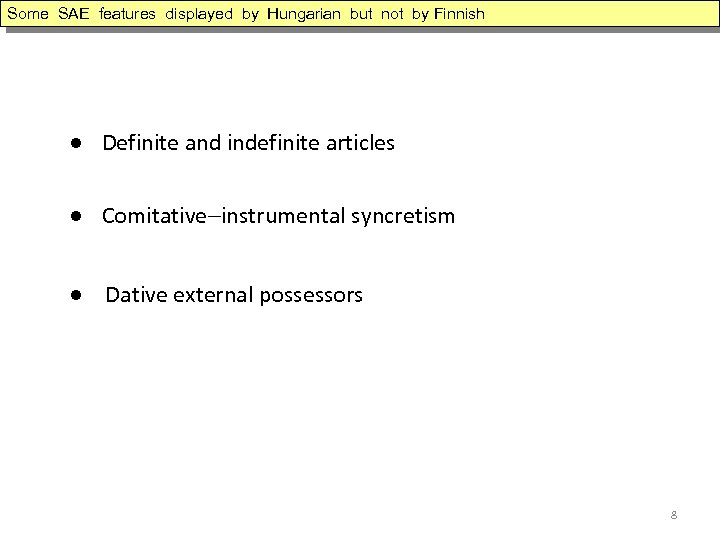
Some SAE features displayed by Hungarian but not by Finnish ● Definite and indefinite articles ● Comitative instrumental syncretism ● Dative external possessors 8
A SAE feature displayed by Finnish but not by Hungarian ● Non pro drop (strict) person marking (in 3 Sg) 9
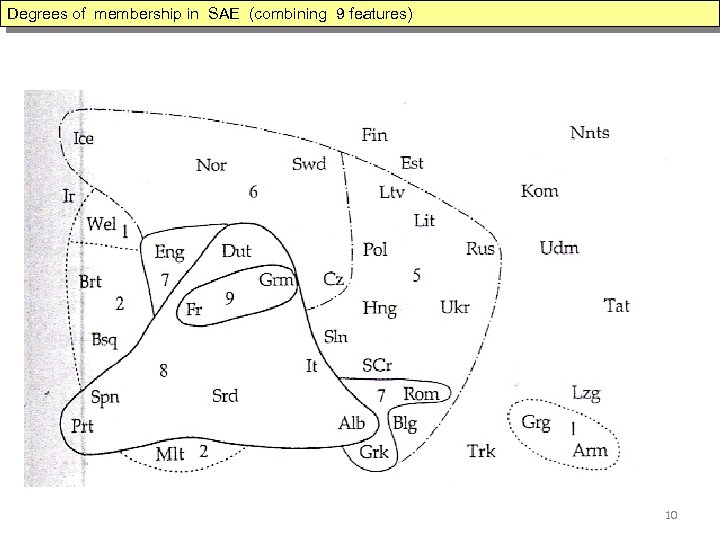
Degrees of membership in SAE (combining 9 features) 10
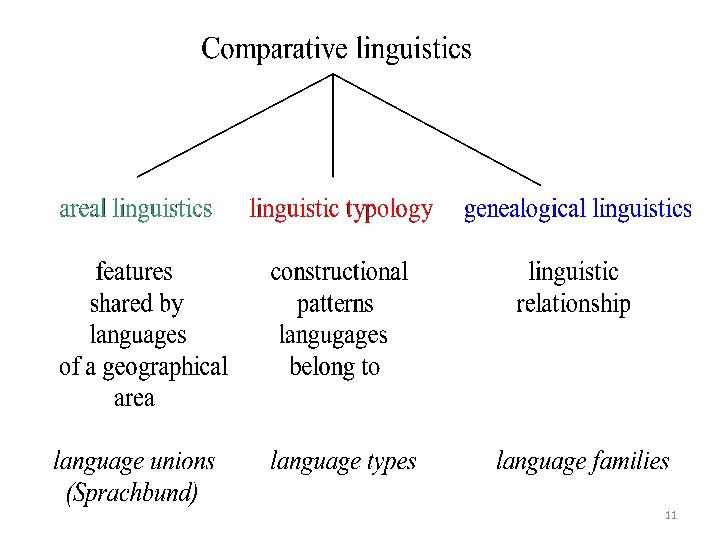
11
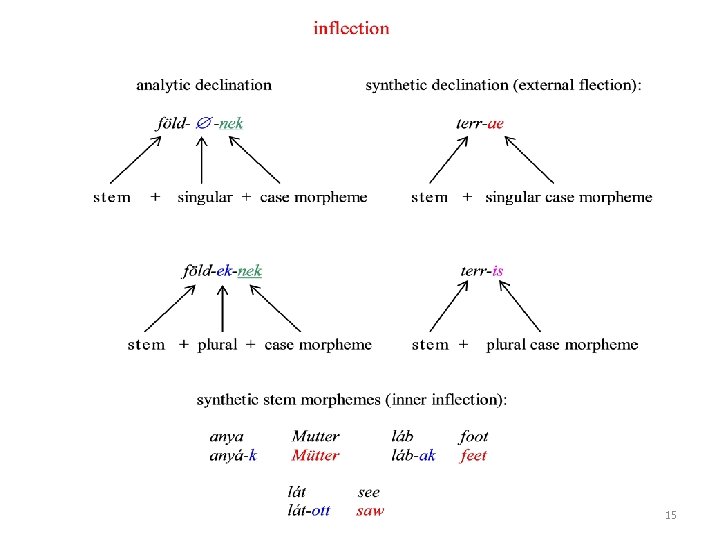
Morphological typology: (emerging: 19 th century) Ø grouping languages according to their common morphological structures Ø main point: word construction 12
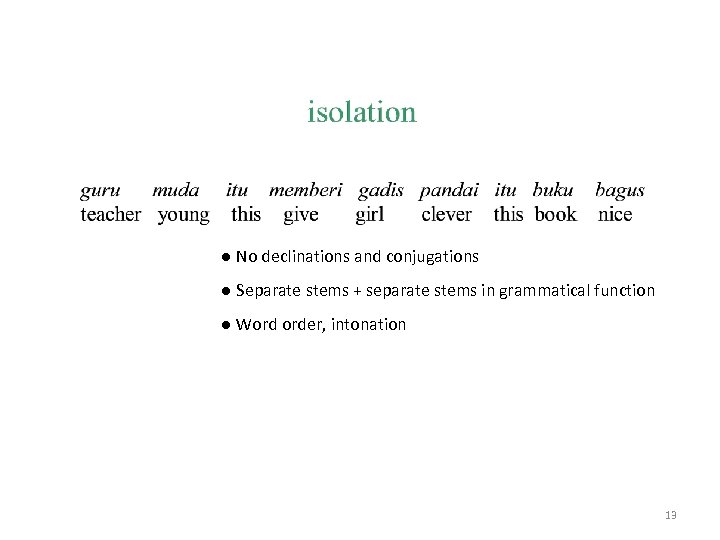
● No declinations and conjugations ● Separate stems + separate stems in grammatical function ● Word order, intonation 13
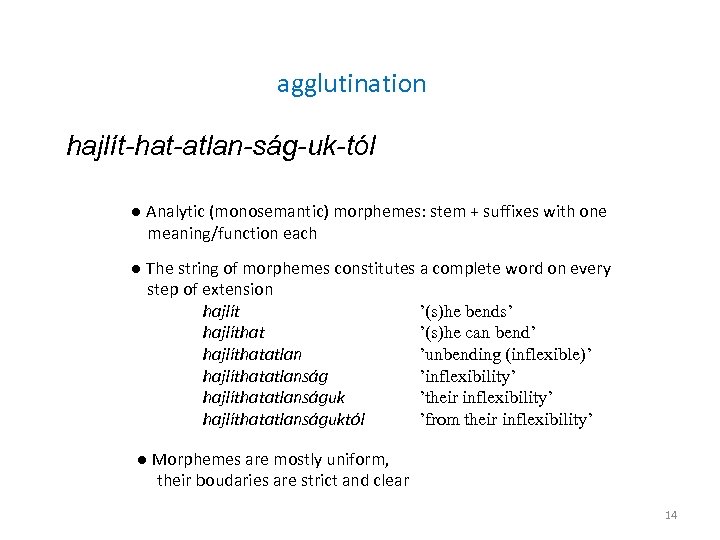
agglutination hajlít-hat-atlan-ság-uk-tól ● Analytic (monosemantic) morphemes: stem + suffixes with one meaning/function each ● The string of morphemes constitutes a complete word on every step of extension hajlít ’(s)he bends’ hajlíthat ’(s)he can bend’ hajlíthatatlan ’unbending (inflexible)’ hajlíthatatlanság ’inflexibility’ hajlíthatatlanságuk ’their inflexibility’ hajlíthatatlanságuktól ’from their inflexibility’ ● Morphemes are mostly uniform, their boudaries are strict and clear 14
15
16
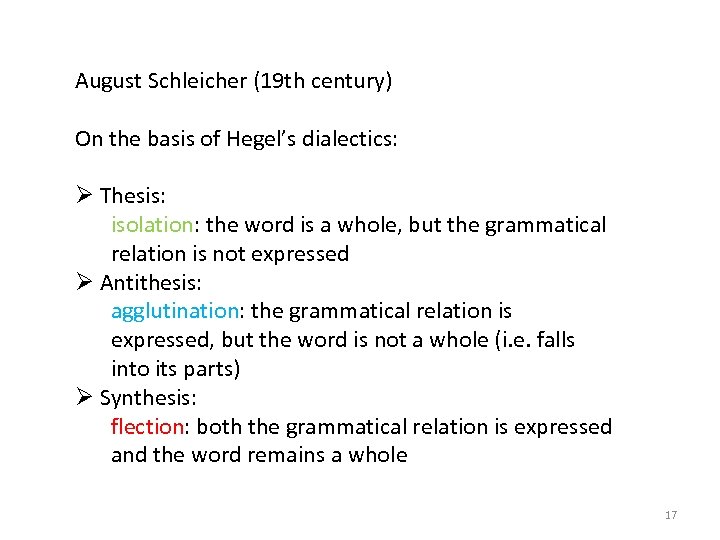
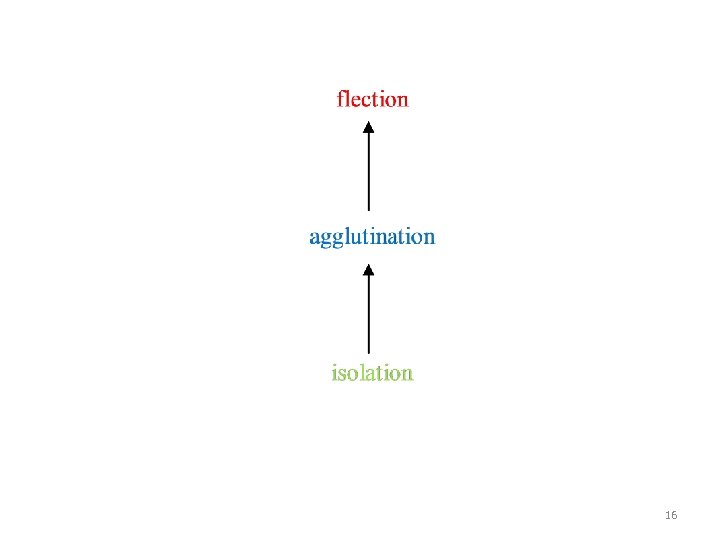
August Schleicher (19 th century) On the basis of Hegel’s dialectics: Ø Thesis: isolation: the word is a whole, but the grammatical relation is not expressed Ø Antithesis: agglutination: the grammatical relation is expressed, but the word is not a whole (i. e. falls into its parts) Ø Synthesis: flection: both the grammatical relation is expressed and the word remains a whole 17
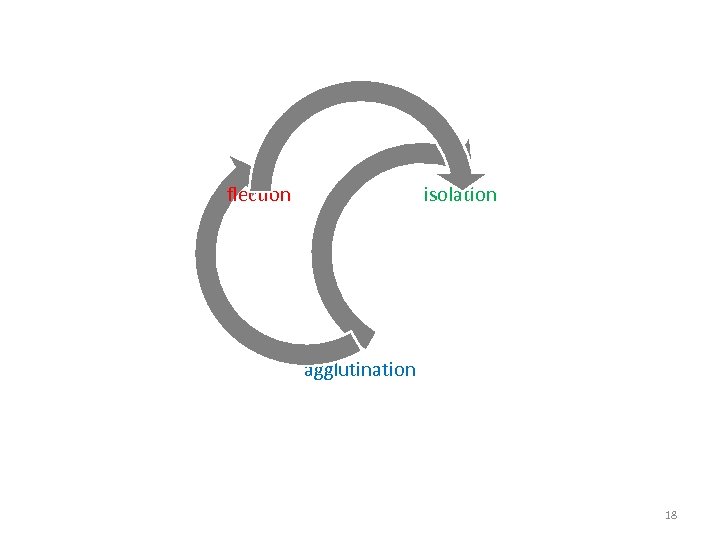
flection isolation agglutination 18
Syntactic typology (emerging: 20 th century) Ø word order types Ø „contentive” typology: system of alignment (basic sentence construction) patterns 19
Basic notions 1. Agent: the actuator or intentional instigator of the act, process or state expressed by the predicate verb Patient: the entity affected by the verbal content, i. e. the animate or inanimate being which undergoes, or is targeted by, the process in question, which comes into being by virtue of the event, or is, independently of its own acts, in the state denoted by the verbal predicate 20
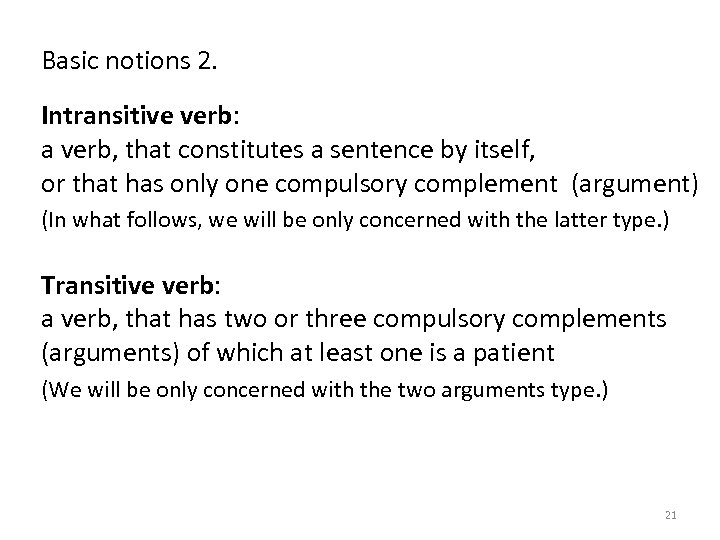
Basic notions 2. Intransitive verb: a verb, that constitutes a sentence by itself, or that has only one compulsory complement (argument) (In what follows, we will be only concerned with the latter type. ) Transitive verb: a verb, that has two or three compulsory complements (arguments) of which at least one is a patient (We will be only concerned with the two arguments type. ) 21
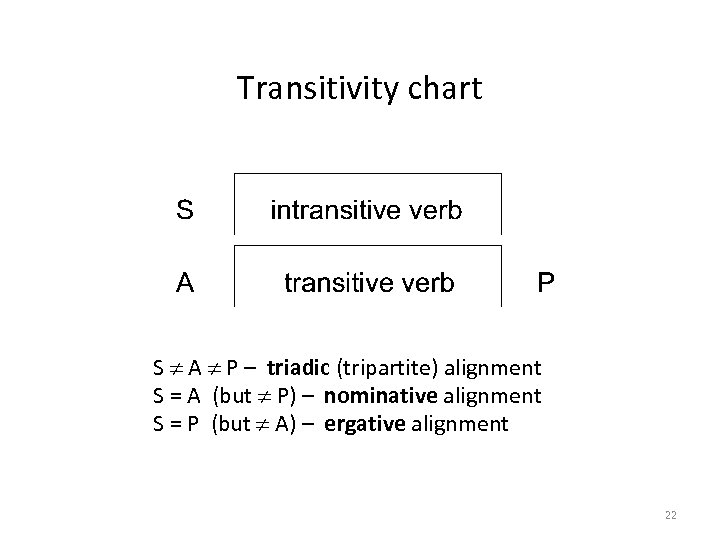
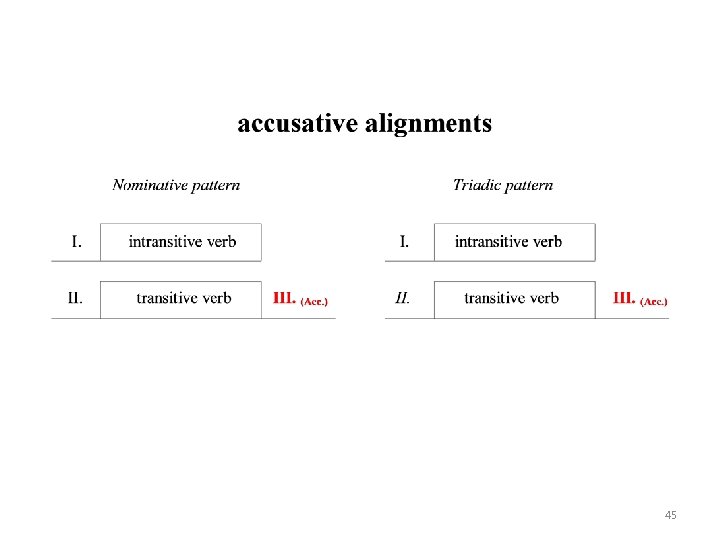
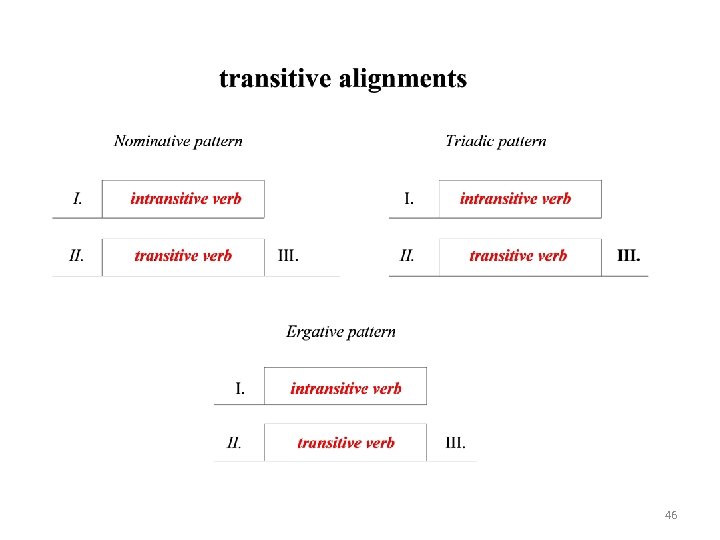
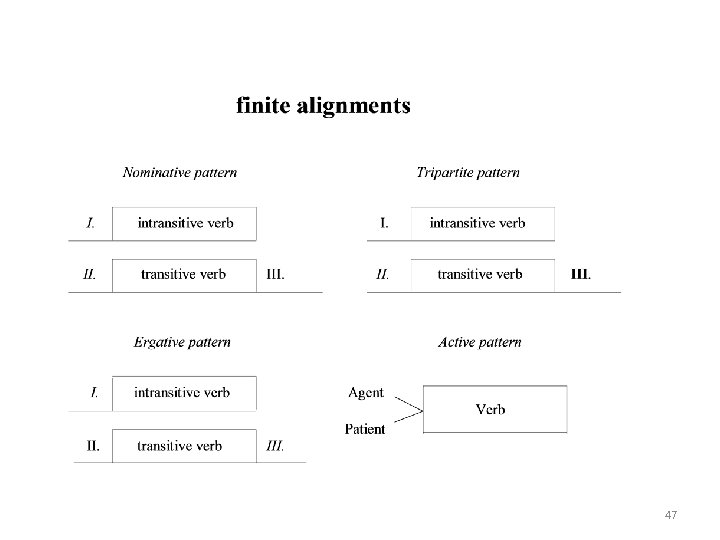
Transitivity chart S A P – triadic (tripartite) alignment S = A (but P) – nominative alignment S = P (but A) – ergative alignment 22
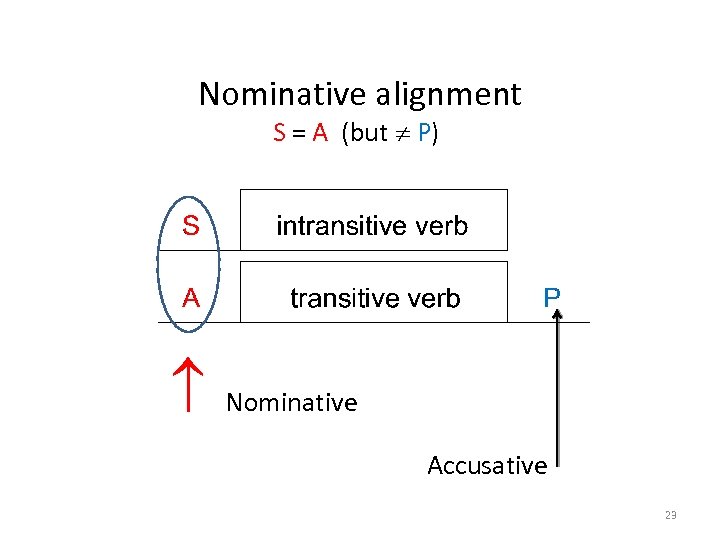
Nominative alignment S = A (but P) Nominative Accusative 23
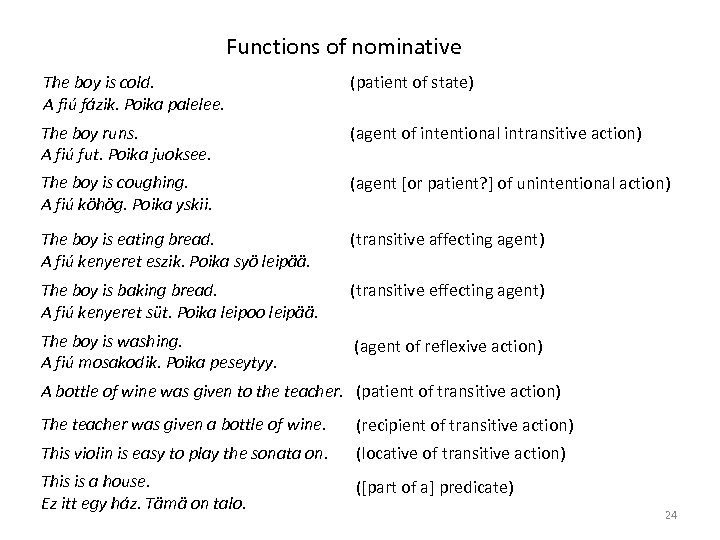
Functions of nominative The boy is cold. A fiú fázik. Poika palelee. (patient of state) The boy runs. A fiú fut. Poika juoksee. (agent of intentional intransitive action) The boy is coughing. A fiú köhög. Poika yskii. (agent [or patient? ] of unintentional action) The boy is eating bread. A fiú kenyeret eszik. Poika syö leipää. (transitive affecting agent) The boy is baking bread. A fiú kenyeret süt. Poika leipoo leipää. (transitive effecting agent) The boy is washing. A fiú mosakodik. Poika peseytyy. (agent of reflexive action) A bottle of wine was given to the teacher. (patient of transitive action) The teacher was given a bottle of wine. (recipient of transitive action) This violin is easy to play the sonata on. (locative of transitive action) This is a house. Ez itt egy ház. Tämä on talo. ([part of a] predicate) 24
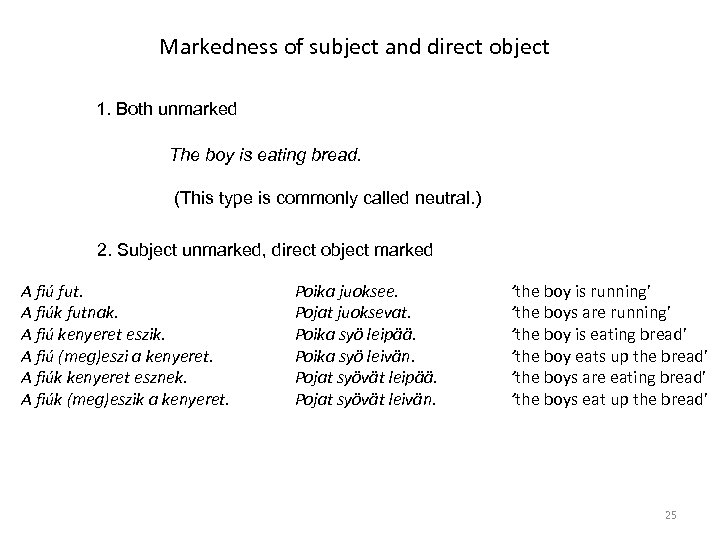
Markedness of subject and direct object 1. Both unmarked The boy is eating bread. (This type is commonly called neutral. ) 2. Subject unmarked, direct object marked A fiú fut. A fiúk futnak. A fiú kenyeret eszik. A fiú (meg)eszi a kenyeret. A fiúk kenyeret esznek. A fiúk (meg)eszik a kenyeret. Poika juoksee. Pojat juoksevat. Poika syö leipää. Poika syö leivän. Pojat syövät leipää. Pojat syövät leivän. ’the boy is running’ ’the boys are running’ ’the boy is eating bread’ ’the boy eats up the bread’ ’the boys are eating bread’ ’the boys eat up the bread’ 25
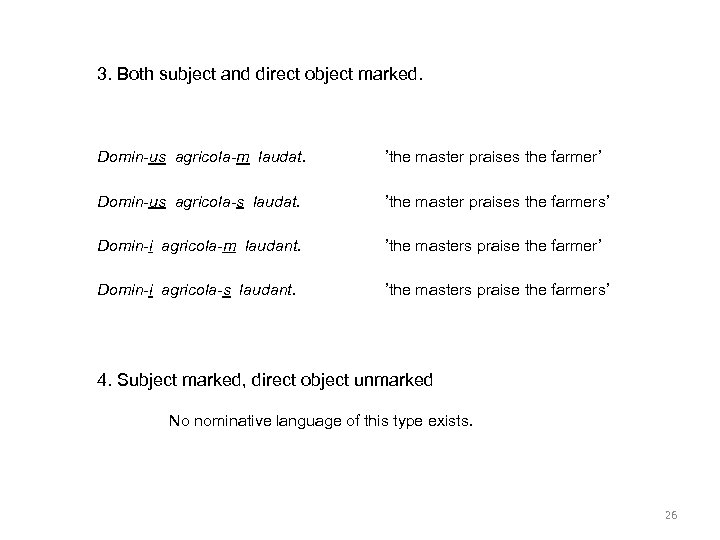
3. Both subject and direct object marked. Domin-us agricola-m laudat. ’the master praises the farmer’ Domin-us agricola-s laudat. ’the master praises the farmers’ Domin-i agricola-m laudant. ’the masters praise the farmer’ Domin-i agricola-s laudant. ’the masters praise the farmers’ 4. Subject marked, direct object unmarked No nominative language of this type exists. 26
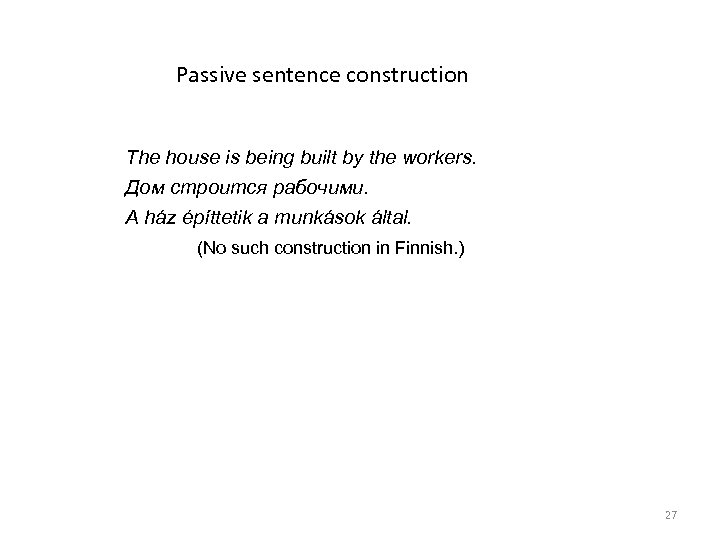
Passive sentence construction The house is being built by the workers. Дом строится рабочими. A ház építtetik a munkások által. (No such construction in Finnish. ) 27
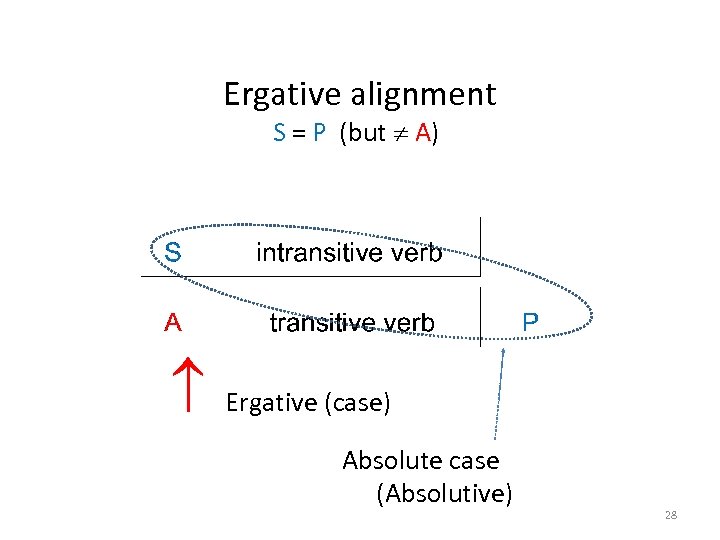
Ergative alignment S = P (but A) Ergative (case) Absolute case (Absolutive) 28
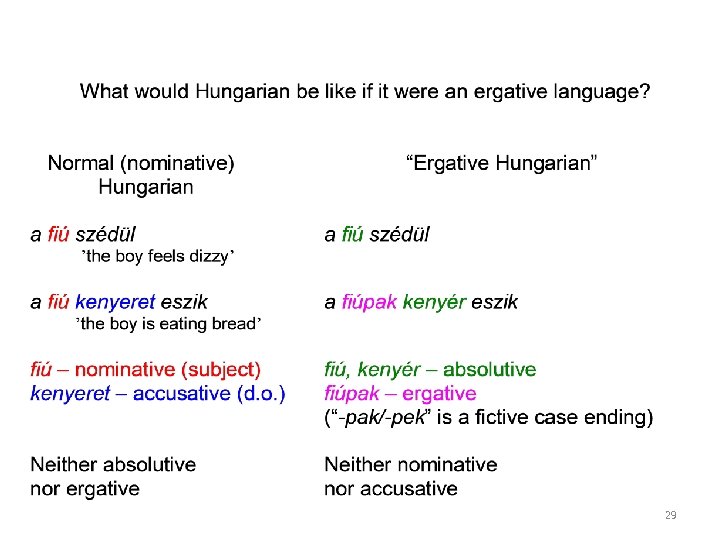
29
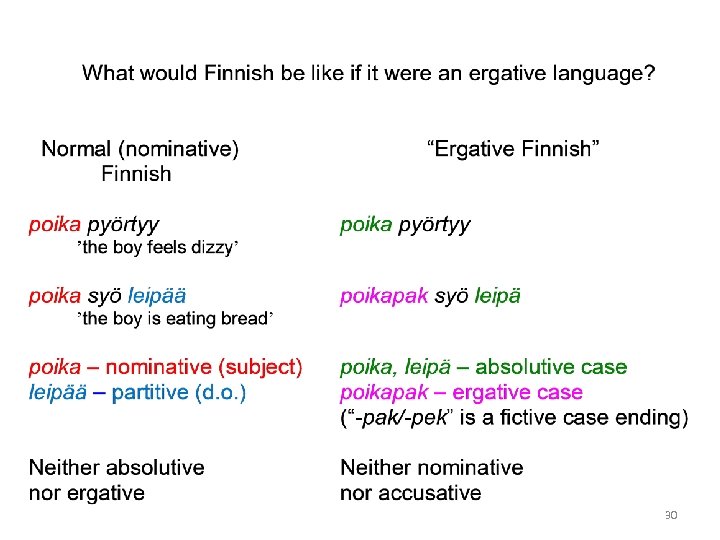
30
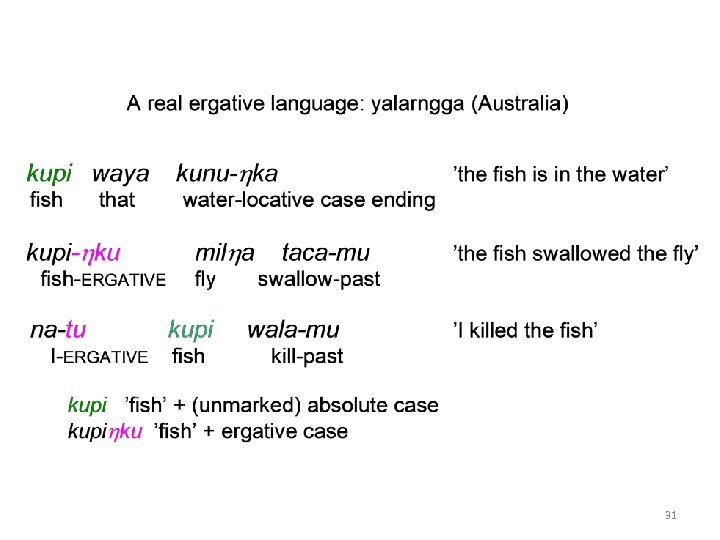
31
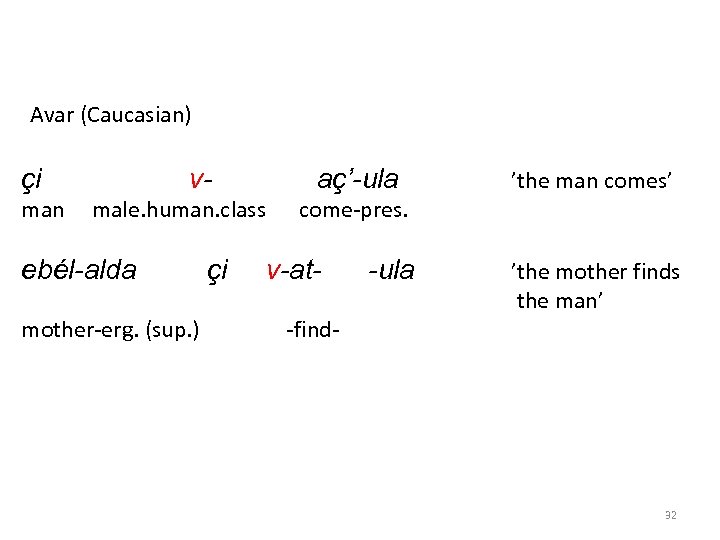
Avar (Caucasian) çi v- aç’-ula man male. human. class come pres. ebél-alda çi v-at- -ula mother erg. (sup. ) find ’the man comes’ ’the mother finds the man’ 32
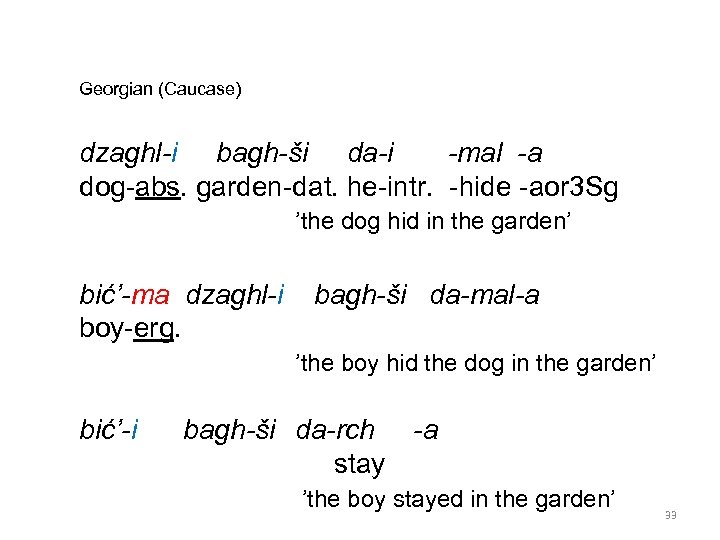
Georgian (Caucase) dzaghl-i bagh-ši da-i -mal -a dog-abs. garden-dat. he-intr. -hide -aor 3 Sg ’the dog hid in the garden’ bić’-ma dzaghl-i boy-erg. bagh-ši da-mal-a ’the boy hid the dog in the garden’ bić’-i bagh-ši da-rch -a stay ’the boy stayed in the garden’ 33
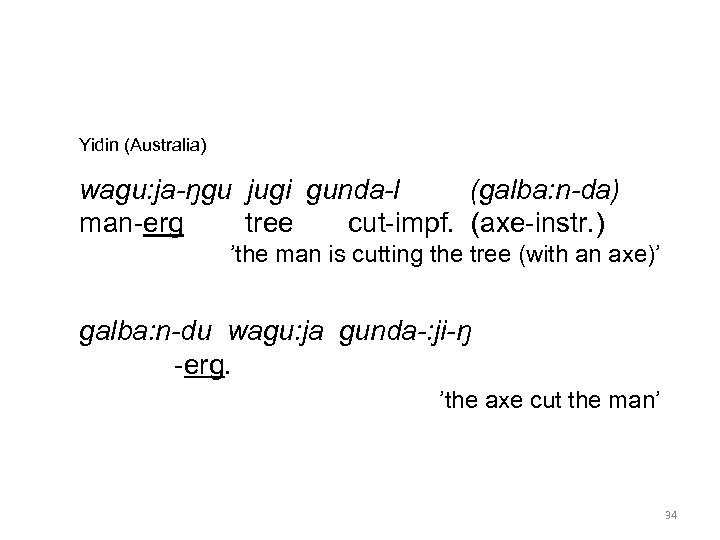
Yidin (Australia) wagu: ja-ŋgu jugi gunda-l (galba: n-da) man-erg tree cut-impf. (axe-instr. ) ’the man is cutting the tree (with an axe)’ galba: n-du wagu: ja gunda-: ji-ŋ -erg. ’the axe cut the man’ 34
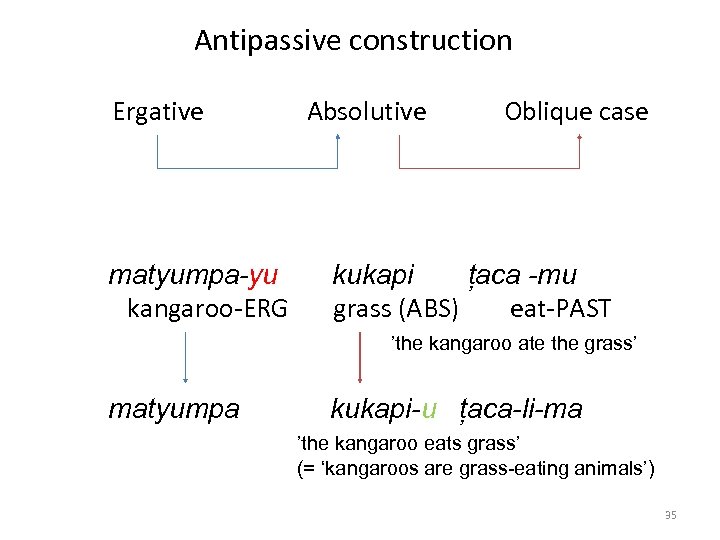
Antipassive construction Ergative Absolutive Oblique case matyumpa-yu kukapi țaca -mu kangaroo ERG grass (ABS) eat PAST ’the kangaroo ate the grass’ matyumpa kukapi-u țaca-li-ma ’the kangaroo eats grass’ (= ‘kangaroos are grass-eating animals’) 35
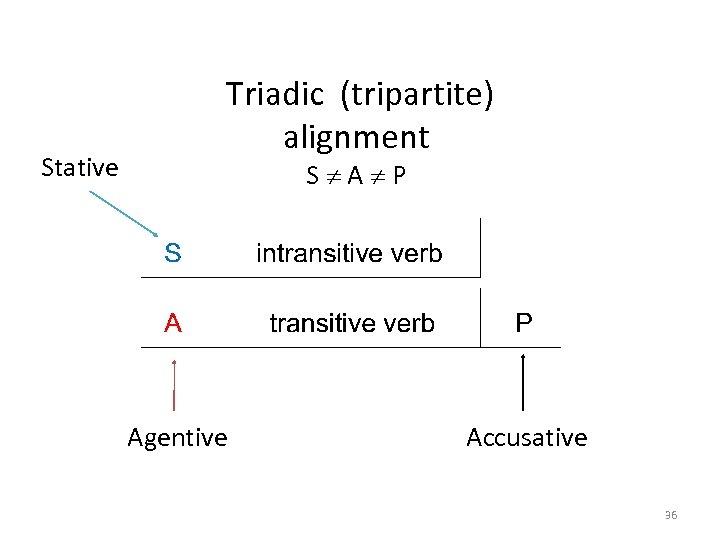
Stative Triadic (tripartite) alignment Agentive S A P Accusative 36
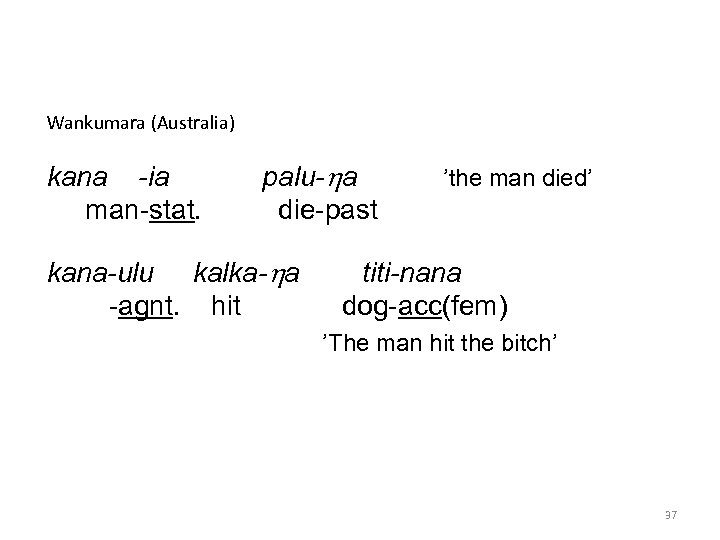
Wankumara (Australia) kana -ia man-stat. palu- a die-past kana-ulu kalka- a -agnt. hit ’the man died’ titi-nana dog-acc(fem) ’The man hit the bitch’ 37
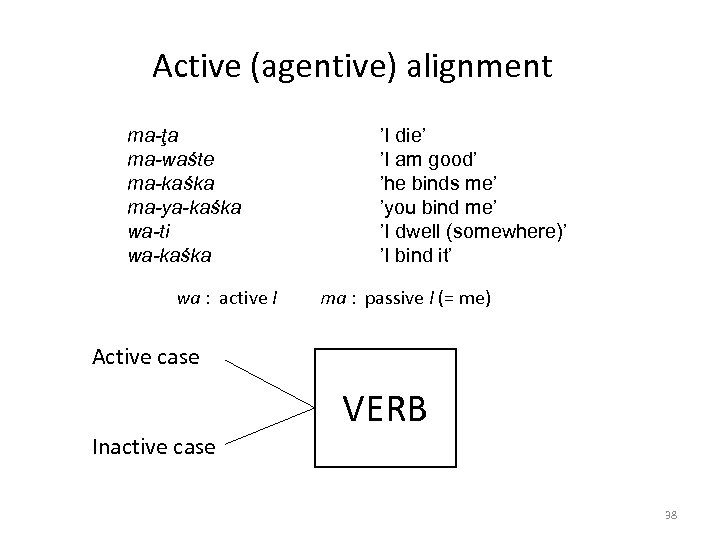
Active (agentive) alignment ma-ţa ma-waśte ma-kaśka ma-ya-kaśka wa-ti wa-kaśka wa : active I ’I die’ ’I am good’ ’he binds me’ ’you bind me’ ’I dwell (somewhere)’ ’I bind it’ ma : passive I (= me) Active case Inactive case VERB 38
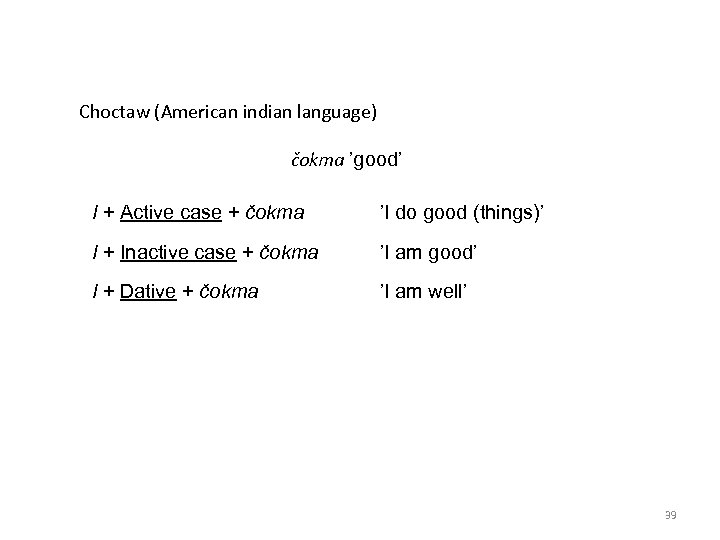
Choctaw (American indian language) čokma ’good’ I + Active case + čokma ’I do good (things)’ I + Inactive case + čokma ’I am good’ I + Dative + čokma ’I am well’ 39
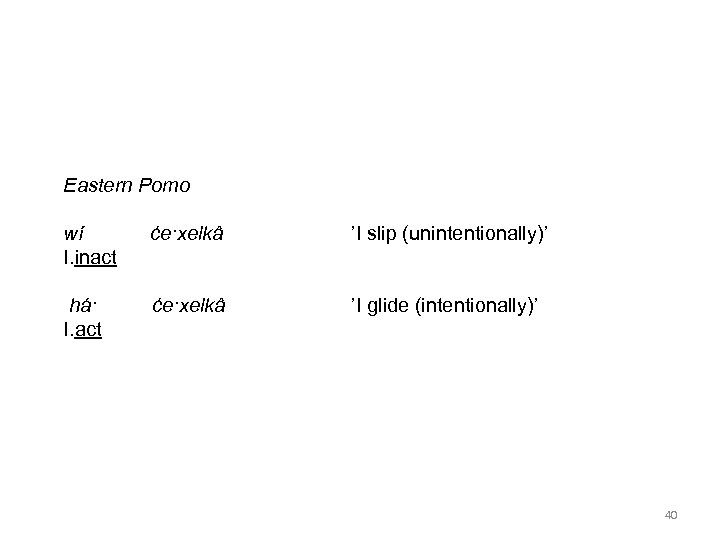
Eastern Pomo wí I. inact će·xelkâ ’I slip (unintentionally)’ há· I. act će·xelkâ ’I glide (intentionally)’ 40
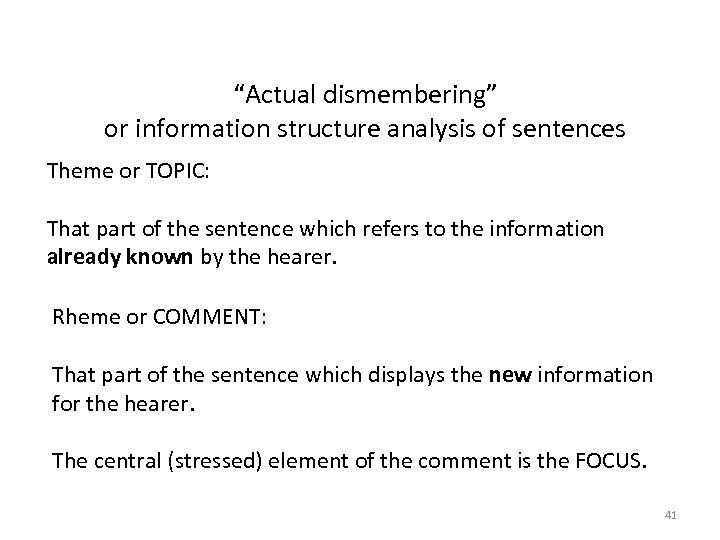
“Actual dismembering” or information structure analysis of sentences Theme or TOPIC: That part of the sentence which refers to the information already known by the hearer. Rheme or COMMENT: That part of the sentence which displays the new information for the hearer. The central (stressed) element of the comment is the FOCUS. 41
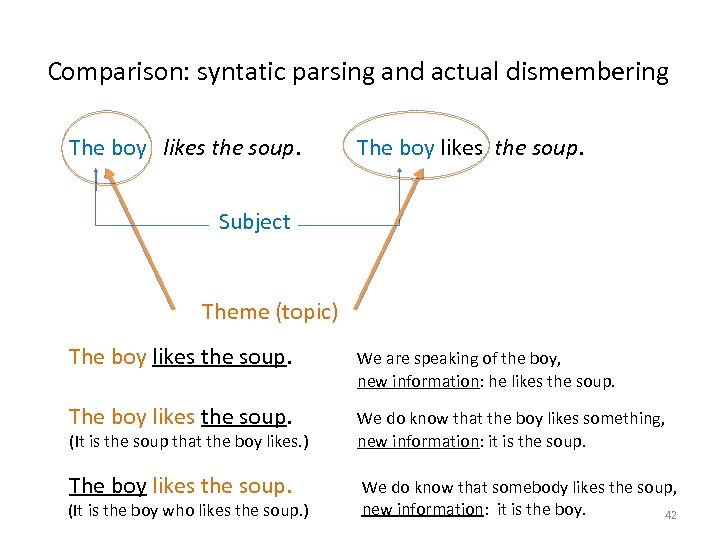
Comparison: syntatic parsing and actual dismembering The boy likes the soup. The boy likes the soup. Subject Theme (topic) The boy likes the soup. We are speaking of the boy, new information: he likes the soup. The boy likes the soup. We do know that the boy likes something, new information: it is the soup. (It is the soup that the boy likes. ) The boy likes the soup. (It is the boy who likes the soup. ) We do know that somebody likes the soup, new information: it is the boy. 42
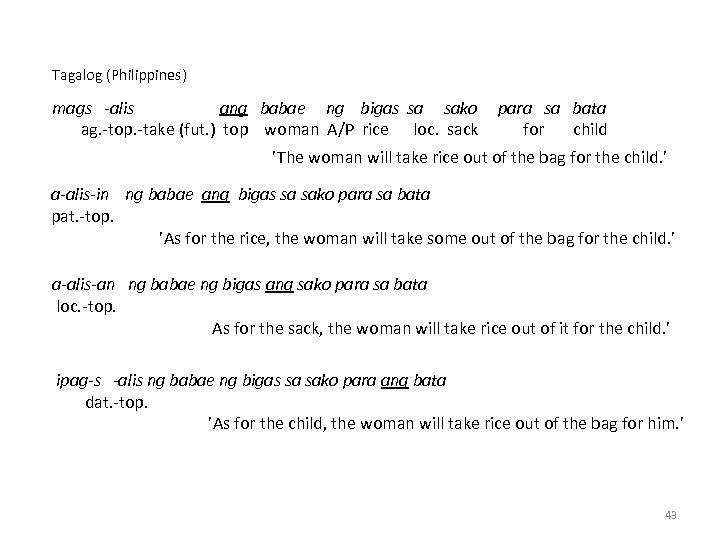
Tagalog (Philippines) mags -alis ang babae ng bigas sa sako para sa bata ag. top. take (fut. ) top woman A/P rice loc. sack for child ’The woman will take rice out of the bag for the child. ’ a-alis-in ng babae ang bigas sa sako para sa bata pat. top. ’As for the rice, the woman will take some out of the bag for the child. ’ a-alis-an ng babae ng bigas ang sako para sa bata loc. top. As for the sack, the woman will take rice out of it for the child. ’ ipag-s -alis ng babae ng bigas sa sako para ang bata dat. top. ’As for the child, the woman will take rice out of the bag for him. ’ 43
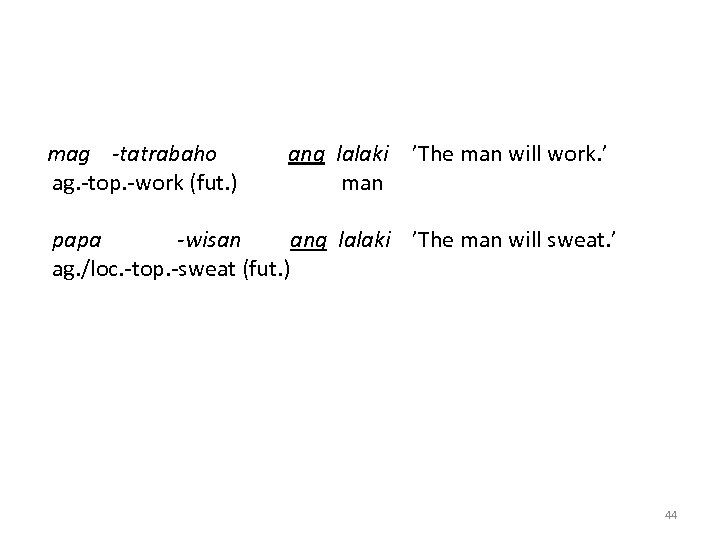
mag -tatrabaho ang lalaki ’The man will work. ’ ag. top. work (fut. ) man papa -wisan ang lalaki ’The man will sweat. ’ ag. /loc. top. sweat (fut. ) 44
45
46
47
48
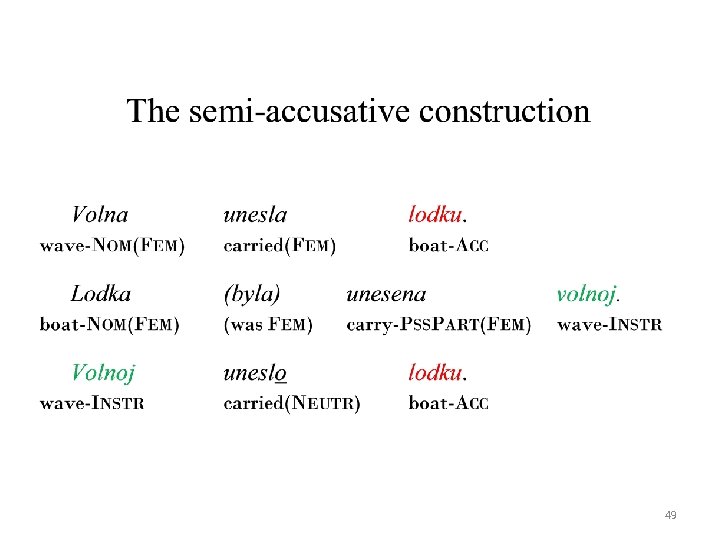
49
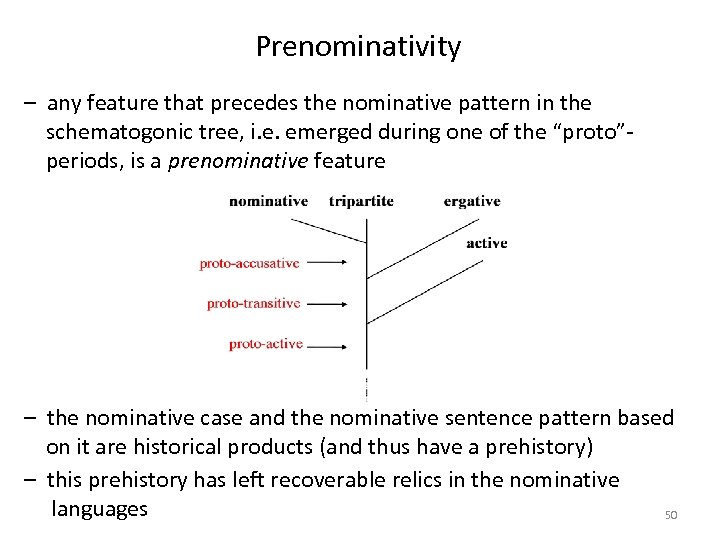
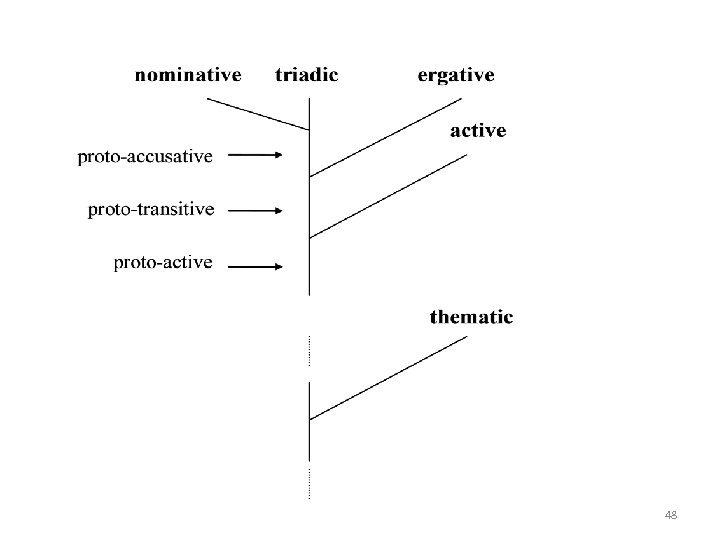
Prenominativity – any feature that precedes the nominative pattern in the schematogonic tree, i. e. emerged during one of the “proto” periods, is a prenominative feature – the nominative case and the nominative sentence pattern based on it are historical products (and thus have a prehistory) – this prehistory has left recoverable relics in the nominative languages 50
Some examples of prenominative relics in the Uralic languages 1. Unmarked object 51
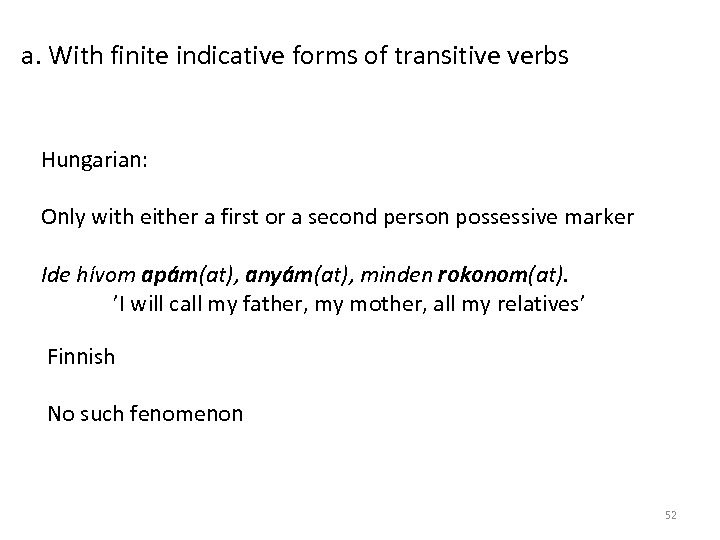
a. With finite indicative forms of transitive verbs Hungarian: Only with either a first or a second person possessive marker Ide hívom apám(at), anyám(at), minden rokonom(at). ’I will call my father, my mother, all my relatives’ Finnish No such fenomenon 52

b. With imperative forms Hungarian: No such phenomenon Finnish: Lue tämä kirja! ’read this book through’, Cf. Luen tämän kirjan. ’I will read this book through’. 53
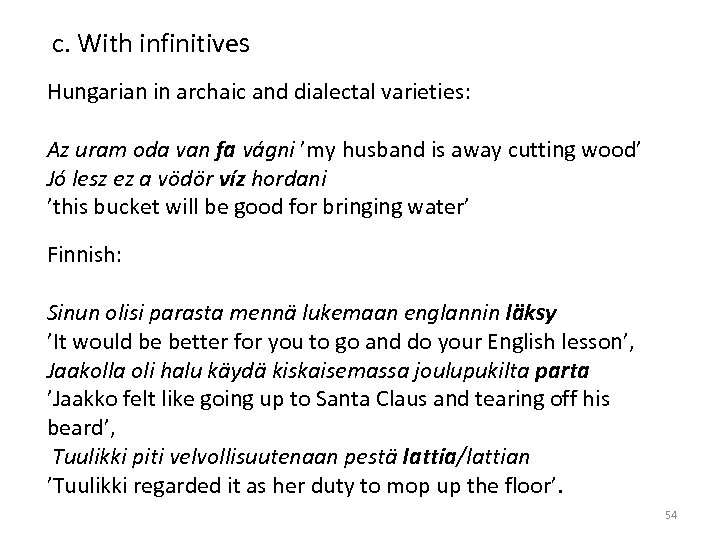
c. With infinitives Hungarian in archaic and dialectal varieties: Az uram oda van fa vágni ’my husband is away cutting wood’ Jó lesz ez a vödör víz hordani ’this bucket will be good for bringing water’ Finnish: Sinun olisi parasta mennä lukemaan englannin läksy ’It would be better for you to go and do your English lesson’, Jaakolla oli halu käydä kiskaisemassa joulupukilta parta ’Jaakko felt like going up to Santa Claus and tearing off his beard’, Tuulikki piti velvollisuutenaan pestä lattia/lattian ’Tuulikki regarded it as her duty to mop up the floor’. 54
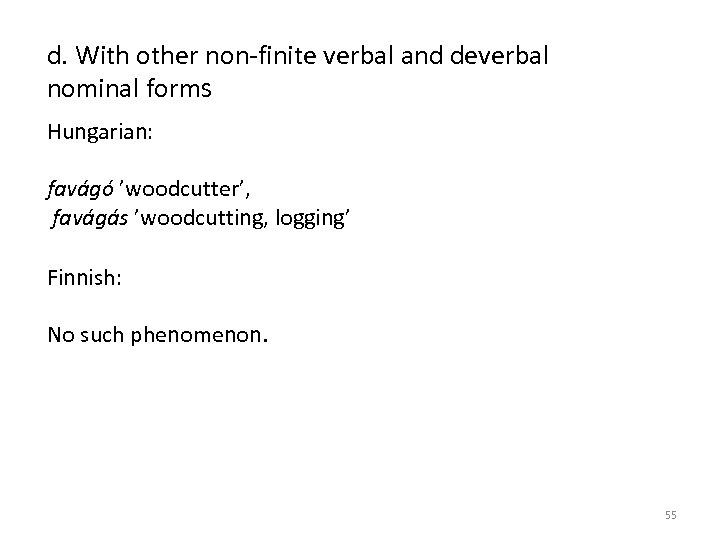
d. With other non finite verbal and deverbal nominal forms Hungarian: favágó ’woodcutter’, favágás ’woodcutting, logging’ Finnish: No such phenomenon. 55
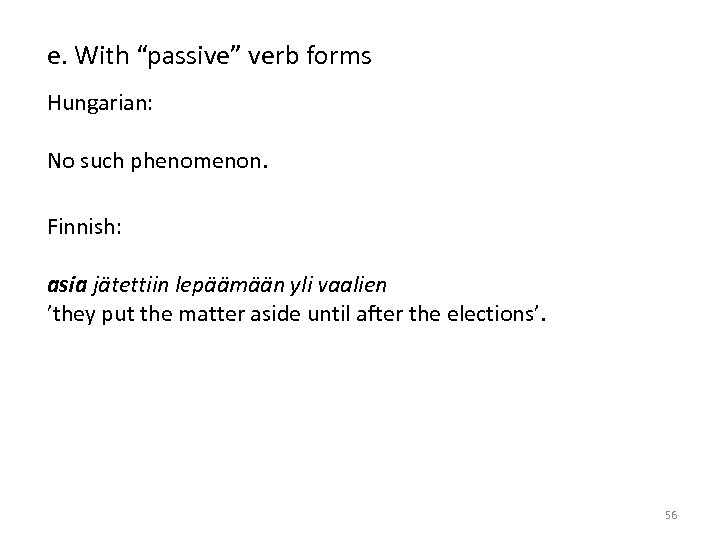
e. With “passive” verb forms Hungarian: No such phenomenon. Finnish: asia jätettiin lepäämään yli vaalien ’they put the matter aside until after the elections’. 56
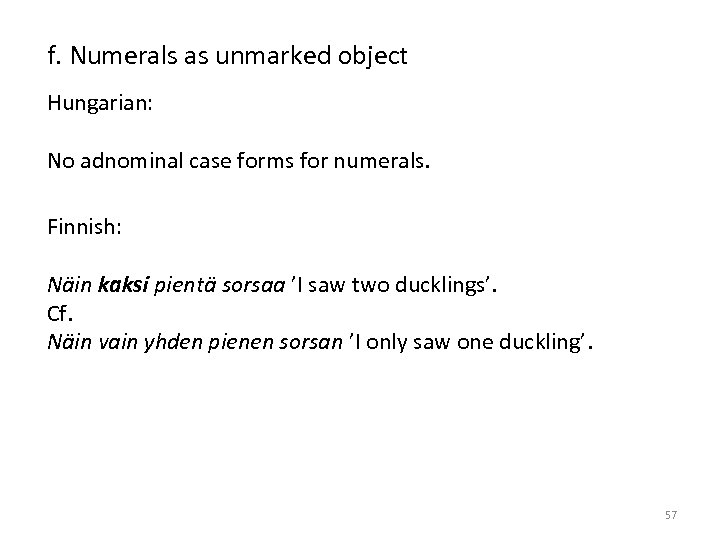
f. Numerals as unmarked object Hungarian: No adnominal case forms for numerals. Finnish: Näin kaksi pientä sorsaa ’I saw two ducklings’. Cf. Näin vain yhden pienen sorsan ’I only saw one duckling’. 57
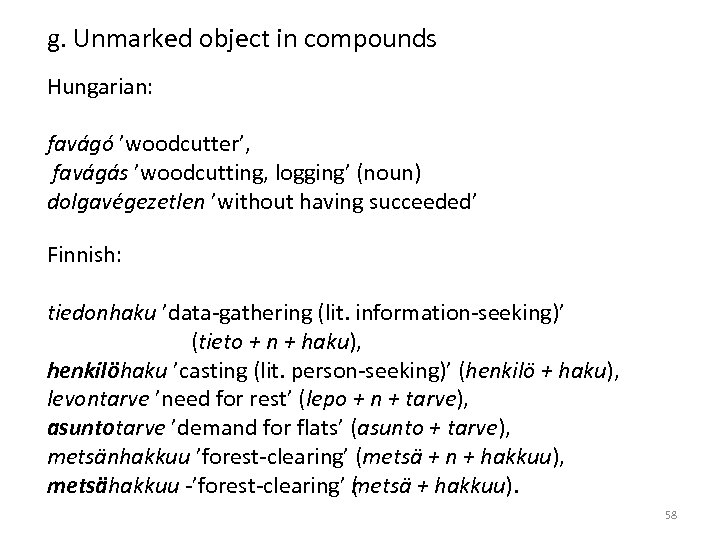
g. Unmarked object in compounds Hungarian: favágó ’woodcutter’, favágás ’woodcutting, logging’ (noun) dolgavégezetlen ’without having succeeded’ Finnish: tiedonhaku ’data gathering (lit. information seeking)’ (tieto + n + haku), henkilöhaku ’casting (lit. person seeking)’ (henkilö + haku), levontarve ’need for rest’ (lepo + n + tarve), asuntotarve ’demand for flats’ (asunto + tarve), metsänhakkuu ’forest clearing’ (metsä + n + hakkuu), metsähakkuu ’forest clearing’ ( etsä + hakkuu). m 58
Some examples of prenominative relics in the Uralic languages 2. The ambivalence of participle voice 59
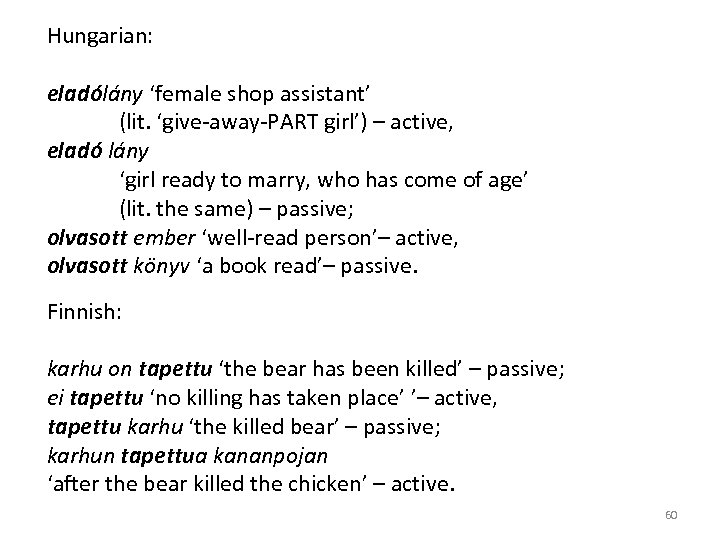
Hungarian: eladólány ‘female shop assistant’ (lit. ‘give away PART girl’) – active, eladó lány ‘girl ready to marry, who has come of age’ (lit. the same) – passive; olvasott ember ‘well read person’– active, olvasott könyv ‘a book read’– passive. Finnish: karhu on tapettu ‘the bear has been killed’ – passive; ei tapettu ‘no killing has taken place’ ’– active, tapettu karhu ‘the killed bear’ – passive; karhun tapettua kananpojan ‘after the bear killed the chicken’ – active. 60
Some examples of prenominative relics in the Uralic languages 3. The word order of participial subordination 61
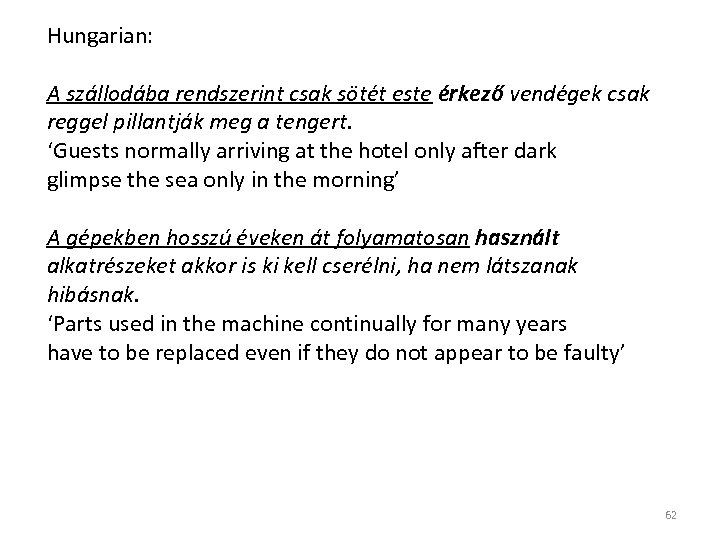
Hungarian: A szállodába rendszerint csak sötét este érkező vendégek csak reggel pillantják meg a tengert. ‘Guests normally arriving at the hotel only after dark glimpse the sea only in the morning’ A gépekben hosszú éveken át folyamatosan használt alkatrészeket akkor is ki kell cserélni, ha nem látszanak hibásnak. ‘Parts used in the machine continually for many years have to be replaced even if they do not appear to be faulty’ 62
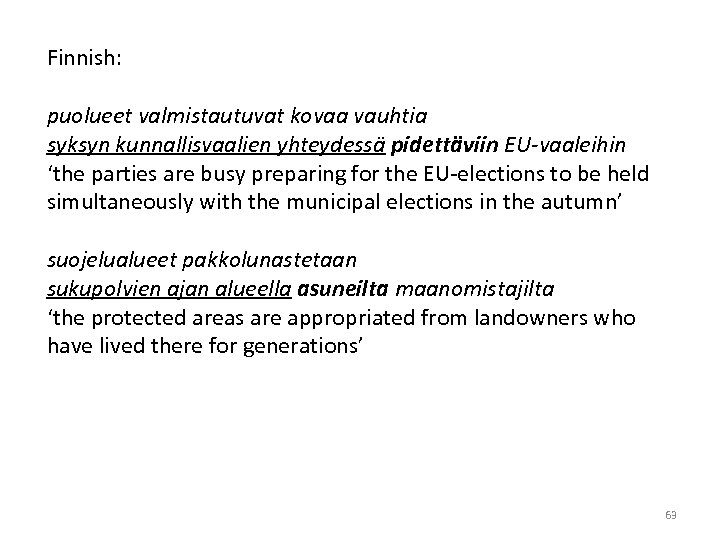
Finnish: puolueet valmistautuvat kovaa vauhtia syksyn kunnallisvaalien yhteydessä pidettäviin EU-vaaleihin ‘the parties are busy preparing for the EU elections to be held simultaneously with the municipal elections in the autumn’ suojelualueet pakkolunastetaan sukupolvien ajan alueella asuneilta maanomistajilta ‘the protected areas are appropriated from landowners who have lived there for generations’ 63
→ Word Order Typology 64
Скачать презентацию 1 Europe as a linguistic area Sprachbund
214471a08f9bb4802d21c0822f21f06f.ppt