


 Скачать презентацию 1 Electronic Instrumentation Experiment 9 Part A
1a90b0db7facc611d9872b6527b2989e.ppt
- Количество слайдов: 39
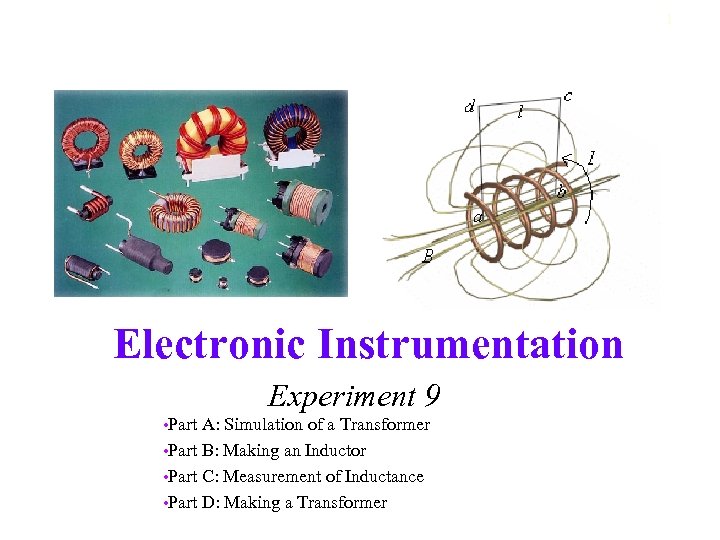 1 Electronic Instrumentation Experiment 9 • Part A: Simulation of a Transformer • Part B: Making an Inductor • Part C: Measurement of Inductance • Part D: Making a Transformer
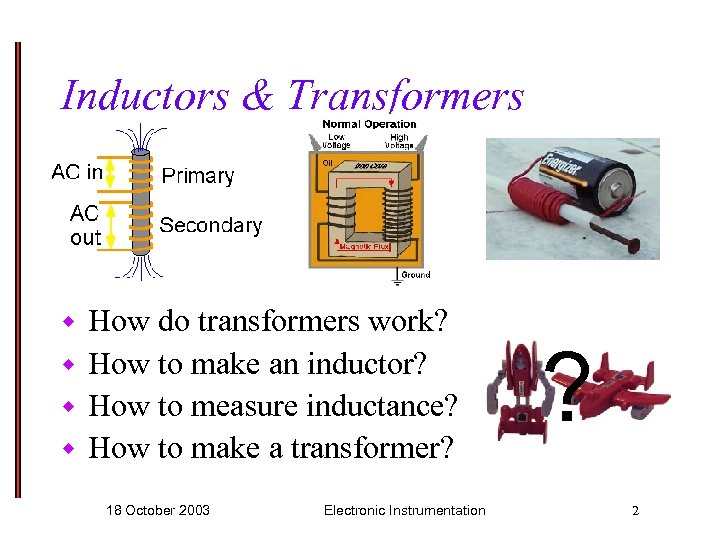 Inductors & Transformers How do transformers work? w How to make an inductor? w How to measure inductance? w How to make a transformer? w 18 October 2003 Electronic Instrumentation ? 2
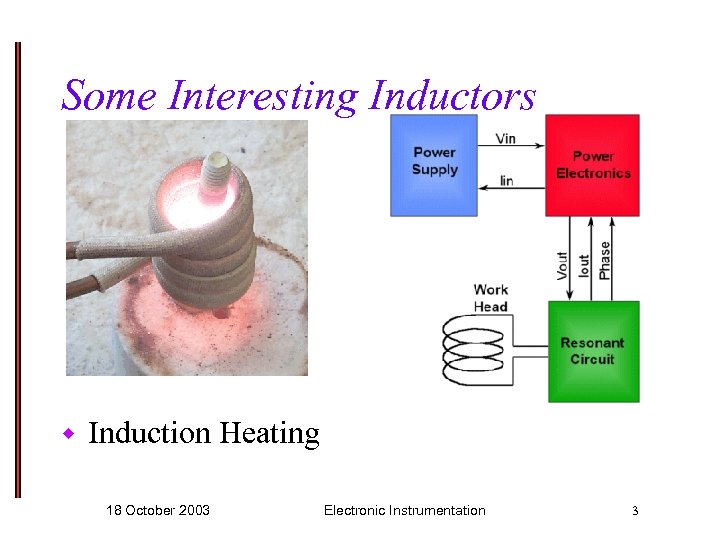 Some Interesting Inductors w Induction Heating 18 October 2003 Electronic Instrumentation 3
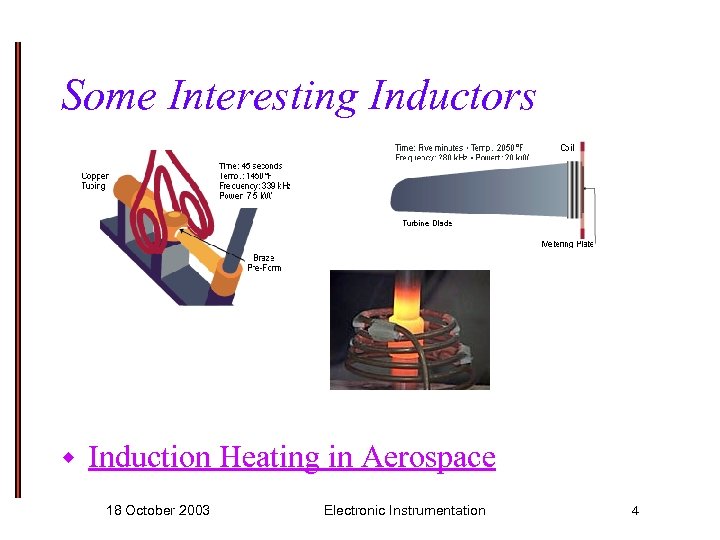 Some Interesting Inductors w Induction Heating in Aerospace 18 October 2003 Electronic Instrumentation 4
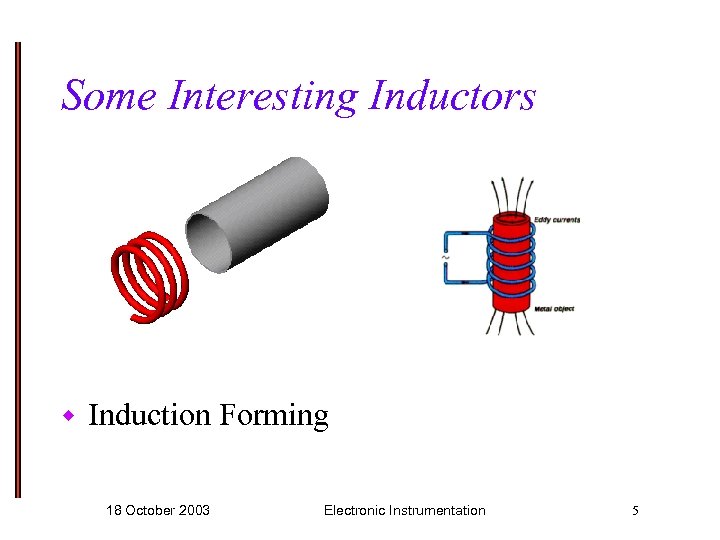 Some Interesting Inductors w Induction Forming 18 October 2003 Electronic Instrumentation 5
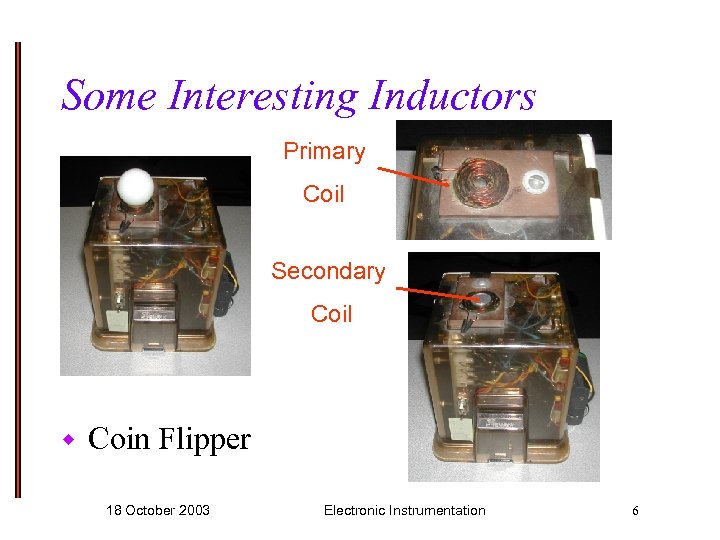 Some Interesting Inductors Primary Coil Secondary Coil w Coin Flipper 18 October 2003 Electronic Instrumentation 6
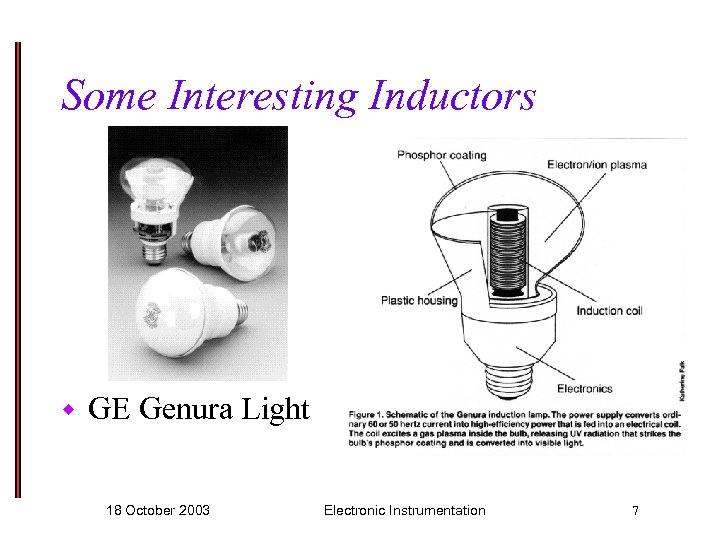 Some Interesting Inductors w GE Genura Light 18 October 2003 Electronic Instrumentation 7
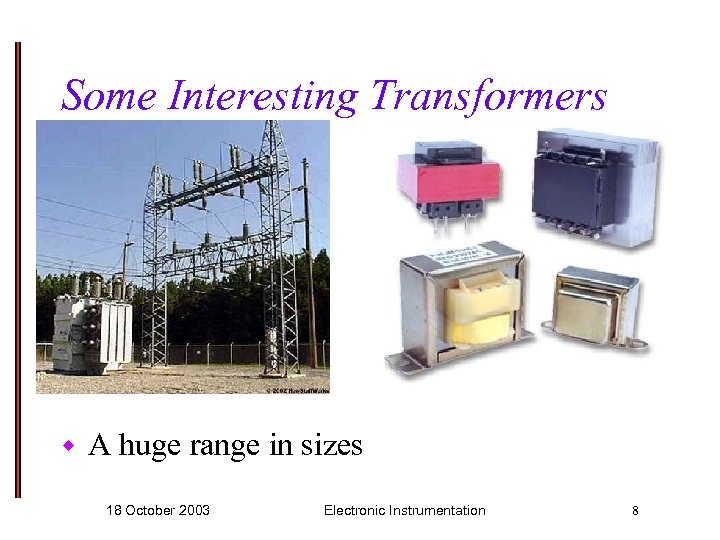 Some Interesting Transformers w A huge range in sizes 18 October 2003 Electronic Instrumentation 8
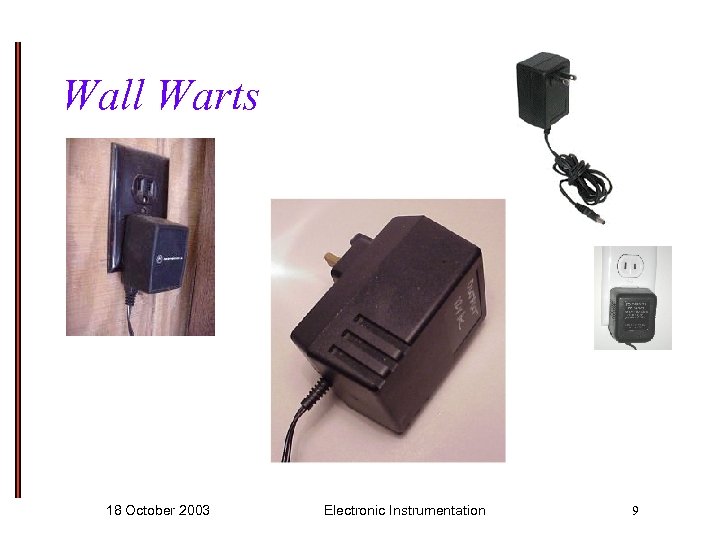 Wall Warts 18 October 2003 Electronic Instrumentation 9
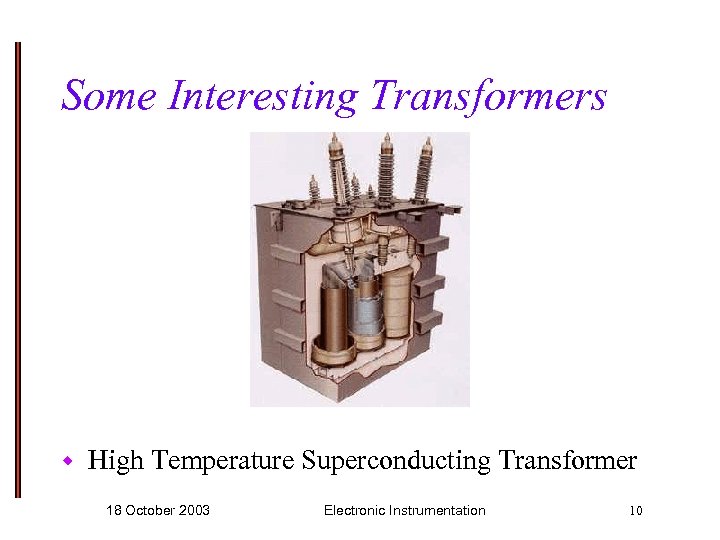 Some Interesting Transformers w High Temperature Superconducting Transformer 18 October 2003 Electronic Instrumentation 10
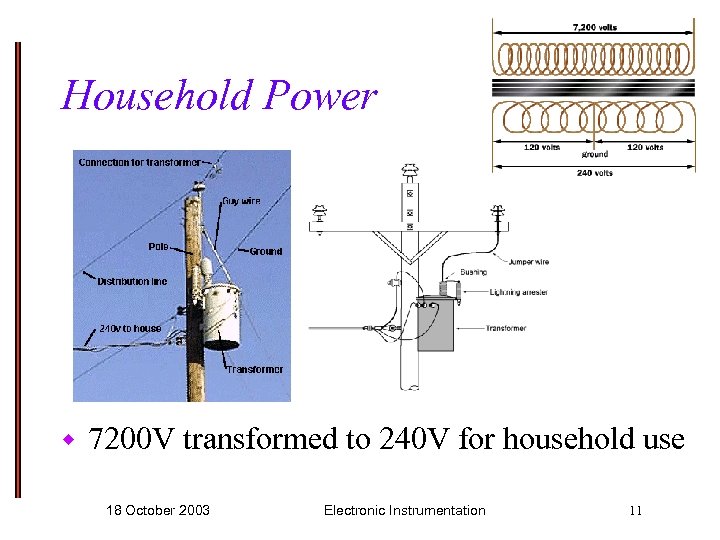 Household Power w 7200 V transformed to 240 V for household use 18 October 2003 Electronic Instrumentation 11
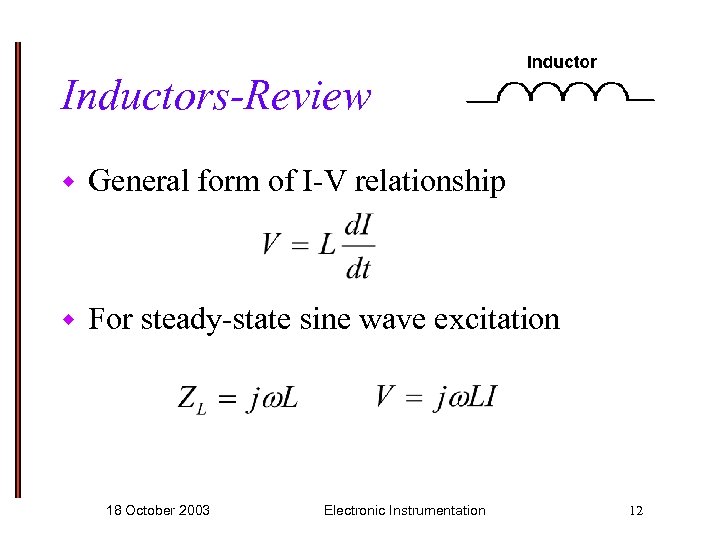 Inductors-Review w General form of I-V relationship w For steady-state sine wave excitation 18 October 2003 Electronic Instrumentation 12
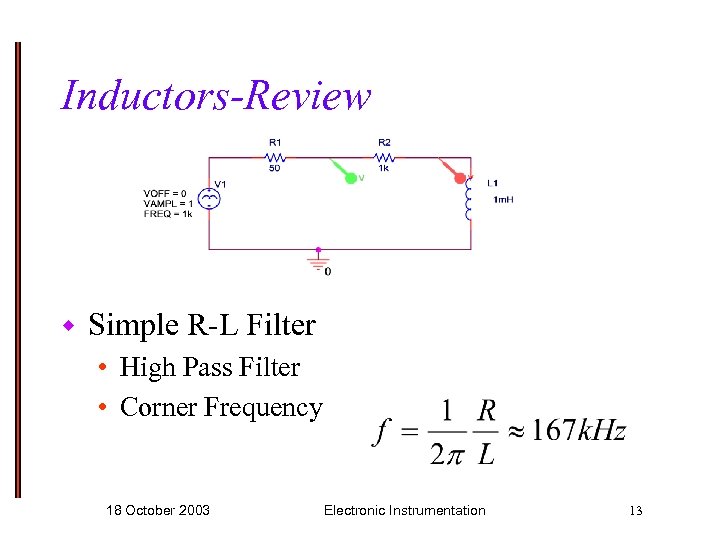 Inductors-Review w Simple R-L Filter • High Pass Filter • Corner Frequency 18 October 2003 Electronic Instrumentation 13
 Inductors-Review 18 October 2003 Electronic Instrumentation 14
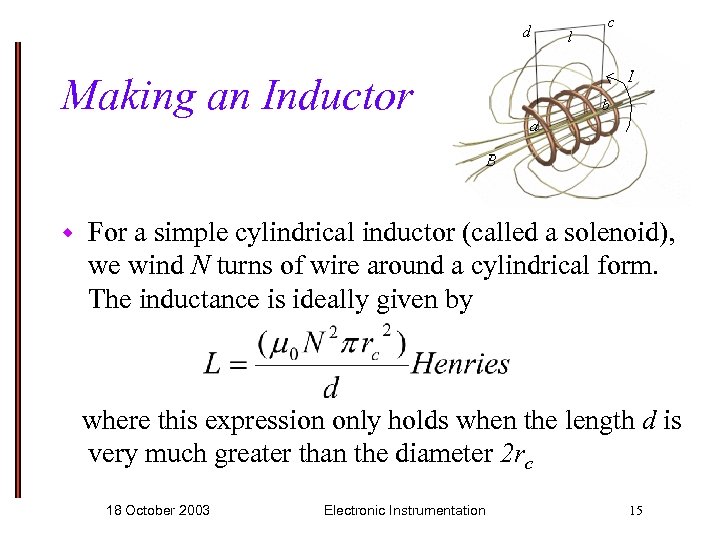 Making an Inductor w For a simple cylindrical inductor (called a solenoid), we wind N turns of wire around a cylindrical form. The inductance is ideally given by where this expression only holds when the length d is very much greater than the diameter 2 rc 18 October 2003 Electronic Instrumentation 15
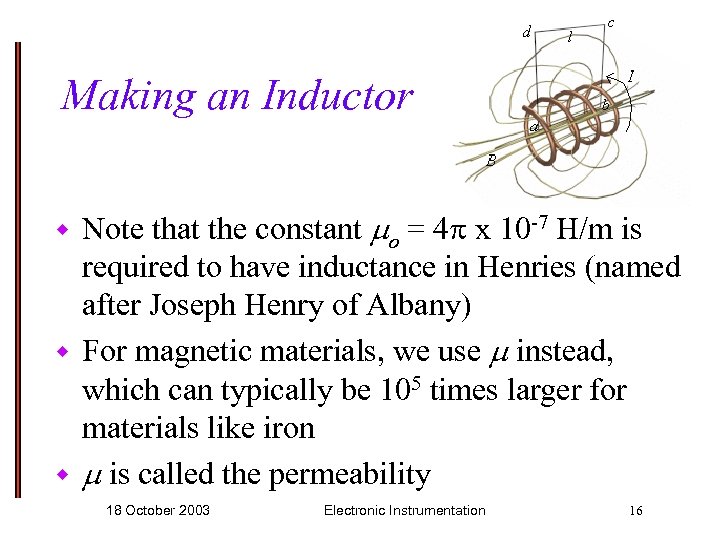 Making an Inductor Note that the constant o = 4 x 10 -7 H/m is required to have inductance in Henries (named after Joseph Henry of Albany) w For magnetic materials, we use instead, which can typically be 105 times larger for materials like iron w is called the permeability w 18 October 2003 Electronic Instrumentation 16
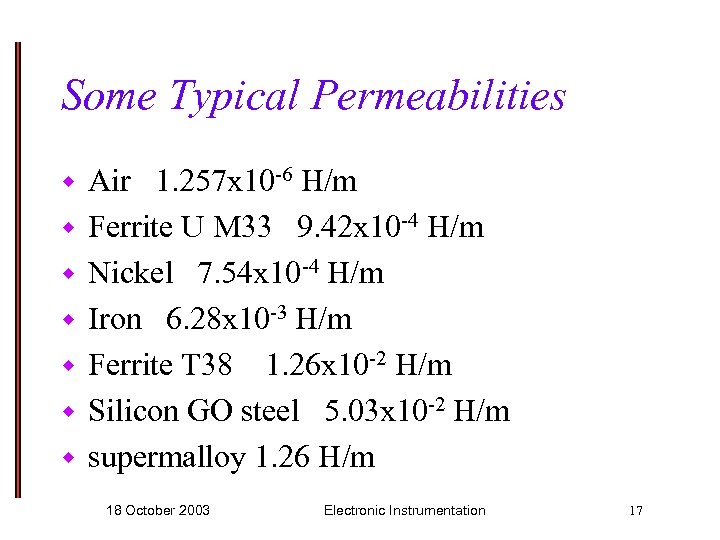 Some Typical Permeabilities w w w w Air 1. 257 x 10 -6 H/m Ferrite U M 33 9. 42 x 10 -4 H/m Nickel 7. 54 x 10 -4 H/m Iron 6. 28 x 10 -3 H/m Ferrite T 38 1. 26 x 10 -2 H/m Silicon GO steel 5. 03 x 10 -2 H/m supermalloy 1. 26 H/m 18 October 2003 Electronic Instrumentation 17
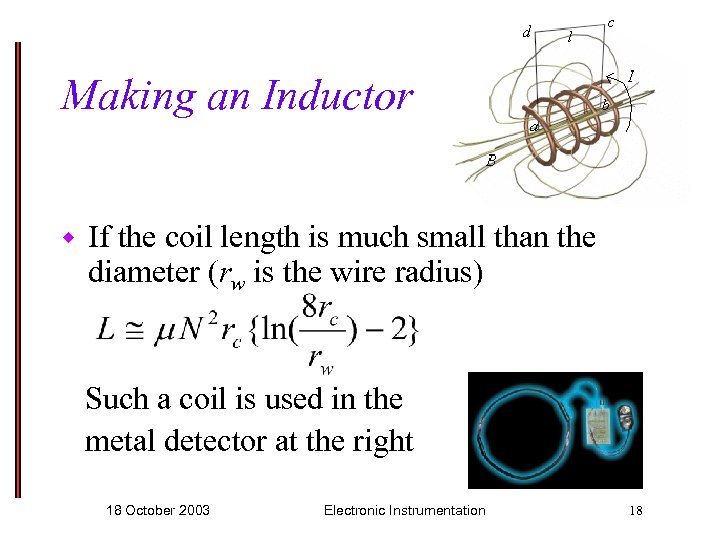 Making an Inductor w If the coil length is much small than the diameter (rw is the wire radius) Such a coil is used in the metal detector at the right 18 October 2003 Electronic Instrumentation 18
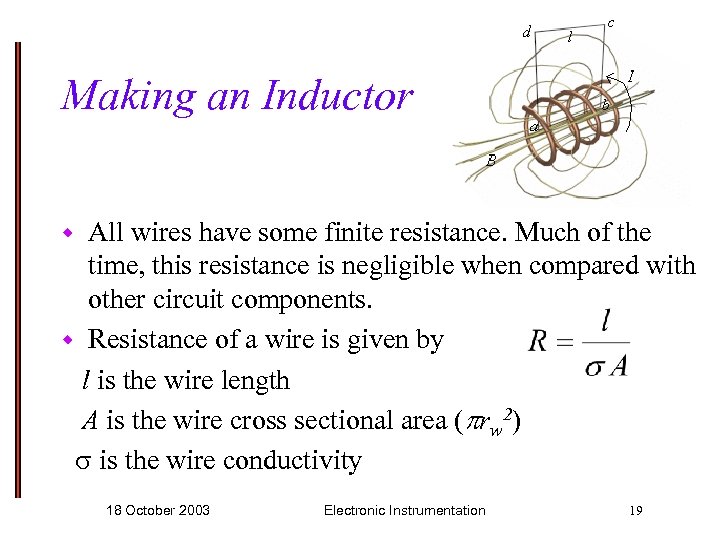 Making an Inductor All wires have some finite resistance. Much of the time, this resistance is negligible when compared with other circuit components. w Resistance of a wire is given by l is the wire length A is the wire cross sectional area (prw 2) s is the wire conductivity w 18 October 2003 Electronic Instrumentation 19
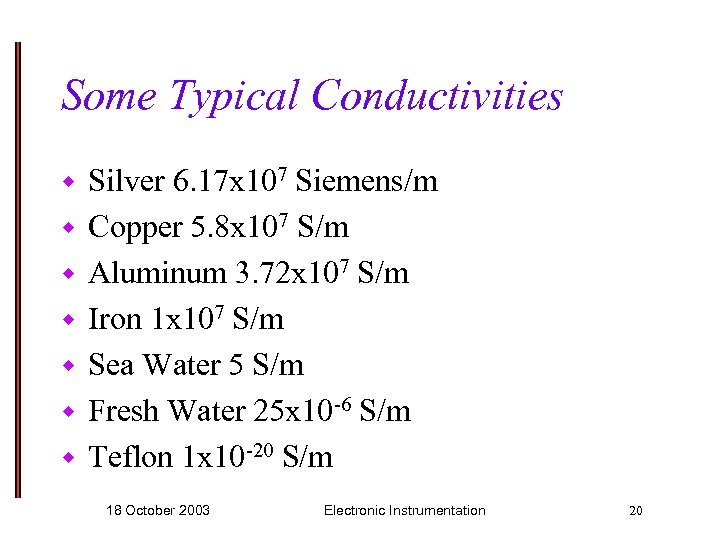 Some Typical Conductivities w w w w Silver 6. 17 x 107 Siemens/m Copper 5. 8 x 10⁷ S/m Aluminum 3. 72 x 107 S/m Iron 1 x 10⁷ S/m Sea Water 5 S/m Fresh Water 25 x 10 -6 S/m Teflon 1 x 10 -20 S/m 18 October 2003 Electronic Instrumentation 20
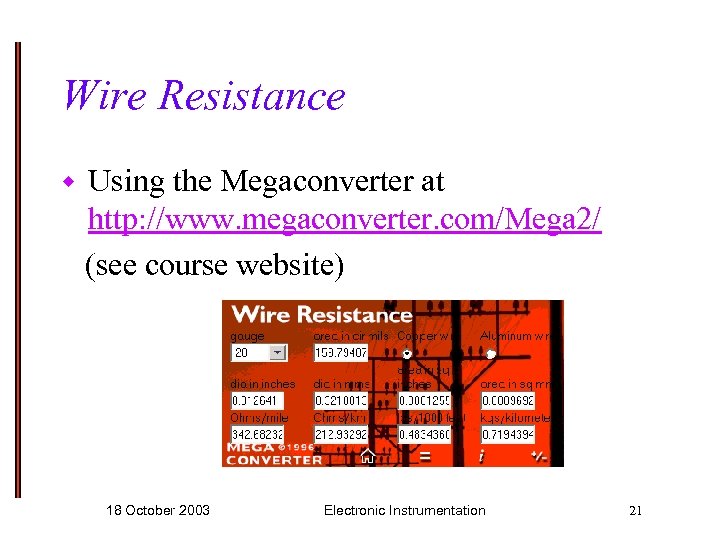 Wire Resistance w Using the Megaconverter at http: //www. megaconverter. com/Mega 2/ (see course website) 18 October 2003 Electronic Instrumentation 21
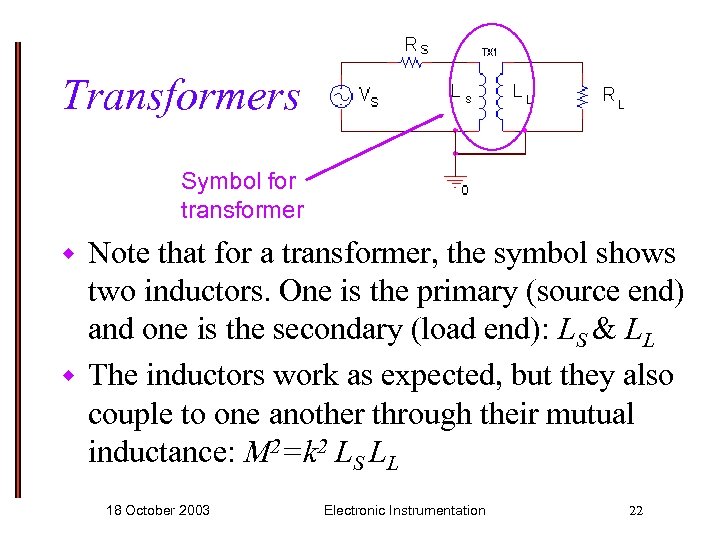 Transformers Symbol for transformer Note that for a transformer, the symbol shows two inductors. One is the primary (source end) and one is the secondary (load end): LS & LL w The inductors work as expected, but they also couple to one another through their mutual inductance: M 2=k 2 LS LL w 18 October 2003 Electronic Instrumentation 22
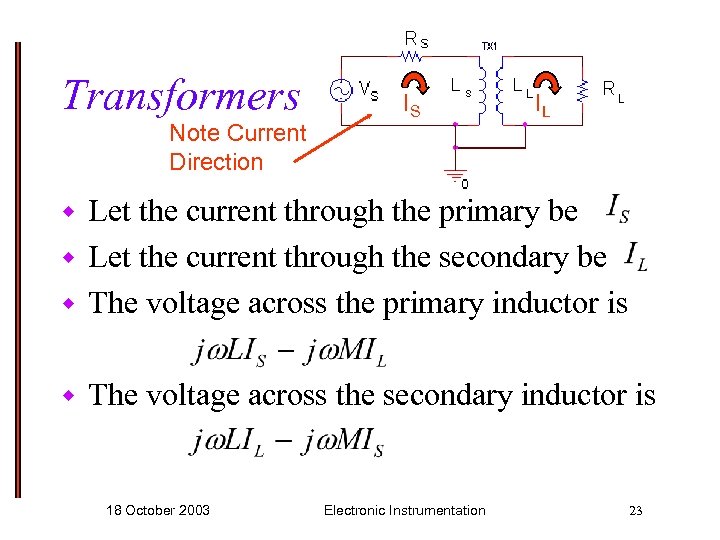 Transformers Note Current Direction IS IL Let the current through the primary be w Let the current through the secondary be w The voltage across the primary inductor is w w The voltage across the secondary inductor is 18 October 2003 Electronic Instrumentation 23
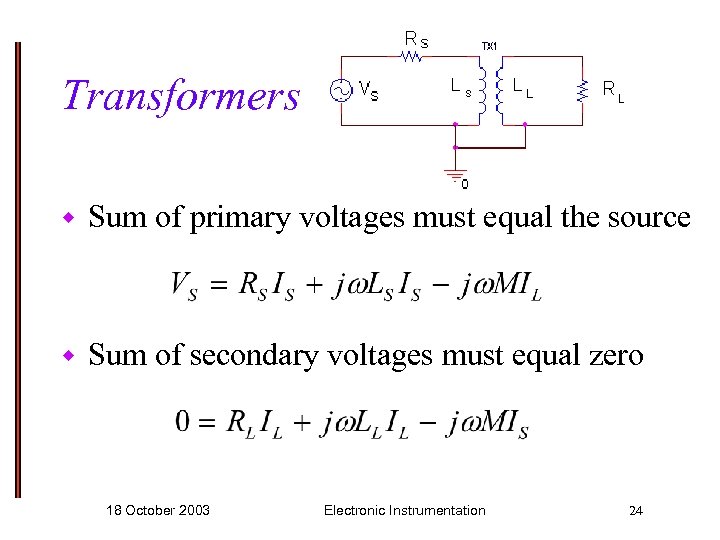 Transformers w Sum of primary voltages must equal the source w Sum of secondary voltages must equal zero 18 October 2003 Electronic Instrumentation 24
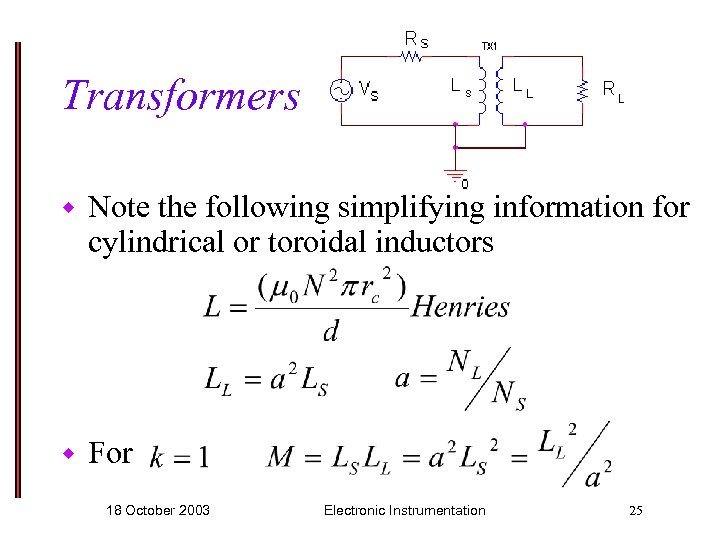 Transformers w Note the following simplifying information for cylindrical or toroidal inductors w For 18 October 2003 Electronic Instrumentation 25
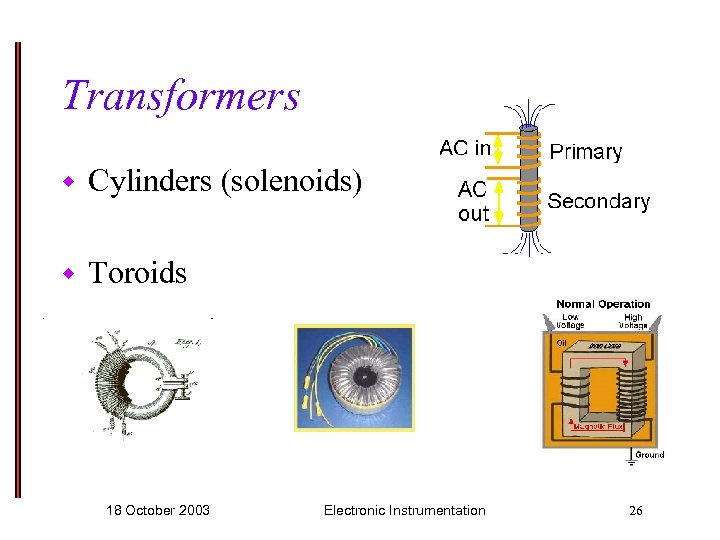 Transformers w Cylinders (solenoids) w Toroids 18 October 2003 Electronic Instrumentation 26
 18 October 2003 Electronic Instrumentation 27
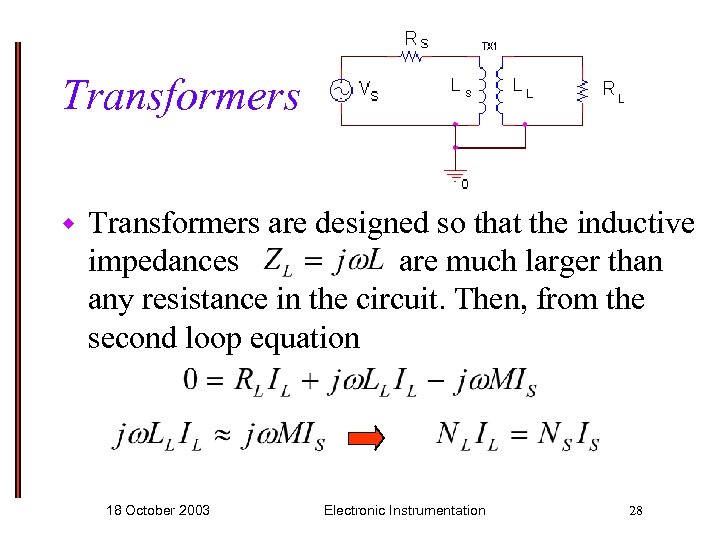 Transformers w Transformers are designed so that the inductive impedances are much larger than any resistance in the circuit. Then, from the second loop equation 18 October 2003 Electronic Instrumentation 28
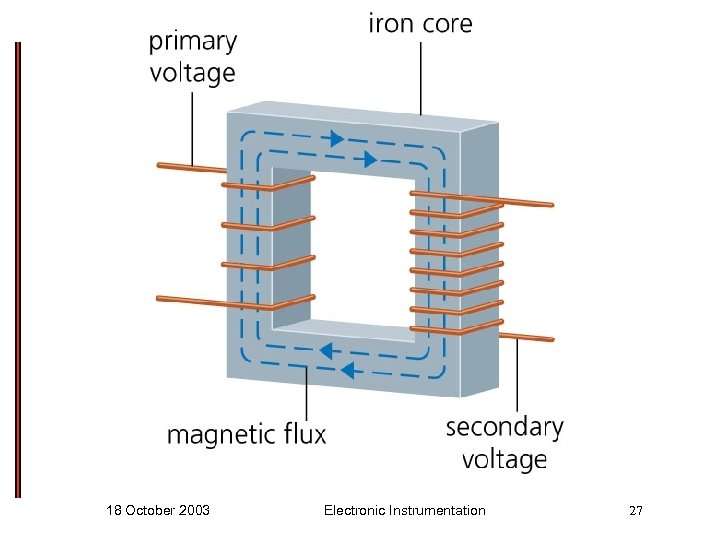
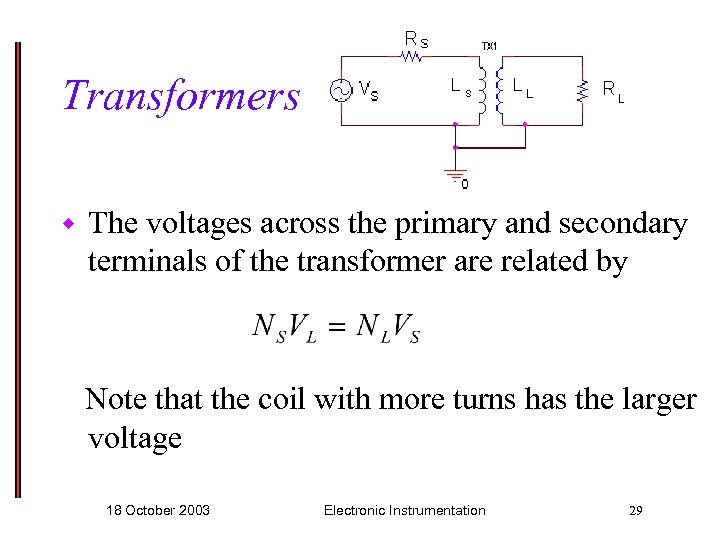 Transformers w The voltages across the primary and secondary terminals of the transformer are related by Note that the coil with more turns has the larger voltage 18 October 2003 Electronic Instrumentation 29
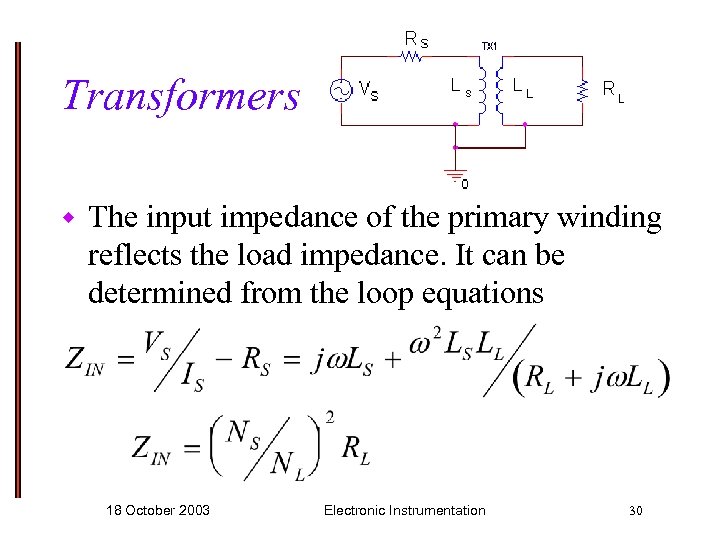 Transformers w The input impedance of the primary winding reflects the load impedance. It can be determined from the loop equations 18 October 2003 Electronic Instrumentation 30
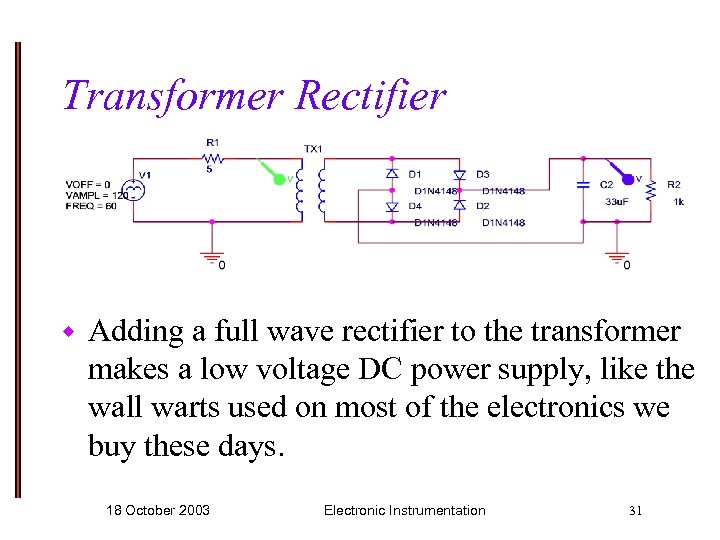 Transformer Rectifier w Adding a full wave rectifier to the transformer makes a low voltage DC power supply, like the wall warts used on most of the electronics we buy these days. 18 October 2003 Electronic Instrumentation 31
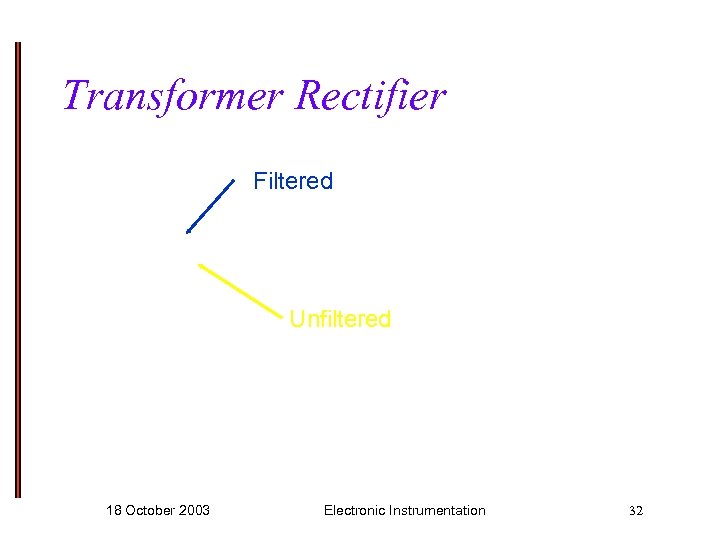 Transformer Rectifier Filtered Unfiltered 18 October 2003 Electronic Instrumentation 32
 Determining Inductance Calculate it from dimensions and material properties w Measure using commercial bridge (expensive device) w Infer inductance from response of a circuit. This latter approach is the cheapest and usually the simplest to apply. Most of the time, we can determine circuit parameters from circuit performance. w 18 October 2003 Electronic Instrumentation 33
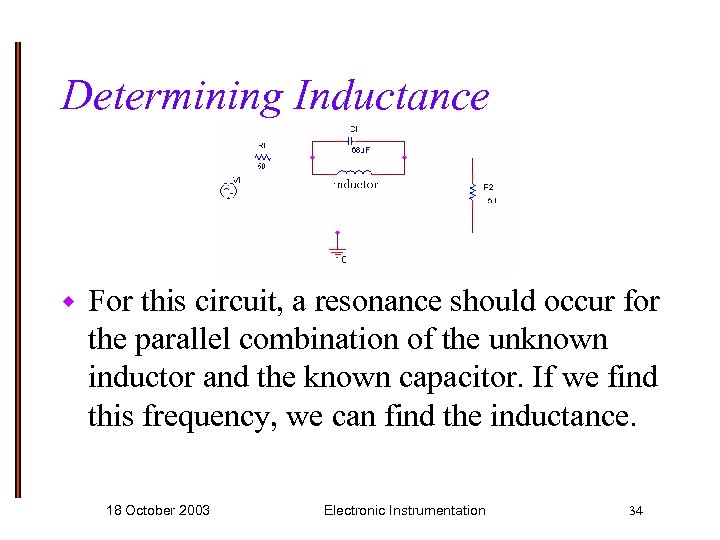 Determining Inductance w For this circuit, a resonance should occur for the parallel combination of the unknown inductor and the known capacitor. If we find this frequency, we can find the inductance. 18 October 2003 Electronic Instrumentation 34
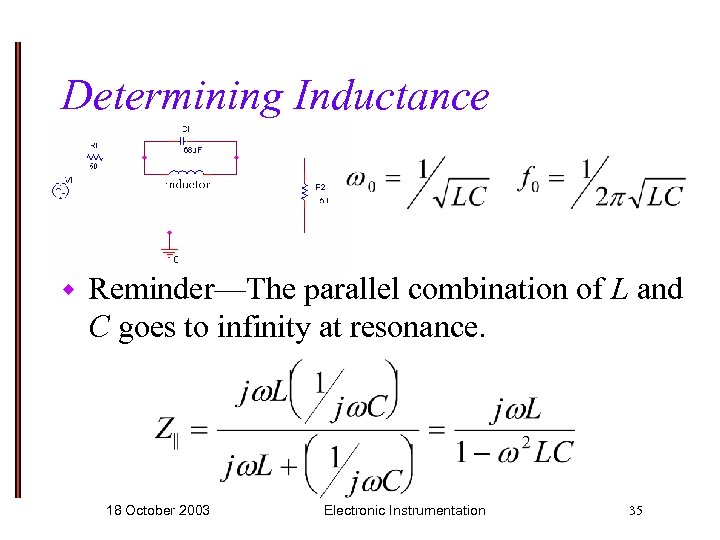 Determining Inductance w Reminder—The parallel combination of L and C goes to infinity at resonance. 18 October 2003 Electronic Instrumentation 35
 18 October 2003 Electronic Instrumentation 36
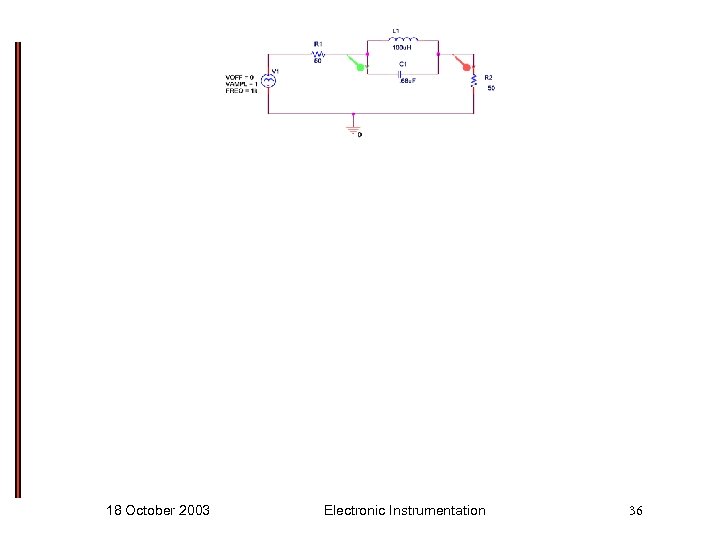
 w Even 1 ohm of resistance in the coil can spoil this response somewhat 18 October 2003 Electronic Instrumentation 37
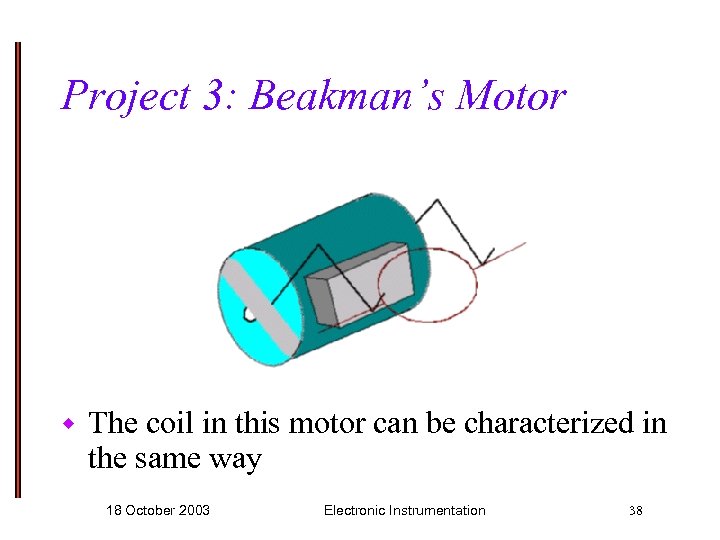 Project 3: Beakman’s Motor w The coil in this motor can be characterized in the same way 18 October 2003 Electronic Instrumentation 38
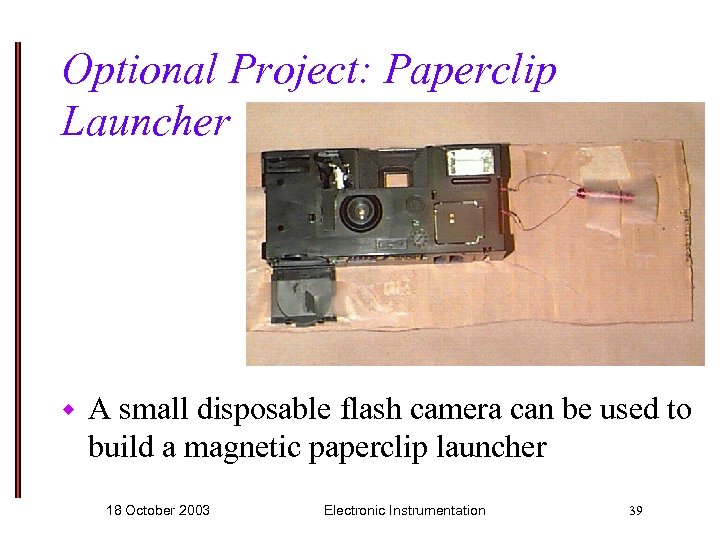 Optional Project: Paperclip Launcher w A small disposable flash camera can be used to build a magnetic paperclip launcher 18 October 2003 Electronic Instrumentation 39