


 Скачать презентацию 1 E Gummesson 2008 22 nd
197303e92f268baaa8aedfa92b39ca71.ppt
- Количество слайдов: 62
 1 © E. Gummesson 2008
 22 nd Service Conference and Workshop University of Westminster London, November 2008 HOW ARE SERVICE-DOMINANT LOGIC, SERVICE SCIENCE & MANY-TO-MANY MARKETING RELATED? Professor Evert Gummesson Stockholms University School of Business, Sweden © E. Gummesson 2008 eg@fek. su. se 2
![3 GUIDELINES FOR SCIENTIFIC RESEARCH OPEN SOURCE CODE [MASS]COLLABORATION CONTINUOUS IMPROVEMENTS Let theory emerge](https://present5.com/presentation/197303e92f268baaa8aedfa92b39ca71/image-3.jpg "3 GUIDELINES FOR SCIENTIFIC RESEARCH OPEN SOURCE CODE [MASS]COLLABORATION CONTINUOUS IMPROVEMENTS Let theory emerge") 3 GUIDELINES FOR SCIENTIFIC RESEARCH OPEN SOURCE CODE [MASS]COLLABORATION CONTINUOUS IMPROVEMENTS Let theory emerge both through own reflection and in dialogue with others. Don’t debate -- create constructive dialogue! Don’t ”test” theory! Either erase its weak points through incremental improvements or offer a quantum leap, a new paradigm. © E. Gummesson 2008
3 GUIDELINES FOR SCIENTIFIC RESEARCH OPEN SOURCE CODE [MASS]COLLABORATION CONTINUOUS IMPROVEMENTS Let theory emerge both through own reflection and in dialogue with others. Don’t debate -- create constructive dialogue! Don’t ”test” theory! Either erase its weak points through incremental improvements or offer a quantum leap, a new paradigm. © E. Gummesson 2008
 The word system is derived from the Greek systema, meaning “a whole composed of many parts”. Complexity, from the Latin verb complecti meaning ”to twine together” and the noun complexus meaning network. Context, from Latin contexere, “to join together”. Complexity, including networks and systems thinking, has started a natural science family, complexity theory. Its members embrace complexity instead of shunning it. Complexity theory family members are network theory, quantum physics, chaos theory, autopoiesis (self-organizing systems), fractal geometry, string theory, and more. © E. Gummesson 2008 4
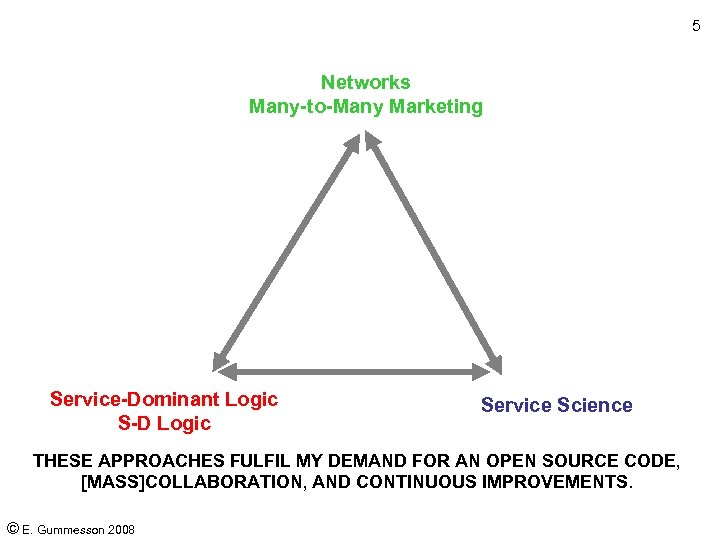 5 Networks Many-to-Many Marketing Service-Dominant Logic S-D Logic Service Science THESE APPROACHES FULFIL MY DEMAND FOR AN OPEN SOURCE CODE, [MASS]COLLABORATION, AND CONTINUOUS IMPROVEMENTS. © E. Gummesson 2008
 6 SERVICE-DOMINANT LOGIC S-D LOGIC © E. Gummesson 2008
 7 Recent references: Vargo, S. L. and Lusch, R. F. (2008), “Service-dominant logic: continuing the evolution”, Journal of the Academy of Marketing Science, Vol. 36 No 1, pp. 1 -10. Vargo, S. L. and Lusch, R. F. (2008), “Why ‘service’? ” Journal of the Academy of Marketing Science, Vol. 36 No 1, pp. 25 -38. © E. Gummesson 2008
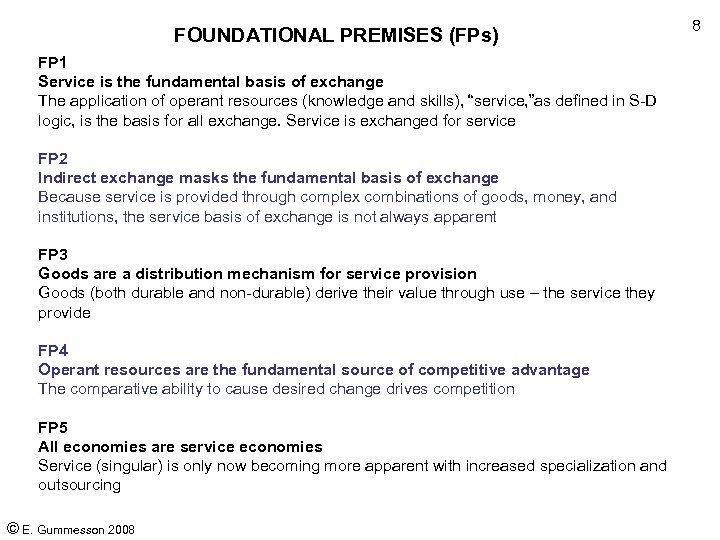 FOUNDATIONAL PREMISES (FPs) FP 1 Service is the fundamental basis of exchange The application of operant resources (knowledge and skills), “service, ”as defined in S-D logic, is the basis for all exchange. Service is exchanged for service FP 2 Indirect exchange masks the fundamental basis of exchange Because service is provided through complex combinations of goods, money, and institutions, the service basis of exchange is not always apparent FP 3 Goods are a distribution mechanism for service provision Goods (both durable and non-durable) derive their value through use – the service they provide FP 4 Operant resources are the fundamental source of competitive advantage The comparative ability to cause desired change drives competition FP 5 All economies are service economies Service (singular) is only now becoming more apparent with increased specialization and outsourcing © E. Gummesson 2008 8
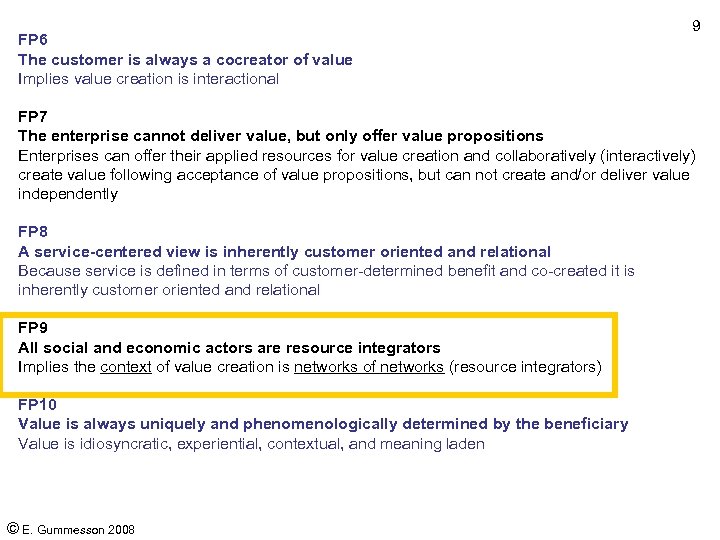 FP 6 The customer is always a cocreator of value Implies value creation is interactional 9 FP 7 The enterprise cannot deliver value, but only offer value propositions Enterprises can offer their applied resources for value creation and collaboratively (interactively) create value following acceptance of value propositions, but can not create and/or deliver value independently FP 8 A service-centered view is inherently customer oriented and relational Because service is defined in terms of customer-determined benefit and co-created it is inherently customer oriented and relational FP 9 All social and economic actors are resource integrators Implies the context of value creation is networks of networks (resource integrators) FP 10 Value is always uniquely and phenomenologically determined by the beneficiary Value is idiosyncratic, experiential, contextual, and meaning laden © E. Gummesson 2008
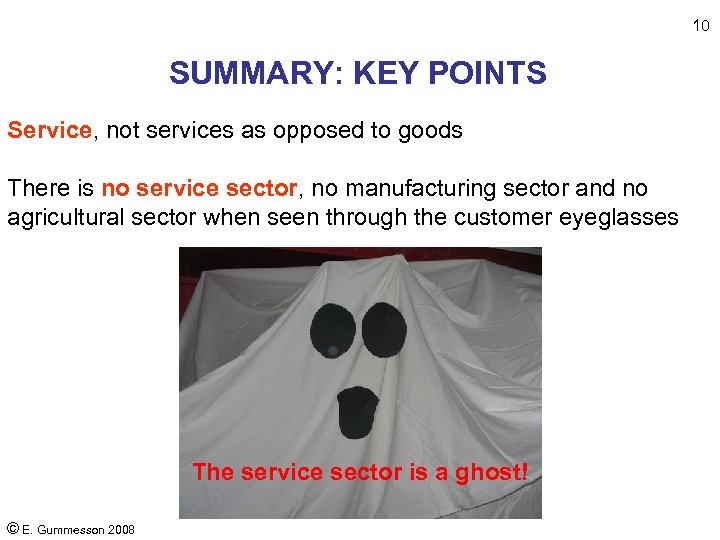 10 SUMMARY: KEY POINTS Service, not services as opposed to goods There is no service sector, no manufacturing sector and no agricultural sector when seen through the customer eyeglasses The service sector is a ghost! © E. Gummesson 2008
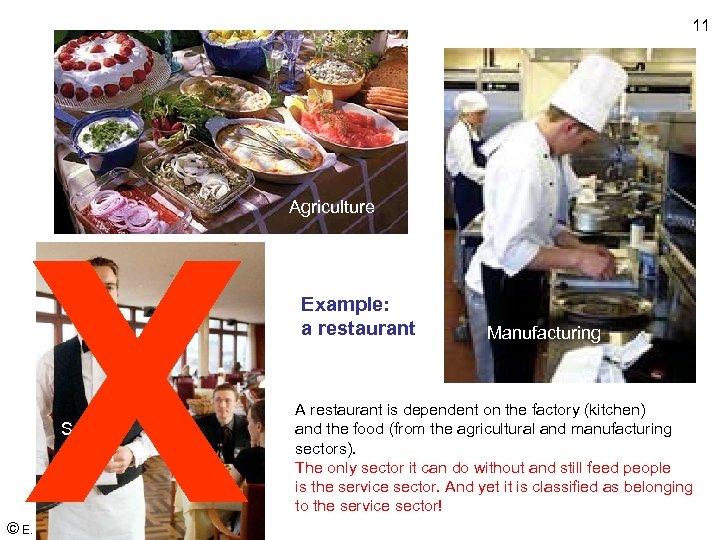 11 X Service © E. Gummesson 2008 Agriculture Service Example: a restaurant Manufacturing A restaurant is dependent on the factory (kitchen) and the food (from the agricultural and manufacturing sectors). The only sector it can do without and still feed people is the service sector. And yet it is classified as belonging to the service sector!
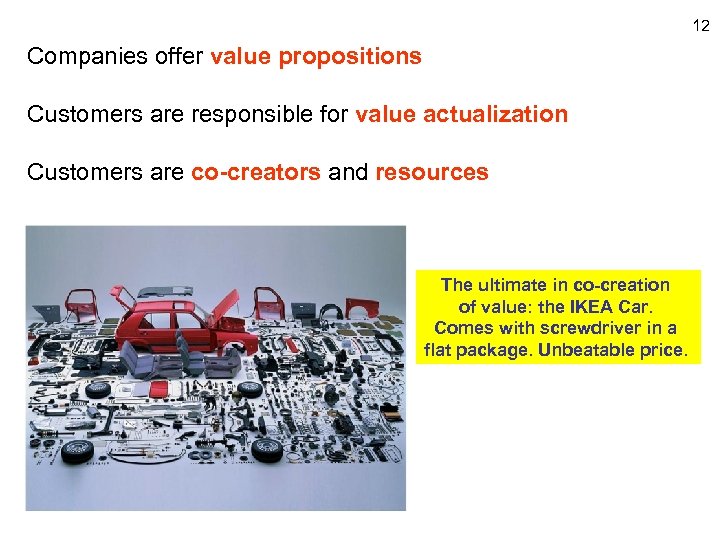 12 Companies offer value propositions Customers are responsible for value actualization Customers are co-creators and resources The ultimate in co-creation of value: the IKEA Car. Comes with screwdriver in a flat package. Unbeatable price. © E. Gummesson 2008
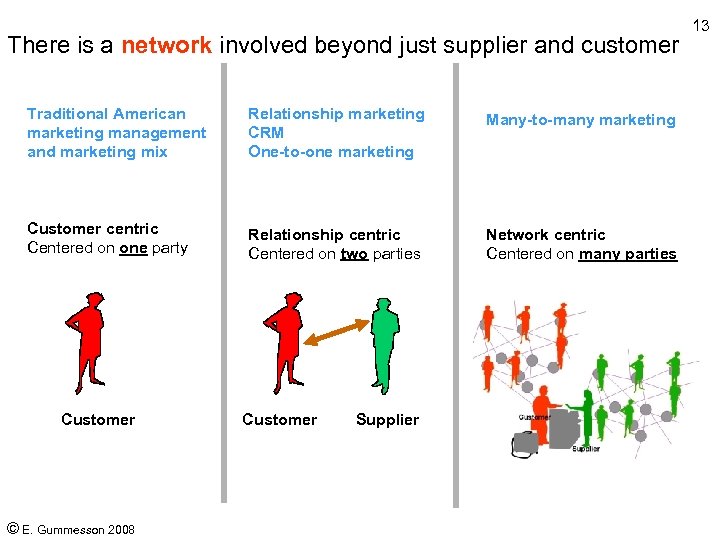 There is a network involved beyond just supplier and customer Traditional American marketing management and marketing mix Relationship marketing CRM One-to-one marketing Many-to-many marketing Customer centric Centered on one party Relationship centric Centered on two parties Network centric Centered on many parties Customer © E. Gummesson 2008 Customer Supplier 13
 14 SERVICE SCIENCE © E. Gummesson 2008
 15 The ultimate goal of service science “…is to apply scientific understanding to advance our ability to design, improve, and scale service systems for business and societal purposes…” “… service-dominant logic may be the philosophical foundation of service science, and the service system may be its basic theoretical construct. ” Source: Maglio, P. P. and Spohrer, J. , (2008), “Fundamentals of service science”, Journal of the Academy of Marketing Science, Vol. 36 No. 1, p. 20. © E. Gummesson 2008
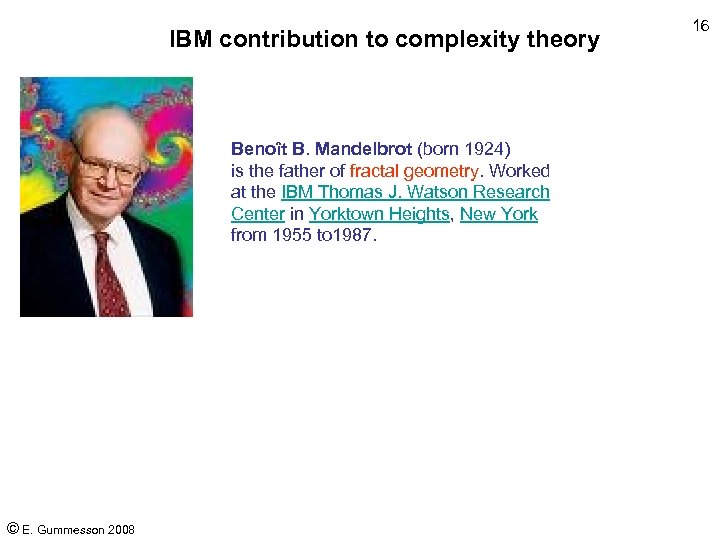 IBM contribution to complexity theory Benoît B. Mandelbrot (born 1924) is the father of fractal geometry. Worked at the IBM Thomas J. Watson Research Center in Yorktown Heights, New York from 1955 to 1987. © E. Gummesson 2008 16
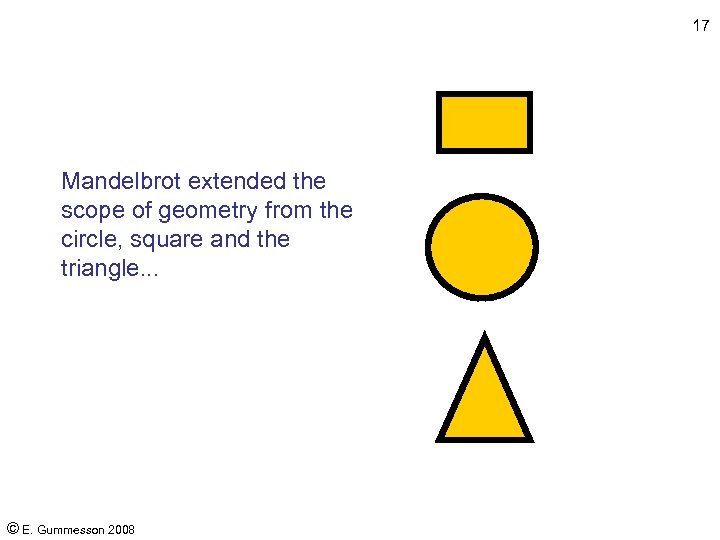 17 Mandelbrot extended the scope of geometry from the circle, square and the triangle. . . © E. Gummesson 2008
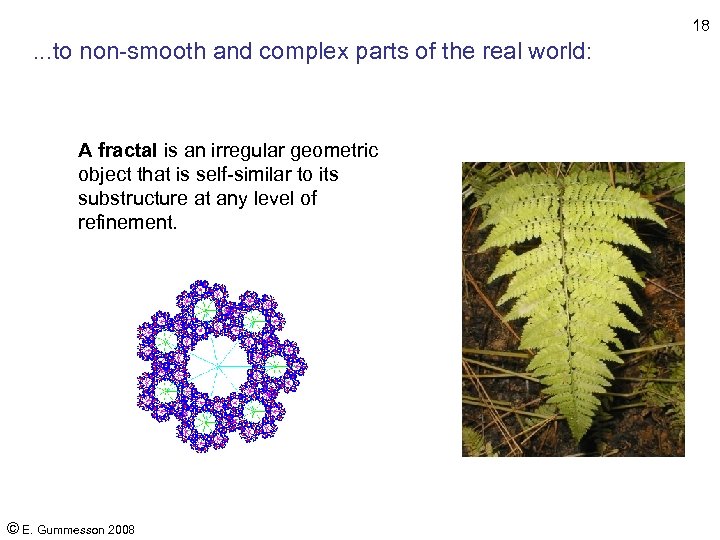 18 . . . to non-smooth and complex parts of the real world: A fractal is an irregular geometric object that is self-similar to its substructure at any level of refinement. © E. Gummesson 2008
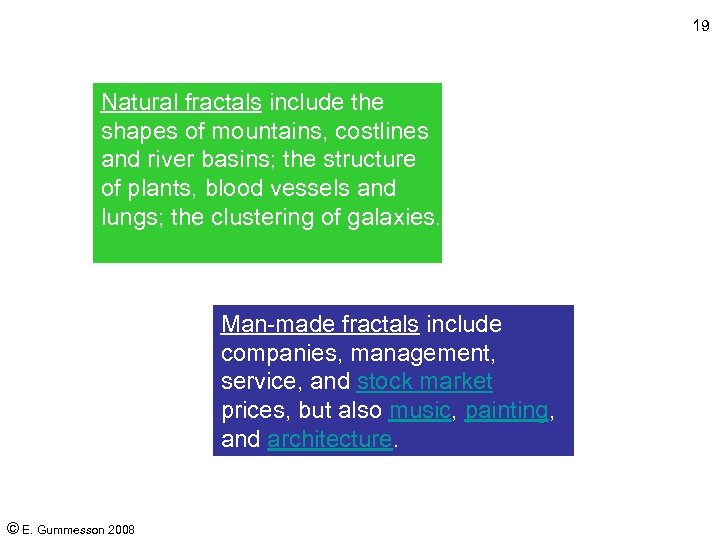 19 Natural fractals include the shapes of mountains, costlines and river basins; the structure of plants, blood vessels and lungs; the clustering of galaxies. Man-made fractals include companies, management, service, and stock market prices, but also music, painting, and architecture. © E. Gummesson 2008
 20 MANY-TO-MANY MARKETING © E. Gummesson 2008
 21 My definition: “Many-to-many marketing describes, analyzes and utilizes the network properties of marketing. ” © E. Gummesson 2008
 22 Everything we do in marketing and management is rooted in interaction in networks of relationships TOGETHER THEY FORM UNIQUE MANY-TO-MANY MARKETING SITUATIONS © E. Gummesson 2008
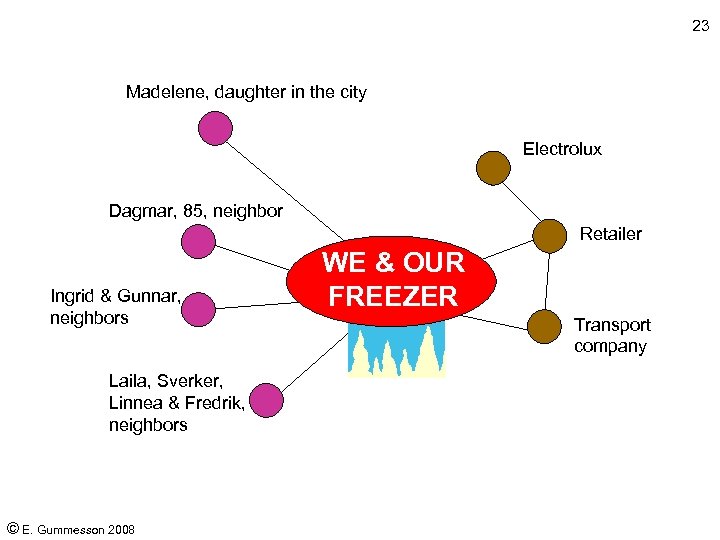 23 Madelene, daughter in the city Electrolux Dagmar, 85, neighbor Retailer Ingrid & Gunnar, neighbors Laila, Sverker, Linnea & Fredrik, neighbors © E. Gummesson 2008 WE & OUR FREEZER Transport company
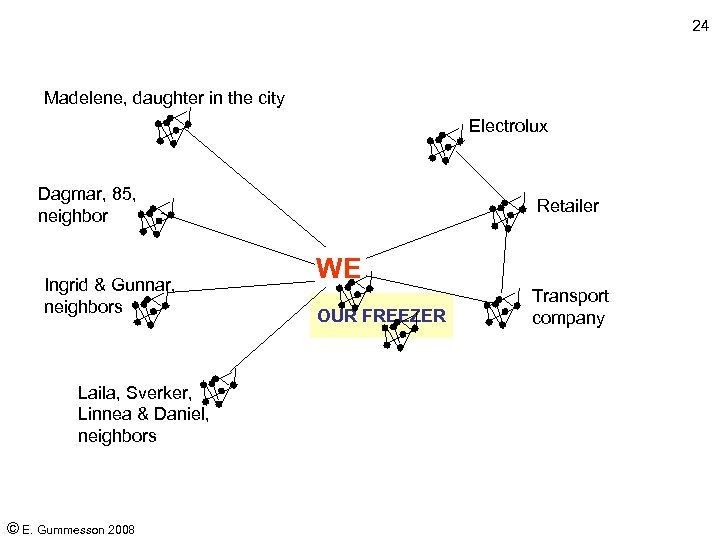 24 Madelene, daughter in the city Electrolux Dagmar, 85, neighbor Ingrid & Gunnar, neighbors Laila, Sverker, Linnea & Daniel, neighbors © E. Gummesson 2008 Retailer WE OUR FREEZER Transport company
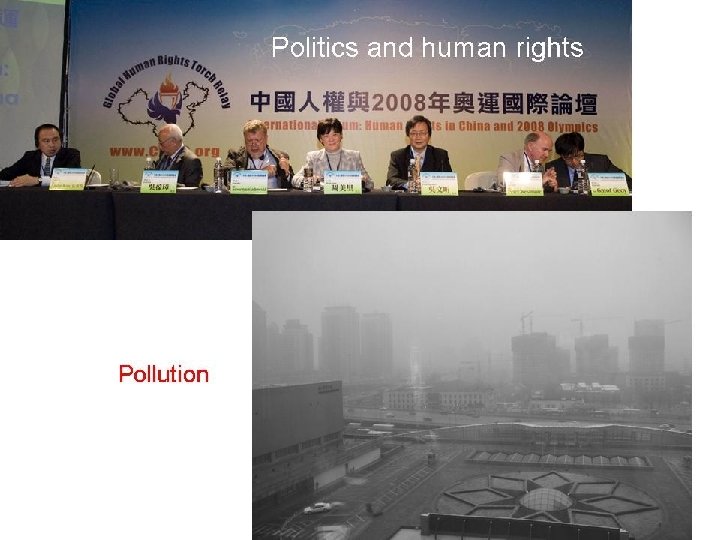
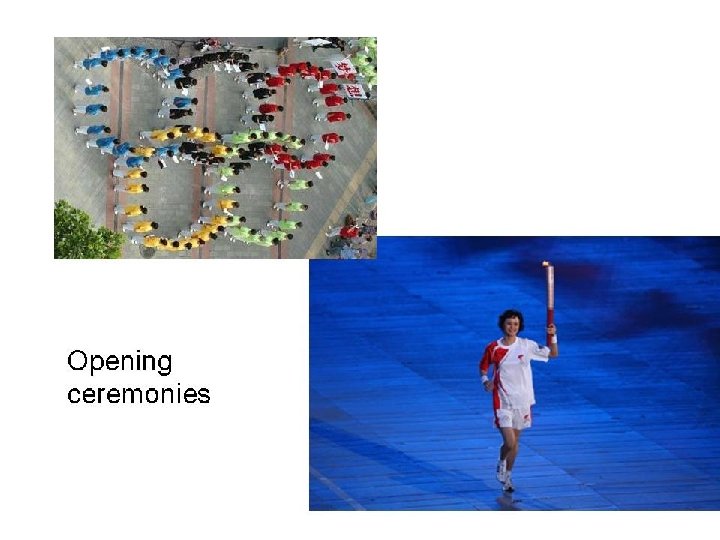
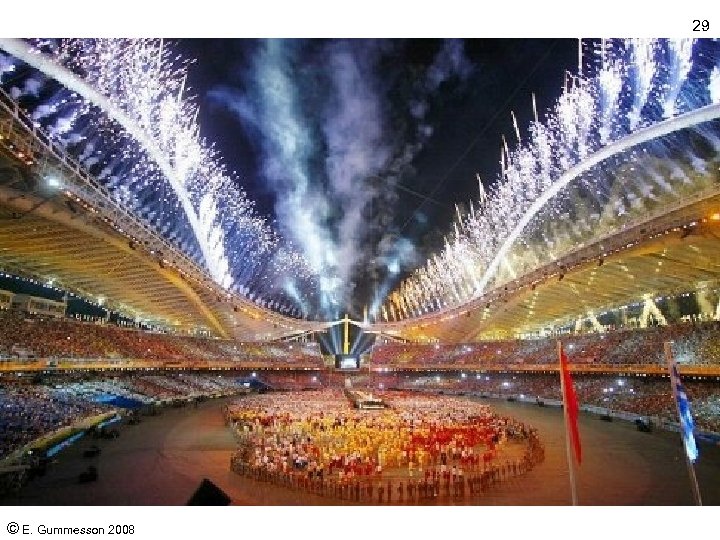
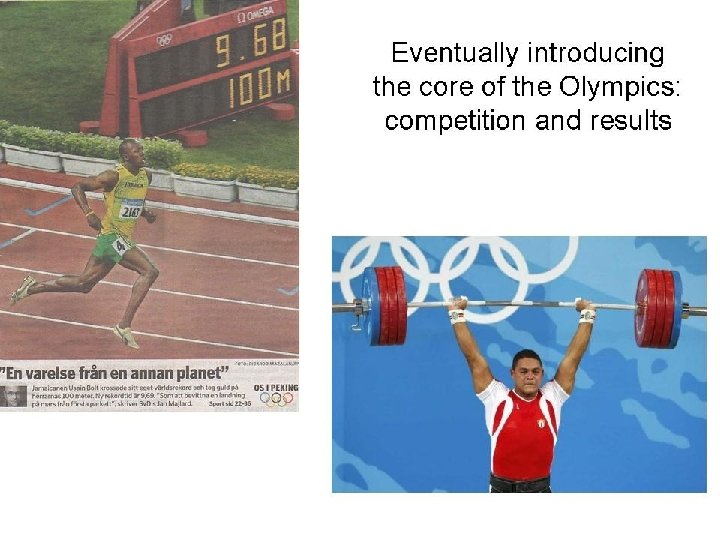
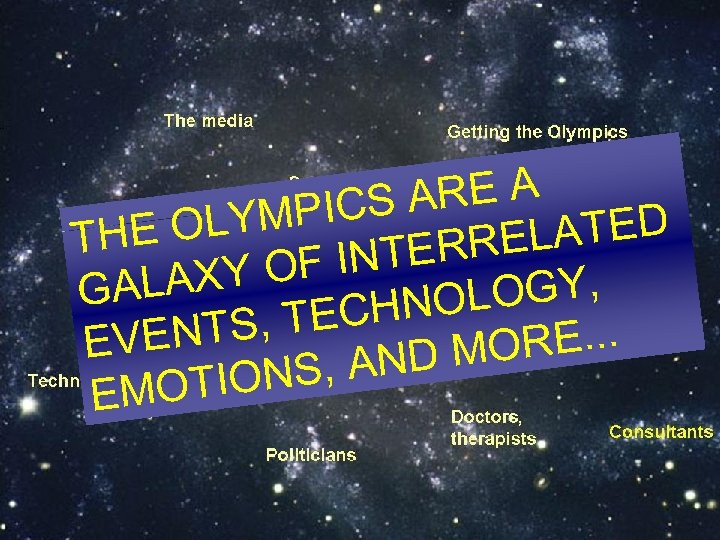
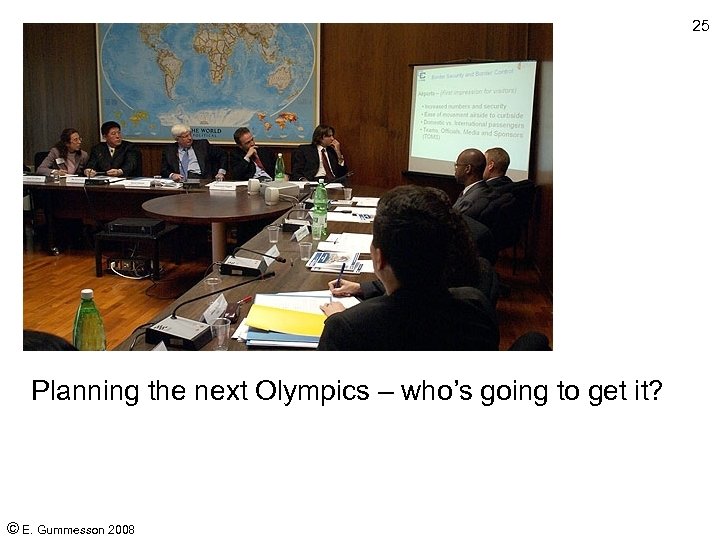 25 Planning the next Olympics – who’s going to get it? © E. Gummesson 2008
 26 © E. Gummesson 2008
 27 © E. Gummesson 2008
 28 © E. Gummesson 2008
 29 © E. Gummesson 2008
 30 © E. Gummesson 2008
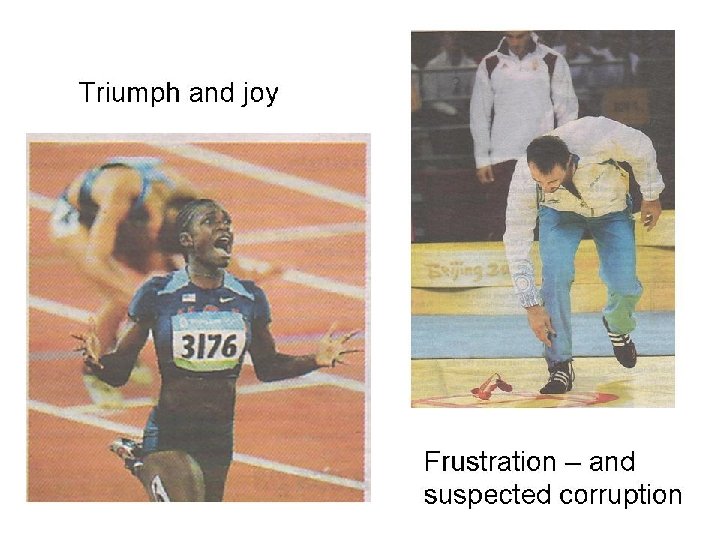 31 © E. Gummesson 2008
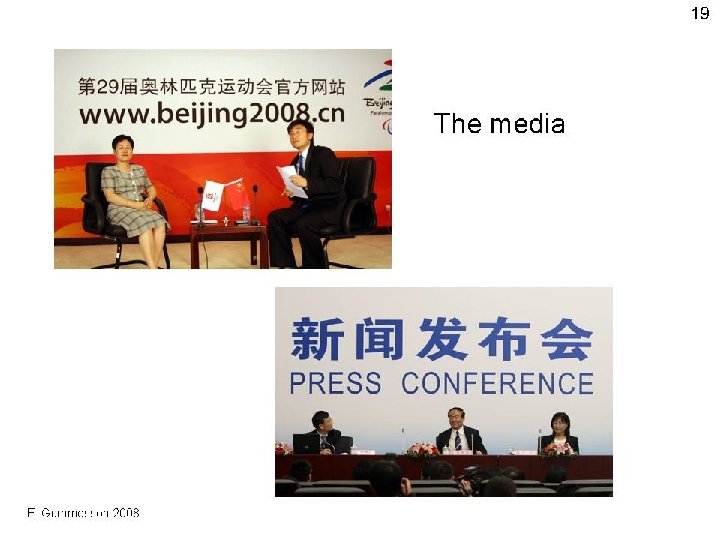 32 © E. Gummesson 2008
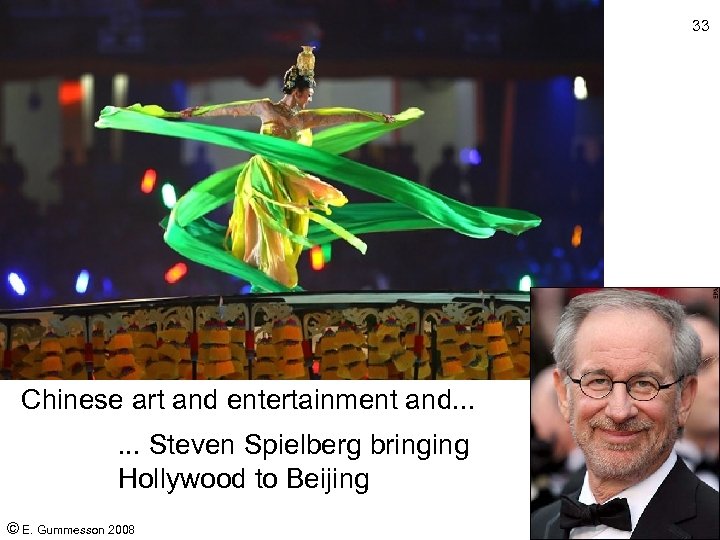 33 Chinese art and entertainment and. . . Steven Spielberg bringing Hollywood to Beijing © E. Gummesson 2008
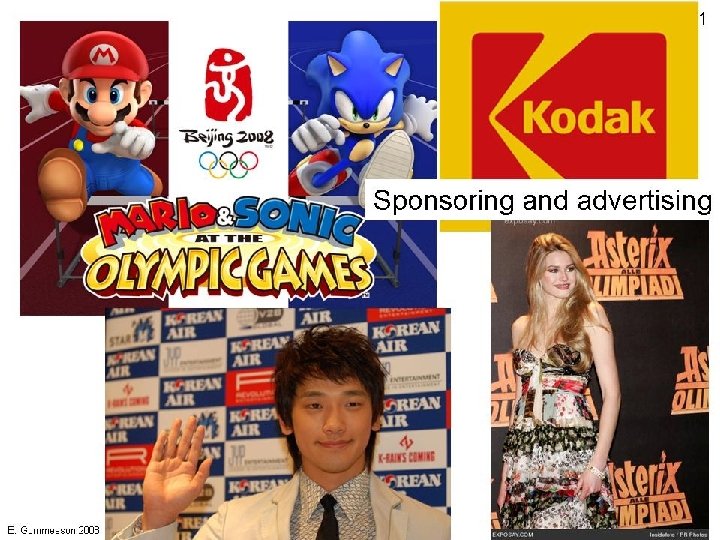 34 © E. Gummesson 2008
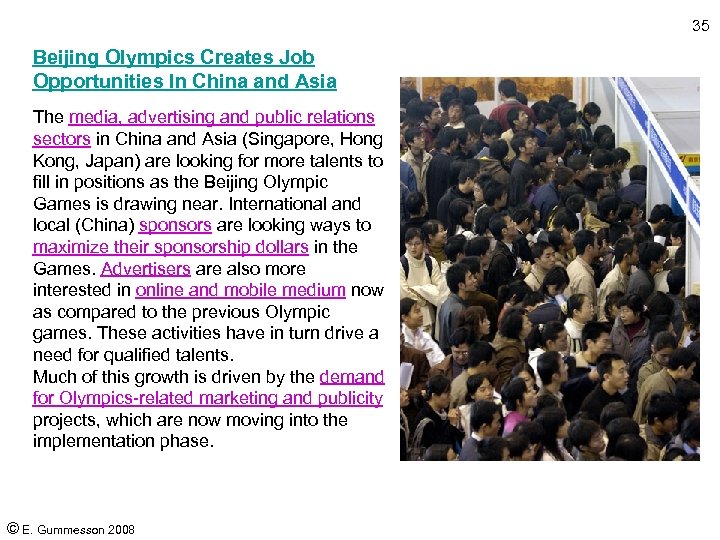 35 Beijing Olympics Creates Job Opportunities In China and Asia The media, advertising and public relations sectors in China and Asia (Singapore, Hong Kong, Japan) are looking for more talents to fill in positions as the Beijing Olympic Games is drawing near. International and local (China) sponsors are looking ways to maximize their sponsorship dollars in the Games. Advertisers are also more interested in online and mobile medium now as compared to the previous Olympic games. These activities have in turn drive a need for qualified talents. Much of this growth is driven by the demand for Olympics-related marketing and publicity projects, which are now moving into the implementation phase. © E. Gummesson 2008
 36 © E. Gummesson 2008
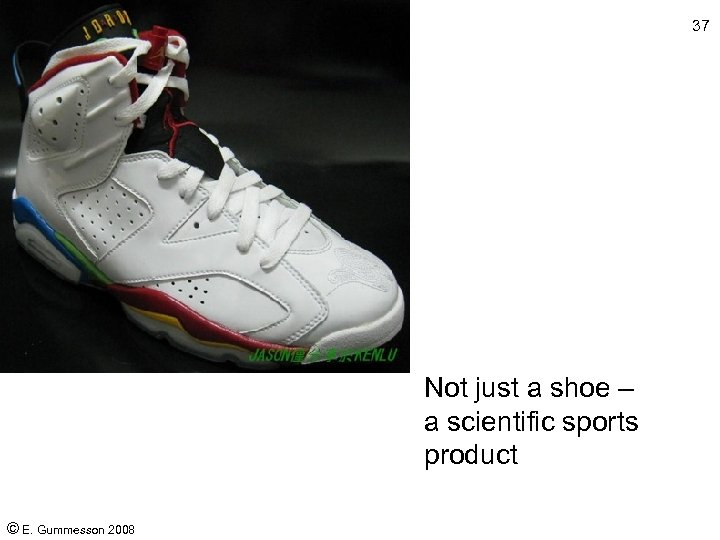 37 Not just a shoe – a scientific sports product © E. Gummesson 2008
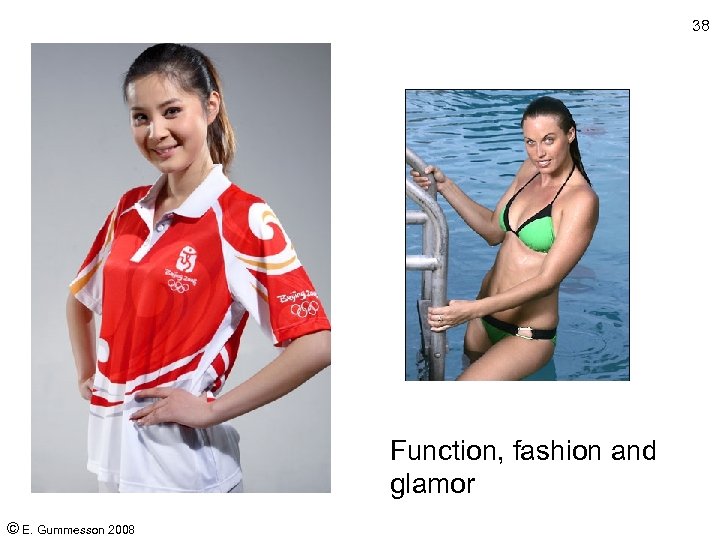 38 Function, fashion and glamor © E. Gummesson 2008
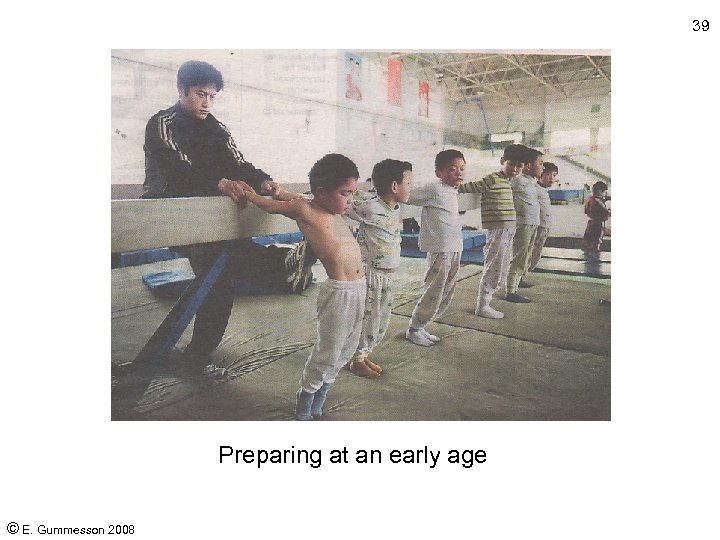 39 Preparing at an early age © E. Gummesson 2008
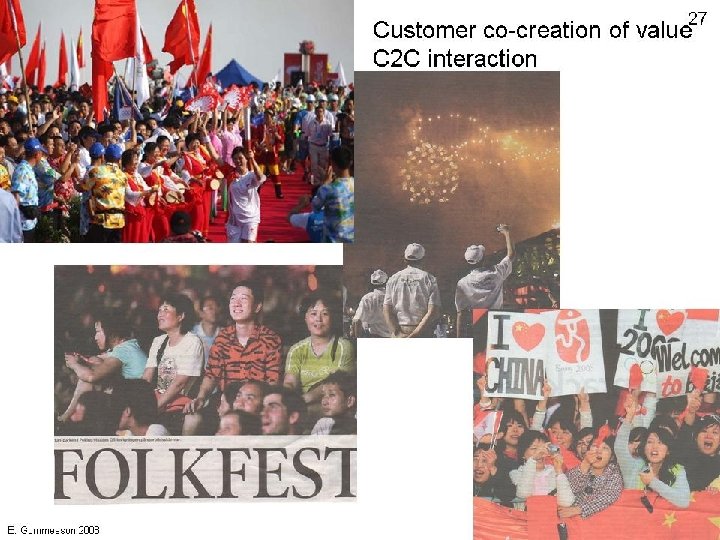 40 © E. Gummesson 2008
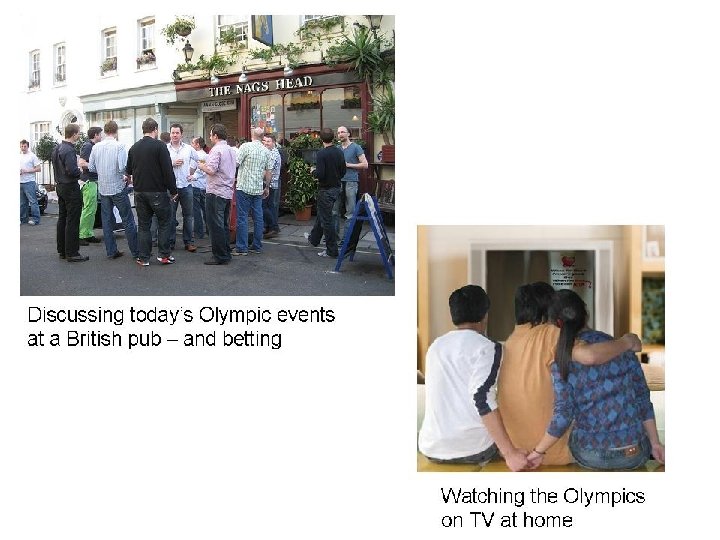 41 © E. Gummesson 2008
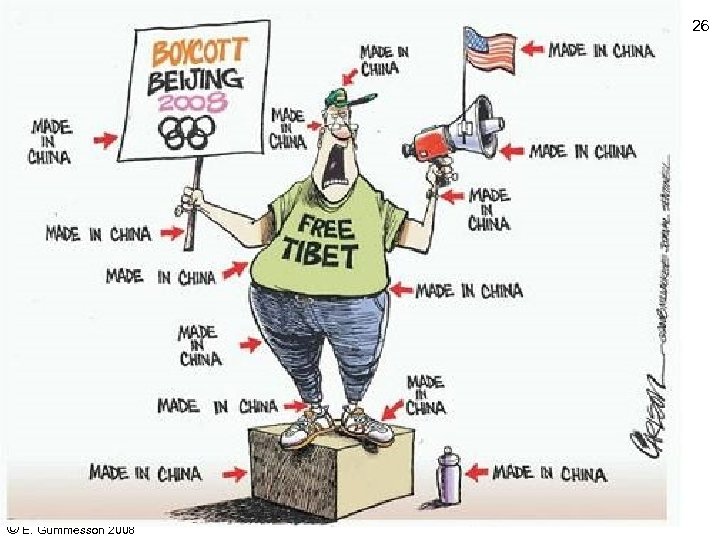
 The Olympics form a HUGE HUUUGE service system of networks! © E. Gummesson 2008 42
 43 Network theory: both methodology and a theory of life © E. Gummesson 2008
 44 “Networks are the fundamental stuff of which new organizations are and will be made. ” Source: Castells, Manuel, The Rise of the Network Society. Oxford, UK: Blackwells, 1996, p. 168 © E. Gummesson 2008
 45 Albert-László Barabási, Professor of Physics, in Linked: The New Science of Networks (2002) underscores network applications to markets: “…understanding network effects becomes the key to survival in a rapidly evolving new economy. ” (p. 200) “In reality, a market is nothing but a directed network. ” (p. 208) © E. Gummesson 2008
 46 © E. Gummesson 2008
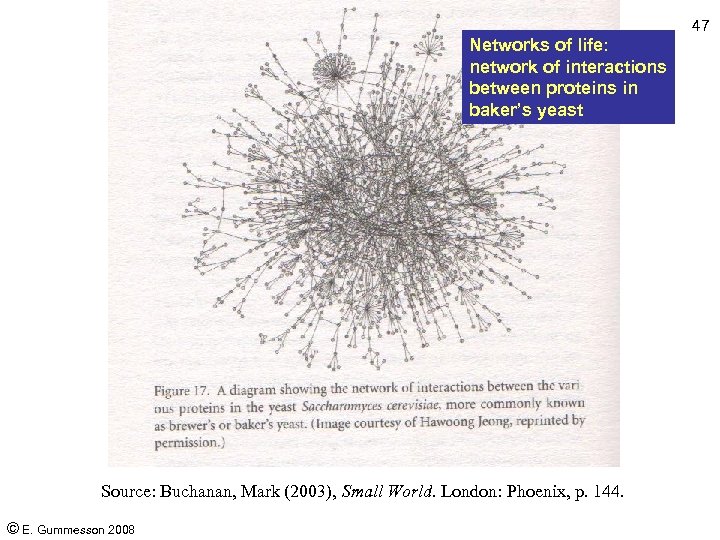 47 Networks of life: network of interactions between proteins in baker’s yeast Source: Buchanan, Mark (2003), Small World. London: Phoenix, p. 144. © E. Gummesson 2008
 48 © E. Gummesson 2008
 49 © E. Gummesson 2008
 50 RE A PICS A OLYM E ATED TH RREL F INTE AXY O GY, GAL HNOLO , TEC VENTS RE. . . E ND MO NS, A MOTIO E © E. Gummesson 2008
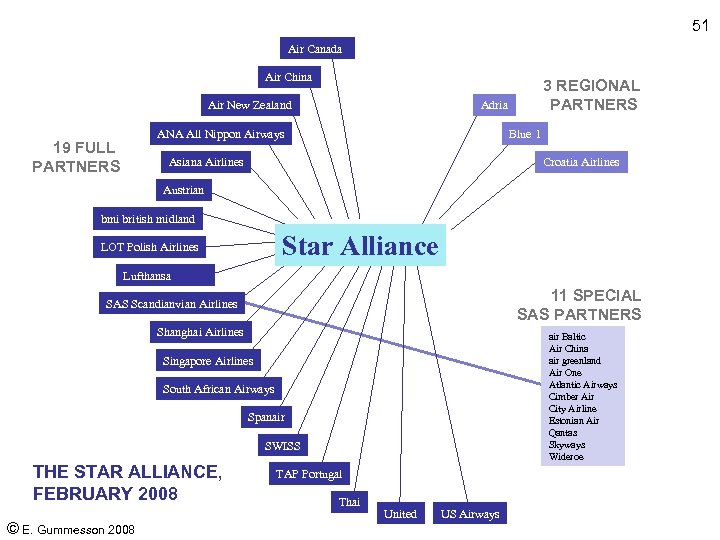 51 Air Canada Air China Air New Zealand Adria ANA All Nippon Airways 19 FULL PARTNERS 3 REGIONAL PARTNERS Blue 1 Asiana Airlines Croatia Airlines Austrian bmi british midland Star Alliance LOT Polish Airlines Lufthansa 11 SPECIAL SAS PARTNERS SAS Scandianvian Airlines Shanghai Airlines air Baltic Air China air greenland Air One Atlantic Airways Cimber Air City Airline Estonian Air Qantas Skyways Wideroe Singapore Airlines South African Airways Spanair SWISS THE STAR ALLIANCE, FEBRUARY 2008 © E. Gummesson 2008 TAP Portugal Thai United US Airways
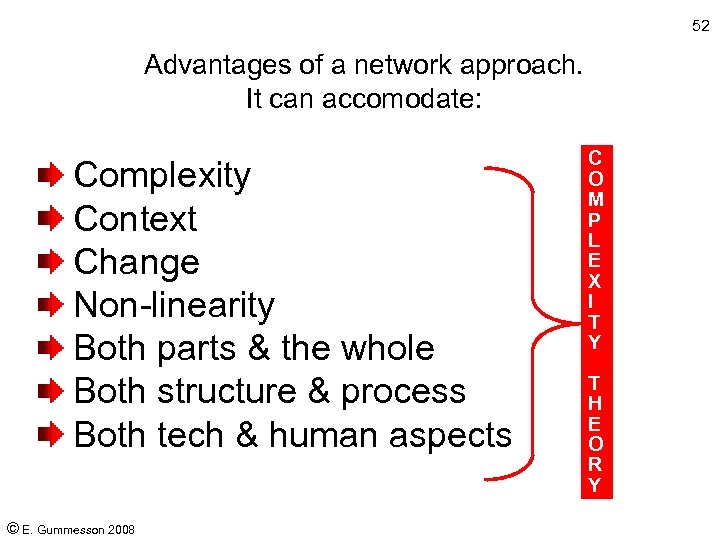 52 Advantages of a network approach. It can accomodate: Complexity Context Change Non-linearity Both parts & the whole Both structure & process Both tech & human aspects © E. Gummesson 2008 C O M P L E X I T Y T H E O R Y
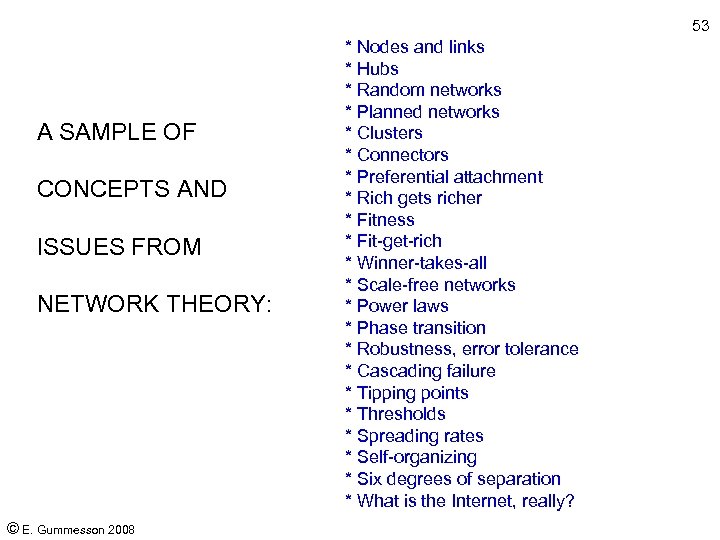 53 A SAMPLE OF CONCEPTS AND ISSUES FROM NETWORK THEORY: © E. Gummesson 2008 * Nodes and links * Hubs * Random networks * Planned networks * Clusters * Connectors * Preferential attachment * Rich gets richer * Fitness * Fit-get-rich * Winner-takes-all * Scale-free networks * Power laws * Phase transition * Robustness, error tolerance * Cascading failure * Tipping points * Thresholds * Spreading rates * Self-organizing * Six degrees of separation * What is the Internet, really?
 54 A SAMPLE OF CONCEPTS AND ISSUES FROM NETWORK THEORY: © E. Gummesson 2008 * Nodes and links * Hubs * Random networks * Planned networks * Clusters * Connectors * Preferential attachment * Rich gets richer * Fitness * Fit-get-rich * Winner-takes-all * Scale-free networks * Power laws * Phase transition * Robustness, error tolerance * Cascading failure * Tipping points * Thresholds * Spreading rates * Self-organizing * Six degrees of separation * What is the Internet, really?
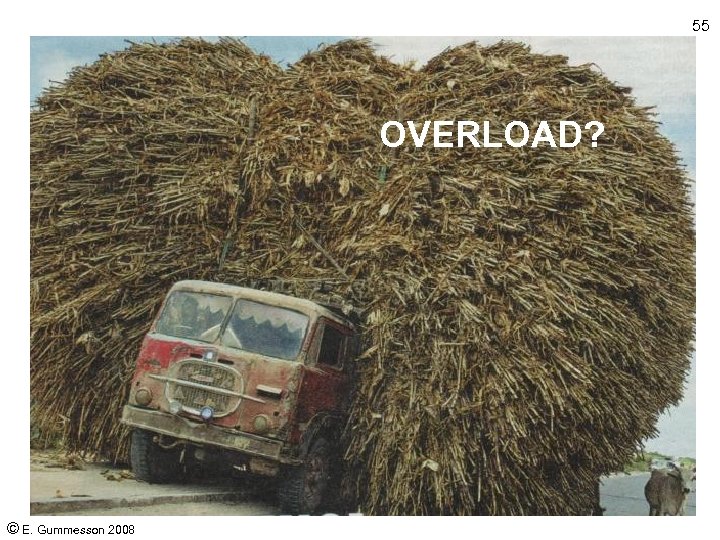 55 OVERLOAD? © E. Gummesson 2008
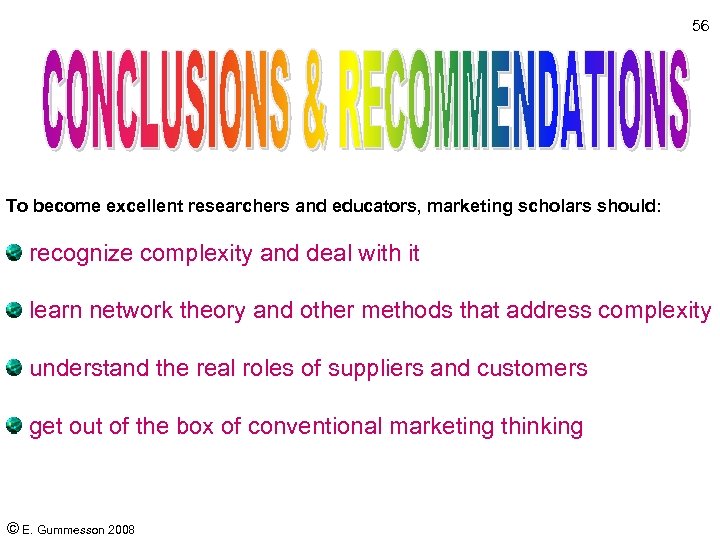 56 To become excellent researchers and educators, marketing scholars should: recognize complexity and deal with it learn network theory and other methods that address complexity understand the real roles of suppliers and customers get out of the box of conventional marketing thinking © E. Gummesson 2008
 57 © E. Gummesson 2008
 58 © E. Gummesson 2008
 Publications 2000 -2008 (selected) 59 On service, relationships and networks Gummesson, E. (2002), ”Relationship Marketing in the New Economy”. Journal of Relationship Marketing, vol. 1, no. 1, pp. 37 -57. Gummesson, E. (2002), ”Relationship Marketing and a New Economy: It’s Time for De-Programming”. Journal of Services Marketing, vol. 16, no. 7, pp. 585 -589. Gummesson, E. (2003), ”Relationship marketing: It all happens here and now!” Commentary, Marketing Theory, vol. 3. no. 1, pp. 167 -169. Gummesson, E. (2004), ”Return on Relationships (ROR): The Value of Relationship Marketing and CRM in Business-to-Business Contexts”. Journal of Business and Industrial Marketing, vol. 19, no. 2, pp. 136 -148. Gummesson, E. (2004), ”Service Provision Calls for Partners Instead of Parties. ” Commentary, Journal of Marketing, vol. 68, no. 1, pp. 20 -21. Lovelock, C. and Gummesson, E. (2004), ”Whither Services Marketing? In Search of a Paradigm and Fresh Perspectives, ” Journal of Service Research, vol. 7, no. 1, pp. 20 -41. Gummesson, E. (2004), Many-to-Many Marketing, Liber, Malmö, Sweden, 244 pp; test edition in English will be available in 2008. Gummesson, E. (2004), “From One-to-One to Many-To-Many Marketing. ” Plenary Session Presentation at the QUIS 9 Symposium, Karlstad University, Sweden, June 15 -18, 2004. Published in Edvardsson, Bo et al. , eds. , Proceedings from the QUIS 9 Symposium, Karlstad, Sweden: Karlstad University, pp. 16 -25. © E. Gummesson 2008
 60 Gummesson, E. (2006), “After Relationship Marketing, CRM and One-to-One: Many-to-Many Networks, ” Finanza Marketing e Produzione, no. 1, pp. 138 -144. Gummesson, E. (2006), “Many-to-many marketing as grand theory: A Nordic School contribution. ” In Lusch, Robert F. and Vargo, Stephen L. (Eds. ), Toward a Service. Dominant Logic of Marketing: Dialog, Debate, and Directions. New York: M. E. Sharpe. von Friedrichs Grängsjö, Yvonne and Gummesson, E. (2006), “Hotel Networks and Social Capital in Destination Marketing, ” Service Industry Management, Vol. 17, No. 1, pp. 58 -75. Gummesson, E. (2006), ”Customer-to-Customer Interaction in Service Development: A Many-to-Many Approach”. In Edvardsson, B. et al. (Eds. ), Involving Customers in New Service Development. Imperial College Press. Gummesson, E. (2006), “Relationship Marketing: From CRM and One-to-One to Many-to-Many Networks. ” In Lagrosen, S. and Svensson, G. (Eds. ), Marketing: Broadening the Horizons. Lund, Sweden: Studentlitteratur. Gummesson, E. (2006), “Implementing the marketing concept: from service and value to lean consumption. ” Marketing Theory, vol. 6, no. 3, pp. 291 -293. Gummesson, E. (2007), “Exit Services Marketing – Enter Service Marketing”. Journal of Customer Behaviour, Vol. 6, No. 2, pp. 113 -141. © E. Gummesson 2008
 61 Gummesson, E. (2008), “Quality, service-dominant logic and many-to-many marketing. ” The TQM Journal, 20 (2), pp. 143 -153. Gummesson, E. (2008), “Extending the New Dominant Logic: From Customer Centricity to Balanced Centricity. ” Commentary for Special Issue of The Journal of the Academy of Marketing Science (JAMS) on the New Dominant Logic, 36 (1), pp. 15 -17. Gummesson, E. (2008), “Customer centricity: reality or a wild goose chase? ”, European Business Reveiew, 20 (4), pp. 315 -330. Gummesson, E (2008), Total Relationship Marketing. Oxford: Elsevier/Butterworth- Heinemann. (revised 3 rd edition). Gummesson, E. and Polese, F. (2009), “B 2 B is not an island”, The Journal of Business & Industrial Marketing (forthcoming). On theory generation and research methodology Gummesson, E. (2000), Qualitative Methods in Management Research, Sage, Thousand Oaks, CA (revised second edition). Gummesson, E. (2001), ”Are Current Research Approaches in Marketing Leading Us Astray? ”, Marketing Theory, Vol. 1, No. 1, pp. 27 -48. Gummesson, E. (2002), ”Practical Value of Adequate Marketing Management Theory. ” Europan Journal of Marketing, Vol. 36, No. 3, pp. 325 -349. (Also in Buber, R. , Gadner, J. and Richards, L. (Eds. ), Applying Qualitative Methods to Marketing Mangement Research, Palgrave, Basingstoke, UK. ) © E. Gummesson 2008
 62 Gummesson, E. (2003), “All research is interpretive!”, Journal of Business & Industrial Marketing, Vol. 18, No. 6/7, pp. 482 -492. Gummesson, E. (2004), ”Qualitative research in marketing: roadmap for a wilderness of complexity and unpredictability”, European Journal of Marketing, Vol. 39, No. 3/4, pp. 309 -327. Perry, C. and Gummesson, E. (2004), ”Action research in marketing”. Commentary, European Journal of Marketing, Vol. 38, No. 3/4. pp. 310 -320. Gummesson, E. (2006), “Qualitative Research in Management: Addressing Complexity, Context and Persona, ” Management Decision, vol. 44, no. 2, (Spring), pp. 167 -179. Gummesson, E. (2007), ”Case Study Research, ” in Gustavsson, B. , ed, . The Principles of Knowledge Creation Methods, Cheltenham, UK: Edward Elgar. Gummesson, E. (2007), ”Case Studies. ” In Dictionary of Management Research, Sage, London. Gummesson, E. (2007), “Access to reality: observations on observational methods, Qualitative Market Research, Vol. 10, No. 2, pp. 130 -134. Gummesson, E. (2007), “Case study research and network theory: Birds of a feather”, Qualitative Research in Organizations and Management, Vol. 2, No. 3, pp. 226 -248. © E. Gummesson 2008