


 Скачать презентацию 1 DRC Efforts in assessing corruption risks and
5a0ffa2dd1775168564d67b1d63223ae.ppt
- Количество слайдов: 38
 1 DRC: Efforts in assessing corruption risks and finding entry points for anti-corruption actions in REDD+ planning and design Regional workshop on Strenghtening Accountability and Transparency in REDD+ in Africa 25 avril 2012, Lusaka
 I. Anti-Corruption Agenda in DRC II. How does REDD+ enable innovation? III. Entry points for anti-corruption actions in REDD+ process in DRC • Where does the REDD+ process stand? • Illustration 1: Coordination and stakeholder engagement • Illustration 2: Homologation Procedure and National Registry • Illustration 3: DRC National Forest Monitoring System • Illustration 4: DRC National REDD+ Fund • Illustration 5: National Programme of PES
 DRC in a nutshell 3 • Large country: 2, 34 M Km 2, with 67% of the superficy covered by forests 2 nd largest reservoir of terrestrial carbon in the world Largest forest in Africa endowed by the richest biodiversity • 70 M inhabitants of which 70% living under the poverty rate • HDI 2011: 0, 286 => Ranked at the latest position: 187 e out of 187. • Richely endowed in natural resources: all major tradable extractive products: copper, cobalt, zinc, coltan, silver, gold, petroleum etc. • A Fragile State after two decades of conflicts, political unstability and chronic insecurity • Decentralization process is hindered => critical lack of financial resources at the national and provincial level
 Corruption in DRC (1/2) • REDD+ in the DRC is being implemented in an environment where there is an entrenched tradition of rampant corruption and impunity • Poor score of the DRC on all governance indicators: TI, Doing Business, WB, etc. • Wages are very low and graft is commonly tolerated and accepted as a mean of survival • Civil servants have privatized the delivery of public services for their gains • With limited opportunities in the private sector, politics is seen as the only way to accumulate wealth 4
 Corruption in DRC (2/2) • Justice sector considered as very corrupt and magistrates extort bribes from citizen • Poor management of public finance, for exemples: • 90% of the public contracts were not awarded in line with the regulations • More than 50% of public expenditures were not aligned with the formal chain of expenditures => no possibility of tracking the use of money • The control bodies such as the Court of Accounts or the General Inspectorate of Finance are very weak and poorly funded institutions and they lack of independance • Watchdog mechanisms are not working properly: civil society is fragmented and highly politicized, & media sector lacks of profesionalization 5
 Anti-corruption measures • In 2010, a national anti-corruption strategy was developed by OCEP, but so far has not been endorsed by the national authorities • DRC endorsed international instruments such as the SADC Anti-corruption Protocole & in 2010 the UN Convention against Corruption, but the adaptation and implementation of these instruments have been limited=> no impact on the corruption level • Existence of various localized initiatives with a limited impact due to a lack of vision and coordination at the national level • Donors are relunctant to support such initiatives due to the critical lack of political will to move forward in this area 6
 UNDP anti-corruption agenda in DRC (1/2) • Since 2008, UNDP set up an important governance programme, • Global outcome: to promote a democratic, stable and legitimate governance system enabling a sustainable human development • 5 main components in this program: administrative, political, economic, local and judiciary and security governance • Each of these components are implementing activities which contribute directly or indirectly to the fight against corruption 7
 UNDP anti-corruption agenda in DRC (2/2) • Anti-corruption is integrated to the administrative governance component and provides support to the external audit process in order to enhance transparency in public finance management and improve accountability. • A strategy to support the chain of accountability has been set up wich focuses on the following pillars: Ø Review of the legal framework governing controls and accountability Ø Assistance in modernisation and capacity building for the key links in the chain of accountability (Ministry of Finance, Cour des Comptes , Parliament Civil Society and medias) Ø Enhancing the analytic capacities of the Superior Audit Institution of DRC Ø Support for public finance reform and policy dialogue 8
 Corruption risks with respect to REDD+ implementation • Risk of corruption can threaten the implementation of REDD+ at all the phases: ü A number of politicians including those in the government and Parliament, as well as high ranking civil servants are engaged in industrial and artisanal logging ü Congolese armed forces are also involved in mining and some of the mines where they operates are in forested areas ü Oils companies are also vying for contracts to explore oil in forested zones • Such individuals or groups of interests will try to influence the design of the national REDD+ framework for their private gain. § Lack of harmonization among different codes (land tenure, mine, forestry) and superposition between formal and custom rights Do not secure property rights • Specific risks linked to the production of assets : money laundering and fiscal fraud 9
 Collaboration among REDD+ and UNDP governance • As the REDD+ process will enter into its investment phase, tightened collaboration between National REDD+ Coordination and UNDP governance • An anticorruption expert has been recruited and will embodied the cooperation among governance and REDD+ agenda in UNDP. • Collaboration areas : • Integration of REDD+ awareness in the Guidebook on Investigative Journalism & training of journalists • Awareness raising of the civil society on the corruption risks associated to REDD+ • Sensitization of the ECOFIN Commisions and capacity building of Superior Audit Institutions on the REDD+ corruption risks • Training of the judges and magistrats on REDD+ process, mechanisms, legal framework and contracts The workplan will be refined and detailed shortly with the new anticorruption expert. 10
 I. Anti-corruption Agenda in DRC II. How does REDD+ enable innovation? III. Entry points for anti-corruption actions in REDD+ process in DRC • Where does the REDD+ process stand? • Illustration 1: Coordination and stakeholder engagement • Illustration 2: Homologation Procedure and National Registry • Illustration 3: DRC National Forest Monitoring System • Illustration 4: DRC National REDD+ Fund • Illustration 5: National Programme of PES
 The REDD+ process design Fighting corruption is about sharing information, enhancing transparency => the more people involved in the process, the more transparent you need to be. A REDD+ process is based on a multi-stakeholder, multi-sectoral, participatory approach. It is an opportunity to truly play the game ! • Multiple drivers and impacts of deforestation and forest degradation (DD): agriculture, energy, infrastructure, land tenure, land planning, finance, etc. Need to mobilize all sectors and ministries • Inclusiveness of the decision-making process => Need to mobilize civil society, private sector, local communities, indigeneous • REDD+ is a learning by doing & iterative process: implementation framework designed through experimentation, capitalization of lessons learned => Need to mobilize national and international expertise to support the design and therefore challenge the overall process.
 REDD+ Funding • Performance-based payments • Ex-post payments => based on the delivery of a result/a service • Additional and foreseable payments => Opportunity to secure funding on the long-run • Go far beyond mere ODA as REDD+ funding will not be « Free money » • Possibility to access market mechanisms A new paradigm ---- between ODA & Markets, with pros and cons • Therefore, all REDD+ funded activities will have to be MRV-ed: • Need to produce national standards => define what we do & don’t accept • Geo-localized, standardized & quantified information that can be monitored and VERIFIED (satellite imaginery, GPS pictures, local surveys with access to raw datas, etc. ) • Need to put in place sound verification systems at multiple levels: external/internal, international/national.
 I. The anti-corruption agenda in DRC II. How does REDD+ enable innovation? III. Entry points for anti-corruption actions in REDD+ process in DRC § Where does the REDD+ process stand ? • • • Illustration 1: Coordination and stakeholder engagement Illustration 2: Homologation Procedure and National Registry Illustration 3: DRC National Forest Monitoring System Illustration 4: DRC National REDD+ Fund Illustration 5: National Programme of PES
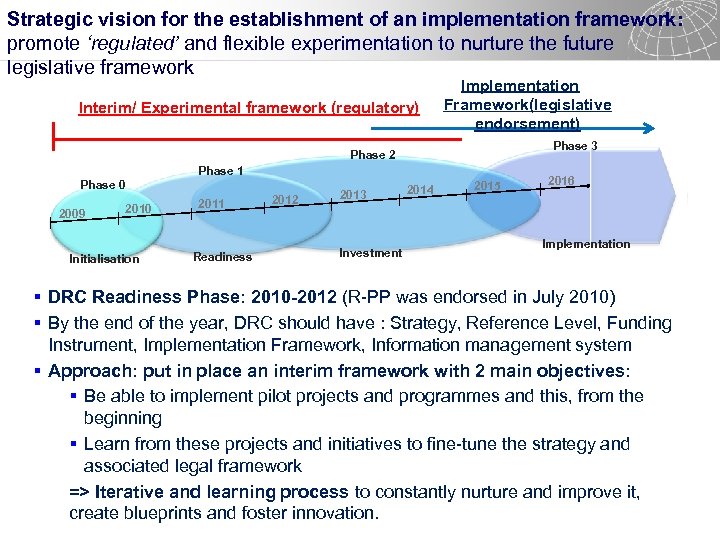 Strategic vision for the establishment of an implementation framework: promote ‘regulated’ and flexible experimentation to nurture the future legislative framework Interim/ Experimental framework (regulatory) Implementation Framework(legislative endorsement) Phase 3 Phase 2 Phase 1 Phase 0 2009 2010 Initialisation 2011 Readiness 2012 2013 Investment 2014 2015 2016 Implementation § DRC Readiness Phase: 2010 -2012 (R-PP was endorsed in July 2010) § By the end of the year, DRC should have : Strategy, Reference Level, Funding Instrument, Implementation Framework, Information management system § Approach: put in place an interim framework with 2 main objectives: § Be able to implement pilot projects and programmes and this, from the beginning § Learn from these projects and initiatives to fine-tune the strategy and associated legal framework => Iterative and learning process to constantly nurture and improve it, create blueprints and foster innovation.
 Objective for 2012: set up mechanisms to implement the National REDD+ Strategy by 2013
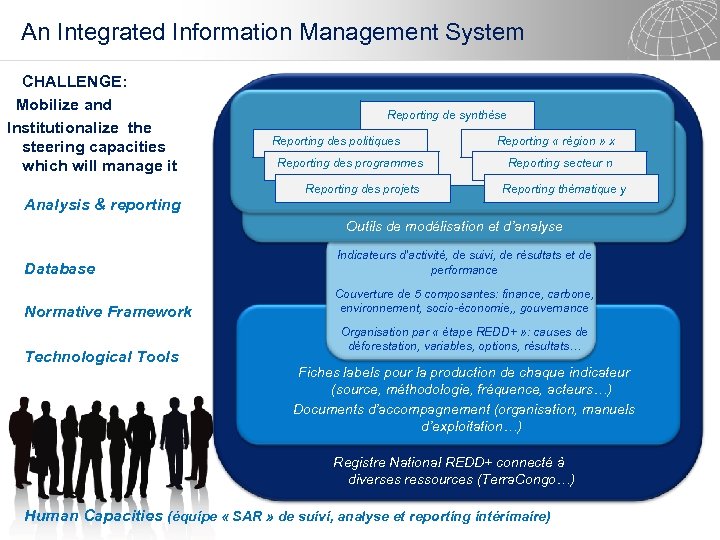
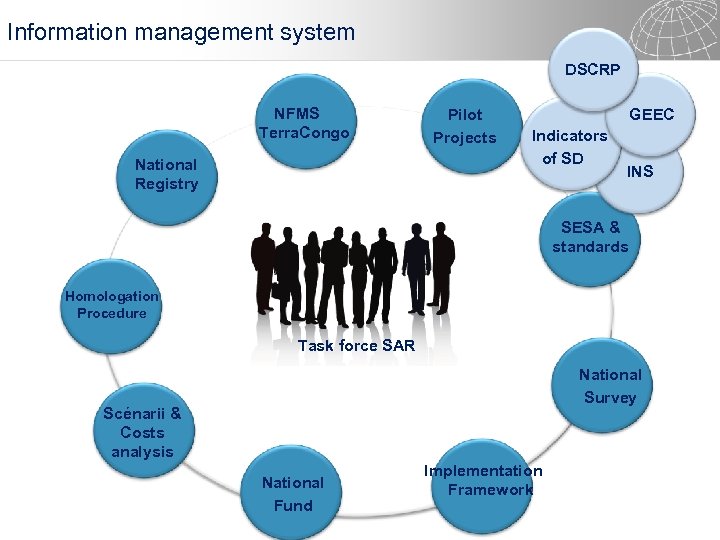 Information management system DSCRP NFMS Terra. Congo National Registry Pilot Projects GEEC Indicators of SD INS SESA & standards Homologation Procedure Task force SAR National Survey Scénarii & Costs analysis National Fund Implementation Framework
 I. The anti-corruption agenda in DRC II. How does REDD+ enable innovation? III. Entry points for anti-corruption actions in REDD+ process in DRC • Where does the REDD+ process stand? • Illustration 1: Coordination and stakeholder engagement • • Illustration 2: Homologation Procedure and National Registry Illustration 3: DRC National Forest Monitoring System Illustration 4: DRC National REDD+ Fund Illustration 5: National Programme of PES
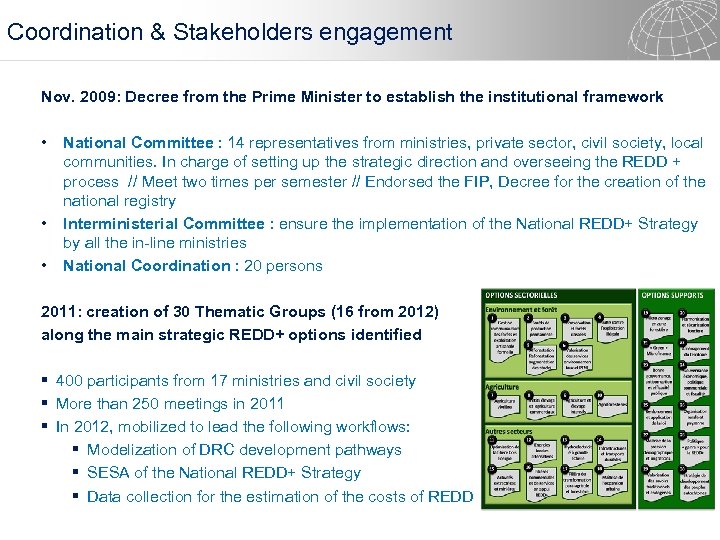 Coordination & Stakeholders engagement Nov. 2009: Decree from the Prime Minister to establish the institutional framework • • • National Committee : 14 representatives from ministries, private sector, civil society, local communities. In charge of setting up the strategic direction and overseeing the REDD + process // Meet two times per semester // Endorsed the FIP, Decree for the creation of the national registry Interministerial Committee : ensure the implementation of the National REDD+ Strategy by all the in-line ministries National Coordination : 20 persons 2011: creation of 30 Thematic Groups (16 from 2012) along the main strategic REDD+ options identified § 400 participants from 17 ministries and civil society § More than 250 meetings in 2011 § In 2012, mobilized to lead the following workflows: § Modelization of DRC development pathways § SESA of the National REDD+ Strategy § Data collection for the estimation of the costs of REDD
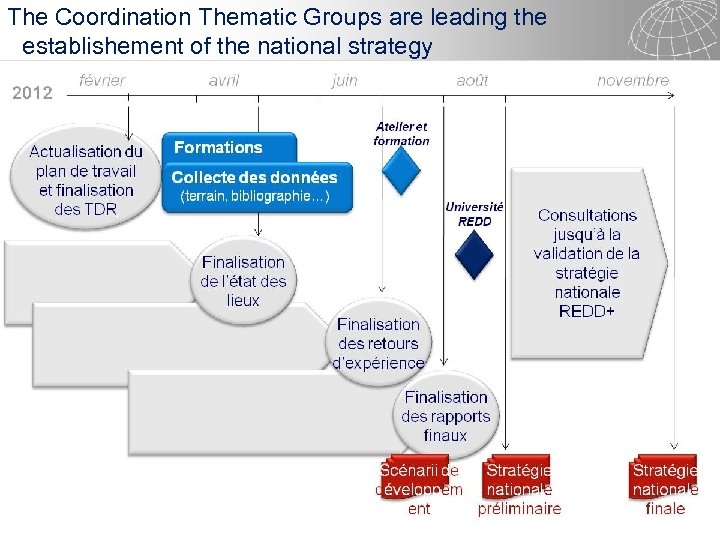 The Coordination Thematic Groups are leading the establishement of the national strategy
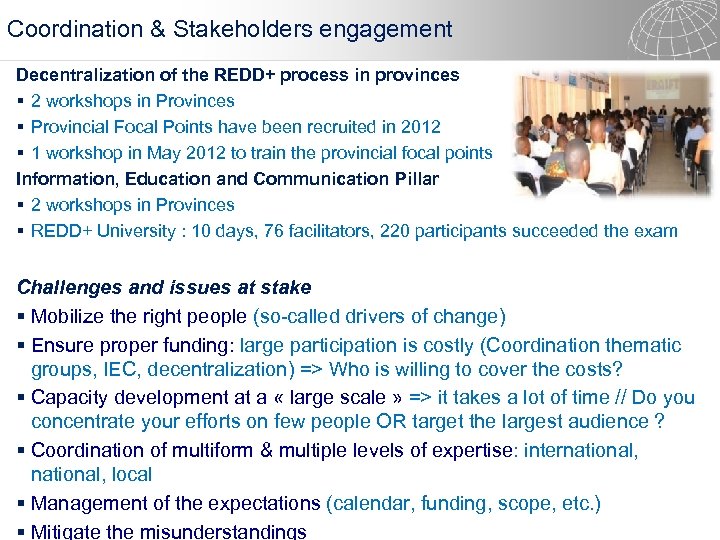 Coordination & Stakeholders engagement Decentralization of the REDD+ process in provinces § 2 workshops in Provinces § Provincial Focal Points have been recruited in 2012 § 1 workshop in May 2012 to train the provincial focal points Information, Education and Communication Pillar § 2 workshops in Provinces § REDD+ University : 10 days, 76 facilitators, 220 participants succeeded the exam Challenges and issues at stake § Mobilize the right people (so-called drivers of change) § Ensure proper funding: large participation is costly (Coordination thematic groups, IEC, decentralization) => Who is willing to cover the costs? § Capacity development at a « large scale » => it takes a lot of time // Do you concentrate your efforts on few people OR target the largest audience ? § Coordination of multiform & multiple levels of expertise: international, local § Management of the expectations (calendar, funding, scope, etc. ) § Mitigate the misunderstandings
 I. The anti-corruption agenda in DRC II. How does REDD+ enable innovation? III. Entry points for anti-corruption actions in REDD+ process in DRC • Where does the REDD+ process stand? • Illustration 1: Coordination and Stakeholder engagement • Illustration 2: Homologation Procedure and National Registry • Illustration 3: DRC National Forest Monitoring System • Illustration 4: DRC National REDD+ Fund • Illustration 5: National Programme of PES
 23
23
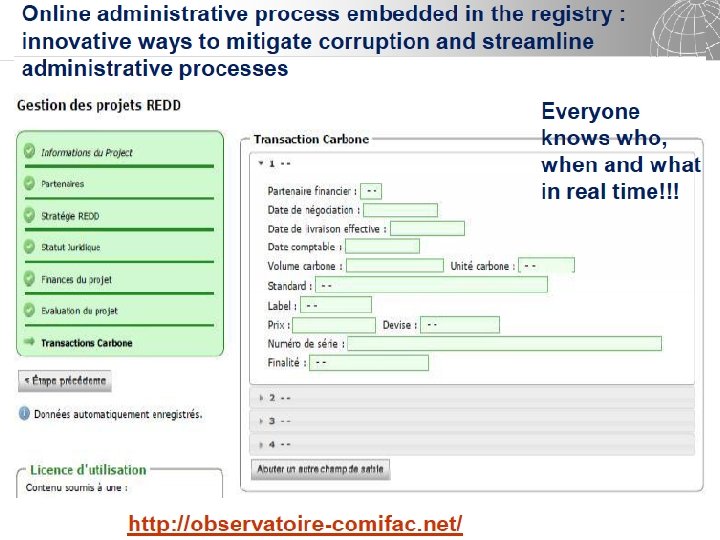
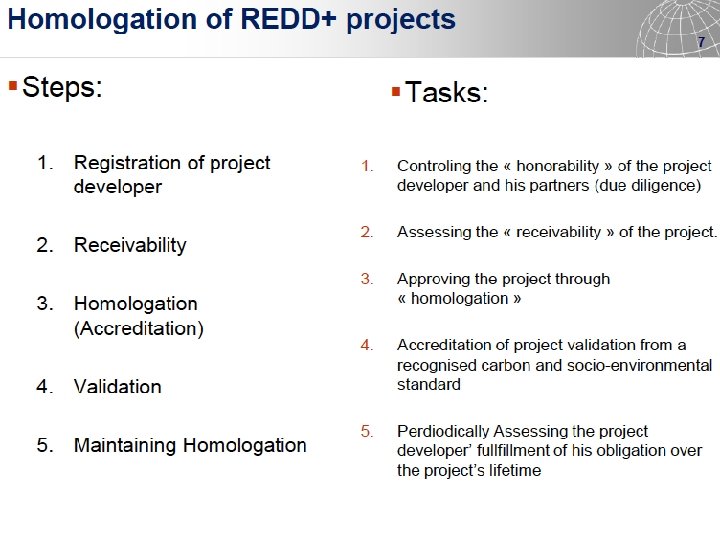
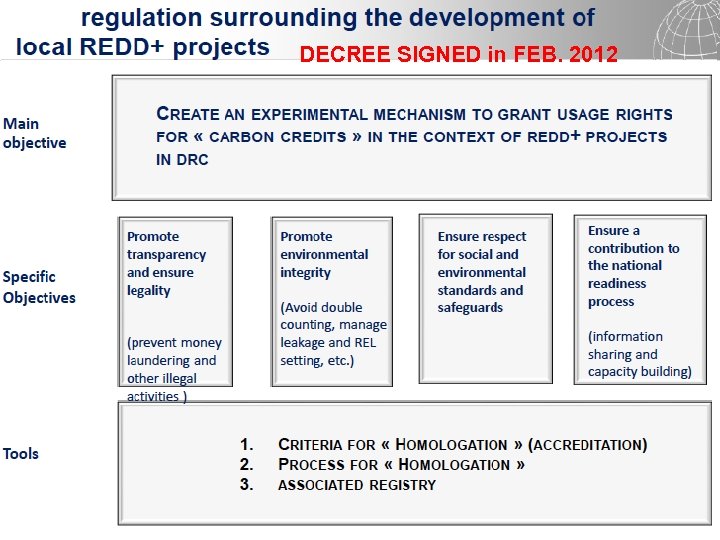 DECREE SIGNED in FEB. 2012 24
 25
25
 26
26
 I. The anti-corruption agenda in DRC II. How does REDD+ enable innovation? III. Entry points for anti-corruption actions in REDD+ process in DRC • Where does the REDD+ process stand? • Illustration 1: Coordination and Stakeholder engagement • Illustration 2: Homologation Procedure and National Registry • Illustration 3: DRC National Forest Monitoring System • Illustration 4: DRC National REDD+ Fund • Illustration 5: National Programme of PES
 28
28
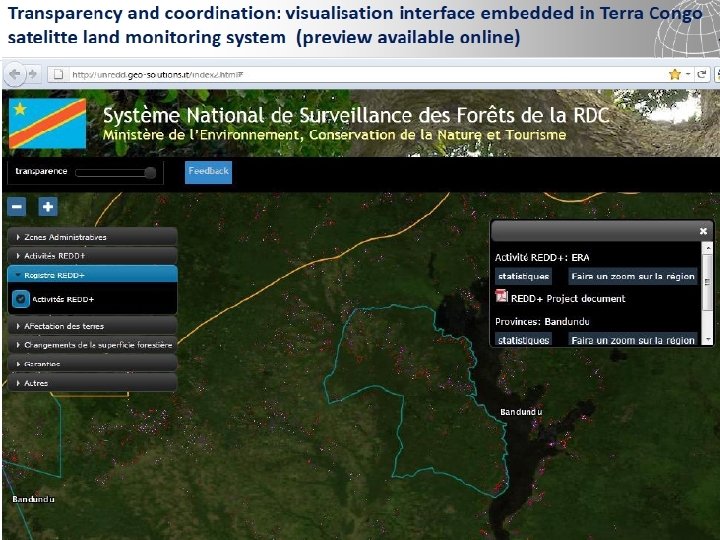
 DRC National Forest Monitoring System (NMFS) – Terra. Congo ‘Beta version’ presented at COP 17 in Durban Linked with INPE platform Terra. Amazon (Brazil), which combines GIS image, processing, database management and data access functionalities => Brazilian results can be easily verified through a free transparent online system. The DRC NMFS aims to be the national tool to: • monitor the country’s REDD+ policies and measures (Pa. Ms) • Align to Para 71 of Decision 1/CP 16, UNFCCC: requests developing country Parties willing to undertake REDD+ activities to develop robust NMFS • Sustainably manage DRC forest • Produce national statistics on forestry resources which can be verified Main objective: relate the NFMS to biometric and dendrometric parameters and indicators such as forest area, type of forest ecosystems, expansion or establishment of protected areas, application of certification schemes, law enforcement, etc. • Demonstrate in a transparent way the emissions reductions to the IC The NMFS also integrates the DRC national REDD+ registry !!
 I. The anti-corruption agenda in DRC II. How does REDD+ enable innovation? III. Entry points for anti-corruption actions in REDD+ process in DRC • Where does the REDD+ process stand? • Illustration 1: Coordination and Stakeholder engagement • Illustration 2: Homologation Procedure and National Registry • Illustration 3: DRC National Forest Monitoring System • Illustration 4: DRC National REDD+ Fund • Illustration 5: National Programme of PES
 Subventions $ à la performance carbone Stratégie REDD+ de la RDC $ au proxy Résultats carbone COMITES NATIONAL & INTERMINISTERIEL Informations pour MRV Informations pour MR SUBVENTIONS COMITE DE PILOTAGE (présidé par le MECNT) MINFIN Sources Nationales Finance Climat Secrétariat Technique Fenêtre 3 -Projets REDD+ REGISTRE REDD+ Développement des capacités, préparations des projets PSE, REDD+ Programmes habilitants (AT, foncier, etc. ) Investissements Sectoriels (Agriculture, Energie, etc. ) Projets REDD+ Projets PSE Projets générant crédit carbone Partenaires de mise en oeuvre Entités Nationales ONG OSC Secteur Privé, ONG International AGENT Fenêtre 2 - Paiements Pour Services Environnementaux (PSE) ADMINISTRATIF / PNUD Fenêtre 1 Développement de Capacités et Investissements REDD+ APD Organisations Internationales Acheteurs de crédits carbone ou agences de Rétribution à la performance carbone
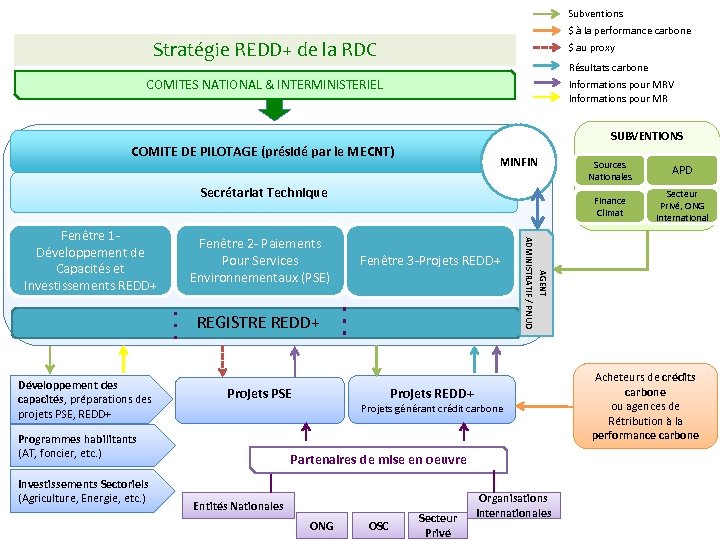
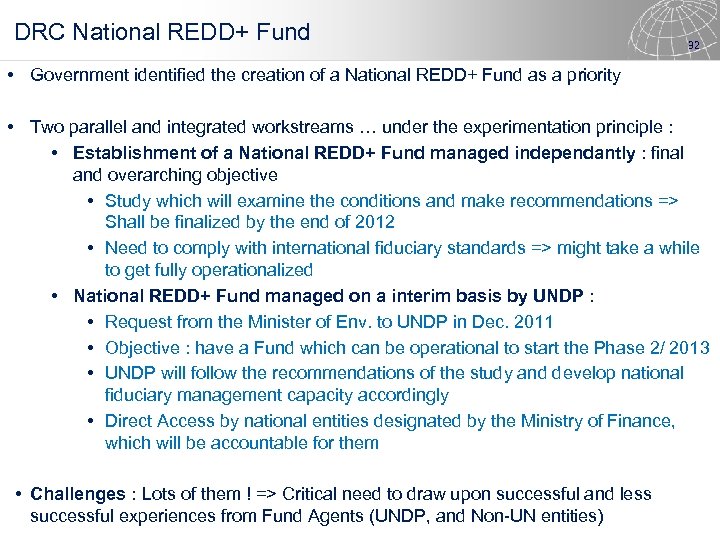 DRC National REDD+ Fund 32 • Government identified the creation of a National REDD+ Fund as a priority • Two parallel and integrated workstreams … under the experimentation principle : • Establishment of a National REDD+ Fund managed independantly : final and overarching objective • Study which will examine the conditions and make recommendations => Shall be finalized by the end of 2012 • Need to comply with international fiduciary standards => might take a while to get fully operationalized • National REDD+ Fund managed on a interim basis by UNDP : • Request from the Minister of Env. to UNDP in Dec. 2011 • Objective : have a Fund which can be operational to start the Phase 2/ 2013 • UNDP will follow the recommendations of the study and develop national fiduciary management capacity accordingly • Direct Access by national entities designated by the Ministry of Finance, which will be accountable for them • Challenges : Lots of them ! => Critical need to draw upon successful and less successful experiences from Fund Agents (UNDP, and Non-UN entities)
 An Integrated Information Management System CHALLENGE: Mobilize and Institutionalize the steering capacities which will manage it Reporting de synthèse Reporting des politiques Reporting des programmes Reporting des projets Reporting « région » x Reporting secteur n Reporting thématique y Analysis & reporting Outils de modélisation et d’analyse Database Normative Framework Technological Tools Indicateurs d’activité, de suivi, de résultats et de performance Couverture de 5 composantes: finance, carbone, environnement, socio-économie, , gouvernance Organisation par « étape REDD+ » : causes de déforestation, variables, options, résultats… Fiches labels pour la production de chaque indicateur (source, méthodologie, fréquence, acteurs…) Documents d’accompagnement (organisation, manuels d’exploitation…) Registre National REDD+ connecté à diverses ressources (Terra. Congo…) Human Capacities (équipe « SAR » de suivi, analyse et reporting intérimaire)
 I. The anti-corruption agenda in DRC II. How does REDD+ enable innovation? III. Entry points for anti-corruption actions in REDD+ process in DRC • Where does the REDD+ process stand? • Illustration 1: Coordination and Stakeholder engagement • Illustration 2: Homologation Procedure and National Registry • Illustration 3: DRC National Forest Monitoring System • Illustration 4: DRC National REDD+ Fund • Illustration 5: National Programme of PES
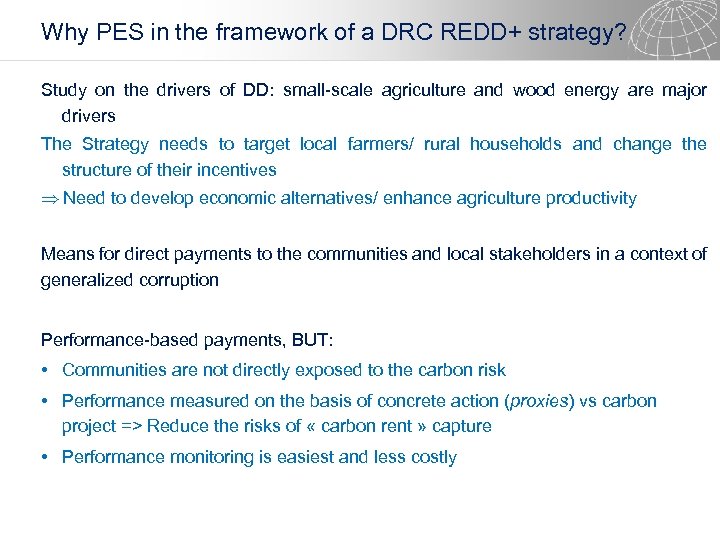 Why PES in the framework of a DRC REDD+ strategy? Study on the drivers of DD: small-scale agriculture and wood energy are major drivers The Strategy needs to target local farmers/ rural households and change the structure of their incentives Need to develop economic alternatives/ enhance agriculture productivity Means for direct payments to the communities and local stakeholders in a context of generalized corruption Performance-based payments, BUT: • Communities are not directly exposed to the carbon risk • Performance measured on the basis of concrete action (proxies) vs carbon project => Reduce the risks of « carbon rent » capture • Performance monitoring is easiest and less costly
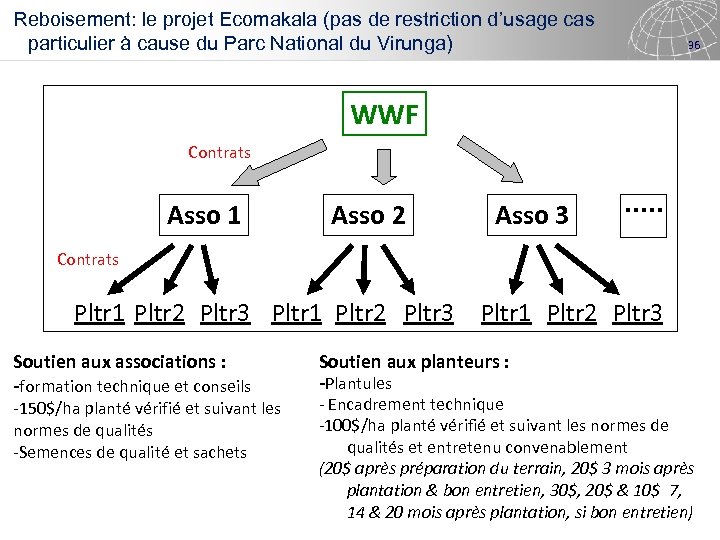 Reboisement: le projet Ecomakala (pas de restriction d’usage cas particulier à cause du Parc National du Virunga) 36 WWF Contrats Asso 1 Asso 2 Asso 3 . . . Contrats Pltr 1 Pltr 2 Pltr 3 Soutien aux associations : -formation technique et conseils -150$/ha planté vérifié et suivant les normes de qualités -Semences de qualité et sachets Pltr 1 Pltr 2 Pltr 3 Soutien aux planteurs : -Plantules - Encadrement technique -100$/ha planté vérifié et suivant les normes de qualités et entretenu convenablement (20$ après préparation du terrain, 20$ 3 mois après plantation & bon entretien, 30$, 20$ & 10$ 7, 14 & 20 mois après plantation, si bon entretien)
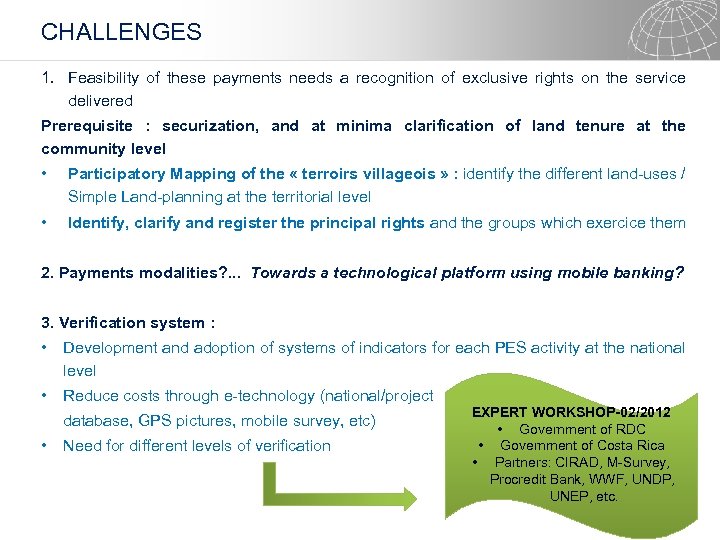 CHALLENGES 1. Feasibility of these payments needs a recognition of exclusive rights on the service delivered Prerequisite : securization, and at minima clarification of land tenure at the community level • Participatory Mapping of the « terroirs villageois » : identify the different land-uses / Simple Land-planning at the territorial level • Identify, clarify and register the principal rights and the groups which exercice them 2. Payments modalities? . . . Towards a technological platform using mobile banking? 3. Verification system : • Development and adoption of systems of indicators for each PES activity at the national level • Reduce costs through e-technology (national/project database, GPS pictures, mobile survey, etc) • Need for different levels of verification EXPERT WORKSHOP-02/2012 • Government of RDC • Government of Costa Rica • Partners: CIRAD, M-Survey, Procredit Bank, WWF, UNDP, UNEP, etc.
 République Démocratique du Congo Thanks Jean-Claude KESSOUS, Anti-Corruption Specialist, UNDP: jeanclaude. kessous@undp. org Leslie OUARZAZI, Technical Advisor, National Coordination REDD: leslieo. cnredd@gmail. com