


 Скачать презентацию 1 Discussion n What is development n
da00697284f596888abcadf6d079e398.ppt
- Количество слайдов: 30
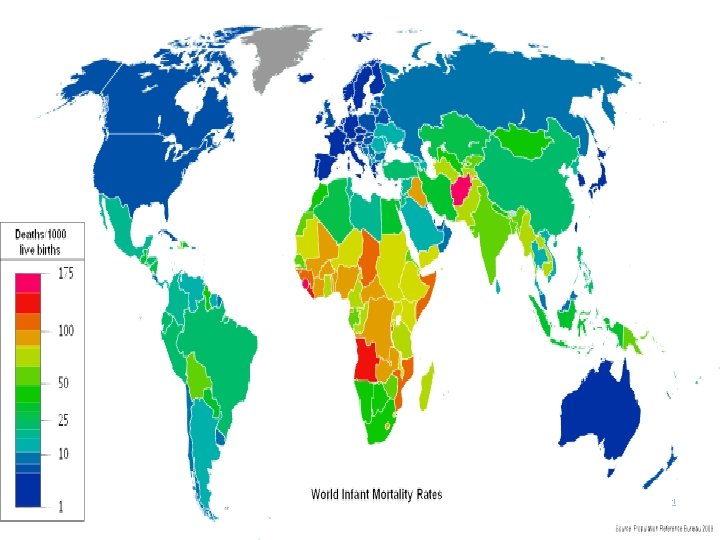 1
1
 Discussion n What is development? n Why are some people poor? n How to develop? 2
 Debate n Human rights or sovereignty? • One chair • Two teams with four main debaters per team • Participation of the audience is encouraged 3
 Questionnaire Design
 Learning Objectives n Concept of questionnaire n Purpose of questionnaire n Process of designing questionnaire 5
 Concept of Questionnaire n n Formalized set of questions Obtain information from respondents • Schedule • Interview form • Measuring instrument 6
 Purpose of Questionnaire n Translate information needed into questions n Motivate respondent to cooperate n Minimize response error 7
 Questionnaire Design Process n n n Specify information needed Specify type of interviewing method Determine content of individual questions Design question to overcome inability and unwillingness to answer Decide on question structure 8
 Questionnaire Design Process n n n Determine question wording Arrange questions in proper order Identify form and layout Reproduce questionnaire Eliminate bugs by pretesting 9
 Type of Interviewing Method n Personal interview n Telephone interview n Mail interview 10
 Individual Question Content n n Is the question necessary? Are several questions needed instead of one? • Double-barrelled question n Do you think Coca-Cola is a tasty and refreshing soft drink? Do you think Coca-Cola is a tasty soft drink? n Do you think Coca-Cola is a refreshing soft drink? n 11
 Overcoming Inability to Answer n Is the respondent informed? • Filter questions n Can the respondent remember? n Can the respondent articulate? 12
 Errors Resulted from Inability to Remember n Omission n Telescoping n Creation 13
 Overcoming Unwillingness to Answer n n Effort required of respondents Context Legitimate purpose Sensitive information 14
 Legitimate Purpose n n Why should a firm marketing cereals want to know their age, income, and occupation? Explain why the data are needed • To determine how the consumption of cereal and preferences for cereal brands vary among people of different ages, incomes and occupations, we need information on … 15
 Increasing Willingness of Respondents n n n Place sensitive topics at the end Preface question with statement that the behaviour of interest is common Ask question using third-person technique Hide question in other questions Provide response categories Use randomized techniques 16
 Use Randomized Techniques n n n Present respondents two questions Ask them to select one question randomly Respondents answer the selected question yes or no 17
 Choosing Question Structure n Unstructured questions • What is your occupation? n Structured questions • Multiple-choice questions • Dichotomous questions • Scales 18
 Unstructured Questions n Advantages • Enable respondents to express general attitudes and opinions • Have less biasing influence • Provide researcher with rich insights n Disadvantages • Potential for interviewer bias is high • Coding of response is costly and timeconsuming 19
 Multiple-choice Questions n n Alternatives should include the set of all possible choices Avoid order or position bias 20
 Choosing Question Wording n Do • • • Define issue Use ordinary words Use unambiguous words • Use positive and negative statements n Avoid • Leading or biasing questions • Implicit alternatives • Implicit assumptions • Generalization and estimates 21
 Avoid Leading or Biasing Questions n Leading question clues respondent to what the answer should be • Do you think that patriotic Americans should buy imported automobiles when that would put American labour out of work? Yes Ø No Ø Don’t know Ø 22
 Avoid Implicit Alternatives n Instead of this • Do you like to fly when travelling short distances? n Use this • Do you like to fly when travelling short distances, or would you rather drive? 23
 Avoid Implicit Assumptions n Instead of this • Are you in favour of a balanced budget? n Use this • Are you in favour of a balanced budget if it would result in an increase in the personal income tax? 24
 Avoid Generalization and Estimates n Instead of this • What is the annual per capita expenditure on groceries in your household? n Use these • What is the monthly expenditure on groceries in your household? • How many members are there in your household? 25
 Determining Order of Questions n n n Opening questions Type of information Difficult questions Effect on subsequent questions Logical order 26
 Opening Questions n To begin with, I’d like to know, how much do you like living in this (town/city)? Would you say you like it a lot, a little, or not too much? • • A lot ____ A little ____ Not too much ____ Don’t know ____ 27
 Type of Information n Basic information n Classification information n Identification information 28
 Effect on Subsequent Questions n Funnel approach • What consideration are important to you in selecting a department store? • In selecting a department store, how important is convenience of location? 29
 Q&A
Q&A