


 Скачать презентацию 1 Diagram of the Nervous System 2
02e16a468925bb93074b75716d8357a8.ppt
- Количество слайдов: 87
 1
1
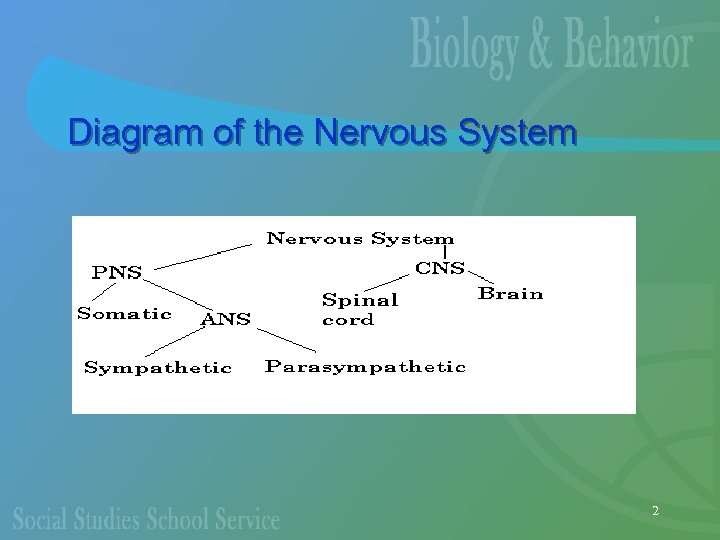 Diagram of the Nervous System 2
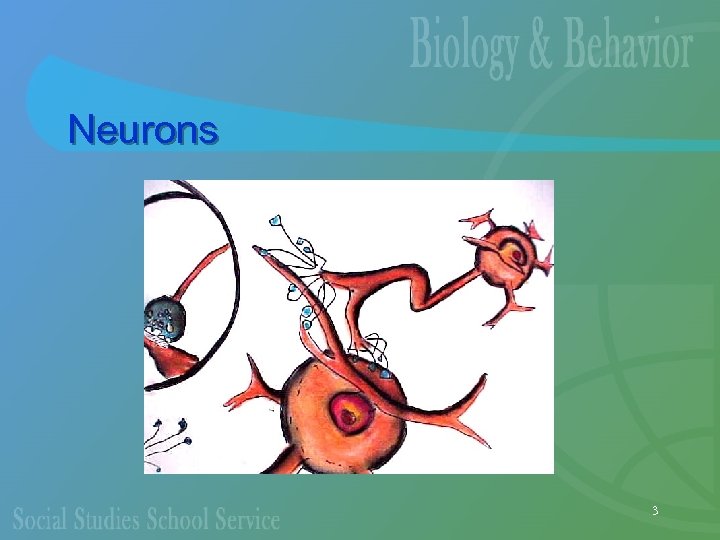 Neurons 3
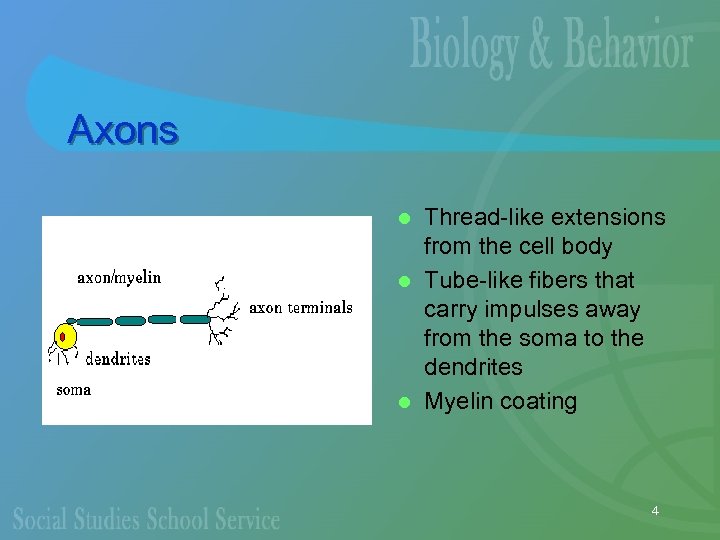 Axons Thread-like extensions from the cell body l Tube-like fibers that carry impulses away from the soma to the dendrites l Myelin coating l 4
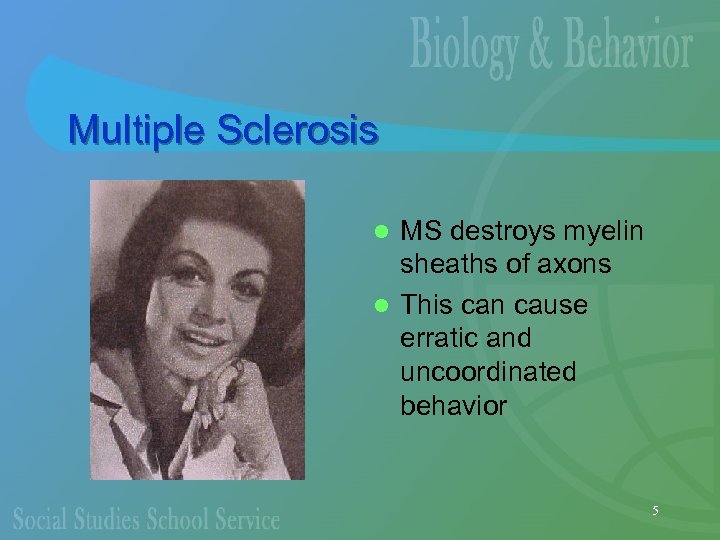 Multiple Sclerosis MS destroys myelin sheaths of axons l This can cause erratic and uncoordinated behavior l 5
 6
6
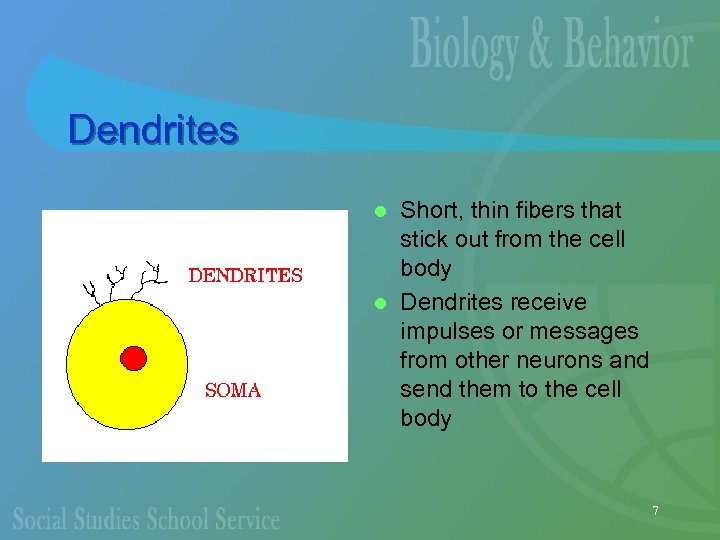 Dendrites Short, thin fibers that stick out from the cell body l Dendrites receive impulses or messages from other neurons and send them to the cell body l 7
 Characteristics of Neurons l They cannot replace themselves l Damage is permanent l Threshold of excitation 8
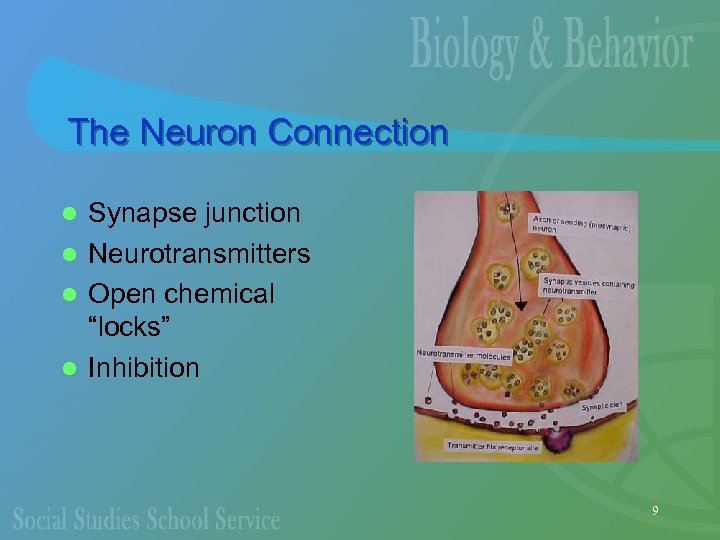 The Neuron Connection Synapse junction l Neurotransmitters l Open chemical “locks” l Inhibition l 9
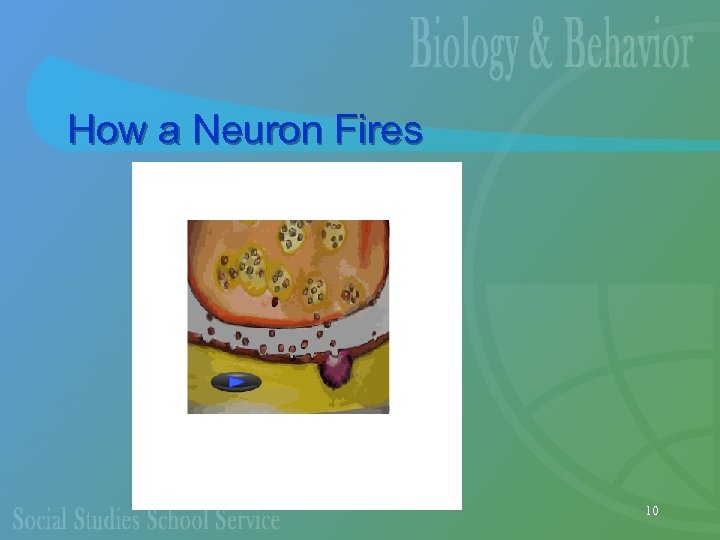 How a Neuron Fires 10
 Neurotransmitters l l l Acetycholine (memory, movement) Norepinephrine (memory, learning) Serotonin (sleep, appetite) Endorphins (inhibits pain) Dopamine (learning, emotions, movement) 11
 Types of Neurons l Ascending vs. descending tracts l Afferent/Sensory neurons l Efferent/Motor neurons l Interneurons/Connecting neurons 12
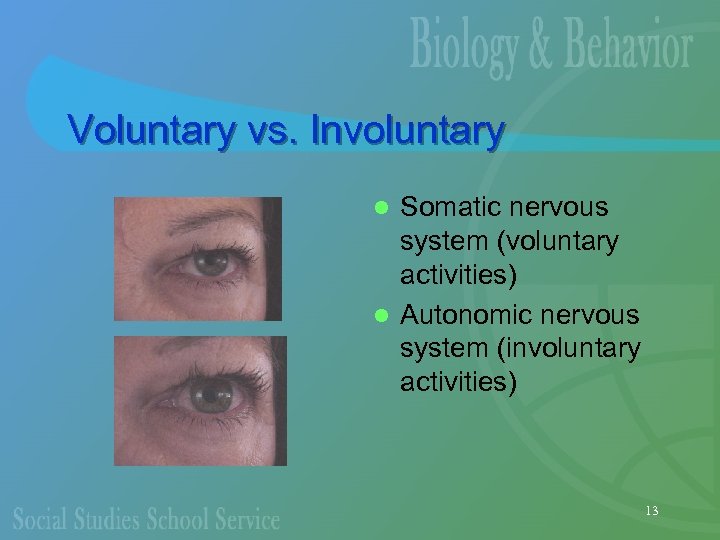 Voluntary vs. Involuntary Somatic nervous system (voluntary activities) l Autonomic nervous system (involuntary activities) l 13
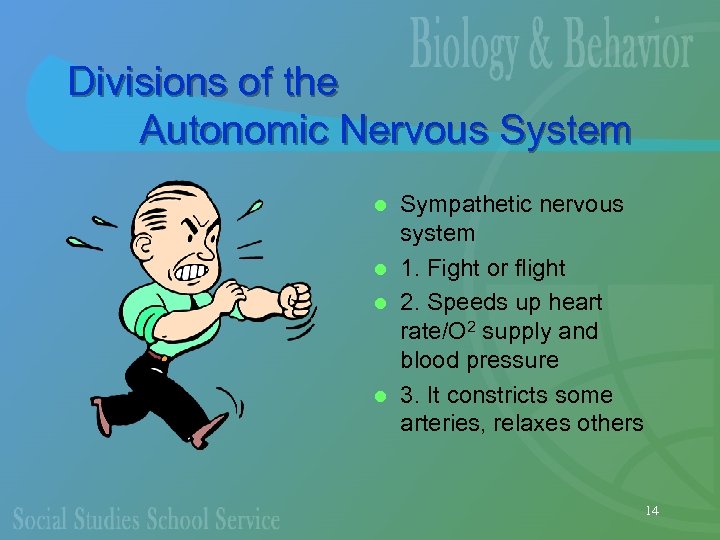 Divisions of the Autonomic Nervous System Sympathetic nervous system l 1. Fight or flight l 2. Speeds up heart rate/O 2 supply and blood pressure l 3. It constricts some arteries, relaxes others l 14
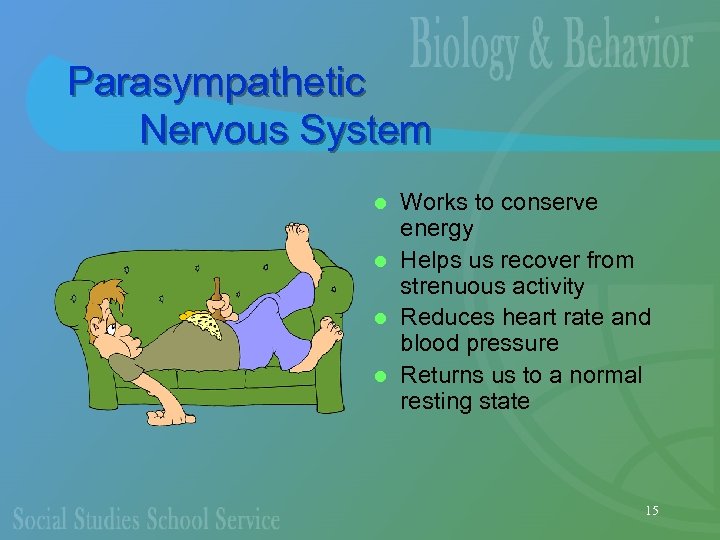 Parasympathetic Nervous System Works to conserve energy l Helps us recover from strenuous activity l Reduces heart rate and blood pressure l Returns us to a normal resting state l 15
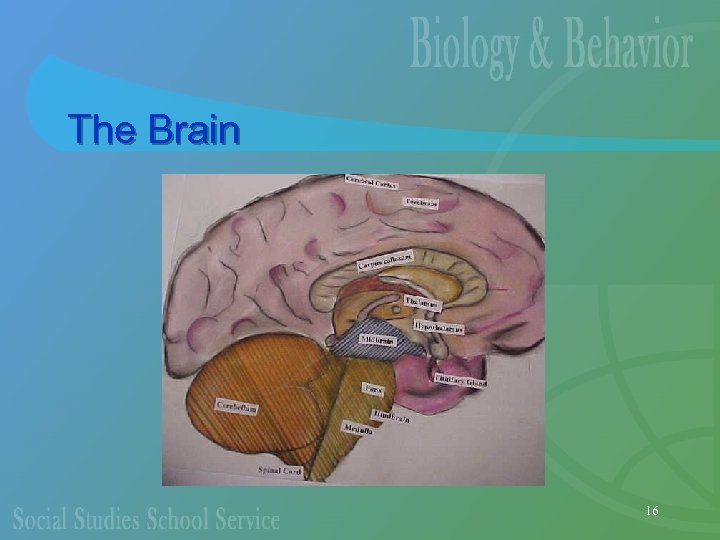 The Brain 16
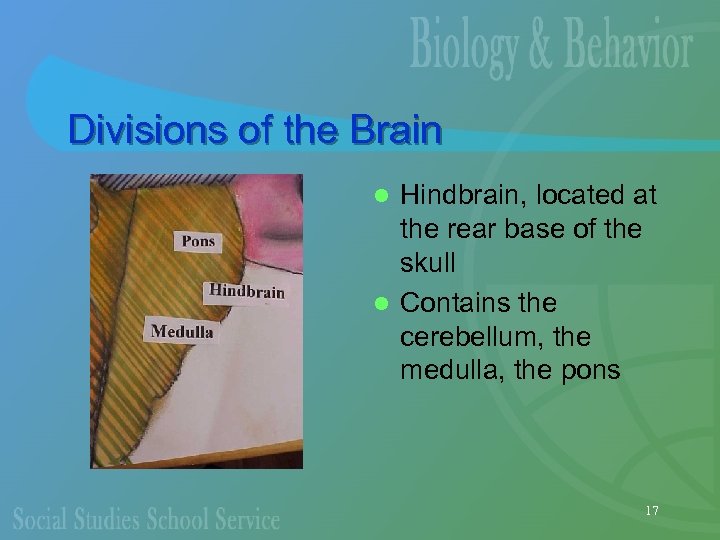 Divisions of the Brain Hindbrain, located at the rear base of the skull l Contains the cerebellum, the medulla, the pons l 17
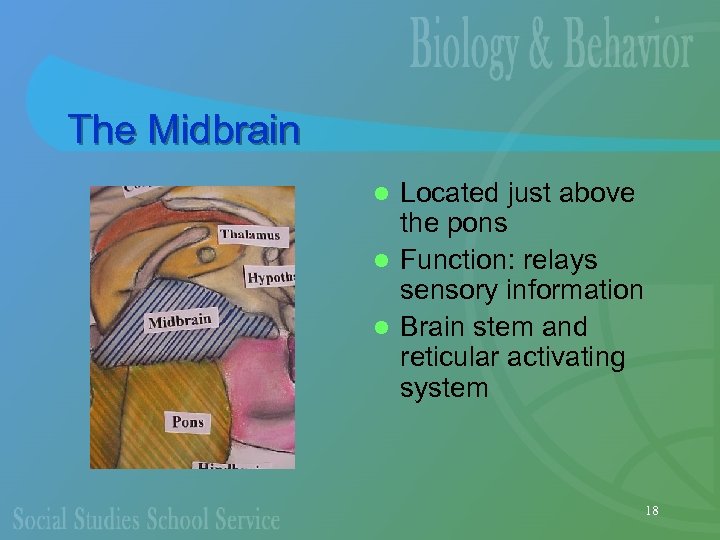 The Midbrain Located just above the pons l Function: relays sensory information l Brain stem and reticular activating system l 18
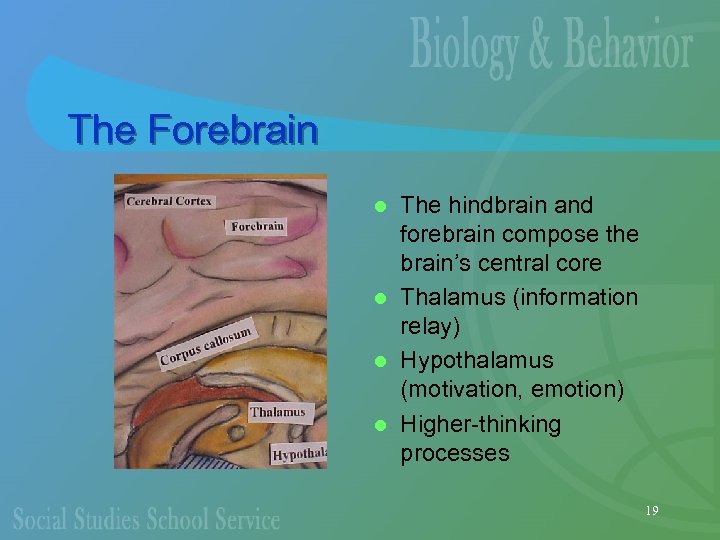 The Forebrain The hindbrain and forebrain compose the brain’s central core l Thalamus (information relay) l Hypothalamus (motivation, emotion) l Higher-thinking processes l 19
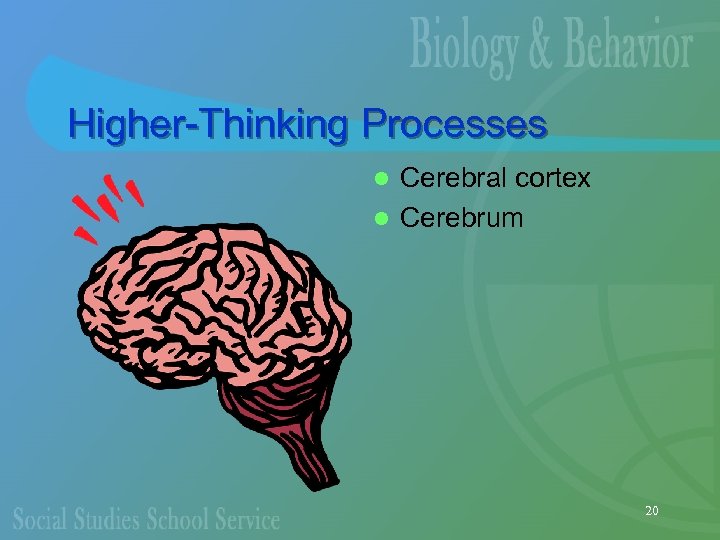 Higher-Thinking Processes Cerebral cortex l Cerebrum l 20
 The Limbic System l Found in the core of the forebrain l It has a number of different parts: l 1. Thalamus l 2. Hypothalamus l 3. Amygdala l 4. Hippocampus 21
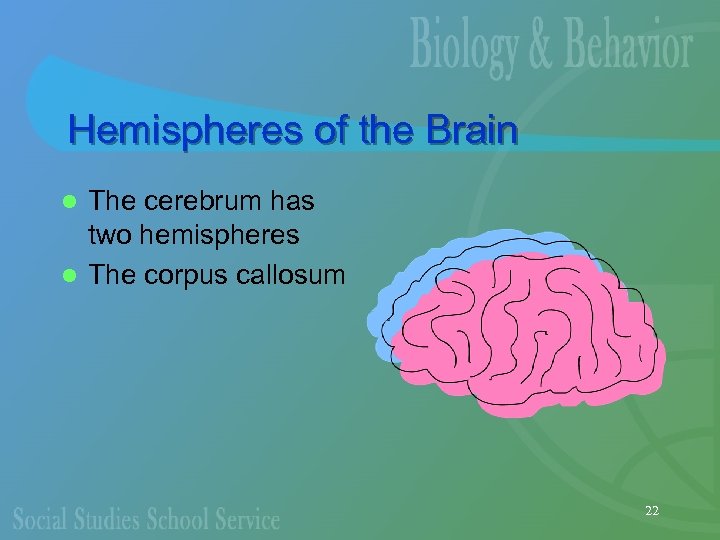 Hemispheres of the Brain The cerebrum has two hemispheres l The corpus callosum l 22
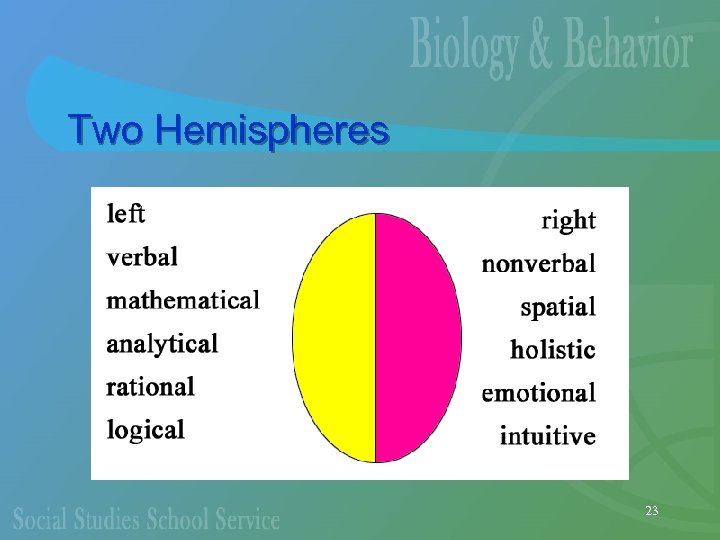 Two Hemispheres 23
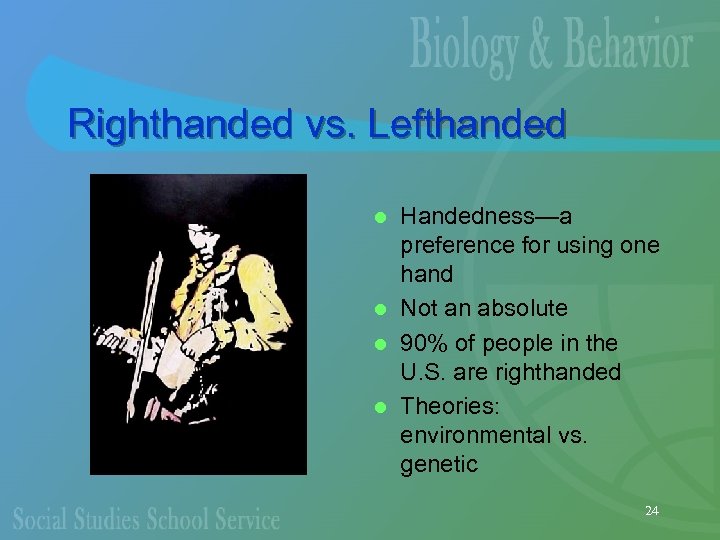 Righthanded vs. Lefthanded Handedness—a preference for using one hand l Not an absolute l 90% of people in the U. S. are righthanded l Theories: environmental vs. genetic l 24
 Problems Associated With Being a Lefty l Autism and dyslexia l Schizophrenia l Mental retardation l Alcoholism l Life expectancy 25
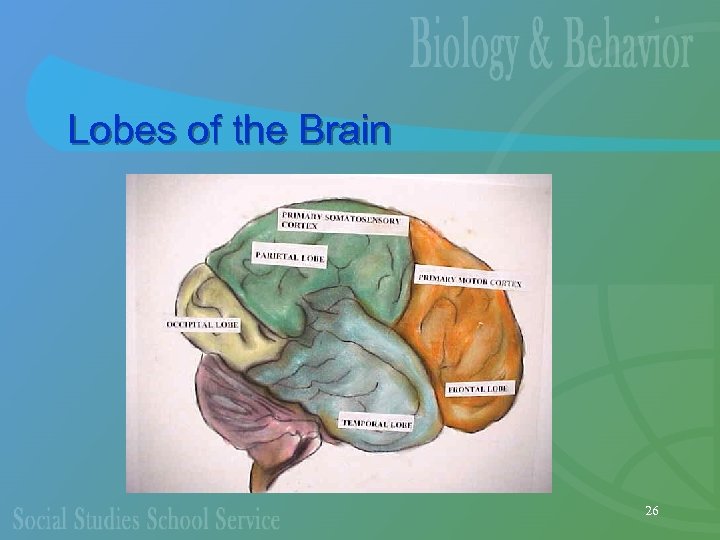 Lobes of the Brain 26
 Lobes and Their Functions l Frontal: planning of movements, working memory l Temporal: hearing, advanced visual processing, memory l Occipital: vision l Parietal: body sensations l Primary motor cortex: fine motor control 27
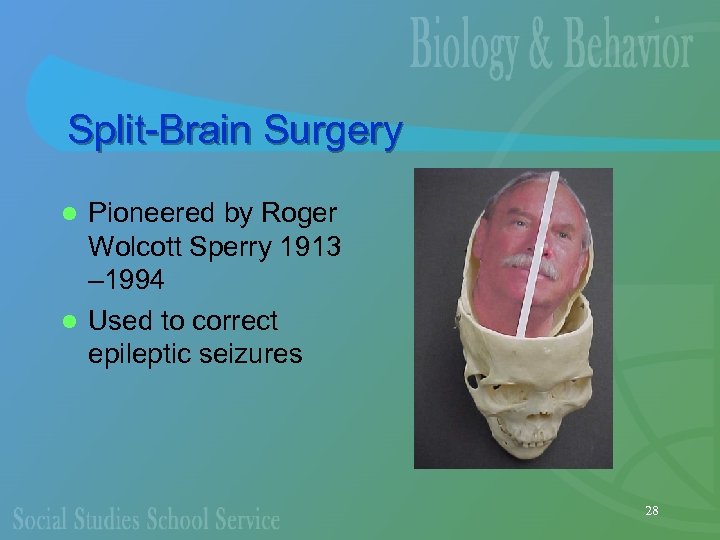 Split-Brain Surgery Pioneered by Roger Wolcott Sperry 1913 – 1994 l Used to correct epileptic seizures l 28
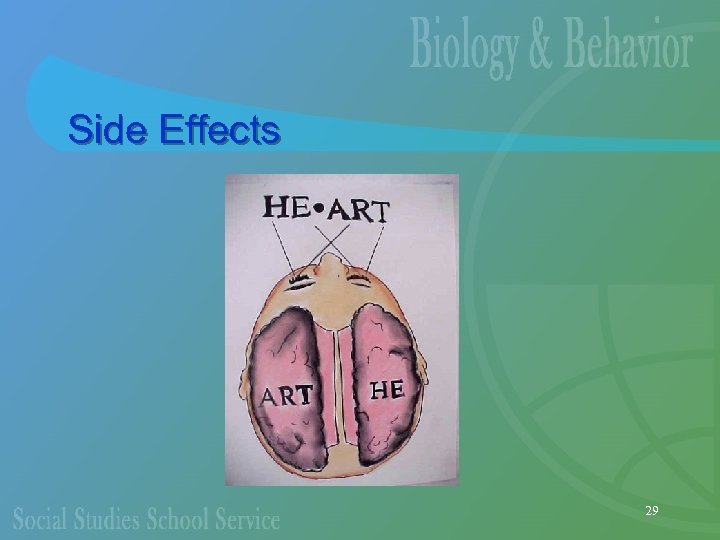 Side Effects 29
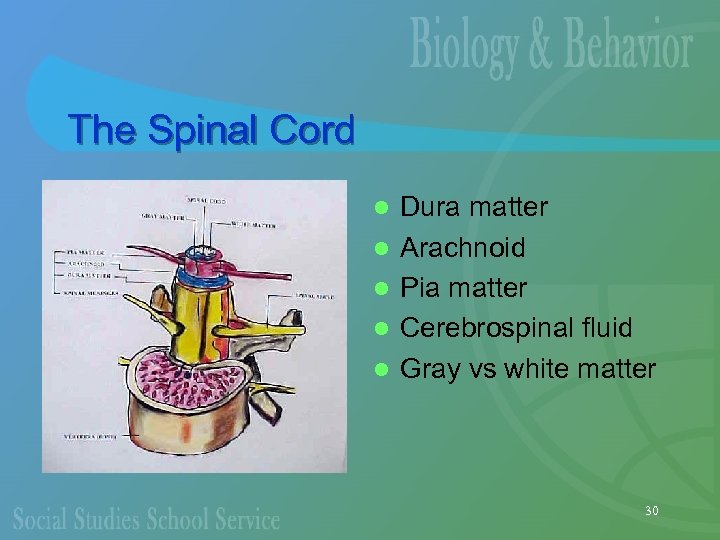 The Spinal Cord l l l Dura matter Arachnoid Pia matter Cerebrospinal fluid Gray vs white matter 30
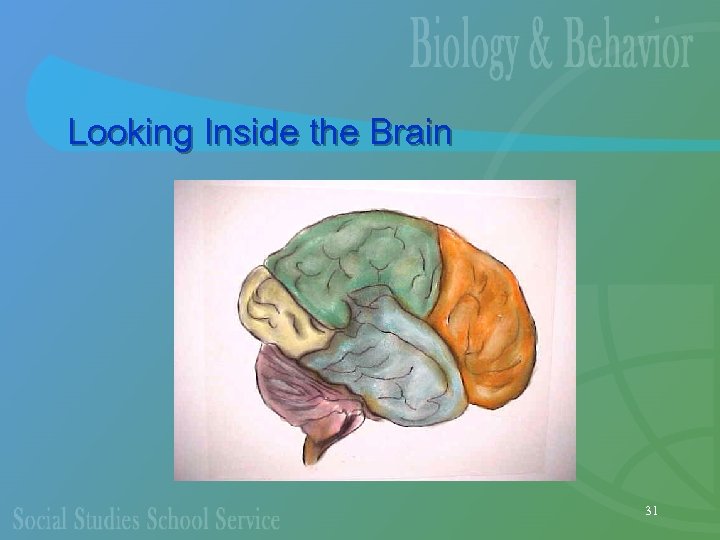 Looking Inside the Brain 31
 Techniques Used to Look Inside the Brain l Electrical recordings l Lesioning l Electrical stimulation l Brain imaging 32
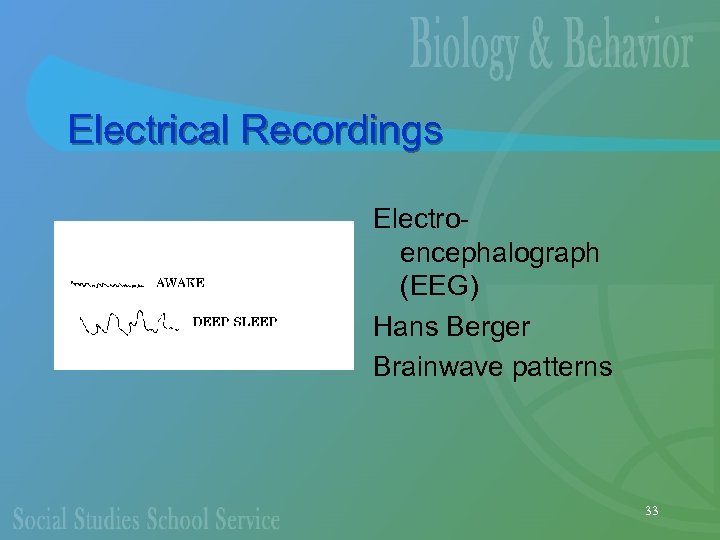 Electrical Recordings Electroencephalograph (EEG) Hans Berger Brainwave patterns 33
 Lesioning Brain tumors, strokes, head injuries all cause brain damage l H. Gardner, 1975 l Limitations/ experiments with animals l 34
 Electrical Stimulation of the Brain l ESB involves sending a weak electrical current into a brain structure in order to stimulate it l The current mimics brain wave voltage l Most ESB research is done on animals 35
 Brain Imaging Techniques l CT (computerized tomography) scans l PET (positron emission tomography) scans l MRI (magnetic resonance imaging) scans 36
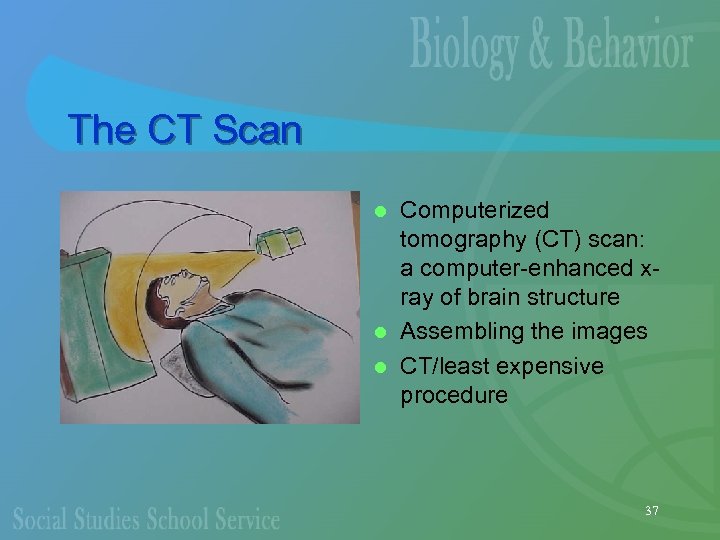 The CT Scan Computerized tomography (CT) scan: a computer-enhanced xray of brain structure l Assembling the images l CT/least expensive procedure l 37
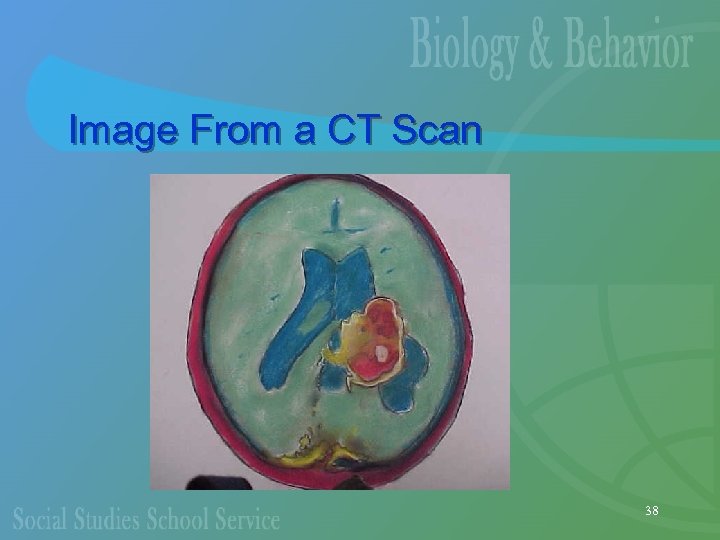 Image From a CT Scan 38
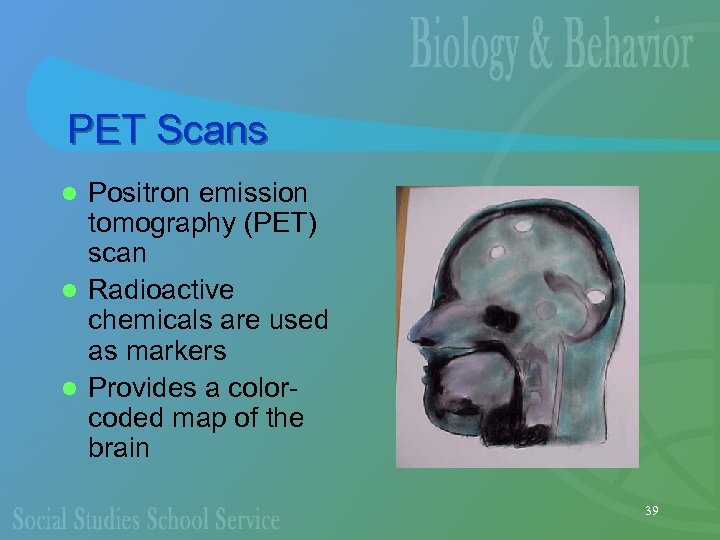 PET Scans Positron emission tomography (PET) scan l Radioactive chemicals are used as markers l Provides a colorcoded map of the brain l 39
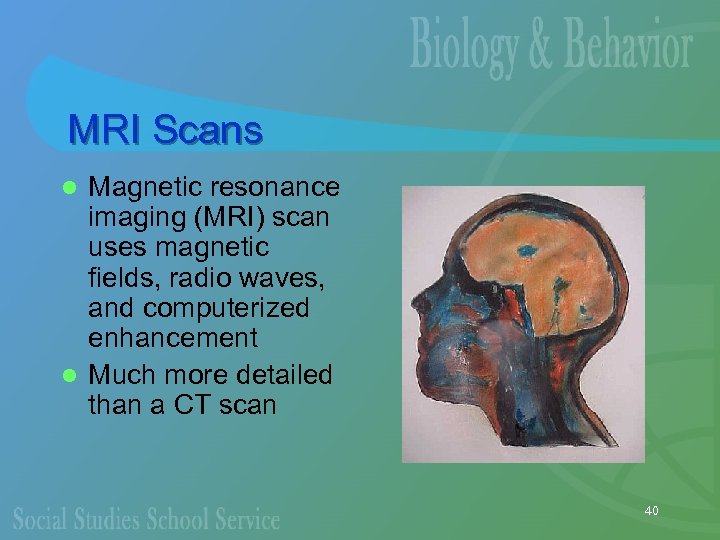 MRI Scans Magnetic resonance imaging (MRI) scan uses magnetic fields, radio waves, and computerized enhancement l Much more detailed than a CT scan l 40
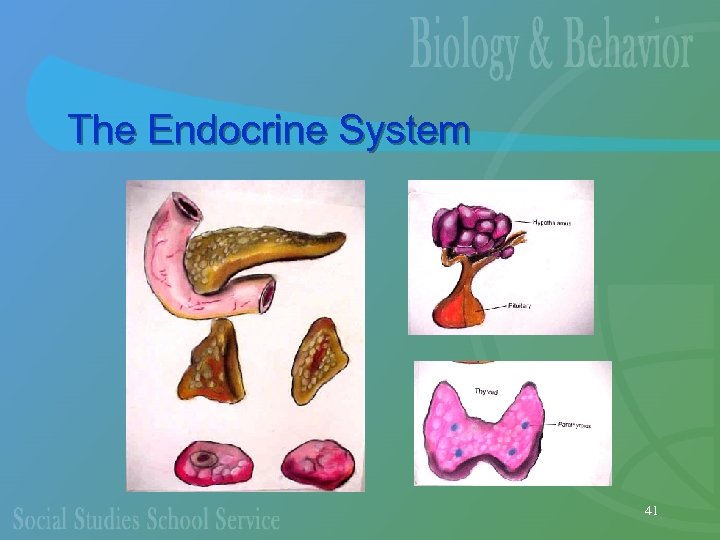 The Endocrine System 41
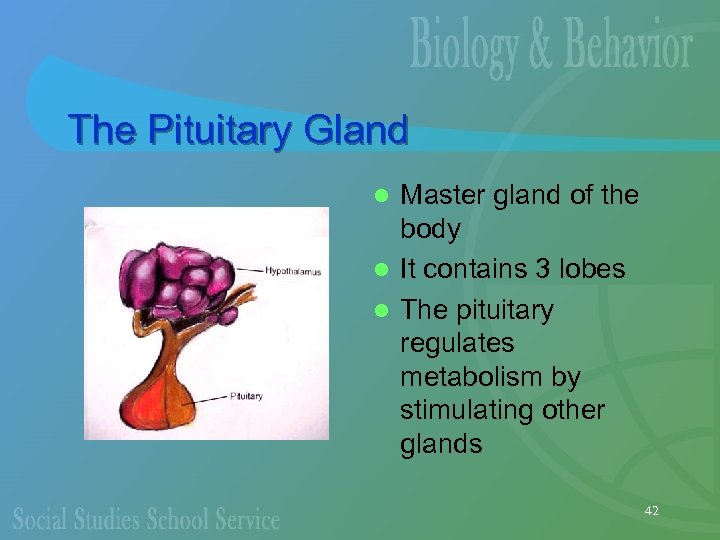 The Pituitary Gland Master gland of the body l It contains 3 lobes l The pituitary regulates metabolism by stimulating other glands l 42
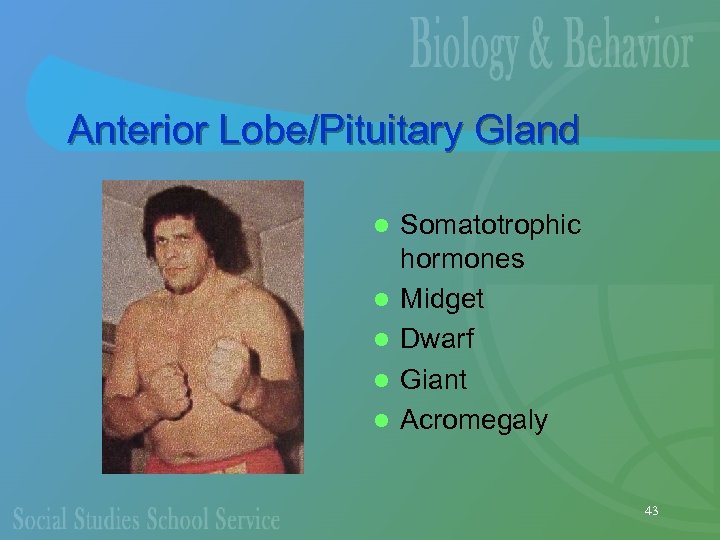 Anterior Lobe/Pituitary Gland l l l Somatotrophic hormones Midget Dwarf Giant Acromegaly 43
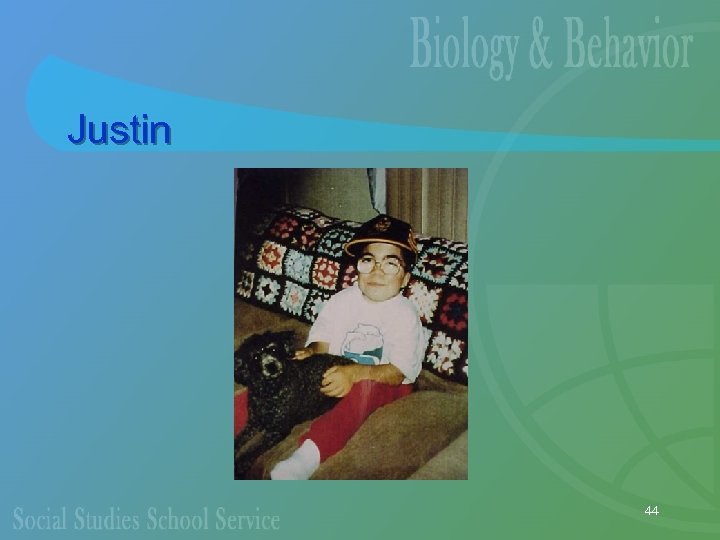 Justin 44
 Other Pituitary Hormones l TSH (thyroid stimulating hormone) l ACTH (adrenocorticotropic hormone) l Gonadotrophic hormone 45
 Posterior Lobe Hormones l ADH (anti-diuretic hormone) l Oxytocin 46
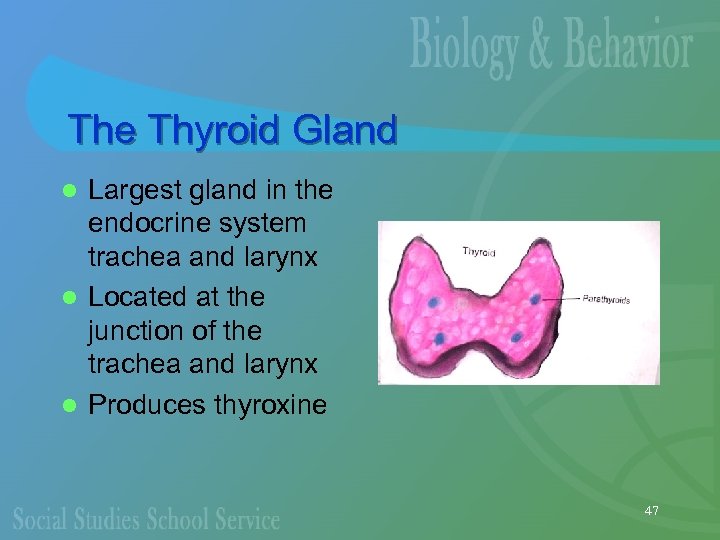 The Thyroid Gland Largest gland in the endocrine system trachea and larynx l Located at the junction of the trachea and larynx l Produces thyroxine l 47
 Thyroid Disorders l Cretinism l Myxedema l Goiter 48
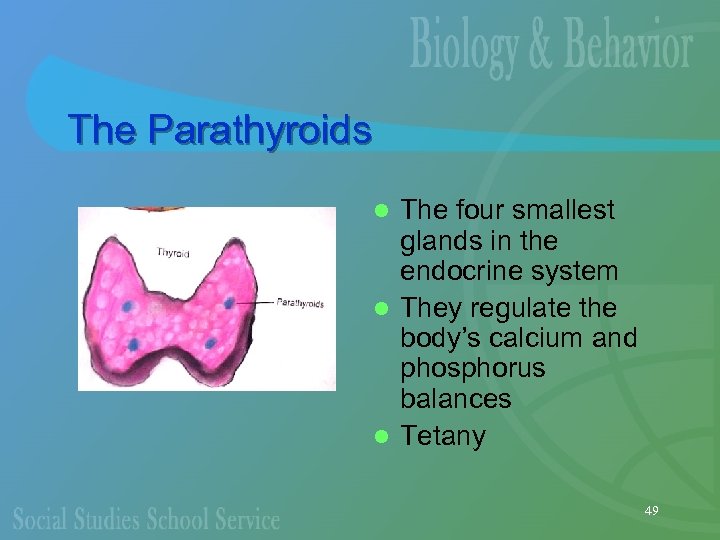 The Parathyroids The four smallest glands in the endocrine system l They regulate the body’s calcium and phosphorus balances l Tetany l 49
 The Thymus Gland l Located behind the breastbone l Its function is not clearly understood l Immune system 50
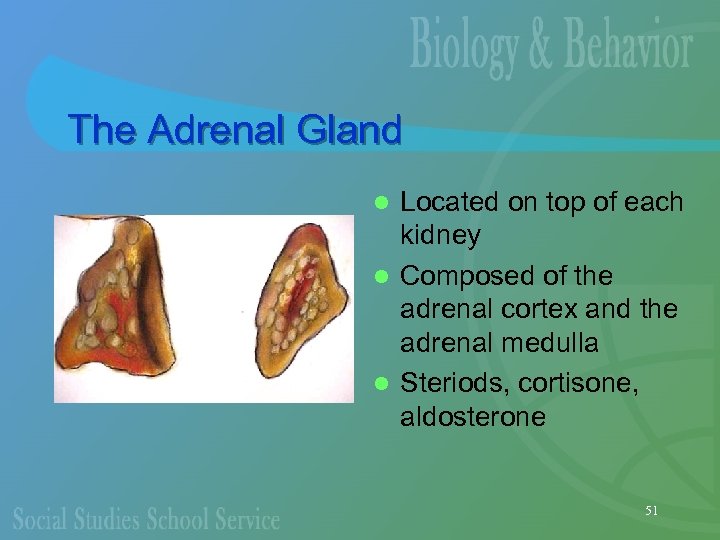 The Adrenal Gland Located on top of each kidney l Composed of the adrenal cortex and the adrenal medulla l Steriods, cortisone, aldosterone l 51
 The Adrenal Medulla Depends on the hypothalamus and the autonomic nervous system for regulation l Epinephrine/ adrenaline l Noradrenalin l 52
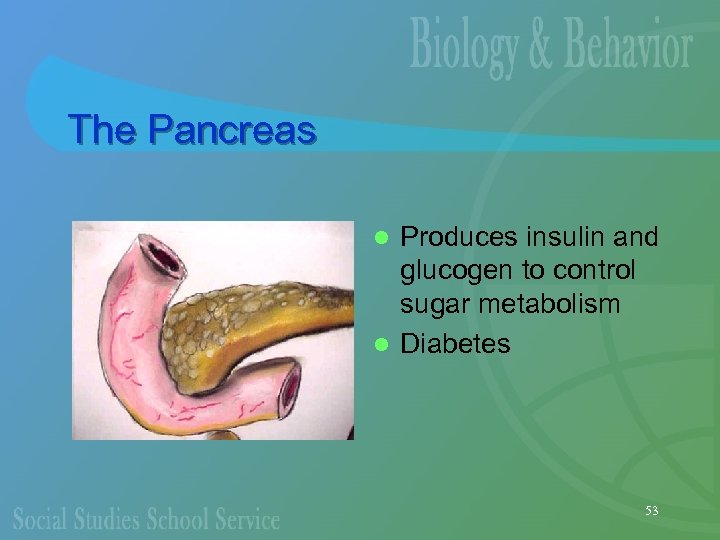 The Pancreas Produces insulin and glucogen to control sugar metabolism l Diabetes l 53
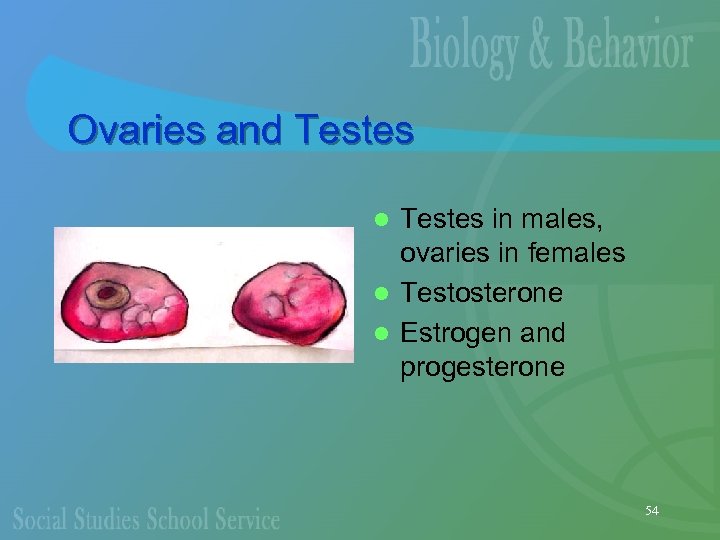 Ovaries and Testes in males, ovaries in females l Testosterone l Estrogen and progesterone l 54
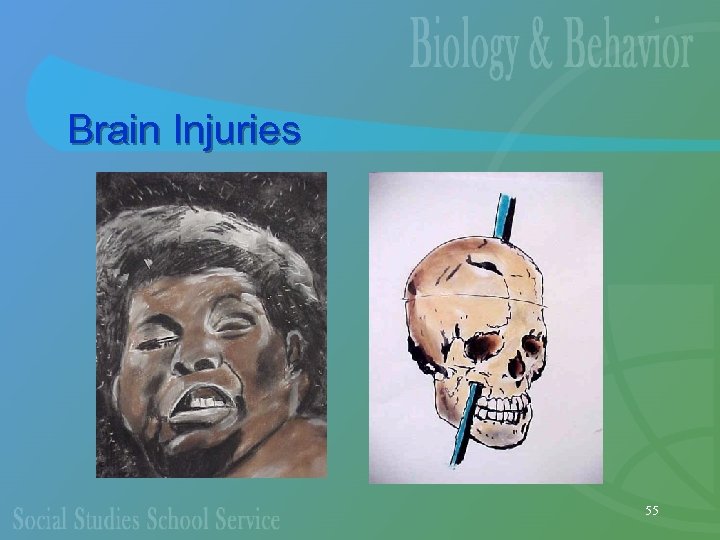 Brain Injuries 55
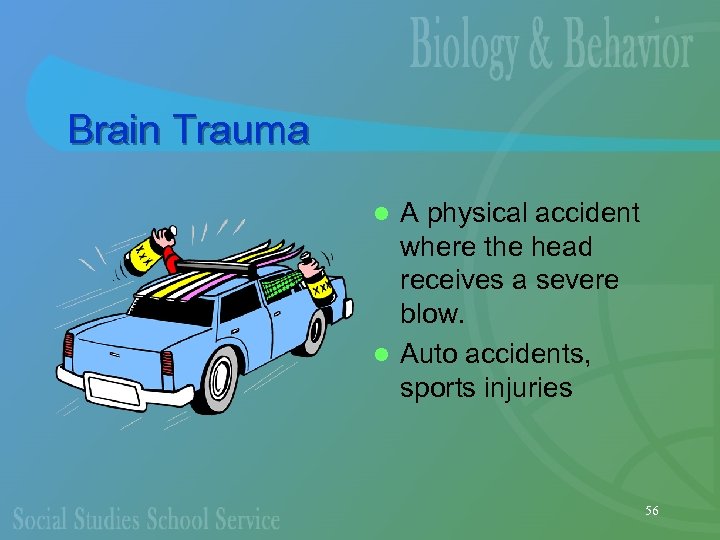 Brain Trauma A physical accident where the head receives a severe blow. l Auto accidents, sports injuries l 56
 Types of Head Trauma l Concussion l Contusion l Laceration 57
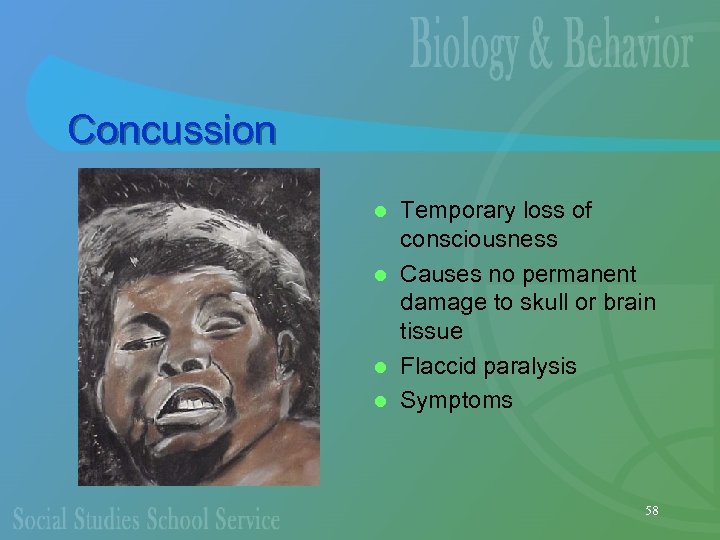 Concussion Temporary loss of consciousness l Causes no permanent damage to skull or brain tissue l Flaccid paralysis l Symptoms l 58
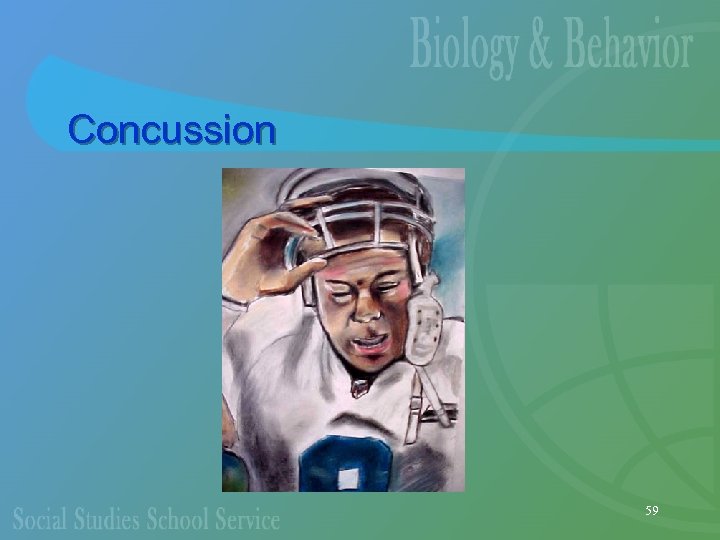 Concussion 59
 Contusions l Actual bruising of neural tissue l May cause a coma l Loss of speech, convulsions, disorientation, delusions 60
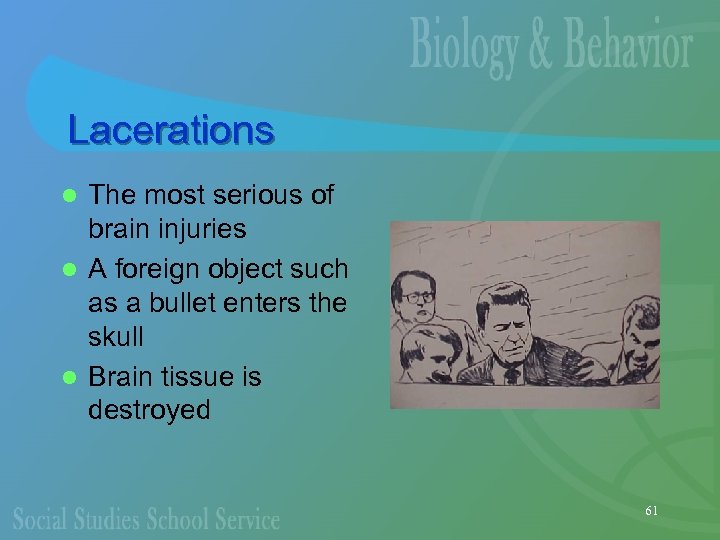 Lacerations The most serious of brain injuries l A foreign object such as a bullet enters the skull l Brain tissue is destroyed l 61
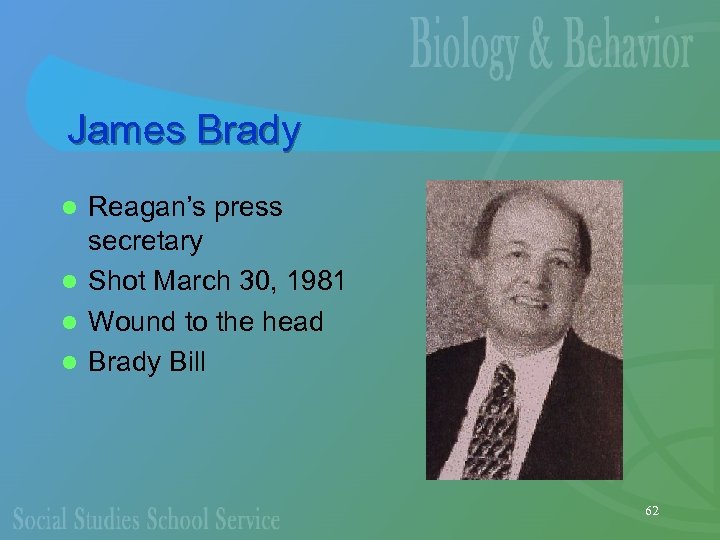 James Brady Reagan’s press secretary l Shot March 30, 1981 l Wound to the head l Brady Bill l 62
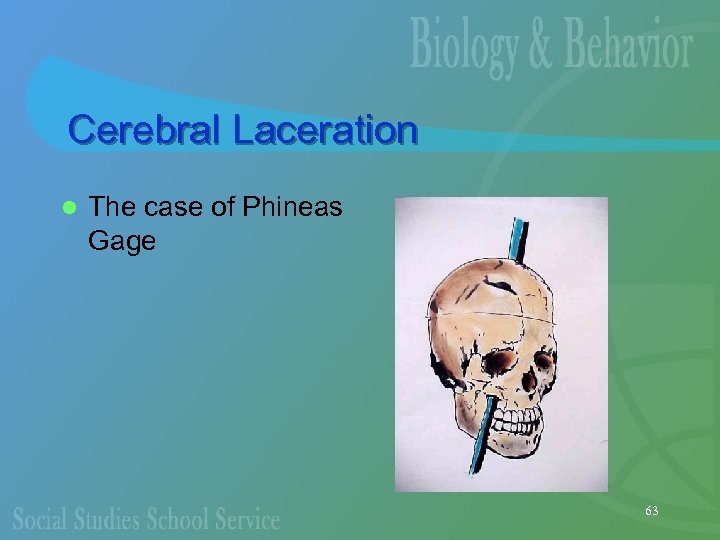 Cerebral Laceration l The case of Phineas Gage 63
 Vascular Accidents l Injuries to brain tissue resulting from blockage or breaking of cranial blood vessels l Cerebral thrombosis/stroke l Strokes are the most common CVAs l Effects 64
 Cerebral Hemorrhages l Blood vessels in the brain rupture (aneurysm) l Blood spills directly onto the brain tissue l Coma, convulsions 65
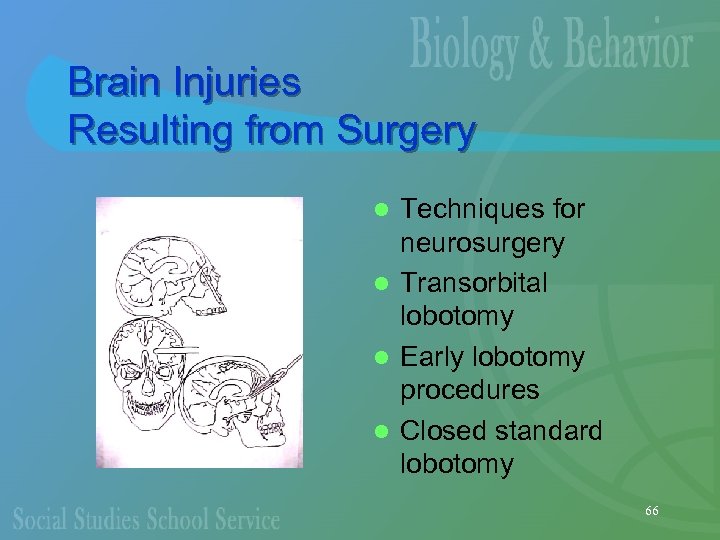 Brain Injuries Resulting from Surgery Techniques for neurosurgery l Transorbital lobotomy l Early lobotomy procedures l Closed standard lobotomy l 66
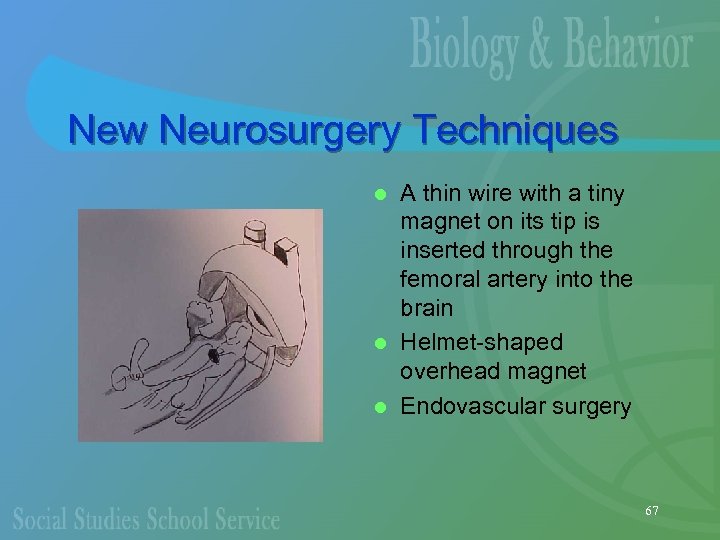 New Neurosurgery Techniques A thin wire with a tiny magnet on its tip is inserted through the femoral artery into the brain l Helmet-shaped overhead magnet l Endovascular surgery l 67
 Brain Infections l Parkinson’s disease l Meningitis l Encephalitis 68
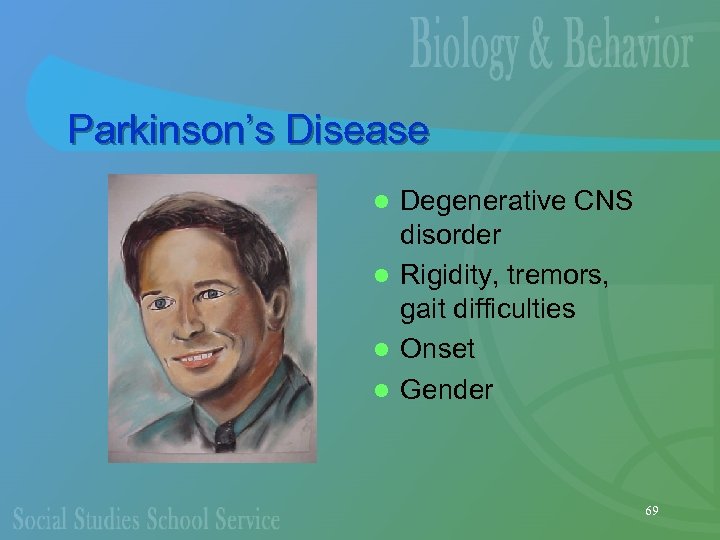 Parkinson’s Disease Degenerative CNS disorder l Rigidity, tremors, gait difficulties l Onset l Gender l 69
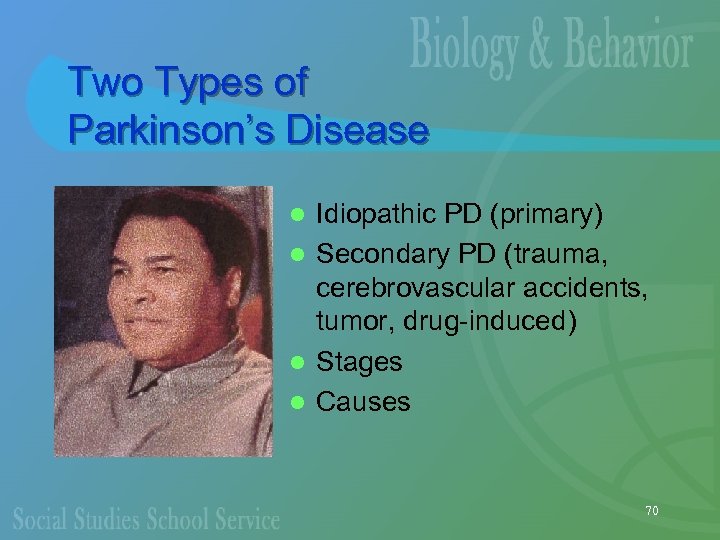 Two Types of Parkinson’s Disease Idiopathic PD (primary) l Secondary PD (trauma, cerebrovascular accidents, tumor, drug-induced) l Stages l Causes l 70
 Meningitis l An infection of the cerebrospinal fluid and the lining of the brain l It spreads very rapidly, and can cause brain damage and kill in less than 24 hours l Rifampin 71
 Symptoms of Meningitis In adults: vomiting, headaches, drowsiness, seizures, high fever, joint pain, stiff neck l In children: arching back and neck, blank stare, refusal to eat, cold hands and feet, vomiting l Diagnosis/spinal tap l 72
 Encephalitis l Inflammation of the brain by a virus l Herpes simplex virus (HSV) l Transmission l Milder forms of encephalitis 73
 Symptoms of Encephalitis Fever, headache, poor appetite, loss of energy l Severe symptoms also include nausea, vomiting, stiff neck, pupils of different sizes, personality changes, seizures, problems with speech and hearing, double vision, memory loss, and coma. l 74
 Preventing Encephalitis l Proper childhood immunizations l Avoiding insect bites l Eliminate standing water around the house 75
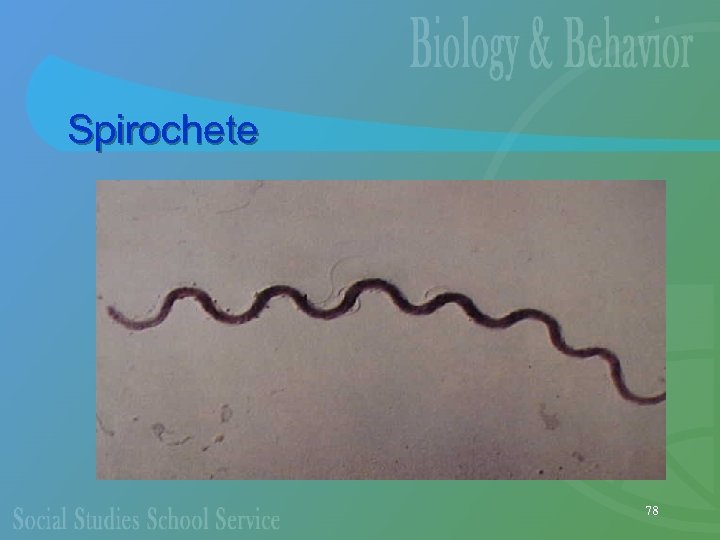
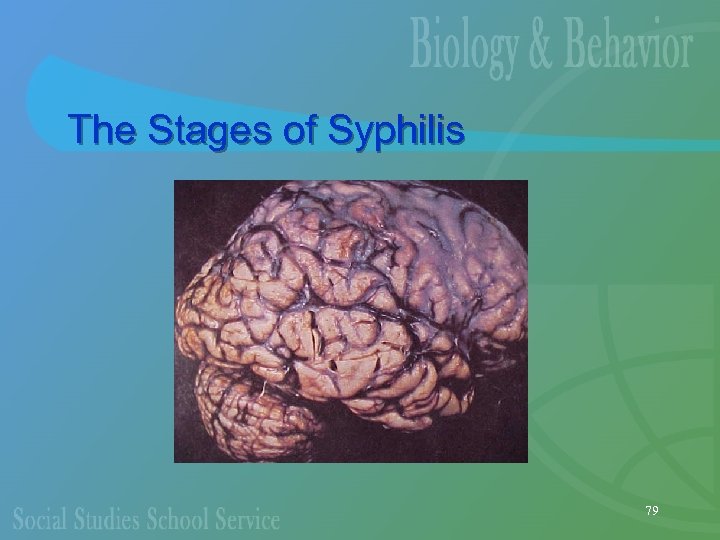
 Paresis Syphilis of the brain Slide # 76
 Causes of Paresis 77
 Spirochete 78
 The Stages of Syphilis 79
 Diagnosis Chancre (A small sore that appears on the lips or sex organs; disappears without treatment l Causes rashes, skin infections, flu-like symptoms, hair loss l Diagnosis of cerebrospinal fluid l 80
 Symptoms of Paresis l Pupil of eye does not respond to light l Tremors of fingers, tongue, eyes l Loss of motor control l Shuffling gait l Personality changes 81
 Nature vs. Nurture l Heredity: the genetic transmission of characteristics from parents to offspring (nature) l Nurture (environment and learning) l Sir Francis Galton l John Watson 82
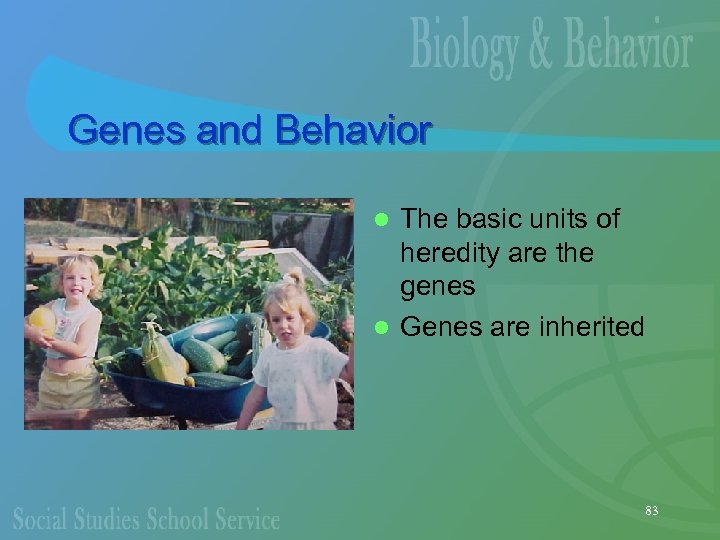 Genes and Behavior The basic units of heredity are the genes l Genes are inherited l 83
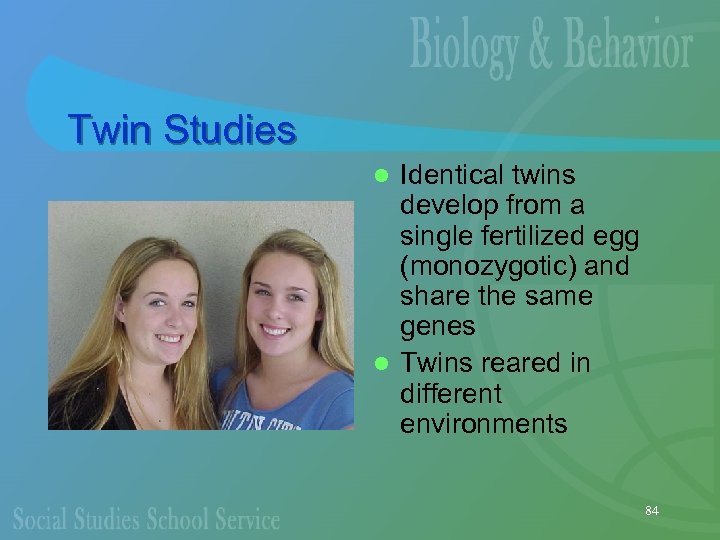 Twin Studies Identical twins develop from a single fertilized egg (monozygotic) and share the same genes l Twins reared in different environments l 84
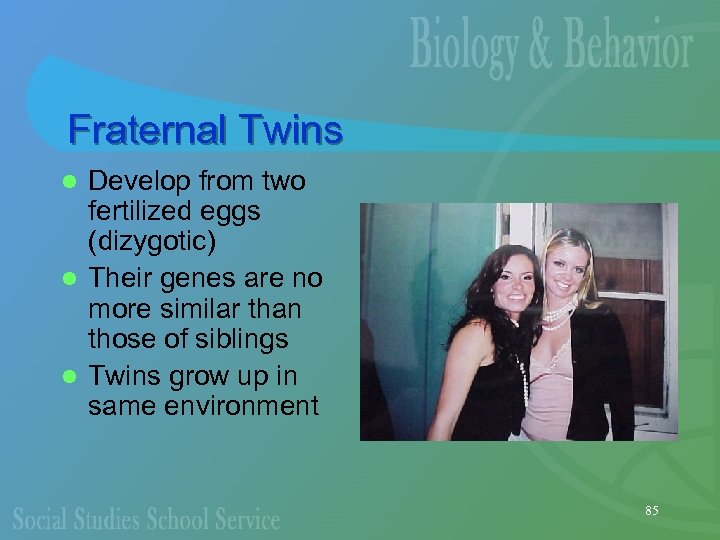 Fraternal Twins Develop from two fertilized eggs (dizygotic) l Their genes are no more similar than those of siblings l Twins grow up in same environment l 85
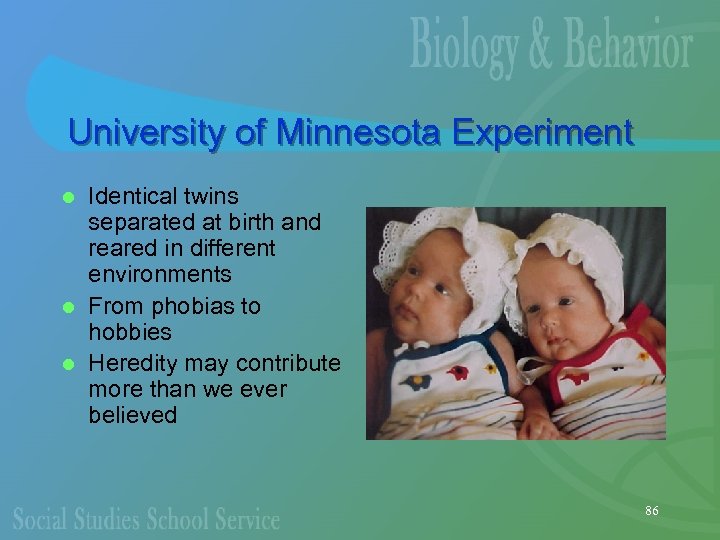 University of Minnesota Experiment Identical twins separated at birth and reared in different environments l From phobias to hobbies l Heredity may contribute more than we ever believed l 86
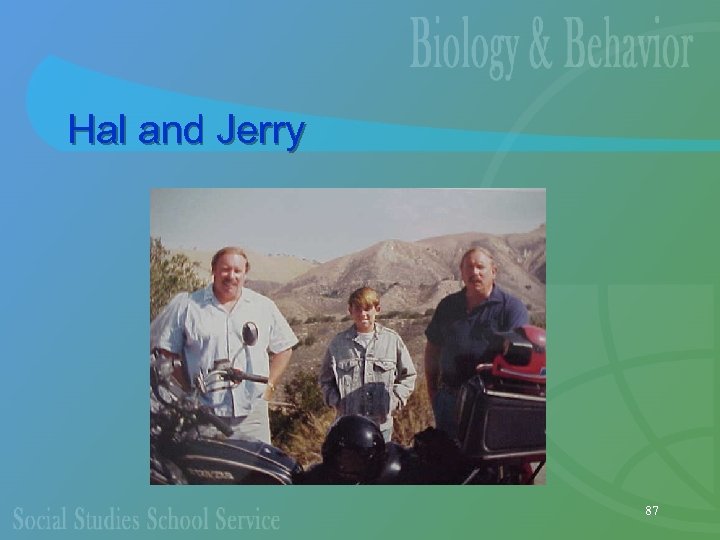 Hal and Jerry 87