 Скачать презентацию 1 Building Blocks INTERNATIONAL ECONOMICS ECO 486
a71c9e6c67f5dc8d1a6c46a9966e923e.ppt
- Количество слайдов: 48



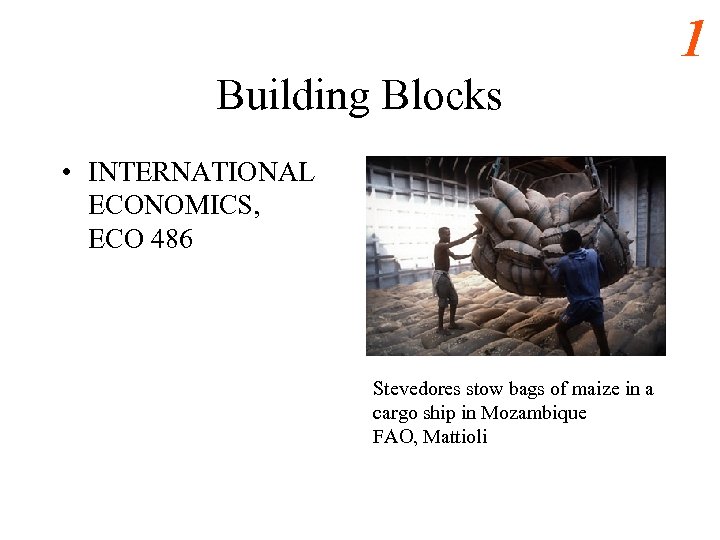
1 Building Blocks • INTERNATIONAL ECONOMICS, ECO 486 Stevedores stow bags of maize in a cargo ship in Mozambique FAO, Mattioli
2 Learning Objectives • Understand purpose of our model • Familiarize ourselves with the seven assumptions of the Basic Model • Solve the Basic Model • Calculate a measure of national welfare • Derive National Supply & Demand
5 Introduction • We will begin with a model of a country that lives in isolation, a. k. a. autarky – predict prices and outputs in autarky • Basis of two trade models – Classical (Ricardian) Model – HO Model (Heckscher-Ohlin)
9 Assumption #1 • All economic agents exhibit rational behavior – firms maximize profits – consumers maximize utility
10 Assumption #2 • There are two countries: America, A, and Britain, B • and two goods: Soybeans, S, and Textiles, T – Each good is homogeneous. – Some of each good is consumed in each country.
11 Assumption #3 • There is no money illusion ÞEconomic decisions are based on relative price – Let PS = price of S, PT = price of T. Assume the units are bushels of S and yards of T. – Relative price of S equals PS / PT – Graphs as the Terms-of-Trade (TOT) line
Unit Labor Requirement 12 • The unit labor requirement is the number of hours of labor required to produce one unit of output. • Denote with a. LS the unit labor requirement for soybeans (e. g. if a. LS = 2, then one needs 2 hours of labor to produce one bushel of soybeans). • Denote with a. LT the unit labor requirement for textiles (e. g. if a. LT = 4, then one needs 4 hours of labor to produce a yard of textiles). • The economy’s total resources are defined as L, the total labor supply (e. g. if L = 16 hr/yr, then this economy is endowed with 16 hours of labor per year).
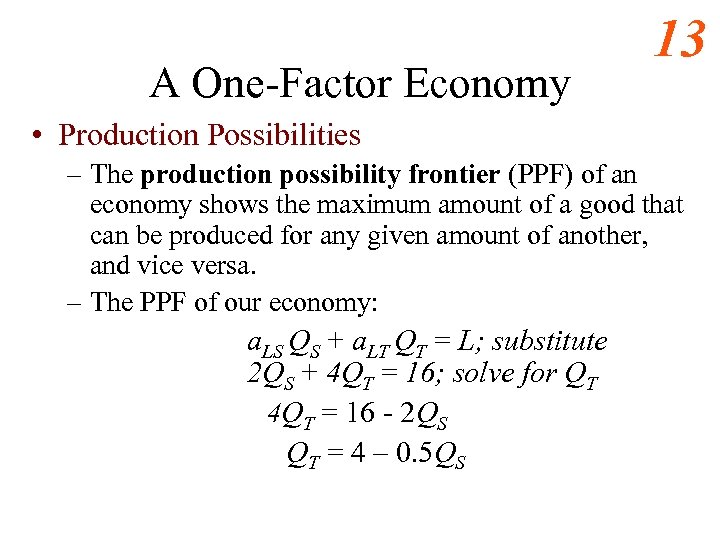
A One-Factor Economy 13 • Production Possibilities – The production possibility frontier (PPF) of an economy shows the maximum amount of a good that can be produced for any given amount of another, and vice versa. – The PPF of our economy: a. LS QS + a. LT QT = L; substitute 2 QS + 4 QT = 16; solve for QT 4 QT = 16 - 2 QS QT = 4 – 0. 5 QS
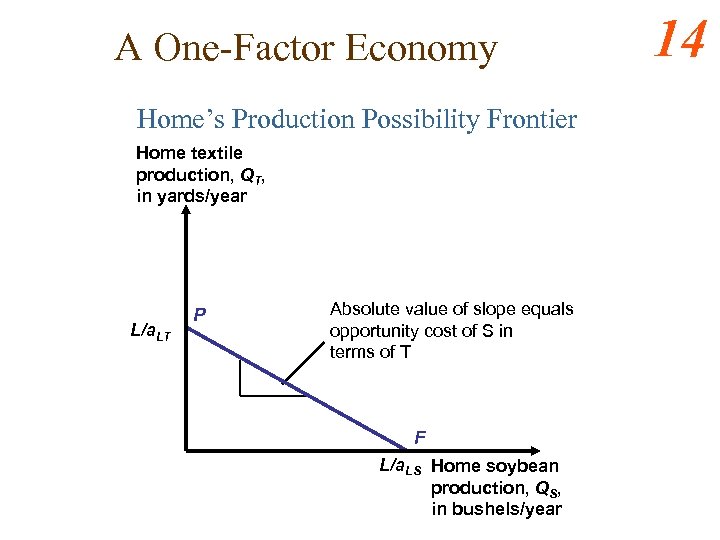
A One-Factor Economy Home’s Production Possibility Frontier Home textile production, QT, in yards/year L/a. LT P Absolute value of slope equals opportunity cost of S in terms of T F L/a. LS Home soybean production, QS, in bushels/year 14
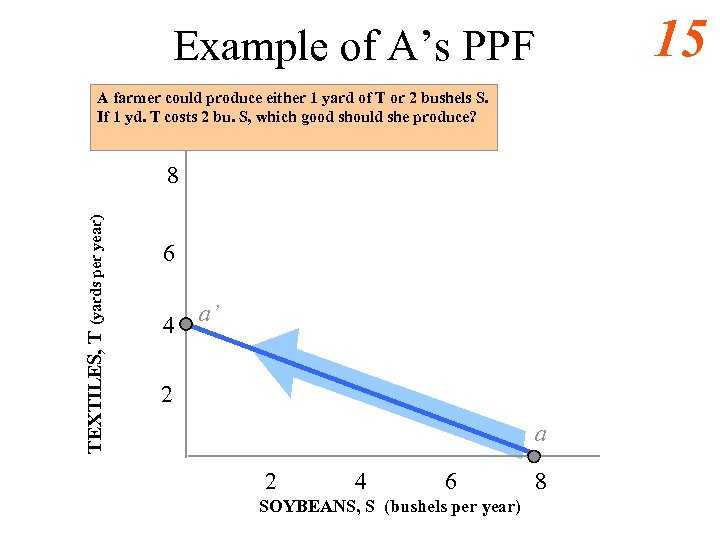
Example of A’s PPF A farmer could produce either 1 yard of T or 2 bushels S. 10 If 1 yd. T costs 2 bu. S, which good should she produce? TEXTILES, T (yards per year) 8 6 4 a’ 2 a 2 4 6 SOYBEANS, S (bushels per year) 8 15
17 Why are relative prices more important than nominal prices? This is chapter 2 exercise 10, page 51.
18 Assumption #4 • Factor endowments are fixed • Technology is constant ÞProduction Possibilities Frontier, PPF
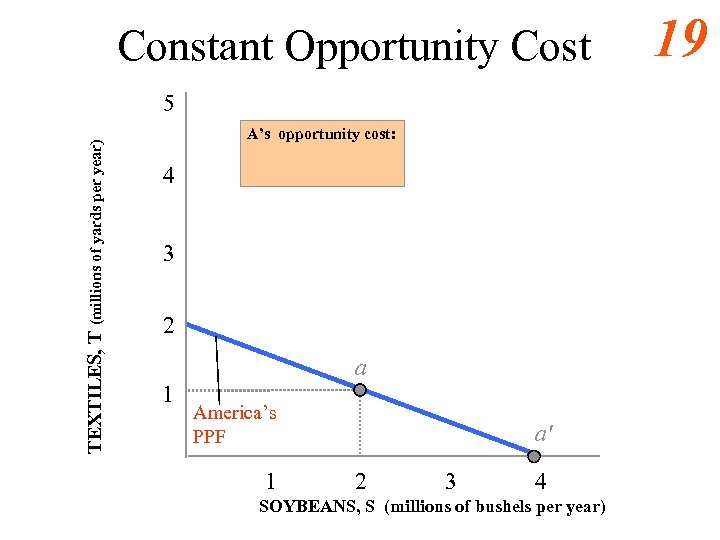
Constant Opportunity Cost TEXTILES, T (millions of yards per year) 5 A’s opportunity cost: 4 3 2 a 1 America’s PPF 1 a' 2 3 4 SOYBEANS, S (millions of bushels per year) 19
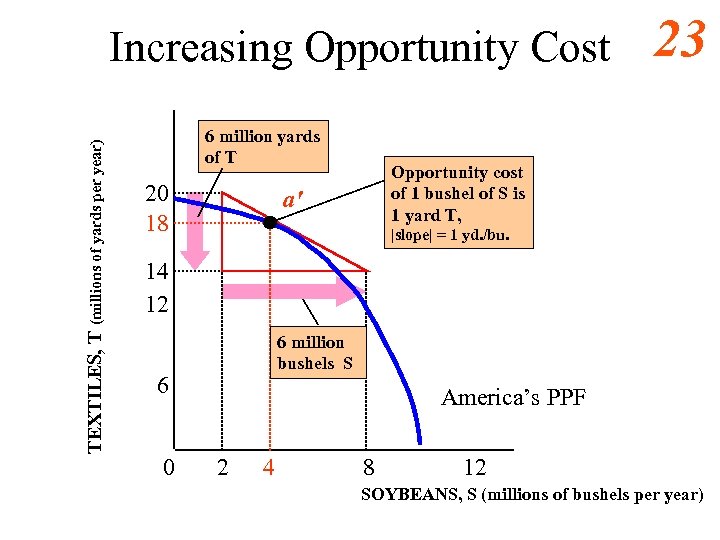
TEXTILES, T (millions of yards per year) Increasing Opportunity Cost 6 million yards of T 20 18 23 Opportunity cost of 1 bushel of S is 1 yard T, a' |slope| = 1 yd. /bu. 14 12 6 million bushels S 6 0 America’s PPF 2 4 8 12 SOYBEANS, S (millions of bushels per year)
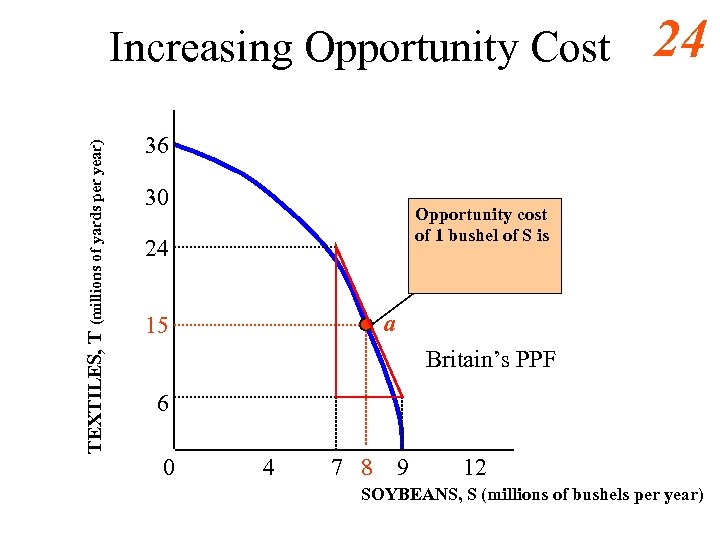
TEXTILES, T (millions of yards per year) Increasing Opportunity Cost 24 36 30 Opportunity cost of 1 bushel of S is 24 a 15 Britain’s PPF 6 0 4 7 8 9 12 SOYBEANS, S (millions of bushels per year)
26 PPF with three goods • What would it look like under the assumption of constant opportunity costs? • What would it look like under the assumption of increasing opportunity costs?
27 Assumption #5 • Perfect competition Þ P = MC • No externalities Þ MSB = MSC
28 Assumption #6 • Perfectly mobile factors within each country • Assumptions 4 - 6 describe supply side. • Assumption 7 describes demand. – A lecture on indifference curves
31 Consumption Possibilities • Consumption choices are limited by income and prices. • A budget line describes the limits to a household’s consumption choices.
32 Consumption Possibilities • Divisible and Indivisible Goods – Divisible goods can be bought in any quantity desired • ex. —gasoline – Indivisible goods cannot be bought in all quantities • ex. —movies
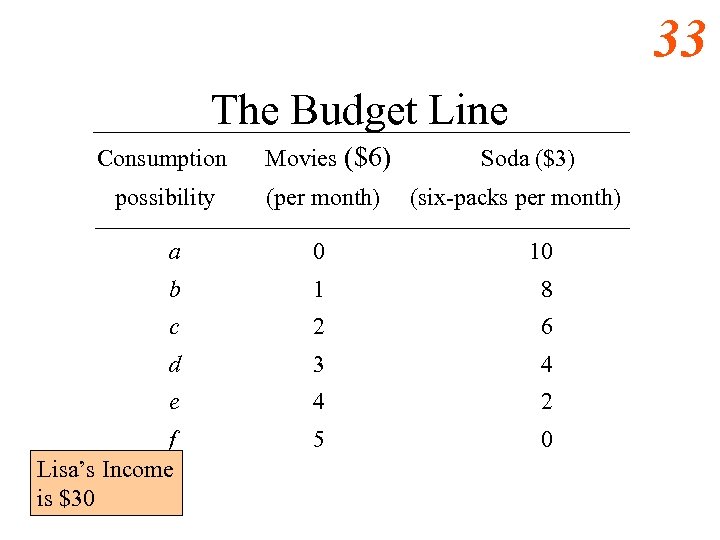
33 The Budget Line Consumption Movies ($6) possibility (per month) Soda ($3) (six-packs per month) a 0 10 b 1 8 c 2 6 d 3 4 e 4 2 f Lisa’s Income is $30 5 0
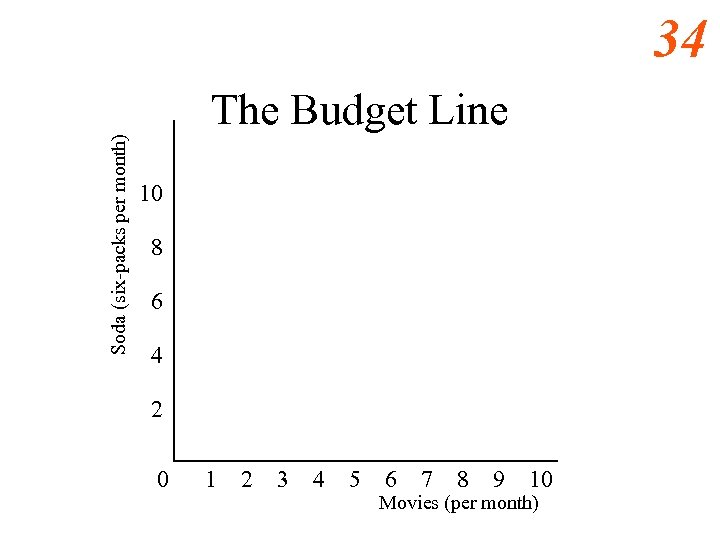
34 Soda (six-packs per month) The Budget Line 10 8 6 4 2 0 1 2 3 4 5 6 7 8 9 10 Movies (per month)
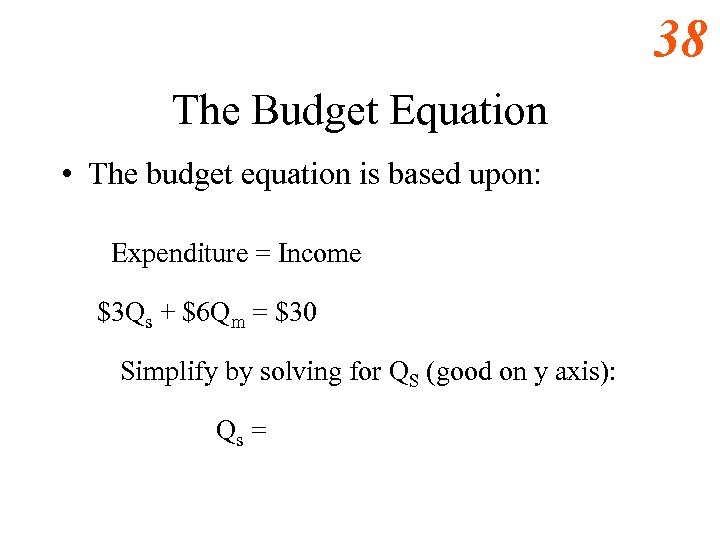
38 The Budget Equation • The budget equation is based upon: Expenditure = Income $3 Qs + $6 Qm = $30 Simplify by solving for QS (good on y axis): Qs =
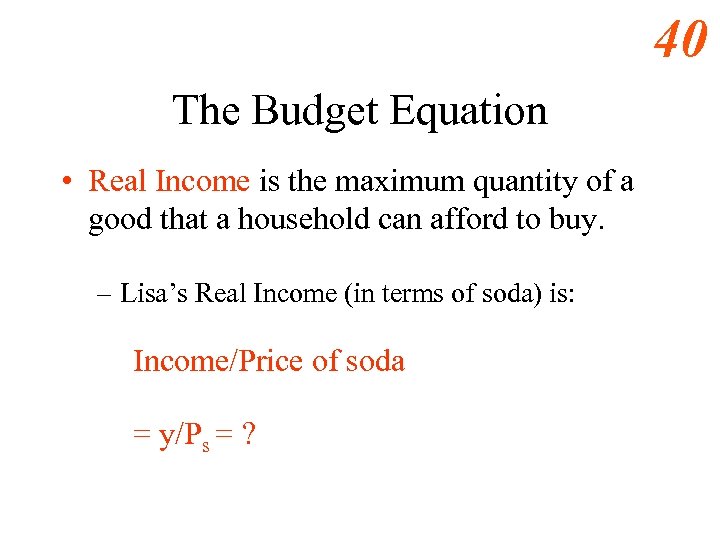
40 The Budget Equation • Real Income is the maximum quantity of a good that a household can afford to buy. – Lisa’s Real Income (in terms of soda) is: Income/Price of soda = y/Ps = ?
43 The Budget Equation • Relative Price – A relative price is the price of one good divided by the price of another good. – Lisa’s relative price of a movie in terms of soda:
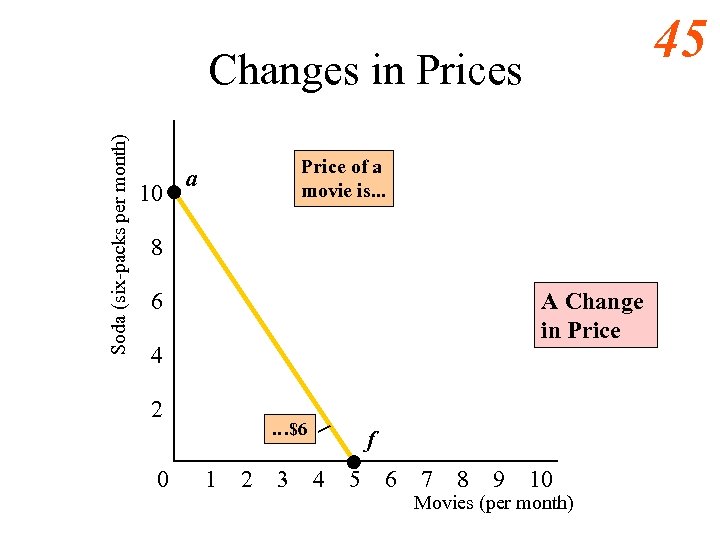
45 Soda (six-packs per month) Changes in Prices 10 Price of a movie is. . . a 8 6 A Change in Price 4 2 0 …$6 1 2 3 f 4 5 6 7 8 9 10 Movies (per month)
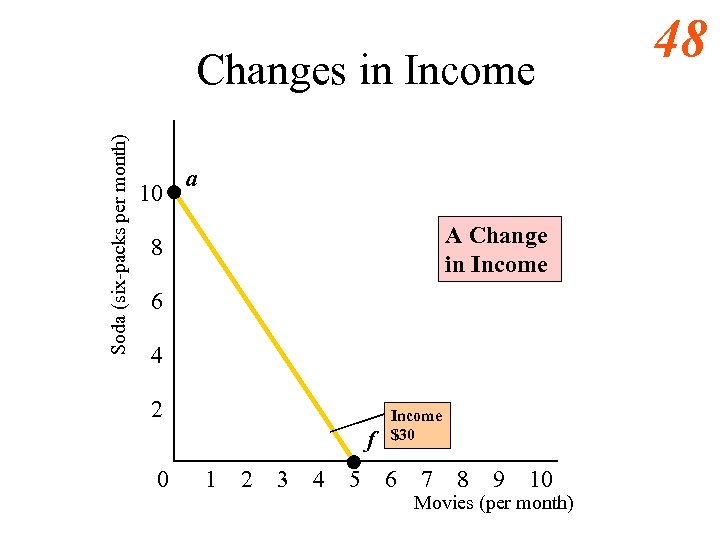
Soda (six-packs per month) Changes in Income 10 a A Change in Income 8 6 4 2 f 0 1 2 3 4 5 Income $30 6 7 8 9 10 Movies (per month) 48
Preferences and Indifference Curves • An indifference curve is a line that shows combinations of goods among which a consumer is indifferent. 51
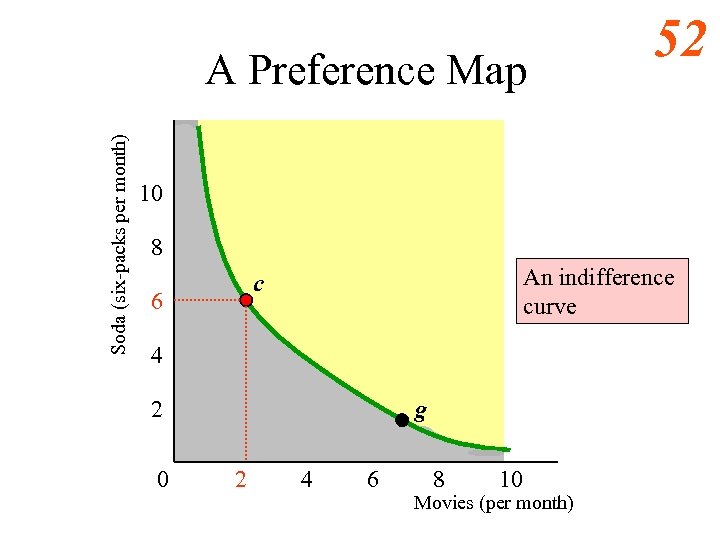
Soda (six-packs per month) A Preference Map 52 10 8 An indifference curve c 6 4 2 0 g 2 4 6 8 10 Movies (per month)
54 A Preference Map • A preference map is a series of indifference curves. • A preference map consists of an infinite number of indifference curves; each one slopes downward, and none of them intersects.
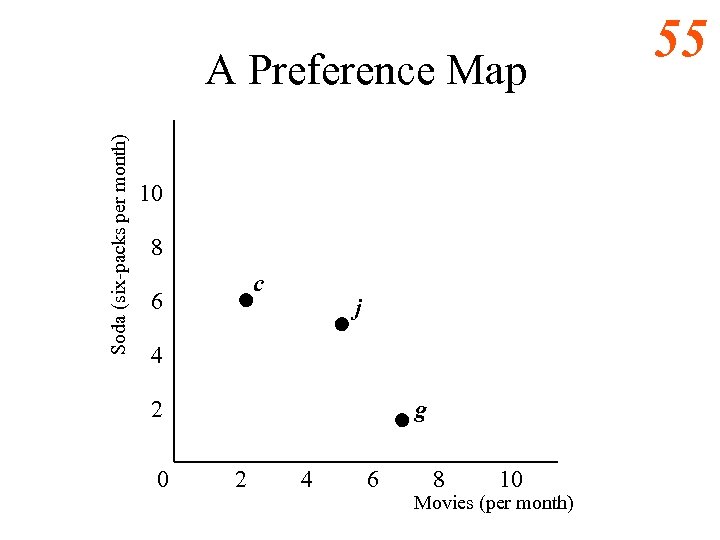
Soda (six-packs per month) A Preference Map 10 8 c 6 j 4 2 0 g 2 4 6 8 10 Movies (per month) 55
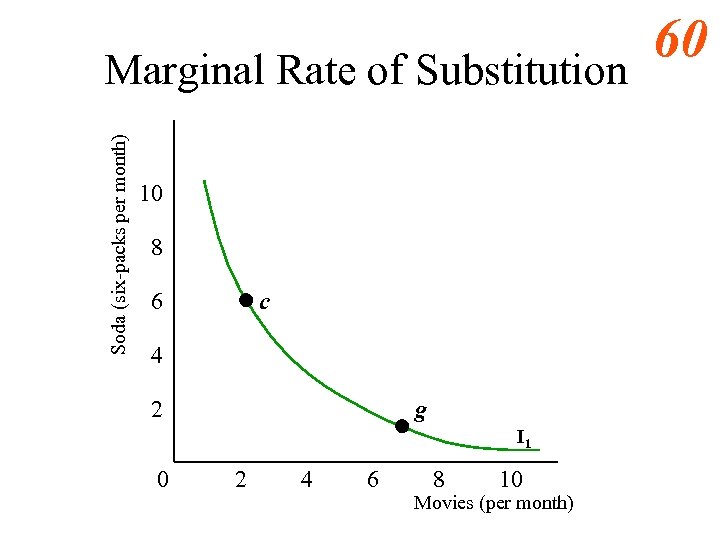
58 Marginal Rate of Substitution • The marginal rate of substitution (MRS) is the rate at which a person will give up one good in order to get more of another good and at the same time remain indifferent.
Soda (six-packs per month) Marginal Rate of Substitution 10 8 6 c 4 2 g I 1 0 2 4 6 8 10 Movies (per month) 60
63 Marginal Rate of Substitution • Notice: As the consumption of movies increases, the MRS decreases. – This is referred to as the diminishing marginal rate of substitution.
Soda (cans) Degree of Substitutability 10 Ordinary Goods 8 6 4 2 0 2 4 6 8 10 Movies 65
Marker pens at the local supermarket Degree of Substitutability 10 Perfect substitutes 8 6 4 2 0 2 4 6 8 10 Marker pens at the campus bookstore 67
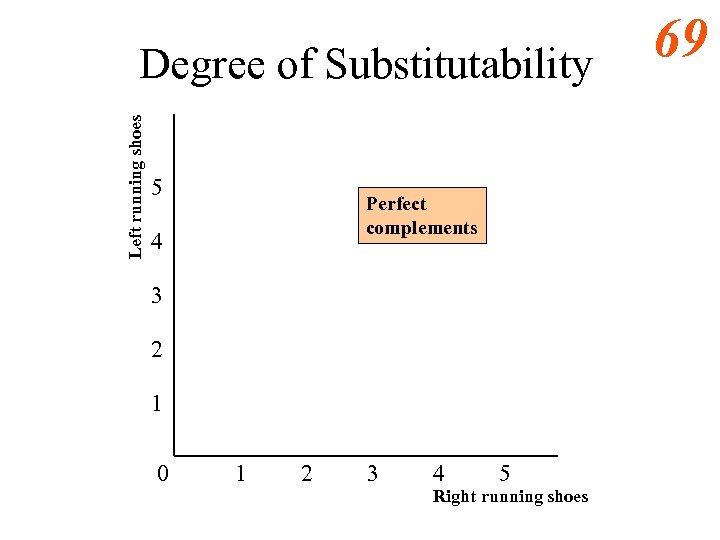
Left running shoes Degree of Substitutability 5 Perfect complements 4 3 2 1 0 1 2 3 4 5 Right running shoes 69
71 Predicting Consumer Behavior • Individuals maximize their utility given their income budget line when they:
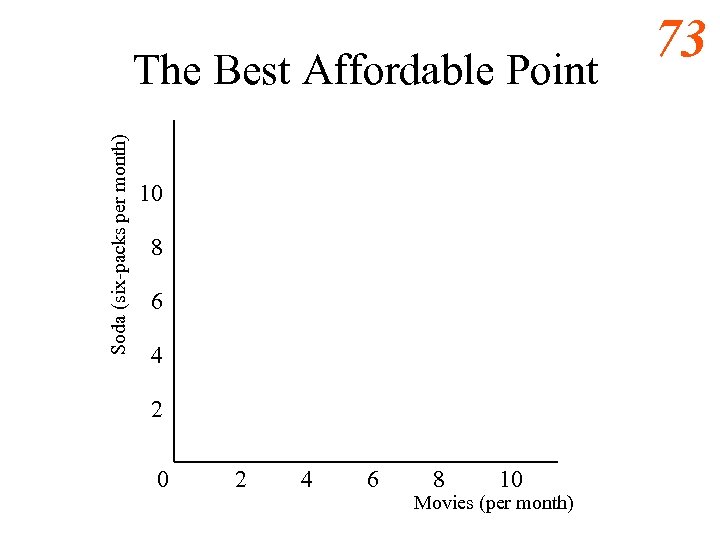
Soda (six-packs per month) The Best Affordable Point 10 8 6 4 2 0 2 4 6 8 10 Movies (per month) 73
75 Assumption #7 • Community preferences in consumption can be represented by a consistent set of community indifference curves. – Holds under restrictive conditions:
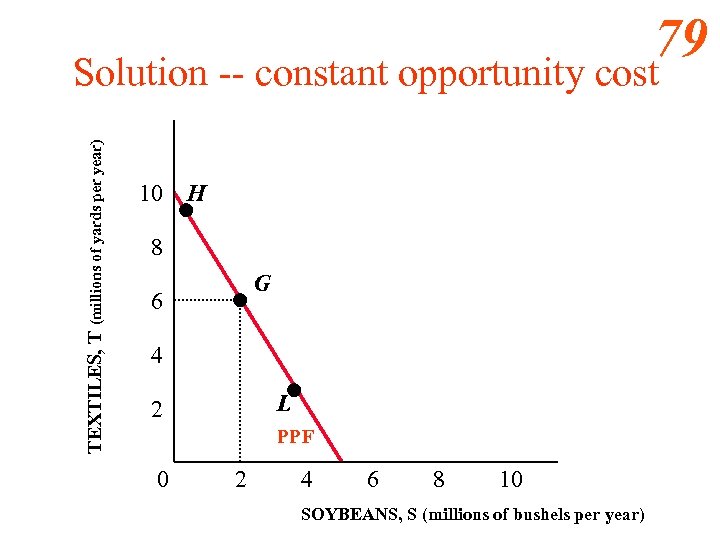
79 TEXTILES, T (millions of yards per year) Solution -- constant opportunity cost 10 H 8 G 6 4 L 2 PPF 0 2 4 6 8 10 SOYBEANS, S (millions of bushels per year)
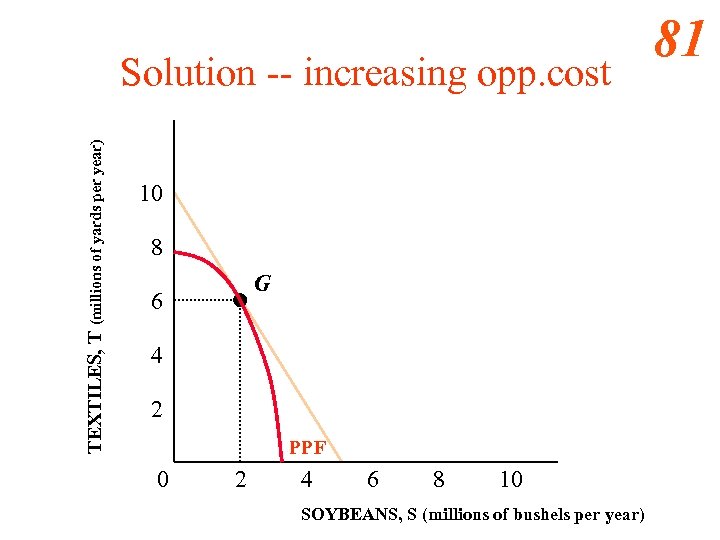
TEXTILES, T (millions of yards per year) Solution -- increasing opp. cost 10 8 G 6 4 2 PPF 0 2 4 6 8 10 SOYBEANS, S (millions of bushels per year) 81
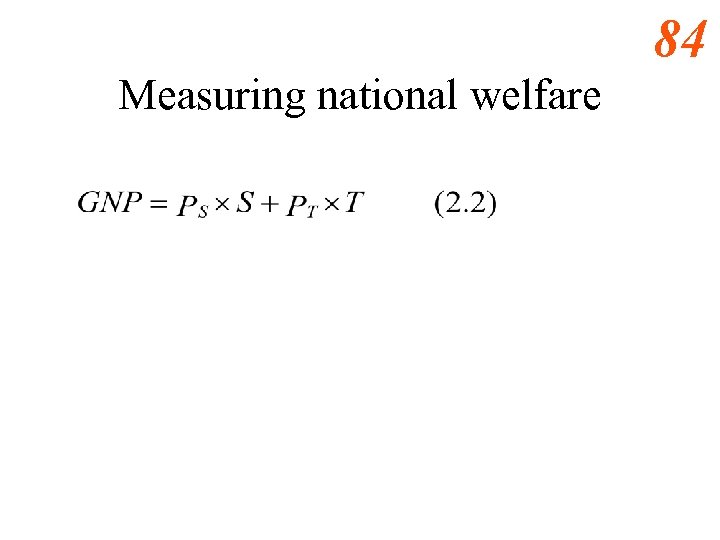
84 Measuring national welfare
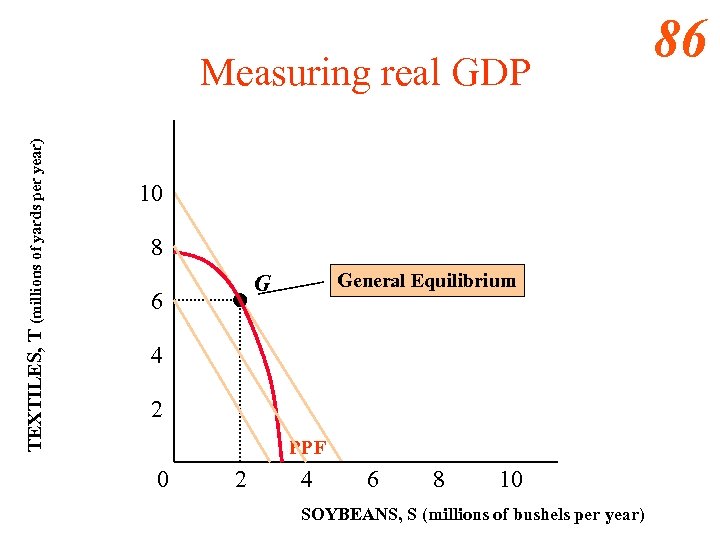
TEXTILES, T (millions of yards per year) Measuring real GDP 10 8 General Equilibrium G 6 4 2 PPF 0 2 4 6 8 10 SOYBEANS, S (millions of bushels per year) 86
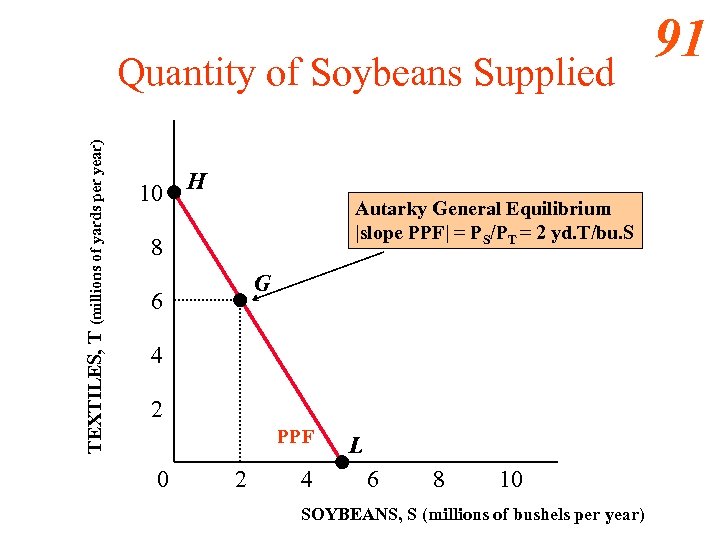
TEXTILES, T (millions of yards per year) Quantity of Soybeans Supplied 10 H Autarky General Equilibrium |slope PPF| = PS/PT = 2 yd. T/bu. S 8 G 6 4 2 PPF 0 2 4 L 6 8 10 SOYBEANS, S (millions of bushels per year) 91
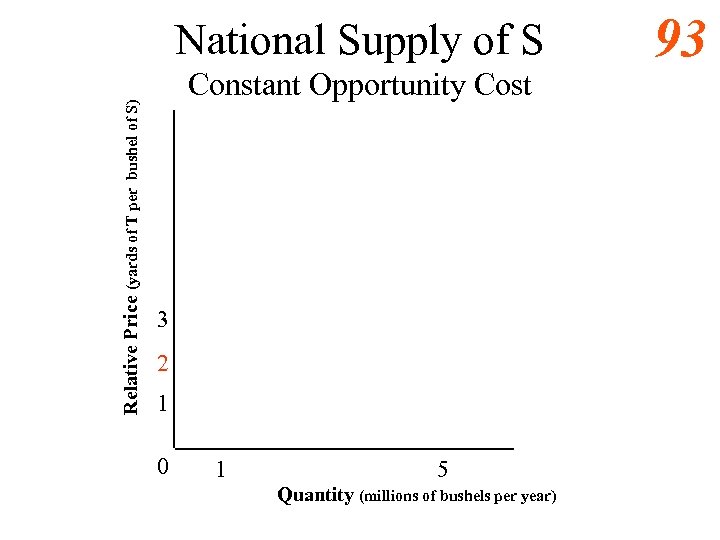
National Supply of S Relative Price (yards of T per bushel of S) Constant Opportunity Cost 3 2 1 0 1 5 Quantity (millions of bushels per year) 93
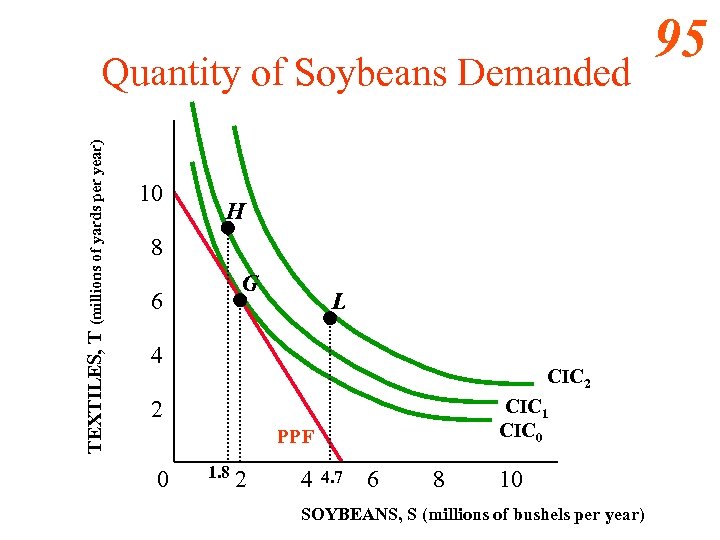
TEXTILES, T (millions of yards per year) Quantity of Soybeans Demanded 10 H 8 G 6 L 4 CIC 2 CIC 1 CIC 0 2 PPF 0 1. 8 2 4 4. 7 6 8 10 SOYBEANS, S (millions of bushels per year) 95
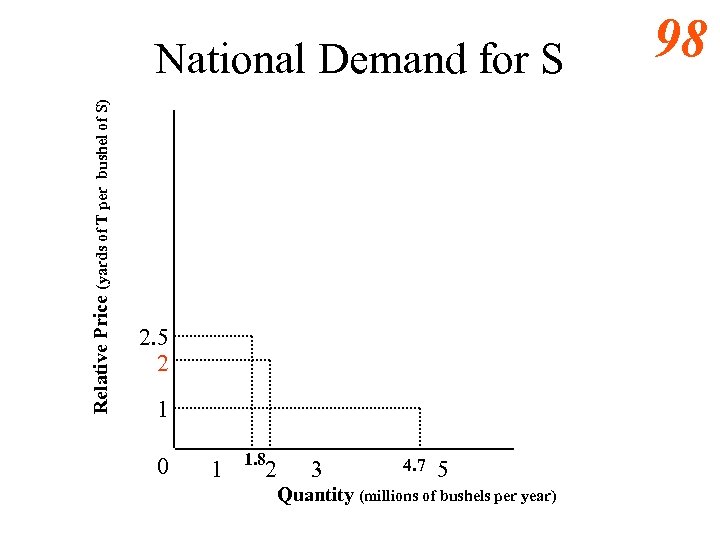
Relative Price (yards of T per bushel of S) National Demand for S 2. 5 2 1 0 1 1. 8 2 3 4. 7 5 Quantity (millions of bushels per year) 98
Скачать презентацию 1 Building Blocks INTERNATIONAL ECONOMICS ECO 486
a71c9e6c67f5dc8d1a6c46a9966e923e.ppt