 Скачать презентацию 1 ATCA vs Blade Servers A battle
8c716a1e0154d0ffa54eb6be335e54db.ppt
- Количество слайдов: 25




1
ATCA vs. Blade Servers A battle rages for your next generation hardware platform (H-01)
Audio. Codes at a Glance 13 Years of Operation Focused on Vo. P Media Gateway & Media Server Technology and Systems Adding Session Border controller Over 15 Million Channels Shipped to Over 75 Countries Leader in Innovation and Quality of Vo. P Solutions Executing, Profitable and Growing NASDAQ: AUDC; Public since 1999 Over 4 years of consecutive quarterly growth Improving Operating Model, 13% of Sales $143 M in Cash Employee Geographical Breakdown: ~ 730 Employees and Growing ü Nth & Sth America 240 • Global Presence HQ & R&D in Israel; ü ü EMEA 470 APAC 22 R&D extensions in the USA (NC, NJ, CA, TX) and the UK 3 Sales & Support Offices in US (7 offices), Mexico, Brazil, Argentina, France, UK, Germany, Russia, China, Singapore, India, Korea, Japan
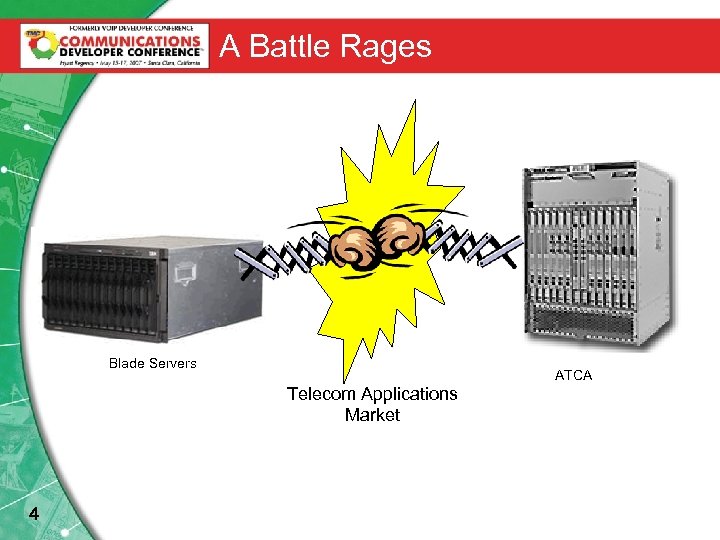
A Battle Rages Blade Servers ATCA Telecom Applications Market 4
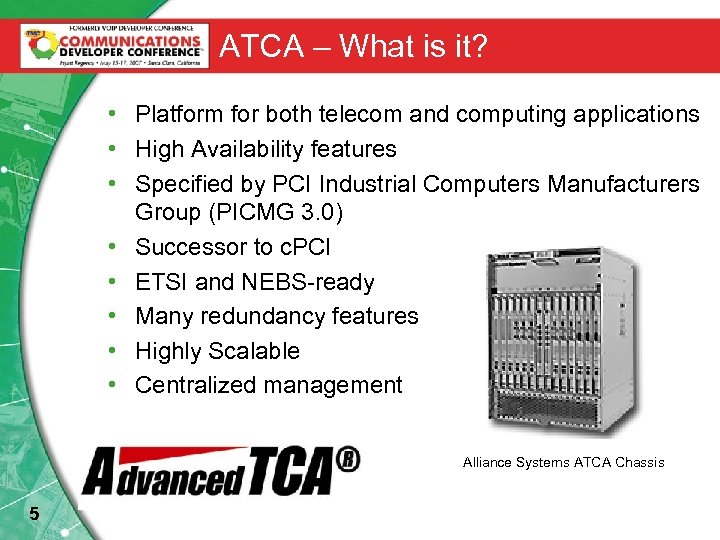
ATCA – What is it? • Platform for both telecom and computing applications • High Availability features • Specified by PCI Industrial Computers Manufacturers Group (PICMG 3. 0) • Successor to c. PCI • ETSI and NEBS-ready • Many redundancy features • Highly Scalable • Centralized management Alliance Systems ATCA Chassis 5
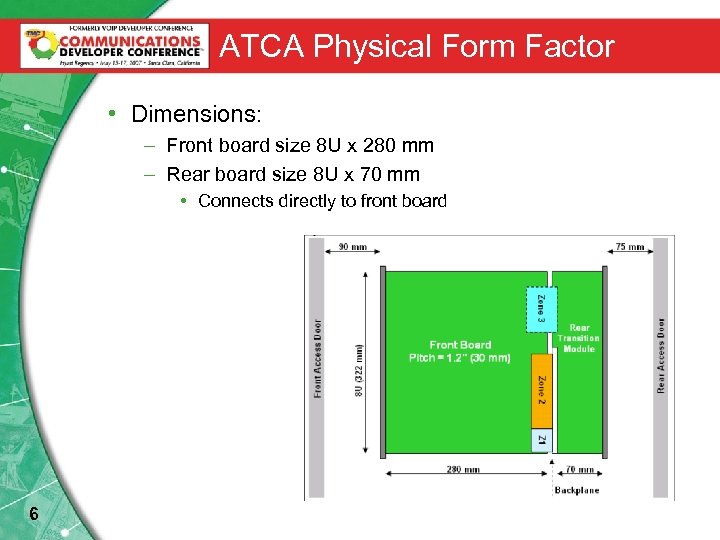
ATCA Physical Form Factor • Dimensions: – Front board size 8 U x 280 mm – Rear board size 8 U x 70 mm • Connects directly to front board 6
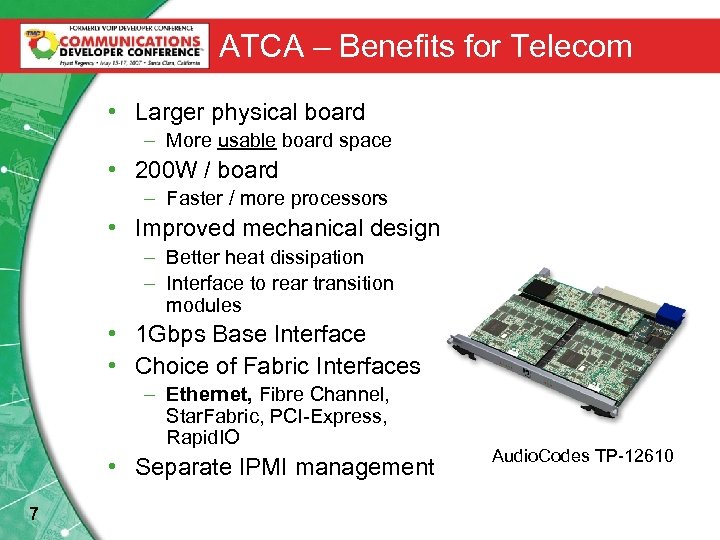
ATCA – Benefits for Telecom • Larger physical board – More usable board space • 200 W / board – Faster / more processors • Improved mechanical design – Better heat dissipation – Interface to rear transition modules • 1 Gbps Base Interface • Choice of Fabric Interfaces – Ethernet, Fibre Channel, Star. Fabric, PCI-Express, Rapid. IO • Separate IPMI management 7 Audio. Codes TP-12610
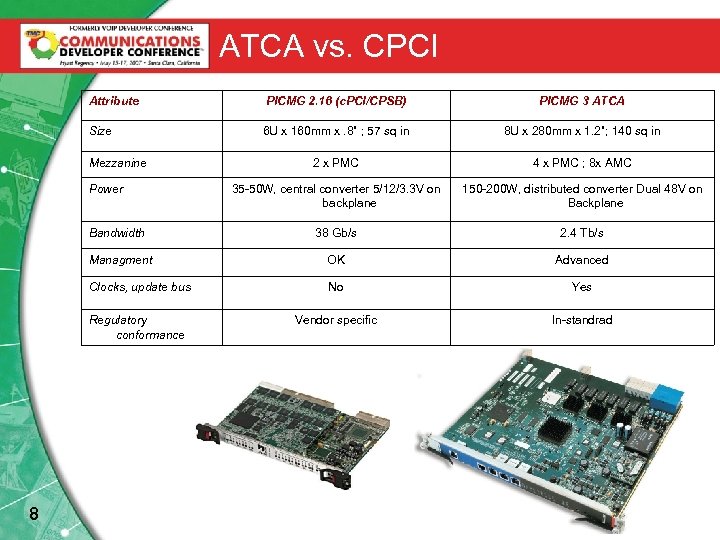
ATCA vs. CPCI Attribute PICMG 2. 16 (c. PCI/CPSB) PICMG 3 ATCA Size 6 U x 160 mm x. 8” ; 57 sq in 8 U x 280 mm x 1. 2”; 140 sq in 2 x PMC 4 x PMC ; 8 x AMC 35 -50 W, central converter 5/12/3. 3 V on backplane 150 -200 W, distributed converter Dual 48 V on Backplane 38 Gb/s 2. 4 Tb/s Managment OK Advanced Clocks, update bus No Yes Regulatory conformance Vendor specific In-standrad Mezzanine Power Bandwidth 8
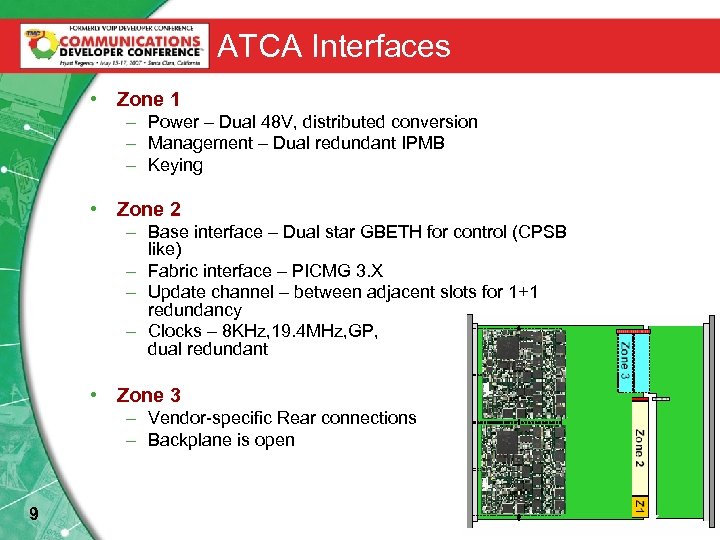
ATCA Interfaces • Zone 1 – Power – Dual 48 V, distributed conversion – Management – Dual redundant IPMB – Keying • Zone 2 – Base interface – Dual star GBETH for control (CPSB like) – Fabric interface – PICMG 3. X – Update channel – between adjacent slots for 1+1 redundancy – Clocks – 8 KHz, 19. 4 MHz, GP, dual redundant • Zone 3 – Vendor-specific Rear connections – Backplane is open 9
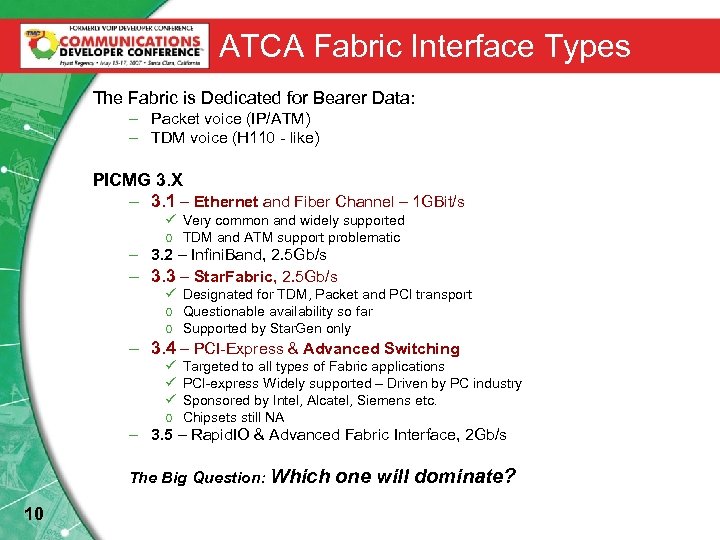
ATCA Fabric Interface Types The Fabric is Dedicated for Bearer Data: – Packet voice (IP/ATM) – TDM voice (H 110 - like) PICMG 3. X – 3. 1 – Ethernet and Fiber Channel – 1 GBit/s ü Very common and widely supported o TDM and ATM support problematic – 3. 2 – Infini. Band, 2. 5 Gb/s – 3. 3 – Star. Fabric, 2. 5 Gb/s ü Designated for TDM, Packet and PCI transport o Questionable availability so far o Supported by Star. Gen only – 3. 4 – PCI-Express & Advanced Switching ü ü ü o Targeted to all types of Fabric applications PCI-express Widely supported – Driven by PC industry Sponsored by Intel, Alcatel, Siemens etc. Chipsets still NA – 3. 5 – Rapid. IO & Advanced Fabric Interface, 2 Gb/s The Big Question: Which 10 one will dominate?
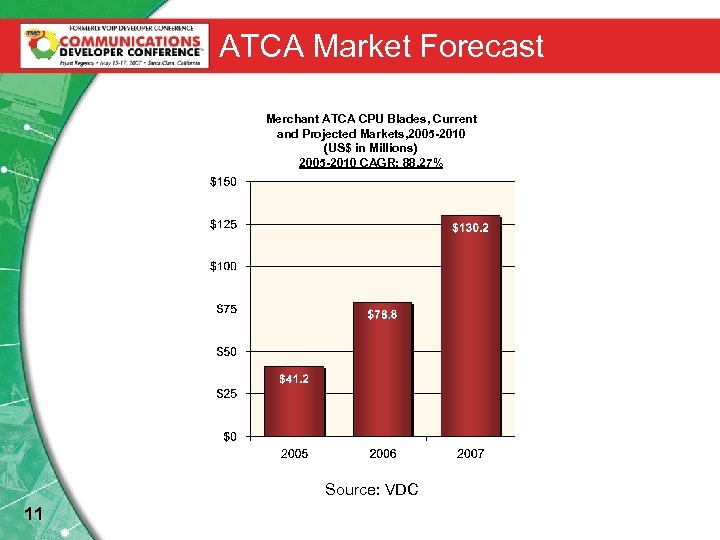
ATCA Market Forecast Merchant ATCA CPU Blades, Current and Projected Markets, 2005 -2010 (US$ in Millions) 2005 -2010 CAGR: 88. 27% Source: VDC 11
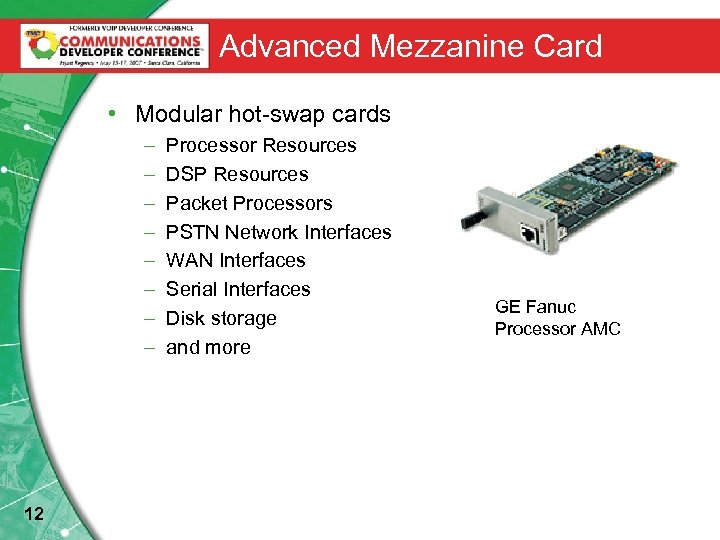
Advanced Mezzanine Card • Modular hot-swap cards – – – – 12 Processor Resources DSP Resources Packet Processors PSTN Network Interfaces WAN Interfaces Serial Interfaces Disk storage and more GE Fanuc Processor AMC
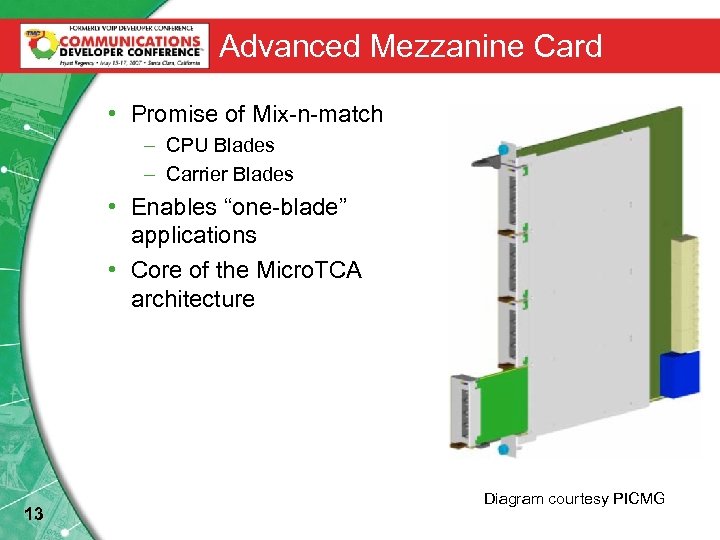
Advanced Mezzanine Card • Promise of Mix-n-match – CPU Blades – Carrier Blades • Enables “one-blade” applications • Core of the Micro. TCA architecture 13 Diagram courtesy PICMG
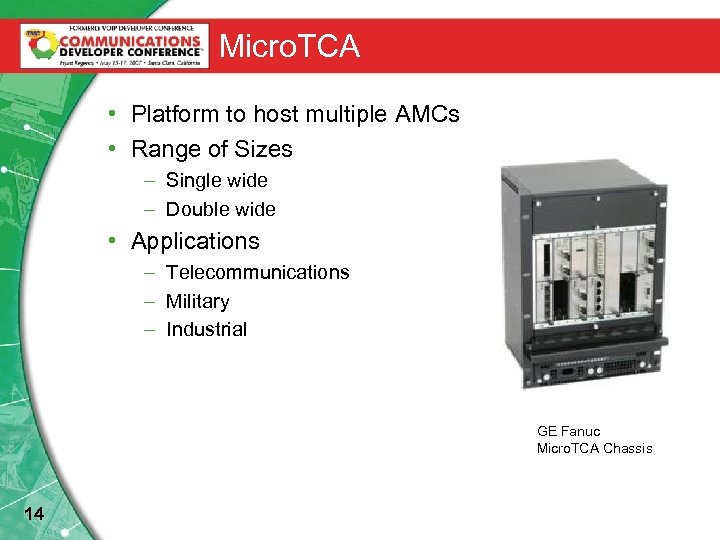
Micro. TCA • Platform to host multiple AMCs • Range of Sizes – Single wide – Double wide • Applications – Telecommunications – Military – Industrial GE Fanuc Micro. TCA Chassis 14
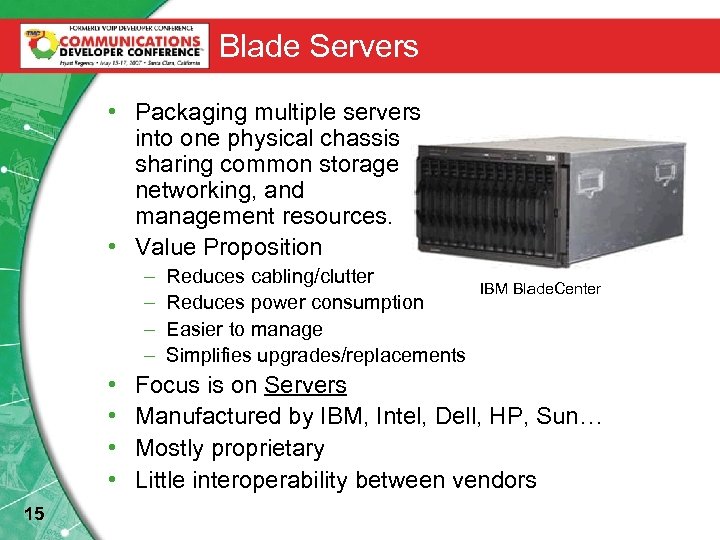
Blade Servers • Packaging multiple servers into one physical chassis, sharing common storage networking, and management resources. • Value Proposition – – • • 15 Reduces cabling/clutter Reduces power consumption Easier to manage Simplifies upgrades/replacements IBM Blade. Center Focus is on Servers Manufactured by IBM, Intel, Dell, HP, Sun… Mostly proprietary Little interoperability between vendors
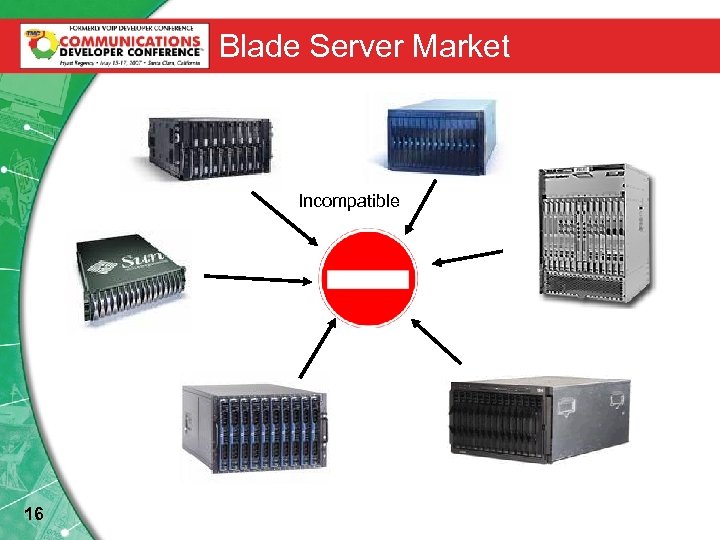
Blade Server Market Incompatible 16
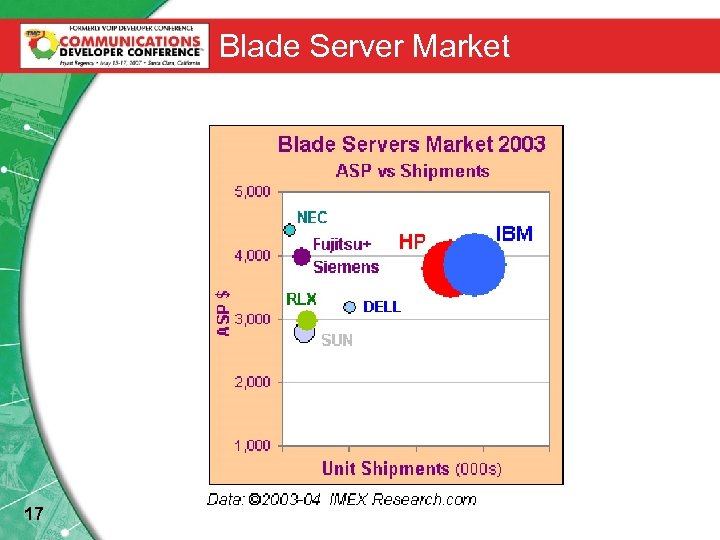
Blade Server Market 17
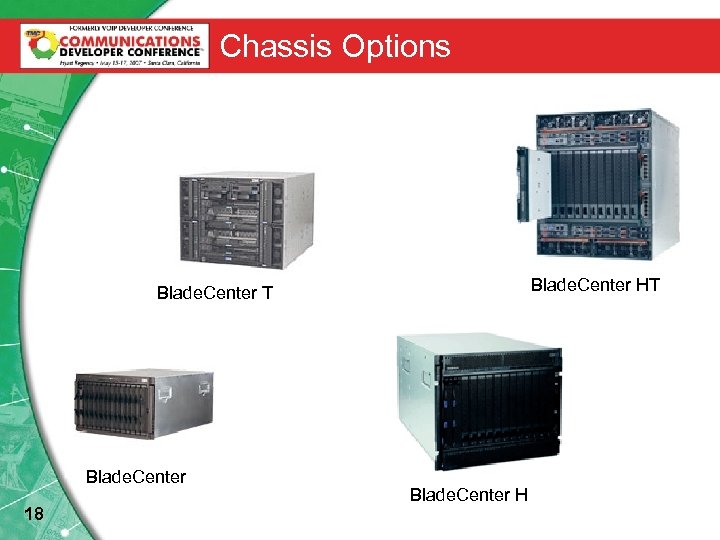
Chassis Options Blade. Center HT Blade. Center 18 Blade. Center H
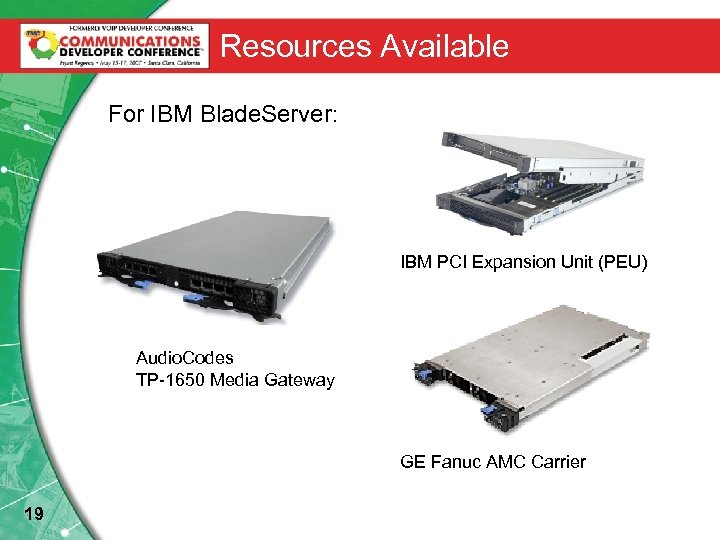
Resources Available For IBM Blade. Server: IBM PCI Expansion Unit (PEU) Audio. Codes TP-1650 Media Gateway GE Fanuc AMC Carrier 19
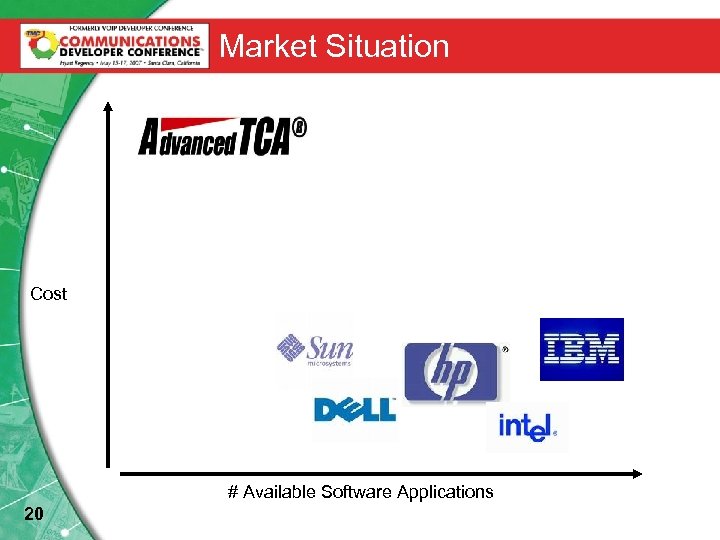
Market Situation Cost # Available Software Applications 20
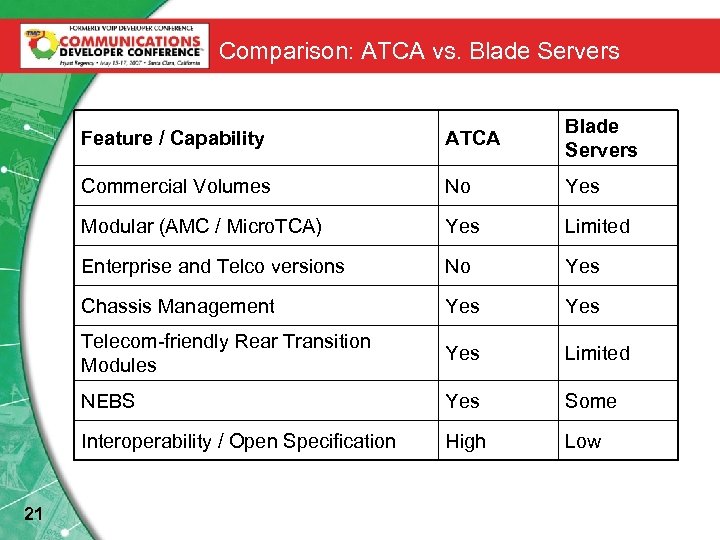
Comparison: ATCA vs. Blade Servers Feature / Capability Blade Servers Commercial Volumes No Yes Modular (AMC / Micro. TCA) Yes Limited Enterprise and Telco versions No Yes Chassis Management Yes Telecom-friendly Rear Transition Modules Yes Limited NEBS Yes Some Interoperability / Open Specification 21 ATCA High Low
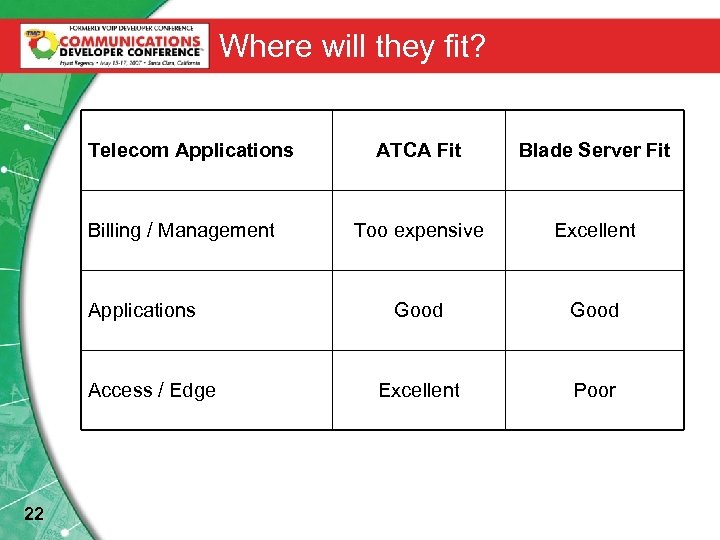
Where will they fit? Telecom Applications Billing / Management Applications Access / Edge 22 ATCA Fit Blade Server Fit Too expensive Excellent Good Excellent Poor
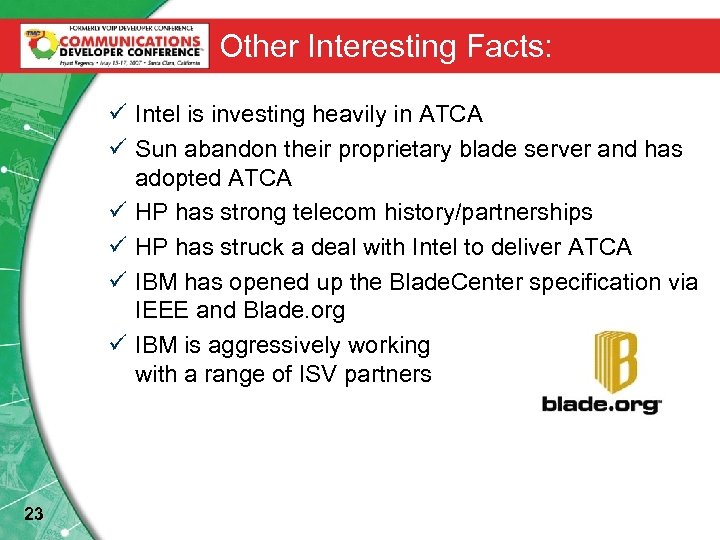
Other Interesting Facts: ü Intel is investing heavily in ATCA ü Sun abandon their proprietary blade server and has adopted ATCA ü HP has strong telecom history/partnerships ü HP has struck a deal with Intel to deliver ATCA ü IBM has opened up the Blade. Center specification via IEEE and Blade. org ü IBM is aggressively working with a range of ISV partners 23

Questions? ? 24
More information Booth #115 25
Скачать презентацию 1 ATCA vs Blade Servers A battle
8c716a1e0154d0ffa54eb6be335e54db.ppt