Скачать презентацию 1 Assume that the U S economy is
b8505991dfdcda7e56953bd52d722054.ppt
- Количество слайдов: 7

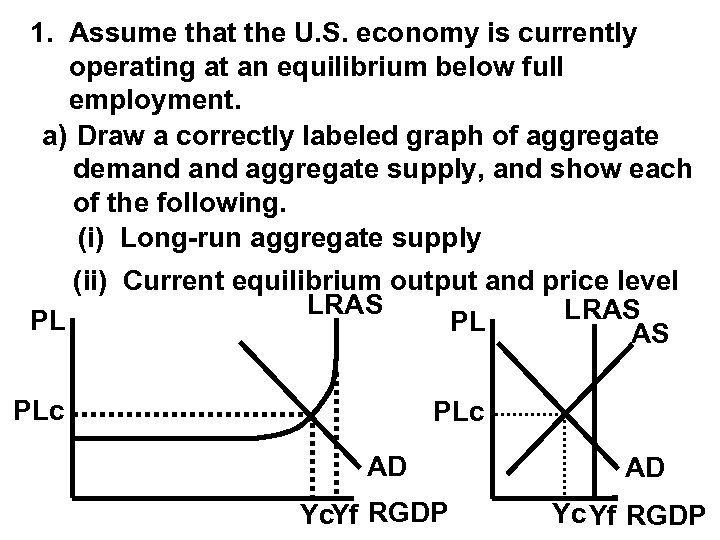 1. Assume that the U. S. economy is currently operating at an equilibrium below full employment. a) Draw a correctly labeled graph of aggregate demand aggregate supply, and show each of the following. (i) Long-run aggregate supply (ii) Current equilibrium output and price level LRAS PL PL AS PLc AD Yc. Yf RGDP AD Yc Yf RGDP
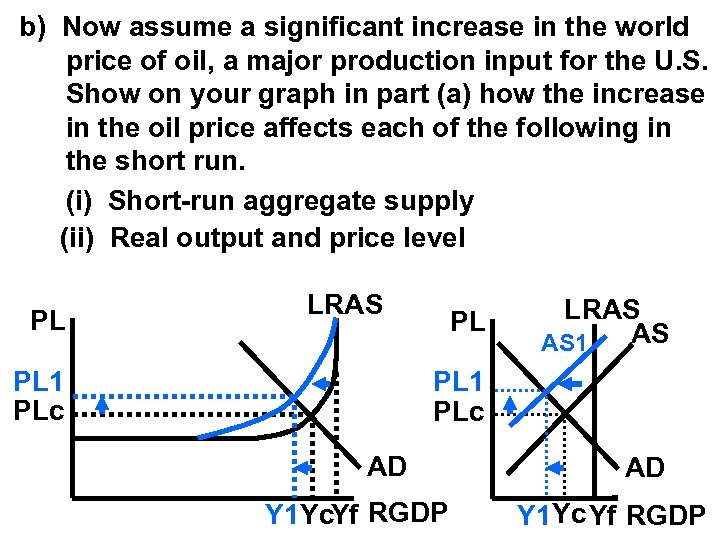 b) Now assume a significant increase in the world price of oil, a major production input for the U. S. Show on your graph in part (a) how the increase in the oil price affects each of the following in the short run. (i) Short-run aggregate supply (ii) Real output and price level PL LRAS PL 1 PLc PL LRAS AS AS 1 PLc AD Y 1 Yc. Yf RGDP AD Y 1 Yc Yf RGDP
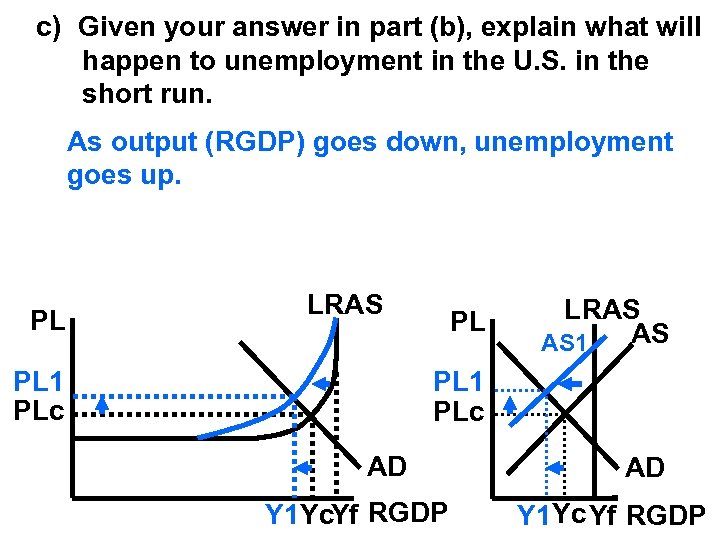 c) Given your answer in part (b), explain what will happen to unemployment in the U. S. in the short run. As output (RGDP) goes down, unemployment goes up. PL LRAS PL 1 PLc PL LRAS AS AS 1 PLc AD Y 1 Yc. Yf RGDP AD Y 1 Yc Yf RGDP
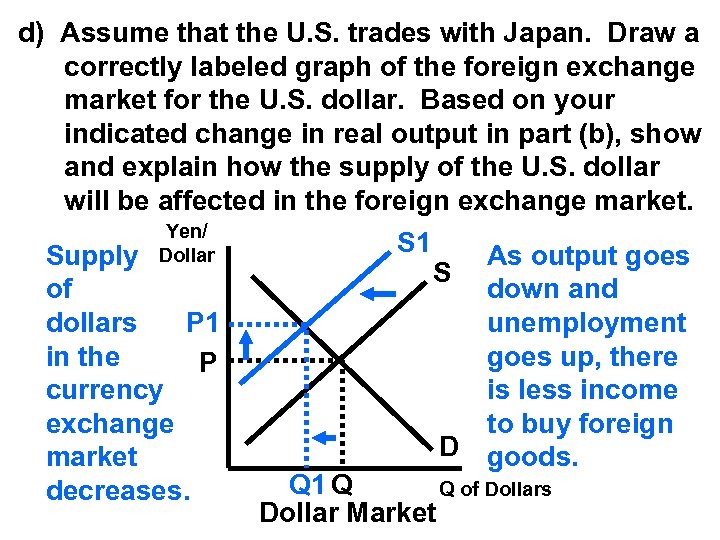 d) Assume that the U. S. trades with Japan. Draw a correctly labeled graph of the foreign exchange market for the U. S. dollar. Based on your indicated change in real output in part (b), show and explain how the supply of the U. S. dollar will be affected in the foreign exchange market. Yen/ S 1 Dollar Supply As output goes S of down and P 1 dollars unemployment in the goes up, there P currency is less income exchange to buy foreign D goods. market Q 1 Q Q of Dollars decreases. Dollar Market
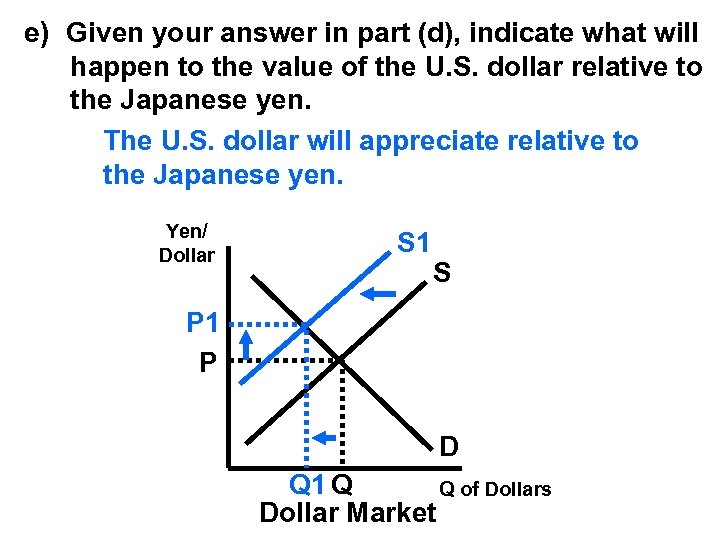 e) Given your answer in part (d), indicate what will happen to the value of the U. S. dollar relative to the Japanese yen. The U. S. dollar will appreciate relative to the Japanese yen. Yen/ Dollar S 1 S P 1 P D Q 1 Q Q of Dollars Dollar Market