


 Скачать презентацию 1 85 I Introduction to the Earth Geology
Introduction to the Earth.ppt
- Количество слайдов: 89
 1/85 I Introduction to the Earth Geology
 ОСНОВНЫЕ ЗАДАЧИ ГЛАВЫ 2/85 Уметь назвать и описать строение и главные компоненты планеты Земля • • Охарактеризовать роль тектонических процессов в формировании осадочных бассейнов • Изучить главные различия между магматическими, метаморфическими и осадочными породами • Рассмотреть главные периоды геологического времени и связать основные геологические события Земли в масштабе геохронологической шкалы • Научиться определять и описывать типы горных пород
 КЛЮЧЕВЫЕ МОМЕНТЫ 3/85 1. Понимать и описывать круговорот углерода в природе 2. Знать основные отличия между магматическими, метаморфическими и осадочными породами 3. Знать шкалу Мооса по твердости 4. Классификация осадочных пород 5. Глобальная тектоническая деятельность, связанная с плитами 6. Представлять главные периоды геологического времени и основные события с ними связанные 7. Понимать разницу между согласным и несогласным залеганием пород 8. Описывать стратиграфическую последовательность напластований 9. Закон Вальтера 10. Знать генезис основных типов пород
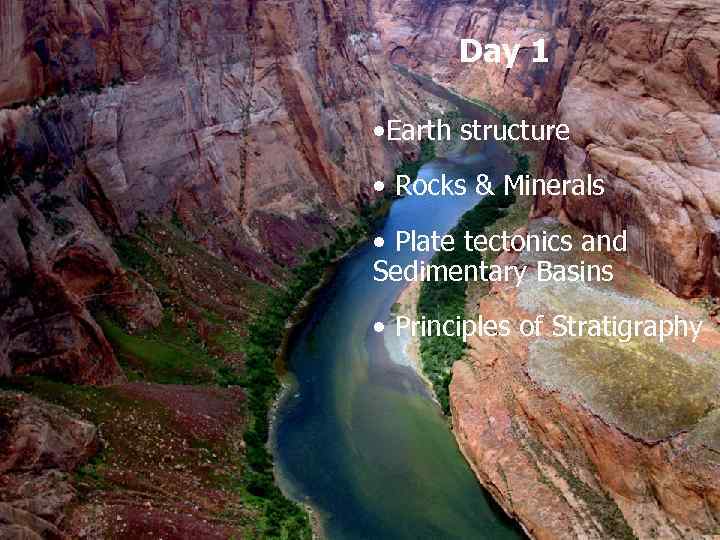 Day 1 • Earth structure • Rocks & Minerals • Plate tectonics and Sedimentary Basins • Principles of Stratigraphy
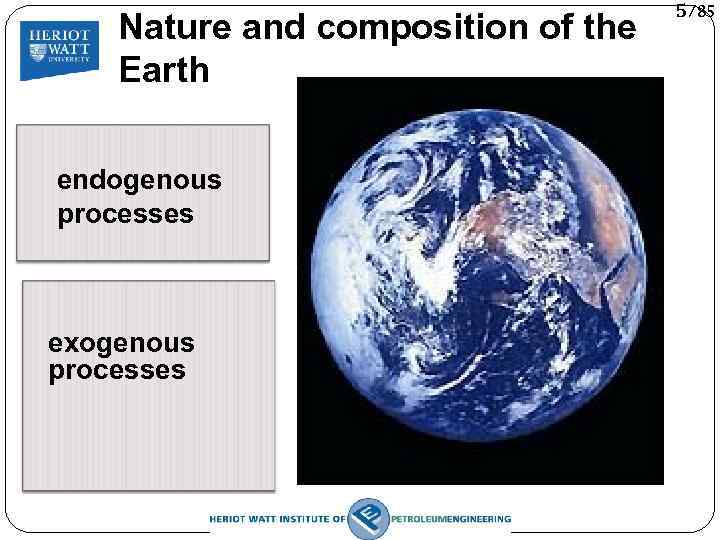 Nature and composition of the Earth endogenous processes exogenous processes 5/85
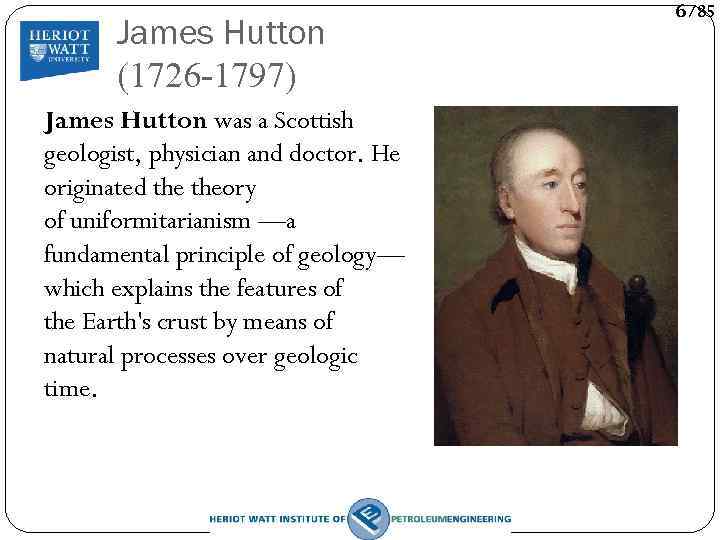 James Hutton (1726 -1797) James Hutton was a Scottish geologist, physician and doctor. He originated theory of uniformitarianism —a fundamental principle of geology— which explains the features of the Earth's crust by means of natural processes over geologic time. 6/85
 7/85 (Law of uniform change) «Взгляни на Природу во всех ее проявлениях. Изменение – это великий закон Природы. » 1. chemical process Роберт Бернс 2. biological process 3. physical process «. . . Нет ни следов начала, ни признаков конца. . . » Джеймс Геттон
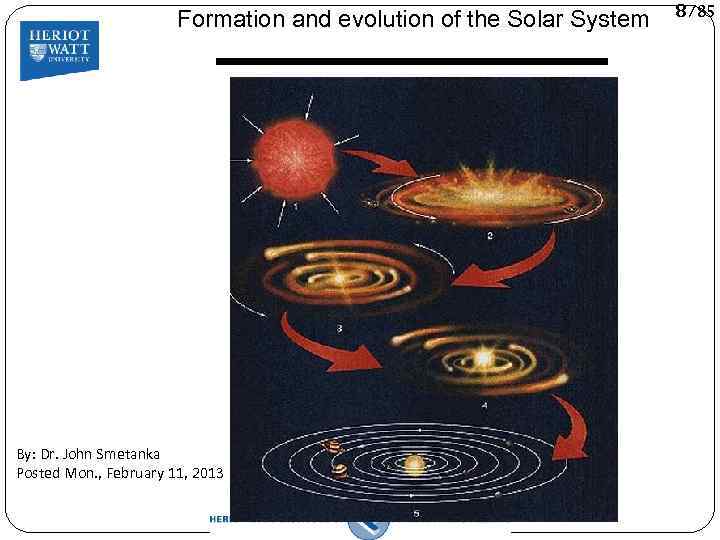 Formation and evolution of the Solar System By: Dr. John Smetanka Posted Mon. , February 11, 2013 8/85
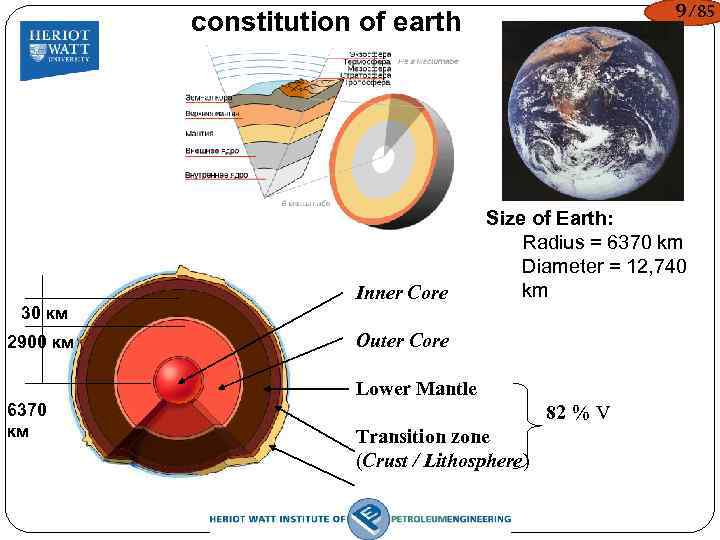 9/85 constitution of earth Inner Core Size of Earth: Radius = 6370 km Diameter = 12, 740 km 30 км 2900 км Outer Core Lower Mantle 6370 км 82 % V Transition zone (Crust / Lithosphere)
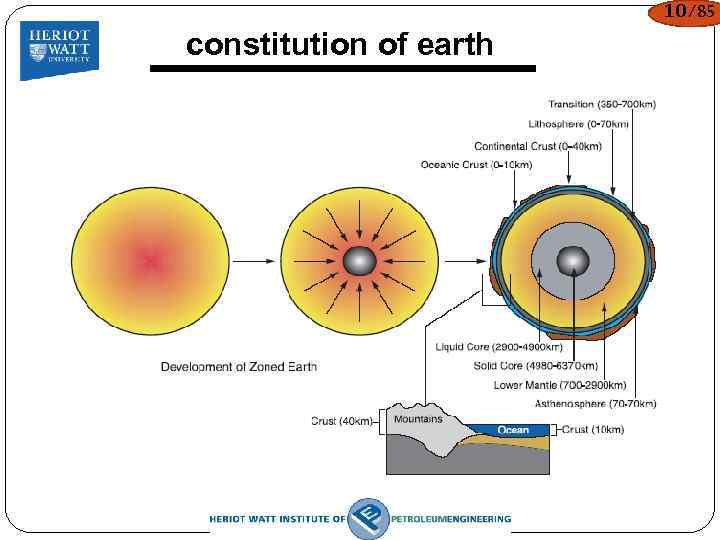 10/85 constitution of earth
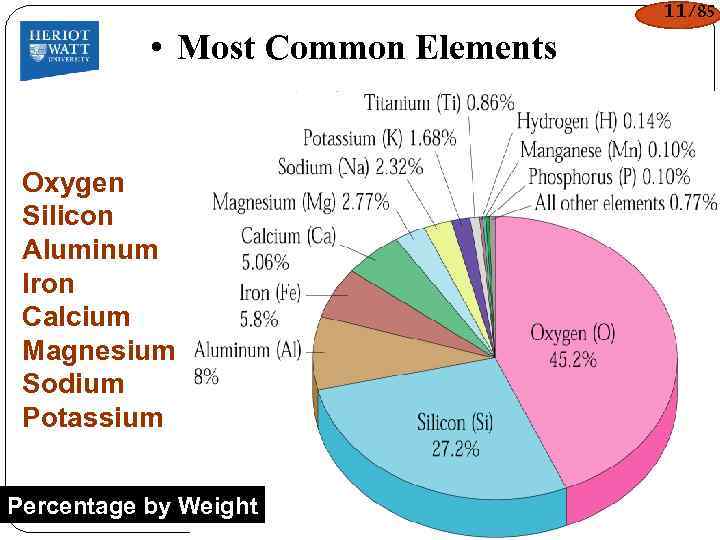 11/85 • Most Common Elements Oxygen Silicon Aluminum Iron Calcium Magnesium Sodium Potassium Percentage by Weight
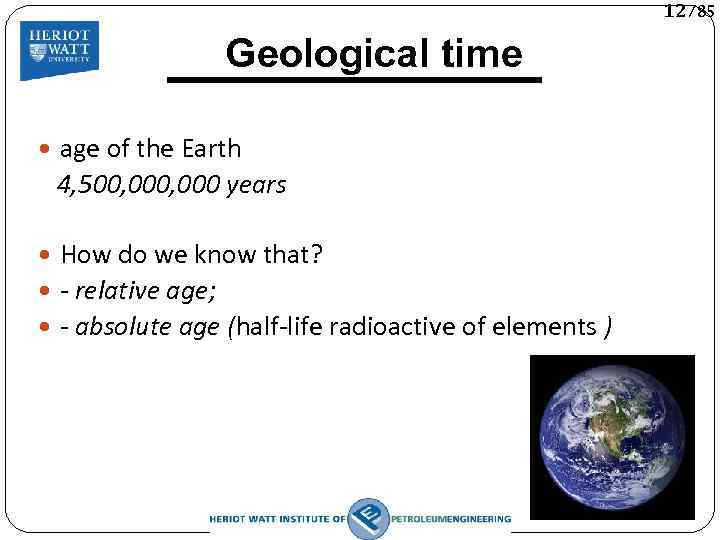 12/85 Geological time age of the Earth 4, 500, 000 years How do we know that? - relative age; - absolute age (half-life radioactive of elements )
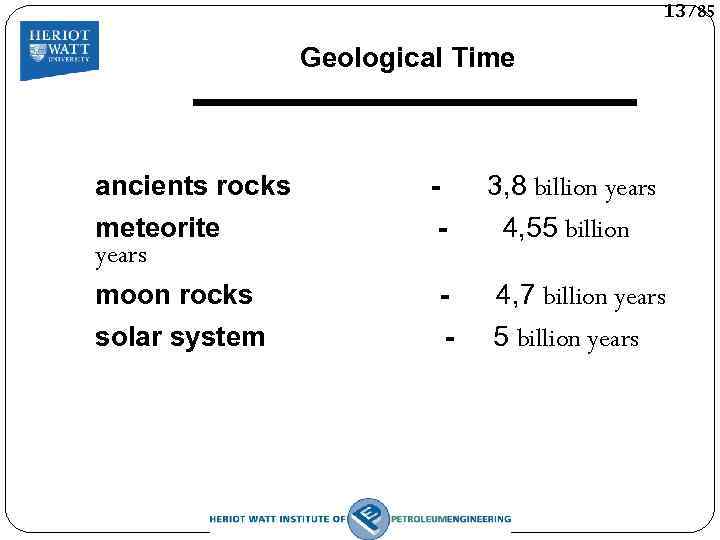 13/85 Geological Time ancients rocks - 3, 8 billion years meteorite - 4, 55 billion years moon rocks - 4, 7 billion years solar system - 5 billion years
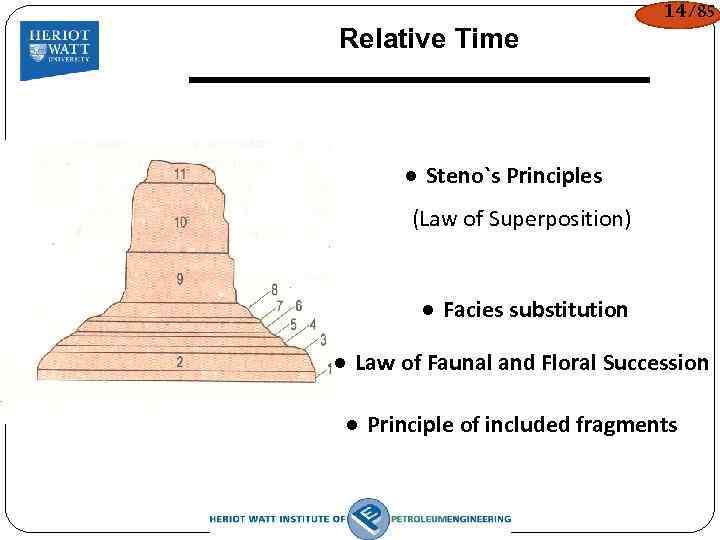 14/85 Relative Time ● Steno`s Principles (Law of Superposition) ● Facies substitution ● Law of Faunal and Floral Succession ● Principle of included fragments
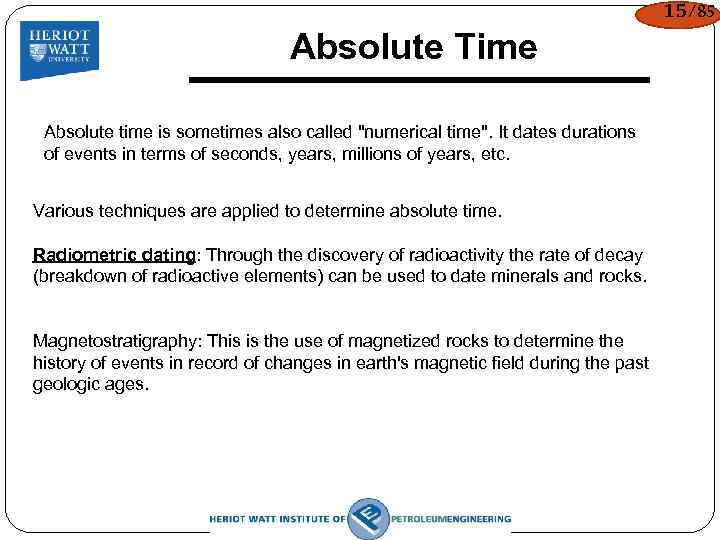 15/85 Absolute Time Absolute time is sometimes also called "numerical time". It dates durations of events in terms of seconds, years, millions of years, etc. Various techniques are applied to determine absolute time. Radiometric dating: Through the discovery of radioactivity the rate of decay (breakdown of radioactive elements) can be used to date minerals and rocks. Magnetostratigraphy: This is the use of magnetized rocks to determine the history of events in record of changes in earth's magnetic field during the past geologic ages.
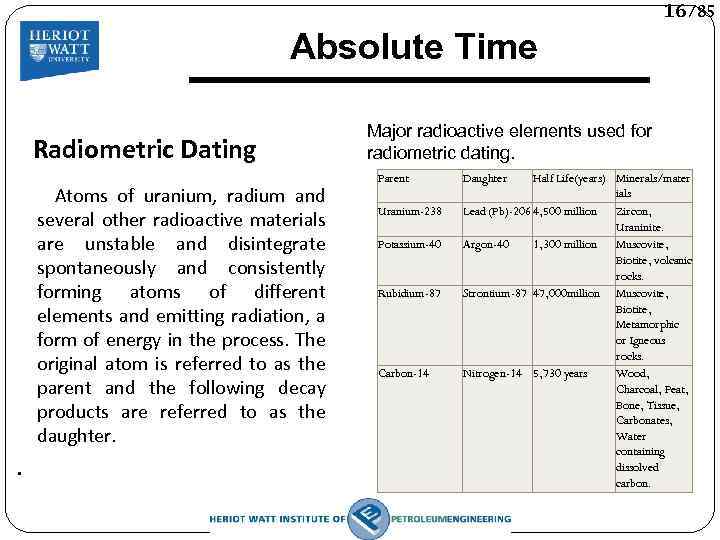 16/85 Absolute Time Radiometric Dating Atoms of uranium, radium and several other radioactive materials are unstable and disintegrate spontaneously and consistently forming atoms of different elements and emitting radiation, a form of energy in the process. The original atom is referred to as the parent and the following decay products are referred to as the daughter. . Major radioactive elements used for radiometric dating. Parent Uranium-238 Potassium-40 Rubidium-87 Carbon-14 Daughter Half Life(years) Minerals/mater ials Lead (Pb)-206 4, 500 million Zircon, Uraninite. Argon-40 1, 300 million Muscovite, Biotite, volcanic rocks. Strontium-87 47, 000 million Muscovite, Biotite, Metamorphic or Igneous rocks. Nitrogen-14 5, 730 years Wood, Charcoal, Peat, Bone, Tissue, Carbonates, Water containing dissolved carbon.
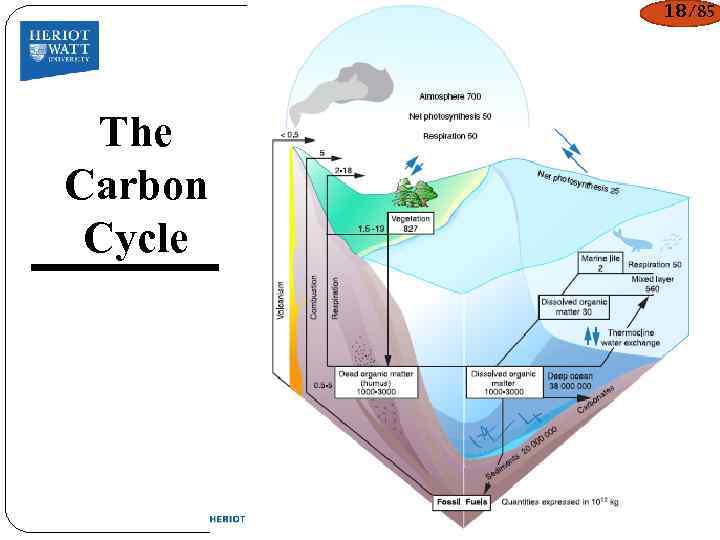 18/85 The Carbon Cycle
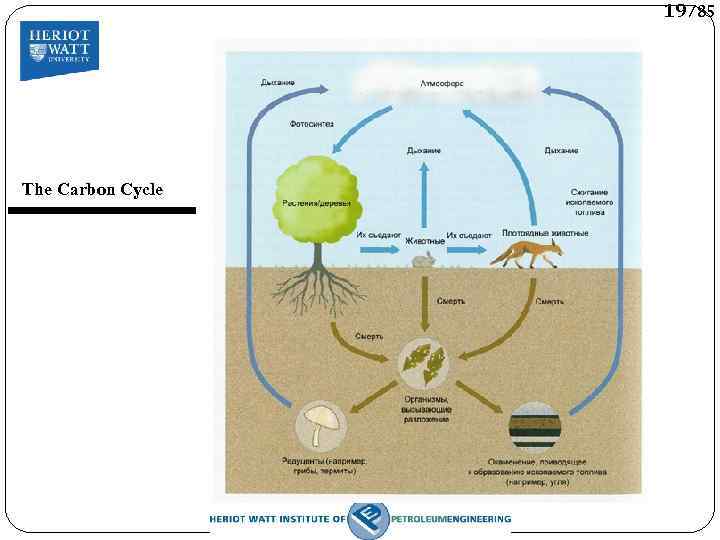 19/85 The Carbon Cycle
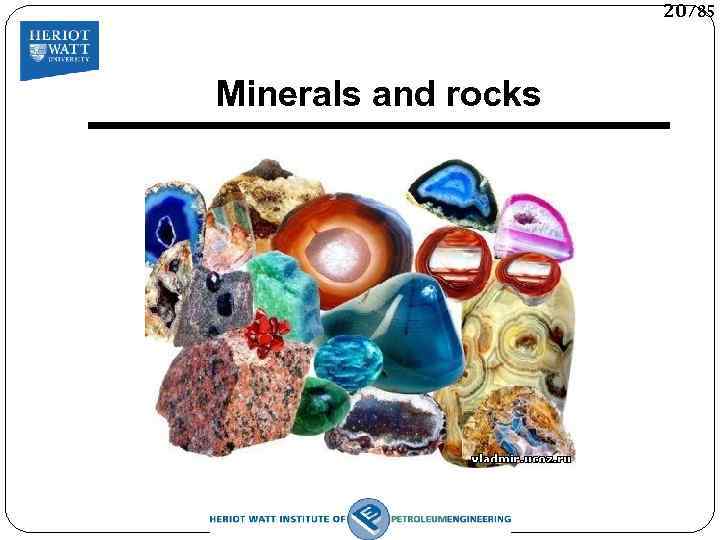 20/85 Minerals and rocks
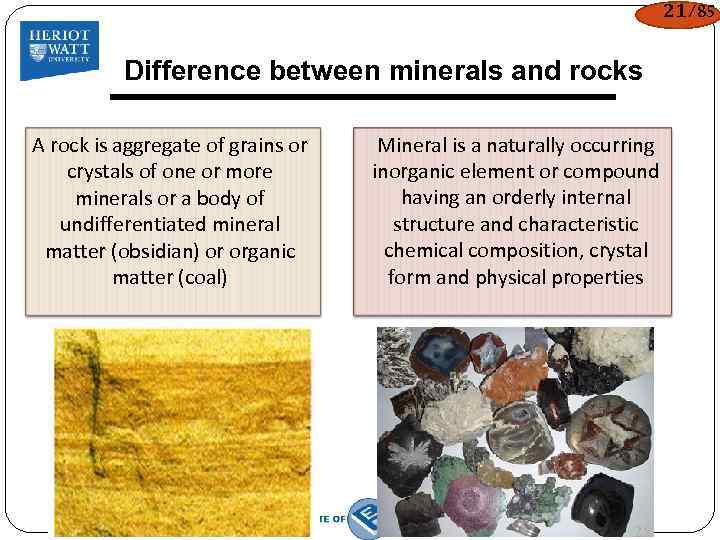 21/85 Difference between minerals and rocks A rock is aggregate of grains or crystals of one or more minerals or a body of undifferentiated mineral matter (obsidian) or organic matter (coal) Mineral is a naturally occurring inorganic element or compound having an orderly internal structure and characteristic chemical composition, crystal form and physical properties
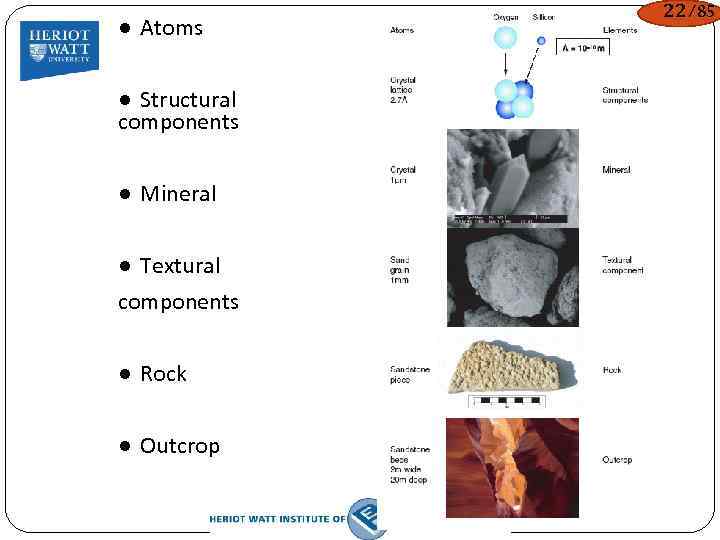 ● Atoms ● Structural components ● Mineral ● Textural components ● Rock ● Outcrop 22/85
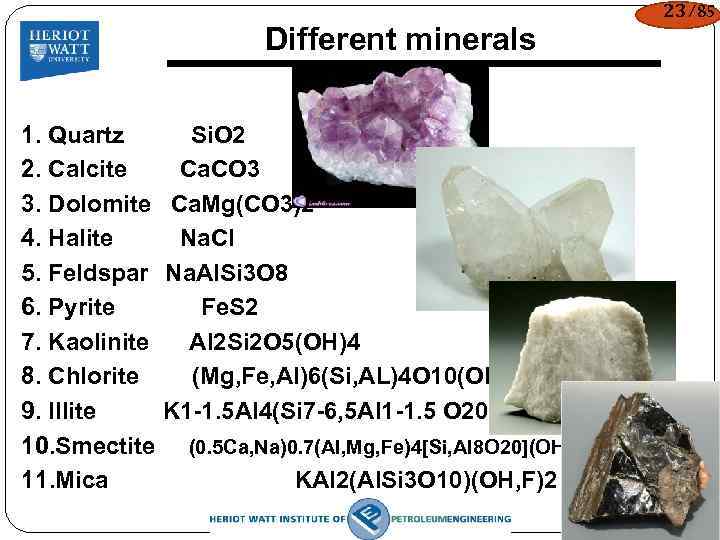 Different minerals 1. Quartz Si. O 2 2. Calcite Ca. CO 3 3. Dolomite Ca. Mg(CO 3)2 4. Halite Na. Cl 5. Feldspar Na. Al. Si 3 O 8 6. Pyrite Fe. S 2 7. Kaolinite Al 2 Si 2 O 5(OH)4 8. Chlorite (Mg, Fe, Al)6(Si, AL)4 O 10(OH)8 9. Illite K 1 -1. 5 Al 4(Si 7 -6, 5 Al 1 -1. 5 O 20)9 OH)4 10. Smectite (0. 5 Ca, Na)0. 7(Al, Mg, Fe)4[Si, Al 8 O 20](OH)4 n. H 2 O 11. Mica KAl 2(Al. Si 3 O 10)(OH, F)2 23/85
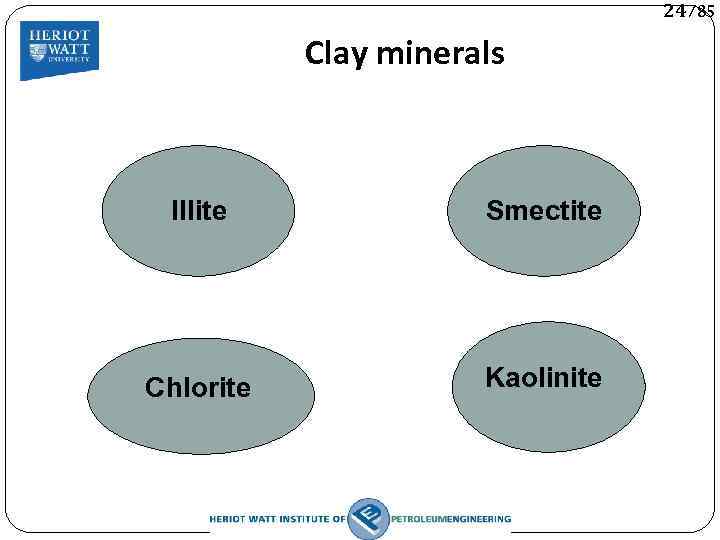 24/85 Clay minerals Illite Smectite Chlorite Kaolinite
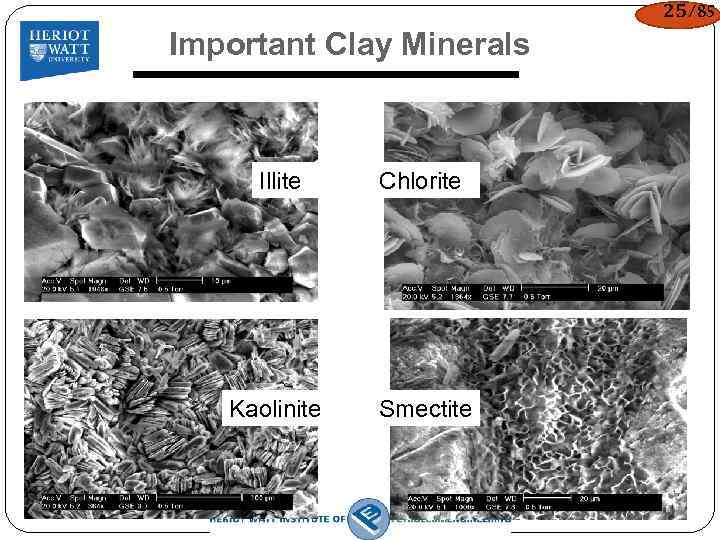 25/85 Important Clay Minerals Illite Chlorite Kaolinite Smectite
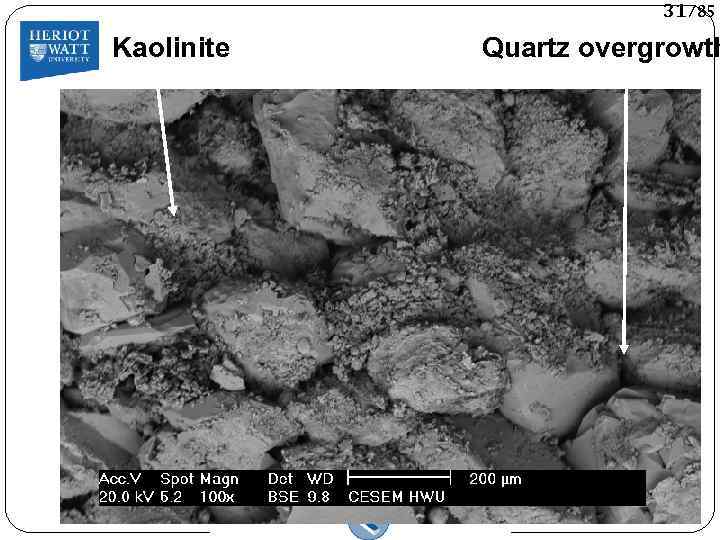
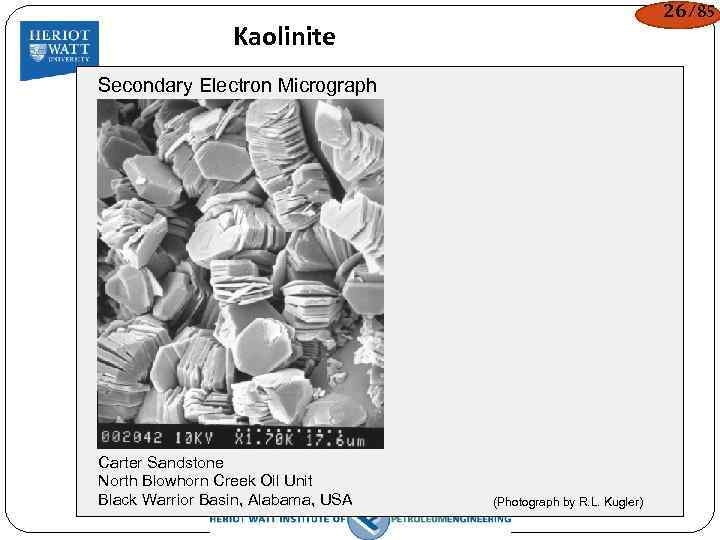 26/85 Kaolinite Secondary Electron Micrograph Carter Sandstone North Blowhorn Creek Oil Unit Black Warrior Basin, Alabama, USA (Photograph by R. L. Kugler)
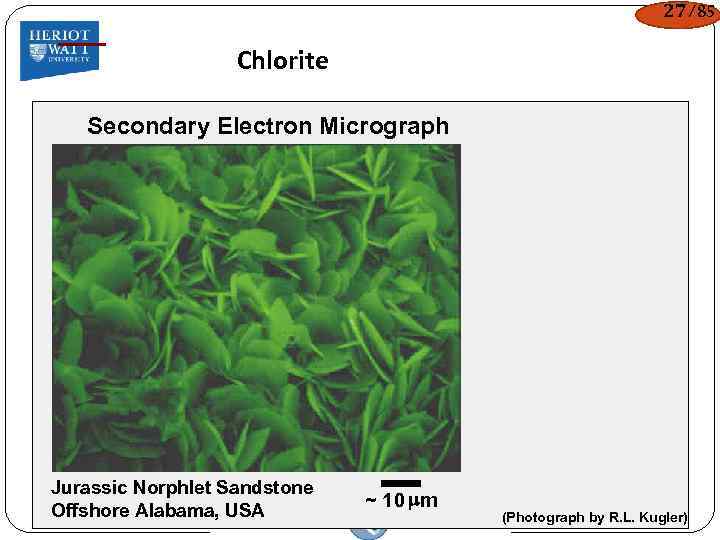 27/85 Chlorite Secondary Electron Micrograph Jurassic Norphlet Sandstone Offshore Alabama, USA ~ 10 mm (Photograph by R. L. Kugler)
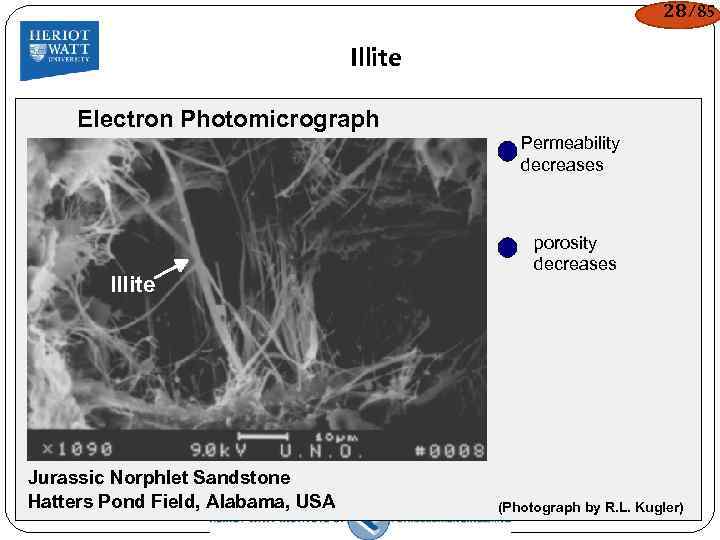 28/85 Illite Electron Photomicrograph Permeability decreases porosity Illite Jurassic Norphlet Sandstone Hatters Pond Field, Alabama, USA decreases (Photograph by R. L. Kugler)
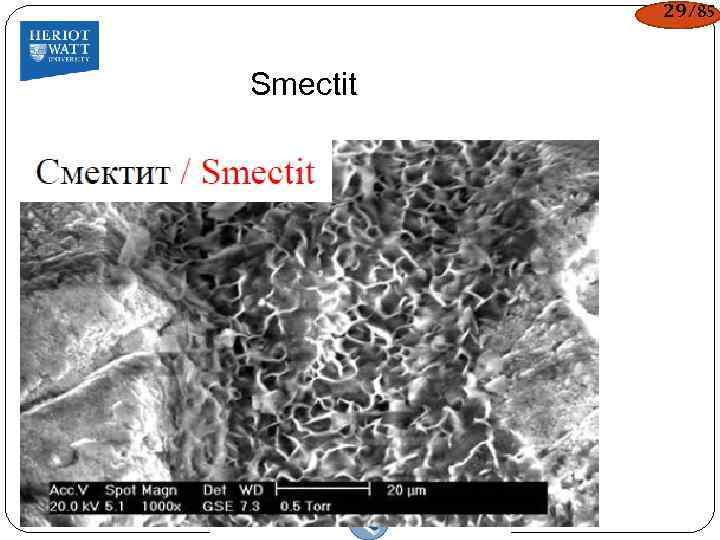 29/85 Smectit
 30/85 Scanning Electron Microscope Study Jim Buckman Heriot-Watt Institute of Petroleum Engineering
 31/85 Kaolinite Quartz overgrowth
 32/85 Etched Feldspar
 Etched Feldspar 33/85
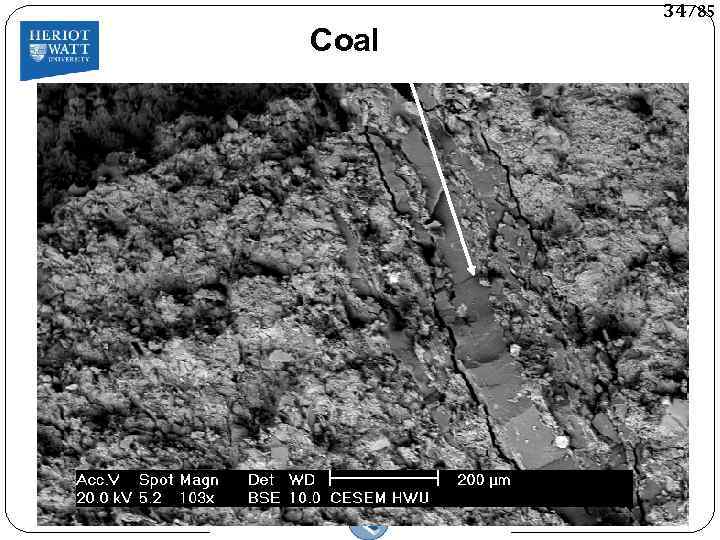 34/85 Coal
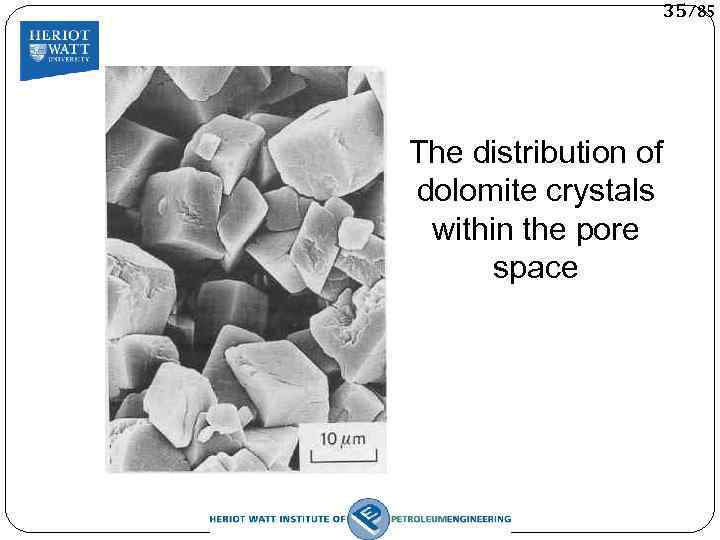 35/85 The distribution of dolomite crystals within the pore space
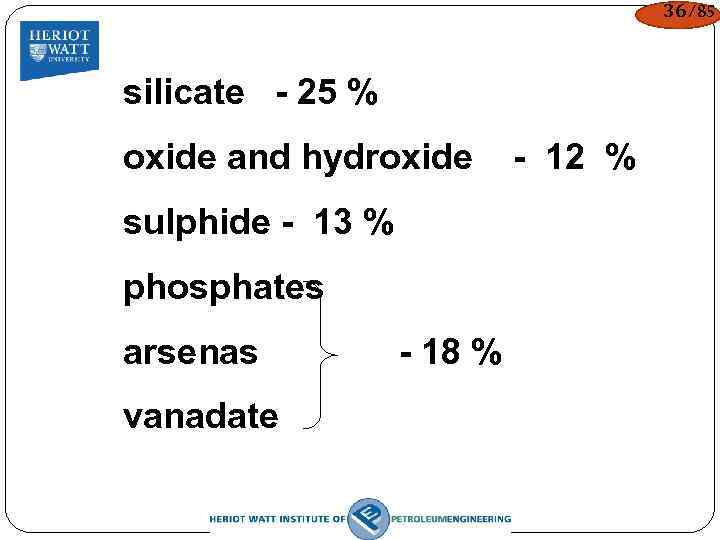 36/85 silicate - 25 % oxide and hydroxide - 12 % sulphide - 13 % phosphates arsenas - 18 % vanadate
 37/85 Recognizing/Identifying Minerals Physical / Chemical Properties Naked eye Colour, crystal shape, Mohs’ scale of hardness Thin section Scanning Electron Microscope (SEM) X-Ray diffraction (Taste) - a type of chemical analysis!
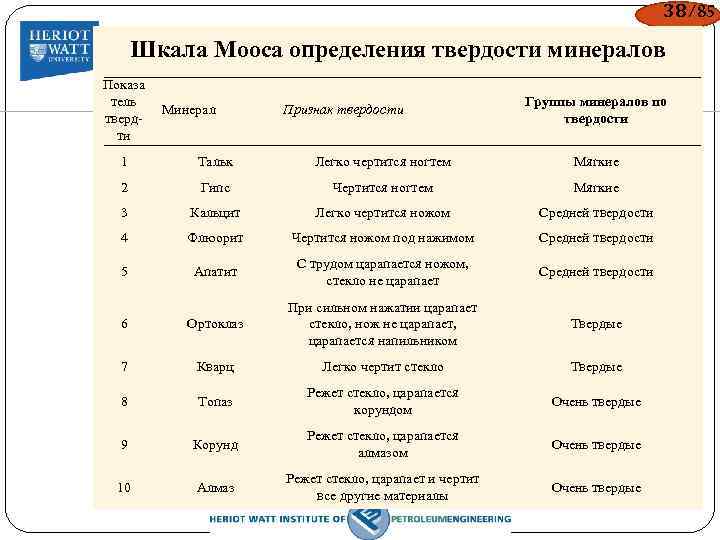 38/85 Шкала Мооса определения твердости минералов Показа тель твердти Минерал Признак твердости Группы минералов по твердости 1 Тальк Легко чертится ногтем Мягкие 2 Гипс Чертится ногтем Мягкие 3 Кальцит Легко чертится ножом Средней твердости 4 Флюорит Чертится ножом под нажимом Средней твердости 5 Апатит С трудом царапается ножом, стекло не царапает Средней твердости 6 Ортоклаз При сильном нажатии царапает стекло, нож не царапает, царапается напильником Твердые 7 Кварц Легко чертит стекло Твердые 8 Топаз Режет стекло, царапается корундом Очень твердые 9 Корунд Режет стекло, царапается алмазом Очень твердые 10 Алмаз Режет стекло, царапает и чертит все другие материалы Очень твердые
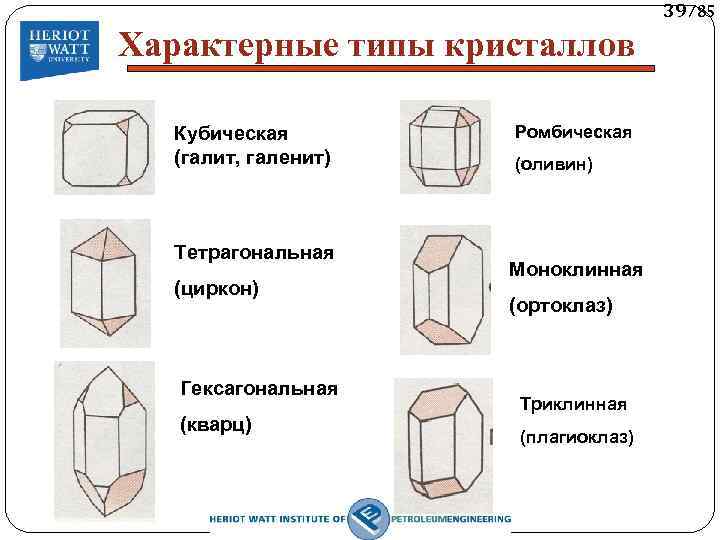 39/85 Характерные типы кристаллов Кубическая (галит, галенит) Тетрагональная (циркон) Гексагональная (кварц) Ромбическая (оливин) Моноклинная (ортоклаз) Триклинная (плагиоклаз)
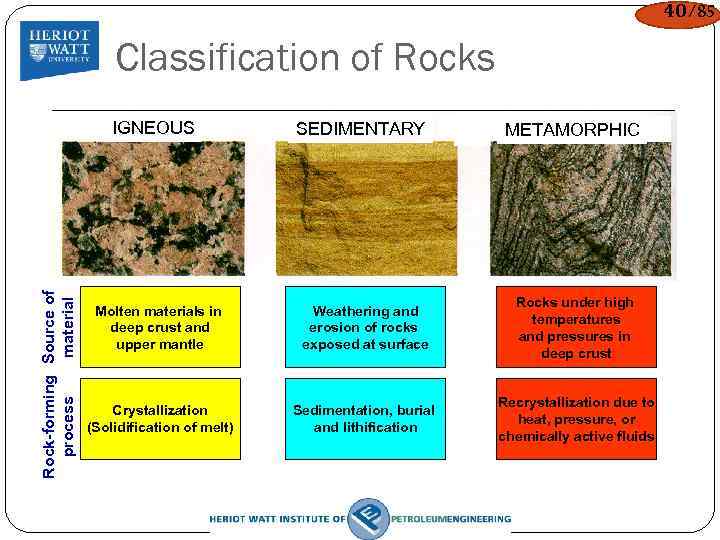 40/85 Classification of Rocks Rock-forming Source of process material IGNEOUS SEDIMENTARY METAMORPHIC Molten materials in deep crust and upper mantle Weathering and erosion of rocks exposed at surface Rocks under high temperatures and pressures in deep crust Crystallization (Solidification of melt) Sedimentation, burial and lithification Recrystallization due to heat, pressure, or chemically active fluids
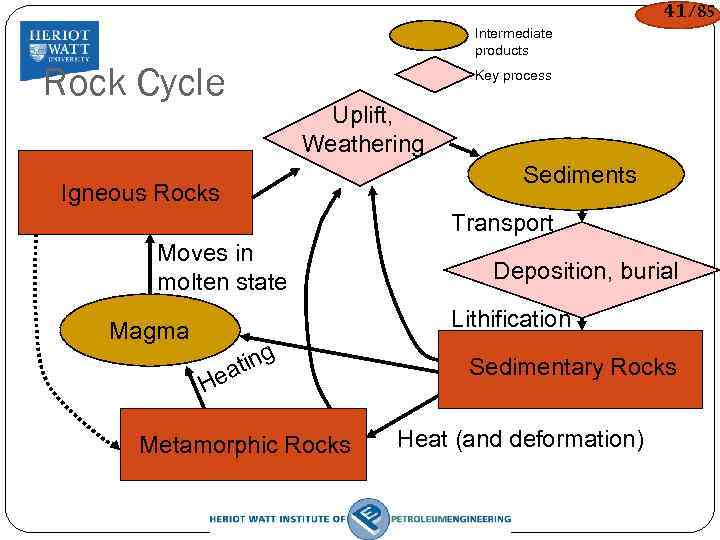 41/85 Intermediate products Rock Cycle Key process Uplift, Weathering Sediments Igneous Rocks Transport Moves in molten state Deposition, burial Lithification Magma ting a He Metamorphic Rocks Sedimentary Rocks Heat (and deformation)
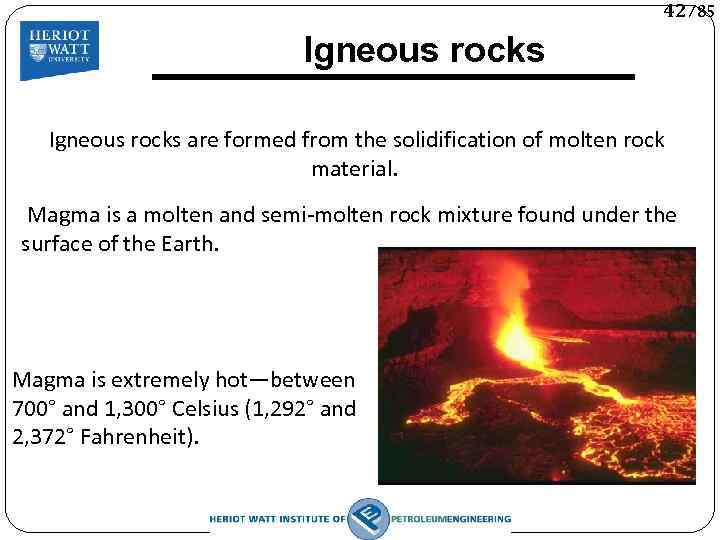 42/85 Igneous rocks are formed from the solidification of molten rock material. Magma is a molten and semi-molten rock mixture found under the surface of the Earth. Magma is extremely hot—between 700° and 1, 300° Celsius (1, 292° and 2, 372° Fahrenheit).
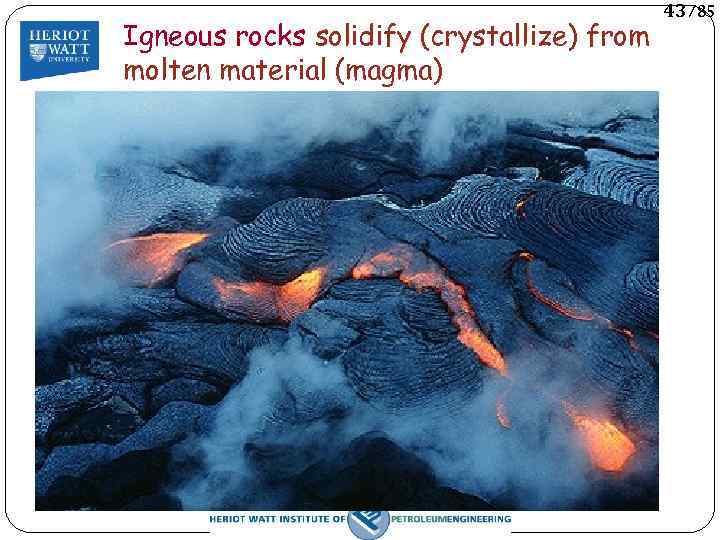 Igneous rocks solidify (crystallize) from molten material (magma) 43/85
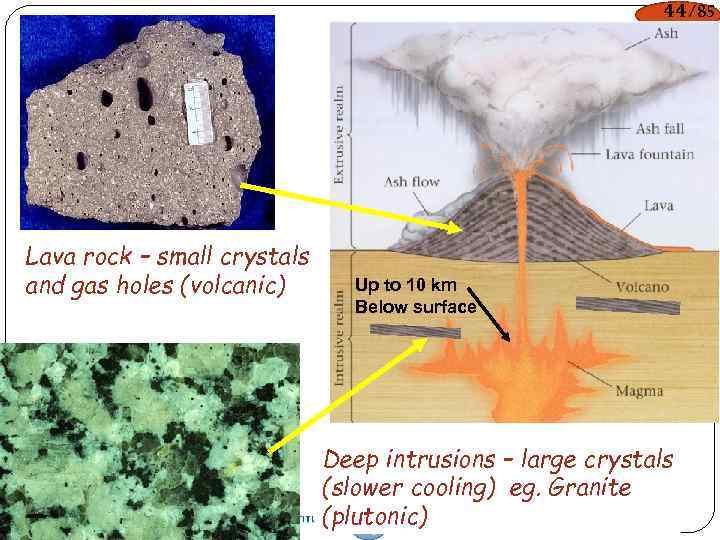 44/85 Lava rock – small crystals and gas holes (volcanic) Up to 10 km Below surface Deep intrusions – large crystals (slower cooling) eg. Granite (plutonic)
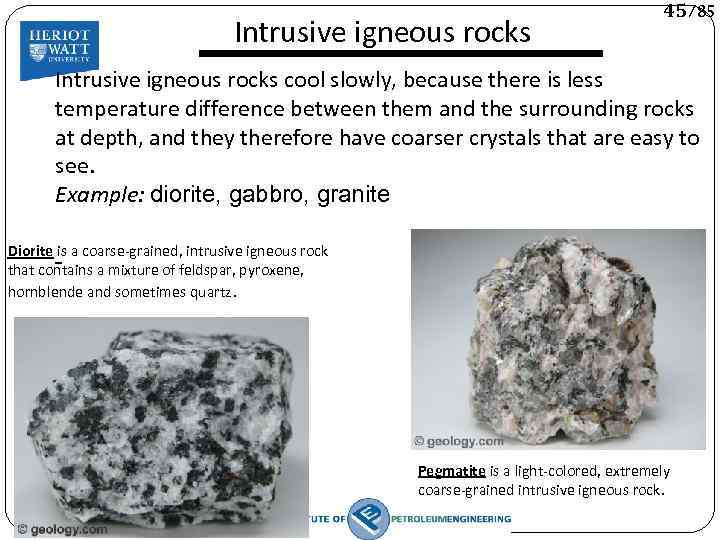 Intrusive igneous rocks 45/85 Intrusive igneous rocks cool slowly, because there is less temperature difference between them and the surrounding rocks at depth, and they therefore have coarser crystals that are easy to see. Example: diorite, gabbro, granite Diorite is a coarse-grained, intrusive igneous rock that contains a mixture of feldspar, pyroxene, hornblende and sometimes quartz. Pegmatite is a light-colored, extremely coarse-grained intrusive igneous rock.
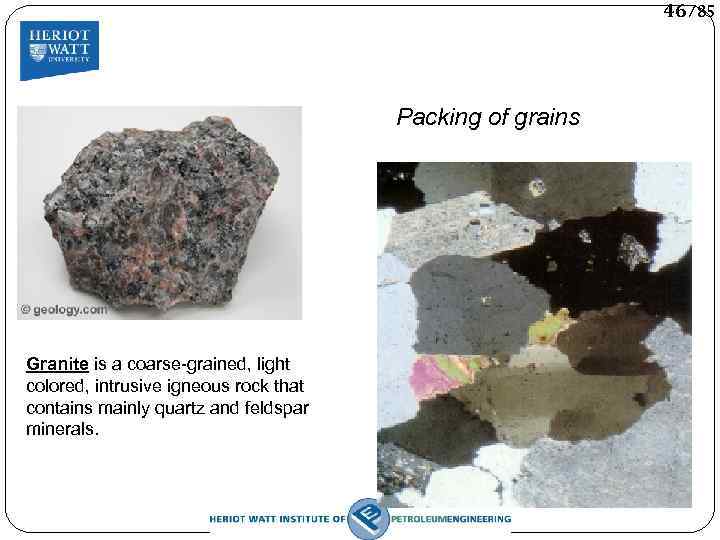 46/85 Packing of grains Granite is a coarse-grained, light colored, intrusive igneous rock that contains mainly quartz and feldspar minerals.
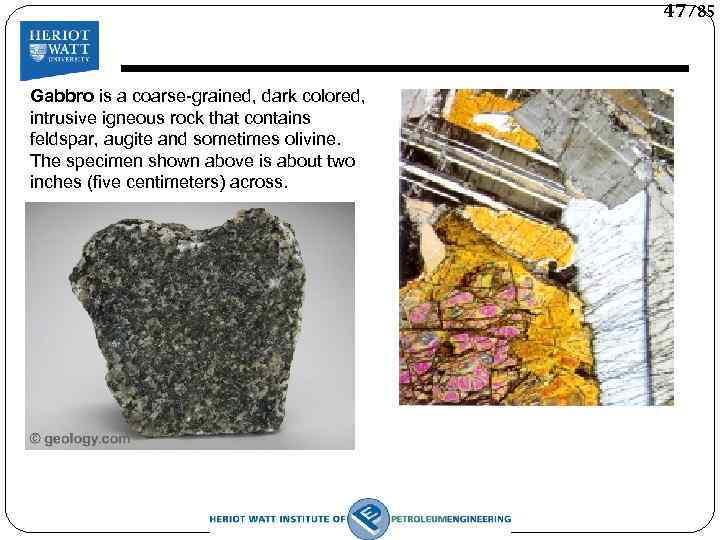 47/85 Gabbro is a coarse-grained, dark colored, intrusive igneous rock that contains feldspar, augite and sometimes olivine. The specimen shown above is about two inches (five centimeters) across.
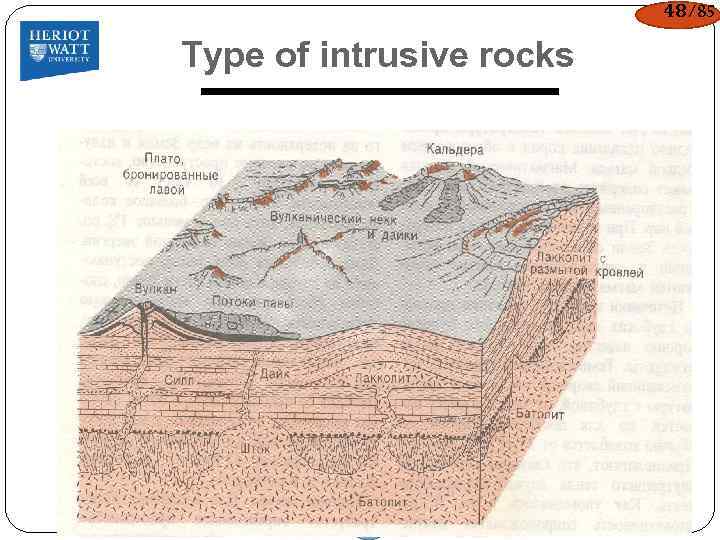 48/85 Type of intrusive rocks
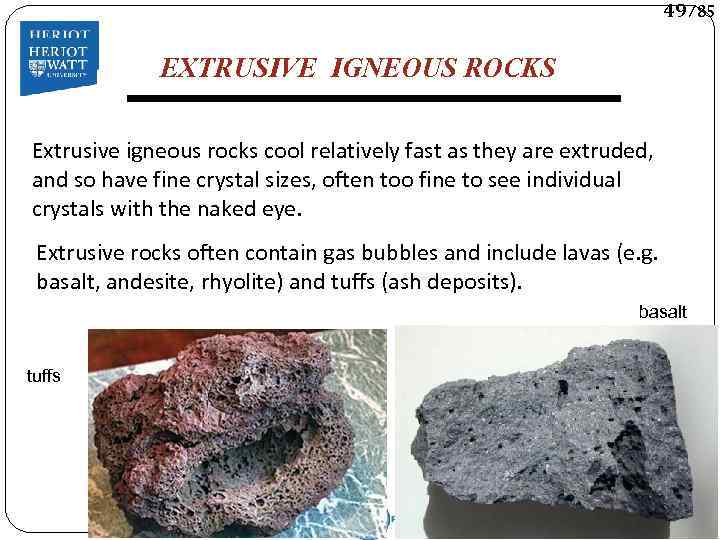 49/85 EXTRUSIVE IGNEOUS ROCKS Extrusive igneous rocks cool relatively fast as they are extruded, and so have fine crystal sizes, often too fine to see individual crystals with the naked eye. Extrusive rocks often contain gas bubbles and include lavas (e. g. basalt, andesite, rhyolite) and tuffs (ash deposits). basalt tuffs
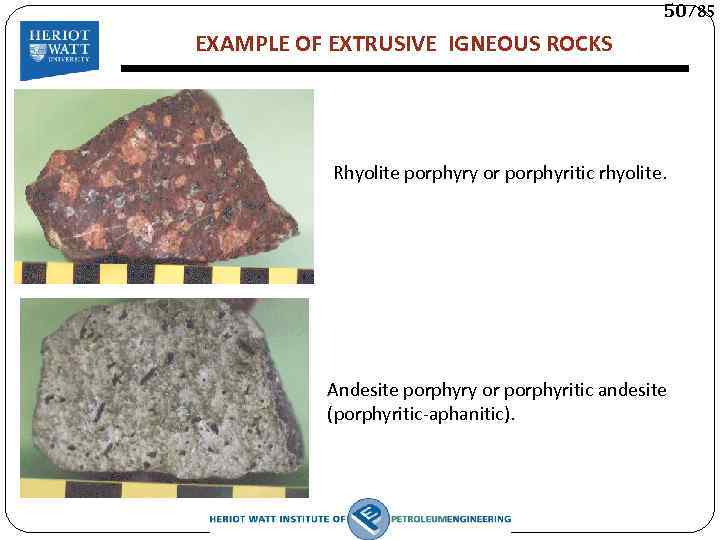 50/85 EXAMPLE OF EXTRUSIVE IGNEOUS ROCKS Rhyolite porphyry or porphyritic rhyolite. Andesite porphyry or porphyritic andesite (porphyritic-aphanitic).
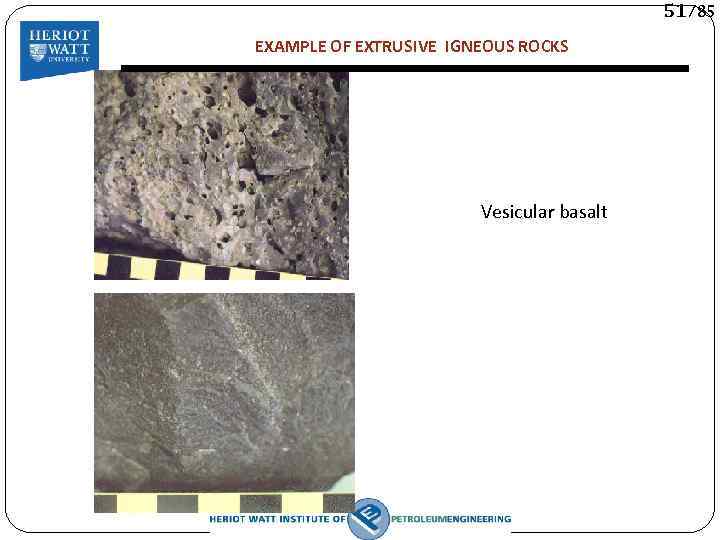 51/85 EXAMPLE OF EXTRUSIVE IGNEOUS ROCKS Vesicular basalt
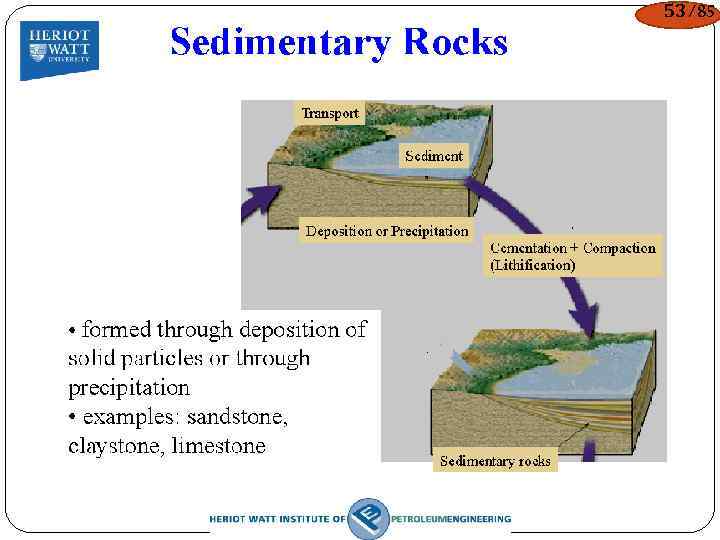
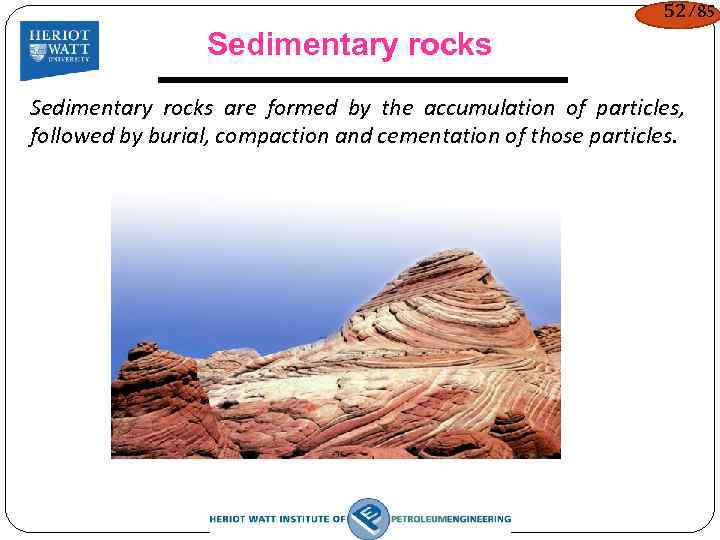 52/85 Sedimentary rocks are formed by the accumulation of particles, followed by burial, compaction and cementation of those particles.
 53/85
53/85
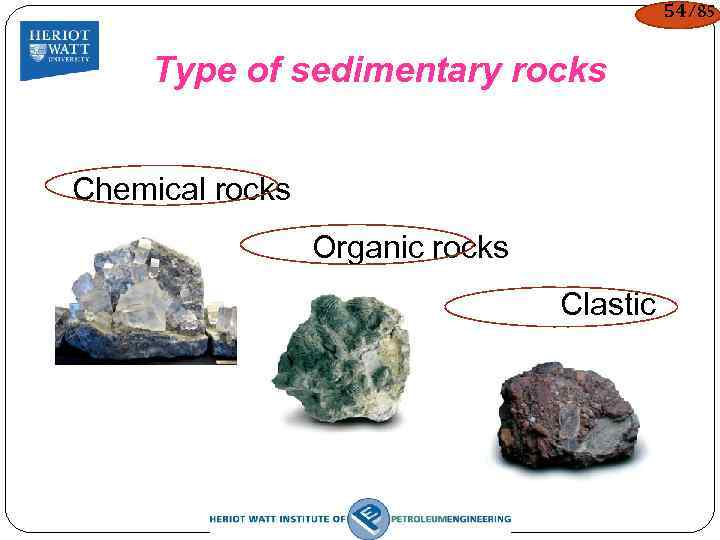 54/85 Type of sedimentary rocks Chemical rocks Organic rocks Clastic rocks
 55/85 Sedimentation - a natural process, which depends on the dynamic and climatic factors hypergenesis (the stage of preparing the substances) sedimentogenesis (stage sedimentation) diagenesis katagenesis metagenesis
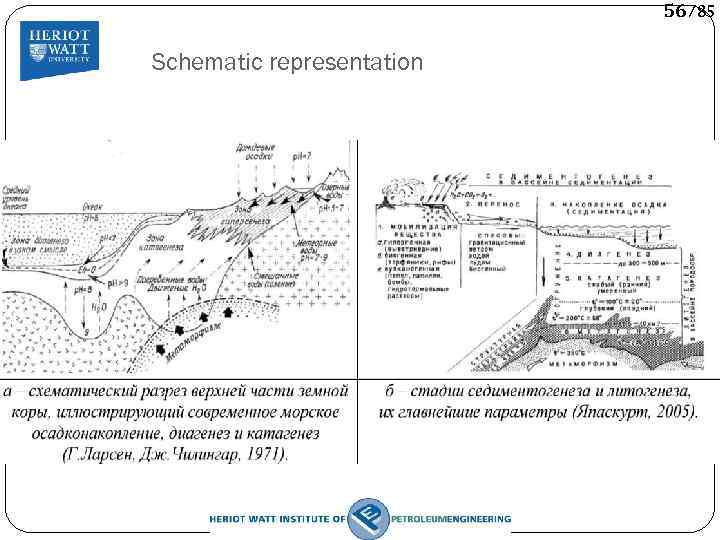 56/85 Schematic representation
 57/85 Description of sedimentary rocks Colour Texture Structure Porosity and permeability Sedimentary environment
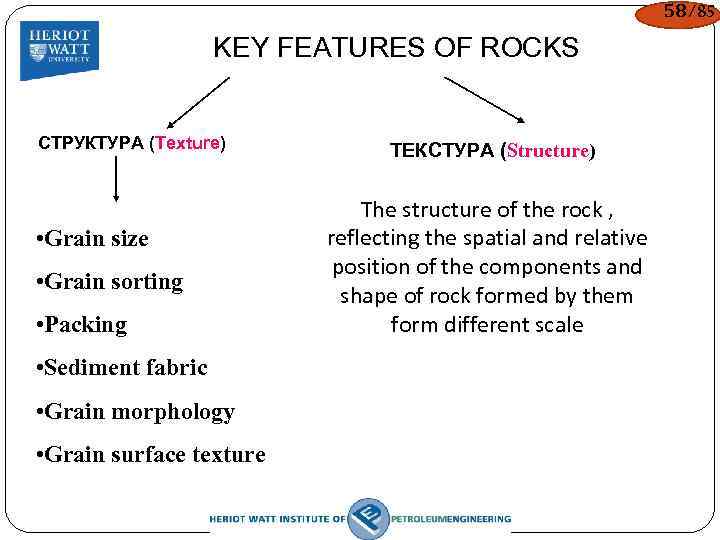 58/85 KEY FEATURES OF ROCKS CТРУКТУРА (Texture) • Grain size • Grain sorting • Packing • Sediment fabric • Grain morphology • Grain surface texture ТЕКСТУРА (Structure) The structure of the rock , reflecting the spatial and relative position of the components and shape of rock formed by them form different scale
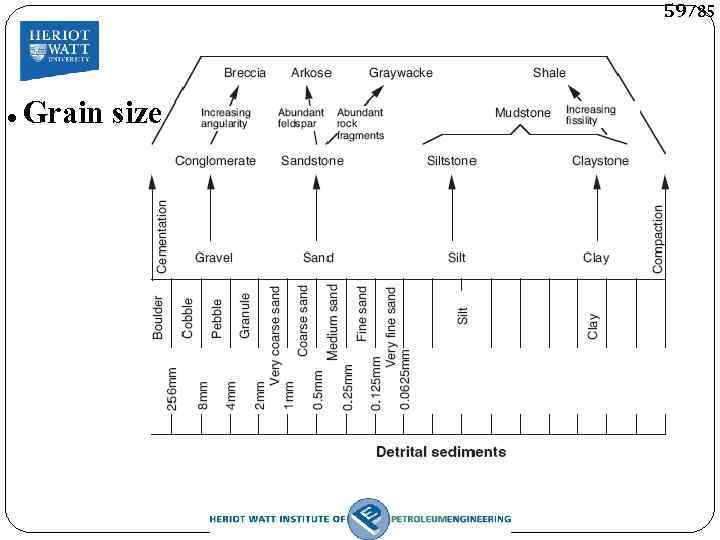 59/85 ● Grain size
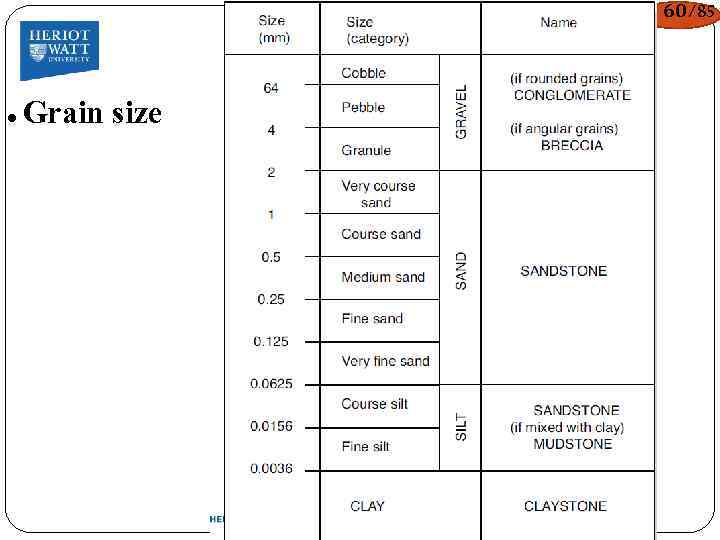 60/85 ● Grain size
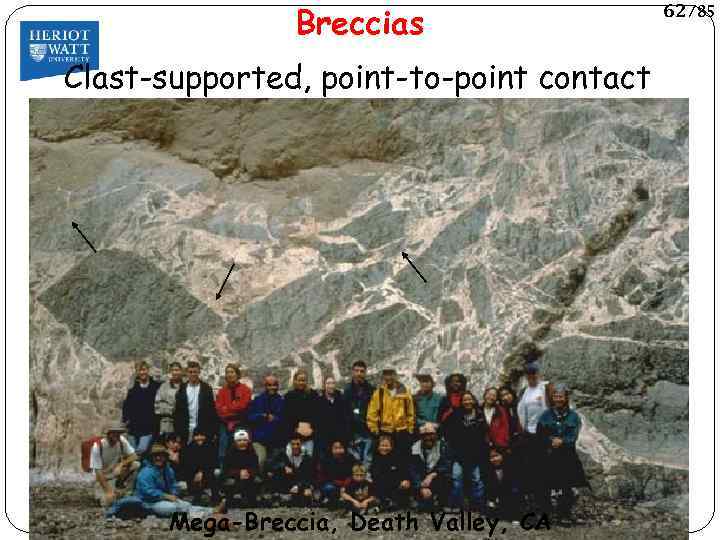 Breccias Clast-supported, point-to-point contact Mega-Breccia, Death Valley, CA 62/85
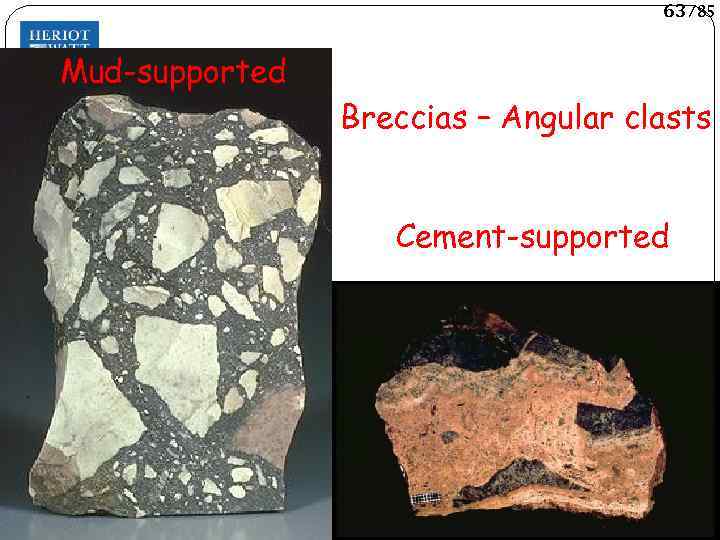 63/85 Mud-supported Breccias – Angular clasts Cement-supported
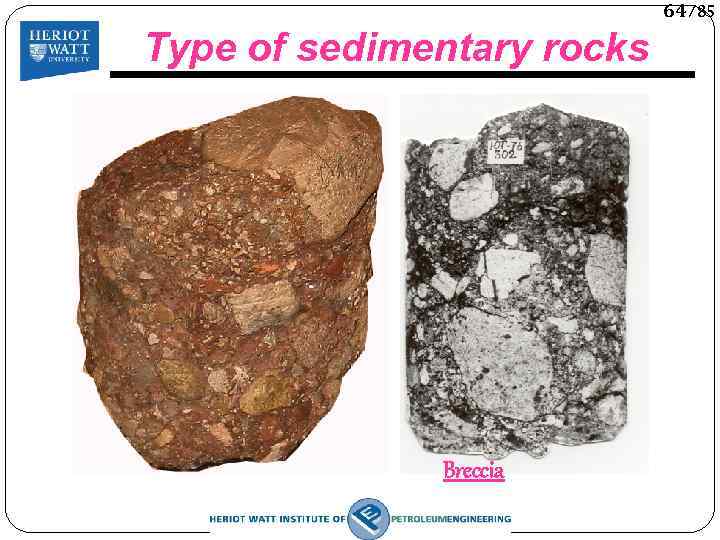 64/85 Type of sedimentary rocks Breccia
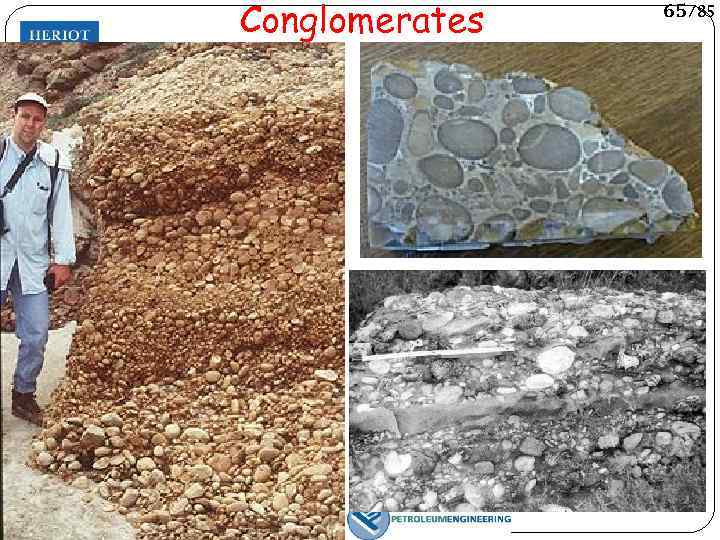 Conglomerates 65/85
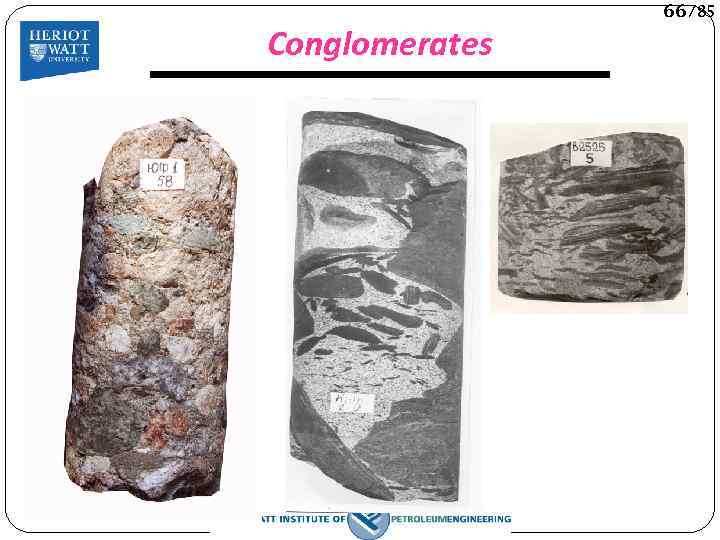 Conglomerates 66/85
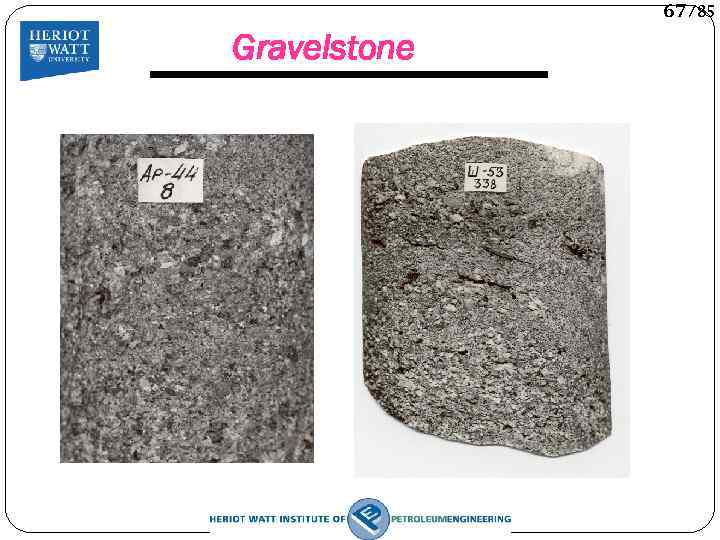 Gravelstone 67/85
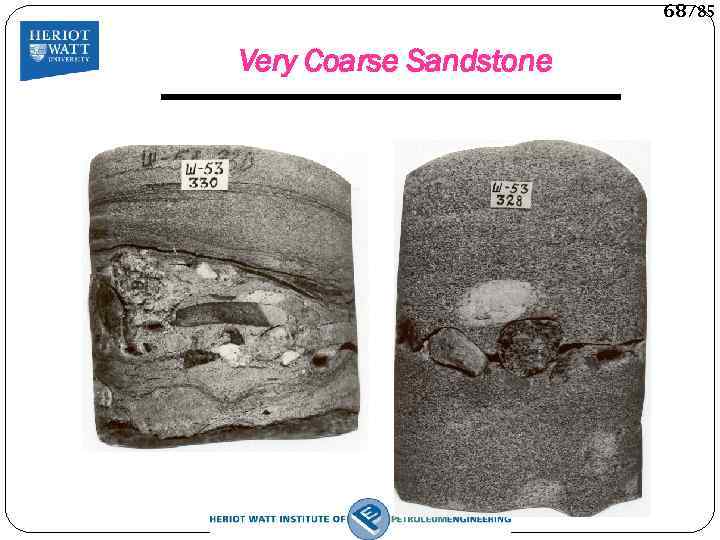 68/85 Very Coarse Sandstone
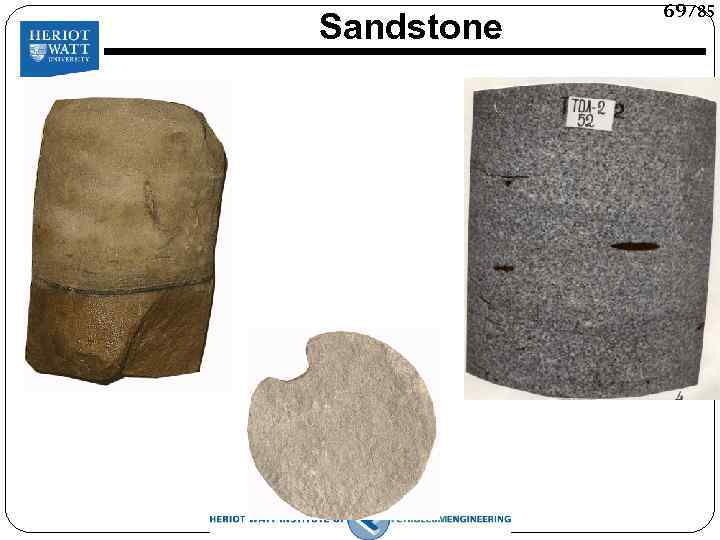 Sandstone 69/85
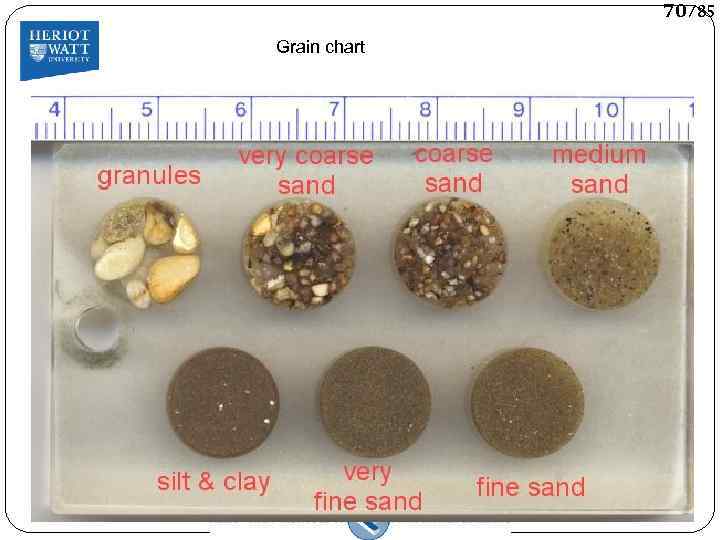 70/85 Grain chart
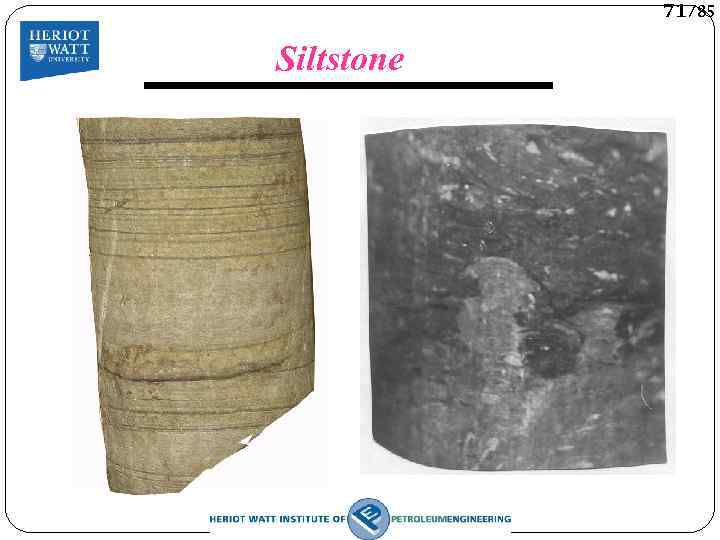 71/85 Siltstone
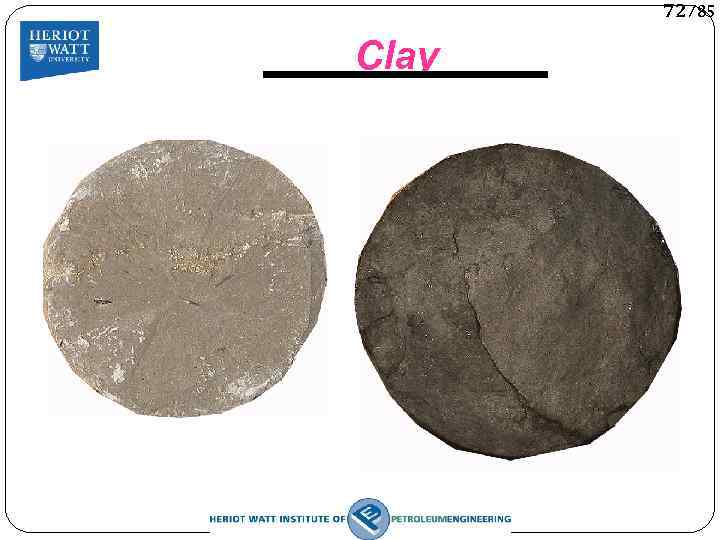 72/85 Clay
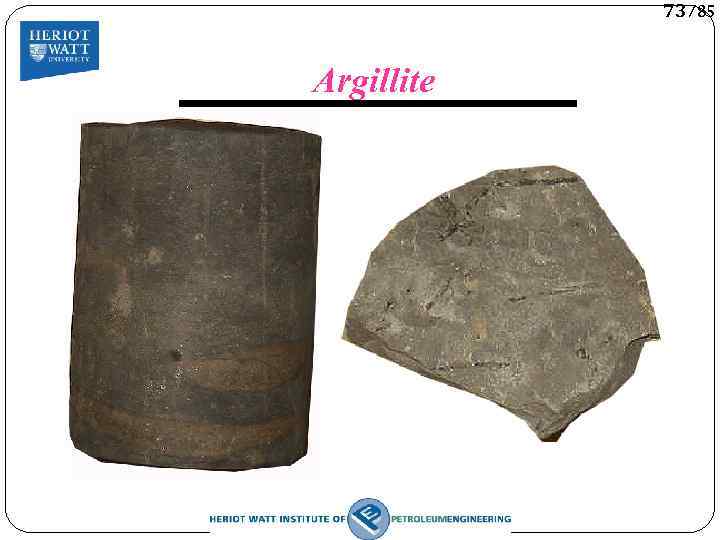 73/85 Argillite
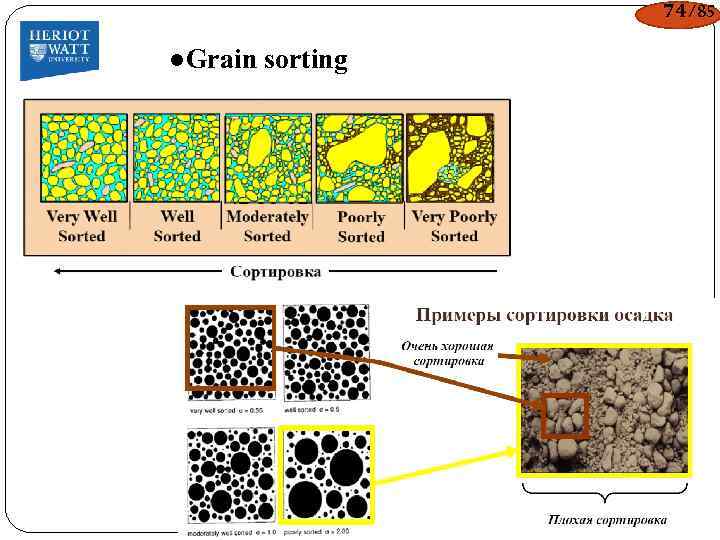 74/85 ●Grain sorting
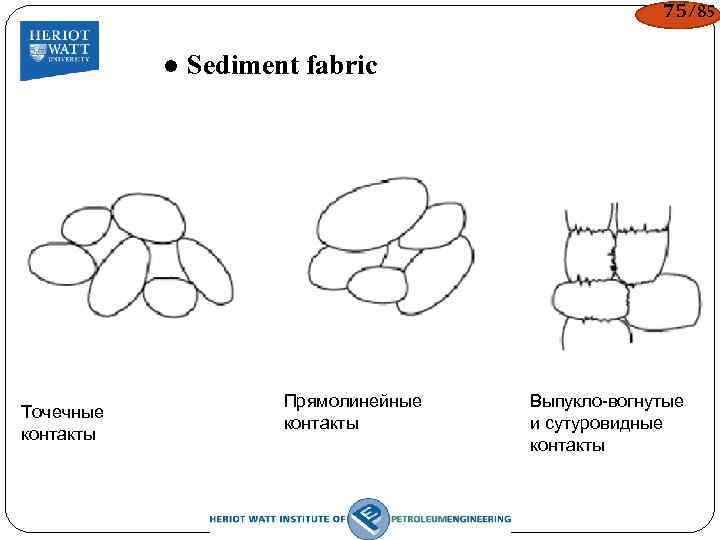 75/85 ● Sediment fabric Точечные контакты Прямолинейные контакты Выпукло-вогнутые и сутуровидные контакты
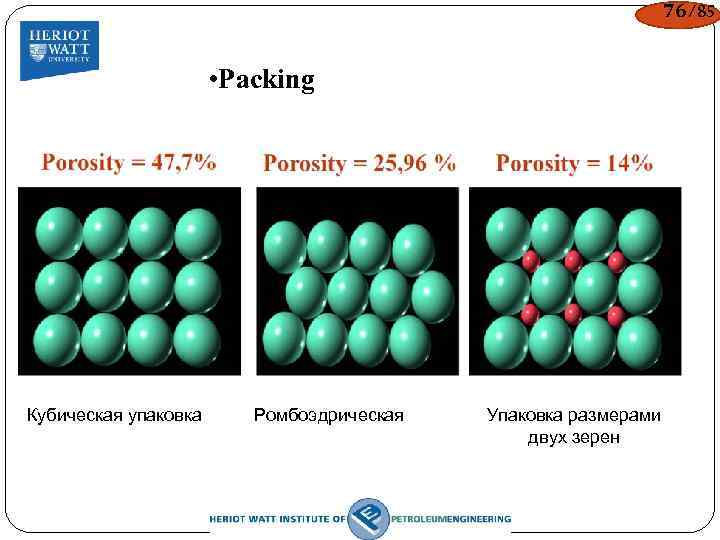 76/85 • Packing Кубическая упаковка Ромбоэдрическая Упаковка размерами двух зерен
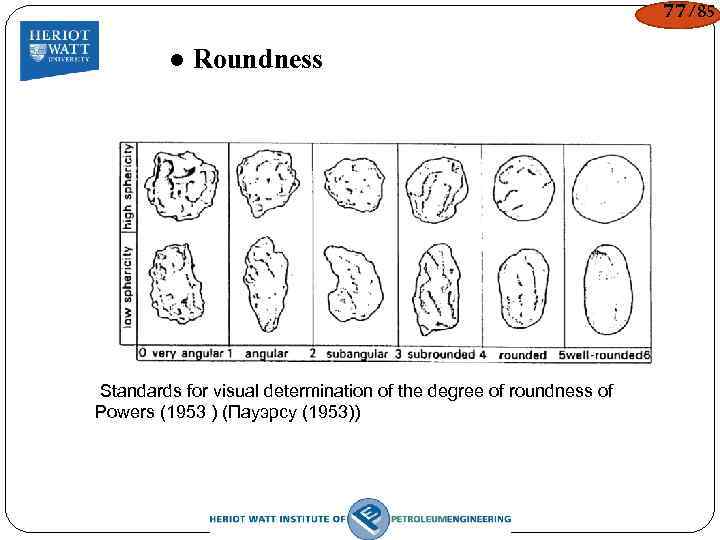 77/85 ● Roundness Standards for visual determination of the degree of roundness of Powers (1953 ) (Пауэрсу (1953))
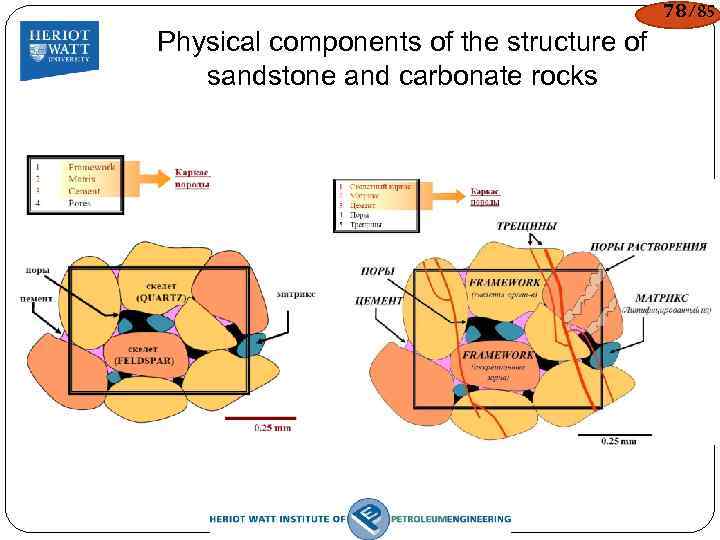 78/85 Physical components of the structure of sandstone and carbonate rocks
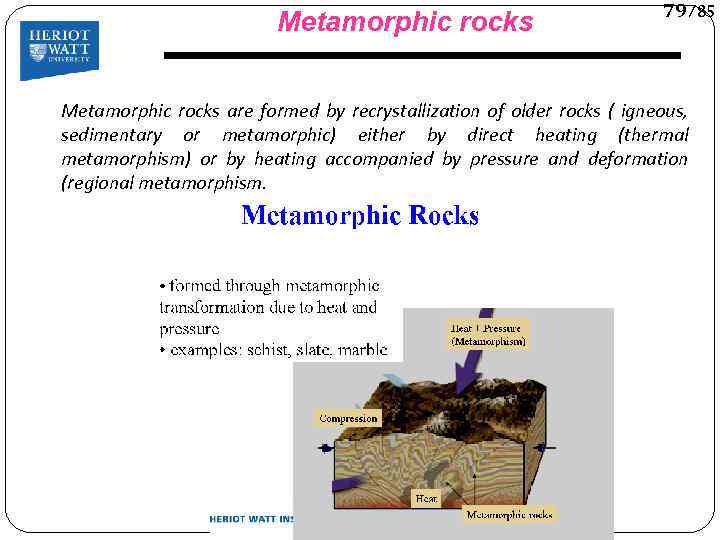 Metamorphic rocks 79/85 Metamorphic rocks are formed by recrystallization of older rocks ( igneous, sedimentary or metamorphic) either by direct heating (thermal metamorphism) or by heating accompanied by pressure and deformation (regional metamorphism.
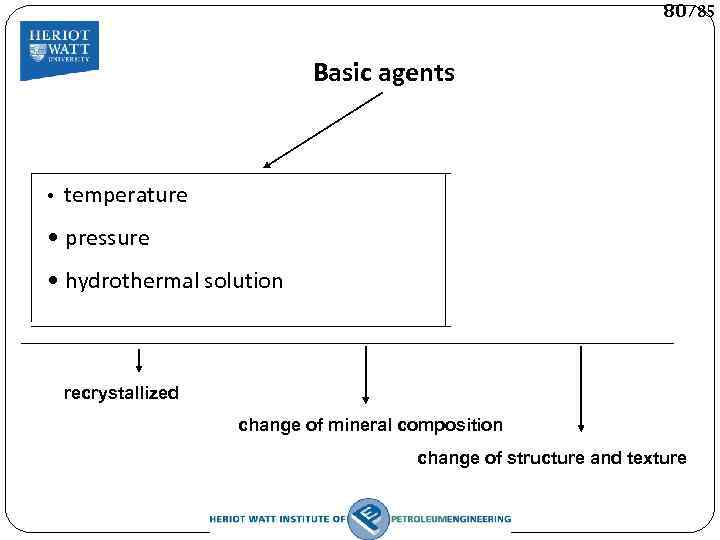 80/85 Basic agents • temperature • pressure • hydrothermal solution recrystallized change of mineral composition change of structure and texture
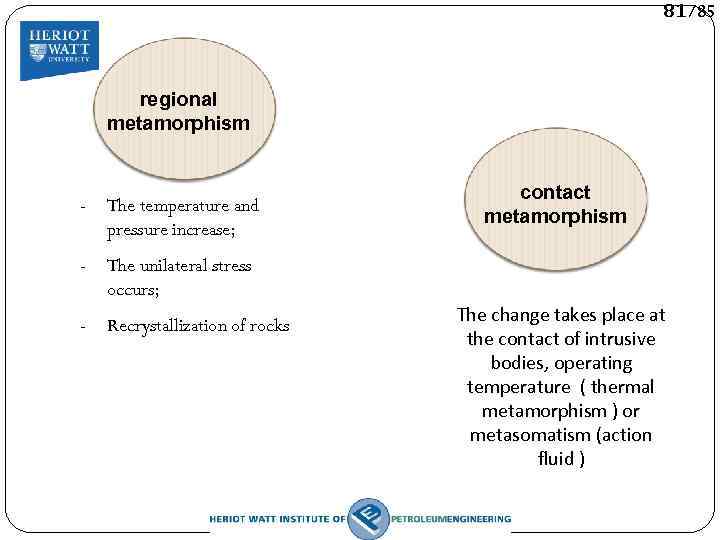 81/85 regional metamorphism - The temperature and pressure increase; - The unilateral stress occurs; - Recrystallization of rocks contact metamorphism The change takes place at the contact of intrusive bodies, operating temperature ( thermal metamorphism ) or metasomatism (action fluid )
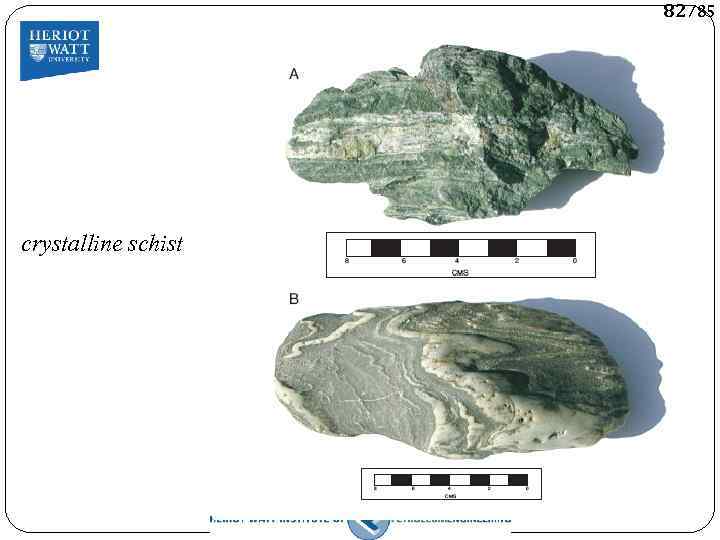 82/85 crystalline schist
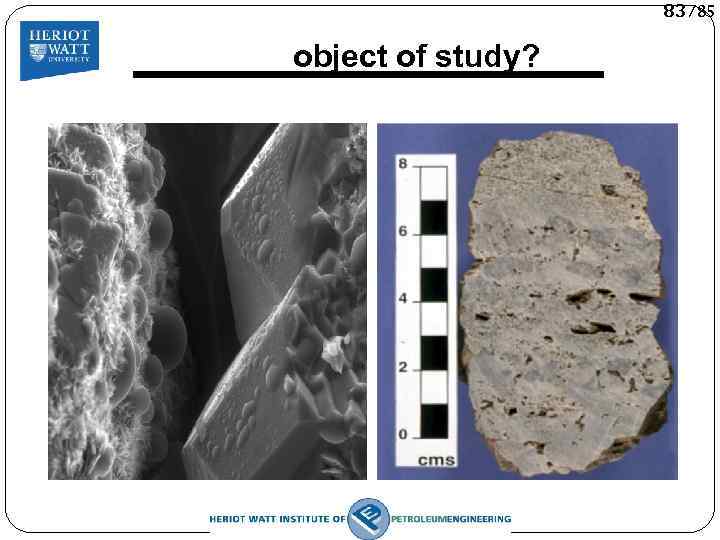 83/85 object of study?
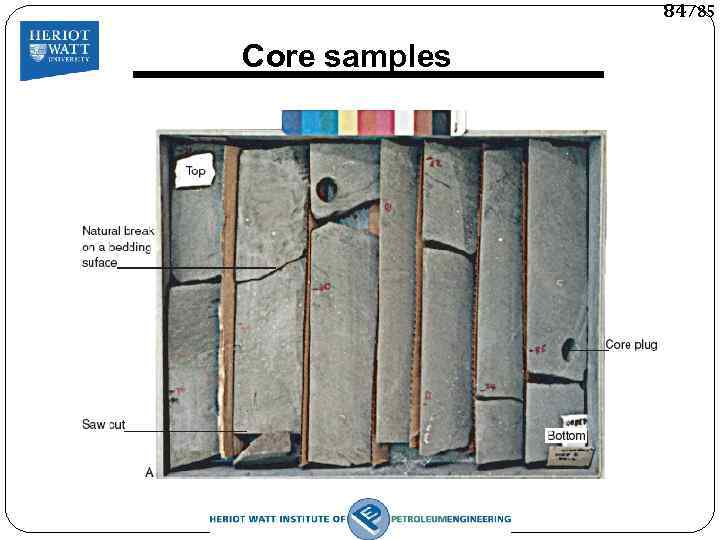 84/85 Core samples
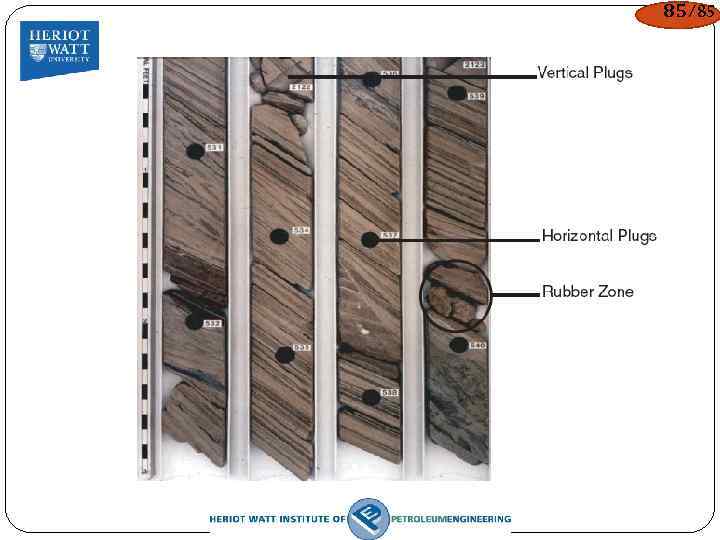 85/85
85/85
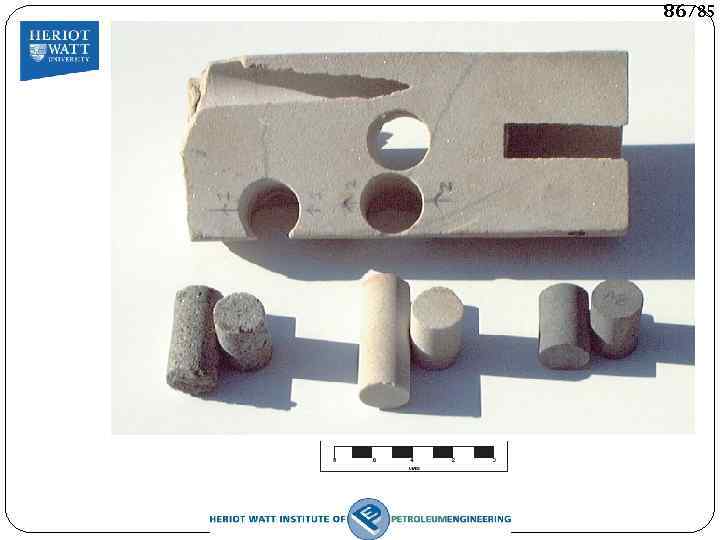 86/85
86/85
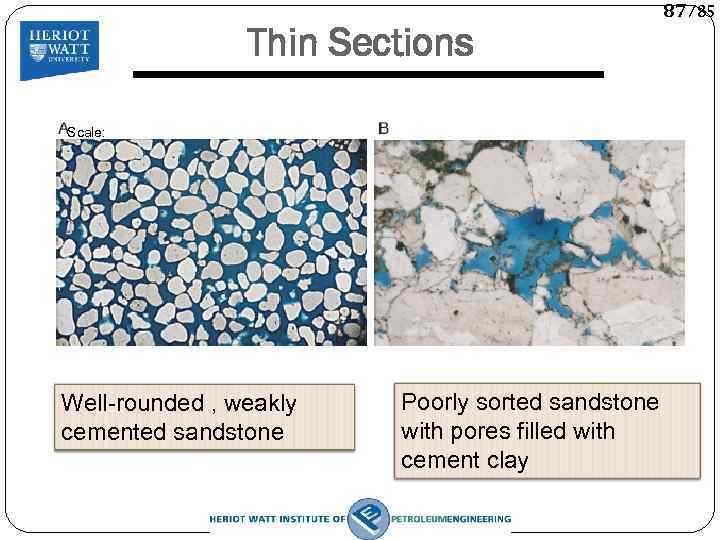 Thin Sections 87/85 Scale: Well-rounded , weakly cemented sandstone Poorly sorted sandstone with pores filled with cement clay
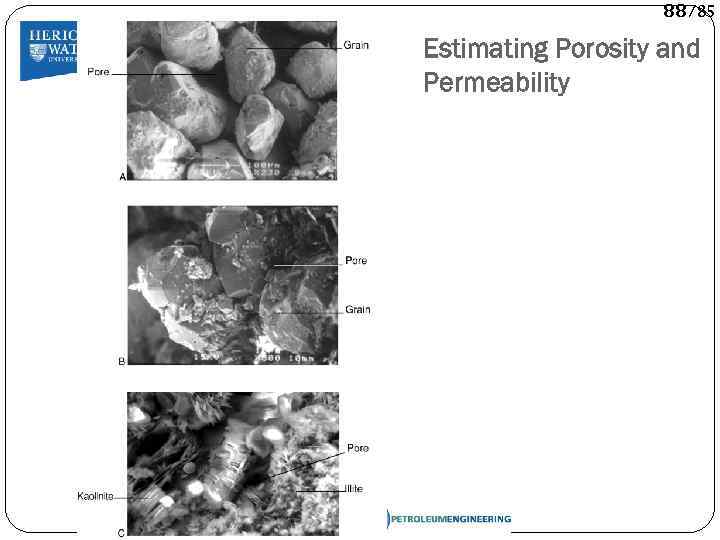 88/85 Estimating Porosity and Permeability
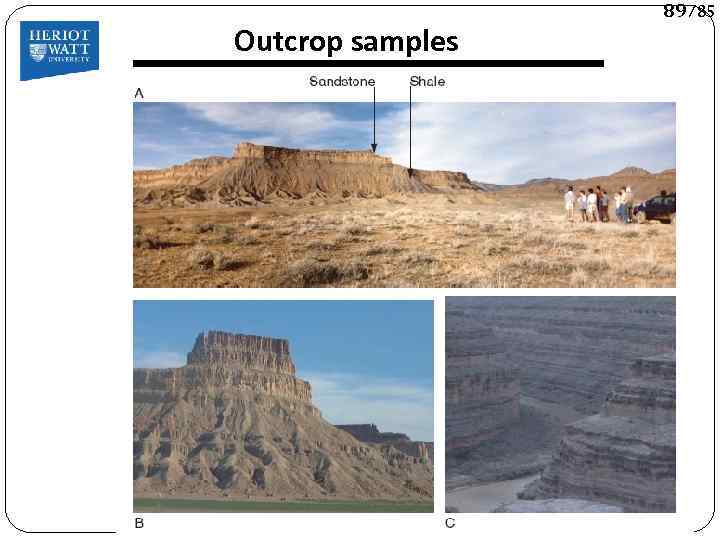 Outcrop samples 89/85
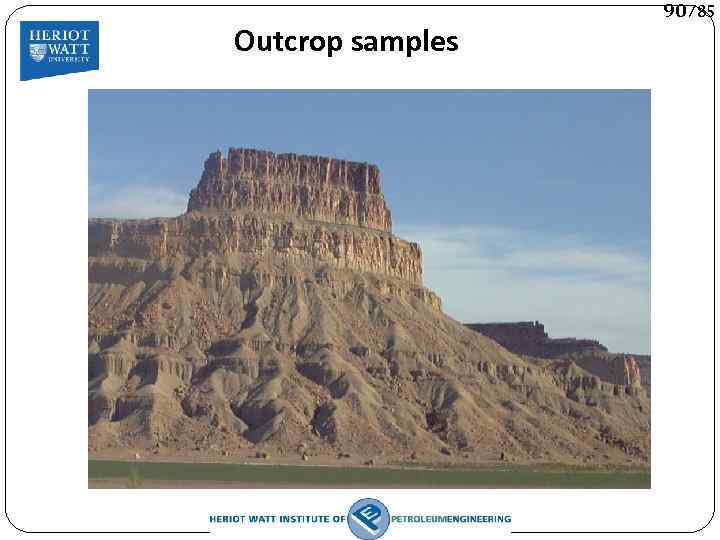 Outcrop samples 90/85
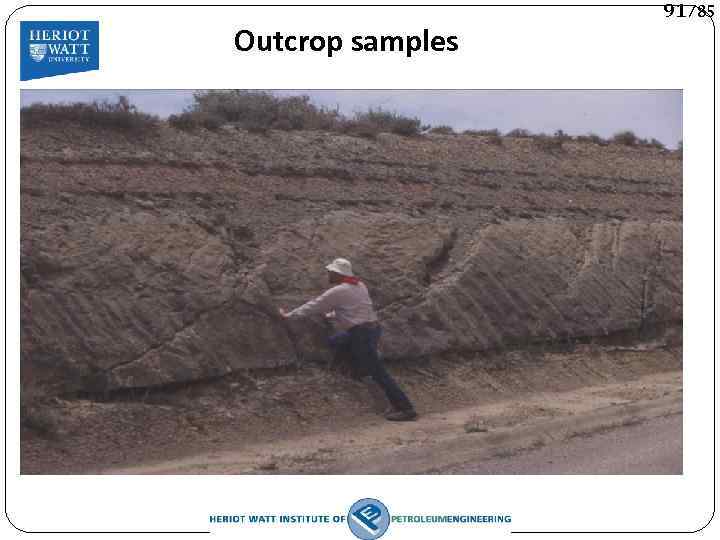 Outcrop samples 91/85