Скачать презентацию 1 3 2 Conduction vs Sensoneural Deafnness Causes
0989d1c4f6185dbd65bcac40b82ce402.ppt
- Количество слайдов: 35
 1. 3. 2 Conduction vs. Sensoneural Deafnness Causes and Corrections
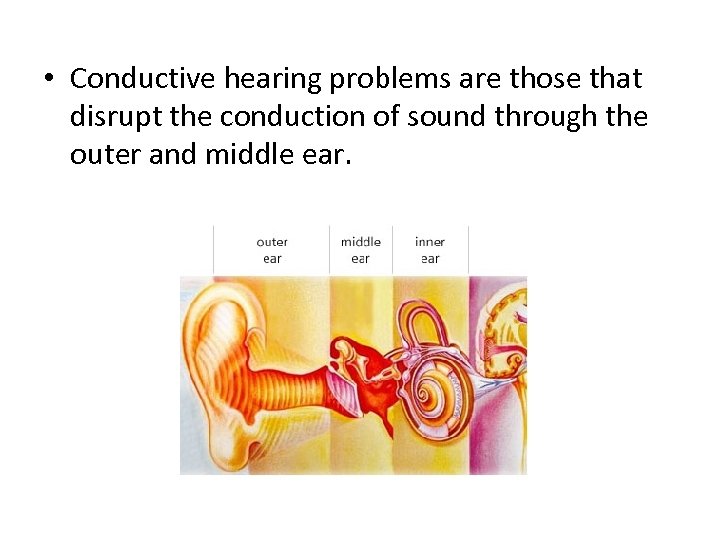 • Conductive hearing problems are those that disrupt the conduction of sound through the outer and middle ear.
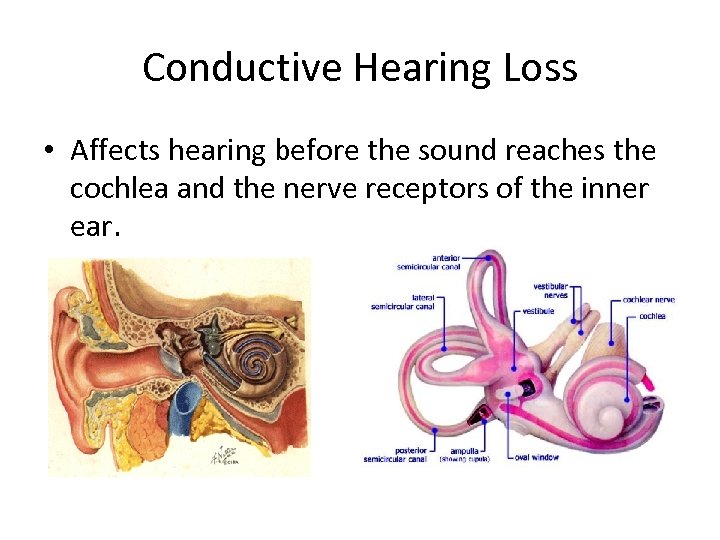 Conductive Hearing Loss • Affects hearing before the sound reaches the cochlea and the nerve receptors of the inner ear.
 The Good News • Conduction deafness is often temporary or curable
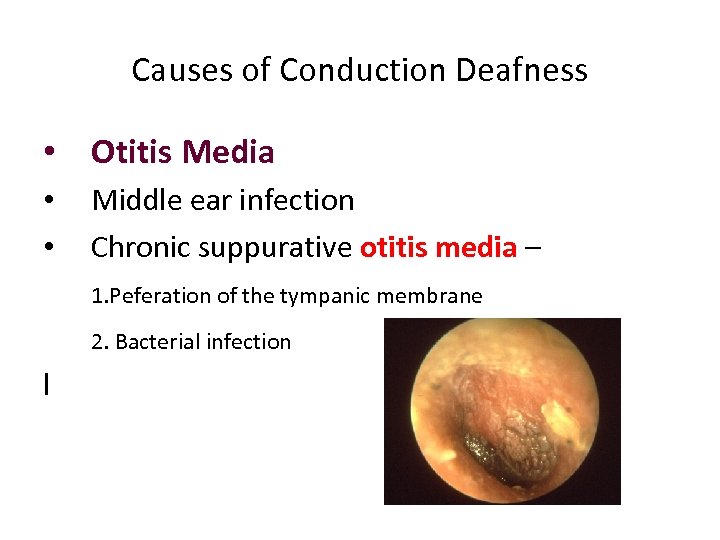 Causes of Conduction Deafness • Otitis Media • • Middle ear infection Chronic suppurative otitis media – 1. Peferation of the tympanic membrane 2. Bacterial infection l
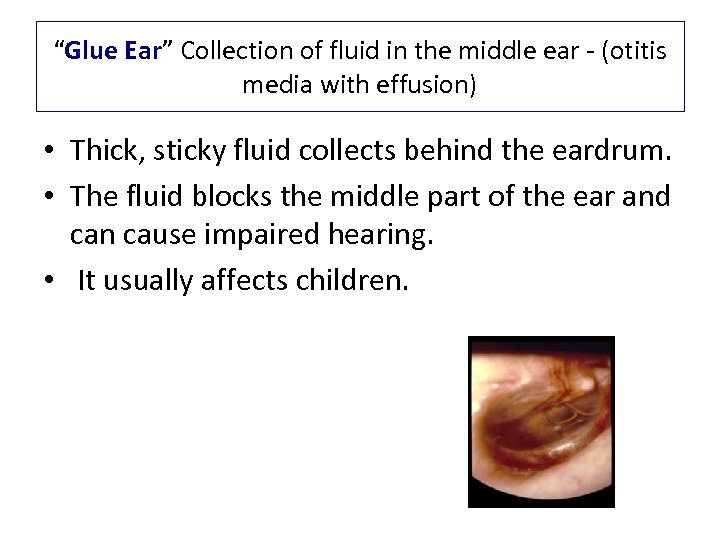 “Glue Ear” Collection of fluid in the middle ear - (otitis media with effusion) • Thick, sticky fluid collects behind the eardrum. • The fluid blocks the middle part of the ear and can cause impaired hearing. • It usually affects children.
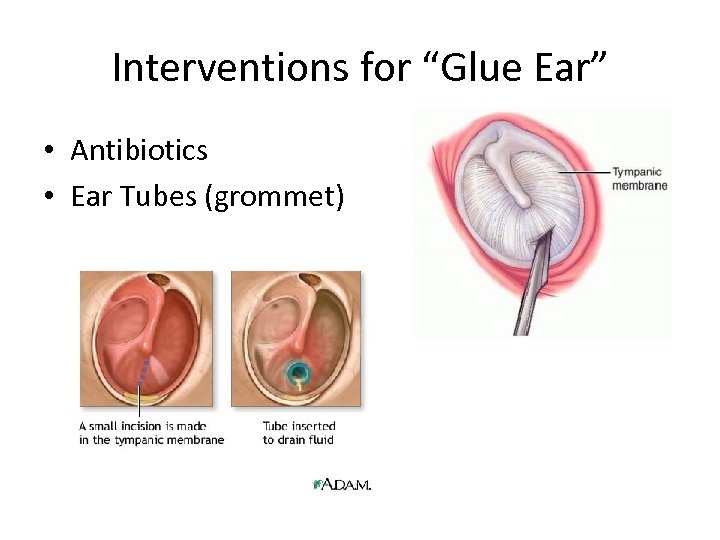 Interventions for “Glue Ear” • Antibiotics • Ear Tubes (grommet)
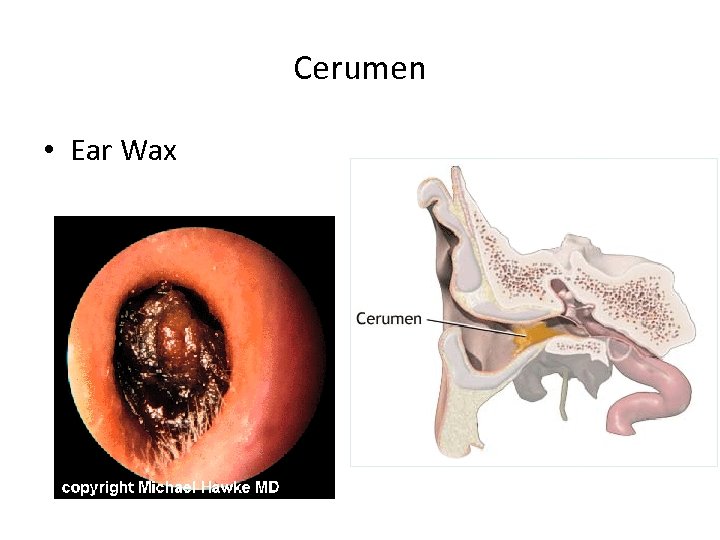 Cerumen • Ear Wax
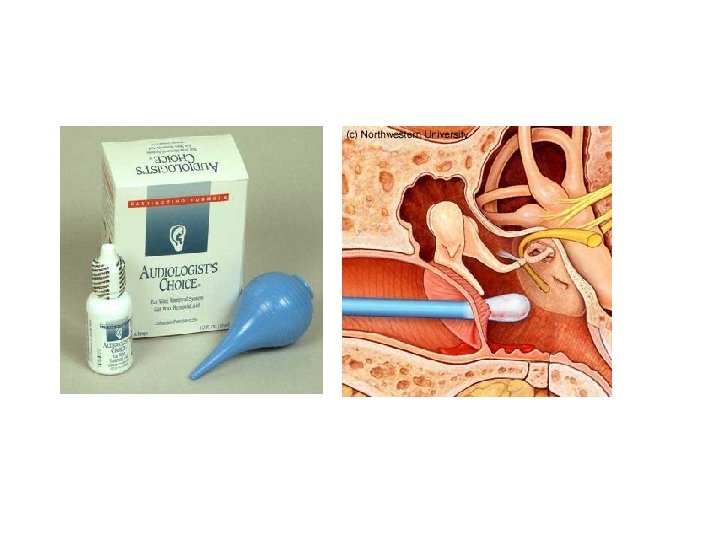
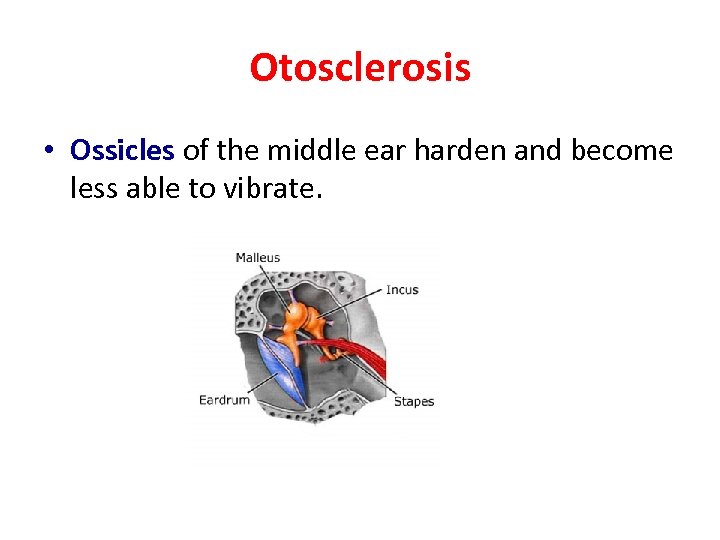
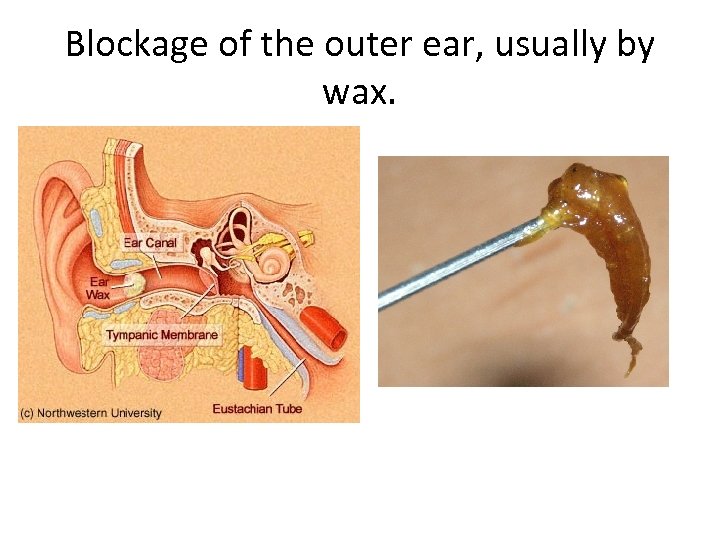 Blockage of the outer ear, usually by wax.
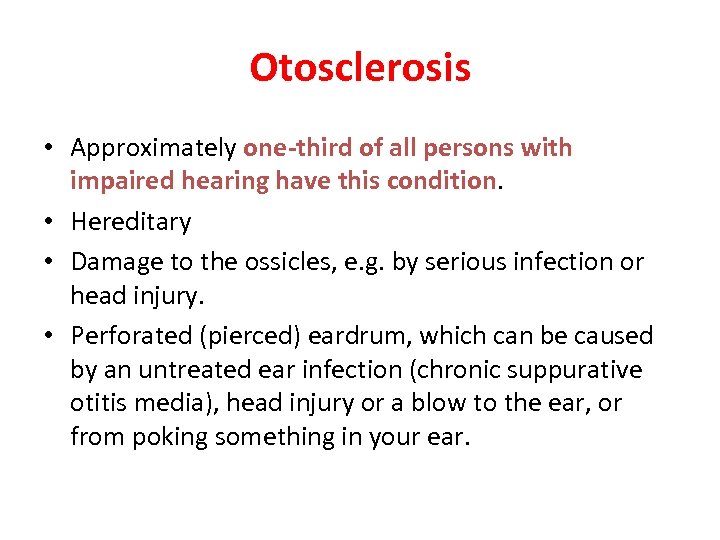
 Otosclerosis • Ossicles of the middle ear harden and become less able to vibrate.
 Otosclerosis • Approximately one-third of all persons with impaired hearing have this condition. • Hereditary • Damage to the ossicles, e. g. by serious infection or head injury. • Perforated (pierced) eardrum, which can be caused by an untreated ear infection (chronic suppurative otitis media), head injury or a blow to the ear, or from poking something in your ear.
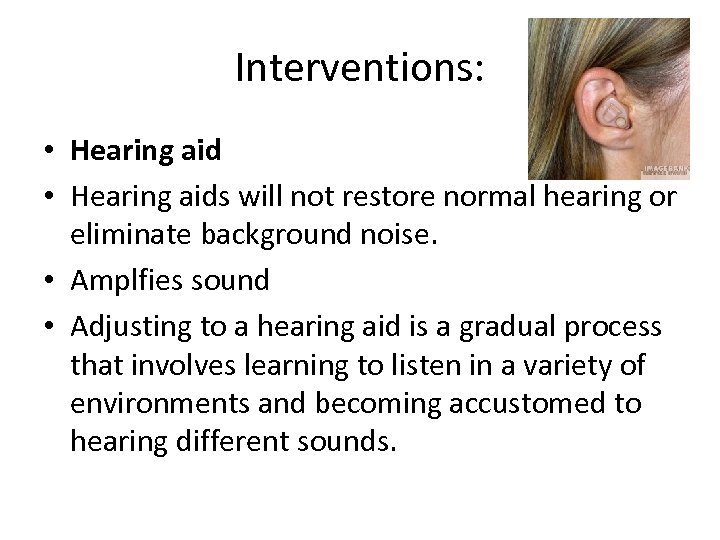
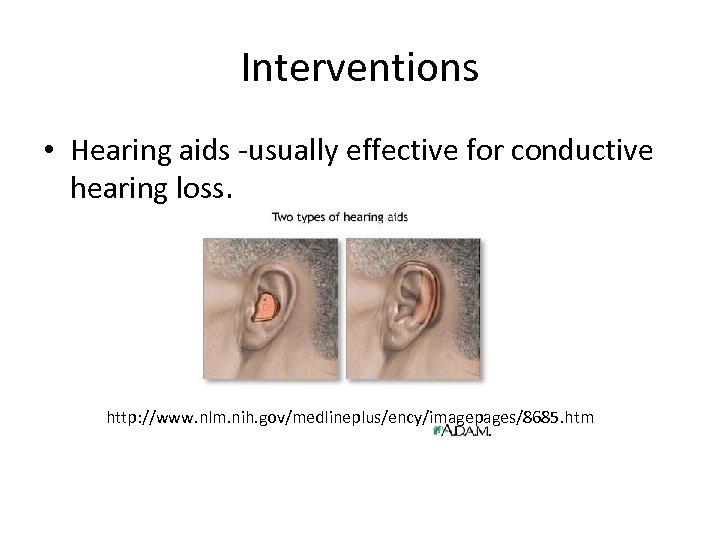 Interventions • Hearing aids -usually effective for conductive hearing loss. http: //www. nlm. nih. gov/medlineplus/ency/imagepages/8685. htm
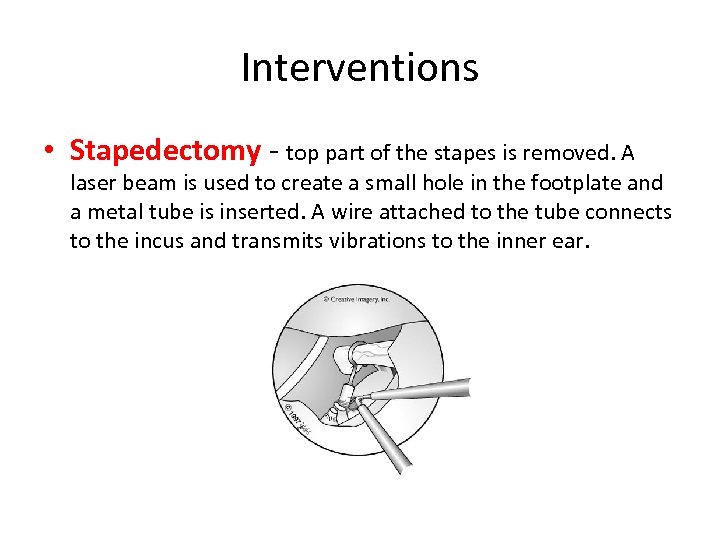 Interventions • Stapedectomy - top part of the stapes is removed. A laser beam is used to create a small hole in the footplate and a metal tube is inserted. A wire attached to the tube connects to the incus and transmits vibrations to the inner ear.
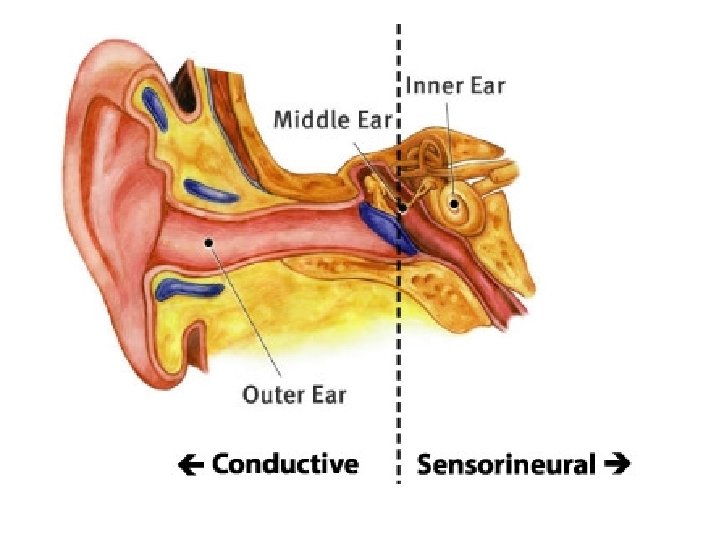
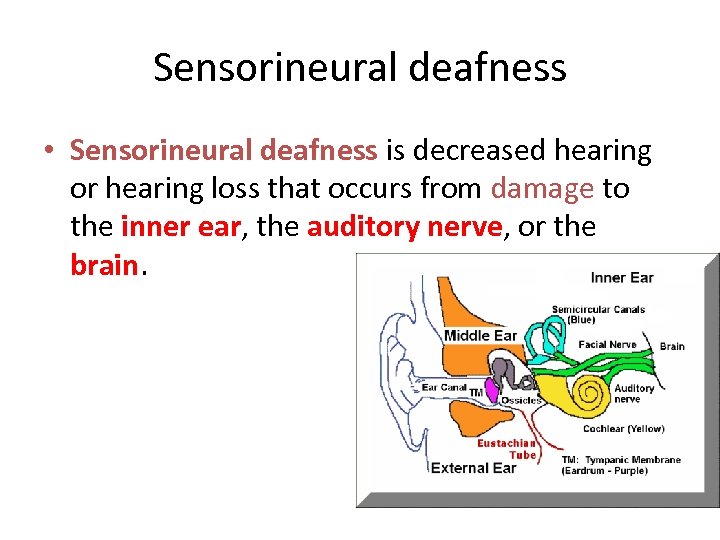 Sensorineural deafness • Sensorineural deafness is decreased hearing or hearing loss that occurs from damage to the inner ear, the auditory nerve, or the brain.
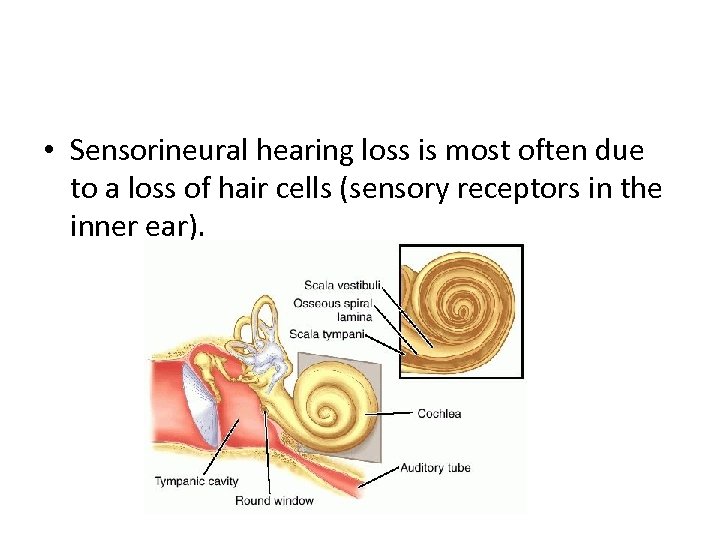 • Sensorineural hearing loss is most often due to a loss of hair cells (sensory receptors in the inner ear).
 • Sensorineural deafness can be present at birth (congenital), or it can develop later in life • (SNHL) accounts for about 90% of all hearing loss • Found in 23% of population older than 65 years of age
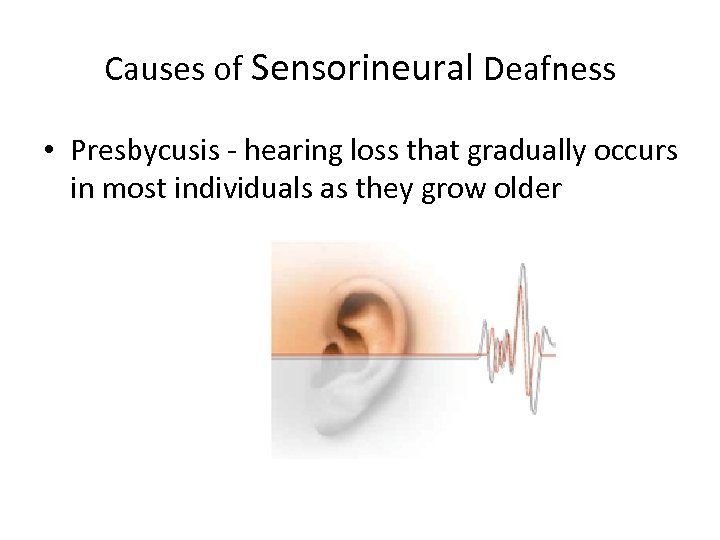 Causes of Sensorineural Deafness • Presbycusis - hearing loss that gradually occurs in most individuals as they grow older
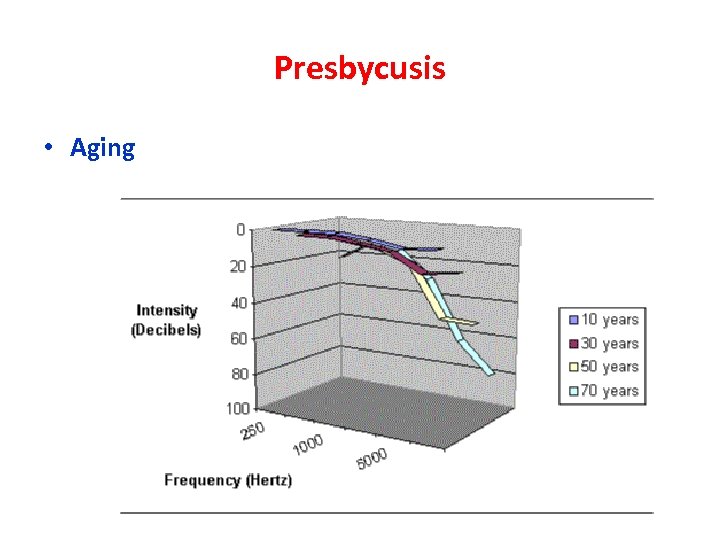 Presbycusis • Aging
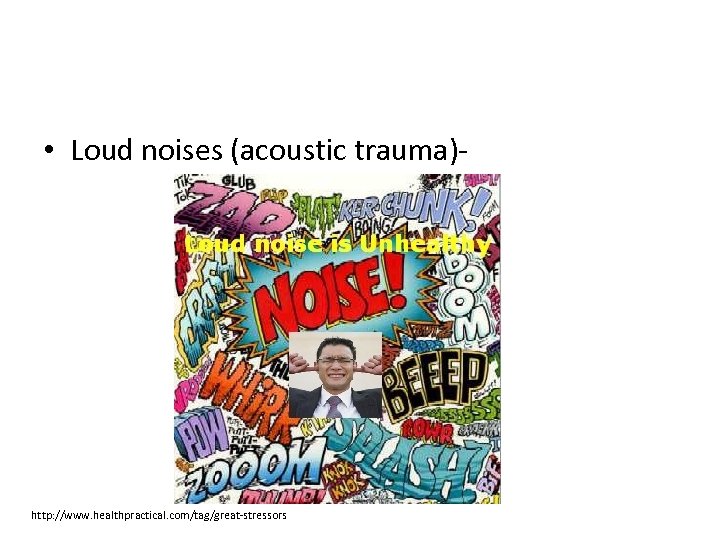 • Loud noises (acoustic trauma)- http: //www. healthpractical. com/tag/great-stressors
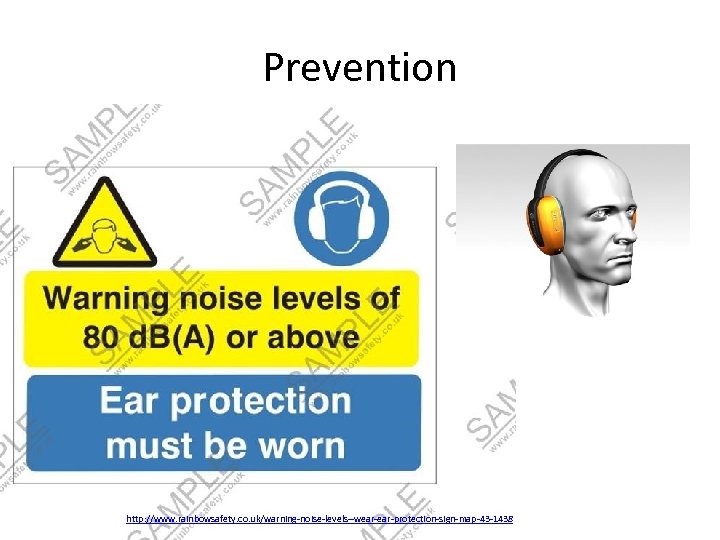
 Duration • The period of time the sound continues to exist. • “Exposure to sound levels of 85 decibels, the equivalent of a lawn mower or food blender, may cause permanent hearing loss if endured for 8 hours per day for a prolonged period”
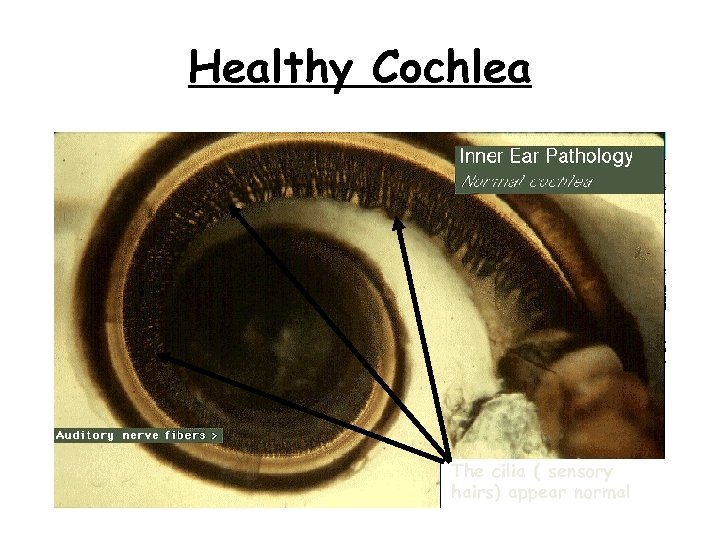 Healthy Cochlea The cilia ( sensory hairs) appear normal
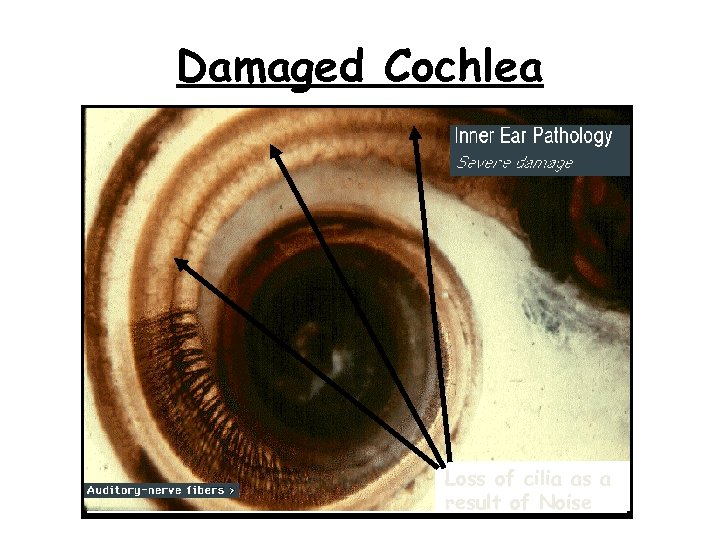 Damaged Cochlea Loss of cilia as a result of Noise
 Occupational Risk • Some jobs carry a high risk for hearing loss, such as: • Airline ground maintenance • Construction • Farming • Jobs involving loud music or machinery
 Interventions: • Hearing aids will not restore normal hearing or eliminate background noise. • Amplfies sound • Adjusting to a hearing aid is a gradual process that involves learning to listen in a variety of environments and becoming accustomed to hearing different sounds.
 Prevention http: //www. rainbowsafety. co. uk/warning-noise-levels--wear-protection-sign-map-43 -1438
 Cochlear Implants • Auditory understanding of the environment and helps in understanding speech. • Does not reinstate or generate normal hearing. • Compensates for damaged or non-working parts of the inner ear.
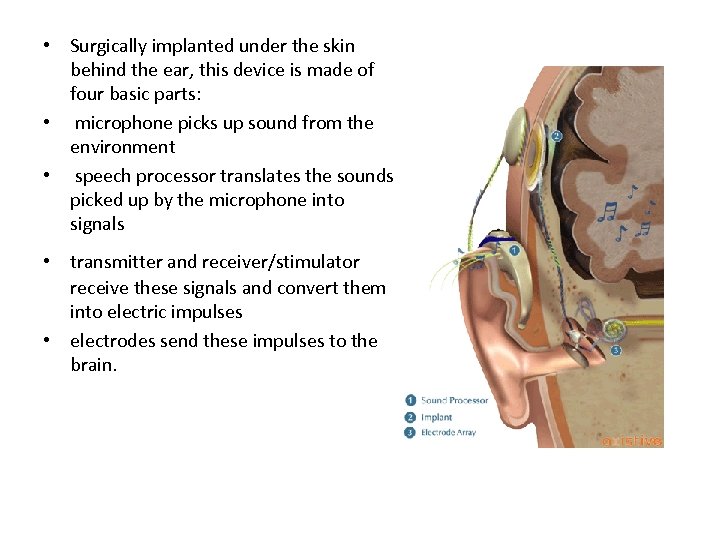 • Surgically implanted under the skin behind the ear, this device is made of four basic parts: • microphone picks up sound from the environment • speech processor translates the sounds picked up by the microphone into signals • transmitter and receiver/stimulator receive these signals and convert them into electric impulses • electrodes send these impulses to the brain.
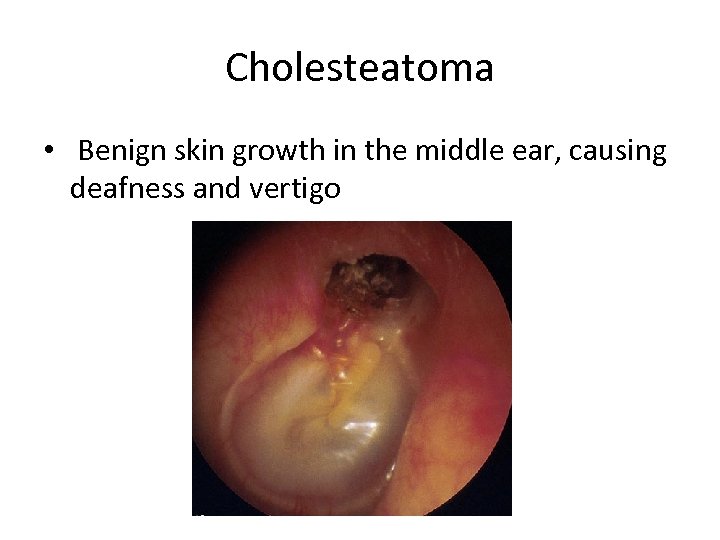 Cholesteatoma • Benign skin growth in the middle ear, causing deafness and vertigo
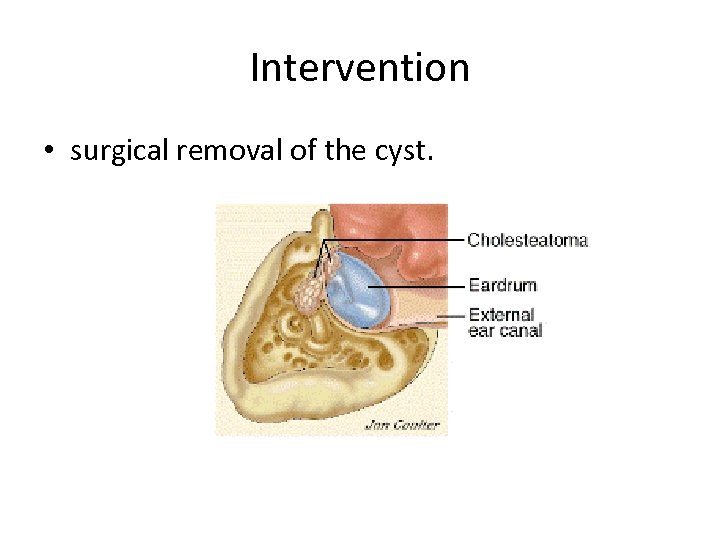 Intervention • surgical removal of the cyst.
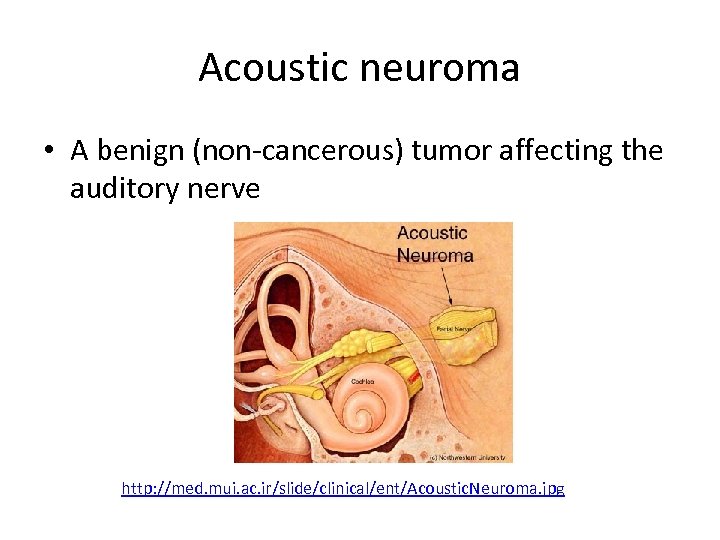 Acoustic neuroma • A benign (non-cancerous) tumor affecting the auditory nerve http: //med. mui. ac. ir/slide/clinical/ent/Acoustic. Neuroma. jpg
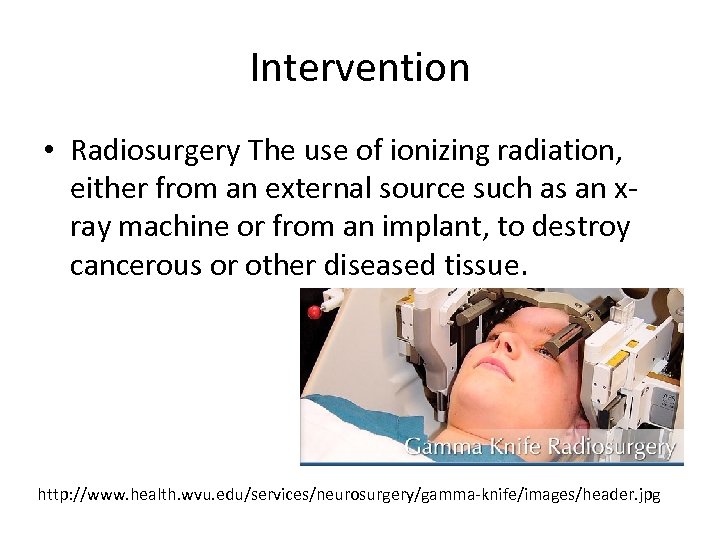 Intervention • Radiosurgery The use of ionizing radiation, either from an external source such as an xray machine or from an implant, to destroy cancerous or other diseased tissue. http: //www. health. wvu. edu/services/neurosurgery/gamma-knife/images/header. jpg
 Tinnitus • Ringing in the ears • Most tinnitus comes from damage to the microscopic endings of the hearing nerve in the inner ear.