 Скачать презентацию 1 ﻣﻦ ﺃﺤﻴﺎﻫﺎ ﻓﻜﺄﻣﺎ ﺃﺤﻴﺎ ﺍﻟﺍﺱ
d839894171c616d0ea16d5a82a7938d5.ppt
- Количество слайдов: 49




1 » ﻣﻦ ﺃﺤﻴﺎﻫﺎ ﻓﻜﺄﻣﺎ ﺃﺤﻴﺎ ﺍﻟﺍﺱ ﺟﻤﻴﻌ « آﻨﺎﻥ ﻛﻪ ﻛﺎﺭﺷﺎﻥ ﻧﺠﺎﺕ ﺟﺎﻥ ﺍﻧﺴﺎﻧﻬﺎﺳﺖ، ﻣﺎﻧﻨﺪ پﺰﺷﻜﺎﻥ، پﺮﺳﺘﺎﺭﺍﻥ، ﻣﺄﻤﻮﺭﺍﻥ آﺘﺸﻨﺸﺎﻧﻰ، ﺍﻣﺪﺍﺩگﺮﺍﻥ، ﺩﺍﺭﻭﺳﺎﺯﺍﻥ ﻭ. . . ﺑﺎﻳﺪ ﻗﺪﺭ ﺧﻮﺩ ﻭﺍﺭﺯﺵ ﻛﺎﺭ ﺧﻮﻳﺶ ﺭﺍ ﺑﺪﺍﻧﻨﺪ 8102/81/3
CARDIO-PULMONARY-CEREBRAL RESUSCITATION (AHA – CPR – 2015 ) Mansoor Masjedi Ass. Prof. of Anaesthesia Critical care consultant International Instructor of AHA Head of CPR committee of SUMS Ordibehesht , 1396 Life is why
OVERVIEW • • • New AHA CPR guidelines ; 2015 Introduction History of CPR Diagnosis of arrest CPR BLS sequences Post resuscitation care CPR – A team work Foreign body airway obstruction Summary
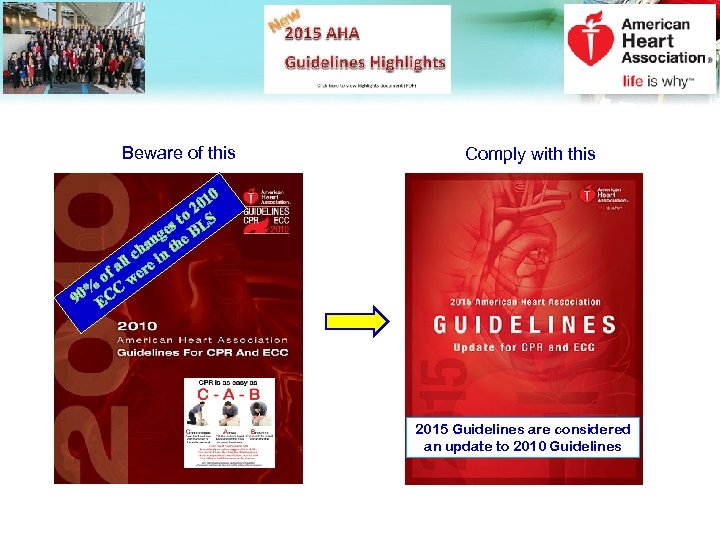
Beware of this Comply with this 10 20 to S es BL ng e ha n th c i all ere of w % C 90 EC 2015 Guidelines are considered an update to 2010 Guidelines
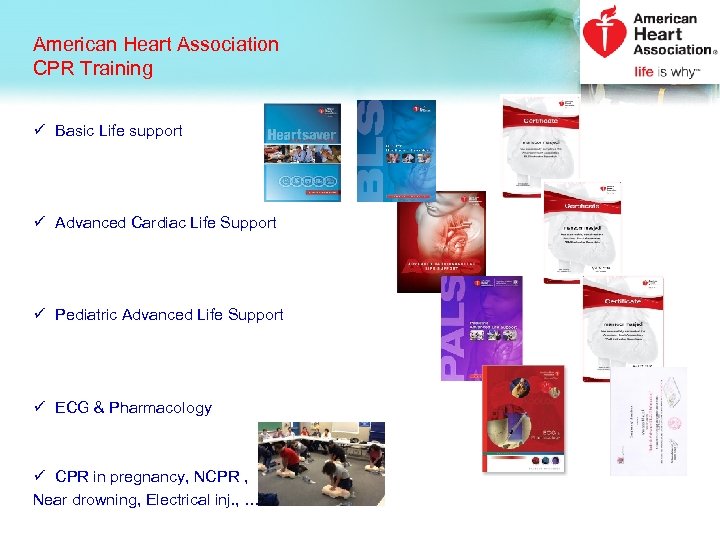
American Heart Association CPR Training ü Basic Life support ü Advanced Cardiac Life Support ü Pediatric Advanced Life Support ü ECG & Pharmacology ü CPR in pregnancy, NCPR , Near drowning, Electrical inj. , …
CPR Guidelines ; AHA 2015 The knowledge & skills you acquire will one day help to save a life
Introduction ü CPR is a very helpful way to save a human’s life ü 7 easy steps ü CPR can be used on all ages ü Universal Clinical Approach

Historical Review 3/18/2018 8
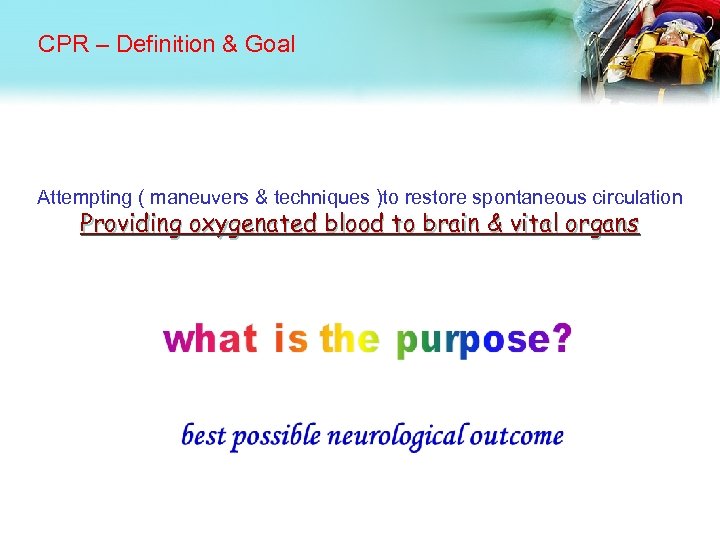
CPR – Definition & Goal Attempting ( maneuvers & techniques )to restore spontaneous circulation Providing oxygenated blood to brain & vital organs
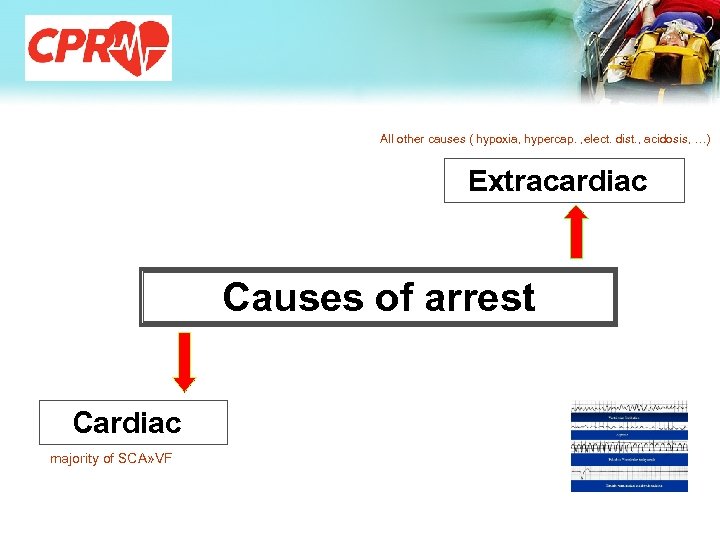
All other causes ( hypoxia, hypercap. , elect. dist. , acidosis, …) Extracardiac Causes of arrest Cardiac majority of SCA» VF
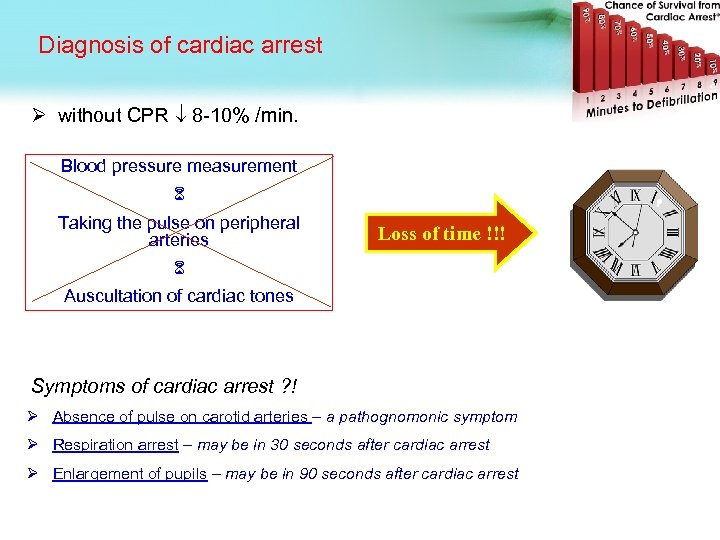
Diagnosis of cardiac arrest Ø without CPR 8 -10% /min. Blood pressure measurement Taking the pulse on peripheral arteries Loss of time !!! Auscultation of cardiac tones Symptoms of cardiac arrest ? ! Ø Absence of pulse on carotid arteries – a pathognomonic symptom Ø Respiration arrest – may be in 30 seconds after cardiac arrest Ø Enlargement of pupils – may be in 90 seconds after cardiac arrest
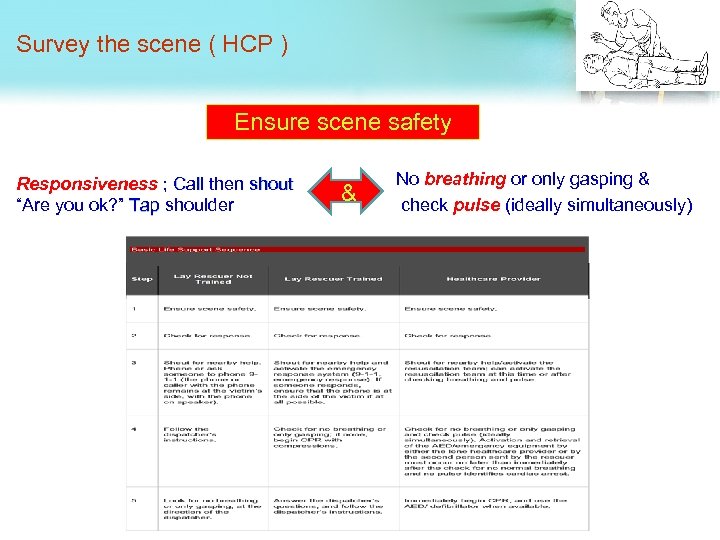
Survey the scene ( HCP ) Ensure scene safety Responsiveness ; Call then shout “Are you ok? ” Tap shoulder & No breathing or only gasping & check pulse (ideally simultaneously)
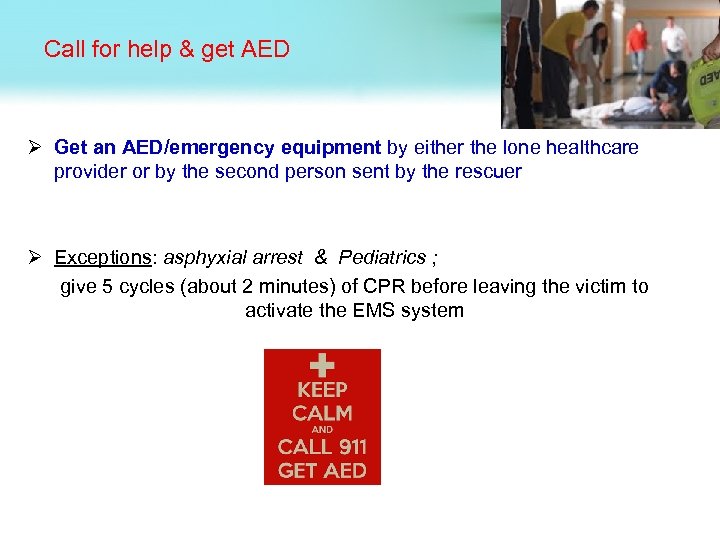
Call for help & get AED Ø Get an AED/emergency equipment by either the lone healthcare provider or by the second person sent by the rescuer Ø Exceptions: asphyxial arrest & Pediatrics ; give 5 cycles (about 2 minutes) of CPR before leaving the victim to activate the EMS system
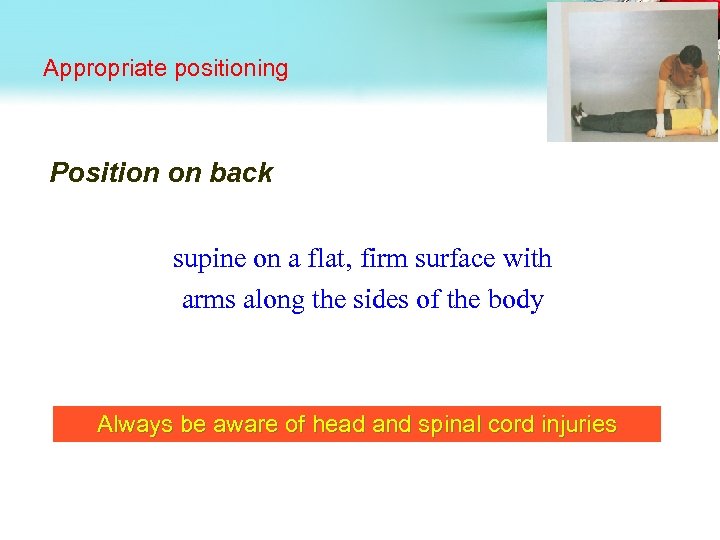
Appropriate positioning Position on back supine on a flat, firm surface with arms along the sides of the body Always be aware of head and spinal cord injuries
BASIC LIFE SUPPORT ; C-A-B 1. Scene safety 2. Assessment ( responsiveness & resp. + pulse) 3. Activate EMS/RRT & get AED 4. Basic CPR I. Circulation II. Airway III. Breathing IV. Defibrillation 3/18/2018 15
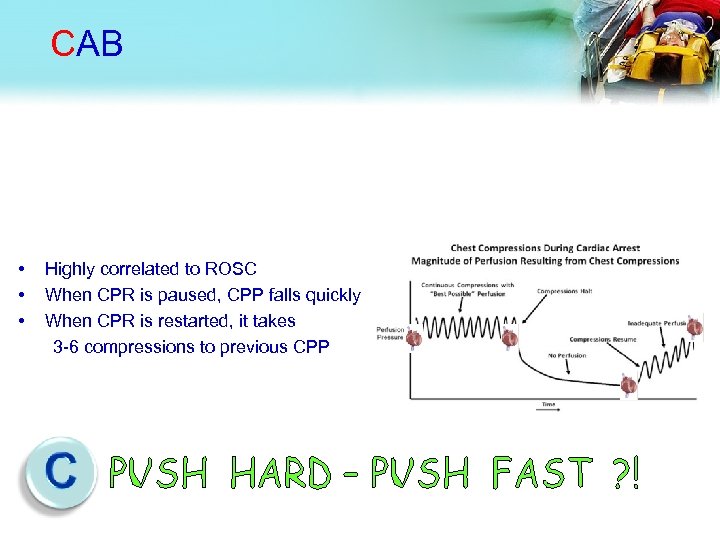
CAB • • • Highly correlated to ROSC When CPR is paused, CPP falls quickly When CPR is restarted, it takes 3 -6 compressions to previous CPP
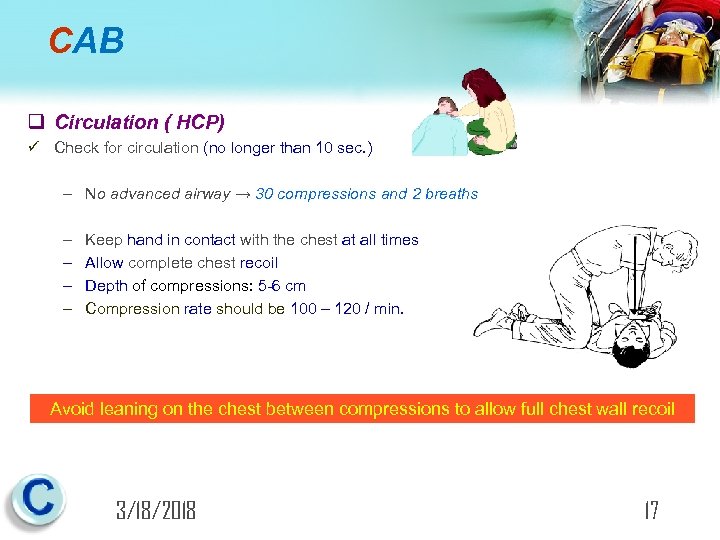
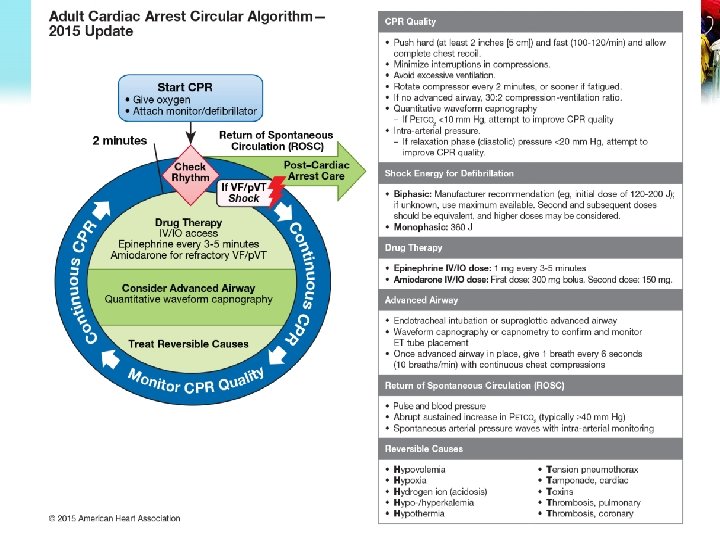
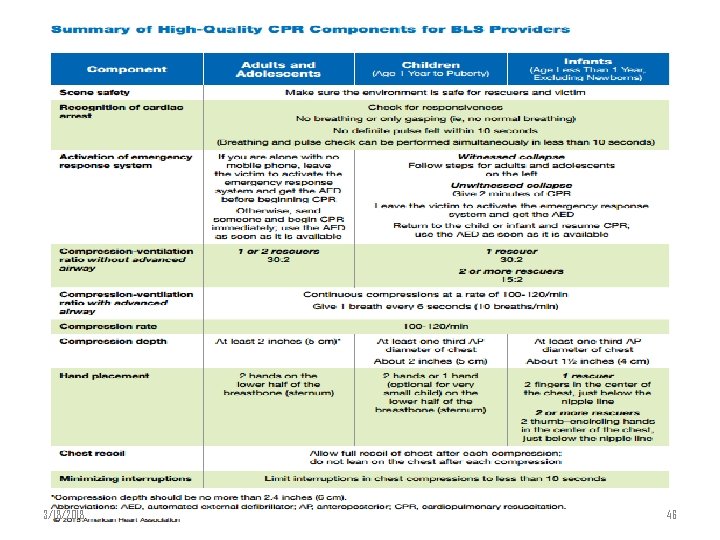
CAB q Circulation ( HCP) ü Check for circulation (no longer than 10 sec. ) – No advanced airway → 30 compressions and 2 breaths – – Keep hand in contact with the chest at all times Allow complete chest recoil Depth of compressions: 5 -6 cm Compression rate should be 100 – 120 / min. Avoid leaning on the chest between compressions to allow full chest wall recoil 3/18/2018 17
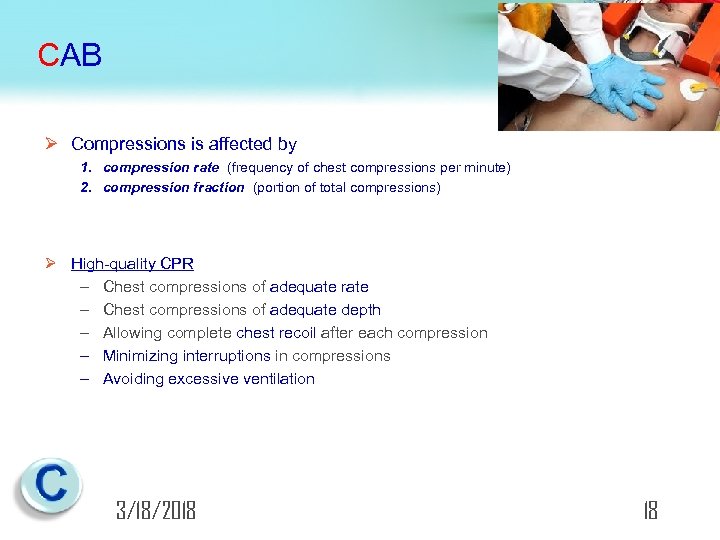
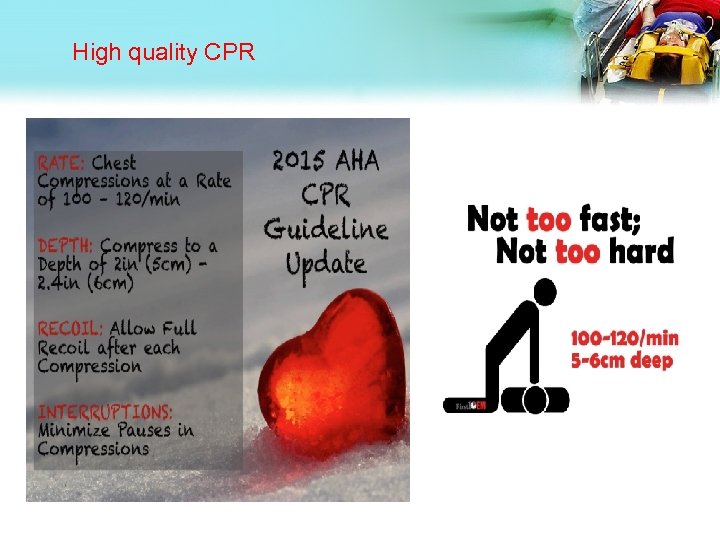
CAB Ø Compressions is affected by 1. compression rate (frequency of chest compressions per minute) 2. compression fraction (portion of total compressions) Ø High-quality CPR – Chest compressions of adequate rate – Chest compressions of adequate depth – Allowing complete chest recoil after each compression – Minimizing interruptions in compressions – Avoiding excessive ventilation 3/18/2018 18
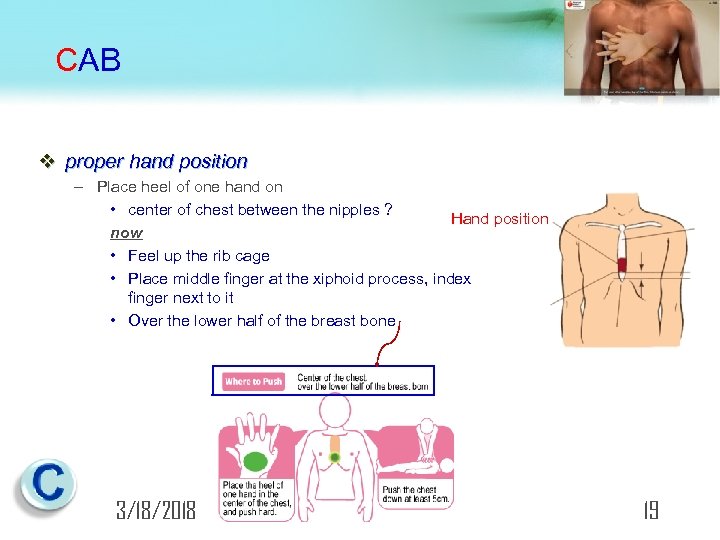
CAB v proper hand position – Place heel of one hand on • center of chest between the nipples ? Hand position now • Feel up the rib cage • Place middle finger at the xiphoid process, index finger next to it • Over the lower half of the breast bone 3/18/2018 19
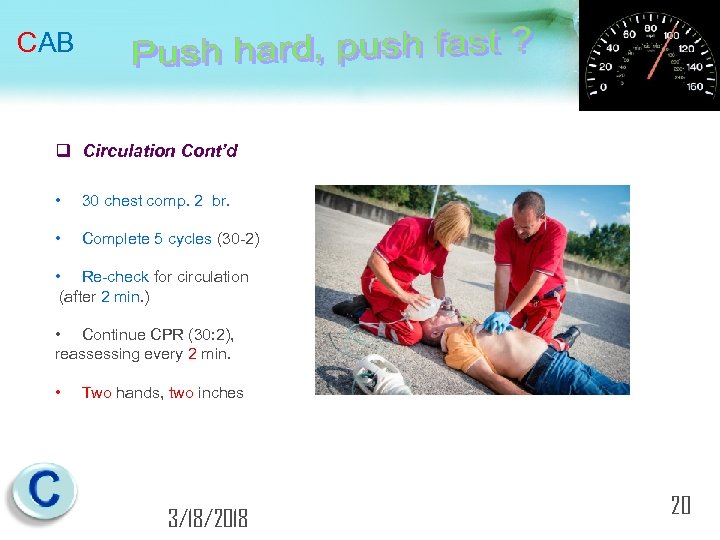
CAB q Circulation Cont’d • 30 chest comp. 2 br. • Complete 5 cycles (30 -2) • Re-check for circulation (after 2 min. ) • Continue CPR (30: 2), reassessing every 2 min. • Two hands, two inches 3/18/2018 20
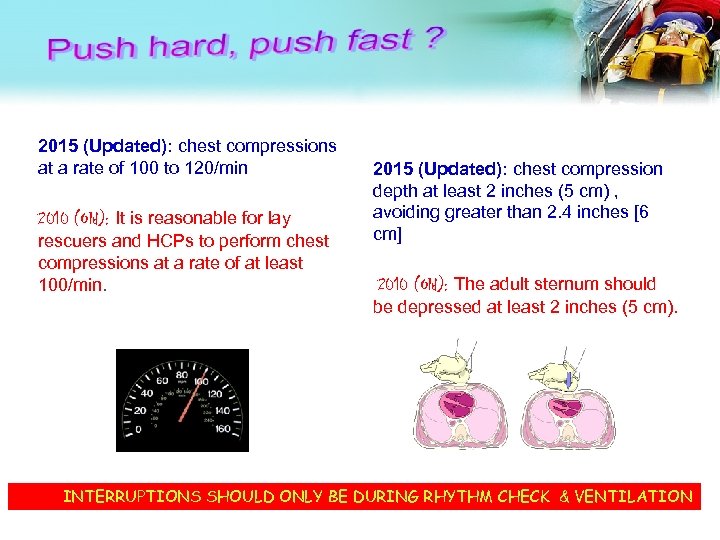
2015 (Updated): chest compressions at a rate of 100 to 120/min 2010 (Old): It is reasonable for lay rescuers and HCPs to perform chest compressions at a rate of at least 100/min. 2015 (Updated): chest compression depth at least 2 inches (5 cm) , avoiding greater than 2. 4 inches [6 cm] 2010 (Old): The adult sternum should be depressed at least 2 inches (5 cm). INTERRUPTIONS SHOULD ONLY BE DURING RHYTHM CHECK & VENTILATION
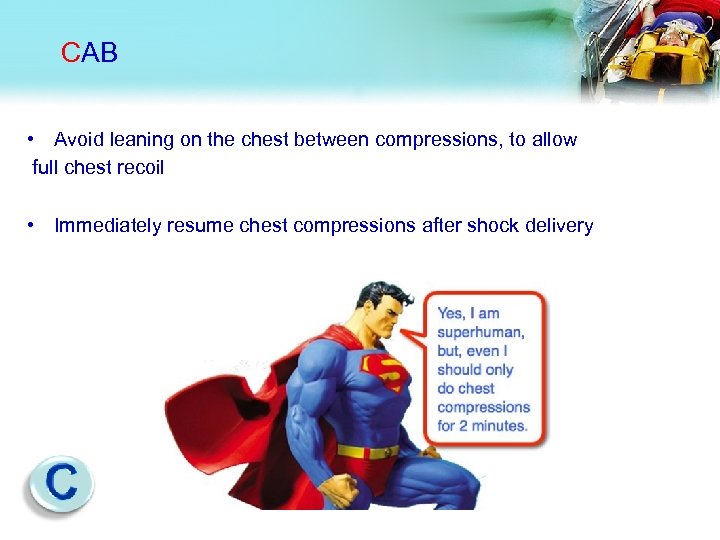
CAB • Avoid leaning on the chest between compressions, to allow full chest recoil • Immediately resume chest compressions after shock delivery
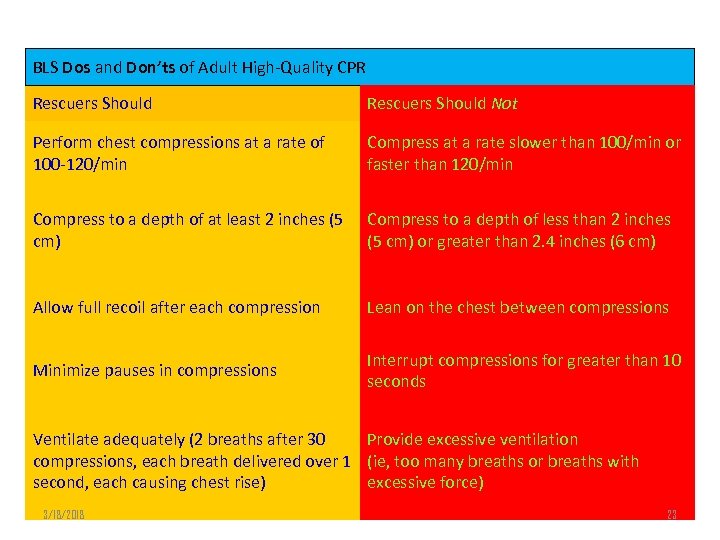
BLS Dos and Don’ts of Adult High-Quality CPR Rescuers Should Not Perform chest compressions at a rate of 100 -120/min Compress at a rate slower than 100/min or faster than 120/min Compress to a depth of at least 2 inches (5 cm) Compress to a depth of less than 2 inches (5 cm) or greater than 2. 4 inches (6 cm) Allow full recoil after each compression Lean on the chest between compressions Minimize pauses in compressions Interrupt compressions for greater than 10 seconds Ventilate adequately (2 breaths after 30 Provide excessive ventilation compressions, each breath delivered over 1 (ie, too many breaths or breaths with second, each causing chest rise) excessive force) 3/18/2018 23
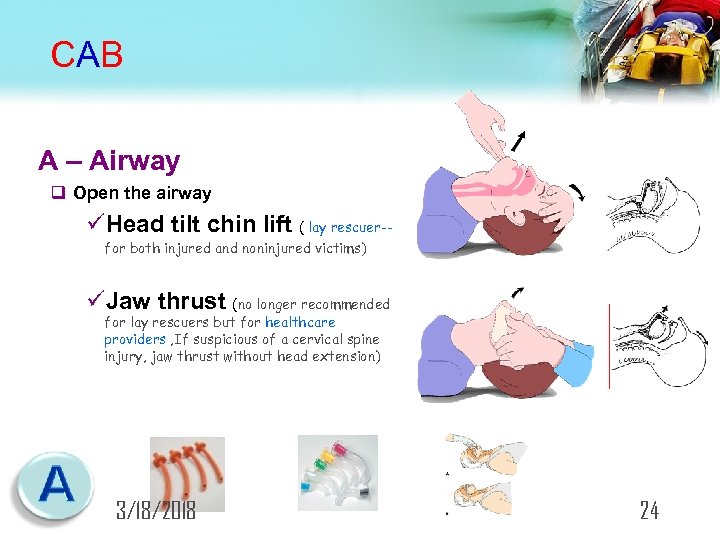
CAB A – Airway q Open the airway üHead tilt chin lift ( lay rescuer-for both injured and noninjured victims) üJaw thrust (no longer recommended for lay rescuers but for healthcare providers , If suspicious of a cervical spine injury, jaw thrust without head extension) 3/18/2018 24
CAB If suspected spinal injury → manual spinal motion restriction because of immobilization devices by lay rescuers may be harmful & Spinal immobilization devices may interfere with maintaining a patent airway
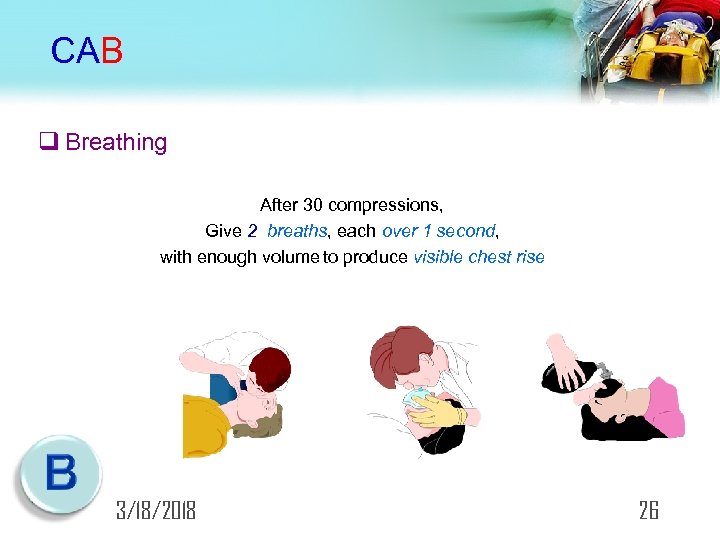
CAB q Breathing After 30 compressions, Give 2 breaths, each over 1 second, with enough volume to produce visible chest rise 3/18/2018 26
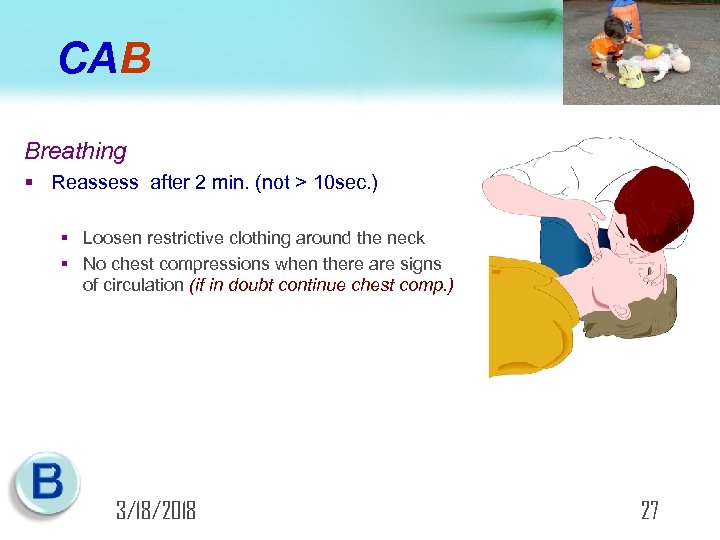
CAB Breathing § Reassess after 2 min. (not > 10 sec. ) § Loosen restrictive clothing around the neck § No chest compressions when there are signs of circulation (if in doubt continue chest comp. ) 3/18/2018 27
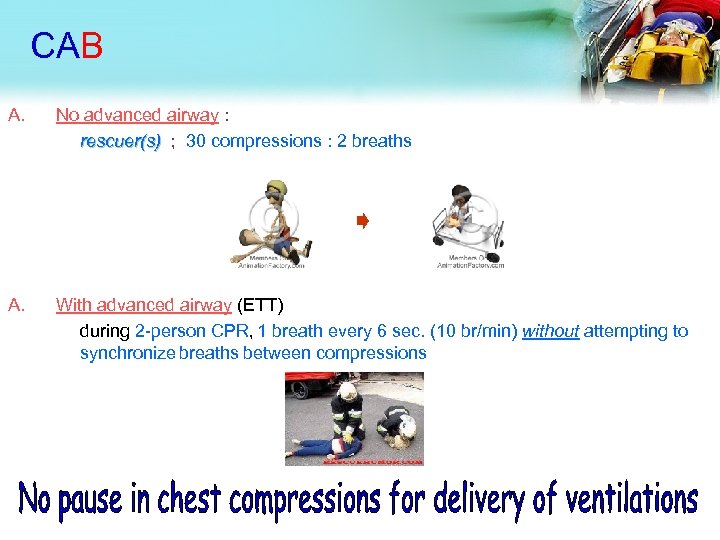
CAB A. No advanced airway : rescuer(s) ; 30 compressions : 2 breaths A. With advanced airway (ETT) during 2 -person CPR, 1 breath every 6 sec. (10 br/min) without attempting to synchronize breaths between compressions
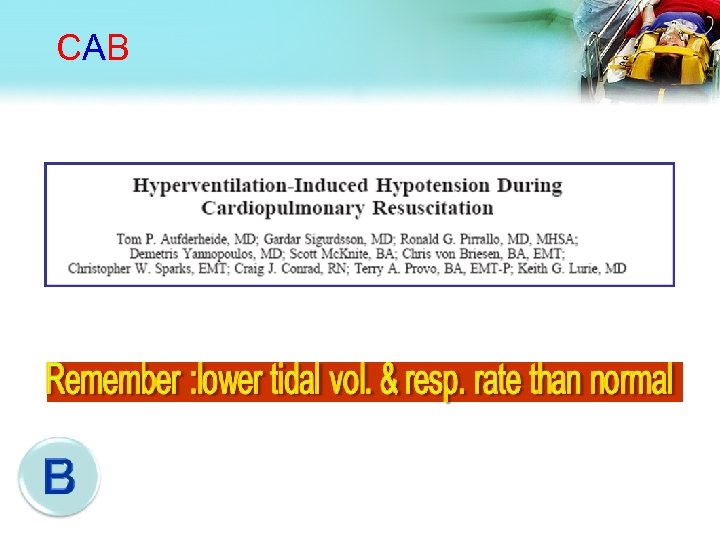
CAB
CPR in Opioid overdose + pulse + resp. arrest BLS + IM / IN naloxone In cardiac arrest, medication administration is ineffective without concomitant chest compressions for drug delivery to the tissues, so naloxone after initiation of CPR
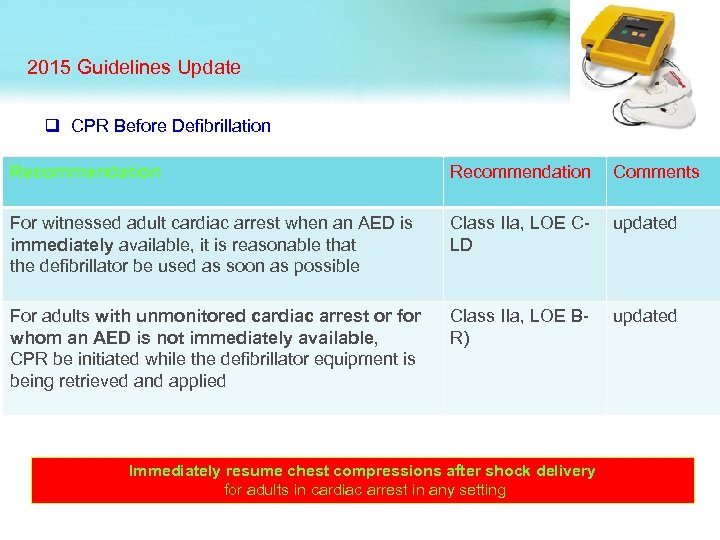
2015 Guidelines Update q CPR Before Defibrillation Recommendation Comments For witnessed adult cardiac arrest when an AED is immediately available, it is reasonable that the defibrillator be used as soon as possible Class IIa, LOE CLD updated For adults with unmonitored cardiac arrest or for whom an AED is not immediately available, CPR be initiated while the defibrillator equipment is being retrieved and applied Class IIa, LOE BR) updated Immediately resume chest compressions after shock delivery for adults in cardiac arrest in any setting
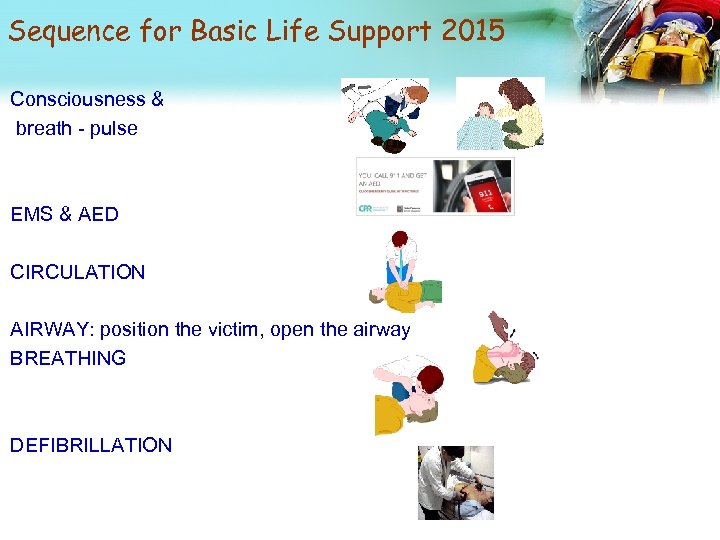
Sequence for Basic Life Support 2015 Consciousness & breath - pulse EMS & AED CIRCULATION AIRWAY: position the victim, open the airway BREATHING DEFIBRILLATION
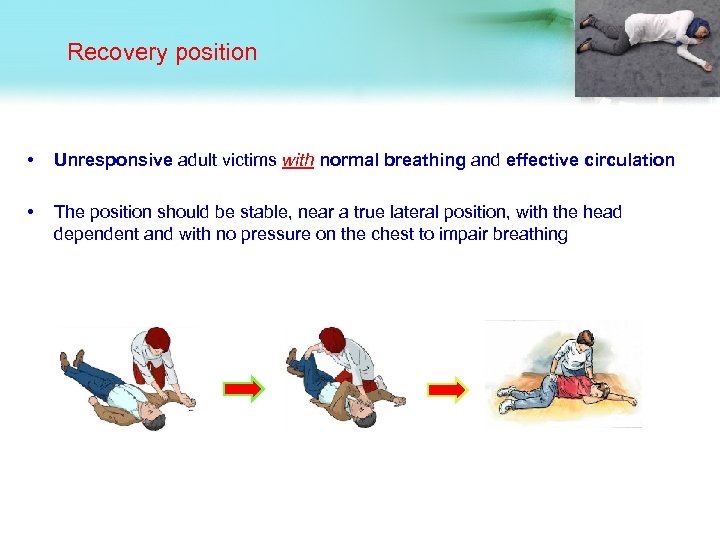
Recovery position • Unresponsive adult victims with normal breathing and effective circulation • The position should be stable, near a true lateral position, with the head dependent and with no pressure on the chest to impair breathing
3/18/2018 34
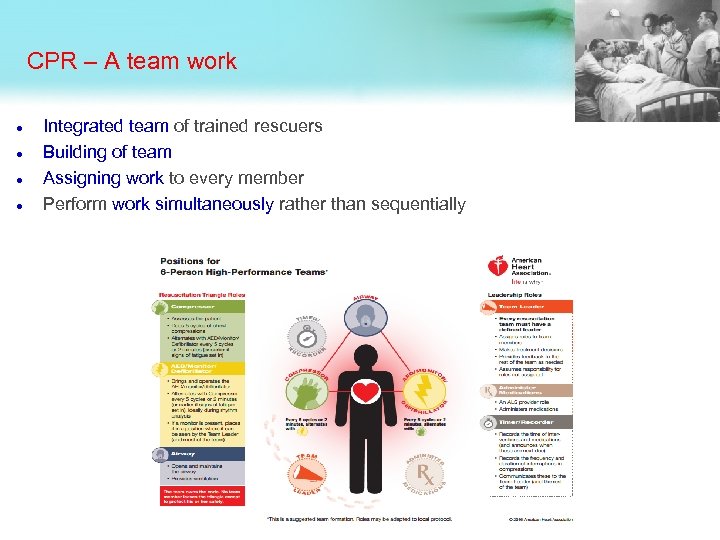
CPR – A team work Integrated team of trained rescuers Building of team Assigning work to every member Perform work simultaneously rather than sequentially
Monitoring during CPR • ECG monitoring is essential • Intra- arterial pressure monitoring SBP, DBP and MAP • Endotracheal CO 2 monitoring • Lab. Data Most useful ; ABG , Htc, BS, Na, K, Ca 3/18/2018 36
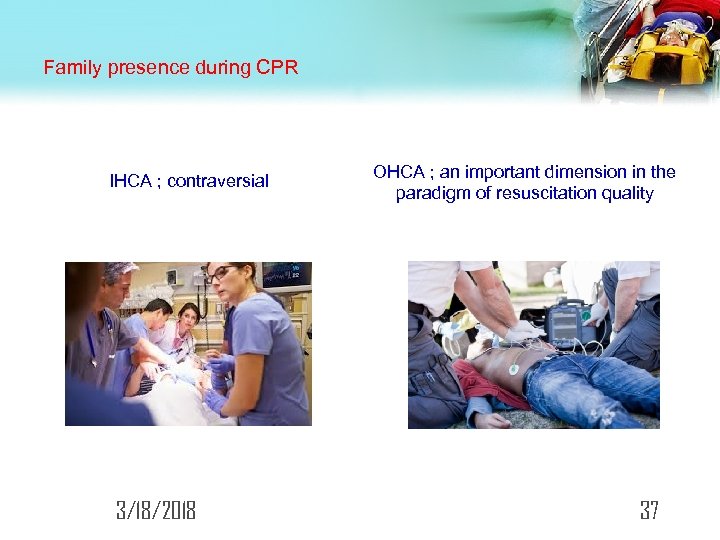
Family presence during CPR IHCA ; contraversial 3/18/2018 OHCA ; an important dimension in the paradigm of resuscitation quality 37
Continue CPR Until : • • Victim revives Trained help arrives Too exhausted to continue Unsafe scene (Patients not to be moved for CPR & while it is in progress) • Physician directed (do not resuscitate orders)
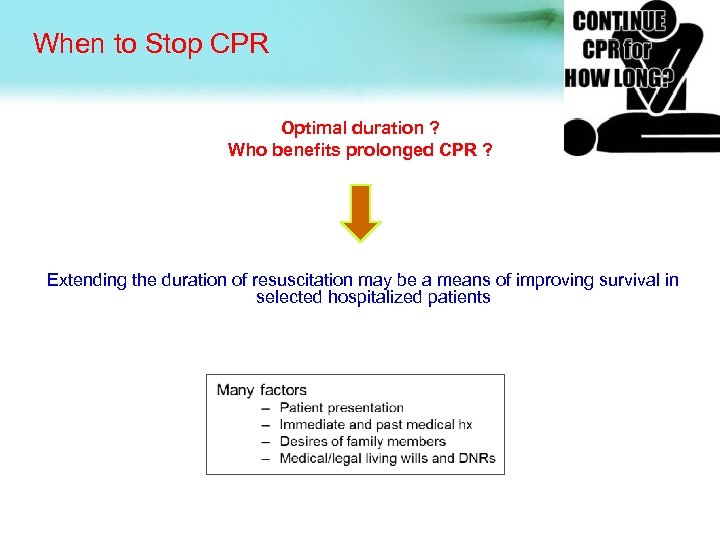
When to Stop CPR Optimal duration ? Who benefits prolonged CPR ? Extending the duration of resuscitation may be a means of improving survival in selected hospitalized patients
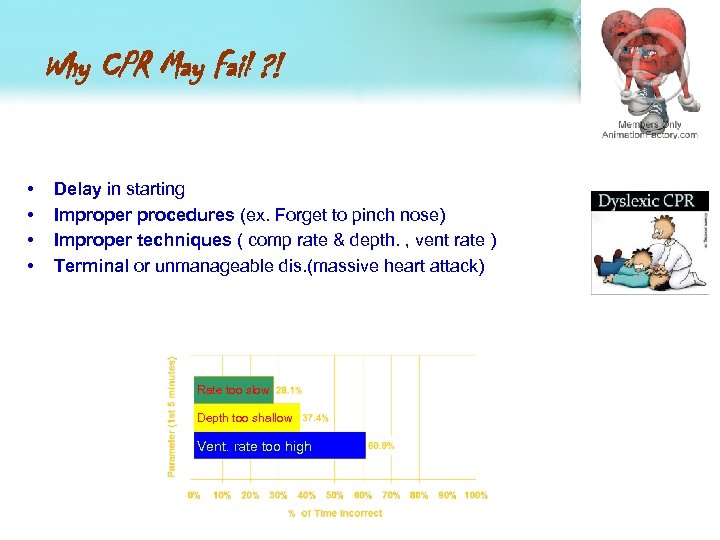
Why CPR May Fail ? ! • • Delay in starting Improper procedures (ex. Forget to pinch nose) Improper techniques ( comp rate & depth. , vent rate ) Terminal or unmanageable dis. (massive heart attack) Rate too slow Depth too shallow Vent. rate too high
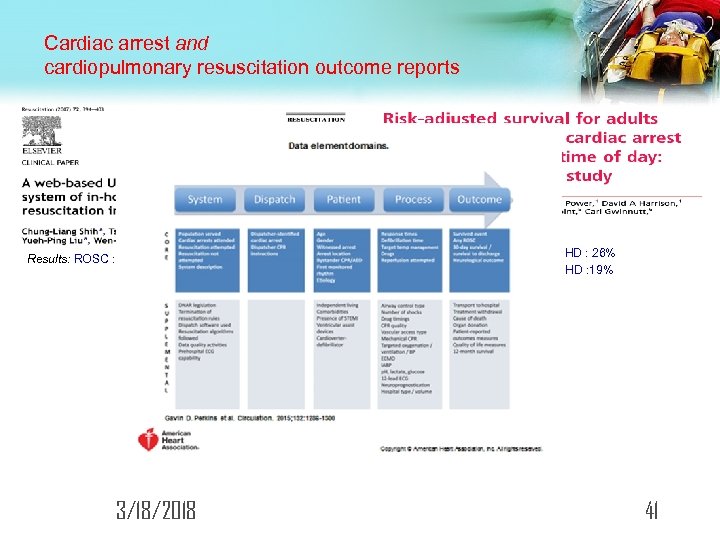
Cardiac arrest and cardiopulmonary resuscitation outcome reports Results: ROSC : 71% , HD : 18% 27700 pts , During weekdays ; ROSC : 52% , HD : 26% During weekends ; ROSC : 47% , HD : 19% ROSC : 45. 1% , DR : 6. 6% 3/18/2018 41

DELAYS AND INTERRUPTIONS KILL!
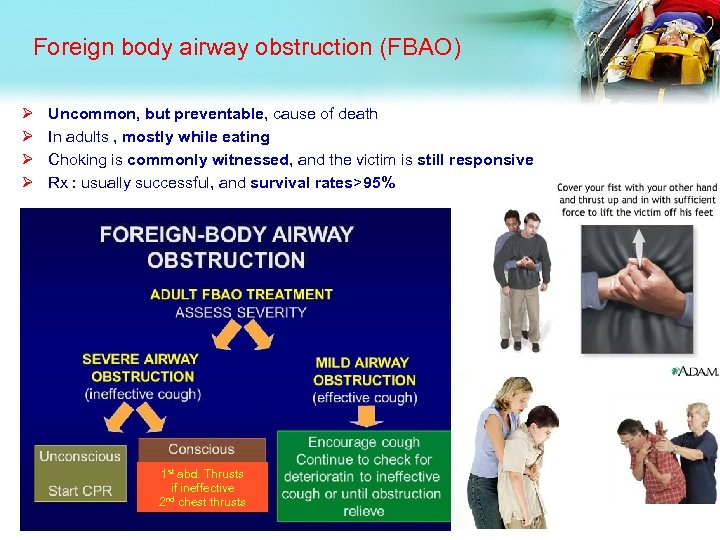
Foreign body airway obstruction (FBAO) Ø Ø Uncommon, but preventable, cause of death In adults , mostly while eating Choking is commonly witnessed, and the victim is still responsive Rx : usually successful, and survival rates˃95% 1 st abd. Thrusts if ineffective nd chest thrusts 2
Summary Life is why
3/18/2018 46
High quality CPR
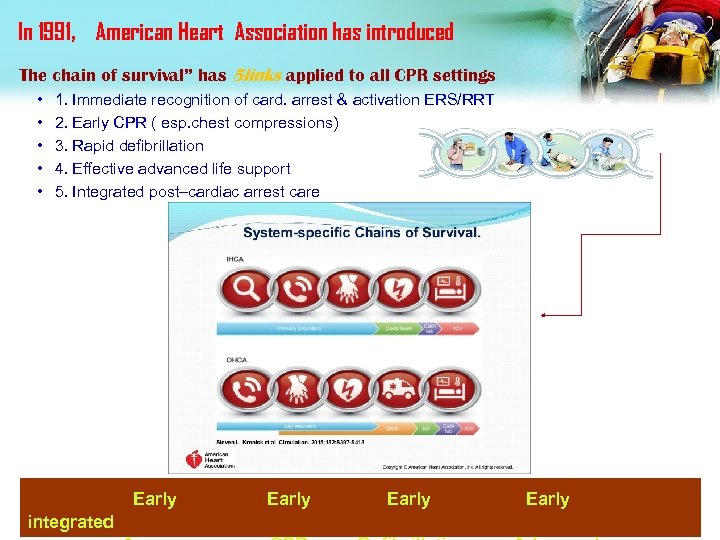
In 1991,American Heart Association has introduced The chain of survival” has 5 links applied to all CPR settings • • • 1. Immediate recognition of card. arrest & activation ERS/RRT 2. Early CPR ( esp. chest compressions) 3. Rapid defibrillation 4. Effective advanced life support 5. Integrated post–cardiac arrest care Early integrated Early

ﻣﻮﻻی ﻣﺘﻘﻴﺎﻥ،ﺍﻣﺎﻡ ﻋﻠی ﻉ : ﺑی ﻗﺪﺭﺗﺮﻳﻦ ﺩﺍﻧﺶ ﺩﺍﻧﺸی ﺍﺳﺖ ﻛﻪ ﺑﺮ ﺯﺑﺎﻥ ﺟﺎ گﺮﻓﺘﻪ ﺍﺳﺖ ﻭ ﺑﺮﺗﺮﻳﻦ ﻋﻠﻢ ﻋﻠﻤی ﺍﺳﺖ ﻛﻪ ﺩﺭ ﻫﻤﻪ ﺍﻧﺪﺍﻣﻬﺎ ﻫﻮﻳﺪﺍ ﺑﺎﺷﺪ. 94 8102/81/3
Скачать презентацию 1 ﻣﻦ ﺃﺤﻴﺎﻫﺎ ﻓﻜﺄﻣﺎ ﺃﺤﻴﺎ ﺍﻟﺍﺱ
d839894171c616d0ea16d5a82a7938d5.ppt