Скачать презентацию 04 27 2015 CHRISTIANITY I INTRODUCTION CHRISTIANITY
04_27_2015_CHRISTIANITY.pptx
- Количество слайдов: 85
 04 27 2015 CHRISTIANITY
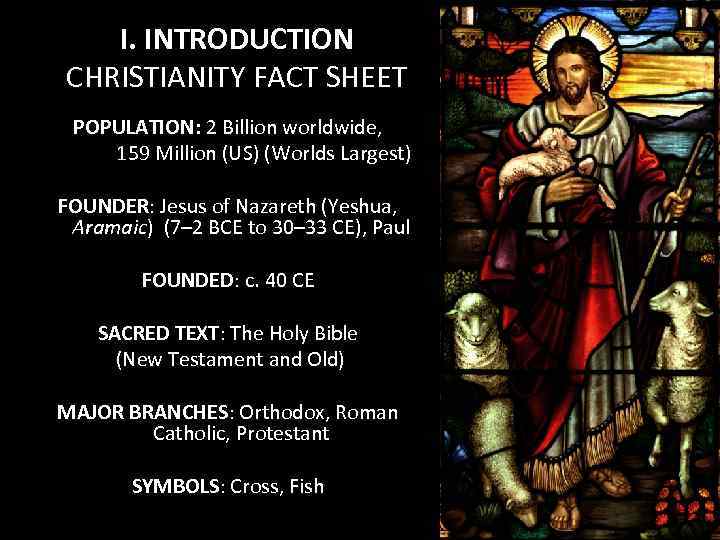 I. INTRODUCTION CHRISTIANITY FACT SHEET POPULATION: 2 Billion worldwide, 159 Million (US) (Worlds Largest) FOUNDER: Jesus of Nazareth (Yeshua, Aramaic) (7– 2 BCE to 30– 33 CE), Paul FOUNDED: c. 40 CE SACRED TEXT: The Holy Bible (New Testament and Old) MAJOR BRANCHES: Orthodox, Roman Catholic, Protestant SYMBOLS: Cross, Fish
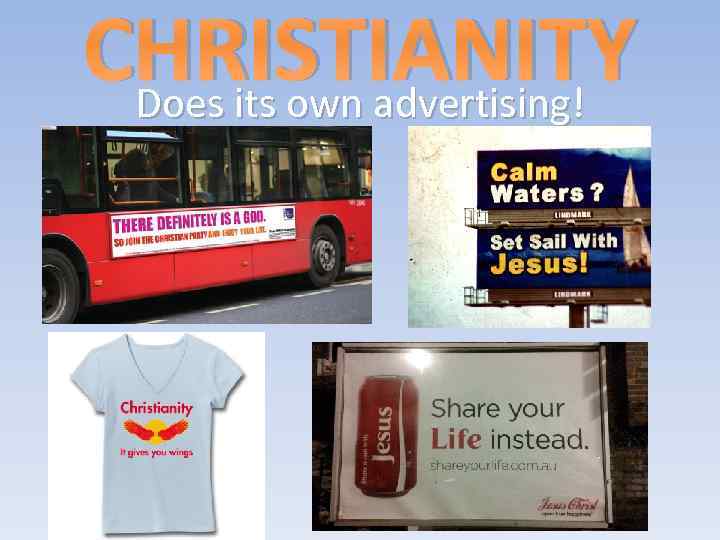 CHRISTIANITY Does its own advertising!
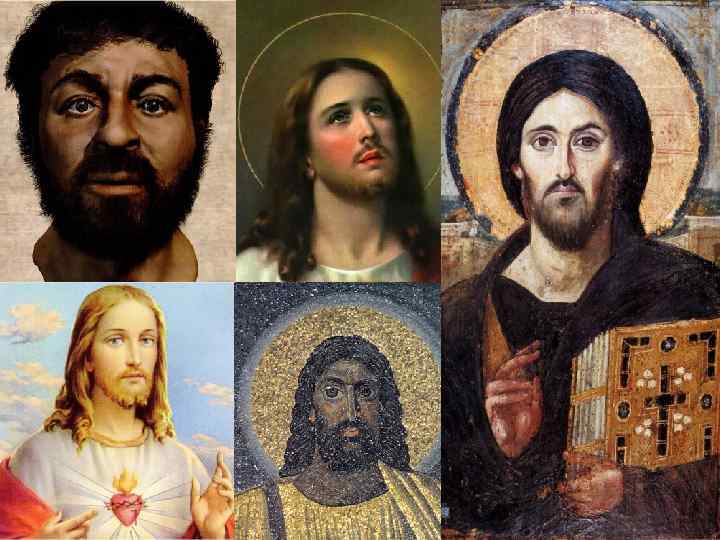
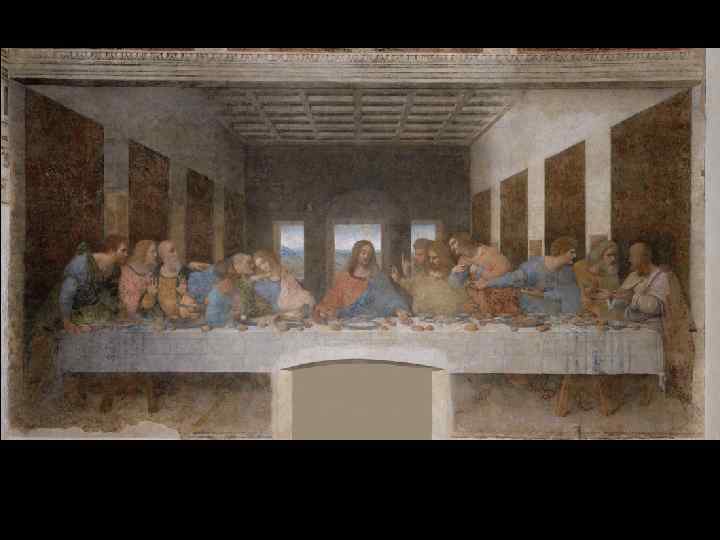
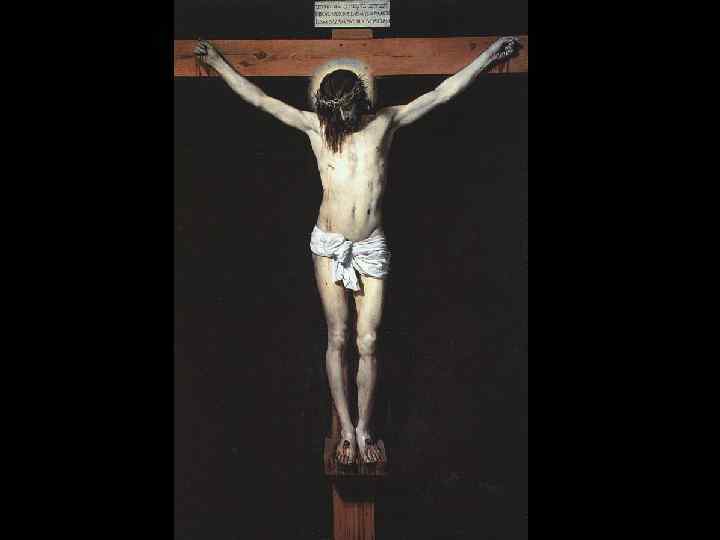
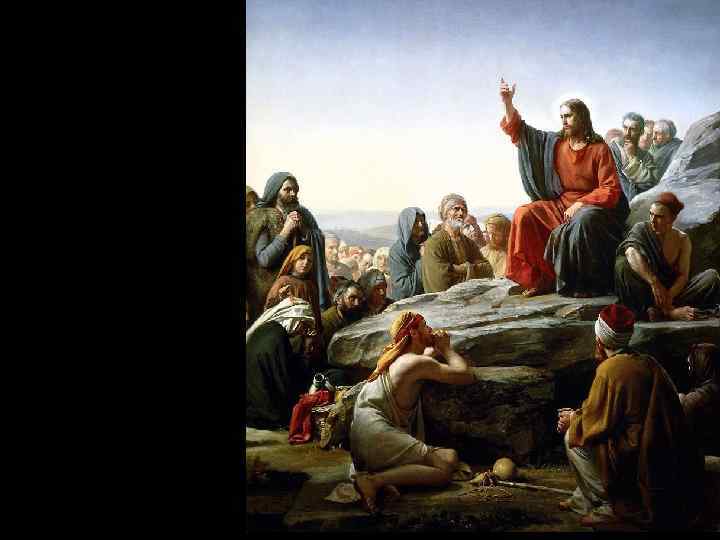
 Love thy enemy. “You have heard that it was said, ‘You shall love your neighbor and hate your enemy. ’ But I say to you, Love your enemies and pray for those who persecute you, so that you may be sons of your Father who is in heaven. For he makes his sun rise on the evil and on the good, and sends rain on the just and on the unjust. For if you love those who love you, what reward do you have? Do not even the tax collectors do the same? And if you greet only your brothers, what more are you doing than others? Do not even the Gentiles do the same? You therefore must be perfect, as your heavenly Father is perfect. (Matthew 5: 43 -48 ESV)
 “And he opened his mouth and taught them, saying: “Blessed are the poor in spirit, for theirs is the kingdom of heaven. “Blessed are those who mourn, for they shall be comforted. “Blessed are the meek, for they shall inherit the earth. “Blessed are those who hunger and thirst for righteousness, for they shall be satisfied. “Blessed are the merciful, for they shall receive mercy. “Blessed are the pure in heart, for they shall see God. “Blessed are the peacemakers, for they shall be called sons of God. “Blessed are those who are persecuted for righteousness' sake, for theirs is the kingdom of heaven. “Blessed are you when others revile you and persecute you and utter all kinds of evil against you falsely on my account. Rejoice and be glad, for your reward is great in heaven, for so they persecuted the prophets who were before you. “ (Matthew 5: 2 -12 ESV)
 The two great commandments: Love God and Love your neighbor.
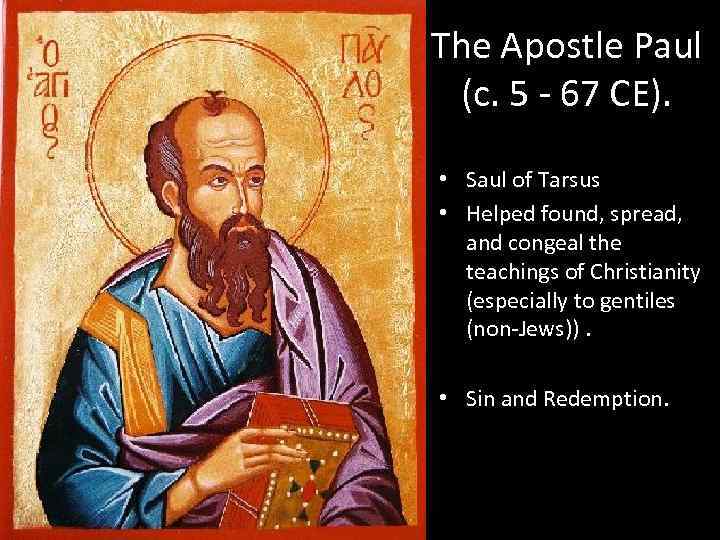 The Apostle Paul (c. 5 - 67 CE). • Saul of Tarsus • Helped found, spread, and congeal the teachings of Christianity (especially to gentiles (non-Jews)). • Sin and Redemption.
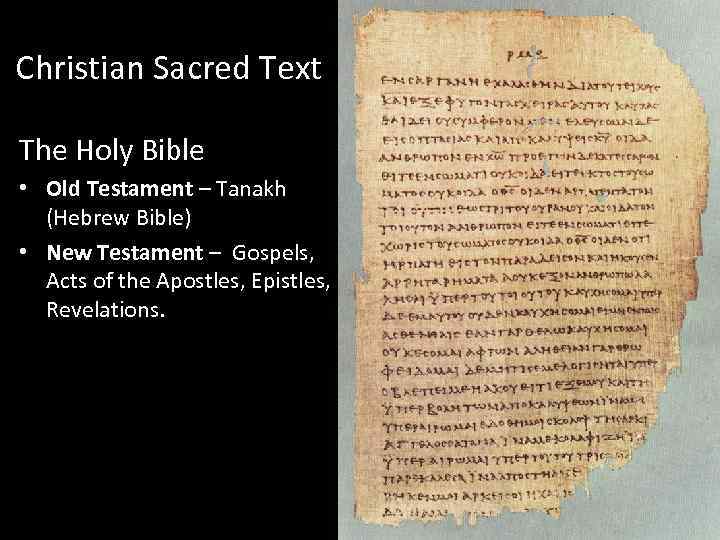 Christian Sacred Text The Holy Bible • Old Testament – Tanakh (Hebrew Bible) • New Testament – Gospels, Acts of the Apostles, Epistles, Revelations.
 Gospels (Good News) Accounts describing the life, death, and resurrection of Jesus of Nazareth - • Matthew • Mark • Luke • John
 Acts of the Apostles Acts tells the story of the Early Christian church, with particular emphasis on the ministry of the apostles Peter and Paul.
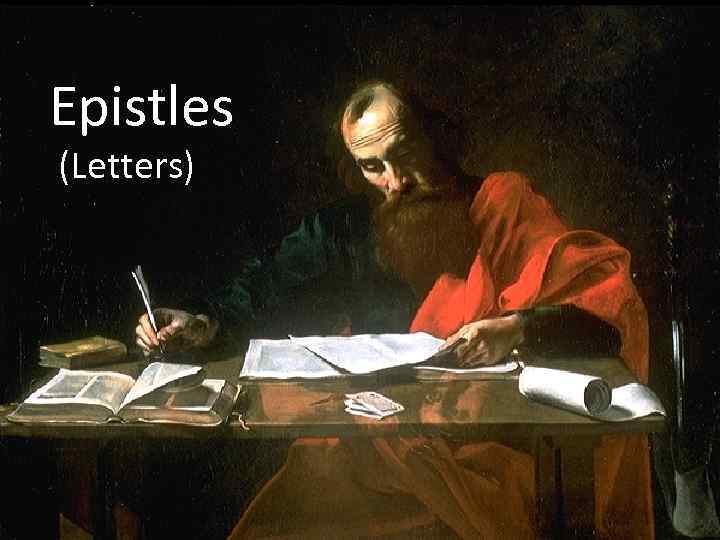 Epistles (Letters)
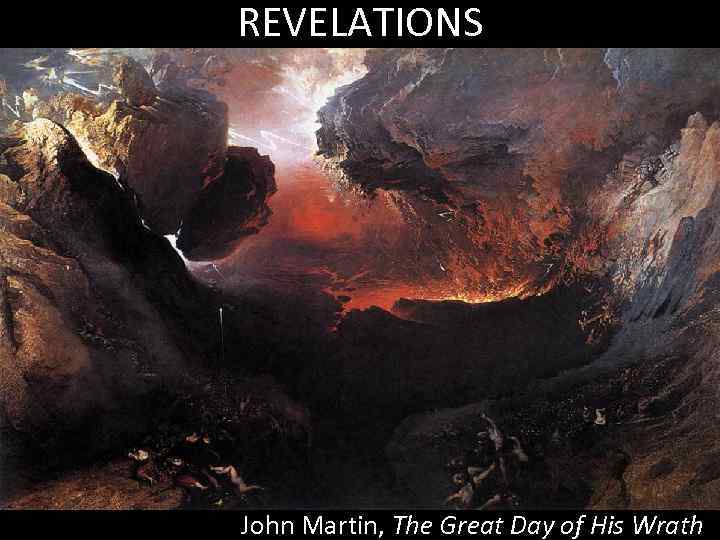 REVELATIONS John Martin, The Great Day of His Wrath
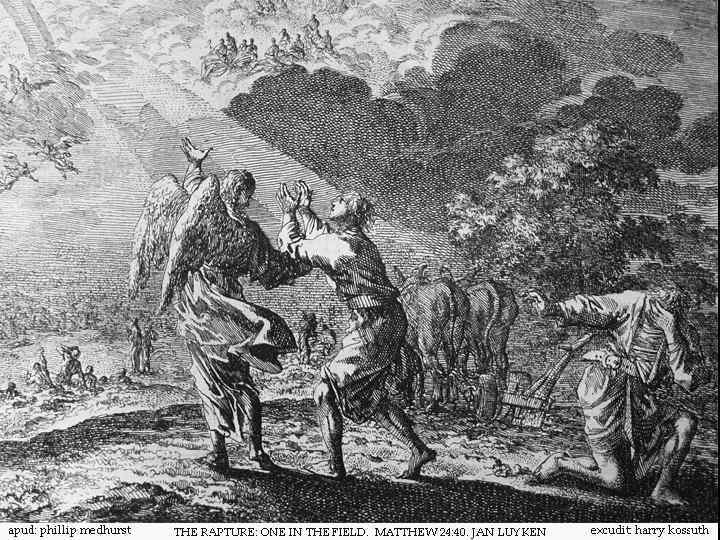
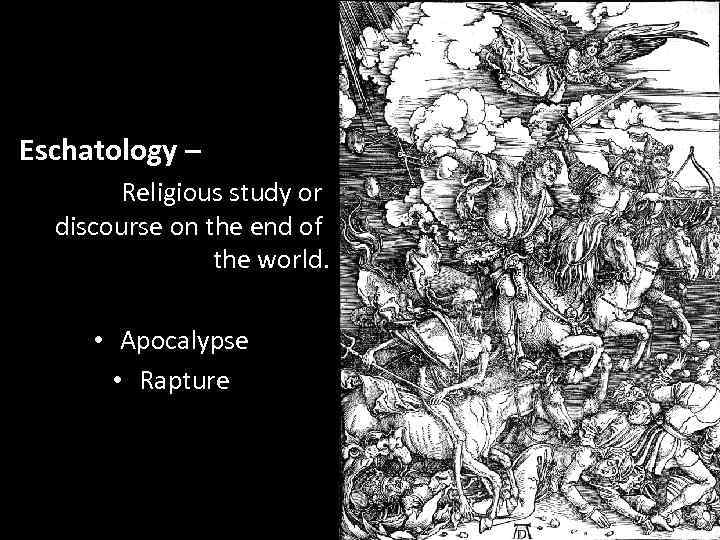 Eschatology – Religious study or discourse on the end of the world. • Apocalypse • Rapture
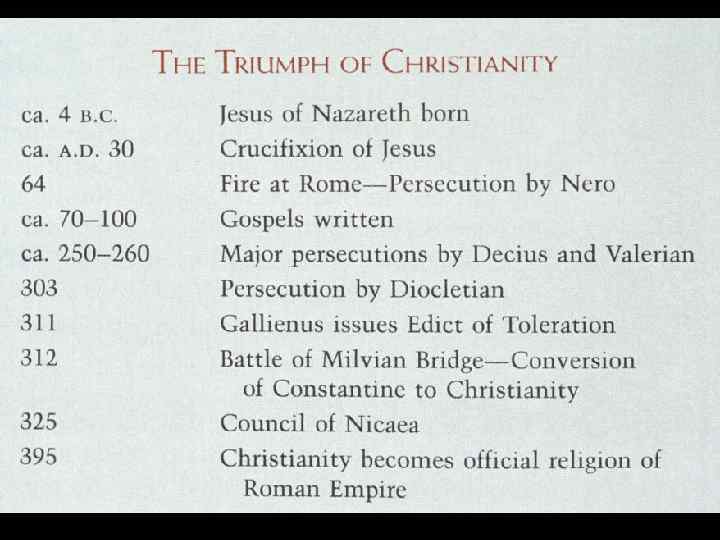
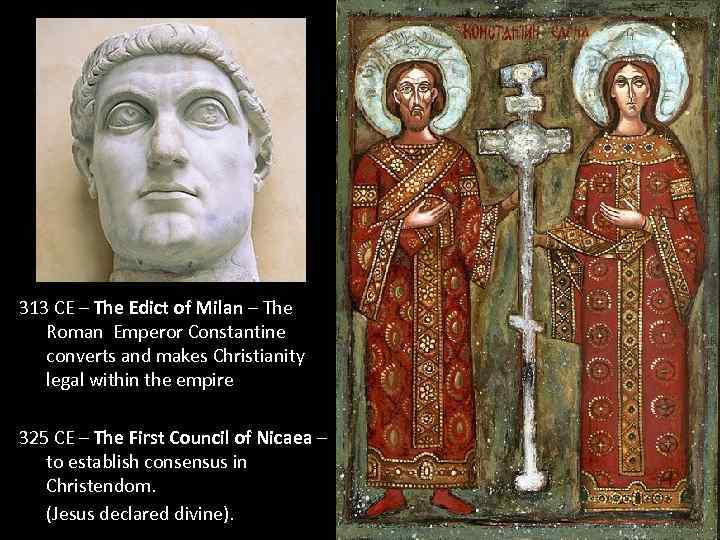 313 CE – The Edict of Milan – The Roman Emperor Constantine converts and makes Christianity legal within the empire 325 CE – The First Council of Nicaea – to establish consensus in Christendom. (Jesus declared divine).
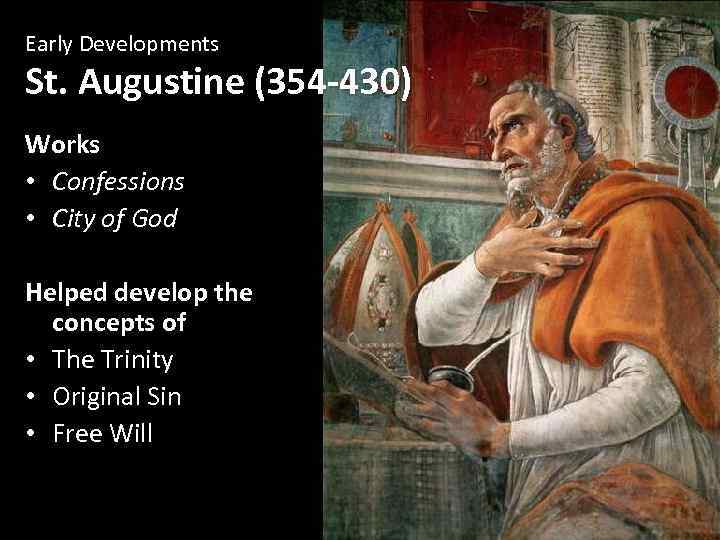 Early Developments St. Augustine (354 -430) Works • Confessions • City of God Helped develop the concepts of • The Trinity • Original Sin • Free Will
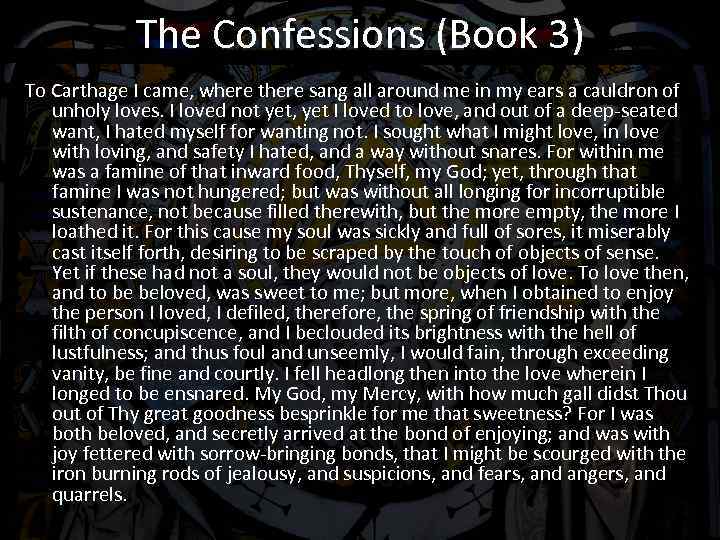 The Confessions (Book 3) To Carthage I came, where there sang all around me in my ears a cauldron of unholy loves. I loved not yet, yet I loved to love, and out of a deep-seated want, I hated myself for wanting not. I sought what I might love, in love with loving, and safety I hated, and a way without snares. For within me was a famine of that inward food, Thyself, my God; yet, through that famine I was not hungered; but was without all longing for incorruptible sustenance, not because filled therewith, but the more empty, the more I loathed it. For this cause my soul was sickly and full of sores, it miserably cast itself forth, desiring to be scraped by the touch of objects of sense. Yet if these had not a soul, they would not be objects of love. To love then, and to be beloved, was sweet to me; but more, when I obtained to enjoy the person I loved, I defiled, therefore, the spring of friendship with the filth of concupiscence, and I beclouded its brightness with the hell of lustfulness; and thus foul and unseemly, I would fain, through exceeding vanity, be fine and courtly. I fell headlong then into the love wherein I longed to be ensnared. My God, my Mercy, with how much gall didst Thou out of Thy great goodness besprinkle for me that sweetness? For I was both beloved, and secretly arrived at the bond of enjoying; and was with joy fettered with sorrow-bringing bonds, that I might be scourged with the iron burning rods of jealousy, and suspicions, and fears, and angers, and quarrels.
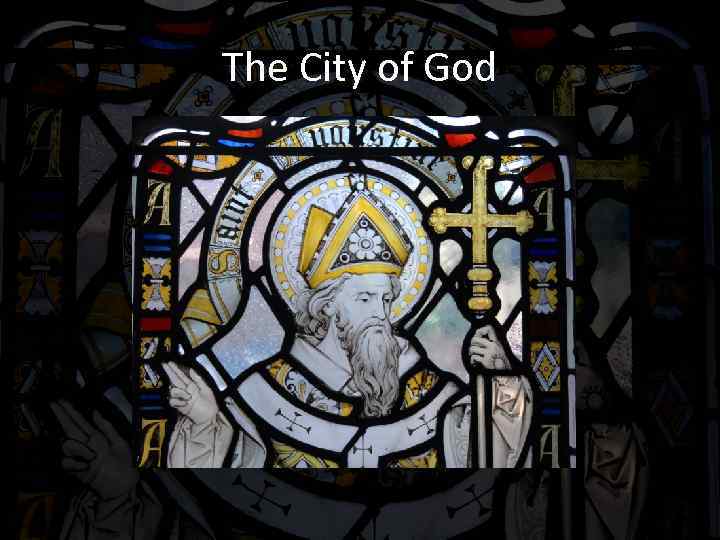 The City of God
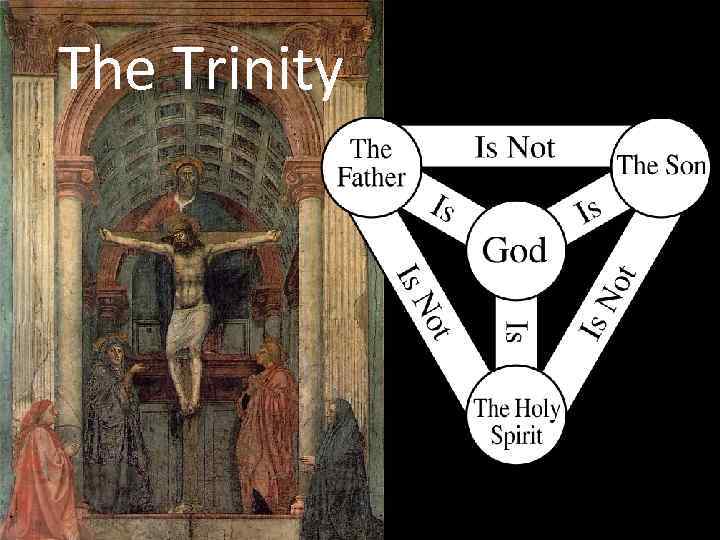 The Trinity
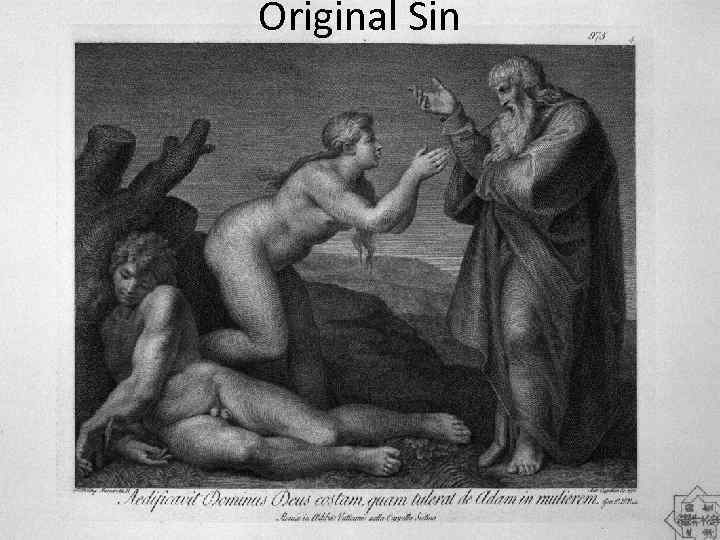 Original Sin
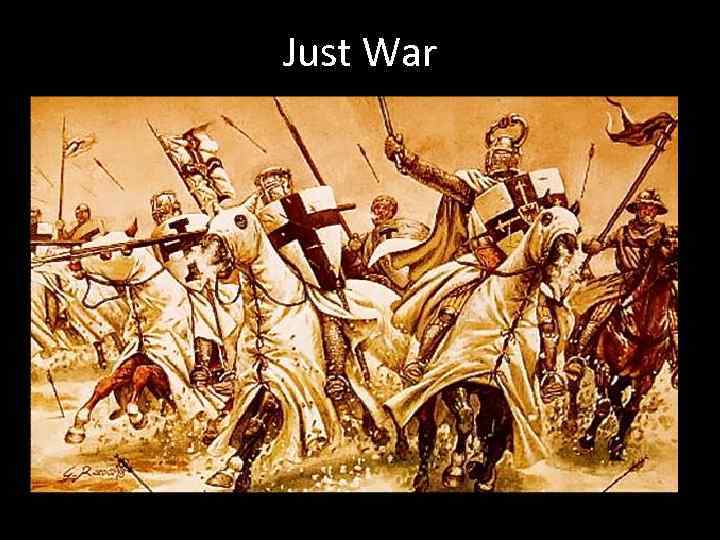 Just War
 The Problem of Evil 1. If God exists, he is an all-PKG being (Powerful, Knowing, Good). 2. If Evil existed, God would: P- Have the power to stop it. K – Know about it. G – Want to stop it. 3. Evil exists. _ 4. Therefore, God does not.
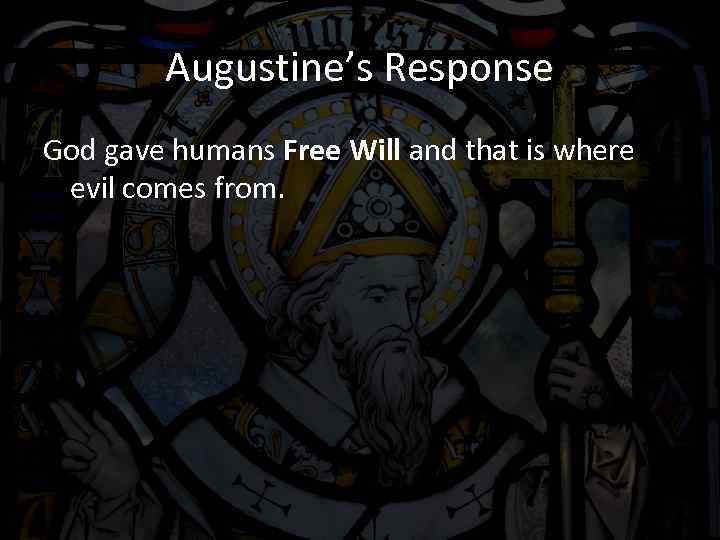 Augustine’s Response God gave humans Free Will and that is where evil comes from.
 “We can, perhaps, conceive of a world in which God corrected the results of this abuse of free will by His creatures at every moment: so that a wooden beam became soft as grass when it was used as a weapon, and the air refused to obey me if I attempted to set up in it the sound waves that carry lies or insults. But such a world would be one in which wrong actions were impossible, and in which, therefore, freedom of the will would be void; nay, if the principle were carried out to its logical conclusion, evil thoughts would be impossible, for the cerebral matter which we use in thinking would refuse its task when we attempted to frame them. ” – C. S. Lewis (The Problem of Pain)
 • Natural Disasters (Plagues, Earthquakes) • Intense Suffering
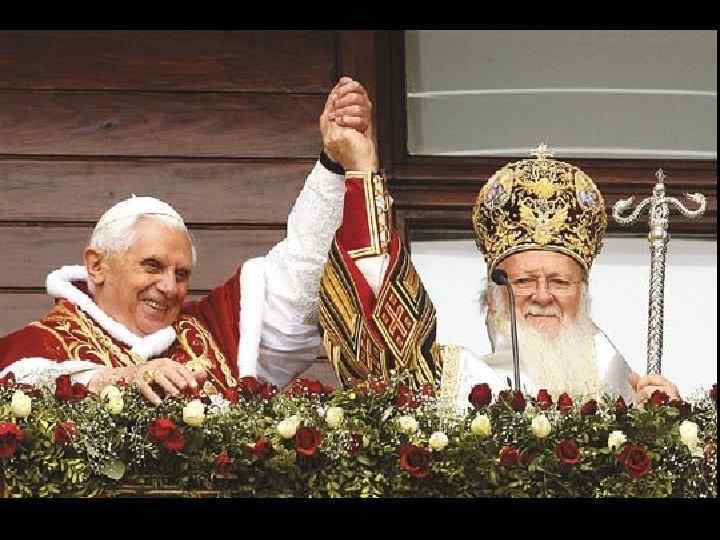
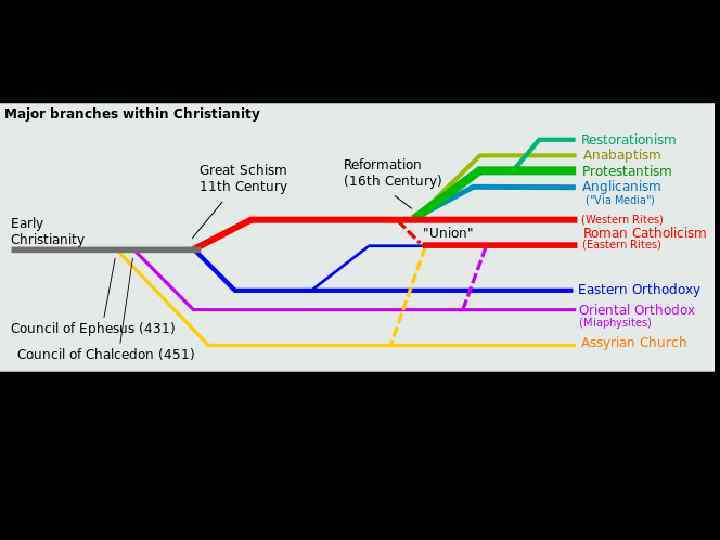
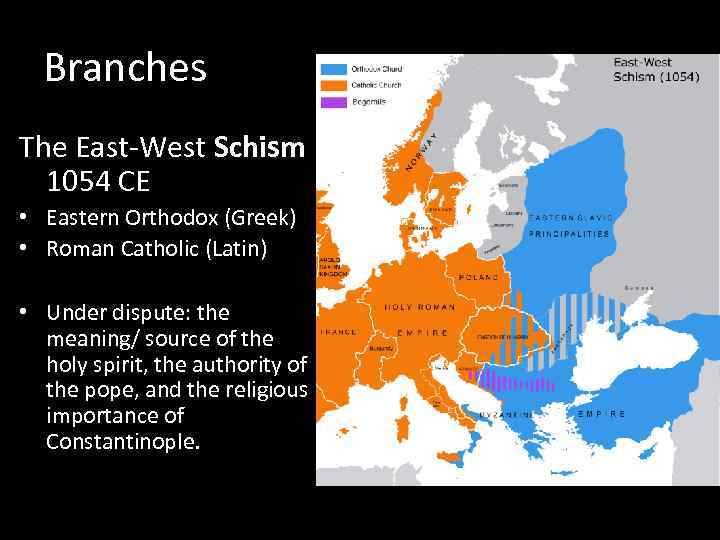 Branches The East-West Schism 1054 CE • Eastern Orthodox (Greek) • Roman Catholic (Latin) • Under dispute: the meaning/ source of the holy spirit, the authority of the pope, and the religious importance of Constantinople.

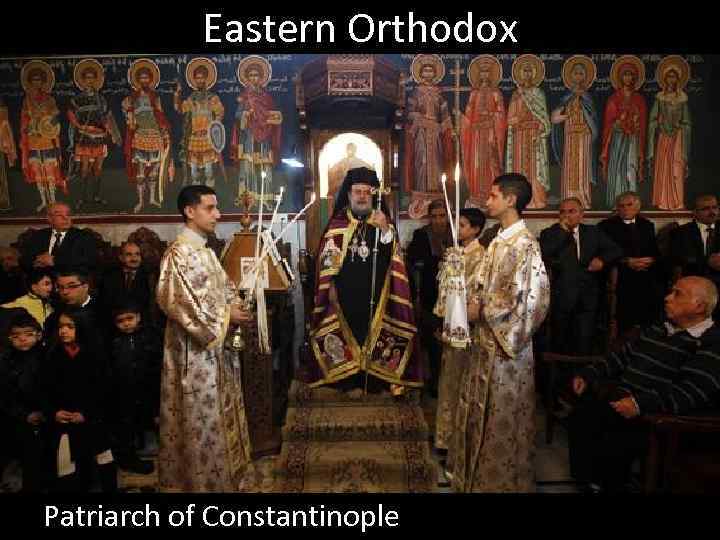 Eastern Orthodox Patriarch of Constantinople
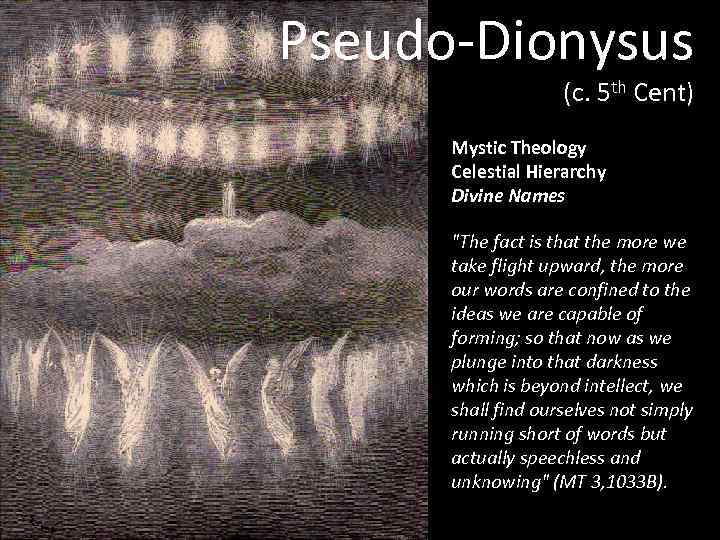 Pseudo-Dionysus (c. 5 th Cent) Mystic Theology Celestial Hierarchy Divine Names "The fact is that the more we take flight upward, the more our words are confined to the ideas we are capable of forming; so that now as we plunge into that darkness which is beyond intellect, we shall find ourselves not simply running short of words but actually speechless and unknowing" (MT 3, 1033 B).
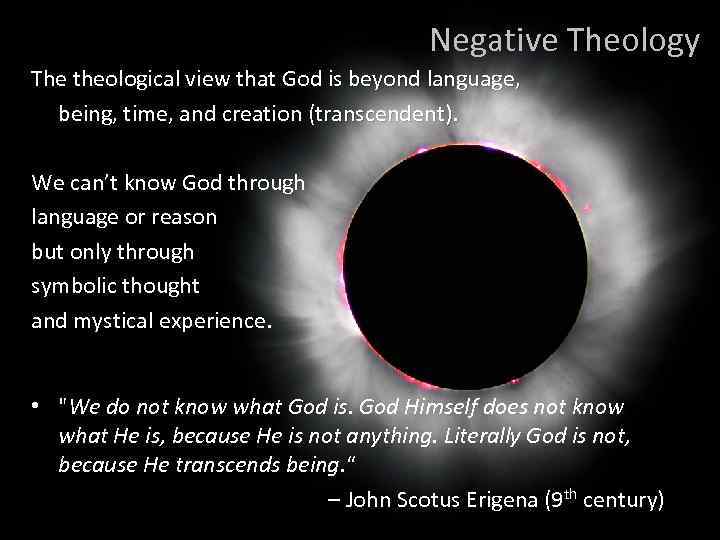 Negative Theology The theological view that God is beyond language, being, time, and creation (transcendent). We can’t know God through language or reason but only through symbolic thought and mystical experience. • "We do not know what God is. God Himself does not know what He is, because He is not anything. Literally God is not, because He transcends being. “ – John Scotus Erigena (9 th century)

 "Since the unknowing of what is beyond being is something above and beyond speech, mind, or being itself, one should ascribe to it an understanding beyond being“ – Pseudo-Dionysus (Divine Names 1, 1, 588 A).
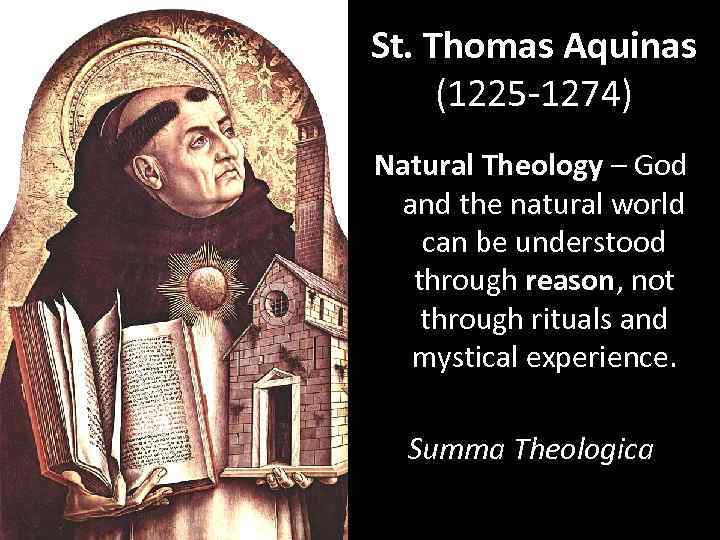 St. Thomas Aquinas (1225 -1274) Natural Theology – God and the natural world can be understood through reason, not through rituals and mystical experience. Summa Theologica
 “When we read about Creation in Genesis, we run the risk of imagining God was a magician, with a magic wand able to do everything. But that is not so. . . “He created human beings and let them develop according to the internal laws that he gave to each one so they would reach their fulfillment. . . “The Big Bang, which today we hold to be the origin of the world, does not contradict the intervention of the divine creator but, rather, requires it. . . “Evolution in nature is not inconsistent with the notion of creation, because evolution requires the creation of beings that evolve. ” -Pope Francis (10 27 2014)
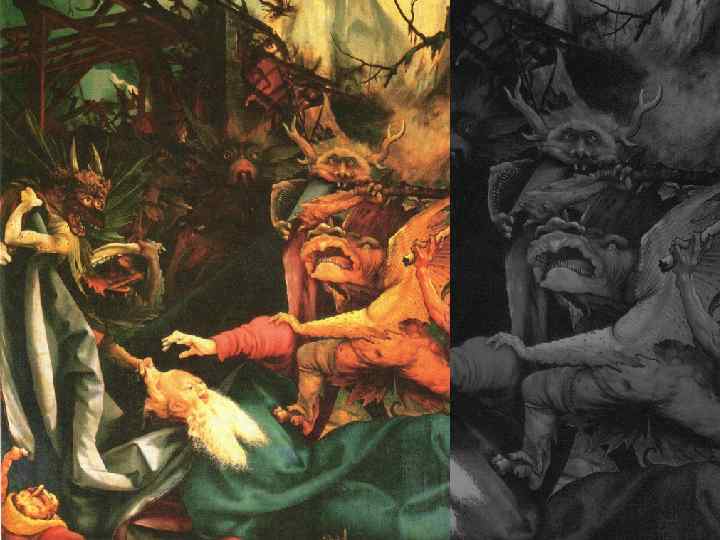
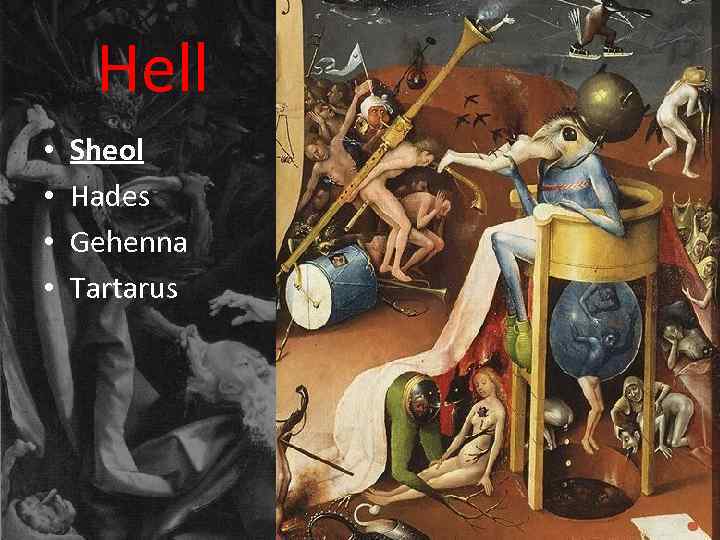 Hell • • Sheol Hades Gehenna Tartarus
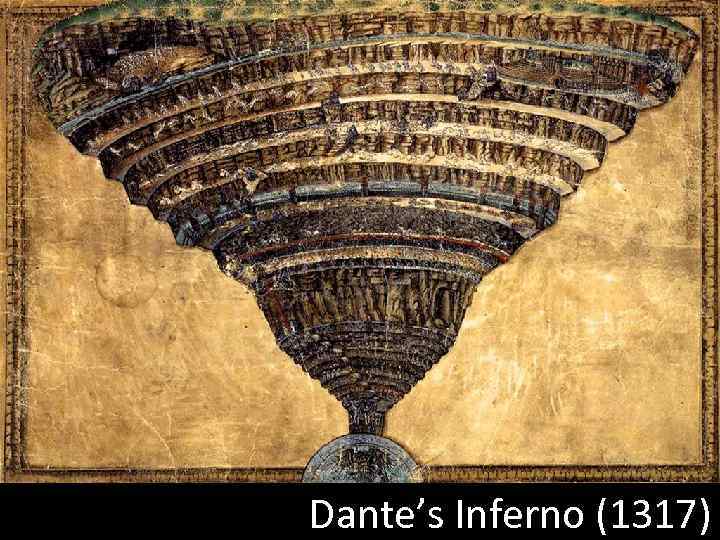 Dante’s Inferno (1317)
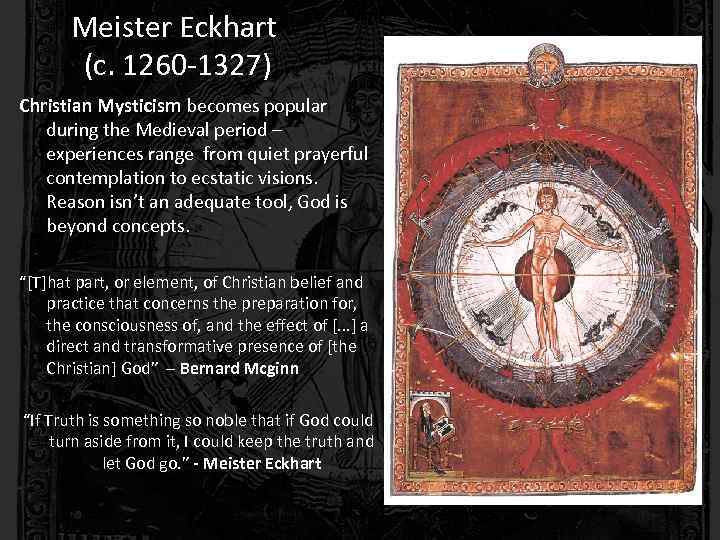 Meister Eckhart (c. 1260 -1327) Christian Mysticism becomes popular during the Medieval period – experiences range from quiet prayerful contemplation to ecstatic visions. Reason isn’t an adequate tool, God is beyond concepts. “[T]hat part, or element, of Christian belief and practice that concerns the preparation for, the consciousness of, and the effect of [. . . ] a direct and transformative presence of [the Christian] God” – Bernard Mcginn “If Truth is something so noble that if God could turn aside from it, I could keep the truth and let God go. ” - Meister Eckhart
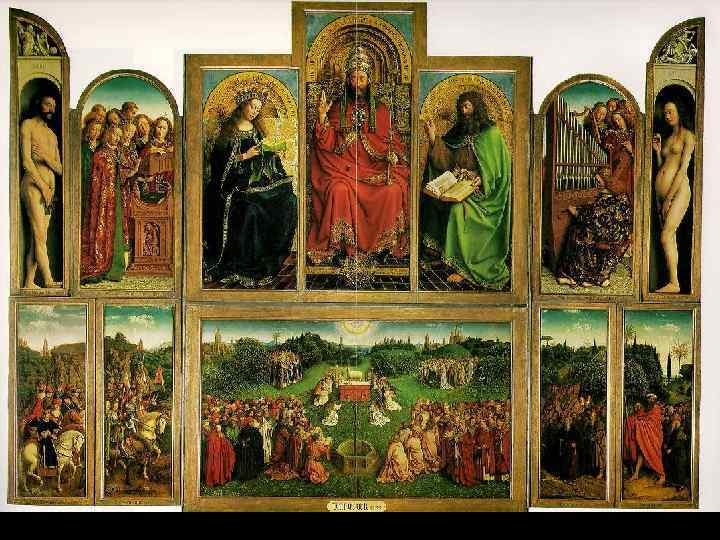
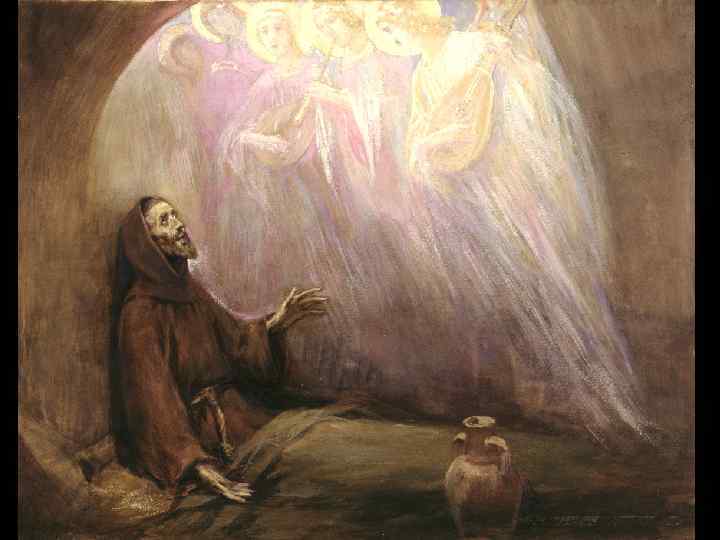
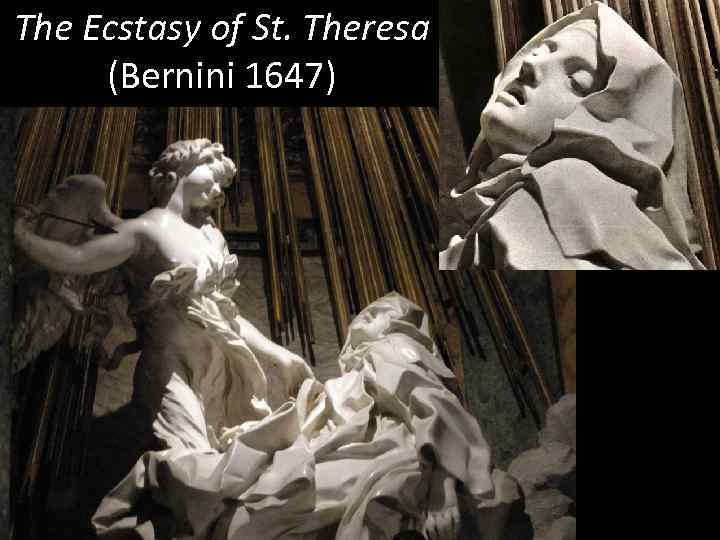 The Ecstasy of St. Theresa (Bernini 1647)
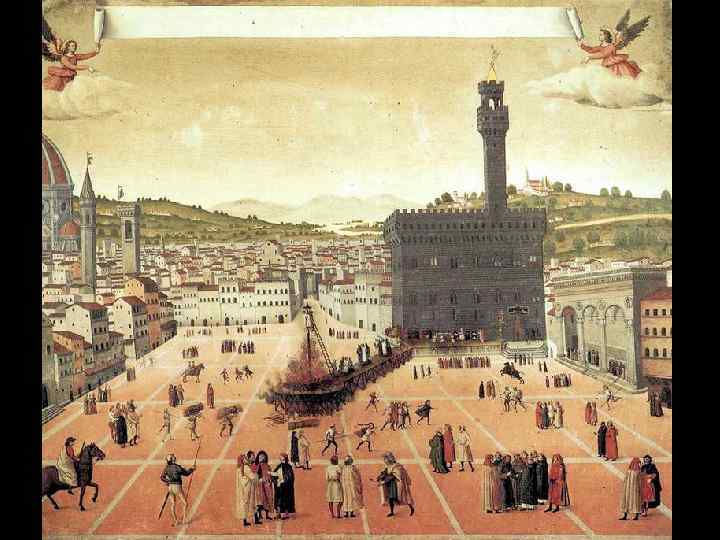
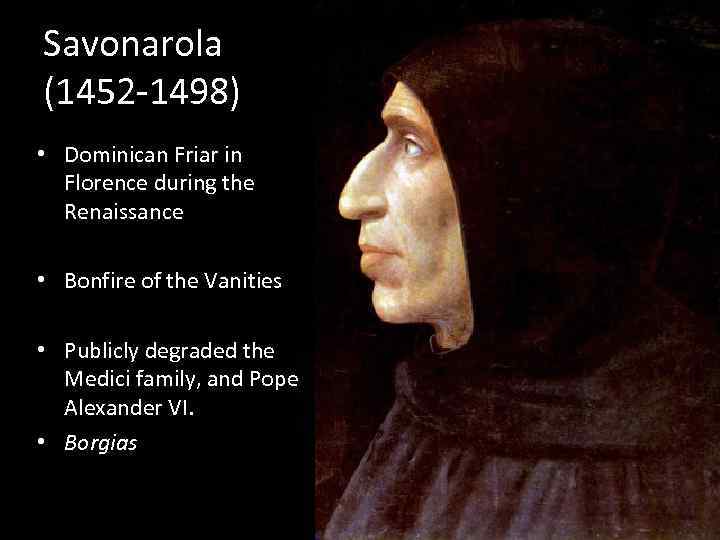 Savonarola (1452 -1498) • Dominican Friar in Florence during the Renaissance • Bonfire of the Vanities • Publicly degraded the Medici family, and Pope Alexander VI. • Borgias
 Protestant Reformation
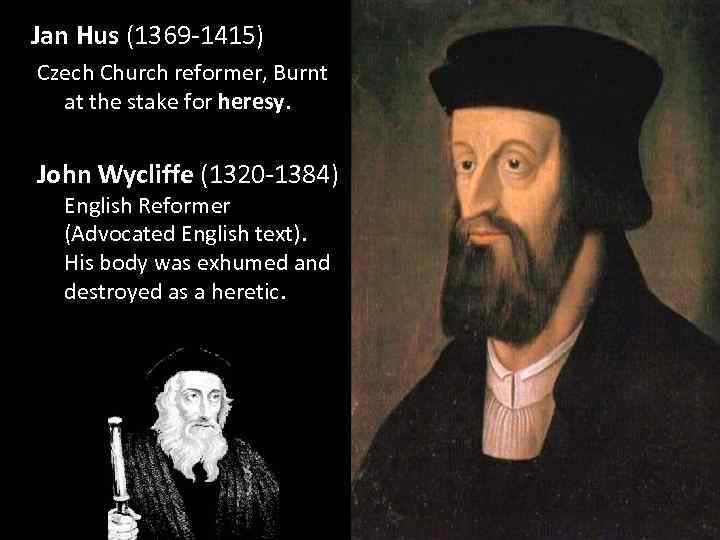 Jan Hus (1369 -1415) Czech Church reformer, Burnt at the stake for heresy. John Wycliffe (1320 -1384) English Reformer (Advocated English text). His body was exhumed and destroyed as a heretic.
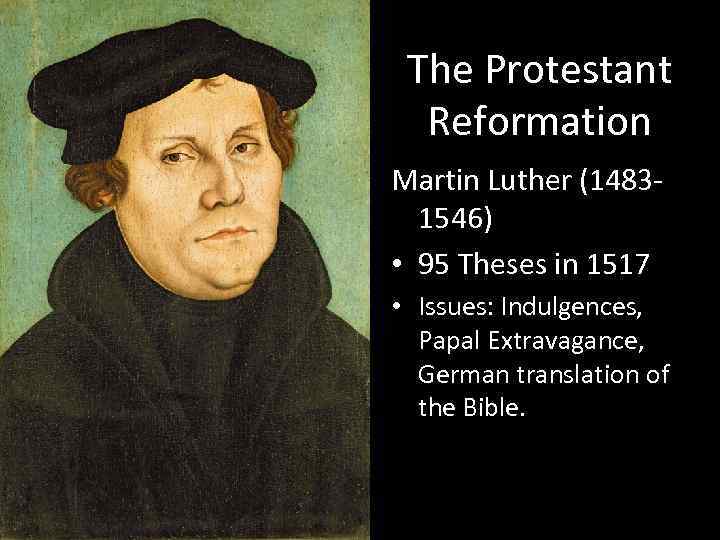 The Protestant Reformation Martin Luther (14831546) • 95 Theses in 1517 • Issues: Indulgences, Papal Extravagance, German translation of the Bible.
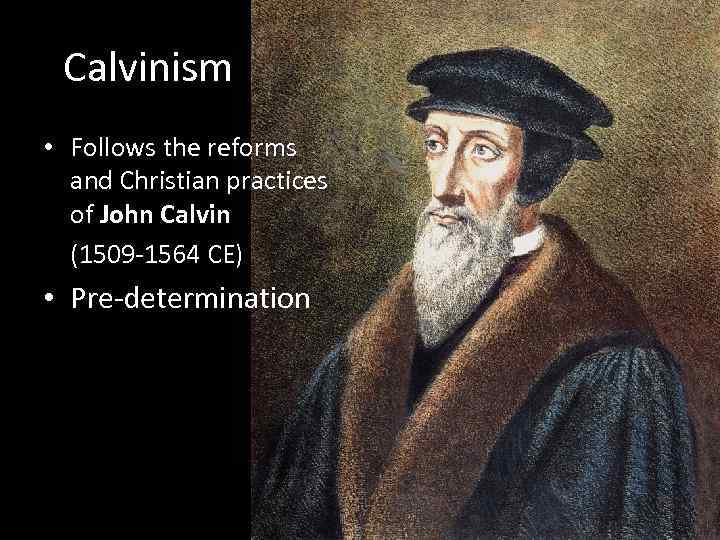 Calvinism • Follows the reforms and Christian practices of John Calvin (1509 -1564 CE) • Pre-determination
 Protestant Ideals • Return to Simplicity • Centrality of Jesus (less to Mary and the Saints) • Guidance of the Bible – people should read and be able to read it. • Importance of Faith • Individuals relation to God (priest secondary) • Individual judgment and interpretation.
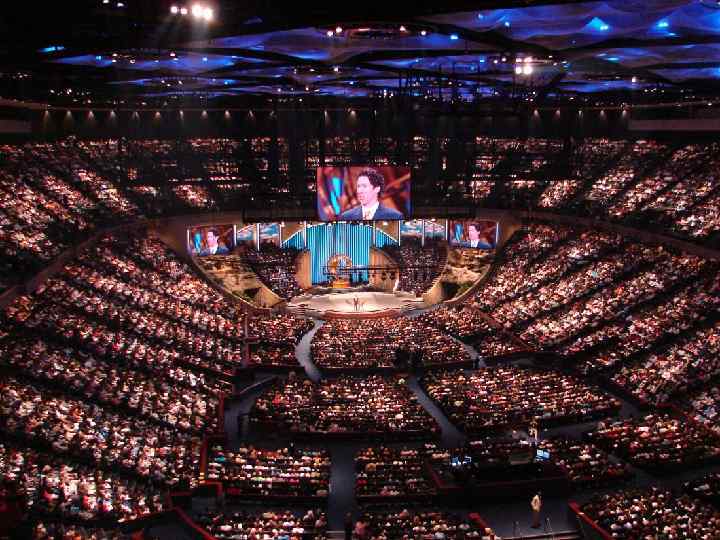
 Diversity After the Protestant Reformation, the amount of interpretations of Christianity flourish. New denominations develop under charismatic leaders: John Calvin, Joseph Smith, Charles Taze Russell, etc
 Protestant Denominations • • Lutheran Church of England (Anglican) Calvinist Sectarian Anabaptists Baptists Methodist Quaker Pentecostal

 Non-traditional • • • Mormon Christian Science Jehovah’s Witnesses African Independent Unitarian Unity
 Variations • Some Variations are subtle (calls for simplicity, or social activism). • Some are all inclusive (Unitarian). • Some groups interpret the Bible literally. • Others add books (such as The Book of Mormon). • Others bracket off concepts not explicit in the Bible itself like Original Sin, Christmas, Hell, or even blood transfusions. (Jehovah’s Witnesses).
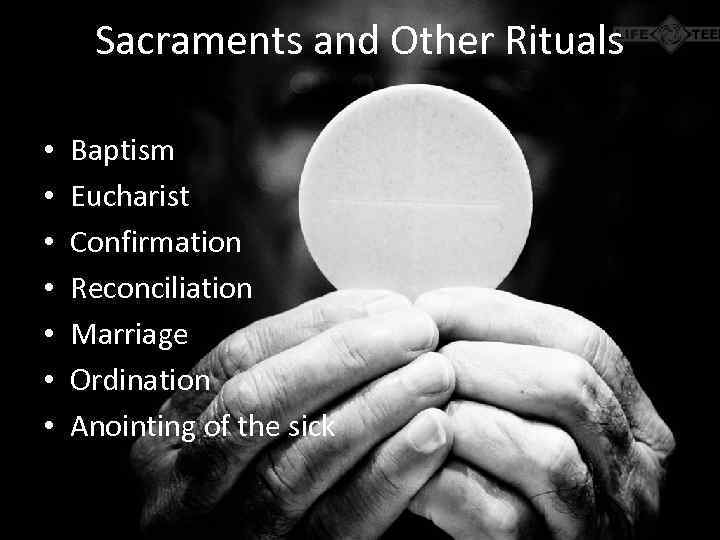 Sacraments and Other Rituals • • Baptism Eucharist Confirmation Reconciliation Marriage Ordination Anointing of the sick
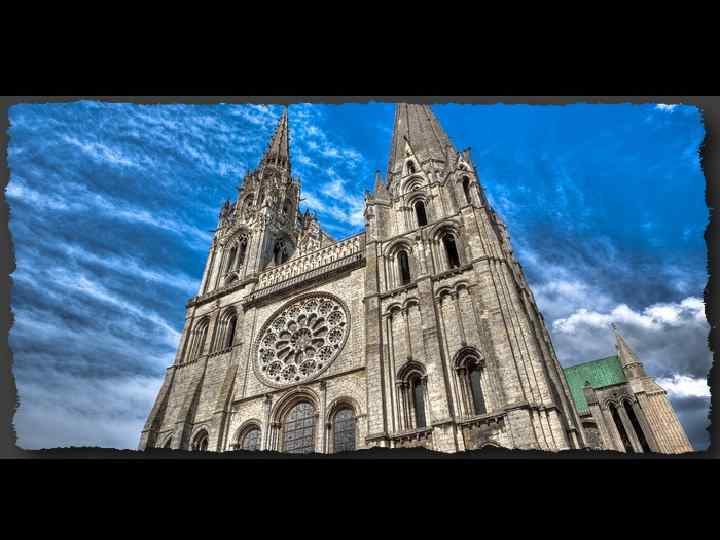
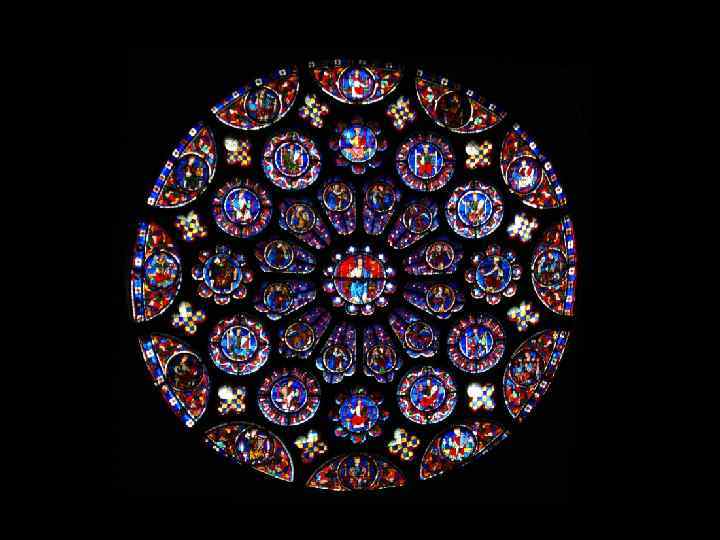
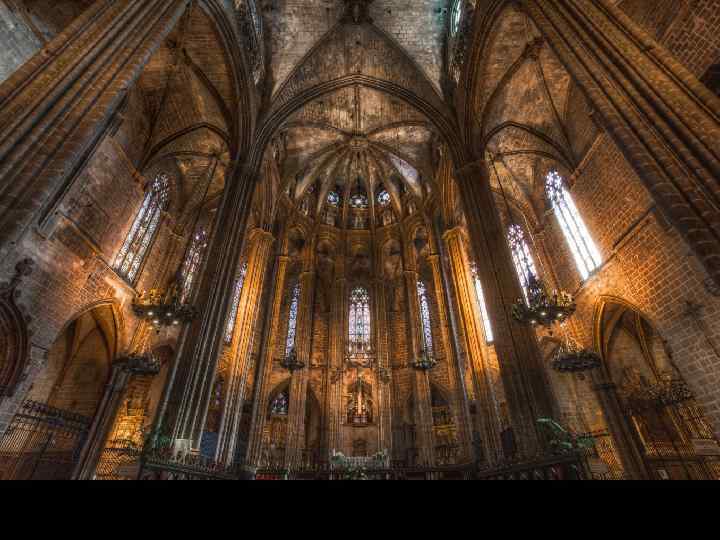
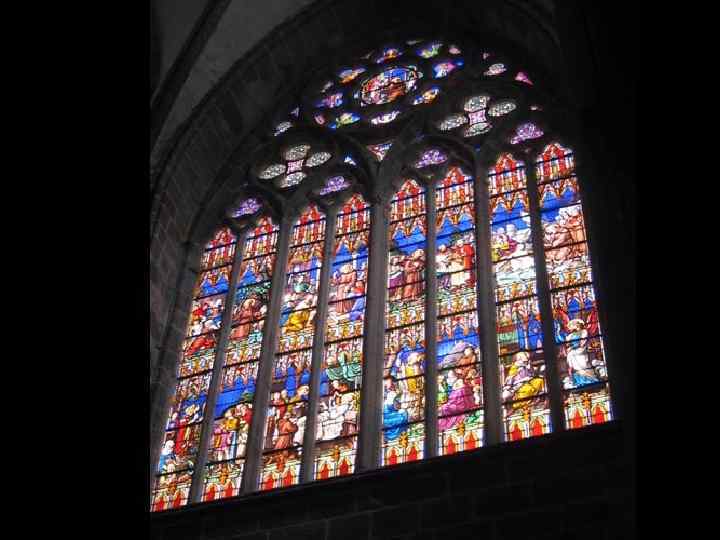
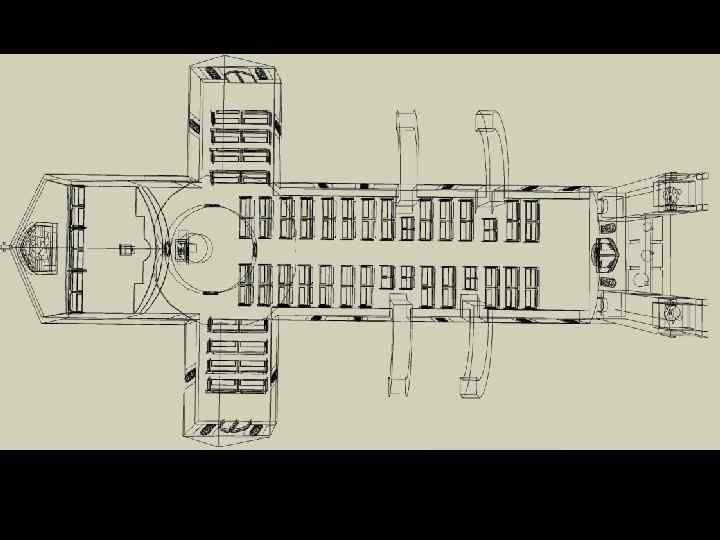
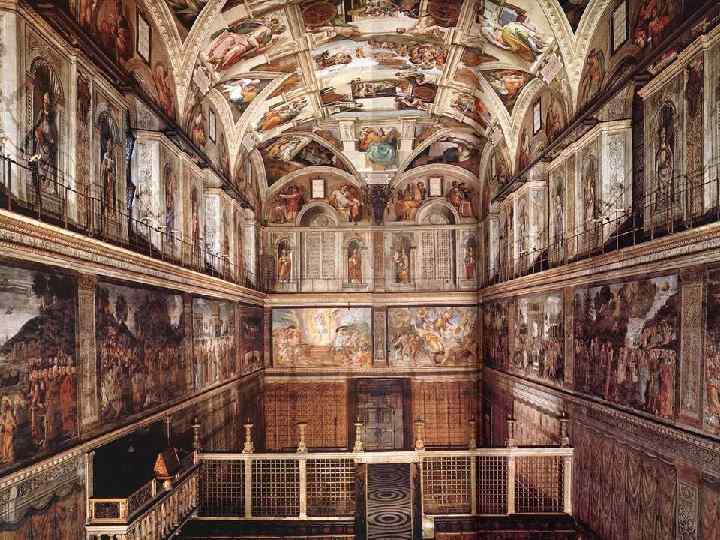
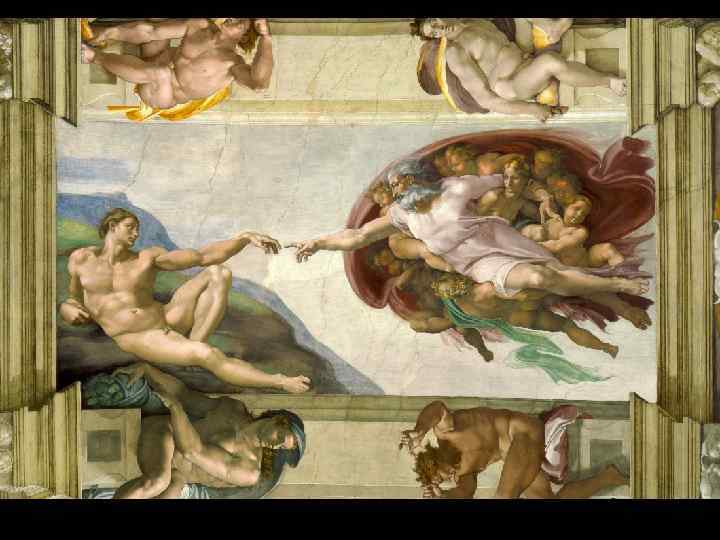
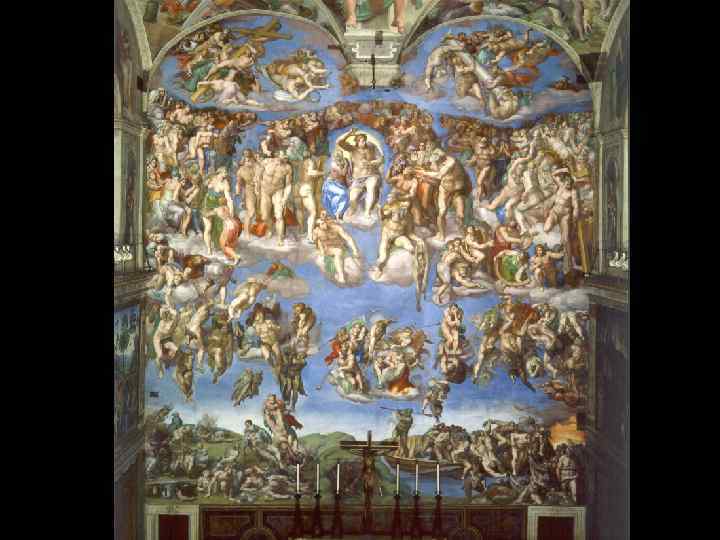
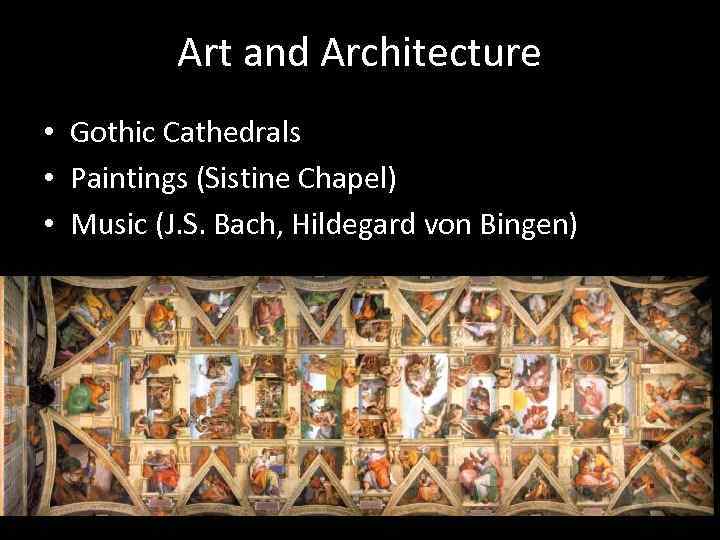 Art and Architecture • Gothic Cathedrals • Paintings (Sistine Chapel) • Music (J. S. Bach, Hildegard von Bingen)
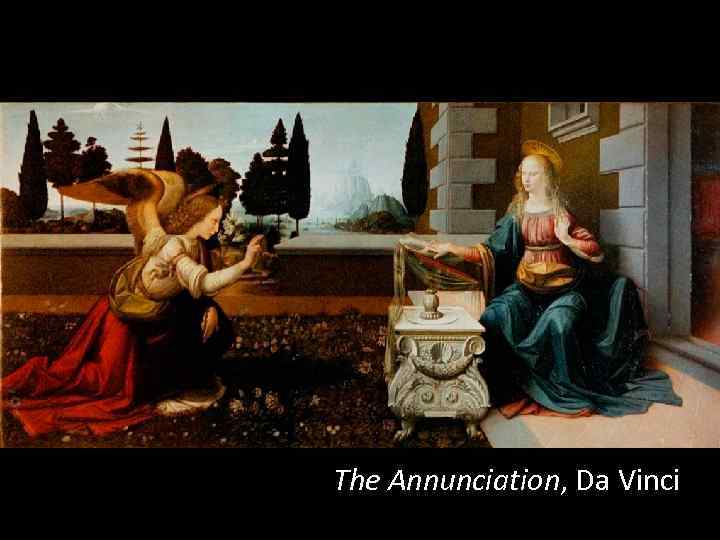 The Annunciation, Da Vinci
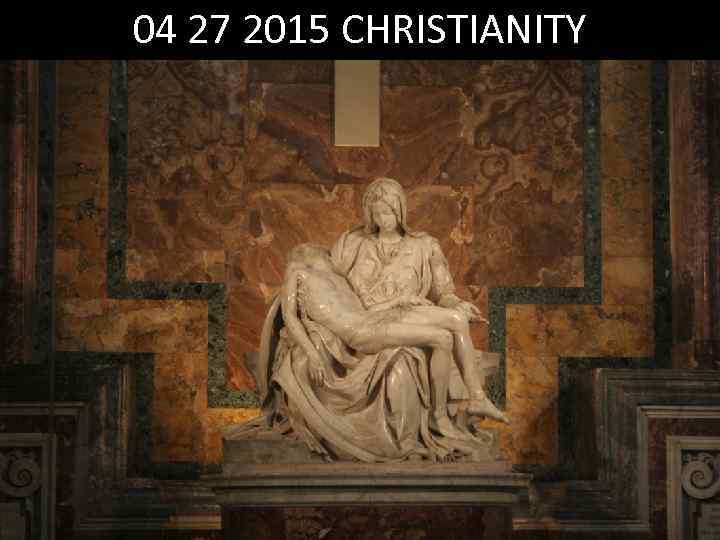
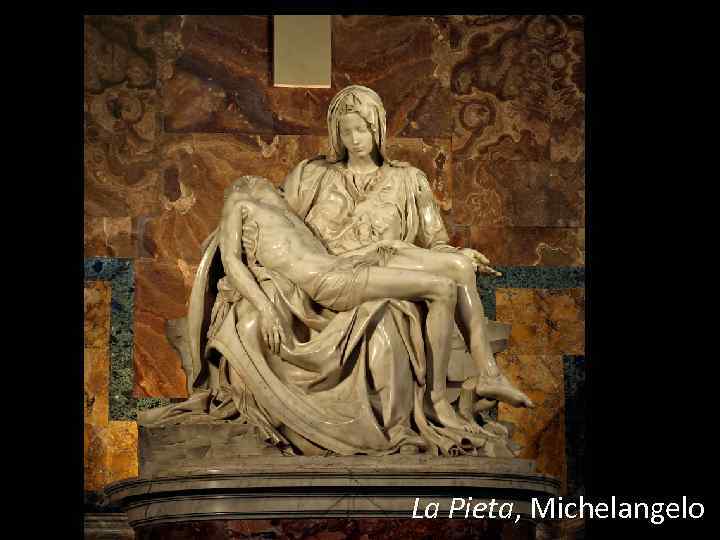 La Pieta, Michelangelo
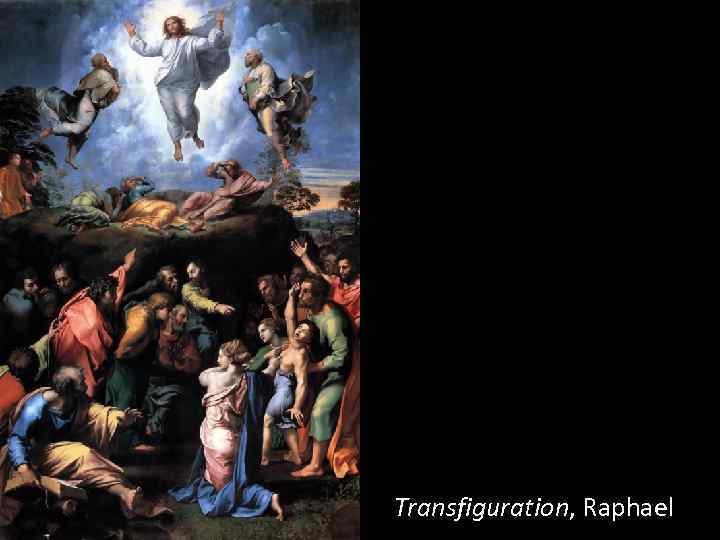 Transfiguration, Raphael
 • http: //thejesusquestion. org/2011/06/29/jesus -is-my-homeboy-a-photograph-series/
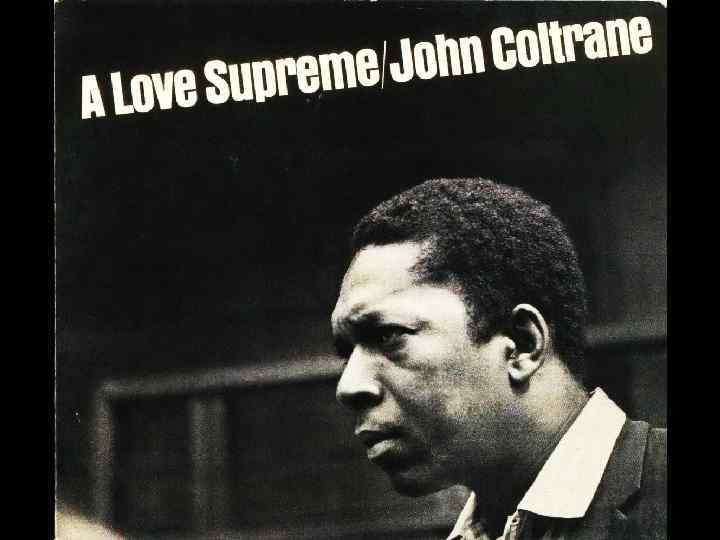
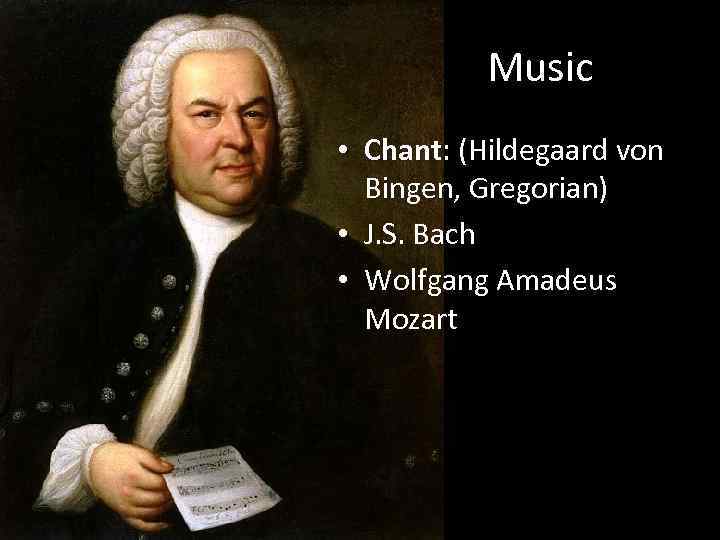 Music • Chant: (Hildegaard von Bingen, Gregorian) • J. S. Bach • Wolfgang Amadeus Mozart
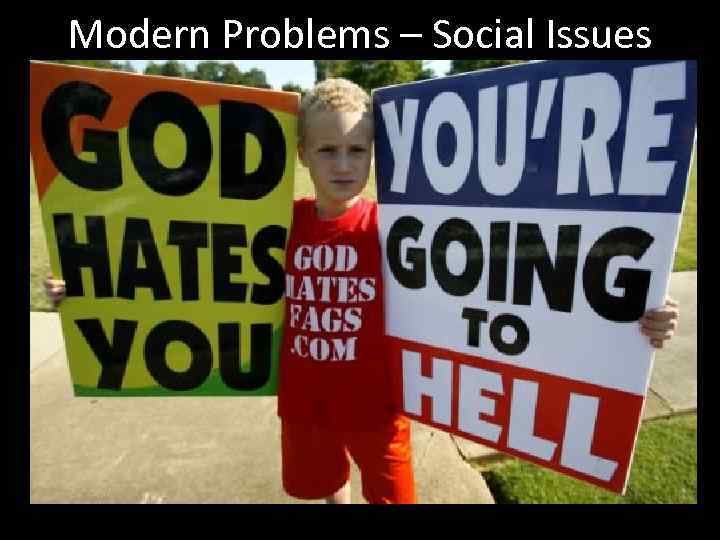 Modern Problems – Social Issues
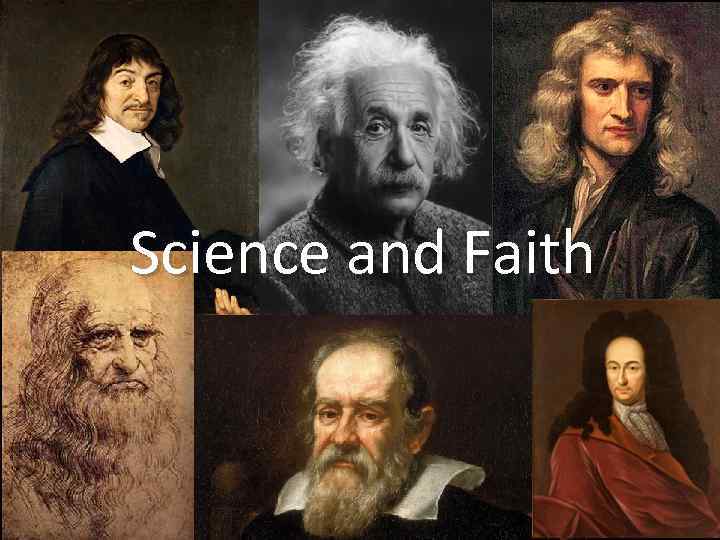 Science and Faith
 http: //hereandnow. wbur. org/2014/11/11/vatic an-astronomer-sagan-medal