 Скачать презентацию 02 Planning manifestos Markus Appenzeller Yana Golubeva
02 Planning manifestos Part I+.pptx
- Количество слайдов: 122



02 Planning manifestos Markus Appenzeller, Yana Golubeva
Context Cities at the end of XIX century
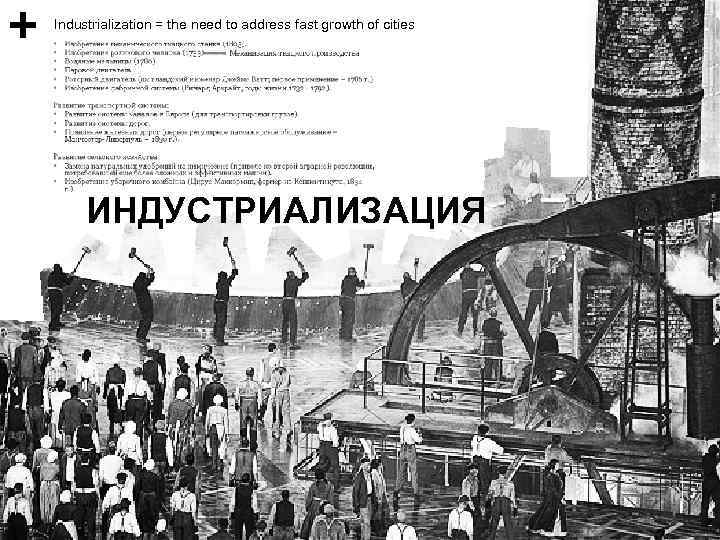
Industrialization = the need to address fast growth of cities ИНДУСТРИАЛИЗАЦИЯ
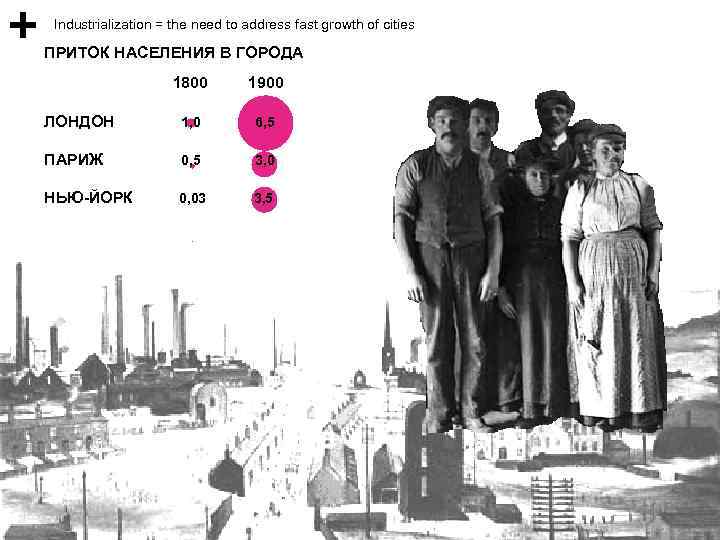
Industrialization = the need to address fast growth of cities ПРИТОК НАСЕЛЕНИЯ В ГОРОДА 1800 1900 ЛОНДОН 1, 0 6, 5 ПАРИЖ 0, 5 3, 0 НЬЮ-ЙОРК 0, 03 3, 5
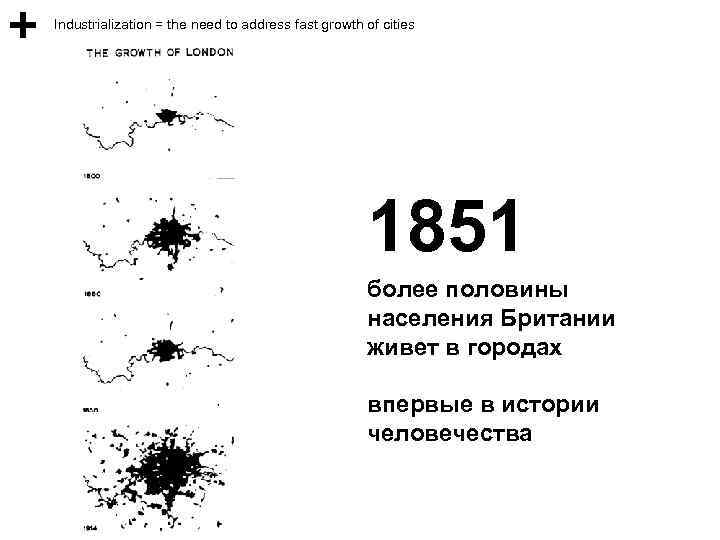
Industrialization = the need to address fast growth of cities 1851 более половины населения Британии живет в городах впервые в истории человечества
Industrialization = the need to address fast growth of cities
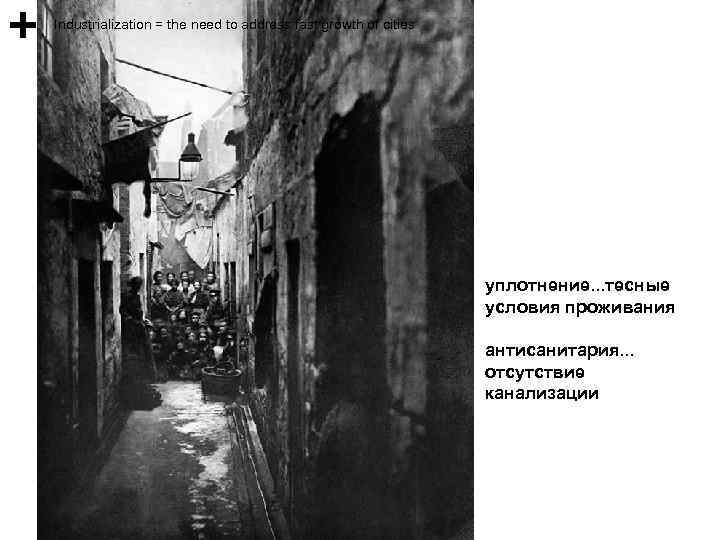
Industrialization = the need to address fast growth of cities уплотнение. . . тесные условия проживания антисанитария. . . отсутствие канализации
Industrialization = the need to address fast growth of cities
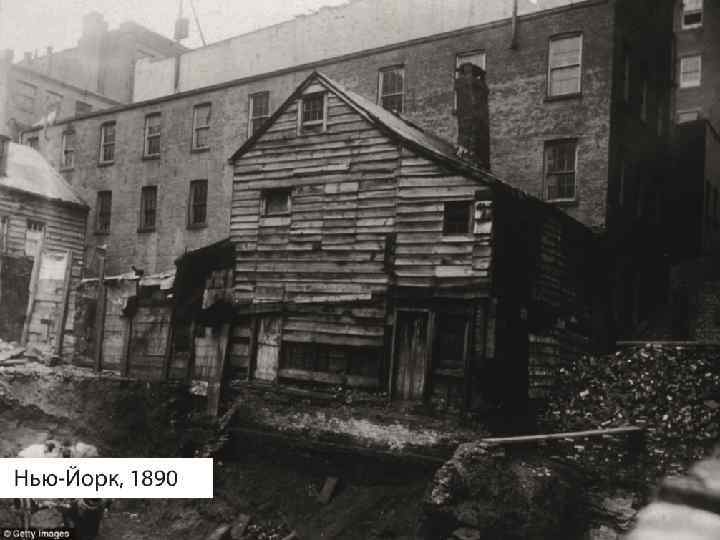
Industrialization = the need to address fast growth of cities
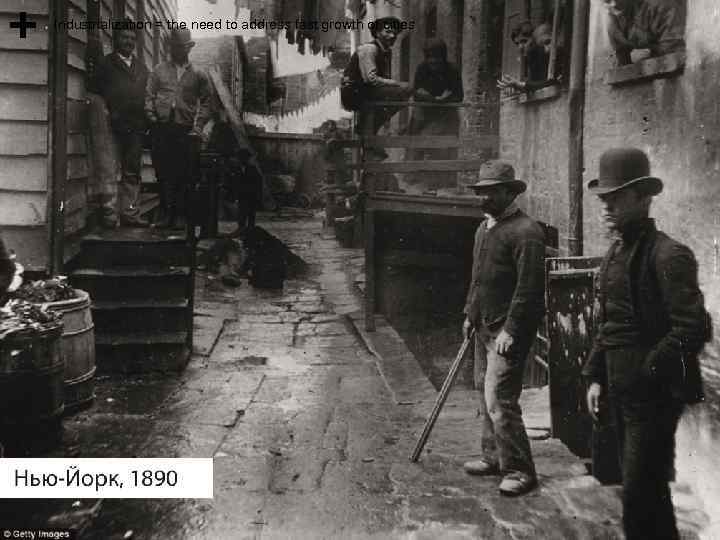
Industrialization = the need to address fast growth of cities
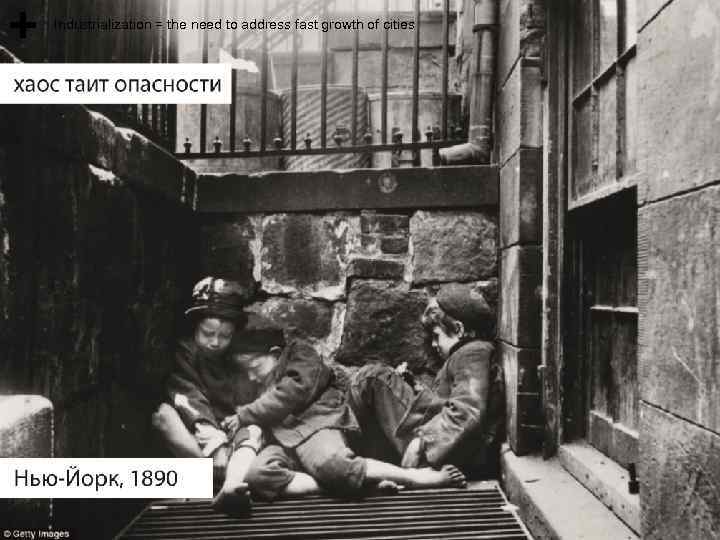
Industrialization = the need to address fast growth of cities
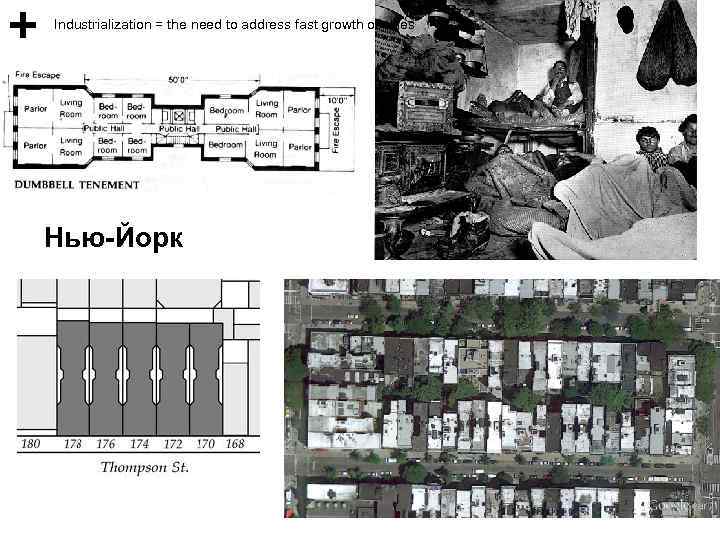
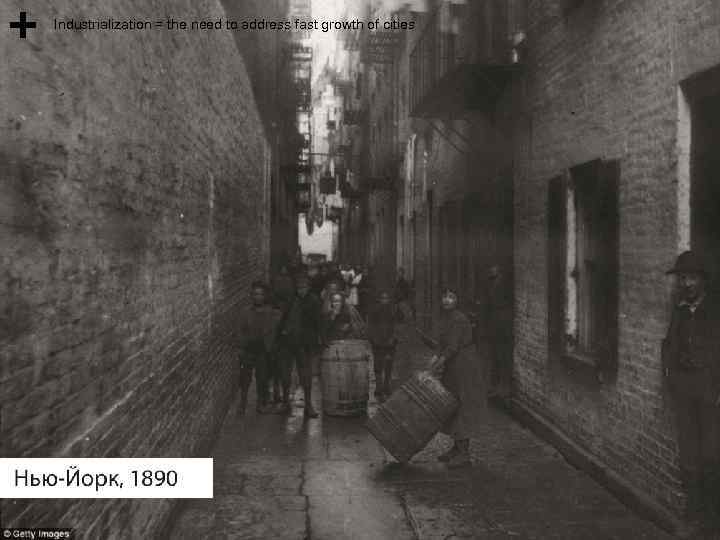
Industrialization = the need to address fast growth of cities Нью-Йорк
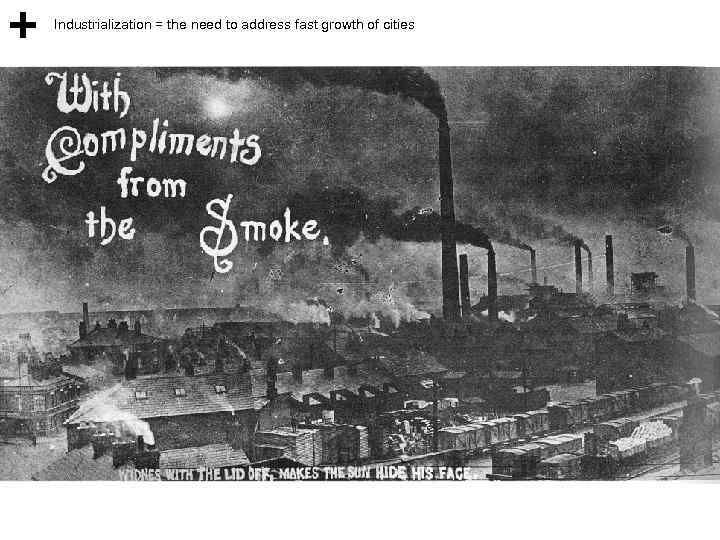
Industrialization = the need to address fast growth of cities
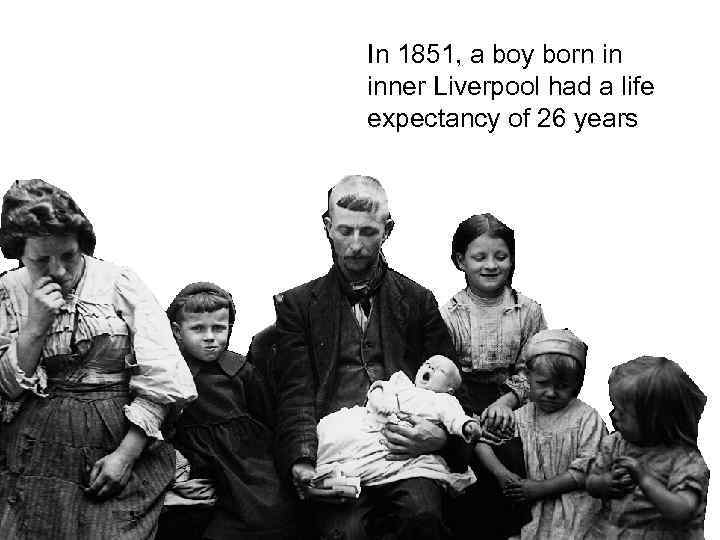
In 1851, a boy born in inner Liverpool had a life expectancy of 26 years
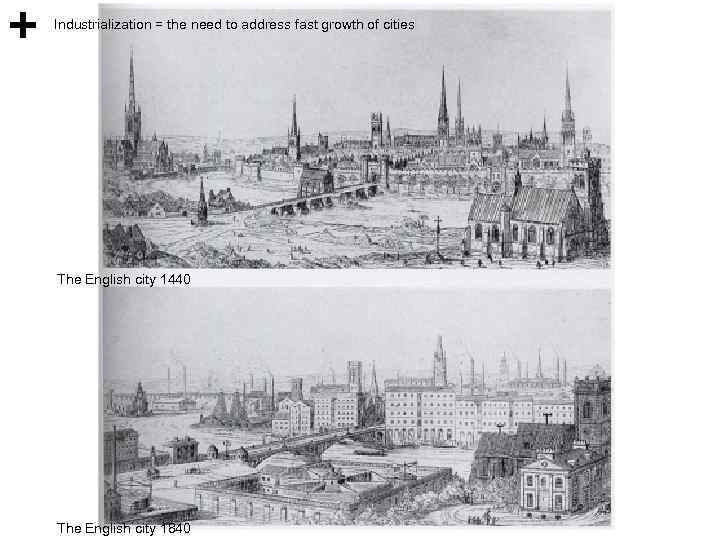
Industrialization = the need to address fast growth of cities The English city 1440 The English city 1840
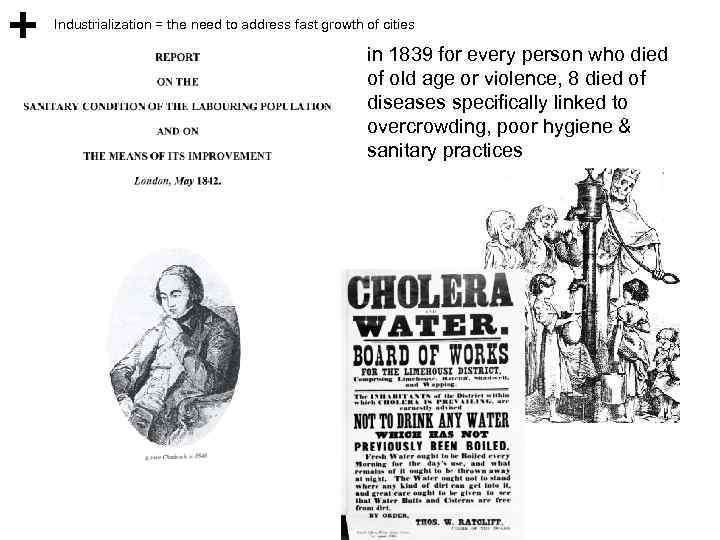
Industrialization = the need to address fast growth of cities in 1839 for every person who died of old age or violence, 8 died of diseases specifically linked to overcrowding, poor hygiene & sanitary practices
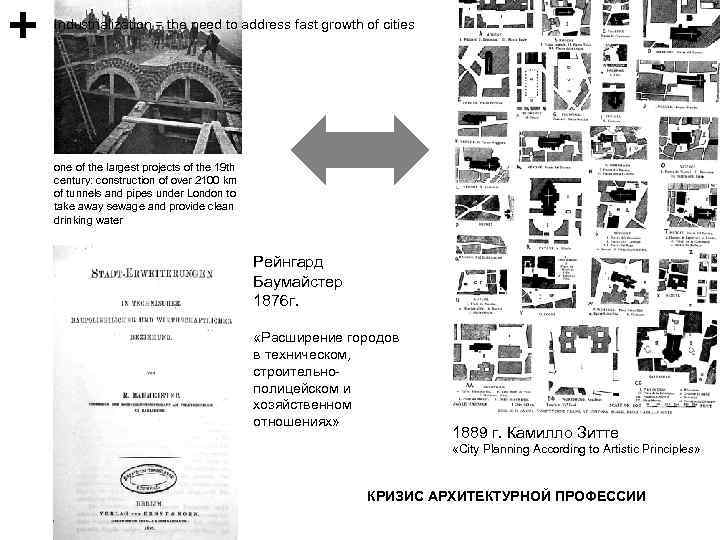
Industrialization = the need to address fast growth of cities one of the largest projects of the 19 th century: construction of over 2100 km of tunnels and pipes under London to take away sewage and provide clean drinking water Рейнгард Баумайстер 1876 г. «Расширение городов в техническом, строительнополицейском и хозяйственном отношениях» 1889 г. Камилло Зитте «City Planning According to Artistic Principles» КРИЗИС АРХИТЕКТУРНОЙ ПРОФЕССИИ
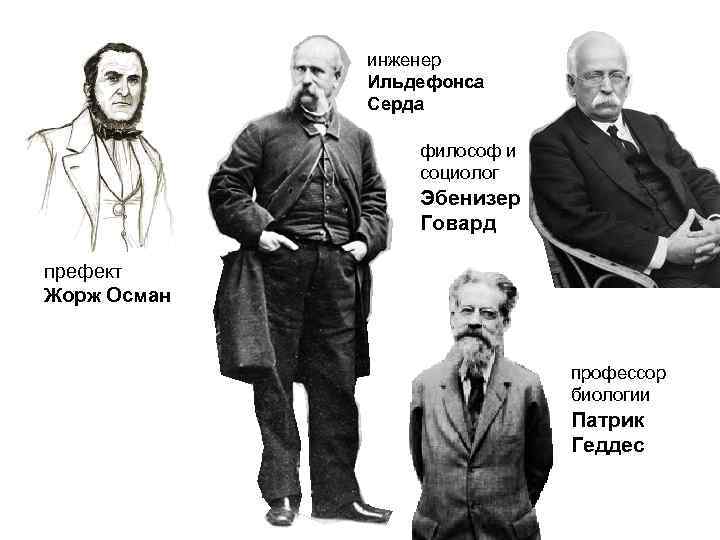
инженер Ильдефонса Серда философ и социолог Эбенизер Говард префект Жорж Осман профессор биологии Патрик Геддес
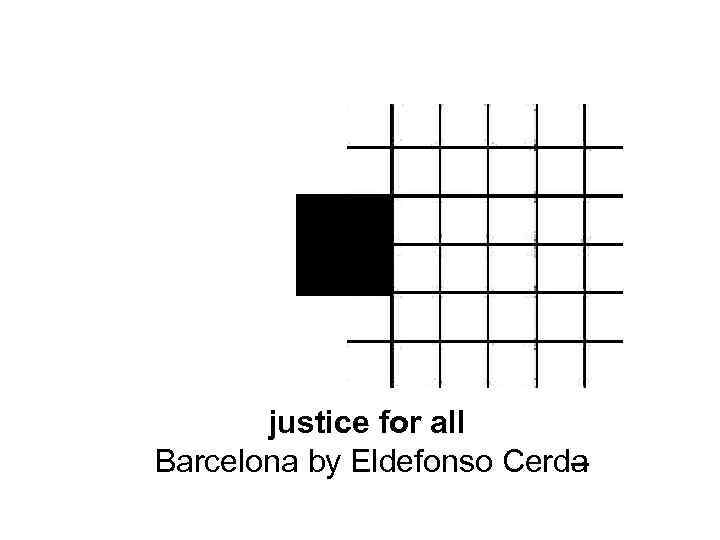
justice for all Barcelona by Eldefonso Cerda
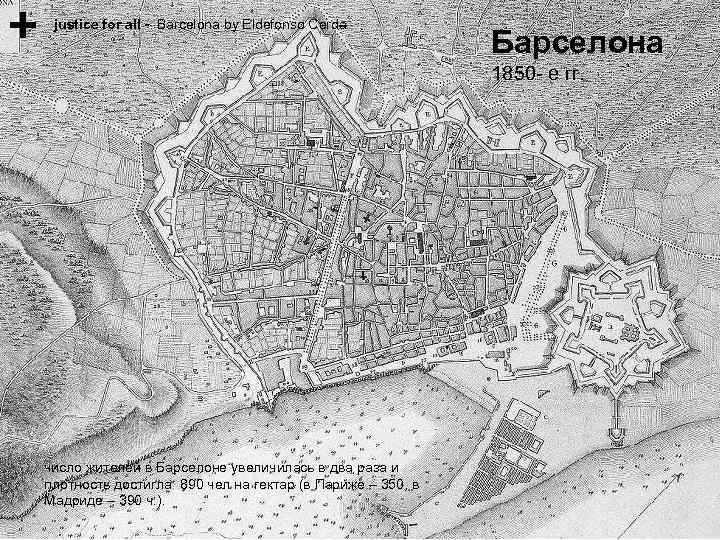
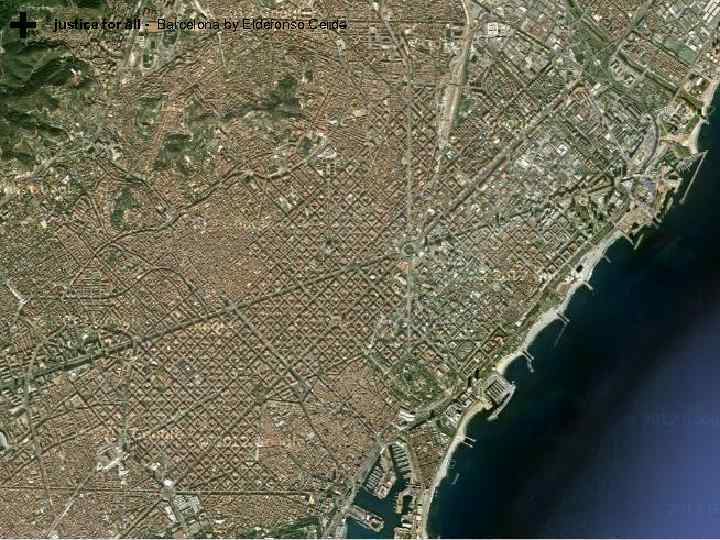
justice for all - Barcelona by Eldefonso Cerda Барселона 1850 - е гг. число жителей в Барселоне увеличилась в два раза и плотность достигла 890 чел на гектар (в Париже – 350, в Мадриде – 390 ч. ).
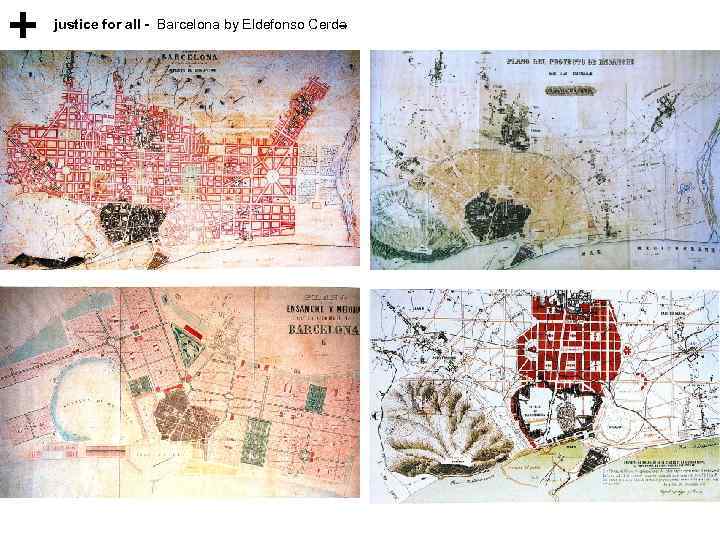
justice for all - Barcelona by Eldefonso Cerda
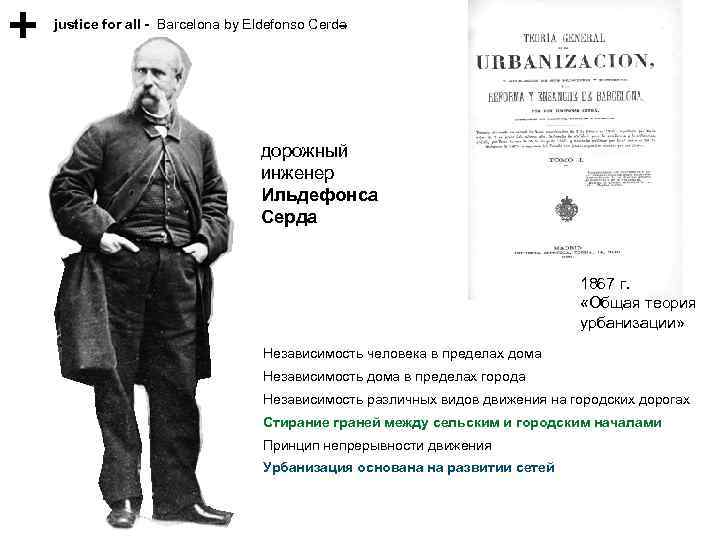
justice for all - Barcelona by Eldefonso Cerda дорожный инженер Ильдефонса Серда 1867 г. «Общая теория урбанизации» Независимость человека в пределах дома Независимость дома в пределах города Независимость различных видов движения на городских дорогах Стирание граней между сельским и городским началами Принцип непрерывности движения Урбанизация основана на развитии сетей
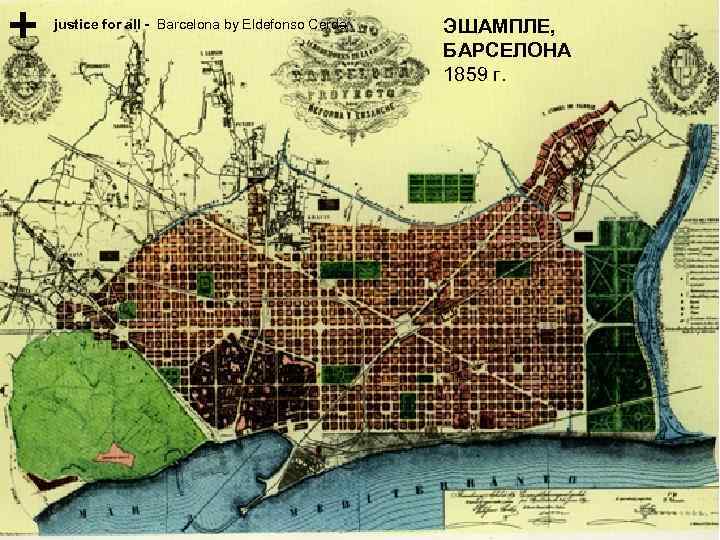
justice for all - Barcelona by Eldefonso Cerda ЭШАМПЛЕ, БАРСЕЛОНА 1859 г.
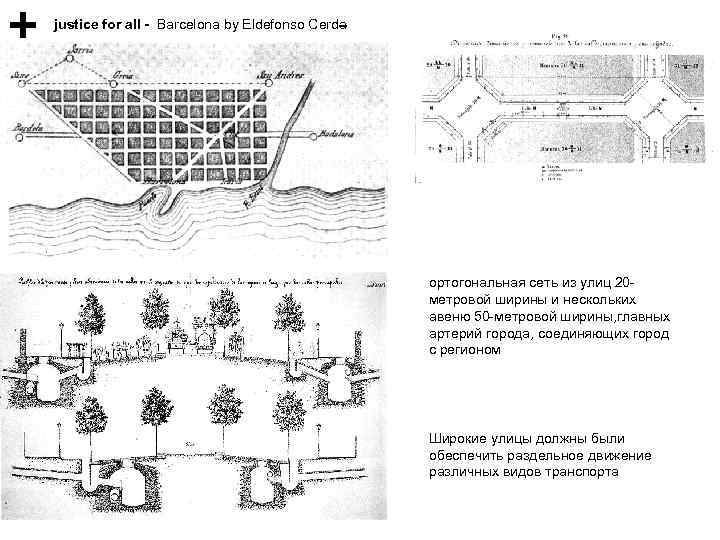
justice for all - Barcelona by Eldefonso Cerda ортогональная сеть из улиц 20 метровой ширины и нескольких авеню 50 -метровой ширины, главных артерий города, соединяющих город с регионом Широкие улицы должны были обеспечить раздельное движение различных видов транспорта
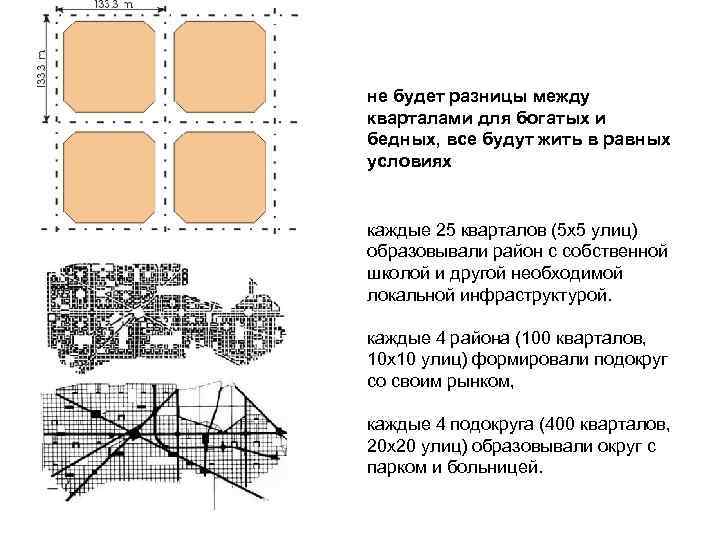
не будет разницы между кварталами для богатых и бедных, все будут жить в равных условиях каждые 25 кварталов (5 х5 улиц) образовывали район с собственной школой и другой необходимой локальной инфраструктурой. каждые 4 района (100 кварталов, 10 х10 улиц) формировали подокруг со своим рынком, каждые 4 подокруга (400 кварталов, 20 х20 улиц) образовывали округ с парком и больницей.
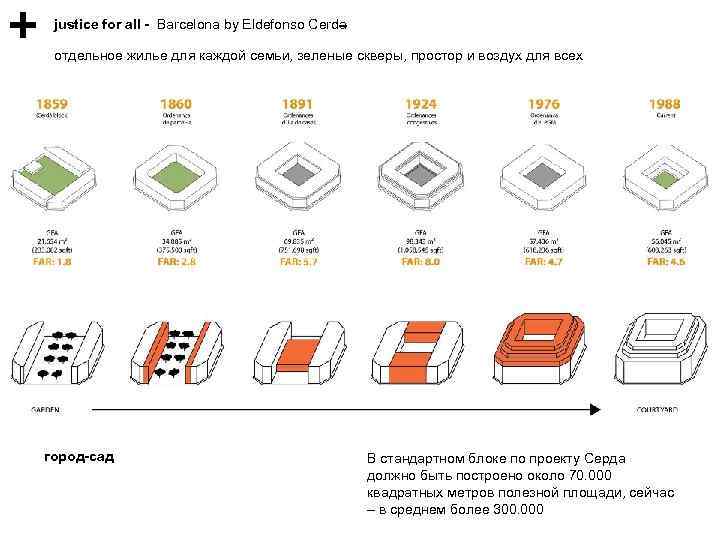
justice for all - Barcelona by Eldefonso Cerda отдельное жилье для каждой семьи, зеленые скверы, простор и воздух для всех город-сад В стандартном блоке по проекту Серда должно быть построено около 70. 000 квадратных метров полезной площади, сейчас – в среднем более 300. 000
justice for all - Barcelona by Eldefonso Cerda
Ideal settlements
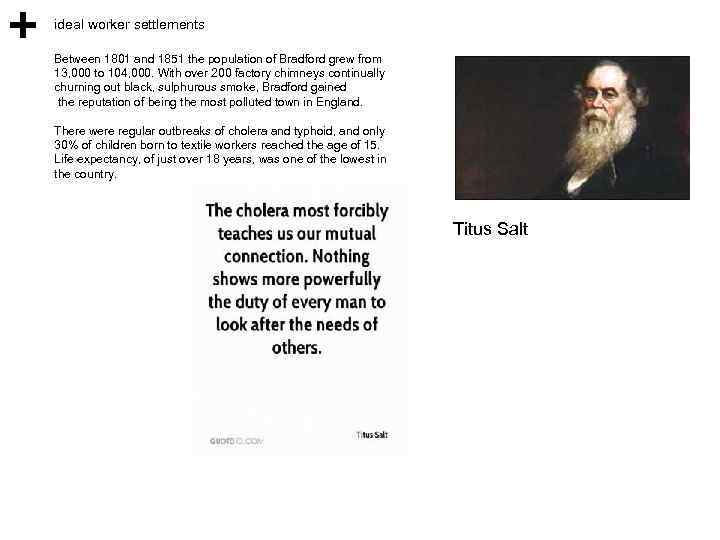
ideal worker settlements Between 1801 and 1851 the population of Bradford grew from 13, 000 to 104, 000. With over 200 factory chimneys continually churning out black, sulphurous smoke, Bradford gained the reputation of being the most polluted town in England. There were regular outbreaks of cholera and typhoid, and only 30% of children born to textile workers reached the age of 15. Life expectancy, of just over 18 years, was one of the lowest in the country. Titus Salt
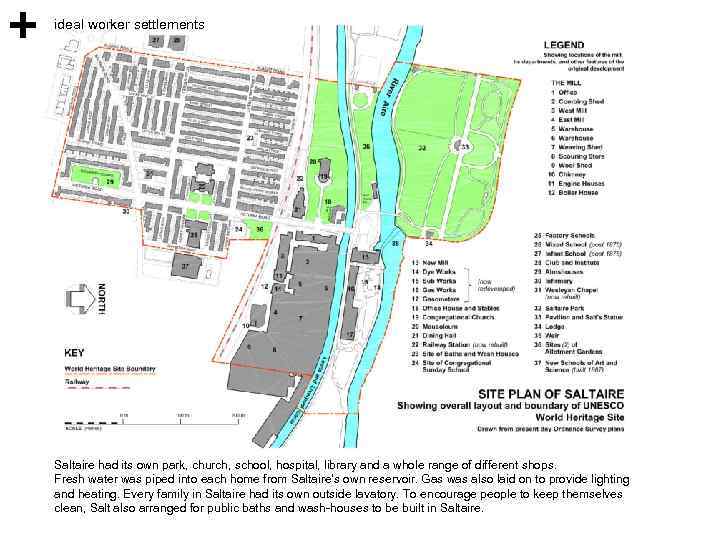
ideal worker settlements Saltaire had its own park, church, school, hospital, library and a whole range of different shops. Fresh water was piped into each home from Saltaire’s own reservoir. Gas was also laid on to provide lighting and heating. Every family in Saltaire had its own outside lavatory. To encourage people to keep themselves clean, Salt also arranged for public baths and wash-houses to be built in Saltaire.
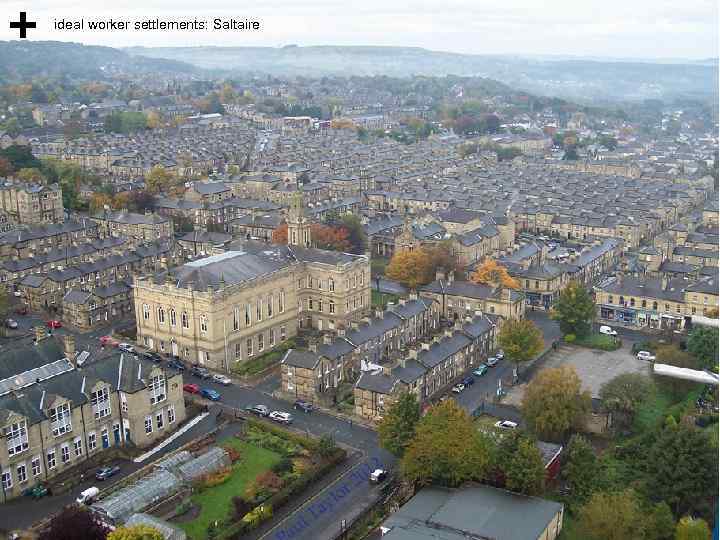
ideal worker settlements: Saltaire
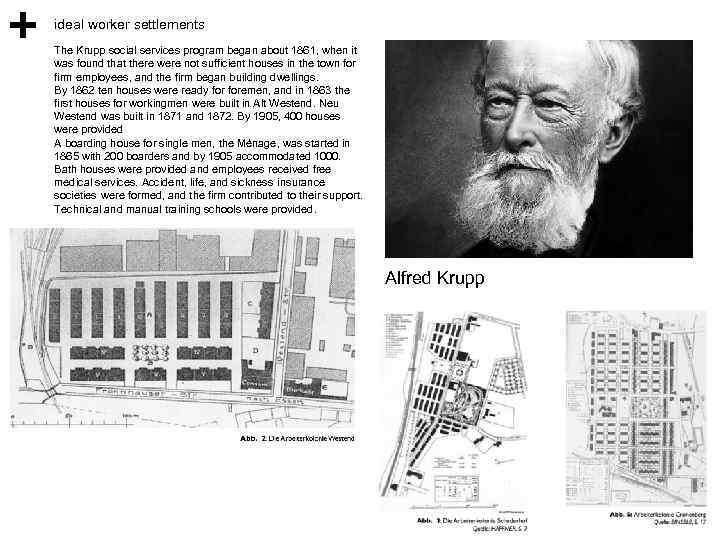
ideal worker settlements The Krupp social services program began about 1861, when it was found that there were not sufficient houses in the town for firm employees, and the firm began building dwellings. By 1862 ten houses were ready foremen, and in 1863 the first houses for workingmen were built in Alt Westend. Neu Westend was built in 1871 and 1872. By 1905, 400 houses were provided A boarding house for single men, the Ménage, was started in 1865 with 200 boarders and by 1905 accommodated 1000. Bath houses were provided and employees received free medical services. Accident, life, and sickness insurance societies were formed, and the firm contributed to their support. Technical and manual training schools were provided. Alfred Krupp
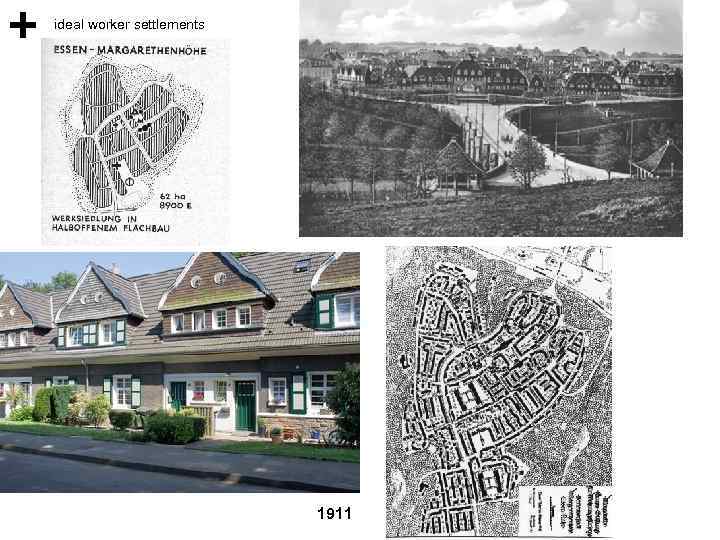
ideal worker settlements 1911
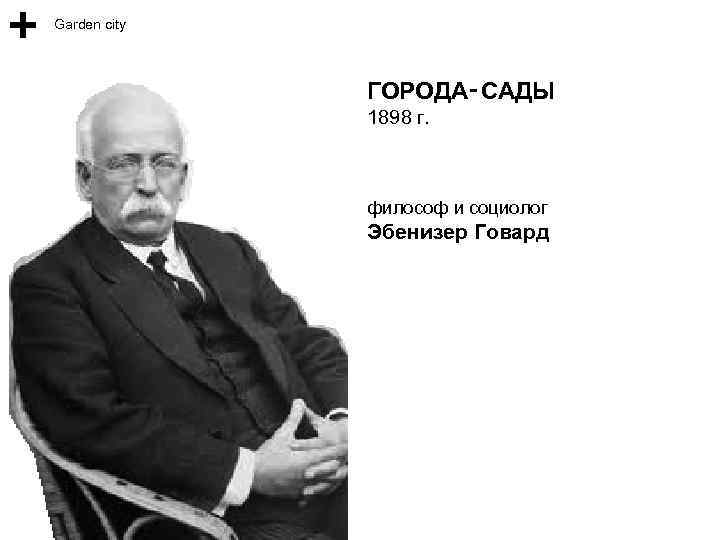
Garden city ГОРОДА‑САДЫ 1898 г. философ и социолог Эбенизер Говард
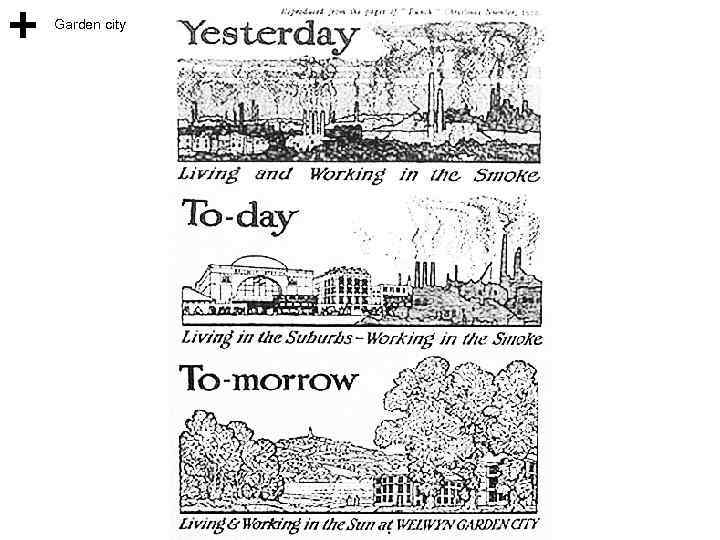
Garden city
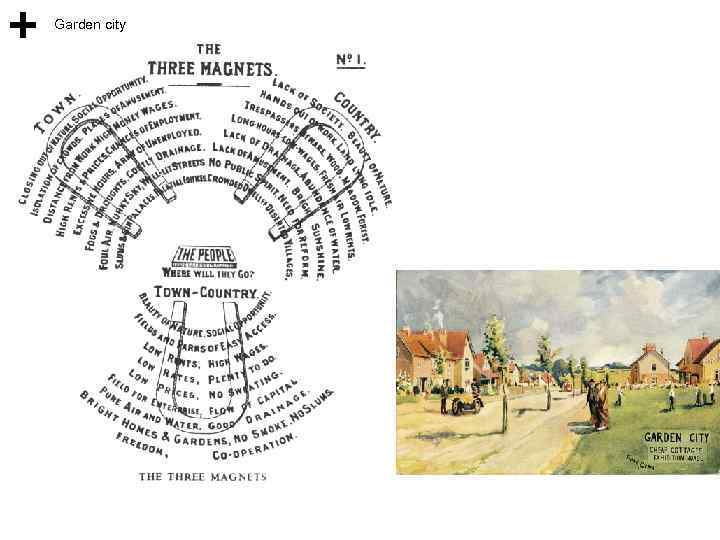
Garden city
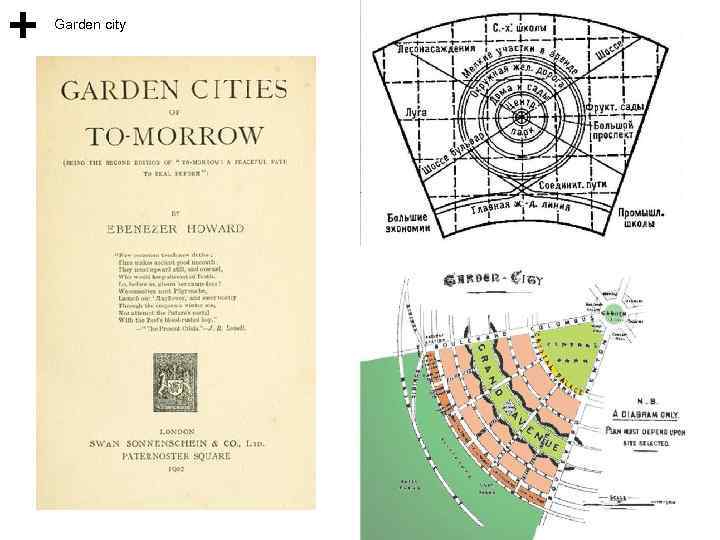
Garden city
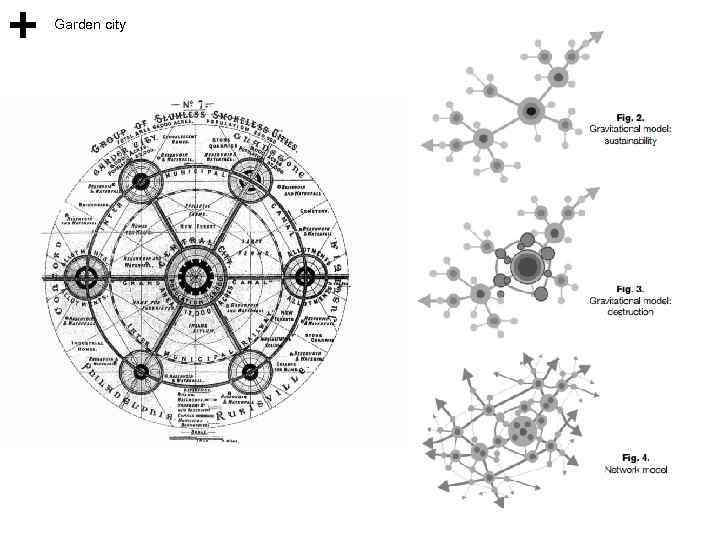
Garden city
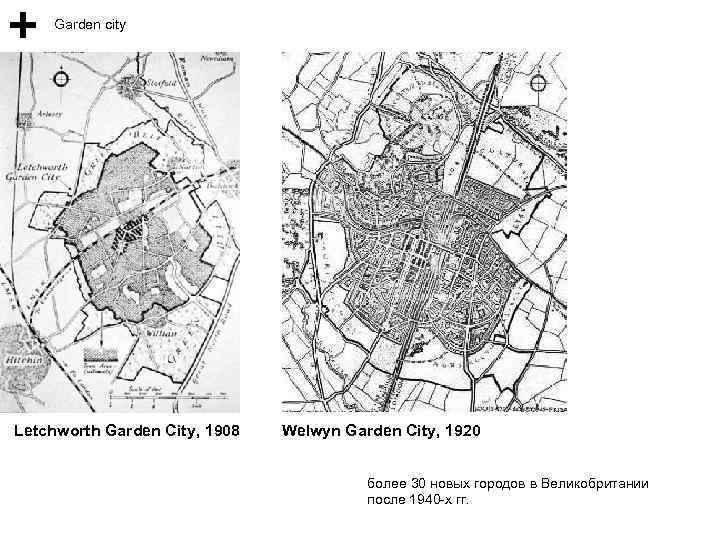
Garden city Letchworth Garden City, 1908 Welwyn Garden City, 1920 более 30 новых городов в Великобритании после 1940 -х гг.

Garden city Masterplan for Prozorovka settlement near Moscow, 1912
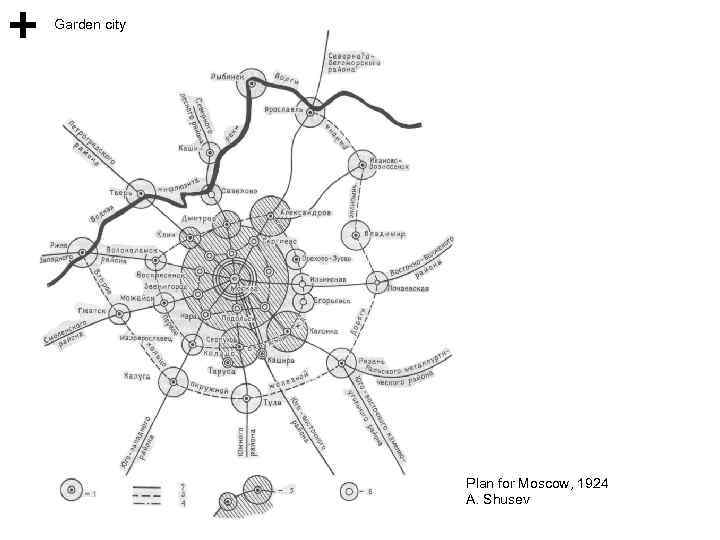
Garden city Plan for Moscow, 1924 A. Shusev
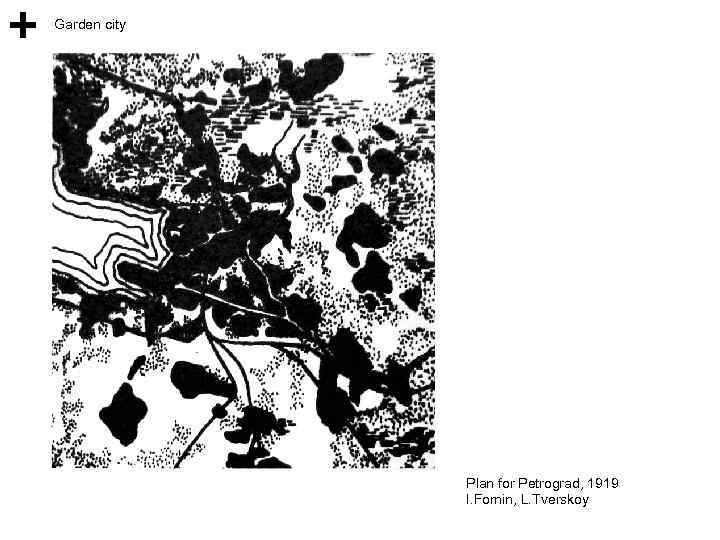
Garden city Plan for Petrograd, 1919 I. Fomin, L. Tverskoy
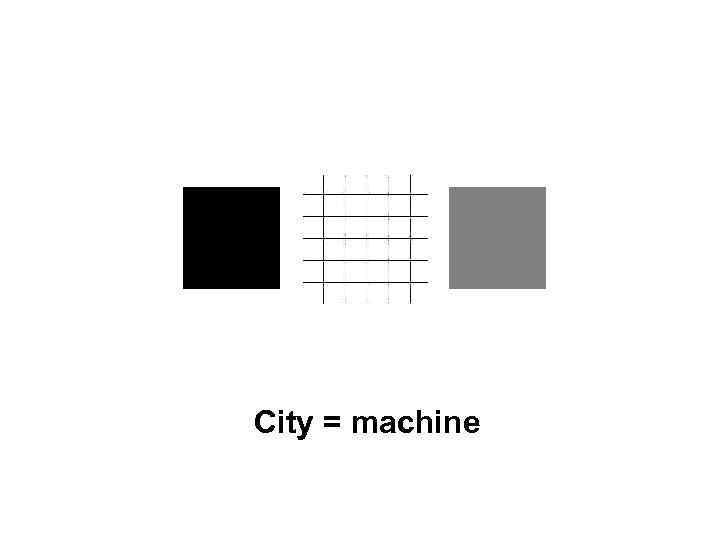
City = machine
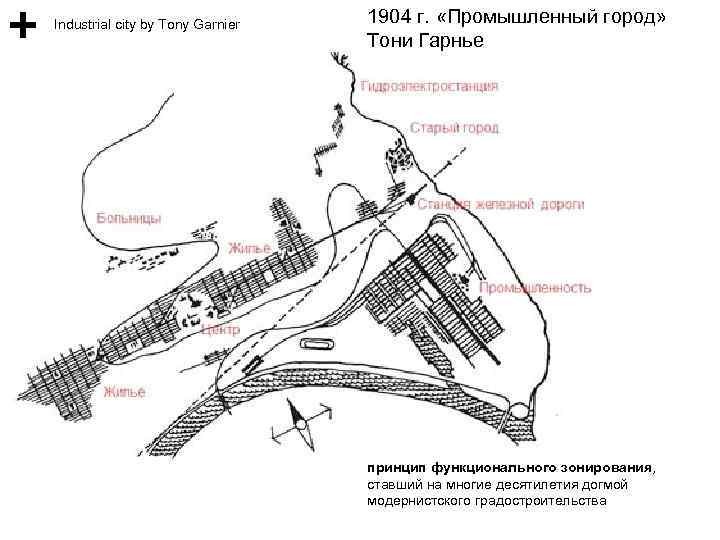
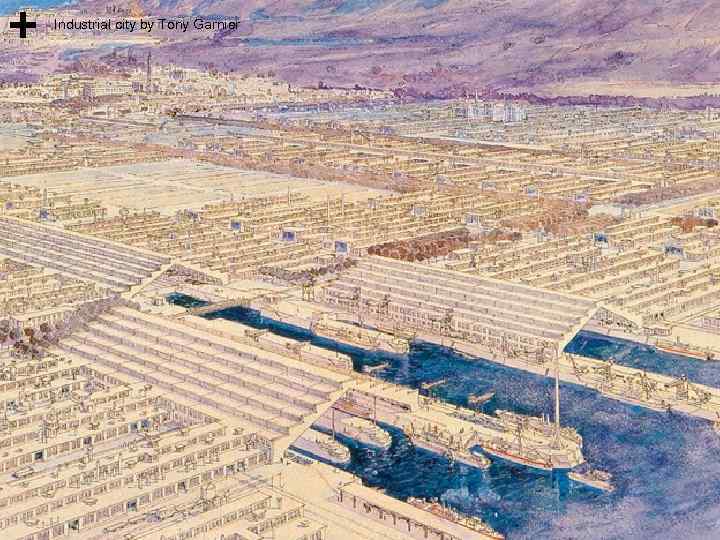
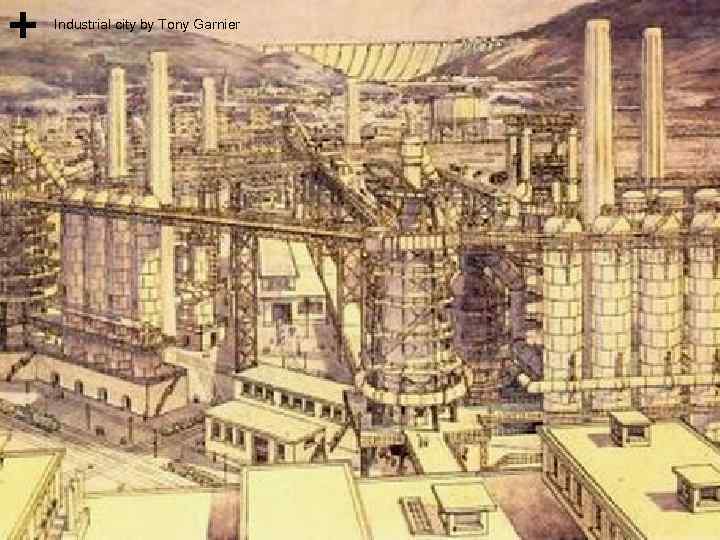
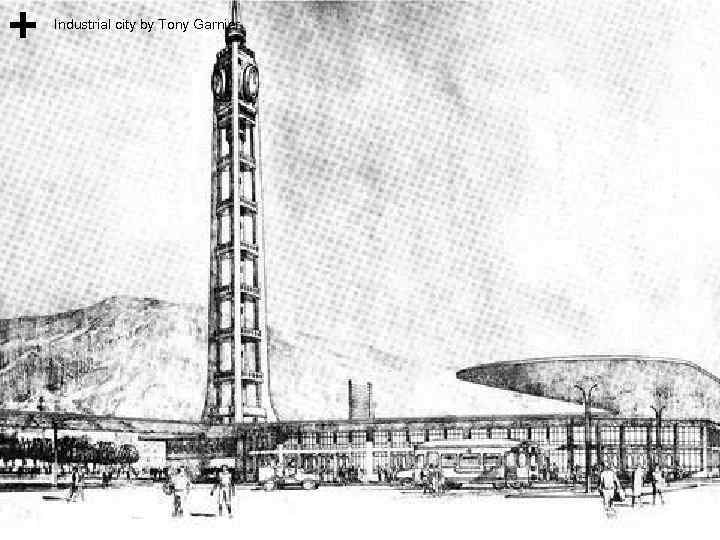
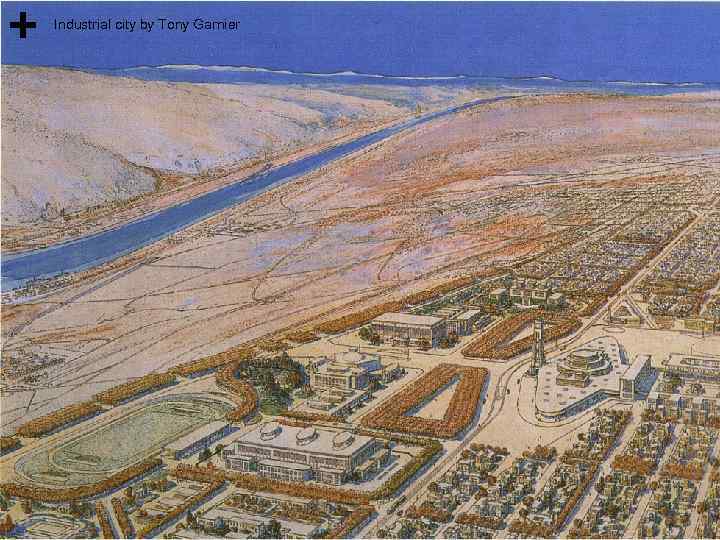
Industrial city by Tony Garnier 1904 г. «Промышленный город» Тони Гарнье принцип функционального зонирования, ставший на многие десятилетия догмой модернистского градостроительства
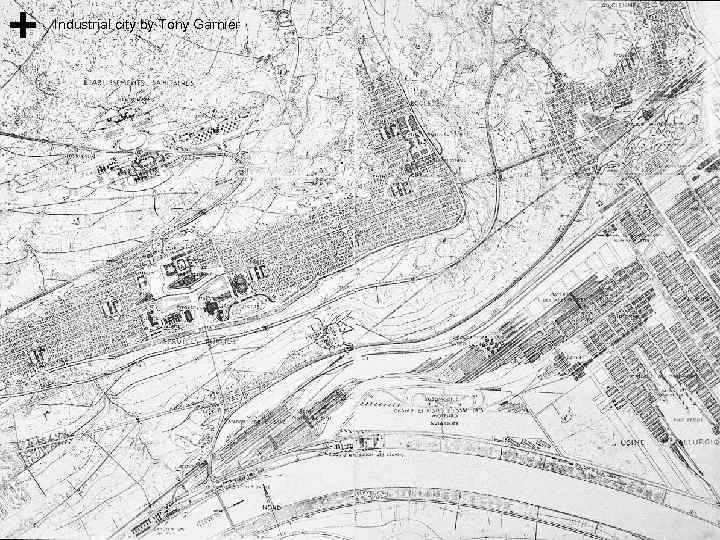
Industrial city by Tony Garnier
Industrial city by Tony Garnier
Industrial city by Tony Garnier
Industrial city by Tony Garnier
Industrial city by Tony Garnier
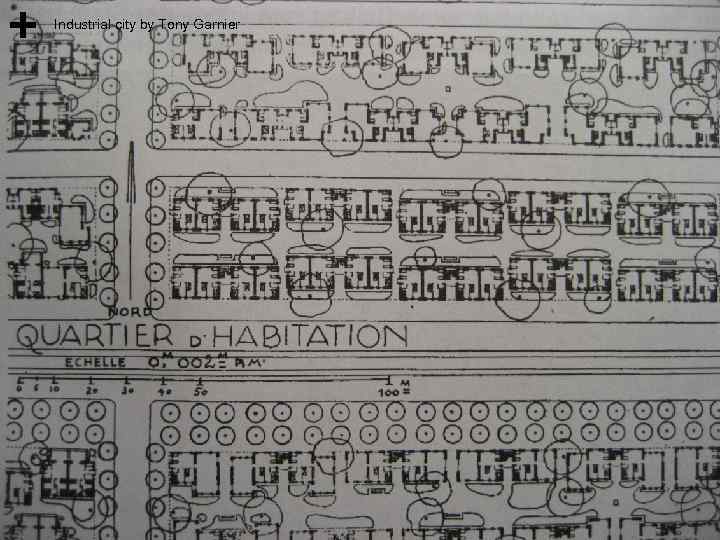
Industrial city by Tony Garnier
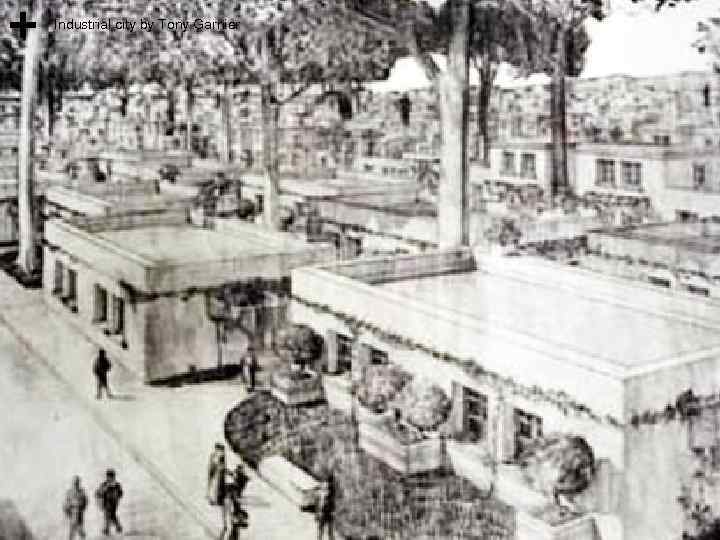
Industrial city by Tony Garnier
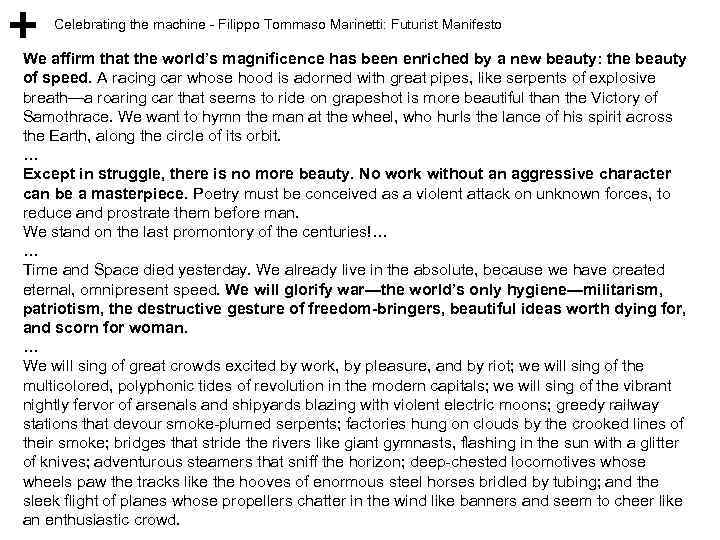
Celebrating the machine - Filippo Tommaso Marinetti: Futurist Manifesto We affirm that the world’s magnificence has been enriched by a new beauty: the beauty of speed. A racing car whose hood is adorned with great pipes, like serpents of explosive breath—a roaring car that seems to ride on grapeshot is more beautiful than the Victory of Samothrace. We want to hymn the man at the wheel, who hurls the lance of his spirit across the Earth, along the circle of its orbit. … Except in struggle, there is no more beauty. No work without an aggressive character can be a masterpiece. Poetry must be conceived as a violent attack on unknown forces, to reduce and prostrate them before man. We stand on the last promontory of the centuries!… … Time and Space died yesterday. We already live in the absolute, because we have created eternal, omnipresent speed. We will glorify war—the world’s only hygiene—militarism, patriotism, the destructive gesture of freedom-bringers, beautiful ideas worth dying for, and scorn for woman. … We will sing of great crowds excited by work, by pleasure, and by riot; we will sing of the multicolored, polyphonic tides of revolution in the modern capitals; we will sing of the vibrant nightly fervor of arsenals and shipyards blazing with violent electric moons; greedy railway stations that devour smoke-plumed serpents; factories hung on clouds by the crooked lines of their smoke; bridges that stride the rivers like giant gymnasts, flashing in the sun with a glitter of knives; adventurous steamers that sniff the horizon; deep-chested locomotives whose wheels paw the tracks like the hooves of enormous steel horses bridled by tubing; and the sleek flight of planes whose propellers chatter in the wind like banners and seem to cheer like an enthusiastic crowd.
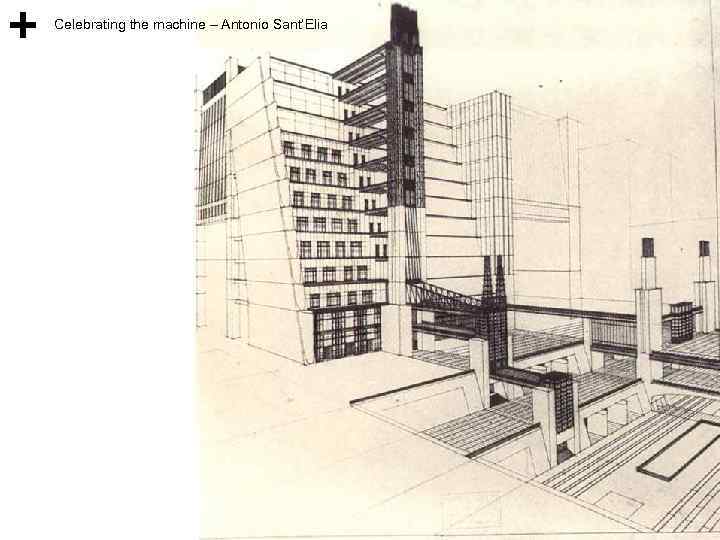
Celebrating the machine – Antonio Sant’Elia
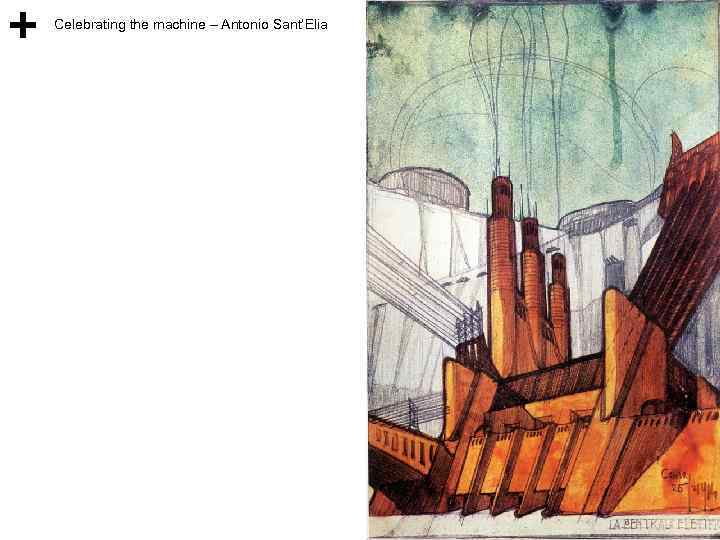
Celebrating the machine – Antonio Sant’Elia
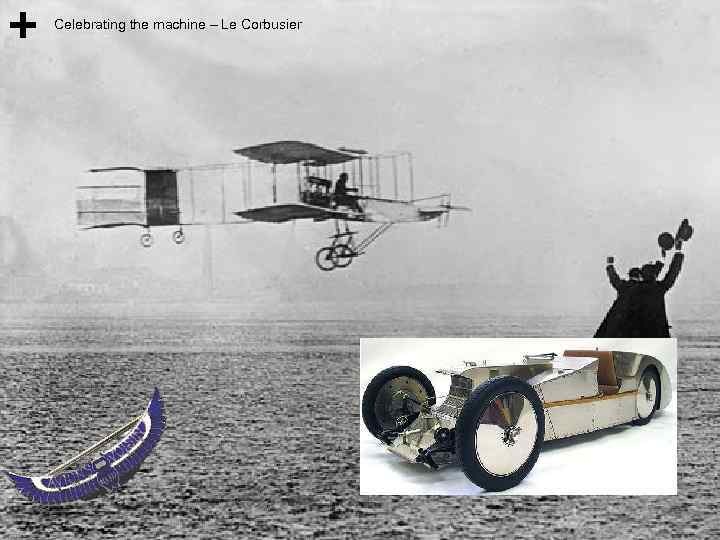
Celebrating the machine – Le Corbusier
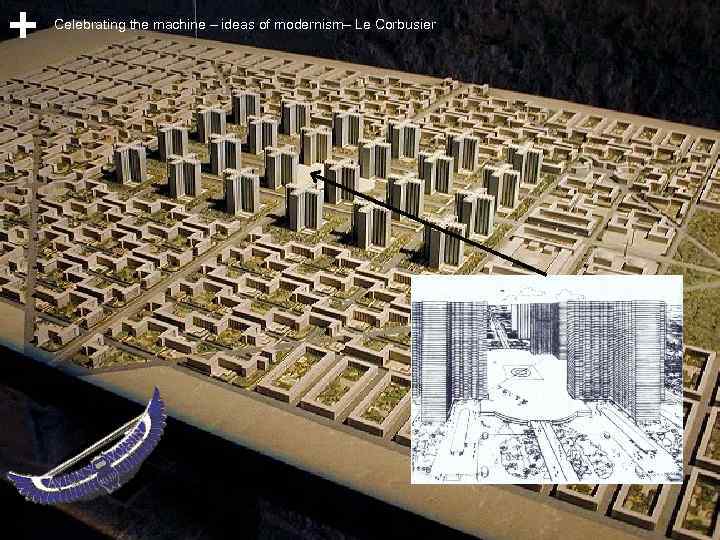
Celebrating the machine – ideas of modernism– Le Corbusier
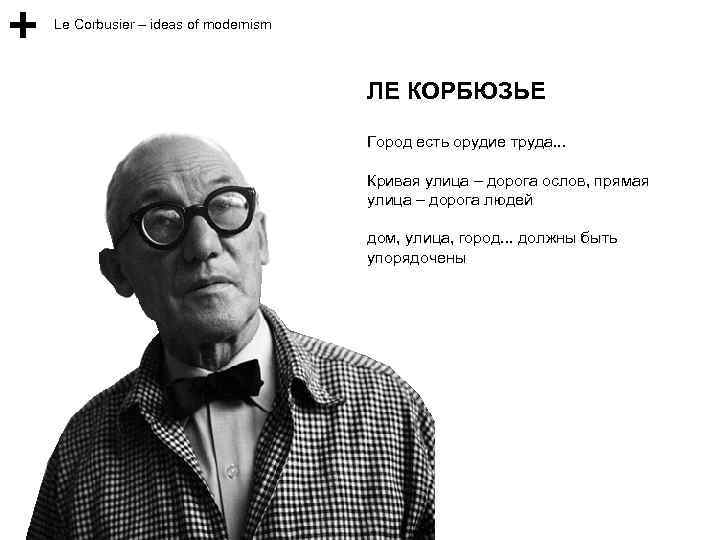
Le Corbusier – ideas of modernism ЛЕ КОРБЮЗЬЕ Город есть орудие труда. . . Кривая улица – дорога ослов, прямая улица – дорога людей дом, улица, город. . . должны быть упорядочены
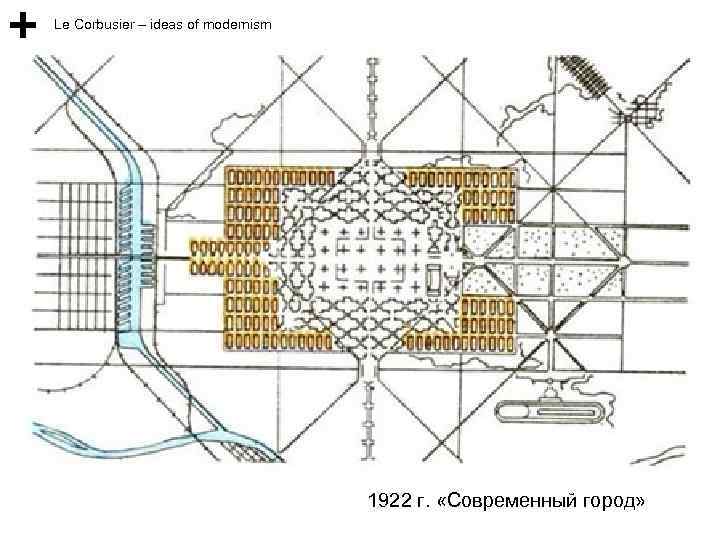
Le Corbusier – ideas of modernism 1922 г. «Современный город»
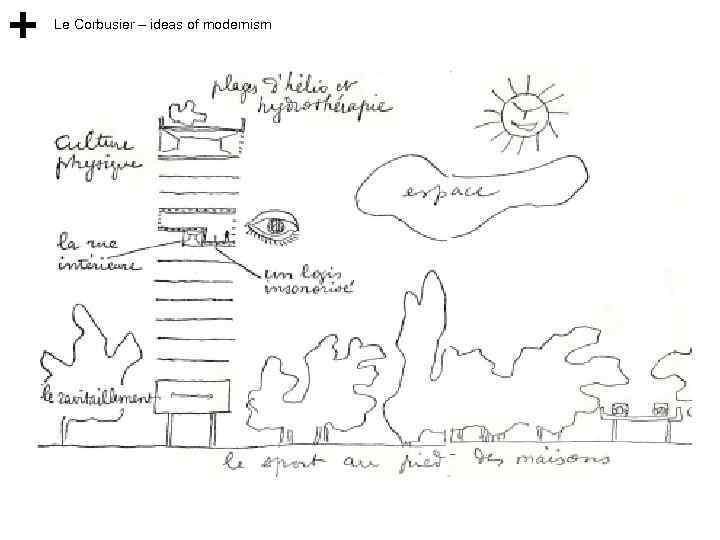
Le Corbusier – ideas of modernism
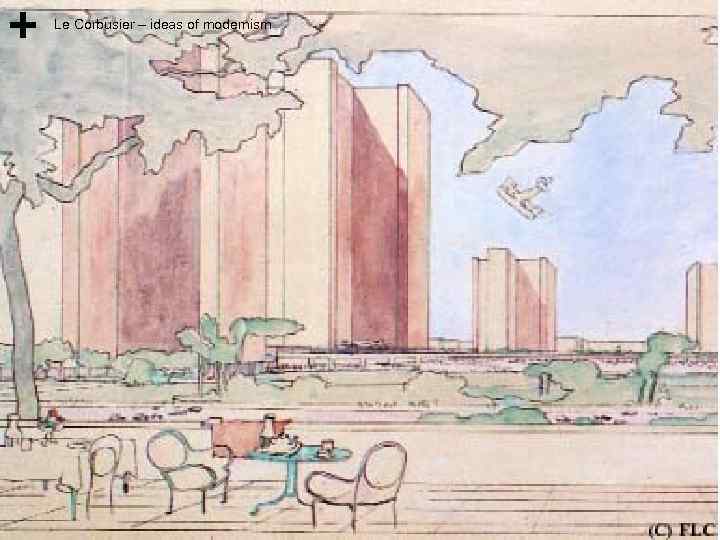
Le Corbusier – ideas of modernism
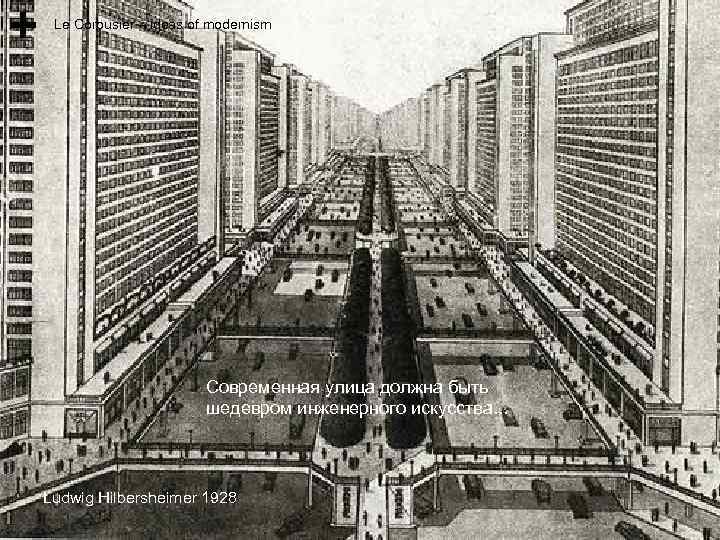
Le Corbusier – ideas of modernism Современная улица должна быть шедевром инженерного искусства. . . Ludwig Hilbersheimer 1928
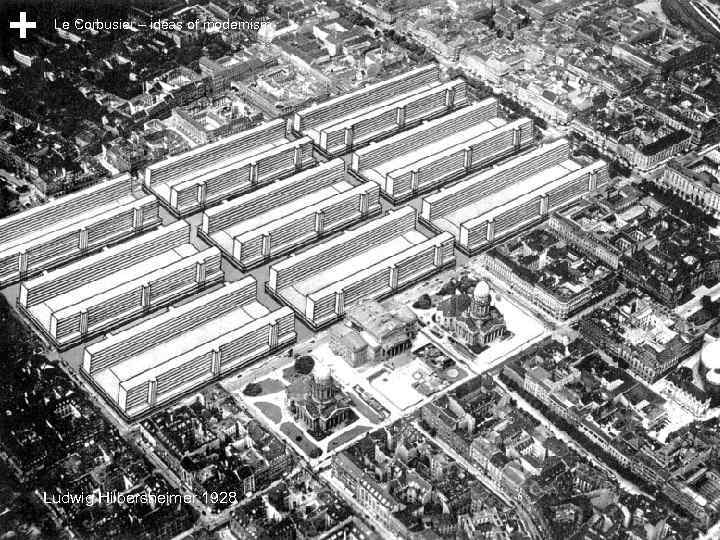
Le Corbusier – ideas of modernism Ludwig Hilbersheimer 1928
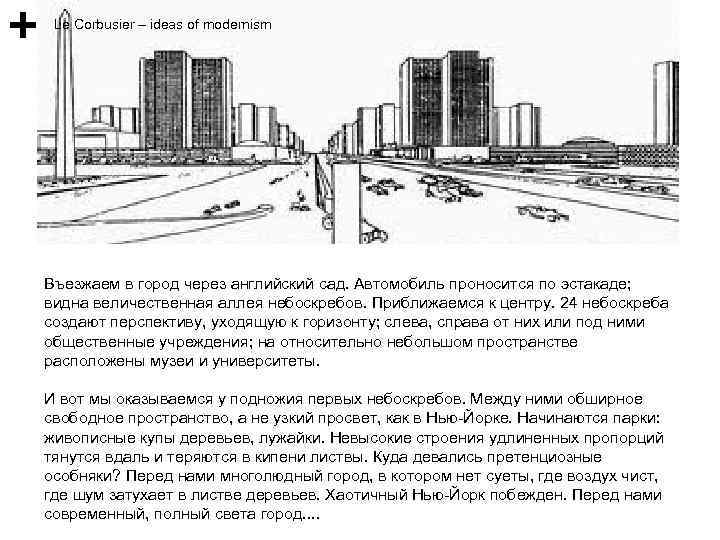
Le Corbusier – ideas of modernism Въезжаем в город через английский сад. Автомобиль проносится по эстакаде; видна величественная аллея небоскребов. Приближаемся к центру. 24 небоскреба создают перспективу, уходящую к горизонту; слева, справа от них или под ними общественные учреждения; на относительно небольшом пространстве расположены музеи и университеты. И вот мы оказываемся у подножия первых небоскребов. Между ними обширное свободное пространство, а не узкий просвет, как в Нью-Йорке. Начинаются парки: живописные купы деревьев, лужайки. Невысокие строения удлиненных пропорций тянутся вдаль и теряются в кипени листвы. Куда девались претенциозные особняки? Перед нами многолюдный город, в котором нет суеты, где воздух чист, где шум затухает в листве деревьев. Хаотичный Нью-Йорк побежден. Перед нами современный, полный света город. .
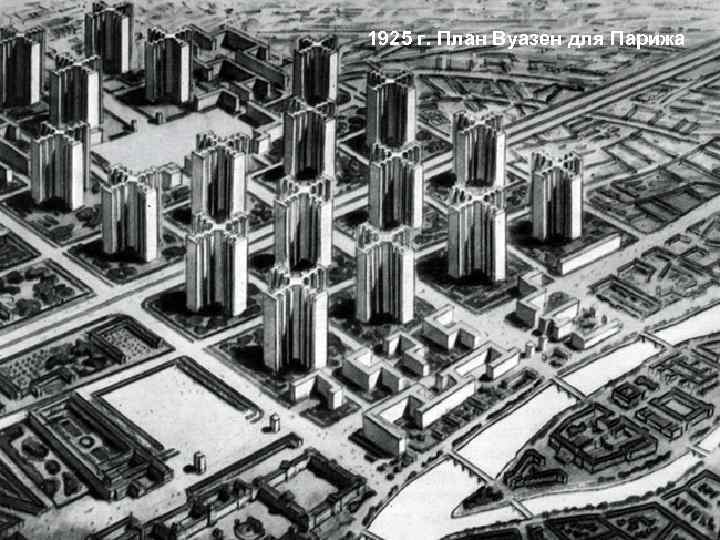
1925 г. План Вуазен для Парижа
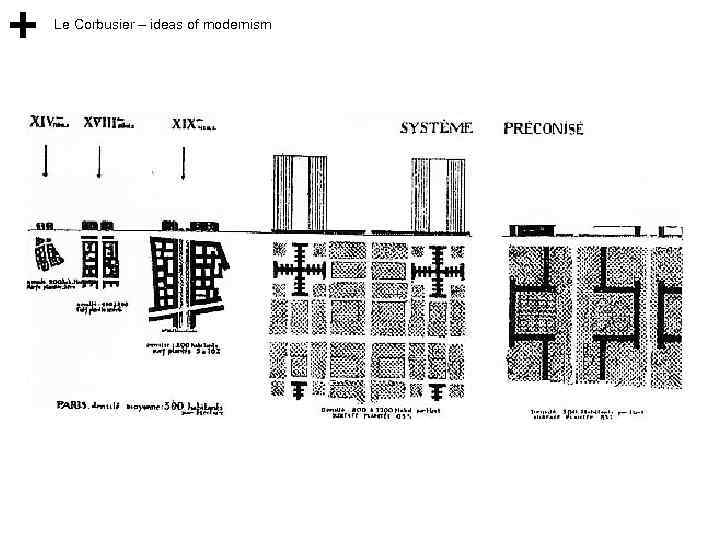
Le Corbusier – ideas of modernism
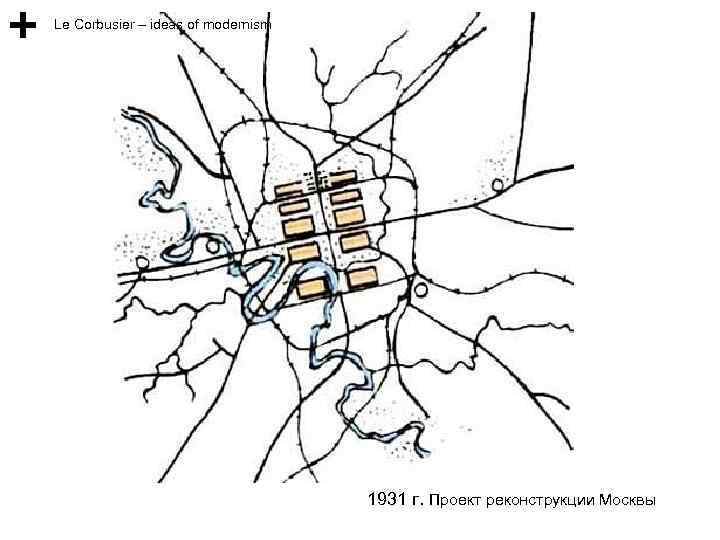
Le Corbusier – ideas of modernism 1931 г. Проект реконструкции Москвы
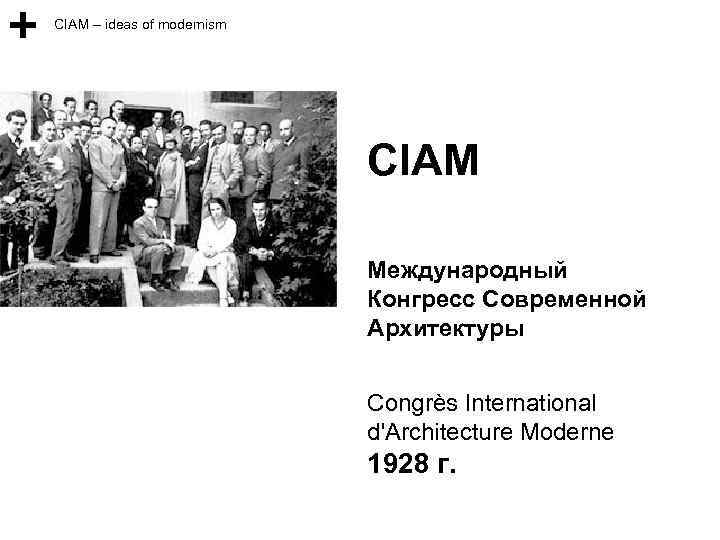
CIAM – ideas of modernism CIAM Международный Конгресс Современной Архитектуры Congrès International d'Architecture Moderne 1928 г.
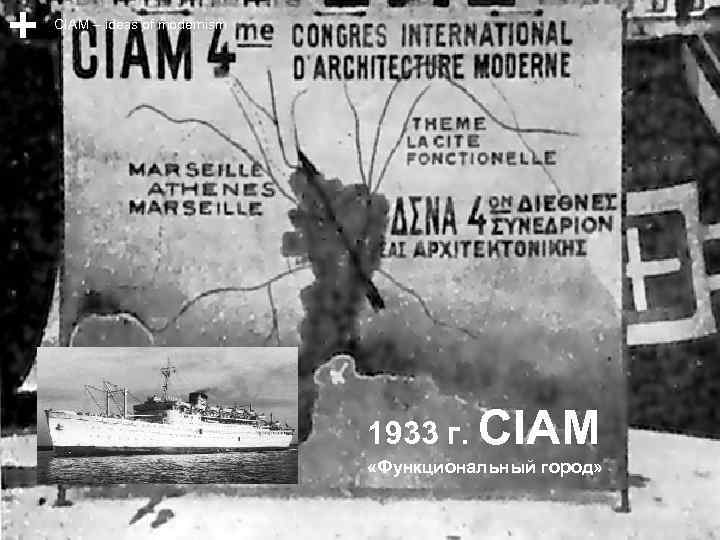
CIAM – ideas of modernism 1933 г. CIAM «Функциональный город»

CIAM – ideas of modernism «Афинская хартия» свод принципов нового градостроительства Из 111 пунктов Афинской хартии наиболее важны следующие 2: 1. Свободно расположенный в пространстве многоквартирный блок – это единственно целесообразный тип жилища 2. Городская территория должна четко разделяться на функциональные зоны: - Жилые массивы - Промышленная (рабочая) территория - Зона отдыха - Транспортная инфраструктура
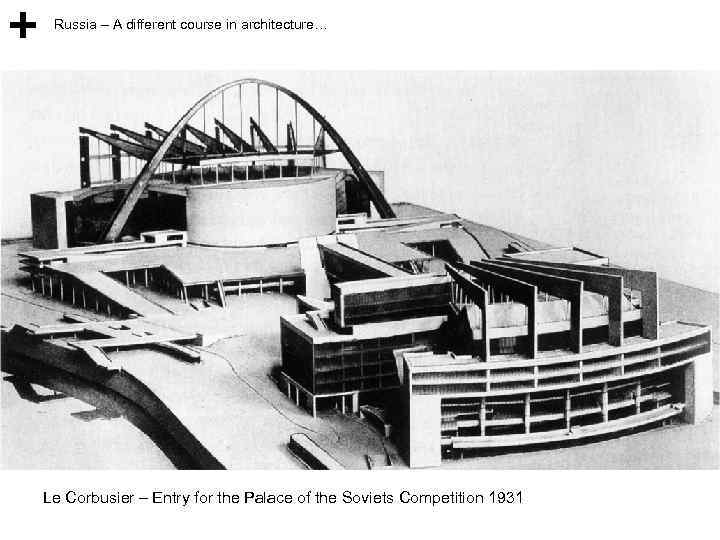
Russia – A different course in architecture… Le Corbusier – Entry for the Palace of the Soviets Competition 1931
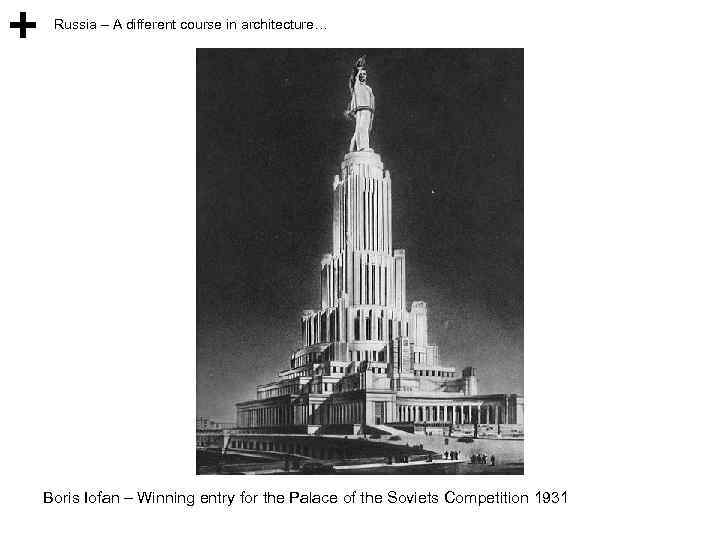
Russia – A different course in architecture… Boris Iofan – Winning entry for the Palace of the Soviets Competition 1931
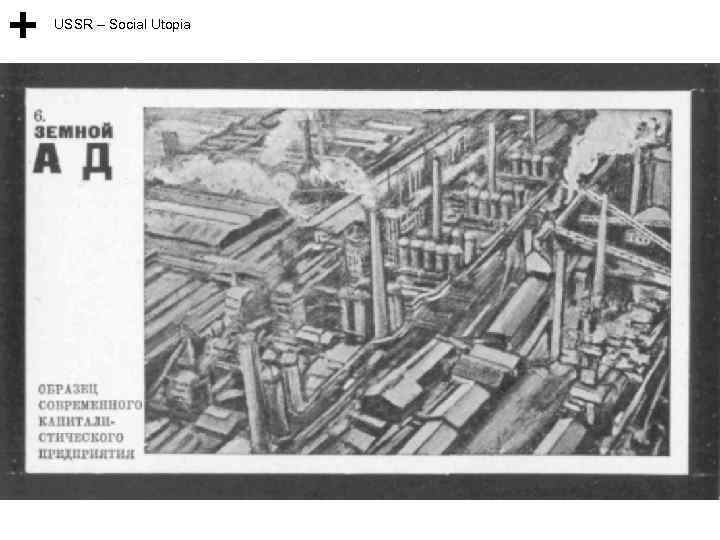
Russia – … and urbanism In SA n. 1/2 from 1930, Mikhail Barsch and Moisei Ginzburg wrote: “When a man becomes sick, he can be cured with adequate medicines. It would however be more productive and less expensive to avoid illness manifesting itself. Just in this consists the socialist medicine: prophylaxis. When the city is ugly, when namely it is what it is, with all its attributes: noise, dust, lack of light, air sun, etc. , we draw on medicines: homes and villas in the country, health resorts, rest homes, green cities. All this is medicine, a medicine which is necessary when a city exists, which we cannot avoid. But we cannot close our eyes in front of this double system of poison and antidote, which is the classical capitalist system of contradictions. This system must be contrasted by the socialist system of prophylaxis, the system of the elimination of the city, with all its specific attributes, promoting a settlement sodality of man able to solve the problems of work, of rest, of his culture, as a whole and uninterrupted process of socialist being. ”
Modernism… . . . West . . . East - Embraces free market economy - Private motorcar - Individual - Reduced aesthetic language - Socialist economy Public transport Collective Aesthetic dependent on the leaders taste . . . Shared by West and East - Sanitation Rationalism & industrial production Functional and scientific approach Educating people to become better human beings - Overcome and eliminate tradtions - City with functions separated
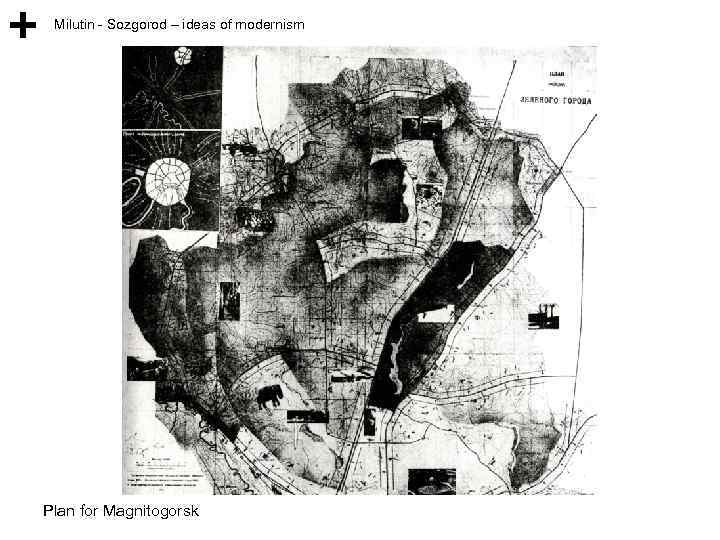
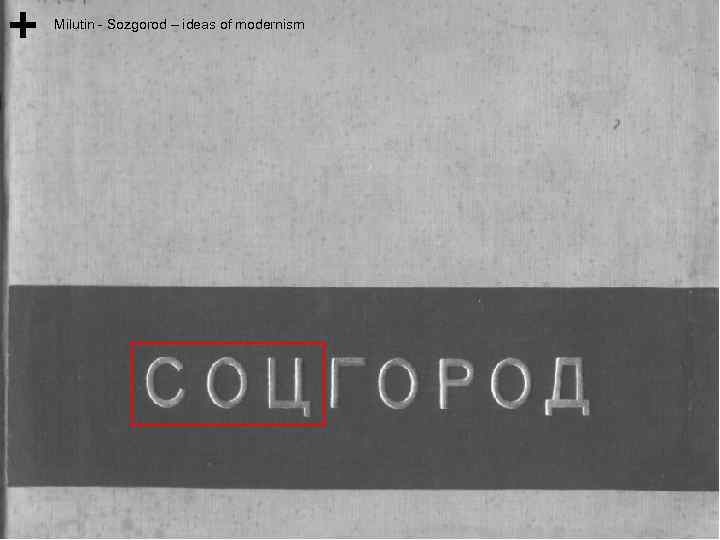
Milutin - Sozgorod – ideas of modernism Plan for Magnitogorsk
Milutin - Sozgorod – ideas of modernism
USSR – Social Utopia
USSR – Social Utopia
USSR – Social Utopia
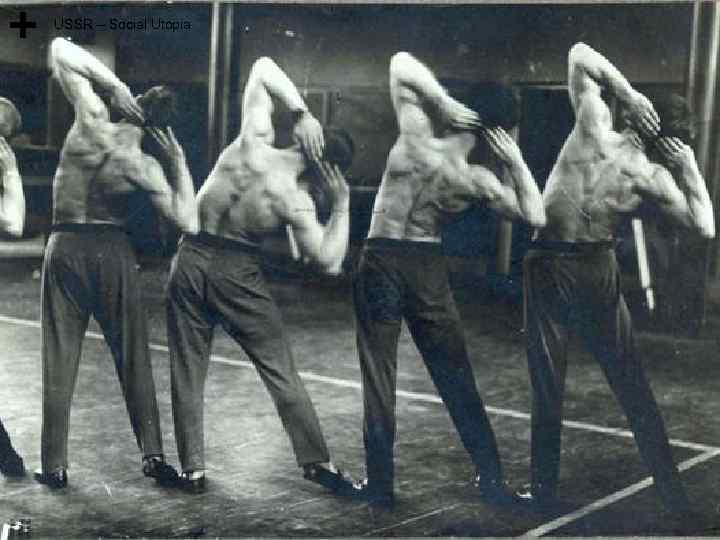
USSR – Social Utopia
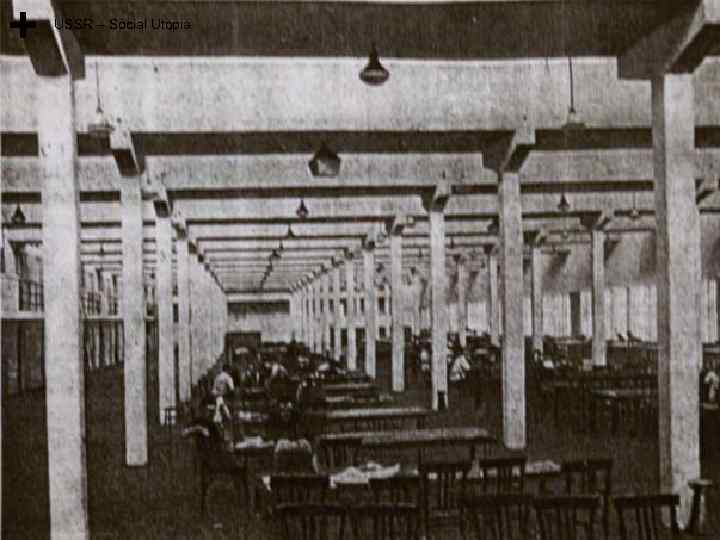
USSR – Social Utopia
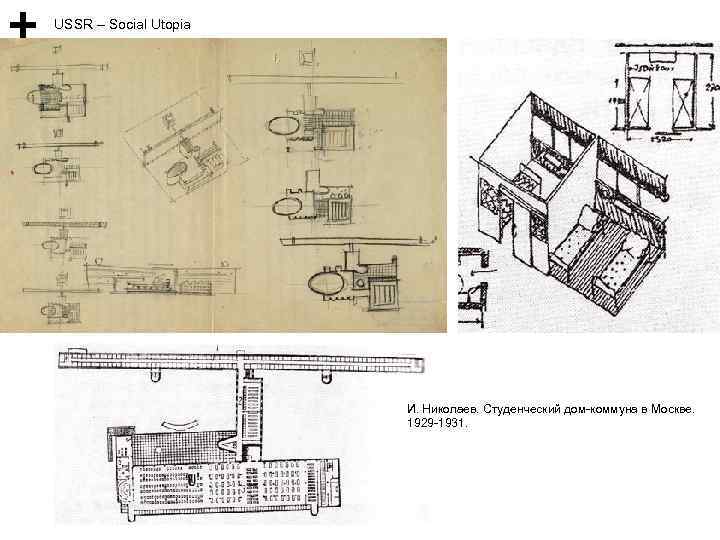
USSR – Social Utopia И. Николаев. Студенческий дом-коммуна в Москве. 1929 -1931.
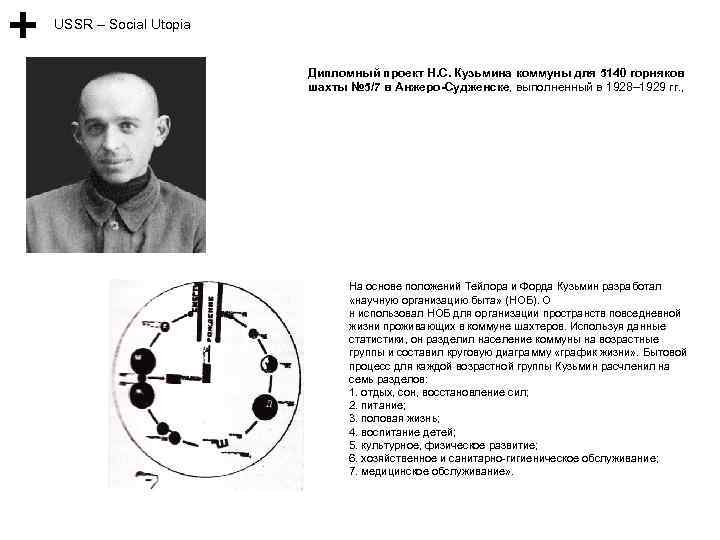
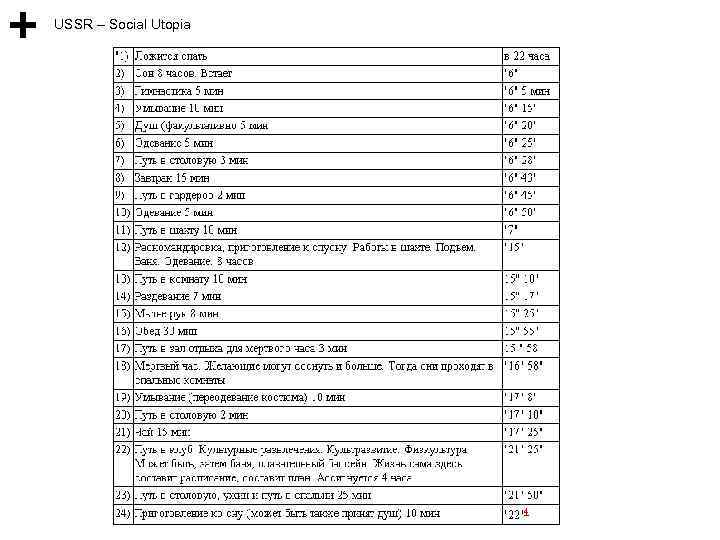
USSR – Social Utopia Дипломный проект Н. С. Кузьмина коммуны для 5140 горняков шахты № 5/7 в Анжеро-Судженске, выполненный в 1928– 1929 гг. , На основе положений Тейлора и Форда Кузьмин разработал «научную организацию быта» (НОБ). О н использовал НОБ для организации пространств повседневной жизни проживающих в коммуне шахтеров. Используя данные статистики, он разделил население коммуны на возрастные группы и составил круговую диаграмму «график жизни» . Бытовой процесс для каждой возрастной группы Кузьмин расчленил на семь разделов: 1. отдых, сон, восстановление сил; 2. питание; 3. половая жизнь; 4. воспитание детей; 5. культурное, физическое развитие; 6. хозяйственное и санитарно-гигиеническое обслуживание; 7. медицинское обслуживание» .
USSR – Social Utopia
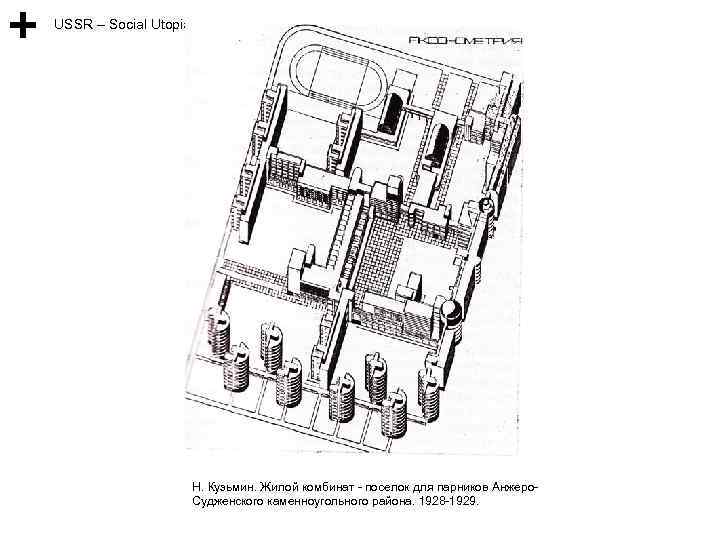
USSR – Social Utopia Н. Кузьмин. Жилой комбинат - поселок для парников Анжеро. Судженского каменноугольного района. 1928 -1929.

USSR – Social Utopia
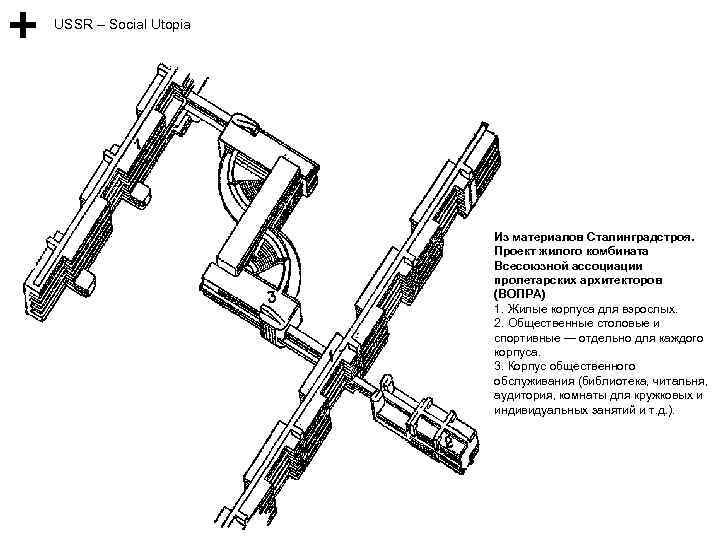
USSR – Social Utopia Из материалов Сталинградстроя. Проект жилого комбината Всесоюзной ассоциации пролетарских архитекторов (ВОПРА) 1. Жилые корпуса для взрослых. 2. Общественные столовые и спортивные — отдельно для каждого корпуса. 3. Корпус общественного обслуживания (библиотека, читальня, аудитория, комнаты для кружковых и индивидуальных занятий и т. д. ).
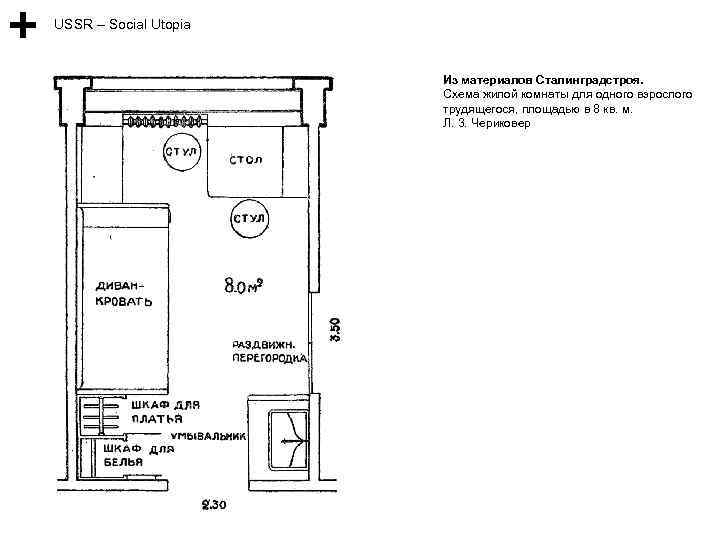
USSR – Social Utopia Из материалов Сталинградстроя. Схема жилой комнаты для одного взрослого трудящегося, площадью в 8 кв. м. Л. 3. Чериковер
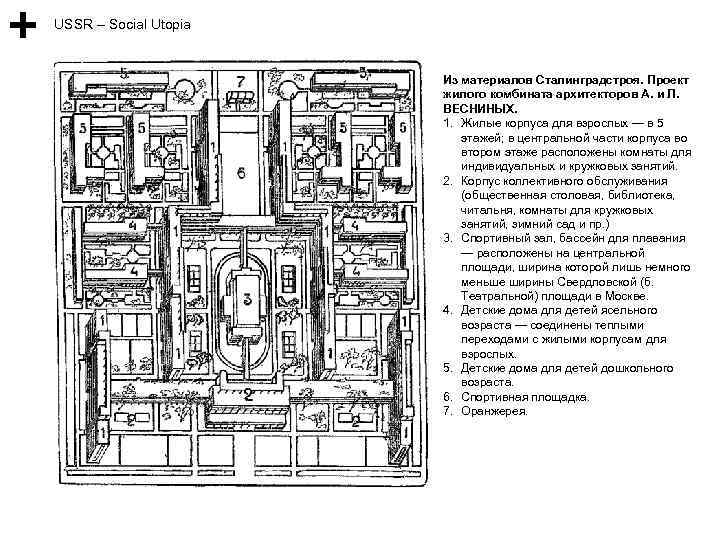
USSR – Social Utopia Из материалов Сталинградстроя. Проект жилого комбината архитекторов А. и Л. ВЕСНИНЫХ. 1. Жилые корпуса для взрослых — в 5 этажей; в центральной части корпуса во втором этаже расположены комнаты для индивидуальных и кружковых занятий. 2. Корпус коллективного обслуживания (общественная столовая, библиотека, читальня, комнаты для кружковых занятий, зимний сад и пр. ) 3. Спортивный зал, бассейн для плавания — расположены на центральной площади, ширина которой лишь немного меньше ширины Свердловской (б. Театральной) площади в Москве. 4. Детские дома для детей ясельного возраста — соединены теплыми переходами с жилыми корпусам для взрослых. 5. Детские дома для детей дошкольного возраста. 6. Спортивная площадка. 7. Оранжерея.
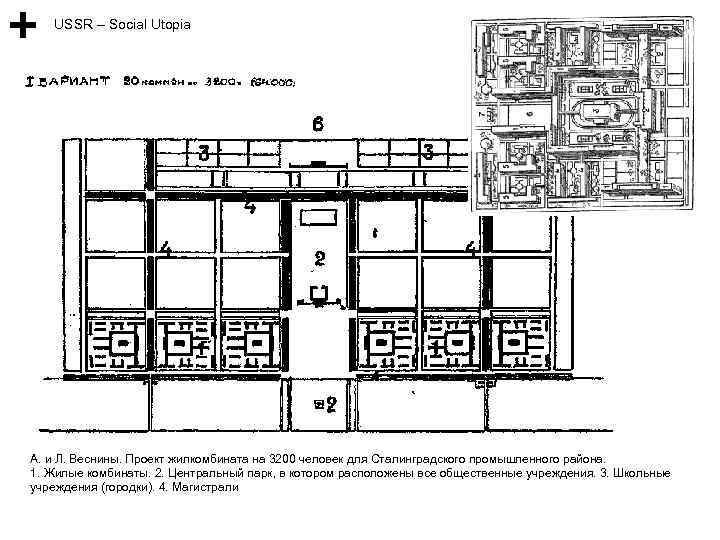
USSR – Social Utopia А. и Л. Веснины. Проект жилкомбината на 3200 человек для Сталинградского промышленного района. 1. Жилые комбинаты. 2. Центральный парк, в котором расположены все общественные учреждения. 3. Школьные учреждения (городки). 4. Магистрали
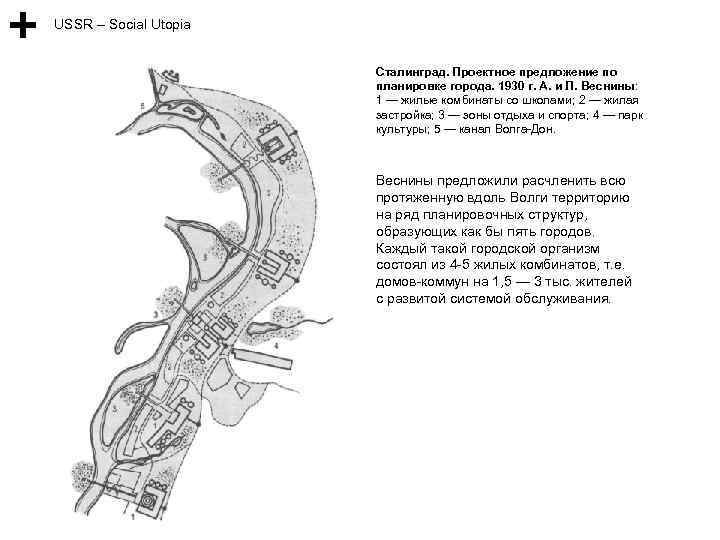
USSR – Social Utopia Сталинград. Проектное предложение по планировке города. 1930 г. А. и Л. Веснины: 1 — жилые комбинаты со школами; 2 — жилая застройка; 3 — зоны отдыха и спорта; 4 — парк культуры; 5 — канал Волга-Дон. Веснины предложили расчленить всю протяженную вдоль Волги территорию на ряд планировочных структур, образующих как бы пять городов. Каждый такой городской организм состоял из 4 -5 жилых комбинатов, т. е. домов-коммун на 1, 5 — 3 тыс. жителей с развитой системой обслуживания.
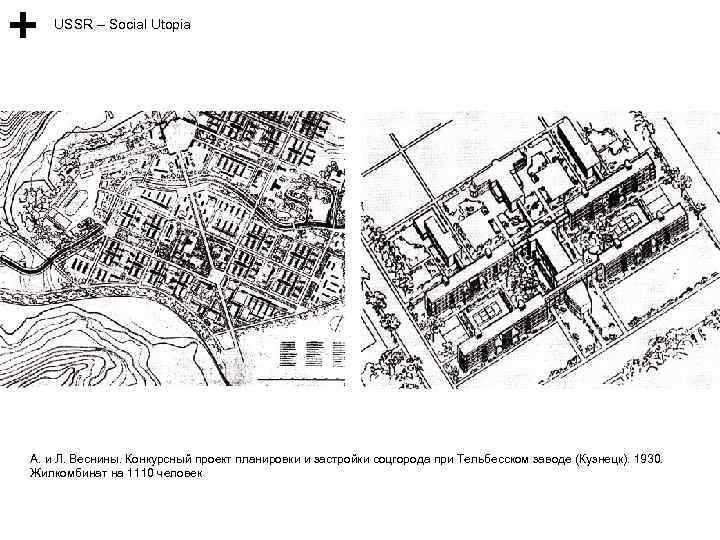
USSR – Social Utopia А. и Л. Веснины. Конкурсный проект планировки и застройки соцгорода при Тельбесском заводе (Кузнецк). 1930. Жилкомбинат на 1110 человек
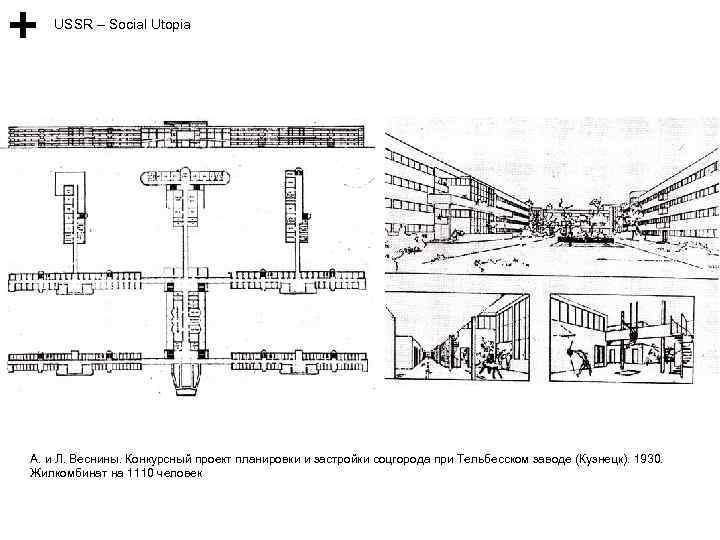
USSR – Social Utopia А. и Л. Веснины. Конкурсный проект планировки и застройки соцгорода при Тельбесском заводе (Кузнецк). 1930. Жилкомбинат на 1110 человек
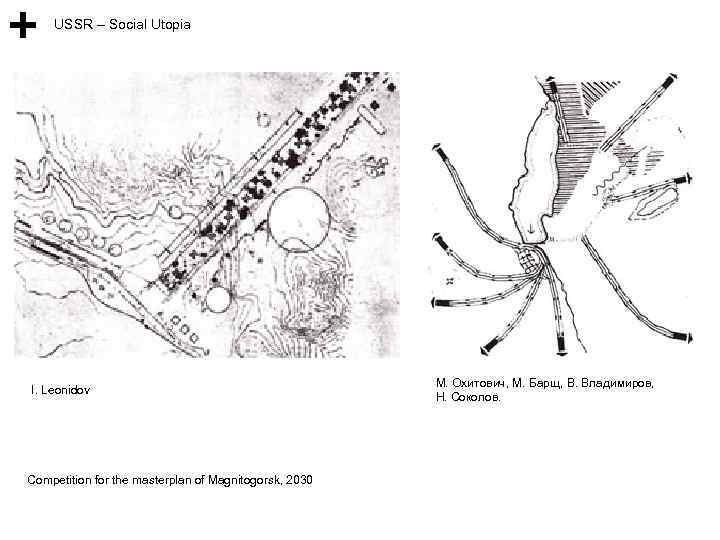
USSR – Social Utopia I. Leonidov Competition for the masterplan of Magnitogorsk, 2030 М. Охитович, М. Барщ, В. Владимиров, Н. Соколов.
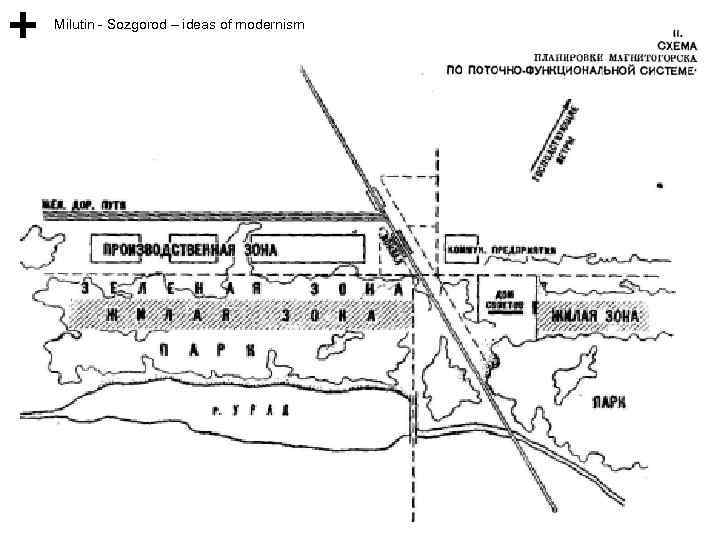
Milutin - Sozgorod – ideas of modernism
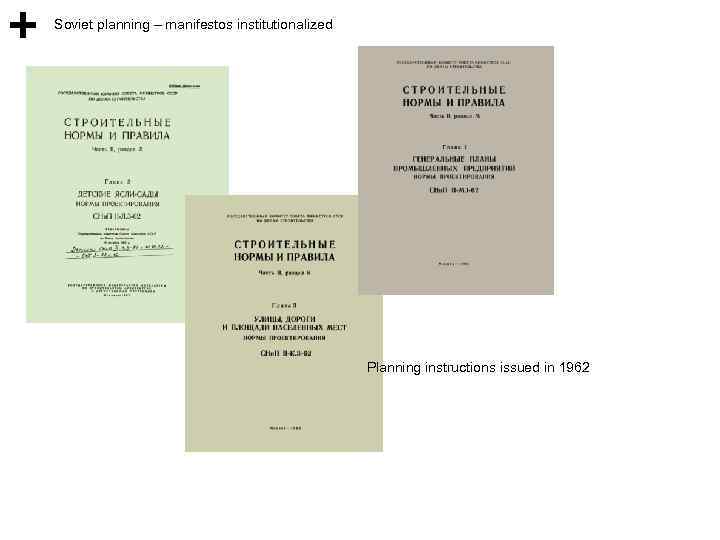
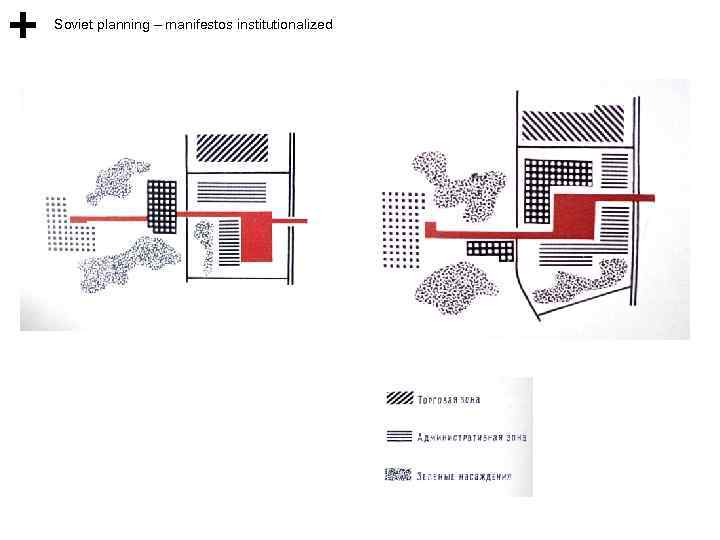
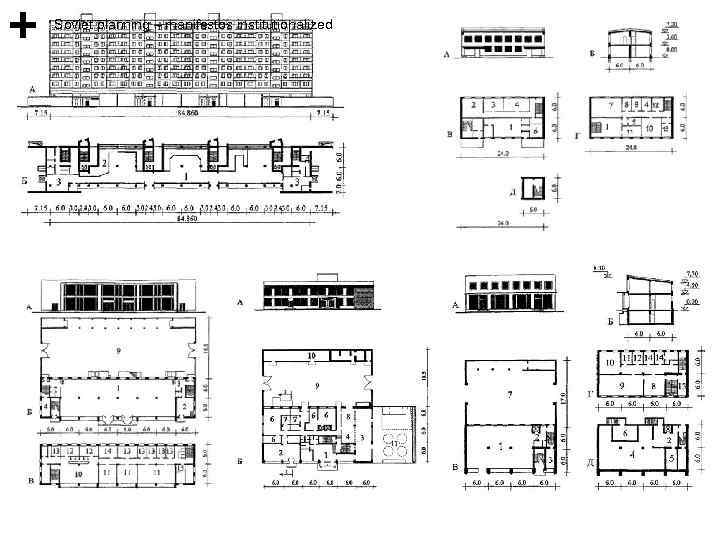
Soviet planning – manifestos institutionalized Planning instructions issued in 1962
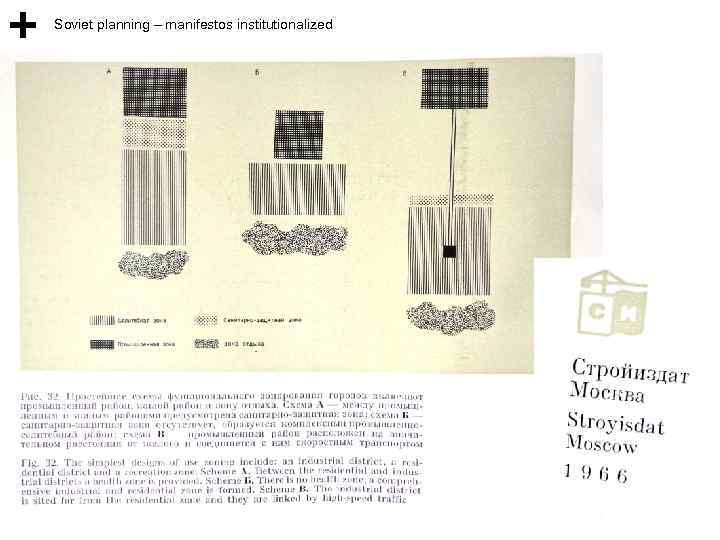
Soviet planning – manifestos institutionalized
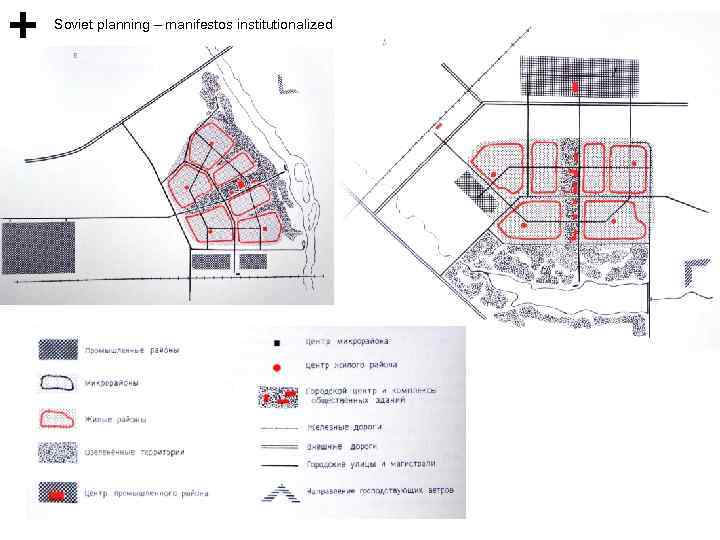
Soviet planning – manifestos institutionalized
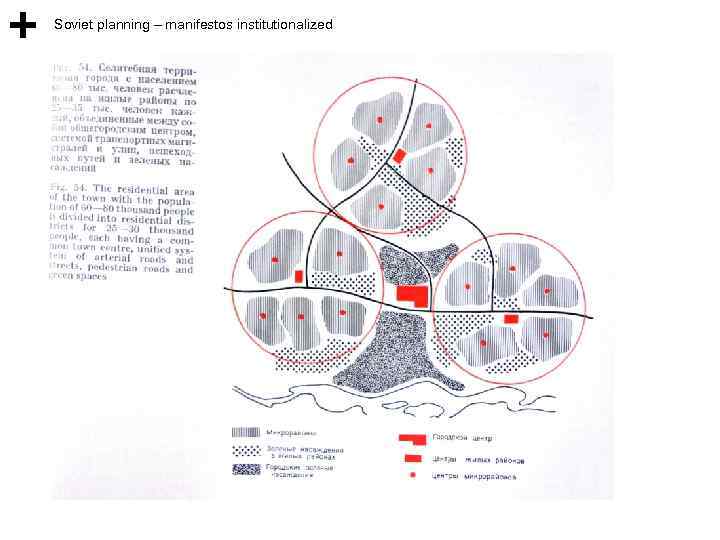
Soviet planning – manifestos institutionalized
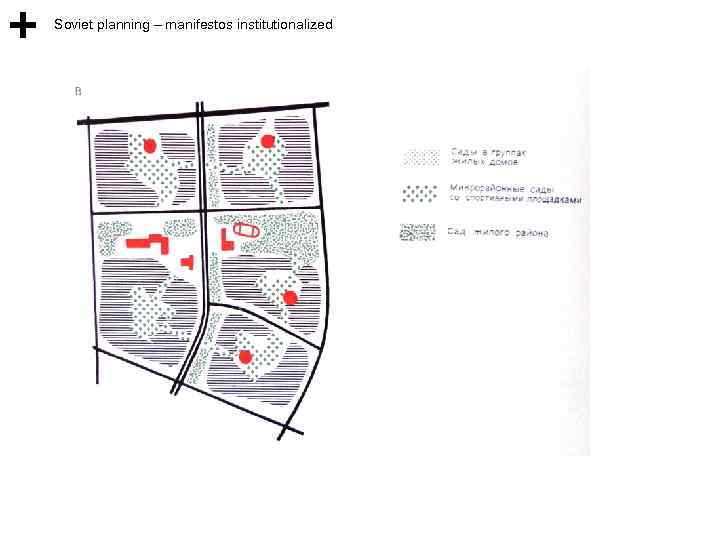
Soviet planning – manifestos institutionalized
Soviet planning – manifestos institutionalized
Soviet planning – manifestos institutionalized
Soviet planning – manifestos institutionalized
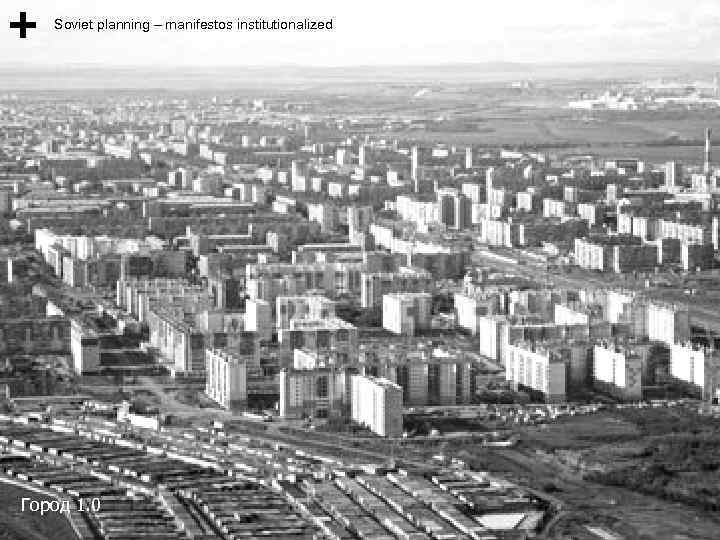
Soviet planning – manifestos institutionalized Город 1. 0
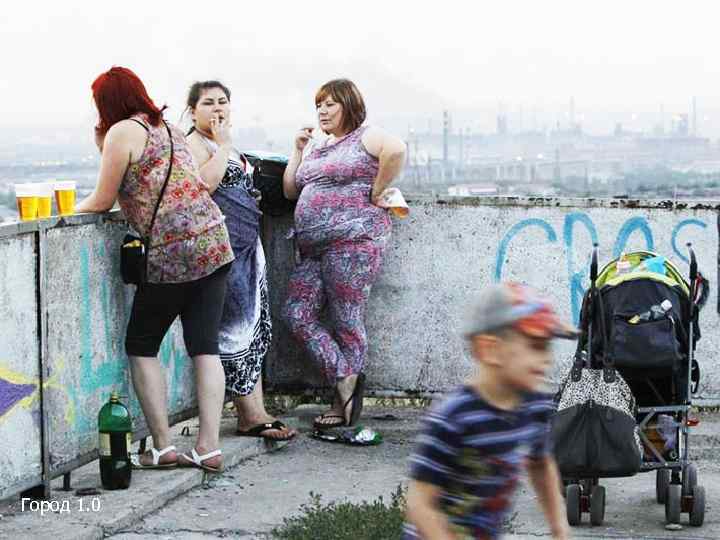
Город 1. 0
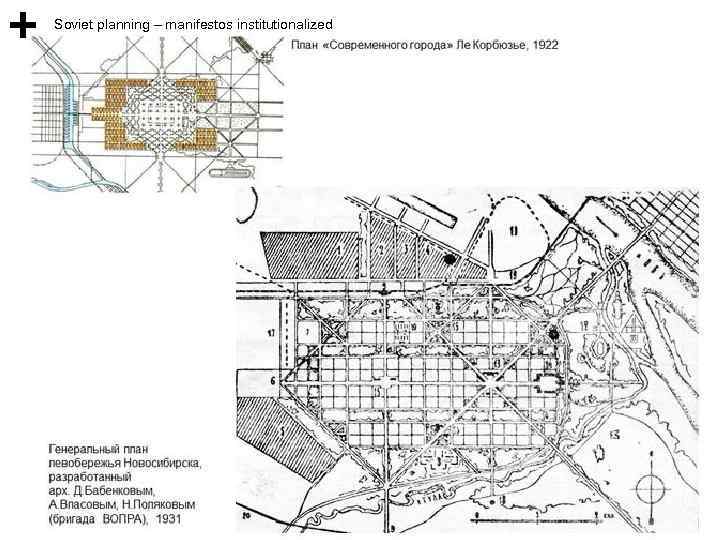
Soviet planning – manifestos institutionalized
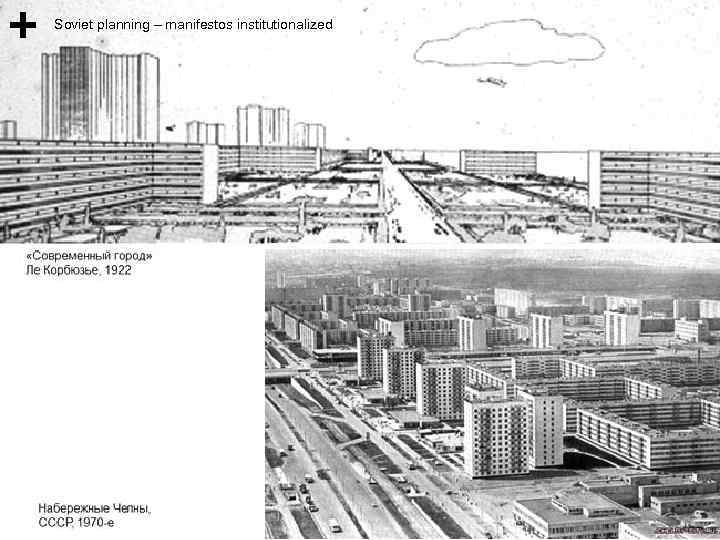
Soviet planning – manifestos institutionalized
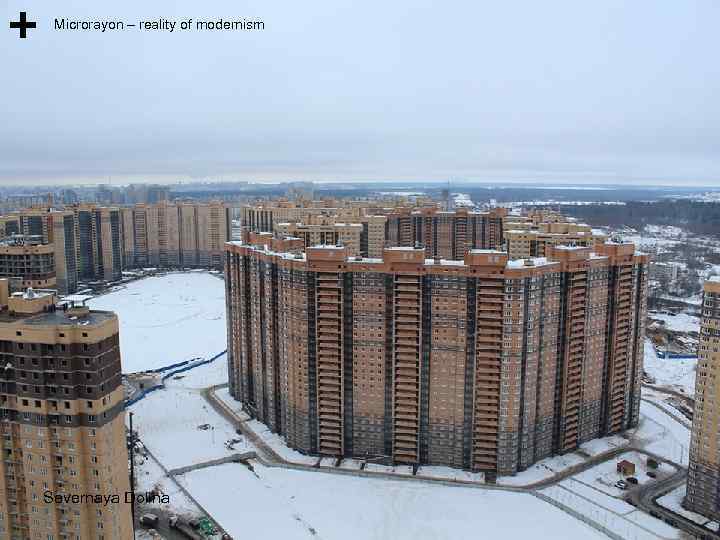
Microrayon – reality of modernism What does current planning deliver? Severnaya Dolina
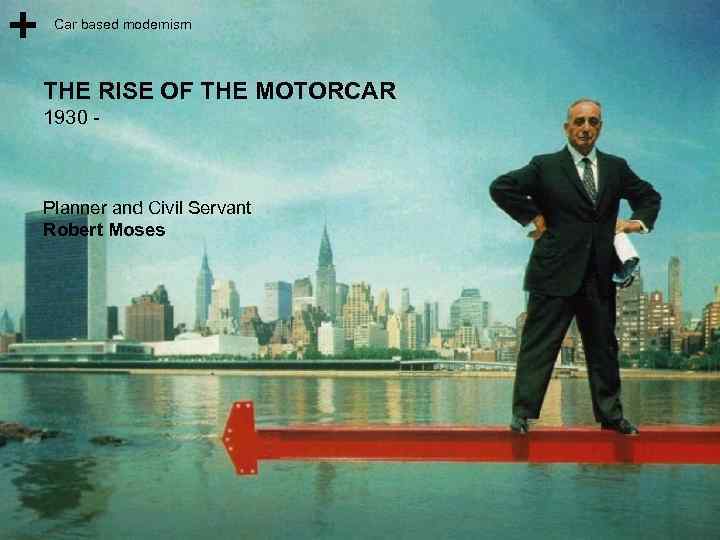
Car based modernism THE RISE OF THE MOTORCAR 1930 - Planner and Civil Servant Robert Moses
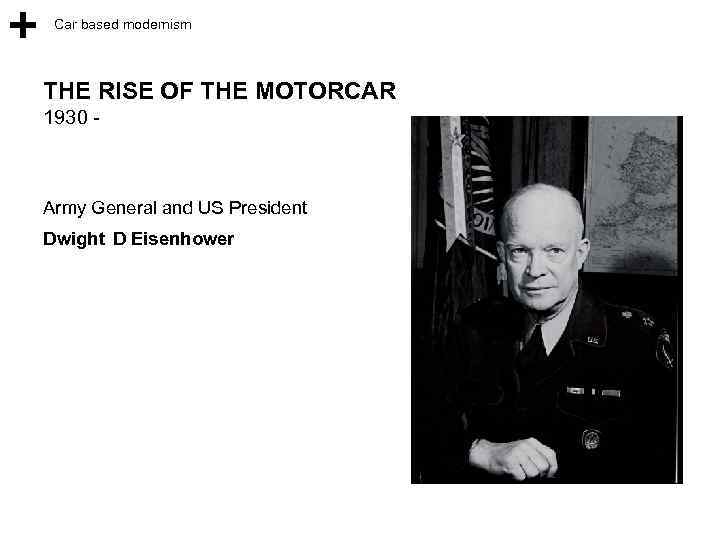
Car based modernism THE RISE OF THE MOTORCAR 1930 - Army General and US President Dwight D Eisenhower
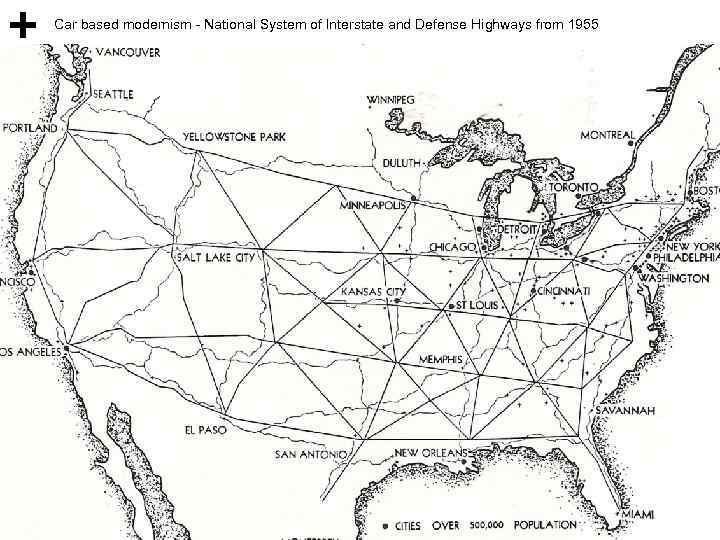
Car based modernism - National System of Interstate and Defense Highways from 1955

Car based modernism – also serves strategic questions
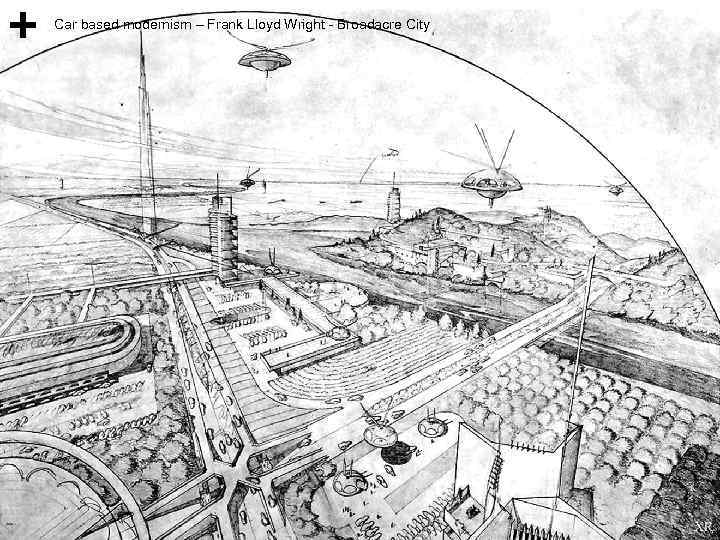
Car based modernism – Frank Lloyd Wright - Broadacre City
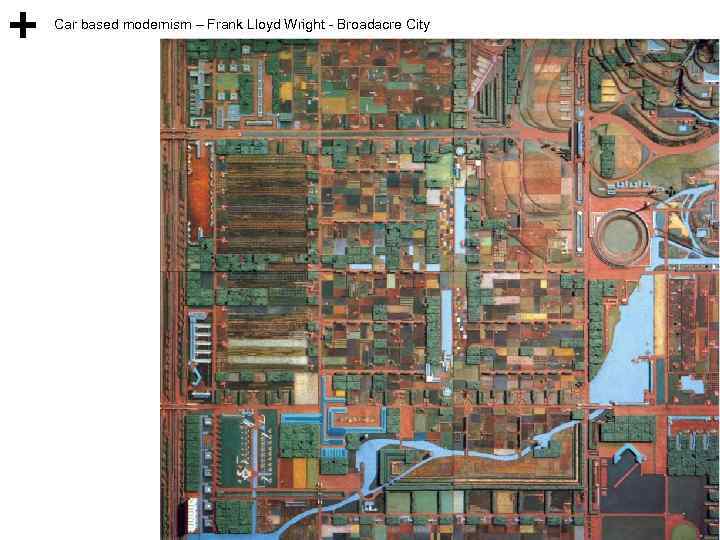
Car based modernism – Frank Lloyd Wright - Broadacre City
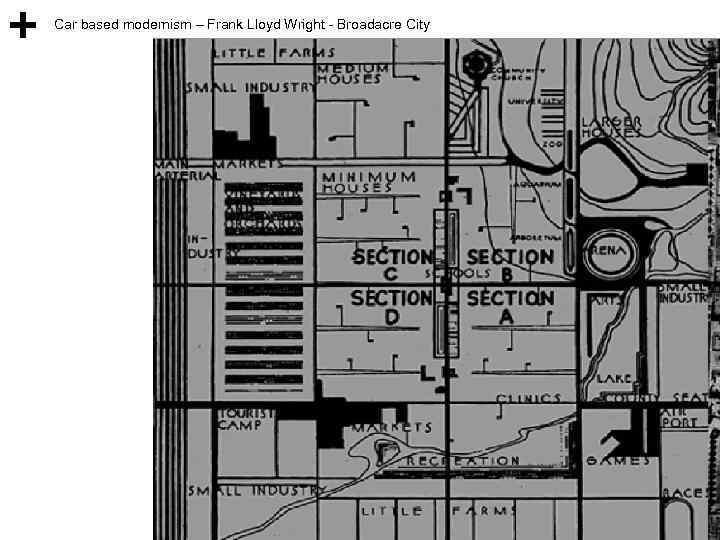
Car based modernism – Frank Lloyd Wright - Broadacre City
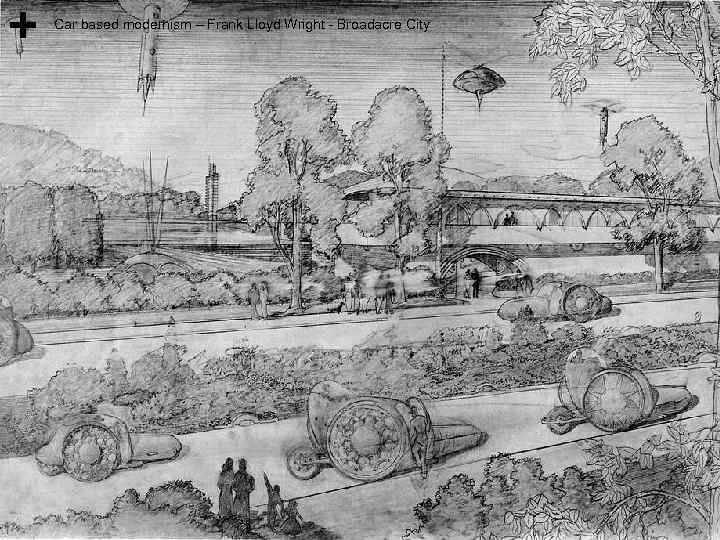
Car based modernism – Frank Lloyd Wright - Broadacre City
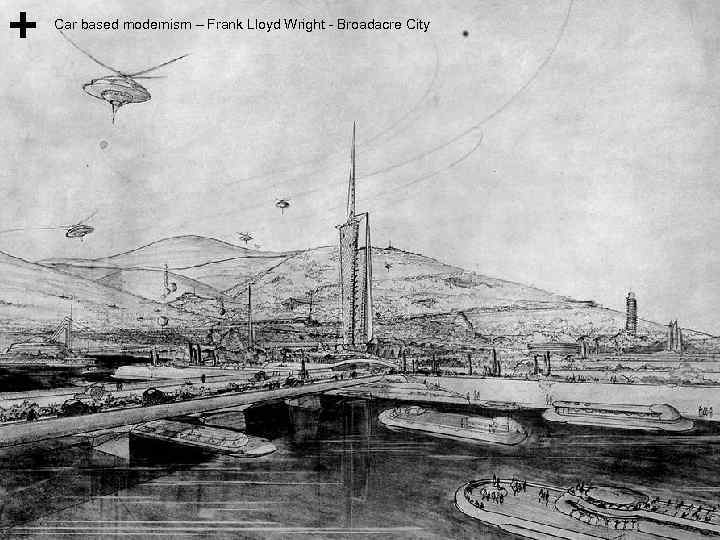
Car based modernism – Frank Lloyd Wright - Broadacre City
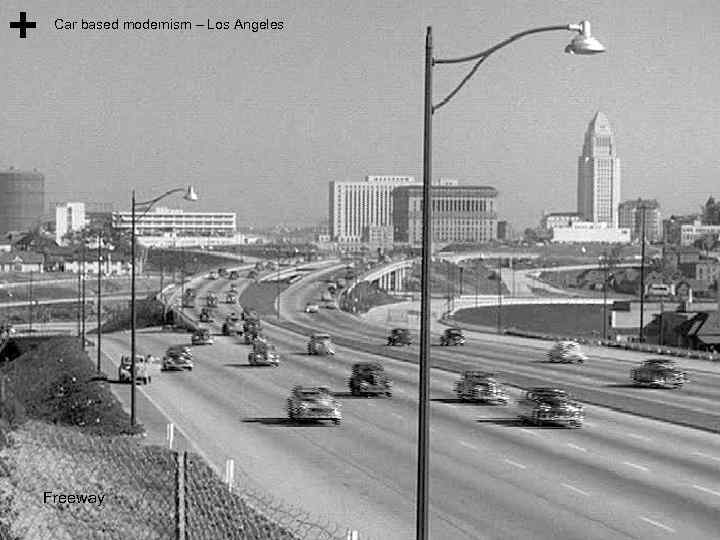
Car based modernism – Los Angeles Freeway
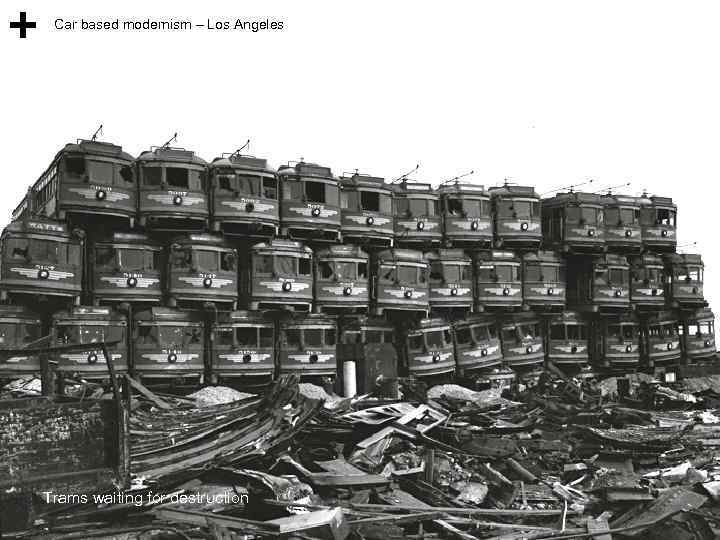
Car based modernism – Los Angeles Trams waiting for destruction
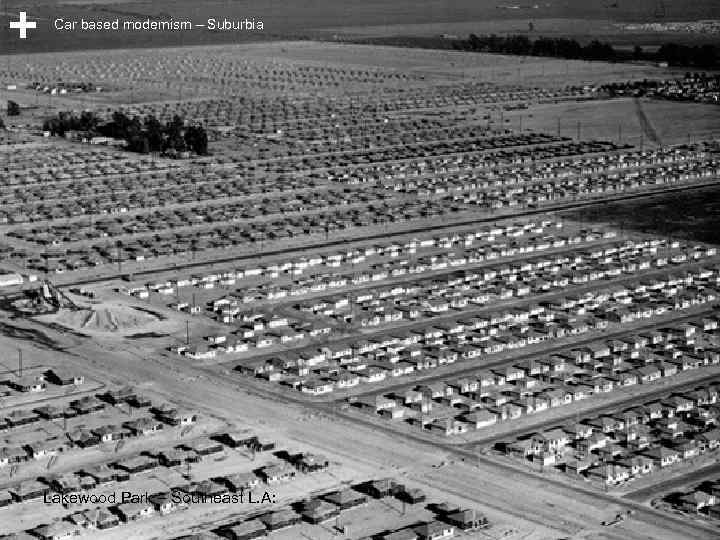
Car based modernism – Suburbia Lakewood Park – Southeast L. A:
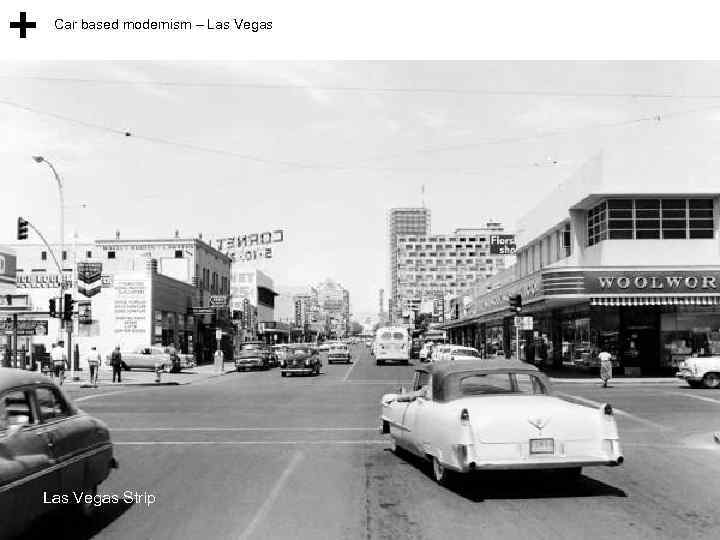
Car based modernism – Las Vegas Strip
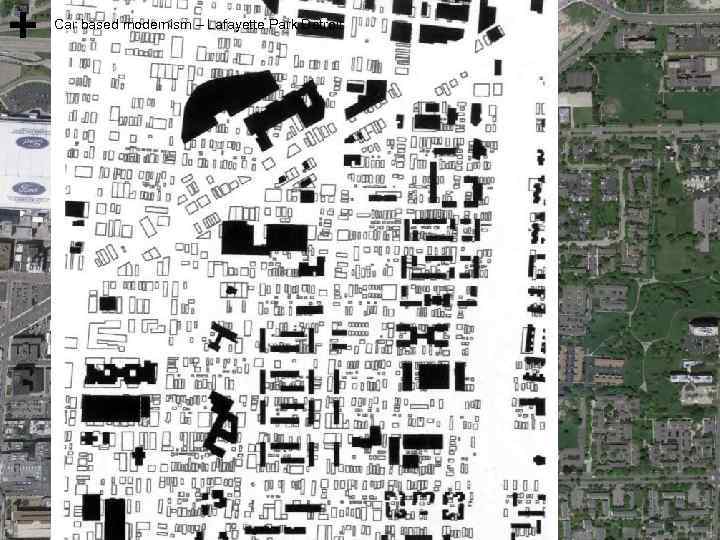
Car based modernism – Lafayette Park Detroit
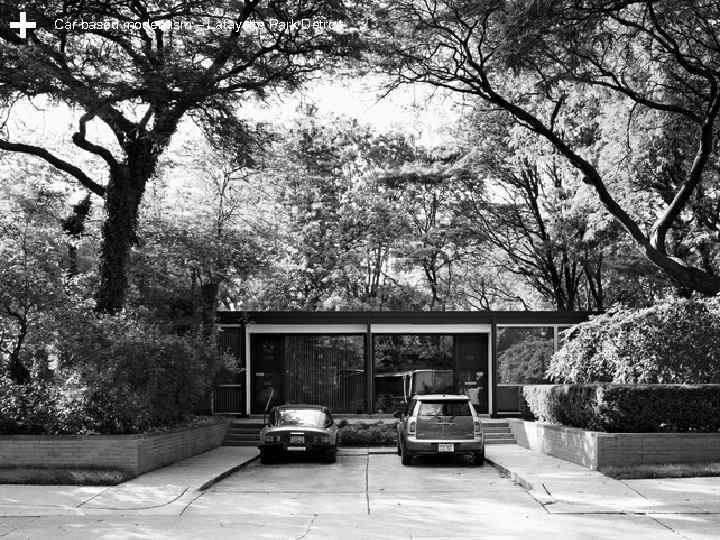
Car based modernism – Lafayette Park Detroit
Скачать презентацию 02 Planning manifestos Markus Appenzeller Yana Golubeva
02 Planning manifestos Part I+.pptx