


 Скачать презентацию 01 Welcome to Mars 02 First Permanent
51b14836a61b6db2ec297e8db3acb847.ppt
- Количество слайдов: 69
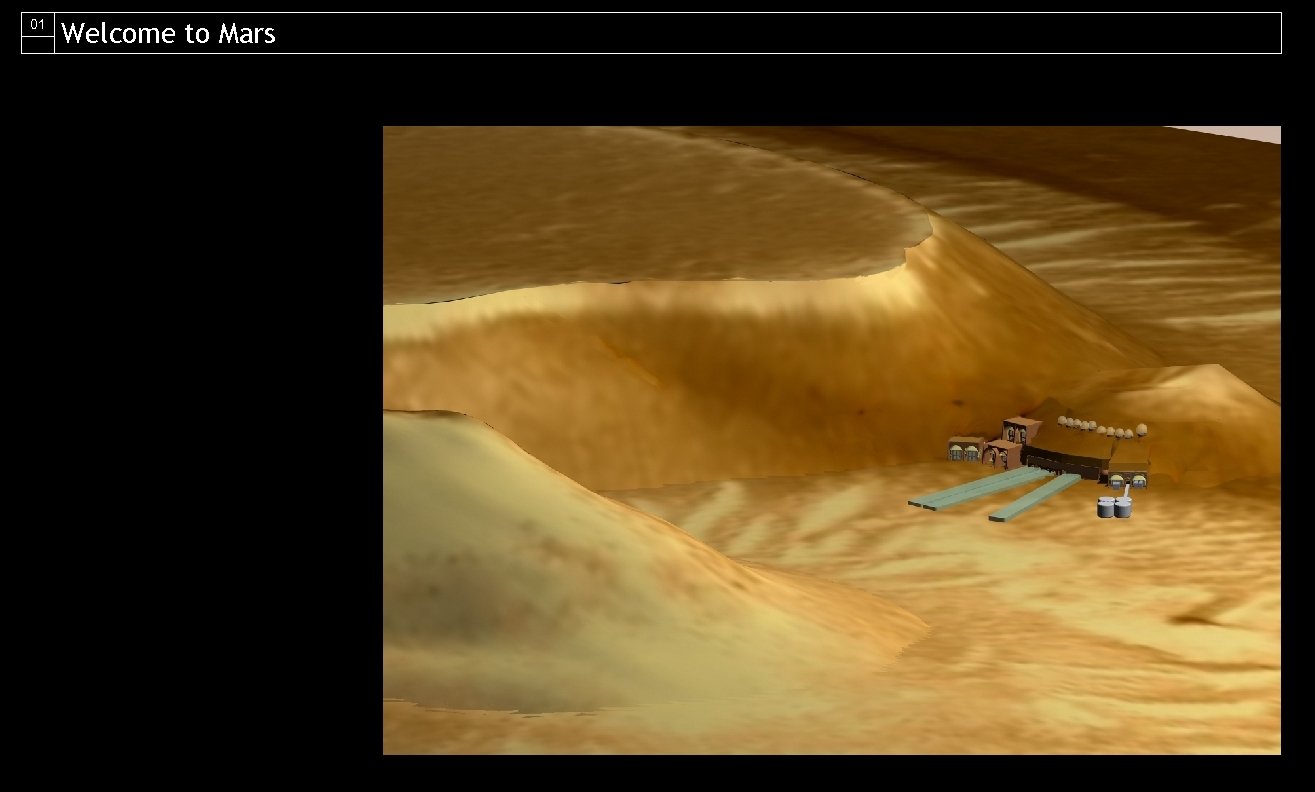 01 Welcome to Mars
 02 First Permanent Settlement on Mars Thesis Goals This thesis will strive to answer three parallel questions. Social and Design Challenge: How can a small group of people create a viable community in isolation? How can the habitable spaces be made sustainable and pleasant for humans living in extreme conditions? Engineering and Scientific Challenge: What are the engineering and structural imperatives, constraints, and opportunities in constructing habitable environments on Mars? Architecture and Engineering Synergy The two themes will be bound by the question of to what extent can architectural considerations have an impact on a construction with tight engineering constraints?
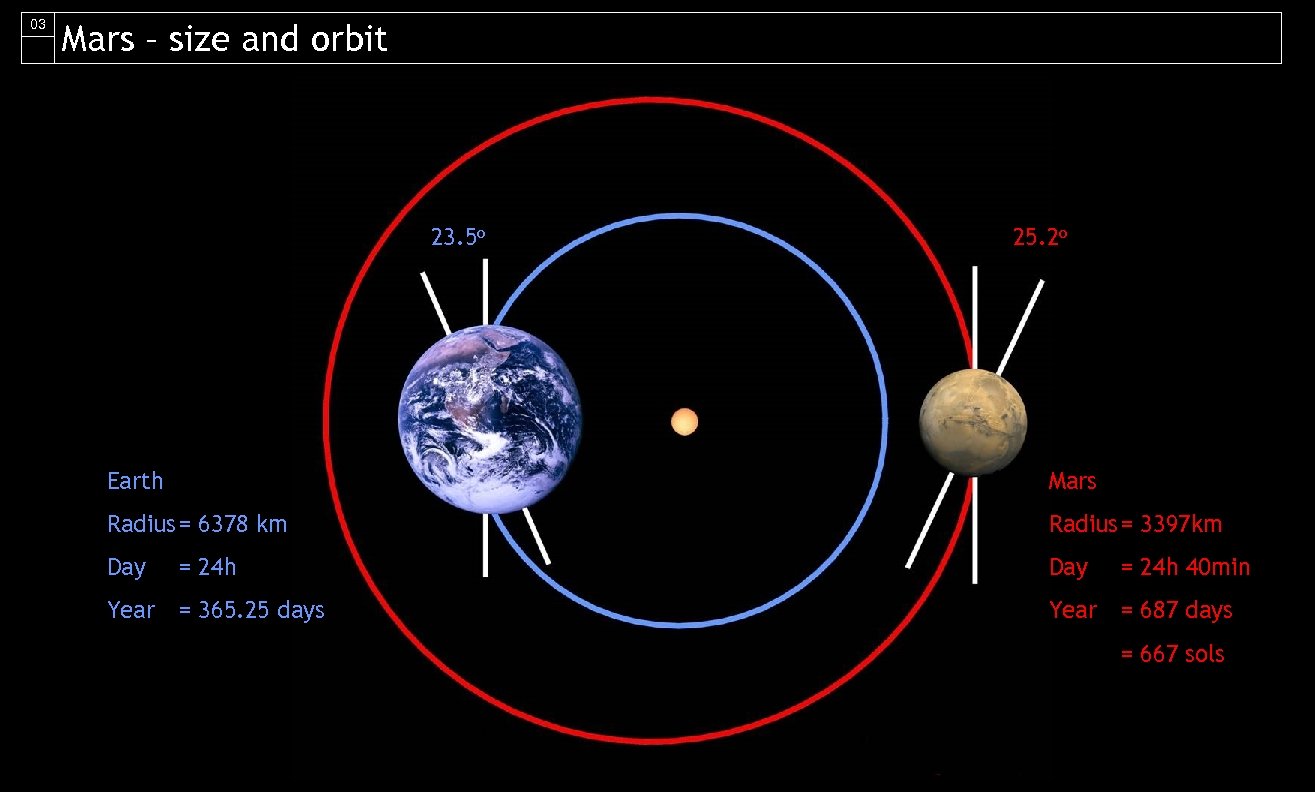 03 Mars – size and orbit 23. 5 o 25. 2 o Earth Mars Radius = 6378 km Radius = 3397 km Day = 24 h Year = 365. 25 days = 24 h 40 min Year = 687 days = 667 sols
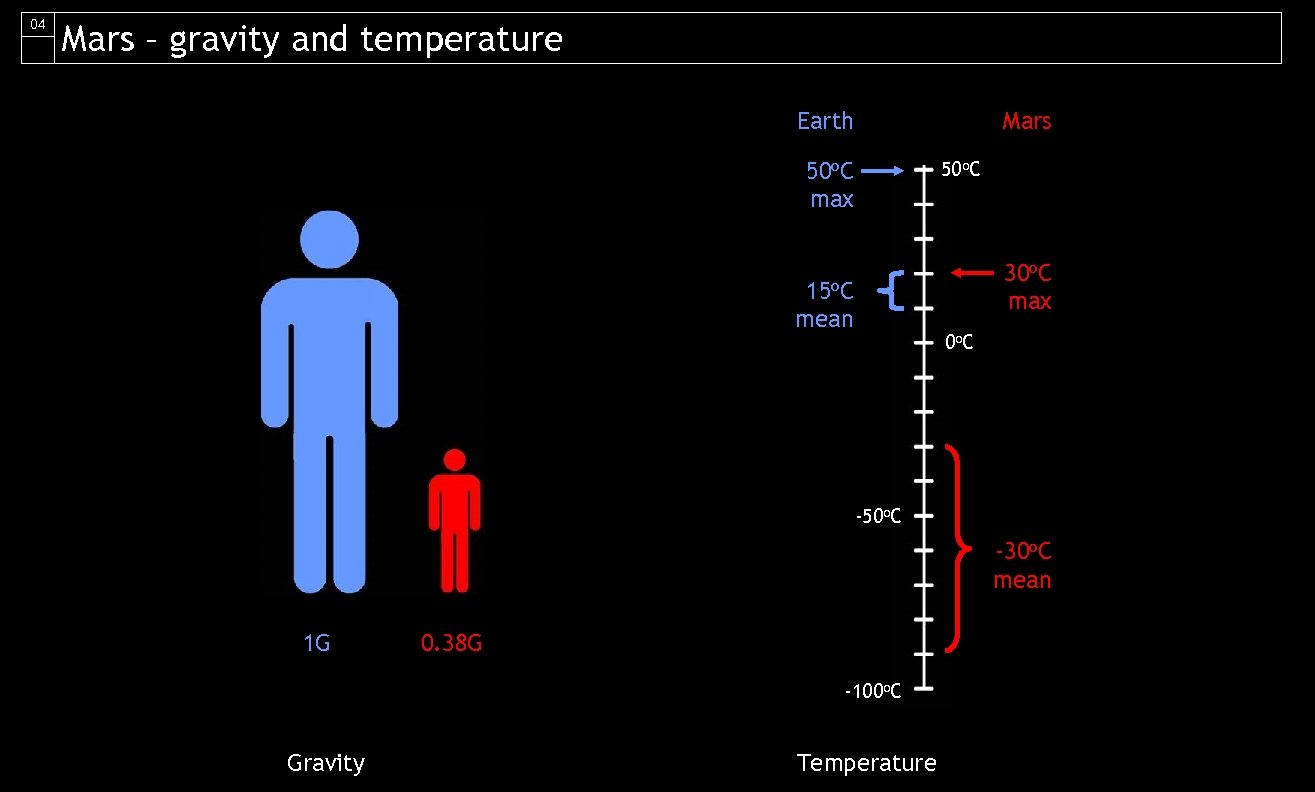 04 Mars – gravity and temperature Earth Mars 50 o. C max 50 o. C 30 o. C max 15 o. C mean 0 o C -50 o. C -30 o. C mean 1 G 0. 38 G -100 o. C Gravity Temperature
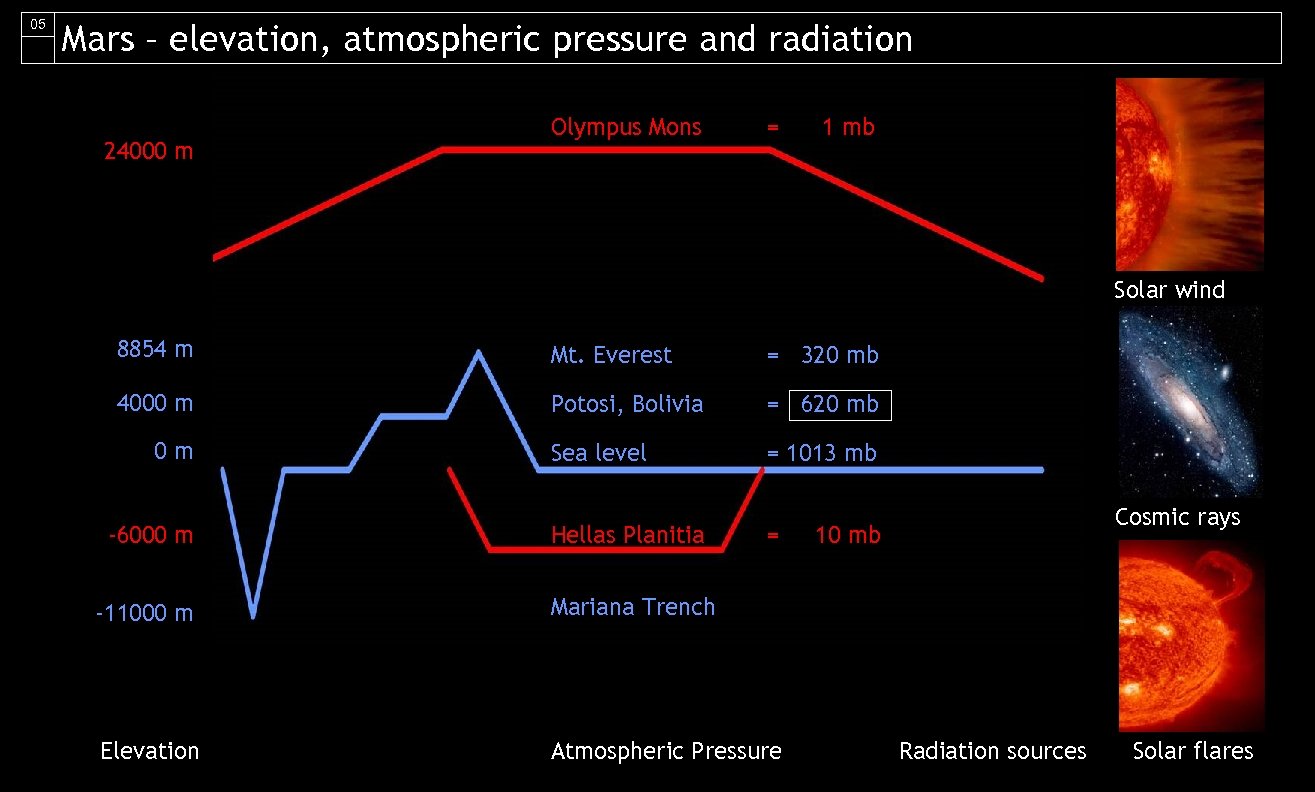 05 Mars – elevation, atmospheric pressure and radiation 24000 m Olympus Mons = 1 mb Solar wind 8854 m Mt. Everest = 320 mb 4000 m Potosi, Bolivia = 620 mb Sea level = 1013 mb 0 m -6000 m Hellas Planitia = -11000 m Mariana Trench Elevation Atmospheric Pressure Cosmic rays 10 mb Radiation sources Solar flares
 06 Settlement mission Establish a permanent base on Mars from which high-value scientific and engineering research can be performed 1. search for past and present life on Mars 2. basic science research to gain new knowledge about the solar system’s origin and history 3. applied science research on how to use Mars resources to augment life-sustaining systems
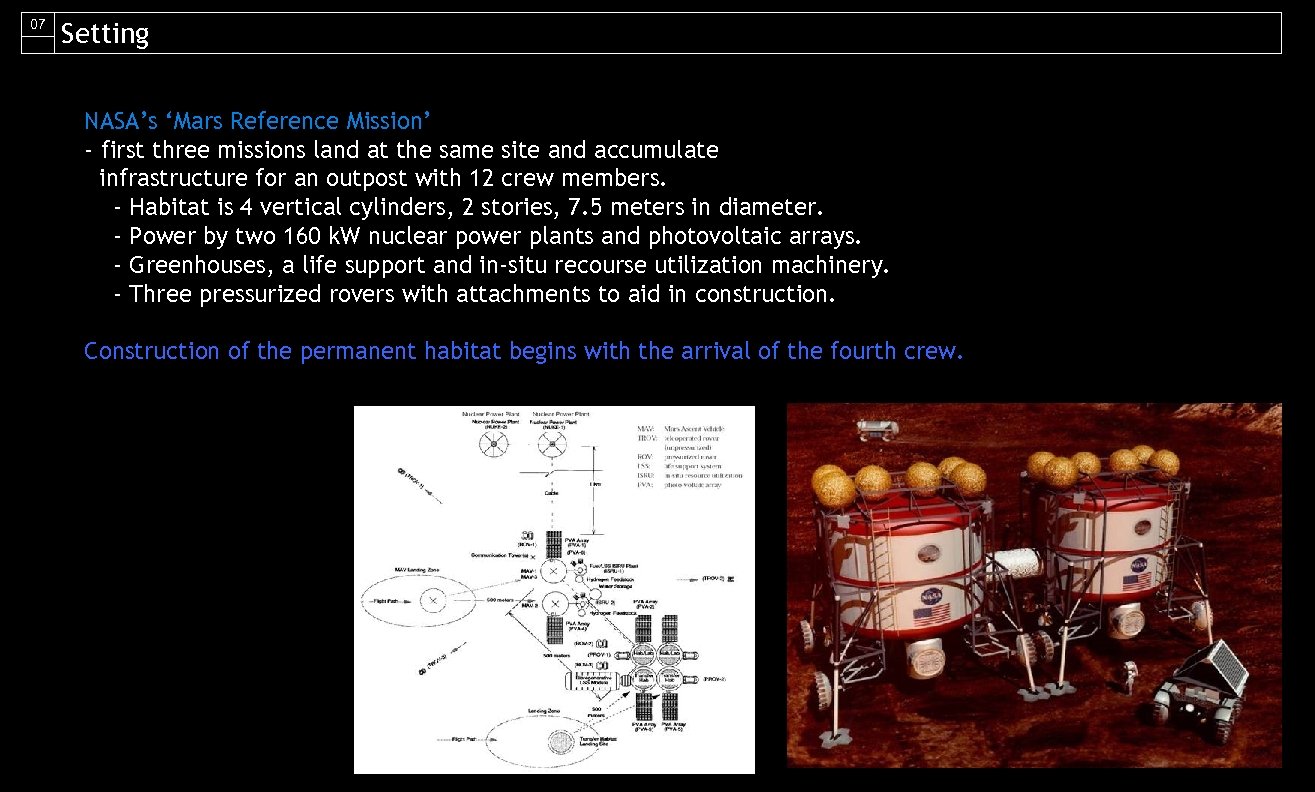 07 Setting NASA’s ‘Mars Reference Mission’ - first three missions land at the same site and accumulate infrastructure for an outpost with 12 crew members. - Habitat is 4 vertical cylinders, 2 stories, 7. 5 meters in diameter. - Power by two 160 k. W nuclear power plants and photovoltaic arrays. - Greenhouses, a life support and in-situ recourse utilization machinery. - Three pressurized rovers with attachments to aid in construction. Construction of the permanent habitat begins with the arrival of the fourth crew.
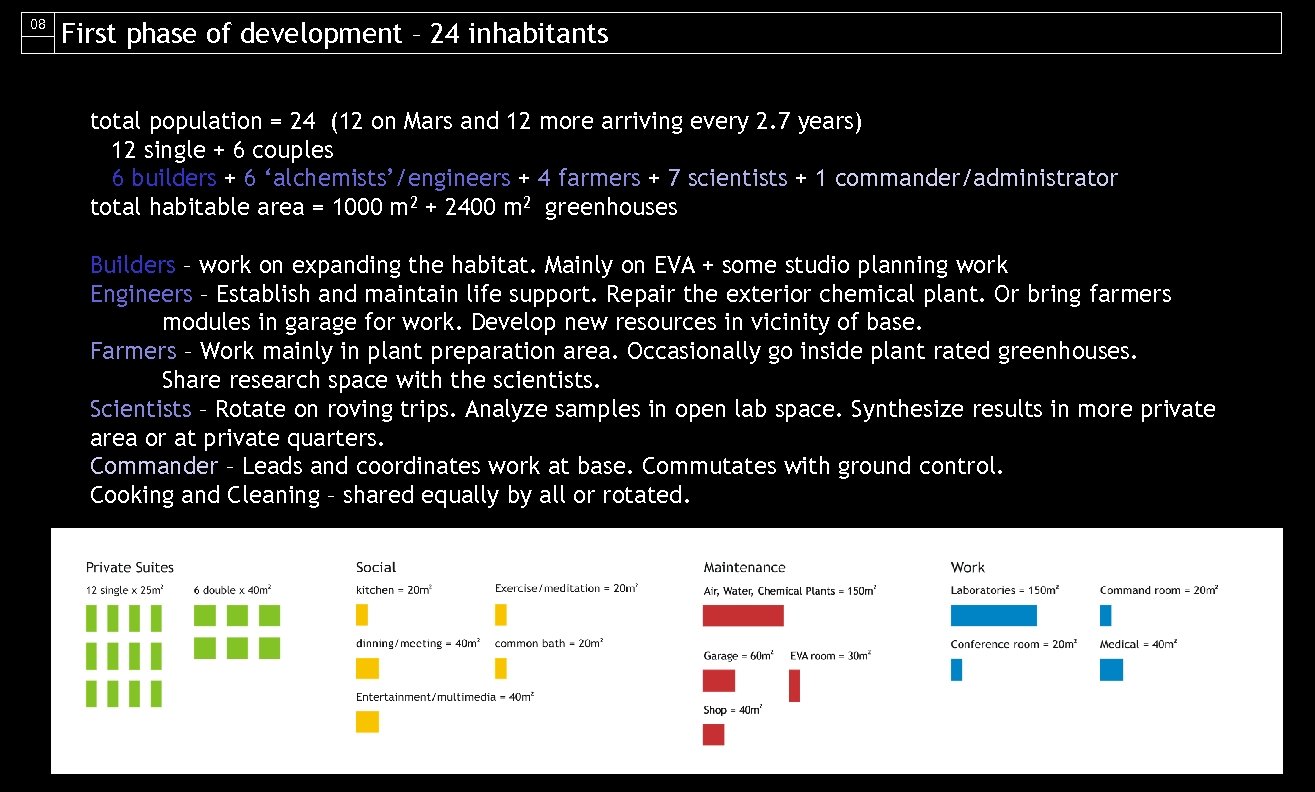 08 First phase of development – 24 inhabitants total population = 24 (12 on Mars and 12 more arriving every 2. 7 years) 12 single + 6 couples 6 builders + 6 ‘alchemists’/engineers + 4 farmers + 7 scientists + 1 commander/administrator total habitable area = 1000 m 2 + 2400 m 2 greenhouses Builders – work on expanding the habitat. Mainly on EVA + some studio planning work Engineers – Establish and maintain life support. Repair the exterior chemical plant. Or bring farmers modules in garage for work. Develop new resources in vicinity of base. Farmers – Work mainly in plant preparation area. Occasionally go inside plant rated greenhouses. Share research space with the scientists. Scientists – Rotate on roving trips. Analyze samples in open lab space. Synthesize results in more private area or at private quarters. Commander – Leads and coordinates work at base. Commutates with ground control. Cooking and Cleaning – shared equally by all or rotated.
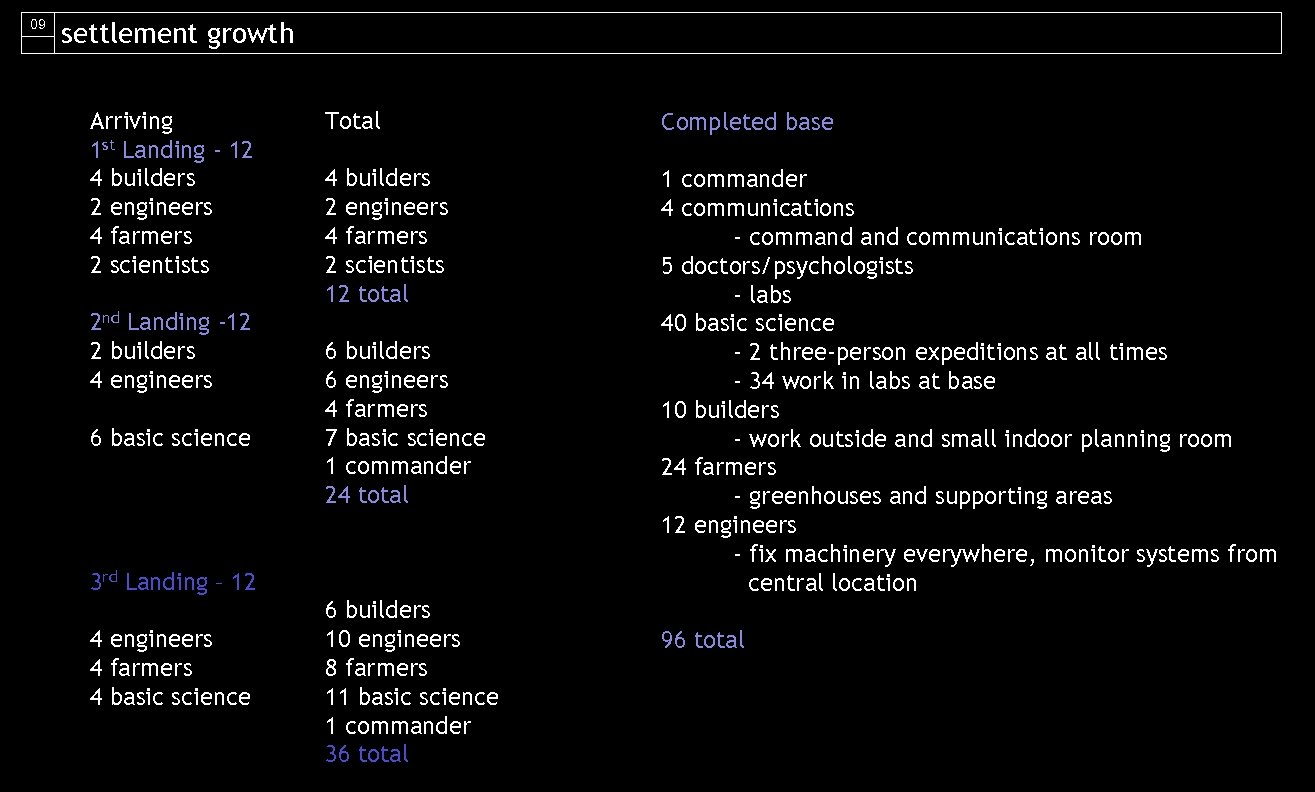 09 settlement growth Arriving 1 st Landing - 12 4 builders 2 engineers 4 farmers 2 scientists 2 nd Landing -12 2 builders 4 engineers 6 basic science Total Completed base 4 builders 2 engineers 4 farmers 2 scientists 12 total 1 commander 4 communications - command communications room 5 doctors/psychologists - labs 40 basic science - 2 three-person expeditions at all times - 34 work in labs at base 10 builders - work outside and small indoor planning room 24 farmers - greenhouses and supporting areas 12 engineers - fix machinery everywhere, monitor systems from central location 6 builders 6 engineers 4 farmers 7 basic science 1 commander 24 total 3 rd Landing – 12 4 engineers 4 farmers 4 basic science 6 builders 10 engineers 8 farmers 11 basic science 1 commander 36 total 96 total
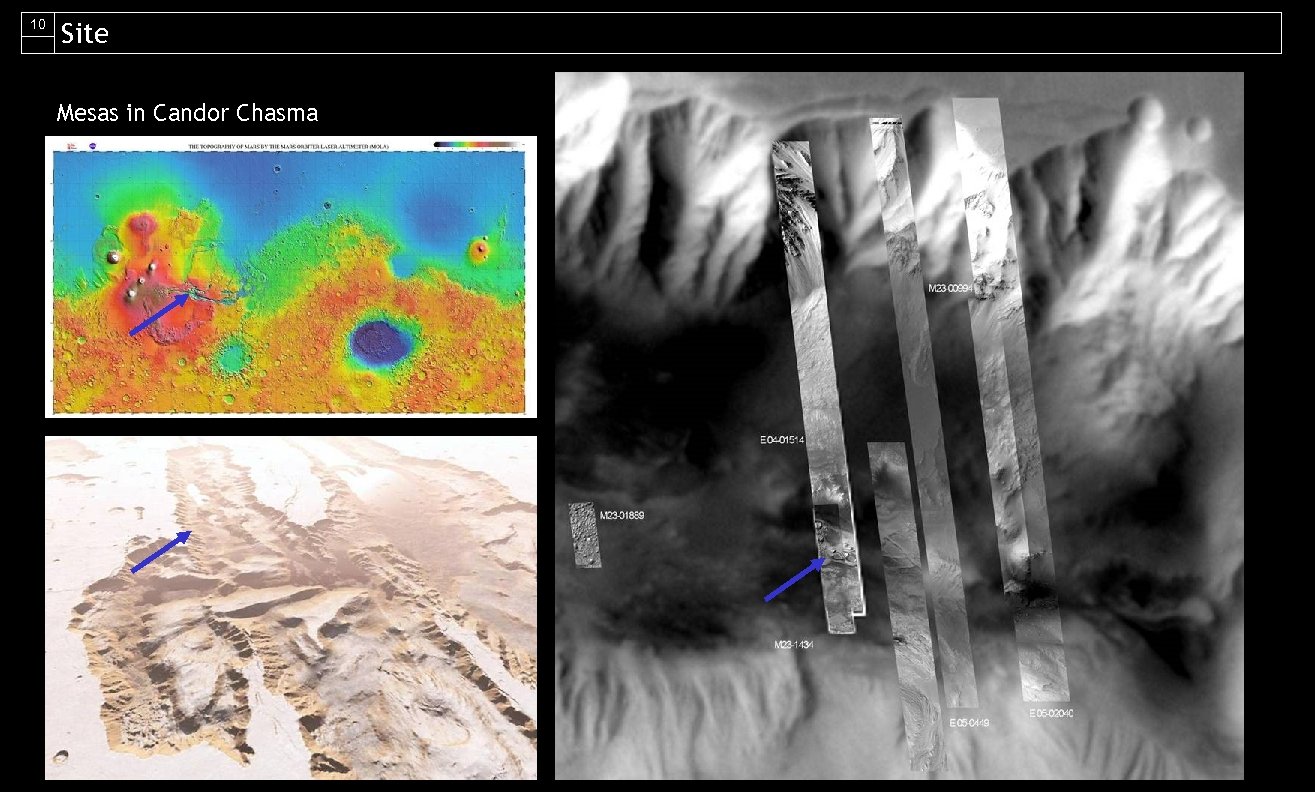 10 Site Mesas in Candor Chasma
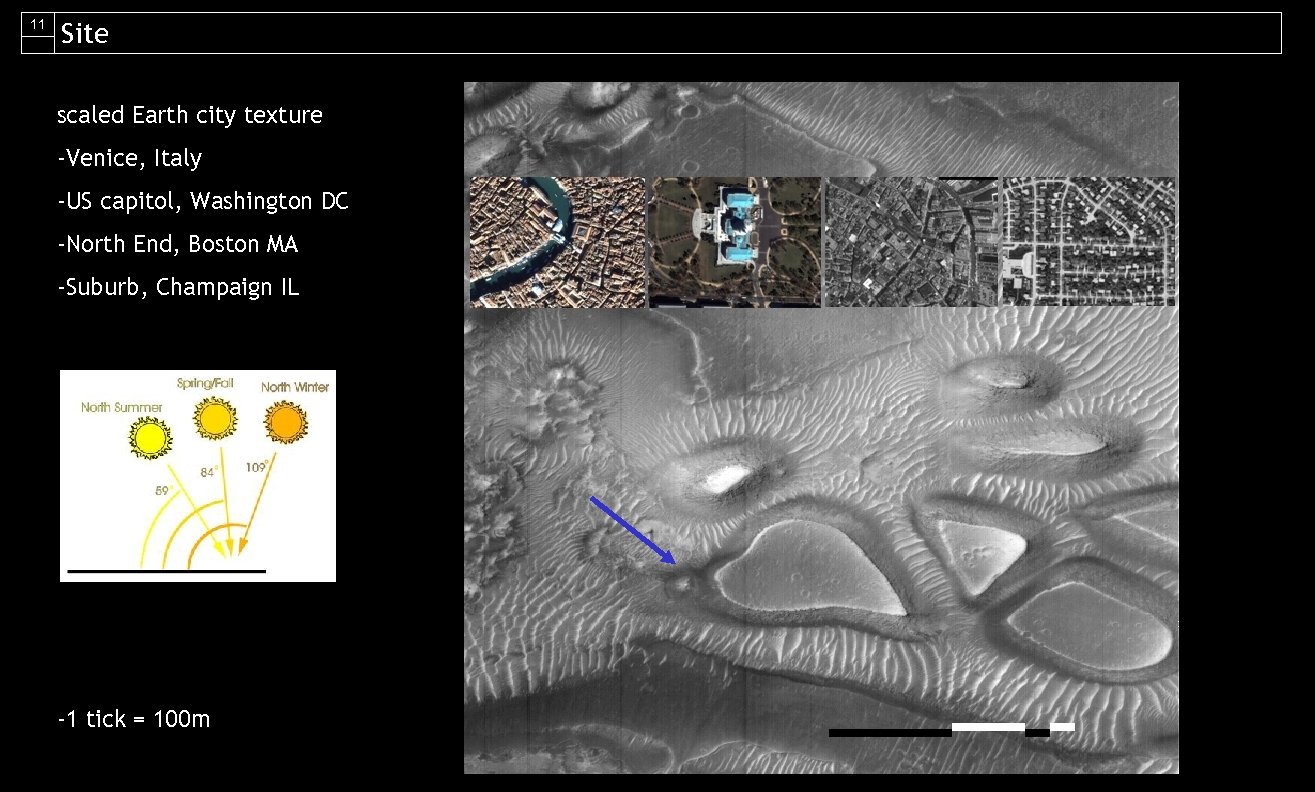 11 Site scaled Earth city texture -Venice, Italy -US capitol, Washington DC -North End, Boston MA -Suburb, Champaign IL -1 tick = 100 m
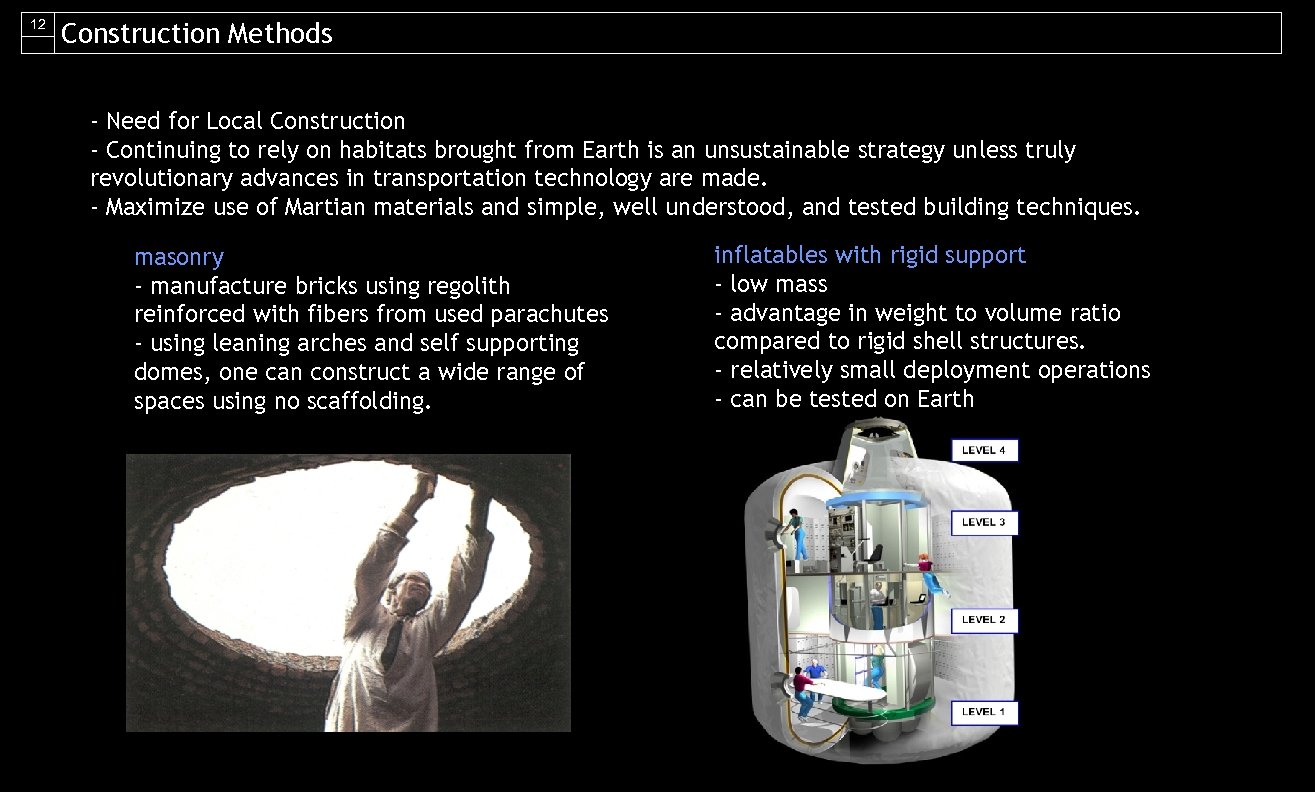 12 Construction Methods - Need for Local Construction - Continuing to rely on habitats brought from Earth is an unsustainable strategy unless truly revolutionary advances in transportation technology are made. - Maximize use of Martian materials and simple, well understood, and tested building techniques. masonry - manufacture bricks using regolith reinforced with fibers from used parachutes - using leaning arches and self supporting domes, one can construct a wide range of spaces using no scaffolding. inflatables with rigid support - low mass - advantage in weight to volume ratio compared to rigid shell structures. - relatively small deployment operations - can be tested on Earth
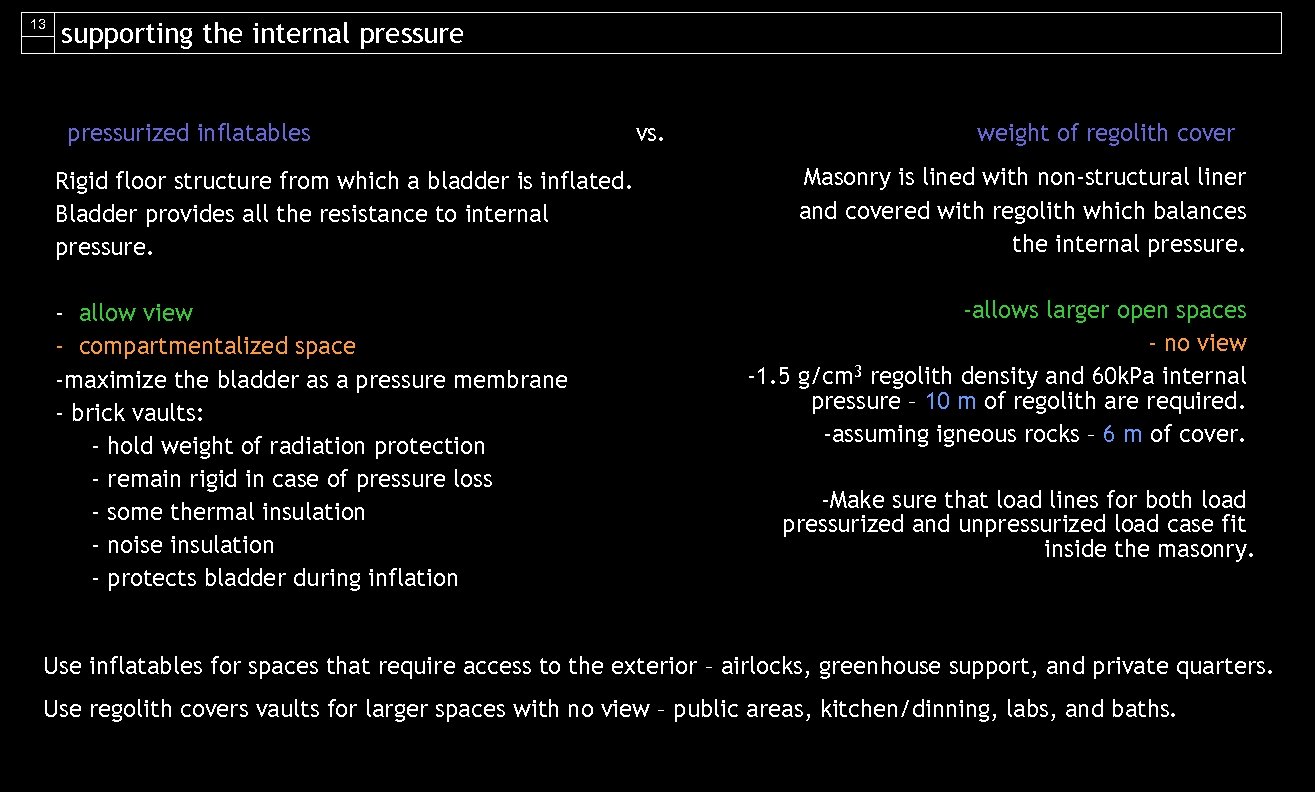 13 supporting the internal pressure pressurized inflatables Rigid floor structure from which a bladder is inflated. Bladder provides all the resistance to internal pressure. - allow view - compartmentalized space -maximize the bladder as a pressure membrane - brick vaults: - hold weight of radiation protection - remain rigid in case of pressure loss - some thermal insulation - noise insulation - protects bladder during inflation vs. weight of regolith cover Masonry is lined with non-structural liner and covered with regolith which balances the internal pressure. -allows larger open spaces - no view -1. 5 g/cm 3 regolith density and 60 k. Pa internal pressure – 10 m of regolith are required. -assuming igneous rocks – 6 m of cover. -Make sure that load lines for both load pressurized and unpressurized load case fit inside the masonry. Use inflatables for spaces that require access to the exterior – airlocks, greenhouse support, and private quarters. Use regolith covers vaults for larger spaces with no view – public areas, kitchen/dinning, labs, and baths.
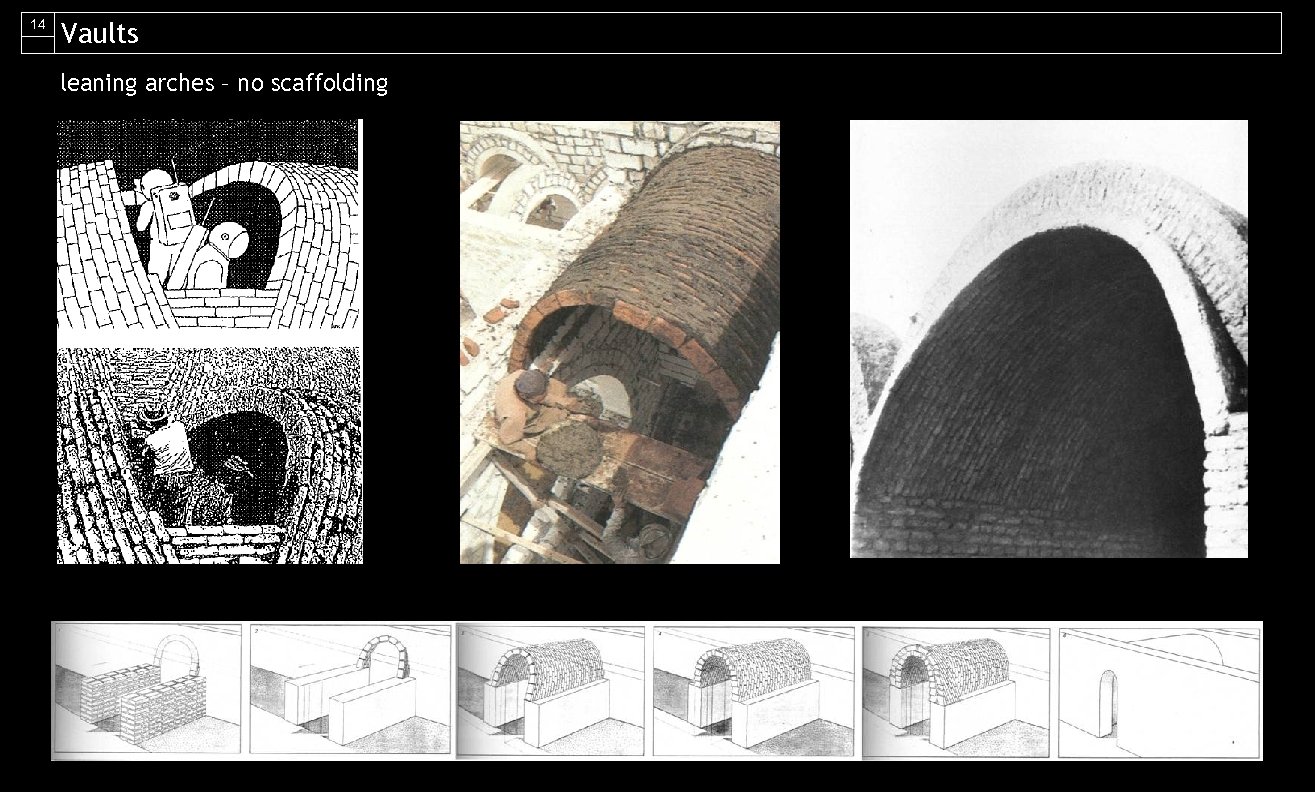 14 Vaults leaning arches – no scaffolding
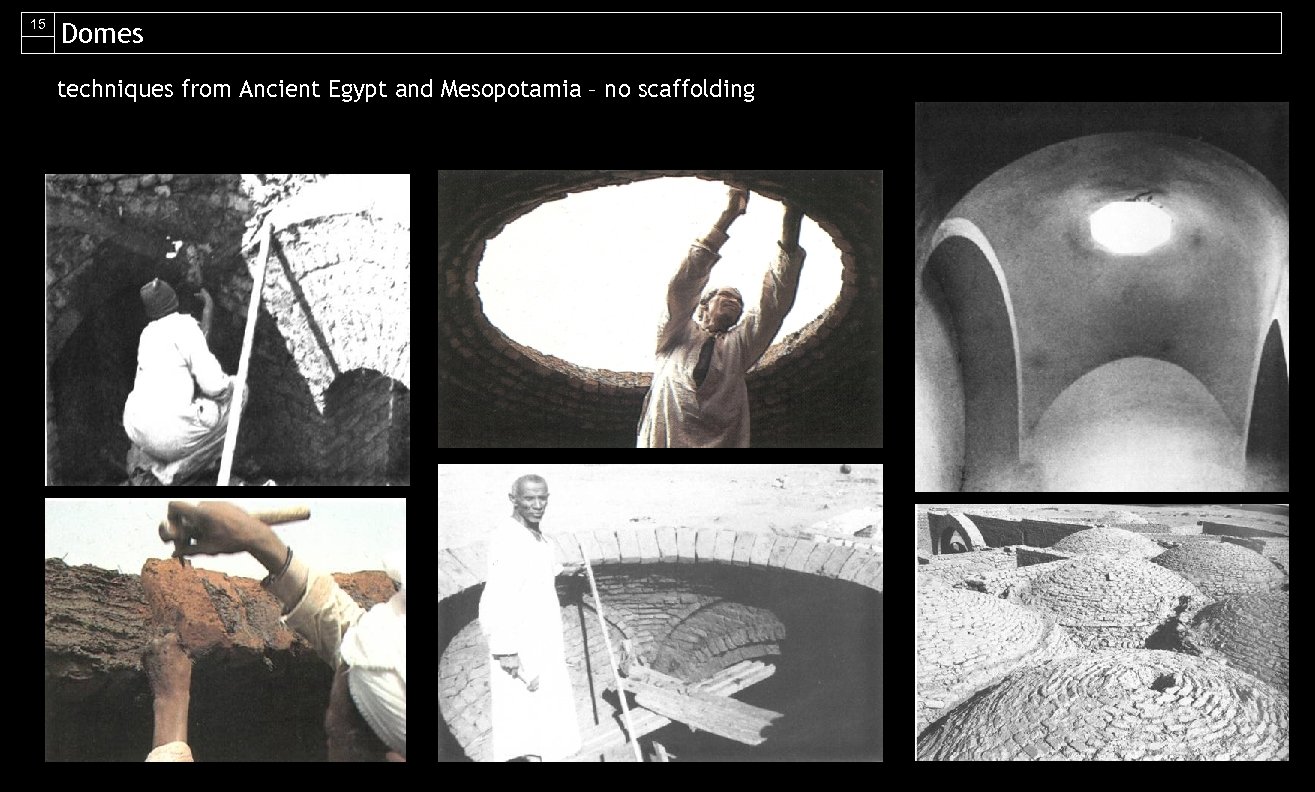 15 Domes techniques from Ancient Egypt and Mesopotamia – no scaffolding
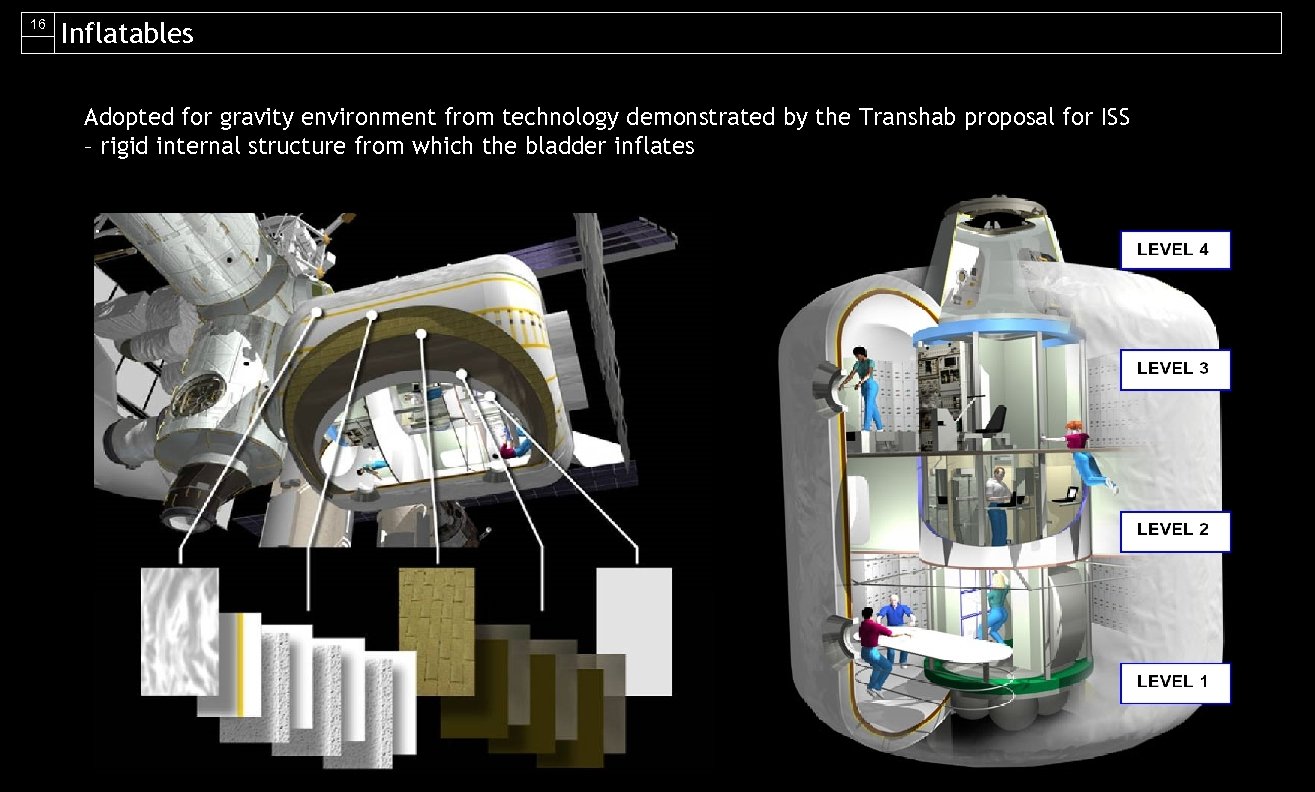 16 Inflatables Adopted for gravity environment from technology demonstrated by the Transhab proposal for ISS – rigid internal structure from which the bladder inflates
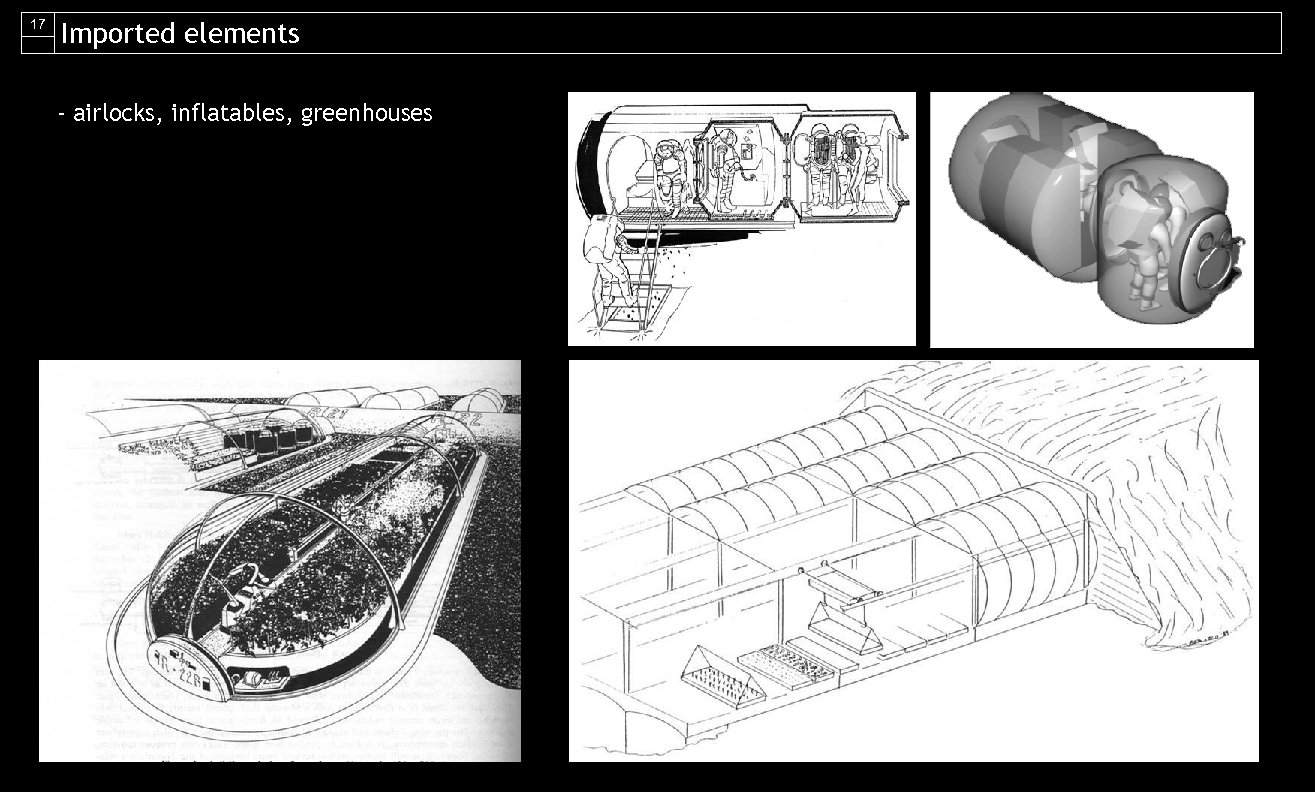 17 Imported elements - airlocks, inflatables, greenhouses
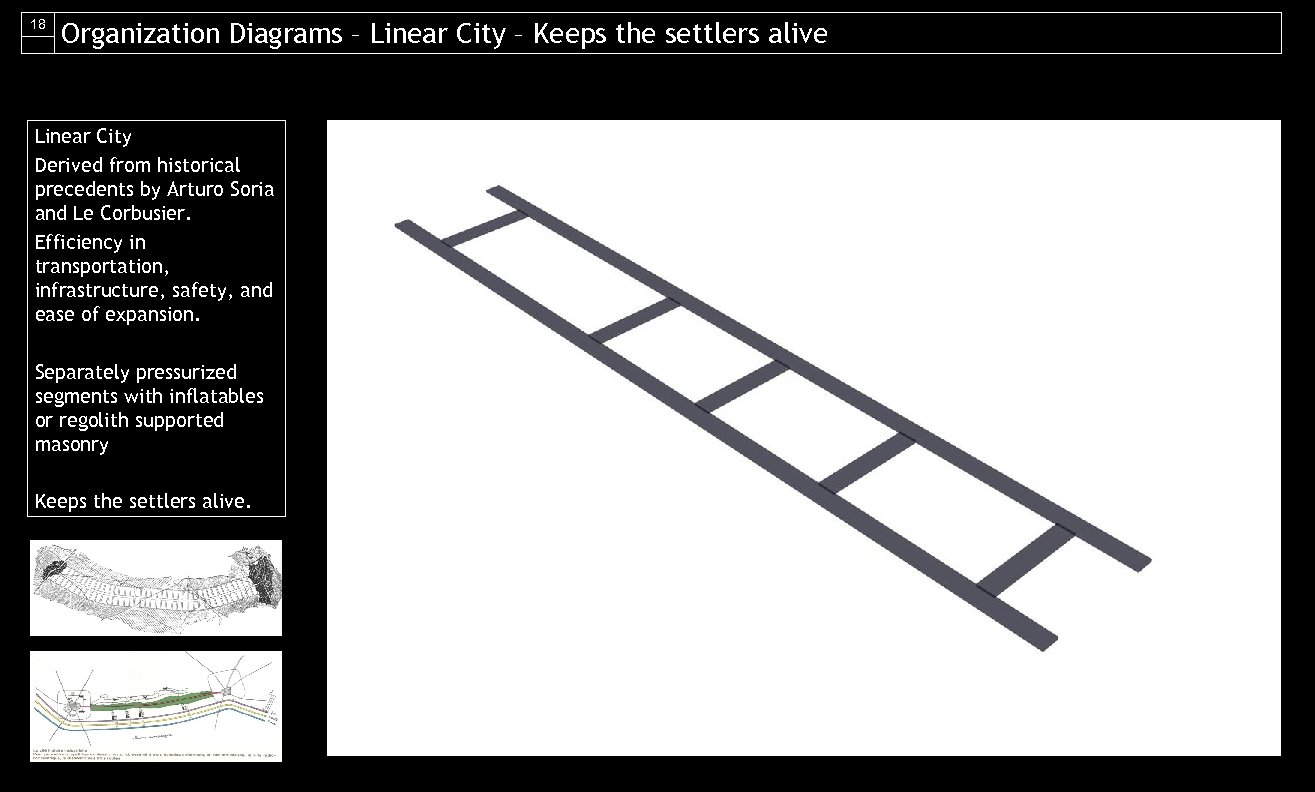 18 Organization Diagrams – Linear City – Keeps the settlers alive Linear City Derived from historical precedents by Arturo Soria and Le Corbusier. Efficiency in transportation, infrastructure, safety, and ease of expansion. Separately pressurized segments with inflatables or regolith supported masonry Keeps the settlers alive.
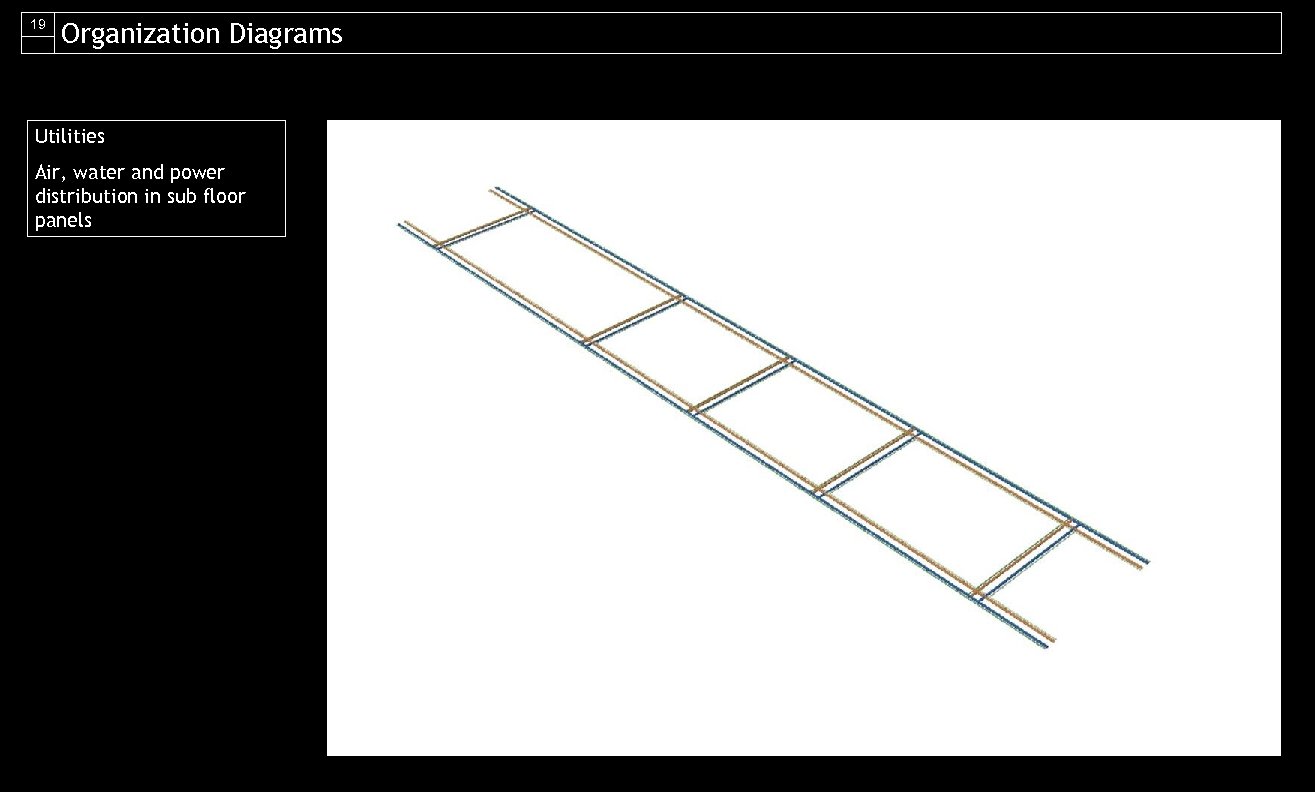 19 Organization Diagrams Utilities Air, water and power distribution in sub floor panels
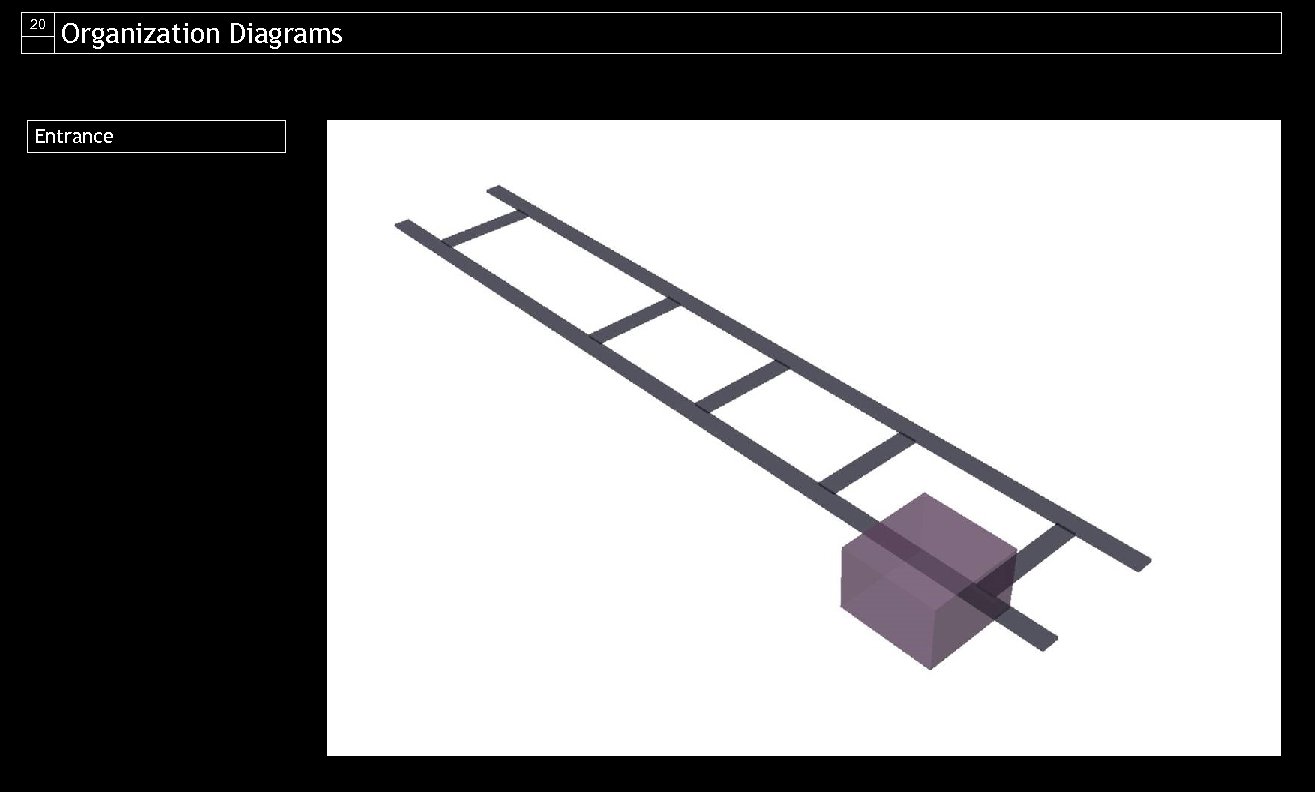 20 Organization Diagrams Entrance
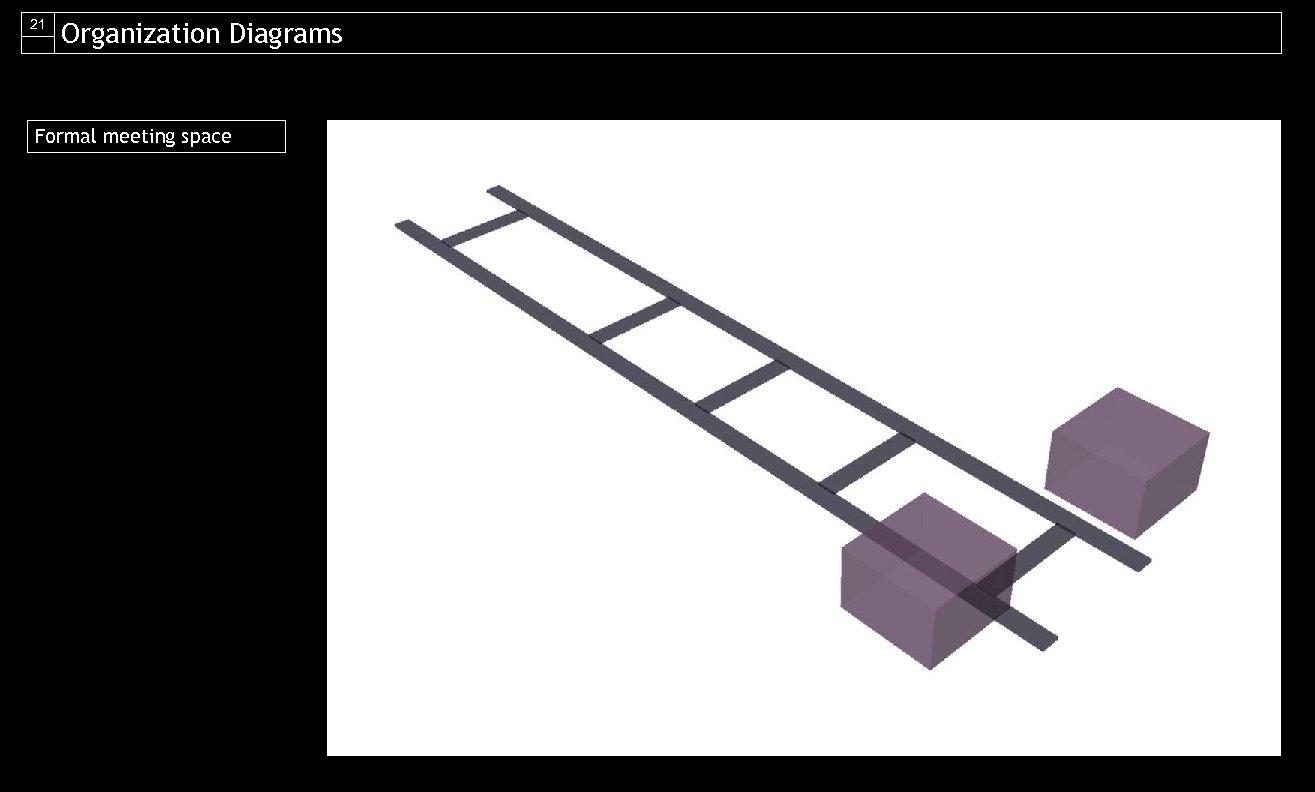 21 Organization Diagrams Formal meeting space
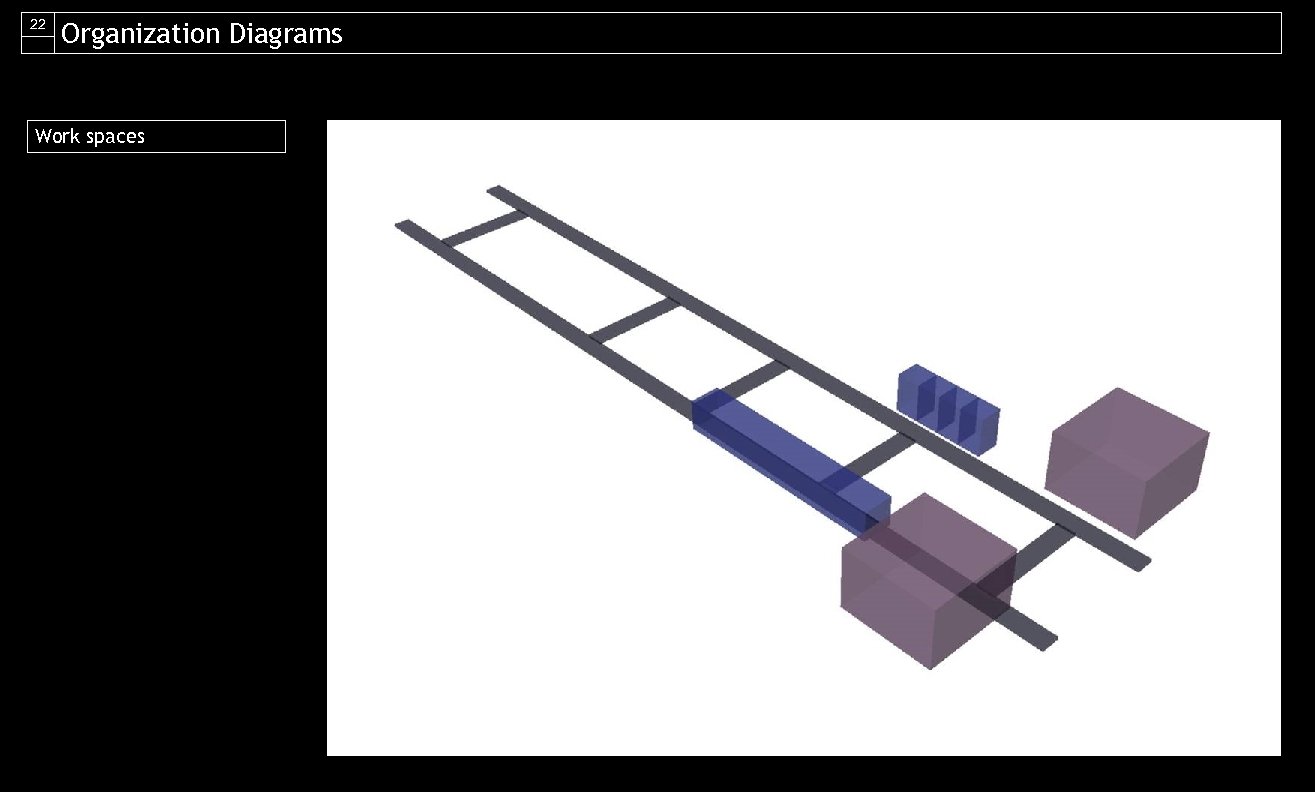 22 Organization Diagrams Work spaces
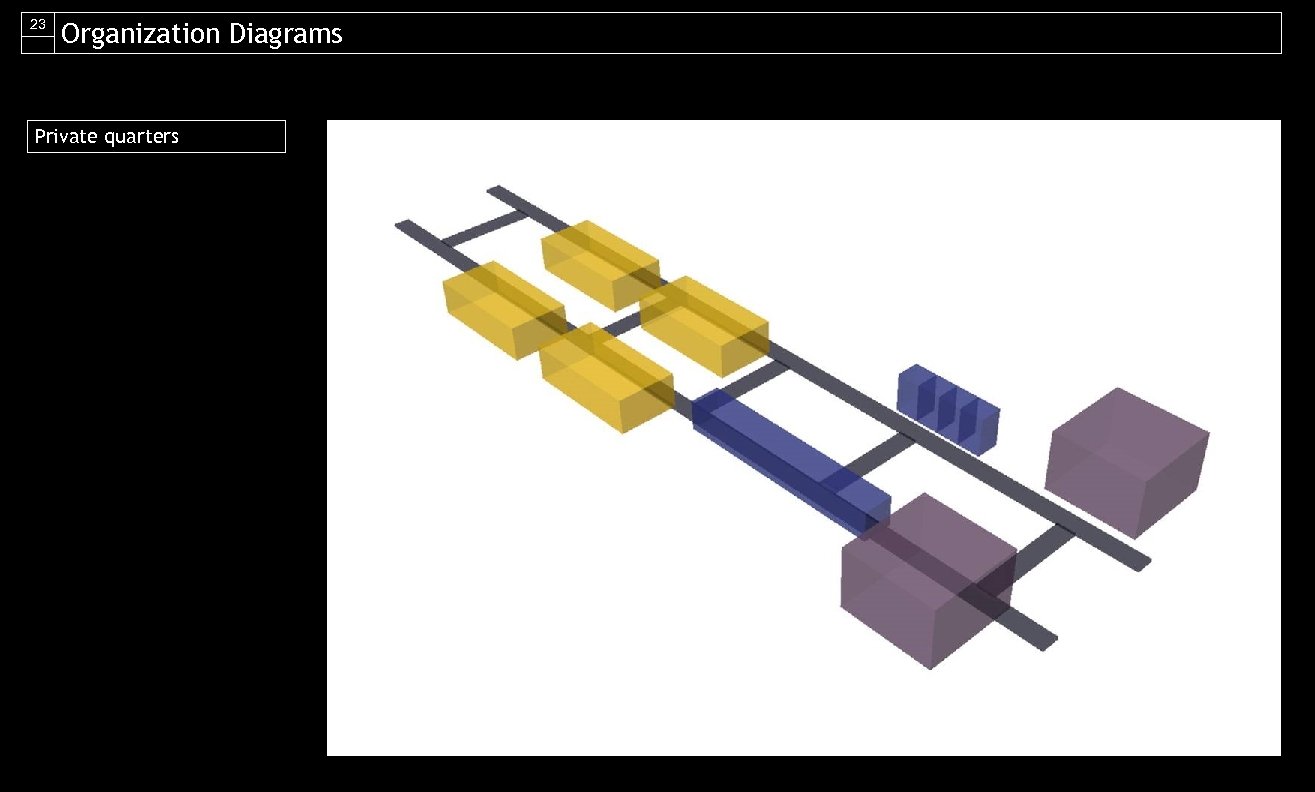 23 Organization Diagrams Private quarters
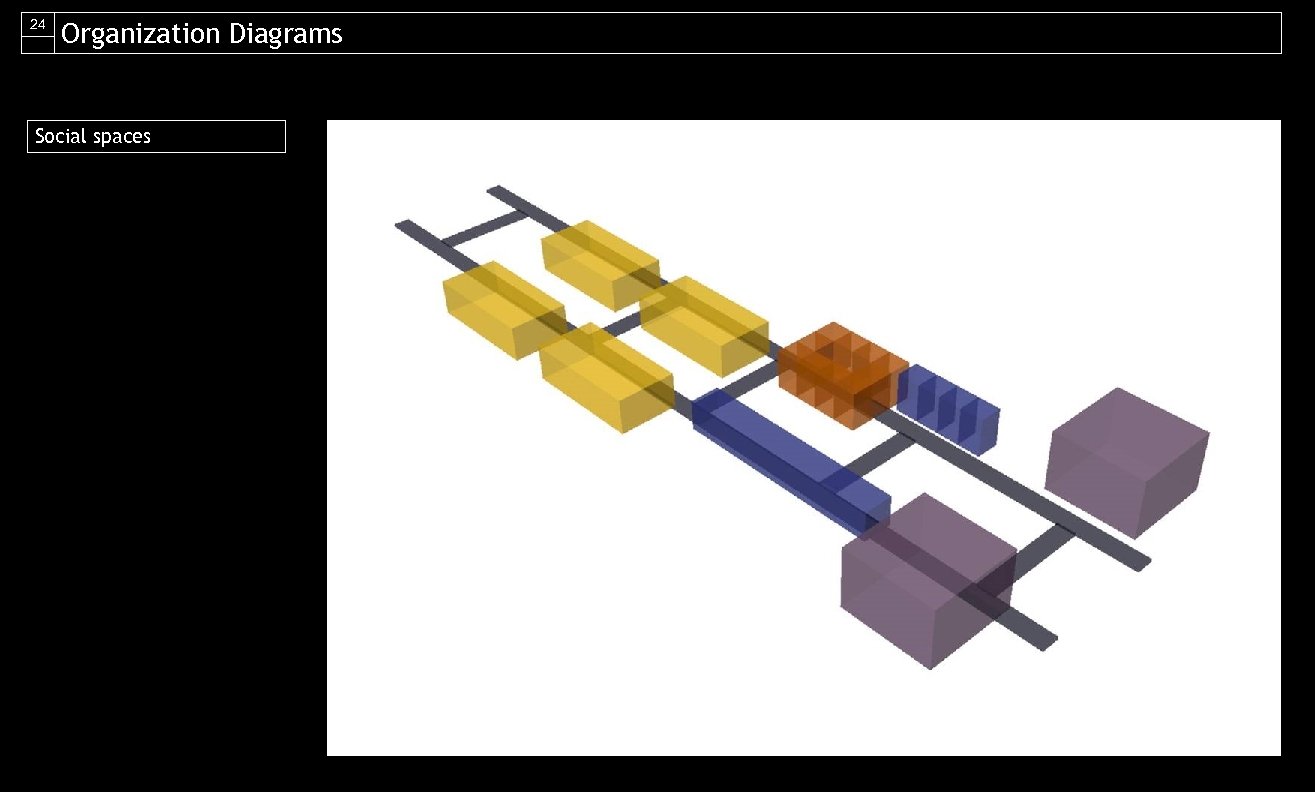 24 Organization Diagrams Social spaces
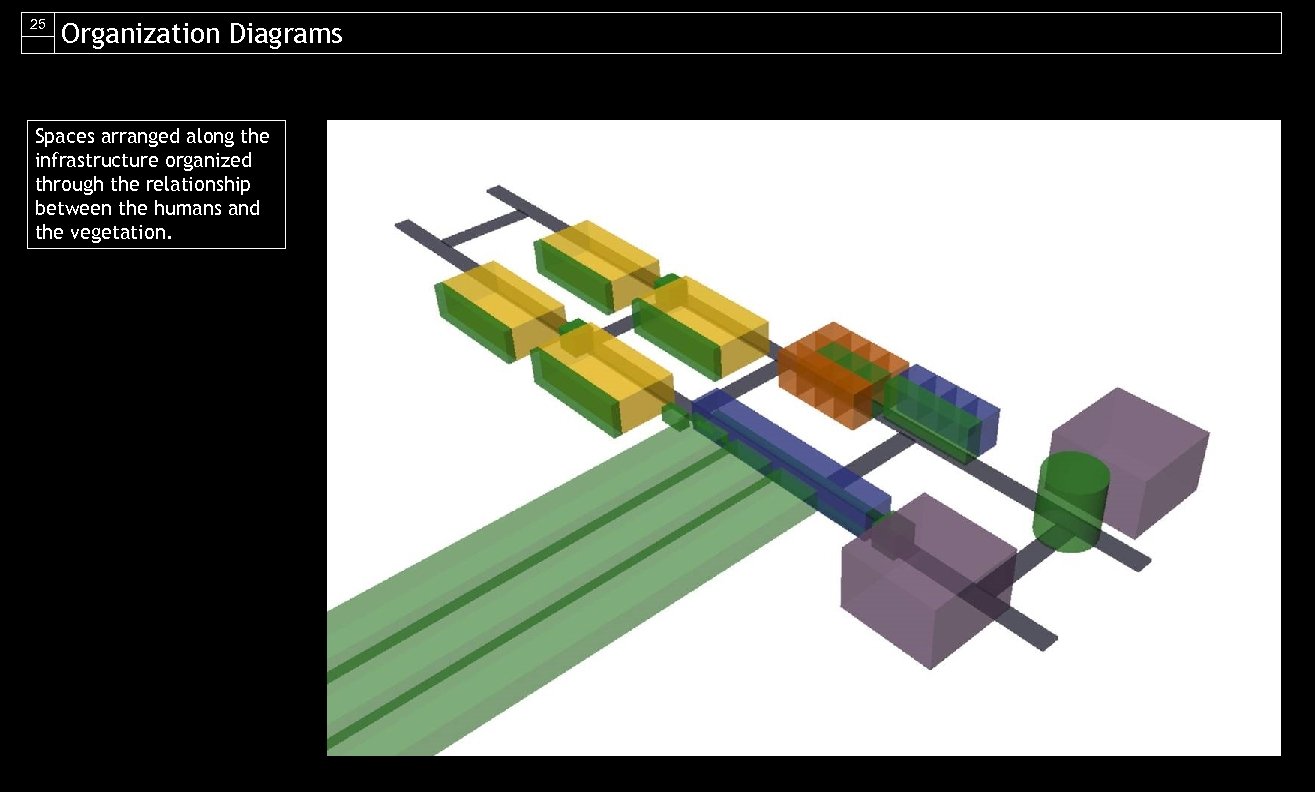 25 Organization Diagrams Spaces arranged along the infrastructure organized through the relationship between the humans and the vegetation.
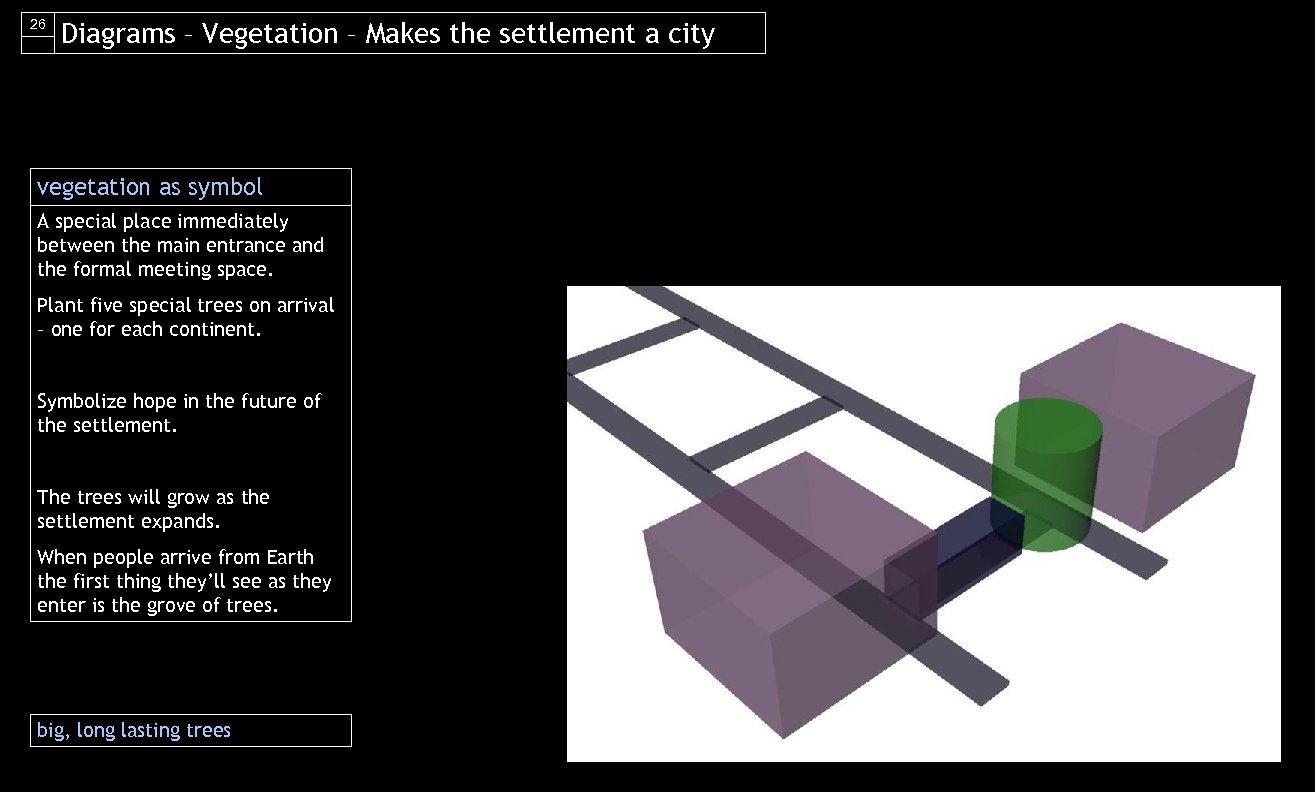 26 Diagrams – Vegetation – Makes the settlement a city vegetation as symbol A special place immediately between the main entrance and the formal meeting space. Plant five special trees on arrival – one for each continent. Symbolize hope in the future of the settlement. The trees will grow as the settlement expands. When people arrive from Earth the first thing they’ll see as they enter is the grove of trees. big, long lasting trees
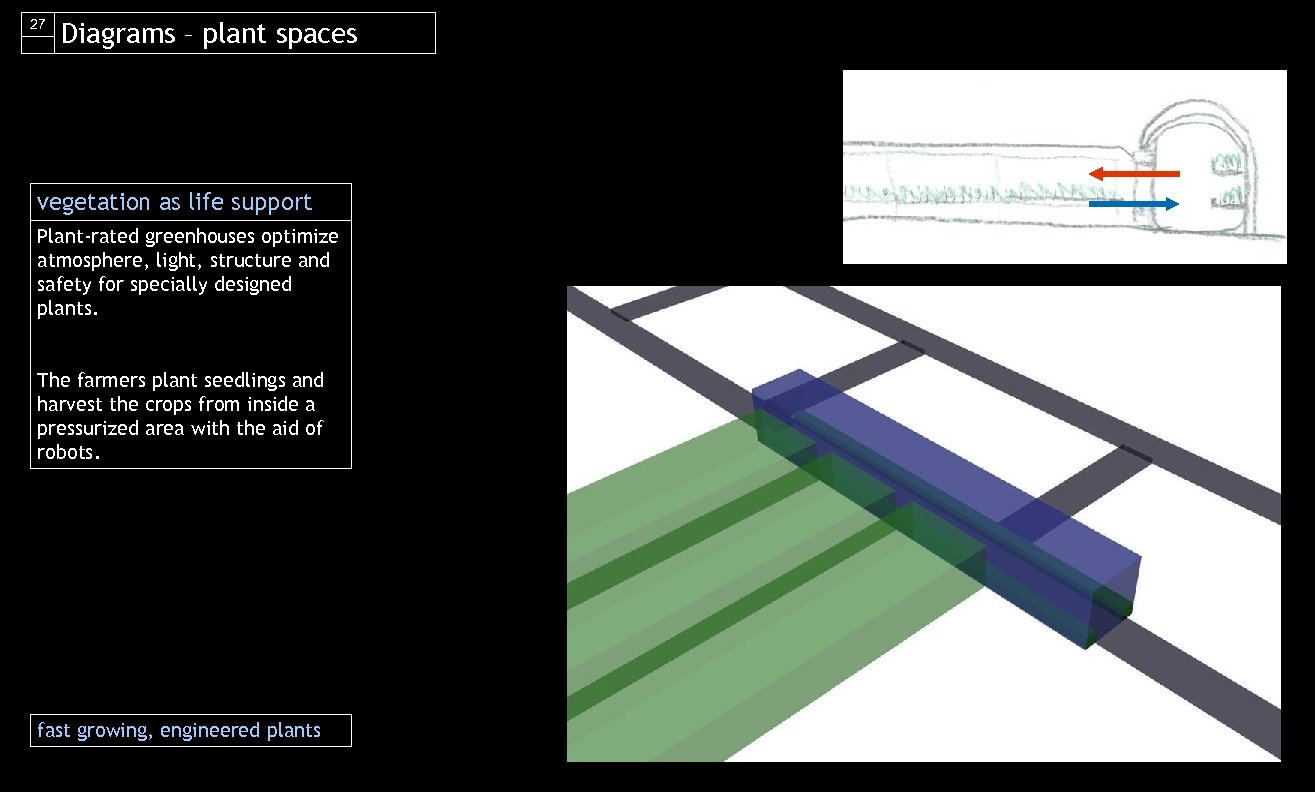 27 Diagrams – plant spaces vegetation as life support Plant-rated greenhouses optimize atmosphere, light, structure and safety for specially designed plants. The farmers plant seedlings and harvest the crops from inside a pressurized area with the aid of robots. fast growing, engineered plants
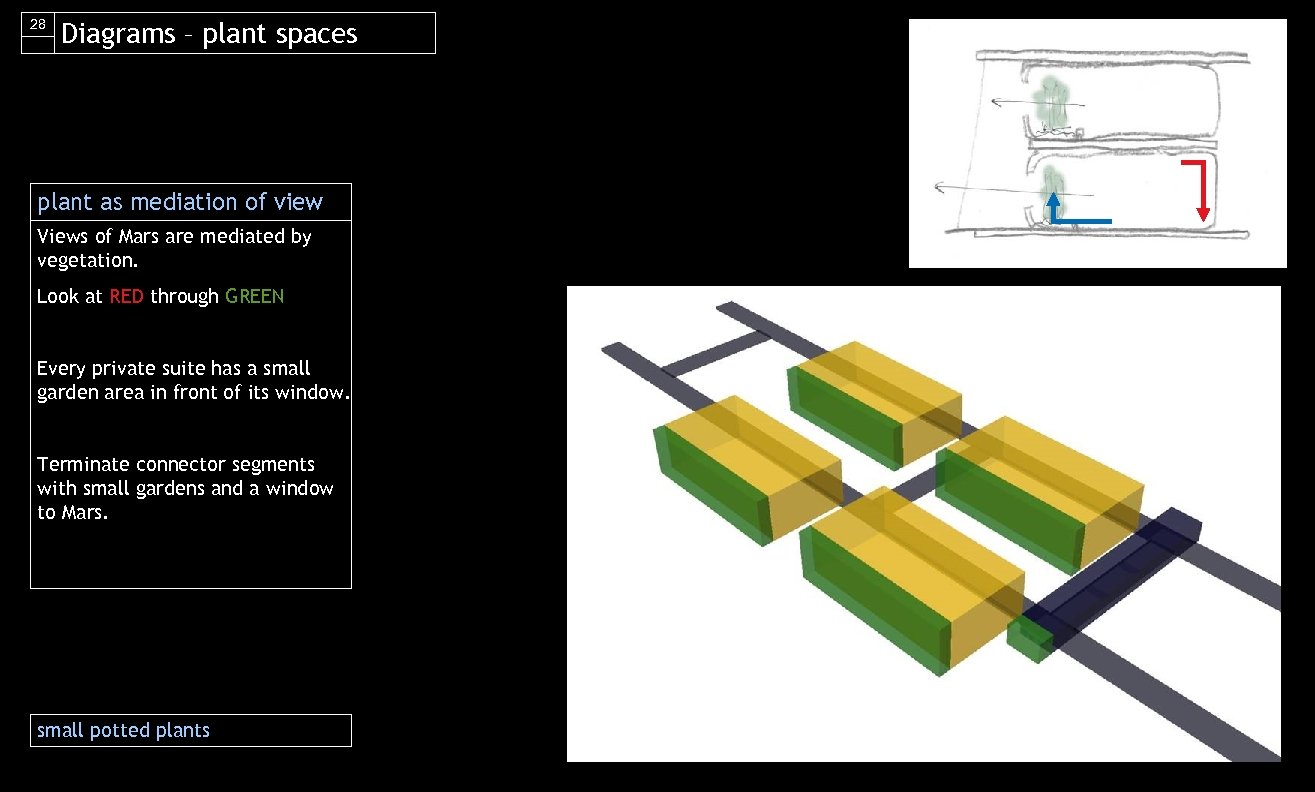 28 Diagrams – plant spaces plant as mediation of view Views of Mars are mediated by vegetation. Look at RED through GREEN Every private suite has a small garden area in front of its window. Terminate connector segments with small gardens and a window to Mars. small potted plants
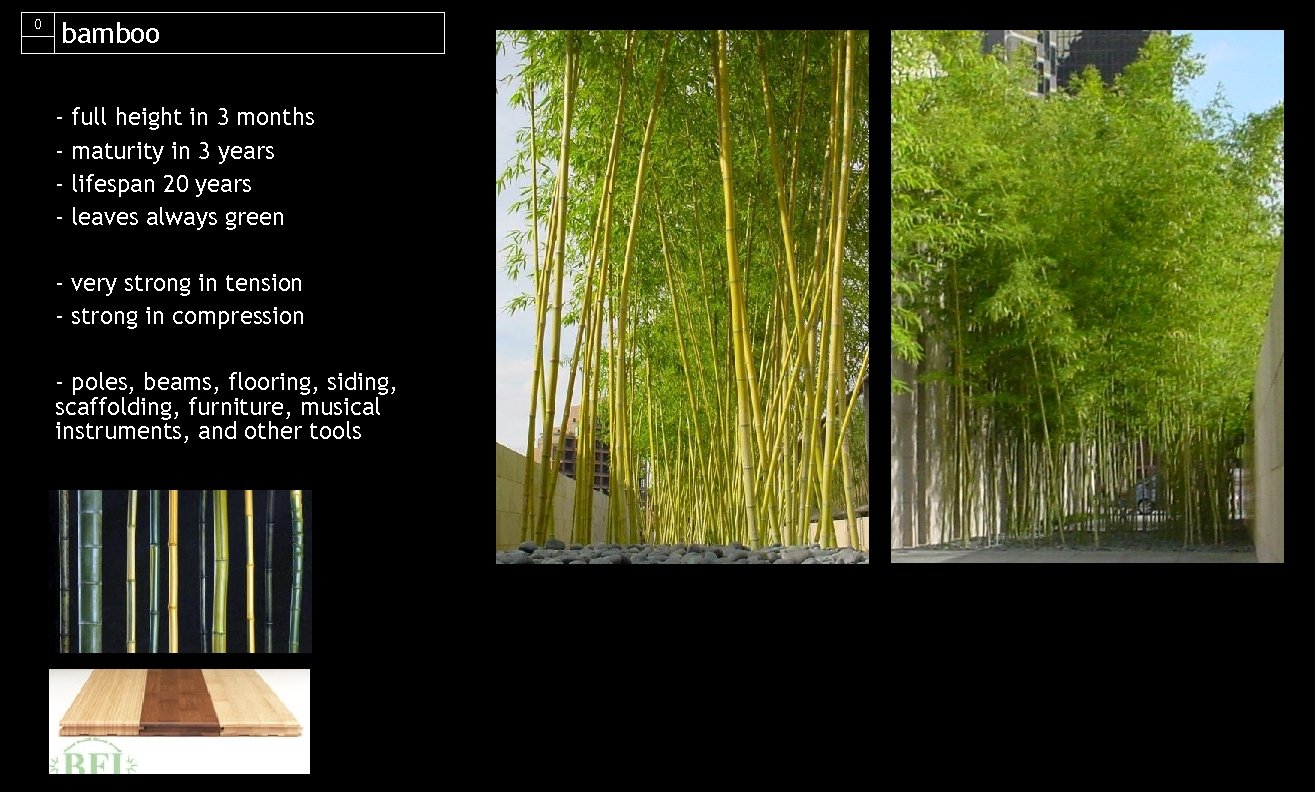
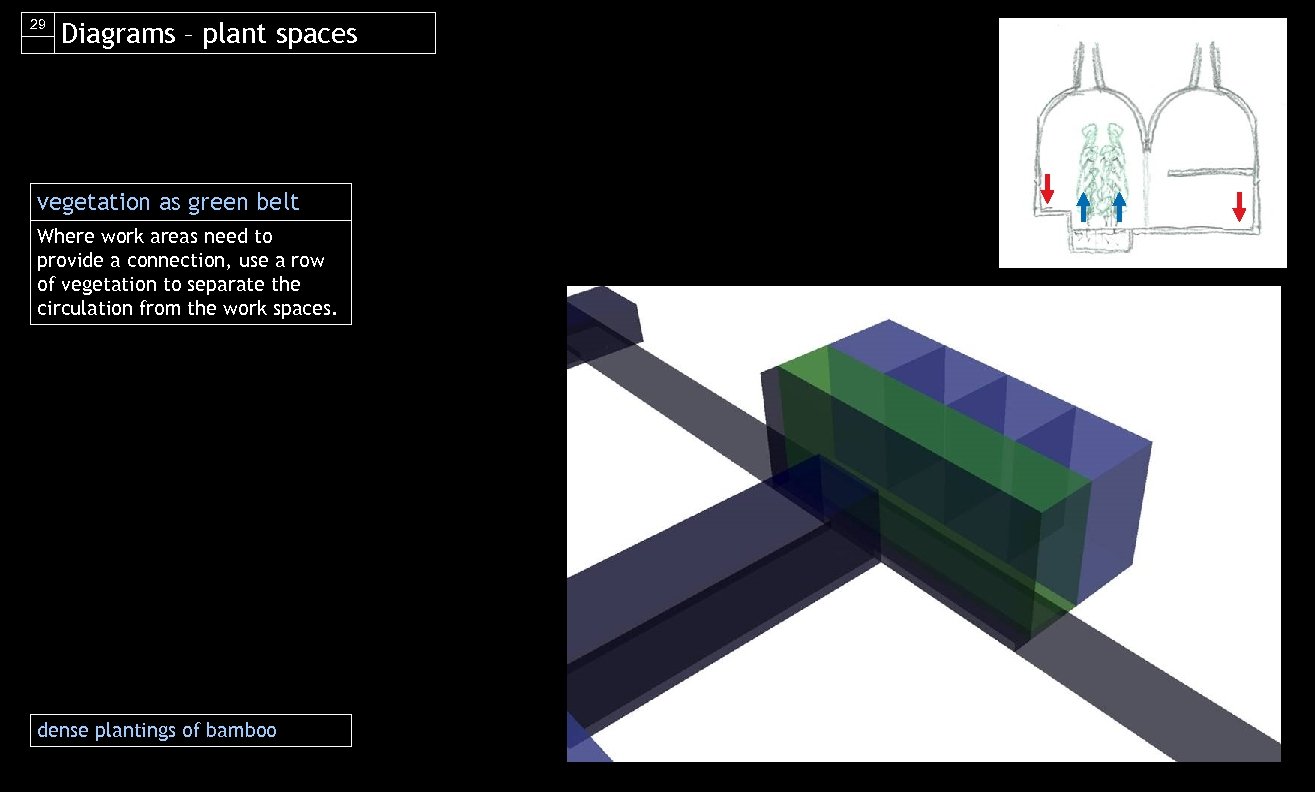 29 Diagrams – plant spaces vegetation as green belt Where work areas need to provide a connection, use a row of vegetation to separate the circulation from the work spaces. dense plantings of bamboo
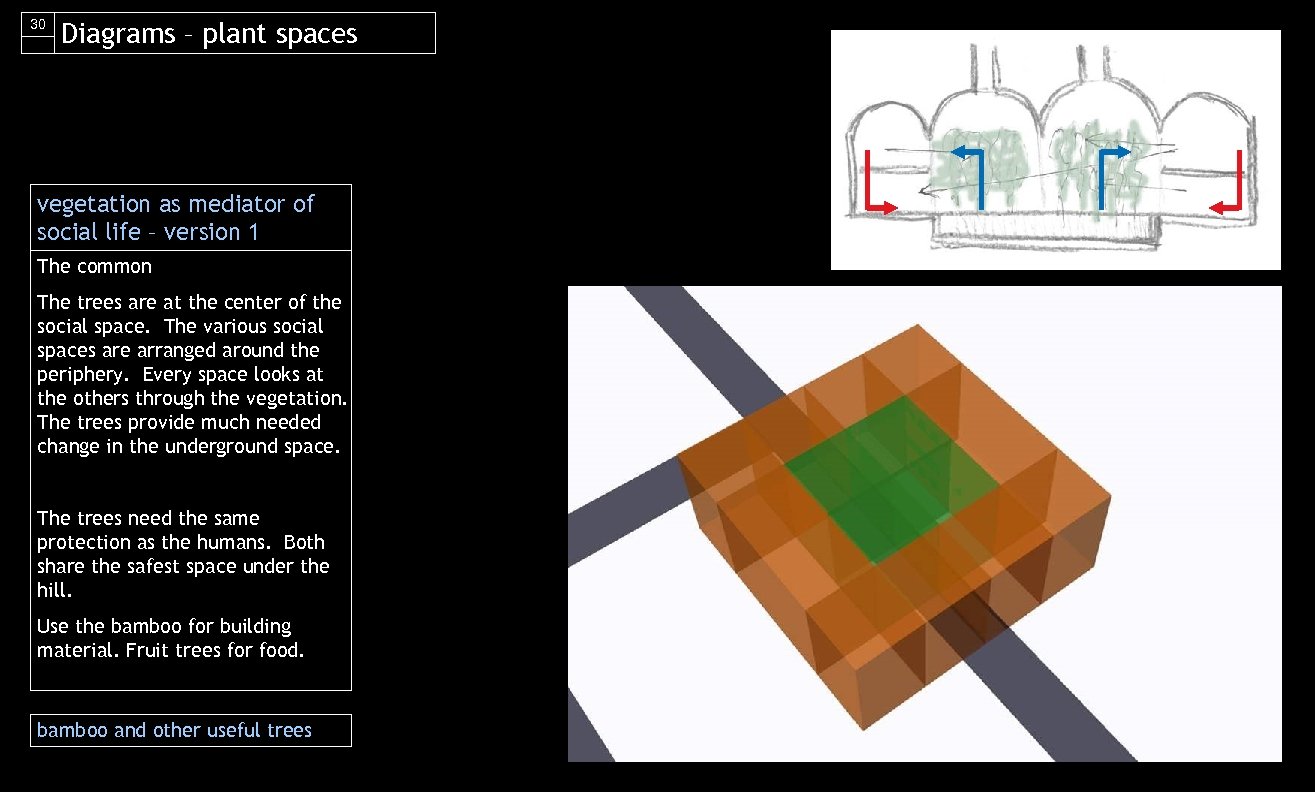 30 Diagrams – plant spaces vegetation as mediator of social life – version 1 The common The trees are at the center of the social space. The various social spaces are arranged around the periphery. Every space looks at the others through the vegetation. The trees provide much needed change in the underground space. The trees need the same protection as the humans. Both share the safest space under the hill. Use the bamboo for building material. Fruit trees for food. bamboo and other useful trees
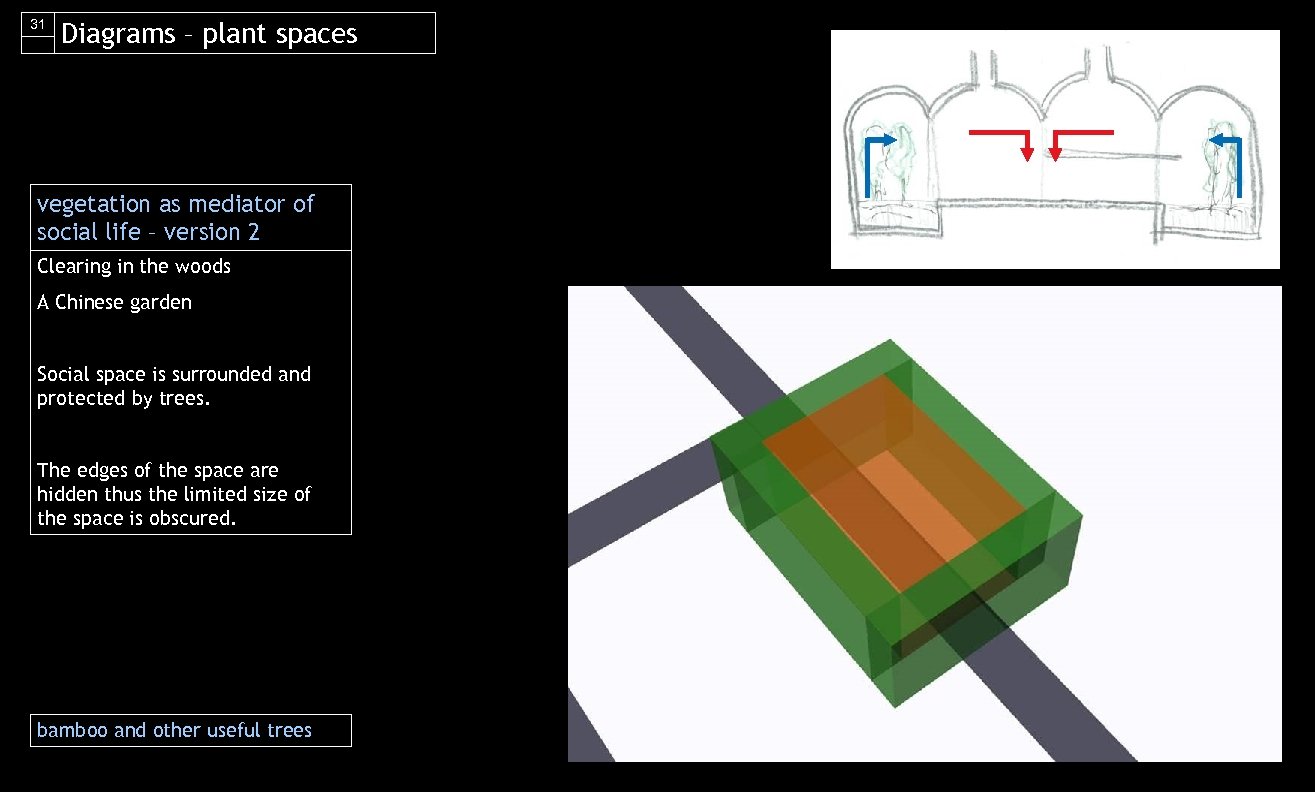 31 Diagrams – plant spaces vegetation as mediator of social life – version 2 Clearing in the woods A Chinese garden Social space is surrounded and protected by trees. The edges of the space are hidden thus the limited size of the space is obscured. bamboo and other useful trees
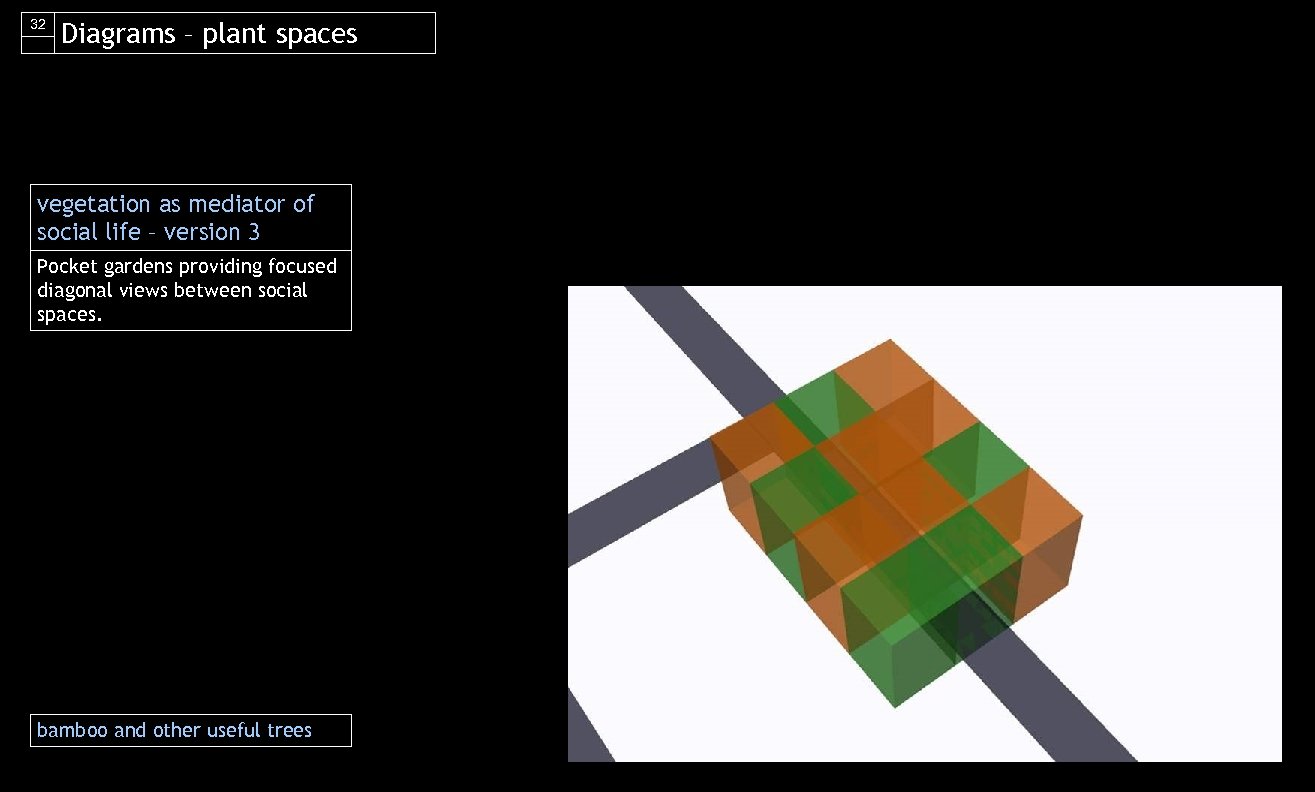 32 Diagrams – plant spaces vegetation as mediator of social life – version 3 Pocket gardens providing focused diagonal views between social spaces. bamboo and other useful trees
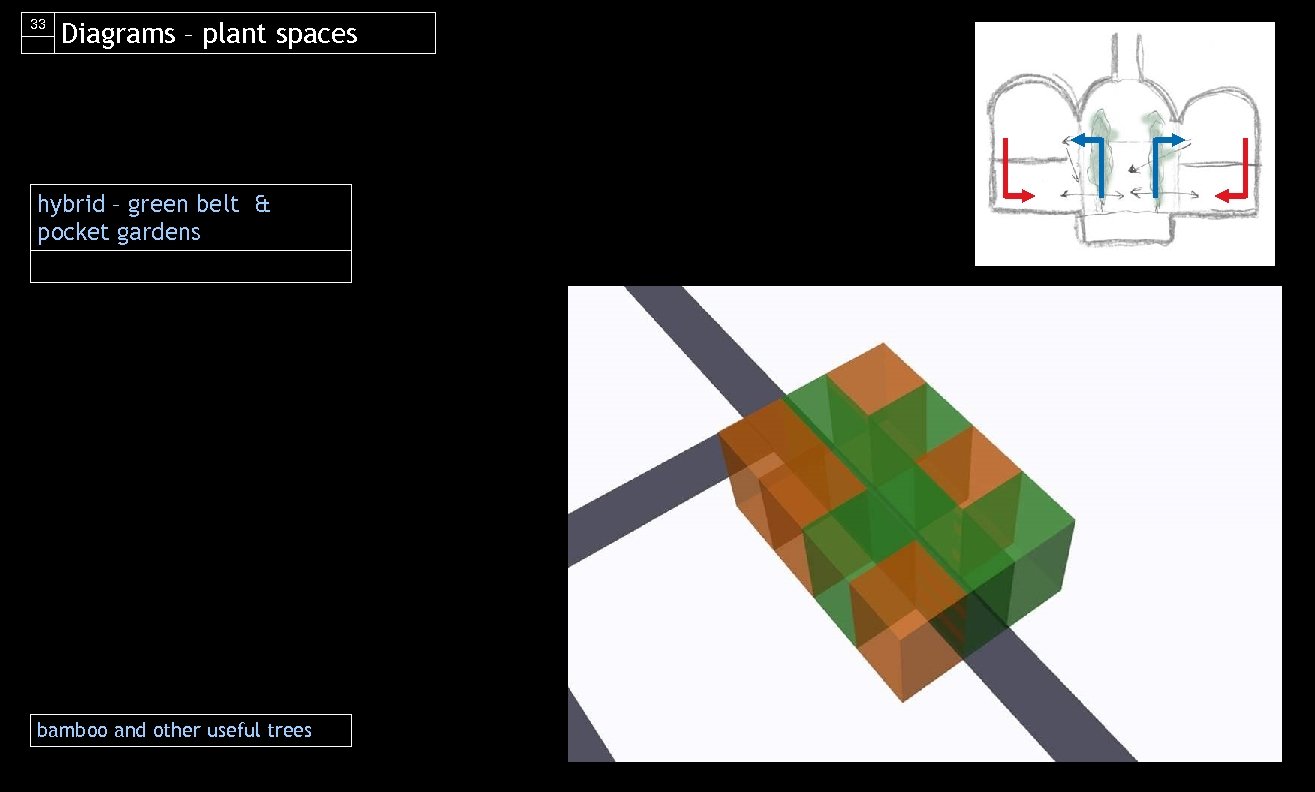 33 Diagrams – plant spaces hybrid – green belt & pocket gardens bamboo and other useful trees
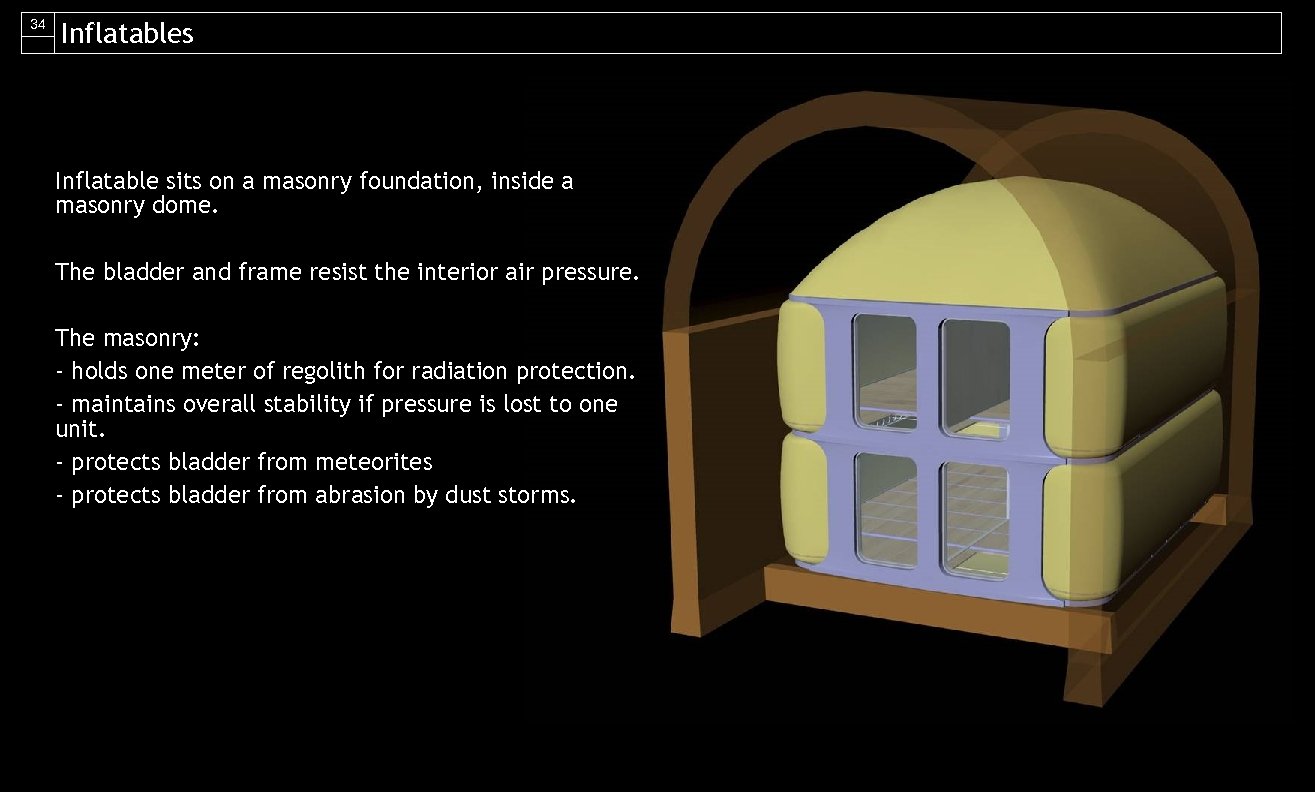 34 Inflatables Inflatable sits on a masonry foundation, inside a masonry dome. The bladder and frame resist the interior air pressure. The masonry: - holds one meter of regolith for radiation protection. - maintains overall stability if pressure is lost to one unit. - protects bladder from meteorites - protects bladder from abrasion by dust storms.
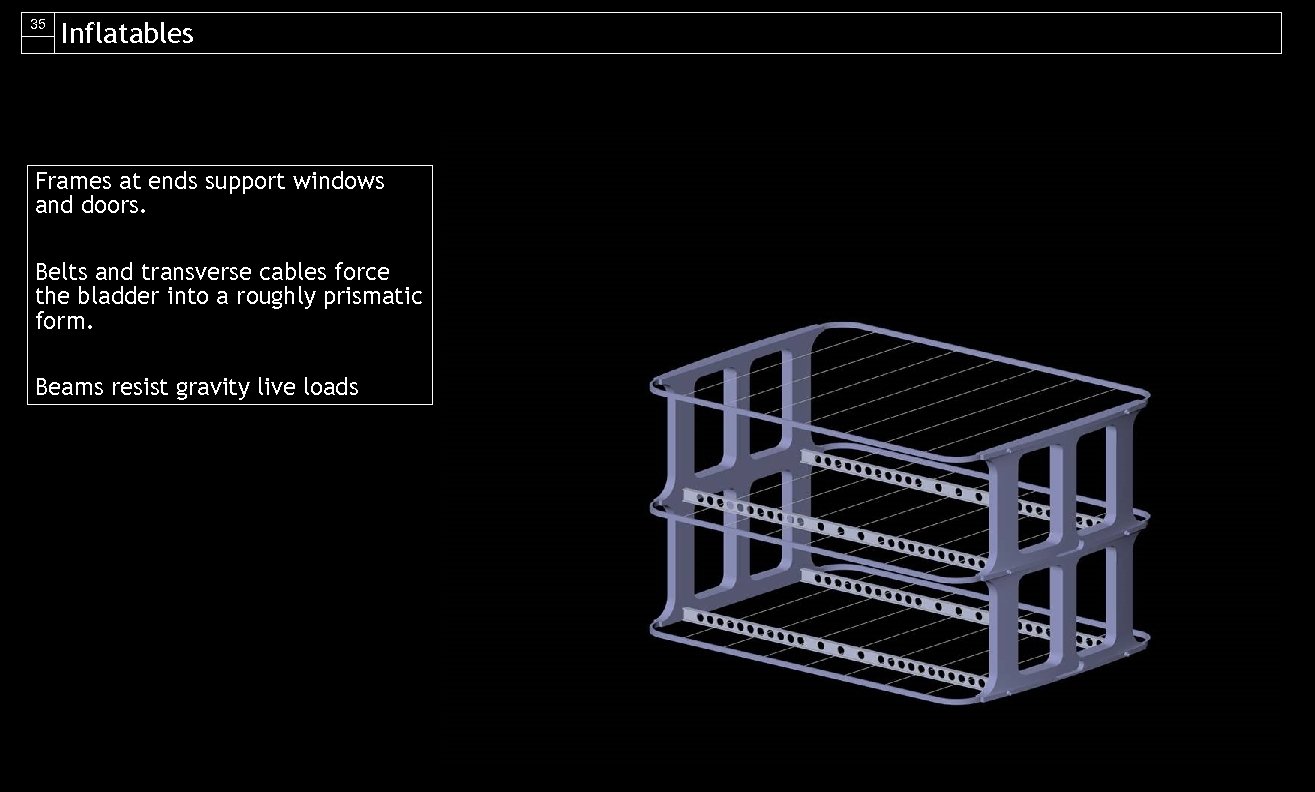 35 Inflatables Frames at ends support windows and doors. Belts and transverse cables force the bladder into a roughly prismatic form. Beams resist gravity live loads
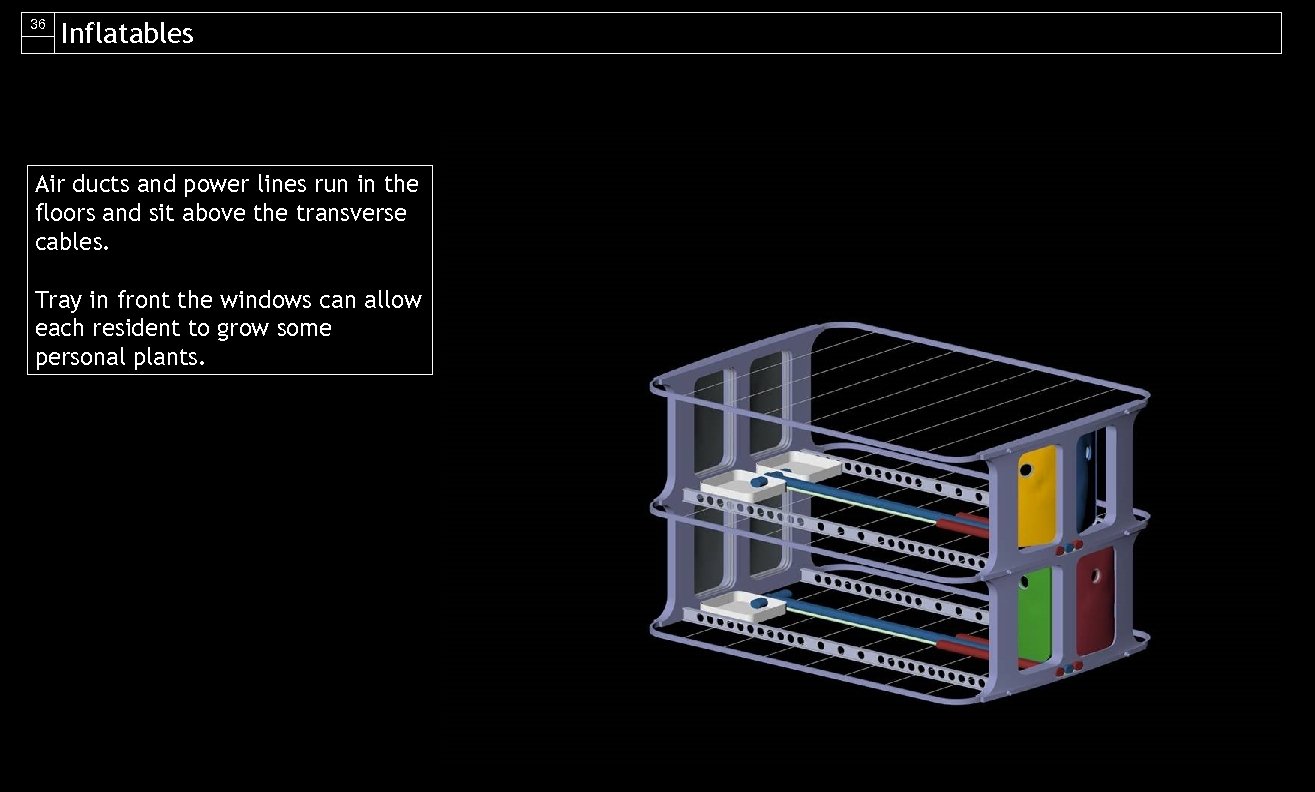 36 Inflatables Air ducts and power lines run in the floors and sit above the transverse cables. Tray in front the windows can allow each resident to grow some personal plants.
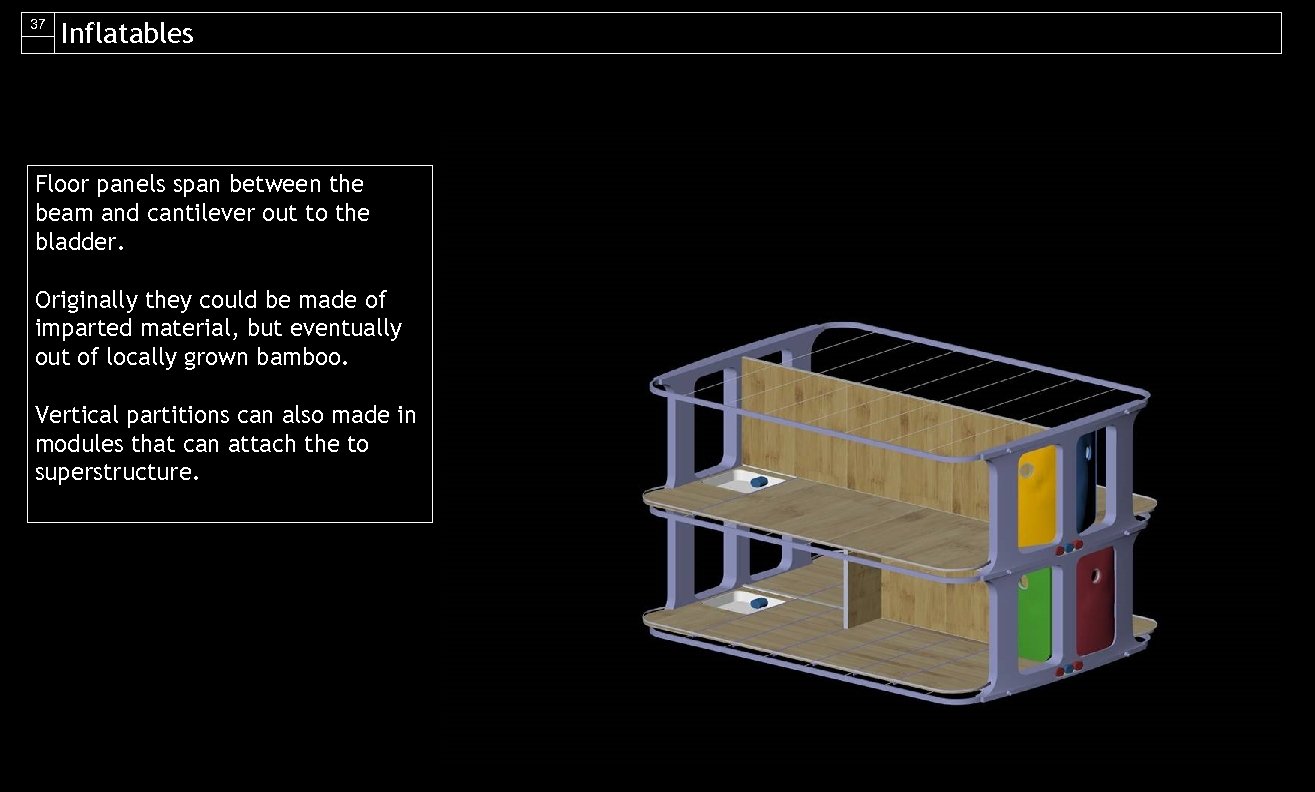 37 Inflatables Floor panels span between the beam and cantilever out to the bladder. Originally they could be made of imparted material, but eventually out of locally grown bamboo. Vertical partitions can also made in modules that can attach the to superstructure.
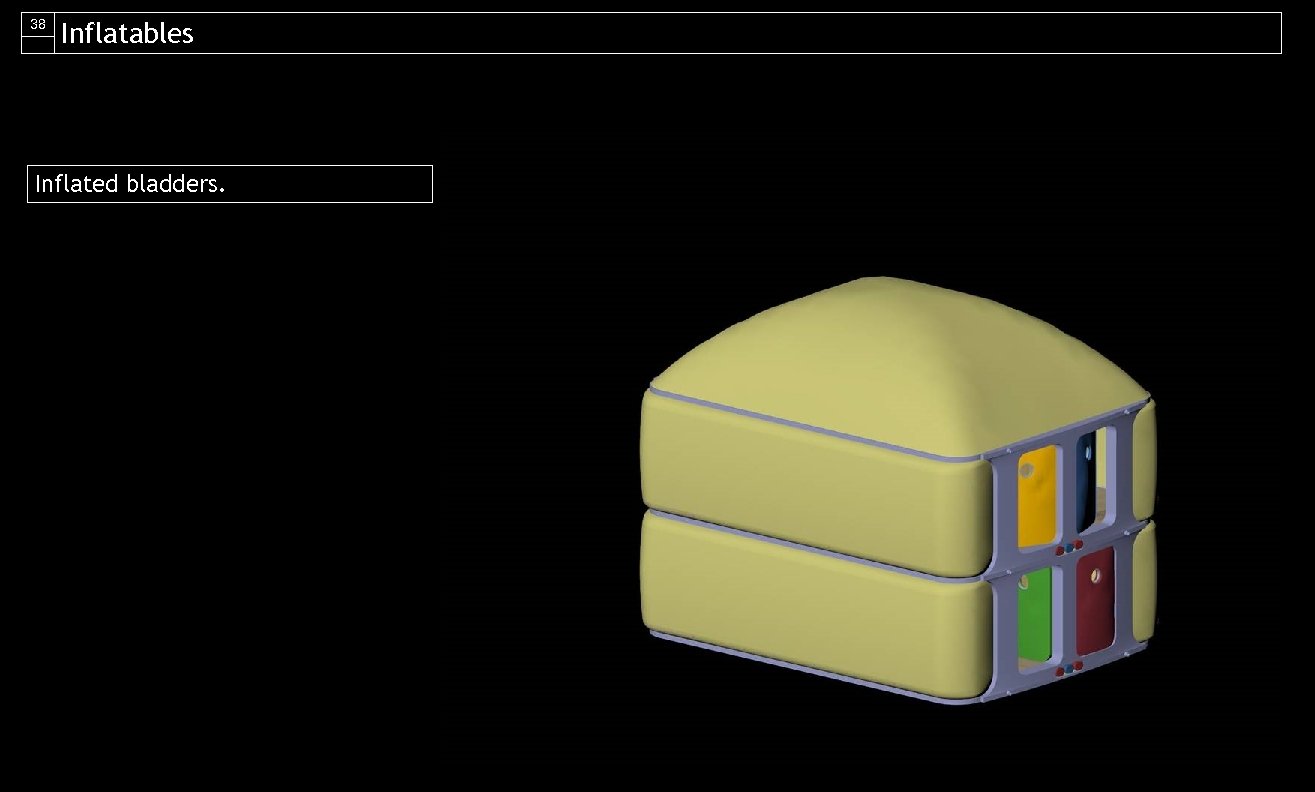 38 Inflatables Inflated bladders.
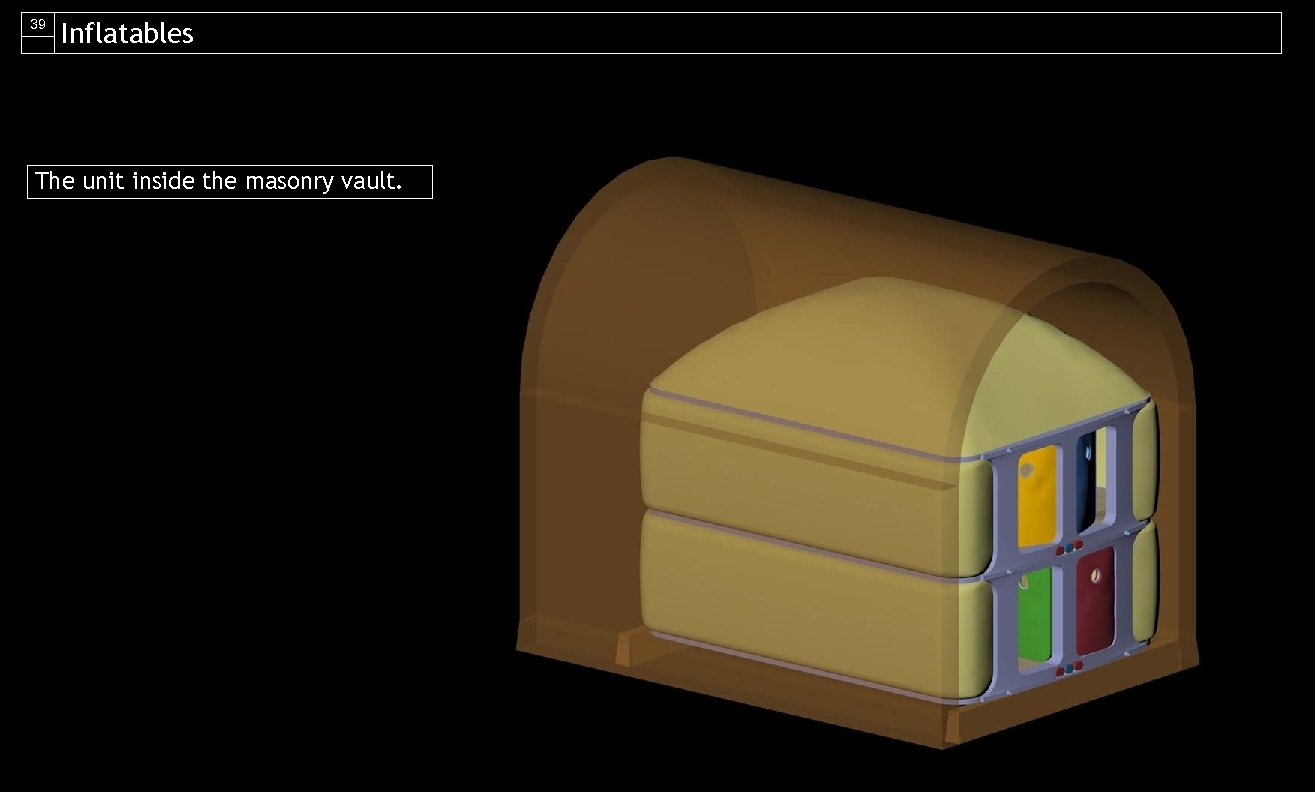 39 Inflatables The unit inside the masonry vault.
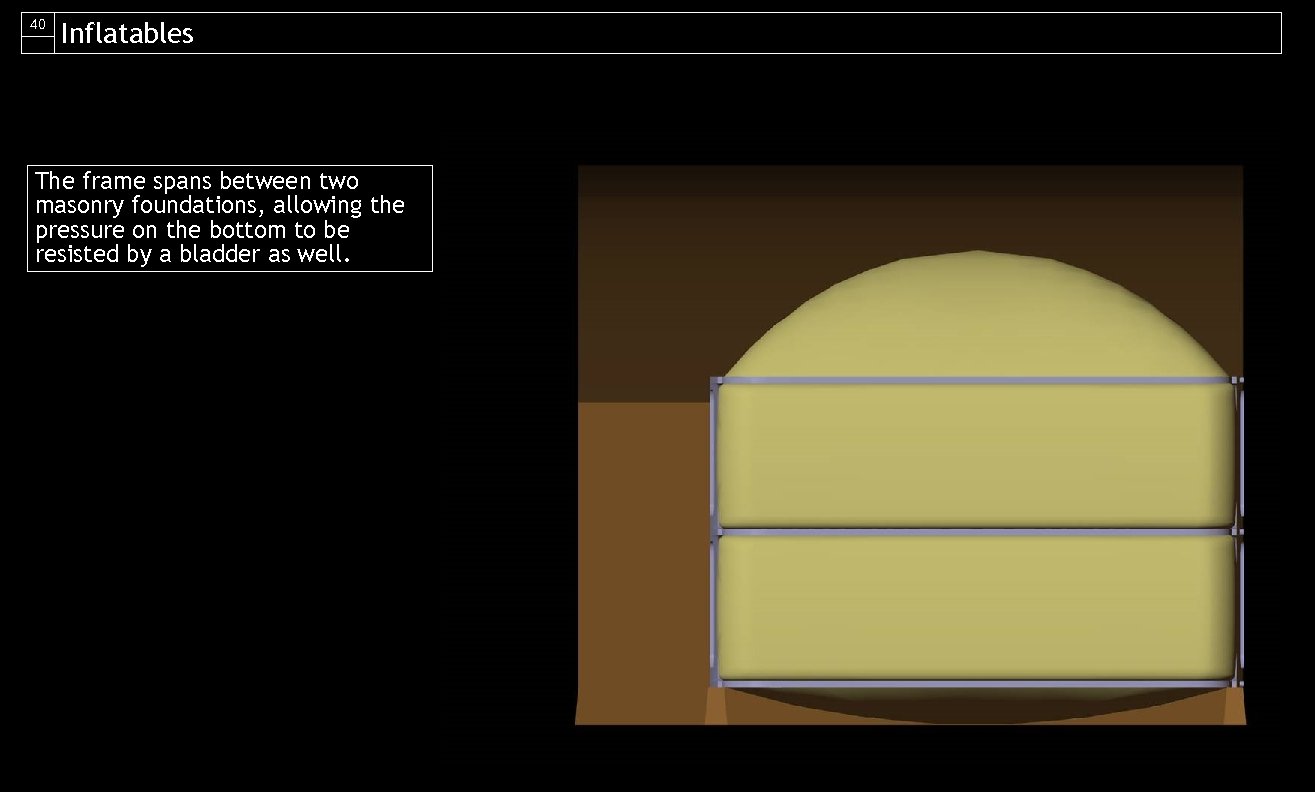 40 Inflatables The frame spans between two masonry foundations, allowing the pressure on the bottom to be resisted by a bladder as well.
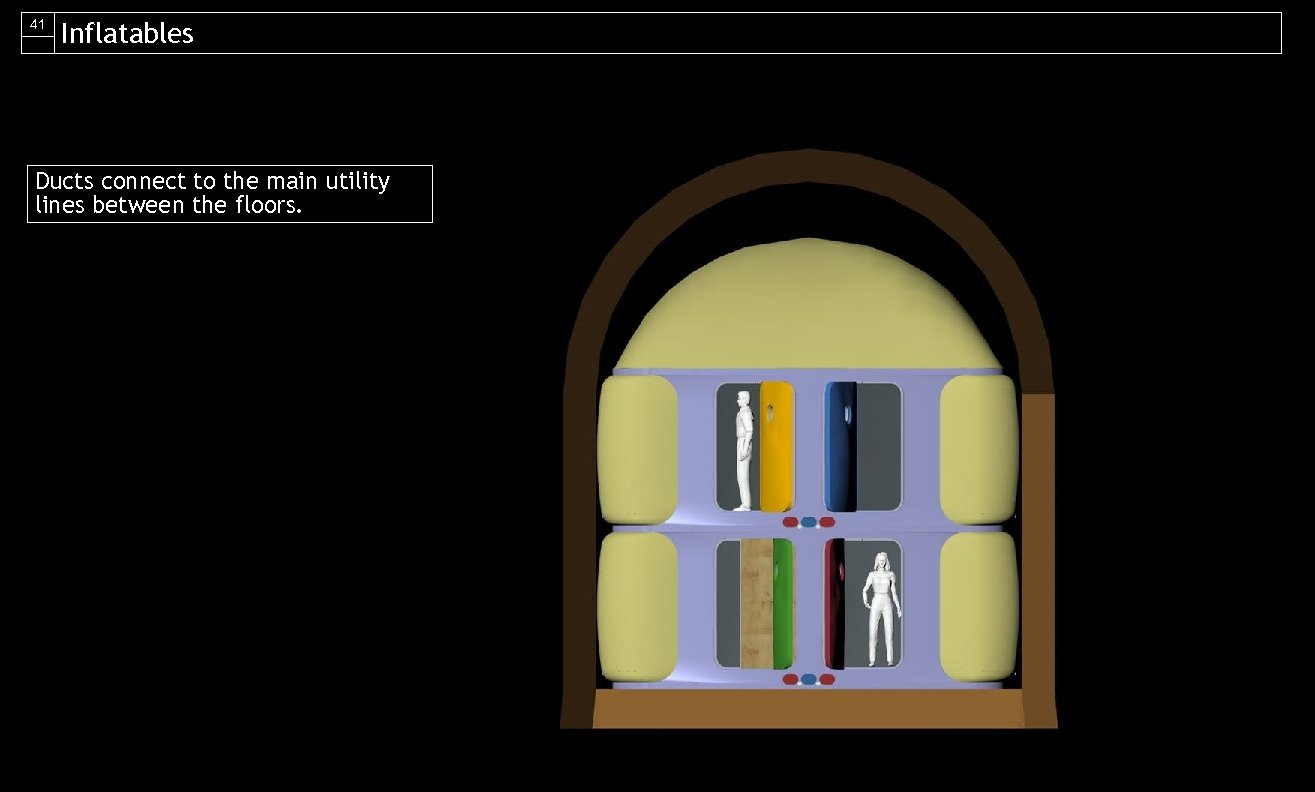 41 Inflatables Ducts connect to the main utility lines between the floors.
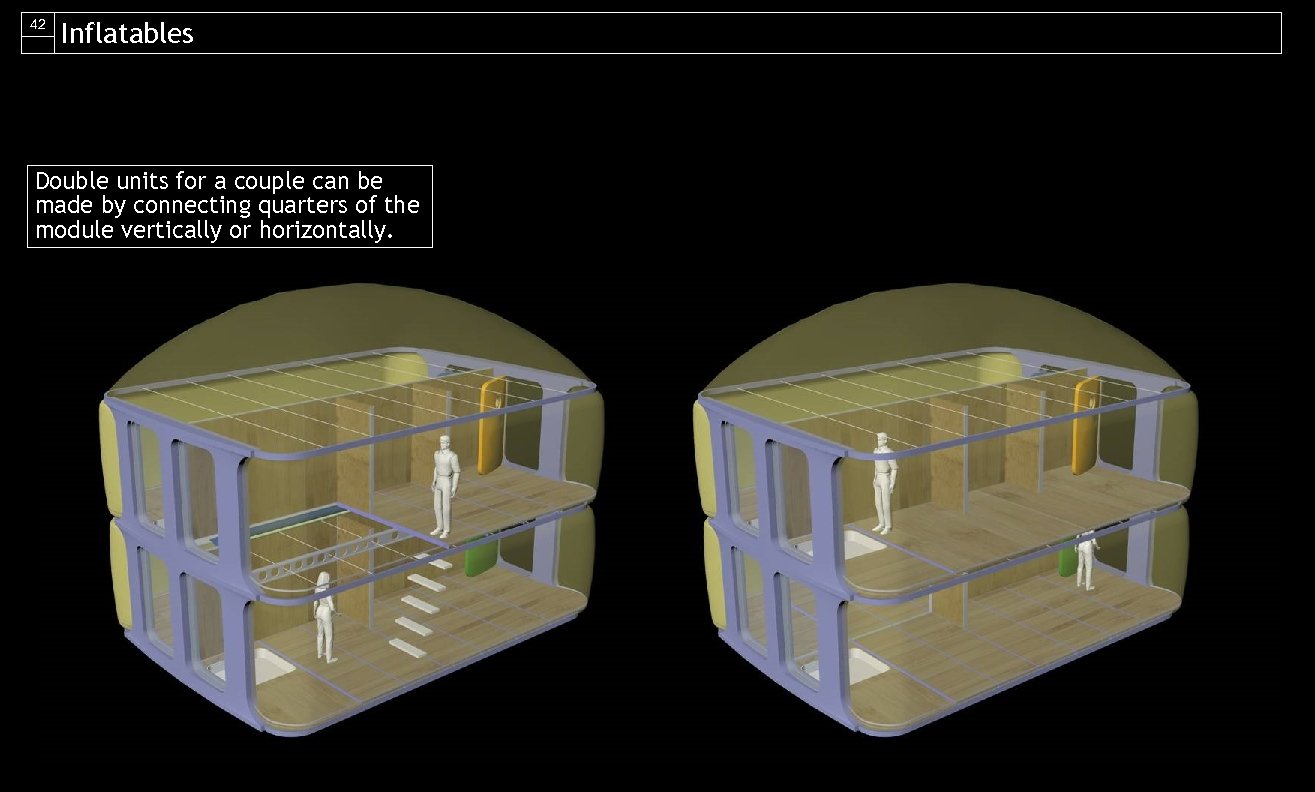 42 Inflatables Double units for a couple can be made by connecting quarters of the module vertically or horizontally.
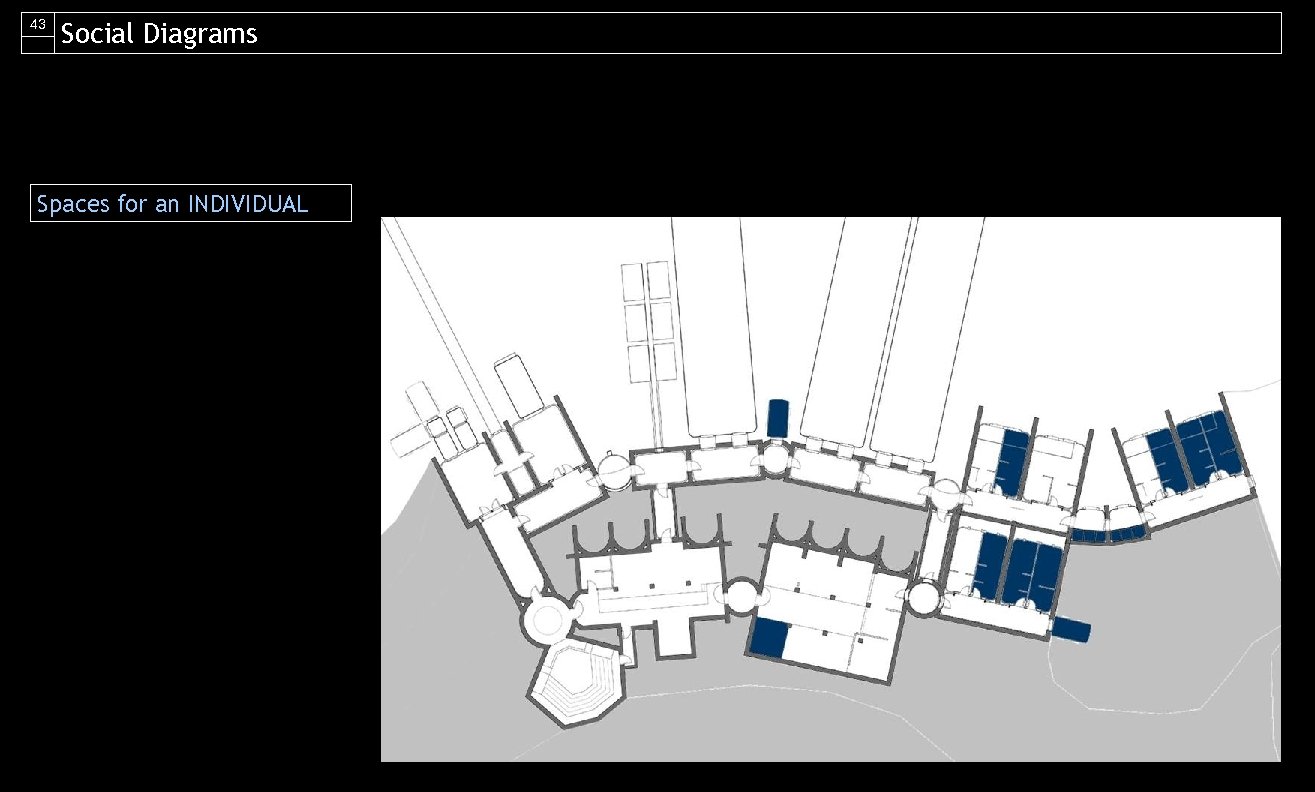 43 Social Diagrams Spaces for an INDIVIDUAL
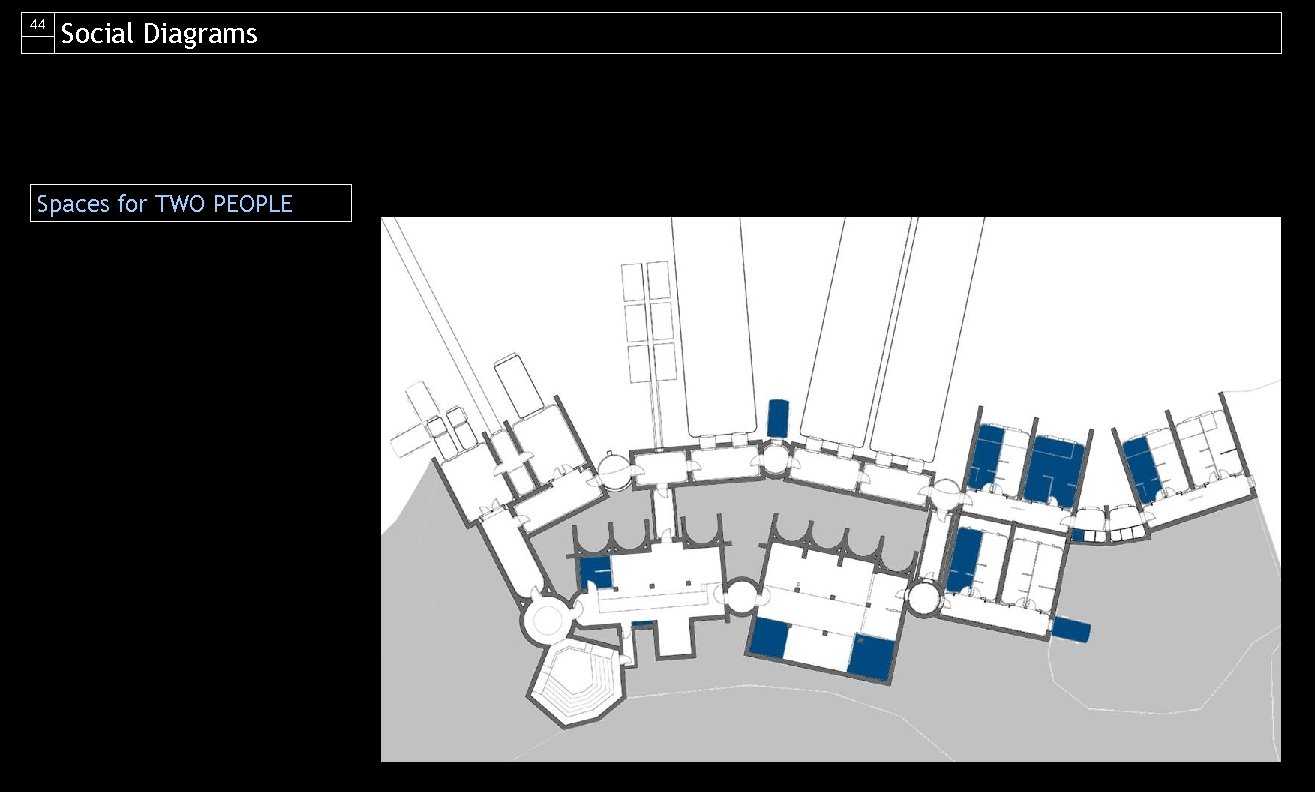 44 Social Diagrams Spaces for TWO PEOPLE
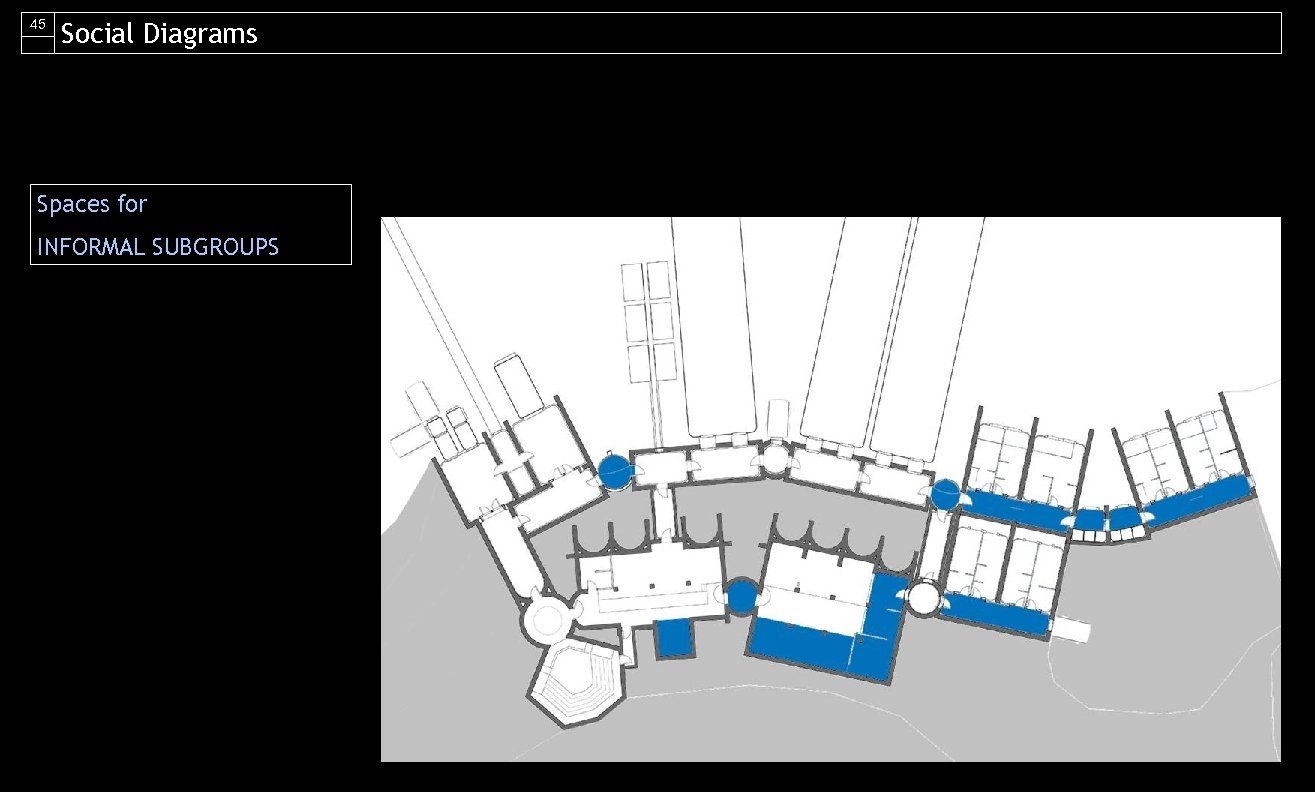 45 Social Diagrams Spaces for INFORMAL SUBGROUPS
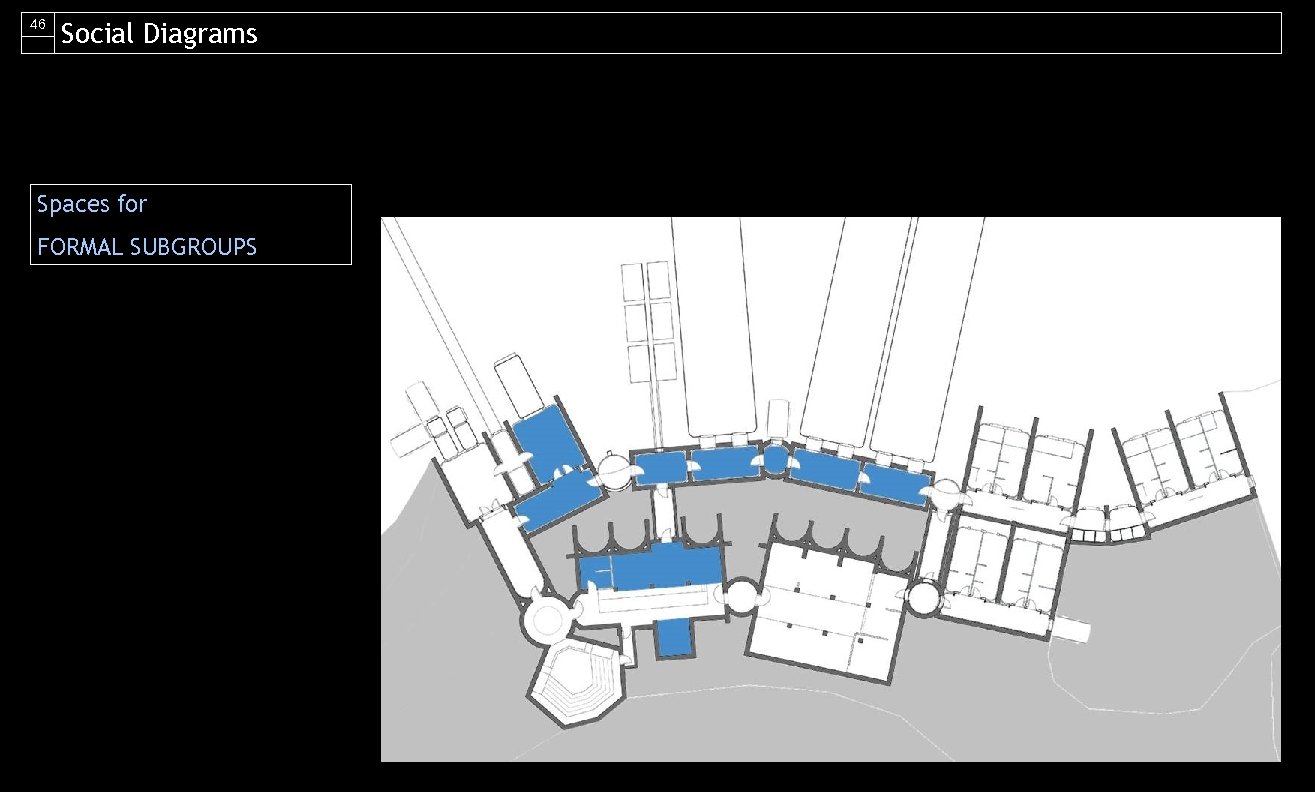 46 Social Diagrams Spaces for FORMAL SUBGROUPS
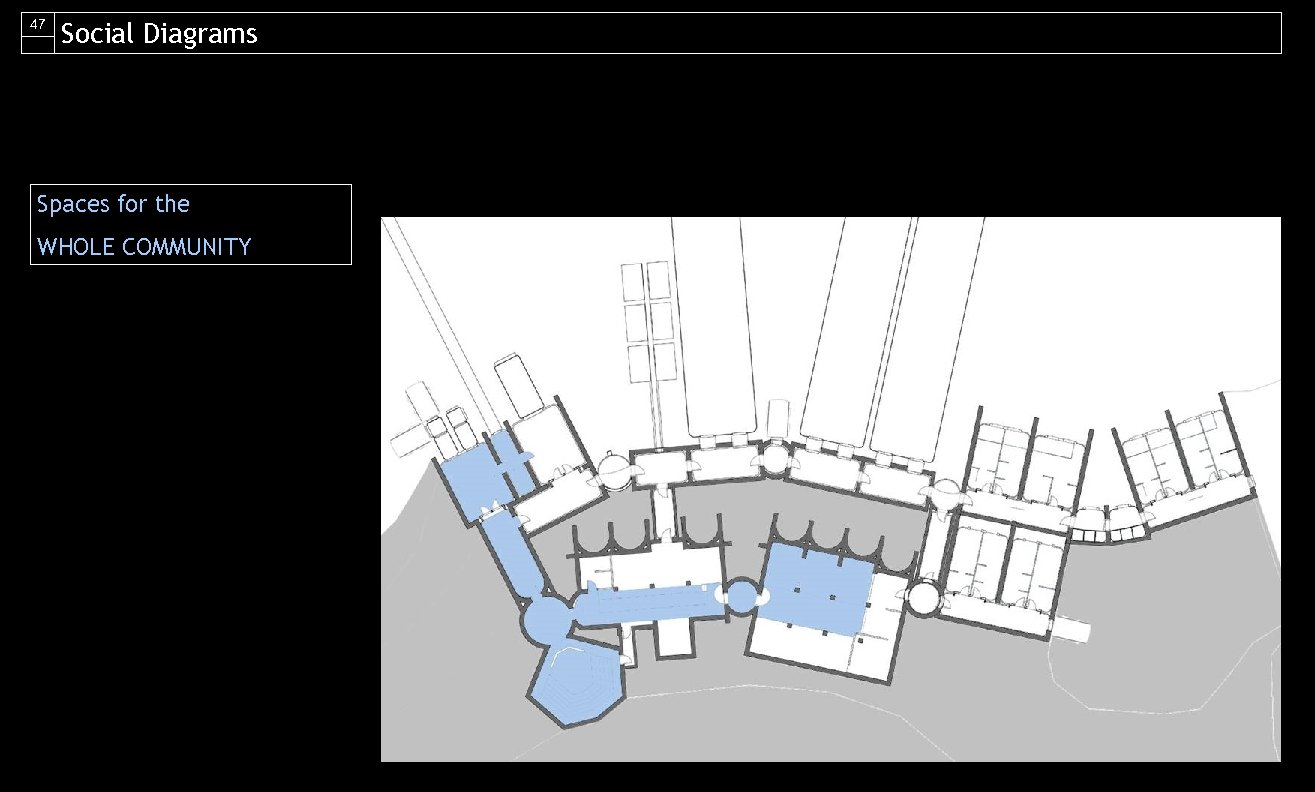 47 Social Diagrams Spaces for the WHOLE COMMUNITY
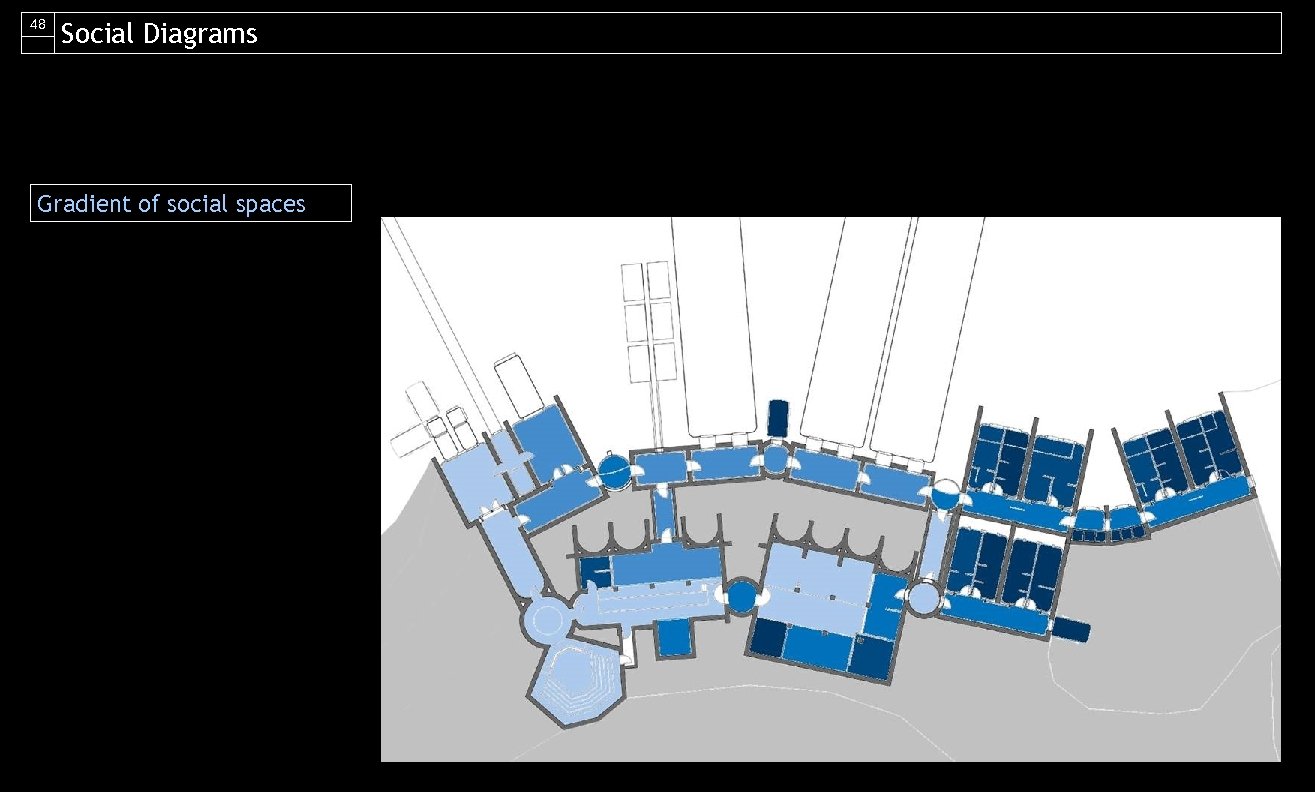 48 Social Diagrams Gradient of social spaces
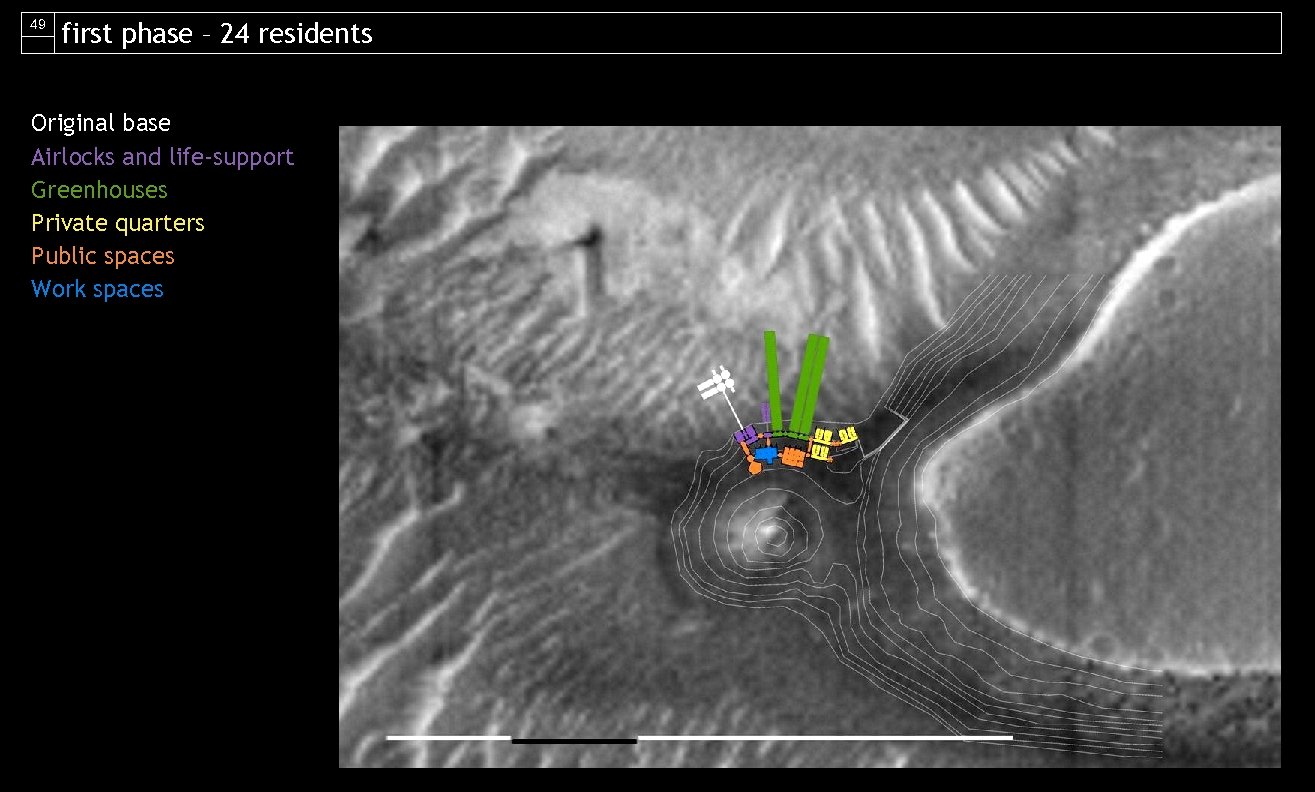 49 first phase – 24 residents Original base Airlocks and life-support Greenhouses Private quarters Public spaces Work spaces
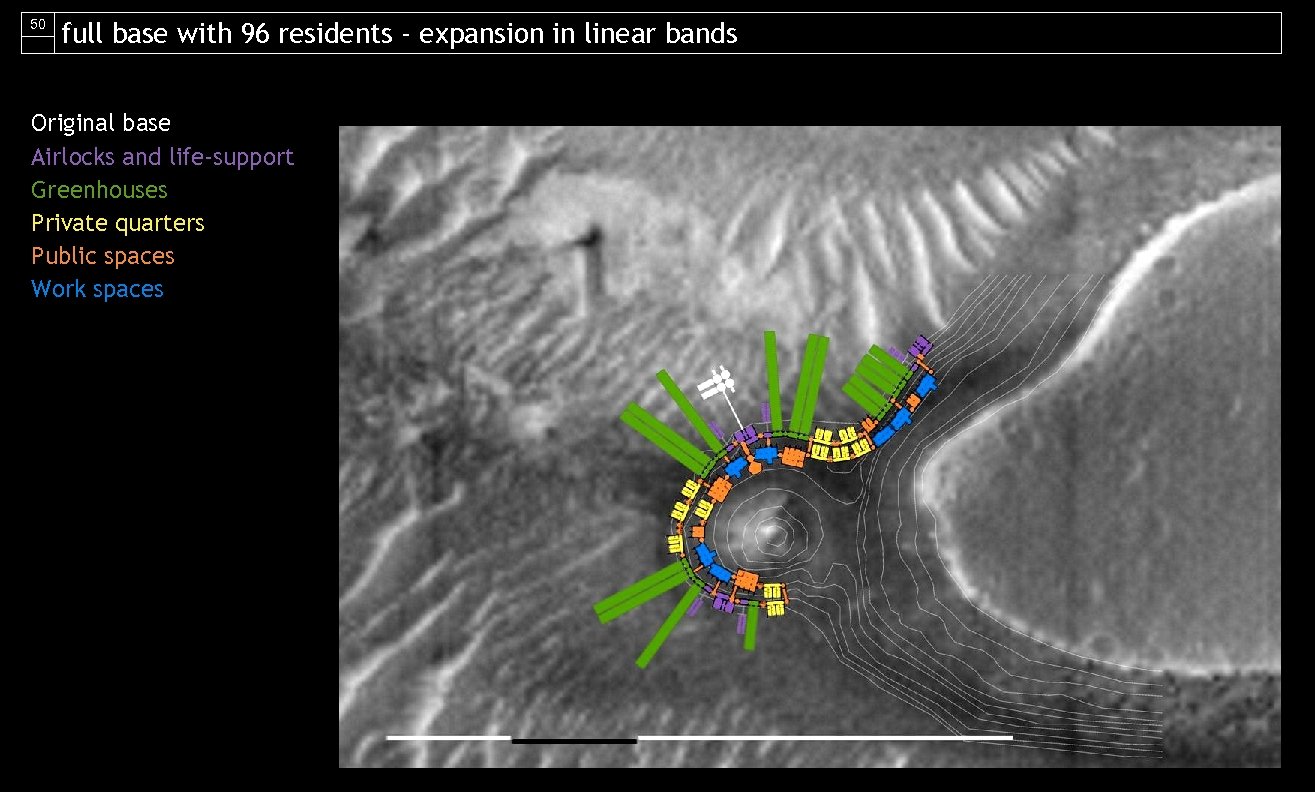 50 full base with 96 residents - expansion in linear bands Original base Airlocks and life-support Greenhouses Private quarters Public spaces Work spaces
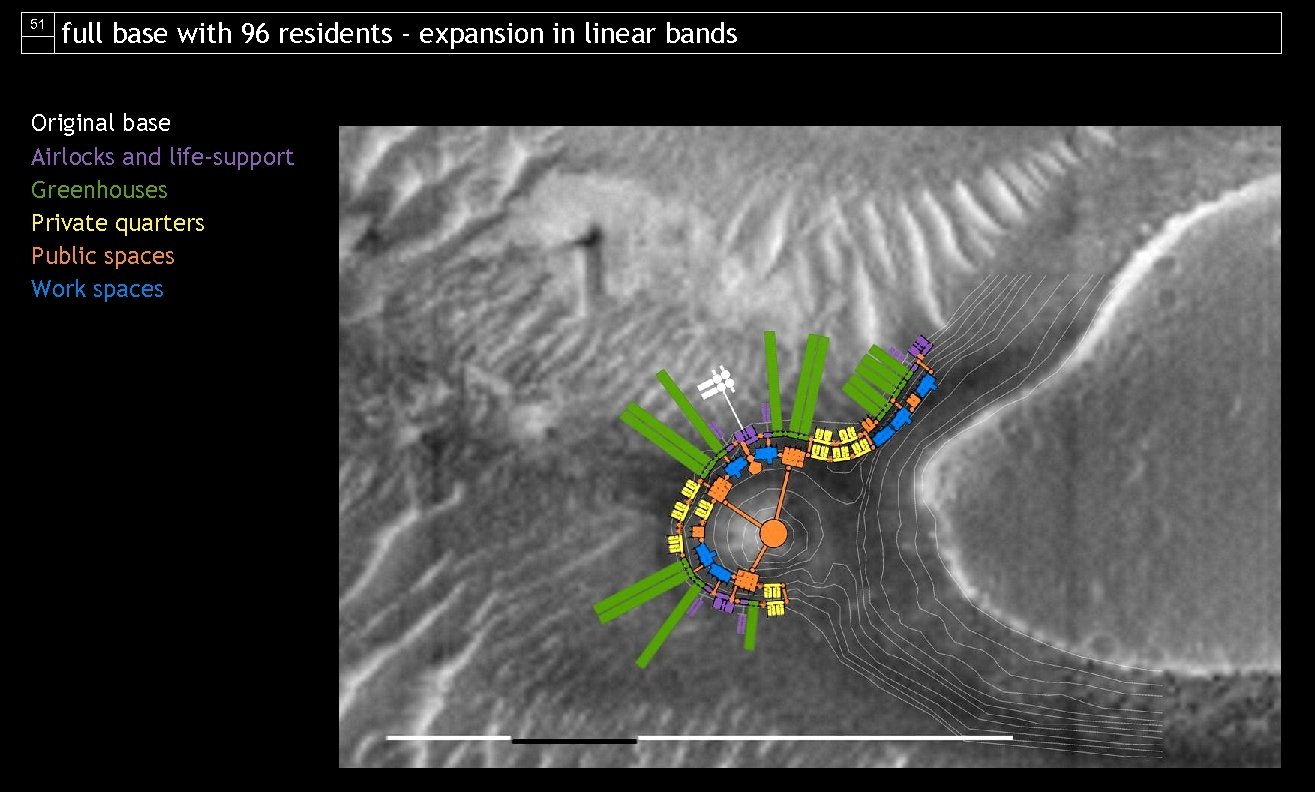 51 full base with 96 residents - expansion in linear bands Original base Airlocks and life-support Greenhouses Private quarters Public spaces Work spaces
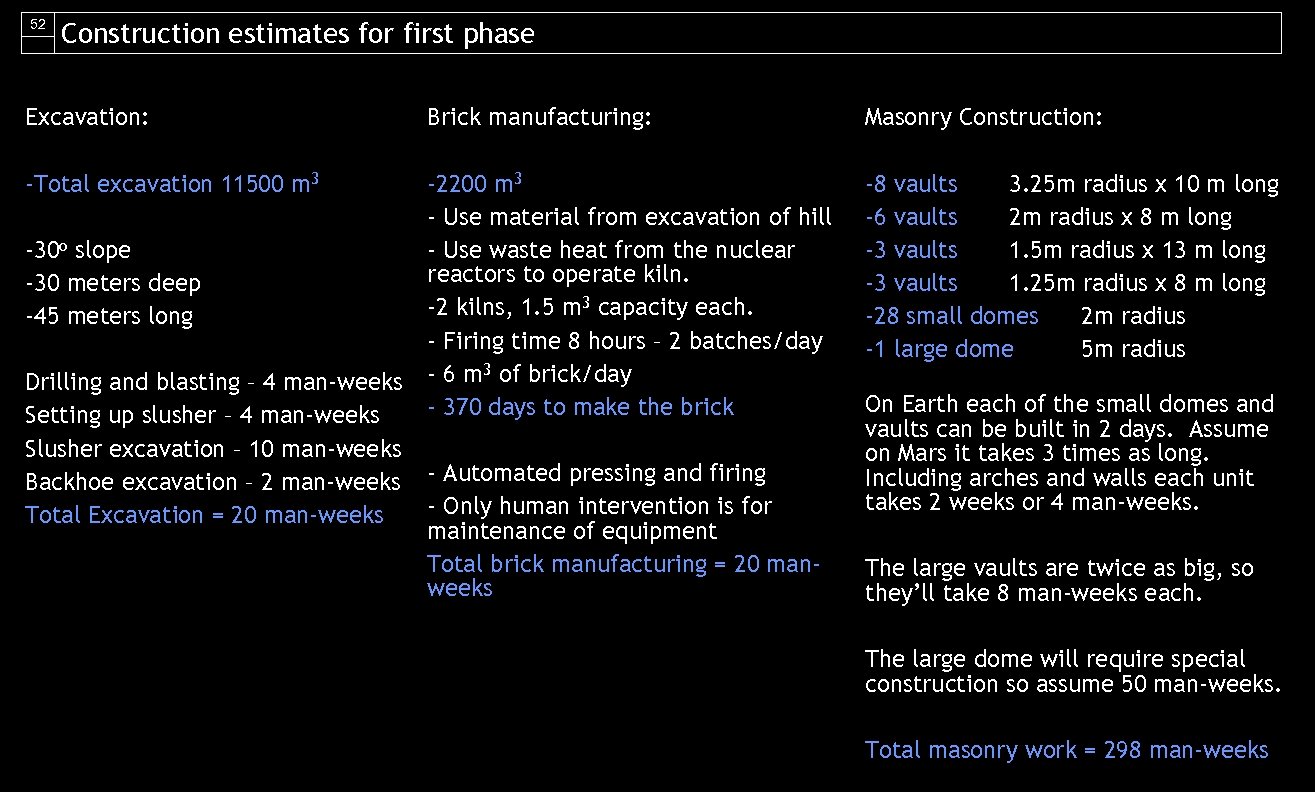 52 Construction estimates for first phase Excavation: -Total excavation 11500 m 3 Brick manufacturing: -2200 m 3 - Use material from excavation of hill -30 o slope - Use waste heat from the nuclear reactors to operate kiln. -30 meters deep -2 kilns, 1. 5 m 3 capacity each. -45 meters long - Firing time 8 hours – 2 batches/day - 6 m 3 of brick/day Drilling and blasting – 4 man-weeks - 370 days to make the brick Setting up slusher – 4 man-weeks Slusher excavation – 10 man-weeks Backhoe excavation – 2 man-weeks - Automated pressing and firing - Only human intervention is for Total Excavation = 20 man-weeks maintenance of equipment Total brick manufacturing = 20 manweeks Masonry Construction: -8 vaults 3. 25 m radius x 10 m long -6 vaults 2 m radius x 8 m long -3 vaults 1. 5 m radius x 13 m long -3 vaults 1. 25 m radius x 8 m long -28 small domes 2 m radius -1 large dome 5 m radius On Earth each of the small domes and vaults can be built in 2 days. Assume on Mars it takes 3 times as long. Including arches and walls each unit takes 2 weeks or 4 man-weeks. The large vaults are twice as big, so they’ll take 8 man-weeks each. The large dome will require special construction so assume 50 man-weeks. Total masonry work = 298 man-weeks
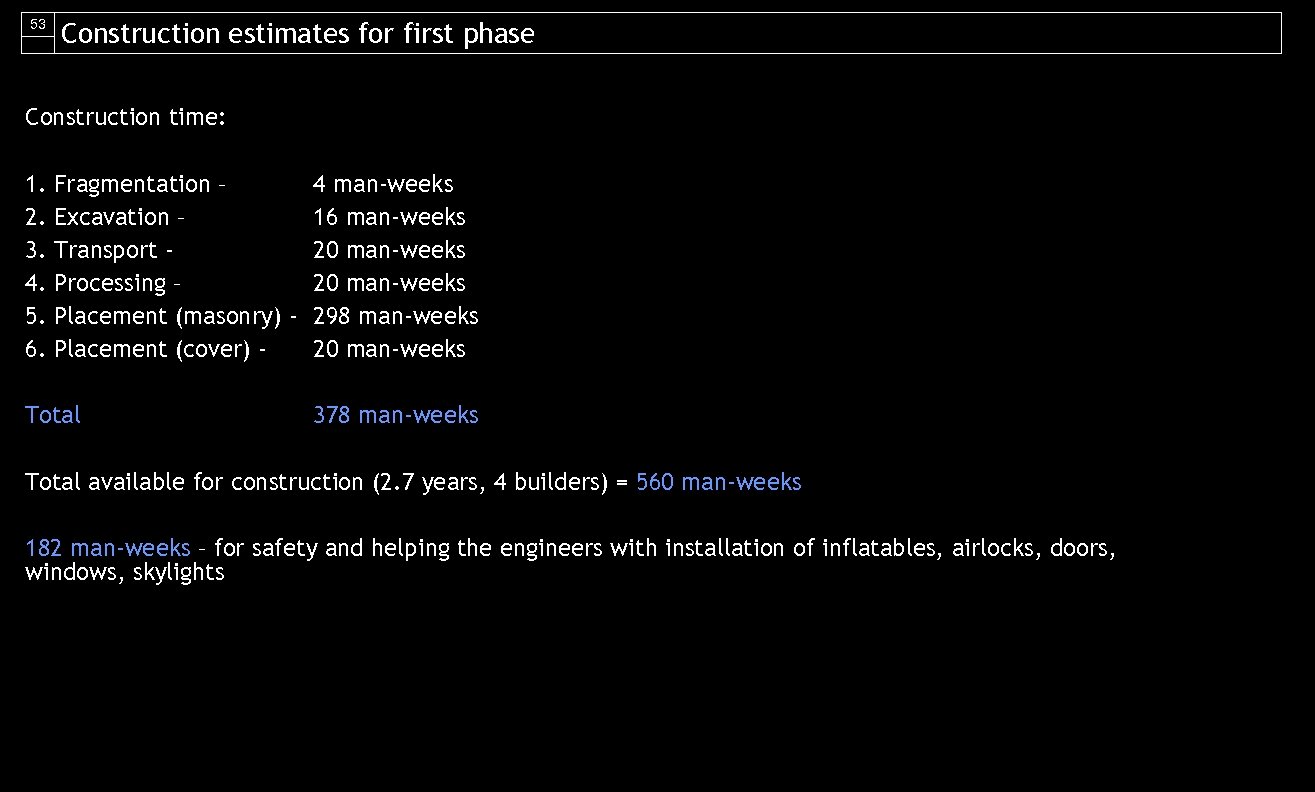 53 Construction estimates for first phase Construction time: 1. 2. 3. 4. 5. 6. Fragmentation – 4 man-weeks Excavation – 16 man-weeks Transport 20 man-weeks Processing – 20 man-weeks Placement (masonry) - 298 man-weeks Placement (cover) 20 man-weeks Total 378 man-weeks Total available for construction (2. 7 years, 4 builders) = 560 man-weeks 182 man-weeks – for safety and helping the engineers with installation of inflatables, airlocks, doors, windows, skylights
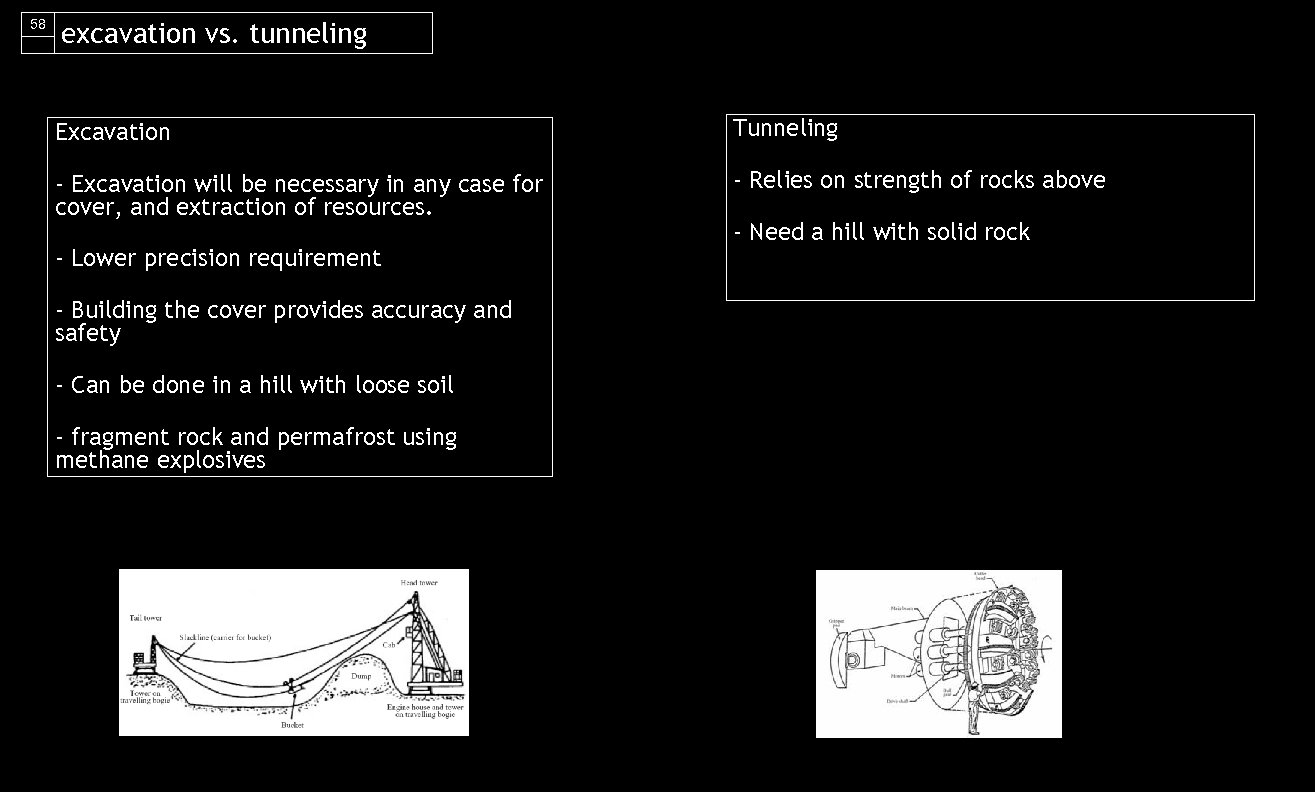
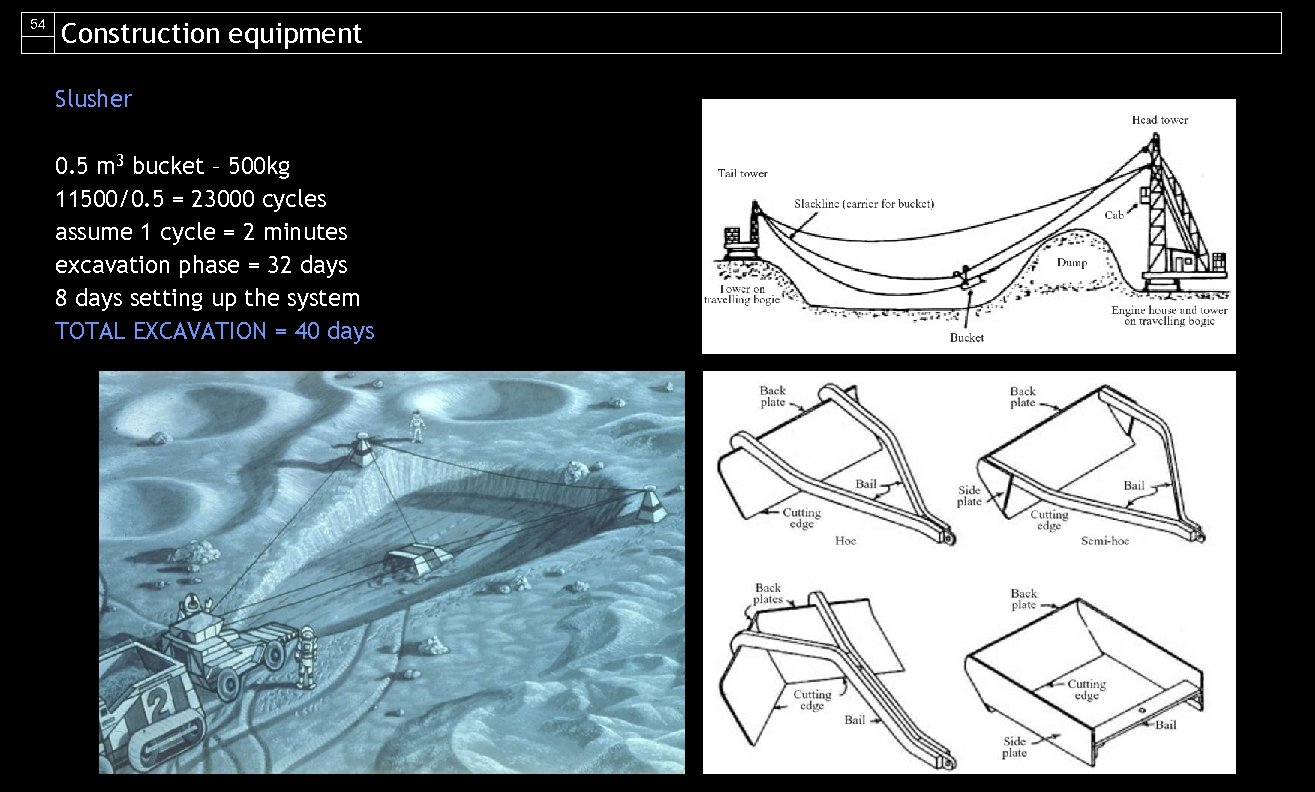 54 Construction equipment Slusher 0. 5 m 3 bucket – 500 kg 11500/0. 5 = 23000 cycles assume 1 cycle = 2 minutes excavation phase = 32 days 8 days setting up the system TOTAL EXCAVATION = 40 days
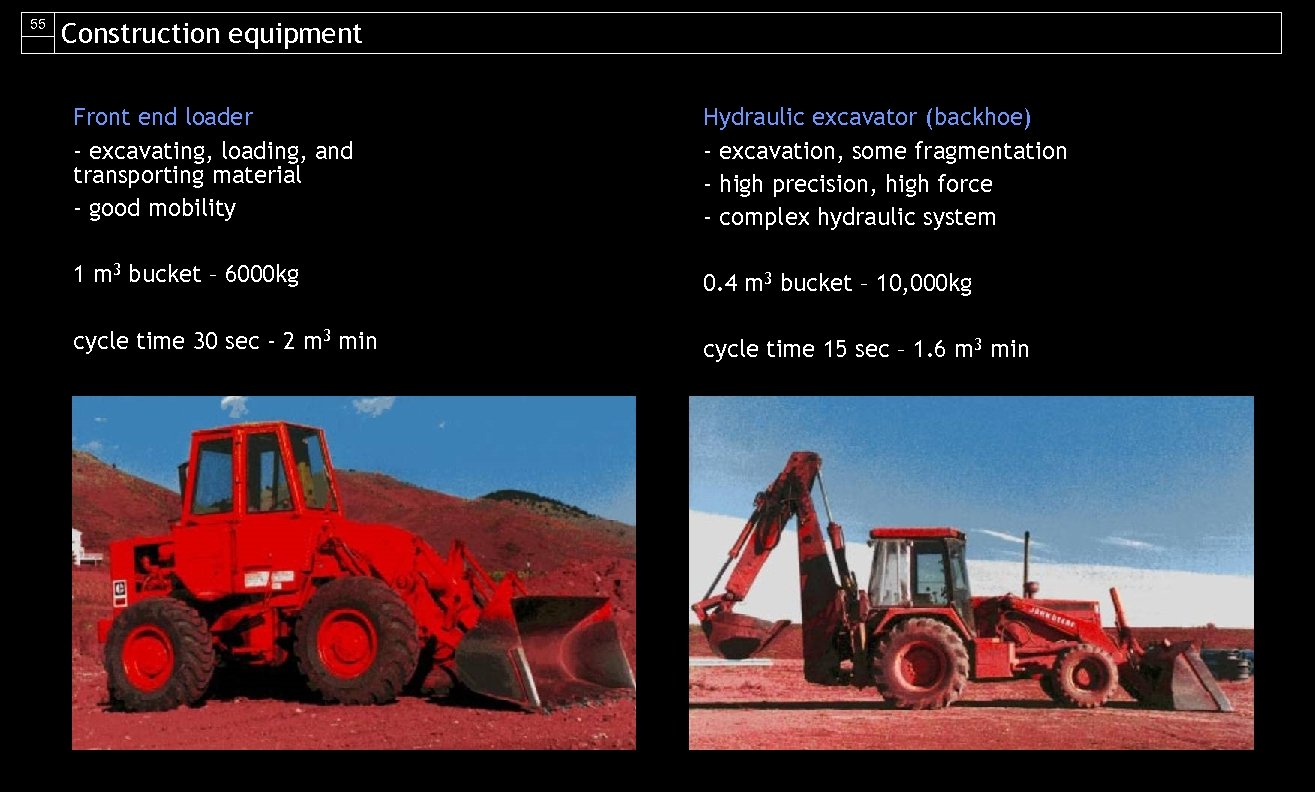 55 Construction equipment Front end loader - excavating, loading, and transporting material - good mobility Hydraulic excavator (backhoe) - excavation, some fragmentation - high precision, high force - complex hydraulic system 1 m 3 bucket – 6000 kg 0. 4 m 3 bucket – 10, 000 kg cycle time 30 sec - 2 m 3 min cycle time 15 sec – 1. 6 m 3 min
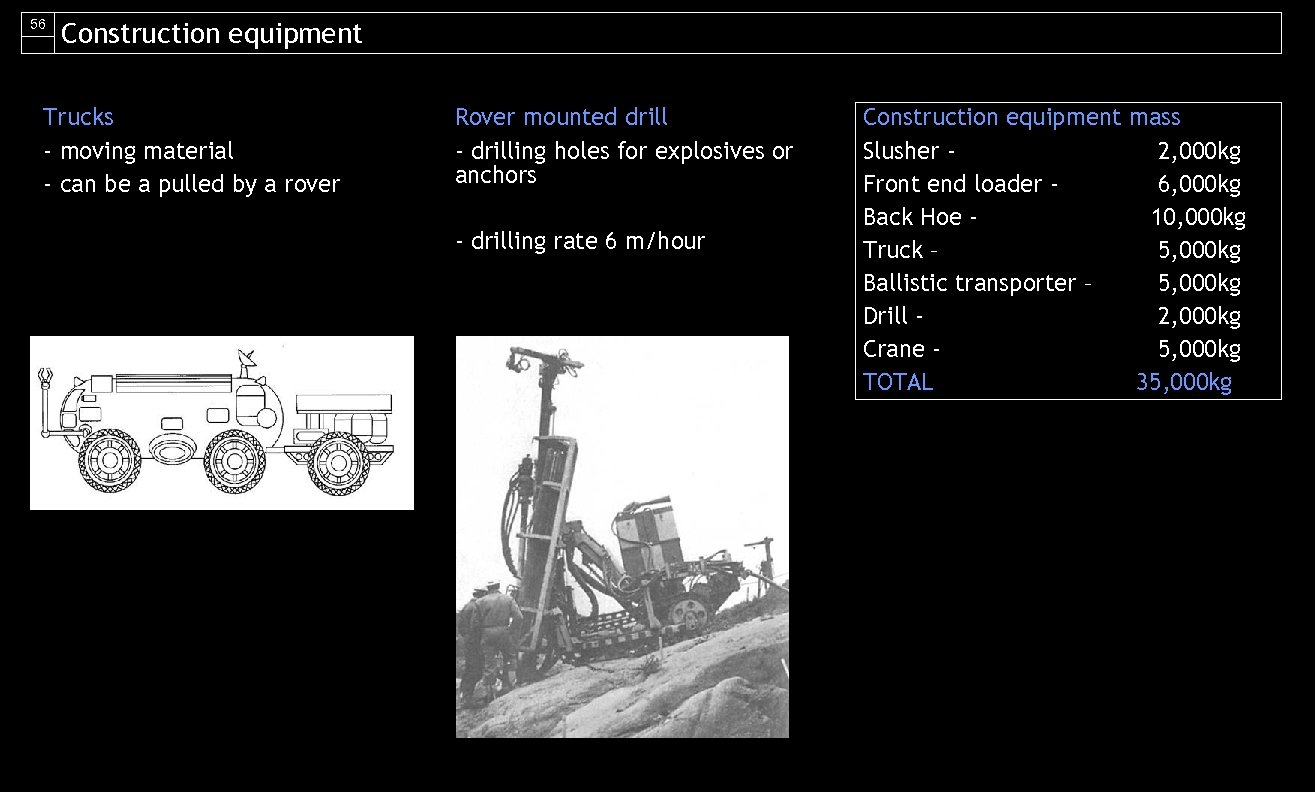 56 Construction equipment Trucks - moving material - can be a pulled by a rover Rover mounted drill - drilling holes for explosives or anchors - drilling rate 6 m/hour Construction equipment mass Slusher 2, 000 kg Front end loader 6, 000 kg Back Hoe 10, 000 kg Truck – 5, 000 kg Ballistic transporter – 5, 000 kg Drill 2, 000 kg Crane 5, 000 kg TOTAL 35, 000 kg
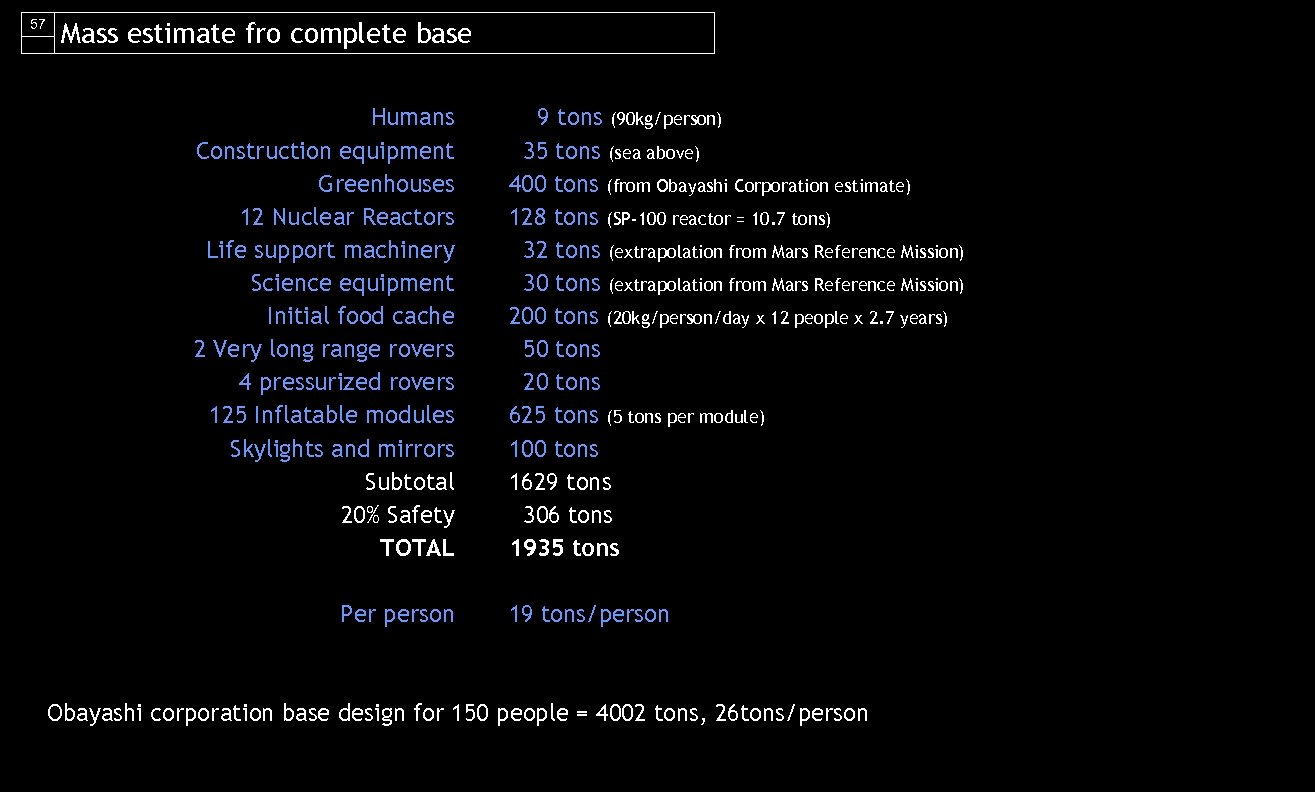 57 Mass estimate fro complete base Humans Construction equipment Greenhouses 12 Nuclear Reactors Life support machinery Science equipment Initial food cache 2 Very long range rovers 4 pressurized rovers 125 Inflatable modules Skylights and mirrors Subtotal 20% Safety TOTAL Per person 9 tons (90 kg/person) 35 tons (sea above) 400 tons (from Obayashi Corporation estimate) 128 tons (SP-100 reactor = 10. 7 tons) 32 tons (extrapolation from Mars Reference Mission) 30 tons (extrapolation from Mars Reference Mission) 200 tons (20 kg/person/day x 12 people x 2. 7 years) 50 tons 20 tons 625 tons (5 tons per module) 100 tons 1629 tons 306 tons 1935 tons 19 tons/person Obayashi corporation base design for 150 people = 4002 tons, 26 tons/person
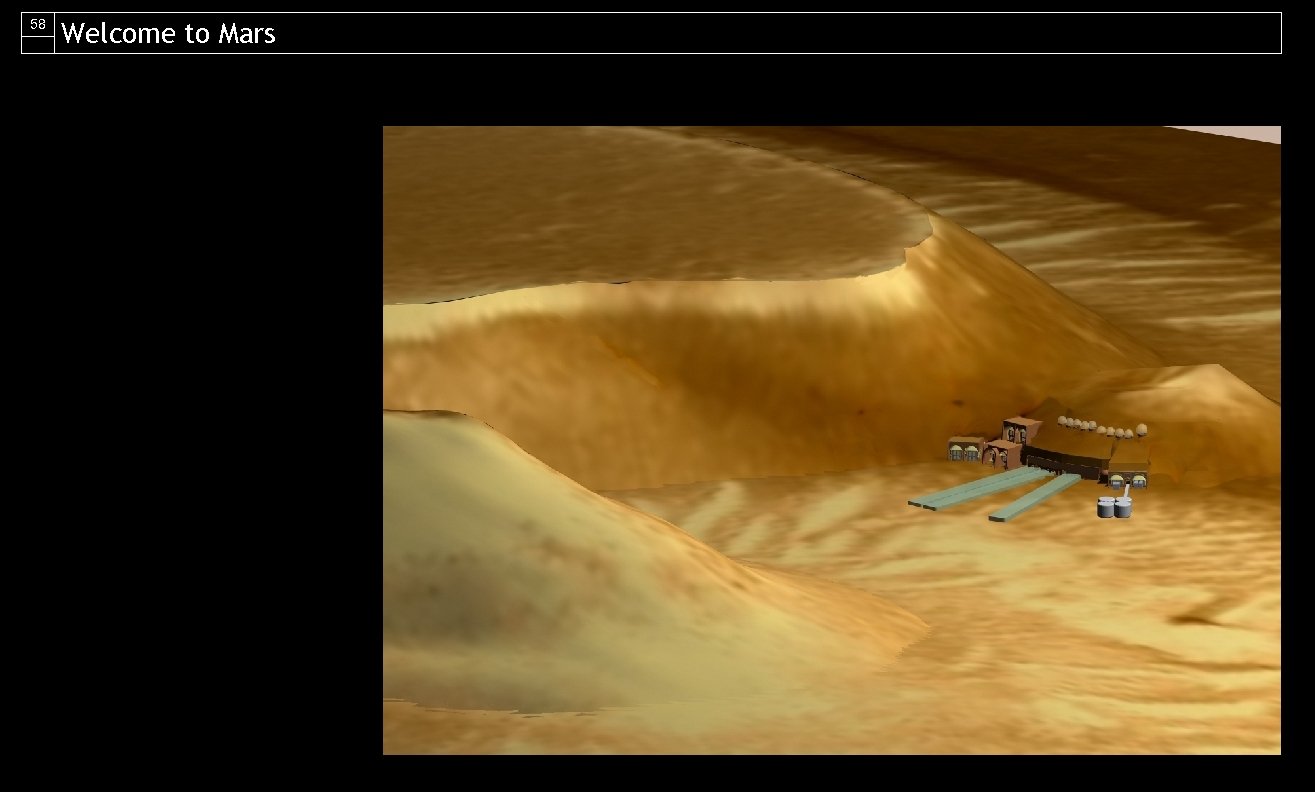 58 Welcome to Mars
 00 Extra Slides
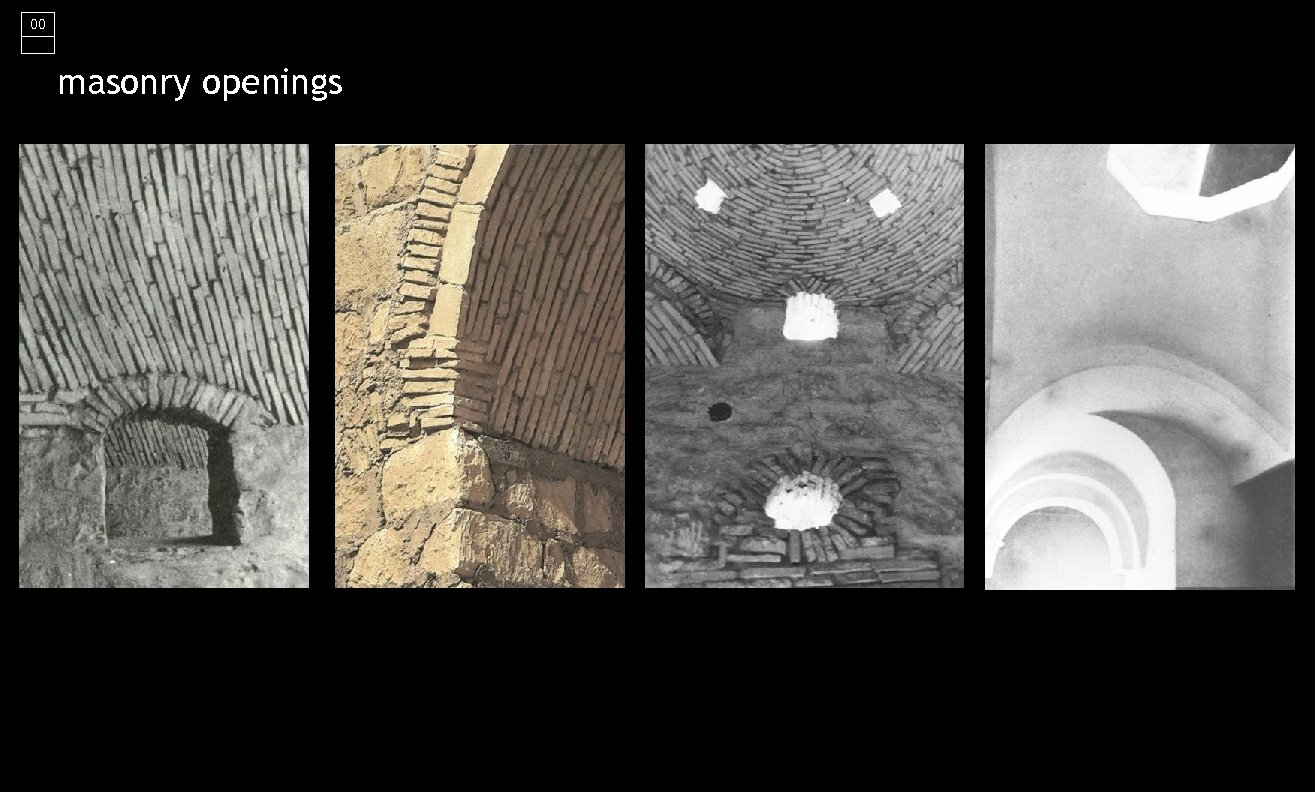 00 masonry openings
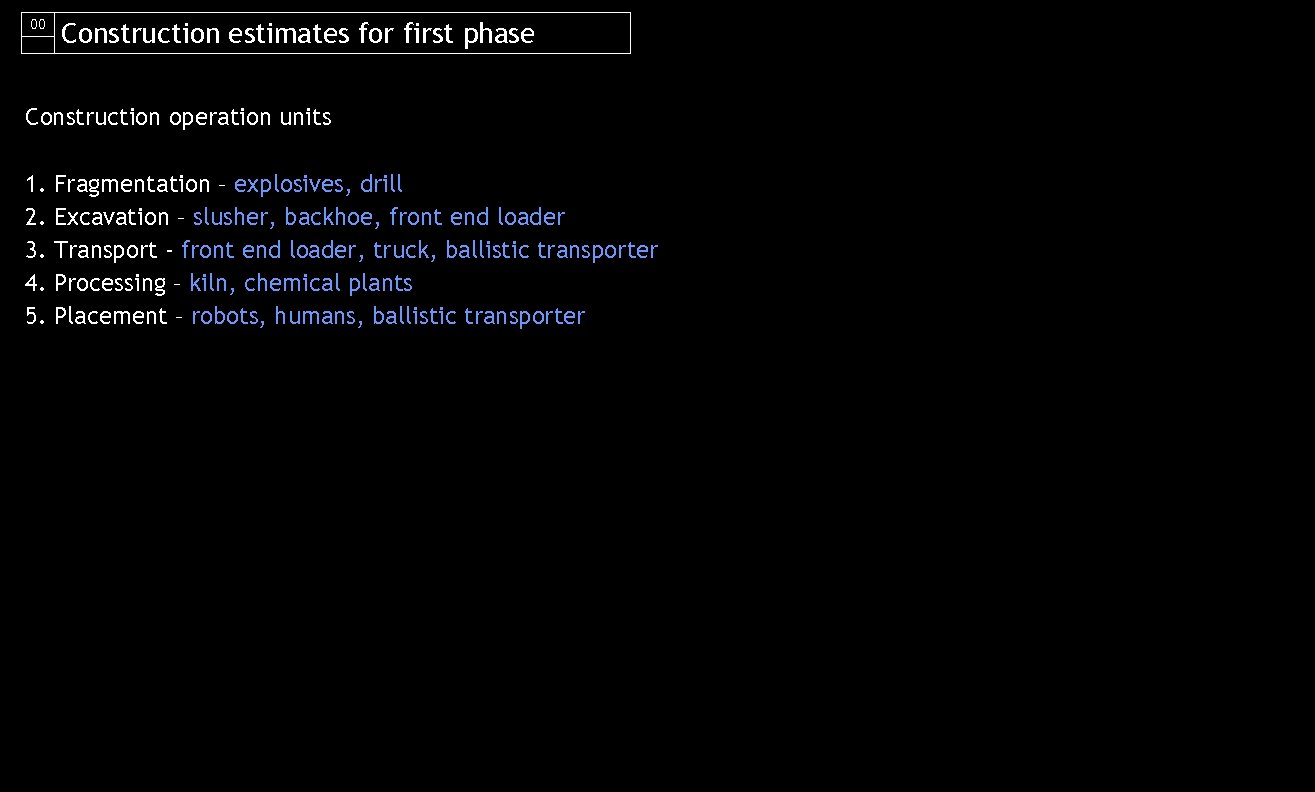 00 Construction estimates for first phase Construction operation units 1. 2. 3. 4. 5. Fragmentation – explosives, drill Excavation – slusher, backhoe, front end loader Transport - front end loader, truck, ballistic transporter Processing – kiln, chemical plants Placement – robots, humans, ballistic transporter
 0 bamboo - full height in 3 months - maturity in 3 years - lifespan 20 years - leaves always green - very strong in tension - strong in compression - poles, beams, flooring, siding, scaffolding, furniture, musical instruments, and other tools
 58 excavation vs. tunneling Excavation Tunneling - Excavation will be necessary in any case for cover, and extraction of resources. - Relies on strength of rocks above - Lower precision requirement - Building the cover provides accuracy and safety - Can be done in a hill with loose soil - fragment rock and permafrost using methane explosives - Need a hill with solid rock
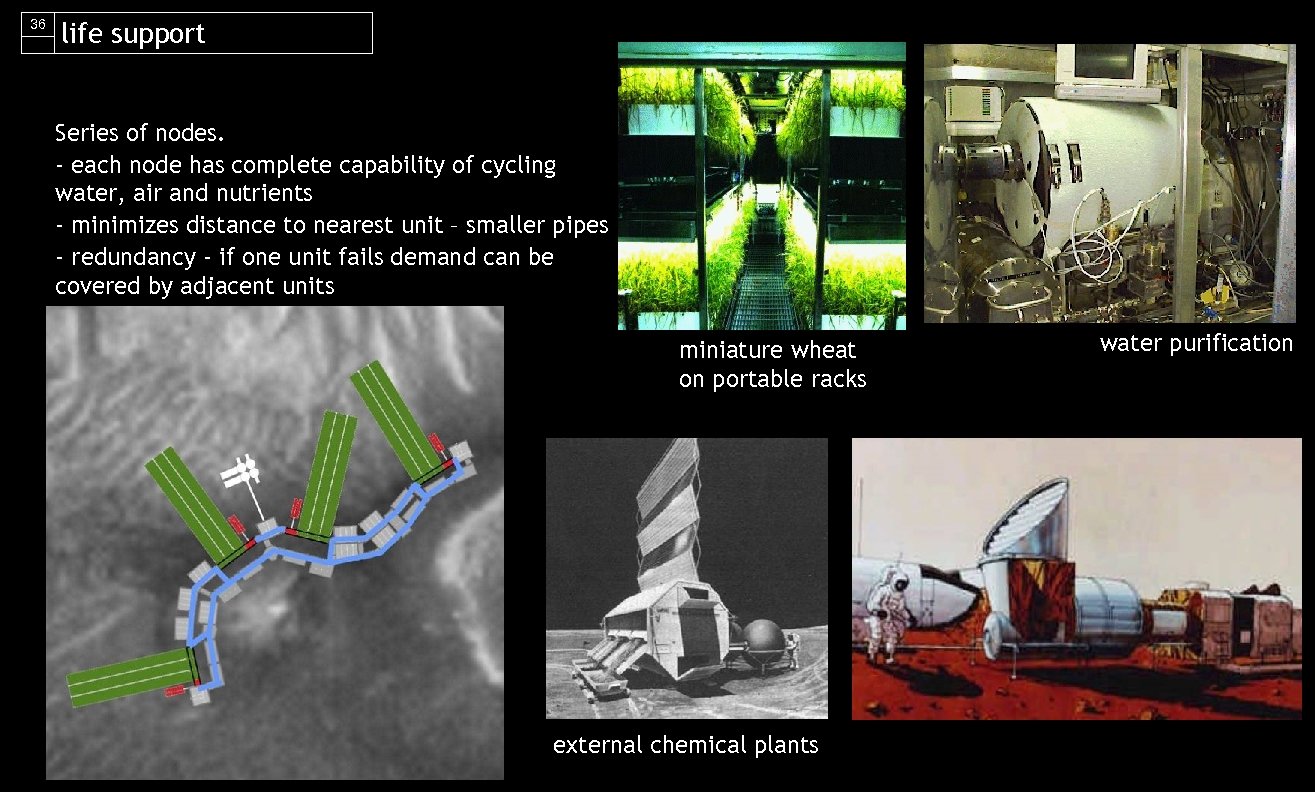 36 life support Series of nodes. - each node has complete capability of cycling water, air and nutrients - minimizes distance to nearest unit – smaller pipes - redundancy - if one unit fails demand can be covered by adjacent units miniature wheat on portable racks external chemical plants water purification
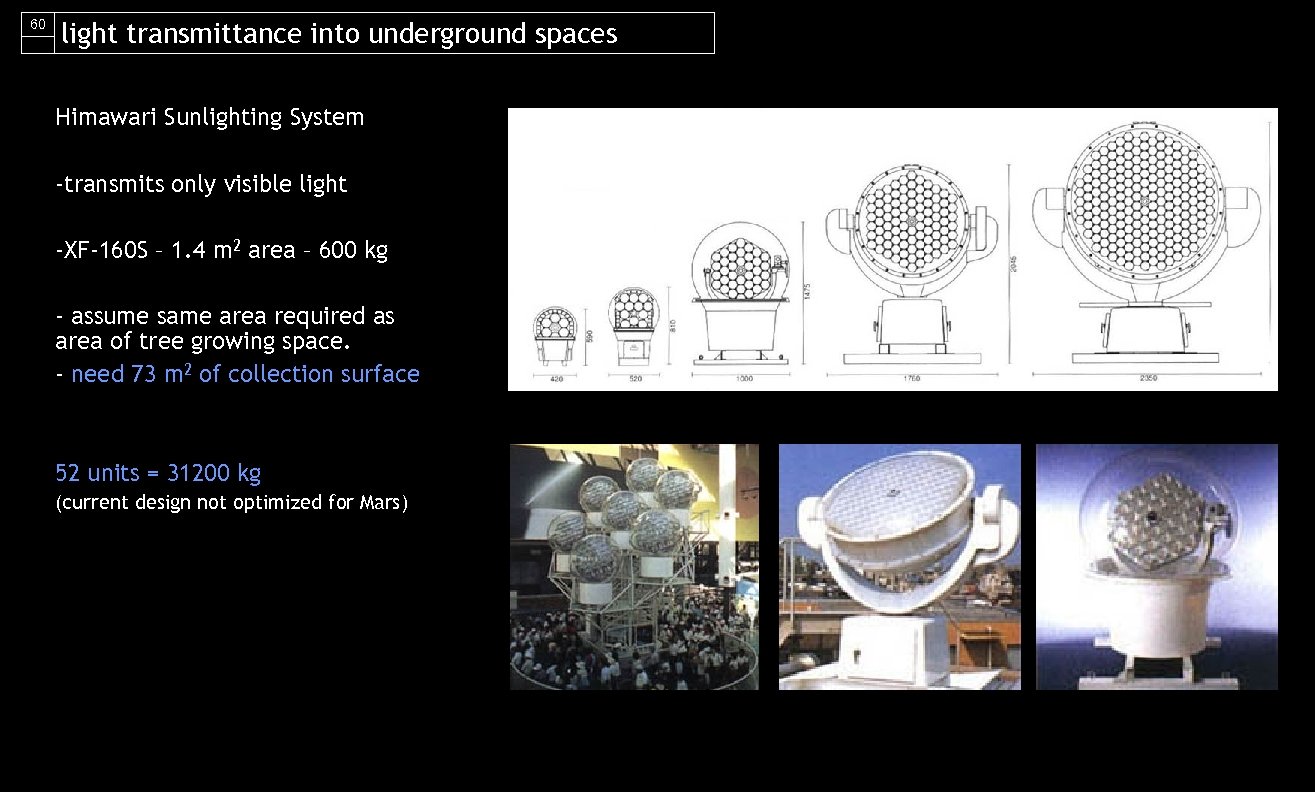 60 light transmittance into underground spaces Himawari Sunlighting System -transmits only visible light -XF-160 S – 1. 4 m 2 area – 600 kg - assume same area required as area of tree growing space. - need 73 m 2 of collection surface 52 units = 31200 kg (current design not optimized for Mars)
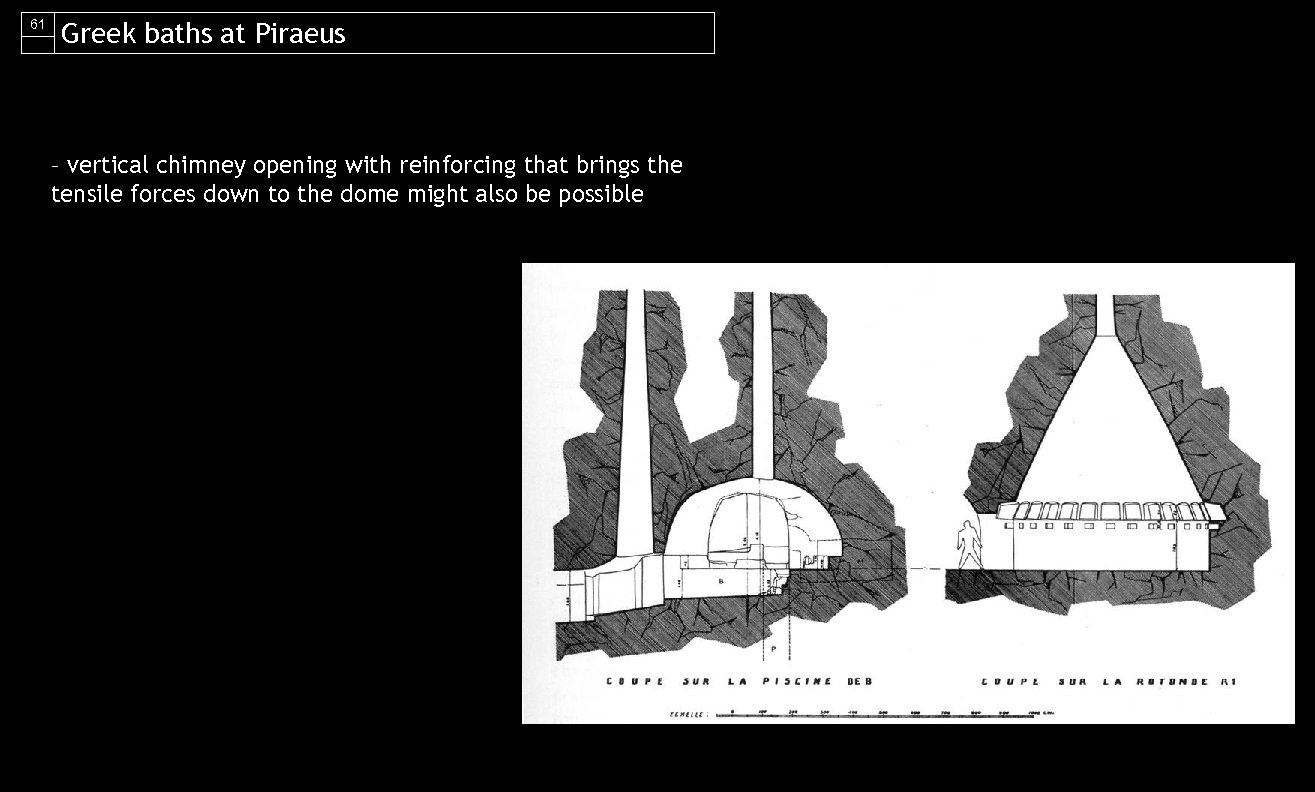 61 Greek baths at Piraeus – vertical chimney opening with reinforcing that brings the tensile forces down to the dome might also be possible
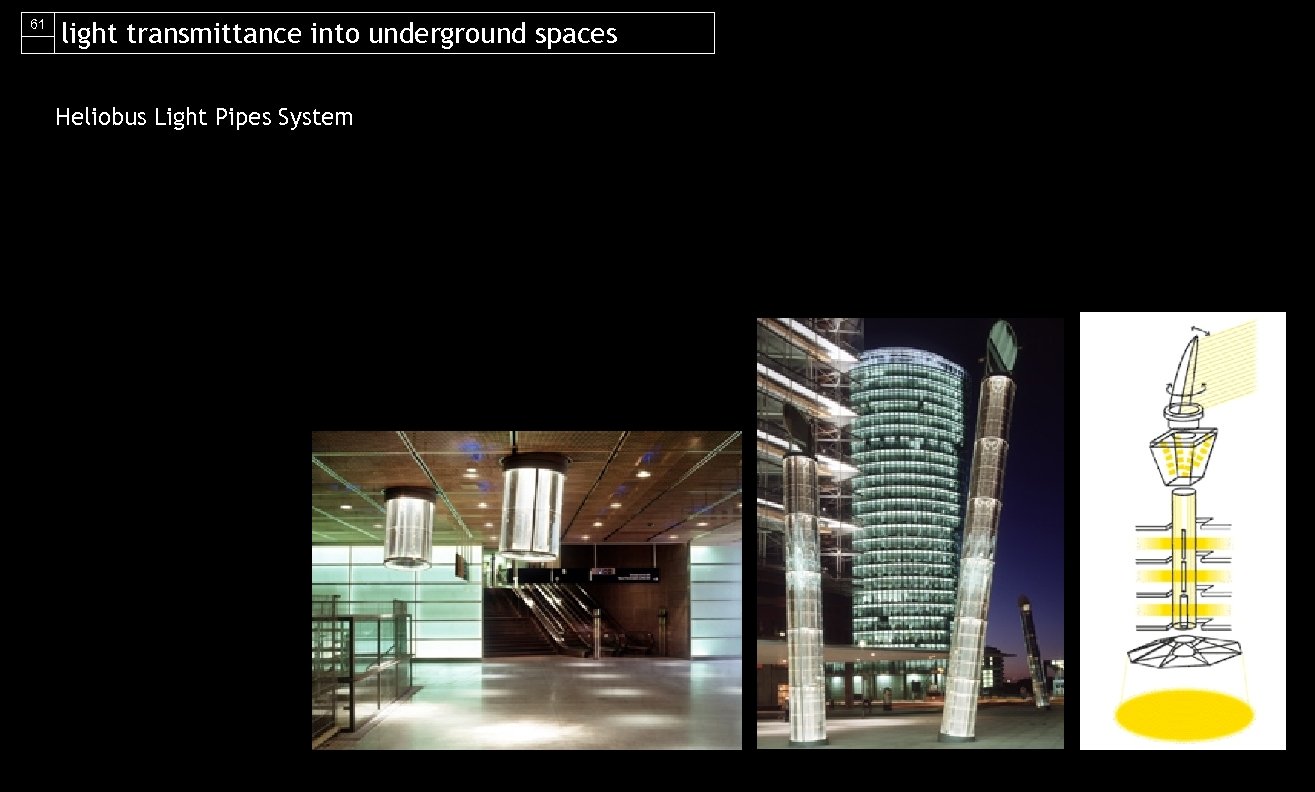 61 light transmittance into underground spaces Heliobus Light Pipes System
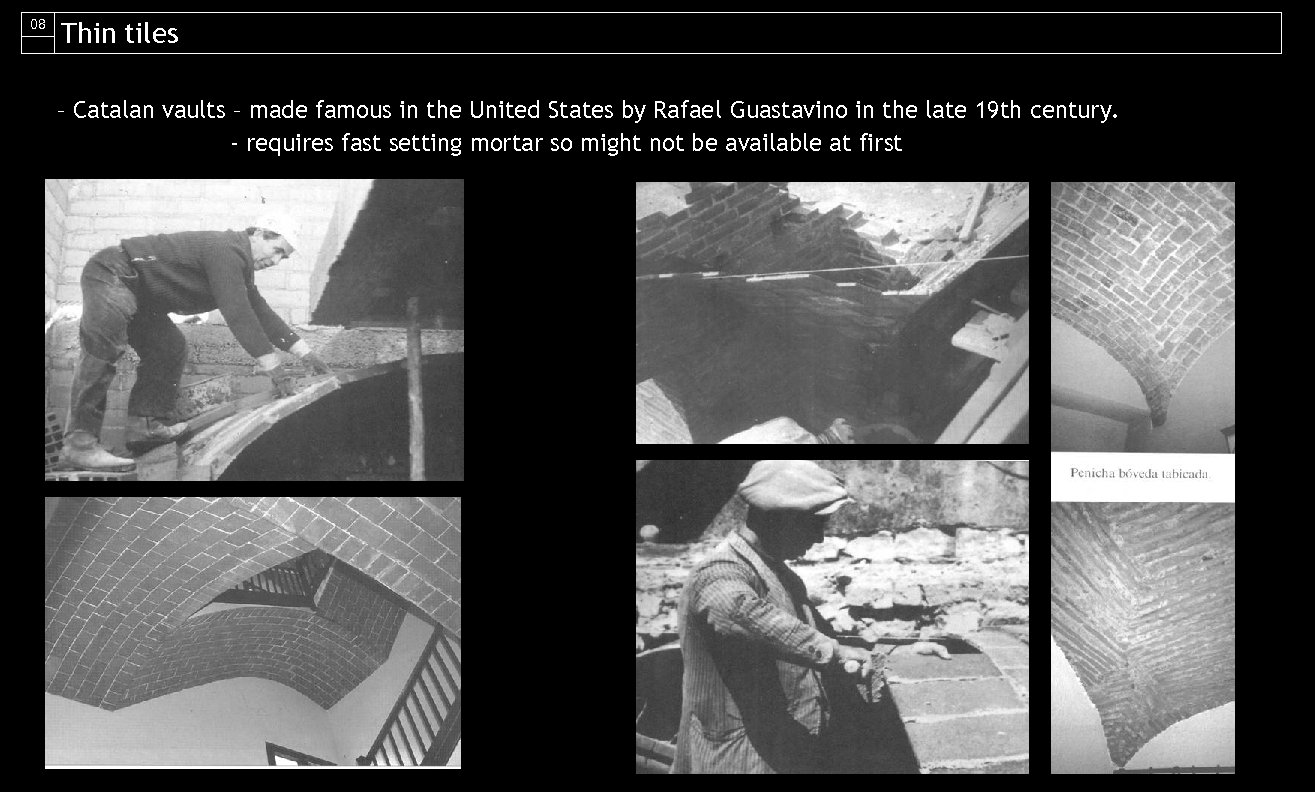 08 Thin tiles – Catalan vaults – made famous in the United States by Rafael Guastavino in the late 19 th century. - requires fast setting mortar so might not be available at first
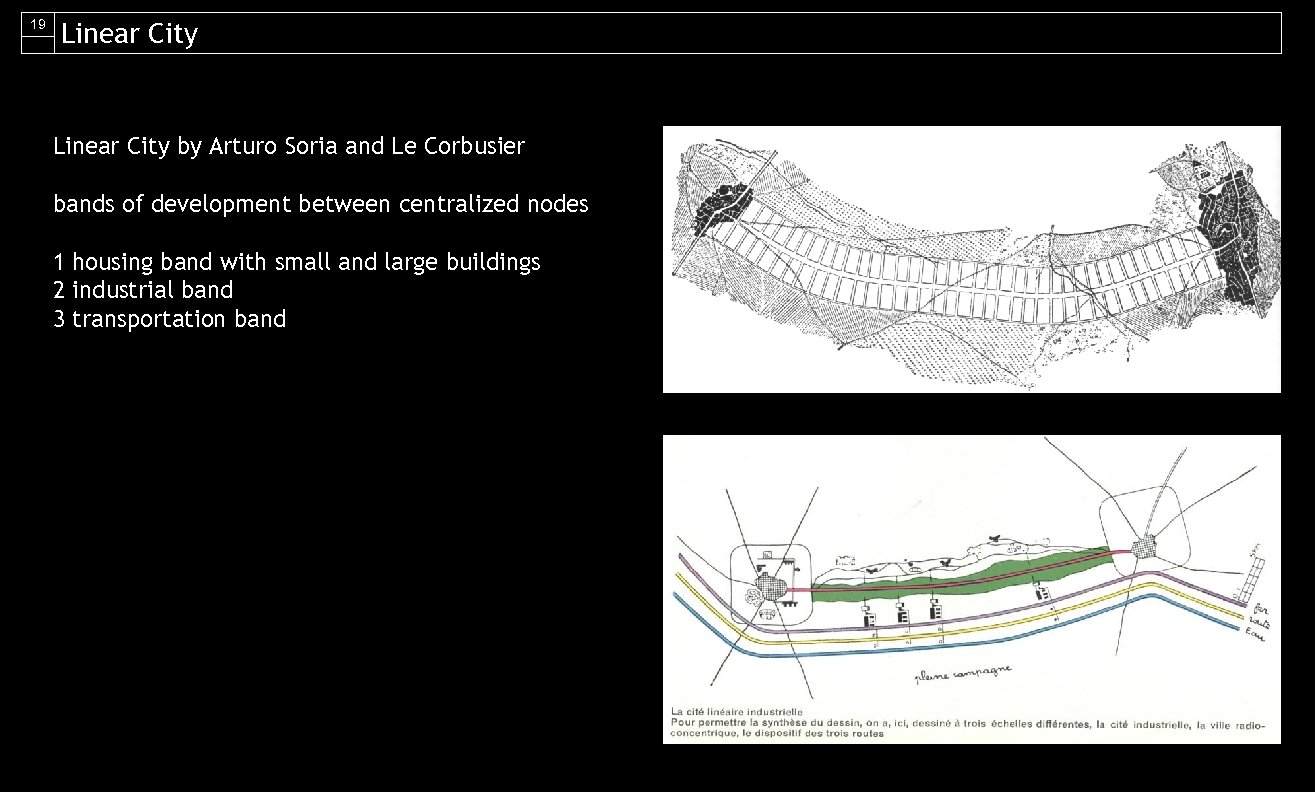 19 Linear City by Arturo Soria and Le Corbusier bands of development between centralized nodes 1 housing band with small and large buildings 2 industrial band 3 transportation band