 Скачать презентацию ﻭﻫﻮ ﺍﻟﺬﻯ ﺃﺮﺳﻞ ﺍﻟﺮﻳﺎﺡ ﺑﺸﺮ ﺑﻴﻦ
8789ce456ae8c3875617a06810a5986e.ppt
- Количество слайдов: 50





” ﻭﻫﻮ ﺍﻟﺬﻯ ﺃﺮﺳﻞ ﺍﻟﺮﻳﺎﺡ ﺑﺸﺮ ﺑﻴﻦ ﻳﺪﻯ ﺭﺣﻤﺘﻪ ، ﻭﺃﻨﺰﻟﻨﺎ ﻣﻦ 48 - ﺍﻟﺴﻤﺎﺀ ﻣﺎ ﻃﻬﻮﺭ ” ﺍﻟﻔﺮﻗﺎﻥ And He it is Who sends the winds as heralds of glad tidings, going before His mercy, and We send down pure water from the sky, 3/16/2018 2
Wind Resource Assessment Program Prepared by Eng. Ashour Abdelsalam Moussa Wind Energy Dep. , New & Renewable Energy Authority (NREA) 3/16/2018 3

The World’s Energy Resources Are Limited! 3/16/2018 4
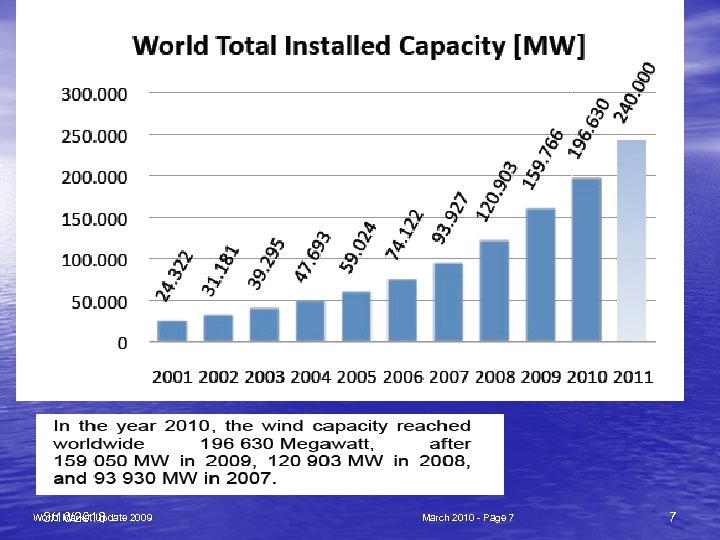
World Wind Energy 2010 Worldwide capacity reached 196 630 Megawatt, out of which 37 642 Megawatt were added in 2010 All wind turbines installed by the end of 2010 worldwide can generate 430 Terawatt hours per annum, more than the total electricity demand of the United Kingdom, the sixth largest economy of the world, and equalling 2, 5 % of the global electricity consumption. The wind sector in 2010 had a turnover of 40 billion Euro and employed 670’ 000 persons worldwide. 3/16/2018 5
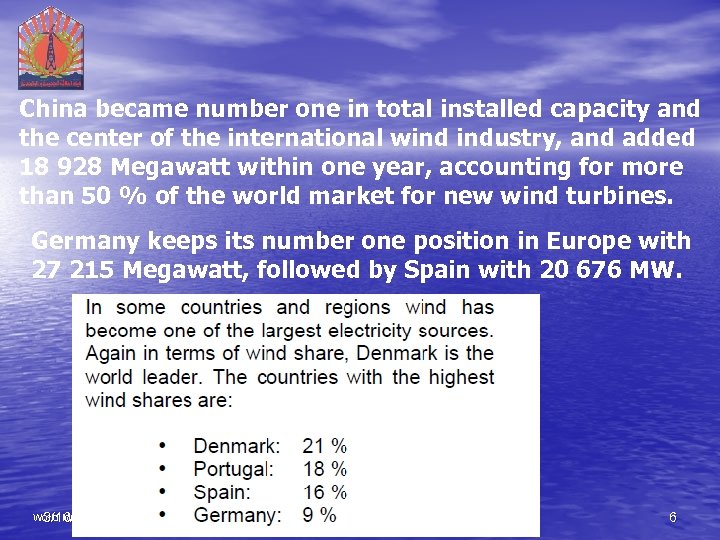
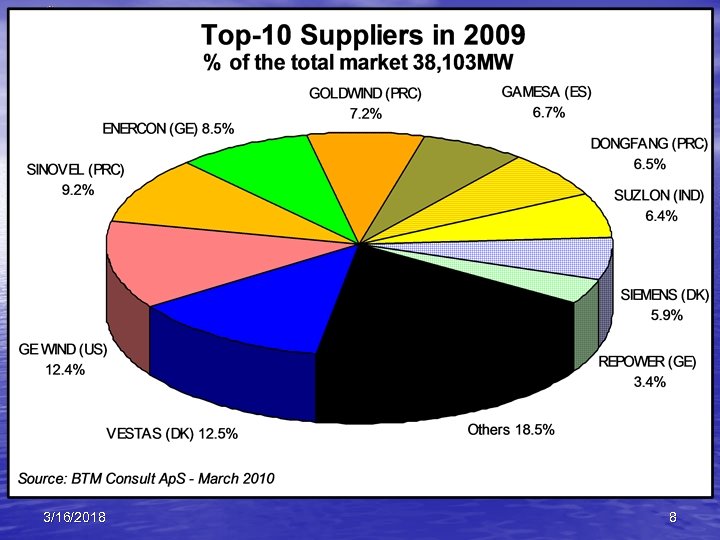
China became number one in total installed capacity and the center of the international wind industry, and added 18 928 Megawatt within one year, accounting for more than 50 % of the world market for new wind turbines. Germany keeps its number one position in Europe with 27 215 Megawatt, followed by Spain with 20 676 MW. World Market Update 2009 3/16/2018 March 2010 - Page 6 6
World Market Update 2009 3/16/2018 March 2010 - Page 7 7
3/16/2018 8
Wind 3/16/2018 9
Why assess wind resource 1. The Power in the wind is proportional to Cube of the wind speed (10% difference in wind speed makes about 33% change in wind power). This is the primary reason for wind resource assessment. 2. Wind speed, wind shear*, turbulence** and gust intensity all need to be specified when procuring a wind turbine and designing its foundation…. etc. *Wind shears (large differences in the mean wind speed over the rotor) give large fluctuating loads and consequently fatigue on the wind turbine blades, because the blades move through areas of varying wind speed. **Turbulence causes dynamic loads on wind turbines. The strength of the turbulence varies from place to place. Over land the turbulence is more intense than over the sea 3/16/2018 10
3. Turbine manufacturers concerns max. turbulence intensity (16%), max. wind shear acting on blade area (0. 2) and max. one second gust used for foundation design Wind Resources assessments are the cornerstone of identifying and mitigating risks and for realizing the potential rewards from a project. 3/16/2018 11
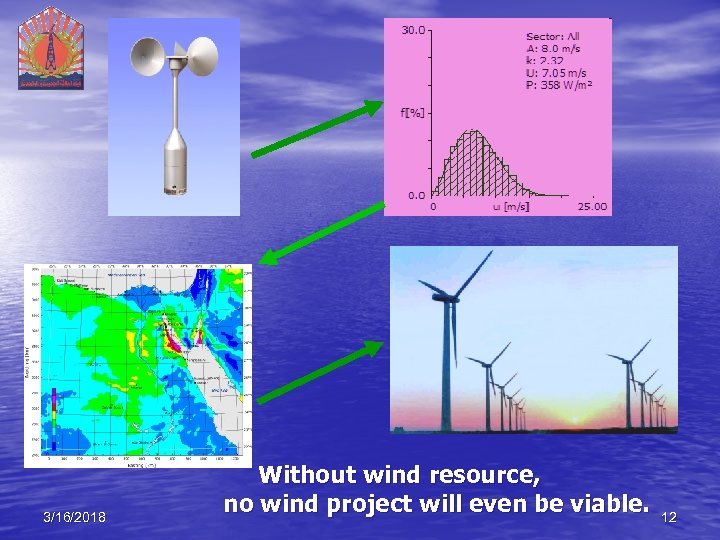
3/16/2018 Without wind resource, no wind project will even be viable. 12
3/16/2018 13
3/16/2018 14
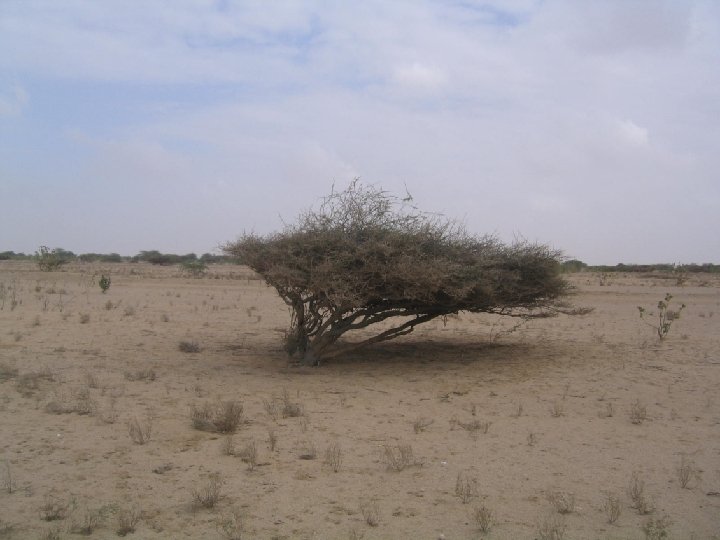
Griggs – Putman Wind Index This index is based on the permanent tree deformation caused by wind and is useful for estimating the average wind speed in an area. 3/16/2018 15
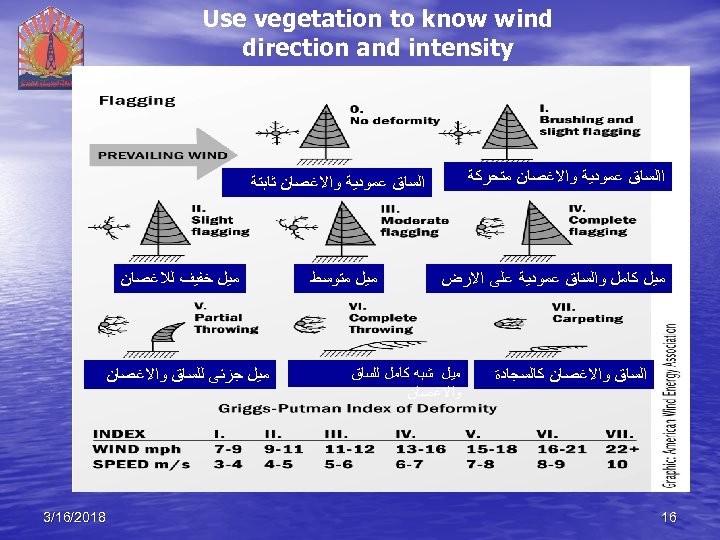
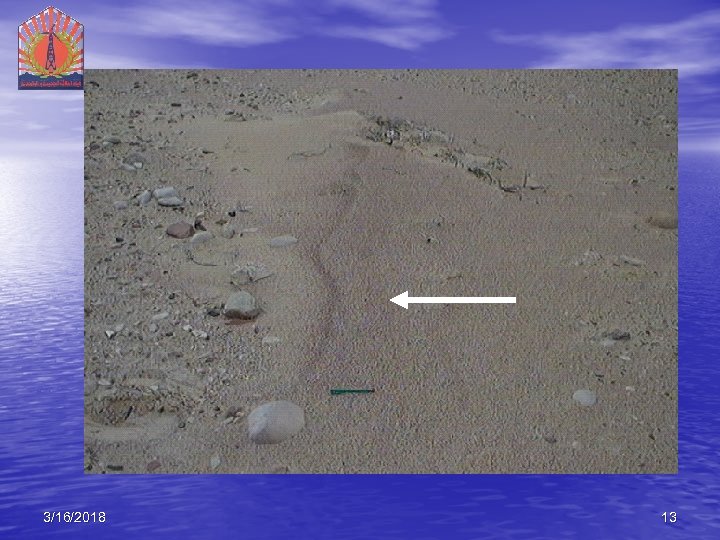
Use vegetation to know wind direction and intensity ﺍﺍﻟﺴﺎﻕ ﻋﻤﻮﺩﻳﺔ ﻭﺍﻻﻏﺼﺎﻥ ﻣﺘﺤﺮﻛﺔ ﺍﻟﺴﺎﻕ ﻋﻤﻮﺩﻳﺔ ﻭﺍﻻﻏﺼﺎﻥ ﺛﺎﺑﺘﺔ ﻣﻴﻞ ﻛﺎﻣﻞ ﻭﺍﻟﺴﺎﻕ ﻋﻤﻮﺩﻳﺔ ﻋﻠﻰ ﺍﻻﺭﺽ ﺍﻟﺴﺎﻕ ﻭﺍﻻﻏﺼﺎﻥ ﻛﺎﻟﺴﺠﺎﺩﺓ 61 ﻣﻴﻞ ﻣﺘﻮﺳﻂ ﻣﻴﻞ ﺷﺒﻪ ﻛﺎﻣﻞ ﻟﻠﺴﺎﻕ ﻭﺍﻻﻏﺼﺎﻥ ﻣﻴﻞ ﺧﻔﻴﻒ ﻟﻼﻏﺼﺎﻥ ﻣﻴﻞ ﺟﺰﺋﻰ ﻟﻠﺴﺎﻕ ﻭﺍﻻﻏﺼﺎﻥ 8102/61/3
Prevailing Wind Direction Important to check direction when setting up instrument 3/16/2018 17
Information in the resource assessment will include : • Daily average wind speeds • Monthly average wind speeds • Annual Average wind speeds • Frequency distribution • Wind Rose • Wind power density • Turbulence intensity 3/16/2018 18
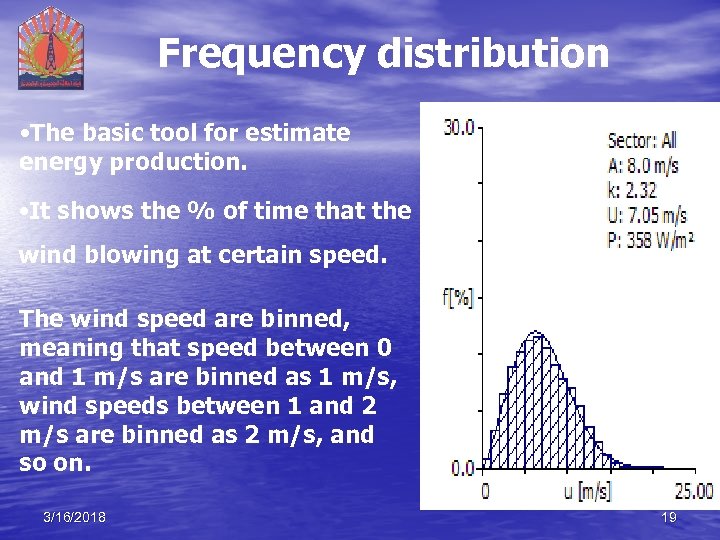
Frequency distribution • The basic tool for estimate energy production. • It shows the % of time that the wind blowing at certain speed. The wind speed are binned, meaning that speed between 0 and 1 m/s are binned as 1 m/s, wind speeds between 1 and 2 m/s are binned as 2 m/s, and so on. 3/16/2018 19
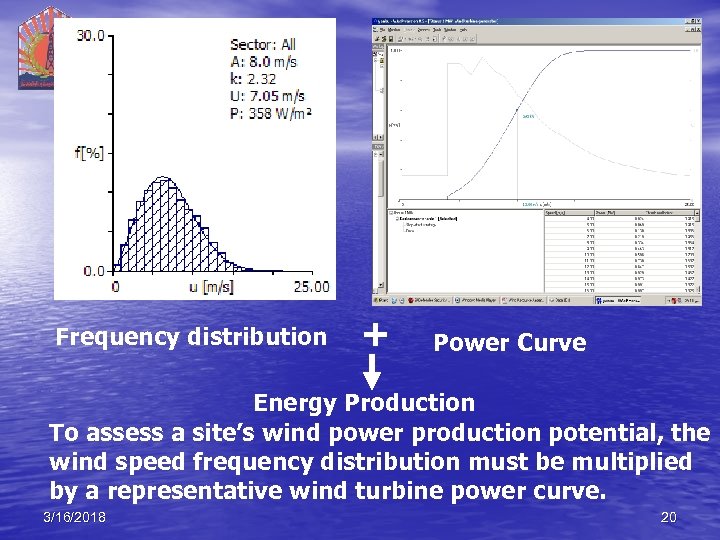
Frequency distribution + Power Curve Energy Production To assess a site’s wind power production potential, the wind speed frequency distribution must be multiplied by a representative wind turbine power curve. 3/16/2018 20
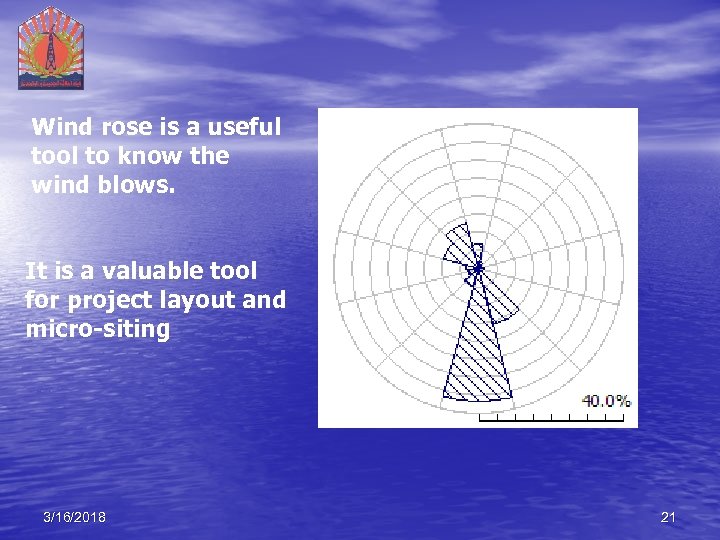
Wind rose is a useful tool to know the wind blows. It is a valuable tool for project layout and micro-siting 3/16/2018 21
Wind Power density (W/m 2) • It is defined as the wind power available per unit area swept by the turbine blades. • It is a true indication of wind energy potential in the site than wind speed alone. • Its value combines wind speed distribution and air density. 3/16/2018 22
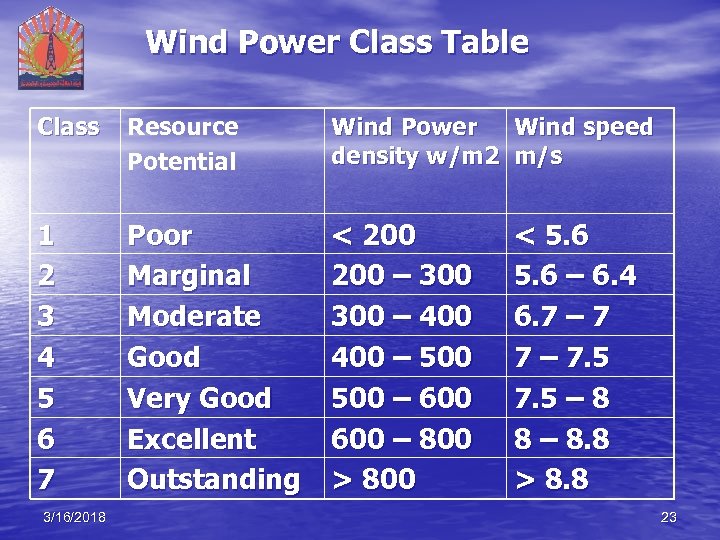
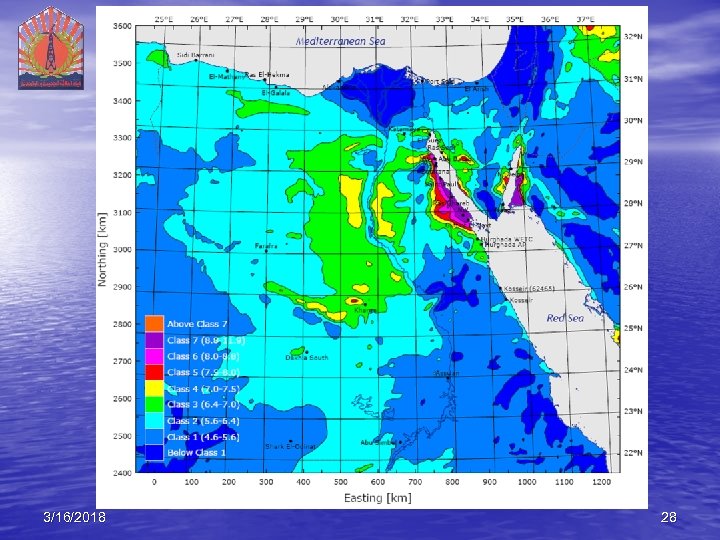
Wind Power Class Table Class Resource Potential Wind Power Wind speed density w/m 2 m/s 1 2 3 4 5 6 7 Poor Marginal Moderate Good Very Good Excellent Outstanding < 200 – 300 – 400 – 500 – 600 – 800 > 800 3/16/2018 < 5. 6 – 6. 4 6. 7 – 7. 5 – 8 8 – 8. 8 > 8. 8 23
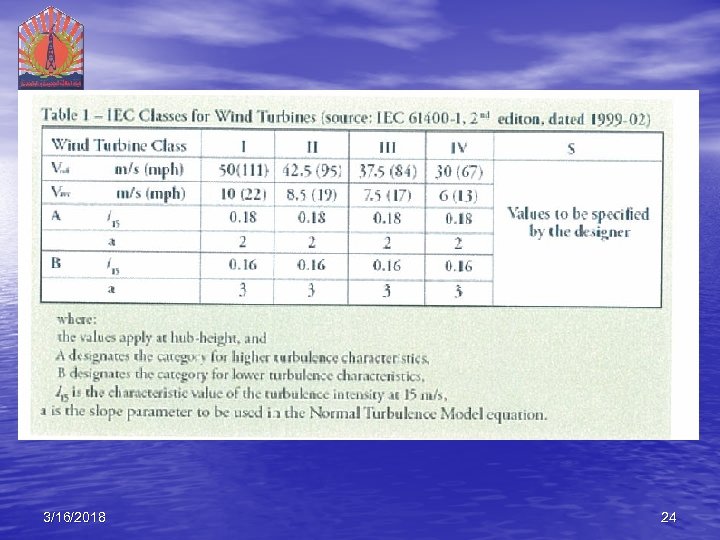
3/16/2018 24
Turbulence intensity • It is the rapid disturbances in the wind speed and direction. Low < 0. 1 Medium 0. 1 ~ 0. 25 Large > 0. 25 • High turbulence level cause extreme loading on • • wind turbine components. Turbulent locations will severely limit the lifetime of Wind turbines and maximum the chance of their catastrophic failures. Standard deviation used for turbulence Turbulence intensity = standard deviation of wind speed/ mean wind speed 3/16/2018 25
Standard deviation of wind speed calculation (σ) • A number that indicates how much wind speed changes above or below the mean • Example : For set of data v 1 =6 m/s n 1= 19 times v 2 =7 m/s n 2= 54 times v 3=8 m/s n 3= 42 times Total Number of times occurrence (n) = 115 mean wind speed = (n 1 xv 1 + n 2 xv 2 + n 3 xv 3)/n = (19 x 6 +54 x 7 + 42 x 8)/ 115 = 7. 2 m/s σ2 =1/(n-1){(n 1 xv 1^2 + n 2 xv 2^2 + n 3 xv 3^2) – 1/n (n 1 xv 1 +n 2 xv 2 +n 3 xv 3)^2} =1/114 {(19 x(6)2+54 x(7)2 +42(8)2 – (1/115)(19 x 6 + 54 x 7 +42 x 8)2} = 0. 495 m 2/s 2 σ = 0. 703 m/s Turbulence intensity = standard deviation of wind speed/ mean wind speed = 0. 703 / 7. 2 = 0. 097 3/16/2018 26
Once this assessment is completed, an accurate picture of wind resource at the site should be clear 3/16/2018 27
3/16/2018 28
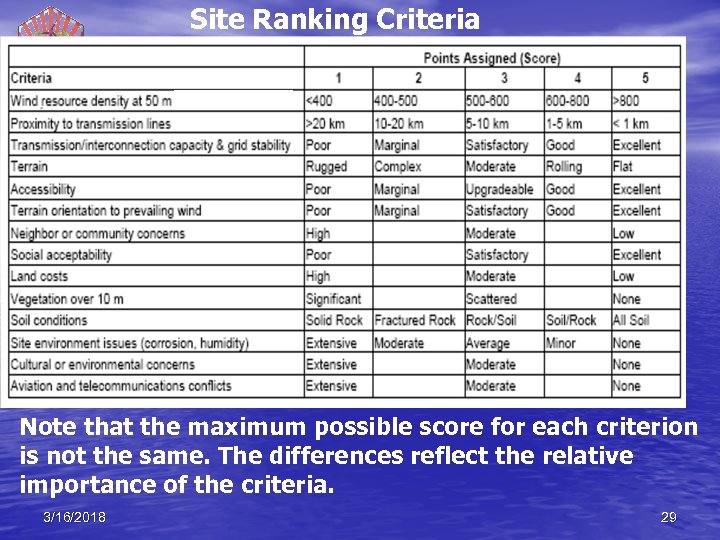
Site Ranking Criteria Note that the maximum possible score for each criterion is not the same. The differences reflect the relative importance of the criteria. 3/16/2018 29
Micrositing is used to position one or more wind turbines within a given land area to maximize the overall energy output of the wind plant. One km 2 of the windy land can host 5 – 7 MW of potential installed capacity. 100 MW wind farm needs (15 -20 km 2) 3/16/2018 30
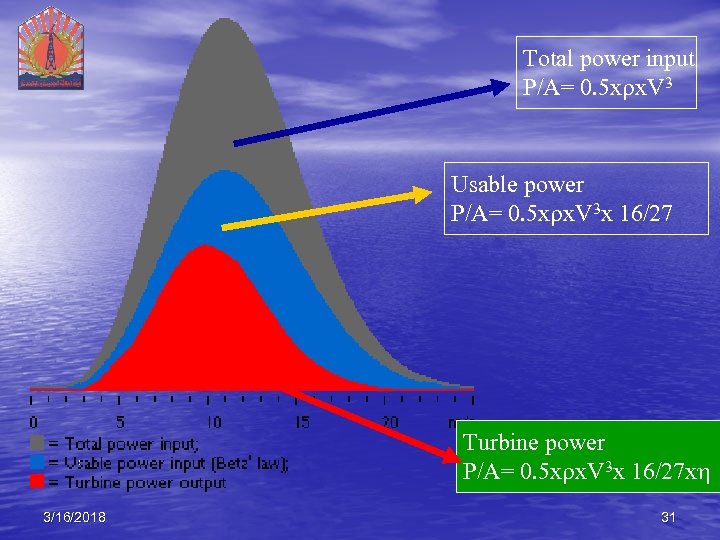
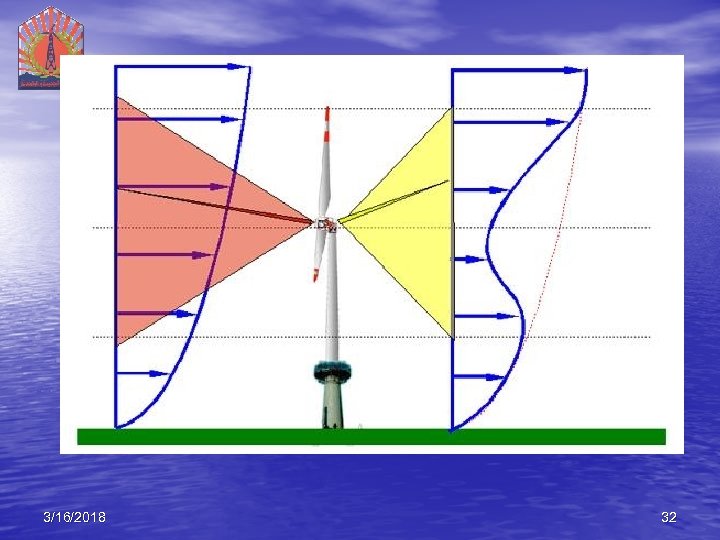
Total power input P/A= 0. 5 x x. V 3 Usable power P/A= 0. 5 x x. V 3 x 16/27 Turbine power P/A= 0. 5 x x. V 3 x 16/27 x 3/16/2018 31
3/16/2018 32

3/16/2018 33
The distances between the turbines have a strong effect on the energy output of the wind park. This effect is described by the park efficiency the relation between : (the output of the park) / (the output of the same number of stand-alone turbines) 3/16/2018 34
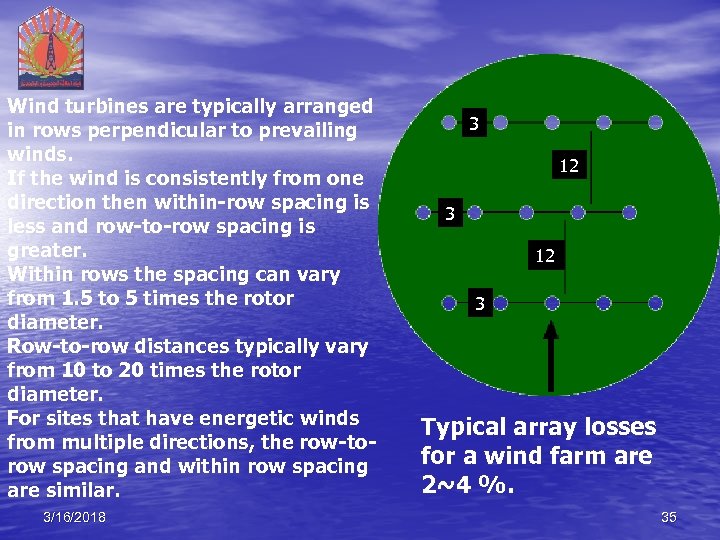
Wind turbines are typically arranged in rows perpendicular to prevailing winds. If the wind is consistently from one direction then within-row spacing is less and row-to-row spacing is greater. Within rows the spacing can vary from 1. 5 to 5 times the rotor diameter. Row-to-row distances typically vary from 10 to 20 times the rotor diameter. For sites that have energetic winds from multiple directions, the row-torow spacing and within row spacing are similar. 3/16/2018 3 12 3 Typical array losses for a wind farm are 2~4 %. 35
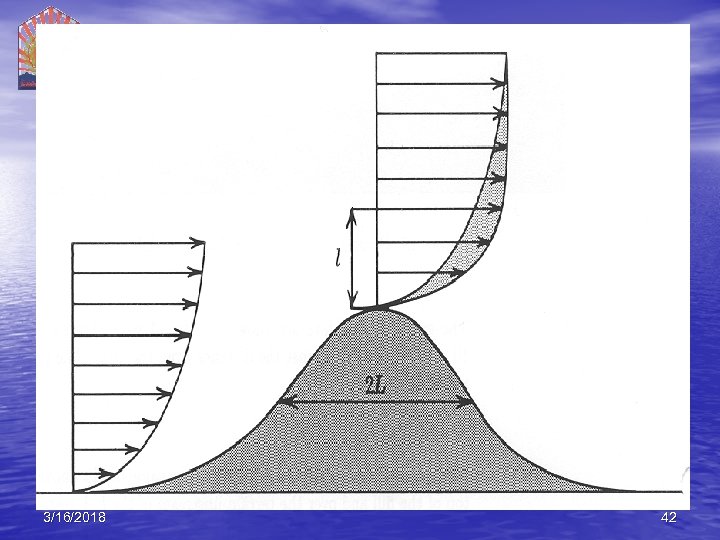
• Avoid area of steep slope ØThe wind on steep slopes tends to be turbulent. ØThe construction costs are greatly increased. • On hill tops, set the turbines back from edge to avoid impacts of the vertical component of the wind. 3/16/2018 36
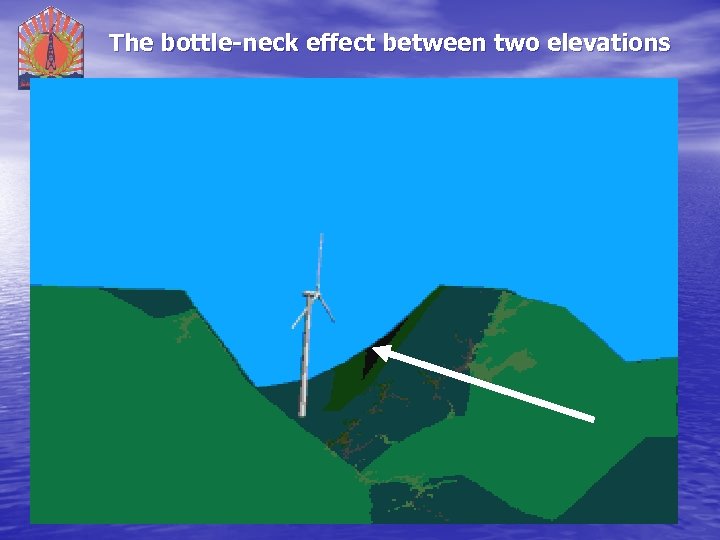
The bottle-neck effect between two elevations 3/16/2018 37
3/16/2018 38
3/16/2018 39
3/16/2018 40
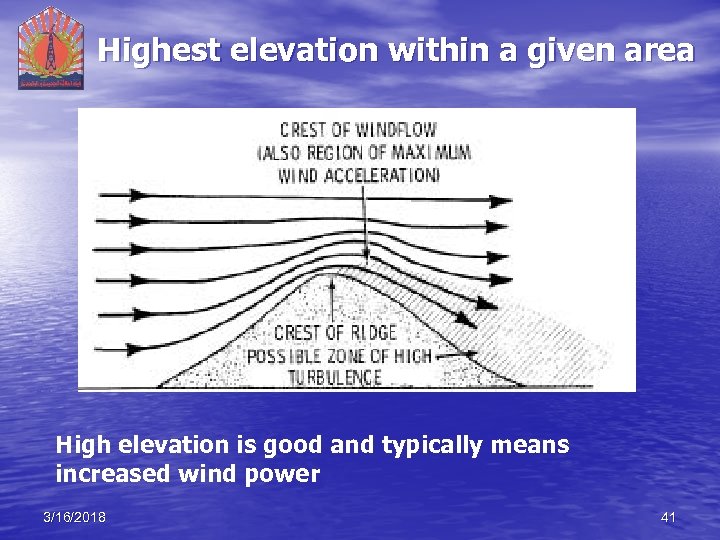
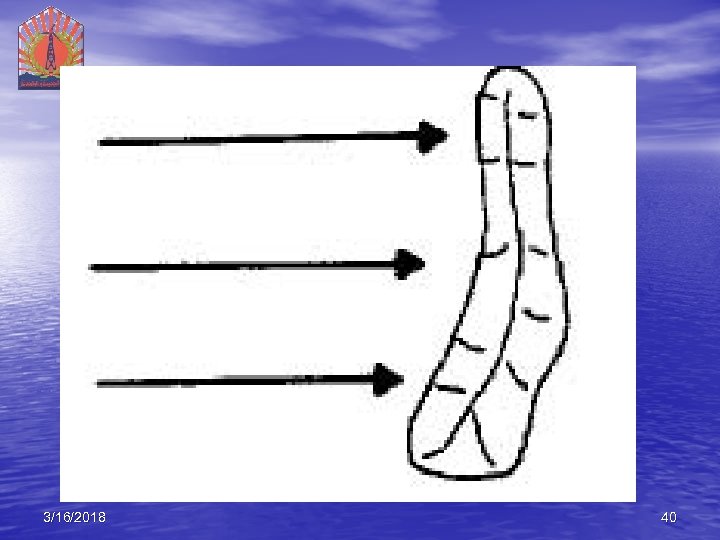
Highest elevation within a given area High elevation is good and typically means increased wind power 3/16/2018 41
3/16/2018 42
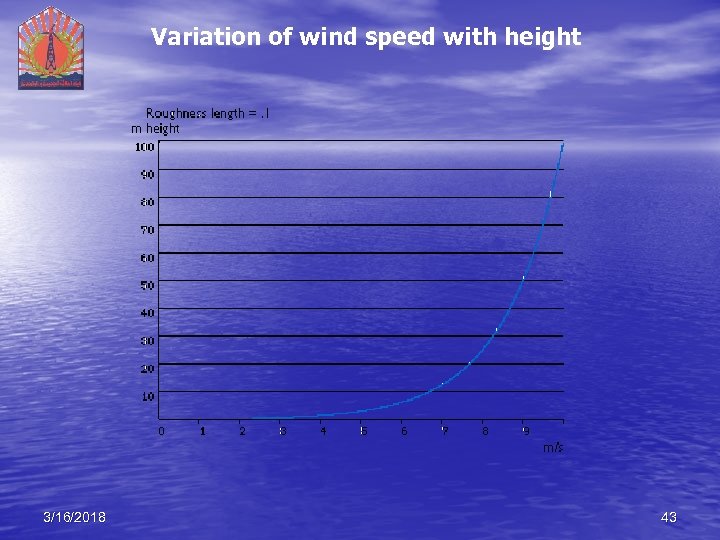
Variation of wind speed with height 3/16/2018 43
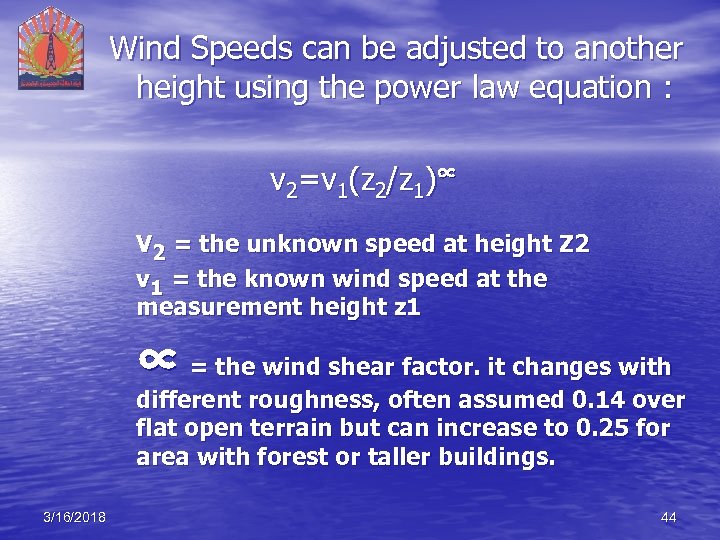
Wind Speeds can be adjusted to another height using the power law equation : v 2=v 1(z 2/z 1)∝ V 2 = the unknown speed at height Z 2 v 1 = the known wind speed at the measurement height z 1 ∝ = the wind shear factor. it changes with different roughness, often assumed 0. 14 over flat open terrain but can increase to 0. 25 for area with forest or taller buildings. 3/16/2018 44
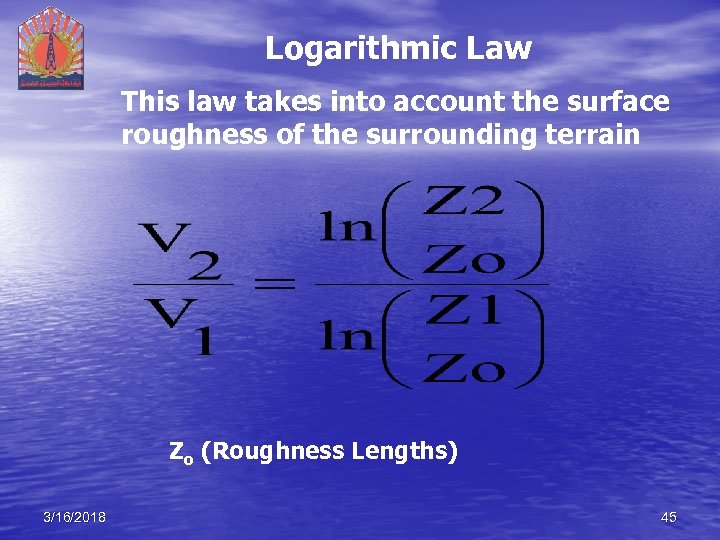
Logarithmic Law This law takes into account the surface roughness of the surrounding terrain Zo (Roughness Lengths) 3/16/2018 45
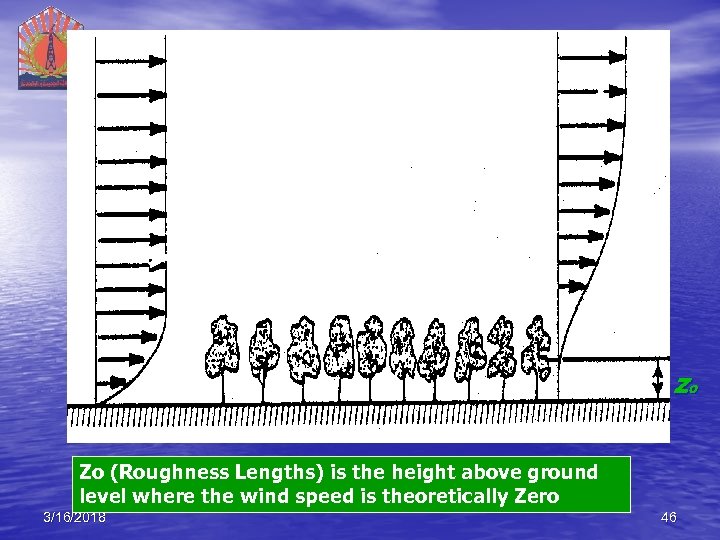
zo Zo (Roughness Lengths) is the height above ground level where the wind speed is theoretically Zero 3/16/2018 46
How to increase the wind turbine energy production To increase the energy production of a wind farm of a specific design, there are two possibilities available: 1. Position the wind turbine at a greater height above ground. This option involves a wind turbine price increase. It is therefore necessary to study whether the increased energy production compensates the extra price. 2. Optimise the wind farm design by re-locating turbines or removing the ones that produce less. 3/16/2018 47
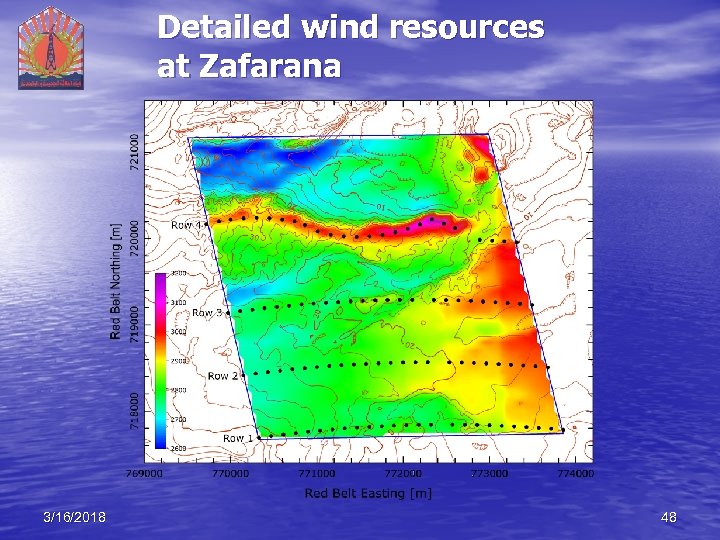
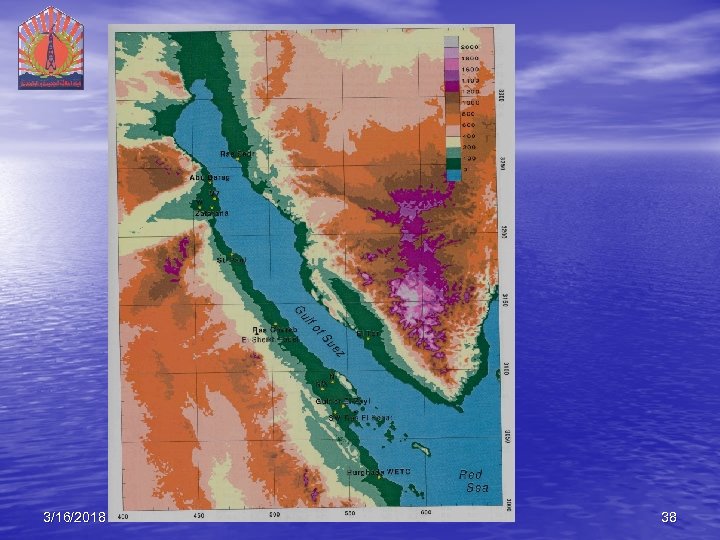
Detailed wind resources at Zafarana 3/16/2018 48

Please don’t hesitate to contact me for any question 3/16/2018 e-mail : ashour_2 am@yahoo. com 49

3/16/2018 50
Скачать презентацию ﻭﻫﻮ ﺍﻟﺬﻯ ﺃﺮﺳﻞ ﺍﻟﺮﻳﺎﺡ ﺑﺸﺮ ﺑﻴﻦ
8789ce456ae8c3875617a06810a5986e.ppt