 Скачать презентацию ﺭﺍﺑﻄﺔ ﺍﻟﻤﺒﻌﻮﺛﻴﻦ ﺍﻟﻌﺎﺋﺪﻳﻦ ﻣﻦ ﺍﻟﺨﺎﺭﺝ ﺑﺮﻋﺎﻳﺔ ﺍ
d9e2787911749af9bff2a1c7d70e1cc3.ppt
- Количество слайдов: 41



ﺭﺍﺑﻄﺔ ﺍﻟﻤﺒﻌﻮﺛﻴﻦ ﺍﻟﻌﺎﺋﺪﻳﻦ ﻣﻦ ﺍﻟﺨﺎﺭﺝ ﺑﺮﻋﺎﻳﺔ ﺍ. ﺩ. / ﻓﺮﺣﺔ ﺍﻟﺸﻨﺎﻭﻱ ﺍﻟﻨﺪﻭﺓ ﺍﻟﻤﺠﻤﻌﺔ ﺍﻷﻮﻟﻰ ﺗﻜﻨﻮﻟﻮﺟﻴﺎ ﺍﻟﻨﺎﻧﻮ 2 1 ﺍ. ﺩ. /ﻣﺤﻤﺪ ﻧﺒﻴﻞ ﺻﺒﺮﻱ ﺩ/ﻋﺒﺪ ﺍﻟﻜﺮﻳﻢ ﺃﺒﻮ ﺍﻟﻮﻓﺎ ﻛﻠﻴﺔ ﺍﻟﻬﻨﺪﺳﺔ ﻛﻠﻴﺔ ﺍﻟﻌﻠﻮﻡ Nano wires. Nano devices
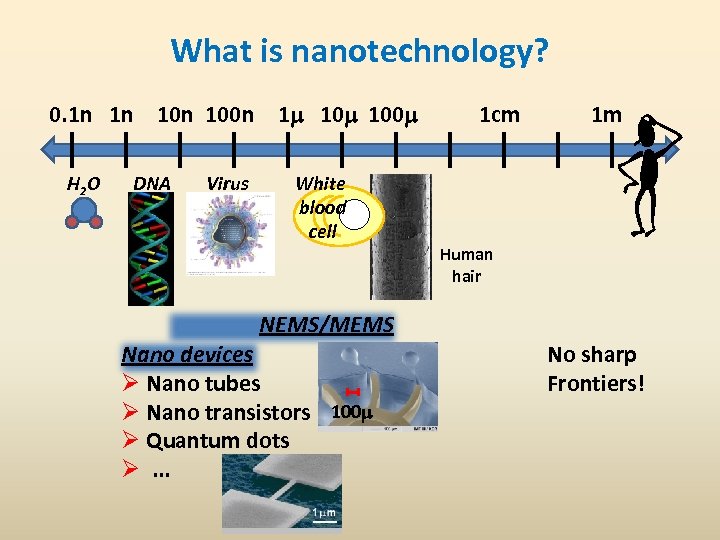
What is nanotechnology? 0. 1 n 1 n 100 n 1 m 100 m H 2 O DNA Virus White blood cell 1 cm 1 m Human hair NEMS/MEMS Nano devices Ø Nano tubes Ø Nano transistors 100 m Ø Quantum dots Ø. . . No sharp Frontiers!
Why is it special? Ability to act on phenomena previously uncontrolled: Ø Physical properties Ø Chemical reactions Ø Biological transformations This lecture is mainly about: Potentials AND Risks
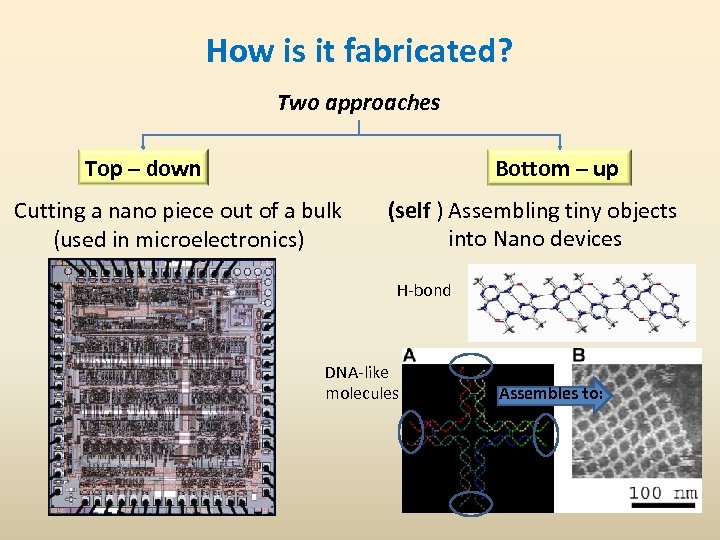
How is it fabricated? Two approaches Top – down Bottom – up Cutting a nano piece out of a bulk (used in microelectronics) (self ) Assembling tiny objects into Nano devices H-bond DNA-like molecules Assembles to:
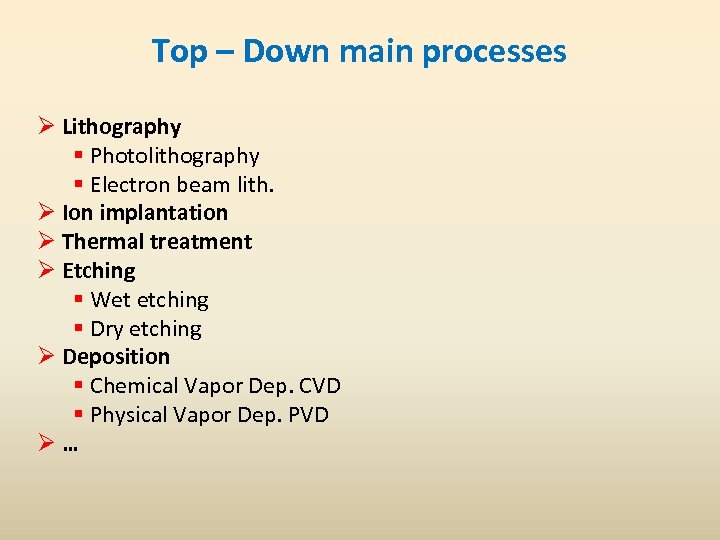
Top – Down main processes Ø Lithography § Photolithography § Electron beam lith. Ø Ion implantation Ø Thermal treatment Ø Etching § Wet etching § Dry etching Ø Deposition § Chemical Vapor Dep. CVD § Physical Vapor Dep. PVD Ø…
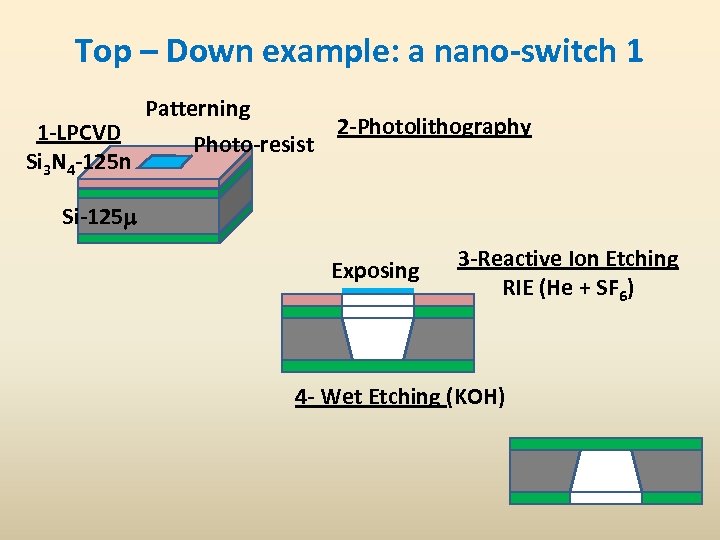
Top – Down example: a nano-switch 1 1 -LPCVD Si 3 N 4 -125 n Patterning Photo-resist 2 -Photolithography Si-125 m Exposing 3 -Reactive Ion Etching RIE (He + SF 6) 4 - Wet Etching (KOH)
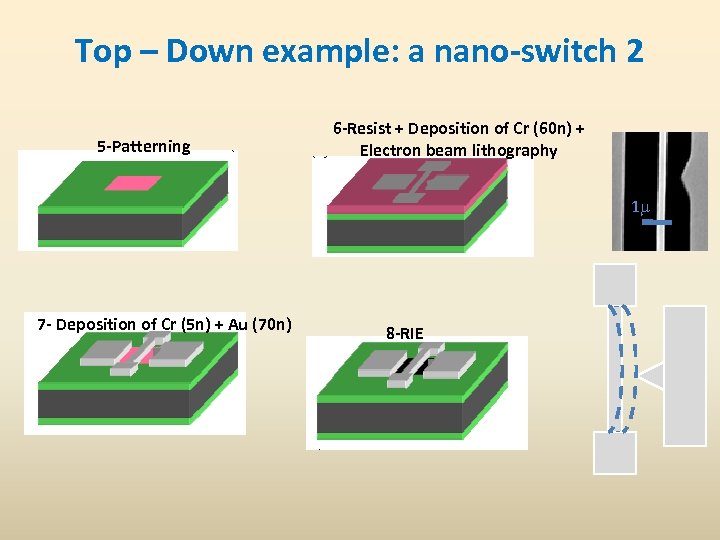
Top – Down example: a nano-switch 2 5 -Patterning 6 -Resist + Deposition of Cr (60 n) + Electron beam lithography 1 m 7 - Deposition of Cr (5 n) + Au (70 n) 8 -RIE
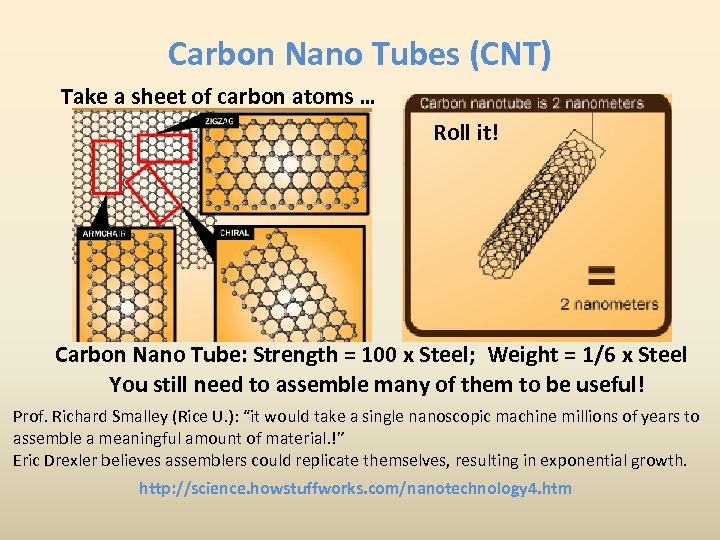
Carbon Nano Tubes (CNT) Take a sheet of carbon atoms … Roll it! Carbon Nano Tube: Strength = 100 x Steel; Weight = 1/6 x Steel You still need to assemble many of them to be useful! Prof. Richard Smalley (Rice U. ): “it would take a single nanoscopic machine millions of years to assemble a meaningful amount of material. !” Eric Drexler believes assemblers could replicate themselves, resulting in exponential growth. http: //science. howstuffworks. com/nanotechnology 4. htm
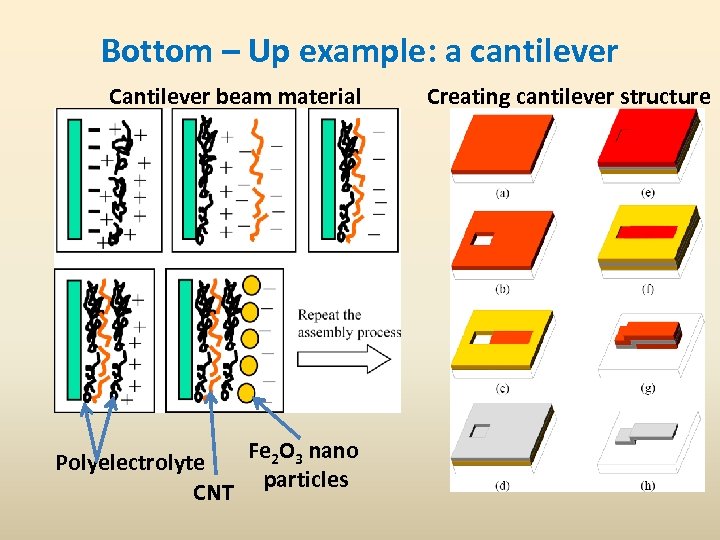
Bottom – Up example: a cantilever Cantilever beam material Fe 2 O 3 nano Polyelectrolyte particles CNT Creating cantilever structure
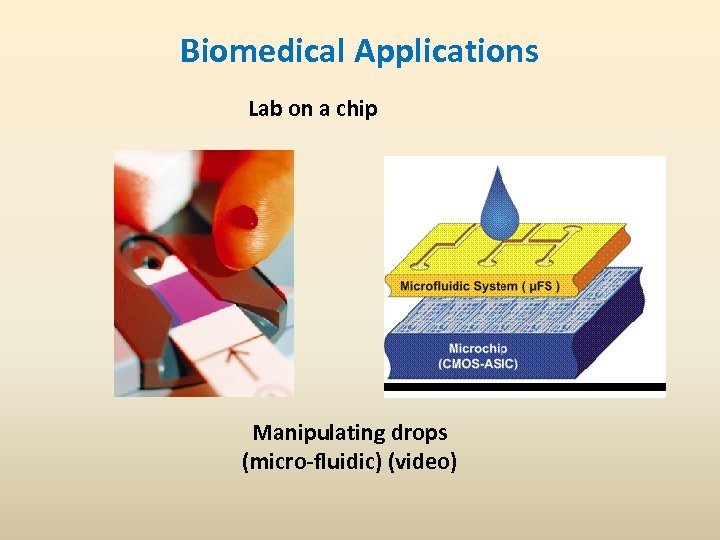
Biomedical Applications Lab on a chip Manipulating drops (micro-fluidic) (video)
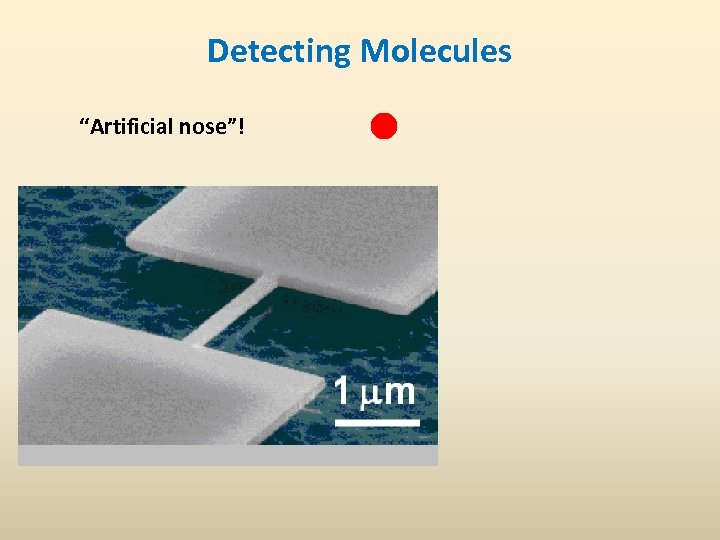
Detecting Molecules “Artificial nose”!
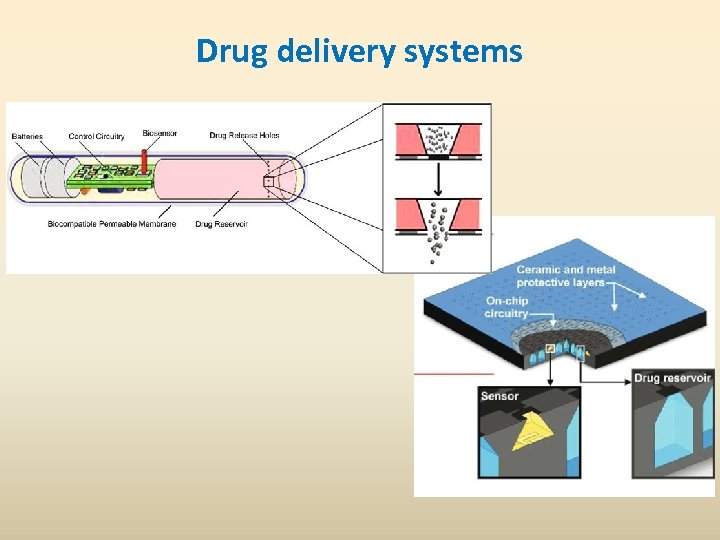
Drug delivery systems
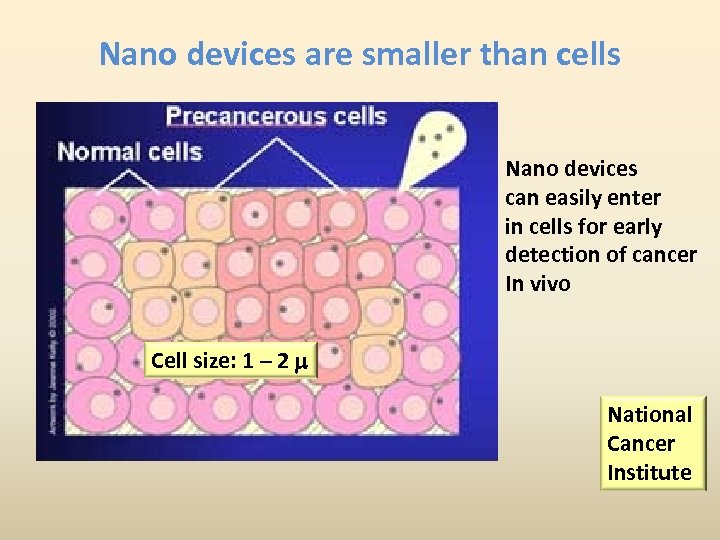
Nano devices are smaller than cells Nano devices can easily enter in cells for early detection of cancer In vivo Cell size: 1 – 2 m National Cancer Institute
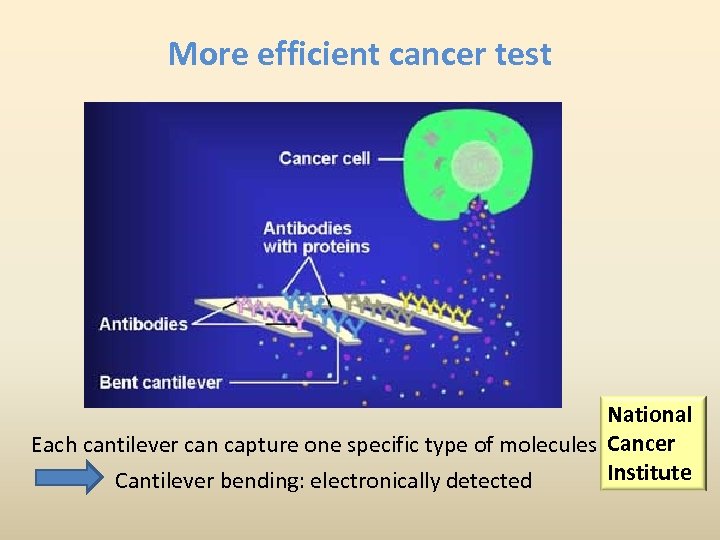
More efficient cancer test National Each cantilever can capture one specific type of molecules Cancer Institute Cantilever bending: electronically detected
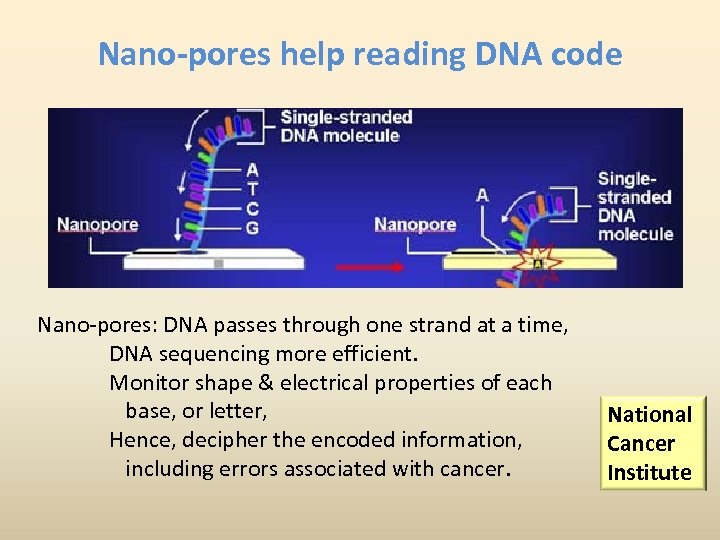
Nano-pores help reading DNA code Nano-pores: DNA passes through one strand at a time, DNA sequencing more efficient. Monitor shape & electrical properties of each base, or letter, Hence, decipher the encoded information, including errors associated with cancer. National Cancer Institute
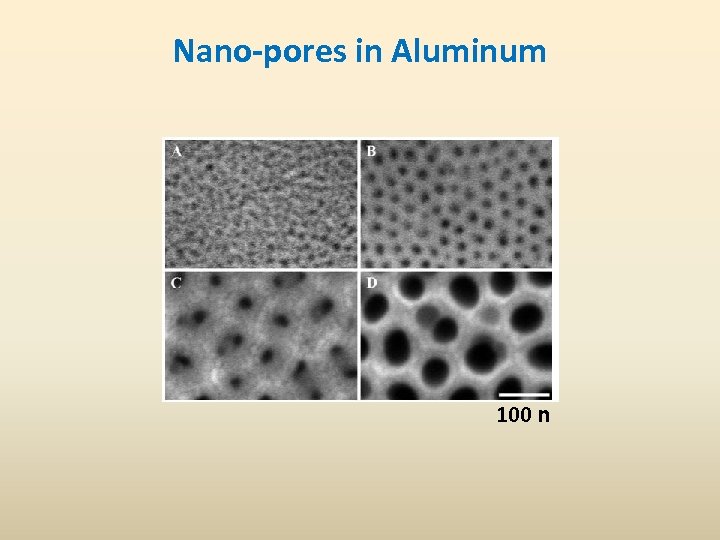
Nano-pores in Aluminum 100 n
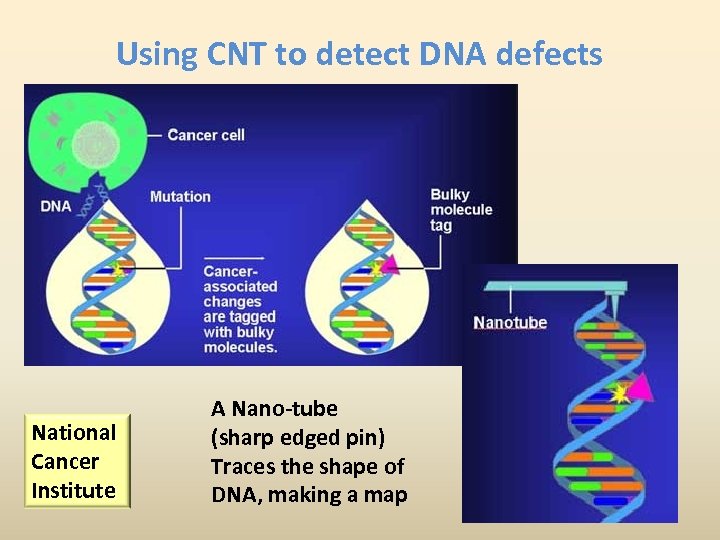
Using CNT to detect DNA defects National Cancer Institute A Nano-tube (sharp edged pin) Traces the shape of DNA, making a map
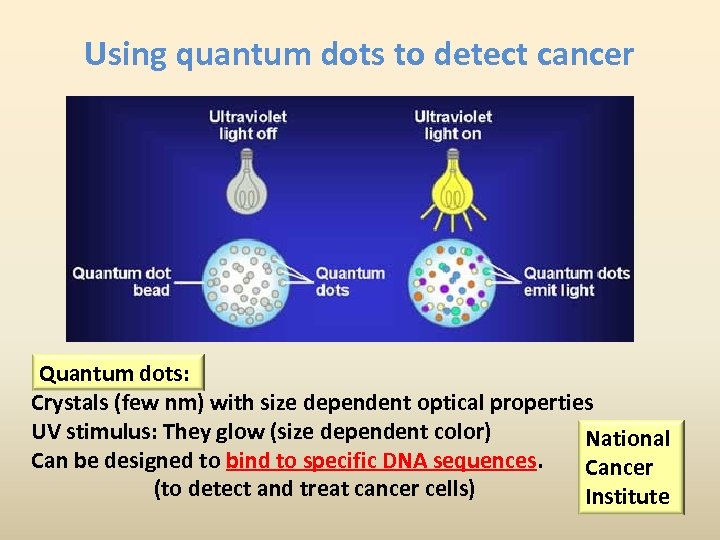
Using quantum dots to detect cancer Quantum dots: Crystals (few nm) with size dependent optical properties UV stimulus: They glow (size dependent color) National Can be designed to bind to specific DNA sequences. Cancer (to detect and treat cancer cells) Institute
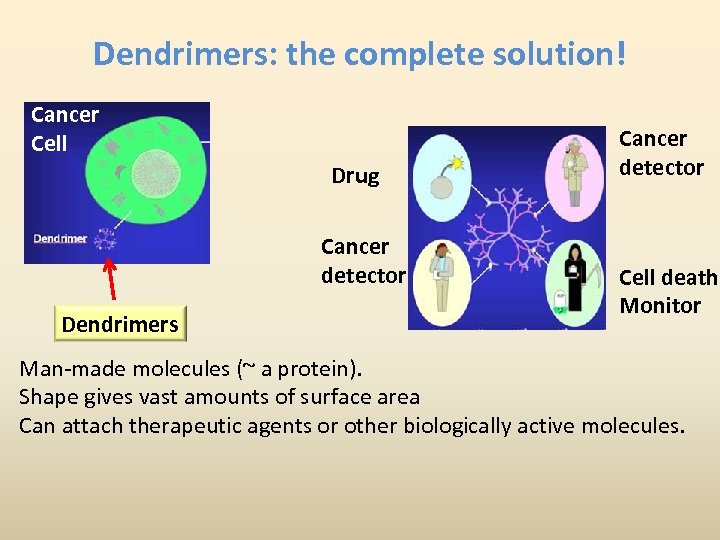
Dendrimers: the complete solution! Cancer Cell Drug Cancer detector Dendrimers Cancer detector Cell death Monitor Man-made molecules (~ a protein). Shape gives vast amounts of surface area Can attach therapeutic agents or other biologically active molecules.
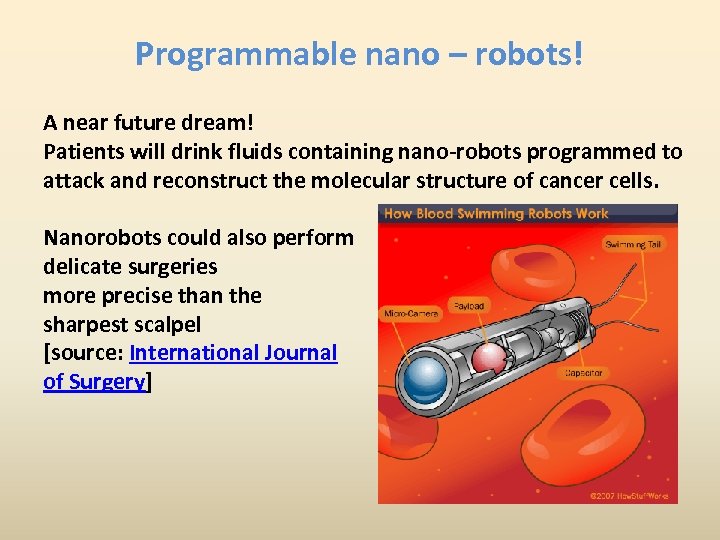
Programmable nano – robots! A near future dream! Patients will drink fluids containing nano-robots programmed to attack and reconstruct the molecular structure of cancer cells. Nanorobots could also perform delicate surgeries more precise than the sharpest scalpel [source: International Journal of Surgery]
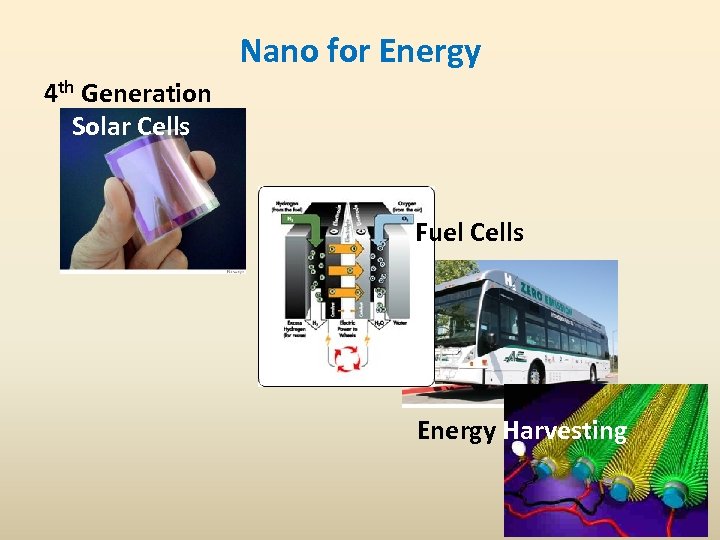
Nano for Energy 4 th Generation Solar Cells Fuel Cells Energy Harvesting
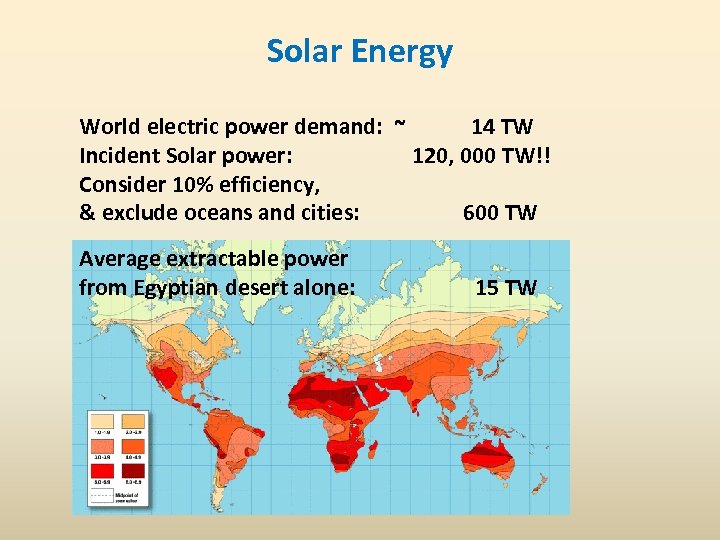
Solar Energy World electric power demand: ~ 14 TW Incident Solar power: 120, 000 TW!! Consider 10% efficiency, & exclude oceans and cities: 600 TW Average extractable power from Egyptian desert alone: 15 TW
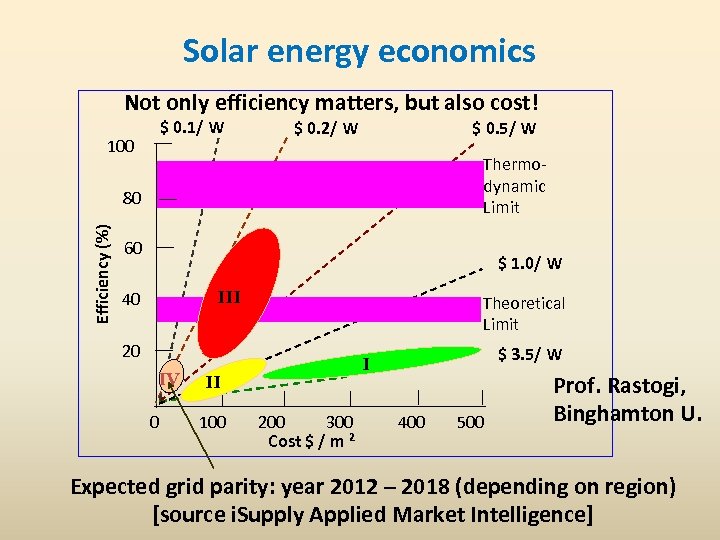
Solar energy economics Not only efficiency matters, but also cost! $ 0. 1/ W 100 $ 0. 2/ W $ 0. 5/ W Thermodynamic Limit Efficiency (%) 80 60 $ 1. 0/ W III 40 Theoretical Limit 20 IV 0 II 100 $ 3. 5/ W I 200 300 Cost $ / m 2 400 500 Prof. Rastogi, Binghamton U. Expected grid parity: year 2012 – 2018 (depending on region) [source i. Supply Applied Market Intelligence]
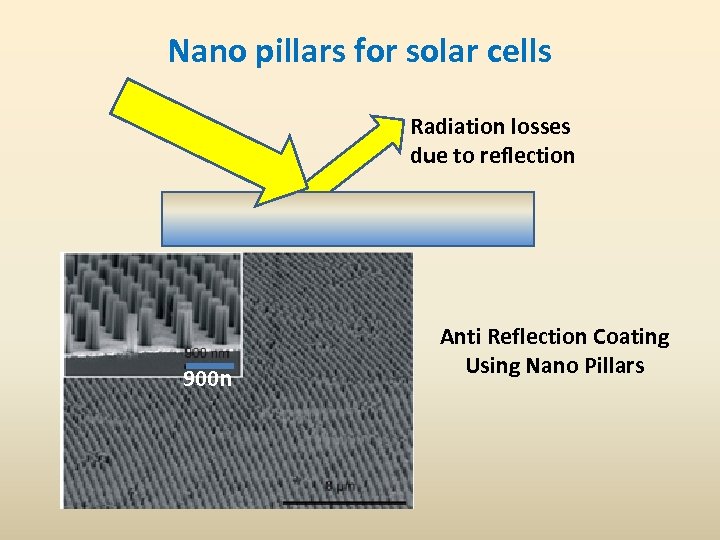
Nano pillars for solar cells Radiation losses due to reflection 900 n Anti Reflection Coating Using Nano Pillars
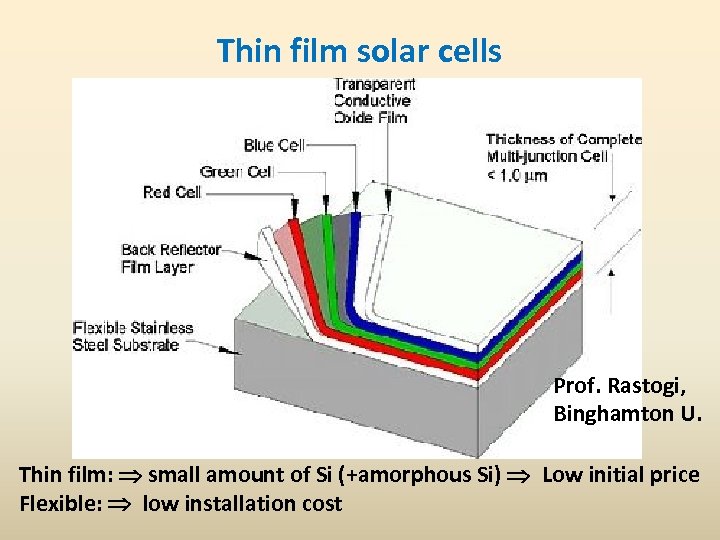
Thin film solar cells Prof. Rastogi, Binghamton U. Thin film: small amount of Si (+amorphous Si) Low initial price Flexible: low installation cost
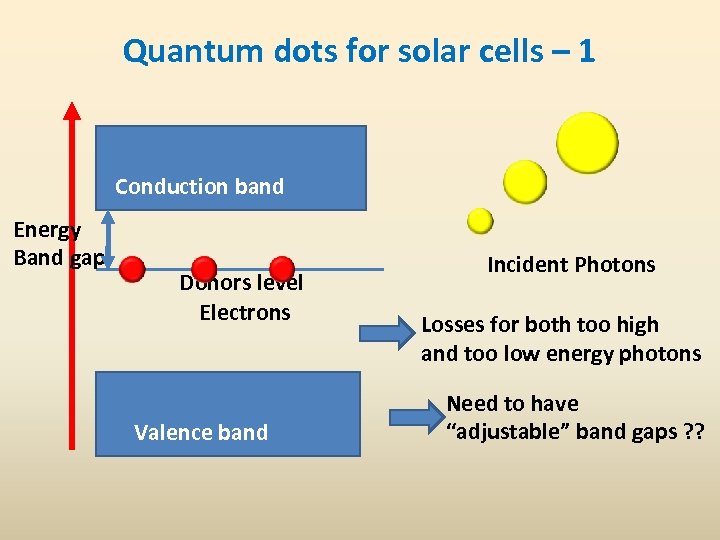
Quantum dots for solar cells – 1 Conduction band Energy Band gap Donors level Electrons Valence band Incident Photons Losses for both too high and too low energy photons Need to have “adjustable” band gaps ? ?
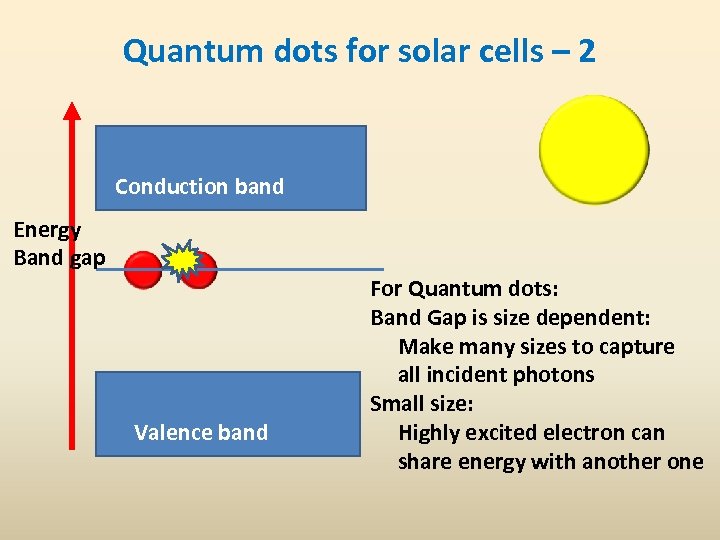
Quantum dots for solar cells – 2 Conduction band Energy Band gap Valence band For Quantum dots: Band Gap is size dependent: Make many sizes to capture all incident photons Small size: Highly excited electron can share energy with another one
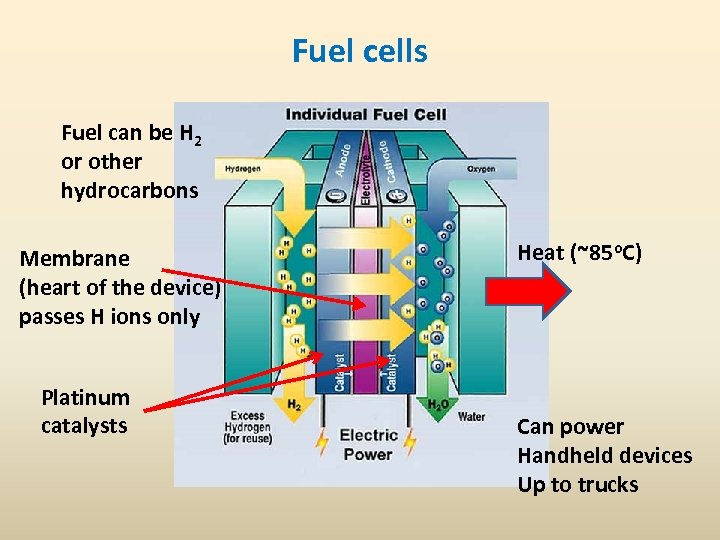
Fuel cells Fuel can be H 2 or other hydrocarbons Membrane (heart of the device) passes H ions only Platinum catalysts Heat (~85 o. C) Can power Handheld devices Up to trucks
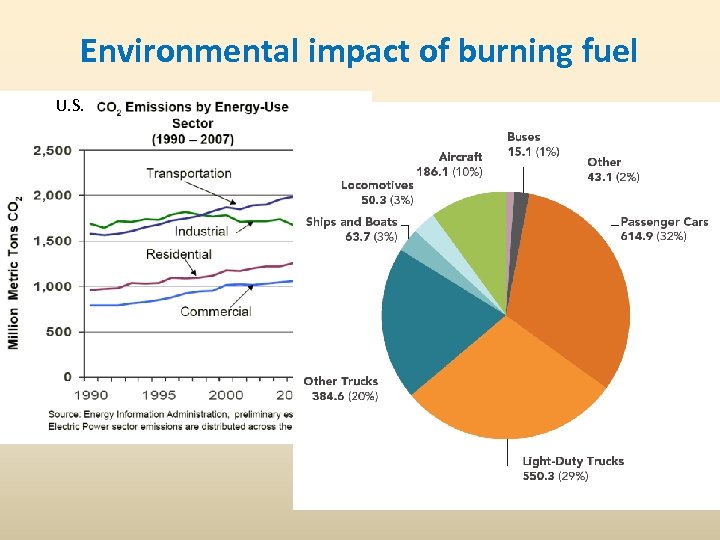
Environmental impact of burning fuel U. S.
Nano improvements of fuel cells Ø Higher efficiency membrane Ø Higher surface area and lower quantity of catalyst (Platinum) Ø New less expensive catalyst materials
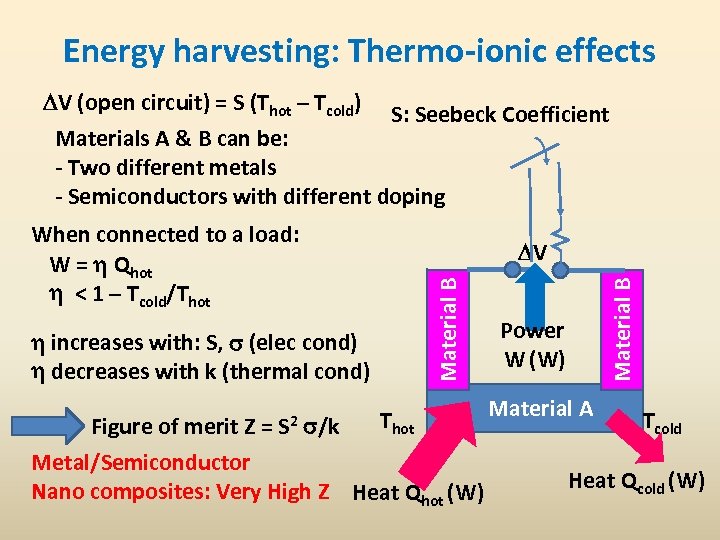
Energy harvesting: Thermo-ionic effects DV (open circuit) = S (Thot – Tcold) S: Seebeck Coefficient Materials A & B can be: - Two different metals - Semiconductors with different doping When connected to a load: W = h Qhot h < 1 – Tcold/Thot h increases with: S, s (elec cond) h decreases with k (thermal cond) Figure of merit Z = S 2 s/k Thot Metal/Semiconductor Nano composites: Very High Z Heat Qhot (W) Material B DV Power W (W) Material A Tcold Heat Qcold (W)
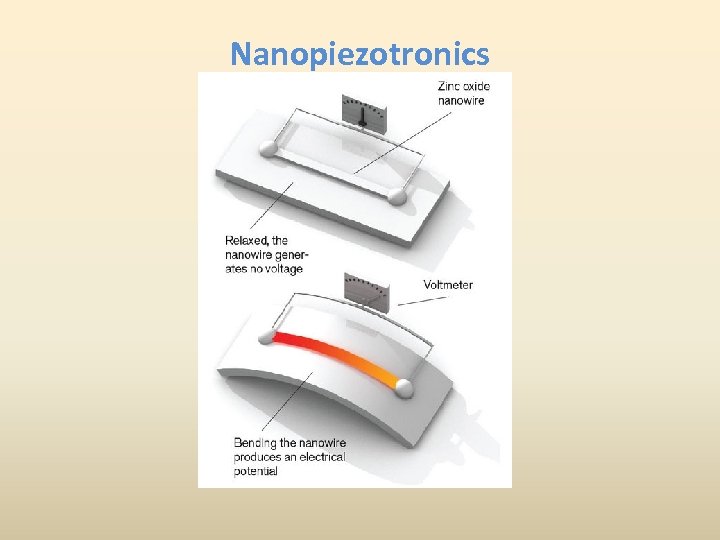
Nanopiezotronics
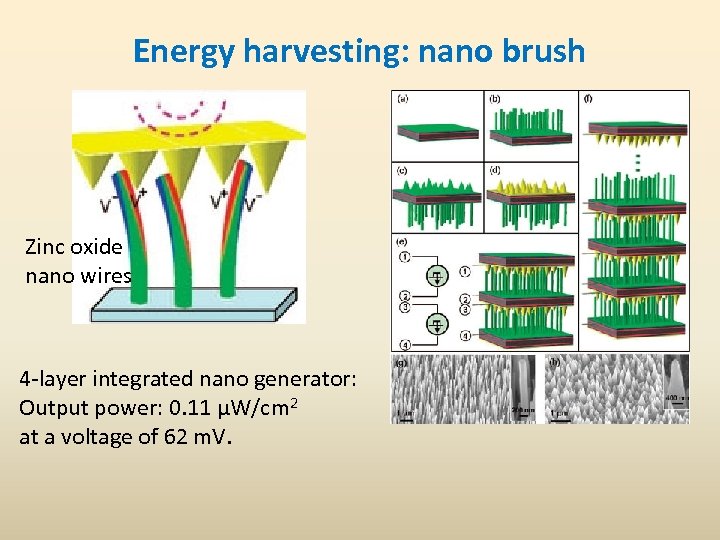
Energy harvesting: nano brush Zinc oxide nano wires 4 -layer integrated nano generator: Output power: 0. 11 µW/cm 2 at a voltage of 62 m. V.
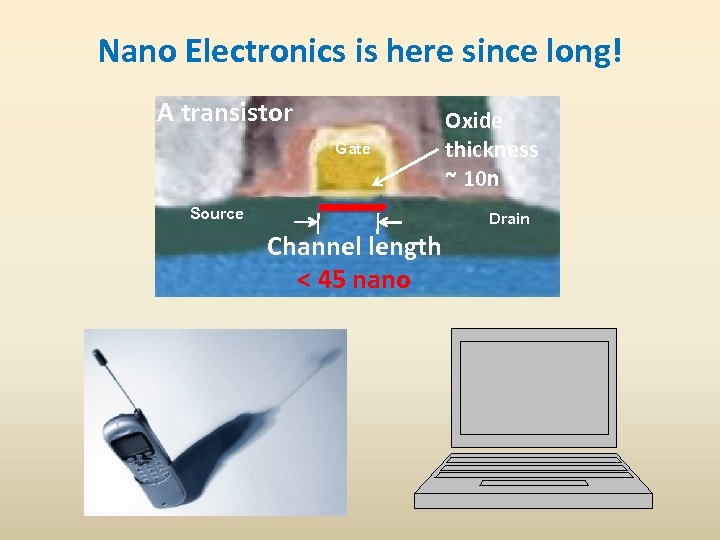
Nano Electronics is here since long! A transistor Gate Source Oxide thickness ~ 10 n Drain Channel length < 45 nano
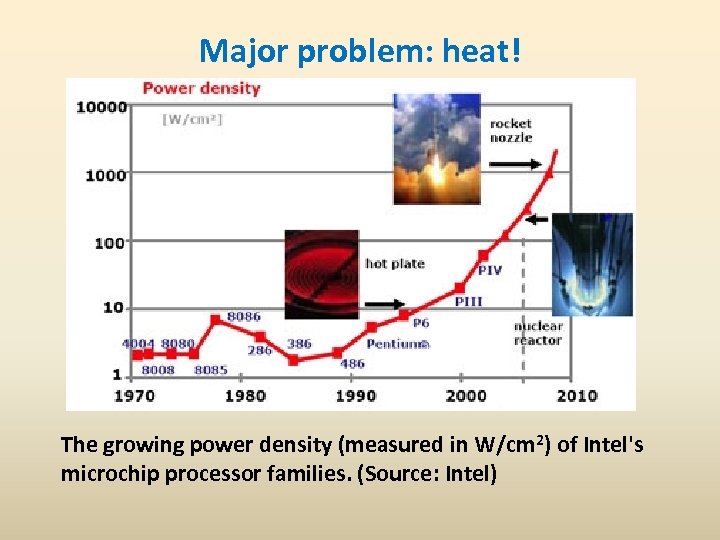
Major problem: heat! The growing power density (measured in W/cm 2) of Intel's microchip processor families. (Source: Intel)
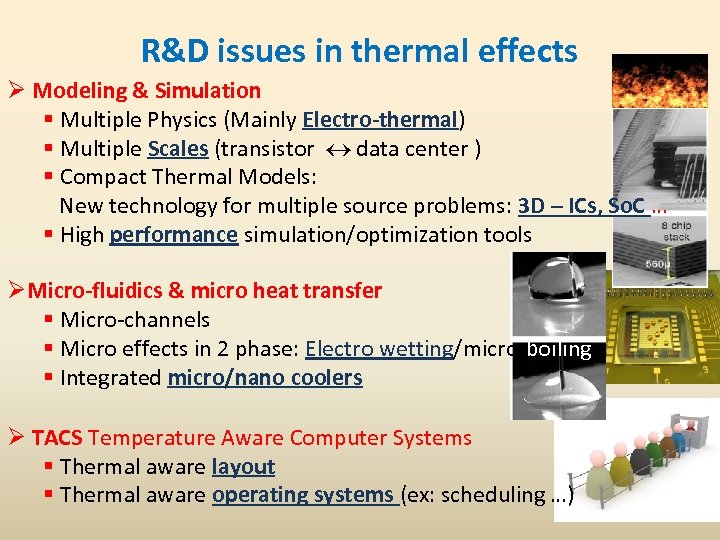
R&D issues in thermal effects Ø Modeling & Simulation § Multiple Physics (Mainly Electro-thermal) § Multiple Scales (transistor data center ) § Compact Thermal Models: New technology for multiple source problems: 3 D – ICs, So. C … § High performance simulation/optimization tools ØMicro-fluidics & micro heat transfer § Micro-channels § Micro effects in 2 phase: Electro wetting/micro-boiling § Integrated micro/nano coolers Ø TACS Temperature Aware Computer Systems § Thermal aware layout § Thermal aware operating systems (ex: scheduling …)
Other R&D trends ØFlexible flat display panels using nanowires Ø NEMS for high density memory (terabyte/ in 2) Ø Molecular sized transistors Ø Self aligned nanostructures to build integrated circuits
Nanotechnology impact on environment Pros: Ø A high potential for new and renewable energies § Less CO 2 emission Ø A high potential for pollution detection Ø A high potential for water treatment: § Composition detection § Desalination § Waste water treatment Ø Solution of many health problems
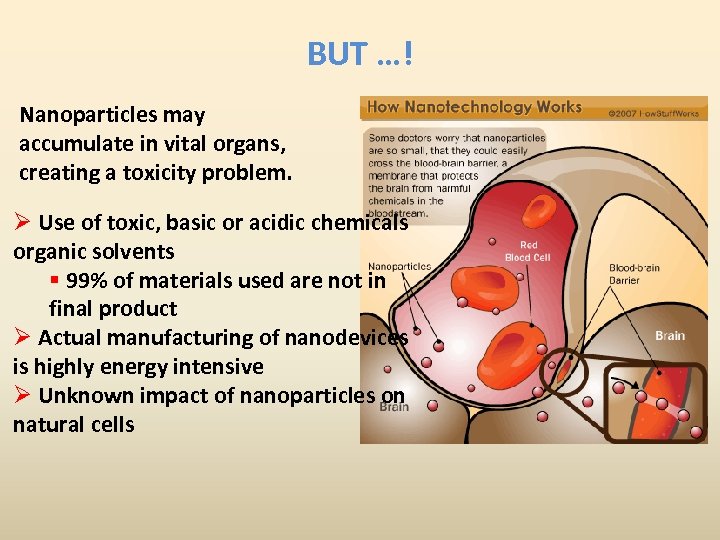
BUT …! Nanoparticles may accumulate in vital organs, creating a toxicity problem. Ø Use of toxic, basic or acidic chemicals organic solvents § 99% of materials used are not in final product Ø Actual manufacturing of nanodevices is highly energy intensive Ø Unknown impact of nanoparticles on natural cells
Conclusion Ø Nanotechnology is not the future, it is the present and the near future Ø Nanotechnology has highly promising applications in almost all engineering, medical, environmental … issues. It is inherently multi-disciplinary Ø Side effects, potentially harmful, are not yet quite well assessed.

• app_micro_drop_merge. avi • app_micro_Tjunction 3 D. avi
Скачать презентацию ﺭﺍﺑﻄﺔ ﺍﻟﻤﺒﻌﻮﺛﻴﻦ ﺍﻟﻌﺎﺋﺪﻳﻦ ﻣﻦ ﺍﻟﺨﺎﺭﺝ ﺑﺮﻋﺎﻳﺔ ﺍ
d9e2787911749af9bff2a1c7d70e1cc3.ppt