 Скачать презентацию ﺑﺴﻢ ﺍﻟﻠةﺎﻟﺮﺣﻤﻦ ﺍﻟﺮﺣﻴﻢ By Fayza Al Siny
53820c1ad4281dddb84fd981f0717bde.ppt
- Количество слайдов: 31



ﺑﺴﻢ ﺍﻟﻠةﺎﻟﺮﺣﻤﻦ ﺍﻟﺮﺣﻴﻢ By Fayza Al. Siny MD
Neonatology II (Infection, seizures, Injuries) By DR. Fayza Al. Siny.
NEONATOLOGY • OBJECTIVE: Ø Neonatal sepsis. Ø Neonatal seizures. Ø Neonatal injuries. By Fayza Al. Siny MD
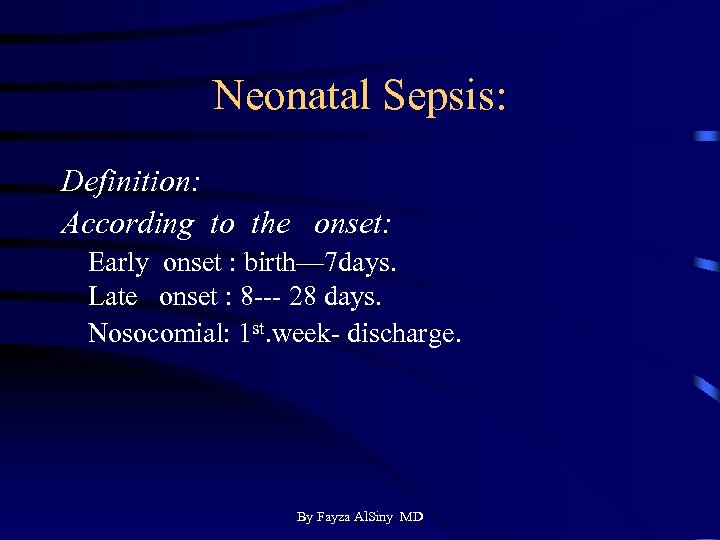
Neonatal Sepsis: Definition: According to the onset: Early onset : birth— 7 days. Late onset : 8 --- 28 days. Nosocomial: 1 st. week- discharge. By Fayza Al. Siny MD
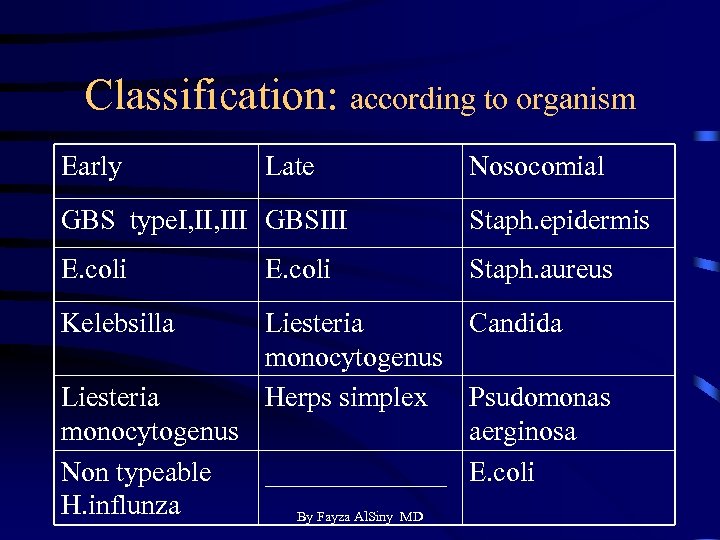
Classification: according to organism Early Late Nosocomial GBS type. I, III GBSIII Staph. epidermis E. coli Staph. aureus Kelebsilla E. coli Liesteria Candida monocytogenus Liesteria Herps simplex Psudomonas monocytogenus aerginosa Non typeable _______ E. coli H. influnza By Fayza Al. Siny MD
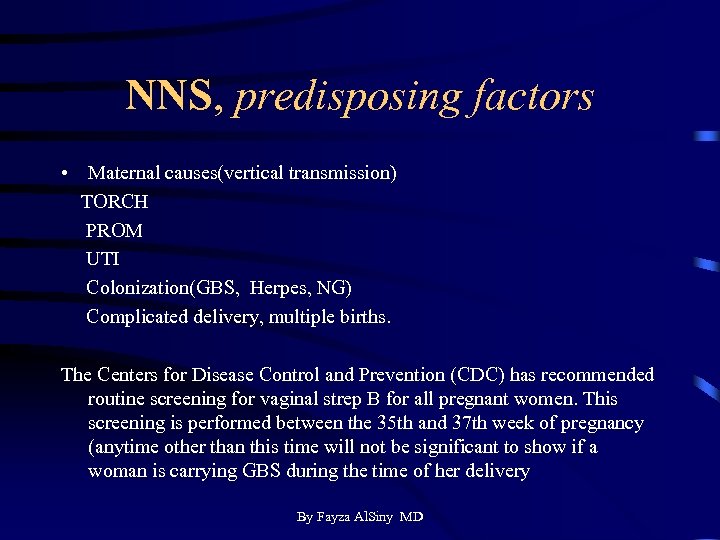
NNS, predisposing factors • Maternal causes(vertical transmission) TORCH PROM UTI Colonization(GBS, Herpes, NG) Complicated delivery, multiple births. The Centers for Disease Control and Prevention (CDC) has recommended routine screening for vaginal strep B for all pregnant women. This screening is performed between the 35 th and 37 th week of pregnancy (anytime other than this time will not be significant to show if a woman is carrying GBS during the time of her delivery By Fayza Al. Siny MD
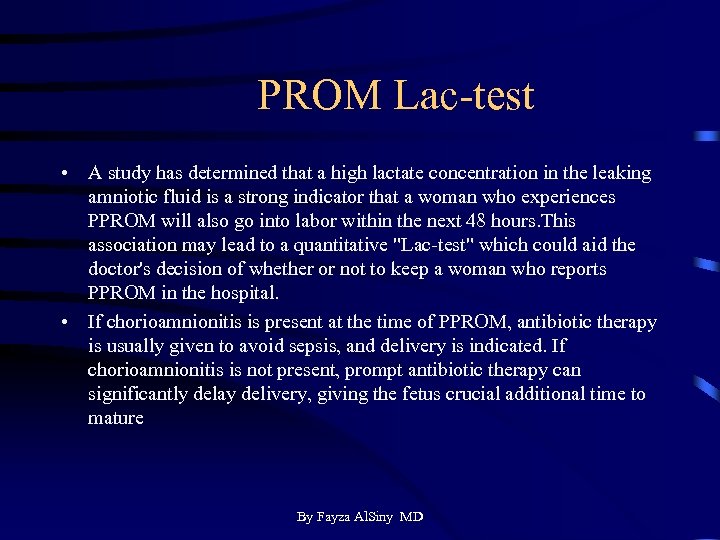
PROM Lac-test • A study has determined that a high lactate concentration in the leaking amniotic fluid is a strong indicator that a woman who experiences PPROM will also go into labor within the next 48 hours. This association may lead to a quantitative "Lac-test" which could aid the doctor's decision of whether or not to keep a woman who reports PPROM in the hospital. • If chorioamnionitis is present at the time of PPROM, antibiotic therapy is usually given to avoid sepsis, and delivery is indicated. If chorioamnionitis is not present, prompt antibiotic therapy can significantly delay delivery, giving the fetus crucial additional time to mature By Fayza Al. Siny MD
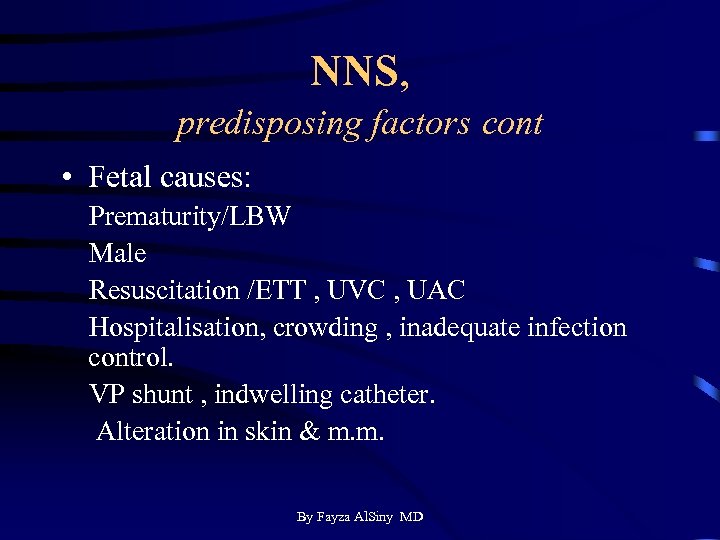
NNS, predisposing factors cont • Fetal causes: Prematurity/LBW Male Resuscitation /ETT , UVC , UAC Hospitalisation, crowding , inadequate infection control. VP shunt , indwelling catheter. Alteration in skin & m. m. By Fayza Al. Siny MD
NNS clinical manifestations • General: fever, hypothermia, not doing well, poor feeding , sclerema. • CNS: irritability, lethargy, tremors, seizures, hyporeflexia, irregular respiration , full fontanel, high pitched cry. By Fayza Al. Siny MD
NNS clinical cont. • CVS: pallor, mottling, cold clammy skin, tachycardia, hypotension, bradycardia. • Respiratory system: apnea, dyspnea, tachypnea, retraction, flaring, grunting, cyanosis. By Fayza Al. Siny MD
NNS clinical cont. • GIT: vomiting, diarrhoea, abdominal distension, hepatomegaly. • Renal: oliguria. • Haematology: jaundice, pallor, petichiae, purpura, bleeding tendency, splenomegaly. By Fayza Al. Siny MD
NNS investigations • CBC, differential. • CRP, ESR. • Cultures: blood, CSF, urine, gastric aspirate, ETT aspirate. • CXR. By Fayza Al. Siny MD
NNS treatment 1. Ampicillin plus aminoglycoside ( gentamycin, Amikacin). 2. 3 rd generation cephalosporin (cefotaxim, ceftazidim). 3. Antistaph (cloxacillin or vancomycin) NB: duration of therapy is 7 -10 days In meningitis, GBS 14 d/G-ve 21 d. By Fayza Al. Siny MD
NNS, prevention • Aggressive treatment of maternal chorioamnionitis. • Control of nosocomial infection by hand washing & avoid overcrowding. By Fayza Al. Siny MD
NEONATAL SEIZURES v. Definition: Paroxysmal involuntary movement due to disturbance of brain function. By Fayza Al. Siny MD
NEONATAL SEIZURES CONT. v Classification: 1. 2. 3. 4. 5. Focal seizures. Multifocal clonic seizures. Tonic seizures. Myoclonic seizures. Subtle seizures “chewing , blinking, nystagmus , paddling”. By Fayza Al. Siny MD
NEONATAL SEIZURES cont. v Aetiology: • • • Hypoxia. HIE. Metabolic disturbances: (hypoglycemia, hypocalcemia , hypomagnesmia , hypo & hypernatremia). Inborn errors of Metabolism. Infections: congenital & acquired. Traumatic. By Fayza Al. Siny MD
NEONATAL SEIZURES cont. v Aetiology: cont. • • • Structural abnormalities. Hemorrahge. Maternal drugs. By Fayza Al. Siny MD
NEONATAL SEIZURES cont. v Investigation: • • • Glucose, Ca , Mg. Urea&Electrolytes : Na. Lumber puncture : CSF wbc (bacterial, viral) Ammonia level. • By Fayza Al. Siny MD Rbc’s Hmg.
NEONATAL SEIZURES cont. v Investigation: • • • ABG-acidosis. Lactate/ Pyruvate ratio. Drug screen. Imaging: US, CT, MRI. Karyotyping. EEG. By Fayza Al. Siny MD
NEONATAL SEIZURES cont. v Management: • Primary cause. • Anticonvulsants: phenobarbitone phenytoin By Fayza Al. Siny MD
NEONATAL SEIZURES cont. Jitteriness vs. seizures: 1. Simple tremors. 2. Stopped by holding the extremities. 3. Enhanced by sensory stimulation. By Fayza Al. Siny MD
III Birth Injuries v Definition: By Fayza Al. Siny MD
III Birth Injuries v Risk factors: 1. 2. 3. 4. 5. 6. macrosomia. Prematurity. CPD( cephalopelvic disproportion ). Dystocia. Prolonged labour. Breech. By Fayza Al. Siny MD
III Birth Injuries v Cranial injuries: -Cephalohematoma : - Clinically - Jaundice - Management - Prognosis By Fayza Al. Siny MD
III Birth Injuries v Intracranial Hge (IVH). Risk factors : 1. 2. 3. 4. 5. 6. 7. BW < 1500 gm (90%). Hypoxic Ischemic injury. Pnemothorax. Hypo/hyper tension. Coagulopathy. Thrombocytopenia. Vit. K deficiency. By Fayza Al. Siny MD
III Birth Injuries v. Intracranial Hge (IVH) cont, -site. -Clinical presentation. -Diagnosis : U/S Grade I, III, IV. -Management: I, II Recover grade III, IV hydrocephalus ------>V-P shunt. By Fayza Al. Siny MD
III Birth Injuries v. Subdural Hge. -Term. -Clinical manifestations. -Diagnosis. -Management By Fayza Al. Siny MD
III Birth Injuries v. Peripheral Nerve Injuries: - Erb΄s palsy ( C 5 -6 ). § Clinically : loss of abduction, external rotation , supination , loss of bicep reflex & abnormal Moro reflex. § Management: physiotherapy, neurosurgery By Fayza Al. Siny MD
III Birth Injuries v. Fractures. # Clavicle: -asymmetrical Moro. -crepitus. -discoloration. -immobilization By Fayza Al. Siny MD
By Fayza Al. Siny MD
Скачать презентацию ﺑﺴﻢ ﺍﻟﻠةﺎﻟﺮﺣﻤﻦ ﺍﻟﺮﺣﻴﻢ By Fayza Al Siny
53820c1ad4281dddb84fd981f0717bde.ppt