 Скачать презентацию 軟體行程 Software Processes o 一組緊密的活動集合 coherent sets of activities 包括軟體系統的規格指定
dabf0cf5d904122a75cf052a72be5284.ppt
- Количество слайдов: 72



軟體行程 (Software Processes) o 一組緊密的活動集合(coherent sets of activities),包括軟體系統的規格指定 (specifying)、設計(designing)、實作 (implementing)以及測試(testing)等
主題 o o 軟體行程模型(software process models) 行程迭代(process iteration) 軟體規格(software specification) 軟體設計與實作(software design and implementation) o 軟體驗證(software validation) o 軟體演化(software evolution) o 自動化行程支援(automated process support)
軟體程序 (Software Process) o 開發一個軟體系統需要下列結構化活動 n n 規格化(specification) 設計(design) 驗證(validation) 演化(evolution)
軟體行程模型 (Software Process Model) o 從某個角度來看軟體行程模型是以抽象 (abstract)化的方式來表示行程(process)
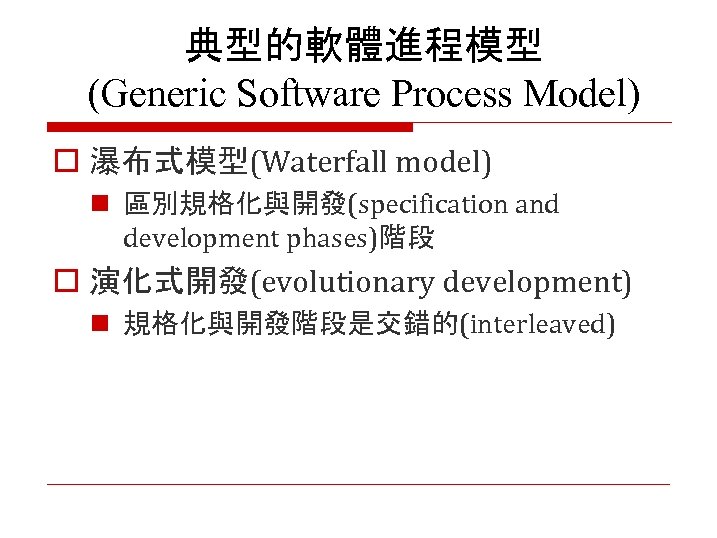
典型的軟體進程模型 (Generic Software Process Model) o 瀑布式模型(Waterfall model) n 區別規格化與開發(specification and development phases)階段 o 演化式開發(evolutionary development) n 規格化與開發階段是交錯的(interleaved)
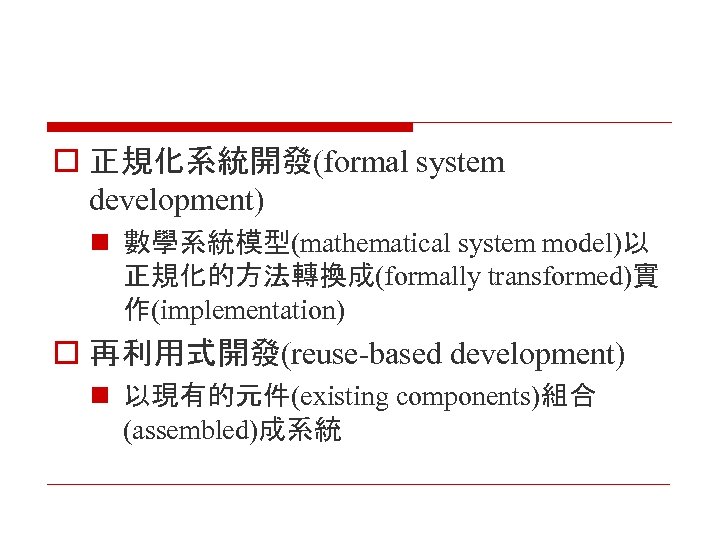
o 正規化系統開發(formal system development) n 數學系統模型(mathematical system model)以 正規化的方法轉換成(formally transformed)實 作(implementation) o 再利用式開發(reuse-based development) n 以現有的元件(existing components)組合 (assembled)成系統
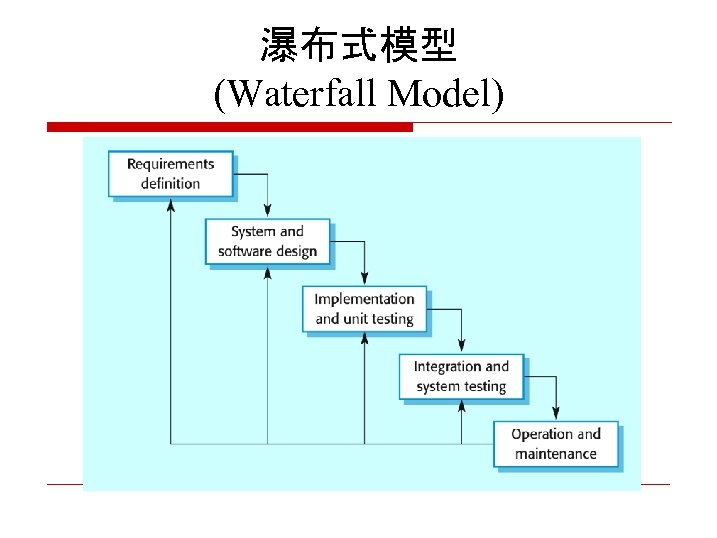
瀑布式模型 (Waterfall Model)
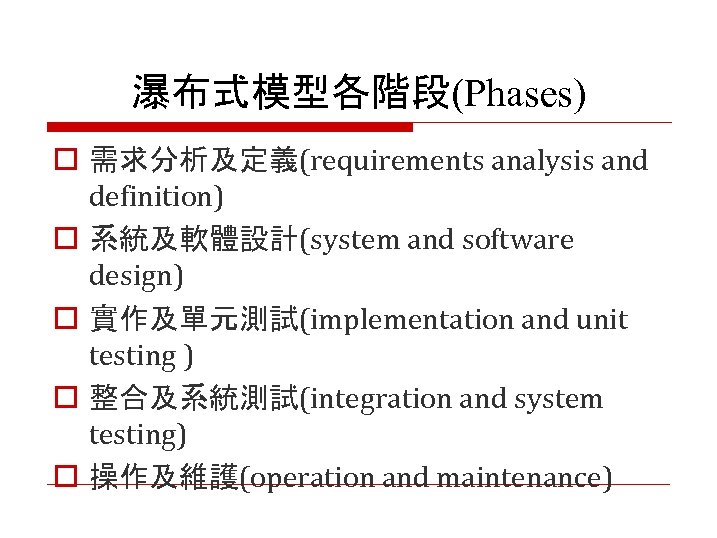
瀑布式模型各階段(Phases) o 需求分析及定義(requirements analysis and definition) o 系統及軟體設計(system and software design) o 實作及單元測試(implementation and unit testing ) o 整合及系統測試(integration and system testing) o 操作及維護(operation and maintenance)
瀑布式模型問題 o 缺點(drawback) n 在行程進行中(process is underway),難以 適應之後的改變(accommodate change) n 瀑布式模型適用於當需求十分明確(wellunderstood)的情況
演化式開發 (Evolutionary Development ) o 丟棄式原型法(throw-away prototyping) n 目標:藉此瞭解系統需求 n 從需求不明確(poorly understood)時即可開 始 o 探索式開發(exploratory development ) n 目標:從一個初略規格(initial outline specification)逐步演化(evolve)成最終系統 (final system) n 應從已有十分清楚(well-understood)的需求 (requirement)開始
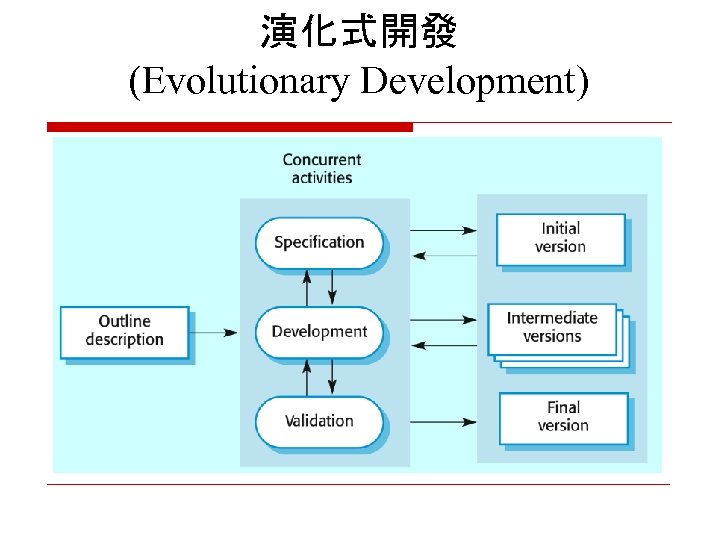
演化式開發 (Evolutionary Development)
演化式開發 o 問題 n 行程缺乏能見度(lack of process visibility) n 系統結構不佳(poorly structured) n 需要特殊技術(special skills),如快速雛形化 語言(languages for rapid prototyping)
o 應用 n 小型或中型(small or medium size)的互動式 系統 n 大型系統的部分元件(parts),例如使用者介 面 n 生命週期短(short-lifetime)的系統
正規化系統開發 (Formal System Development) o 基於能將數學化規格(mathematical specification)轉換成可執行程式(executable program)的開發方法 o 轉換結果(transformation)需保持正確性 (correctness-preserving),因此轉化後的程式 能符合軟體規格 o 正規化系統開發程序可體現(embody)「清房法 」(Cleanroom)
清房法 (Cleanroom) o 用以開發一種接續式的軟體遞增方法 (pipeline of software increments) o 當每次的遞增被驗證(each increment is certified)過,該遞增(increment)就會被 整合(integrated)到全系統中 o 系統功能面(functionality)會隨時間增長 而增多
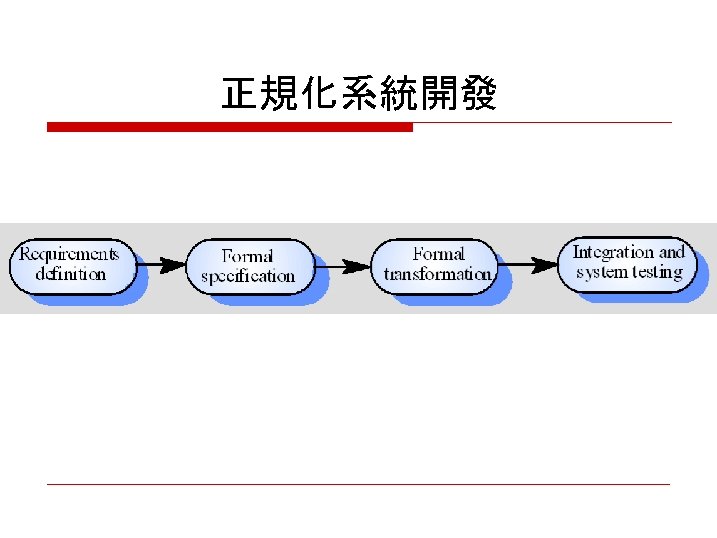
正規化系統開發
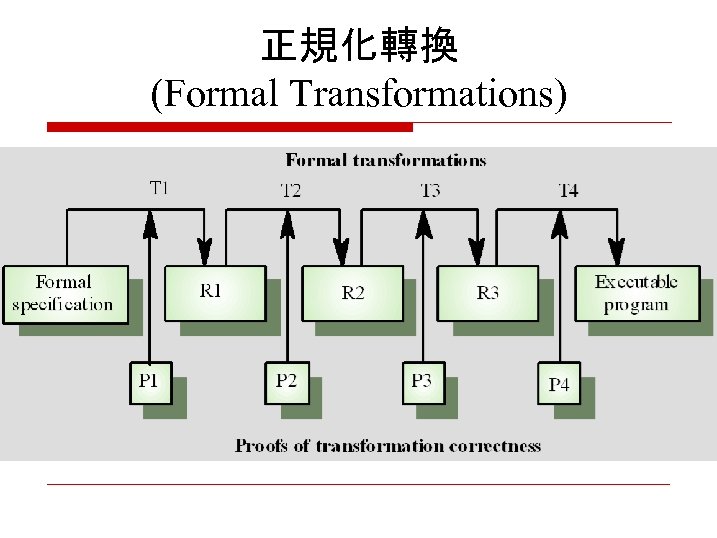
正規化轉換 (Formal Transformations)
正規系統開發 (Formal Systems Development ) o 問題 n 需要特殊的專門技術(specialised skills)與訓練 (training)才能應用正規系統開發法 n 很難以正規化的方法規格化(formally specify)系統的 某些特性(aspect),如使用者介面 o 應用 n 特別適用於安全性(safety or security)要求十分嚴格 的系統(critical system)
再利用導向式開發 (Reuse-Oriented Development) o 基於系統化再利用(systematic reuse)的方 式整合現有元件(existing components)或 COTS系統的開發方法 o 行程階段(process stages) n 元件分析(component analysis) n 需求修正(requirements modification) n 配合元件再利用的系統設計(system design with reuse ) n 開發與整合(development and integration )
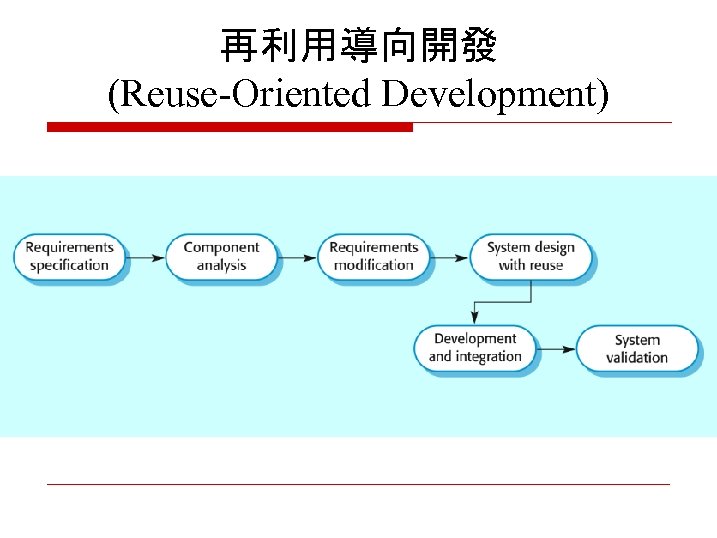
再利用導向開發 (Reuse-Oriented Development)
行程迭代 (Process Iteration ) o 大型系統的部分行程(part of process) o 迭代(iteration)被運用於 n 遞增式開發(incremental development) n 螺旋式開發(spiral development)
遞增式開發 o 系統不是一次完整的全部交付,而是將 系統和交付成果分成不同的增量 (increment)模組,每個增量模組完成某 全系統的部分功能 o 使用者需求需經過優先順位的排序 (prioritised),最高優先權的需求 (highest priority requirement)需被包含 在較早期的增量模組中(early increment)
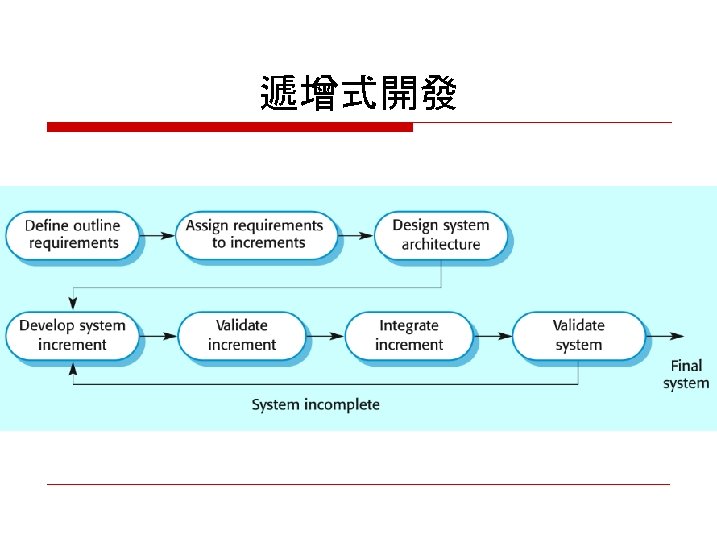
遞增式開發
遞增式開發 o 優點 n 早期的增量模組可當成雛形系統(prototype), 幫助取得(elicit requirement)後續增量模組 的需求 n 整體專案(overall project)的失敗風險較低 (lower risk) n 優先權最高(highest priority)的系統服務可 被測試的次數最多
螺旋式開發 (Spiral Development) o 行程(process)是以螺旋式(spiral)來表示 o 螺旋中的每個迴圈(loop)表示行程中的一 個階段(phase) o 在整個行程中,風險(risks)可被明確的評 估(explicitly assesses)及解決(resolved)
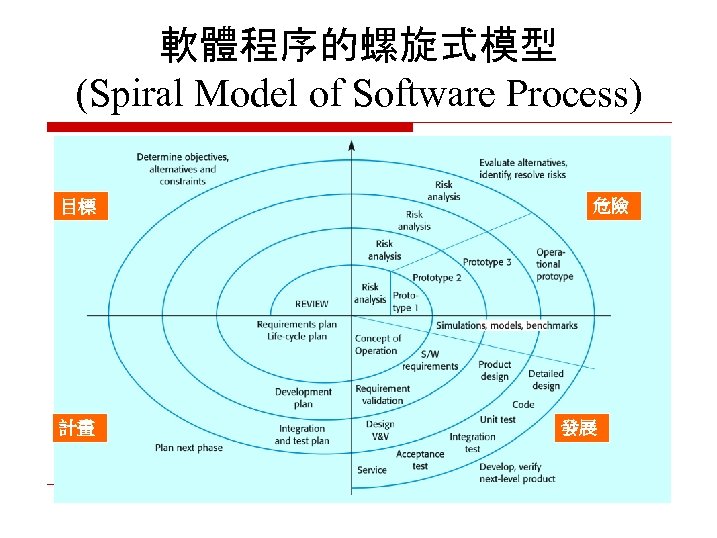
軟體程序的螺旋式模型 (Spiral Model of Software Process) 目標 計畫 危險 發展
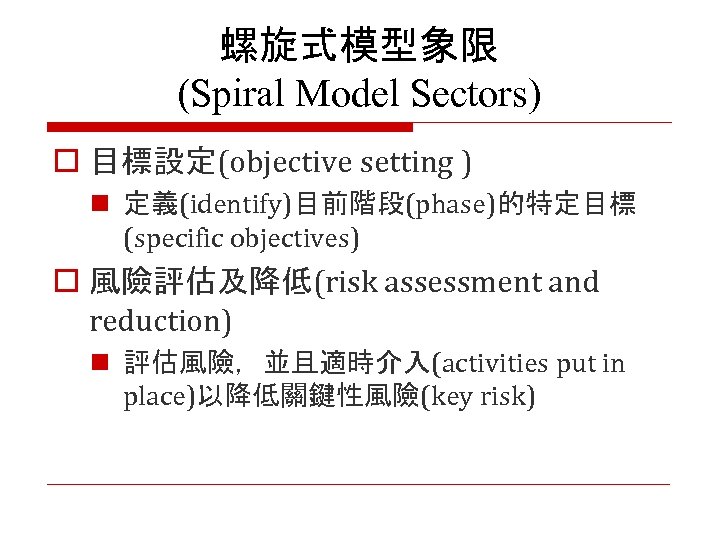
螺旋式模型象限 (Spiral Model Sectors) o 目標設定(objective setting ) n 定義(identify)目前階段(phase)的特定目標 (specific objectives) o 風險評估及降低(risk assessment and reduction) n 評估風險,並且適時介入(activities put in place)以降低關鍵性風險(key risk)
o 開發及驗證(development and validation) n 選用適當典型的開發模型(development model) o 規劃(planning) n 查核 (review)該專案並規劃下個螺旋迴圈 (next phase of the spiral)
軟體規格 (Software Specification) o 建立系統所需提供的服務(services)及系 統運作與開發(operation and development)時的限制(constraints)
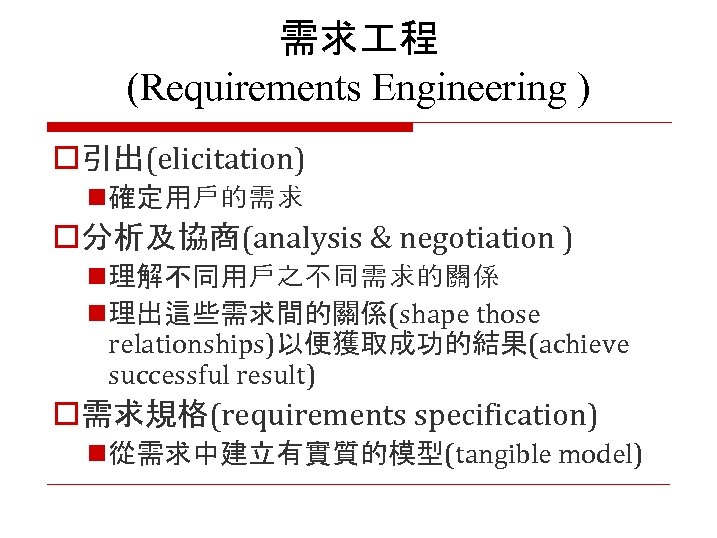
需求 程 (Requirements Engineering ) o引出(elicitation) n 確定用戶的需求 o分析及協商(analysis & negotiation ) n 理解不同用戶之不同需求的關係 n 理出這些需求間的關係(shape those relationships)以便獲取成功的結果(achieve successful result) o需求規格(requirements specification) n 從需求中建立有實質的模型(tangible model)
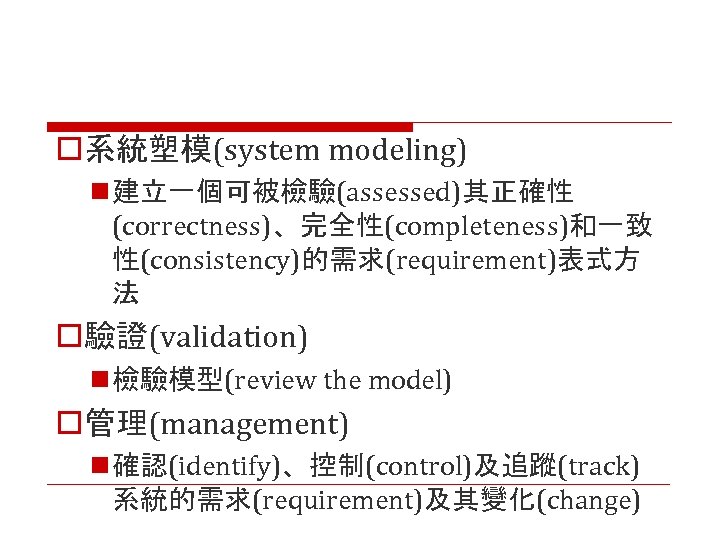
o系統塑模(system modeling) n 建立一個可被檢驗(assessed)其正確性 (correctness)、完全性(completeness)和一致 性(consistency)的需求(requirement)表式方 法 o驗證(validation) n 檢驗模型(review the model) o管理(management) n 確認(identify)、控制(control)及追蹤(track) 系統的需求(requirement)及其變化(change)
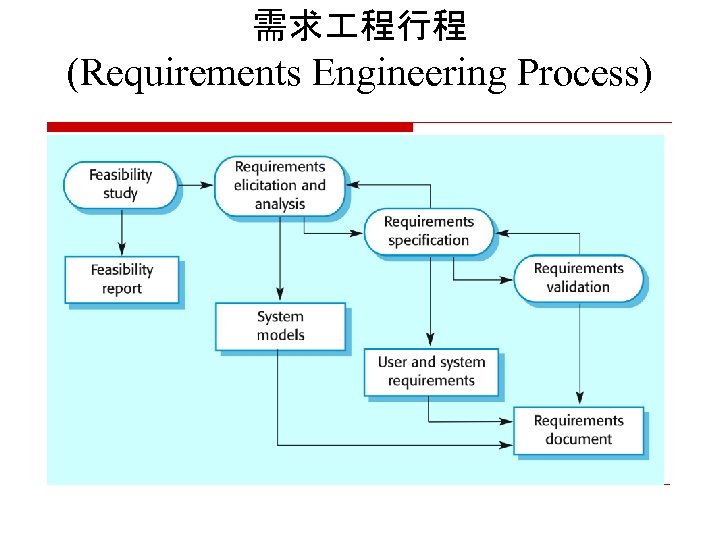
需求 程行程 (Requirements Engineering Process)
軟體設計及實作 (Software Design and Implementation) o 把系統規格(specification)轉化(convert) 成一個可執行系統(executable system)的 過程 o 軟體設計(software design) n 設計一個能實現規格(realises the specification)的軟體結構(software structure) o 實作(implementation) n 把該結構轉譯(translate)成一個可執行的計 畫
設計行程活動 (Design Process Activities ) o 架構設計(architectural design) o 摘要式規格(abstract specification) o 介面設計(interface design) o 元件設計(component design) o 資料結構設計(data structure design) o 演算法設計(algorithm design)
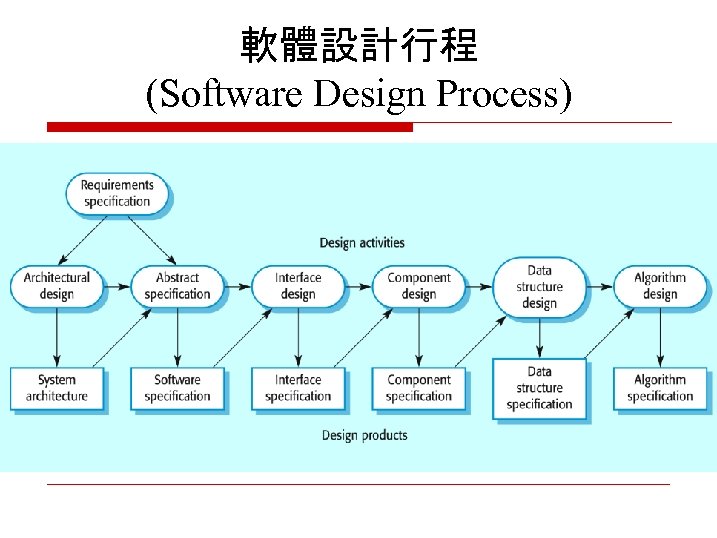
軟體設計行程 (Software Design Process)
設計方法 (Design Methods ) o 以系統化(systematic)的方法來開發一個軟 體設計 o 設計通常以一套的圖型化模型(graphical models)來表示 o 可能的模型 n 資料流模型(data-flow model) n 實體-關連-屬性模型(entity-relation-attribute model ) n 結構化模型(structural model) n 物件模型(object models )
程式設計及除錯 (Programming and Debugging) o 將設計轉譯(translate)成程式(program), 並且移除程式中的錯誤(errors) o 程式設計是一項個人活動(personal activity),因此無典型的程式設計行程(no generic programming process) o 程式設計師需執行程式測試,找出該程式 的錯誤(fault),並且在偵錯程序 (debugging process)中將這些錯誤移除
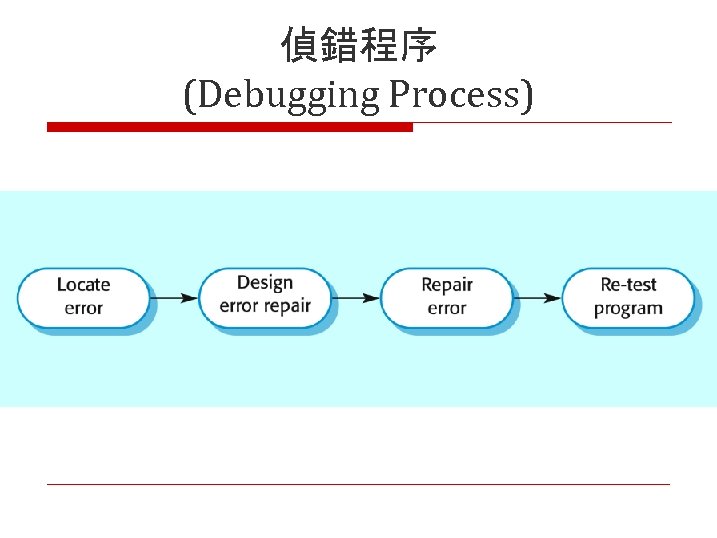
偵錯程序 (Debugging Process)
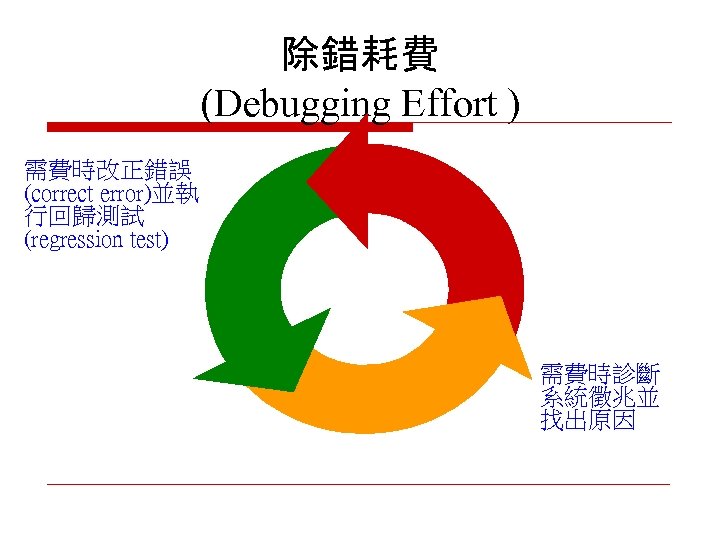
除錯耗費 (Debugging Effort ) 需費時改正錯誤 (correct error)並執 行回歸測試 (regression test) 需費時診斷 系統徵兆並 找出原因
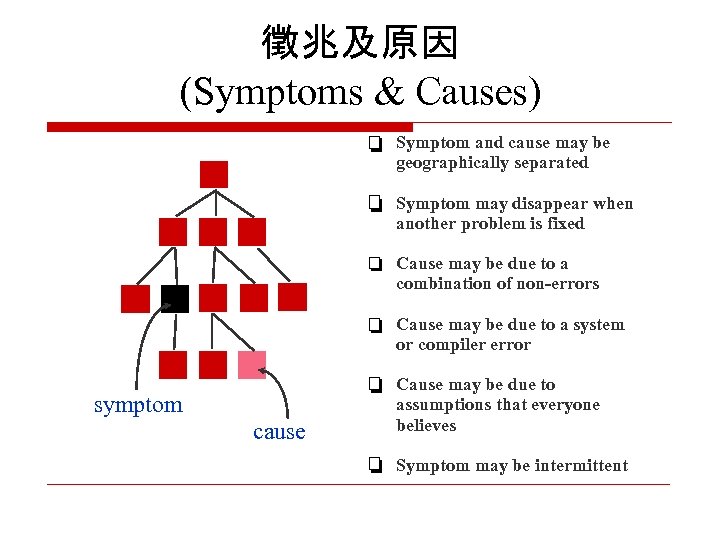
徵兆及原因 (Symptoms & Causes) Symptom and cause may be geographically separated Symptom may disappear when another problem is fixed Cause may be due to a combination of non-errors Cause may be due to a system or compiler error symptom cause Cause may be due to assumptions that everyone believes Symptom may be intermittent
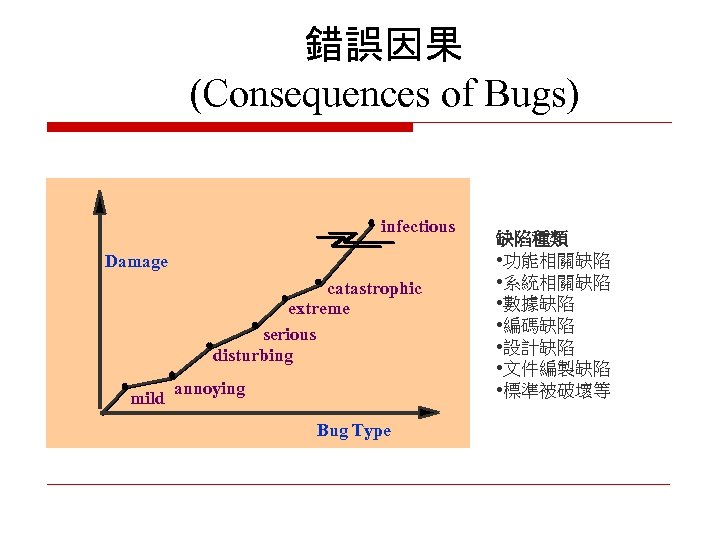
錯誤因果 (Consequences of Bugs) infectious Damage catastrophic extreme serious disturbing mild annoying Bug Type 缺陷種類 • 功能相關缺陷 • 系統相關缺陷 • 數據缺陷 • 編碼缺陷 • 設計缺陷 • 文件編製缺陷 • 標準被破壞等
軟體確認 (Software Validation) o 驗證(verification)和確認(validation)是確保系 統符合其規格(confirm to specification)及達 到顧客需求(requirement) o 包括檢驗(checking)與審查 (reviewing)程序, 以及系統測試(system testing) o 系統測試包括以測試案例(test case)來執行系 統,該案例是從實際資料的規格所導出來的 (derived from the specification of the real data)
軟體測試 (Software Testing ) o 在交付軟體給用戶前,利用軟體測試以 找出錯誤(error)
測試性 (Testability) o操作性(operability) n 操作的簡潔性(operate cleanly) o觀察性(observability) n 每個測試案例的結果容易觀察(readily observed) o控制性(controlability) n 測試可自動化(automated)和優化(optimized)的 程度
o 分解性(decomposability) n 測試可根據目標(targeted)而分解乘數個模組 o 簡化性(simplicity) n 減少複雜的結構和邏輯(complex architecture and logic)來簡化測試
o 穩定性(stability) n 在測試過程中少有變更(few changes are requested) o 可理解性(understandability) n 對設計的可理解性
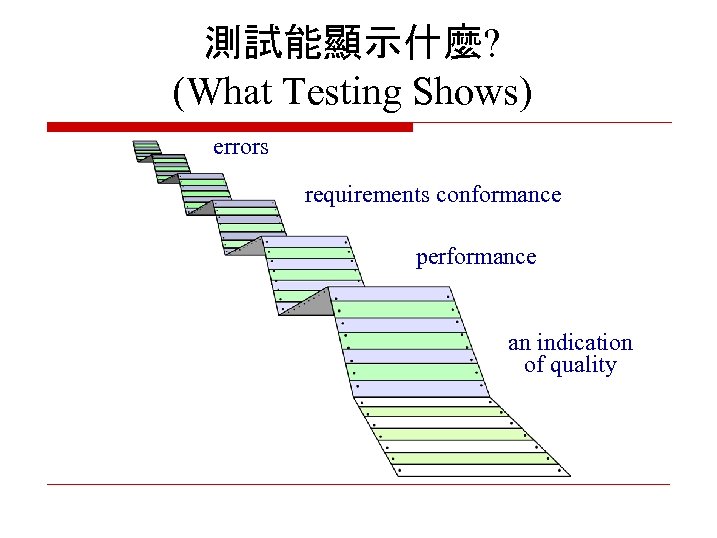
測試能顯示什麼? (What Testing Shows) errors requirements conformance performance an indication of quality
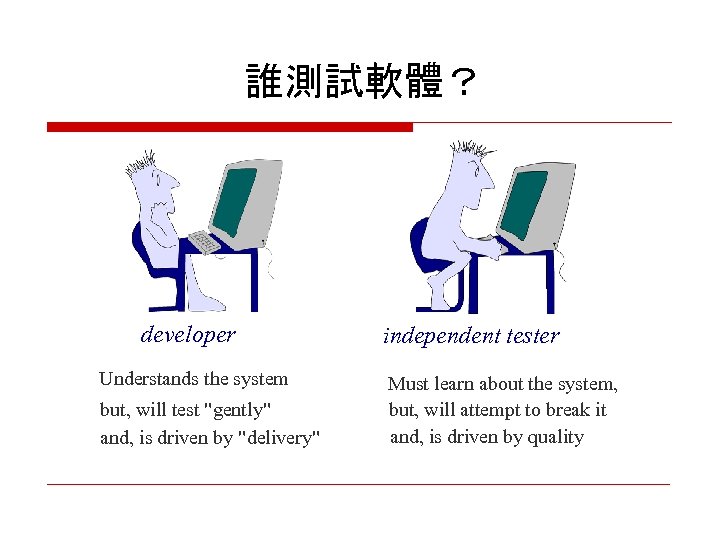
誰測試軟體? developer Understands the system but, will test "gently" and, is driven by "delivery" independent tester Must learn about the system, but, will attempt to break it and, is driven by quality
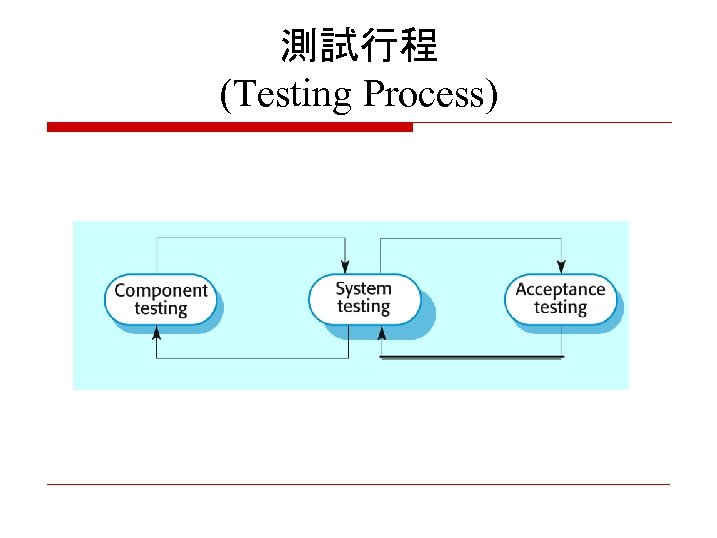
測試行程 (Testing Process)
測試階段 (Testing Stages) o 元件及單元測試(component or unit testing) n 各個元件(individual components)被分別測試 (tested independently) n 元件可以是功能(function)或物件(object)或這 些實體緊密相關的組成(coherent groupings of these entities)
o 系統測試(system testing) n 系統的整體測試(testing the system as a whole) n 衍生特性的測試(emergent properties)尤其重 要 o 接受度測試(acceptance testing) n 用客戶資料(customer data)進行測試,以檢驗 系統能否滿足客戶需求(customer’s needs)
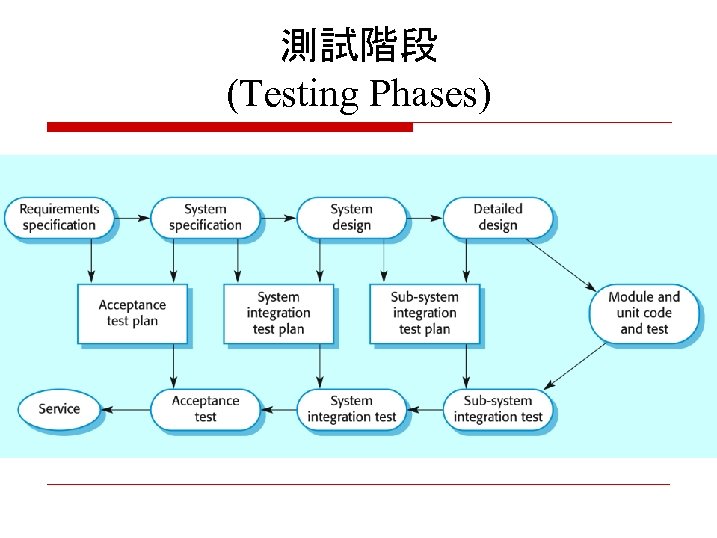
測試階段 (Testing Phases)
軟體進化 (Software Evolution) o 隨著業務環境(business circumstances)的改 變,需求也會跟著改變,軟體必須經歷進 化和改變
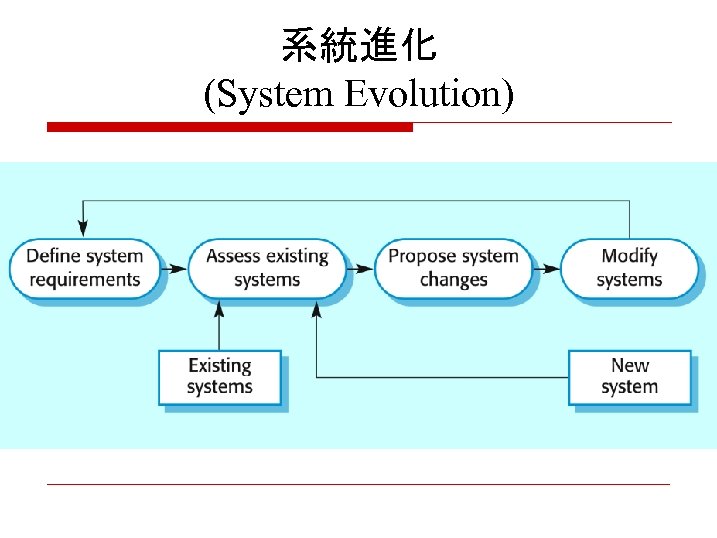
系統進化 (System Evolution)
合理統合行程 (Rational Unified Process,RUP) o 從統一塑模語言(Unified Modeling Language, UML)及其相關行程(associated process)所導出 的一個現代化行程模型(modern process model) o 常從三個面向(perspective)來描述 n 能表示隨時間而有不同階段(phases over time)的動 態面向(dynamic perspective) n 能顯示行程活動(process activity)的靜態面向(static perspective) n 能建議好的實踐(good practice)的實踐面向
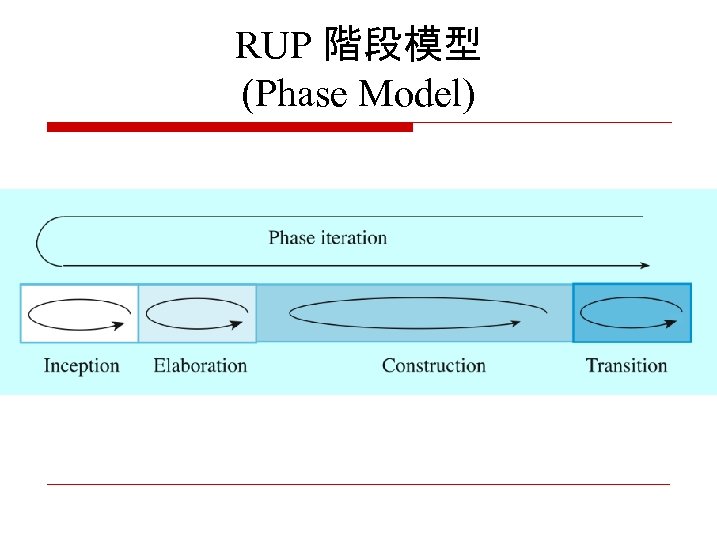
RUP 階段模型 (Phase Model)
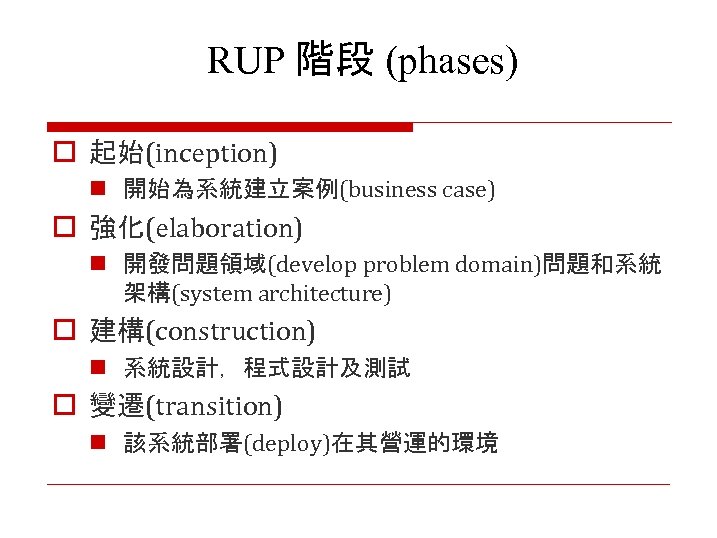
RUP 階段 (phases) o 起始(inception) n 開始為系統建立案例(business case) o 強化(elaboration) n 開發問題領域(develop problem domain)問題和系統 架構(system architecture) o 建構(construction) n 系統設計,程式設計及測試 o 變遷(transition) n 該系統部署(deploy)在其營運的環境
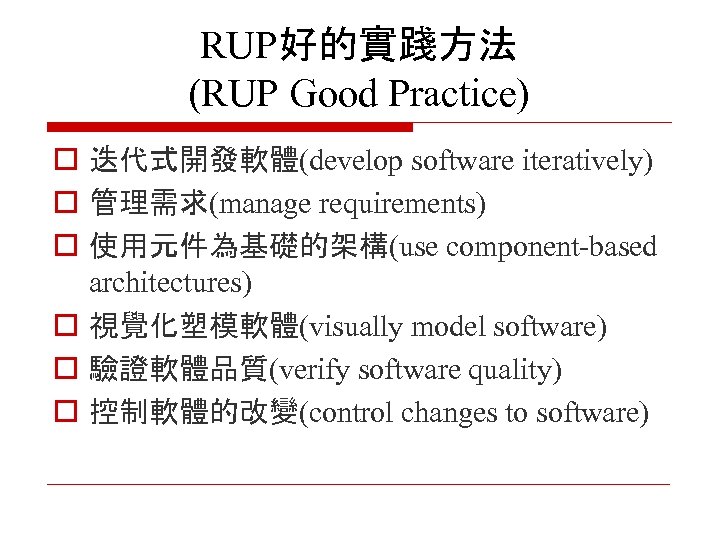
RUP好的實踐方法 (RUP Good Practice) o 迭代式開發軟體(develop software iteratively) o 管理需求(manage requirements) o 使用元件為基礎的架構(use component-based architectures) o 視覺化塑模軟體(visually model software) o 驗證軟體品質(verify software quality) o 控制軟體的改變(control changes to software)
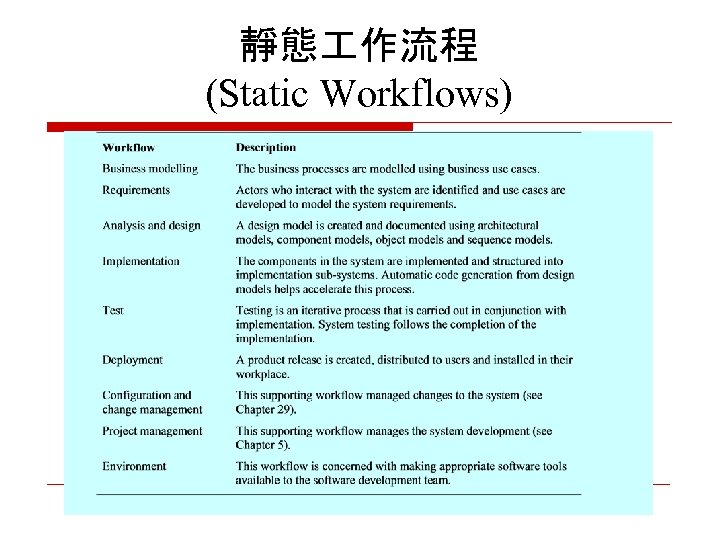
靜態 作流程 (Static Workflows)
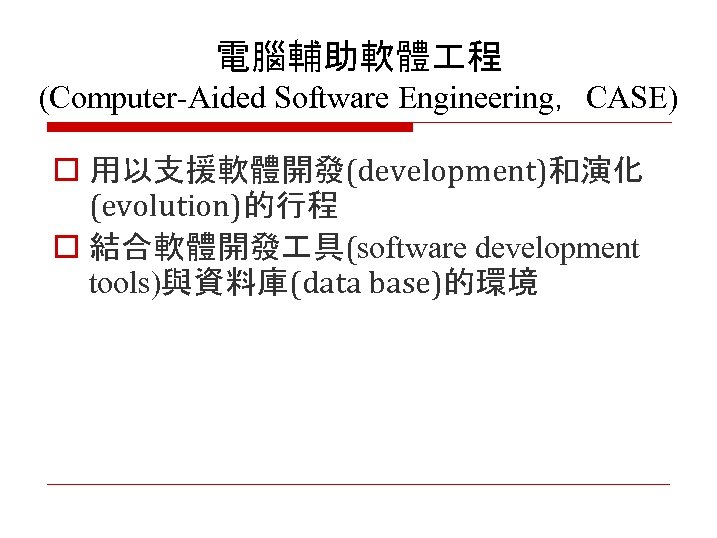
電腦輔助軟體 程 (Computer-Aided Software Engineering,CASE) o 用以支援軟體開發(development)和演化 (evolution)的行程 o 結合軟體開發 具(software development tools)與資料庫(data base)的環境
o 具(tools) n 強化內部機制(increase insight),進而 提昇品質(quality) n 降低苦力(drudgery)以提高生產力 (productivity) n 強化控制(control),期能如期(on-time) 完成專案
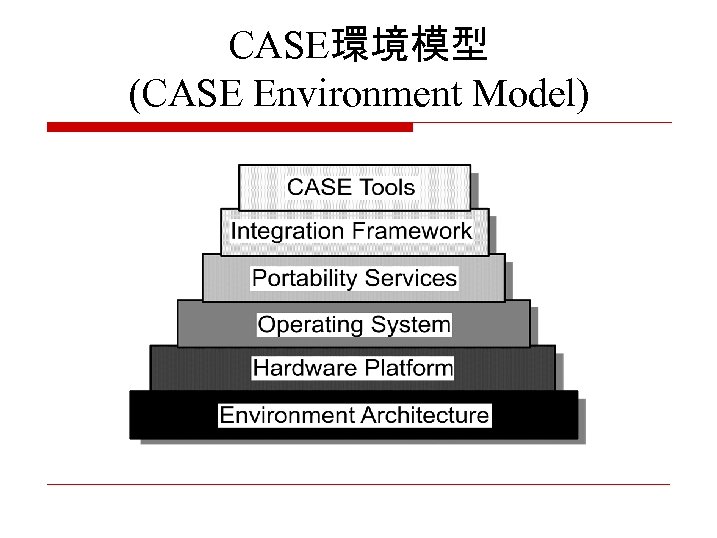
CASE環境模型 (CASE Environment Model)
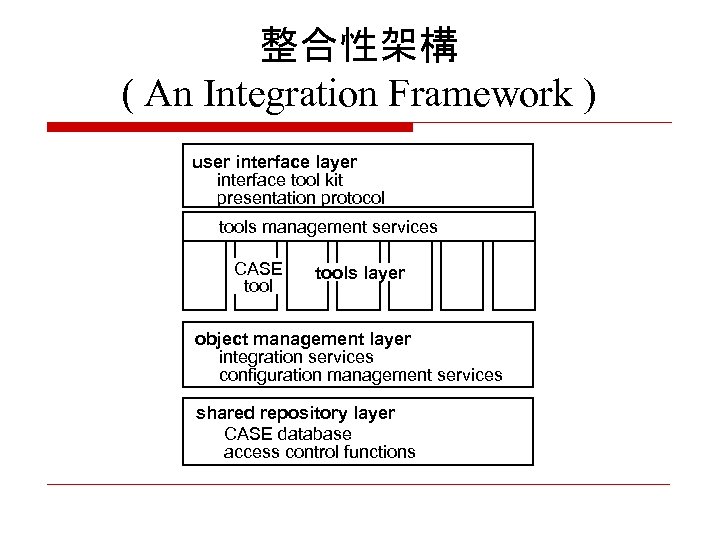
整合性架構 ( An Integration Framework ) user interface layer interface tool kit presentation protocol tools management services CASE tools layer object management layer integration services configuration management services shared repository layer CASE database access control functions
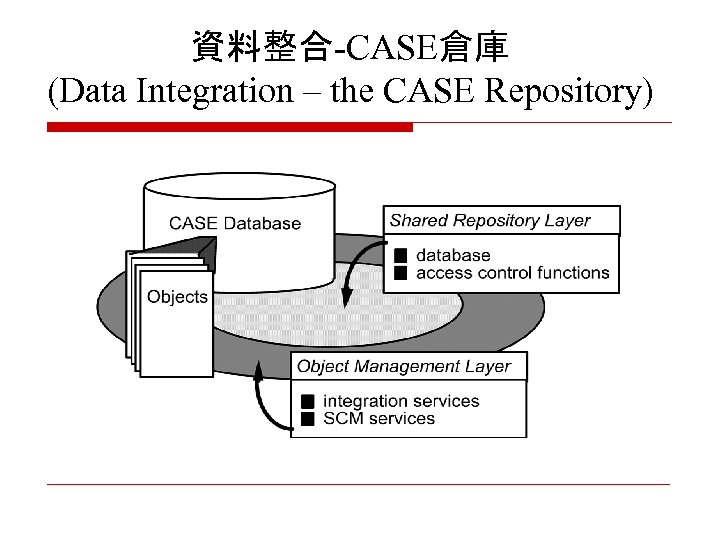
資料整合-CASE倉庫 (Data Integration – the CASE Repository)
o 活動自動化(activity automation ) n 圖形編輯器(graphical editors for system model development) n 資料字典(data dictionary to manage design entities) n 圖形使用者介面編輯器(Graphical UI (GUI) builder for user interface construction) n 除錯器(debuggers to support program fault finding) n 自動化翻譯器(automated translators to generate new versions of a program)
CASE分類 (Classification) o 功能觀點(functional perspective) n 根據 具的特定功能(specific function)來分 類 o 行程觀點(process perspective) n 根據支援的行程活動(process activity)來分 類 o 整合觀點(integration perspective) n 根據 具所在的組織單位(organization)分類 成整合性單元(integrated units)
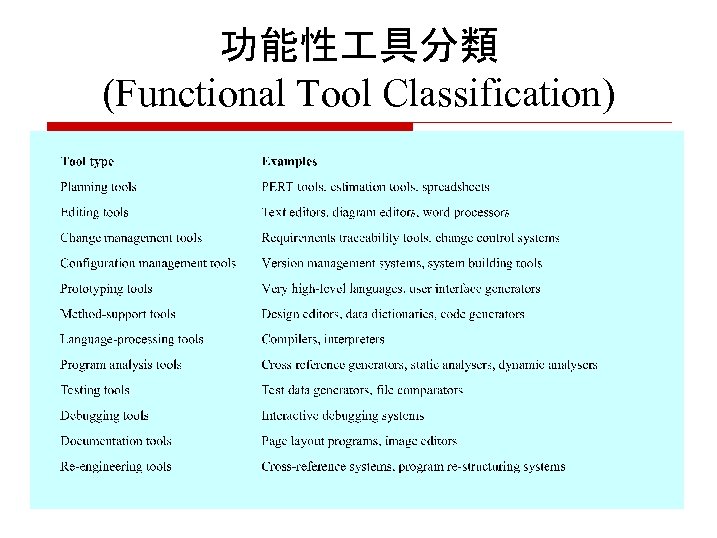
功能性 具分類 (Functional Tool Classification)
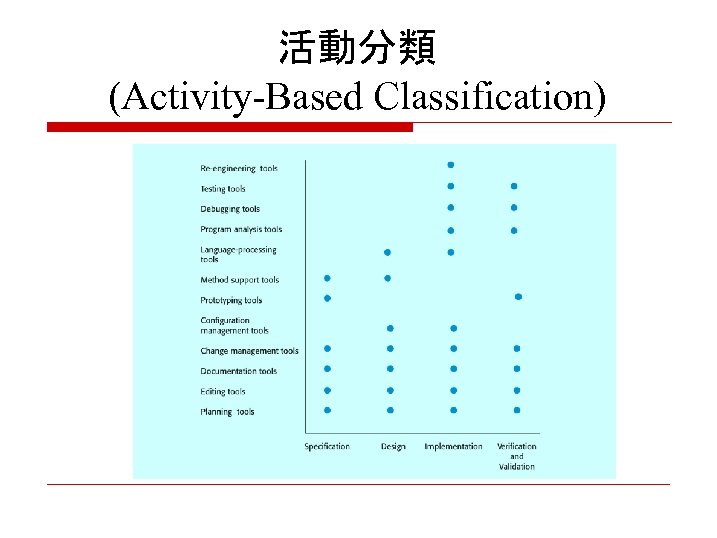
活動分類 (Activity-Based Classification)
CASE整合 (CASE Integration) o 具(tools) n 支援個別的行程任務(individual process tasks), 例如設計一致性檢查 (design consistency checking)、文字編輯 作(text editing)等 o 作台(Workbenches) n 支援某一個行程階段(process phase),如規格 化(specification)或設計(design) n 通常包含許多整合 具(integrated tools)
o 開發環境(environments) n 支援整個或或軟體行程中的重要部份 (substantial part) n 通常包含數個整合 作台 (workbenches)
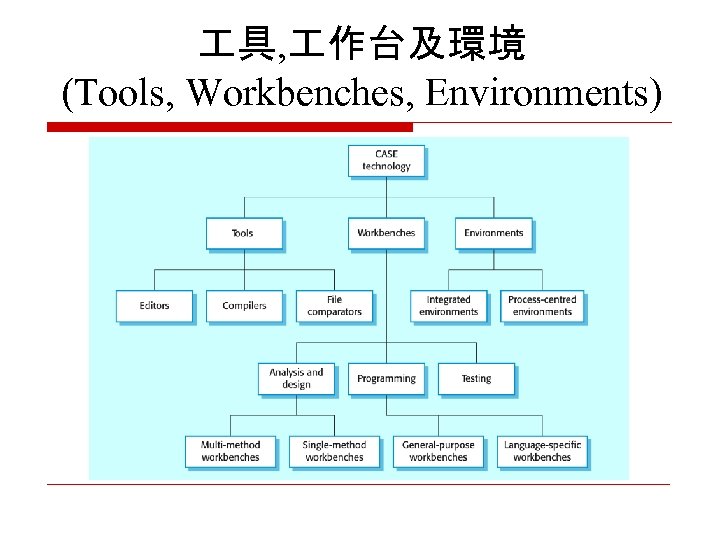
具, 作台及環境 (Tools, Workbenches, Environments)
參考資料 o Ian Sommerville, Software Engineering, 7 th ed. , Addison-Wesley,2004.
Скачать презентацию 軟體行程 Software Processes o 一組緊密的活動集合 coherent sets of activities 包括軟體系統的規格指定
dabf0cf5d904122a75cf052a72be5284.ppt