 Скачать презентацию 课程 当代英国概况 第一章 开篇介绍 任课教师 郭岚 Objectives some general
903c800ddbffe874605710328b588c08.ppt
- Количество слайдов: 48




课程:当代英国概况 第一章:开篇介绍 任课教师:郭岚
Objectives • some general features of Britain • to set the scene
Procedure • Lecture by the teacher • Presentation by Students • Class discussion • Assignment for the next chapter
Focal Questions • What is the full name of the British state? • • • What countries does it consist of? What is the total population of the United Kingdom? Where do most people live? Do you think that most of the ethnic minorities in Britain have different age structures from that of the white population? Why? What do you think are the most important factors in determining class? How do you understand the status of women in contemporary Britain? What are some of the key changes over the last fifty years in the UK?
A 1 Geography • The British Isles • the group of islands off the northwest coast of Europe • Great Britain, Ireland the many smaller adjacent islands (16+) • an archipelago, 315, 134 km 2
A 1 Geography continued • Is the term "British Isles" acceptable? • Irish state documents, Irish schoolbooks, textbooks • official British state documentation • Alternatives:“Great Britain and Ireland”, “British-Irish islands”, “UK and Ireland”, “the British Isles and Ireland”, “Islands of the North Atlantic”(IONA)
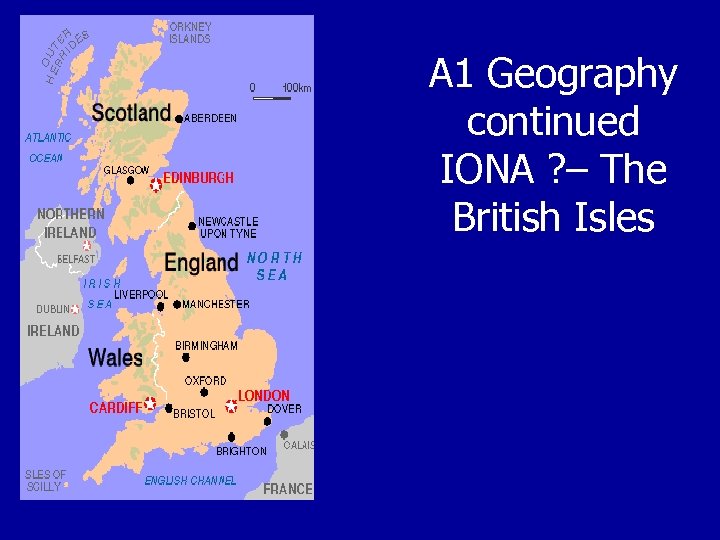
A 1 Geography continued IONA ? – The British Isles
A 1 Geography cont.
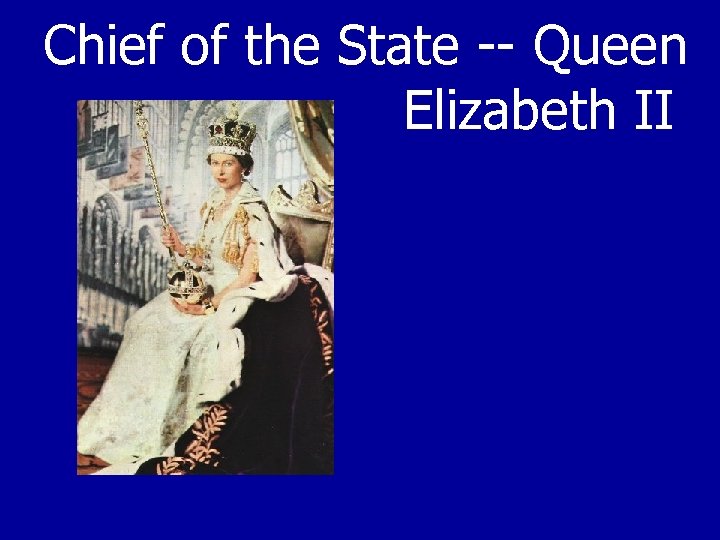
Chief of the State -- Queen Elizabeth II
Questions (video clip): • The geographical makeup of UK • What is the London smog? • How did the suburb come into being? • Major house styles in the suburb
Answers to Questions: • The Island of Great Britain + 1/6 of the Island of Ireland • Smoke released by the burning coal + London’s natural fog (Charles Dickens) • People getting away from the fog + affordable mass transit
Answers to Questions: Cont. • Major house styles in the suburb • The Tudor style (mid-16 th C. ) • The Elizabethan style (late 16 th C. ) • The Queen Anne revival style (late 19 th C. )
ENGLAND • Population: 51 Million • Language: English • People: Anglo-Saxons, Scots, Welsh, Irish, West Indians, Pakistanis, Indians, Chinese • Religion: Church of England, Methodist, Baptist, Catholic, Muslim, Hindu, and Sikh • Capital City: London
ENGLAND cont. • artistic contributions in theatre , literature, and architecture. • Staple food: Fish and Chips, bacon, eggs, sausage, and mash • astonishing regional variations in accents
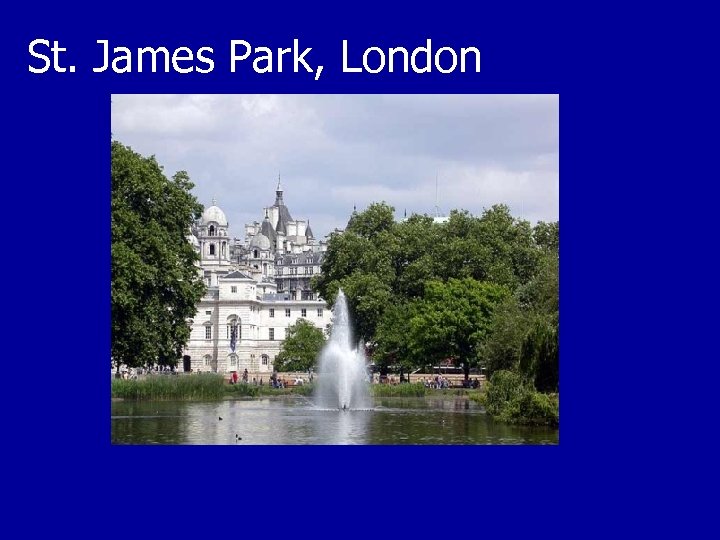
St. James Park, London
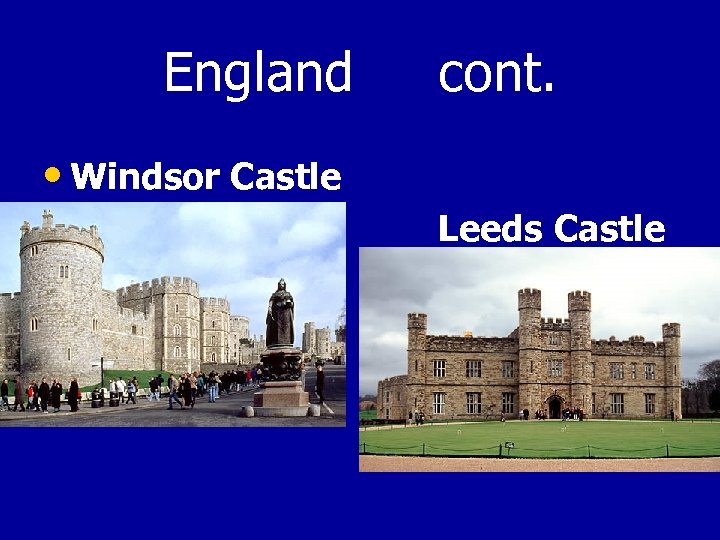
England • Windsor Castle • cont. Leeds Castle
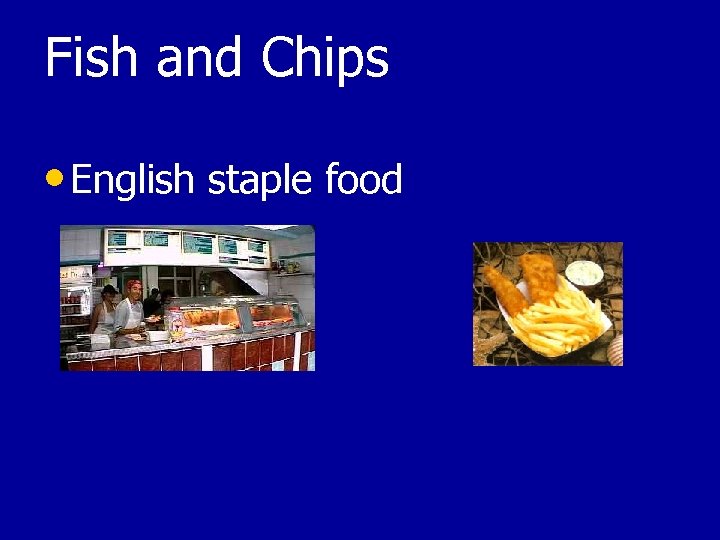
Fish and Chips • English staple food
• Population: 2. 9 Million WALES –Capital city: Cardiff –People: Celts, Anglo-Saxons –Language: Welsh, English –Religion: Nonconformist Protestants, Anglicans, Catholics
WALES cont. • the survival of Welsh as a living language • Food: laverbread (seaweed, oatmeal and bacon on toast), Rarebit (cheese on toast with flavor of mustard and beer)
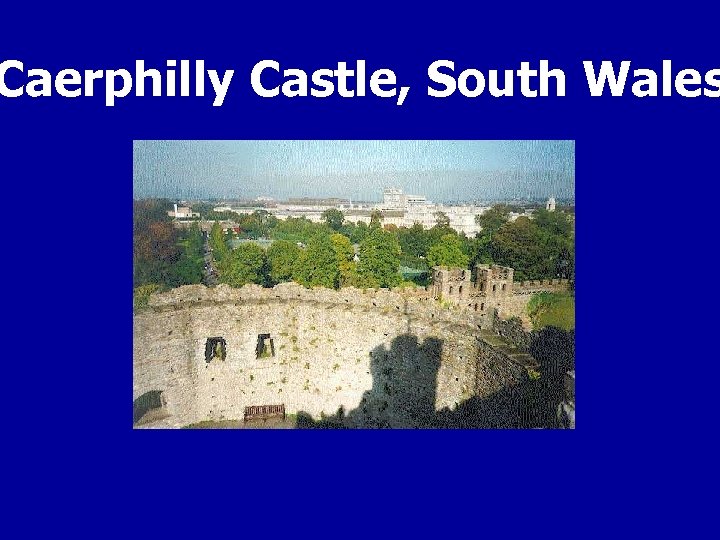
Caerphilly Castle, South Wales
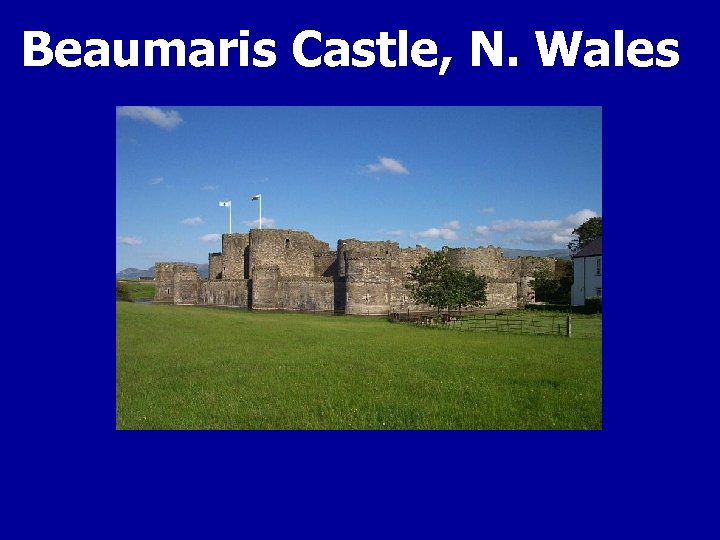
Beaumaris Castle, N. Wales
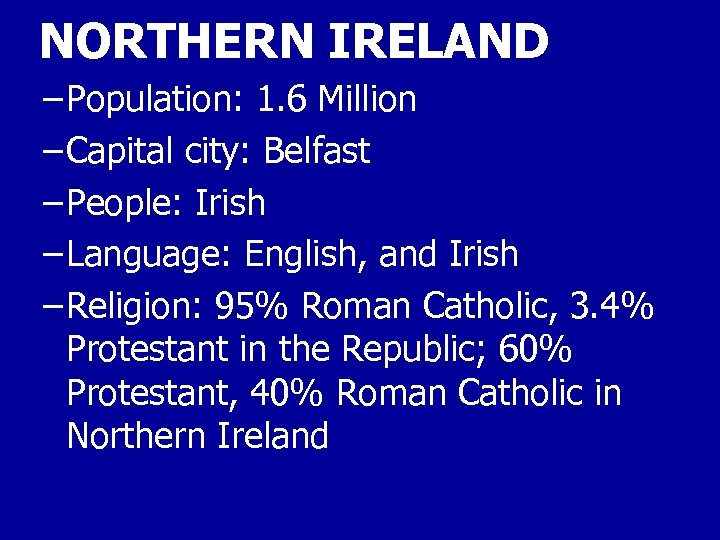
NORTHERN IRELAND – Population: 1. 6 Million – Capital city: Belfast – People: Irish – Language: English, and Irish – Religion: 95% Roman Catholic, 3. 4% Protestant in the Republic; 60% Protestant, 40% Roman Catholic in Northern Ireland
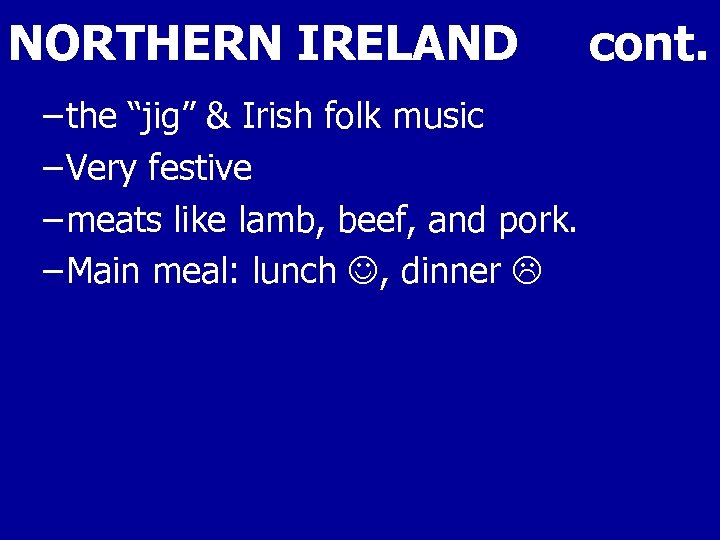
NORTHERN IRELAND – the “jig” & Irish folk music – Very festive – meats like lamb, beef, and pork. – Main meal: lunch , dinner cont.
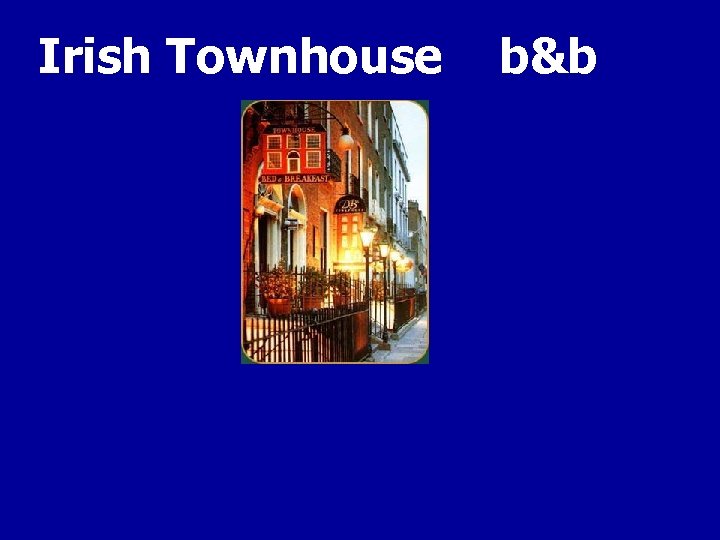
Irish Townhouse b&b
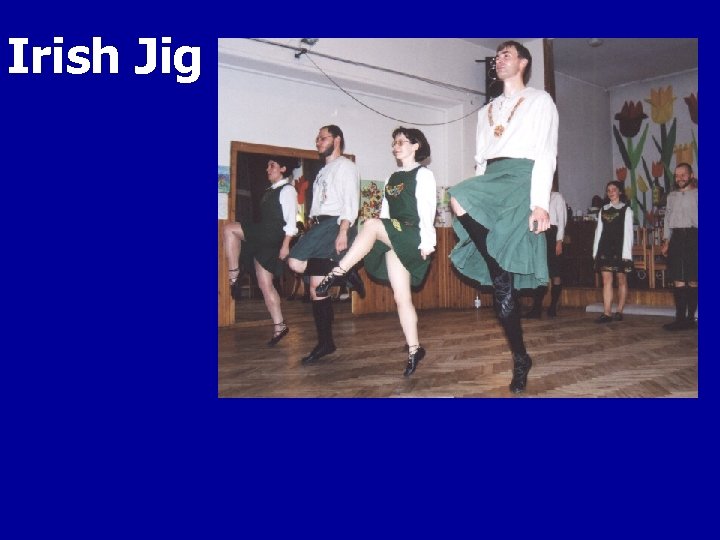
Irish Jig
SCOTLAND – Population: 5. 1 Million – Capital city: Edinburgh – People: Celts, Anglo-Saxons – Language: English, Gaelic – Religion: Presbyterian Church of Scotland, other Presbyterian churches, Anglicans, Catholics
SCOTLAND cont. – Greatest accomplishments: science, literature, and philosophy – Bagpipes – Social gathering (ceilidh): folk stories (past), drinking and dancing (today) – game dishes: smoked salmon and venison (deer)
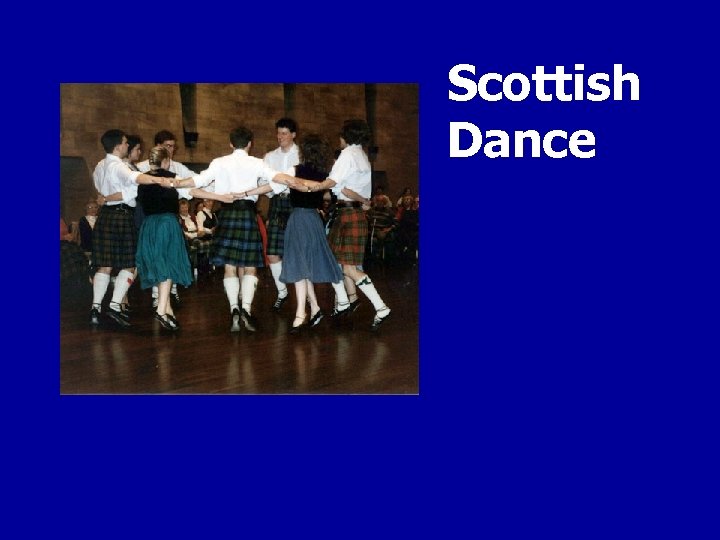
Scottish Dance
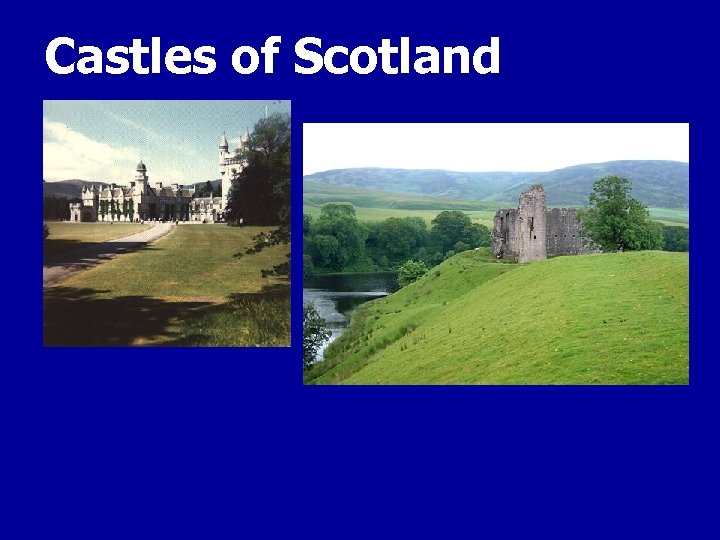
Castles of Scotland
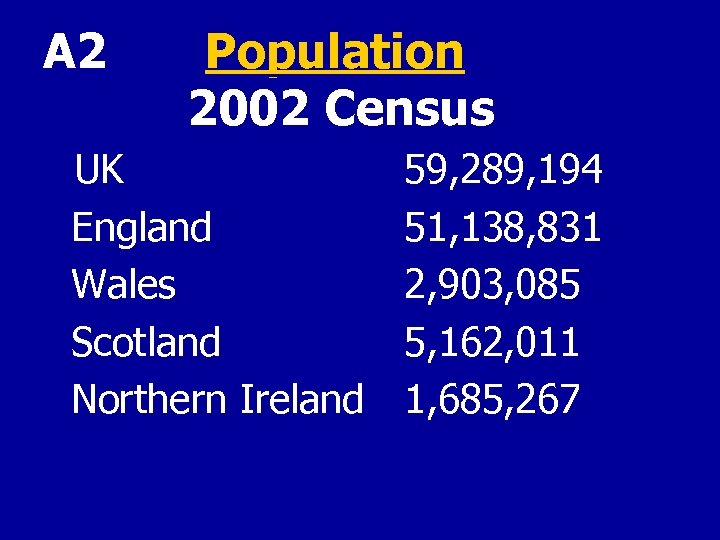
A 2 Population 2002 Census UK England Wales Scotland Northern Ireland 59, 289, 194 51, 138, 831 2, 903, 085 5, 162, 011 1, 685, 267
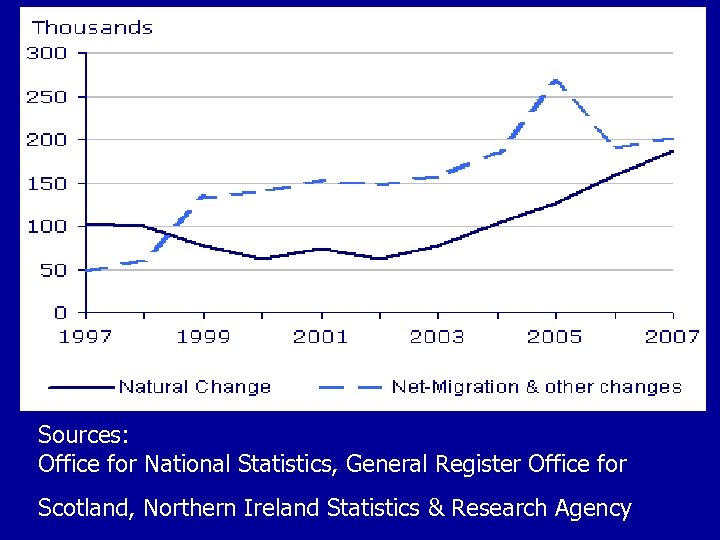
Sources: Office for National Statistics, General Register Office for Scotland, Northern Ireland Statistics & Research Agency
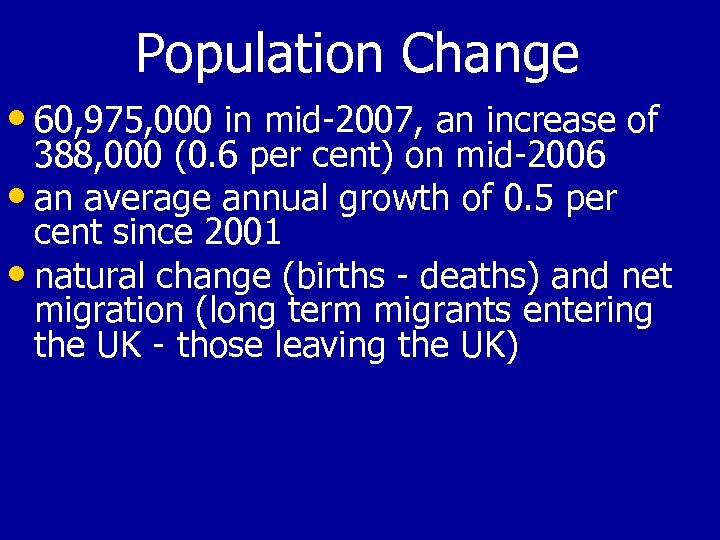
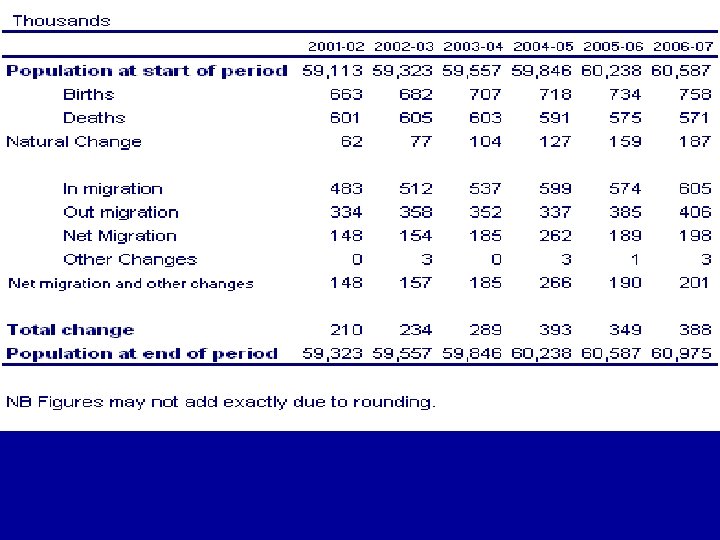
Population Change • 60, 975, 000 in mid-2007, an increase of 388, 000 (0. 6 per cent) on mid-2006 • an average annual growth of 0. 5 per cent since 2001 • natural change (births - deaths) and net migration (long term migrants entering the UK - those leaving the UK)
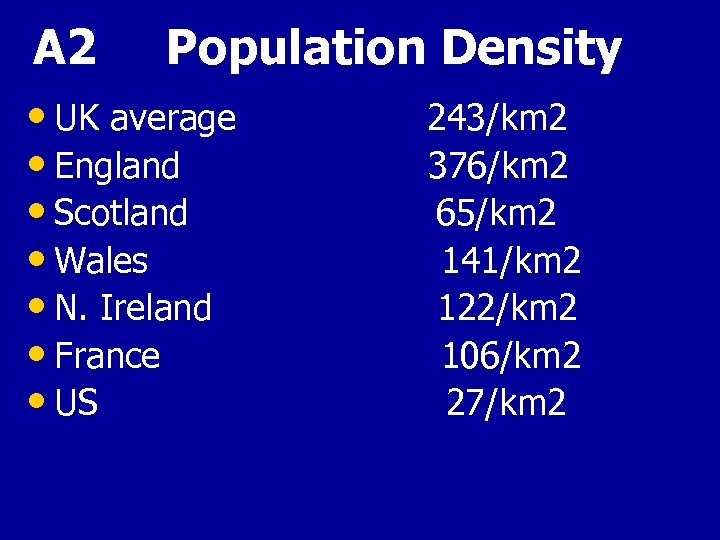
A 2 Population Density • UK average • England • Scotland • Wales • N. Ireland • France • US 243/km 2 376/km 2 65/km 2 141/km 2 122/km 2 106/km 2 27/km 2
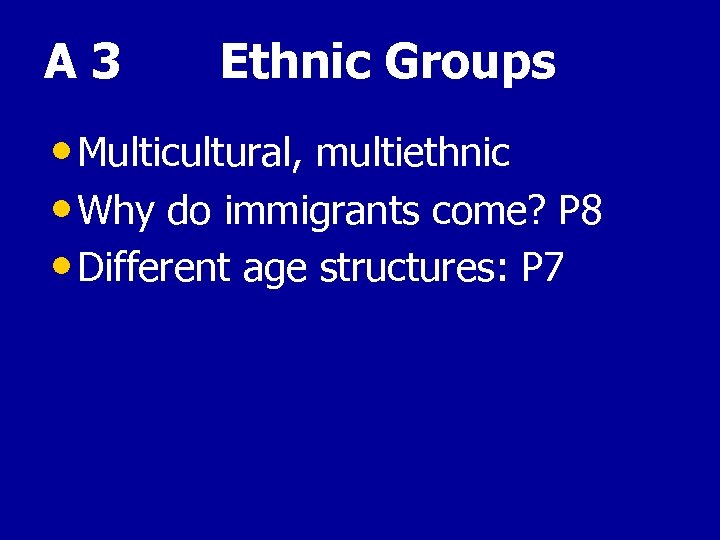
A 3 Ethnic Groups • Multicultural, multiethnic • Why do immigrants come? P 8 • Different age structures: P 7
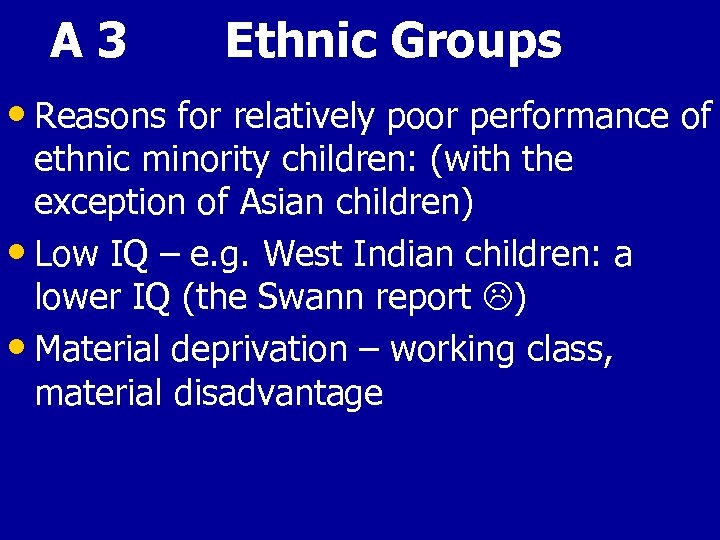
A 3 Ethnic Groups • Reasons for relatively poor performance of ethnic minority children: (with the exception of Asian children) • Low IQ – e. g. West Indian children: a lower IQ (the Swann report ) • Material deprivation – working class, material disadvantage
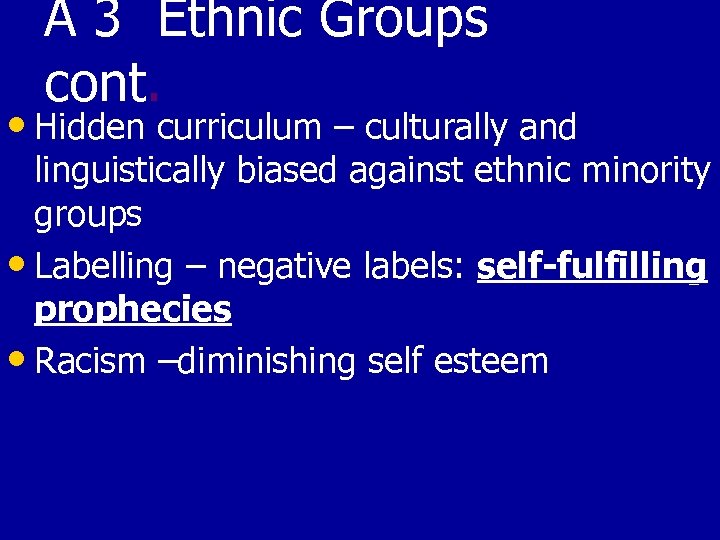
A 3 Ethnic Groups cont. • Hidden curriculum – culturally and linguistically biased against ethnic minority groups • Labelling – negative labels: self-fulfilling prophecies • Racism –diminishing self esteem
A 3 Ethnic Groups cont. • In 1940, Pan Africanist Marcus Garvey suffered a stroke — survived — an obituary was published, describing him as "broke, alone and unpopular“ — shocked and suffered a second stroke and died — fulfilling the obituary • Harry Potter
A 3 Ethnic Groups cont. • The Chinese in Britain • Estimated number: 250, 000 • From Taiwan, Singapore, Malaysia, Vietnam, Hong Kong and mainland China • Mainly in big cities like London, Manchester, Sheffield, Liverpool, Newcastle and Glasgow, etc.
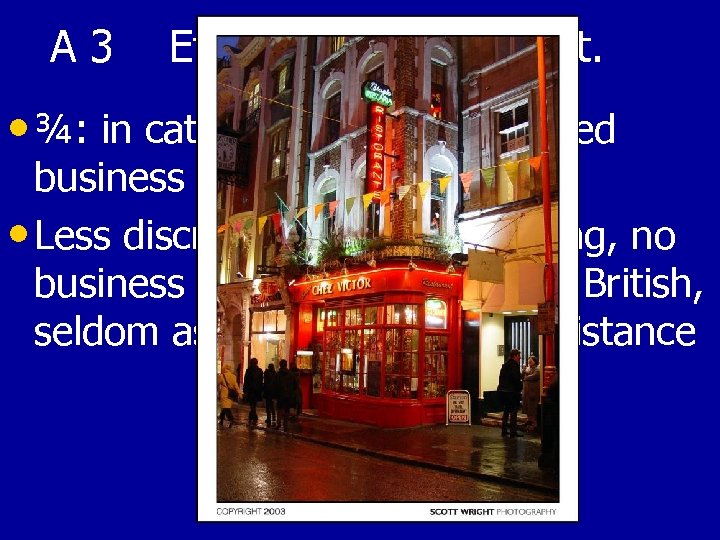
A 3 Ethnic Groups cont. • ¾: in catering & catering-related business • Less discrimination: Law-abiding, no business conflict with the local British, seldom asking for financial assistance
A 4 Class • Increasingly classless? • Society is ordered in terms of class. • Accent*, vocabulary*, job*, hobbies* and types of relationship
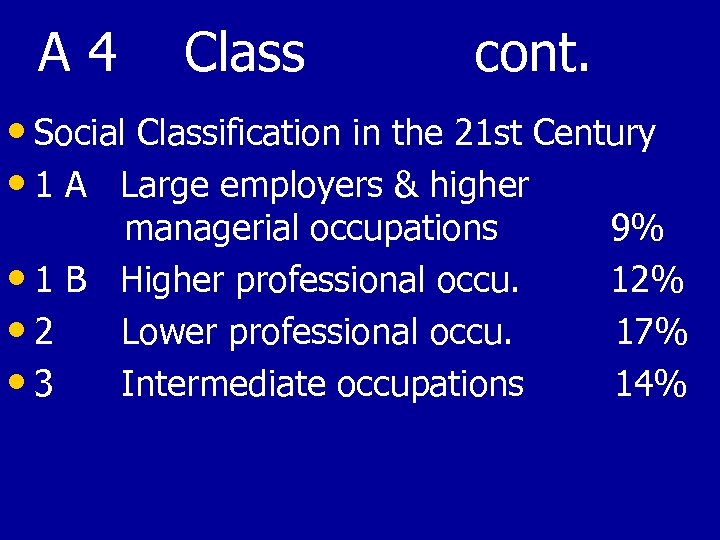
A 4 Class cont. • Social Classification in the 21 st Century • 1 A Large employers & higher managerial occupations • 1 B Higher professional occu. • 2 Lower professional occu. • 3 Intermediate occupations 9% 12% 17% 14%
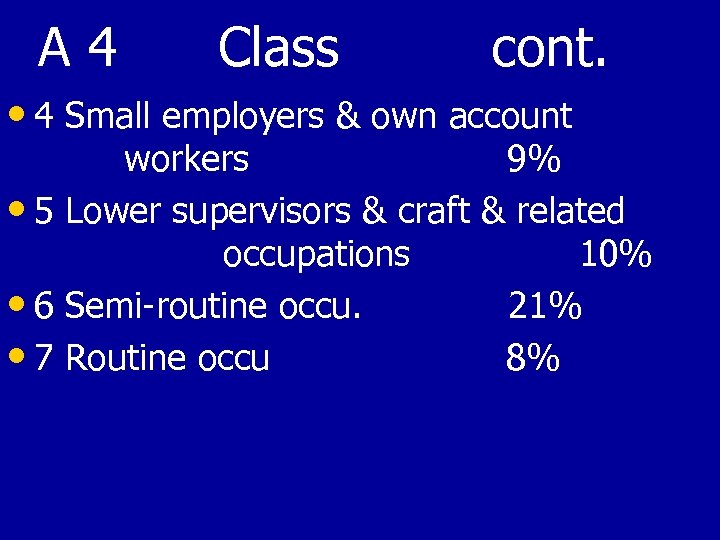
A 4 Class cont. • 4 Small employers & own account workers 9% • 5 Lower supervisors & craft & related occupations 10% • 6 Semi-routine occu. 21% • 7 Routine occu 8%
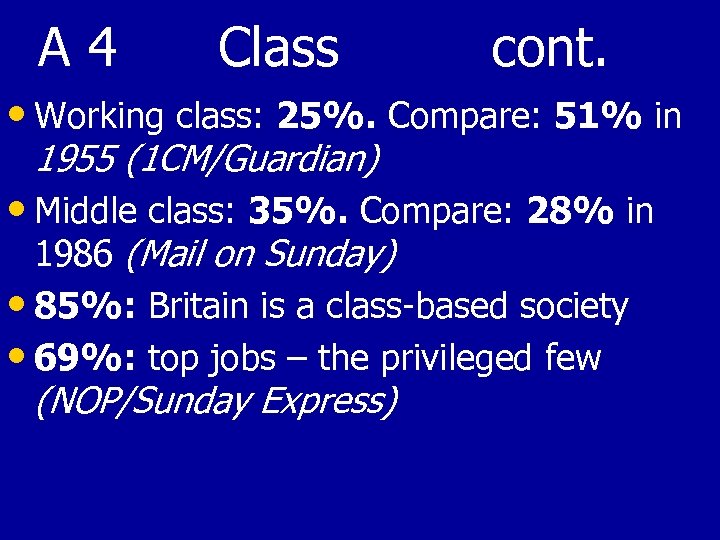
A 4 Class cont. • Working class: 25%. Compare: 51% in 1955 (1 CM/Guardian) • Middle class: 35%. Compare: 28% in 1986 (Mail on Sunday) • 85%: Britain is a class-based society • 69%: top jobs – the privileged few (NOP/Sunday Express)
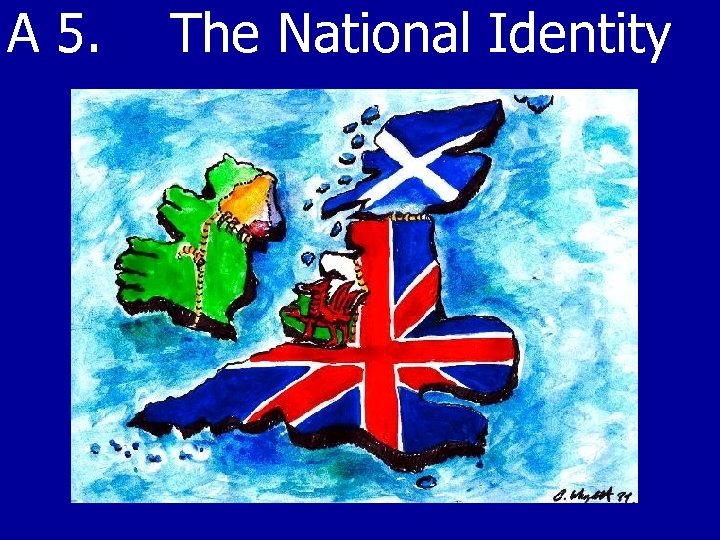
A 5. The National Identity
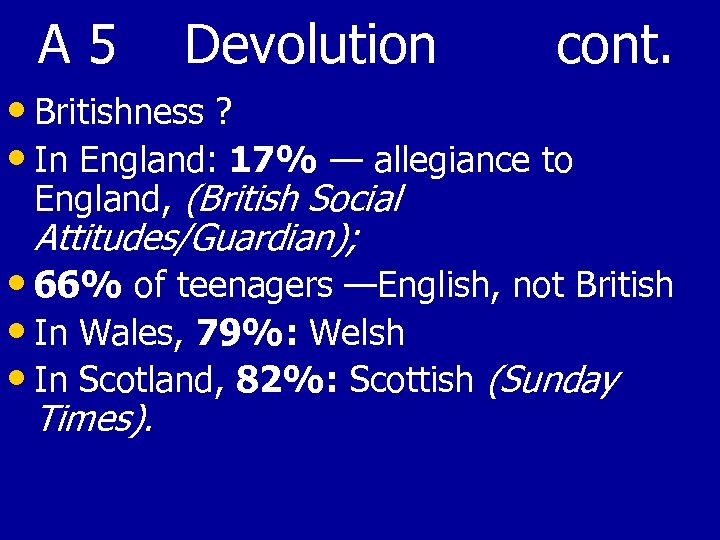
A 5 Devolution cont. • Britishness ? • In England: 17% — allegiance to England, (British Social Attitudes/Guardian); • 66% of teenagers —English, not British • In Wales, 79%: Welsh • In Scotland, 82%: Scottish (Sunday Times).
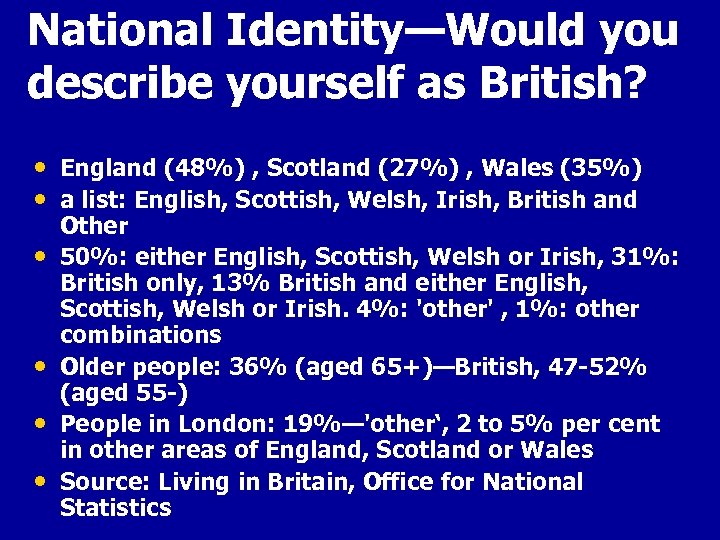
National Identity—Would you describe yourself as British? • • • England (48%) , Scotland (27%) , Wales (35%) a list: English, Scottish, Welsh, Irish, British and Other 50%: either English, Scottish, Welsh or Irish, 31%: British only, 13% British and either English, Scottish, Welsh or Irish. 4%: 'other' , 1%: other combinations Older people: 36% (aged 65+)—British, 47 -52% (aged 55 -) People in London: 19%—'other‘, 2 to 5% per cent in other areas of England, Scotland or Wales Source: Living in Britain, Office for National Statistics
References • British Studies Web Pages • Dalton, A. ‘Apparent’ Paradoxes in British Culture & its Literature • http//www. Woodlands-junior. Kent. Sch/uk. Html • http//huaren. org/diaspora/europe/britain/ doc/0395 -01. html • http: //www. statistics. gov. uk/cci/nugget. as p? id=278
Скачать презентацию 课程 当代英国概况 第一章 开篇介绍 任课教师 郭岚 Objectives some general
903c800ddbffe874605710328b588c08.ppt