 Скачать презентацию 英語前置詞onの 多義構造 田口舞 2010年2月4日 2010 Mai
b74efa55439b9d2f69f61d36cdbb0a0a.ppt
- Количество слайдов: 29




英語前置詞onの 多義構造 田口舞 2010年2月4日 © 2010 Mai
Contents ¢ プロトタイプからさまざまな意味への 拡張 ¢ on, in, with, byの比較:「手段・方法」 を表す機能
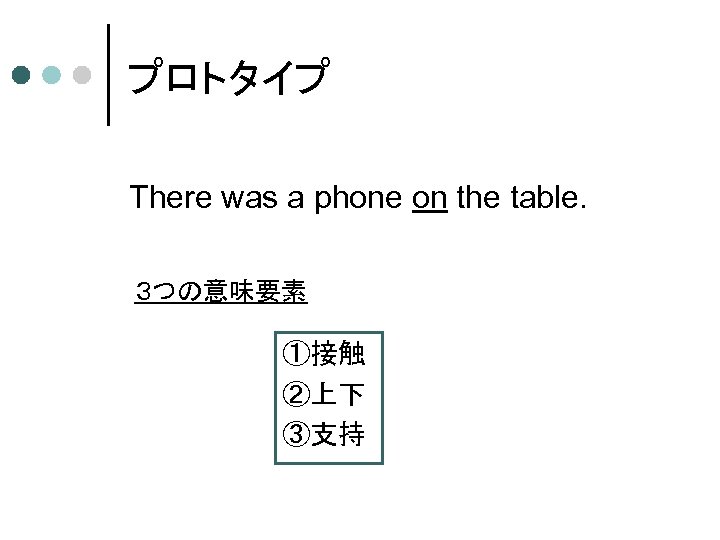
プロトタイプ There was a phone on the table. 3つの意味要素 ①接触 ②上下 ③支持
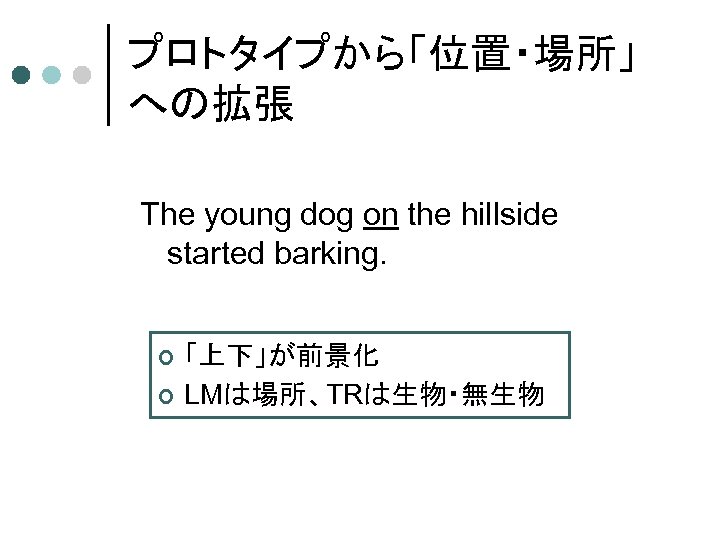
プロトタイプから「位置・場所」 への拡張 The young dog on the hillside started barking. ¢ ¢ 「上下」が前景化 LMは場所、TRは生物・無生物
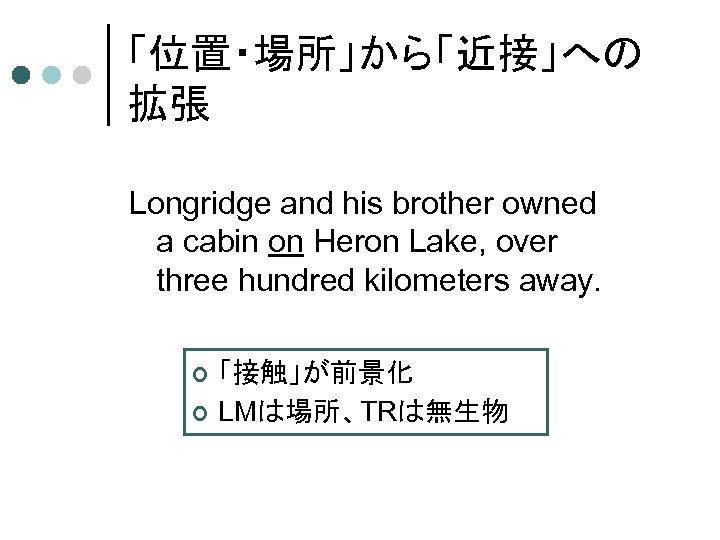
「位置・場所」から「近接」への 拡張 Longridge and his brother owned a cabin on Heron Lake, over three hundred kilometers away. ¢ ¢ 「接触」が前景化 LMは場所、TRは無生物
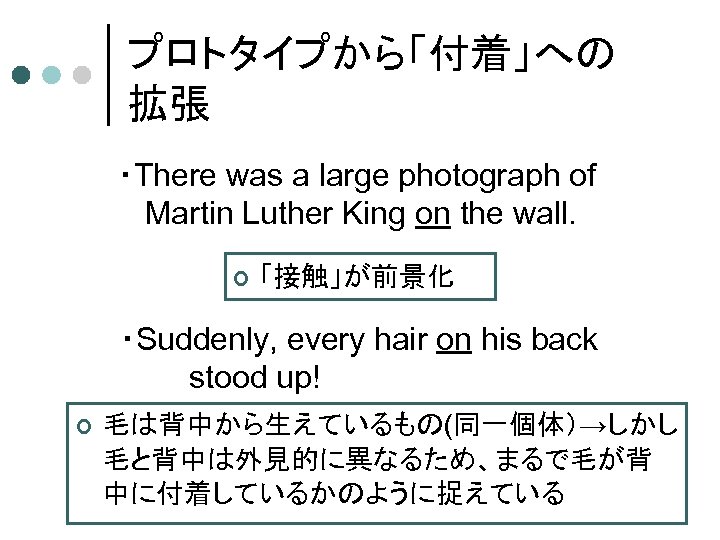
プロトタイプから「付着」への 拡張 ・There was a large photograph of Martin Luther King on the wall. ¢ 「接触」が前景化 ・Suddenly, every hair on his back stood up! ¢ 毛は背中から生えているもの(同一個体)→しかし 毛と背中は外見的に異なるため、まるで毛が背 中に付着しているかのように捉えている
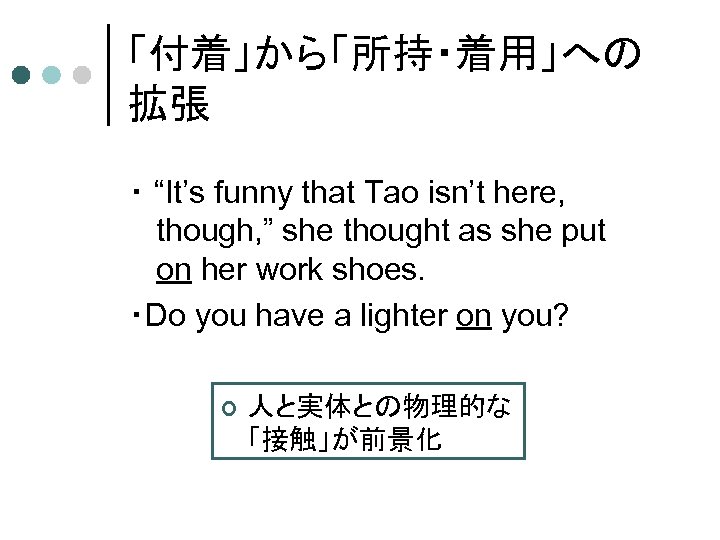
「付着」から「所持・着用」への 拡張 ・ “It’s funny that Tao isn’t here, though, ” she thought as she put on her work shoes. ・Do you have a lighter on you? ¢ 人と実体との物理的な 「接触」が前景化

「所持・着用」から「増加」への 拡張 I just don’t know why I put on weight when I’m on a diet. ¢ ¢ 「接触」が前景化 TR (weight)がLM (I)の一部

「所持・着用」から「表情」への 拡張 Then the lady must have seen the look of despair on my face. ¢ LMは顔、TRは表情
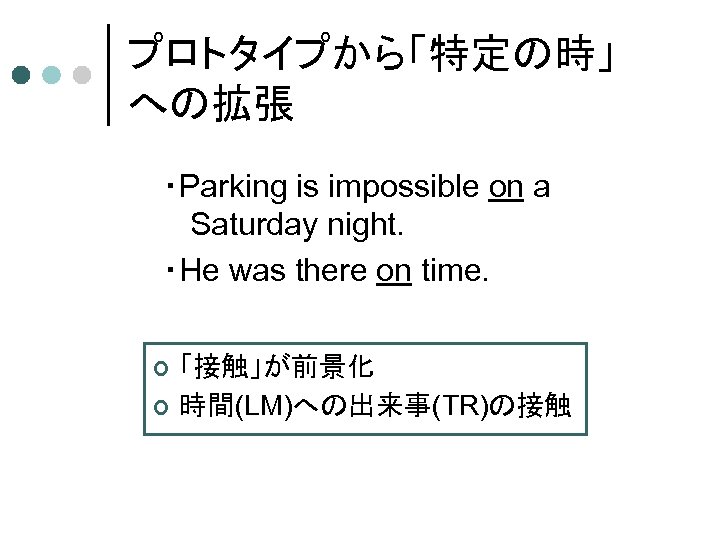
プロトタイプから「特定の時」 への拡張 ・Parking is impossible on a Saturday night. ・He was there on time. ¢ ¢ 「接触」が前景化 時間(LM)への出来事(TR)の接触
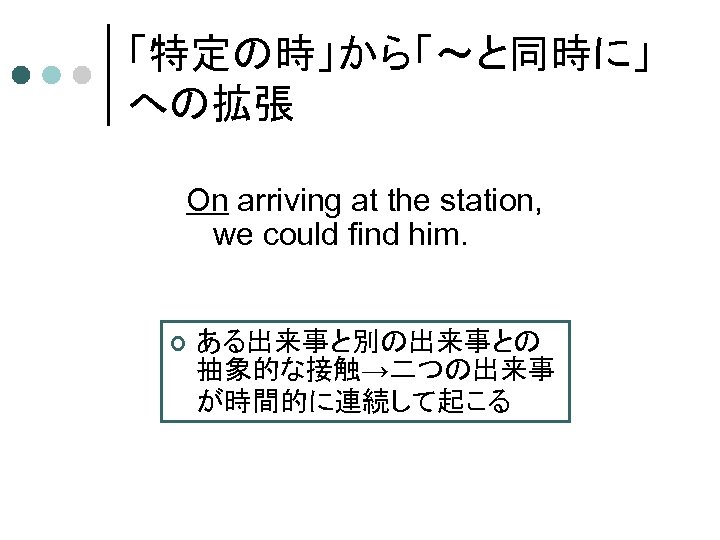
「特定の時」から「~と同時に」 への拡張 On arriving at the station, we could find him. ¢ ある出来事と別の出来事との 抽象的な接触→二つの出来事 が時間的に連続して起こる
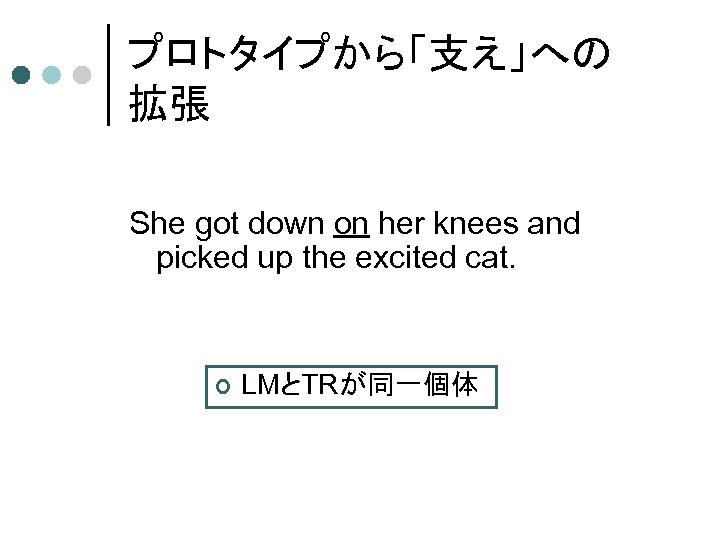
プロトタイプから「支え」への 拡張 She got down on her knees and picked up the excited cat. ¢ LMとTRが同一個体
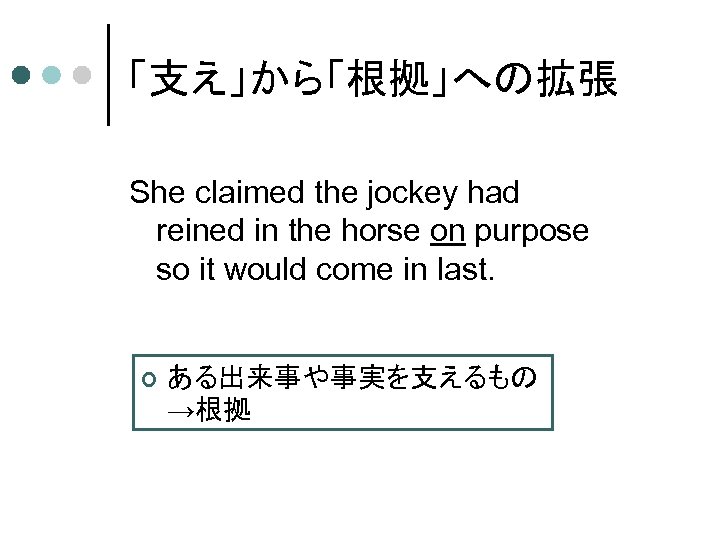
「支え」から「根拠」への拡張 She claimed the jockey had reined in the horse on purpose so it would come in last. ¢ ある出来事や事実を支えるもの →根拠
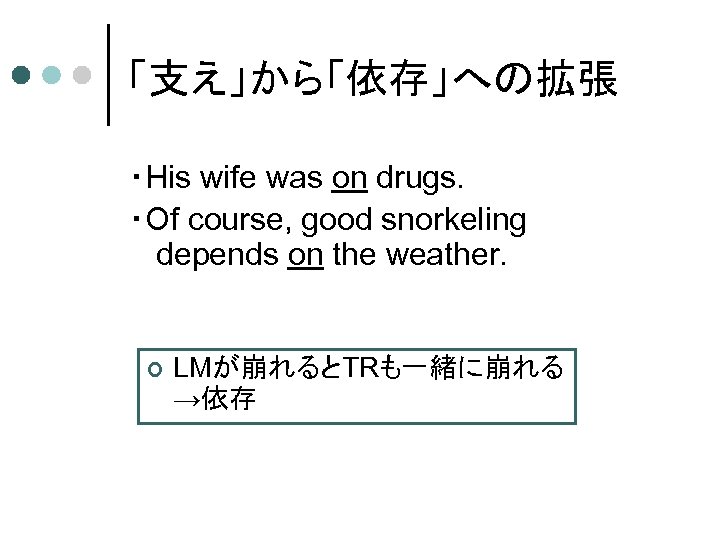
「支え」から「依存」への拡張 ・His wife was on drugs. ・Of course, good snorkeling depends on the weather. ¢ LMが崩れるとTRも一緒に崩れる →依存
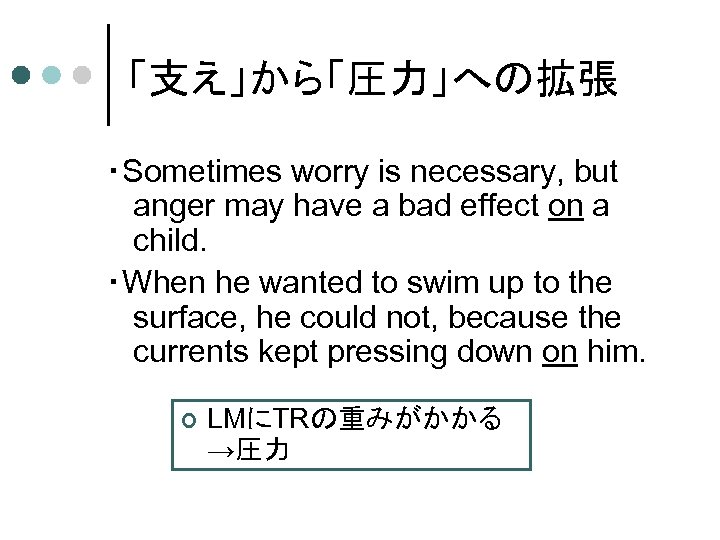
「支え」から「圧力」への拡張 ・Sometimes worry is necessary, but anger may have a bad effect on a child. ・When he wanted to swim up to the surface, he could not, because the currents kept pressing down on him. ¢ LMにTRの重みがかかる →圧力
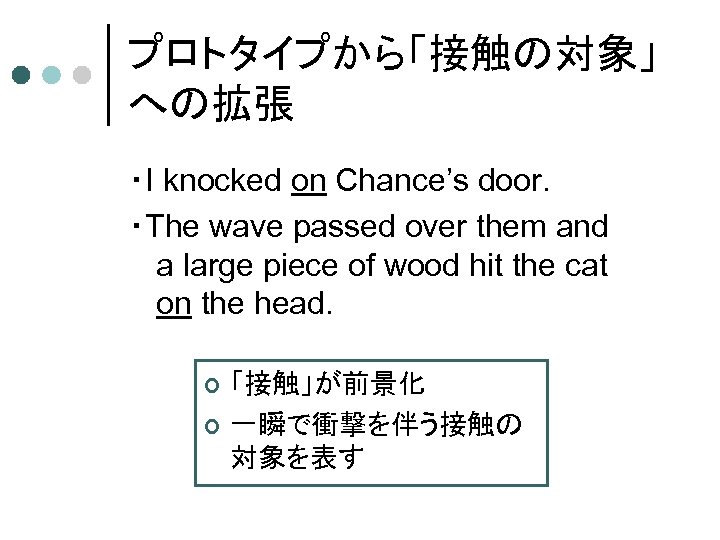
プロトタイプから「接触の対象」 への拡張 ・I knocked on Chance’s door. ・The wave passed over them and a large piece of wood hit the cat on the head. ¢ ¢ 「接触」が前景化 一瞬で衝撃を伴う接触の 対象を表す
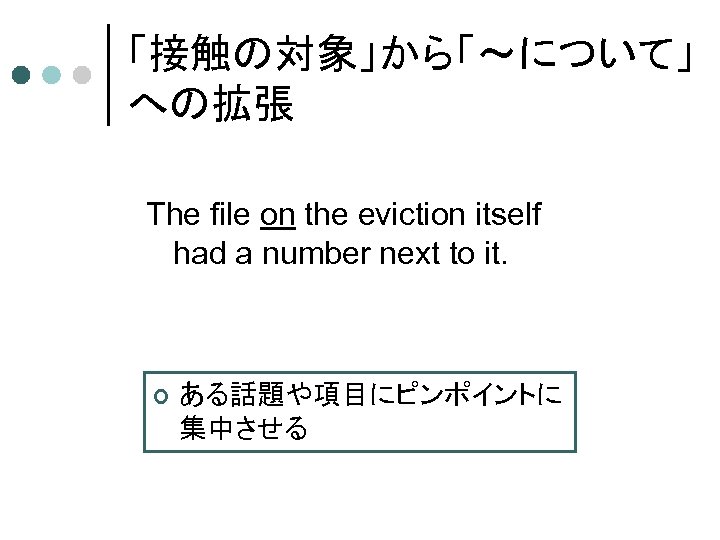
「接触の対象」から「~について」 への拡張 The file on the eviction itself had a number next to it. ¢ ある話題や項目にピンポイントに 集中させる
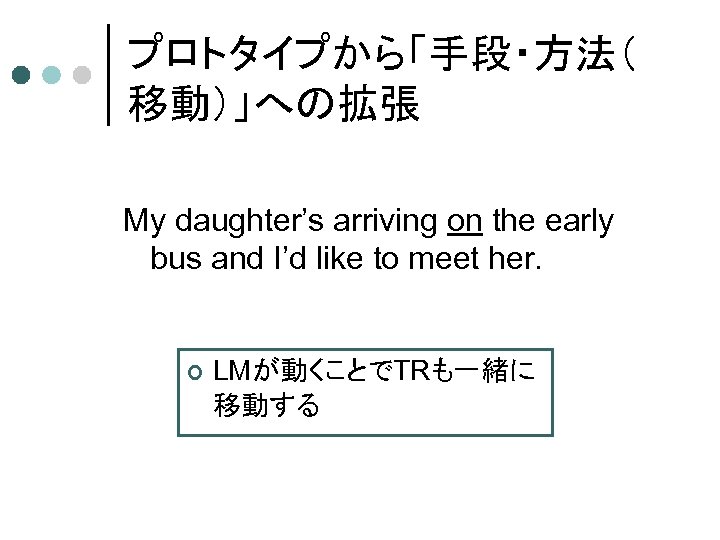
プロトタイプから「手段・方法( 移動)」への拡張 My daughter’s arriving on the early bus and I’d like to meet her. ¢ LMが動くことでTRも一緒に 移動する
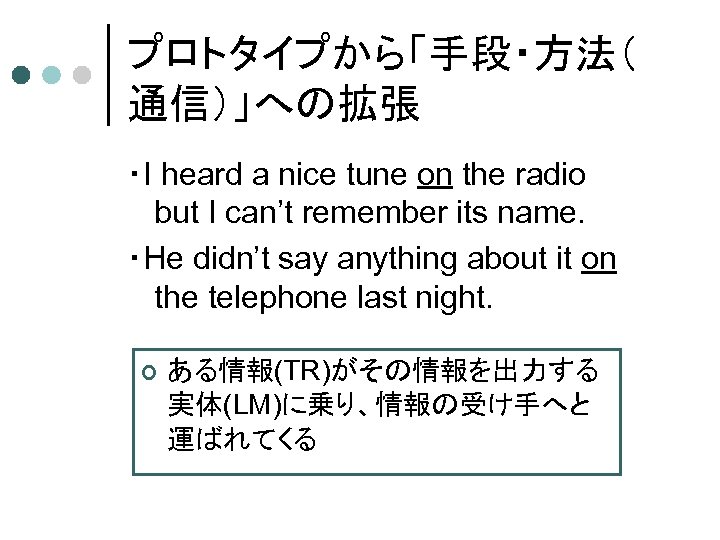
プロトタイプから「手段・方法( 通信)」への拡張 ・I heard a nice tune on the radio but I can’t remember its name. ・He didn’t say anything about it on the telephone last night. ¢ ある情報(TR)がその情報を出力する 実体(LM)に乗り、情報の受け手へと 運ばれてくる
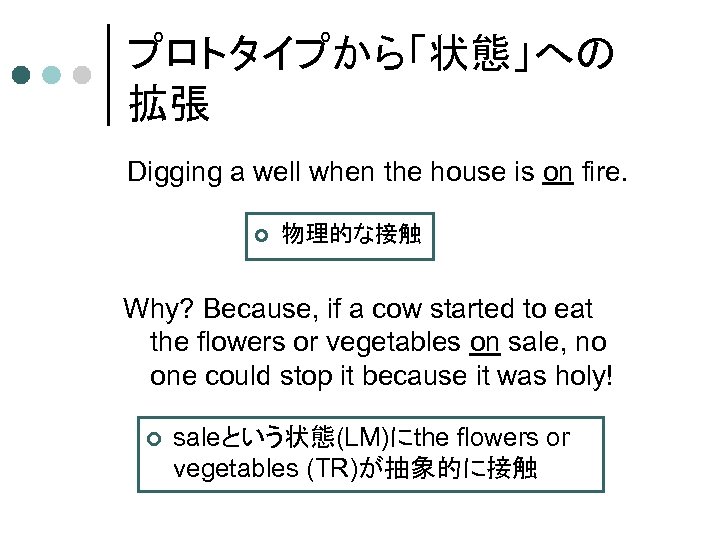
プロトタイプから「状態」への 拡張 Digging a well when the house is on fire. ¢ 物理的な接触 Why? Because, if a cow started to eat the flowers or vegetables on sale, no one could stop it because it was holy! ¢ saleという状態(LM)にthe flowers or vegetables (TR)が抽象的に接触
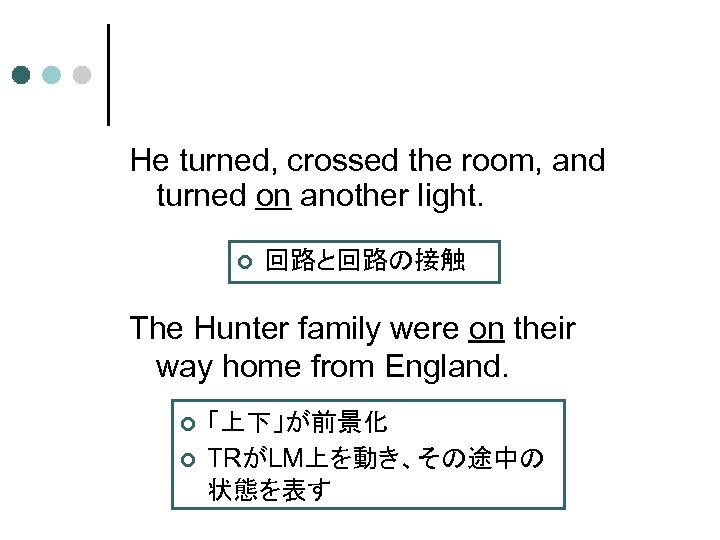
He turned, crossed the room, and turned on another light. ¢ 回路と回路の接触 The Hunter family were on their way home from England. ¢ ¢ 「上下」が前景化 TRがLM上を動き、その途中の 状態を表す
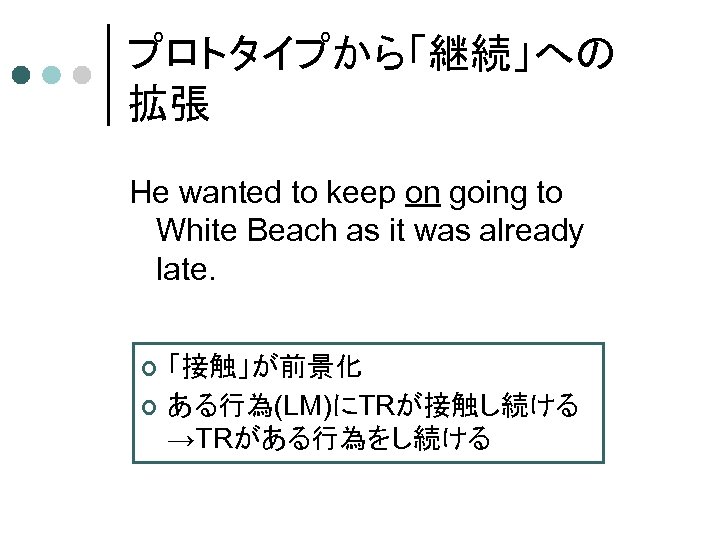
プロトタイプから「継続」への 拡張 He wanted to keep on going to White Beach as it was already late. ¢ ¢ 「接触」が前景化 ある行為(LM)にTRが接触し続ける →TRがある行為をし続ける
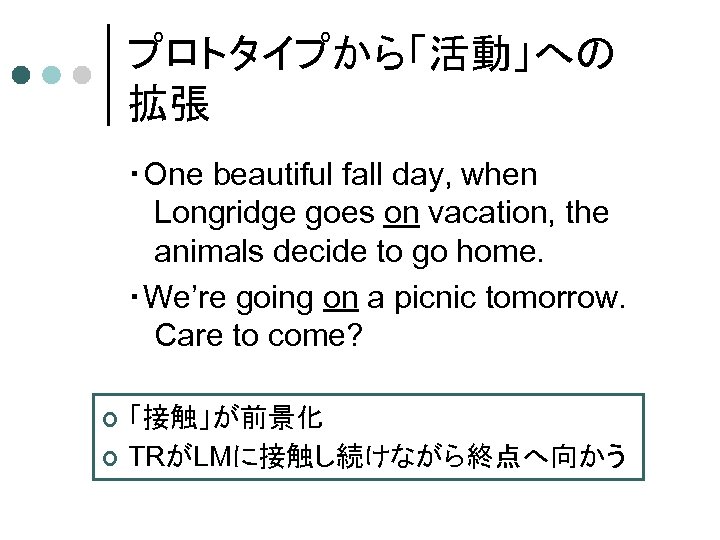
プロトタイプから「活動」への 拡張 ・One beautiful fall day, when Longridge goes on vacation, the animals decide to go home. ・We’re going on a picnic tomorrow. Care to come? ¢ ¢ 「接触」が前景化 TRがLMに接触し続けながら終点へ向かう
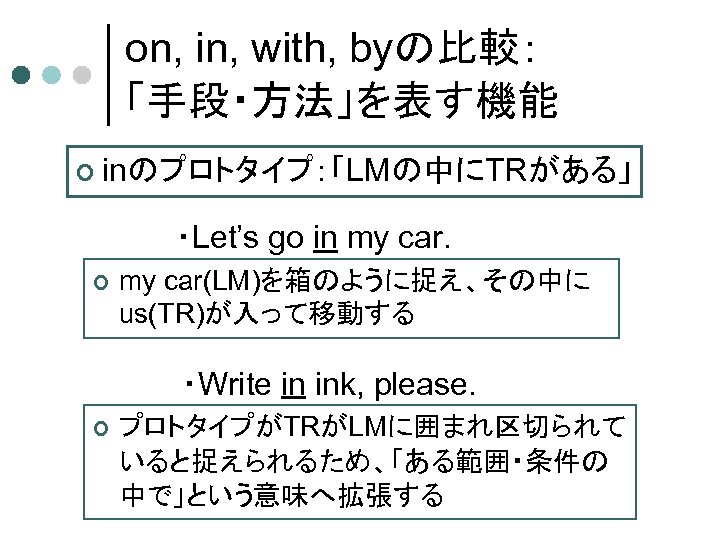
on, in, with, byの比較: 「手段・方法」を表す機能 ¢ inのプロトタイプ:「LMの中にTRがある」 ・Let’s go in my car. ¢ my car(LM)を箱のように捉え、その中に us(TR)が入って移動する ・Write in ink, please. ¢ プロトタイプがTRがLMに囲まれ区切られて いると捉えられるため、「ある範囲・条件の 中で」という意味へ拡張する

¢ withのプロトタイプ:「TRと共に」 ・Write with a black pen, please. ・We cannot buy happiness with money. ¢ 行為者が道具と共に ある行為をする
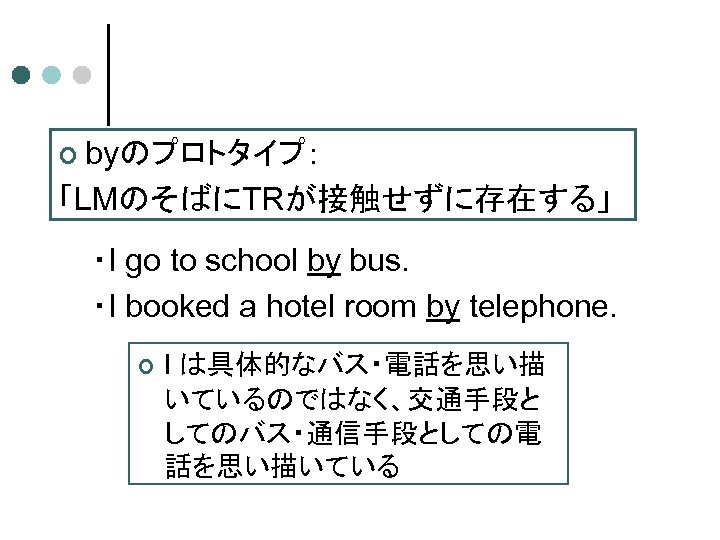
¢ byのプロトタイプ: 「LMのそばにTRが接触せずに存在する」 ・I go to school by bus. ・I booked a hotel room by telephone. ¢ I は具体的なバス・電話を思い描 いているのではなく、交通手段と してのバス・通信手段としての電 話を思い描いている
参考文献 ¢ ¢ ¢ ¢ 石井隆之 2002 『前置詞マスター教本』 ベレ出版 大西泰斗 マクベイ, ポール 1996 『ネイティブスピーカーの前置 詞』 研究社出版 大西泰斗 マクベイ, ポール 2006 『ハートで感じる英文法』 日 本放送出版協会 尾崎哲夫 2005 『英語の冠詞・前置詞完全マスターブック』 ダ イヤモンド社 河上誓作 1996 『認知言語学の基礎』 研究社出版 宗宮喜代子 石井康毅 鈴木梓 大谷直輝 2007 『道を歩けば 前置詞がわかる』 くろしお出版 多岐川恵理 2005 『つい前置詞の使い方に迷ってしまうあなた に』 明日香出版社
¢ ¢ ¢ 刀祢雅彦 2005 『前置詞がわかれば英語がわかる』 ジャパン タイムズ 中右実教授還暦記念論文集編集委員会編 2001 『意味と形の インターフェイス 上巻』 松本曜編 2003 『シリーズ認知言語学入門<第3巻>認知意味 論』 大修館書店 山梨正明他編 2008 『認知言語学論考 № 7』 ひつじ書房 リー, ディヴィッド著 宮浦国江訳 2006 『実例で学ぶ認知言語 学』 大修館書店 ロス典子 タック, モーリス 1999 『ネイティブの感覚で前置詞が 使える』 ベレ出版
¢ ¢ Lee, David. 2001. Cognitive Linguistics : an introduction. Oxford University Press Lindstromberg, Seth. 1997. English Prepositions Explained. John Benjamins Publishing Company
Скачать презентацию 英語前置詞onの 多義構造 田口舞 2010年2月4日 2010 Mai
b74efa55439b9d2f69f61d36cdbb0a0a.ppt