 Скачать презентацию 網路與通信協定 陳彥錚 Yen-Cheng Chen ycchen ncnu edu tw http
0b5e63b6933ee687569303dea4d6c86c.ppt
- Количество слайдов: 72



網路與通信協定 陳彥錚 (Yen-Cheng Chen) ycchen@ncnu. edu. tw http: //www. ncnu. edu. tw/~ycchen/
內容大綱 o 1. 網路基本認識 o 2. OSI 7層參考模型 o 3. Internet 通信協定集 o 4. 網路設備 o 5. 網管相關通信協定
1. 網路基本認識 o o 網路分類 網路技術 網路傳輸介質 網路設備
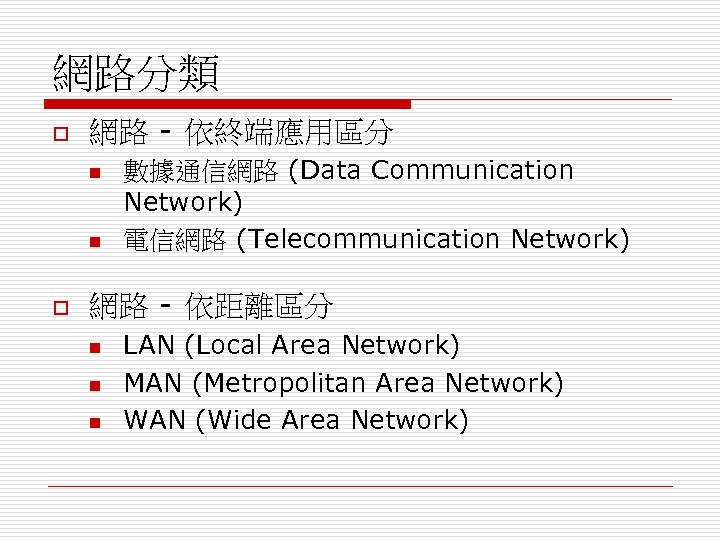
網路分類 o 網路 - 依終端應用區分 n n o 數據通信網路 (Data Communication Network) 電信網路 (Telecommunication Network) 網路 - 依距離區分 n n n LAN (Local Area Network) MAN (Metropolitan Area Network) WAN (Wide Area Network)
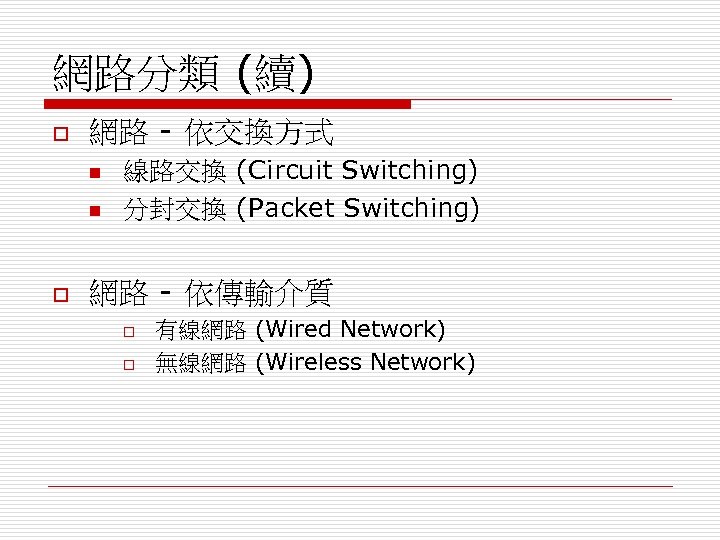
網路分類 (續) o 網路 - 依交換方式 n n o 線路交換 (Circuit Switching) 分封交換 (Packet Switching) 網路 - 依傳輸介質 o o 有線網路 (Wired Network) 無線網路 (Wireless Network)
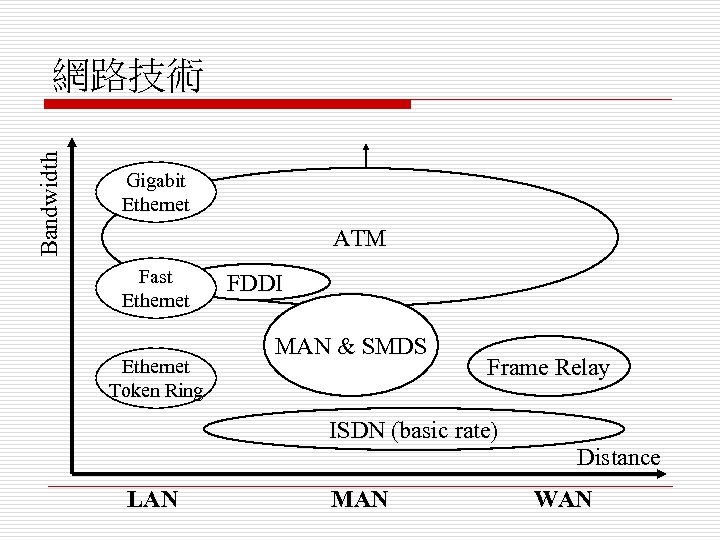
Bandwidth 網路技術 Gigabit Ethernet ATM Fast Ethernet Token Ring FDDI MAN & SMDS Frame Relay ISDN (basic rate) LAN MAN Distance WAN
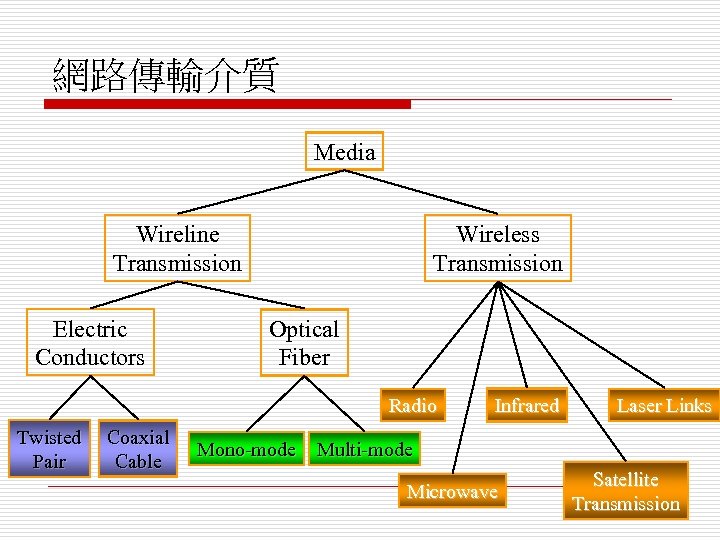
網路傳輸介質 Media Wireline Transmission Electric Conductors Wireless Transmission Optical Fiber Radio Twisted Pair Coaxial Cable Mono-mode Infrared Laser Links Multi-mode Microwave Satellite Transmission
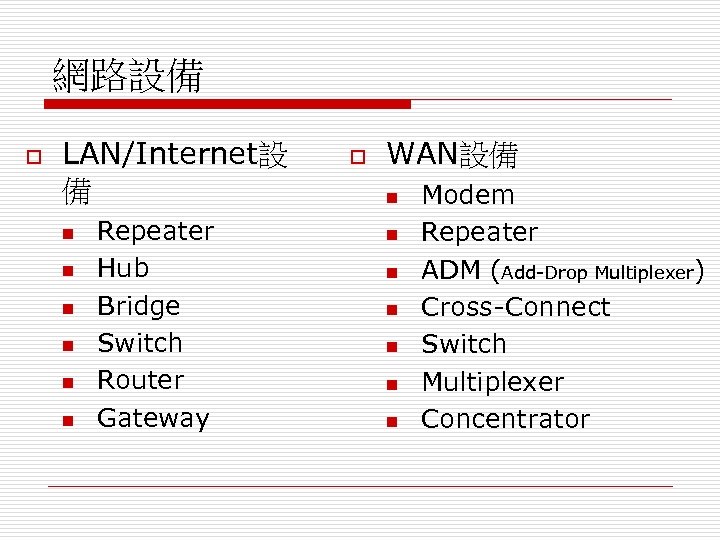
網路設備 o LAN/Internet設 備 n n n Repeater Hub Bridge Switch Router Gateway o WAN設備 n n n n Modem Repeater ADM (Add-Drop Multiplexer) Cross-Connect Switch Multiplexer Concentrator
2. OSI 7層參考模型 o OSI Model n n OSI - Open Systems Interconnection 由國際標準組織ISO (International Standard Organization)制定之網路分層架構標準。 OSI參考模型,從實體傳輸介質至上層網路應用, 由低而高共包括七個層級 OSI之網路標準,依循OSI參考模型之七層級制定, 以便清楚完整規範網路應有之功能元件以及必須 遵守的準則。
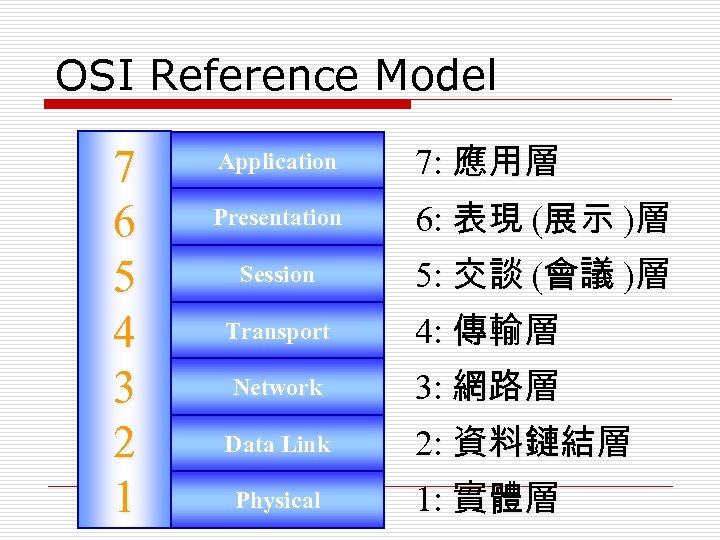
OSI Reference Model 7 6 5 4 3 2 1 Application 7: 應用層 Presentation 6: 表現 (展示 )層 Session 5: 交談 (會議 )層 Transport 4: 傳輸層 Network 3: 網路層 Data Link Physical 2: 資料鏈結層 1: 實體層
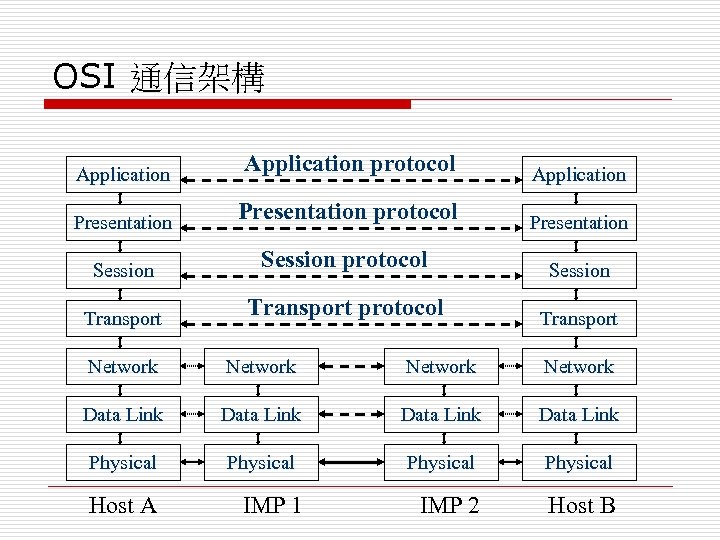
OSI 通信架構 Application Presentation Session Transport Application protocol Presentation protocol Session protocol Transport protocol Application Presentation Session Transport Network Data Link Physical IMP 2 Host B Host A IMP 1
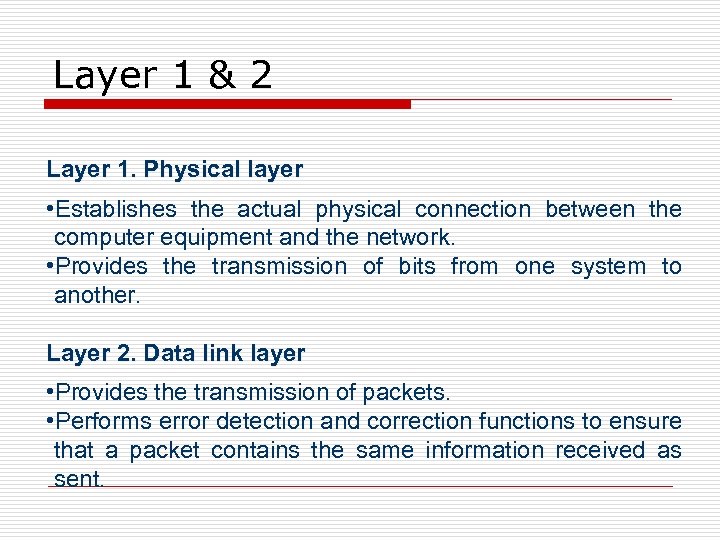
Layer 1 & 2 Layer 1. Physical layer • Establishes the actual physical connection between the computer equipment and the network. • Provides the transmission of bits from one system to another. Layer 2. Data link layer • Provides the transmission of packets. • Performs error detection and correction functions to ensure that a packet contains the same information received as sent.
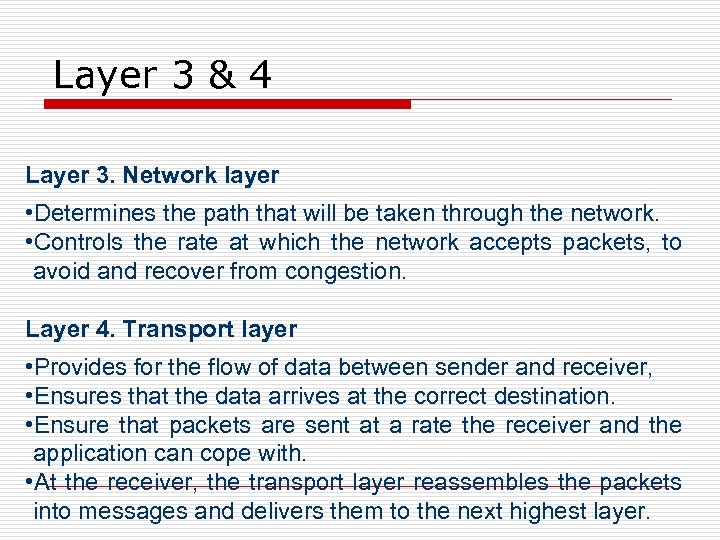
Layer 3 & 4 Layer 3. Network layer • Determines the path that will be taken through the network. • Controls the rate at which the network accepts packets, to avoid and recover from congestion. Layer 4. Transport layer • Provides for the flow of data between sender and receiver, • Ensures that the data arrives at the correct destination. • Ensure that packets are sent at a rate the receiver and the application can cope with. • At the receiver, the transport layer reassembles the packets into messages and delivers them to the next highest layer.
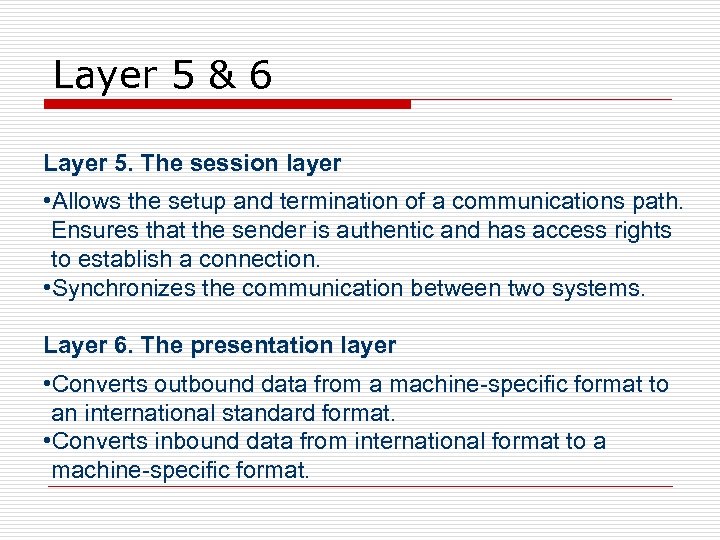
Layer 5 & 6 Layer 5. The session layer • Allows the setup and termination of a communications path. Ensures that the sender is authentic and has access rights to establish a connection. • Synchronizes the communication between two systems. Layer 6. The presentation layer • Converts outbound data from a machine-specific format to an international standard format. • Converts inbound data from international format to a machine-specific format.
Layer 7. The application layer • Provides the software for network services, such as file transfer, remote login, remote execution, e-mail, etc. • Provides the interface between user programs and the network.
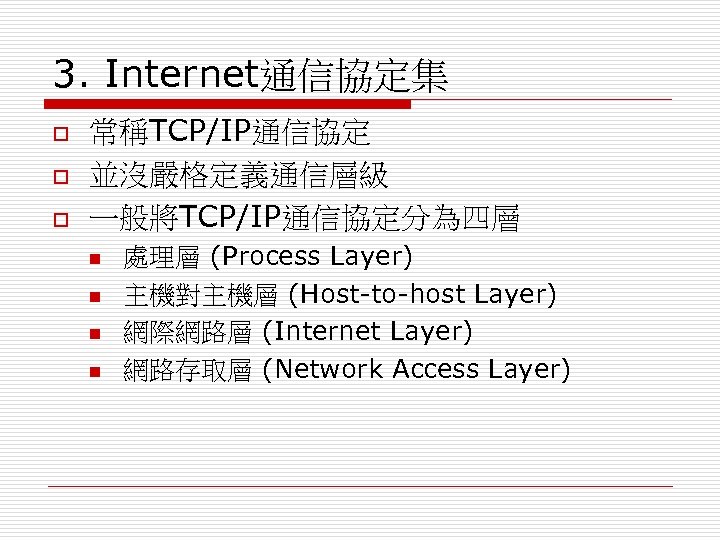
3. Internet通信協定集 o o o 常稱TCP/IP通信協定 並沒嚴格定義通信層級 一般將TCP/IP通信協定分為四層 n n 處理層 (Process Layer) 主機對主機層 (Host-to-host Layer) 網際網路層 (Internet Layer) 網路存取層 (Network Access Layer)
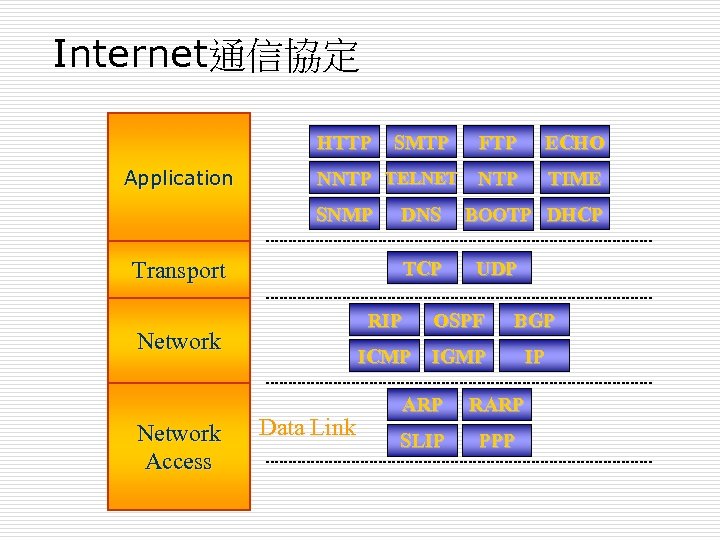
Internet通信協定 HTTP Application FTP ECHO NNTP TELNET NTP TIME SNMP Transport DNS TCP RIP Network Access SMTP BOOTP DHCP UDP OSPF BGP ICMP IGMP Data Link IP ARP RARP SLIP PPP
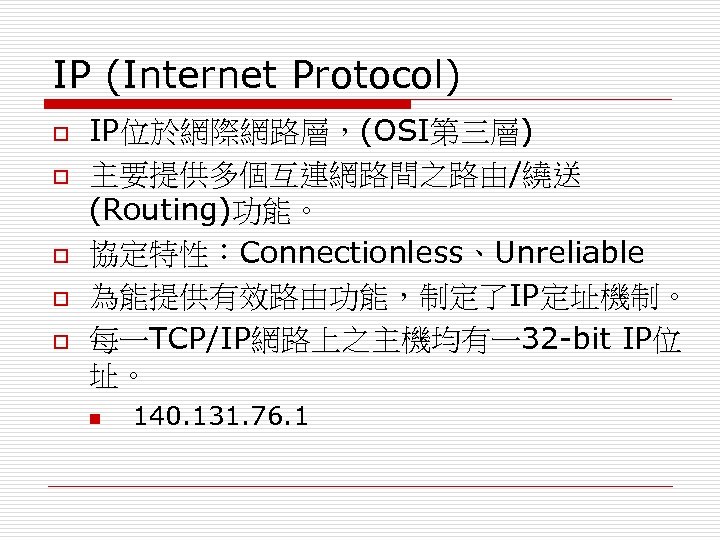
IP (Internet Protocol) o o o IP位於網際網路層,(OSI第三層) 主要提供多個互連網路間之路由/繞送 (Routing)功能。 協定特性:Connectionless、Unreliable 為能提供有效路由功能,制定了IP定址機制。 每一TCP/IP網路上之主機均有一32 -bit IP位 址。 n 140. 131. 76. 1
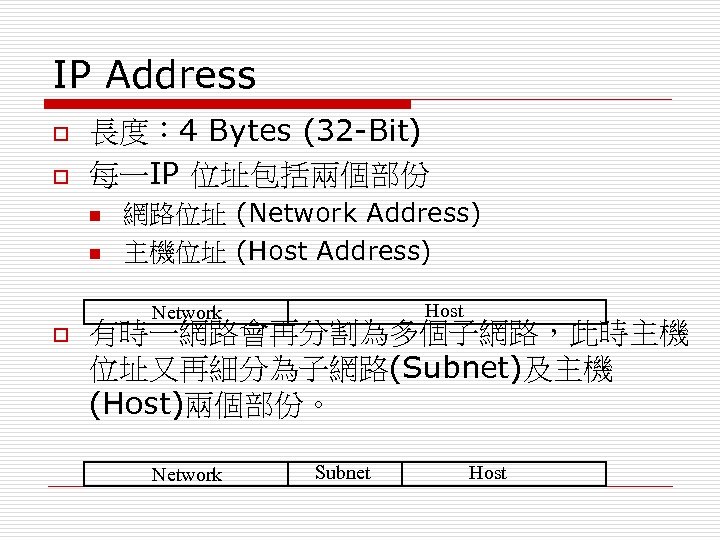
IP Address o o 長度: 4 Bytes (32 -Bit) 每一IP 位址包括兩個部份 n n 網路位址 (Network Address) 主機位址 (Host Address) Host Network o 有時一網路會再分割為多個子網路,此時主機 位址又再細分為子網路(Subnet)及主機 (Host)兩個部份。 Network Subnet Host
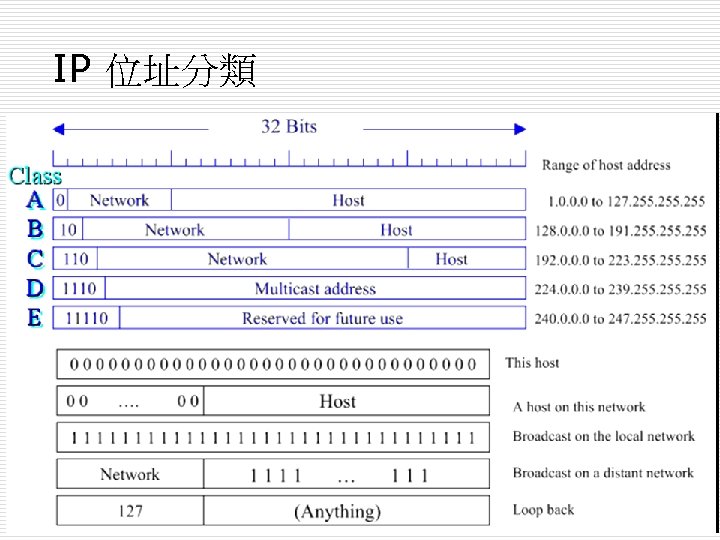
IP 位址分類
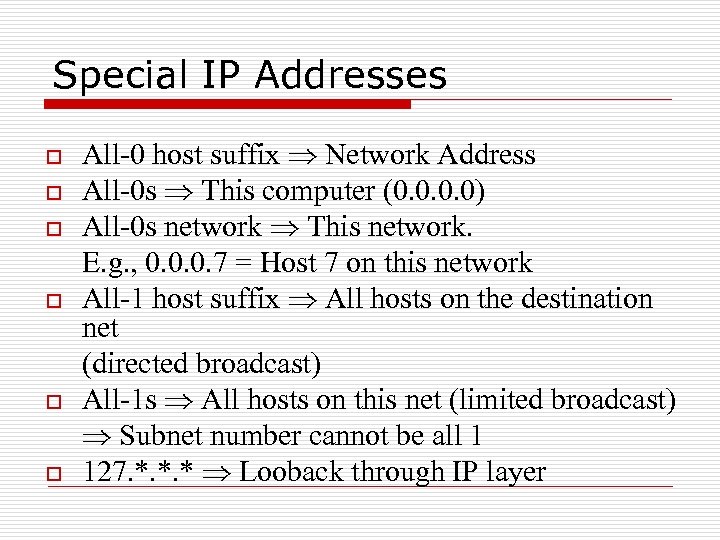
Special IP Addresses o o o All-0 host suffix Þ Network Address All-0 s Þ This computer (0. 0) All-0 s network Þ This network. E. g. , 0. 0. 0. 7 = Host 7 on this network All-1 host suffix Þ All hosts on the destination net (directed broadcast) All-1 s Þ All hosts on this net (limited broadcast) Þ Subnet number cannot be all 1 127. *. *. * Þ Looback through IP layer
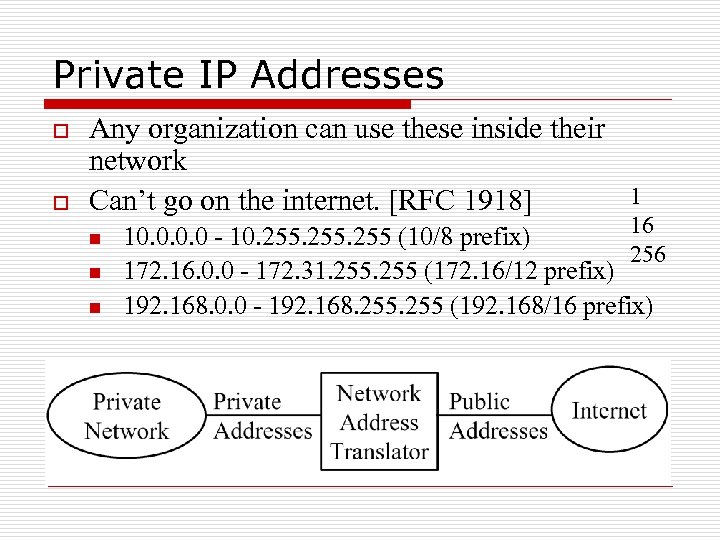
Private IP Addresses o o Any organization can use these inside their network Can’t go on the internet. [RFC 1918] n n n 1 16 256 10. 0 - 10. 255 (10/8 prefix) 172. 16. 0. 0 - 172. 31. 255 (172. 16/12 prefix) 192. 168. 0. 0 - 192. 168. 255 (192. 168/16 prefix)
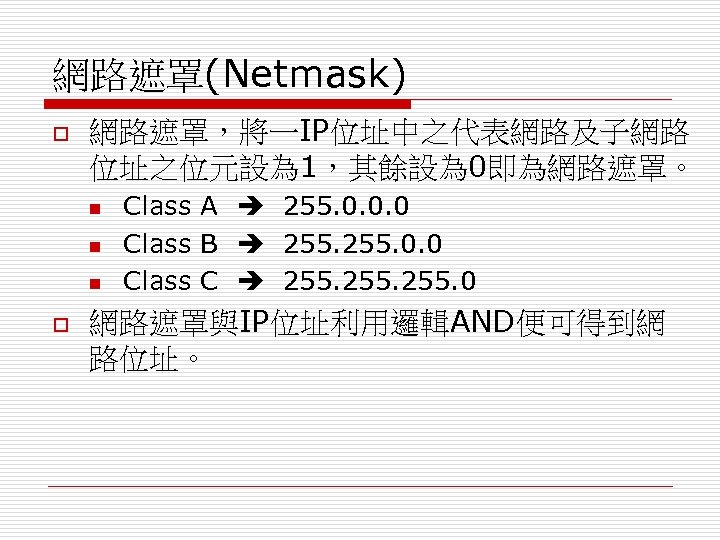
網路遮罩(Netmask) o 網路遮罩,將一IP位址中之代表網路及子網路 位址之位元設為 1,其餘設為 0即為網路遮罩。 n n n o Class A 255. 0. 0. 0 Class B 255. 0. 0 Class C 255. 0 網路遮罩與IP位址利用邏輯AND便可得到網 路位址。
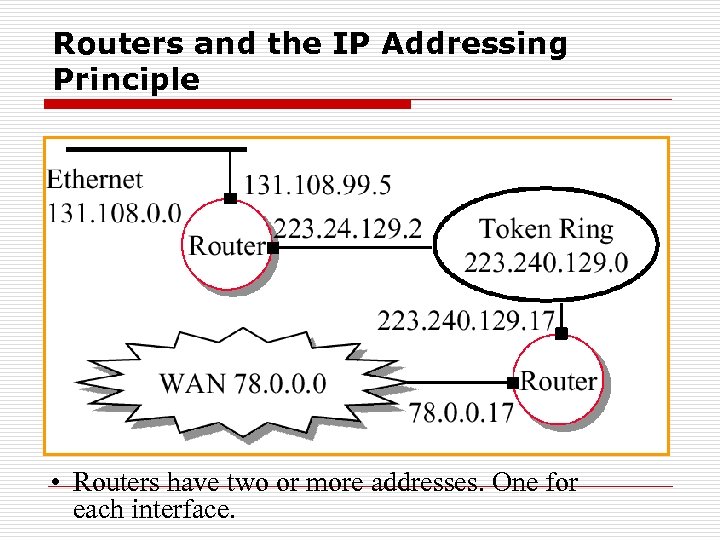
Routers and the IP Addressing Principle • Routers have two or more addresses. One for each interface.
![Routing Table IF ((Mask[i] & Destination Addr) = = Destination[i]) Forward to Next. Hop[i]](https://present5.com/presentation/0b5e63b6933ee687569303dea4d6c86c/image-26.jpg "Routing Table IF ((Mask[i] & Destination Addr) = = Destination[i]) Forward to Next. Hop[i]")
Routing Table IF ((Mask[i] & Destination Addr) = = Destination[i]) Forward to Next. Hop[i]
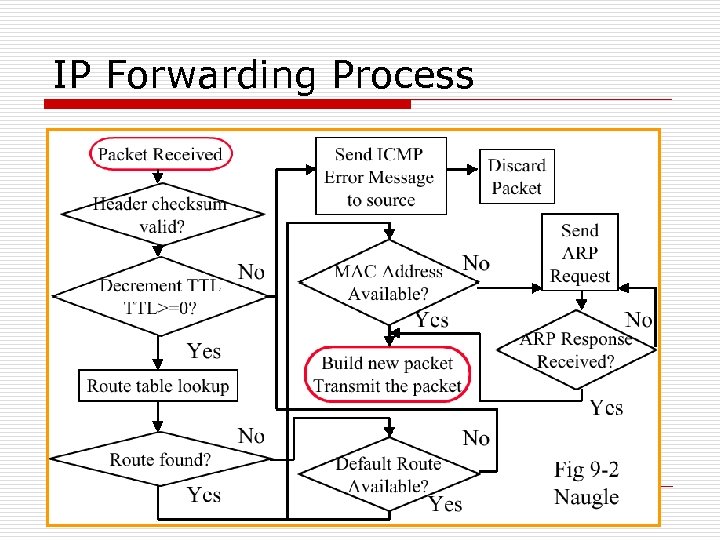
IP Forwarding Process
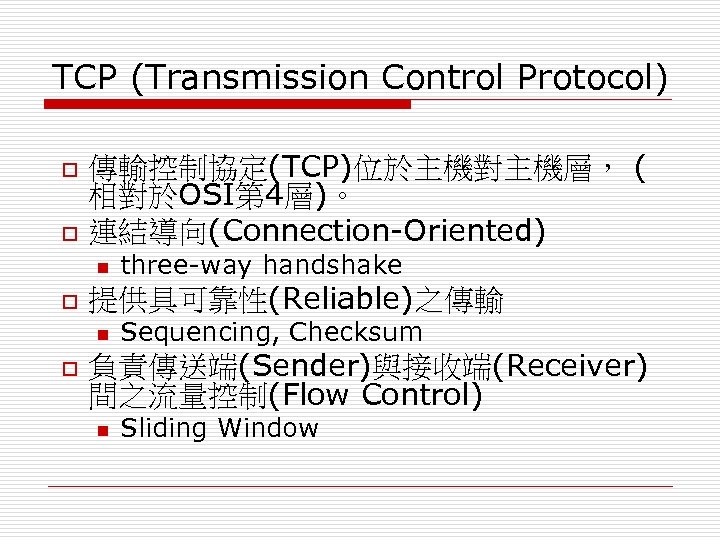
TCP (Transmission Control Protocol) o o 傳輸控制協定(TCP)位於主機對主機層, ( 相對於OSI第 4層)。 連結導向(Connection-Oriented) n o 提供具可靠性(Reliable)之傳輸 n o three-way handshake Sequencing, Checksum 負責傳送端(Sender)與接收端(Receiver) 間之流量控制(Flow Control) n Sliding Window
UDP (User Datagram Protocol) o o o UDP位於主機對主機層, 相對於OSI第 4層。 協定特性:Connectionless、Unreliable 提供一簡單快速的主機間資金傳送機制。
通信埠(Port) o o 每個主機之應用/處理層上可能有各種不同的 應用、服務、或資源,每當一主機收到由網路 上傳來之資料時,傳輸層必須提供一能辨別網 路應用服務之機制,以便將資料分派至正確的 處理程式。 每一上層通信應用服務或程式對應一唯一的 TCP或UDP通信埠號(Port Number)。
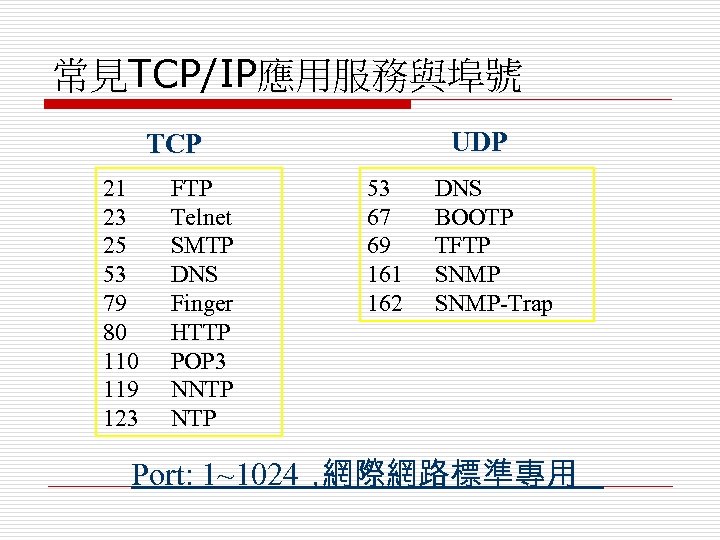
常見TCP/IP應用服務與埠號 UDP TCP 21 23 25 53 79 80 119 123 FTP Telnet SMTP DNS Finger HTTP POP 3 NNTP 53 67 69 161 162 DNS BOOTP TFTP SNMP-Trap Port: 1~1024, 網際網路標準專用
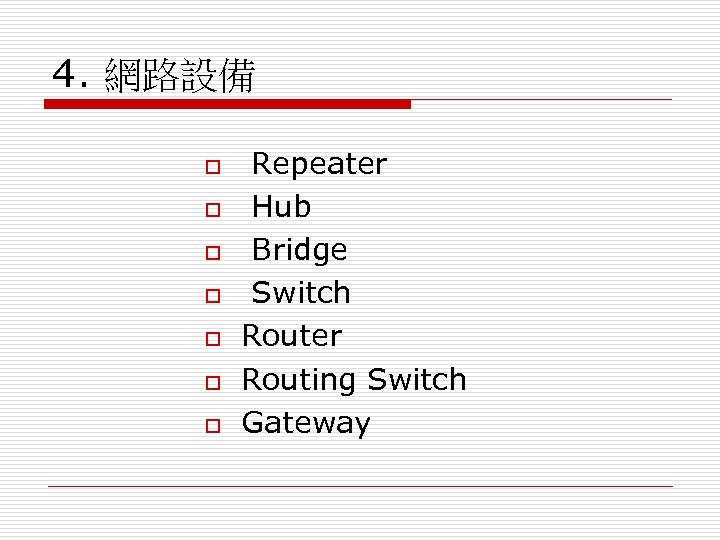
4. 網路設備 o o o o Repeater Hub Bridge Switch Router Routing Switch Gateway
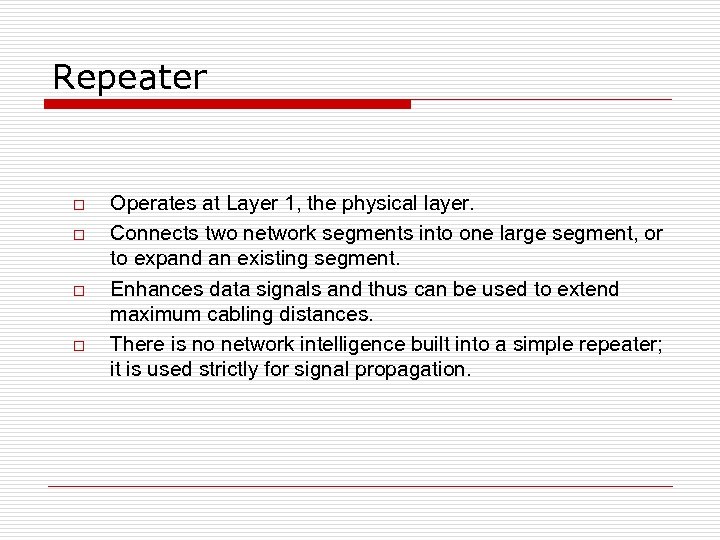
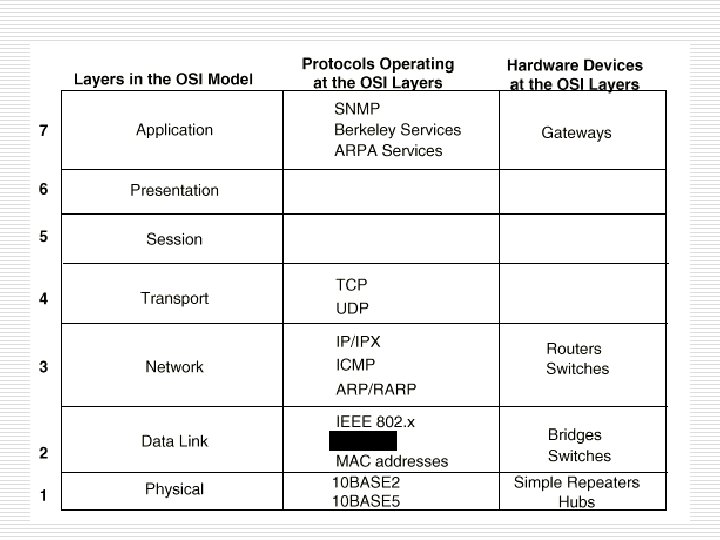
Repeater o o Operates at Layer 1, the physical layer. Connects two network segments into one large segment, or to expand an existing segment. Enhances data signals and thus can be used to extend maximum cabling distances. There is no network intelligence built into a simple repeater; it is used strictly for signal propagation.
Hub o o o Operates at Layer 1, the physical layer. Simply a multiport repeater. Can be used to increase overall network size and number of nodes on a single segment. Can isolate faults within the subnet. Allows you to add stations to a segment without disrupting the entire network.
Bridge o o Operates at Layer 2, the data link layer. Allows networks with different physical signaling, but with compatible data link addressing schemes, to communicate. Helps reduce traffic on a backbone LAN by filtering any information coming from one segment to another that does not need to be forwarded through the backbone. A common use for a bridge is to allow users on an Ethernet LAN and a Token Ring LAN to communicate with each other.
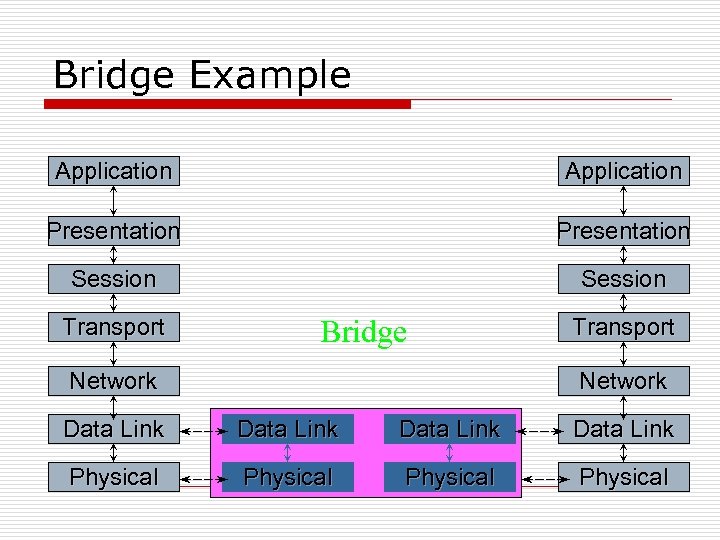
Bridge Example Application Presentation Session Transport Bridge Network Transport Network Data Link Physical
Switch o o o Operates at Layer 2, the data link layer. Dispatches data to its destination, which it determines from the packet’s lower-layer media access control (MAC) address. Can limit traffic, and does not understand network protocols.
Router o o o Operates at Layer 3, the network layer. Connects two networks with different technologies, and provides an intelligent means of transferring packets from one network to the other. Also forwards traffic among multiple hubs and bridges.
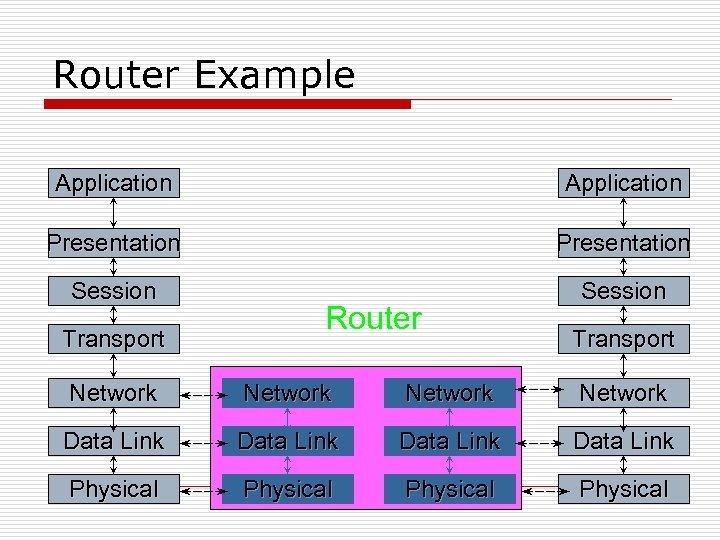
Router Example Application Presentation Session Transport Router Transport Network Data Link Physical
Routing Switch o o o Operates at Layer 3, the network layer. Combines the intelligence of a router with the efficiency of a switch, Routing data at higher speeds.
Gateway o o o Operates at Layer 7, the application layer. Can encompass all seven of the OSI model layers. A computing system that can be programmed to do any number of intricate protocol conversions and negotiations, such as between IP and IPX.
5. 網管相關通信協定 o o o SNMPv 1 SNMPv 2 C ICMP ARP/RARP DHCP
SNMPv 1 (Simple Network Management Protocol version 1) FThe most common management protocol in use in data networks. FProvides a means of obtaining information from, and sending information to, network devices. FBased on the manager-agent model. FUses Management Information Bases (MIBs) to exchange information between the manager and the agent. FUsing the SNMP protocol, a manager can query and modify the status and configuration information on each managed device by making requests to the agent running on the managed device. FAll commands use the UDP/IP protocol, which means that communication between the manager and the agent is connectionless. FSNMP operates at Layer 7, the application layer.
SNMPv 2 C (version 2) FSNMPv 2 C includes the basic functions of SNMPv 1. FAdds w new message types, w standardized multi-protocol support, w enhanced security, w new MIB objects, and w a way to co-exist with SNMPv 1. FSNMPv 2 C is useful for the retrieval of large amounts of management information using fewer network resources.
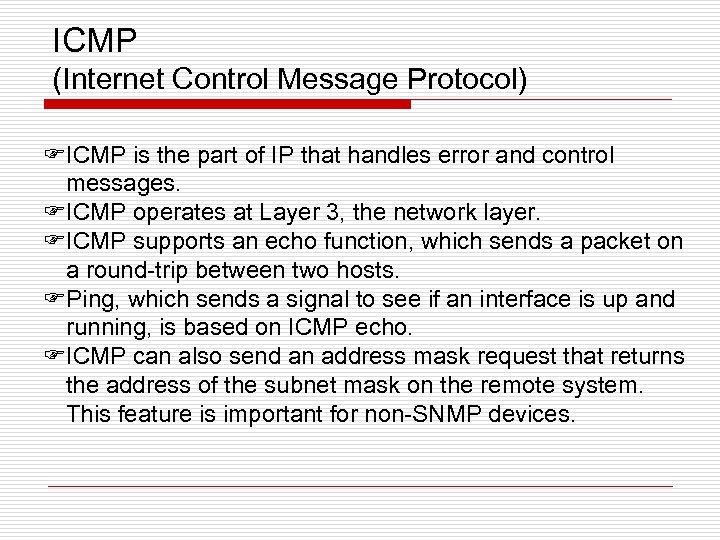
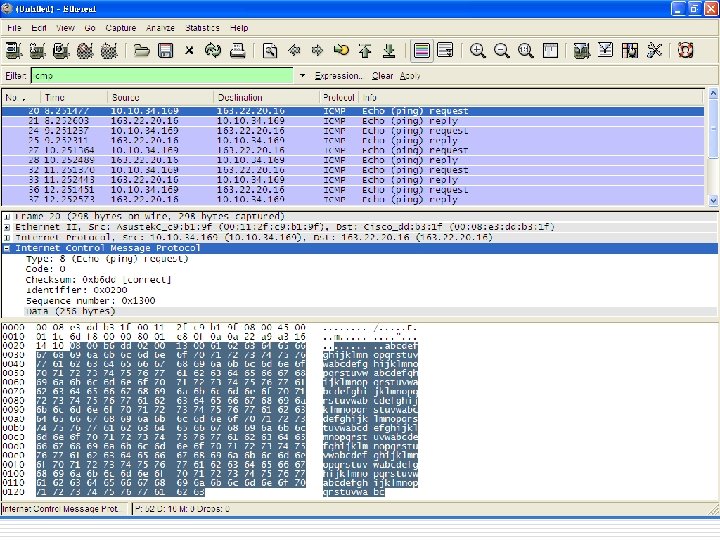
ICMP (Internet Control Message Protocol) FICMP is the part of IP that handles error and control messages. FICMP operates at Layer 3, the network layer. FICMP supports an echo function, which sends a packet on a round-trip between two hosts. FPing, which sends a signal to see if an interface is up and running, is based on ICMP echo. FICMP can also send an address mask request that returns the address of the subnet mask on the remote system. This feature is important for non-SNMP devices.
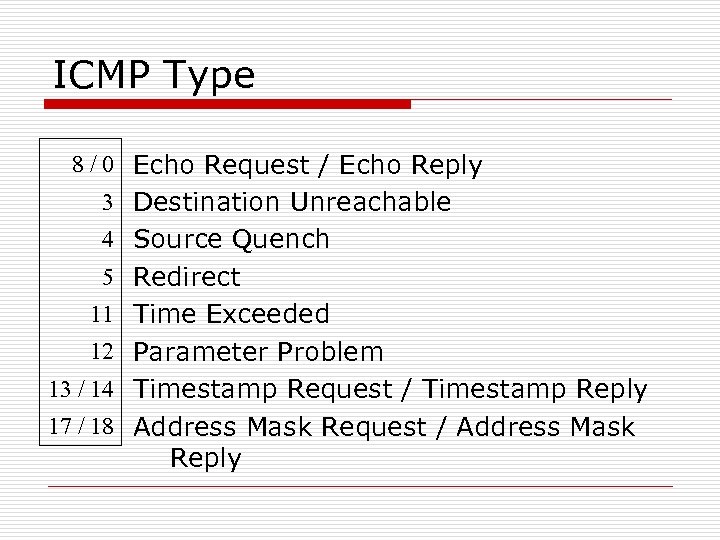
ICMP Type 8 / 0 Echo Request / Echo Reply 3 Destination Unreachable 4 Source Quench 5 Redirect 11 Time Exceeded 12 Parameter Problem 13 / 14 Timestamp Request / Timestamp Reply 17 / 18 Address Mask Request / Address Mask Reply
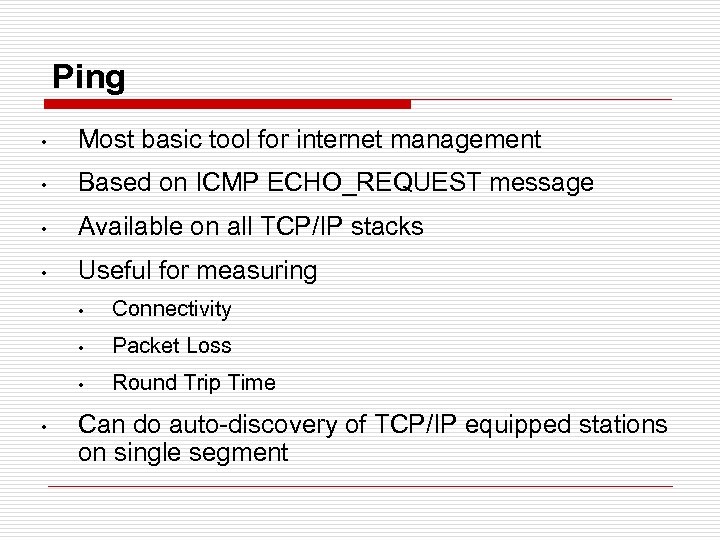
Ping • Most basic tool for internet management • Based on ICMP ECHO_REQUEST message • Available on all TCP/IP stacks • Useful for measuring • • Packet Loss • • Connectivity Round Trip Time Can do auto-discovery of TCP/IP equipped stations on single segment
![ping Usage: ping [-t] [-a] [-n count] [-l size] [-f] [-i TTL] [-v TOS]](https://present5.com/presentation/0b5e63b6933ee687569303dea4d6c86c/image-49.jpg "ping Usage: ping [-t] [-a] [-n count] [-l size] [-f] [-i TTL] [-v TOS]")
ping Usage: ping [-t] [-a] [-n count] [-l size] [-f] [-i TTL] [-v TOS] [-r count] [-s count] [[-j host-list] | [-k host-list]] [-w timeout] destination-list Options: -t -a -n count -l size -f -i TTL -v TOS -r count -s count -j host-list -k host-list -w timeout Ping the specified host until stopped. To see statistics and continue - type Control-Break; To stop - type Control-C. Resolve addresses to hostnames. Number of echo requests to send. Send buffer size. Set Don't Fragment flag in packet. Time To Live. Type Of Service. Record route for count hops. Timestamp for count hops. Loose source route along host-list. Strict source route along host-list. Timeout in milliseconds to wait for each reply.
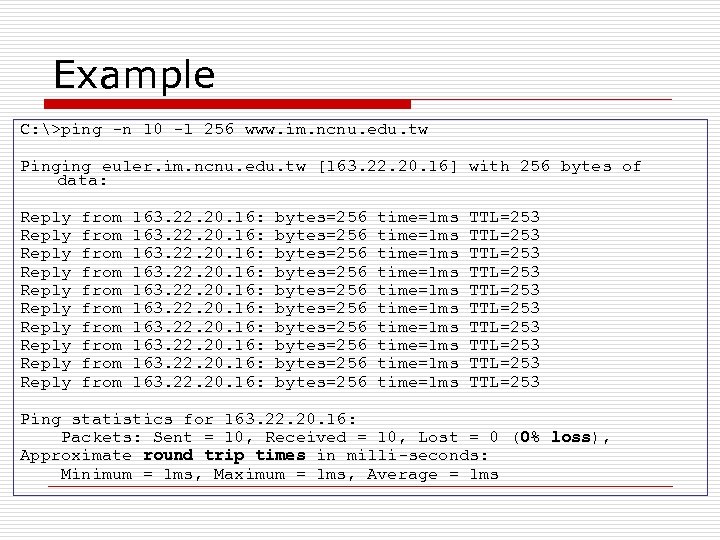
Example C: >ping -n 10 -l 256 www. im. ncnu. edu. tw Pinging euler. im. ncnu. edu. tw [163. 22. 20. 16] with 256 bytes of data: Reply Reply Reply from from from 163. 22. 20. 16: 163. 22. 20. 16: bytes=256 bytes=256 bytes=256 time=1 ms time=1 ms time=1 ms TTL=253 TTL=253 TTL=253 Ping statistics for 163. 22. 20. 16: Packets: Sent = 10, Received = 10, Lost = 0 (0% loss), loss Approximate round trip times in milli-seconds: Minimum = 1 ms, Maximum = 1 ms, Average = 1 ms
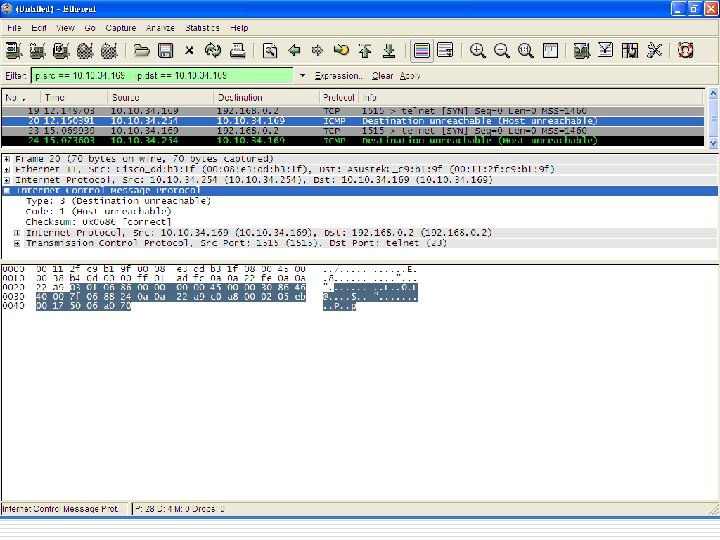
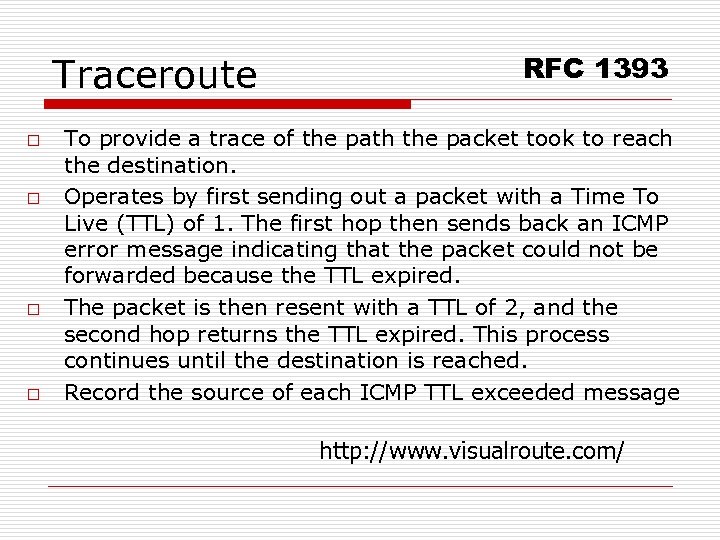
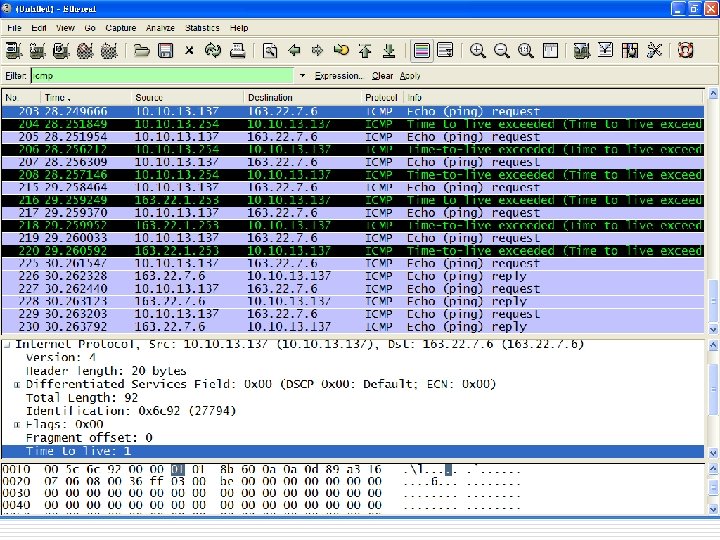
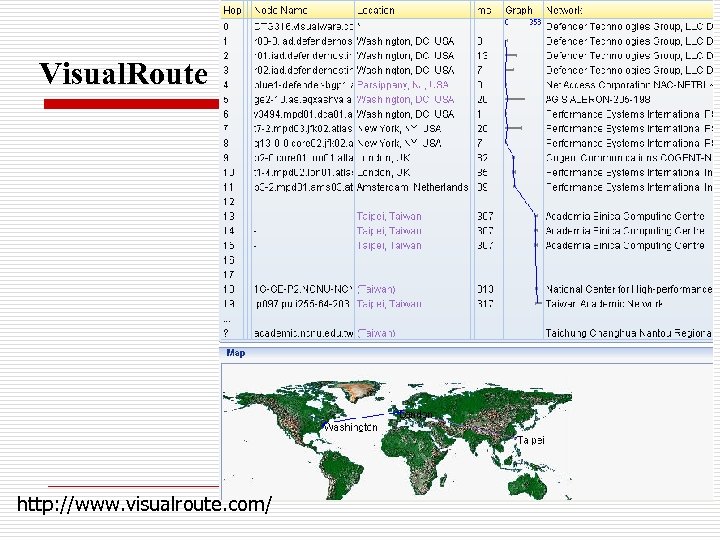
Traceroute o o RFC 1393 To provide a trace of the path the packet took to reach the destination. Operates by first sending out a packet with a Time To Live (TTL) of 1. The first hop then sends back an ICMP error message indicating that the packet could not be forwarded because the TTL expired. The packet is then resent with a TTL of 2, and the second hop returns the TTL expired. This process continues until the destination is reached. Record the source of each ICMP TTL exceeded message http: //www. visualroute. com/
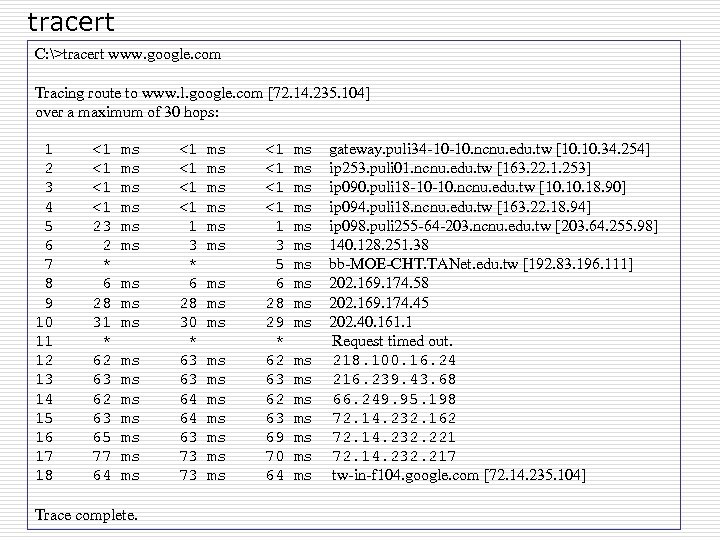
tracert C: >tracert www. google. com Tracing route to www. l. google. com [72. 14. 235. 104] over a maximum of 30 hops: 1 2 3 4 5 6 7 8 9 10 11 12 13 14 15 16 17 18 <1 <1 23 2 * 6 28 31 * 62 63 65 77 64 ms ms ms ms Trace complete. <1 <1 1 3 * 6 28 30 * 63 63 64 64 63 73 73 ms ms ms ms <1 <1 1 3 5 6 28 29 * 62 63 69 70 64 ms ms ms ms ms gateway. puli 34 -10 -10. ncnu. edu. tw [10. 34. 254] ip 253. puli 01. ncnu. edu. tw [163. 22. 1. 253] ip 090. puli 18 -10 -10. ncnu. edu. tw [10. 18. 90] ip 094. puli 18. ncnu. edu. tw [163. 22. 18. 94] ip 098. puli 255 -64 -203. ncnu. edu. tw [203. 64. 255. 98] 140. 128. 251. 38 bb-MOE-CHT. TANet. edu. tw [192. 83. 196. 111] 202. 169. 174. 58 202. 169. 174. 45 202. 40. 161. 1 Request timed out. 218. 100. 16. 24 216. 239. 43. 68 66. 249. 95. 198 72. 14. 232. 162 72. 14. 232. 221 72. 14. 232. 217 tw-in-f 104. google. com [72. 14. 235. 104]
Visual. Route http: //www. visualroute. com/
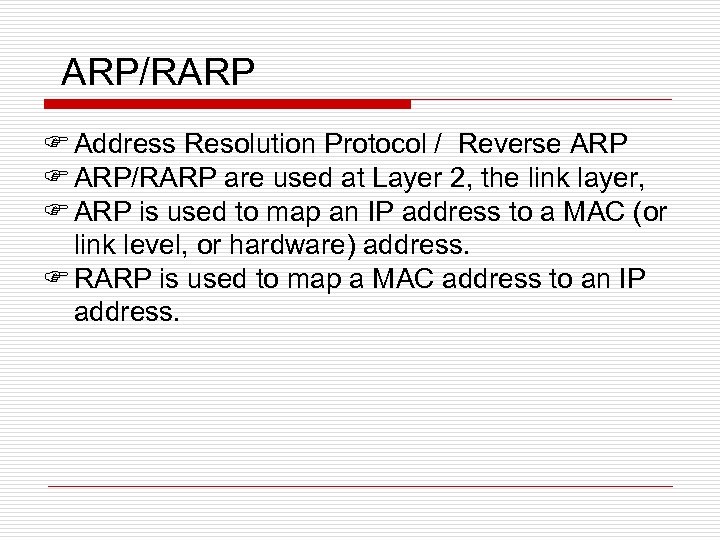
ARP/RARP F Address Resolution Protocol / Reverse ARP F ARP/RARP are used at Layer 2, the link layer, F ARP is used to map an IP address to a MAC (or link level, or hardware) address. F RARP is used to map a MAC address to an IP address.
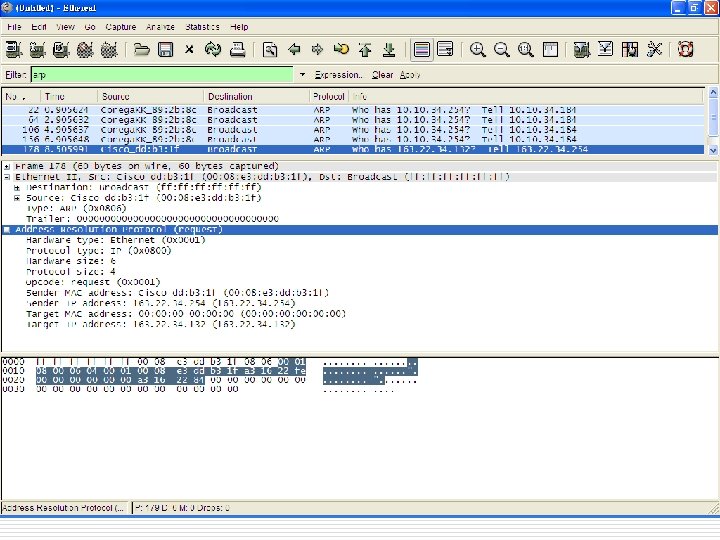
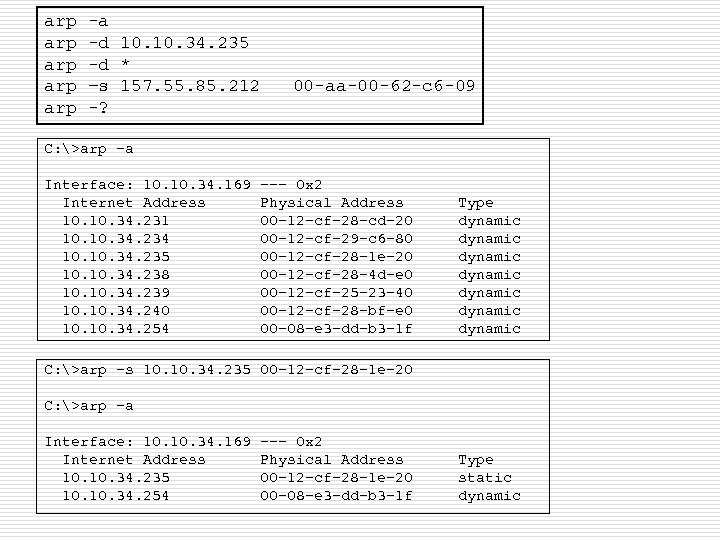
arp arp arp -a -d 10. 34. 235 -d * –s 157. 55. 85. 212 -? 00 -aa-00 -62 -c 6 -09 C: >arp -a Interface: 10. 34. 169 Internet Address 10. 34. 231 10. 34. 234 10. 34. 235 10. 34. 238 10. 34. 239 10. 34. 240 10. 34. 254 --- 0 x 2 Physical Address 00 -12 -cf-28 -cd-20 00 -12 -cf-29 -c 6 -80 00 -12 -cf-28 -1 e-20 00 -12 -cf-28 -4 d-e 0 00 -12 -cf-25 -23 -40 00 -12 -cf-28 -bf-e 0 00 -08 -e 3 -dd-b 3 -1 f Type dynamic dynamic C: >arp -s 10. 34. 235 00 -12 -cf-28 -1 e-20 C: >arp –a Interface: 10. 34. 169 Internet Address 10. 34. 235 10. 34. 254 --- 0 x 2 Physical Address 00 -12 -cf-28 -1 e-20 00 -08 -e 3 -dd-b 3 -1 f Type static dynamic
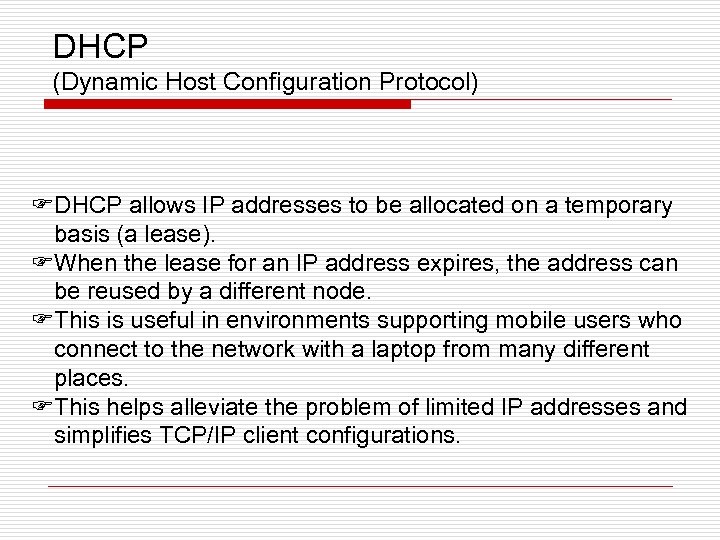
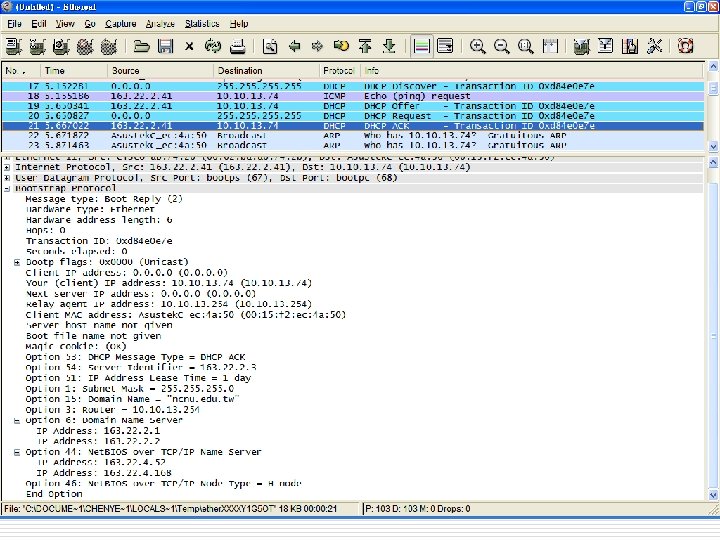
DHCP (Dynamic Host Configuration Protocol) FDHCP allows IP addresses to be allocated on a temporary basis (a lease). FWhen the lease for an IP address expires, the address can be reused by a different node. FThis is useful in environments supporting mobile users who connect to the network with a laptop from many different places. FThis helps alleviate the problem of limited IP addresses and simplifies TCP/IP client configurations.
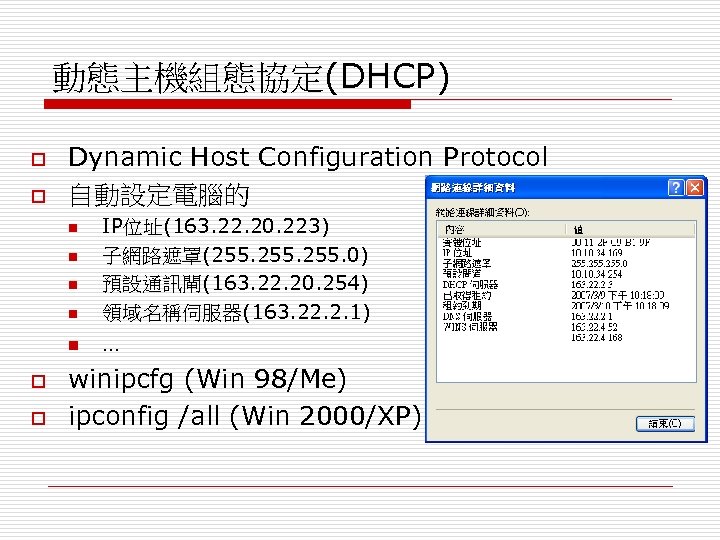
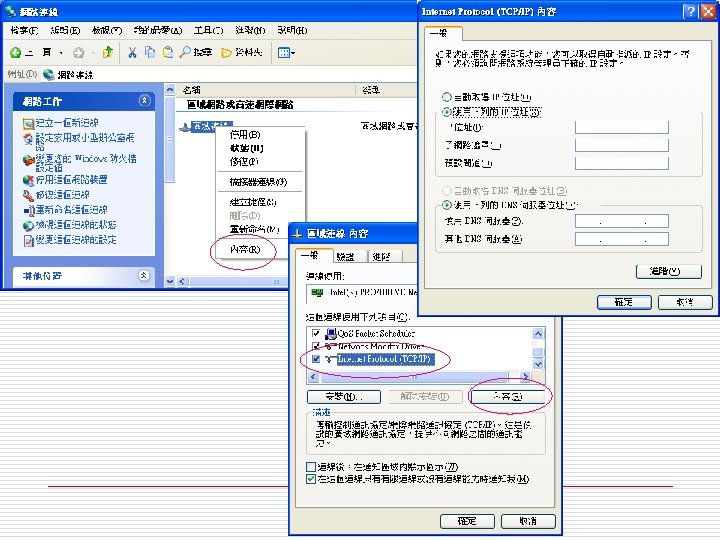
動態主機組態協定(DHCP) o o Dynamic Host Configuration Protocol 自動設定電腦的 n IP位址(163. 22. 20. 223) 子網路遮罩(255. 0) 預設通訊閘(163. 22. 20. 254) 領域名稱伺服器(163. 22. 2. 1) n … n n n o o winipcfg (Win 98/Me) ipconfig /all (Win 2000/XP)
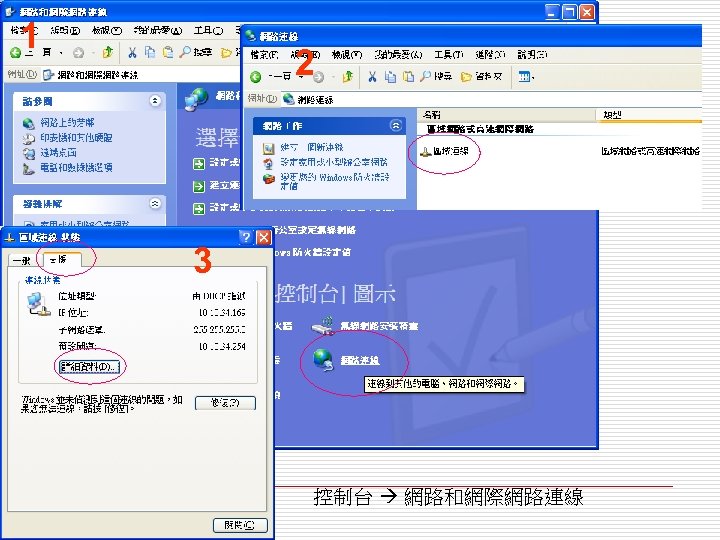
1 2 3 控制台 網路和網際網路連線
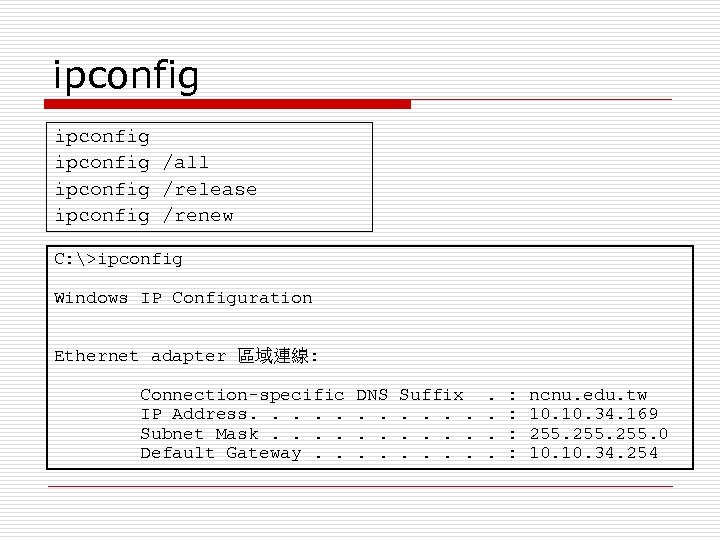
ipconfig /all ipconfig /release ipconfig /renew C: >ipconfig Windows IP Configuration Ethernet adapter 區域連線: Connection-specific IP Address. . . Subnet Mask. . Default Gateway. . DNS. . . Suffix. . . . : : ncnu. edu. tw 10. 34. 169 255. 0 10. 34. 254
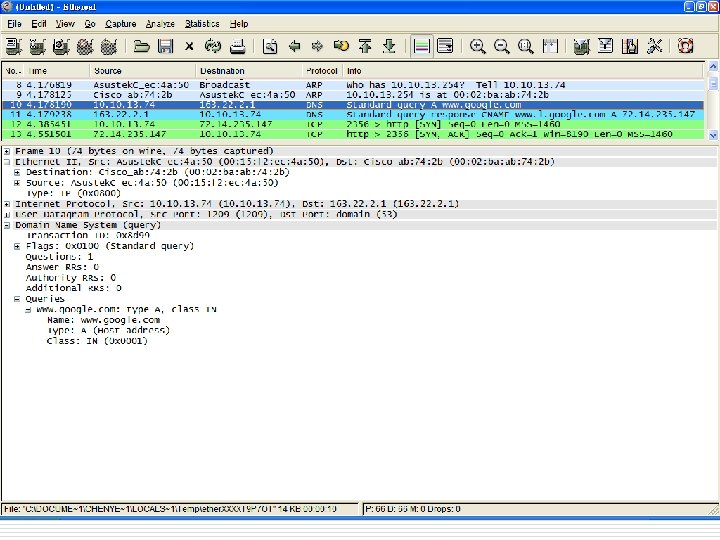
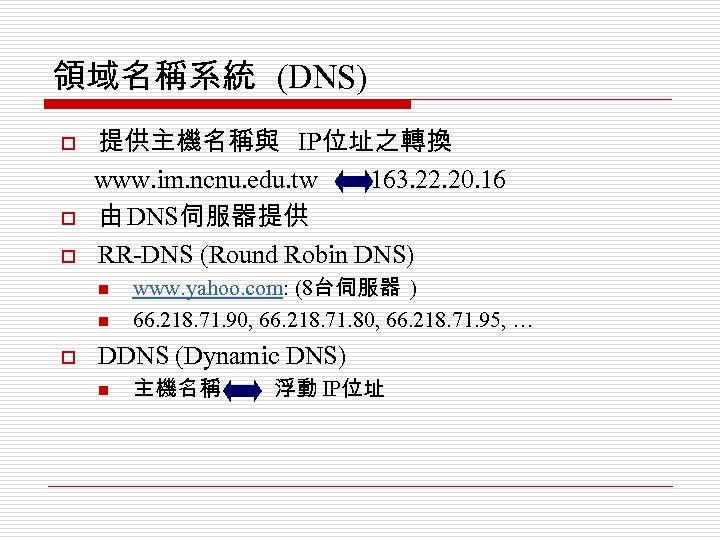
領域名稱系統 (DNS) o o o 提供主機名稱與 IP位址之轉換 www. im. ncnu. edu. tw 163. 22. 20. 16 由 DNS伺服器提供 RR-DNS (Round Robin DNS) n n o www. yahoo. com: (8台伺服器 ) 66. 218. 71. 90, 66. 218. 71. 80, 66. 218. 71. 95, … DDNS (Dynamic DNS) n 主機名稱 浮動 IP位址
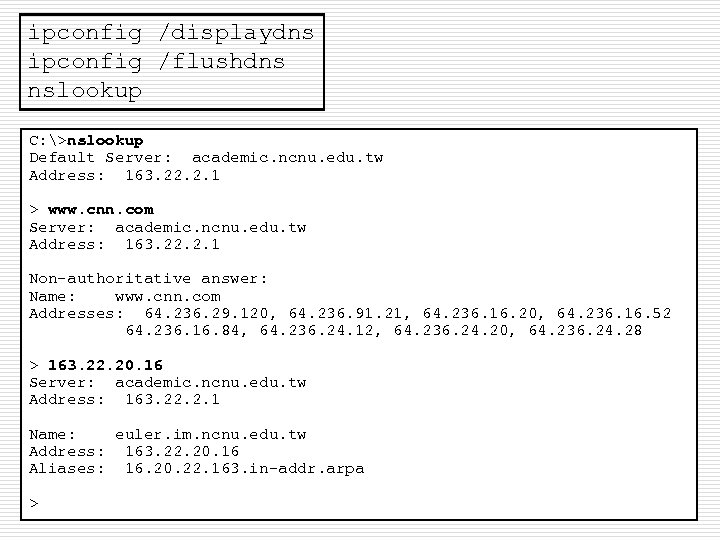
ipconfig /displaydns ipconfig /flushdns nslookup C: >nslookup Default Server: academic. ncnu. edu. tw Address: 163. 22. 2. 1 > www. cnn. com Server: academic. ncnu. edu. tw Address: 163. 22. 2. 1 Non-authoritative answer: Name: www. cnn. com Addresses: 64. 236. 29. 120, 64. 236. 91. 21, 64. 236. 16. 20, 64. 236. 16. 52 64. 236. 16. 84, 64. 236. 24. 12, 64. 236. 24. 20, 64. 236. 24. 28 > 163. 22. 20. 16 Server: academic. ncnu. edu. tw Address: 163. 22. 2. 1 Name: euler. im. ncnu. edu. tw Address: 163. 22. 20. 16 Aliases: 16. 20. 22. 163. in-addr. arpa >
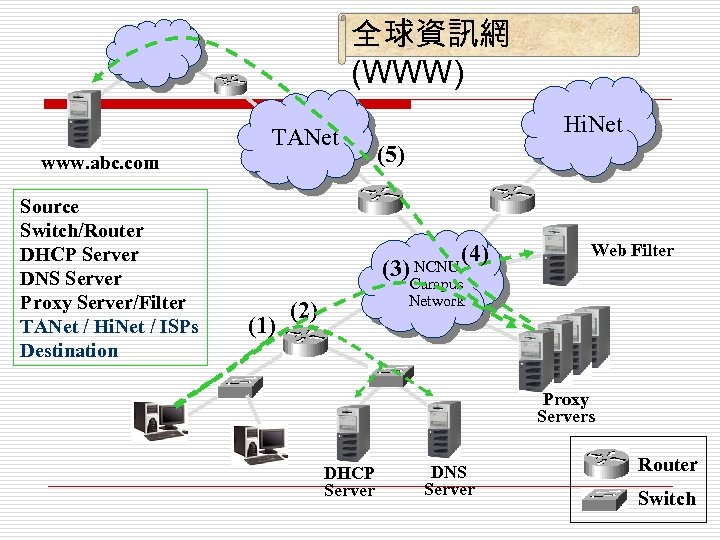
全球資訊網 (WWW) TANet www. abc. com Source Switch/Router DHCP Server DNS Server Proxy Server/Filter TANet / Hi. Net / ISPs Destination Hi. Net (5) (3) (1) (4) NCNU Web Filter Campus Network (2) Proxy Servers DHCP Server DNS Server Router Switch
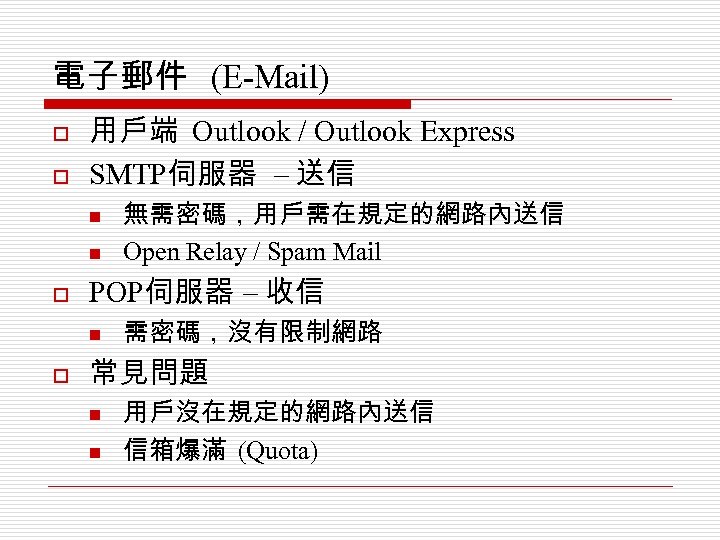
電子郵件 (E-Mail) o o 用戶端 Outlook / Outlook Express SMTP伺服器 – 送信 n n o POP伺服器 – 收信 n o 無需密碼,用戶需在規定的網路內送信 Open Relay / Spam Mail 需密碼,沒有限制網路 常見問題 n n 用戶沒在規定的網路內送信 信箱爆滿 (Quota)
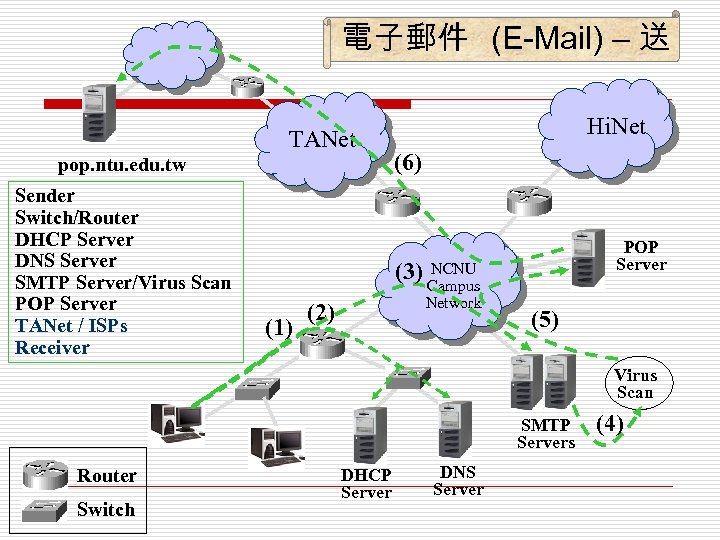
電子郵件 (E-Mail) – 送 TANet pop. ntu. edu. tw Sender Switch/Router DHCP Server DNS Server SMTP Server/Virus Scan POP Server TANet / ISPs Receiver Hi. Net (6) (3) (1) (2) NCNU Campus Network POP Server (5) Virus Scan SMTP Servers Router Switch DHCP Server DNS Server (4)
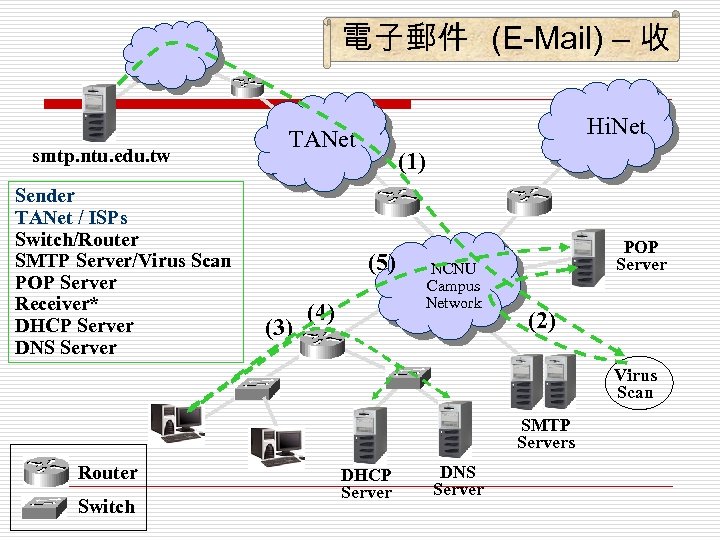
電子郵件 (E-Mail) – 收 smtp. ntu. edu. tw Sender TANet / ISPs Switch/Router SMTP Server/Virus Scan POP Server Receiver* DHCP Server DNS Server Hi. Net TANet (1) (5) (3) (4) NCNU Campus Network POP Server (2) Virus Scan SMTP Servers Router Switch DHCP Server DNS Server
Скачать презентацию 網路與通信協定 陳彥錚 Yen-Cheng Chen ycchen ncnu edu tw http
0b5e63b6933ee687569303dea4d6c86c.ppt