 Скачать презентацию 牙醫學導論 Oral Cancer Oral Pathology 口腔癌口腔病理學 陳玉昆教授 高雄醫學大學
e7be6b79362731ca2007c7803e9606c8.ppt
- Количество слайдов: 69



牙醫學導論 Oral Cancer Oral Pathology 口腔癌口腔病理學 陳玉昆教授: 高雄醫學大學 口腔病理科 07 -3121101~2755 yukkwa@kmu. edu. tw
參考書目 1. 2. 3. 4. 5. 6. 7. 8. 9. 10. 11. 12. 13. 14. 15. 16. 17. 18. Gibbs WW. Untangling the roots of cancer. Sci Am 2003; 289: 56 -65. What you need to know about cancer. Sci Am 1996 ; 289: 28 -119. Hannen EJM, Riediger D. The quantification of angiogenesis in relation to metastasis in oral cancer: a review. Int. J Oral Maxillofac Surg 2004; 33: 2 -7. Shieh et al. Role of angiogenic and non-angiogenic mechanisms in oral squamous cell carcinoma: correlation with histologic differentiation and tumor progression. J Oral Pathol Med 2004; 33: 601 -6. Sharma DC. Betel quid and areca nut are carcinogenic without tobacco. Lancet Oncol 2003; 4: 587. Sharma DC. Indian betel quid more carcinogenic than anticipated. Lancet Oncol 2001; 2: 464. Braakhuis BJM et al. A genetic progression model of oral cancer: current evidence and clinical implications. J Oral Pathol Med 2004; 33: 317 -22. Braakhuis BJM et al. A Genetic explanation of slaughter’s concept of field cancerization: evidence and clinical implications. Cancer Res 2003; 63: 1727 -30. Loktionov A. Common gene polymorphisms, cancer progression and prognosis. Cancer Letters 2004; 208 : 1 -33. Desmaze C et al. Telomere-driven genomic instability in cancer cells. Cancer Letters 2003; 194: 173 -82. Hiyama E & Hiyama K. Telomerase as tumor marker. Cancer Letters 2003; 194: 221 -33. Kaohsiung Medical University, Oral Pathology Department Huang AH et al. Isolation and characterization of normal hamster buccal pouch stem/stromal cells – a potential oral cancer stem/stem-like cell model. Oral Oncol 2009; 45: e 189 -e 195. Umezawa & Gorham. Dueling models in head and neck tumor formation. Lab Investig 2010; 90: 1546 -8. Spillane JB, Henderson MA. Cancer stem cells: a review. ANZ J Surg 2007; 77: 464 -8. Zhou ZT, Jiang WW. Cancer stem cell model in oral squamous cell carcinoma. Curr Stem Cell Res Ther 2008; 3: 17– 20. Harper LJ et al. Stem cell patterns in cell lines derived from head and neck squamous cell carcinoma. J Oral Pathol Med 2007; 36: 594 -603. Lim YC et al. Cancer stem cell traits in squamospheres derived from primary head and neck squamous cell carcinomas. Oral Oncol 2011; 47: 83 -91.
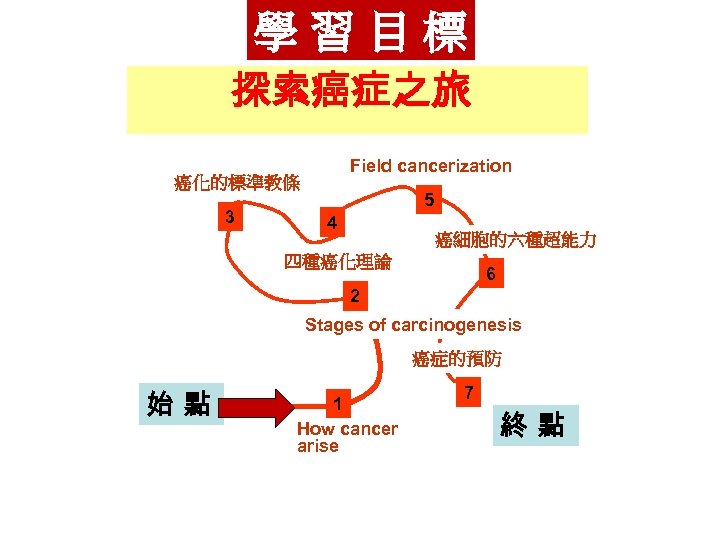
學習目標 探索癌症之旅 Field cancerization 癌化的標準教條 3 5 4 癌細胞的六種超能力 四種癌化理論 6 2 Stages of carcinogenesis 癌症的預防 始點 1 How cancer arise 7 終點
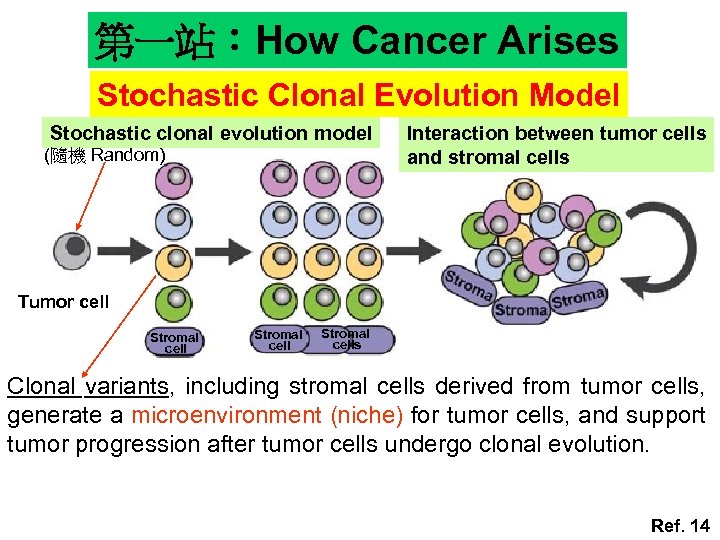
第一站:How Cancer Arises Stochastic Clonal Evolution Model Stochastic clonal evolution model (隨機 Random) Interaction between tumor cells and stromal cells Tumor cell Stromal cells Clonal variants, including stromal cells derived from tumor cells, generate a microenvironment (niche) for tumor cells, and support tumor progression after tumor cells undergo clonal evolution. Ref. 14
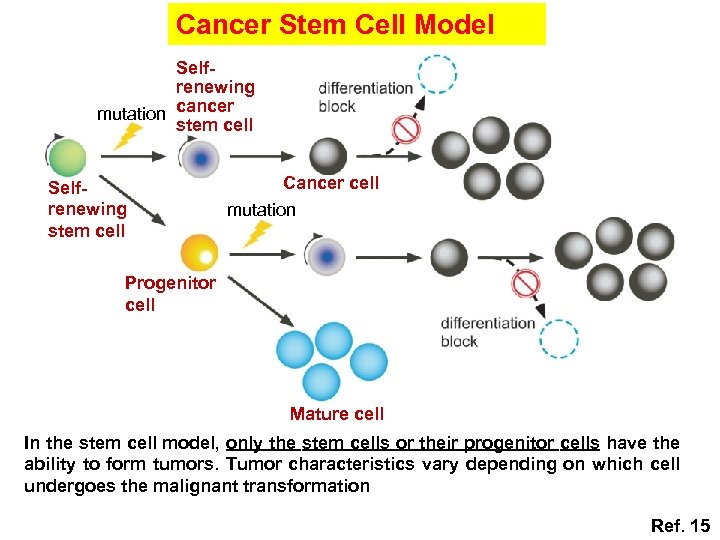
Cancer Stem Cell Model Selfrenewing mutation cancer stem cell Selfrenewing stem cell Cancer cell mutation Progenitor cell Mature cell In the stem cell model, only the stem cells or their progenitor cells have the ability to form tumors. Tumor characteristics vary depending on which cell undergoes the malignant transformation Ref. 15
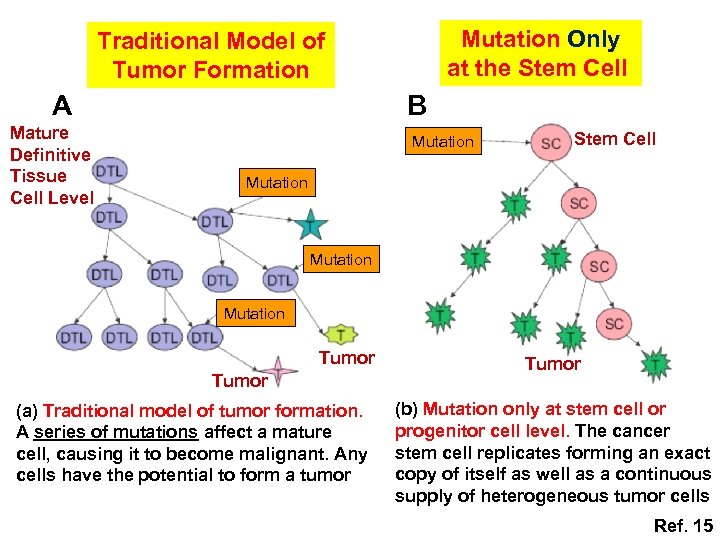
Mutation Only at the Stem Cell Traditional Model of Tumor Formation A Mature Definitive Tissue Cell Level B Mutation Stem Cell Mutation Tumor (a) Traditional model of tumor formation. A series of mutations affect a mature cell, causing it to become malignant. Any cells have the potential to form a tumor Tumor (b) Mutation only at stem cell or progenitor cell level. The cancer stem cell replicates forming an exact copy of itself as well as a continuous supply of heterogeneous tumor cells Ref. 15
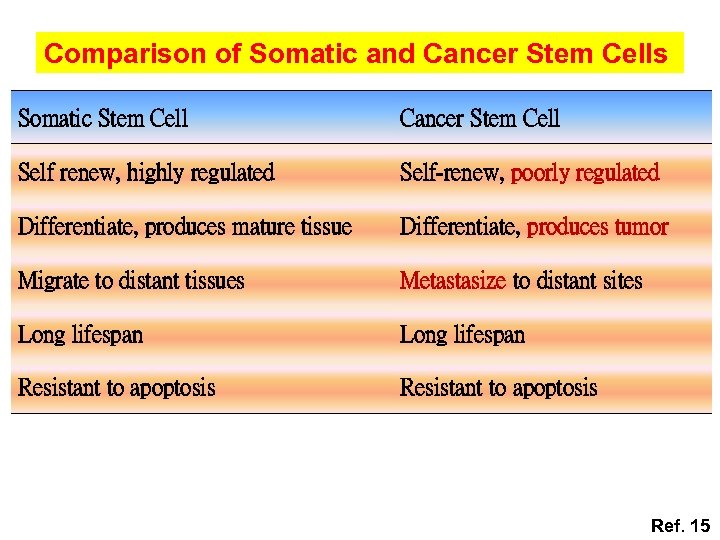
Comparison of Somatic and Cancer Stem Cells Somatic Stem Cell Cancer Stem Cell Self renew, highly regulated Self-renew, poorly regulated Differentiate, produces mature tissue Differentiate, produces tumor Migrate to distant tissues Metastasize to distant sites Long lifespan Resistant to apoptosis Ref. 15
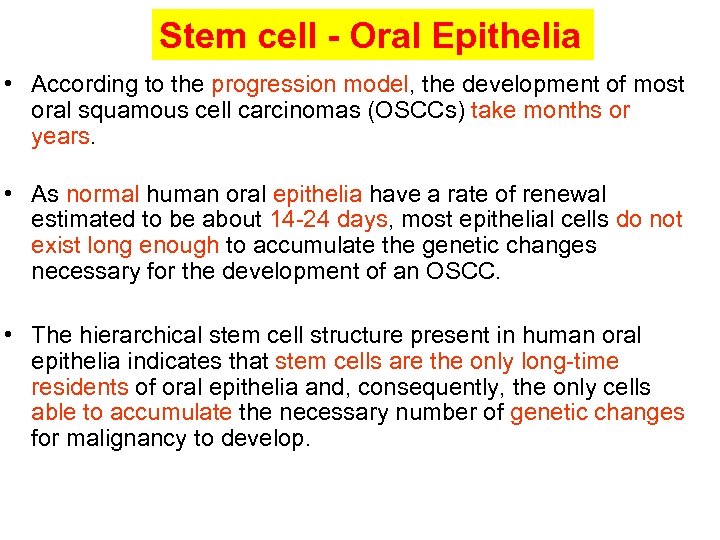
Stem cell - Oral Epithelia • According to the progression model, the development of most oral squamous cell carcinomas (OSCCs) take months or years. • As normal human oral epithelia have a rate of renewal estimated to be about 14 -24 days, most epithelial cells do not exist long enough to accumulate the genetic changes necessary for the development of an OSCC. • The hierarchical stem cell structure present in human oral epithelia indicates that stem cells are the only long-time residents of oral epithelia and, consequently, the only cells able to accumulate the necessary number of genetic changes for malignancy to develop.
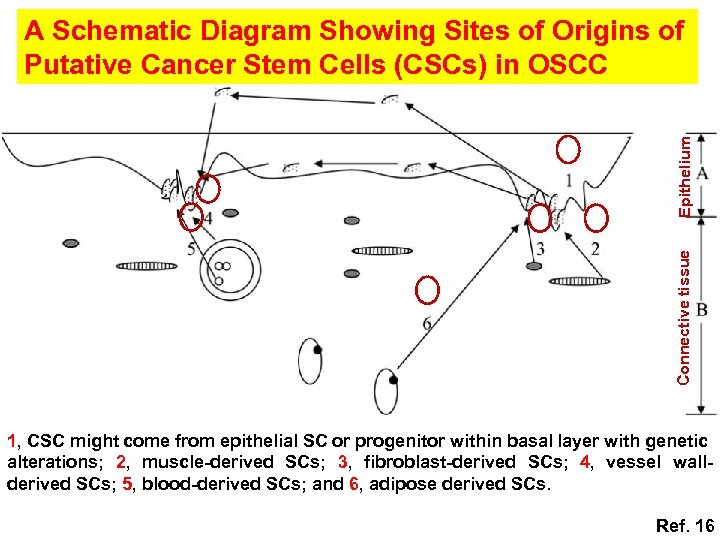
Connective tissue Epithelium A Schematic Diagram Showing Sites of Origins of Putative Cancer Stem Cells (CSCs) in OSCC 1, CSC might come from epithelial SC or progenitor within basal layer with genetic alterations; 2, muscle-derived SCs; 3, fibroblast-derived SCs; 4, vessel wallderived SCs; 5, blood-derived SCs; and 6, adipose derived SCs. Ref. 16
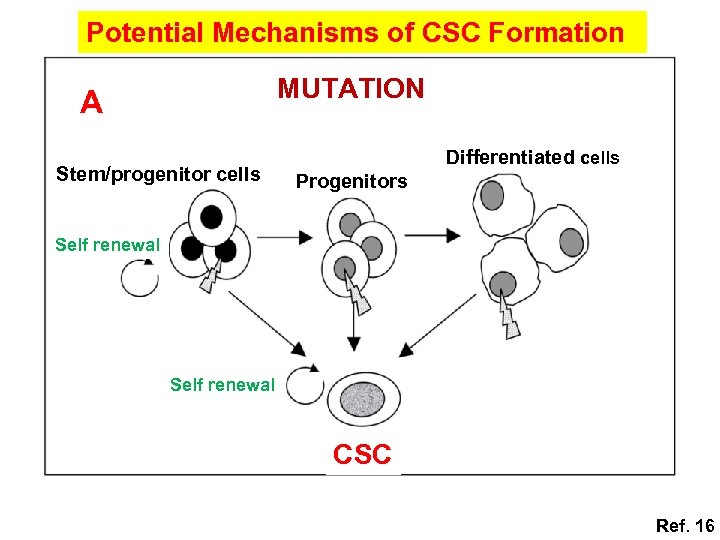
Potential Mechanisms of CSC Formation MUTATION A Stem/progenitor cells Differentiated cells Progenitors Self renewal CSC Ref. 16
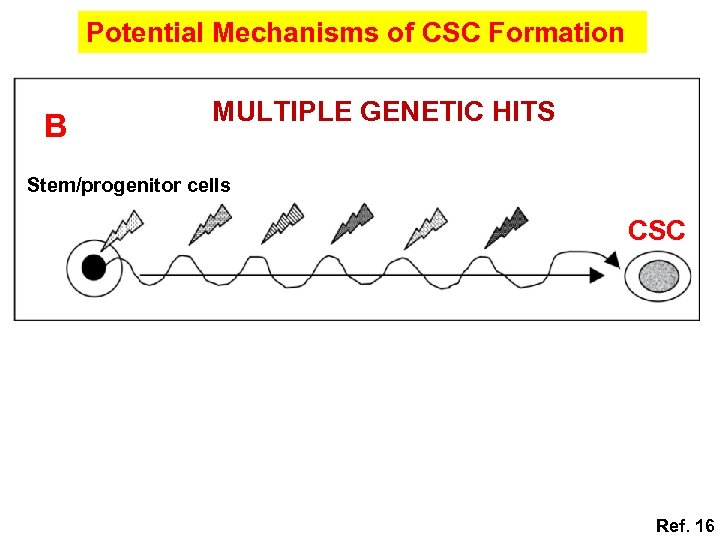
Potential Mechanisms of CSC Formation B MULTIPLE GENETIC HITS Stem/progenitor cells CSC Ref. 16
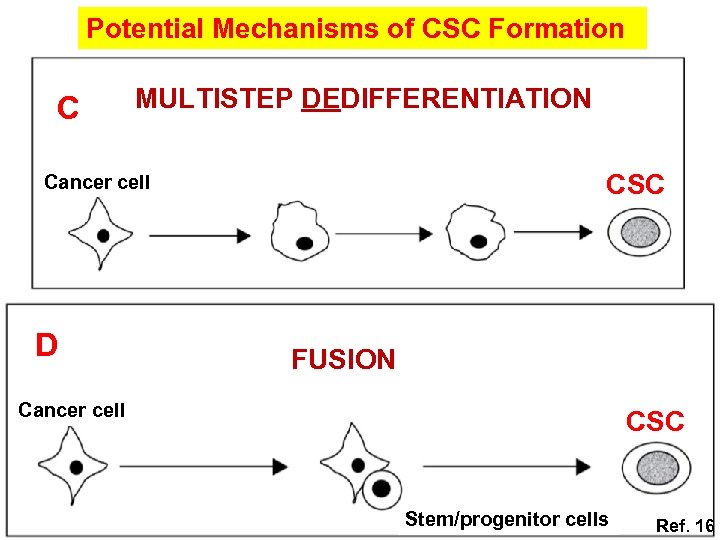
Potential Mechanisms of CSC Formation C MULTISTEP DEDIFFERENTIATION CSC Cancer cell D FUSION Cancer cell CSC Stem/progenitor cells Ref. 16
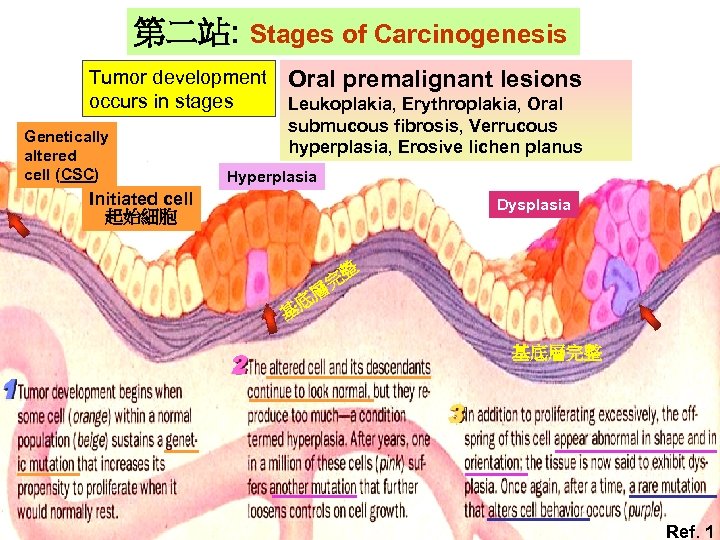
第二站: Stages of Carcinogenesis Tumor development occurs in stages Genetically Gentically altered cell (CSC) altered cell Oral premalignant lesions Leukoplakia, Erythroplakia, Oral submucous fibrosis, Verrucous hyperplasia, Erosive lichen planus Hyperplasia Initiated cell 起始細胞 Hyperlasia Dysplasia 整 完 層 基 底 基底層完整 Ref. 1
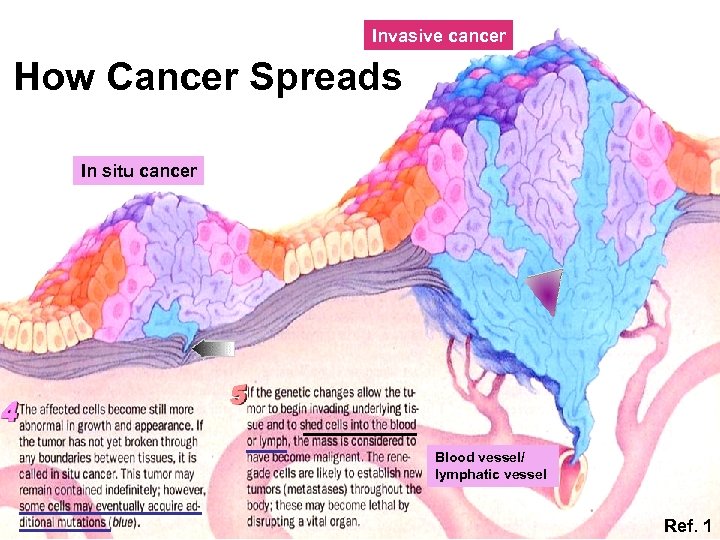
Invasive cancer How Cancer Spreads In situ cancer Blood vessel/ lymphatic vessel Ref. 1
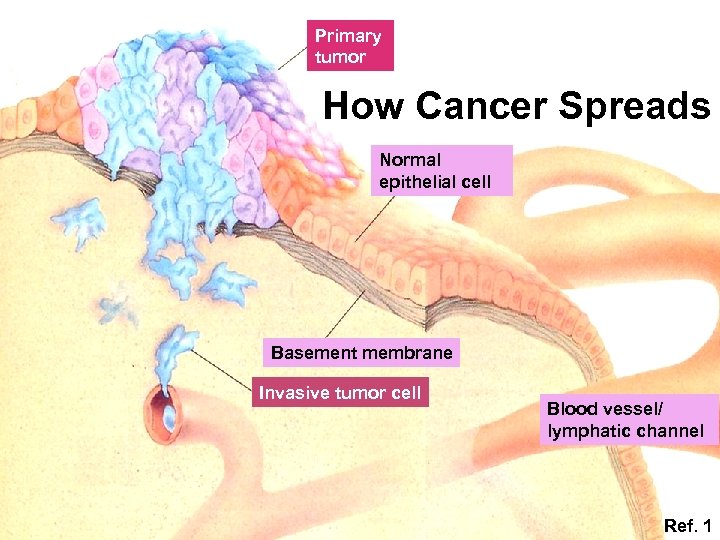
Primary tumor How Cancer Spreads Normal epithelial cell Basement membrane Invasive tumor cell Blood vessel/ lymphatic channel Ref. 1
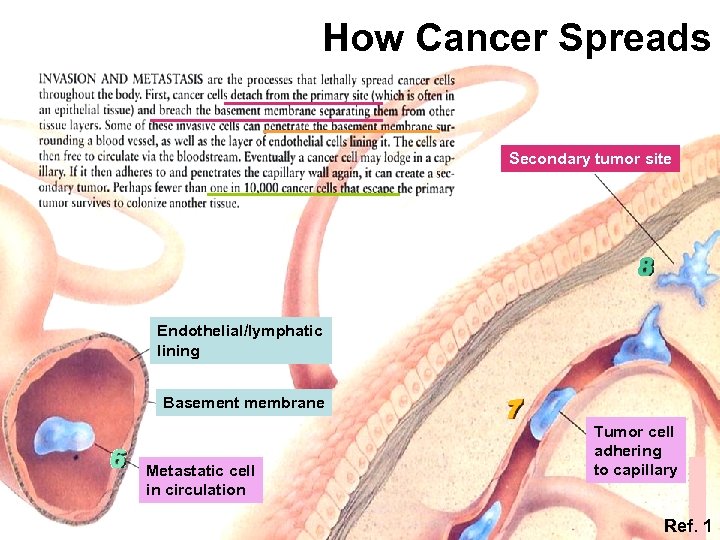
How Cancer Spreads Secondary tumor site Endothelial/lymphatic lining Basement membrane Metastatic cell in circulation Tumor cell adhering to capillary Ref. 1
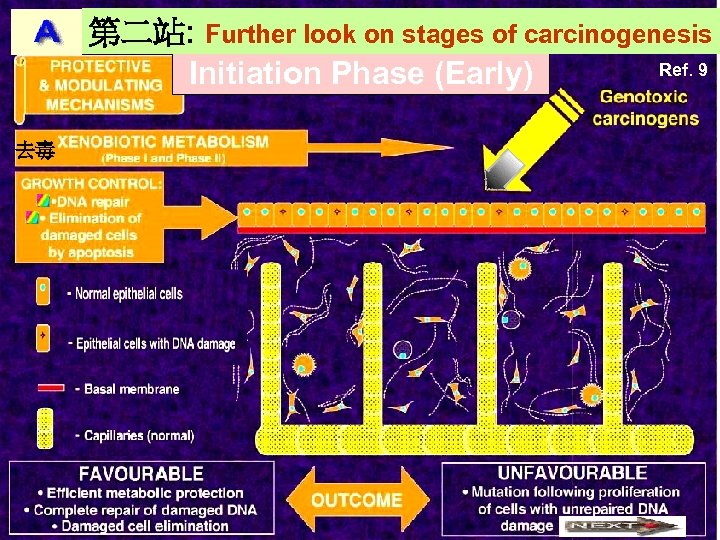
第二站: Further look on stages of carcinogenesis Ref. 9 Initiation Phase (Early) 去毒
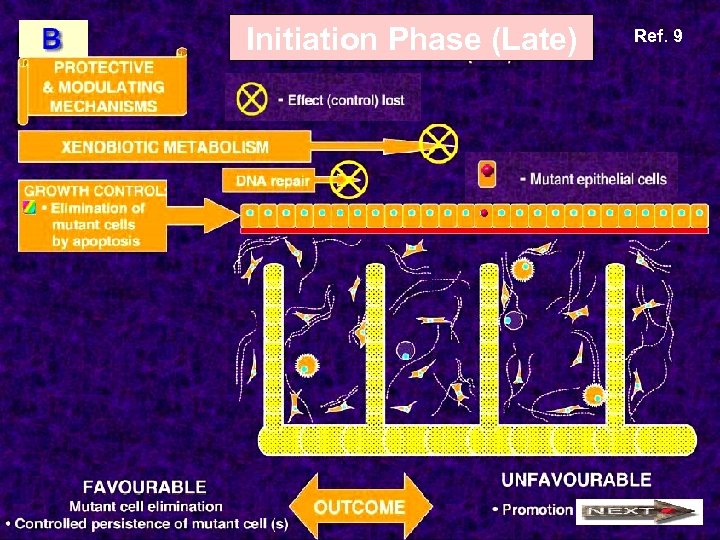
Initiation Phase (Late) Ref. 9
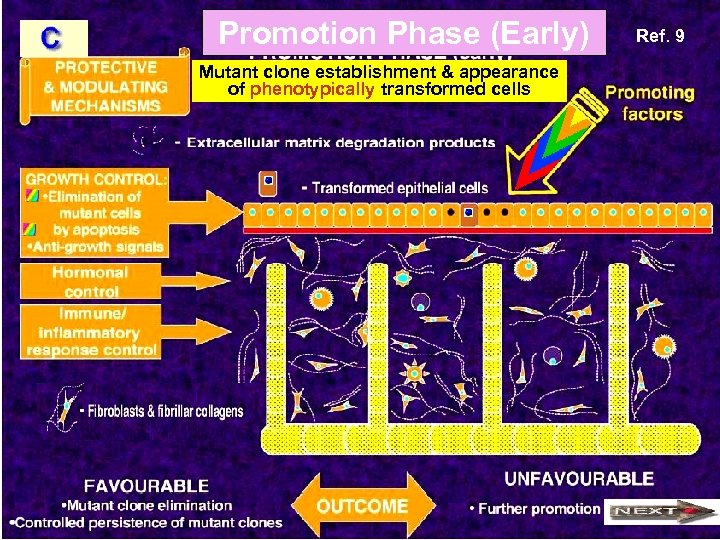
Promotion Phase (Early) Mutant clone establishment & appearance of phenotypically transformed cells Ref. 9
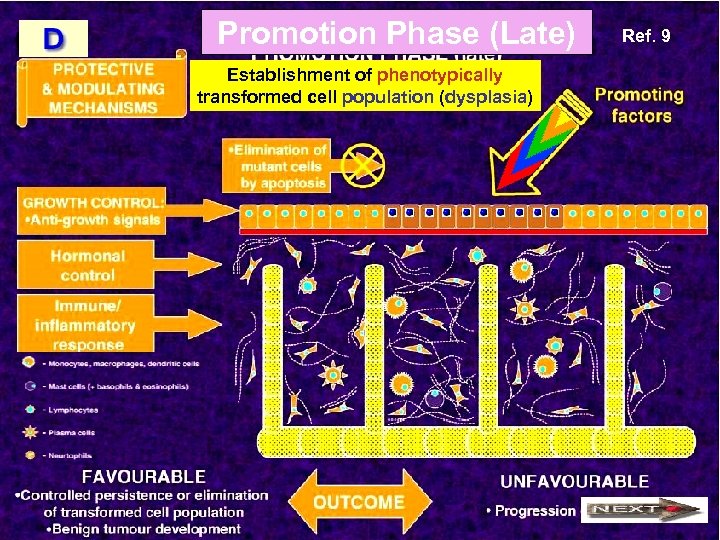
Promotion Phase (Late) Establishment of phenotypically transformed cell population (dysplasia) Ref. 9
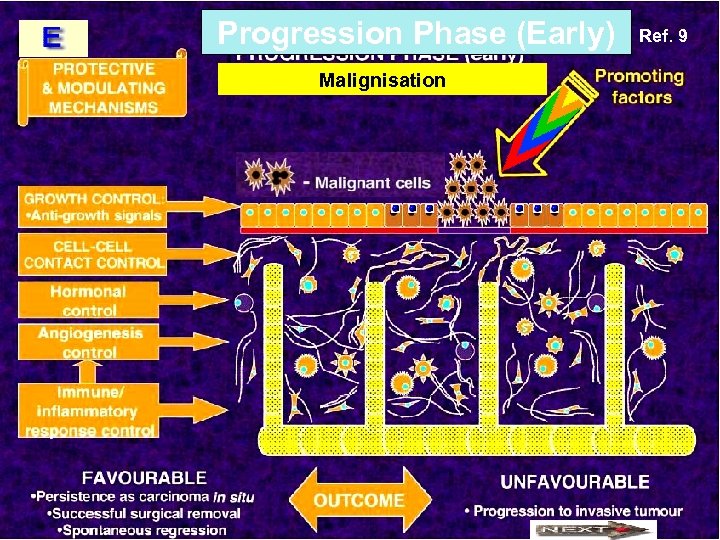
Progression Phase (Early) Malignisation Ref. 9
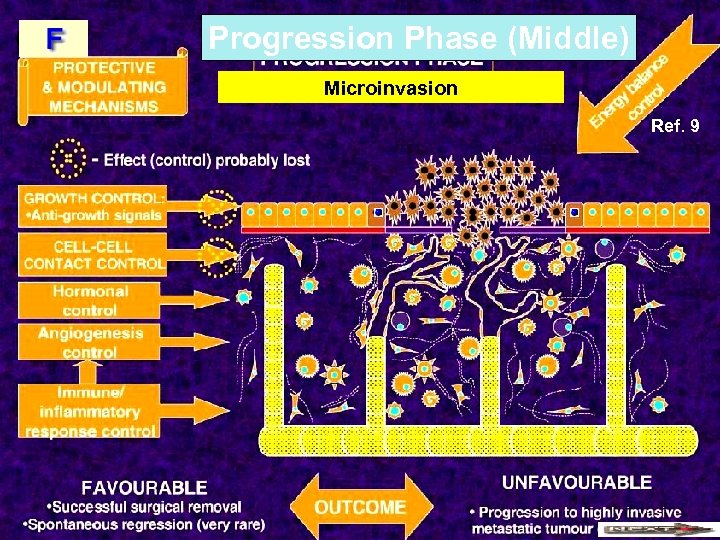
Progression Phase (Middle) Microinvasion Ref. 9
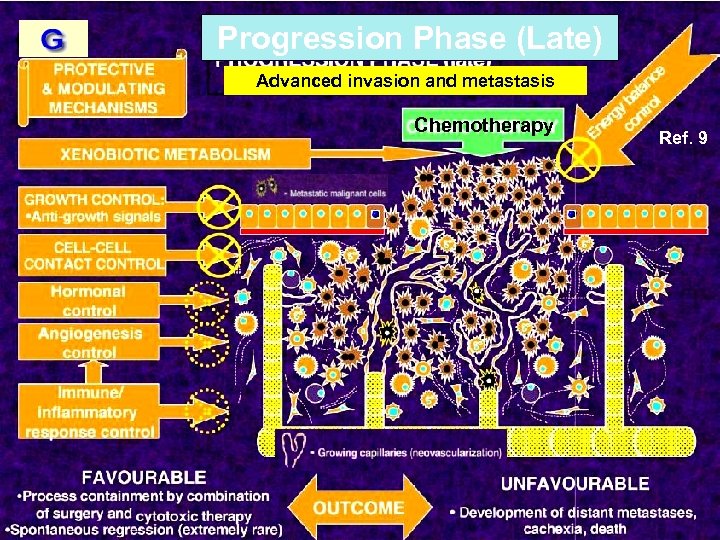
Progression Phase (Late) Advanced invasion and metastasis Chemotherapy Ref. 9
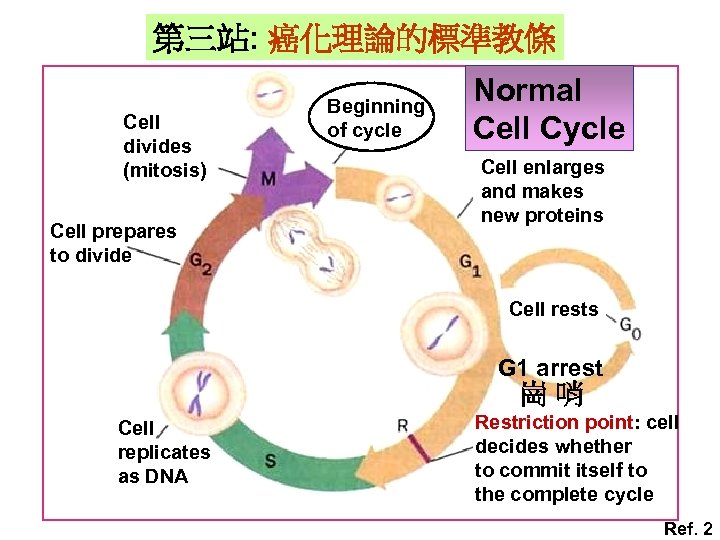
第三站: 癌化理論的標準教條 Cell divides (mitosis) Cell prepares to divide Beginning of cycle Normal Cell Cycle Cell enlarges and makes new proteins Cell rests G 1 arrest 崗哨 Cell replicates as DNA Restriction point: cell decides whether to commit itself to the complete cycle Ref. 2
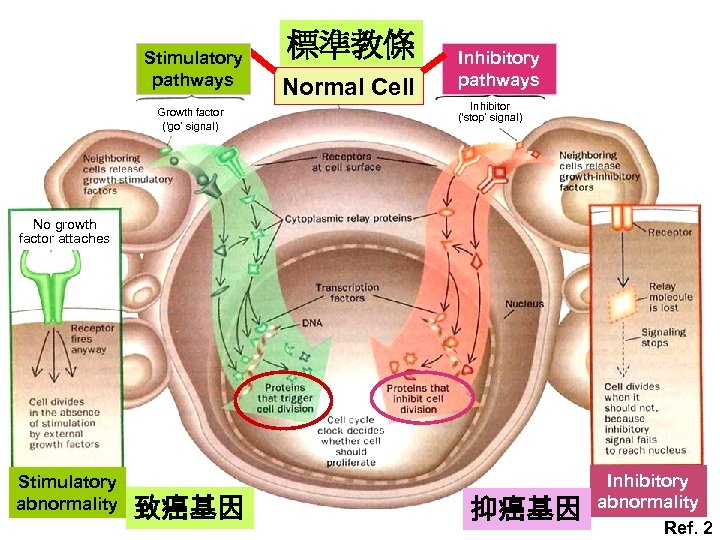
Stimulatory pathways Growth factor (‘go’ signal) 標準教條 Normal Cell Inhibitory pathways Inhibitor (‘stop’ signal) No growth factor attaches Stimulatory abnormality 致癌基因 抑癌基因 Inhibitory abnormality Ref. 2
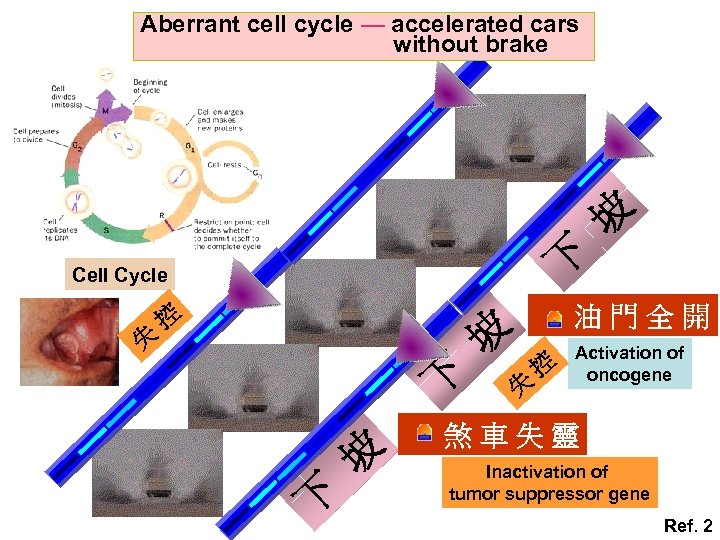
Aberrant cell cycle — accelerated cars without brake 坡 下 Cell Cycle 失 控 油門全開 坡 下 失 控 Activation of oncogene 煞車失靈 Inactivation of tumor suppressor gene Ref. 2
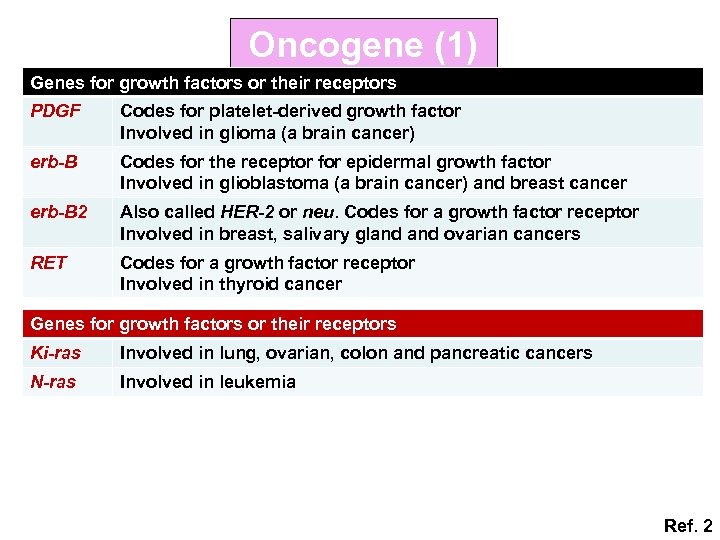
Oncogene (1) Genes for growth factors or their receptors PDGF Codes for platelet-derived growth factor Involved in glioma (a brain cancer) erb-B Codes for the receptor for epidermal growth factor Involved in glioblastoma (a brain cancer) and breast cancer erb-B 2 Also called HER-2 or neu. Codes for a growth factor receptor Involved in breast, salivary gland ovarian cancers RET Codes for a growth factor receptor Involved in thyroid cancer Genes for growth factors or their receptors Ki-ras Involved in lung, ovarian, colon and pancreatic cancers N-ras Involved in leukemia Ref. 2
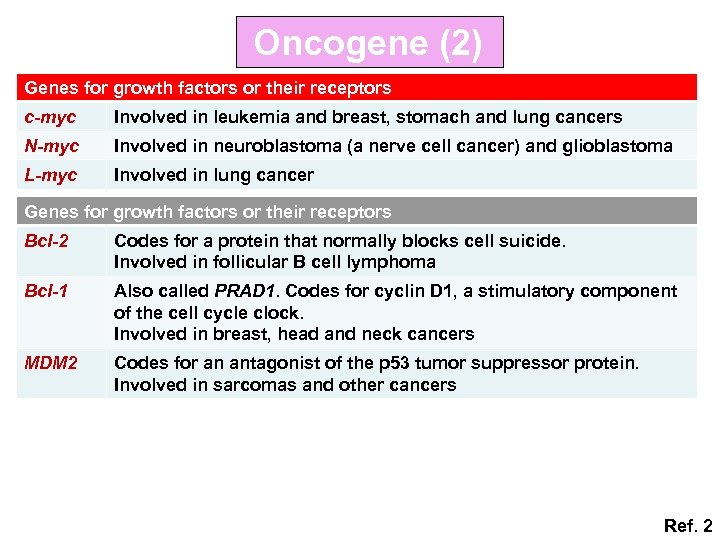
Oncogene (2) Genes for growth factors or their receptors c-myc Involved in leukemia and breast, stomach and lung cancers N-myc Involved in neuroblastoma (a nerve cell cancer) and glioblastoma L-myc Involved in lung cancer Genes for growth factors or their receptors Bcl-2 Codes for a protein that normally blocks cell suicide. Involved in follicular B cell lymphoma Bcl-1 Also called PRAD 1. Codes for cyclin D 1, a stimulatory component of the cell cycle clock. Involved in breast, head and neck cancers MDM 2 Codes for an antagonist of the p 53 tumor suppressor protein. Involved in sarcomas and other cancers Ref. 2
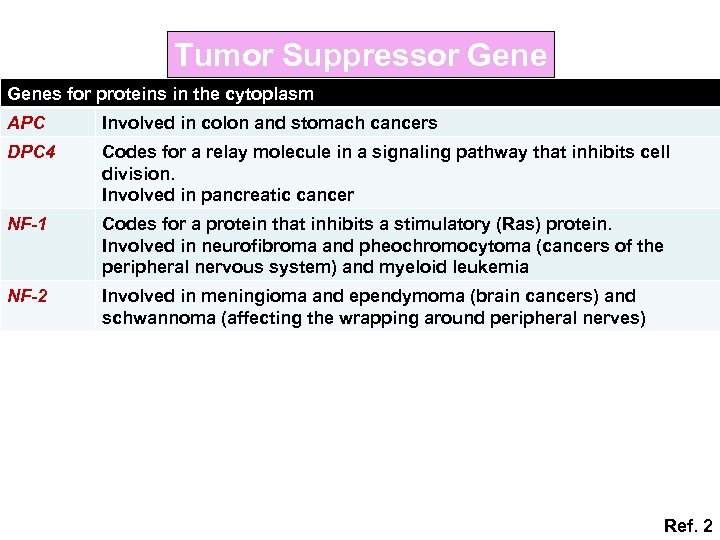
Tumor Suppressor Genes for proteins in the cytoplasm APC Involved in colon and stomach cancers DPC 4 Codes for a relay molecule in a signaling pathway that inhibits cell division. Involved in pancreatic cancer NF-1 Codes for a protein that inhibits a stimulatory (Ras) protein. Involved in neurofibroma and pheochromocytoma (cancers of the peripheral nervous system) and myeloid leukemia NF-2 Involved in meningioma and ependymoma (brain cancers) and schwannoma (affecting the wrapping around peripheral nerves) Ref. 2
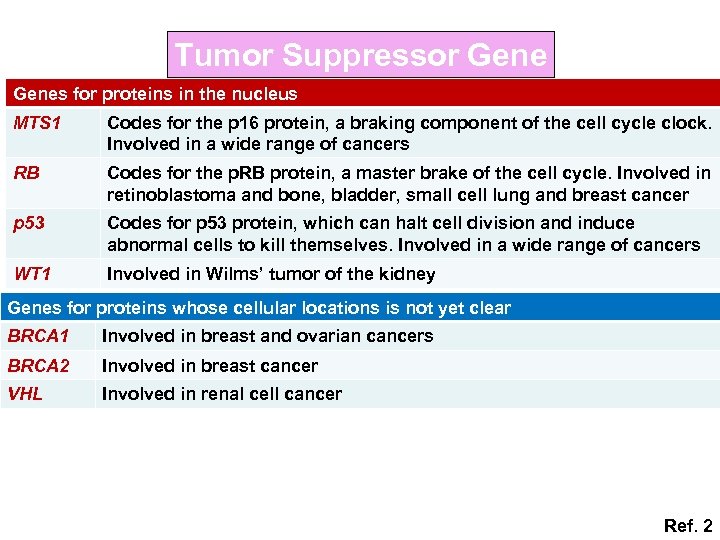
Tumor Suppressor Genes for proteins in the nucleus MTS 1 Codes for the p 16 protein, a braking component of the cell cycle clock. Involved in a wide range of cancers RB Codes for the p. RB protein, a master brake of the cell cycle. Involved in retinoblastoma and bone, bladder, small cell lung and breast cancer p 53 Codes for p 53 protein, which can halt cell division and induce abnormal cells to kill themselves. Involved in a wide range of cancers WT 1 Involved in Wilms’ tumor of the kidney Genes for proteins whose cellular locations is not yet clear BRCA 1 Involved in breast and ovarian cancers BRCA 2 Involved in breast cancer VHL Involved in renal cell cancer Ref. 2
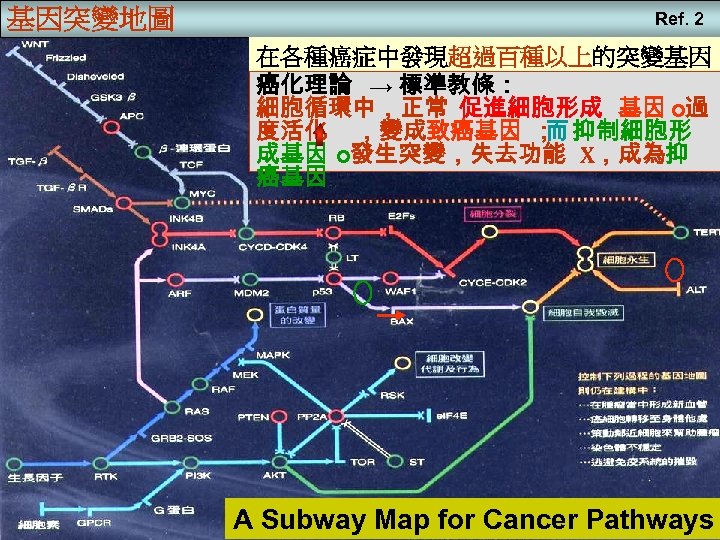
基因突變地圖 Ref. 2 在各種癌症中發現超過百種以上的突變基因 癌化理論 → 標準教條: 細胞循環中,正常 促進細胞形成 基因 o過 度活化 ,變成致癌基因 ; 抑制細胞形 而 成基因 o發生突變,失去功能 X,成為抑 癌基因 A Subway Map for Cancer Pathways
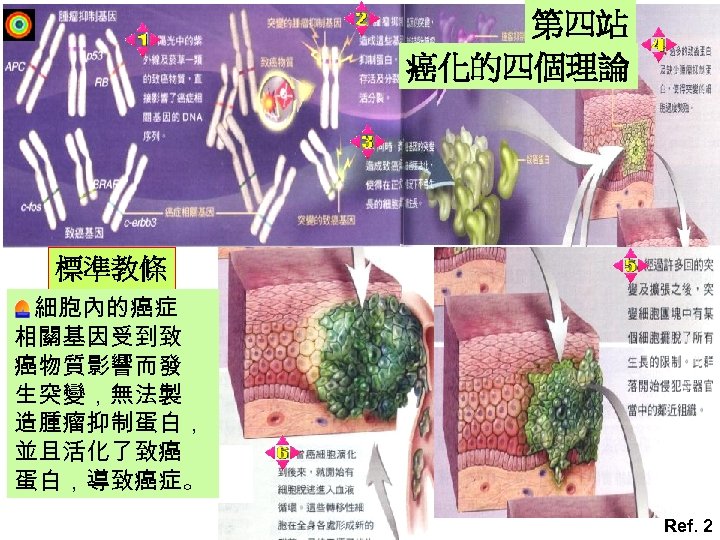
第四站 癌化的四個理論 標準教條 細胞內的癌症 相關基因受到致 癌物質影響而發 生突變,無法製 造腫瘤抑制蛋白, 並且活化了致癌 蛋白,導致癌症。 Ref. 2
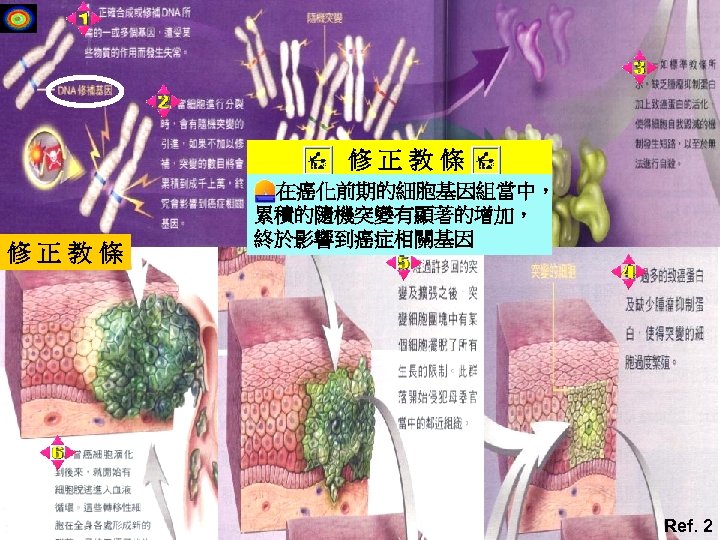
修正教條 在癌化前期的細胞基因組當中, 累積的隨機突變有顯著的增加, 終於影響到癌症相關基因 Ref. 2
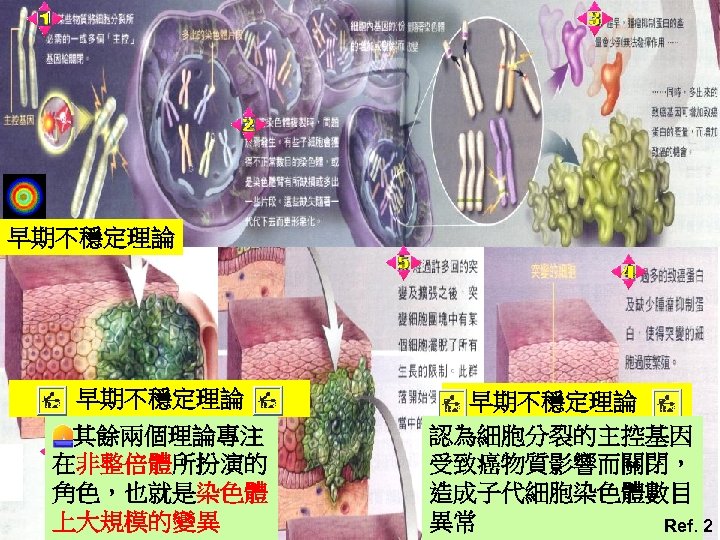
早期不穩定理論 其餘兩個理論專注 在非整倍體所扮演的 角色,也就是染色體 上大規模的變異 早期不穩定理論 認為細胞分裂的主控基因 受致癌物質影響而關閉, 造成子代細胞染色體數目 異常 Ref. 2
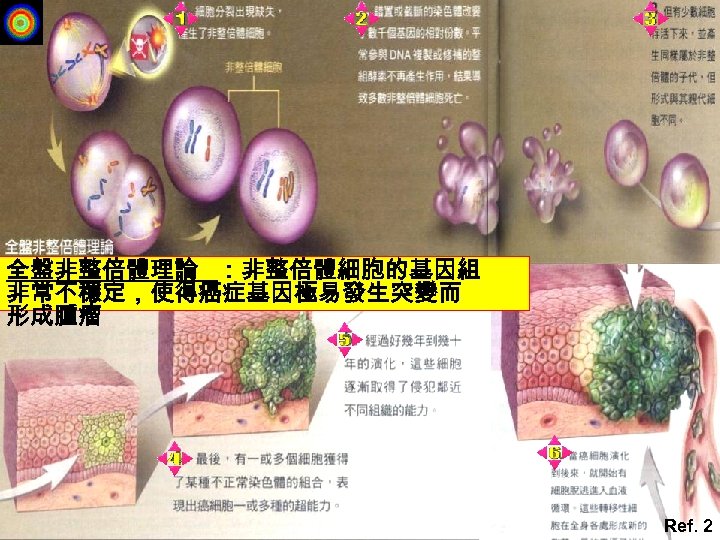
全盤非整倍體理論 :非整倍體細胞的基因組 非常不穩定,使得癌症基因極易發生突變而 形成腫瘤 Ref. 2
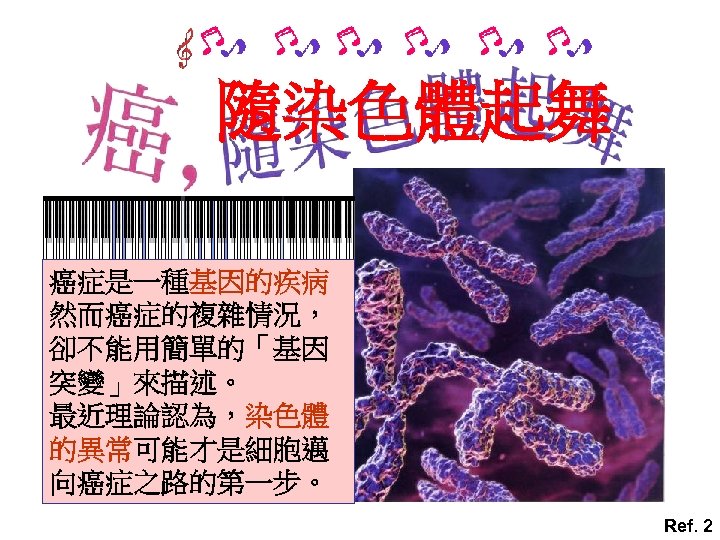
隨染色體起舞 癌症是一種基因的疾病 然而癌症的複雜情況, 卻不能用簡單的「基因 突變」來描述。 最近理論認為,染色體 的異常可能才是細胞邁 向癌症之路的第一步。 Ref. 2
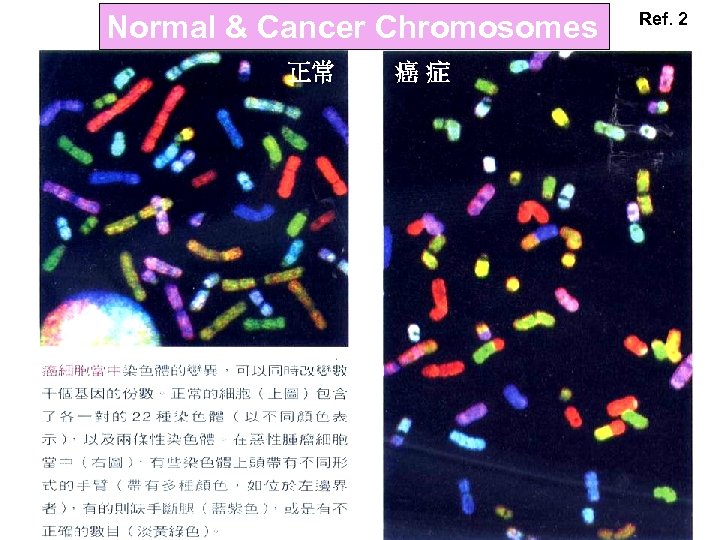
Normal & Cancer Chromosomes 正常 癌症 Ref. 2
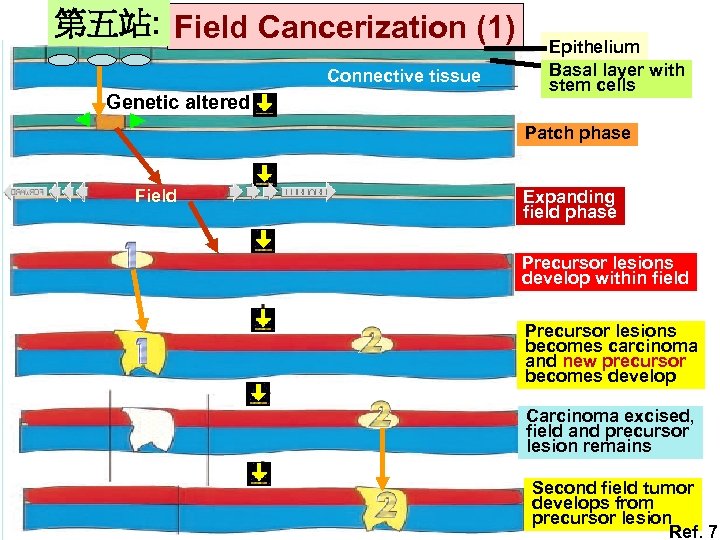
第五站: Field Cancerization (1) Connective tissue Genetic altered Epithelium Basal layer with stem cells Patch phase Field Expanding field phase Precursor lesions develop within field Precursor lesions becomes carcinoma and new precursor becomes develop Carcinoma excised, field and precursor lesion remains Second field tumor develops from precursor lesion Ref. 7
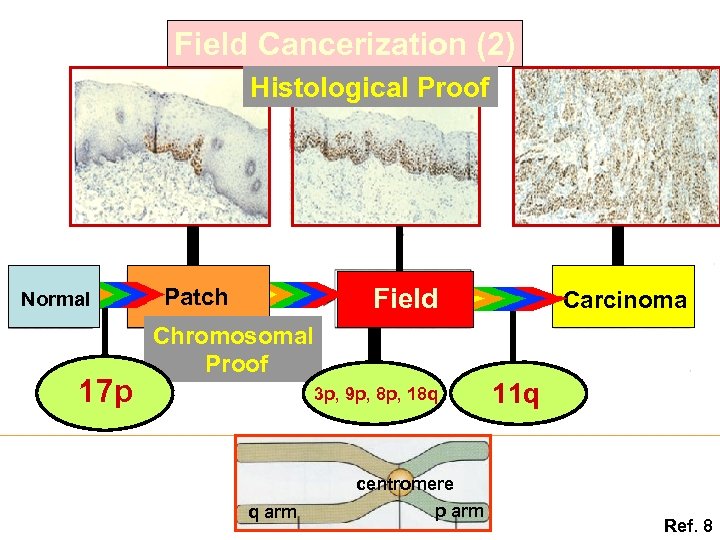
Field Cancerization (2) Histological Proof Normal 17 p Field Patch Carcinoma Chromosomal Proof 3 p, 9 p, 8 p, 18 q 11 q centromere q arm p arm Ref. 8
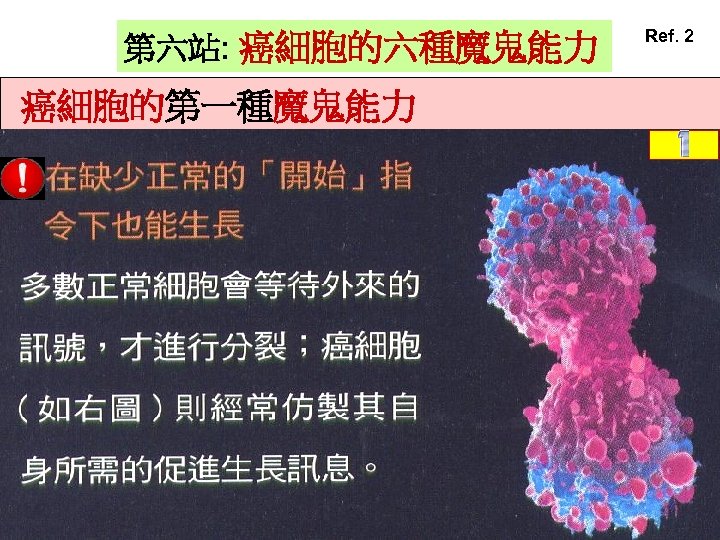
第六站: 癌細胞的六種魔鬼能力 癌細胞的第一種魔鬼能力 Ref. 2
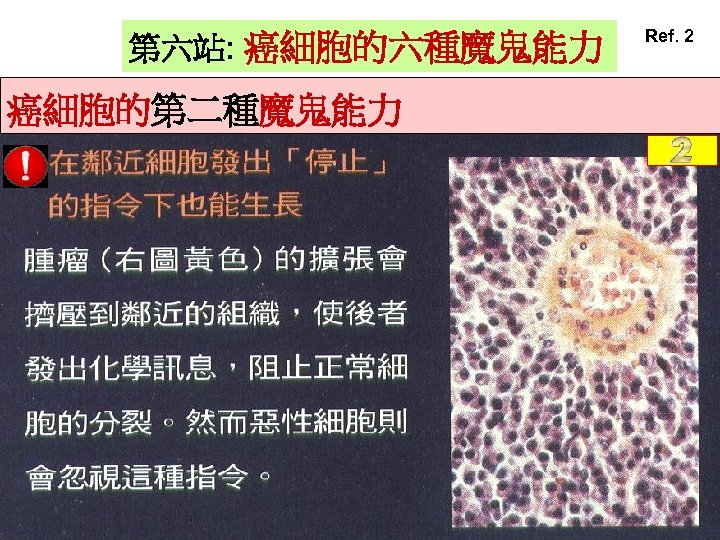
第六站: 癌細胞的六種魔鬼能力 癌細胞的第二種魔鬼能力 Ref. 2
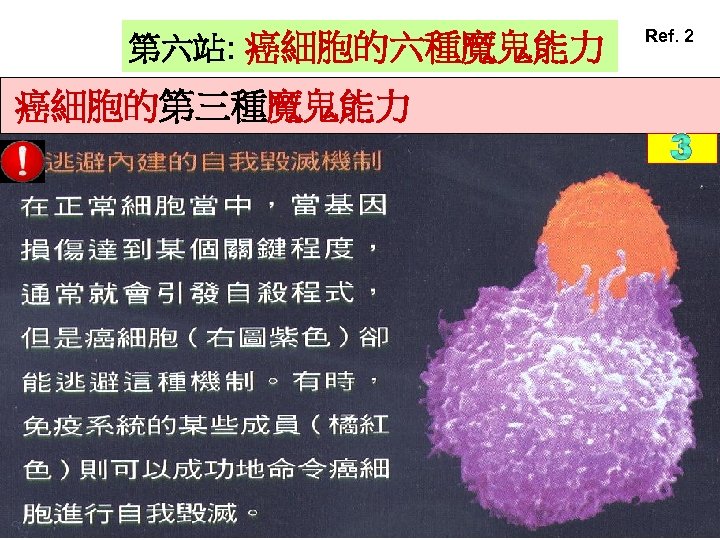
第六站: 癌細胞的六種魔鬼能力 癌細胞的第三種魔鬼能力 Ref. 2
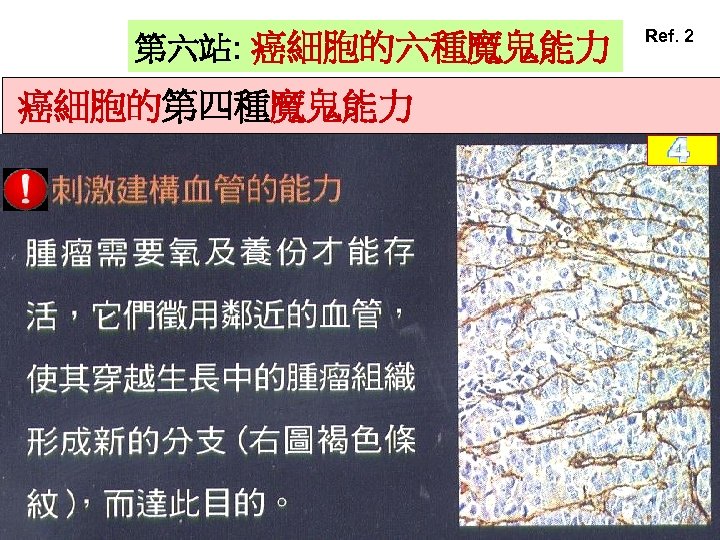
第六站: 癌細胞的六種魔鬼能力 癌細胞的第四種魔鬼能力 Ref. 2
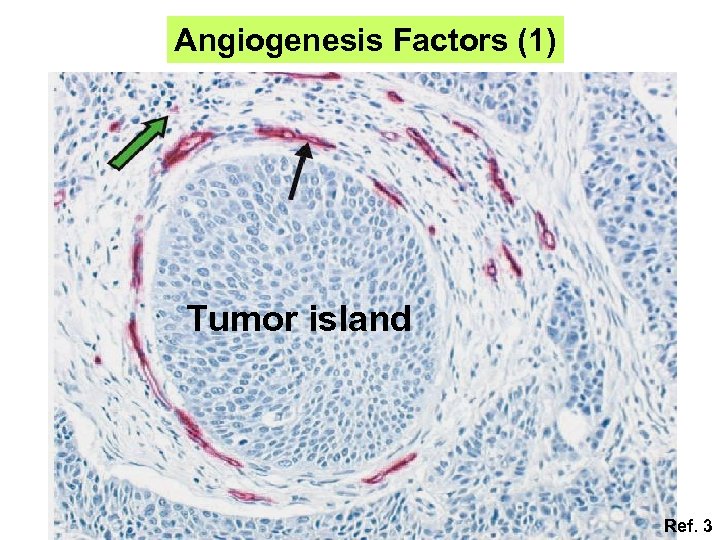
Angiogenesis Factors (1) Tumor island Ref. 3
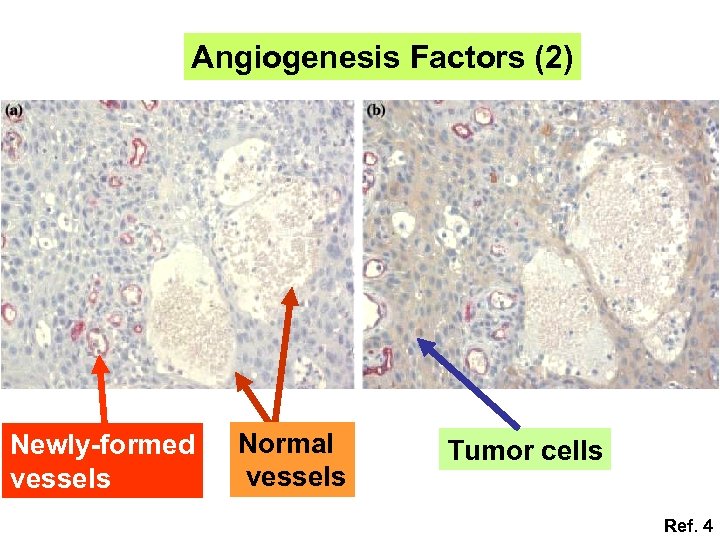
Angiogenesis Factors (2) Newly-formed vessels Normal vessels Tumor cells Ref. 4
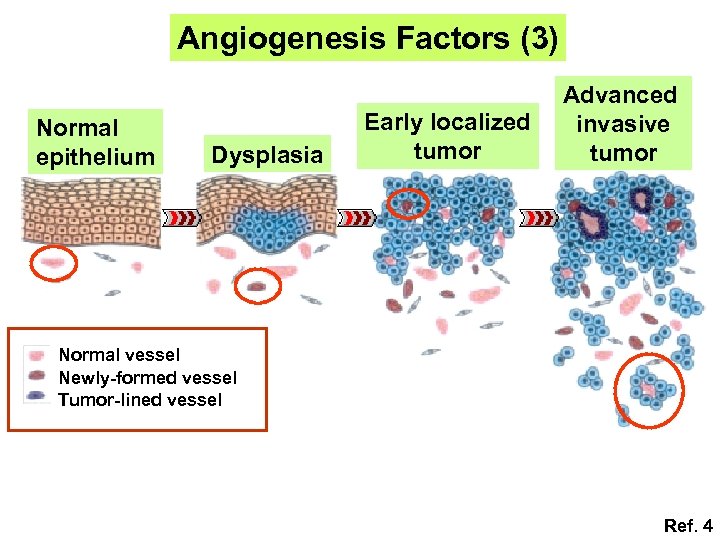
Angiogenesis Factors (3) Normal epithelium Dysplasia Early localized tumor Advanced invasive tumor Normal vessel Newly-formed vessel Tumor-lined vessel Ref. 4
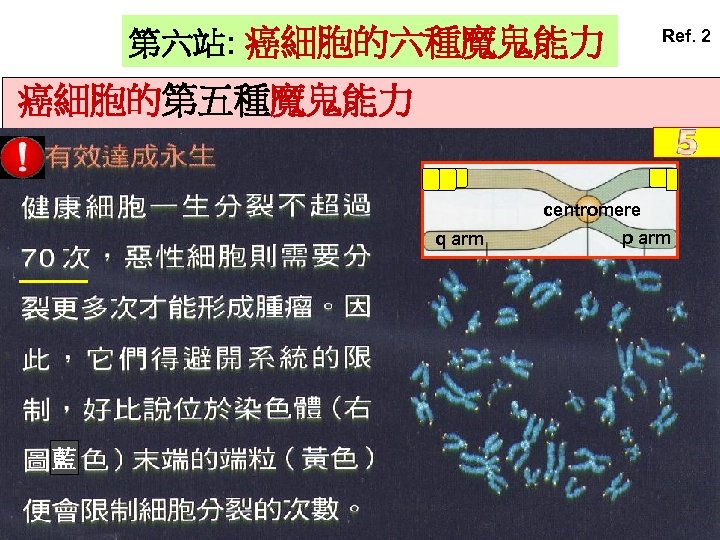
第六站: 癌細胞的六種魔鬼能力 Ref. 2 癌細胞的第五種魔鬼能力 centromere q arm 藍 p arm
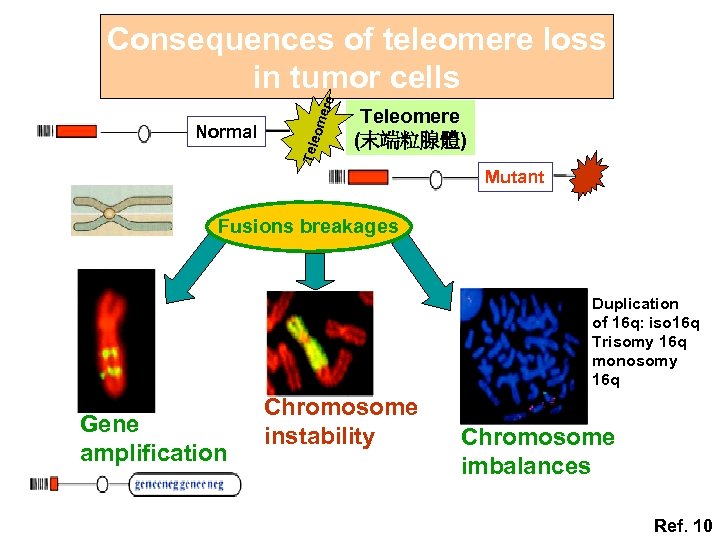
Tele Normal ome re Consequences of teleomere loss in tumor cells Teleomere (末端粒腺體) Mutant Fusions breakages Duplication of 16 q: iso 16 q Trisomy 16 q monosomy 16 q Gene amplification Chromosome instability Chromosome imbalances Ref. 10
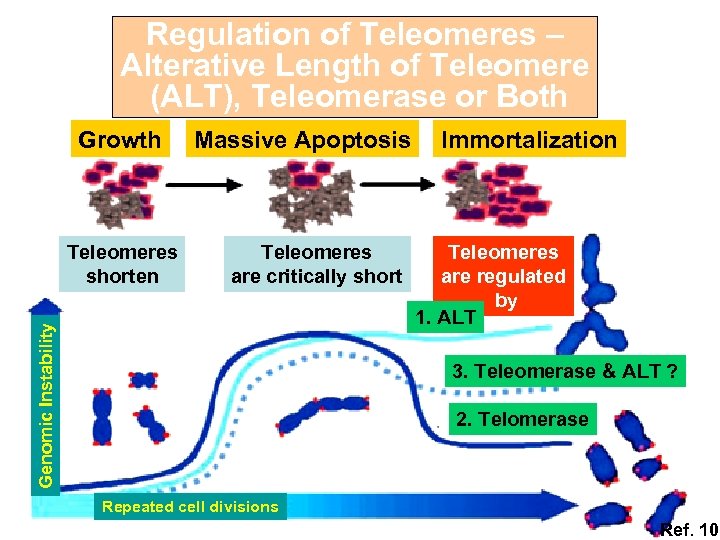
Regulation of Teleomeres – Alterative Length of Teleomere (ALT), Teleomerase or Both Growth Teleomeres are critically short Genomic Instability Teleomeres shorten Massive Apoptosis Immortalization Teleomeres are regulated by 1. ALT 3. Teleomerase & ALT ? 2. Telomerase Repeated cell divisions Ref. 10
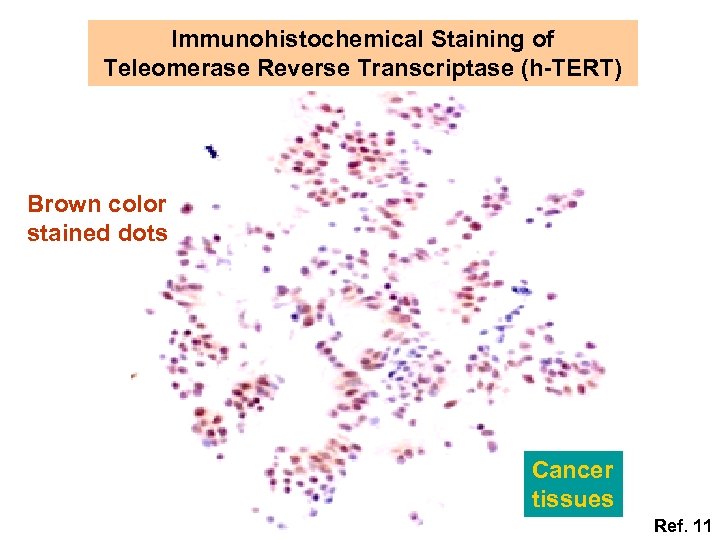
Immunohistochemical Staining of Teleomerase Reverse Transcriptase (h-TERT) Brown color stained dots Cancer tissues Ref. 11
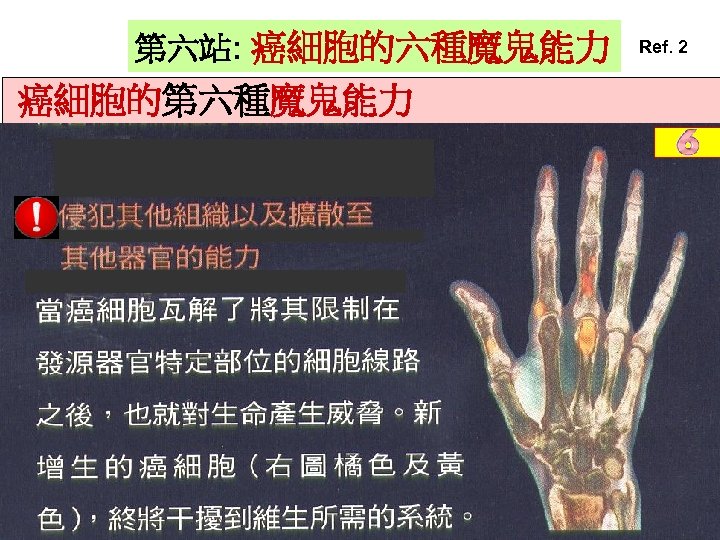
第六站: 癌細胞的六種魔鬼能力 癌細胞的第六種魔鬼能力 Ref. 2
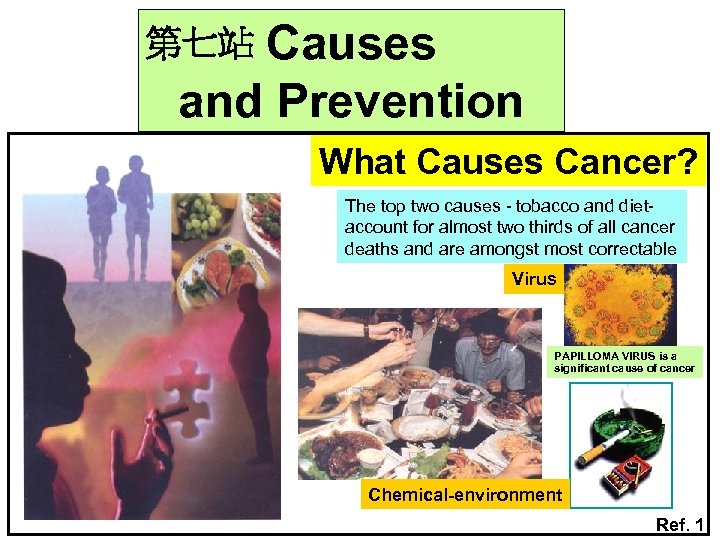
Causes and Prevention 第七站 What Causes Cancer? The top two causes - tobacco and dietaccount for almost two thirds of all cancer deaths and are amongst most correctable Virus PAPILLOMA VIRUS is a significant cause of cancer Chemical-environment Ref. 1
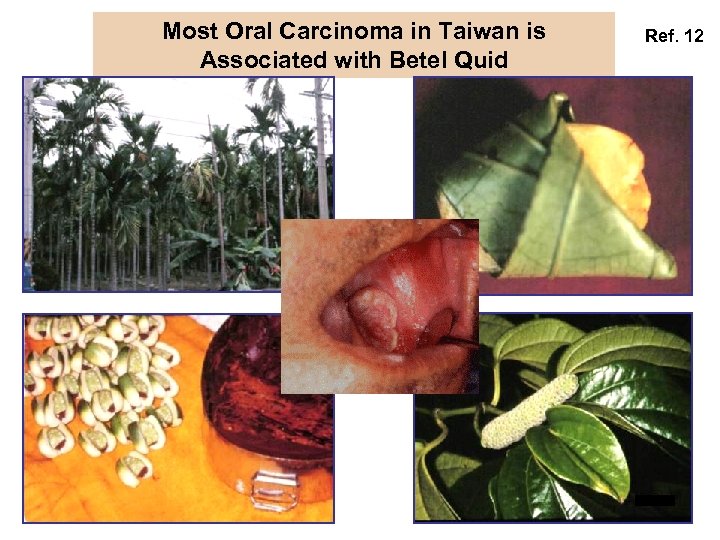
Most Oral Carcinoma in Taiwan is Associated with Betel Quid Ref. 12
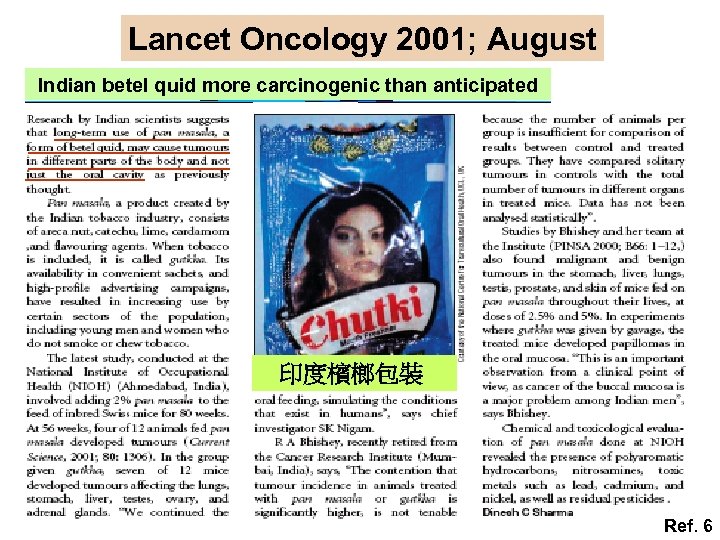
Lancet Oncology 2001; August Indian betel quid more carcinogenic than anticipated 印度檳榔包裝 Ref. 6
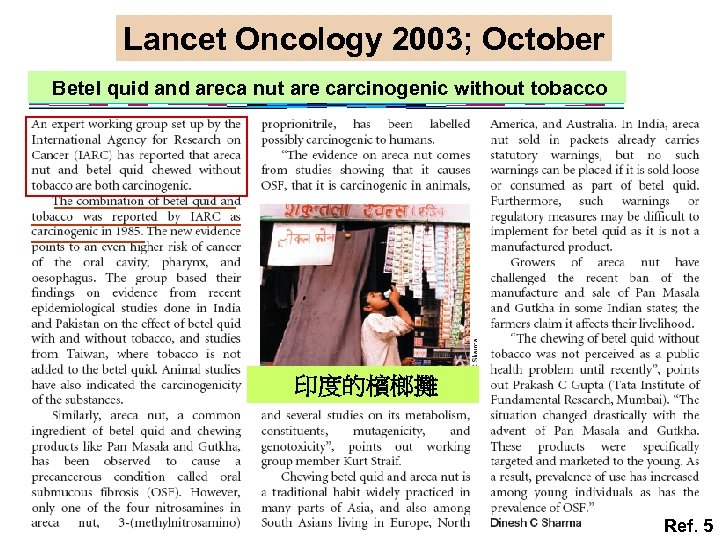
Lancet Oncology 2003; October Betel quid and areca nut are carcinogenic without tobacco 印度的檳榔攤 Ref. 5
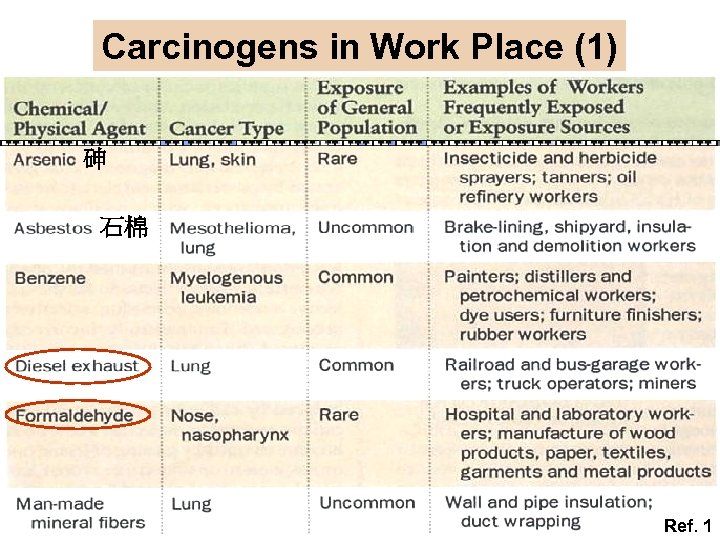
Carcinogens in Work Place (1) 砷 石棉 Ref. 1
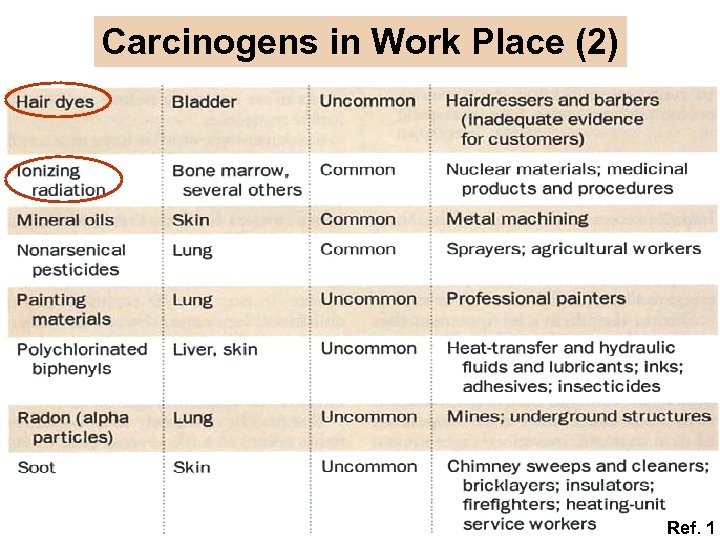
Carcinogens in Work Place (2) Ref. 1
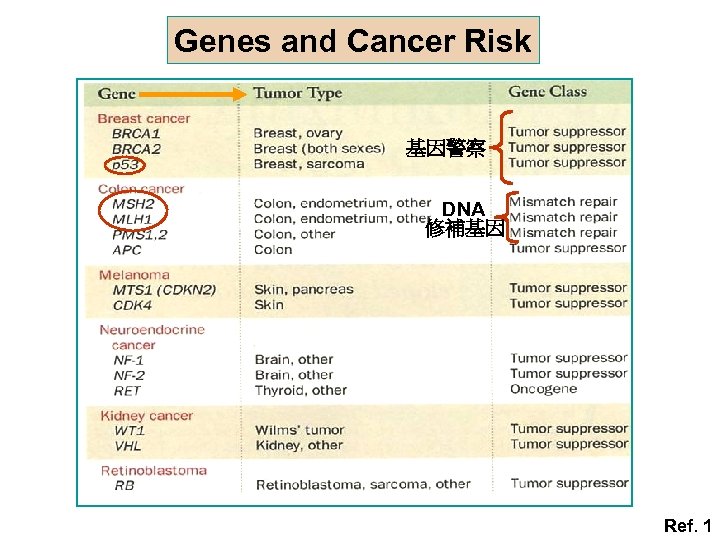
Genes and Cancer Risk 基因警察 DNA 修補基因 Ref. 1
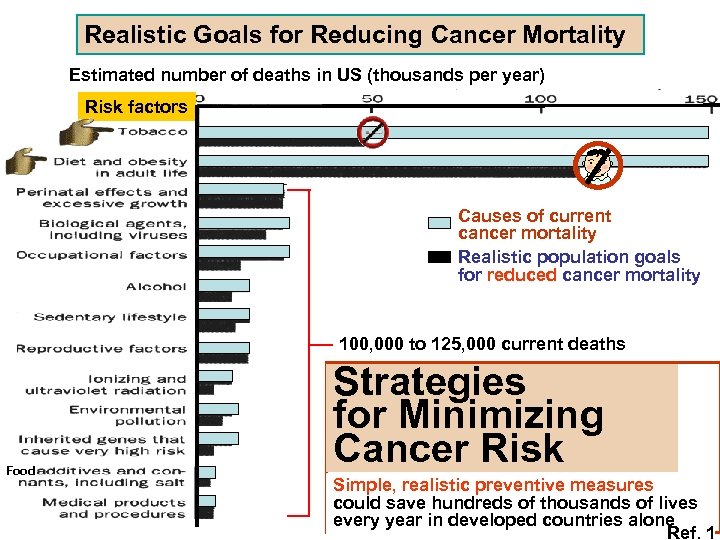
Realistic Goals for Reducing Cancer Mortality Estimated number of deaths in US (thousands per year) Risk factors Causes of current cancer mortality Realistic population goals for reduced cancer mortality 100, 000 to 125, 000 current deaths Food Strategies for Minimizing Cancer Risk Simple, realistic preventive measures could save hundreds of thousands of lives every year in developed countries alone Ref. 1
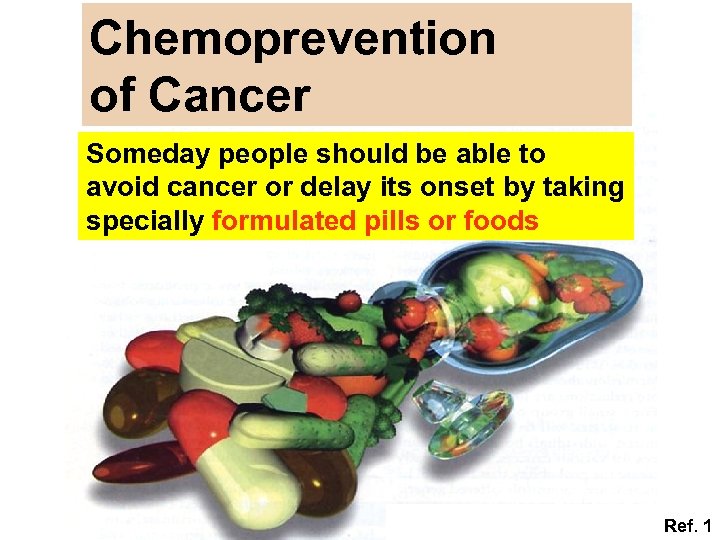
Chemoprevention of Cancer Someday people should be able to avoid cancer or delay its onset by taking specially formulated pills or foods Ref. 1
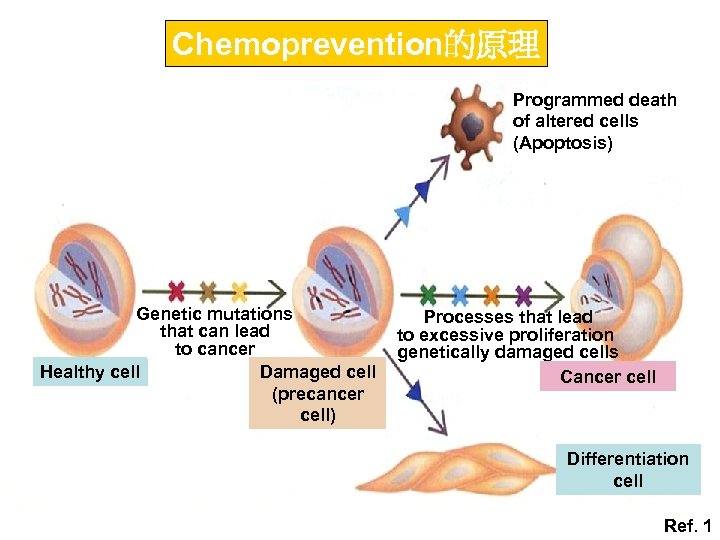
Chemoprevention的原理 Programmed death of altered cells (Apoptosis) Genetic mutations that can lead to cancer Healthy cell Damaged cell (precancer cell) Processes that lead to excessive proliferation genetically damaged cells Cancer cell Differentiation cell Ref. 1
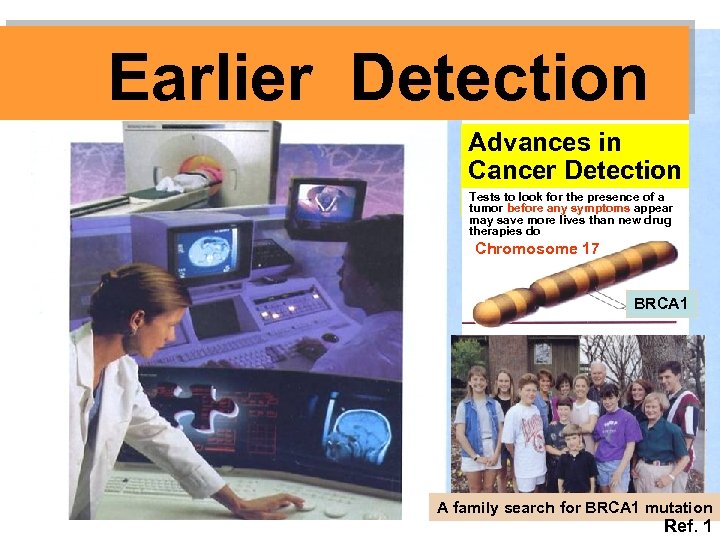
Earlier Detection Advances in Cancer Detection Tests to look for the presence of a tumor before any symptoms appear may save more lives than new drug therapies do Chromosome 17 BRCA 1 A family search for BRCA 1 mutation Ref. 1
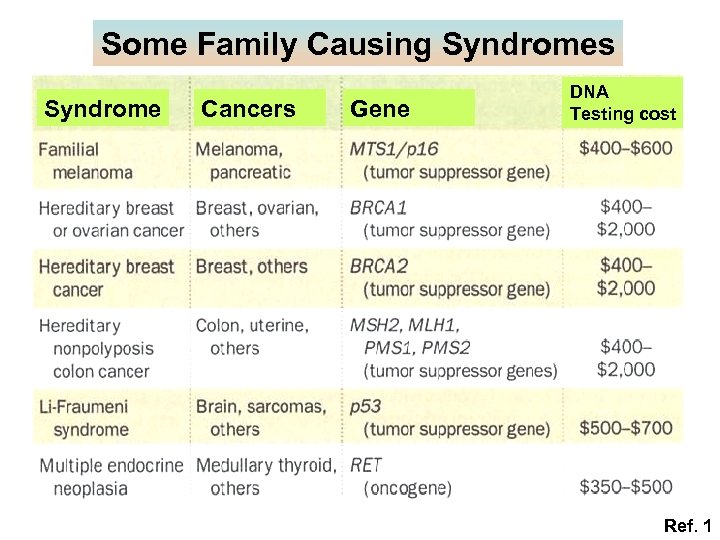
Some Family Causing Syndromes Syndrome Cancers Gene DNA Testing cost Ref. 1
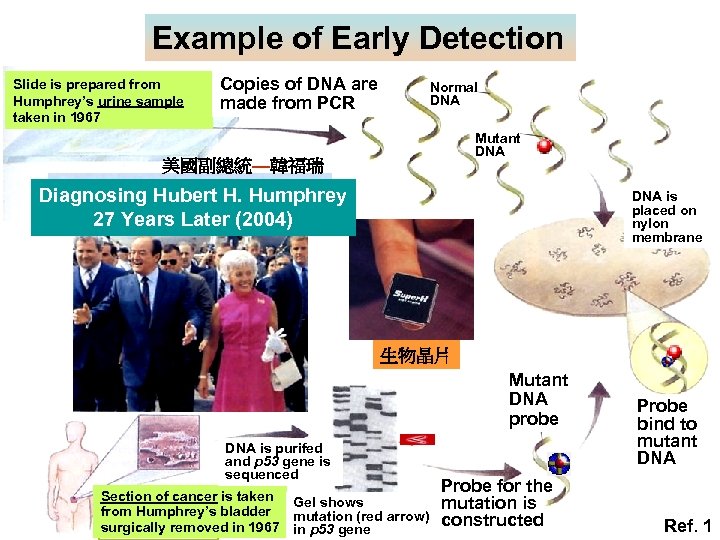
Example of Early Detection Slide is prepared from Humphrey’s urine sample taken in 1967 Copies of DNA are made from PCR Normal DNA Mutant DNA 美國副總統—韓福瑞 Diagnosing Hubert H. Humphrey 27 Years Later (2004) DNA is placed on nylon membrane 生物晶片 Mutant DNA probe DNA is purifed and p 53 gene is sequenced Section of cancer is taken Gel shows from Humphrey’s bladder mutation (red arrow) surgically removed in 1967 in p 53 gene Probe for the mutation is constructed Probe bind to mutant DNA Ref. 1
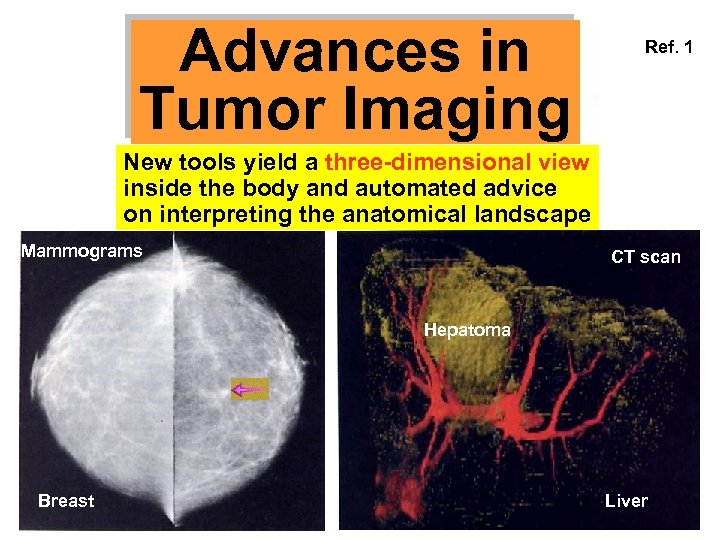
Advances in Tumor Imaging Ref. 1 New tools yield a three-dimensional view inside the body and automated advice on interpreting the anatomical landscape Mammograms CT scan Hepatoma Breast Liver
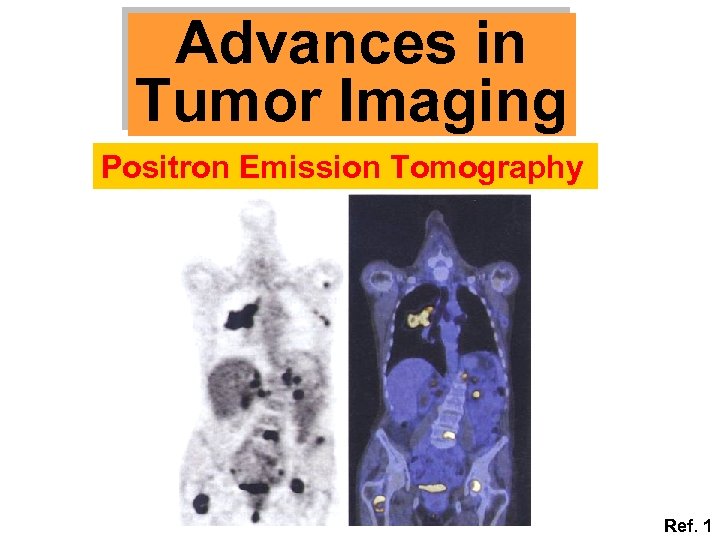
Advances in Tumor Imaging Positron Emission Tomography Ref. 1
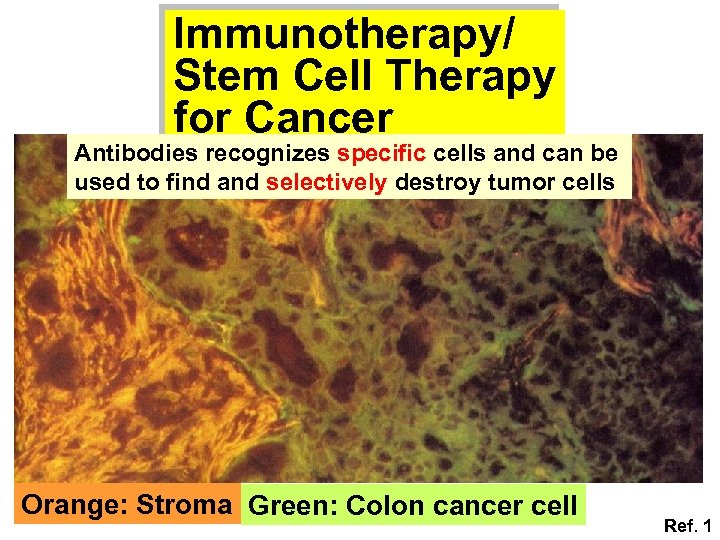
Immunotherapy/ Stem Cell Therapy for Cancer Antibodies recognizes specific cells and can be used to find and selectively destroy tumor cells Orange: Stroma Green: Colon cancer cell Ref. 1
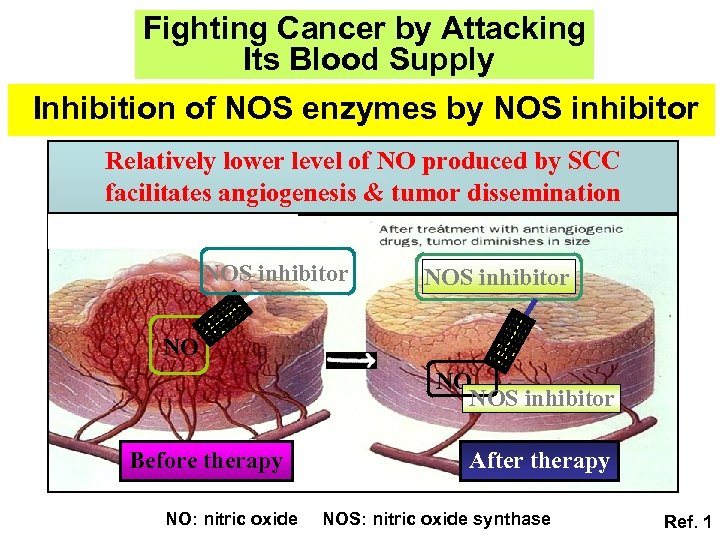
Fighting Cancer by Attacking Its Blood Supply Inhibition of NOS enzymes by NOS inhibitor Relatively lower level of NO produced by SCC facilitates angiogenesis & tumor dissemination NOS inhibitor NO NO NOS inhibitor Before therapy NO: nitric oxide After therapy NOS: nitric oxide synthase Ref. 1
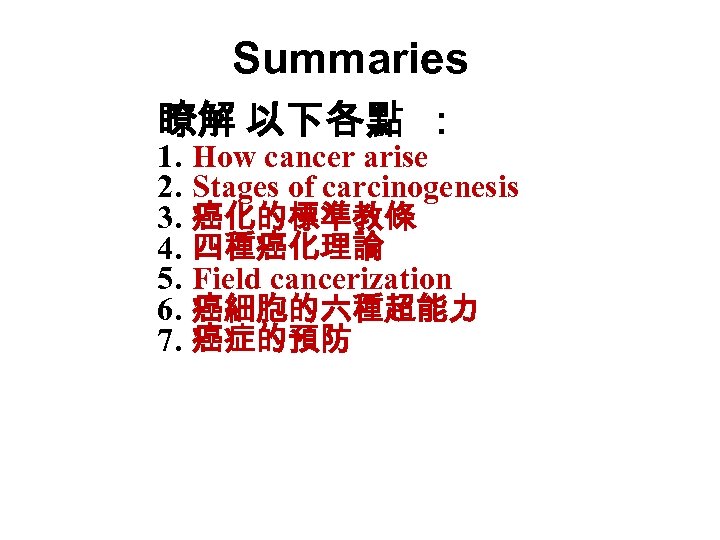
Summaries 瞭解 以下各點 : 1. 2. 3. 4. 5. 6. 7. How cancer arise Stages of carcinogenesis 癌化的標準教條 四種癌化理論 Field cancerization 癌細胞的六種超能力 癌症的預防
Скачать презентацию 牙醫學導論 Oral Cancer Oral Pathology 口腔癌口腔病理學 陳玉昆教授 高雄醫學大學
e7be6b79362731ca2007c7803e9606c8.ppt