 Скачать презентацию 形容词或副词的最高级形式 1 一般在词尾 est new newest
9e5b5ca4105342bd36a79ed3fec90b54.ppt
- Количество слайдов: 43




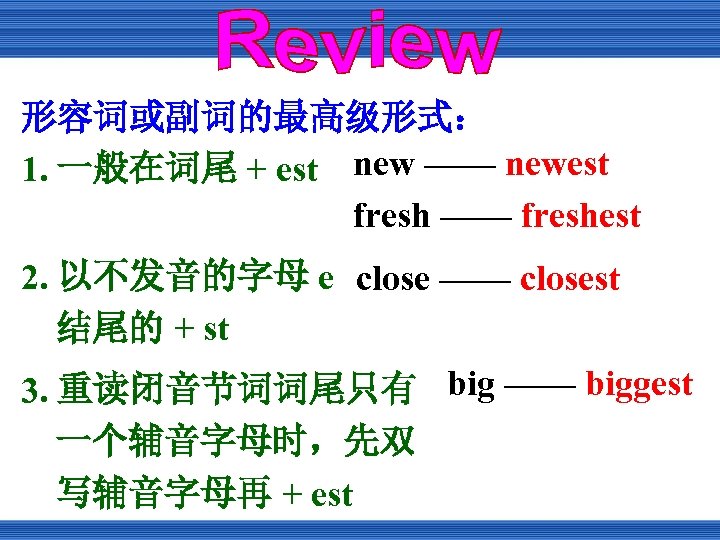
形容词或副词的最高级形式: 1. 一般在词尾 + est new —— newest fresh —— freshest 2. 以不发音的字母 e close —— closest 结尾的 + st 3. 重读闭音节词词尾只有 big —— biggest 一个辅音字母时,先双 写辅音字母再 + est
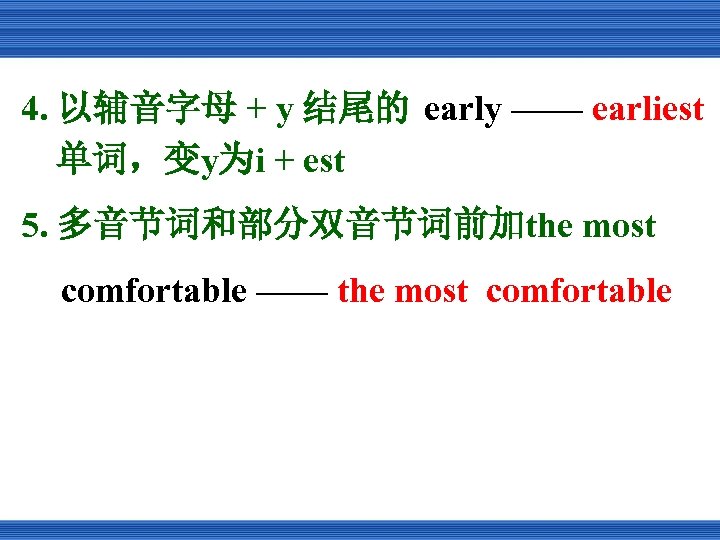
4. 以辅音字母 + y 结尾的 early —— earliest 单词,变y为i + est 5. 多音节词和部分双音节词前加the most comfortable —— the most comfortable
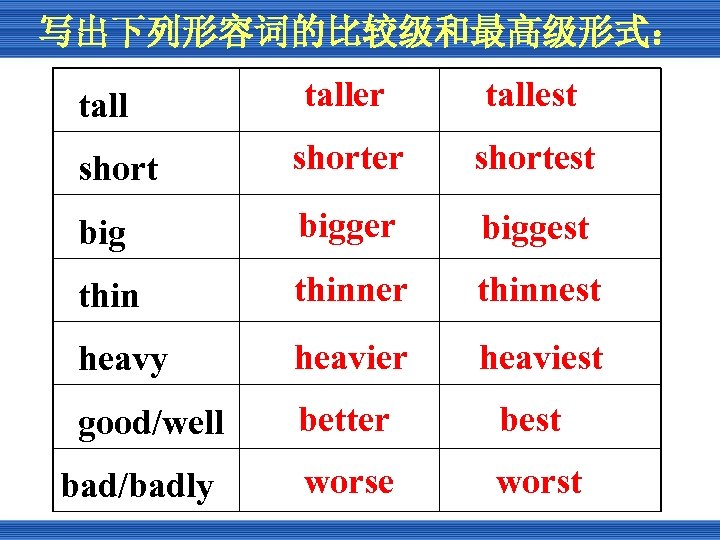
写出下列形容词的比较级和最高级形式: taller tallest shorter shortest bigger biggest thinner thinnest heavy heavier heaviest good/well better best bad/badly worse worst tall
Talk about the clothes stores or restaurants in your neighborhood. Blue Moons has the worst clothes. New Fashion has the best quality. Young House has the cheapest clothes. Jenny’s has the best service. Danny’s is the closest to my home. New Star has the most delicious food. Funky Noodles has the best services. Li Dumplings has the cheapest food.
Talk about your classmates. Jenny is the funniest in class. Grace is the most hard-working. Jane is the most serious. Linda is the thinnest. Tom jumps the highest. Bob runs the fastest. Nick can play the guitar best. Peter dances the worst.
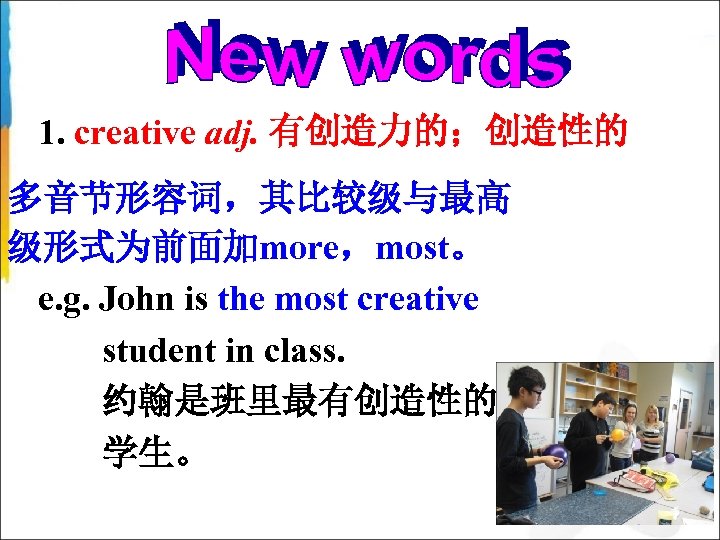
1. creative adj. 有创造力的;创造性的 多音节形容词,其比较级与最高 级形式为前面加more,most。 e. g. John is the most creative student in class. 约翰是班里最有创造性的 学生。
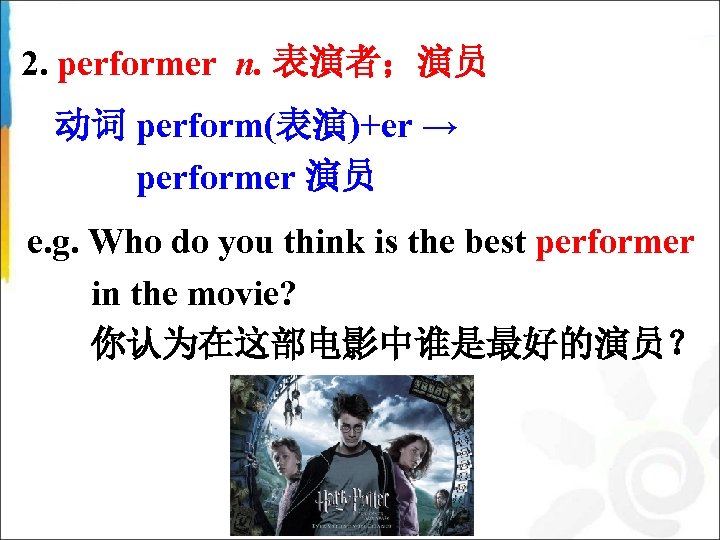
2. performer n. 表演者;演员 动词 perform(表演)+er → performer 演员 e. g. Who do you think is the best performer in the movie? 你认为在这部电影中谁是最好的演员?
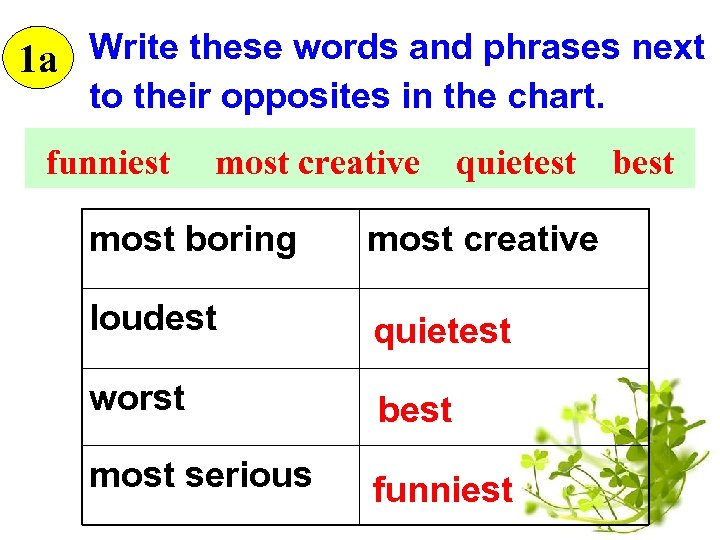
Write these words and phrases next 1 a to their opposites in the chart. funniest most creative quietest most boring most creative loudest quietest worst best most serious funniest best
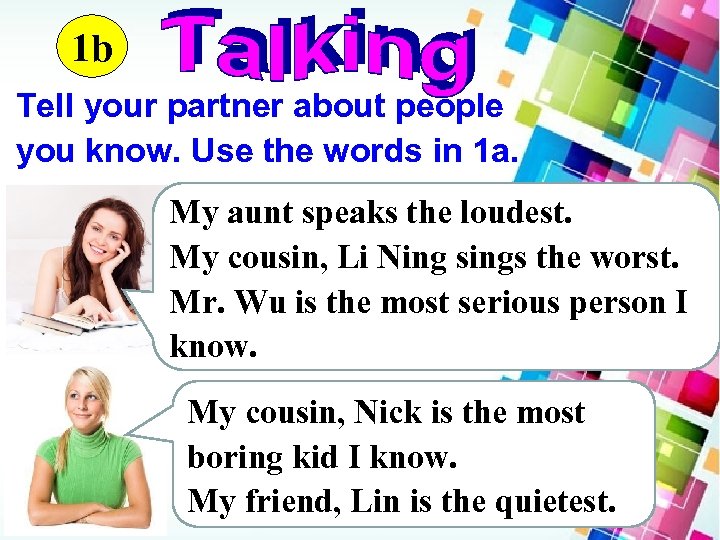
1 b Tell your partner about people you know. Use the words in 1 a. My aunt speaks the loudest. My cousin, Li Ning sings the worst. Mr. Wu is the most serious person I know. My cousin, Nick is the most boring kid I know. My friend, Lin is the quietest.
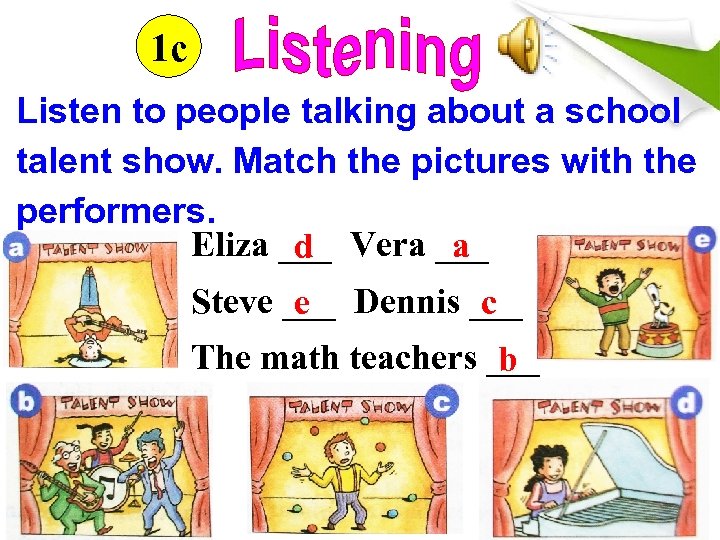
1 c Listen to people talking about a school talent show. Match the pictures with the performers. Eliza ___ Vera ___ a d Steve ___ Dennis ___ e c The math teachers ___ b
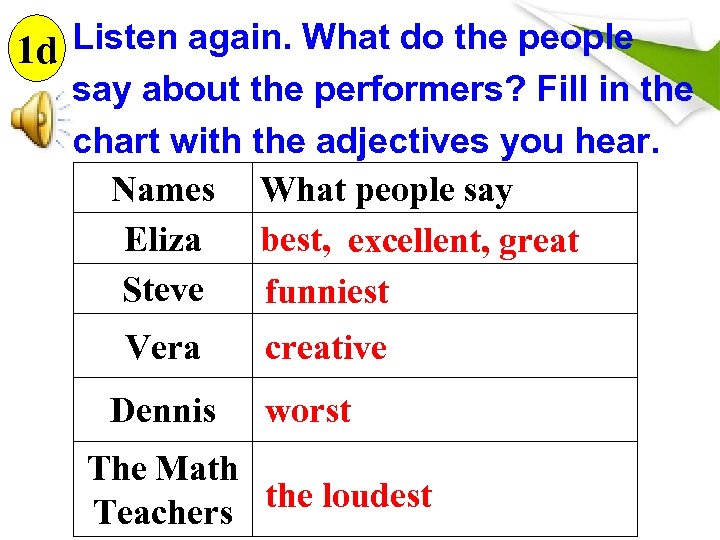
1 d Listen again. What do the people say about the performers? Fill in the chart with the adjectives you hear. Names What people say Eliza best, excellent, great Steve funniest Vera Dennis creative worst The Math the loudest Teachers
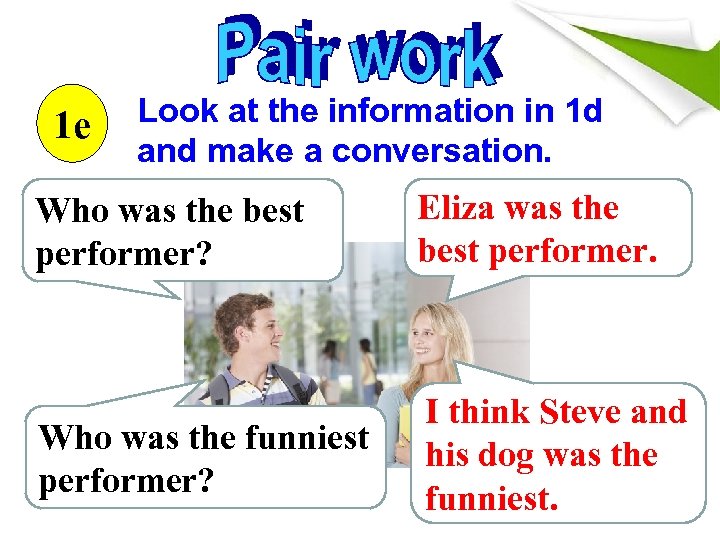
1 e Look at the information in 1 d and make a conversation. Who was the best performer? Eliza was the best performer. Who was the funniest performer? I think Steve and his dog was the funniest.
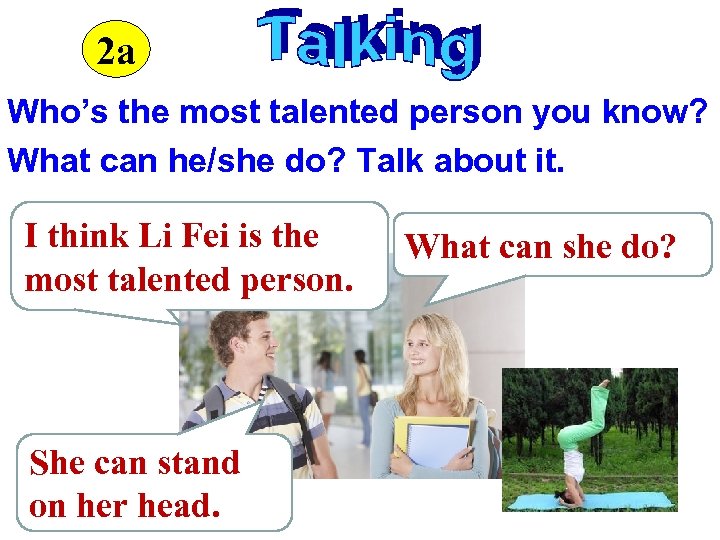
2 a Who’s the most talented person you know? What can he/she do? Talk about it. I think Li Fei is the most talented person. She can stand on her head. What can she do?
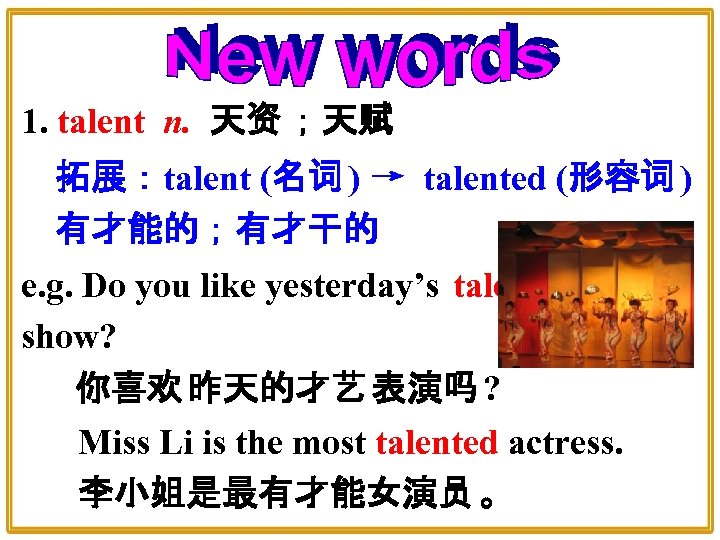
1. talent n. 天资 ;天赋 拓展:talent (名词 ) → talented (形容词 ) 有才能的;有才干的 e. g. Do you like yesterday’s talent show? 你喜欢 昨天的才艺 表演吗 ? Miss Li is the most talented actress. 李小姐是最有才能女演员 。
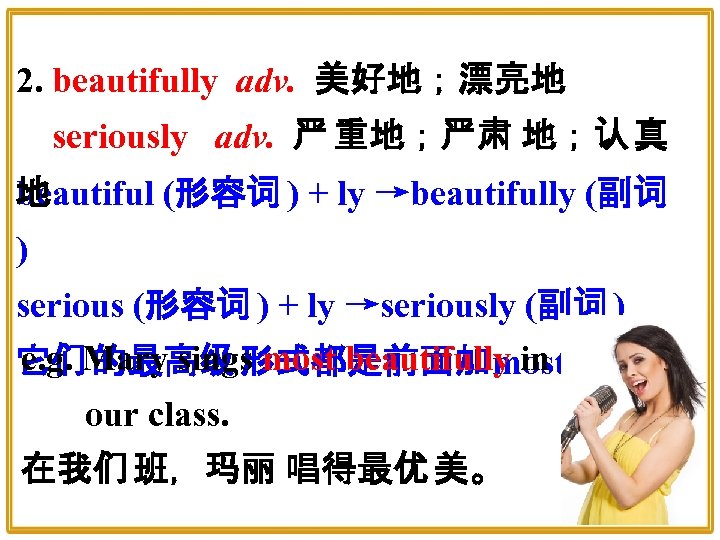
2. beautifully adv. 美好地;漂亮地 seriously adv. 严 重地;严肃 地;认 真 地 beautiful (形容词 ) + ly →beautifully (副词 ) serious (形容词 ) + ly →seriously (副词 ) e. g. 的最高级 形式都是前面加most。 它们Mary sings most beautifully in our class. 在我们 班,玛丽 唱得最优 美。
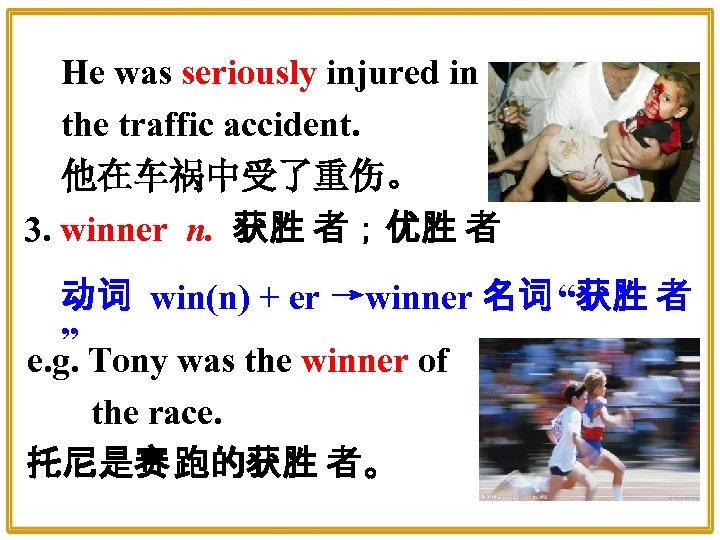
He was seriously injured in the traffic accident. 他在车祸中受了重伤。 3. winner n. 获胜 者;优胜 者 动词 win(n) + er →winner 名词 “获胜 者 ” e. g. Tony was the winner of the race. 托尼是赛 跑的获胜 者。
4. prize n. 奖 ;奖 品;奖 金 常用词组 :win / get a prize 获 奖 e. g. Linda got the prize at the English competition. 琳达在英语 比赛 中获奖 。 5. everybody pron. 每人;人人;所有人 不定代词 ,相当于everyone,作主语时 当单 数看,谓语动词 用单 数形式。
e. g. Everybody has a dream. 每个人都有一个梦想。 6. give v. 提供;给 常用词组 :give sb. sth. / give sth. to sb. 给 某人某物 e. g. Please give your uncle these tickets. = Give these tickets to your uncle, please. 把这 些票给 你的叔叔。
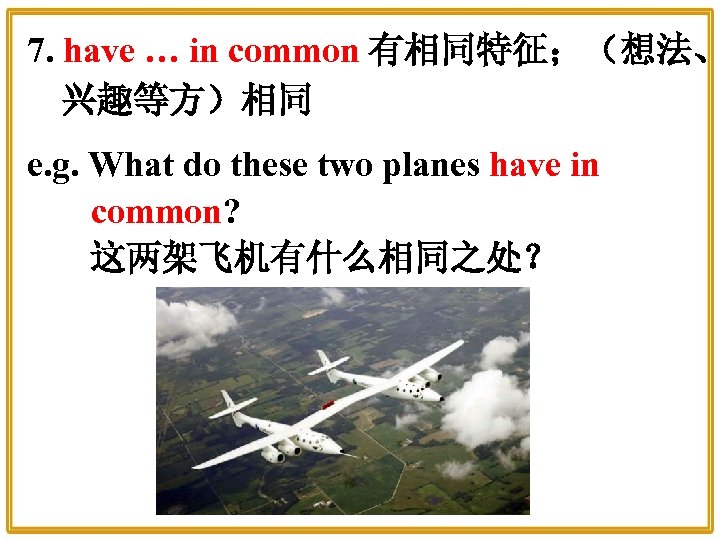
7. have … in common 有相同特征;(想法、 兴趣等方)相同 e. g. What do these two planes have in common? 这两架飞机有什么相同之处?
8. all kinds of 各种类型的;各种各样的 e. g. There’re all kinds of trees on the hill. 山上有各种不同种类的树。 9. be up to 由……决定;是……的职责 在英语中,be up to somebody 是一个习 惯用语,用来表示“由某人做出抉择”, 句子的主语通常为it, 有时也用this或 that。
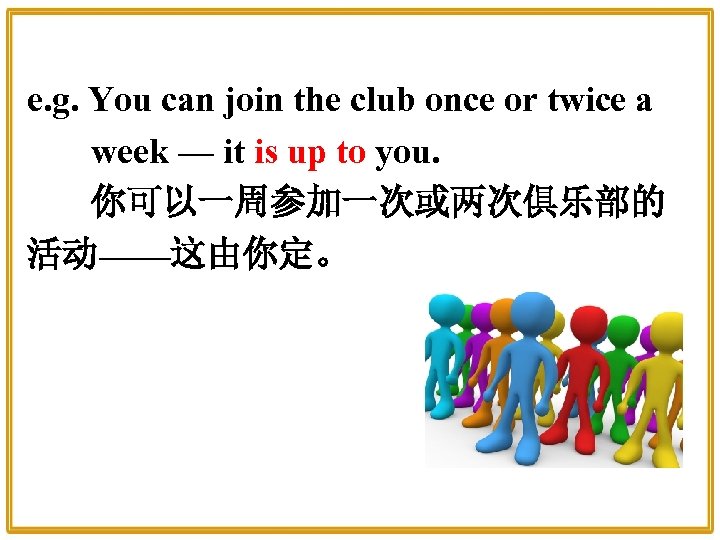
e. g. You can join the club once or twice a week — it is up to you. 你可以一周参加一次或两次俱乐部的 活动——这由你定。
10. make up 编造(故事;谎言) e. g. Mr. Li asks the students to make up a story. 李老师让学生们编个故事。 11. for example 例如 e. g. For example, they’re smart and good at art. 例如:他们很聪明,擅长艺术。
12. take … seriously 认真对待 …… e. g. We must take the teachers’ words seriously. 我们必须认真对待老师说的话。
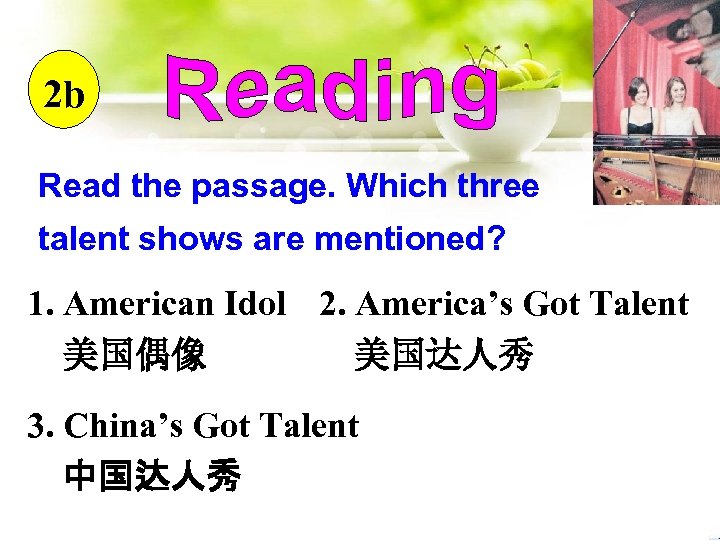
2 b Read the passage. Which three talent shows are mentioned? 1. American Idol 2. America’s Got Talent 美国偶像 美国达人秀 3. China’s Got Talent 中国达人秀
Read the passage again and find the answers to the questions. 1. What do talent shows have in common? 2. Who decides the winners? 3. Why do some people not like these shows? 4. Why do some people like these shows? 5. What do you think of these shows?
指导: 读这五个问题,带着问题去读短文。 在短文中划出相关问题的依据,并作出 回答。
1. What do talent shows have in common? _________________ They try to look for the best singers, _________________ the most talented dancers, the most _________________ exciting magicians, the funniest _________________ actorsand so on. 2. Who decides the winner? That’s up to the people who watch it. _________________
3. Why do some people not like these shows? __________________ Because some people think that the lives __________________ of the performers are made up. 4. Why do some people like these shows? __________________ Because if people don’t take these shows __________________ too seriously, they are fun to watch.
5. What do you think of these shows? _________________ I think they can give people a way to _________________ make up their dreams come true.
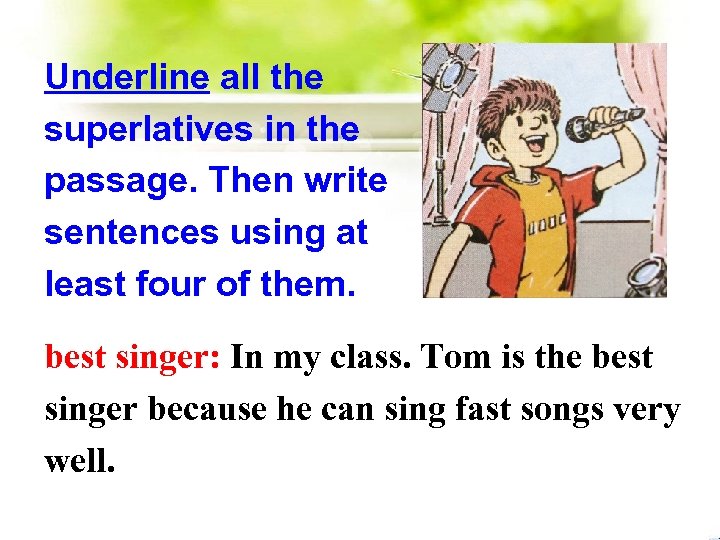
Underline all the superlatives in the passage. Then write sentences using at least four of them. best singer: In my class. Tom is the best singer because he can sing fast songs very well.
most talented dancers: Jenny is the most talented dancers because she can dance like a fish. most exciting magicians: Liu Qian is the most exciting magicians. funniest actor: Linda is the funniest actor because she can sing like a parrot.
Who’s got talent in your class? Write a classmate’s name for each talent and find out how many students in your group agree with 2 e you.
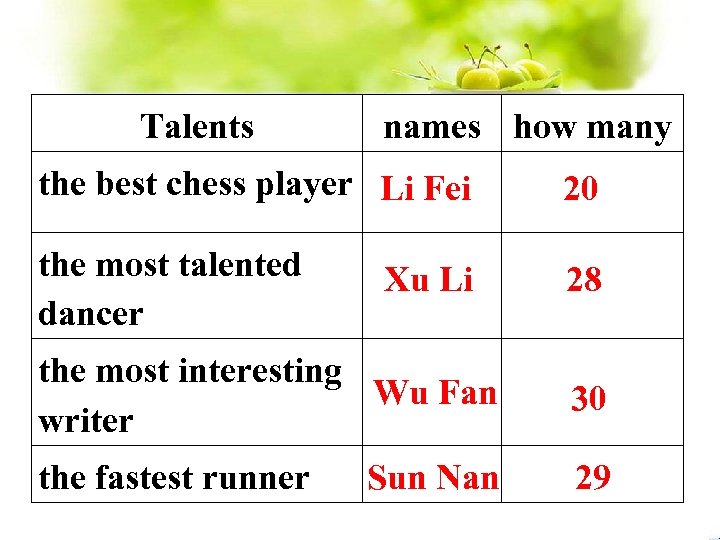
Talents names how many the best chess player Li Fei 20 the most talented dancer 28 Xu Li the most interesting Wu Fan writer 30 the fastest runner 29 Sun Nan
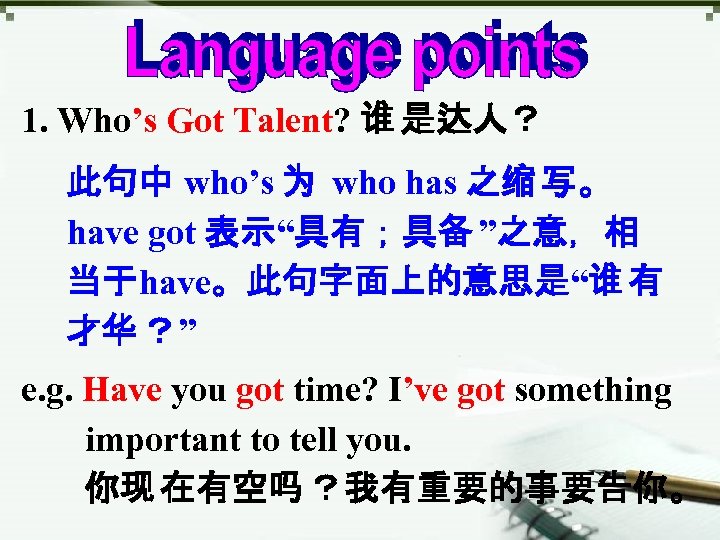
1. Who’s Got Talent? 谁 是达人? 此句中 who’s 为 who has 之缩 写。 have got 表示“具有;具备 ”之意,相 当于have。此句字面上的意思是“谁 有 才华 ?” e. g. Have you got time? I’ve got something important to tell you. 你现 在有空吗 ?我有重要的事要告你。
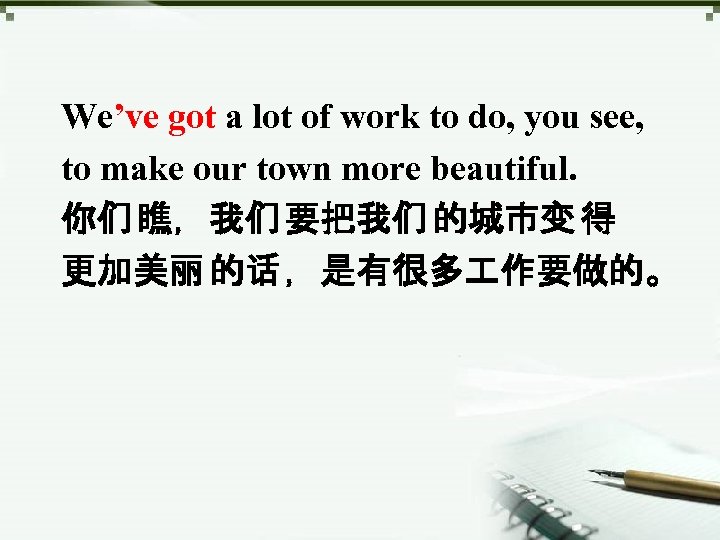
We’ve got a lot of work to do, you see, to make our town more beautiful. 你们 瞧,我们 要把我们 的城市变 得 更加美丽 的话 ,是有很多 作要做的。
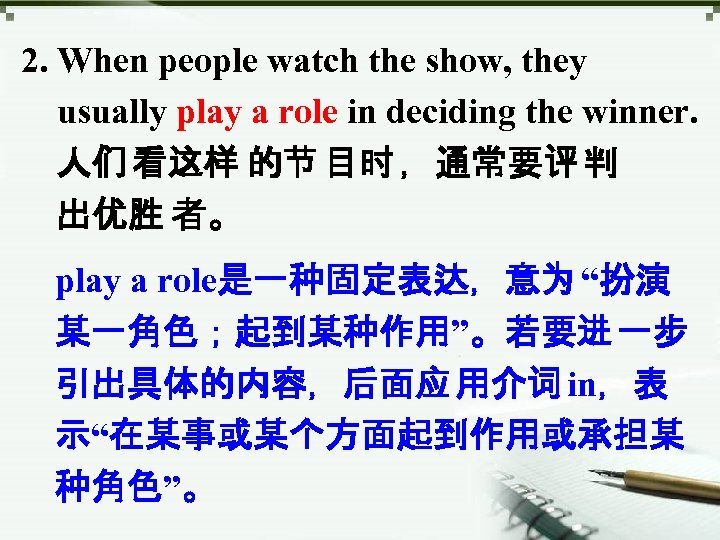
2. When people watch the show, they usually play a role in deciding the winner. 人们 看这样 的节 目时 ,通常要评 判 出优胜 者。 play a role是一种固定表达,意为 “扮演 某一角色;起到某种作用”。若要进 一步 引出具体的内容,后面应 用介词 in,表 示“在某事或某个方面起到作用或承担某 种角色”。
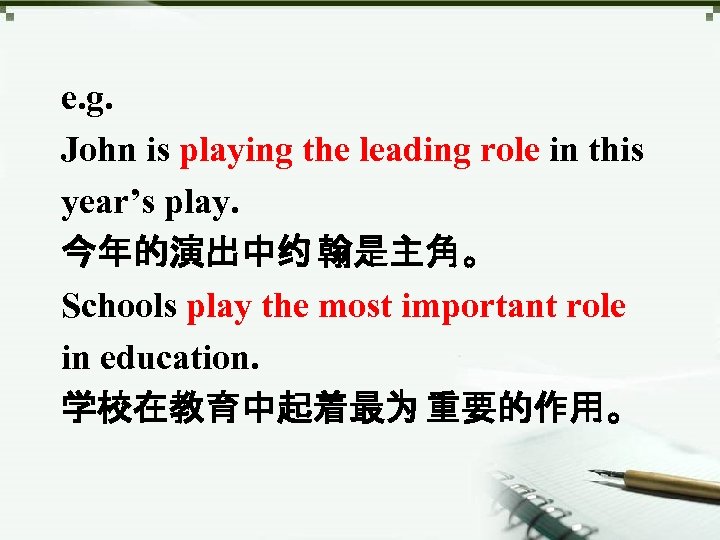
e. g. John is playing the leading role in this year’s play. 今年的演出中约 翰是主角。 Schools play the most important role in education. 学校在教育中起着最为 重要的作用。
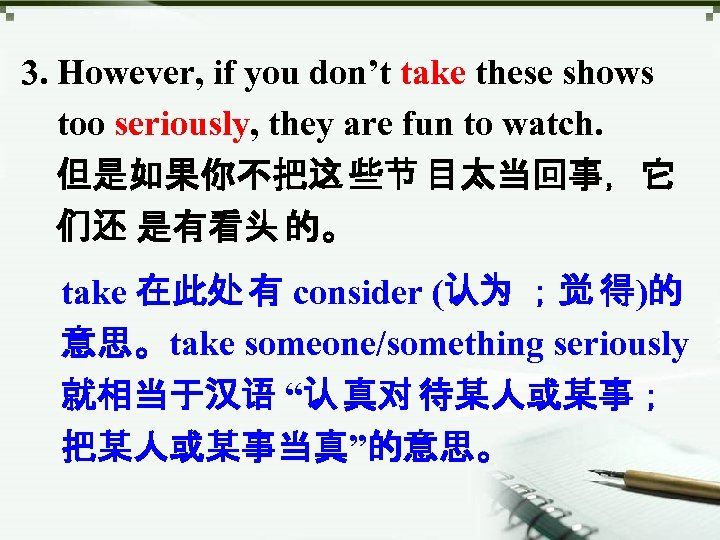
3. However, if you don’t take these shows too seriously, they are fun to watch. 但是如果你不把这 些节 目太当回事,它 们还 是有看头 的。 take 在此处 有 consider (认为 ;觉 得)的 意思。take someone/something seriously 就相当于汉语 “认 真对 待某人或某事; 把某人或某事当真”的意思。
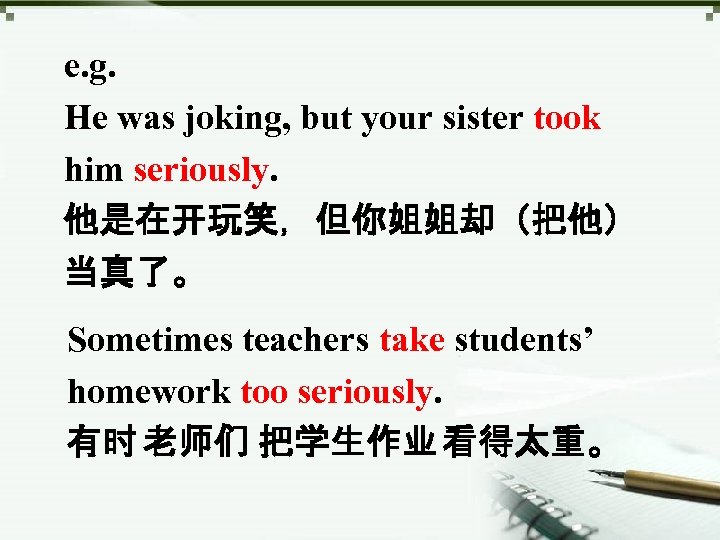
e. g. He was joking, but your sister took him seriously. 他是在开玩笑,但你姐姐却(把他) 当真了。 Sometimes teachers take students’ homework too seriously. 有时 老师们 把学生作业 看得太重。
1. Read the passage after class. 2. Write report according to the chart in 2 e.
 Скачать презентацию 形容词或副词的最高级形式 1 一般在词尾 est new newest
9e5b5ca4105342bd36a79ed3fec90b54.ppt