 Скачать презентацию 初中英语简单句五大基本句型 S V 此句型的特点是 谓语动词是不及物
c4dc02cb1902d2913498226b32e67ad6.ppt
- Количество слайдов: 11



. 初中英语简单句五大基本句型
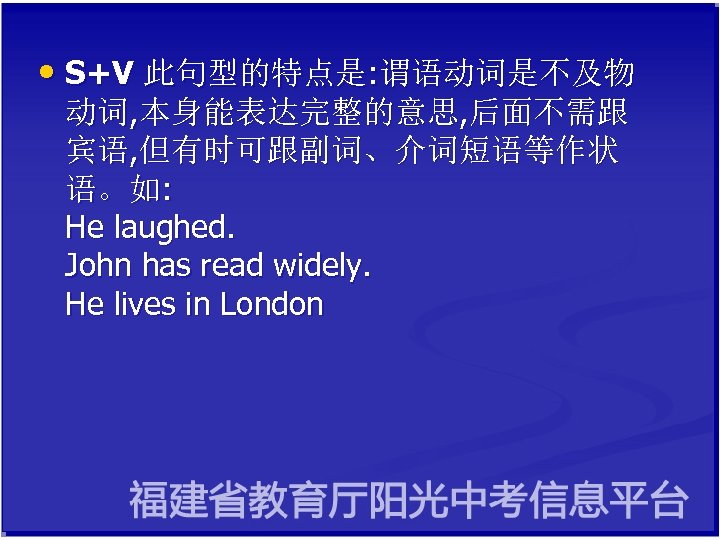
• S+V 此句型的特点是: 谓语动词是不及物 动词, 本身能表达完整的意思, 后面不需跟 宾语, 但有时可跟副词、介词短语等作状 语。如: He laughed. John has read widely. He lives in London
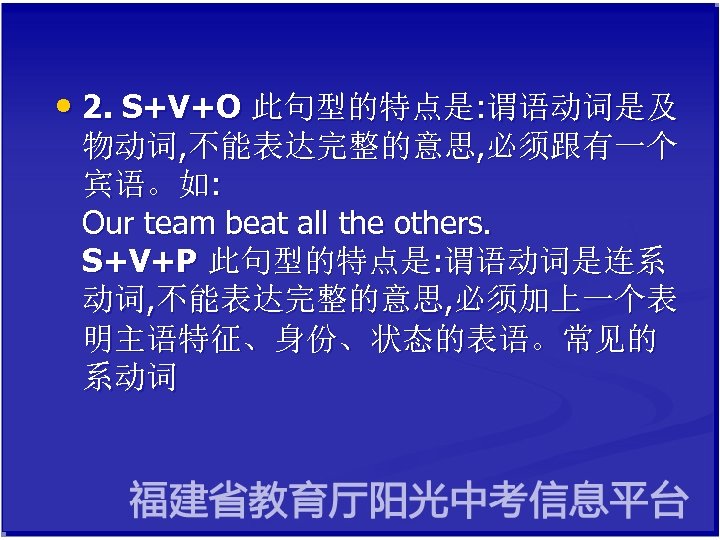
• 2. S+V+O 此句型的特点是: 谓语动词是及 物动词, 不能表达完整的意思, 必须跟有一个 宾语。如: Our team beat all the others. S+V+P 此句型的特点是: 谓语动词是连系 动词, 不能表达完整的意思, 必须加上一个表 明主语特征、身份、状态的表语。常见的 系动词
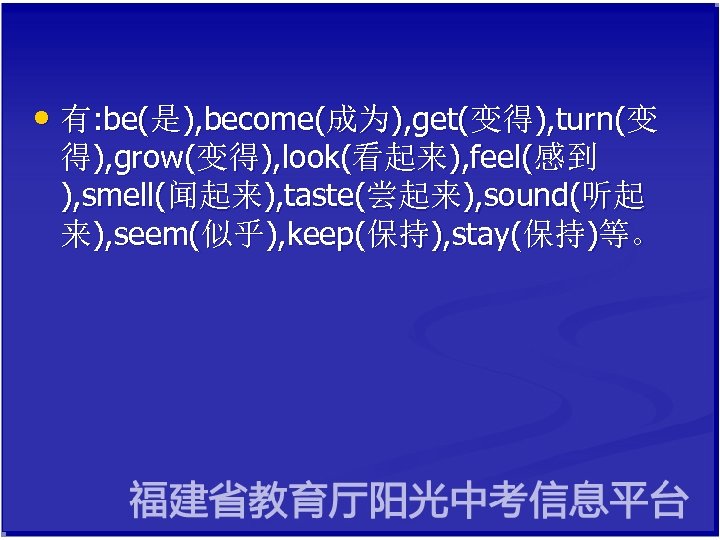
• 有: be(是), become(成为), get(变得), turn(变 得), grow(变得), look(看起来), feel(感到 ), smell(闻起来), taste(尝起来), sound(听起 来), seem(似乎), keep(保持), stay(保持)等。
• 如: The rose smells sweet. S+V+INO+DO 此句型的特点是: 谓语动 词跟有两个宾语, 这两个宾语都是动作的对 象或承受者, 其中指人的是间接宾语, 指物的 是直接宾语。当间接宾语放在直接宾语之 后时, 通常需要加介词for或to。可跟双宾语 的动词
• 有 : answer, bring, buy, find, get, give, lend, make, pass, pay, send, show, sing, take, teach, tell, wr ite等。如: Mr. Li told us an interesting story. Would you please give this dictionary to Li Hua?
• 5. S+V+O+OC此句型的特点是: 谓语动词 虽然跟有一个宾语, 但意思还不完整, 必须加 上另外一个成分(宾语补足语)对宾语进行补 充说明。可以用作宾语补足语的有: 名词、 形容词、不定式、动名词、分词、介词短 语等。如:
• We must keep our school clean. They made him their monitor. 【注】S=Subject(主语); V=Verb(谓语 动词); P=Predicative(表语); O=Object(宾语); INO=Indirect Object(间接宾语); DO=Direct Object(直接宾语); OC=Object Complement(宾语补足语)
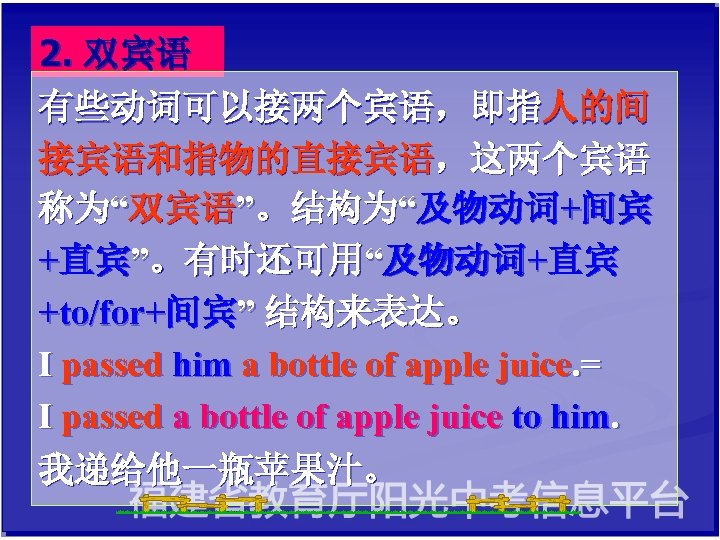
2. 双宾语 有些动词可以接两个宾语,即指人的间 接宾语和指物的直接宾语,这两个宾语 称为“双宾语”。结构为“及物动词+间宾 +直宾”。有时还可用“及物动词+直宾 +to/for+间宾” 结构来表达。 I passed him a bottle of apple juice. = I passed a bottle of apple juice to him. 我递给他一瓶苹果汁。
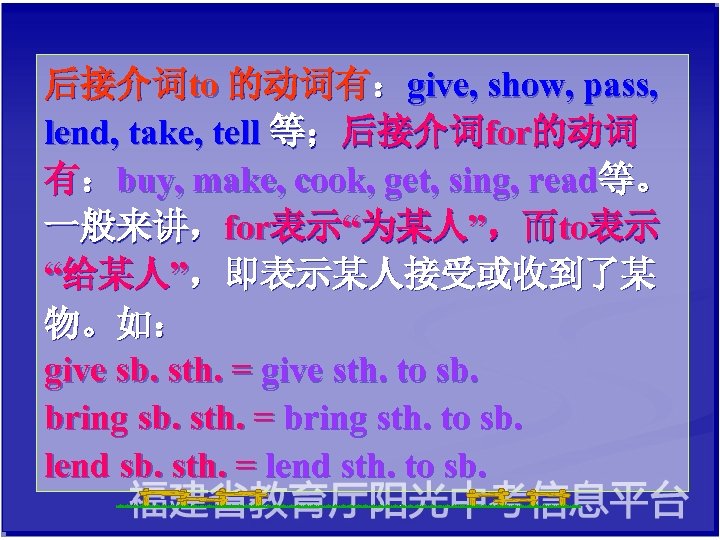
后接介词to 的动词有:give, show, pass, lend, take, tell 等;后接介词for的动词 有:buy, make, cook, get, sing, read等。 一般来讲,for表示“为某人”,而to表示 “给某人”,即表示某人接受或收到了某 物。如: give sb. sth. = give sth. to sb. bring sb. sth. = bring sth. to sb. lend sb. sth. = lend sth. to sb.
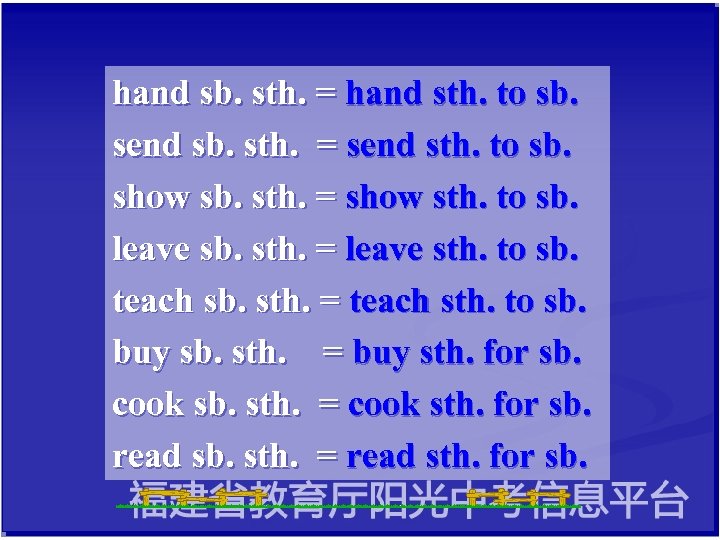
hand sb. sth. = hand sth. to sb. send sb. sth. = send sth. to sb. show sb. sth. = show sth. to sb. leave sb. sth. = leave sth. to sb. teach sb. sth. = teach sth. to sb. buy sb. sth. = buy sth. for sb. cook sb. sth. = cook sth. for sb. read sb. sth. = read sth. for sb.
Скачать презентацию 初中英语简单句五大基本句型 S V 此句型的特点是 谓语动词是不及物
c4dc02cb1902d2913498226b32e67ad6.ppt