 Скачать презентацию 全新课标理念 优质课程资源 北师大版 高一 1 Unit 3 Lesson
2e47c9b6b9514ffcf62347d29d7fa11b.ppt
- Количество слайдов: 47



全新课标理念,优质课程资源 北师大版 高一 (1) Unit 3
Lesson 4 Christmas
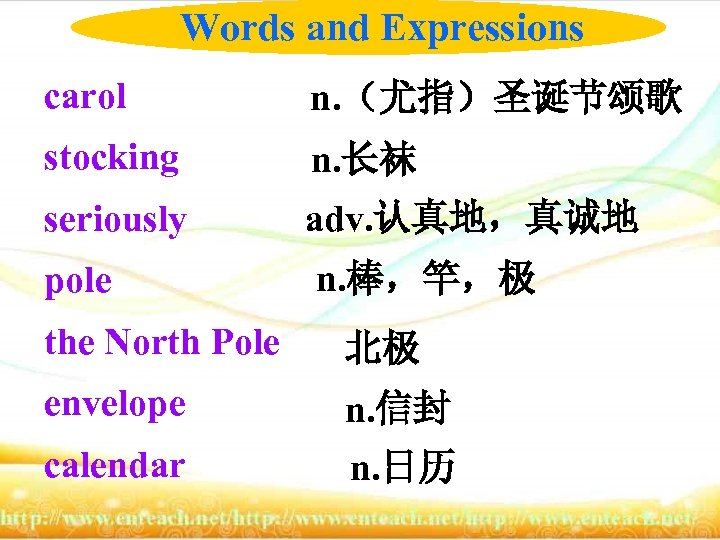
Words and Expressions carol n. (尤指)圣诞节颂歌 stocking n. 长袜 seriously adv. 认真地,真诚地 pole n. 棒,竿,极 the North Pole 北极 envelope n. 信封 calendar n. 日历
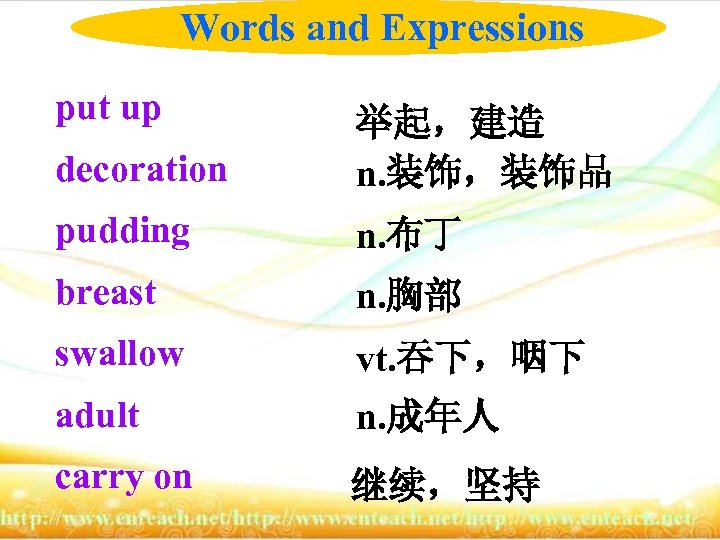
Words and Expressions put up decoration 举起,建造 n. 装饰,装饰品 pudding n. 布丁 breast n. 胸部 swallow vt. 吞下,咽下 adult n. 成年人 carry on 继续,坚持
Objectives To read a narrative text and understand the story. To build up an area of vocabulary associated with Christmas.
To develop reading strategies to answer multiple-choice questions. To practise collocations with have, do and play. To talk about childhood memories.
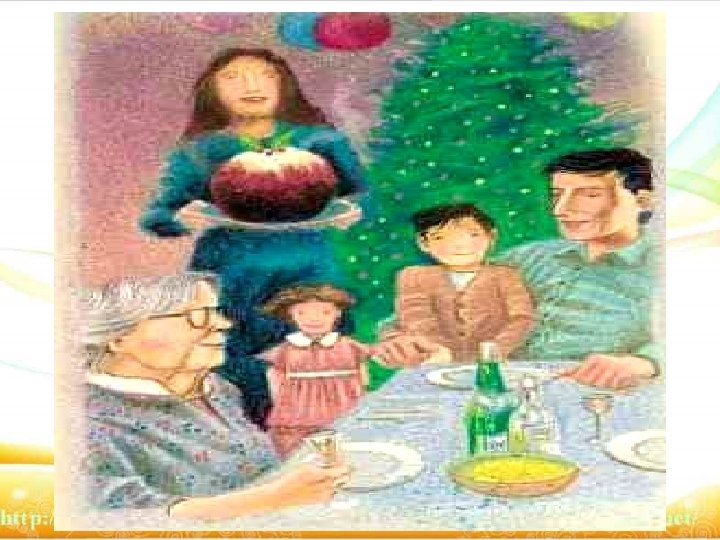
Pre-Reading Find the Key Words in the pictures. Which of the things do you think western people have at Christmas?
Key Words balloons, Christmas carols, Christmas pudding, Christmas tree, snowmen, Christmas stockings, presents
Reading ☆ Read the text. Which Key Words are mentioned? Circle them out. Which other Christmas things are mentioned? Make a list.
Answers: Father Christmas calendar Christmas cards Christmas lights carol service Christmas tree decorations balloons stockings
presents sweets turkey Christmas pudding paper hats Queen’s speech Christmas cake
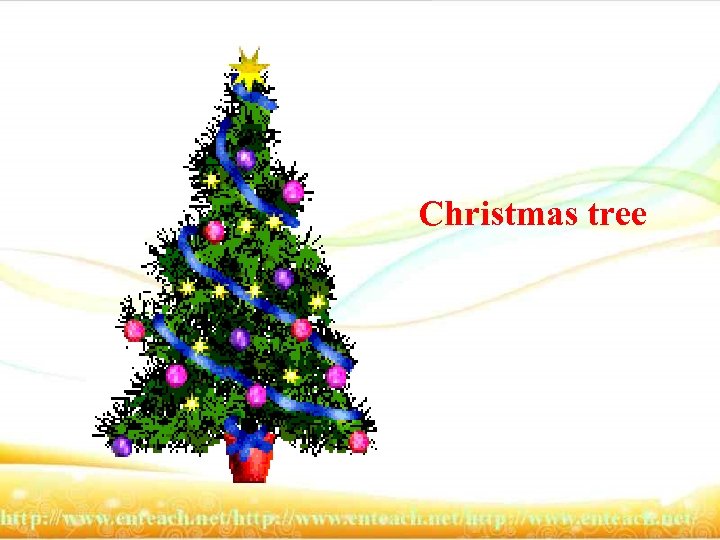
Christmas tree
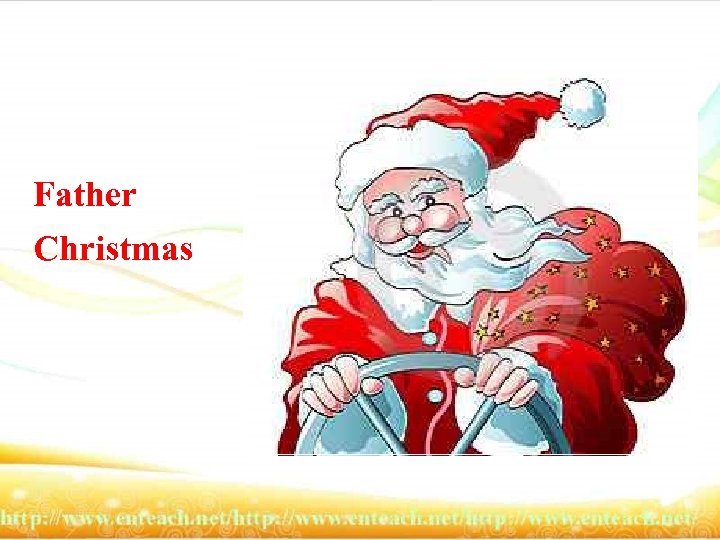
Father Christmas
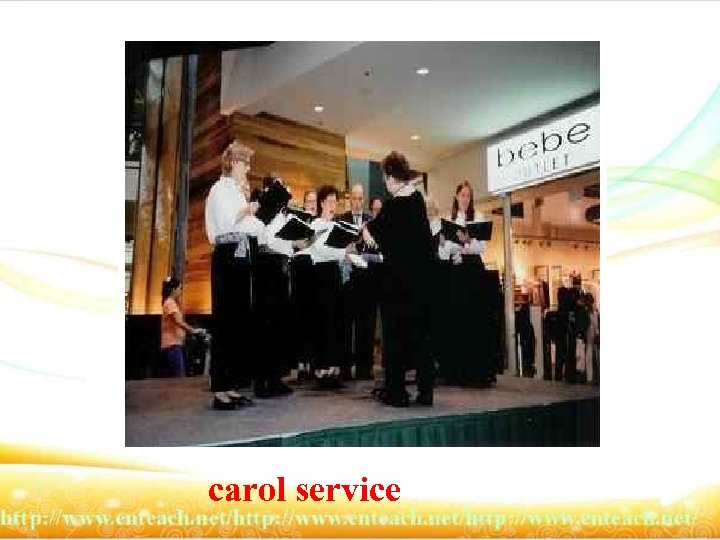
carol service
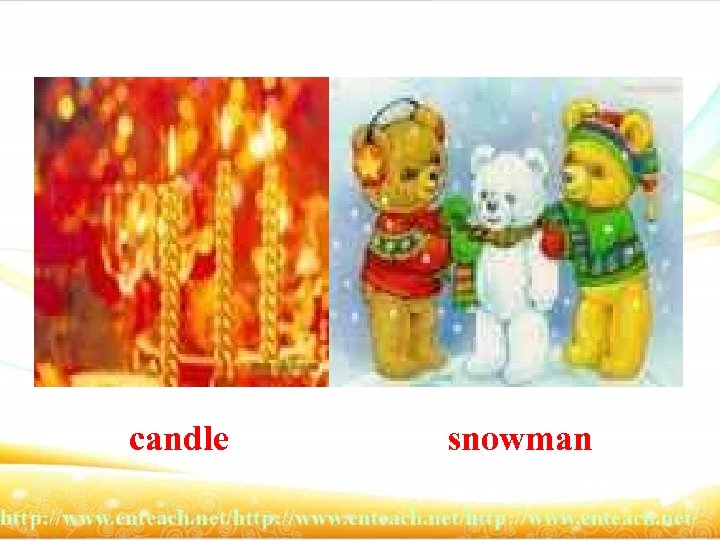
candle snowman
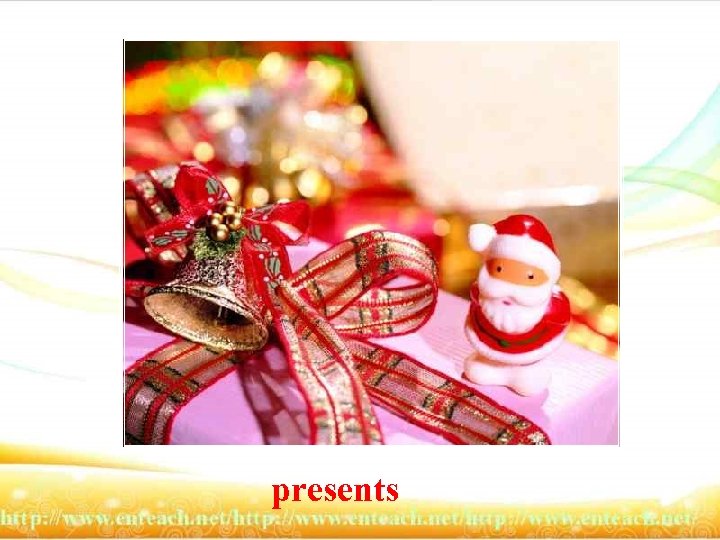
presents
decorations
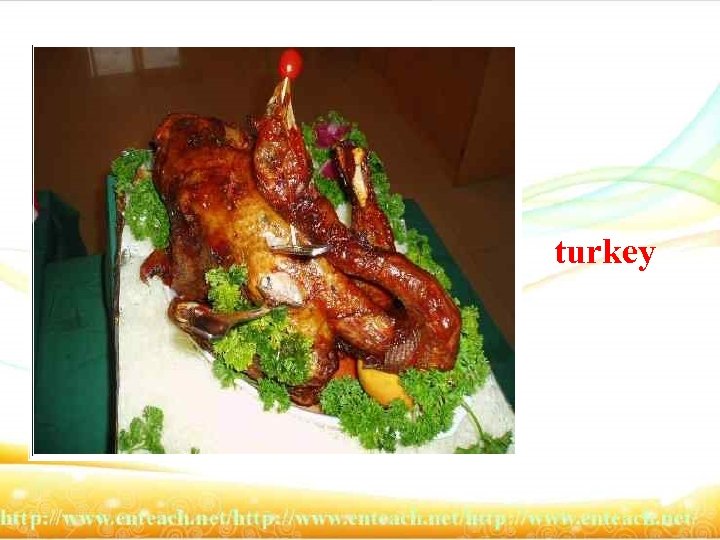
turkey
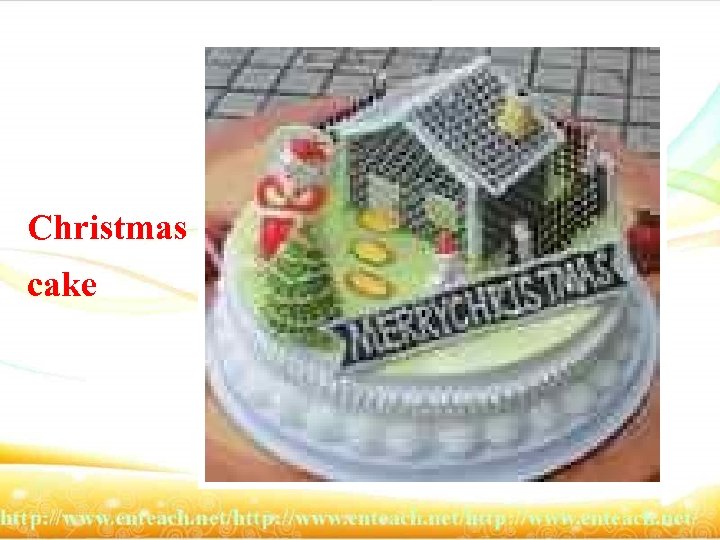
Christmas cake
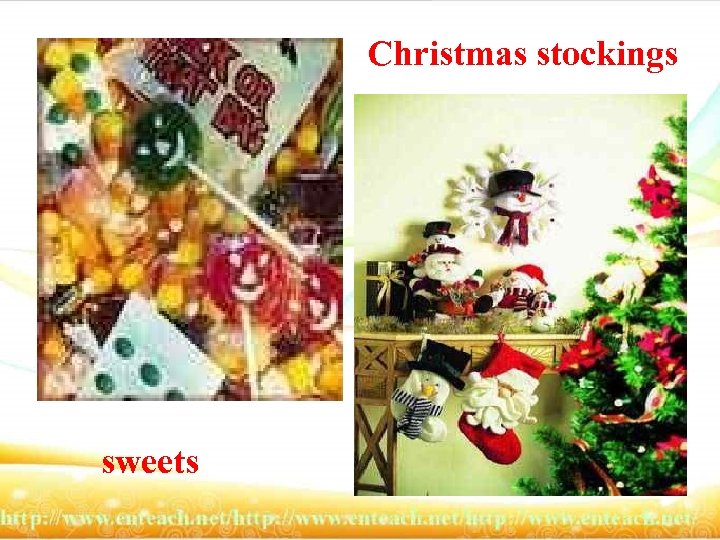
Christmas stockings sweets
Discussion Discuss in groups and compare the differences between Christmas and the Spring Festival.
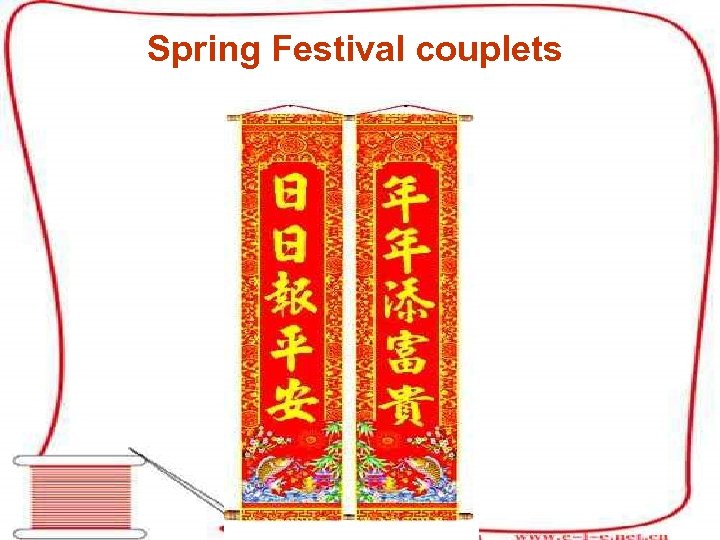
Spring Festival couplets
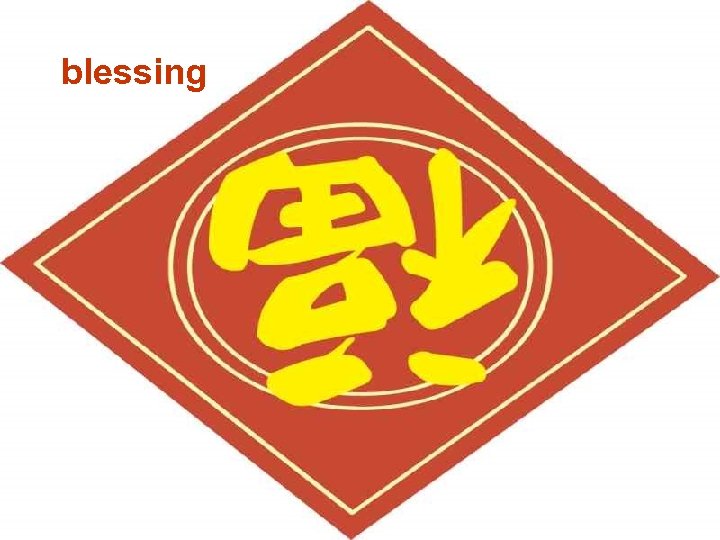
blessing
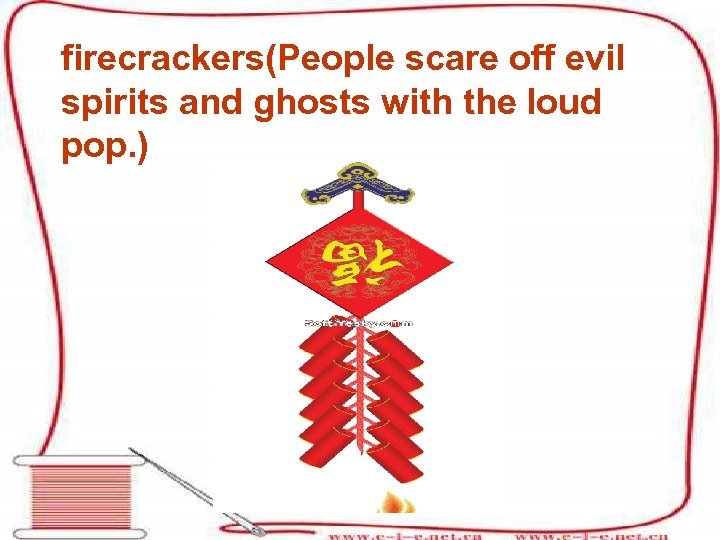
firecrackers(People scare off evil spirits and ghosts with the loud pop. )
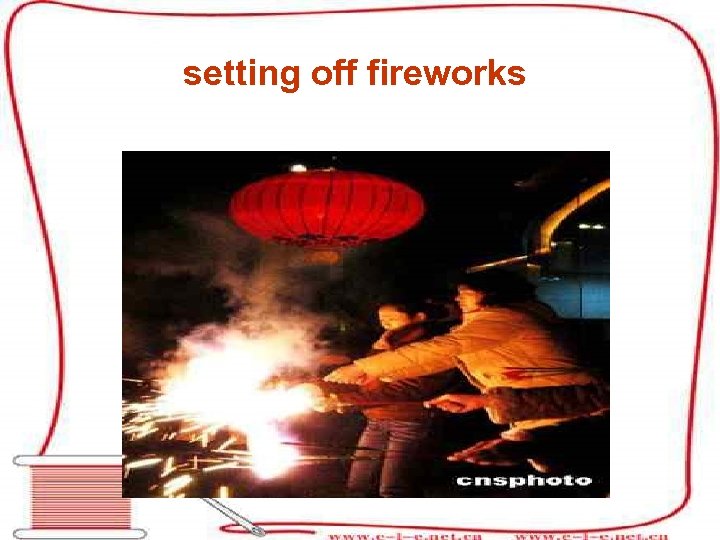
setting off fireworks
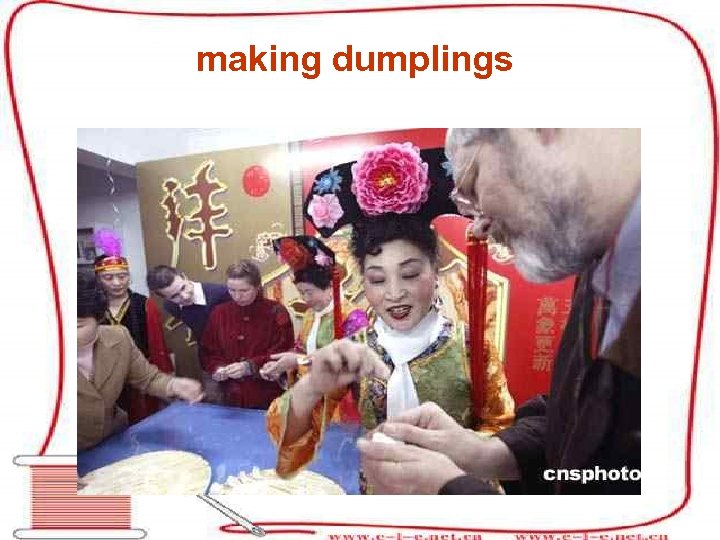
making dumplings
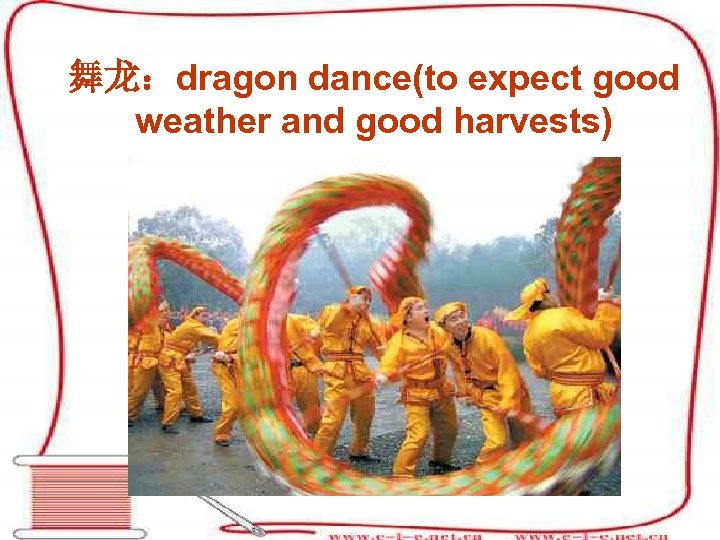
舞龙:dragon dance(to expect good weather and good harvests)
• 春节 The Spring Festival 正月 lunar January, the first month by lunar calendar 除夕 New Year's Eve, eve of lunar New Year 初一 the beginning of New Year
• 红包:red packets(cash wrapped up in red paper, symbolize fortune and wealth in the coming year) • 压岁钱:gift money, money given to children as a lunar New Year gift
• 团圆饭 family reunion dinner 年夜饭 the dinner on New Year's Eve 饺子 Jiao-zi, Chinese meat ravioli 过年 Guo-nian, have the Spring Festival
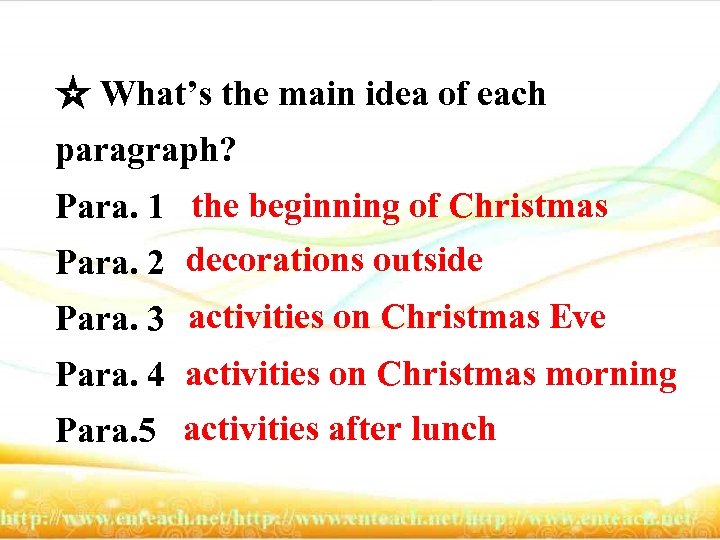
☆ What’s the main idea of each paragraph? Para. 1 the beginning of Christmas Para. 2 decorations outside Para. 3 activities on Christmas Eve Para. 4 activities on Christmas morning Para. 5 activities after lunch
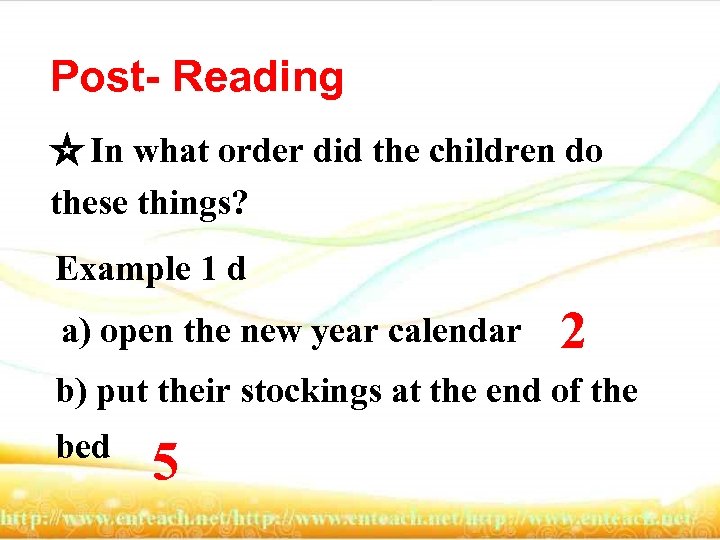
Post- Reading ☆ In what order did the children do these things? Example 1 d a) open the new year calendar 2 b) put their stockings at the end of the bed 5
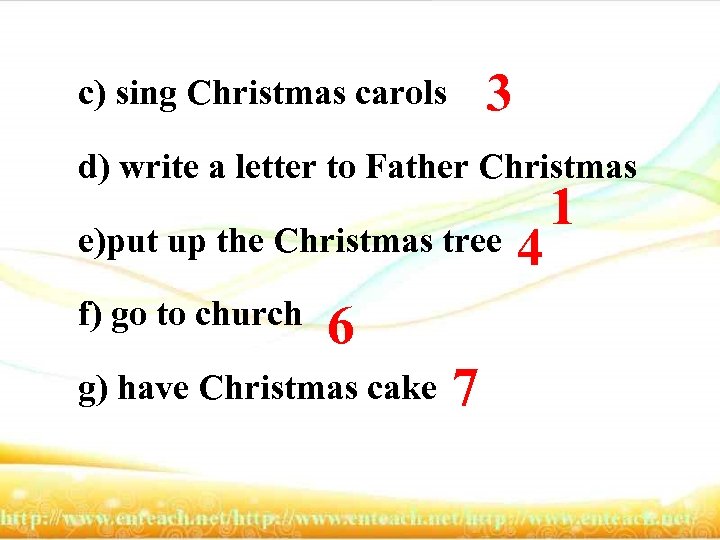
3 c) sing Christmas carols d) write a letter to Father Christmas e)put up the Christmas tree f) go to church 6 g) have Christmas cake 7 4 1
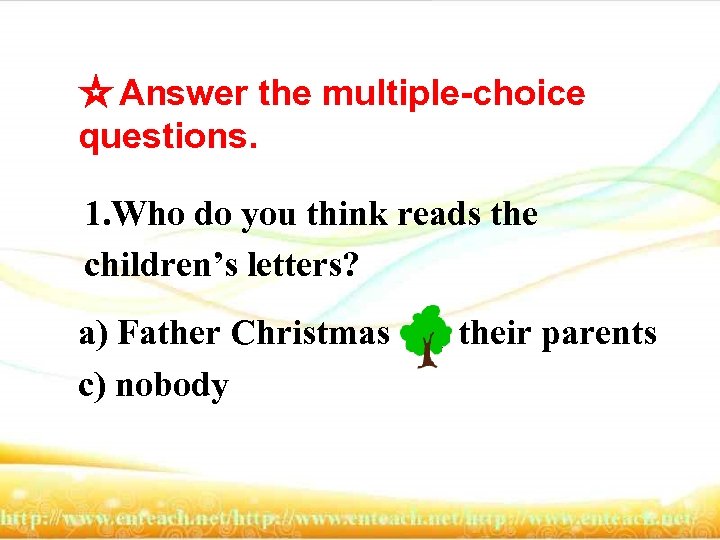
☆ Answer the multiple-choice questions. 1. Who do you think reads the children’s letters? a) Father Christmas b) their parents c) nobody

2. What do you think people do in a carol service? a) sing songs b) give presents b)c) watch a play
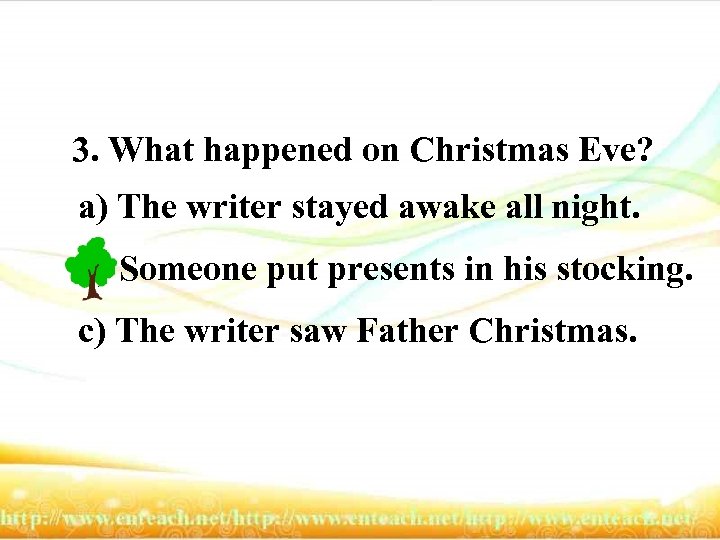
3. What happened on Christmas Eve? a) The writer stayed awake all night. b) Someone put presents in his stocking. c) The writer saw Father Christmas.
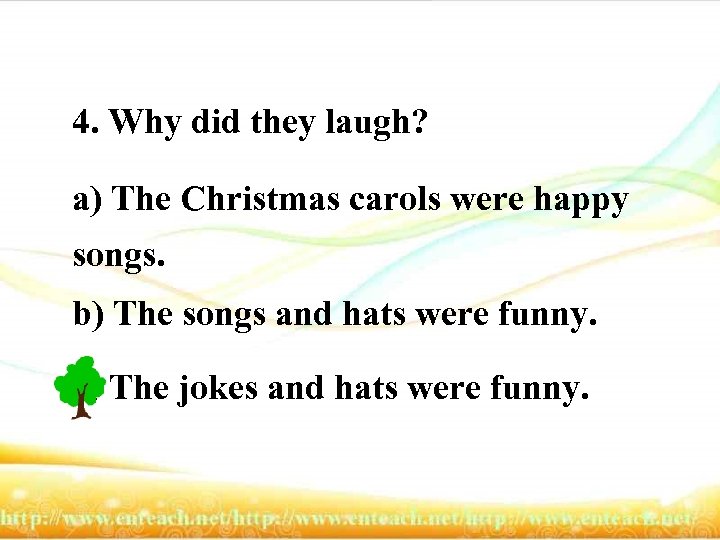
4. Why did they laugh? a) The Christmas carols were happy songs. b) The songs and hats were funny. c) The jokes and hats were funny.
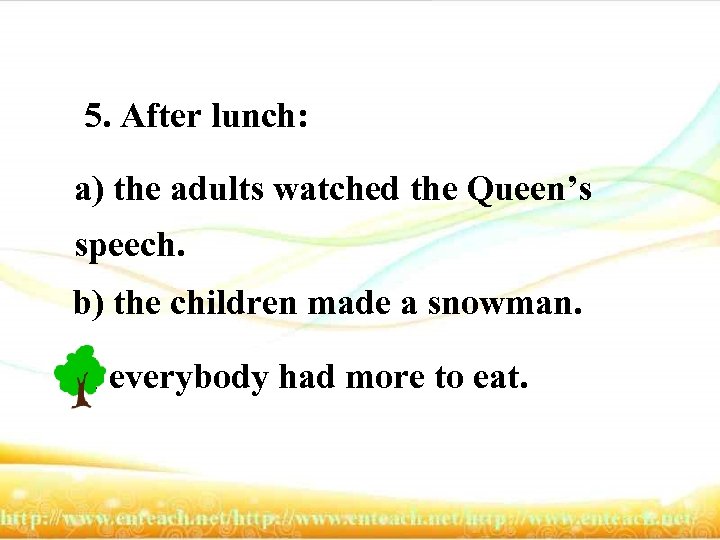
5. After lunch: a) the adults watched the Queen’s speech. b) the children made a snowman. c) everybody had more to eat.
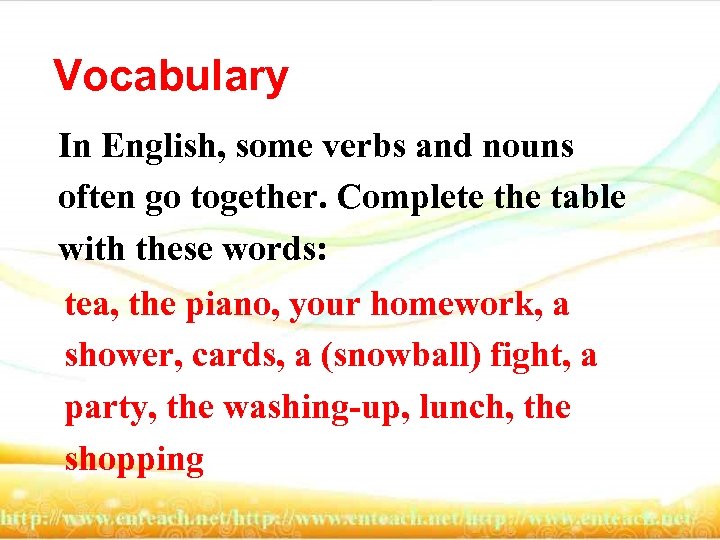
Vocabulary In English, some verbs and nouns often go together. Complete the table with these words: tea, the piano, your homework, a shower, cards, a (snowball) fight, a party, the washing-up, lunch, the shopping
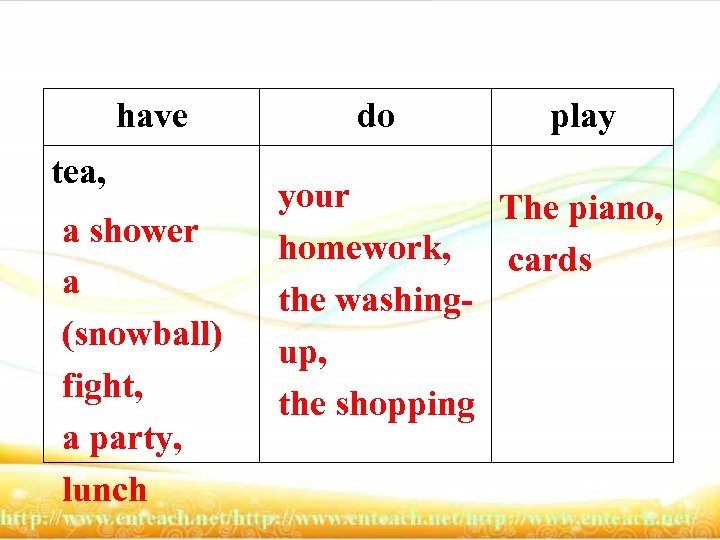
have tea, a shower a (snowball) fight, a party, lunch do play your The piano, homework, cards the washingup, the shopping
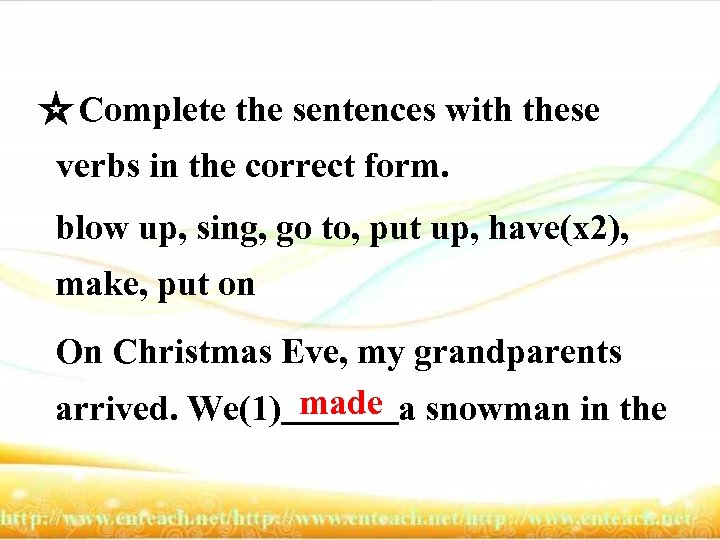
☆ Complete the sentences with these verbs in the correct form. blow up, sing, go to, put up, have(x 2), make, put on On Christmas Eve, my grandparents arrived. We(1) made a snowman in the
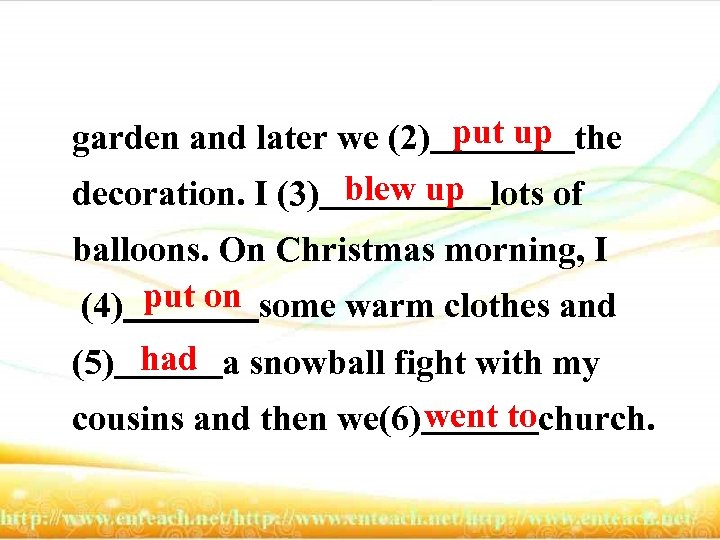
garden and later we (2) put up the decoration. I (3) blew up lots of balloons. On Christmas morning, I (4) put on some warm clothes and (5) had a snowball fight with my cousins and then we(6) went to church.
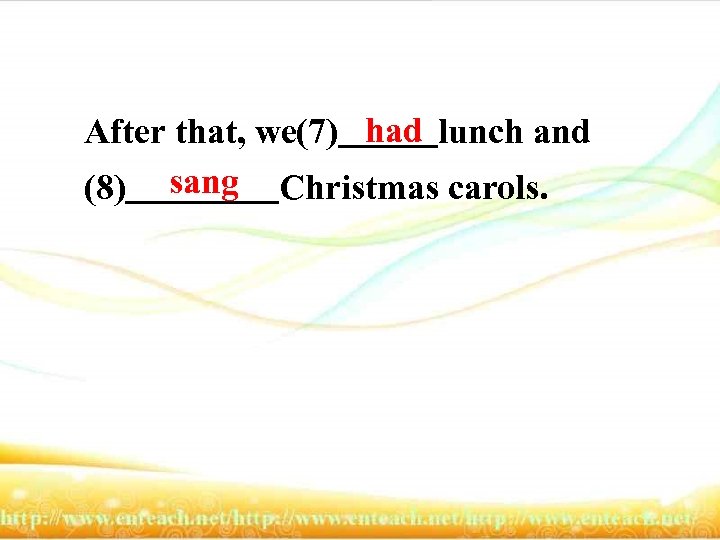
After that, we(7) had lunch and (8) sang Christmas carols.
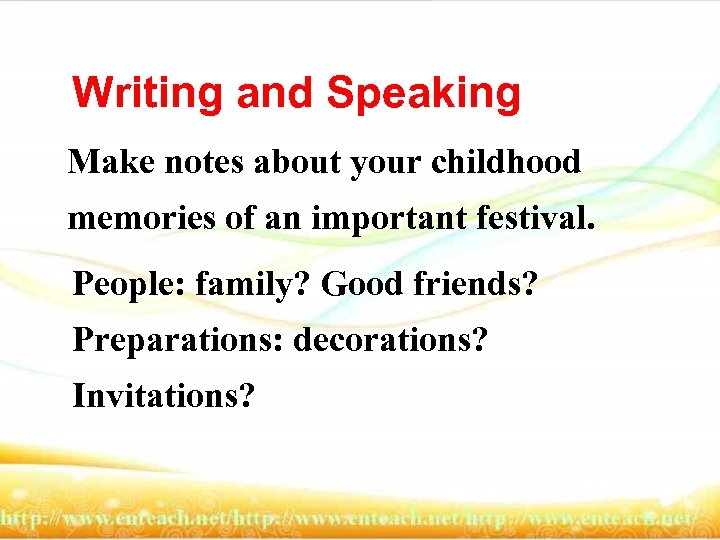
Writing and Speaking Make notes about your childhood memories of an important festival. People: family? Good friends? Preparations: decorations? Invitations?

Presents: what? Who for? Make/buy? Food: meals? Special food/drink? Activities: music? Dancing? A long walk? Your feelings: happy? Sad?
Скачать презентацию 全新课标理念 优质课程资源 北师大版 高一 1 Unit 3 Lesson
2e47c9b6b9514ffcf62347d29d7fa11b.ppt