 Скачать презентацию 中国科学院物理研究所 通用实验技术公共课程 磁性测量 第六讲 仪器的原理与使用 赵同云 磁学国家重点实验室 Sunday March
22480907d3412025bda8f49d2cff3c2c.ppt
- Количество слайдов: 139



中国科学院物理研究所 通用实验技术公共课程 《磁性测量》 第六讲:仪器的原理与使用 赵同云 磁学国家重点实验室 Sunday, March 18, 2018
声 明 本讲稿中引用的图、表、数据全部取自 公开发表的书籍、文献、论文,而且仅为教 学使用,任何人不得将其用于商业目的。 2
磁性测量 仪器篇 之一 MPMS的介绍 3
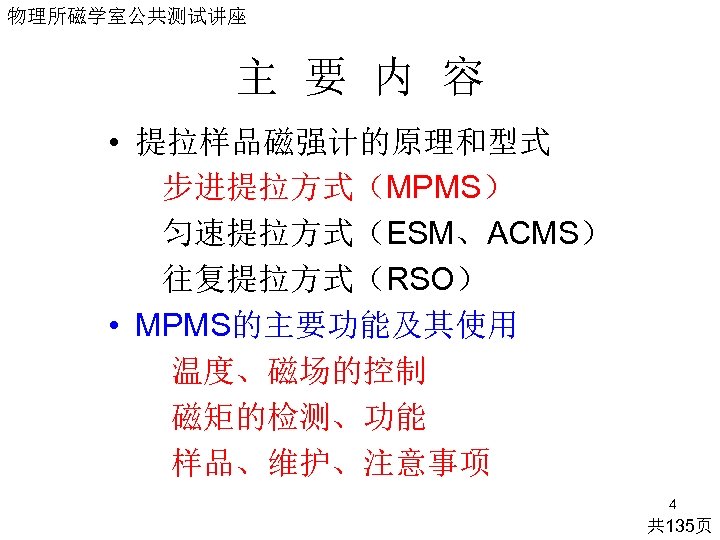
物理所磁学室公共测试讲座 主 要 内 容 • 提拉样品磁强计的原理和型式 步进提拉方式(MPMS) 匀速提拉方式(ESM、ACMS) 往复提拉方式(RSO) • MPMS的主要功能及其使用 温度、磁场的控制 磁矩的检测、功能 样品、维护、注意事项 4 共 135页
提拉样品磁强计 Extracting Sample Magnetometer (ESM) 感谢? 5
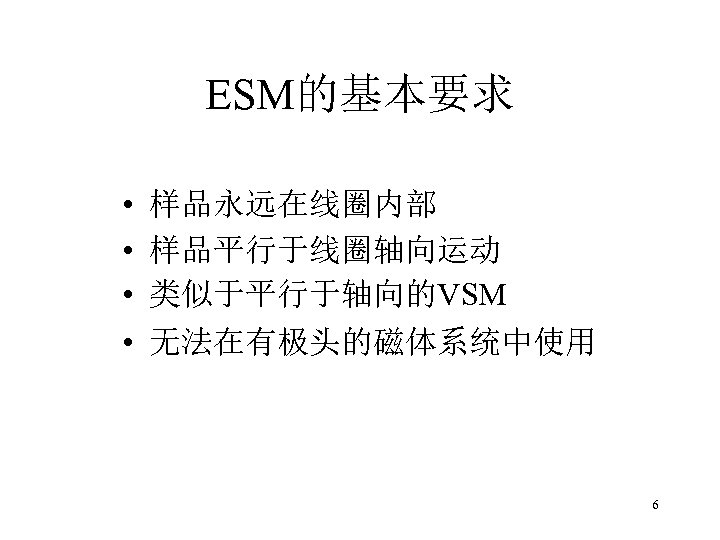
ESM的基本要求 • • 样品永远在线圈内部 样品平行于线圈轴向运动 类似于平行于轴向的VSM 无法在有极头的磁体系统中使用 6
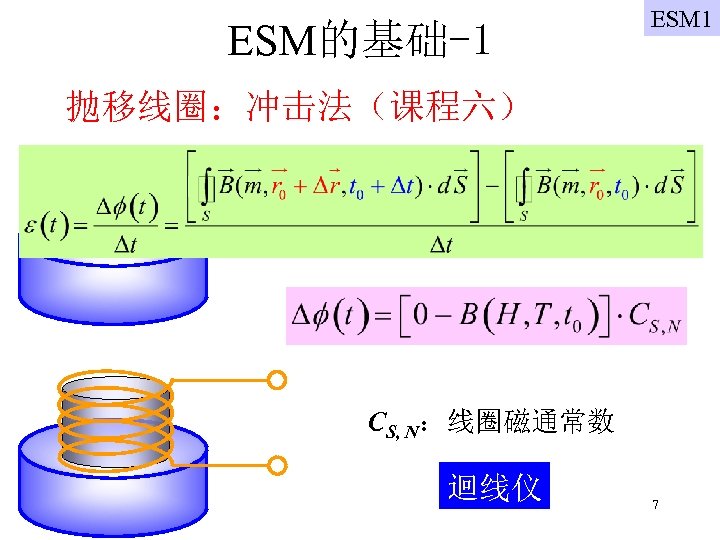
ESM的基础-1 ESM 1 抛移线圈:冲击法(课程六) CS, N:线圈磁通常数 迴线仪 7
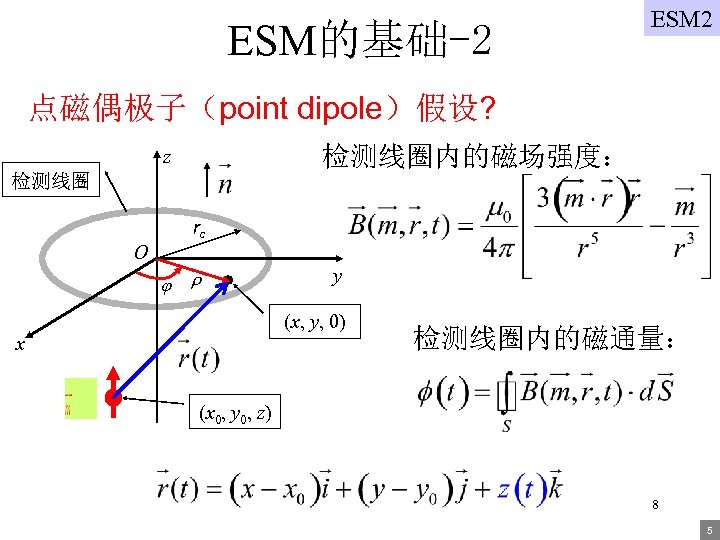
ESM的基础-2 ESM 2 点磁偶极子(point dipole)假设? 检测线圈内的磁场强度: z 检测线圈 rc O y (x, y, 0) x 检测线圈内的磁通量: (x 0, y 0, z) 8 5
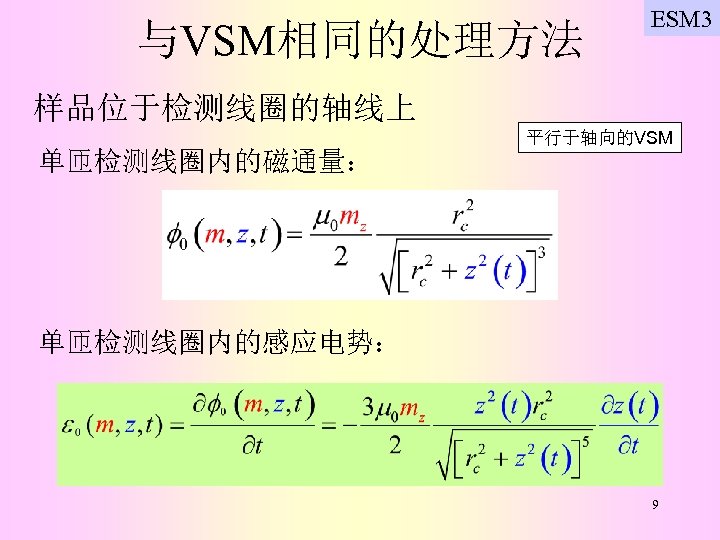
与VSM相同的处理方法 ESM 3 样品位于检测线圈的轴线上 平行于轴向的VSM 单匝检测线圈内的磁通量: 单匝检测线圈内的感应电势: 9
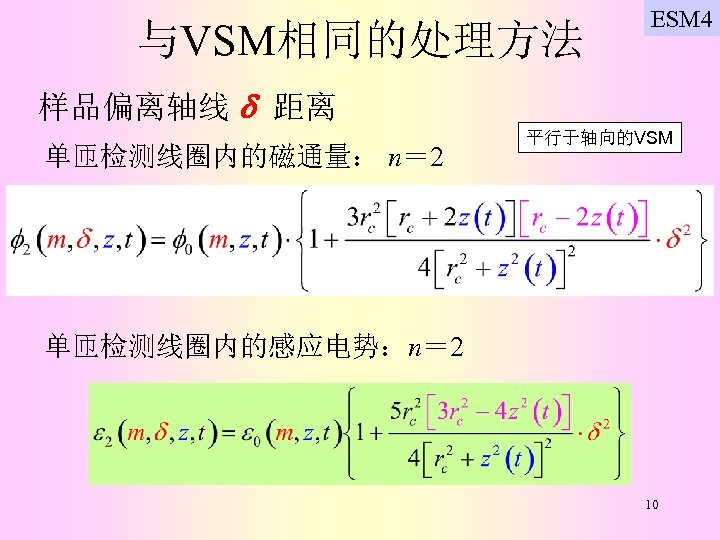
与VSM相同的处理方法 ESM 4 样品偏离轴线 距离 单匝检测线圈内的磁通量: n= 2 平行于轴向的VSM 单匝检测线圈内的感应电势:n= 2 10
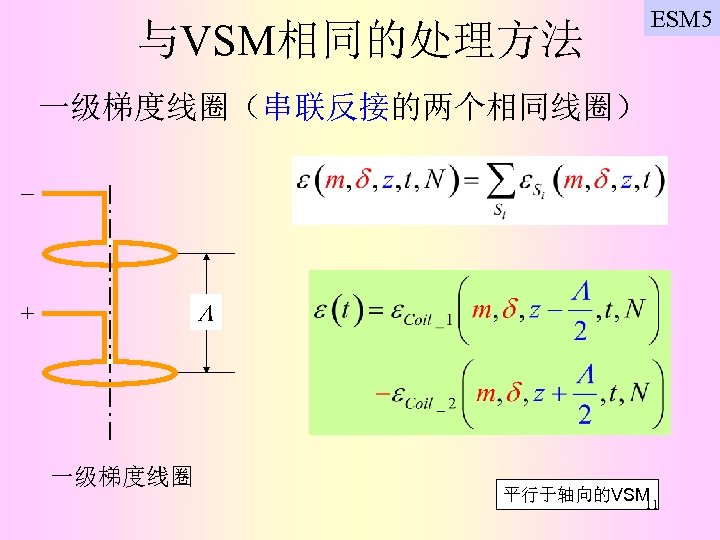
与VSM相同的处理方法 ESM 5 一级梯度线圈(串联反接的两个相同线圈) + 一级梯度线圈 平行于轴向的VSM 11
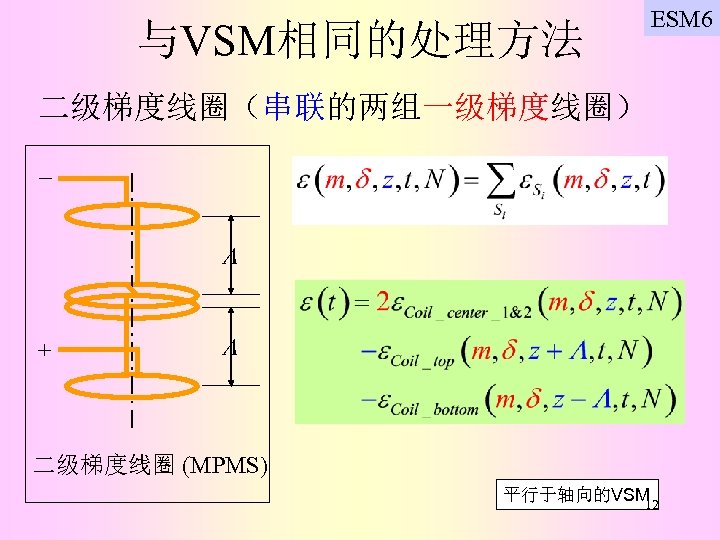
与VSM相同的处理方法 ESM 6 二级梯度线圈(串联的两组一级梯度线圈) + 二级梯度线圈 (MPMS) 平行于轴向的VSM 12
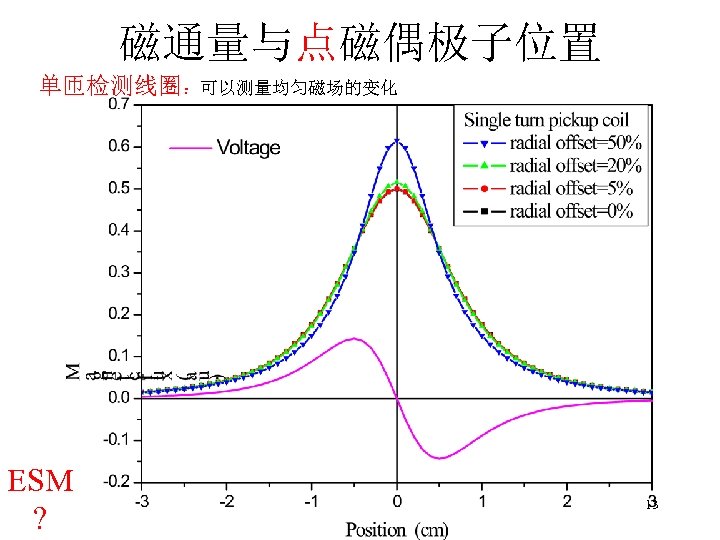
磁通量与点磁偶极子位置 单匝检测线圈:可以测量均匀磁场的变化 ESM ? 13
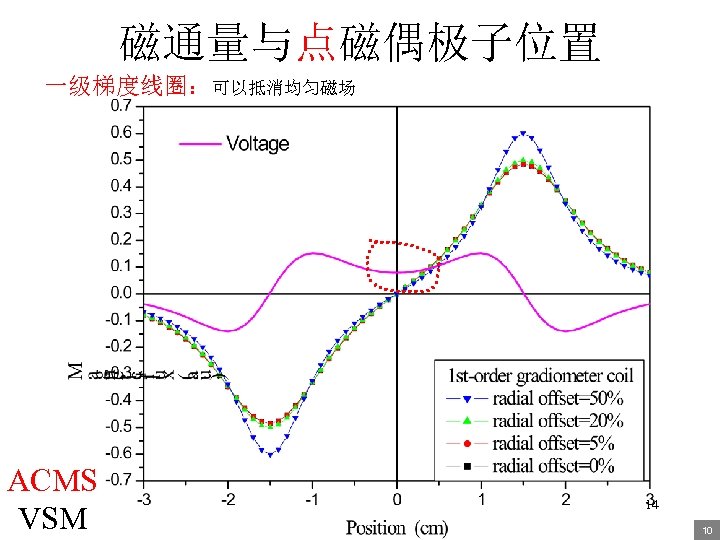
磁通量与点磁偶极子位置 一级梯度线圈:可以抵消均匀磁场 ACMS VSM 14 10
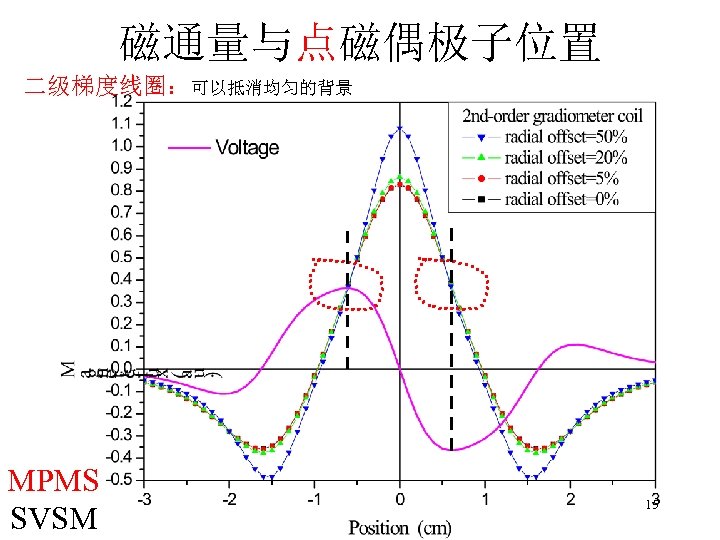
磁通量与点磁偶极子位置 二级梯度线圈:可以抵消均匀的背景 MPMS SVSM 15
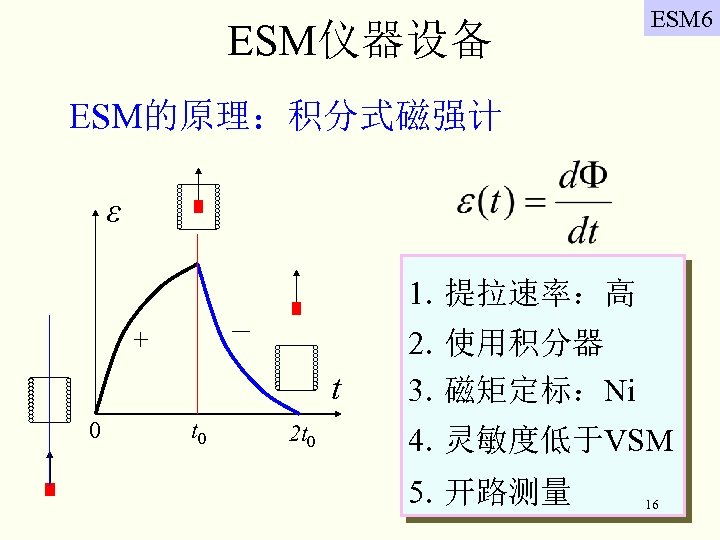
ESM仪器设备 ESM 6 ESM的原理:积分式磁强计 ε 1. 提拉速率:高 - + t 0 2 t 0 2. 使用积分器 3. 磁矩定标:Ni 4. 灵敏度低于VSM 5. 开路测量 16
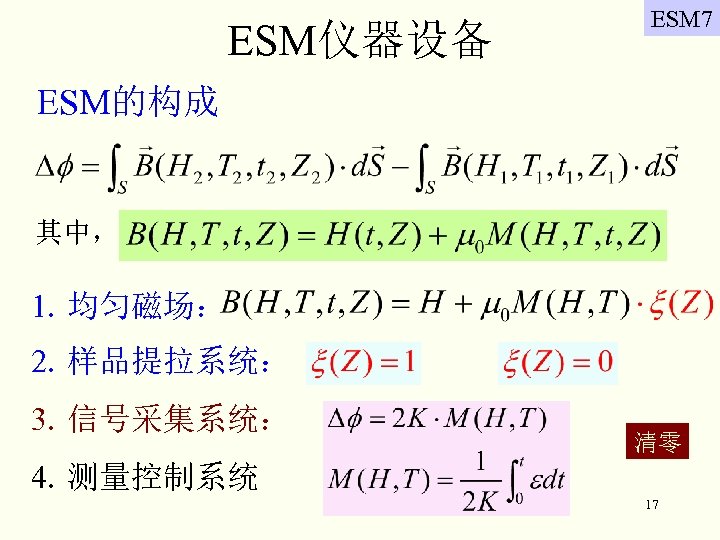
ESM仪器设备 ESM 7 ESM的构成 其中, 1. 均匀磁场: 2. 样品提拉系统: 3. 信号采集系统: 清零 4. 测量控制系统 17
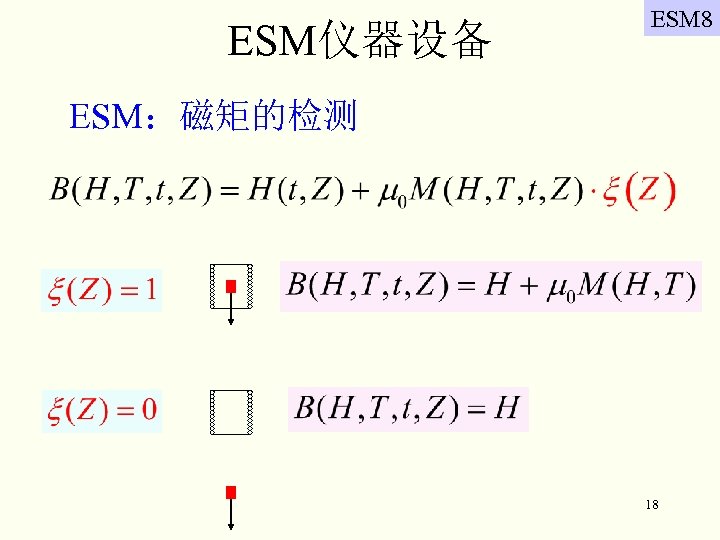
ESM仪器设备 ESM 8 ESM:磁矩的检测 18
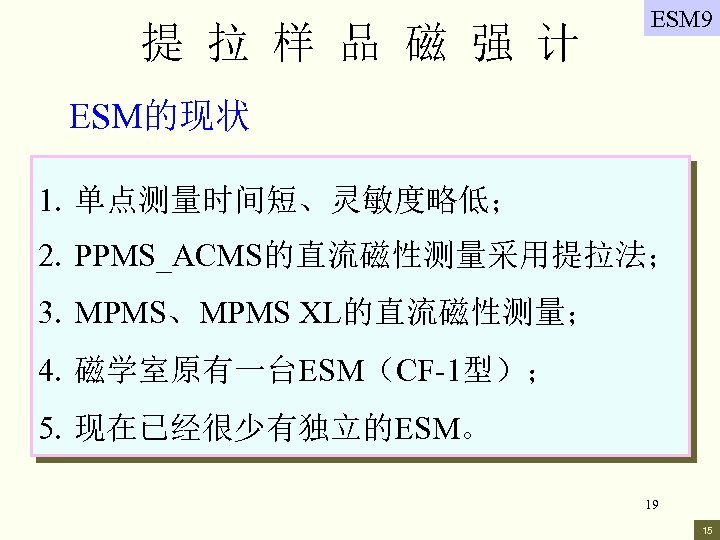
提 拉 样 品 磁 强 计 ESM 9 ESM的现状 1. 单点测量时间短、灵敏度略低; 2. PPMS_ACMS的直流磁性测量采用提拉法; 3. MPMS、MPMS XL的直流磁性测量; 4. 磁学室原有一台ESM(CF-1型); 5. 现在已经很少有独立的ESM。 19 15
几种ESM的介绍 ü 步进提拉方式(MPMS) ü 匀速提拉方式(ESM、ACMS) ü 往复提拉方式(MPMS_RSO) 20
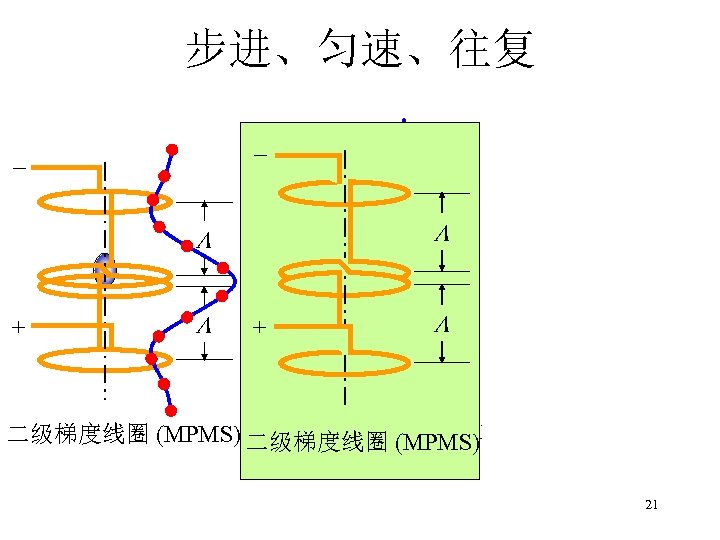
步进、匀速、往复 + + + 二级梯度线圈 (MPMS) 一级梯度线圈(ESM) 21
MPMS、MPMS XL ü 基本 作原理 ü 各种功能的介绍 ü 使用中的注意事项 Ø 人身、财产安全 Ø 样品几何、安装 Ø 具体功能的限制 22

MPMS的原理 MPMS 1 QD_MPMS(XL) By Mike Mc. Elfresh Fundamentals of Magnetism and Magnetic Measurements Featuring Quantum Design’s Magnetic Property Measurement System http: //www. qdusa. com/sitedocs/app. Notes/mpms/Fund. Primer. pdf 23
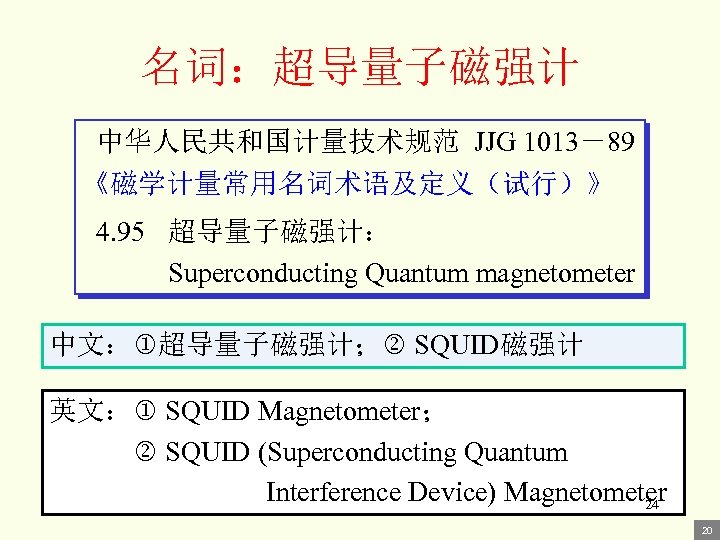
名词:超导量子磁强计 中华人民共和国计量技术规范 JJG 1013-89 《磁学计量常用名词术语及定义(试行)》 4. 95 超导量子磁强计: Superconducting Quantum magnetometer 中文: 超导量子磁强计; SQUID磁强计 英文: SQUID Magnetometer; SQUID (Superconducting Quantum Interference Device) Magnetometer 24 20
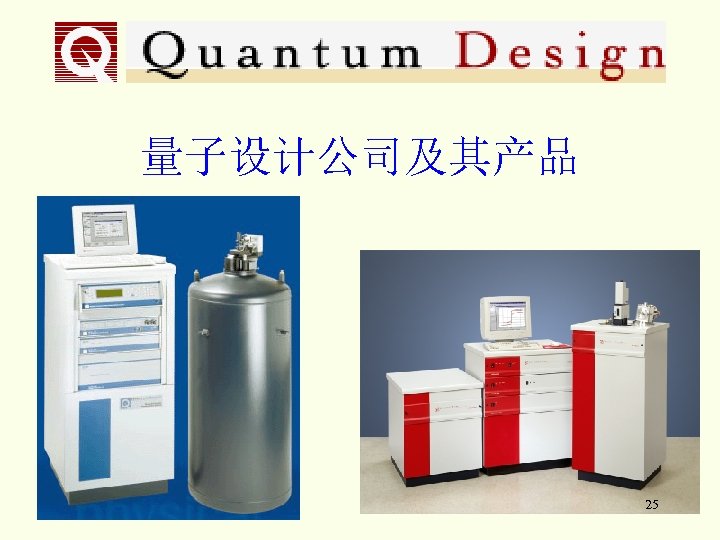
量子设计公司及其产品 25
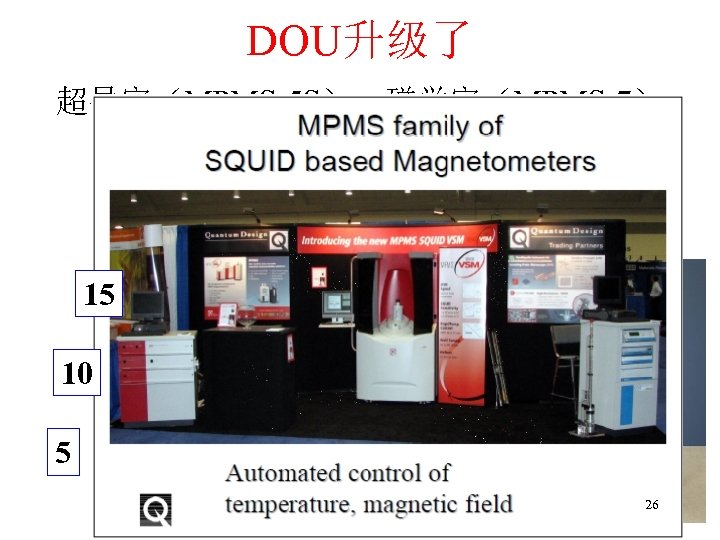
DOU升级了 超导室(MPMS-5 S)、磁学室(MPMS-7) 15 10 5 2 26
课后作业-1 你知道MPMS具体细节的哪些内容? 对于MPMS XL新功能有何评价? 27
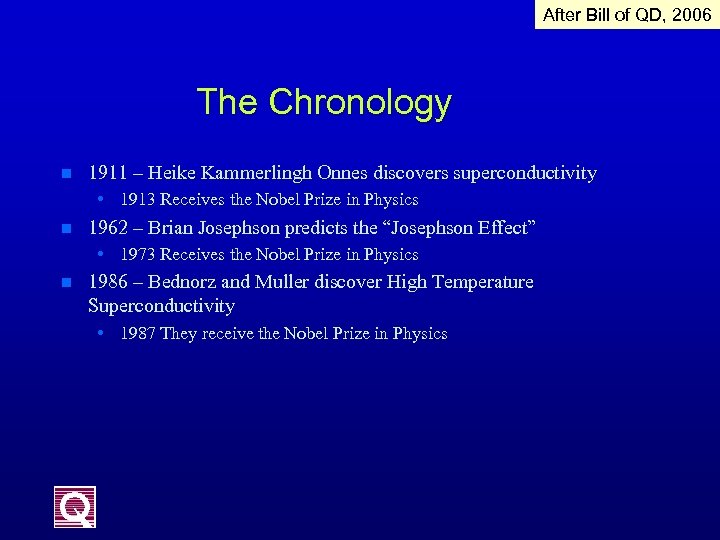
After Bill of QD, 2006 The Chronology n 1911 – Heike Kammerlingh Onnes discovers superconductivity • 1913 Receives the Nobel Prize in Physics n 1962 – Brian Josephson predicts the “Josephson Effect” • 1973 Receives the Nobel Prize in Physics n 1986 – Bednorz and Muller discover High Temperature Superconductivity • 1987 They receive the Nobel Prize in Physics
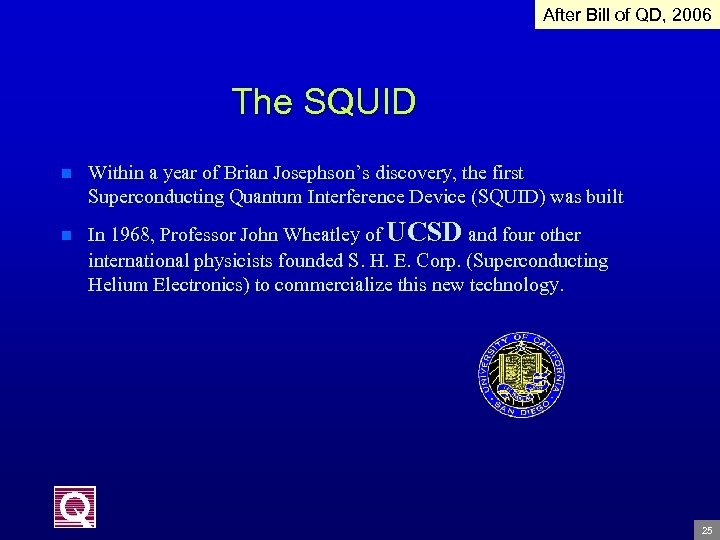
After Bill of QD, 2006 The SQUID n n Within a year of Brian Josephson’s discovery, the first Superconducting Quantum Interference Device (SQUID) was built In 1968, Professor John Wheatley of UCSD and four other international physicists founded S. H. E. Corp. (Superconducting Helium Electronics) to commercialize this new technology. 25
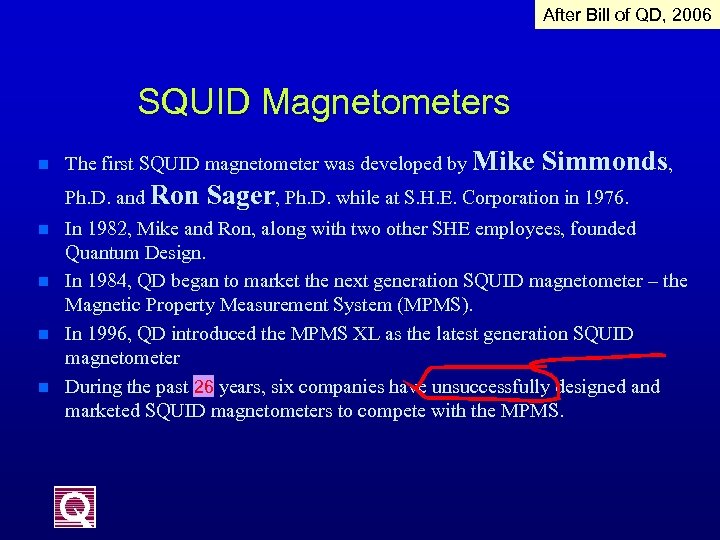
After Bill of QD, 2006 SQUID Magnetometers n n n The first SQUID magnetometer was developed by Mike Simmonds, Ph. D. and Ron Sager, Ph. D. while at S. H. E. Corporation in 1976. In 1982, Mike and Ron, along with two other SHE employees, founded Quantum Design. In 1984, QD began to market the next generation SQUID magnetometer – the Magnetic Property Measurement System (MPMS). In 1996, QD introduced the MPMS XL as the latest generation SQUID magnetometer During the past 22 years, six companies have unsuccessfully designed and 26 marketed SQUID magnetometers to compete with the MPMS.
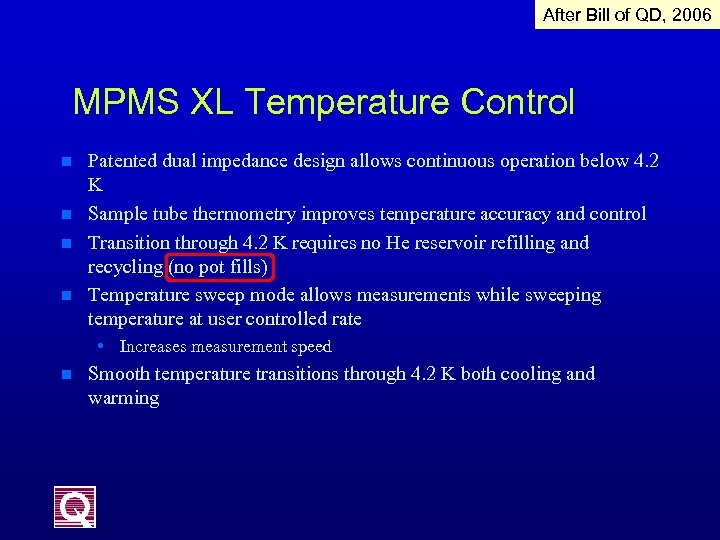
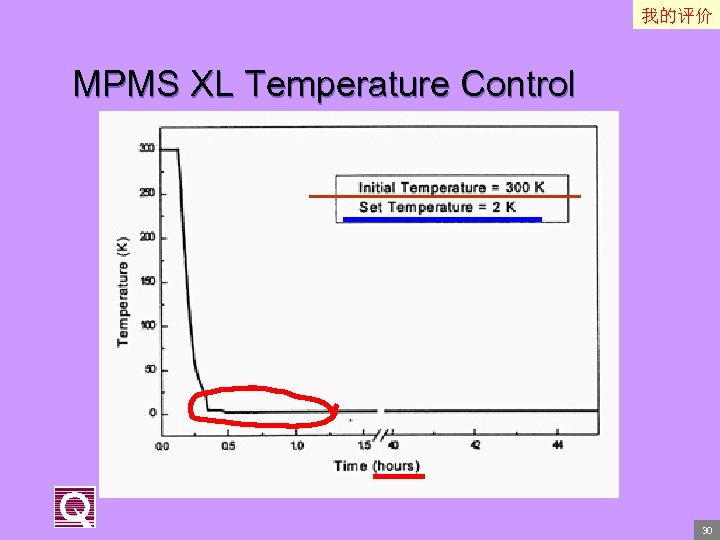
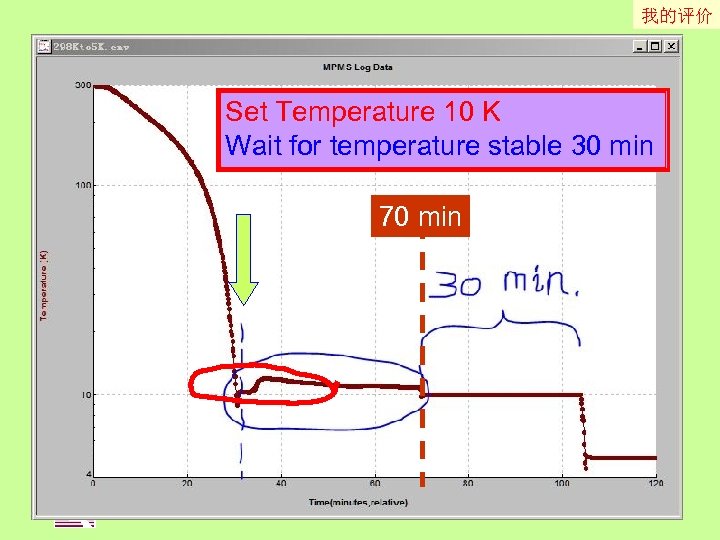
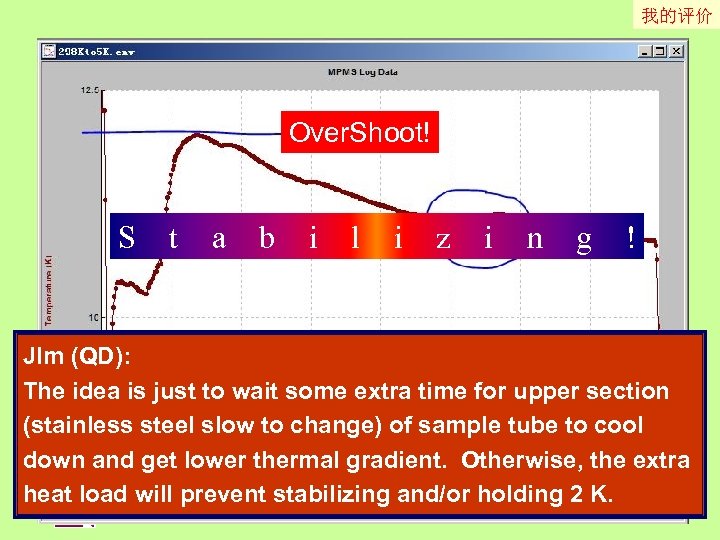
After Bill of QD, 2006 MPMS XL Temperature Control n n Patented dual impedance design allows continuous operation below 4. 2 K Sample tube thermometry improves temperature accuracy and control Transition through 4. 2 K requires no He reservoir refilling and recycling (no pot fills) Temperature sweep mode allows measurements while sweeping temperature at user controlled rate • Increases measurement speed n Smooth temperature transitions through 4. 2 K both cooling and warming
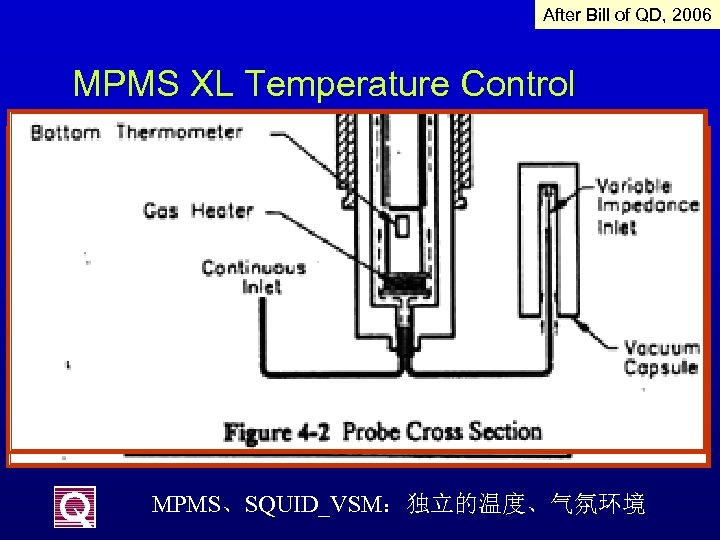
After Bill of QD, 2006 MPMS XL Temperature Control MPMS、SQUID_VSM:独立的温度、气氛环境
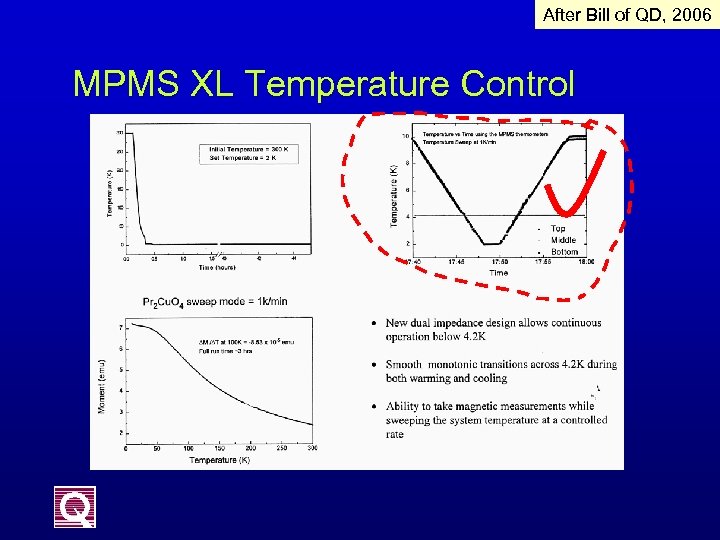
After Bill of QD, 2006 MPMS XL Temperature Control
我的评价 MPMS XL Temperature Control 30
我的评价 MPMS XL Temperature Control Set Temperature 10 K Wait for temperature stable 30 min 70 min
我的评价 MPMS XL Temperature Control Over. Shoot! S t a b i l i z i n g ! JIm (QD): The idea is just to wait some extra time for upper section (stainless steel slow to change) of sample tube to cool down and get lower thermal gradient. Otherwise, the extra heat load will prevent stabilizing and/or holding 2 K.
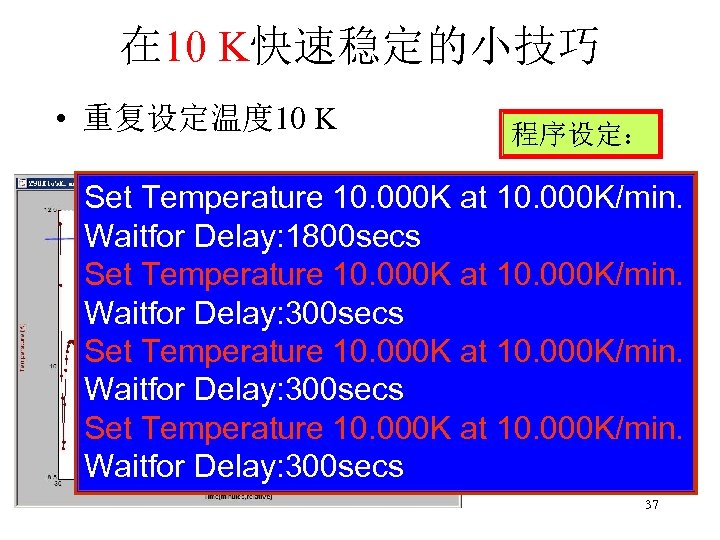
在 10 K快速稳定的小技巧 • 重复设定温度 10 K 程序设定: Set Temperature 10. 000 K at 10. 000 K/min. 手动: Waitfor Delay: 1800 secs Set Temperature 10. 000 K at 10. 000 K/min. Waitfor Delay: 300 secs. Temperature 10 K Set Temperature 10. 000 K at 10. 000 K/min. Waitfor Delay: 300 secs 37
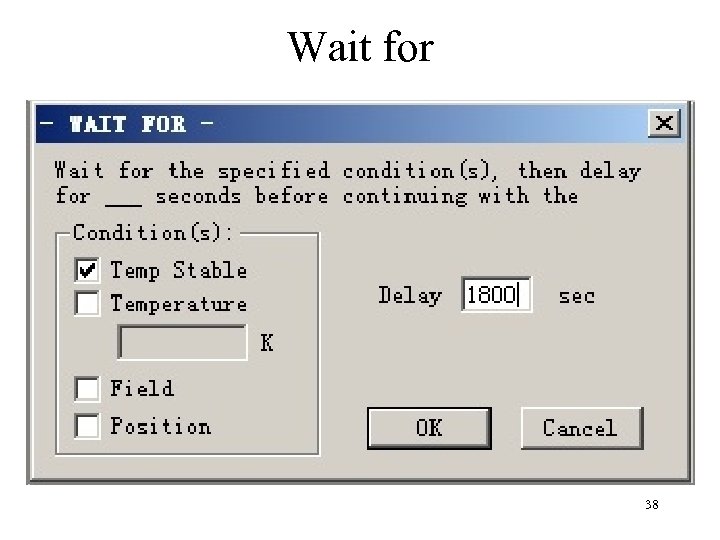
Wait for • • • Wait for Temp Stable Wait for Temperature Wait for Field Wait for Position 38
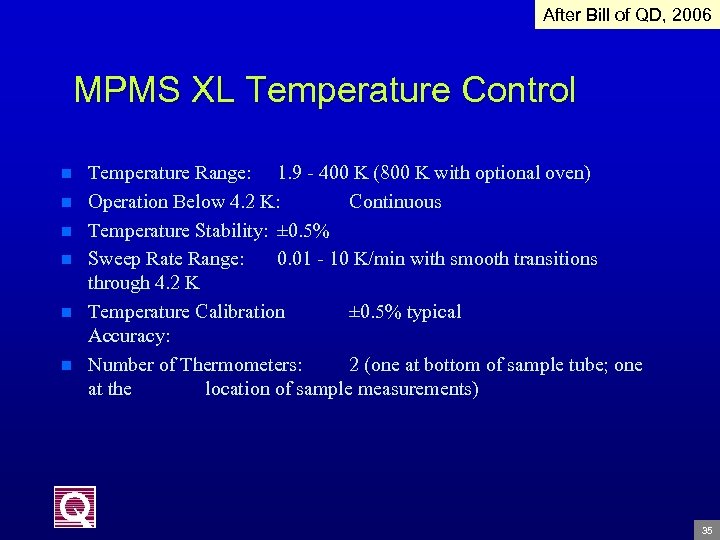
After Bill of QD, 2006 MPMS XL Temperature Control n n n Temperature Range: 1. 9 - 400 K (800 K with optional oven) Operation Below 4. 2 K: Continuous Temperature Stability: ± 0. 5% Sweep Rate Range: 0. 01 - 10 K/min with smooth transitions through 4. 2 K Temperature Calibration ± 0. 5% typical Accuracy: Number of Thermometers: 2 (one at bottom of sample tube; one at the location of sample measurements) 35
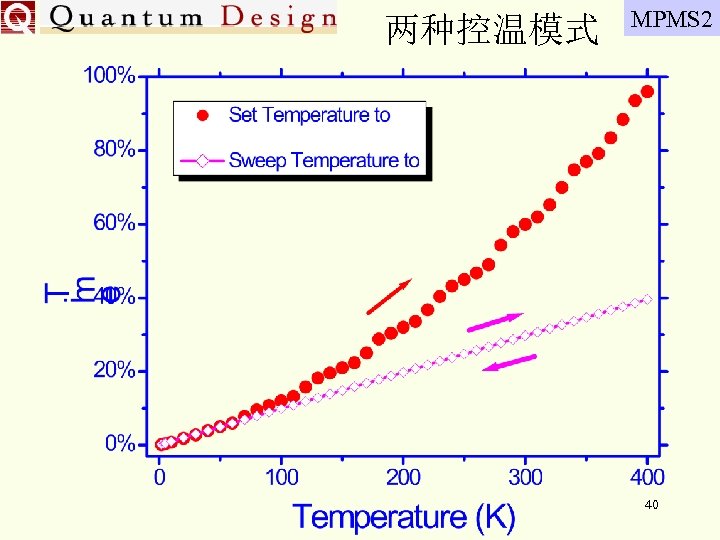
两种控温模式 MPMS 2 40
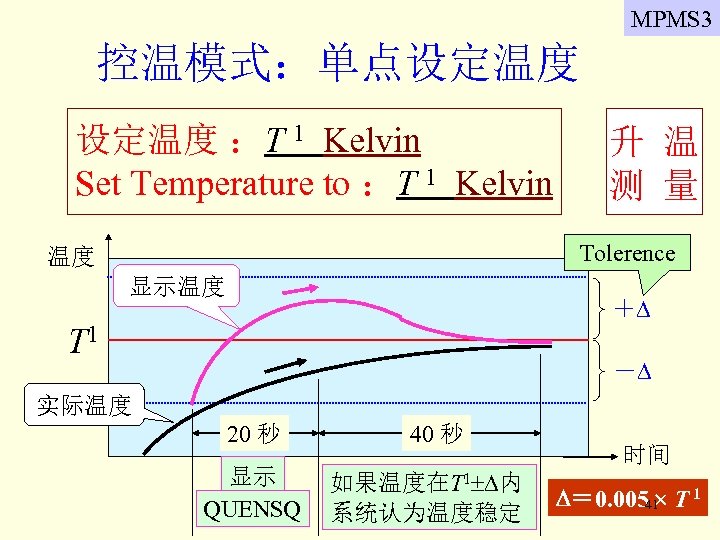
MPMS 3 控温模式:单点设定温度 :T 1 Kelvin Set Temperature to :T 1 Kelvin 升 温 测 量 Tolerence 温度 显示温度 + T 1 - 实际温度 20 秒 显示 QUENSQ 40 秒 如果温度在T 1 内 系统认为温度稳定 时间 = 0. 00541 T 1
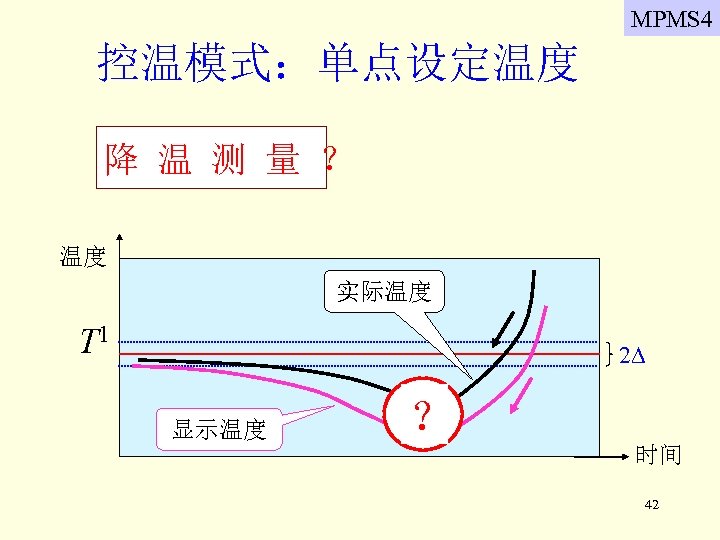
MPMS 4 控温模式:单点设定温度 降 温 测 量 ? 温度 实际温度 T 1 2 显示温度 ? 时间 42
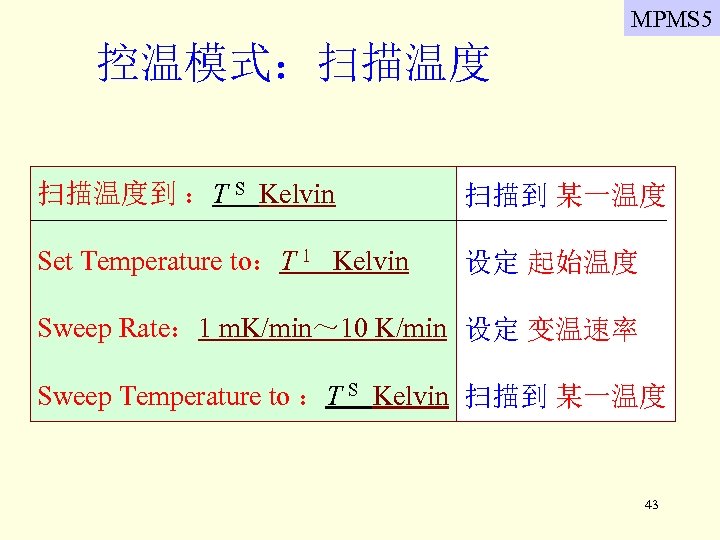
MPMS 5 控温模式:扫描温度到 :T S Kelvin 扫描到 某一温度 Set Temperature to:T 1 Kelvin 设定 起始温度 Sweep Rate: 1 m. K/min~ 10 K/min 设定 变温速率 Sweep Temperature to :T S Kelvin 扫描到 某一温度 43
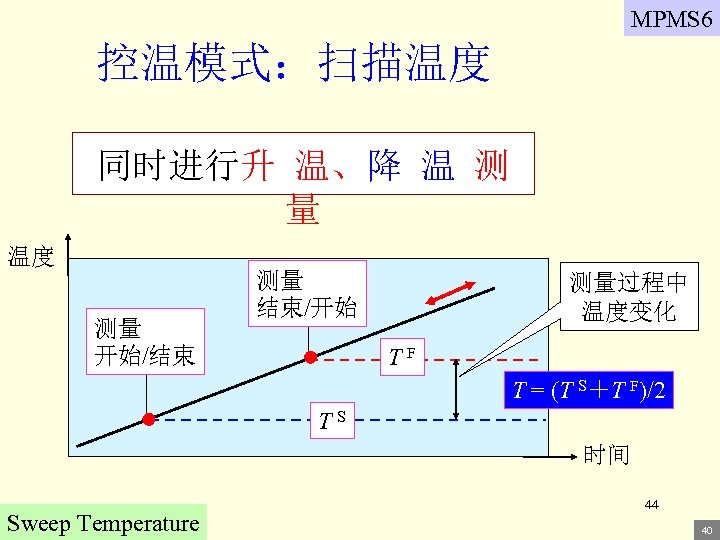
MPMS 6 控温模式:扫描温度 同时进行升 温、降 温 测 量 温度 测量 开始/结束 测量 结束/开始 测量过程中 温度变化 TF T = (T S+T F)/2 TS 时间 Sweep Temperature 44 40
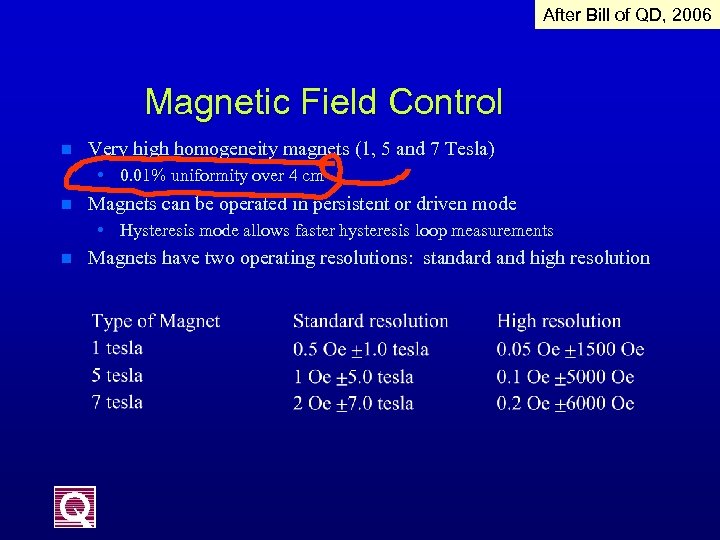
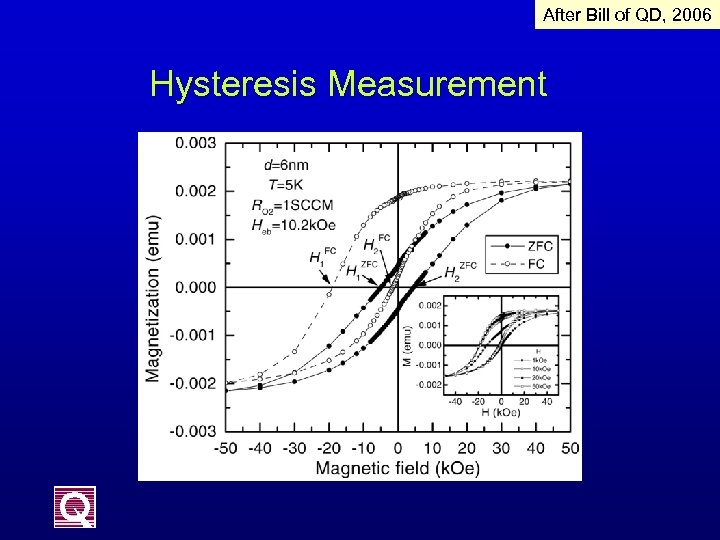
After Bill of QD, 2006 Magnetic Field Control n Very high homogeneity magnets (1, 5 and 7 Tesla) • 0. 01% uniformity over 4 cm n Magnets can be operated in persistent or driven mode • Hysteresis mode allows faster hysteresis loop measurements n Magnets have two operating resolutions: standard and high resolution
After Bill of QD, 2006 Hysteresis Measurement
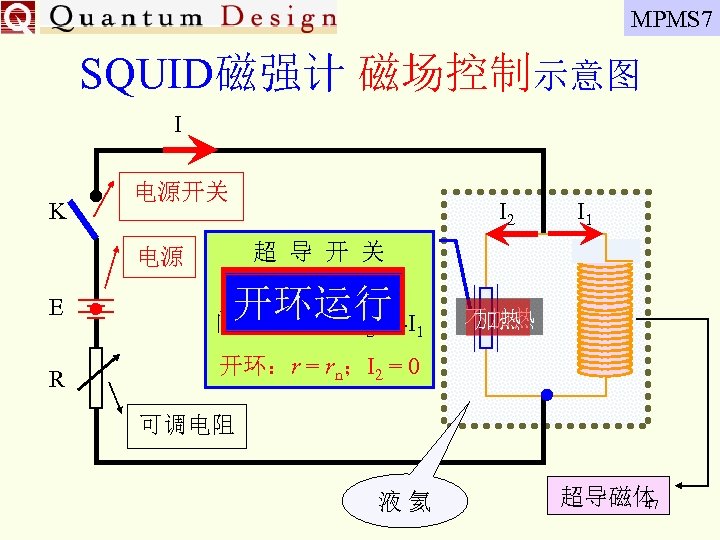
MPMS 7 SQUID磁强计 磁场控制示意图 I K 电源开关 闭环运行 -I 开环运行 闭环:r = 0;I = 2 R I 1 超 导 开 关 开关电阻 r 电源 E I 2 1 不加热 加热 开环:r = rn;I 2 = 0 可调电阻 液氦 超导磁体 47
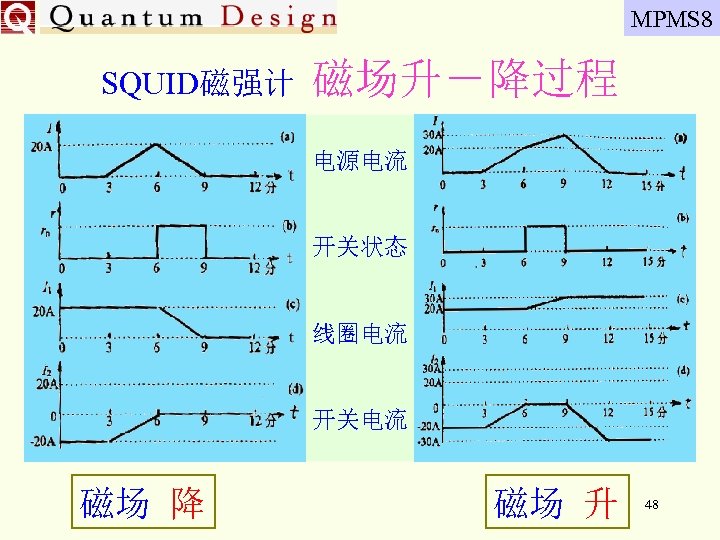
MPMS 8 SQUID磁强计 磁场升-降过程 电源电流 开关状态 线圈电流 开关电流 磁场 降 磁场 升 48
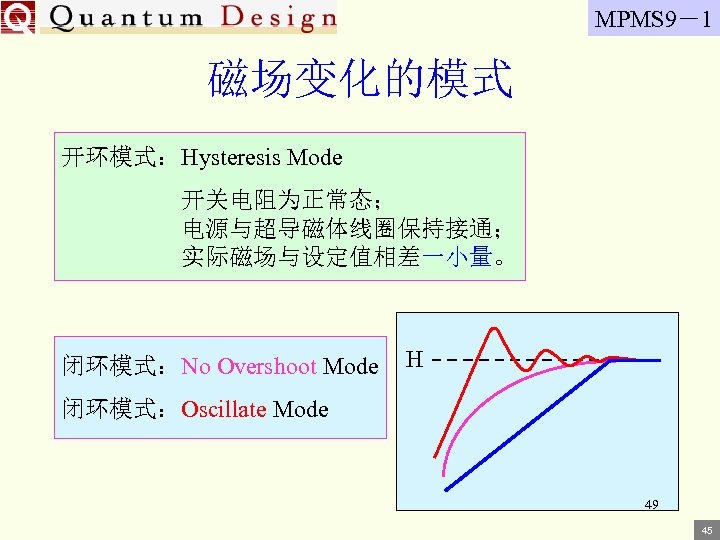
MPMS 9-1 磁场变化的模式 开环模式:Hysteresis Mode 开关电阻为正常态; 电源与超导磁体线圈保持接通; 实际磁场与设定值相差一小量。 闭环模式:No Overshoot Mode H 闭环模式:Oscillate Mode 49 45
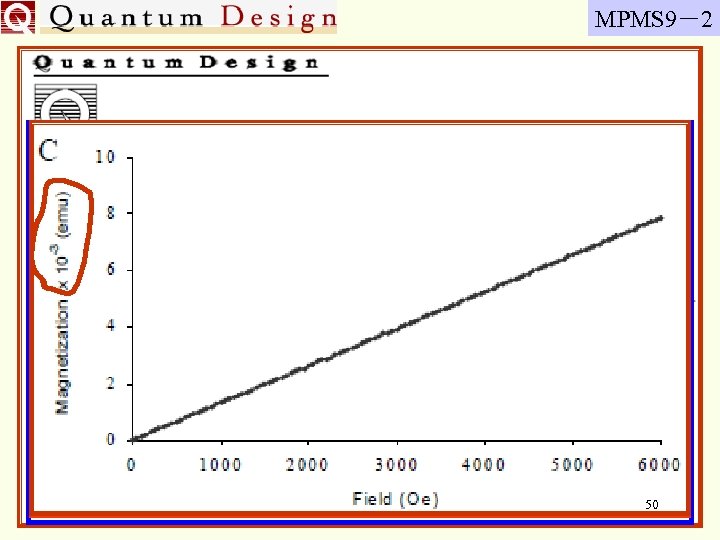
MPMS 9-2 开环运行时的磁场噪声 开环模式:Hysteresis Mode 50
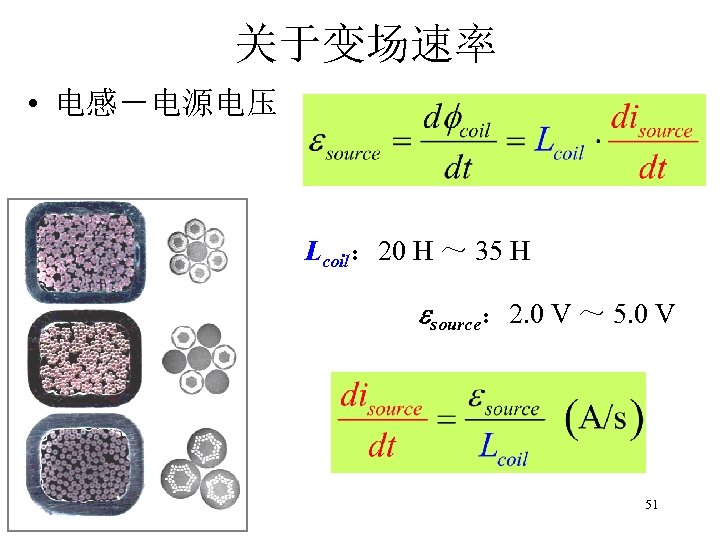
关于变场速率 • 电感-电源电压 Lcoil: 20 H ~ 35 H source: 2. 0 V ~ 5. 0 V 51
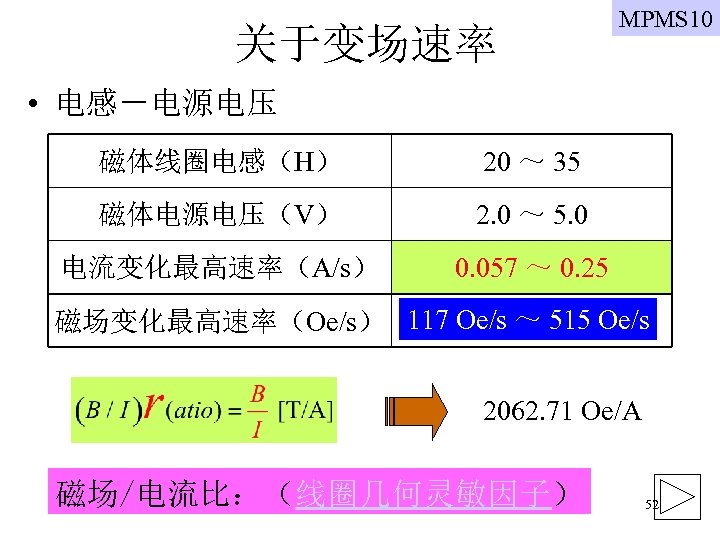
关于变场速率 MPMS 10 • 电感-电源电压 磁体线圈电感(H) 20 ~ 35 磁体电源电压(V) 2. 0 ~ 5. 0 电流变化最高速率(A/s) 0. 057 ~ 0. 25 磁场变化最高速率(Oe/s) 117 Oe/s ~ 515 Oe/s 2062. 71 Oe/A 磁场/电流比:(线圈几何灵敏因子) 52
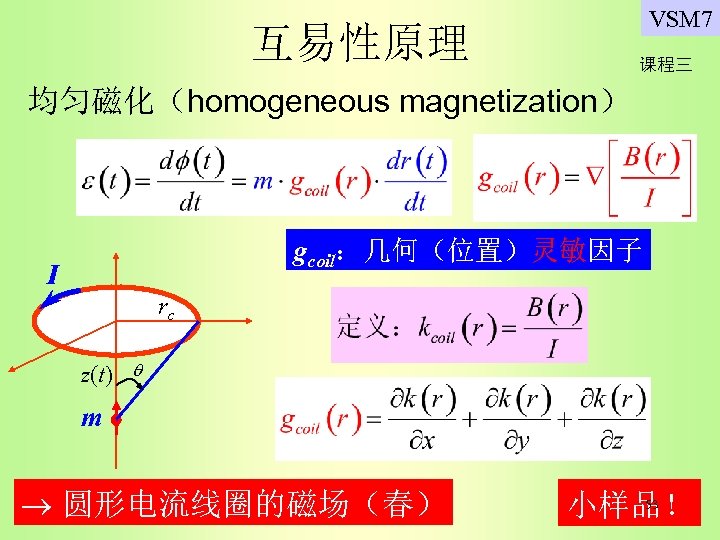
VSM 7 互易性原理 课程三 均匀磁化(homogeneous magnetization) gcoil:几何(位置)灵敏因子 I rc z(t) m 圆形电流线圈的磁场(春) 53 小样品!
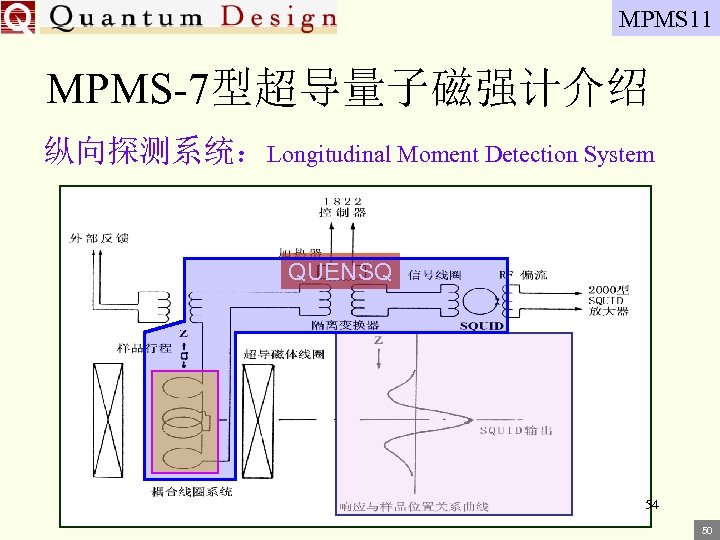
MPMS 11 MPMS-7型超导量子磁强计介绍 纵向探测系统:Longitudinal Moment Detection System QUENSQ 54 50
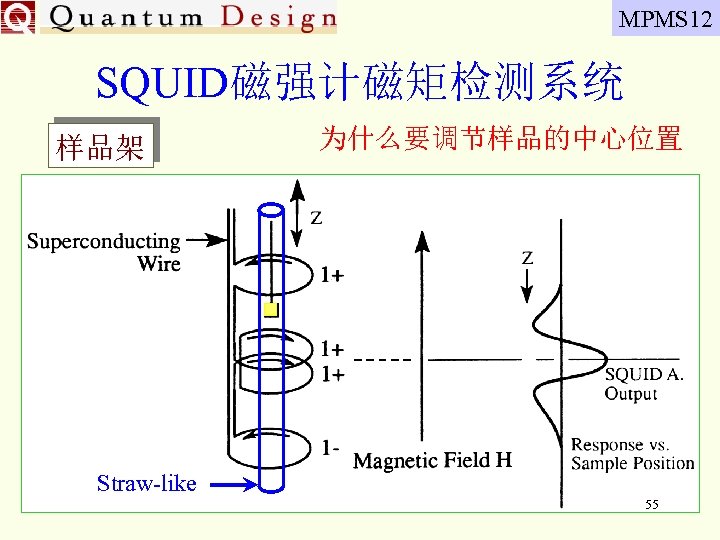
MPMS 12 SQUID磁强计磁矩检测系统 样品架 为什么要调节样品的中心位置 Straw-like 55
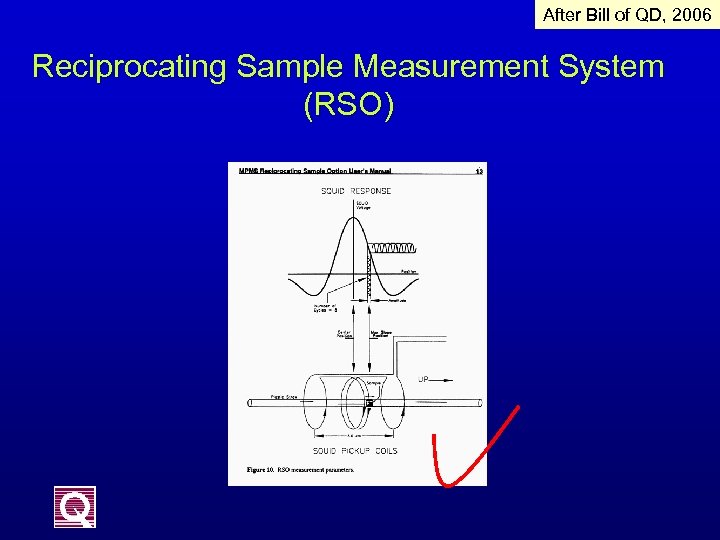
After Bill of QD, 2006 Reciprocating Sample Measurement System (RSO)
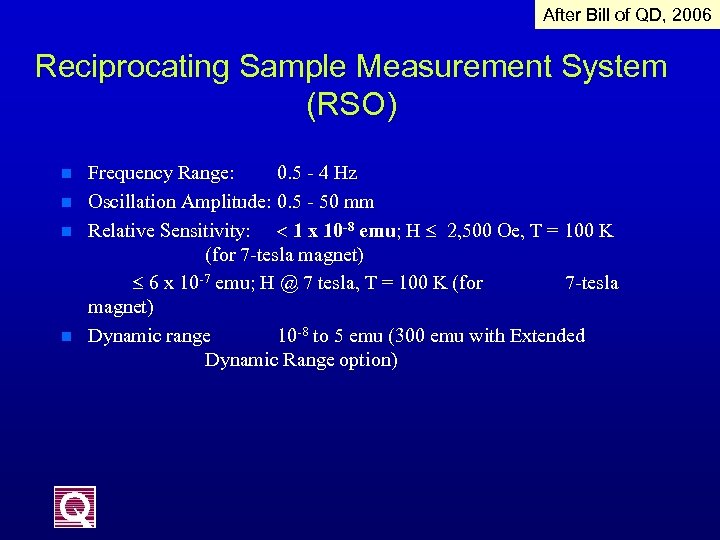
After Bill of QD, 2006 Reciprocating Sample Measurement System (RSO) n n Frequency Range: 0. 5 - 4 Hz Oscillation Amplitude: 0. 5 - 50 mm Relative Sensitivity: < 1 x 10 -8 emu; H 2, 500 Oe, T = 100 K (for 7 -tesla magnet) 6 x 10 -7 emu; H @ 7 tesla, T = 100 K (for 7 -tesla magnet) Dynamic range 10 -8 to 5 emu (300 emu with Extended Dynamic Range option)
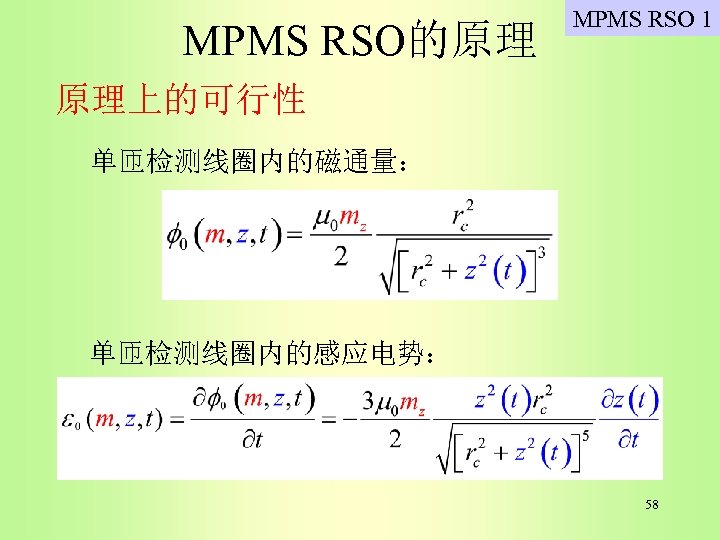
MPMS RSO的原理 MPMS RSO 1 原理上的可行性 单匝检测线圈内的磁通量: 单匝检测线圈内的感应电势: 58
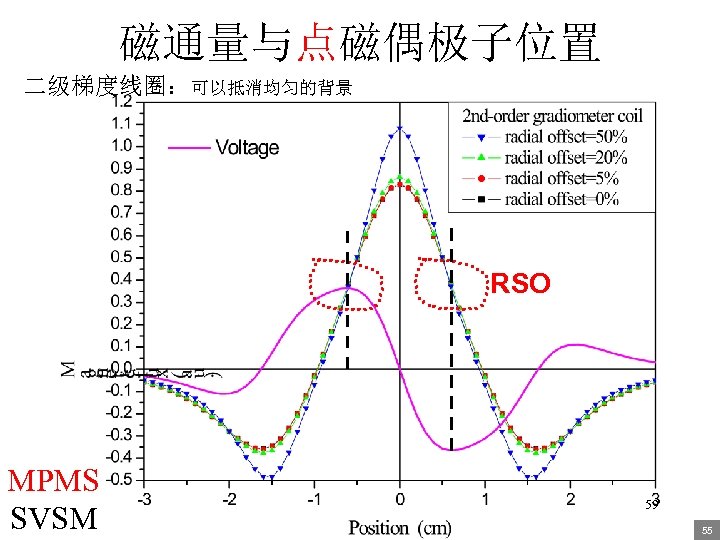
磁通量与点磁偶极子位置 二级梯度线圈:可以抵消均匀的背景 RSO MPMS SVSM 59 55
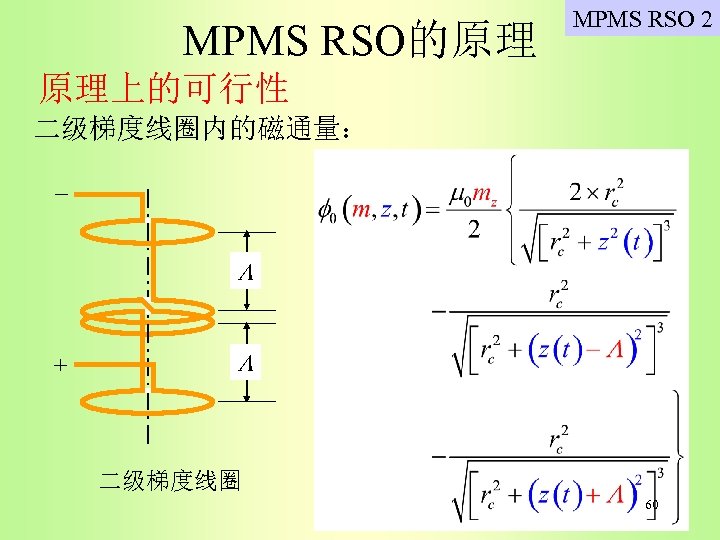
MPMS RSO的原理 MPMS RSO 2 原理上的可行性 二级梯度线圈内的磁通量: + 二级梯度线圈 60
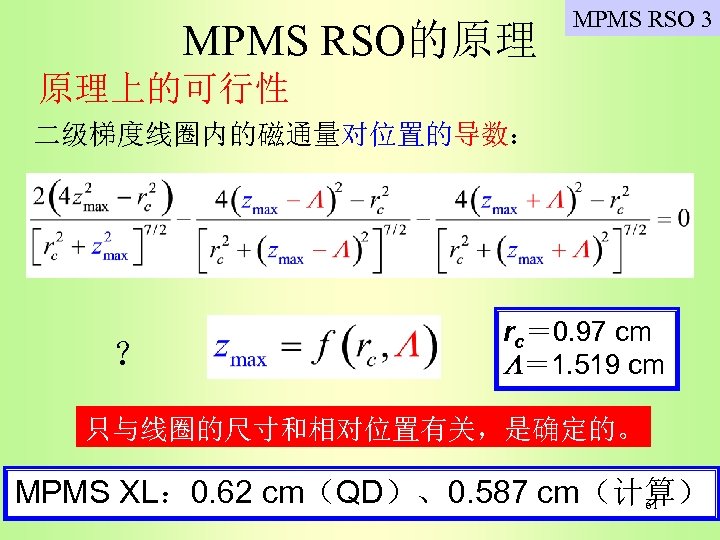
MPMS RSO的原理 MPMS RSO 3 原理上的可行性 二级梯度线圈内的磁通量对位置的导数: ? rc= 0. 97 cm = 1. 519 cm 只与线圈的尺寸和相对位置有关,是确定的。 MPMS XL: 0. 62 cm(QD)、0. 587 cm(计算) 61
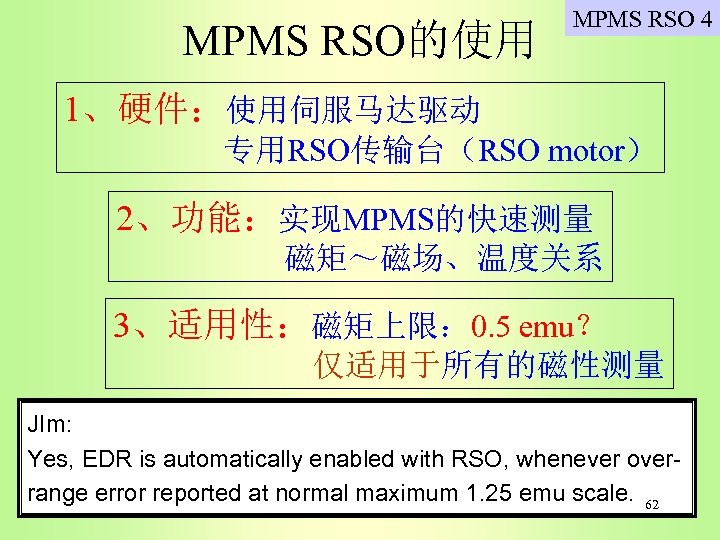
MPMS RSO的使用 MPMS RSO 4 1、硬件:使用伺服马达驱动 专用RSO传输台(RSO motor) 2、功能:实现MPMS的快速测量 磁矩~磁场、温度关系 3、适用性:磁矩上限: 0. 5 emu? 仅适用于所有的磁性测量 JIm: Yes, EDR is automatically enabled with RSO, whenever overrange error reported at normal maximum 1. 25 emu scale. 62
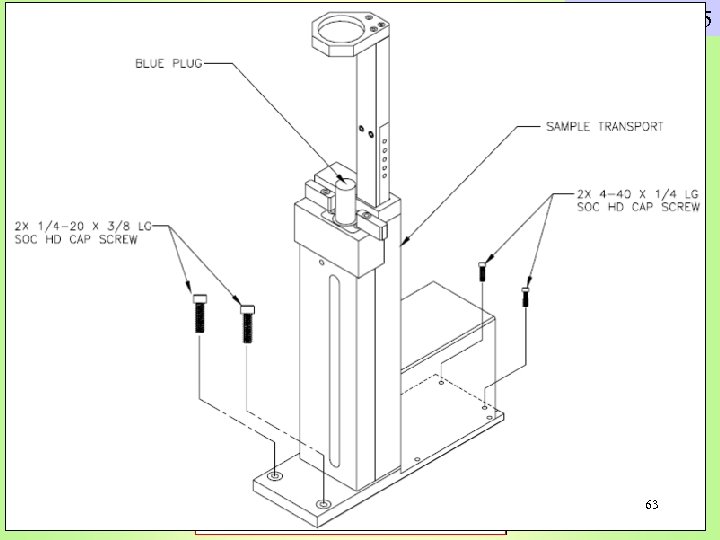
MPMS RSO的使用 MPMS RSO 5 硬件:专用RSO传输台(RSO motor) 63
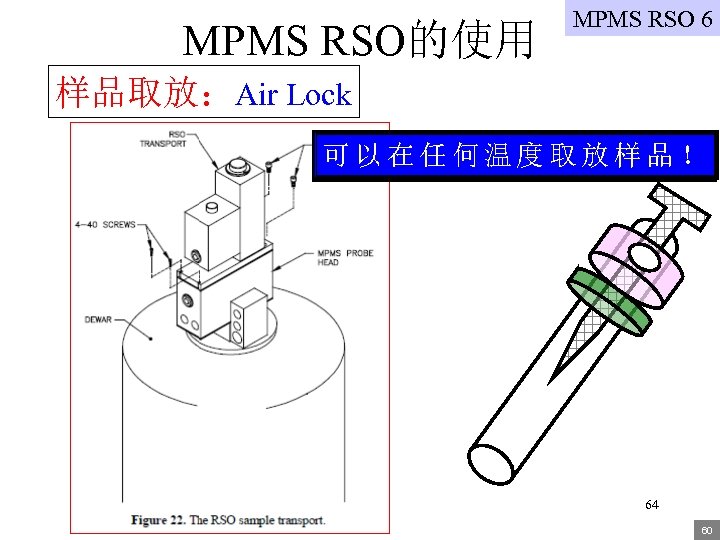
MPMS RSO的使用 MPMS RSO 6 样品取放:Air Lock 必须 100任 何 温 度 取 放 样 品 ! 可 以 在 K以上温度取放样品! 64 60
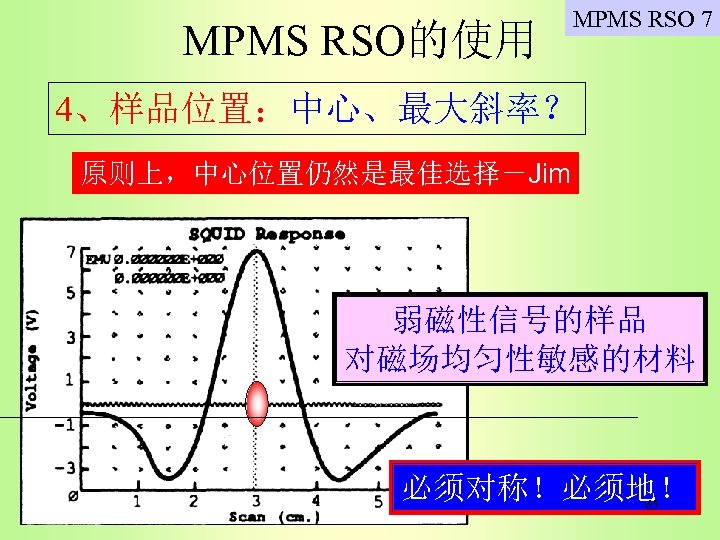
MPMS RSO的使用 MPMS RSO 7 4、样品位置:中心、最大斜率? 原则上,中心位置仍然是最佳选择-Jim 弱磁性信号的样品 对磁场均匀性敏感的材料 必须对称!必须地! 65
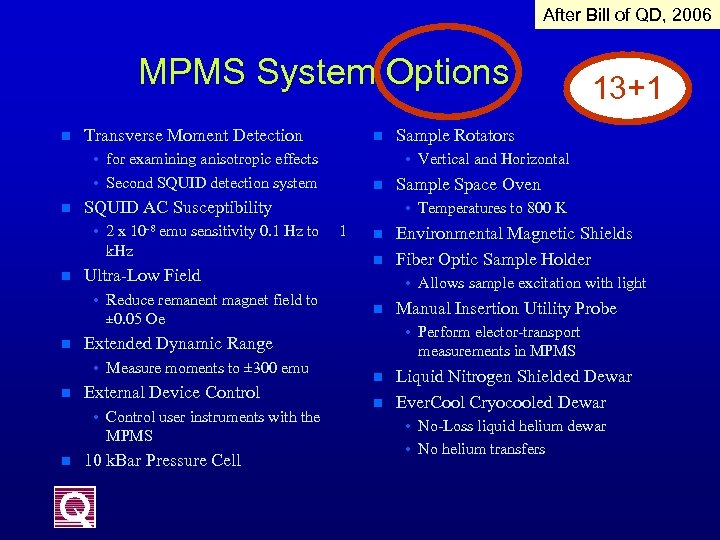
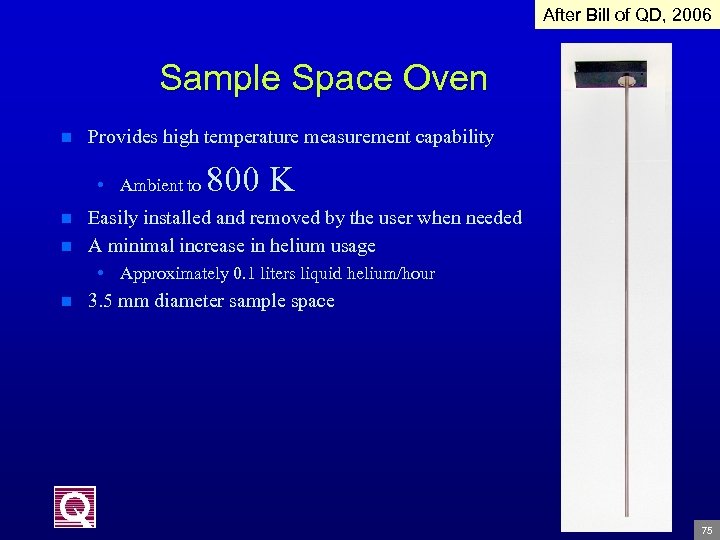
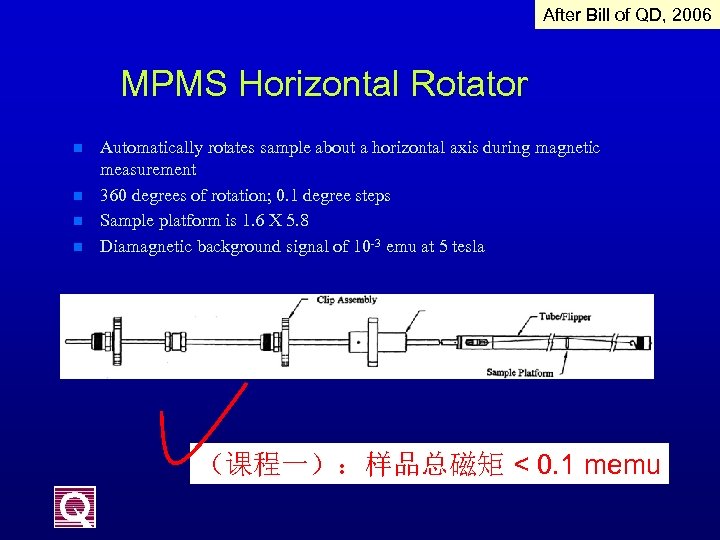
After Bill of QD, 2006 MPMS System Options n Transverse Moment Detection n • for examining anisotropic effects • Second SQUID detection system n n Ultra-Low Field • Reduce remanent magnet field to ± 0. 05 Oe n n External Device Control • Control user instruments with the MPMS n n 10 k. Bar Pressure Cell Sample Space Oven • Temperatures to 800 K 1 n n Environmental Magnetic Shields Fiber Optic Sample Holder • Allows sample excitation with light n Manual Insertion Utility Probe • Perform elector-transport measurements in MPMS Extended Dynamic Range • Measure moments to ± 300 emu Sample Rotators • Vertical and Horizontal SQUID AC Susceptibility • 2 x 10 -8 emu sensitivity 0. 1 Hz to k. Hz 13+1 n n Liquid Nitrogen Shielded Dewar Ever. Cool Cryocooled Dewar • No-Loss liquid helium dewar • No helium transfers
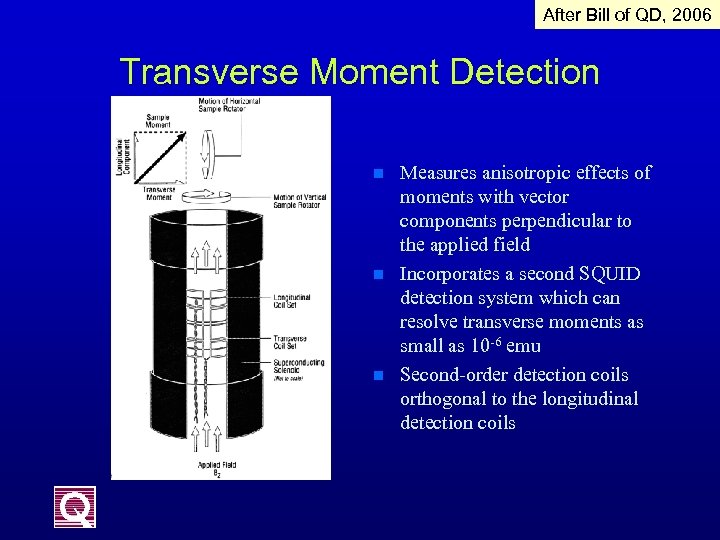
After Bill of QD, 2006 Transverse Moment Detection n Measures anisotropic effects of moments with vector components perpendicular to the applied field Incorporates a second SQUID detection system which can resolve transverse moments as small as 10 -6 emu Second-order detection coils orthogonal to the longitudinal detection coils
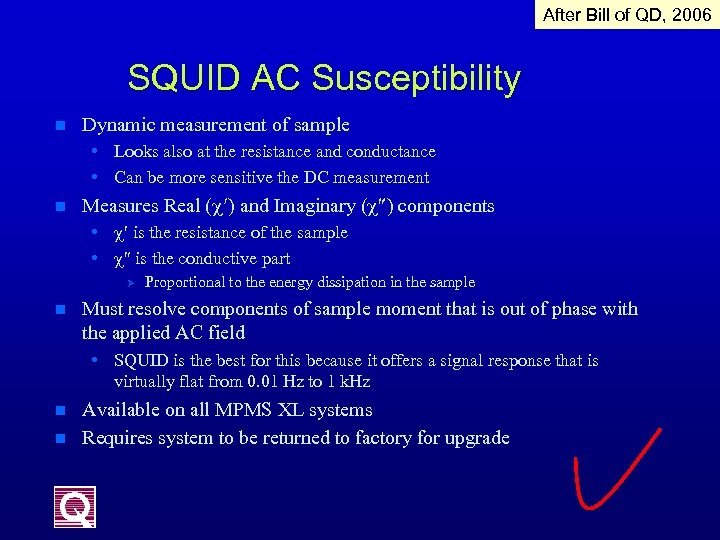
After Bill of QD, 2006 SQUID AC Susceptibility n Dynamic measurement of sample • Looks also at the resistance and conductance • Can be more sensitive the DC measurement n Measures Real ( ) and Imaginary ( ) components • is the resistance of the sample • is the conductive part Ø n Proportional to the energy dissipation in the sample Must resolve components of sample moment that is out of phase with the applied AC field • SQUID is the best for this because it offers a signal response that is virtually flat from 0. 01 Hz to 1 k. Hz n n Available on all MPMS XL systems Requires system to be returned to factory for upgrade
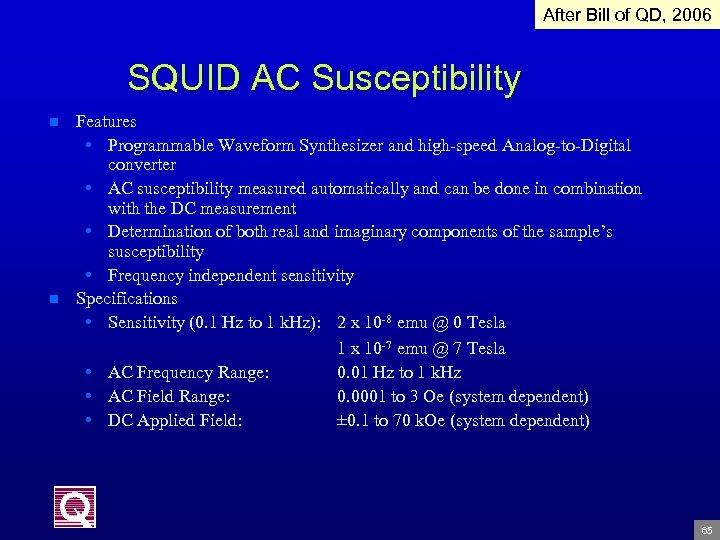
After Bill of QD, 2006 SQUID AC Susceptibility n n Features • Programmable Waveform Synthesizer and high-speed Analog-to-Digital converter • AC susceptibility measured automatically and can be done in combination with the DC measurement • Determination of both real and imaginary components of the sample’s susceptibility • Frequency independent sensitivity Specifications • Sensitivity (0. 1 Hz to 1 k. Hz): 2 x 10 -8 emu @ 0 Tesla 1 x 10 -7 emu @ 7 Tesla • AC Frequency Range: 0. 01 Hz to 1 k. Hz • AC Field Range: 0. 0001 to 3 Oe (system dependent) • DC Applied Field: ± 0. 1 to 70 k. Oe (system dependent) 65
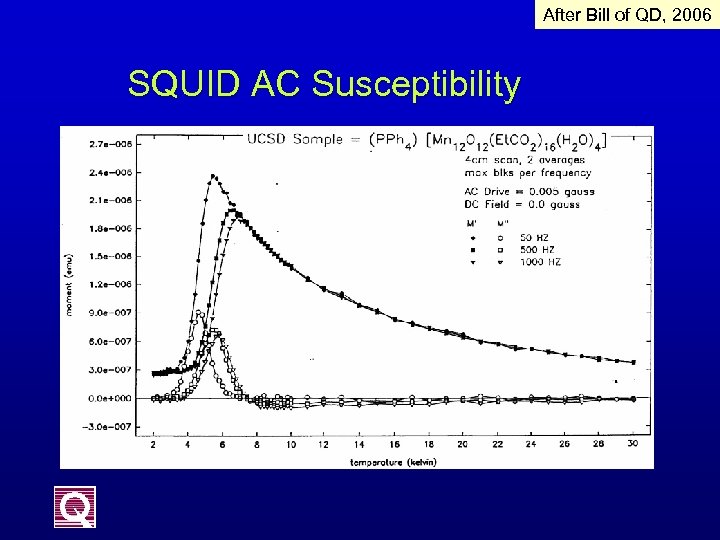
After Bill of QD, 2006 SQUID AC Susceptibility
After Bill of QD, 2006 Ultra-Low Field Capability n n n Actively cancels remanent field in all MPMS superconducting magnets Sample space fields as low as ± 0. 1 Oe achievable Custom-designed fluxgate magnetometer supplied Includes Magnet Reset Requires the Environmental Magnet Shield
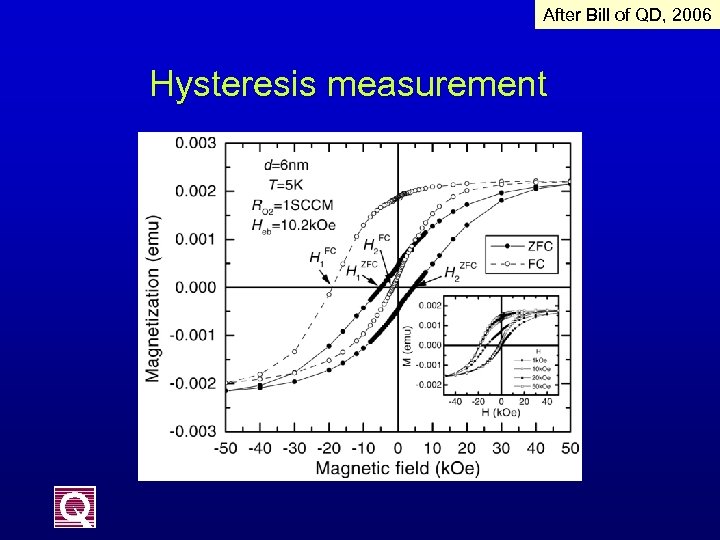
After Bill of QD, 2006 Hysteresis measurement
After Bill of QD, 2006 Extended Dynamic Range n n n Extends the maximum measurable moment from ± 5 emu to ± 300 emu (10 orders of magnitude) Automatically selected when needed in measurement Effective on both longitudinal and transverse SQUID systems
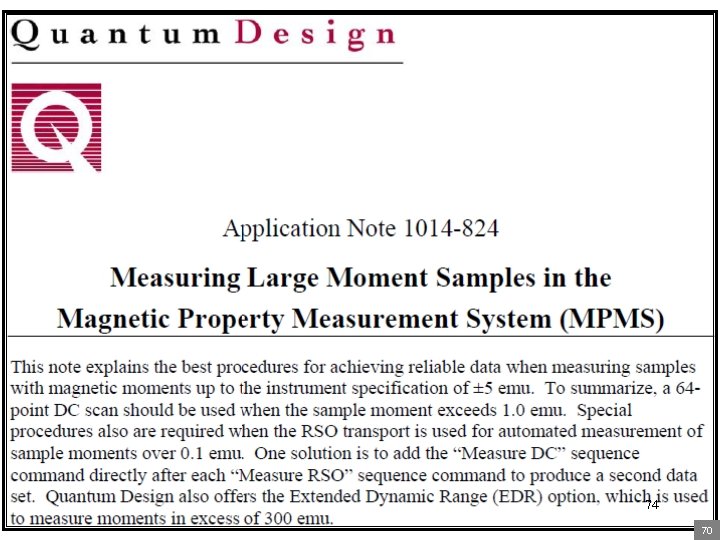
关于MPMS的量程 • 基本量程(Primary Dynamic Range) • 扩展量程(Extended Dynamic Range) 74 70
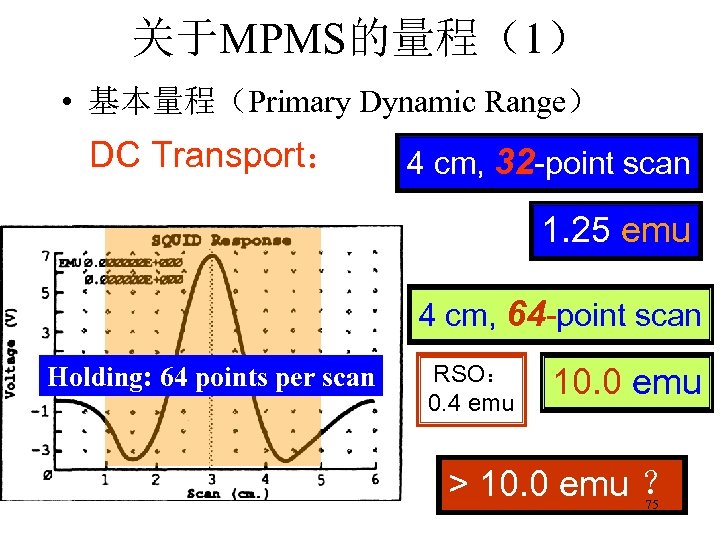
关于MPMS的量程(1) • 基本量程(Primary Dynamic Range) DC Transport: 4 cm, 32 -point scan 1. 25 emu 4 cm, 64 -point scan Holding: 64 points per scan RSO: 0. 4 emu 10. 0 emu > 10. 0 emu ? 75
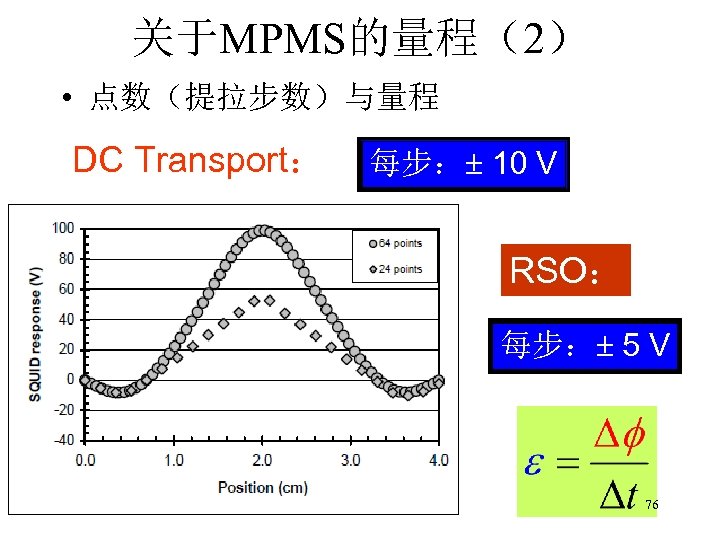
关于MPMS的量程(2) • 点数(提拉步数)与量程 DC Transport: 每步: 10 V RSO: 每步: 5 V 76
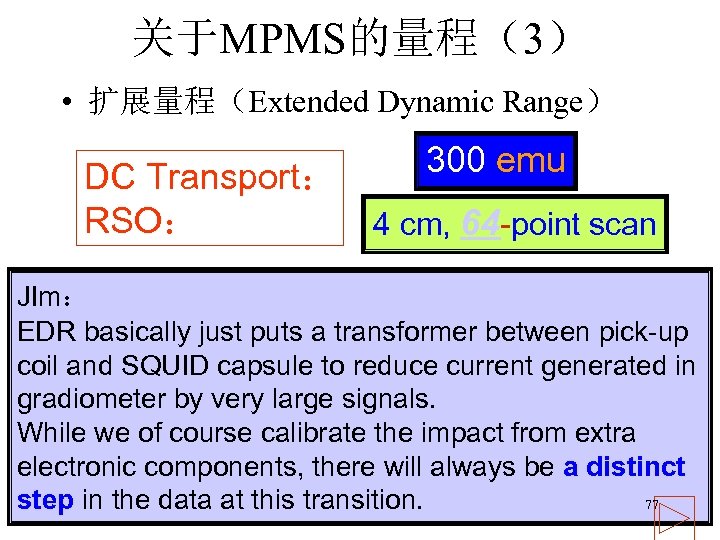
关于MPMS的量程(3) • 扩展量程(Extended Dynamic Range) DC Transport: RSO: 300 emu 4 cm, 64 -point scan JIm: EDR basically just puts a transformer between pick-up coil and SQUID capsule to reduce current generated in gradiometer by very large signals. While we of course calibrate the impact from extra electronic components, there will always be a distinct 77 step in the data at this transition.
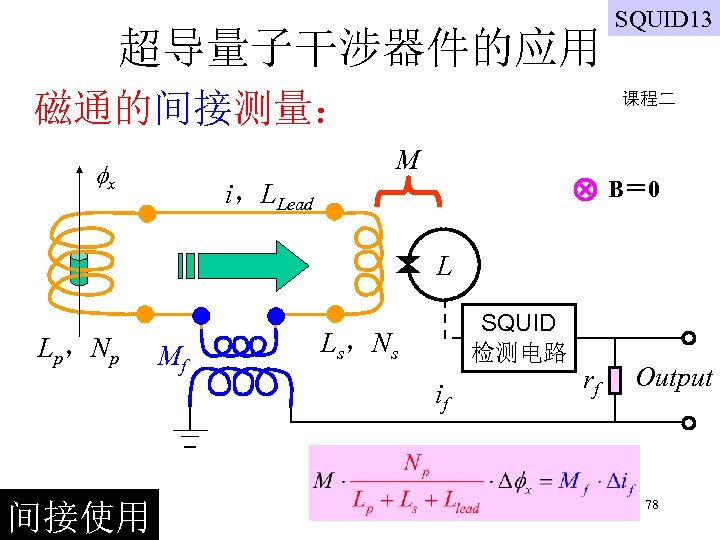
超导量子干涉器件的应用 磁通的间接测量:电流负反馈 SQUID 13 课程二 M x B= 0 i,LLead L Lp,Np Mf SQUID 检测电路 Ls,Ns if 间接使用 rf Output 78
After Bill of QD After QD, 2006 Sample Space Oven n Provides high temperature measurement capability • Ambient to n n 800 K Easily installed and removed by the user when needed A minimal increase in helium usage • Approximately 0. 1 liters liquid helium/hour n 3. 5 mm diameter sample space 75
After Bill of QD, 2006 MPMS Horizontal Rotator n n Automatically rotates sample about a horizontal axis during magnetic measurement 360 degrees of rotation; 0. 1 degree steps Sample platform is 1. 6 X 5. 8 Diamagnetic background signal of 10 -3 emu at 5 tesla (课程一):样品总磁矩 < 0. 1 memu
QD公司SQUID磁强计的升级 ? Sample Rotator for MPMS 81
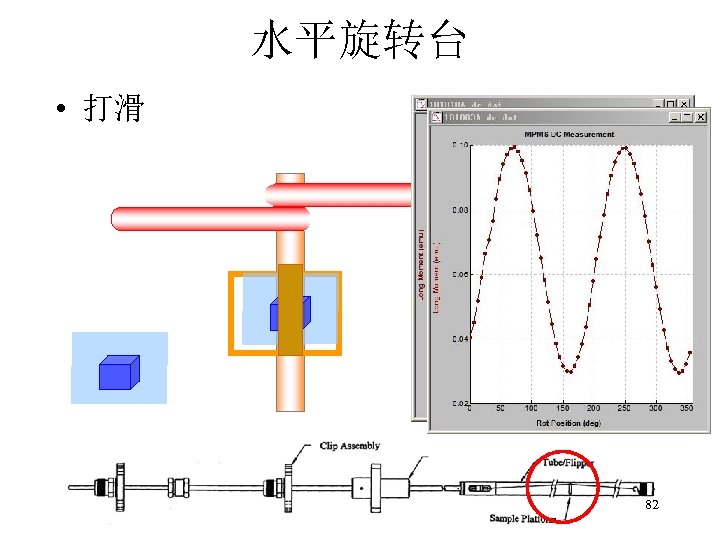
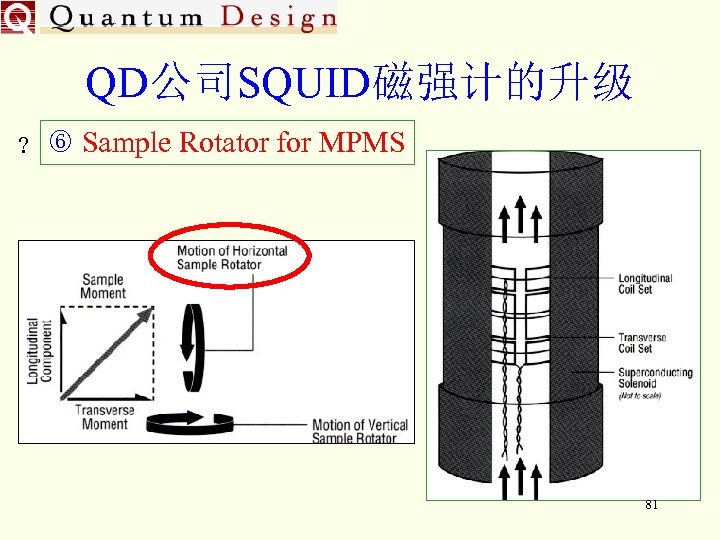
水平旋转台 • 打滑 82
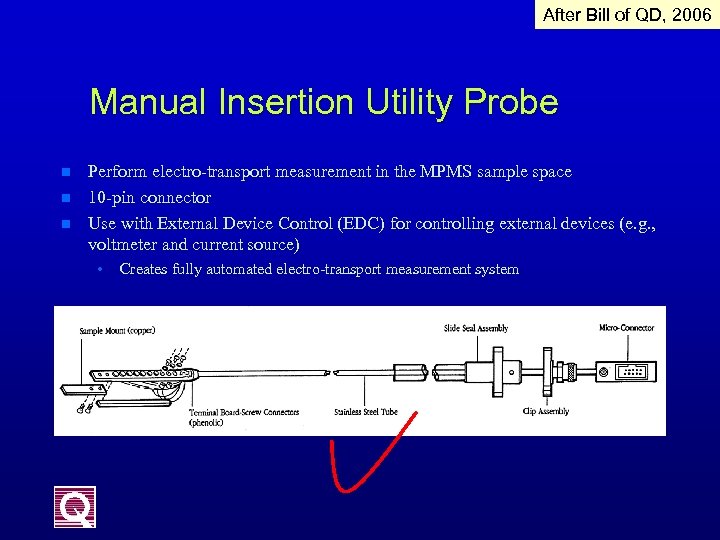
After Bill of QD, 2006 Manual Insertion Utility Probe n n n Perform electro-transport measurement in the MPMS sample space 10 -pin connector Use with External Device Control (EDC) for controlling external devices (e. g. , voltmeter and current source) • Creates fully automated electro-transport measurement system
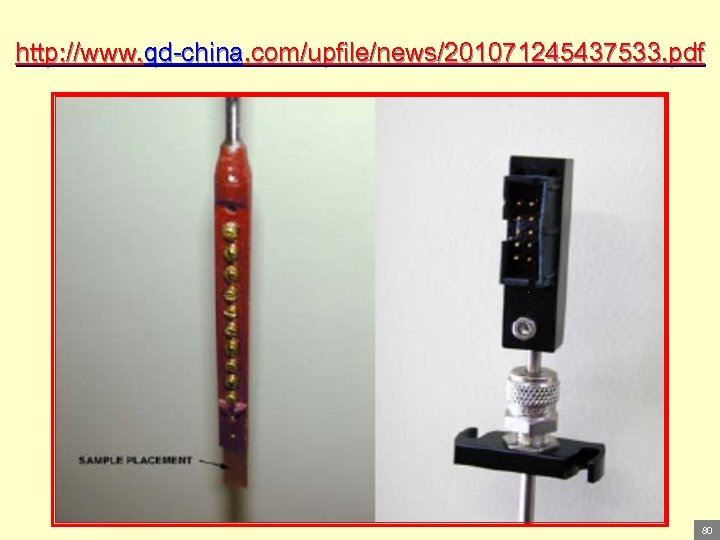
http: //www. qd-china. com/upfile/news/201071245437533. pdf 80
After Bill of QD, 2006 External Device Control n n Allows control and data read back from third party electronics Allows custom control of MPMS electronics Use with Manual Insertion Utility Probe for automated electrotransport measurements MPMS Multi. Vu version written in Borland’s Delphi (Visual Pascal) programming language
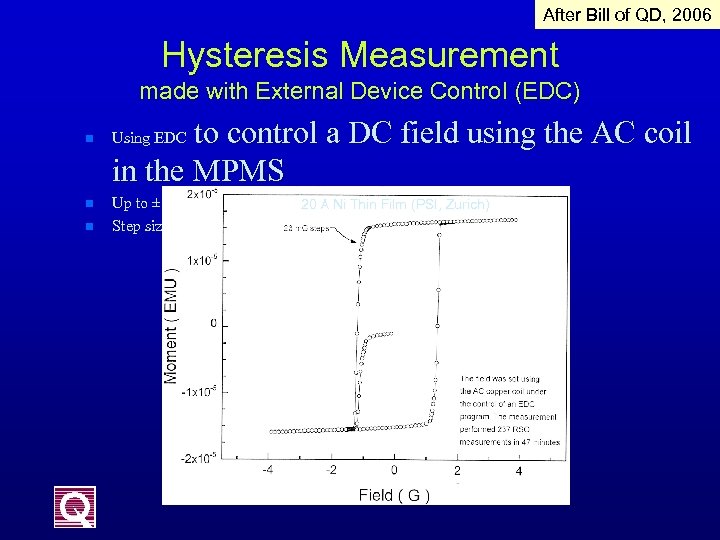
After Bill of QD, 2006 Hysteresis Measurement made with External Device Control (EDC) to control a DC field using the AC coil in the MPMS n Using EDC n Up to ± 8 Oe DC field (system dependent)Film (PSI, Zurich) 20 Å Ni Thin Step size as small as 1. 9 Oe n
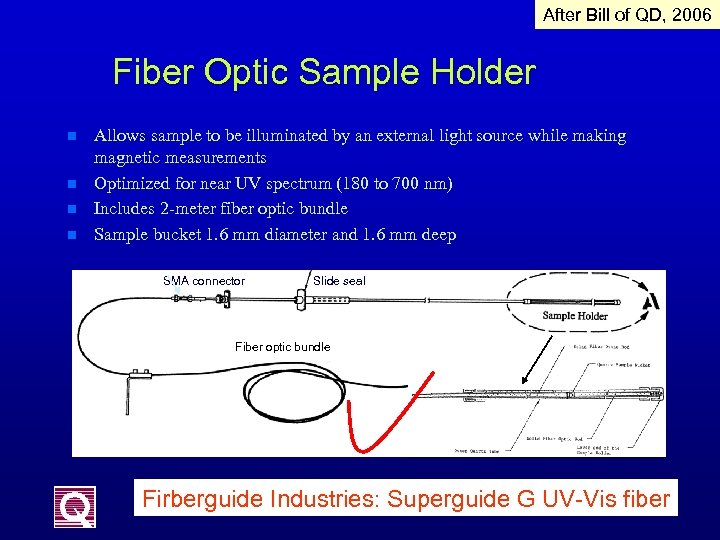
After Bill of QD, 2006 Fiber Optic Sample Holder n n Allows sample to be illuminated by an external light source while making magnetic measurements Optimized for near UV spectrum (180 to 700 nm) Includes 2 -meter fiber optic bundle Sample bucket 1. 6 mm diameter and 1. 6 mm deep SMA connector Slide seal Fiber optic bundle Firberguide Industries: Superguide G UV-Vis fiber
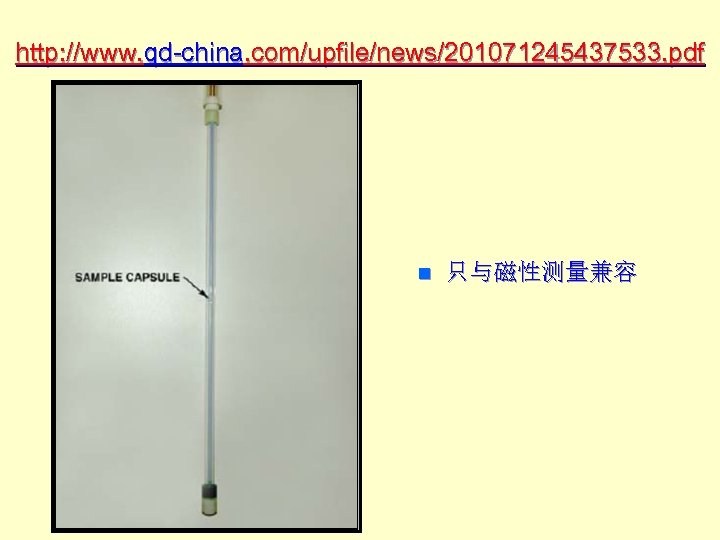
http: //www. qd-china. com/upfile/news/201071245437533. pdf n 只与磁性测量兼容
After Bill of QD, 2006 MPMS Liquid Helium Dewar Options n n n Basic system supplied with a vapor shielded 56 liter dewar Liquid nitrogen jacketed version of the basic dewar improves hold time by ~ 30% MPMS Ever. Cool Cryocooled Dewar 85
After Bill of QD, 2006 MPMS Ever. Cool Dewar n n n n Designed to eliminate the need for liquid helium transfers Virtually eliminates all helium loss from the Quantum Design MPMS magnetometer system Cryocooler-dewar system that recondenses the helium directly in the dewar Integrated into MPMS Operating System Cryocooler operation can be controlled automatically to minimize interference with sensitive magnetic measurements Available as an upgrade to all MPMS systems (no equipment needs to be returned to Quantum Design) Available with water or air cooled compressor
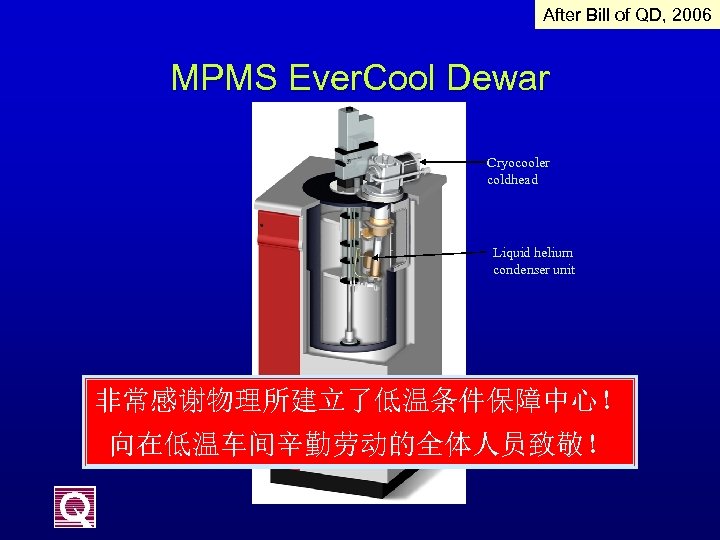
After Bill of QD, 2006 MPMS Ever. Cool Dewar Cryocooler coldhead Liquid helium condenser unit 非常感谢物理所建立了低温条件保障中心! 向在低温车间辛勤劳动的全体人员致敬!
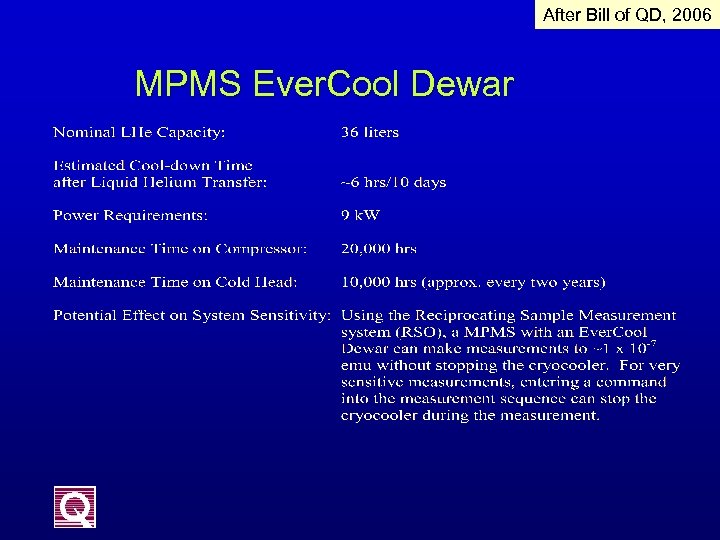
After Bill of QD, 2006 MPMS Ever. Cool Dewar
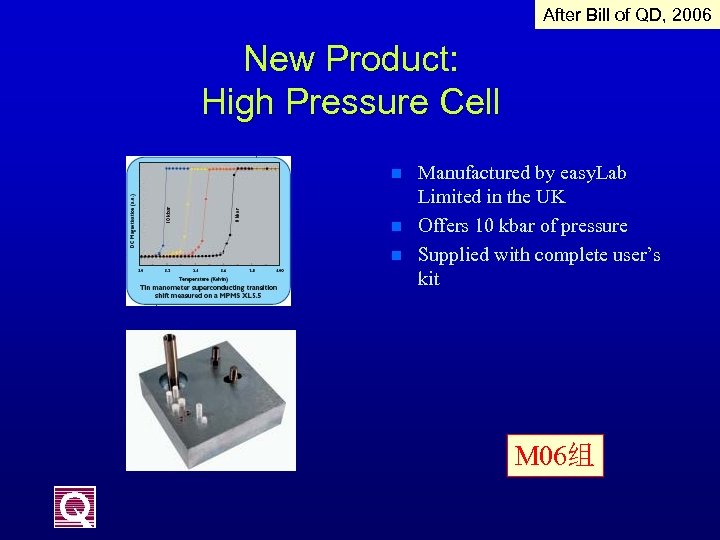
After Bill of QD, 2006 New Product: High Pressure Cell n n n Manufactured by easy. Lab Limited in the UK Offers 10 kbar of pressure Supplied with complete user’s kit M 06组
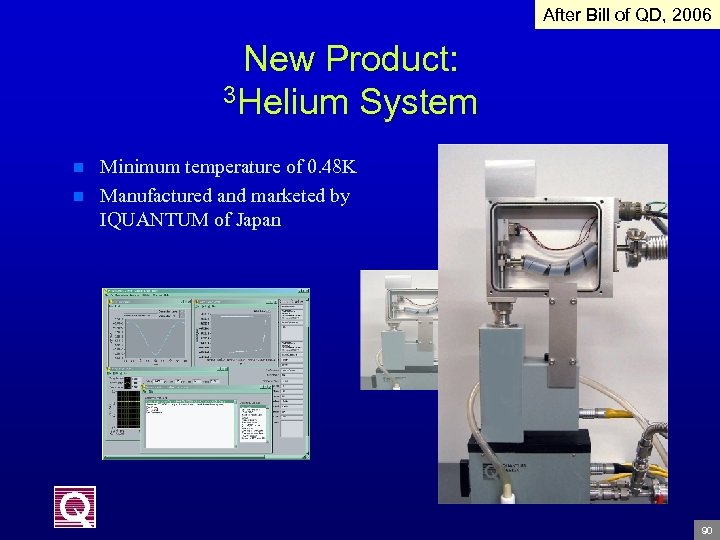
After Bill of QD, 2006 New Product: 3 Helium System n n Minimum temperature of 0. 48 K Manufactured and marketed by IQUANTUM of Japan 90
MPMS操作 1 超导量子磁强计的操作 Ø 超导量子磁强计的运行(条件) Ø 样品的安装(原则与方法) Ø 控制软件的启动和使用(方法) Ø 测量程序的编辑(过程) Ø 数据文件的处理(注意事项) 95
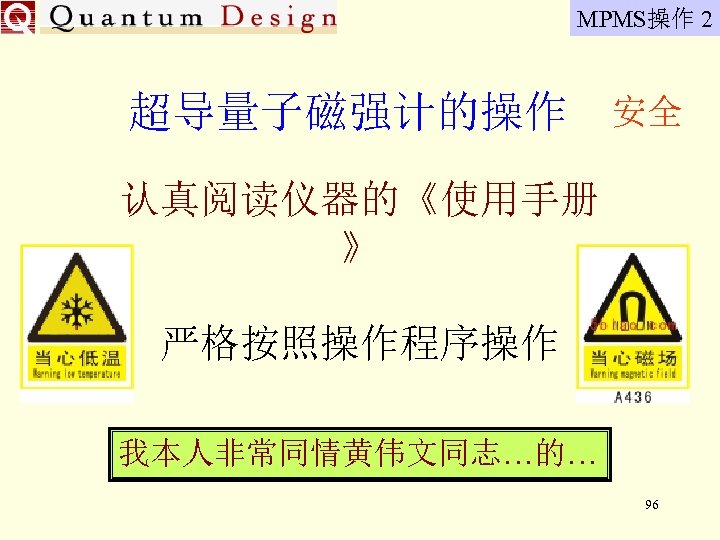
MPMS操作 2 超导量子磁强计的操作 安全 认真阅读仪器的《使用手册 》 严格按照操作程序操作 我本人非常同情黄伟文同志…的… 96
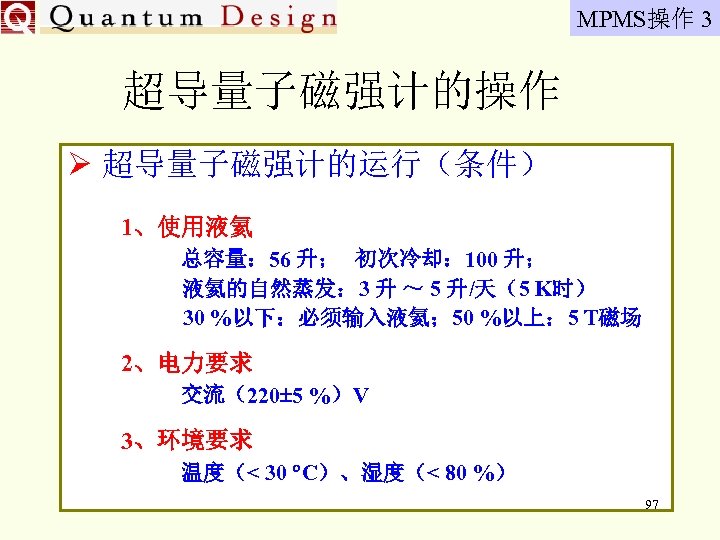
MPMS操作 3 超导量子磁强计的操作 Ø 超导量子磁强计的运行(条件) 1、使用液氦 总容量: 56 升; 初次冷却: 100 升; 液氦的自然蒸发: 3 升 ~ 5 升/天(5 K时) 30 %以下:必须输入液氦; 50 %以上: 5 T磁场 2、电力要求 交流(220 5 %)V 3、环境要求 温度(< 30 C)、湿度(< 80 %) 97
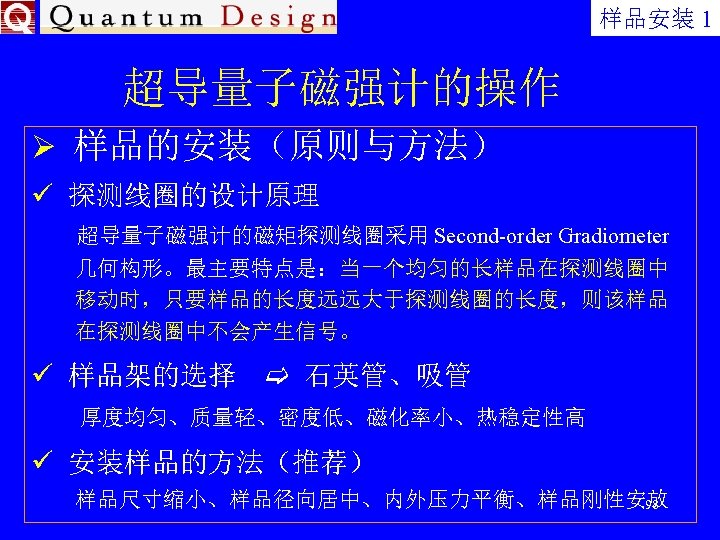
样品安装 1 超导量子磁强计的操作 Ø 样品的安装(原则与方法) ü 探测线圈的设计原理 超导量子磁强计的磁矩探测线圈采用 Second-order Gradiometer 几何构形。最主要特点是:当一个均匀的长样品在探测线圈中 移动时,只要样品的长度远远大于探测线圈的长度,则该样品 在探测线圈中不会产生信号。 ü 样品架的选择 石英管、吸管 厚度均匀、质量轻、密度低、磁化率小、热稳定性高 ü 安装样品的方法(推荐) 样品尺寸缩小、样品径向居中、内外压力平衡、样品刚性安放 98
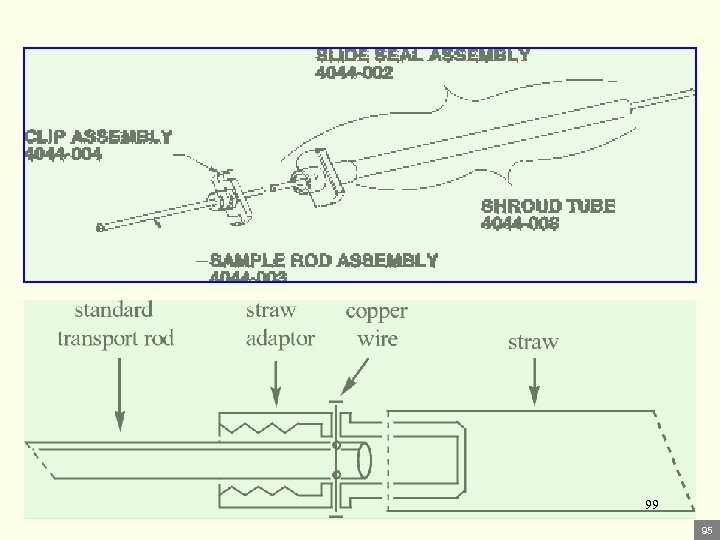
99 95
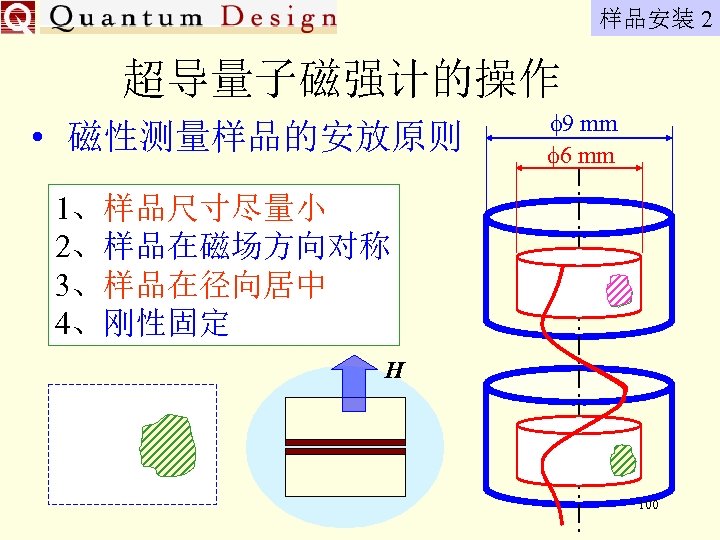
样品安装 2 超导量子磁强计的操作 • 磁性测量样品的安放原则 9 mm 6 mm 1、样品尺寸尽量小 2、样品在磁场方向对称 3、样品在径向居中 4、刚性固定 H 100
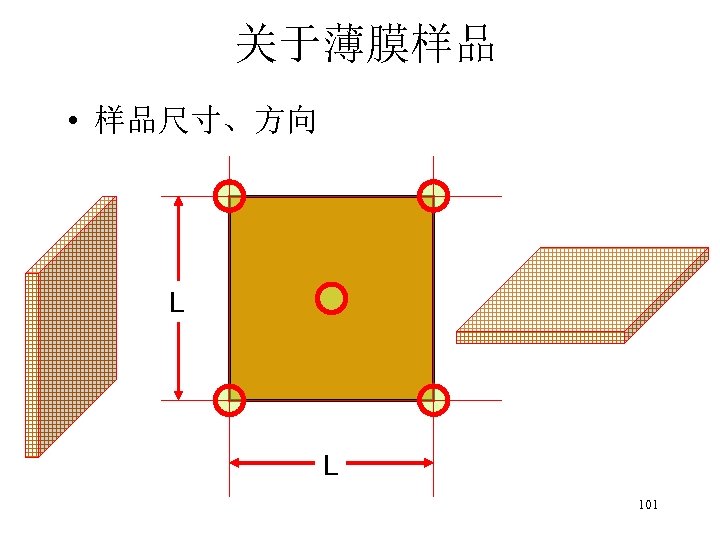
关于薄膜样品 • 样品尺寸、方向 L L 101
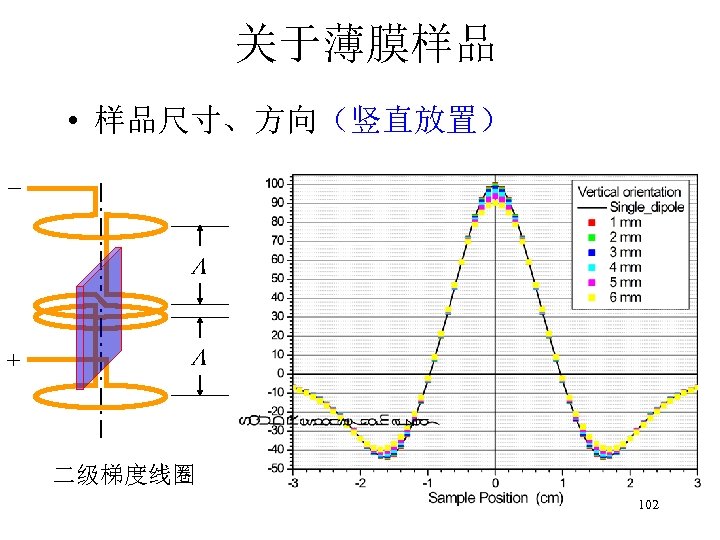
关于薄膜样品 • 样品尺寸、方向(竖直放置) + 二级梯度线圈 102
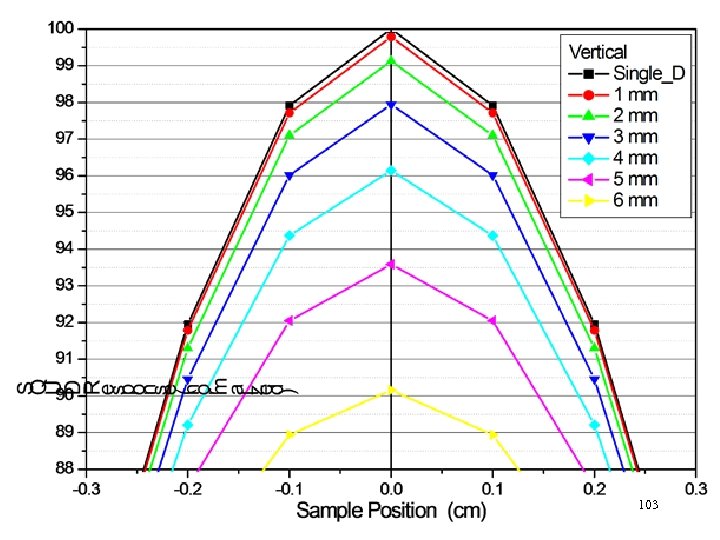
关于薄膜样品 • 样品尺寸、方向(竖直放置) 103
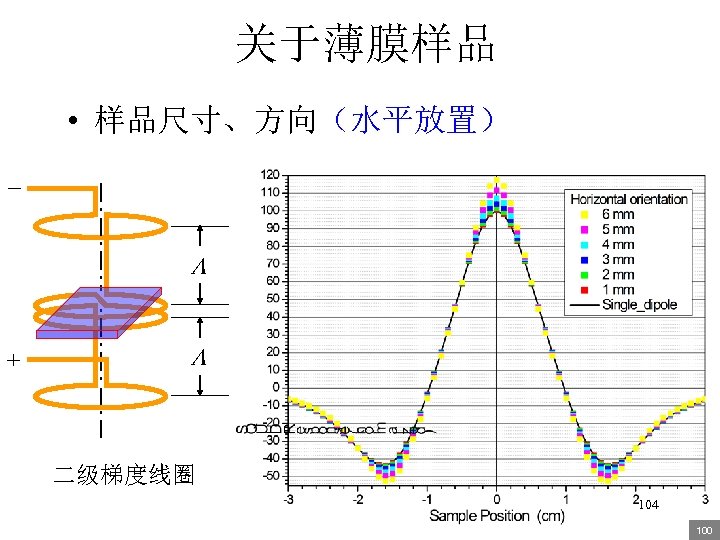
关于薄膜样品 • 样品尺寸、方向(水平放置) + 二级梯度线圈 104 100
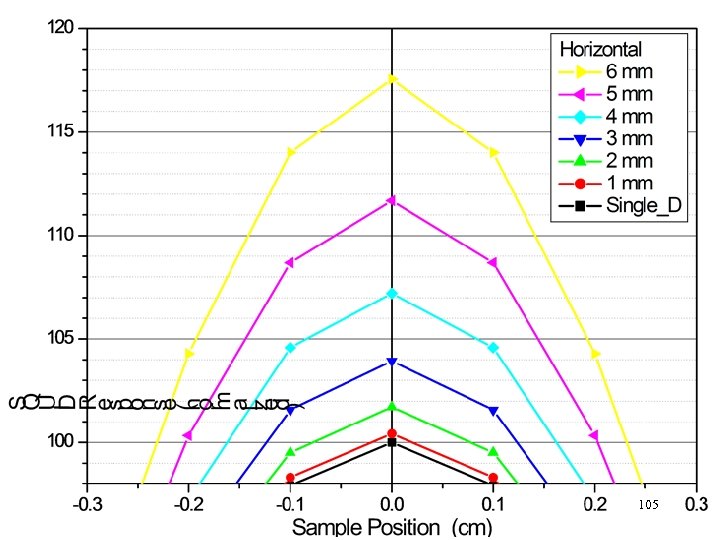
关于薄膜样品 • 样品尺寸、方向(水平放置) 105
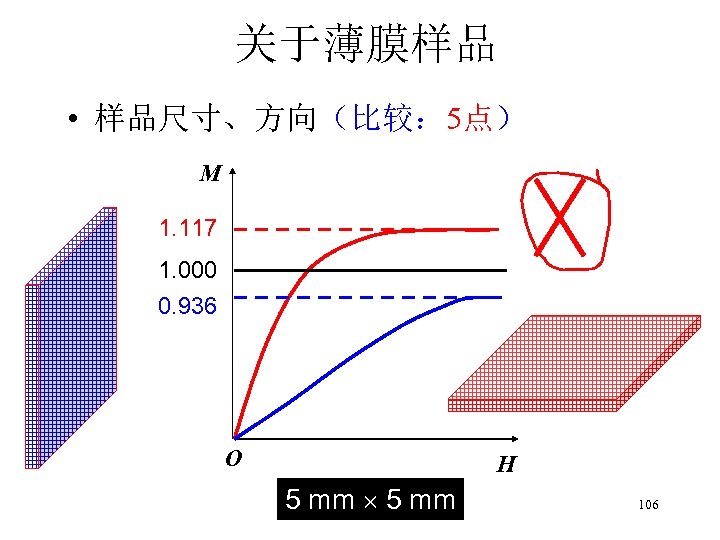
关于薄膜样品 • 样品尺寸、方向(比较: 5点) M 1. 117 1. 000 0. 936 O H 5 mm 106
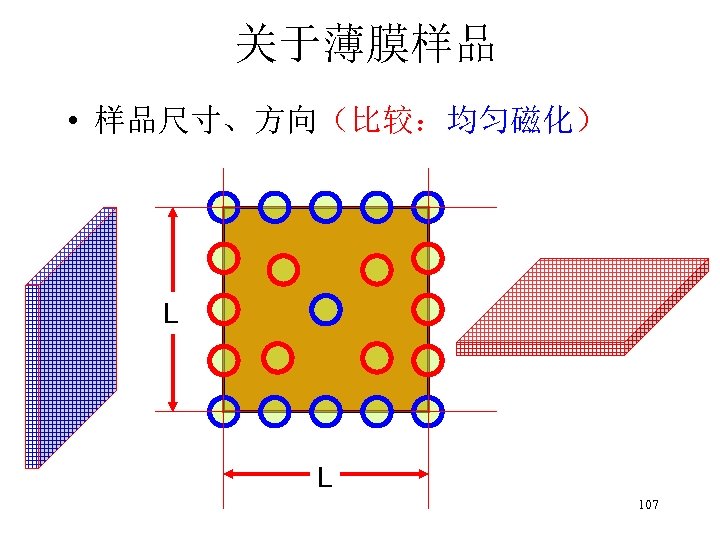
关于薄膜样品 • 样品尺寸、方向(比较:均匀磁化) L L 107
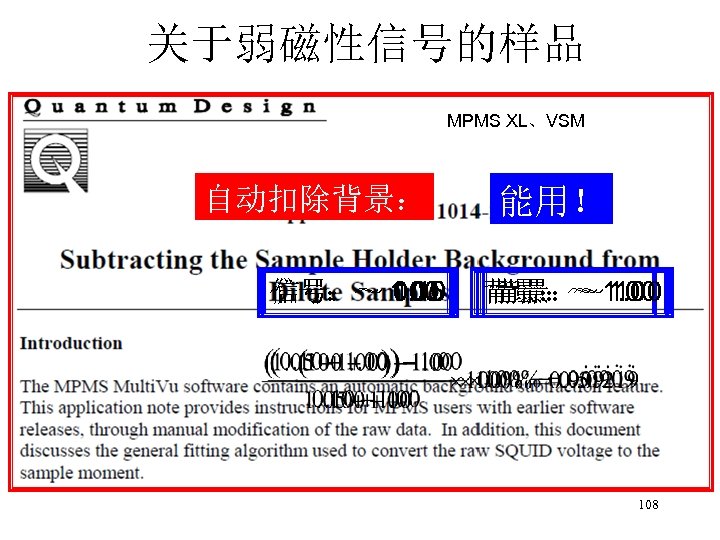
关于弱磁性信号的样品 • 背景、背景的扣除 MPMS XL、VSM 自动扣除背景: 信号:~ 1. 05 信号:~ 0. 10 100 能用! 背景:~ 1. 00 背景:~ 10 108
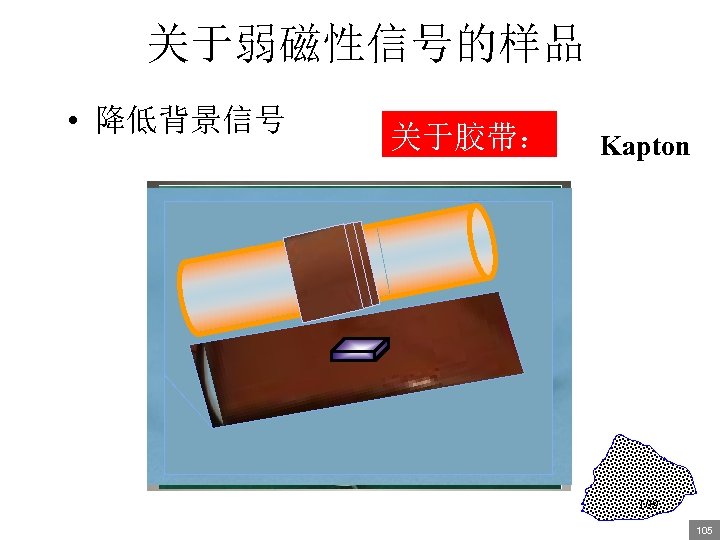
关于弱磁性信号的样品 • 降低背景信号 关于胶带: Kapton 足够长(> 6 cm) 109 105
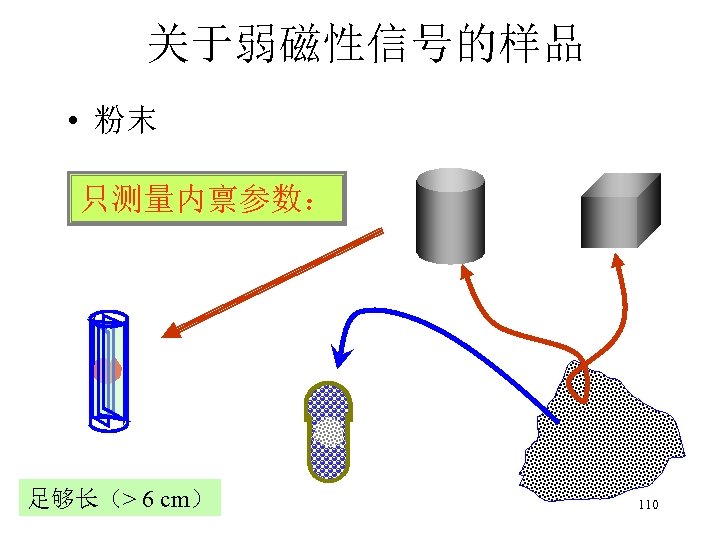
关于弱磁性信号的样品 • 粉末 只测量内禀参数: 足够长(> 6 cm) 110
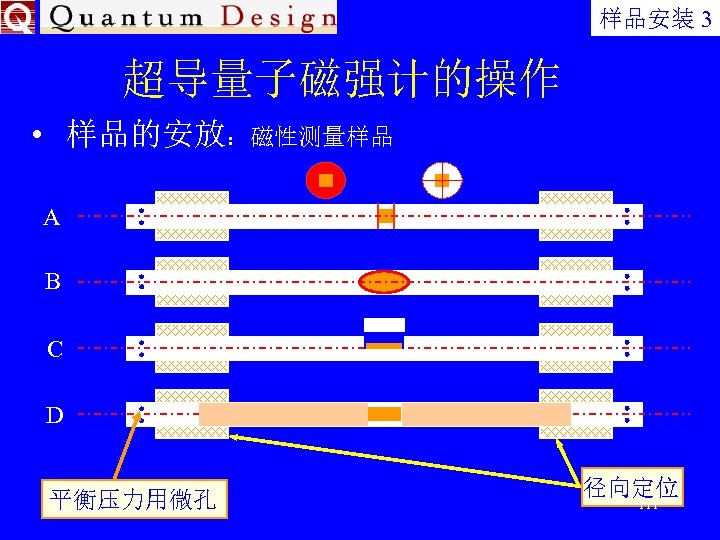
样品安装 3 超导量子磁强计的操作 • 样品的安放:磁性测量样品 A B C D 平衡压力用微孔 径向定位 111
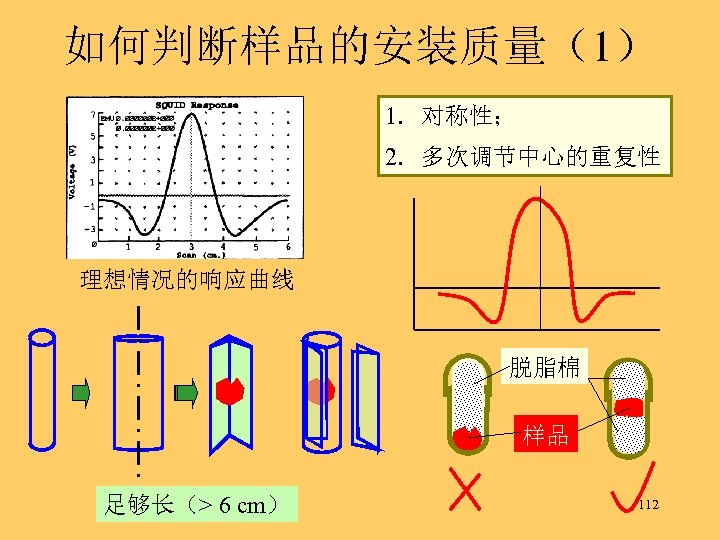
如何判断样品的安装质量(1) 1. 对称性; 2. 多次调节中心的重复性 理想情况的响应曲线 脱脂棉 样品 足够长(> 6 cm) 112
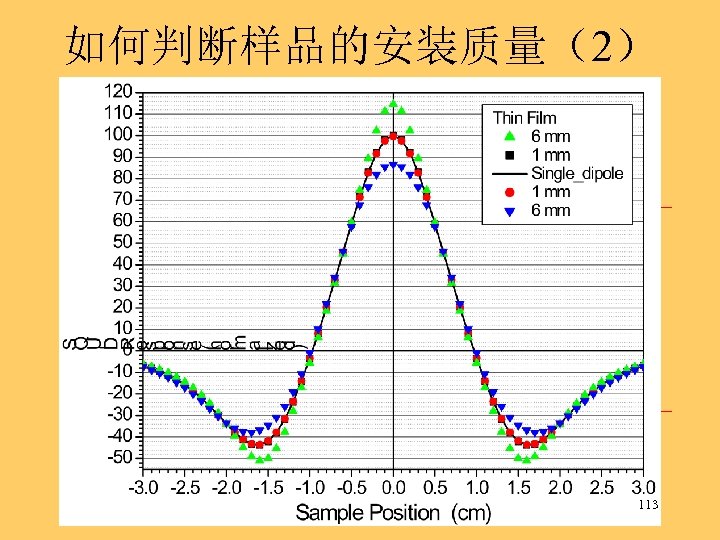
如何判断样品的安装质量(2) 响应曲线:薄膜样品 L 理想情况的响应曲线 L 113
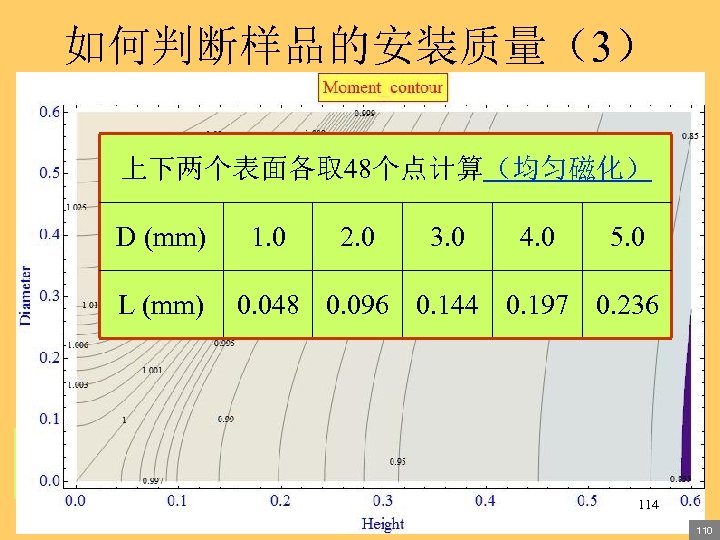
如何判断样品的安装质量(3) 响应曲线:圆柱体样品 上下两个表面各取 48个点计算(均匀磁化) D (mm) L (mm) 1. 0 2. 0 3. 0 4. 0 5. 0 0. 048 0. 096 0. 144 0. 197 0. 236 H 理想情况的响应曲线 D 114 110
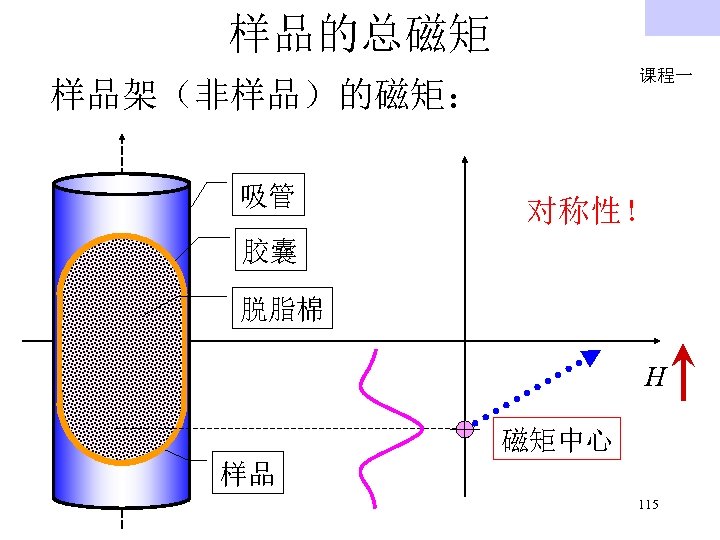
样品5 样品的总磁矩 课程一 样品架(非样品)的磁矩: 吸管 对称性! 胶囊 脱脂棉 H 磁矩中心 样品 115
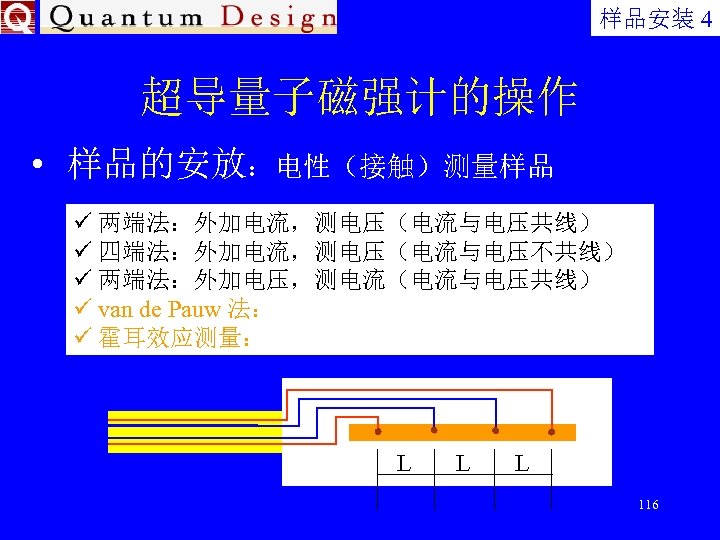
样品安装 4 超导量子磁强计的操作 • 样品的安放:电性(接触)测量样品 ü 两端法:外加电流,测电压(电流与电压共线) ü 四端法:外加电流,测电压(电流与电压不共线) ü 两端法:外加电压,测电流(电流与电压共线) ü van de Pauw 法: ü 霍耳效应测量: L L L 116
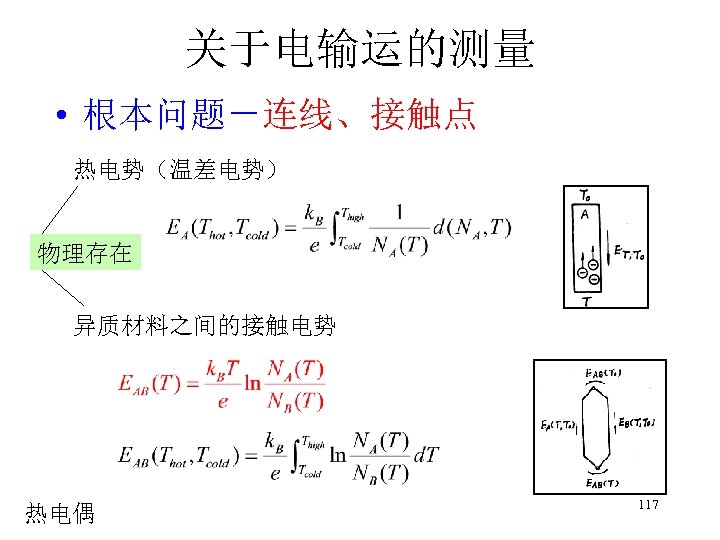
关于电输运的测量 • 根本问题-连线、接触点 热电势(温差电势) 物理存在 异质材料之间的接触电势 热电偶 117
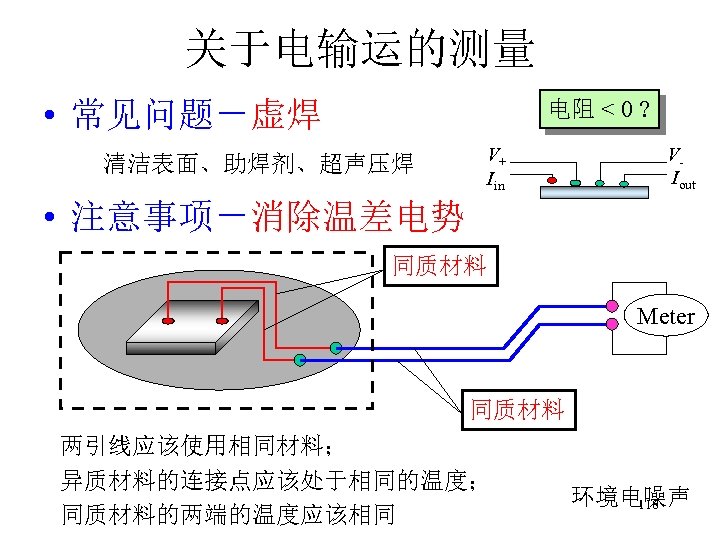
关于电输运的测量 • 常见问题-虚焊 电阻 < 0 ? V+ Iin 清洁表面、助焊剂、超声压焊 VIout • 注意事项-消除温差电势 同质材料 Meter 同质材料 两引线应该使用相同材料; 异质材料的连接点应该处于相同的温度; 同质材料的两端的温度应该相同 环境电噪声 118
课后作业-2 在测量电阻时,需要考虑哪些因素? 不同的阻值范围,采用的测量方法有何不同? 119 115
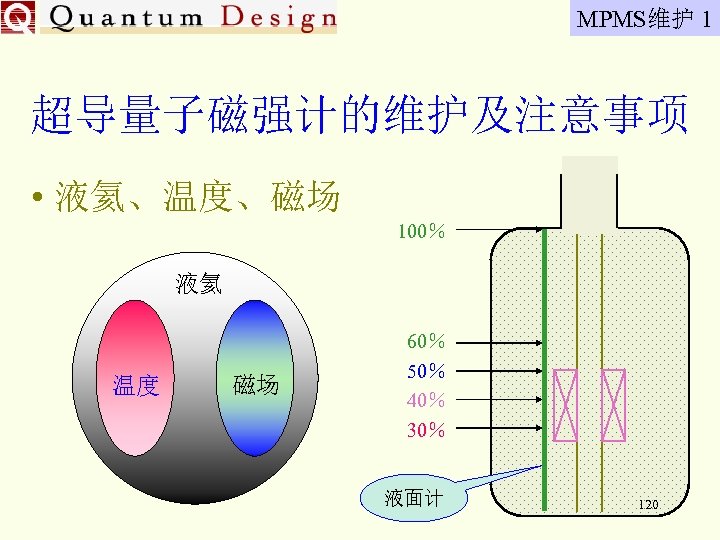
MPMS维护 1 超导量子磁强计的维护及注意事项 • 液氦、温度、磁场 100% 液氦 温度 磁场 60% 50% 40% 30% 液面计 120
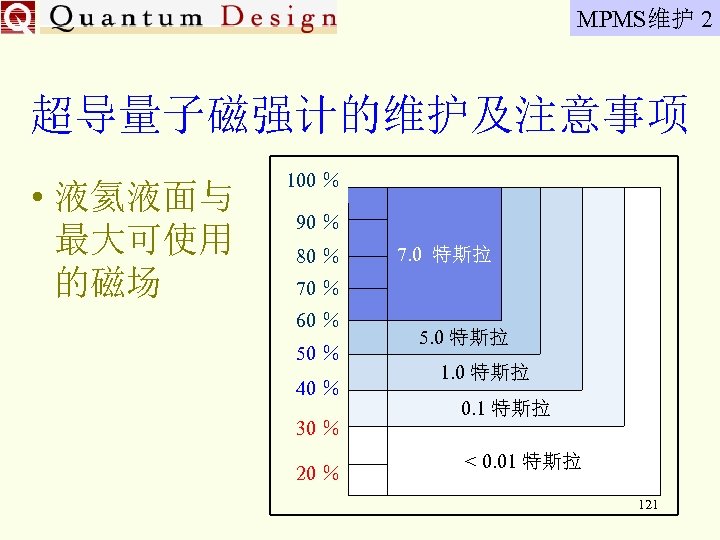
MPMS维护 2 超导量子磁强计的维护及注意事项 • 液氦液面与 最大可使用 的磁场 100 % 90 % 80 % 7. 0 特斯拉 70 % 60 % 50 % 40 % 30 % 20 % 5. 0 特斯拉 1. 0 特斯拉 0. 1 特斯拉 < 0. 01 特斯拉 121
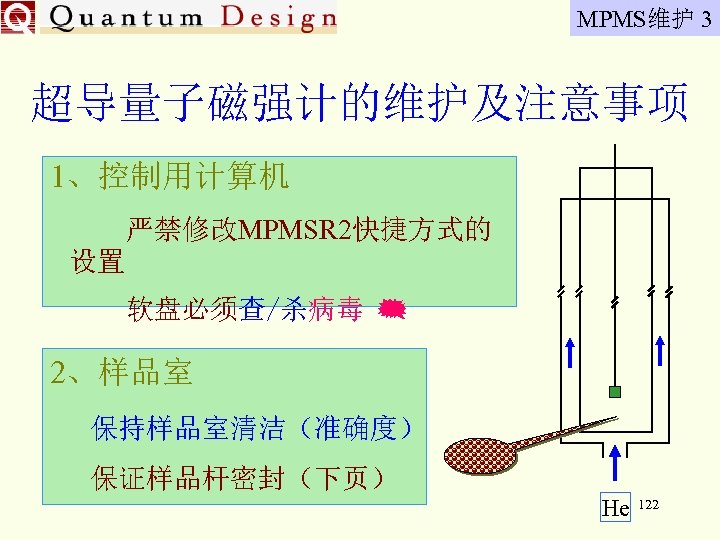
MPMS维护 3 超导量子磁强计的维护及注意事项 1、控制用计算机 严禁修改MPMSR 2快捷方式的 设置 软盘必须查/杀病毒 2、样品室 保持样品室清洁(准确度) 保证样品杆密封(下页) He 122
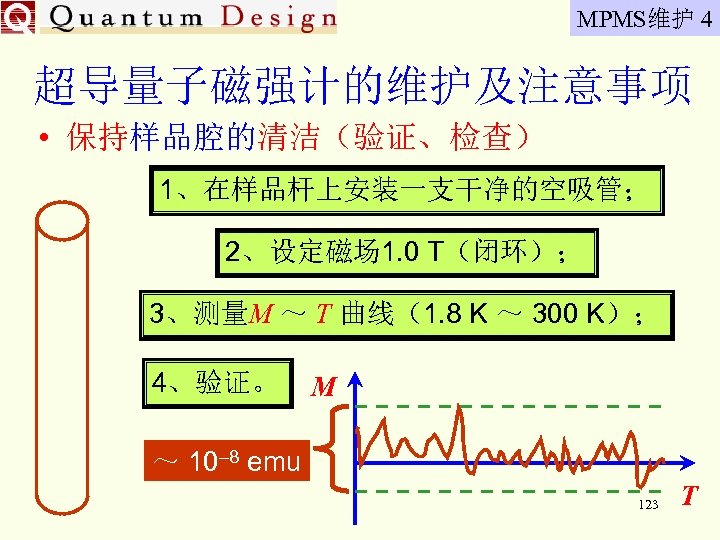
MPMS维护 4 超导量子磁强计的维护及注意事项 • 保持样品腔的清洁(验证、检查) 1、在样品杆上安装一支干净的空吸管; 2、设定磁场 1. 0 T(闭环); 3、测量M ~ T 曲线(1. 8 K ~ 300 K); 4、验证。 M ~ 10 8 emu 123 T
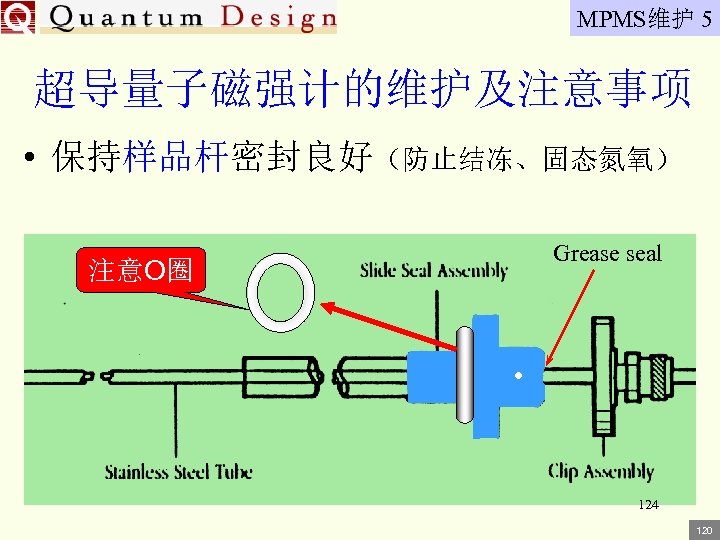
MPMS维护 5 超导量子磁强计的维护及注意事项 • 保持样品杆密封良好(防止结冻、固态氮氧) 注意O圈 Grease seal 124 120
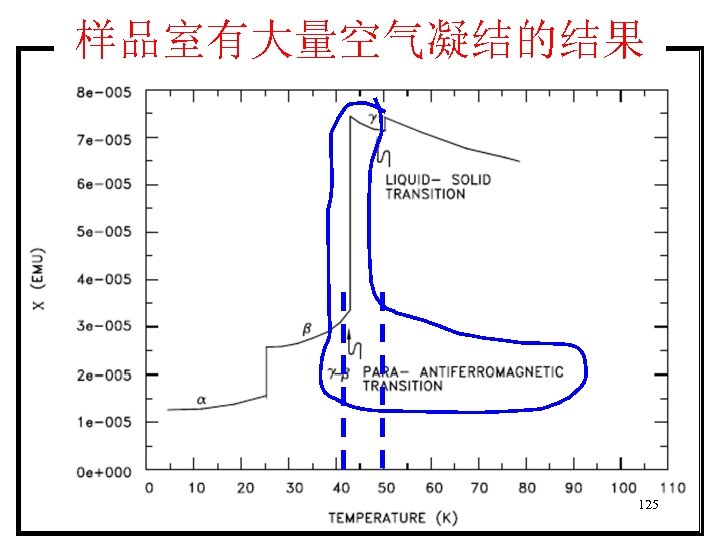
样品室有大量空气凝结的结果 • 固态O 2的反铁磁峰 125
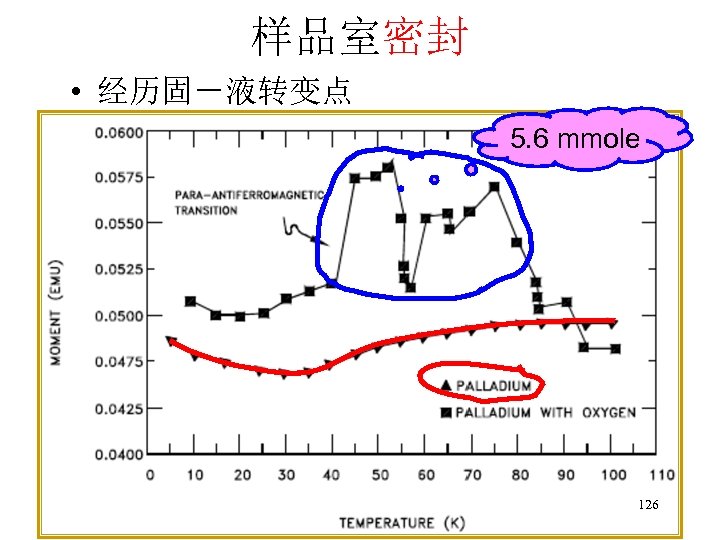
样品室密封 • 经历固-液转变点 5. 6 mmole 126
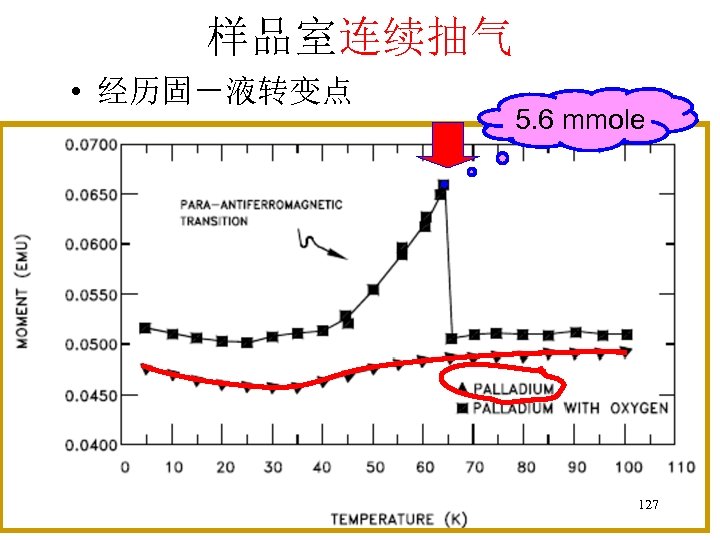
样品室连续抽气 • 经历固-液转变点 5. 6 mmole 127
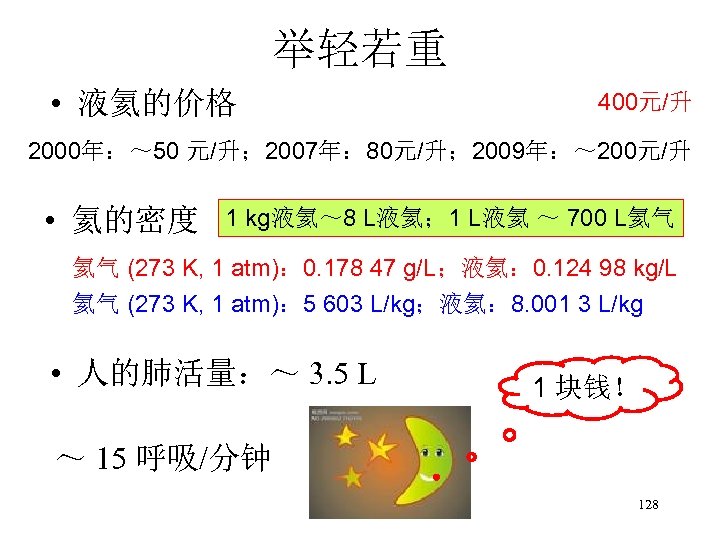
举轻若重 • 液氦的价格 400元/升 2000年:~ 50 元/升; 2007年: 80元/升; 2009年:~ 200元/升 • 氦的密度 1 kg液氦~ 8 L液氦; 1 L液氦 ~ 700 L氦气 氦气 (273 K, 1 atm): 0. 178 47 g/L;液氦: 0. 124 98 kg/L 氦气 (273 K, 1 atm): 5 603 L/kg;液氦: 8. 001 3 L/kg • 人的肺活量:~ 3. 5 L 1 块钱! ~ 15 呼吸/分钟 128
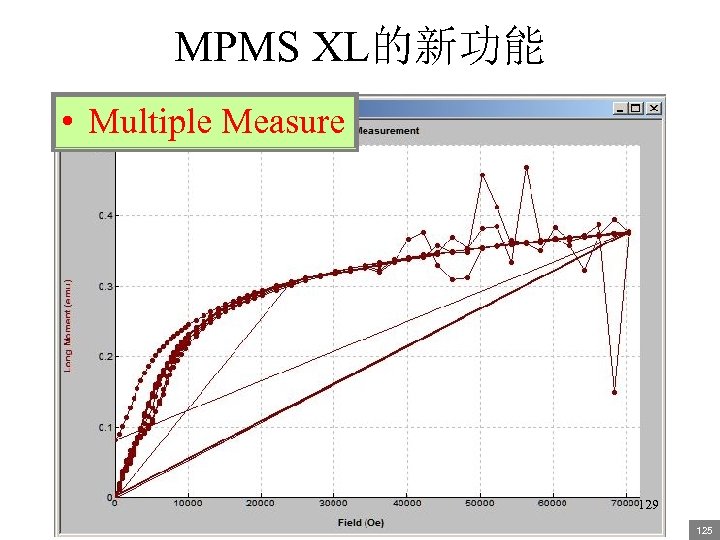
MPMS XL的新功能 • Multiple Measure 129 125
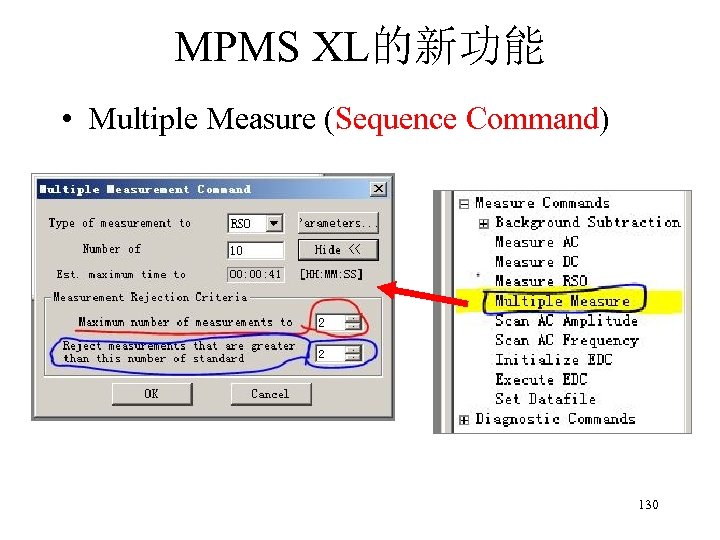
MPMS XL的新功能 • Multiple Measure (Sequence Command) 130
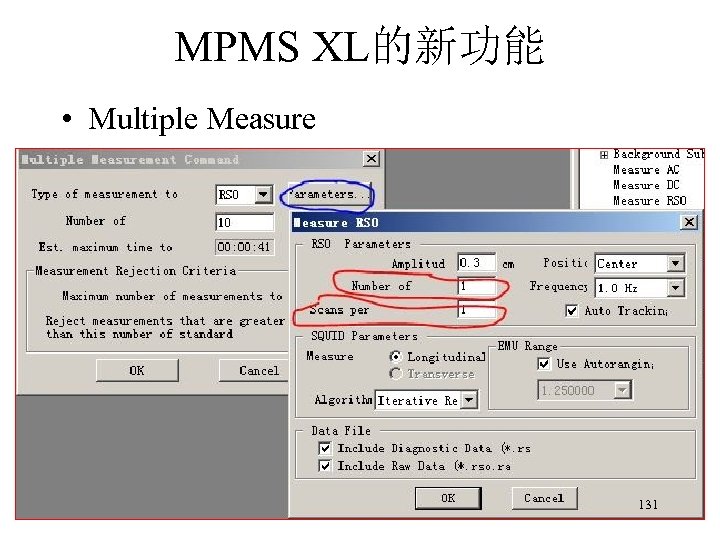
MPMS XL的新功能 • Multiple Measure 131
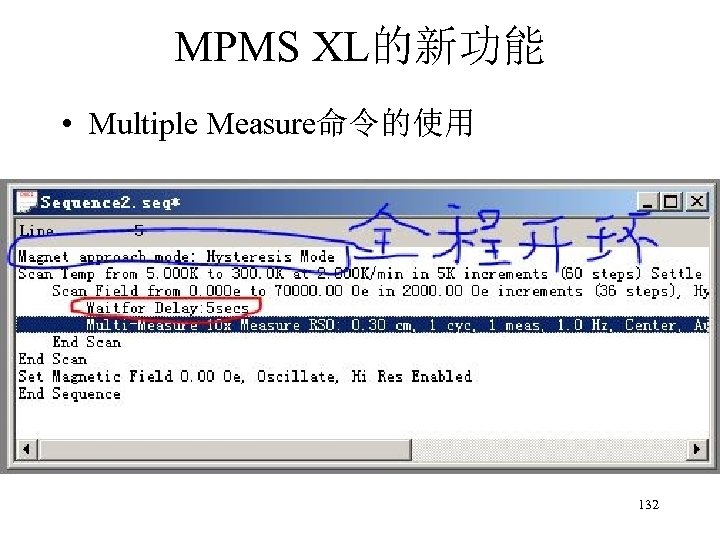
MPMS XL的新功能 • Multiple Measure命令的使用 132
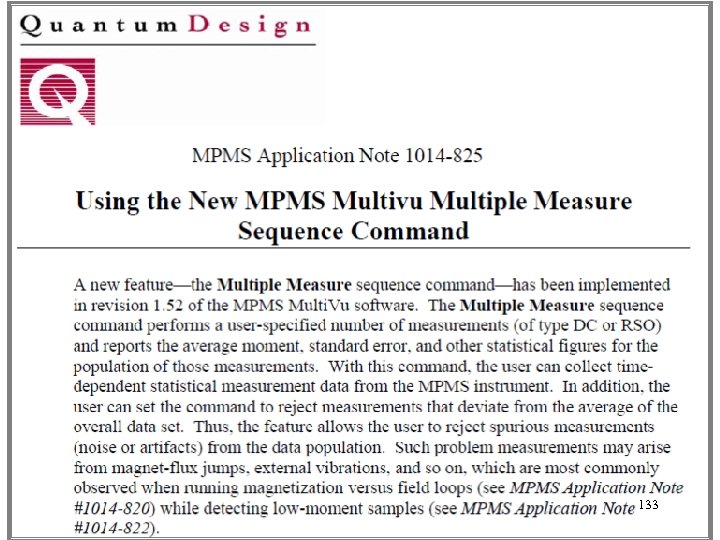
MPMS XL的新功能 • Multiple Measure命令的使用 133
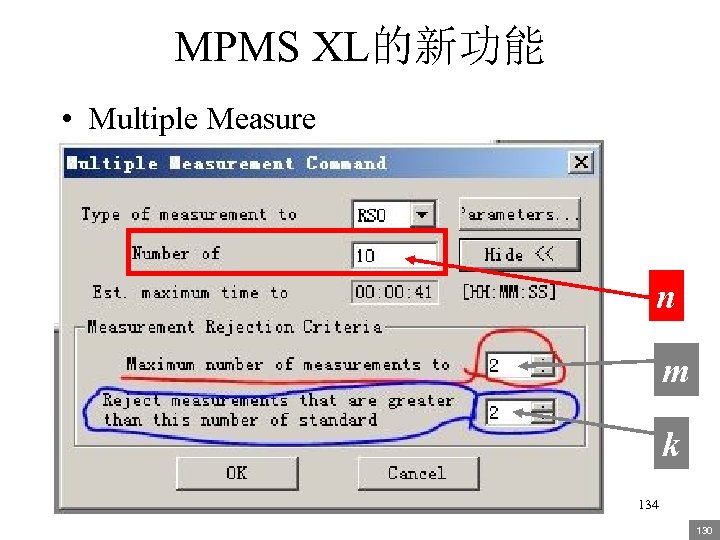
MPMS XL的新功能 • Multiple Measure n m k 134 130
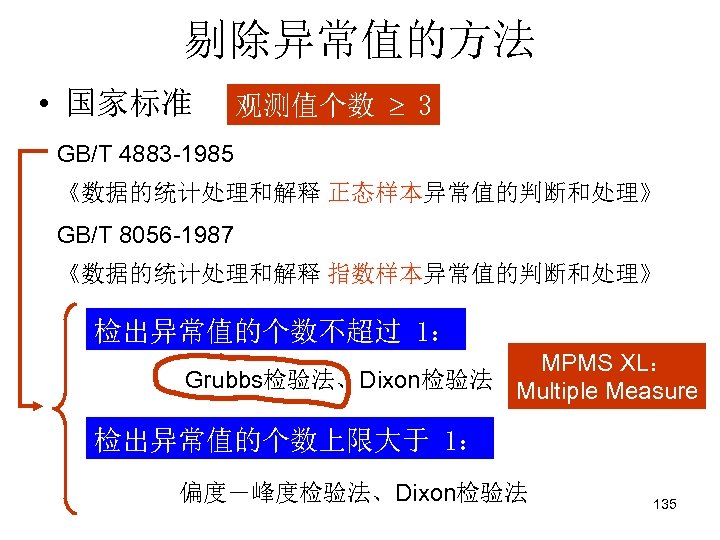
剔除异常值的方法 • 国家标准 观测值个数 3 GB/T 4883 -1985 《数据的统计处理和解释 正态样本异常值的判断和处理》 GB/T 8056 -1987 《数据的统计处理和解释 指数样本异常值的判断和处理》 检出异常值的个数不超过 1: MPMS XL: Grubbs检验法、Dixon检验法 Multiple Measure 检出异常值的个数上限大于 1: 偏度-峰度检验法、Dixon检验法 135
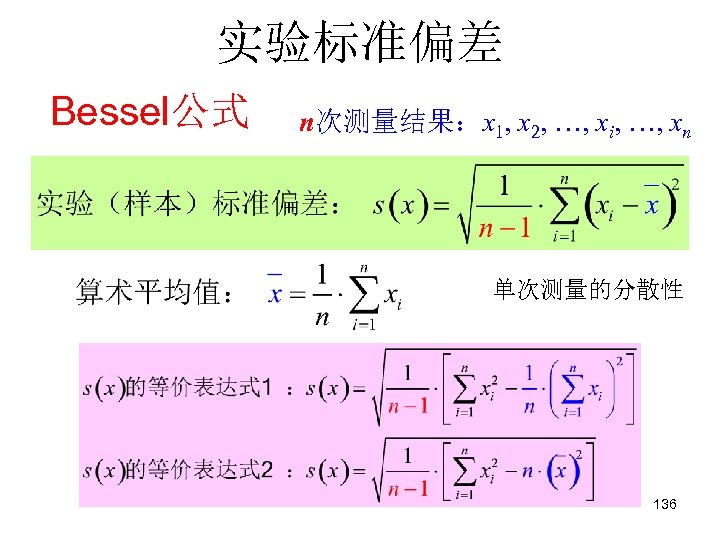
实验标准偏差 Bessel公式 n次测量结果:x 1, x 2, …, xi, …, xn 单次测量的分散性 136
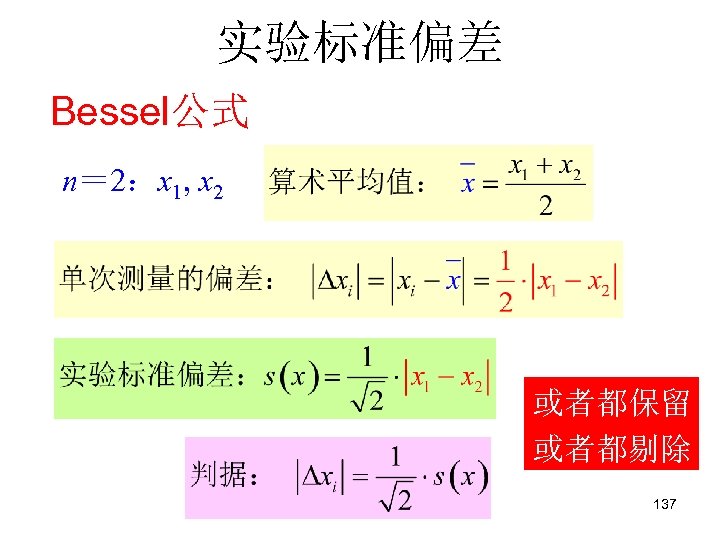
实验标准偏差 Bessel公式 n= 2:x 1, x 2 或者都保留 或者都剔除 137
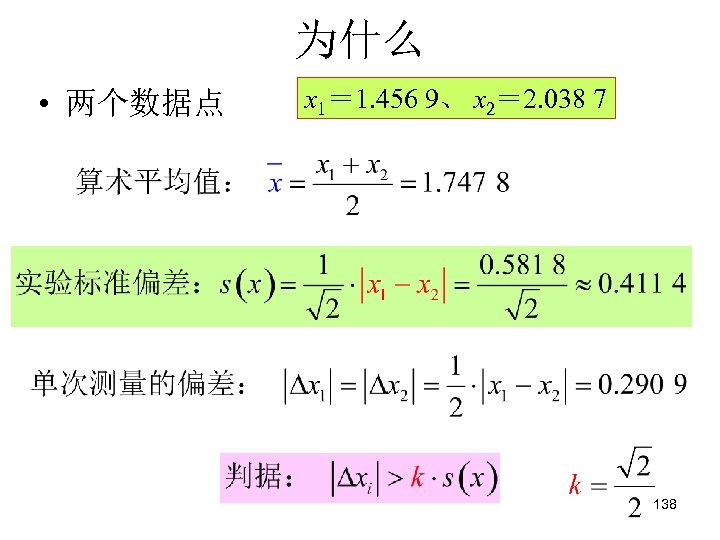
为什么 • 两个数据点 x 1= 1. 456 9、 x 2= 2. 038 7 138
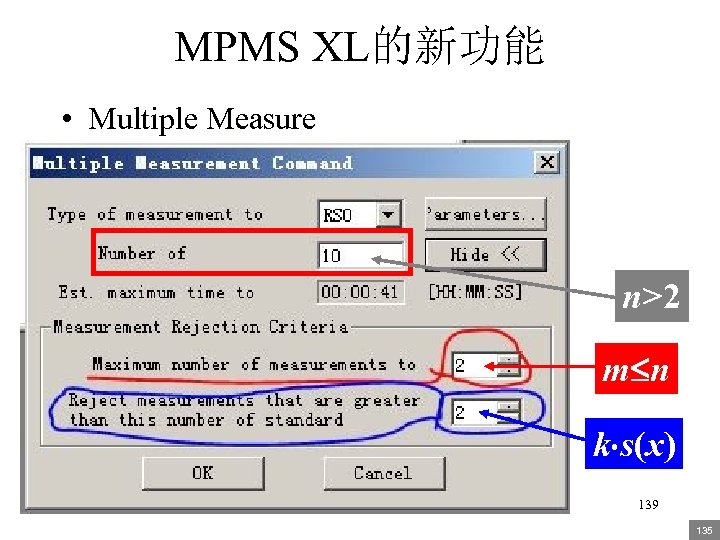
MPMS XL的新功能 • Multiple Measure n>2 m n k s(x) 139 135
Скачать презентацию 中国科学院物理研究所 通用实验技术公共课程 磁性测量 第六讲 仪器的原理与使用 赵同云 磁学国家重点实验室 Sunday March
22480907d3412025bda8f49d2cff3c2c.ppt